It may seem easy to pack for a camping trip until you realise you forgot your waterproof jacket. You may be sitting around the campfire at night and realise that your summer T-shirt will not keep you warm enough.
It’s much easier to get your camping clothes right before you go than it is to improvise once you are already there. This list covers the essential camping clothing that every adventurer should have, and why it is important.
Camping Clothing: The Basic Principle
Clothing for camping should be able to accommodate two different situations: active use during the day, such as hiking, setting up a camp and outdoor activities; and static use at night, when the body temperature drops, and clothing is needed to maintain warmth, rather than to manage perspiration.
The most common clothing problem on camping trips is that people pack for one scenario but ignore the other. If you only bring active layers for hiking, you’ll be underprepared to face cold evenings. If you only bring warm, static layers to wear during the day, you will end up overheating. The right camping clothing covers both — effectively and without adding excessive weight to your pack.
manufacturers of camping apparel that are specifically designed for camping understand this dual demand and build garments which can be used both actively and in a static position more efficiently than pure hiking or casualwear alternatives.
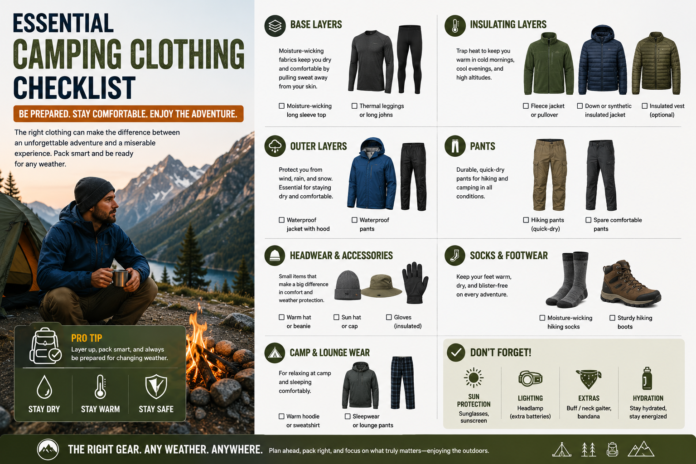
Base layers — the foundation that cannot be compromised
The base layers are often the most overlooked item of camping clothing. They are worn against the skin to manage moisture. Moisture management and odour control are equally important in camping where clothes may be worn without washing for long periods.
Pack two sets of base layers: one for the active daytime and another for sleeping. Base Layer Clothing is perfect for camping due to its natural odour-resistance, temperature regulation and comfortable handfeel over multiple days.
Mid-Layer Insulation
Every camping trip, regardless of the season, requires a mid-layer insulation piece. Even in the summer, temperatures can drop dramatically at high altitudes or after darkness. A camp night without sufficient insulation is uncomfortable and even dangerous in exposed areas.
Outdoor fleece provides the best warmth to weight ratio for camping. It can be worn as a mid-layer on warm evenings, or underneath a shell jacket when it’s cold. A down jacket with a synthetic or packable fill is a great alternative, especially for cold weather camping.
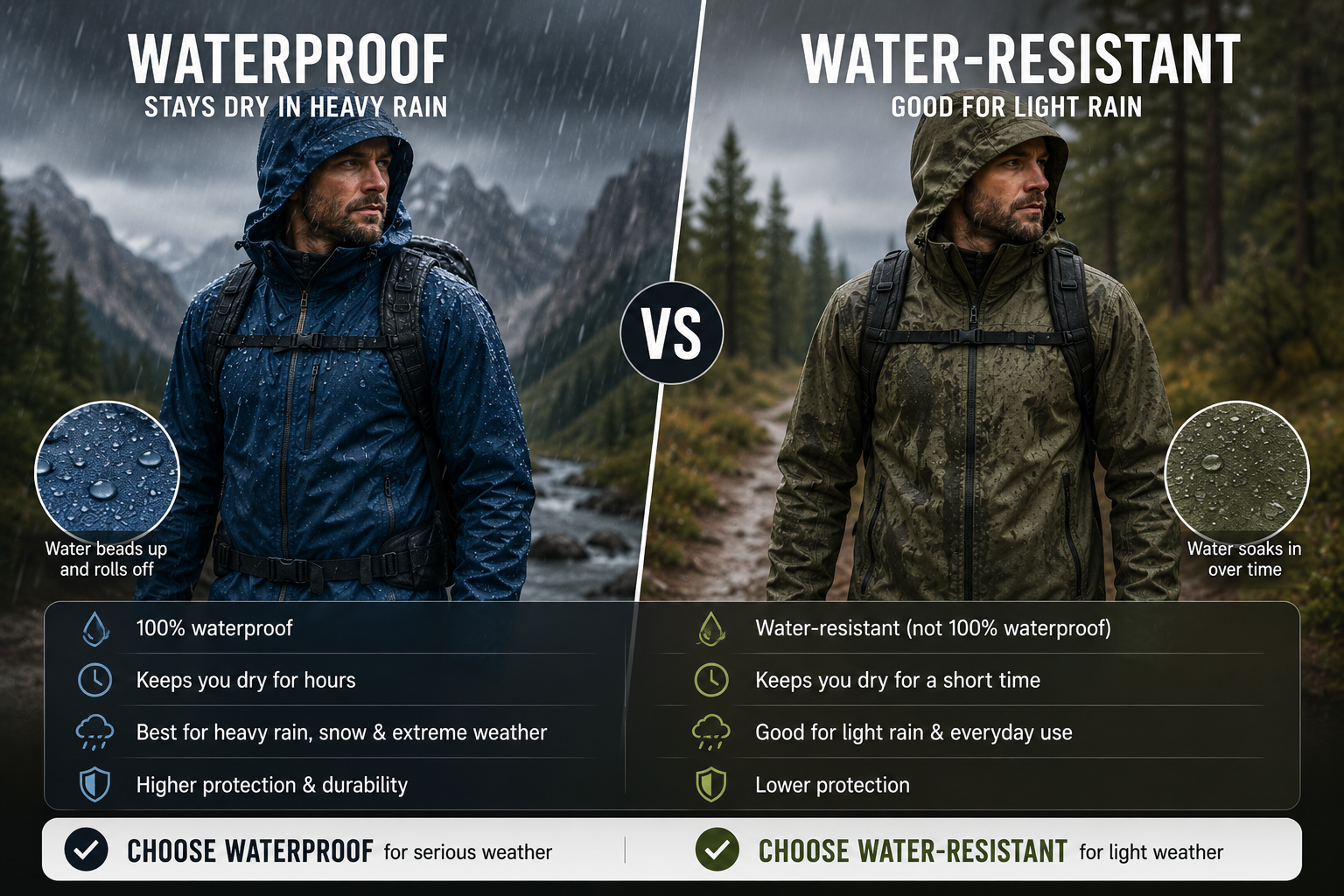
Waterproof outer layer
Any camping checklist must include a waterproof outer layer. Camping trips can be ruined by rain, especially when the weather changes quickly and without warning.
Waterproof Clothing With a waterproof membrane and taped edges, it provides reliable protection from rain. The Rainwear is compact and fits into its own pocket, so it doesn’t take up much space in your pack.
Hiking Trousers & Shorts
For camping, lower body clothing must balance active performance in the daytime with adequate coverage for changing temperatures at night. hiking trousers in stretch-nylon cover most of the day’s activity needs – durable, quick-drying and free-moving over technical terrain.
Outdoor Shorts can be a good addition to your camping gear for warm weather, especially at lower elevations. The daytime temperatures are too high and full-length pants would make you uncomfortable. Outdoor cargo trousers provide additional carrying capacity on trips when accessing pockets is important during the day.
Camp Footwear and Socks Layers
Camping checklists should include socks because they cause blisters more quickly than any other piece of equipment. Pack at least two pairs of hiking socks each day, and always carry a spare pair in case you encounter unexpected rain.
For evenings at the campsite, a pair of sandals or camp shoes that are lightweight can give your feet a break from the hiking boots. They also prevent the moisture buildup caused by wearing the same footwear day and night.
Protect your hands and head
The most common clothing items to be forgotten are hand and head protection. This is especially true when the weather turns cold. The lightweight beanie, along with a pair or liner gloves, take up very little space in your pack and provide significant warmth on cold mornings and nights.
Ski wear is the same as cold weather camping. Covering exposed extremities will keep you warmer than adding bulk to your torso. For high-altitude or winter camping, a ski masque or balclava can be useful. The face and neck are at risk of heat loss.
Outdoor Jacket for Versatile Coverage
An outdoor Jacket which provides both insulation and protection from light rain gives the camping wardrobe system a real versatility. A hybrid jacket, with insulated panels in the core and softshell or windproof sleeves, covers more conditions than a pure insulation or shell jacket.
A single outdoor jacket, which can be used in multiple situations, will reduce the number of layers required for camping trips.
Conclusion
Essential camping clothing is essential for all outdoor activities. The checklist includes base layers, midlayer insulation, a waterproof outer layer and hiking shorts and trousers. It also includes hand and head protection and a versatile jacket. You can be prepared for the weather by packing clothing that is both warm and active.
Explore the full range of camping clothing manufacturing options to find the best production partner for you.
FAQs
Which item is most important on a checklist for camping clothing?
An outer waterproof layer, because the weather can change without warning outside and not having rain protection when you need it is one of many reasons why camping trips go wrong.
Is it necessary to pack more than two sets of base layers for camping?
You should bring at least two sets — one set for active use during the day and another for sleeping. Merino base layers are perfect for multi-day camping trips when washing isn’t possible.
Which is better, a fleece jacket or a puffer?
A fleece is more versatile – it insulates even when wet and can be used for a wide range of activities. A puffer jacket is warmer per gram and better for camping in cold weather.
Do waterproof trousers come in handy for camping?
Yes, if you plan to camp over a period of time and are likely to encounter wet or variable conditions. Summer camping in dry conditions may only require quick-drying hiking pants. However, a pair of lightweight waterproof trousers will add minimal weight to your pack and provide significant protection.