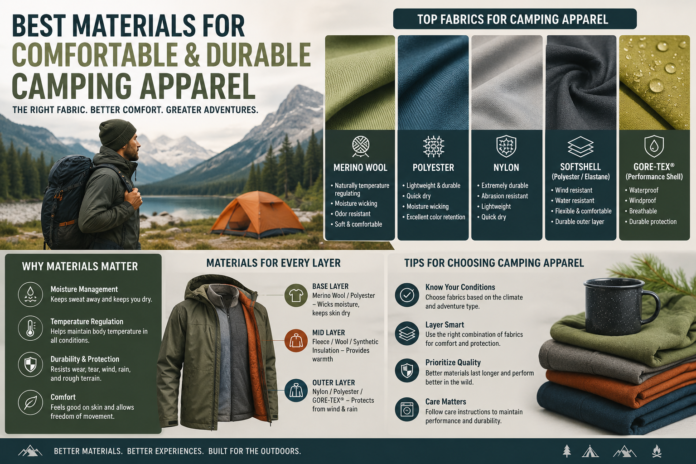
What you wear camping matters more than most people realize until something goes wrong. A fabric that soaks up rain, holds sweat against your skin, or tears on the first bramble patch turns an enjoyable outdoor experience into a genuinely miserable one. Choosing the best materials for camping apparel protects comfort, safety, and performance across every condition the outdoors throws at you. For brands building camping clothing collections, understanding these materials is the foundation everything else builds on.
Merino Wool — Nature’s Most Versatile Camping Fabric
Merino wool is arguably the single most valuable fabric in camping apparel. It regulates body temperature naturally — keeping wearers warm when cold and cool when warm — through a remarkable fiber structure that manages moisture and heat simultaneously. Merino also resists odor naturally, meaning campers can wear merino base layers and tees across multiple days without the unpleasant smell that synthetic fabrics develop quickly.
The softness of fine merino wool makes it genuinely comfortable against skin for extended wear — eliminating the itchiness associated with traditional wool that deterred generations of outdoor enthusiasts from choosing natural fiber options.
Merino works brilliantly for base layer clothing — the foundation of any effective camping layering system — providing temperature regulation and moisture management directly against the skin where these properties deliver maximum performance benefit.
Ripstop Nylon — Tough, Light, and Reliable
Ripstop nylon is a camping apparel essential for outer layers and bottoms that face direct environmental contact. Its reinforced grid weave pattern prevents tears from spreading — maintaining garment integrity when fabric catches on branches, rocks, or rough terrain surfaces. Despite its impressive durability, ripstop nylon remains remarkably lightweight — a critical consideration for campers managing pack weight across multi-day trips.
Ripstop nylon also dries extremely quickly after rain or stream crossings — preventing the prolonged dampness that undermines comfort and body temperature regulation in outdoor environments. It suits outdoor cargo pants and shell layers particularly well — providing the durability and weather resistance these high-contact garments demand.
Polyester Fleece — Essential Warmth Layer
Polyester fleece provides the insulating mid-layer that camping layering systems depend on for warmth retention across cold evenings and early mornings. It traps warm air within its fiber structure, dries rapidly when wet, and maintains insulating performance even in damp conditions — unlike down insulation that loses effectiveness when moisture penetrates.
Fleece weight determines warmth level — lightweight 100-weight fleece suits active hiking and mild temperatures, mid-weight 200-weight suits cool evenings and moderate cold, and heavyweight 300-weight provides serious insulation for genuinely cold camping environments.
A quality outdoor fleece manufacturer produces fleece garments with anti-pilling treatments, flatlock seams for comfort under pack straps, and zip systems that layer cleanly under shell jackets without bunching or restricting movement.
Gore-Tex and Waterproof Membranes — Weather Protection That Works
No camping apparel discussion is complete without addressing waterproof breathable membranes. Gore-Tex and equivalent membrane technologies bond to outer fabric layers — creating a barrier that prevents external water penetration while allowing internal moisture vapor to escape. The result is a jacket that keeps rain out without trapping sweat inside — solving the fundamental comfort challenge that non-breathable waterproof materials failed to address for decades.
Waterproof jackets built with quality waterproof breathable membranes represent one of the most important investments any camper makes — because proper weather protection directly impacts safety as well as comfort when conditions deteriorate unexpectedly in remote environments.
Softshell Fabric — Versatile All-Condition Performance
Softshell fabrics combine stretch, breathability, and moderate weather resistance in a single fabric construction — making them ideal for active camping activities where full waterproof shell protection is unnecessary but wind and light rain resistance genuinely help.
Softshell garments move freely with the body, regulate temperature effectively during moderate activity, and feel significantly more comfortable against the skin than rigid hardshell alternatives. Softshell jackets suit the active portion of camping days — hiking between sites, gathering firewood, and exploring terrain — when breathability matters more than maximum weather protection.
Cotton Blends — Campsite Comfort Done Right
Pure cotton performs poorly in demanding outdoor conditions — it absorbs moisture heavily and dries slowly, creating cold, heavy clothing that undermines comfort and body temperature regulation. However, cotton-polyester blends bring cotton’s softness and breathability together with polyester’s moisture management and quick-drying properties — creating genuinely comfortable fabrics for campsite casual wear and outdoor tees used during lower-intensity camping activities.
Cotton blends work well for relaxed campsite clothing — worn around the fire, during camp cooking, and for comfortable sleeping — where the intense performance demands of active hiking don’t apply and comfort takes priority over technical performance.
Down and Synthetic Insulation — Warmth Without Bulk
Insulated camping garments use either natural down or synthetic fill to trap warm air and retain body heat in cold conditions. Natural down delivers exceptional warmth-to-weight ratio — making it the premium choice for packable camping jackets and vests where weight efficiency matters enormously. Synthetic insulation maintains warmth even when wet — making it the more reliable choice for damp camping environments where down’s superior performance advantage disappears when moisture penetrates.
Puffer jackets and outdoor vests built with quality insulation provide the essential warmth layer that camping layering systems need for genuinely cold conditions — whether that’s alpine camping, winter campouts, or simply cold mountain evenings that surprise under-prepared campers.
Building a Complete Camping Apparel Collection
The best materials for camping apparel work together across a layering system — not in isolation. Base layers manage moisture. Mid-layers retain warmth. Shell layers protect against weather. Each material serves its specific role within that system — and brands building camping apparel collections need to cover all three layers to truly serve their outdoor customer completely.
Working with a professional outdoor apparel manufacturer who understands material performance across the full layering system — and who sources fabrics with verified performance credentials rather than untested alternatives — ensures your camping collection delivers the genuine outdoor performance your customers depend on across every adventure they take it on.
Conclusion
The best materials for camping apparel — merino wool, ripstop nylon, polyester fleece, waterproof membranes, softshell fabrics, cotton blends, and quality insulation — each serve specific performance roles that together create a complete, reliable camping wardrobe. Understanding what each material delivers and where it performs best gives brands the knowledge to build camping collections that genuinely work in the wild. Choose materials thoughtfully, partner with experienced outdoor apparel manufacturers, and build products that campers trust on every trip they take.
FAQs
What is the single most important material feature in camping apparel?
Moisture management is most critical — fabrics that keep campers dry from both sweat and rain directly impact comfort, body temperature regulation, and safety across all camping conditions.
Is merino wool worth the higher price for camping apparel?
Absolutely. Merino’s natural temperature regulation, odor resistance, and multi-day wearability deliver genuine value for campers — reducing the clothing volume needed for extended trips while maintaining superior comfort throughout.
Can camping apparel collections be produced under a private label?
Yes. Professional outdoor apparel manufacturers offer full private label production with custom fabrics, performance treatments, colors, labels, and packaging — giving brands complete control over their camping product identity.
What is the best layering system for camping in variable conditions?
A merino wool base layer for moisture management, polyester fleece mid-layer for warmth, and a waterproof breathable shell outer layer covers the vast majority of variable camping conditions effectively and reliably.