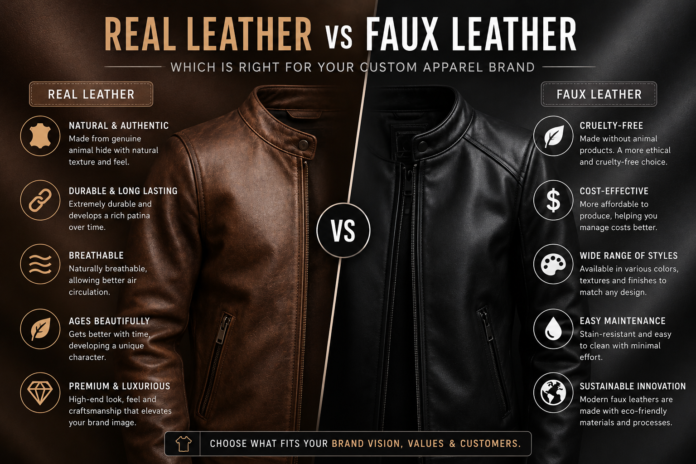
Each apparel brand that utilizes leather eventually faces an important decision: do we use genuine leather, or do we use synthetic leather? This is not an easy choice. Both options offer benefits and present challenges. The best option for your brand depends on your positioning, your clientele, and the values you uphold.
In this guide to real leather vs faux leather, we outline the pros and cons of both materials to help you choose the best option for your brand, not just the easiest one.
What Is Real Leather?
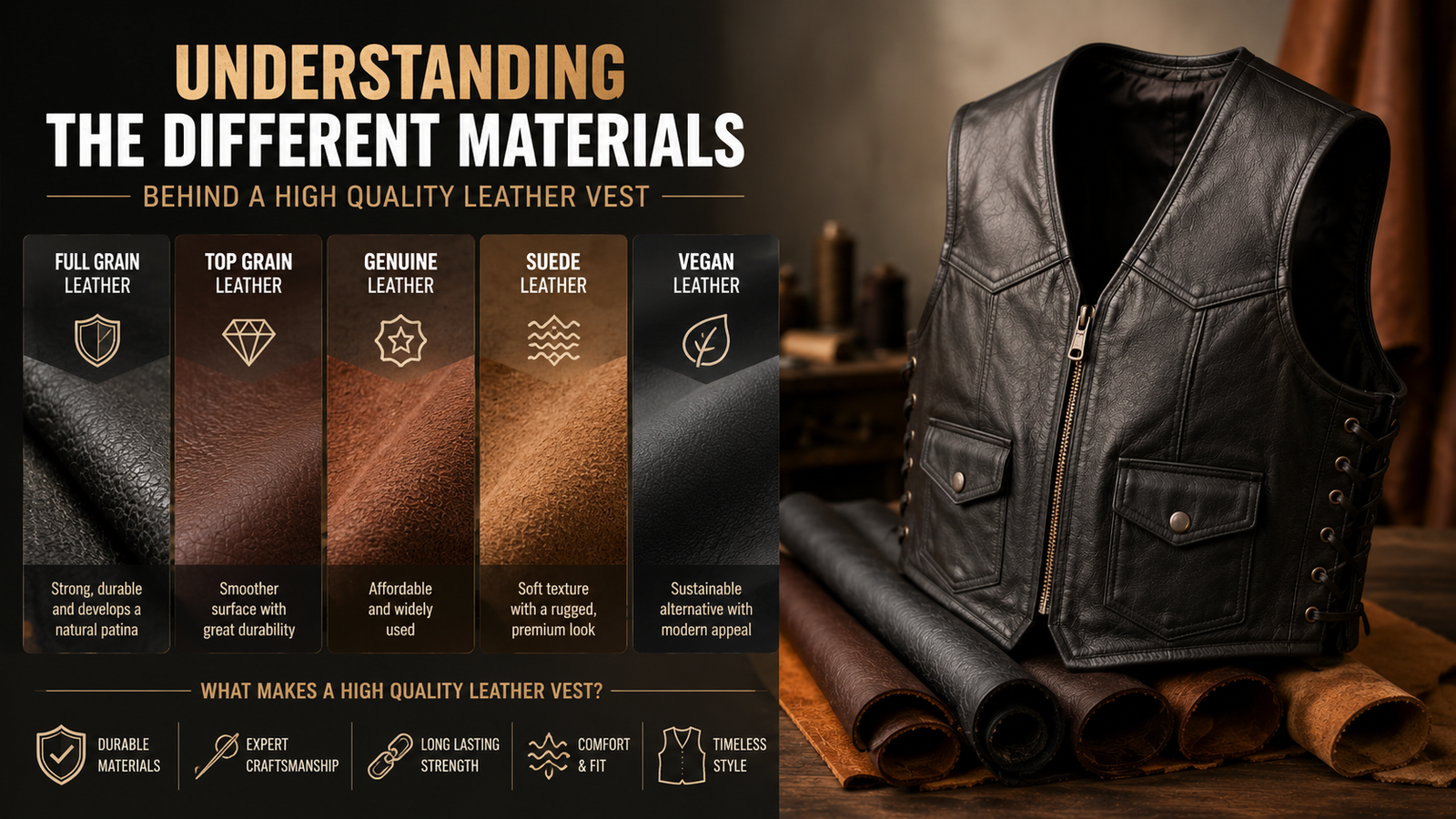
Real leather is a natural product that comes from animal hides. The most popular hides come from cows, however, sheepskin, lambskin, goatskin, and exotic hides are also used in apparel. Before these hides can be used, they must be tanned.
Real leather is a natural material with inherent variation. No two hides are identical. This is what makes leather garments feel special.
As leather ages, it develops a patina. This deepening and softening of the leather is something that leather owners appreciate as a sign of quality and authenticity. Properly made leather goods can last decades, displaying the value of this investment.
What Is Faux Leather?
Faux leather is also referred to as vegan leather, synthetic leather, or PU leather. It is a fabric that is designed to imitate the appearance of leather. Most of the time, the fabrics designed to look like leather will have a coating of either PU, aka polyurethane, or PVC, aka polyvinyl chloride.
Lately, there have been more designs of faux leathers that are biochemically based. These include, but are not limited to, fabrics designed to look like leather from pineapple, cactus, mycelium, and even apple waste. These fabrics have been popularly advertised as being a better option when compared to both real leather and traditional faux leather when looking at sustainability.
Faux leather is often easier to work with because of its predictability and appearance, and lacks the natural variations found in real leather. Faux leather is also less expensive and caters more to a customer base that is looking for an animal product-free option.
Durability: How Do They Compare?
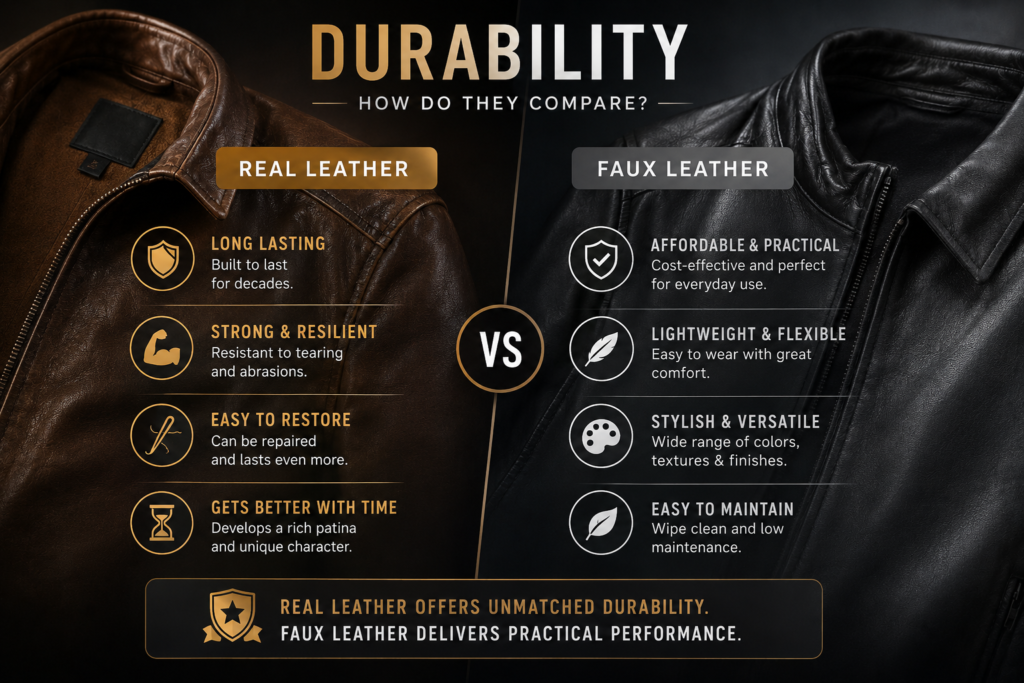
If leather is ethically sourced and taken care of, then it has a longer lifespan than faux leather. High-quality full-grain leather can last for decades and be in excellent condition. Leather is also resistant to tearing, can take abrasions, and is easier to fix when damaged.
PU-based faux leathers are more susceptible to being damaged and have a short…pan. Over time, it can crack, peel, and delaminate — especially in areas of repeated flexing like elbows and seat panels. Higher-quality faux leathers last longer, but even the best synthetic options typically don’t match the longevity of premium real leather.
For brands building a product positioned on quality and longevity — like premium leather jackets or leather coats — real leather’s durability advantage is significant and worth the higher material cost.
Sustainability: Which Is More Responsible?
Now we can start breaking things down. It is a common belief that faux leather is more sustainable because it doesn’t include animal hides. There are more factors to consider.
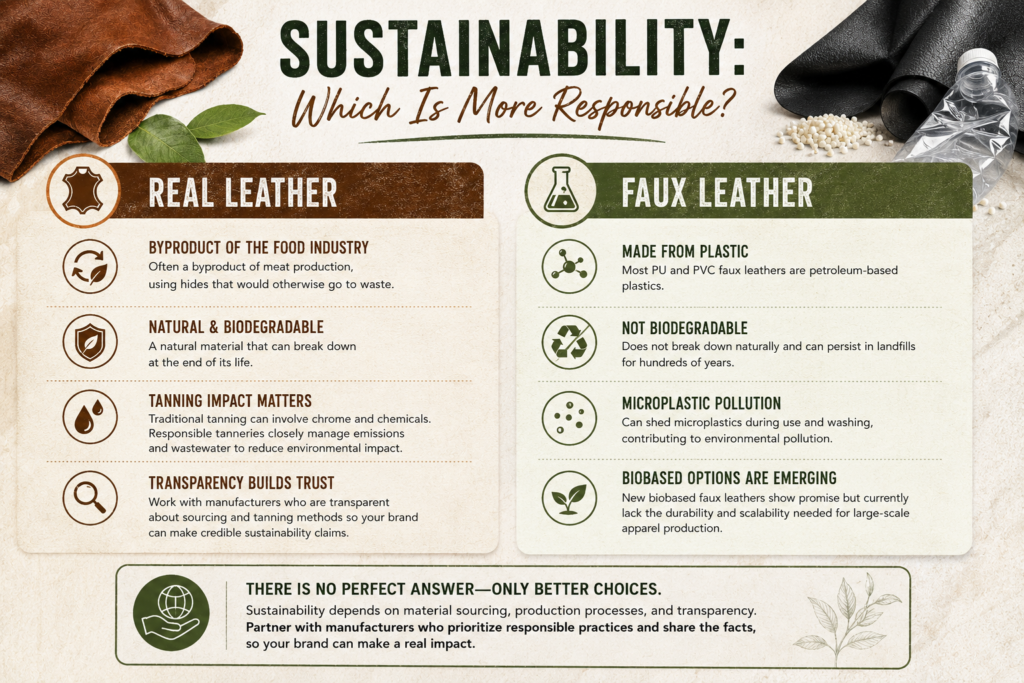
Typical PU and PVC faux leather is nothing more than plastic. These leathers are not biodegradable and will shed microplastics. Chemicals that are not environmentally safe will also be used.
In a lot of cases, real leather is a leftover from the meat processing industry, so the hide would be thrown away. Even so, the tanning process still releases chrome, and that will need to be closely monitored to avoid more environmental issues.
Biobased faux leather systems are a promising improvement, but the durability and scalability for large production of apparel are still to be desired.
A leather apparel manufacturer with strong sustainability credentials will be transparent about their tanning methods and material sourcing — giving your brand the information needed to make a genuinely informed sustainability claim.
Price and Production Cost
Real leather is more expensive — both as a raw material and in production. Hides are graded and priced by quality. Cutting real leather requires more skill and generates more waste than faux leather. And the finishing processes for real leather garments are typically more labour-intensive.
Faux leather is more consistent in price, easier to work with, and generates less waste in cutting, because the surface is uniform rather than hide-shaped. These factors make faux leather a more cost-efficient choice for brands working to a tighter budget or targeting a lower retail price point.
For brands producing leather skirts or leather pants at accessible price points, faux leather can deliver a strong aesthetic result at a fraction of the material cost of real leather.
What Your Customer Expects
Your customer’s expectations should drive this decision as much as anything else. A customer paying a premium price for a leather jacket expects real leather — and will feel misled if they later discover it’s synthetic. A customer buying a fashion-forward piece at an accessible price point may actively prefer faux leather for ethical reasons.
Know your customer. Understand what they value — authenticity, animal welfare, sustainability, longevity, or price — and choose the material that genuinely aligns with those values.
Whatever you choose, be transparent about it. Label your products clearly. A leather vests manufacturer or apparel specialist who works with both real and faux leather will advise on how to communicate material choices clearly to your end customer.
Conclusion
When comparing real leather vs faux leather, the right choice depends on your brand, customers, and product goals.
Real leather is often more expensive but offers durability, unique character, and a premium feel. Faux leather is more affordable, consistent, and animal-free, making it a popular option for many modern brands, though it may not last as long.
There’s no single “better” option in the real leather vs faux leather debate. The best material is the one that matches your brand values, pricing, and customer expectations. Be transparent and evidence-based about your choice, and clearly communicate it to your customers.
When you’re ready to develop your leather apparel range, explore the full range of leather apparel manufacturing options and find the right partner for your project.
FAQs
What is the main difference between real leather and faux leather?
Real leather comes from animal hides and develops character over time. Faux leather is a synthetic or bio-based material designed to replicate leather’s appearance without using animal products.
Which lasts longer — real or faux leather?
Real leather significantly outlasts faux leather when properly cared for. Faux leather — particularly PU-based versions — can crack and peel over time, especially in high-flex areas.
Is faux leather more sustainable than real leather?
Not necessarily. Standard PU faux leather is petroleum-based and doesn’t biodegrade. Real leather from responsibly tanned hides has its own environmental footprint. Bio-based alternatives are promising but not yet mainstream.
Which is more expensive to produce?
Real leather is significantly more expensive — both as a raw material and in the production process. Faux leather is more cost-efficient and easier to work with.