Starting a fitness brand is exciting. You’ve got the vision, the logo, maybe even a solid customer base in mind. But then comes the part that trips up almost every new brand owner — finding the right manufacturer. It sounds simple until you realize how many things can go wrong: poor fabric quality, missed deadlines, MOQs you can’t meet, or samples that look nothing like what you ordered. If gym t-shirts are at the core of your product line, choosing the right gym t-shirts manufacturer can genuinely make or break your brand before it even launches.
This guide walks you through what actually matters when finding a manufacturing partner — no fluff, just the real stuff that experienced brand owners wish someone had told them early on.
Know What You’re Selling Before You Start Searching
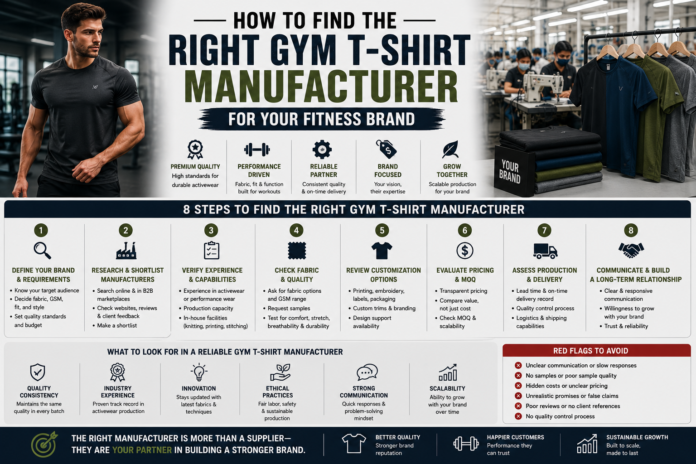
You know your product before contacting the manufacturer. What type of gym t-shirts are you selling? Designed for performance during an arduous lifting session and sweaty cardio? Or, engineered for a ‘lifestyle’ to be sported during a post-workout brunch? The answer directs the weight of the fabric, the necessary cut, the type of moisture management, and finishing.
Think about who your customer is. Someone training in a hot gym five days a week needs a completely different shirt than someone doing light yoga at home. Once you’re clear on your customer, you can look at the broader activewear manufacturing landscape and find a partner that actually specializes in what you need — not just one that claims to do everything.
Don’t Ignore Fabric — It’s Everything in Activewear
The biggest mistake a new brand owner can make is making fabric an afterthought. Fabric is the whole product, when selling gym wear. A t-shirt that pills after 3 washes, doesn’t breathe, and loses shape will lead to an influx of returns and negative reviews. Rather, your customers will notice product shortcomings long before you do.
For gym t-shirts, you’ll typically want fabrics that offer moisture management, four-way stretch, and durability. Polyester blends, nylon mixes, and performance jerseys are common options. If sustainability matters to your brand (and increasingly, it should), look for manufacturers who use recycled or eco-friendly materials. This is especially relevant if you’re building a fitness apparel brand with long-term values baked in from the start.
Request Samples — And Actually Wear Them
Any half decent manufacturer will send you a sample before you agree to a bulk order. Don’t stop at checking the sample. Use it, wear it, even work out in it. wash the sample maybe 3 or 4 times. Allows you to assess that print. See if the item maintains its shape after being washed and if the print holds. Evaluate the collar and see if stretching is visible and lastly, does it feel good against the skin when sweaty or does it feel bad?
This step sounds obvious but plenty of people skip it because they’re excited to launch. Don’t be that person. A gym t-shirt is something people wear during physical activity — it has to perform. If you’re also planning to add complementary pieces like gym shorts or tank tops to your range, request samples for those too and make sure everything works together as a set.
Ask About Customization Options Upfront
The appeal of a manufacturer is not just creating a blank tee with a logo. A good manufacturing partner will provide you with options like cut, color, label, even print. Ask what printing methods they offer, do they offer sublimation, allow custom neck labels?
This is also the right time to ask about product variety. If you eventually want to expand beyond gym tees into custom hoodies, joggers, or leggings, it makes sense to work with a manufacturer that can grow with you rather than one that only does tees.
Understand MOQs and Pricing Before You Fall in Love
MOQ stands for Minimum Order Quantity — and it’s one of the first things that catches new brand owners off guard. Some manufacturers won’t touch an order under 500 pieces per style per color. For a new brand testing the market, that’s a lot of t-shirts sitting in storage if things don’t take off immediately.
Get pricing and MOQs in writing early. Ask about price breaks at different quantities, and be realistic about what you can actually sell in your first few months. Also ask about lead times — how long from order confirmation to delivery? For gym wear brands launching with a seasonal push or an event tied to a launch, timing matters as much as quality.
Look for Quality Control Systems, Not Just Promises
Any manufacturer can say they produce high-quality products. Very few can show you a documented quality control process. Ask how they handle defects. Do they inspect at multiple stages of production or just at the end? What happens if 10% of your order arrives with stitching issues — do they replace the units or offer a discount and move on?
A manufacturer with a real QC system will be happy to walk you through it. One that gets defensive or vague is a red flag. This is especially true if you’re building a brand around performance gear like compression wear or technical activewear where precision in construction is non-negotiable.
Communication Is a Manufacturing Skill Too
Manufacturing is a great example for illustrating this: how a manufacturer communicates is a great indication of how they will troubleshoot issues. And issues will always come up, there will be delays, fabric shortages, customs issues, sample revisions, etc… It’s not a matter of if something will go wrong but how quickly you can resolve the issue.
Pay attention to response times during your initial outreach. Do they answer your questions directly or give you vague responses? Do they push back thoughtfully when something doesn’t make sense, or do they just say yes to everything? A manufacturer who communicates well is an invaluable partner — especially as you expand your line into areas like yoga wear or other technical categories that require back-and-forth collaboration on fit and function.
Think About Sustainability — Your Customers Already Are
The activewear and fitness industry has undergone a considerable transformation. Clients investing in activewear are becoming more conscious and concerned for the first time regarding import source locations of activewear, constituent fabric sources, and the treatment of activewear manufacturers. Sustainability used to be an advertising gimmick, but with a growing buyer segment, it is legitimate.
If sustainability matters to your brand, look for manufacturers that are transparent about their supply chain, use eco-friendly materials, and have certifications to back up their claims. Working with a responsible activewear manufacturer from the beginning means you don’t have to retrofit your story later — it’s already built into how you operate.
Final Thoughts
There is a lot to finding a good manufacturer for a gym shirt. You have to send out a lot of surveys with the options, have the fitness brand discuss capacity and pricing honestly, and most importantly, you have to think if you want to work with this manufacturer in the future. Getting this right from the start, brands gain customer loyalty and the business grows.
This process takes time and you must be willing to work for it. Relationships with manufacturers grow to mutually benefit both parties in time.
FAQs
What should I look for in a gym t-shirt manufacturer?
Look for a manufacturer with experience in performance activewear, a clear quality control process, flexible MOQs, and strong communication. The ability to customize fabrics, cuts, labels, and prints is also important if you want to build a distinct brand identity. Checking samples before placing a bulk order is non-negotiable.
What is the typical MOQ for custom gym t-shirts?
MOQs vary widely between manufacturers. Some start as low as 50–100 pieces per style, while others require 300–500 pieces per color per style. For new brands, it’s best to find a manufacturer that offers lower MOQs for sampling and initial runs, then scales up as your orders grow.
What fabrics are best for gym t-shirts?
The most common and effective fabrics for gym t-shirts include polyester blends, nylon-spandex mixes, and performance jersey knits. These materials offer moisture-wicking, four-way stretch, and durability — exactly what someone needs during a workout. If sustainability is a priority for your brand, ask your manufacturer about recycled polyester or other eco-friendly options.