In today’s competitive apparel industry, delivering high-quality garments consistently is essential for maintaining customer trust and reducing returns. Whether you are a startup or an established brand, a well-structured finishing workflow can make all the difference in ensuring your products leave your production line ready to impress.
Why Finishing Workflows Matter
Contrary to popular belief, finishing workflows are not simply about putting the last touches on the garments; they are about putting a system in place that ensures a level of quality for each and every garment. Poor finishing can leave stitches imperfect, hems uneven and patterns miscommunicated to consumers. This not only ultimately will leave the customer dissatisfied and more likely to return the product, but also increases the return rate of the product dramatically. Adopting standardized workflows can significantly increase the accuracy of the product finishing workflows and the satisfaction level of the customers.
Investing in professional finishing services also helps brands maintain consistency across different production batches. For example, Eco Jersey’s Garment Finishing & Packaging service ensures every piece meets exacting standards, reducing the likelihood of defects reaching the customer.
Key Steps in an Effective Finishing Workflow
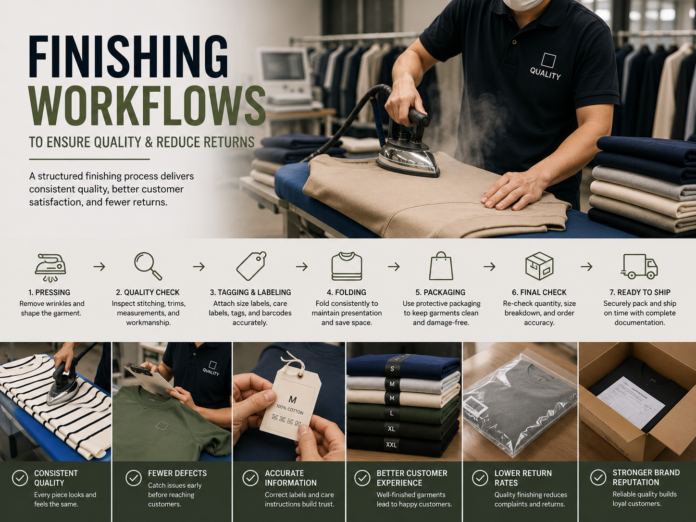
- Inspection and Quality Check – Start with a thorough review of garments before the final finishing stage. Checking for stitching accuracy, fabric defects, and proper sizing can catch issues early. Referencing QC Standards provides a reliable benchmark for inspections.
- Proper Pressing and Folding – Garments should be pressed and folded according to product type. This step enhances appearance and prepares the apparel for efficient packaging and shipping.
- Labeling and Branding – Accurate labeling and branding are crucial. Services like Custom Labeling and Branding ensure your logos, tags, and care instructions are correctly applied, reinforcing brand identity.
- Packaging and Shipping Prep – Elegant packaging not only protects clothing during shipping but also enhances the customer experience. Streamlining packaging can minimize damage during shipping and errors in fulfillment.
How to Reduce Returns Through Finishing
Returns often happen due to inconsistent sizing, poor construction, or visible defects. By integrating a complete workflow from inspection to packaging, brands can drastically reduce return rates. For example, Sampling & Pattern Making early in production ensures sizing and fit are consistent across batches, lowering the risk of dissatisfied customers.
Additionally, businesses that adopt Cut-and-Sew Manufacturing with precise finishing checks can maintain higher quality standards, creating garments that meet expectations every time.
Benefits of Optimized Finishing Workflows
- Consistency Across Products – Customers receive the same high quality items every time.
- Reduced Returns – Finishing products correctly means products are less likely to be returned.
- Improved Brand Reputation – Shopping with confidence leads to brand loyalty.
- Operational Efficiency – Easier to follow processes lead to less time and effort wasted.
Improving workflows to eliminate errors also improves your brand value. Customers appreciate not only high quality products, but also an elegant presentation. Finishing polishing work for each delivery enhances your brand value.
Final Thoughts
A strong finishing workflow is essential for any apparel business that wants to maintain quality and minimize returns. By incorporating inspection, pressing, labeling, and packaging into a systematic process—and leveraging services like Garment Finishing & Packaging, Custom Labeling, and Sampling & Pattern Making—brands can consistently deliver garments that satisfy customers, build trust, and reduce costly returns.
For businesses looking to elevate their production process, focusing on finishing workflows is not optional—it’s a key component of long-term success.
FAQs
What are finishing workflows in apparel manufacturing?
Finishing workflows are systematic processes that ensure garments meet quality standards through inspection, pressing, labeling, and packaging.
How do finishing workflows reduce returns?
By catching defects early, ensuring consistent sizing, and using professional packaging, finishing workflows prevent errors that lead to customer returns.
Why are finishing workflows important for brand reputation?
High-quality finishing ensures customers receive well-made, professional products, which builds trust and encourages repeat purchases.