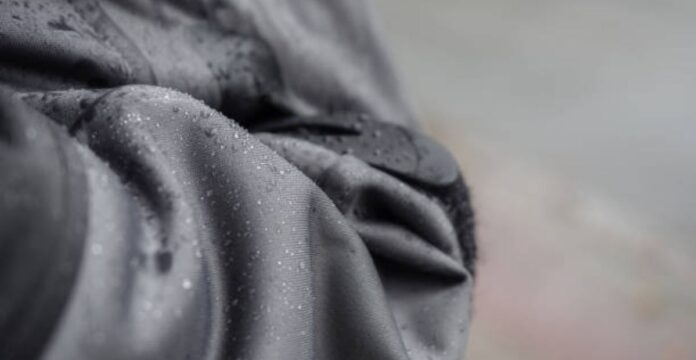
Winter demands reliable clothing that protects against harsh conditions. Therefore, innovation in textile technology continues to evolve rapidly. Among modern developments, Climate Lock Winter Fabric stands out strongly. It offers advanced insulation, comfort, and durability in cold climates.
Unlike traditional heavy fabrics, this winter protection fabric remains lightweight. At the same time, it provides exceptional warmth retention. As a result, wearers feel comfortable during extreme cold exposure. Moreover, the fabric adapts well to both outdoor adventures and city life.
This article explores Climate Lock Winter Fabric in detail. First, we define its structure and history. Then, we examine features, benefits, and technology. Finally, we discuss uses, care, and buying guidance.
History and Evolution of Climate Lock Winter Fabric
Textile innovation has always followed environmental needs. Historically, people relied on wool and animal hides. However, those materials often felt heavy and absorbed moisture. Consequently, scientists searched for better winter protection solutions.
During the late twentieth century, synthetic insulation gained popularity. Manufacturers introduced fleece and blended fabrics for warmth. Nevertheless, these materials sometimes lacked wind resistance. Therefore, engineers developed multi-layered thermal textiles.
Climate Lock Winter Fabric emerged from this innovation phase. Designers combined insulation layers with protective outer shells. As technology advanced, microfibers improved heat retention. Today, this fabric represents modern winter textile engineering.
Types of Climate Lock Winter Fabric
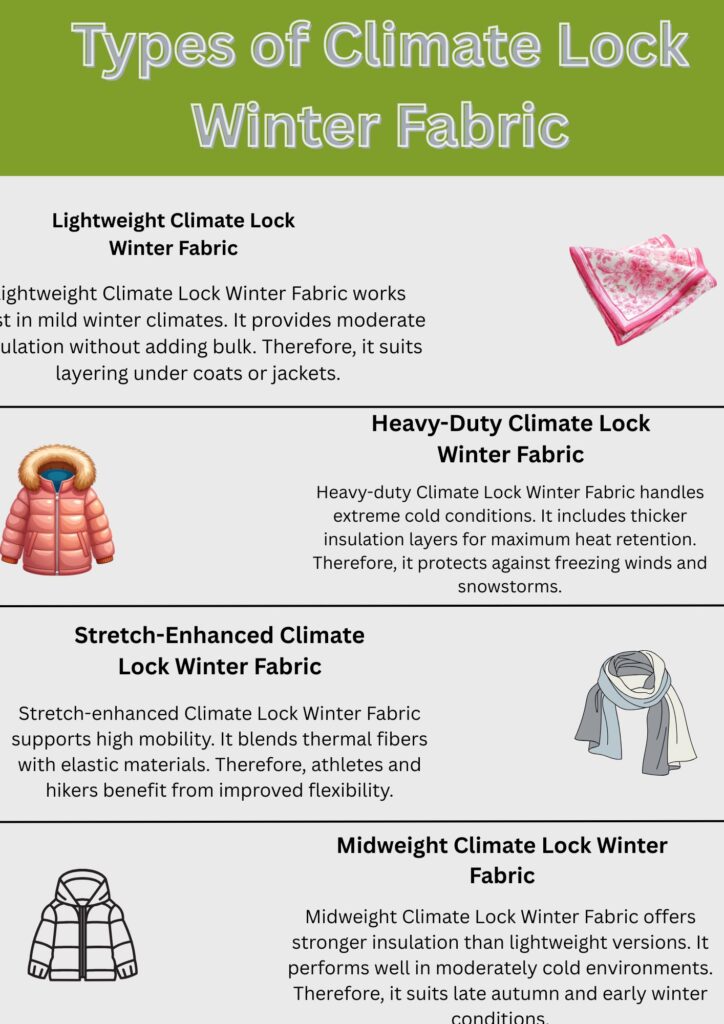
Climate Lock Winter Fabric comes in several specialized types. Each type serves a specific winter need and activity level. Therefore, choosing the right version improves comfort and performance. Moreover, manufacturers design these variations to match different climates. Some types focus on flexibility, while others emphasize insulation. As a result, consumers can select according to lifestyle and weather conditions. Below are the main types of Climate Lock thermal fabric with detailed explanations.
Lightweight Climate Lock Winter Fabric
Lightweight Climate Lock Winter Fabric works best in mild winter climates. It provides moderate insulation without adding bulk. Therefore, it suits layering under coats or jackets.
Additionally, this type allows easy body movement. People who commute daily often prefer this option. Because it remains breathable, it prevents overheating indoors. Consequently, it balances warmth and comfort efficiently.
Midweight Climate Lock Winter Fabric
Midweight Climate Lock Winter Fabric offers stronger insulation than lightweight versions. It performs well in moderately cold environments. Therefore, it suits late autumn and early winter conditions.
Moreover, this type combines warmth and flexibility effectively. Many casual winter jackets use this fabric. As a result, wearers enjoy comfort during both outdoor and indoor activities.
Heavy-Duty Climate Lock Winter Fabric
Heavy-duty Climate Lock Winter Fabric handles extreme cold conditions. It includes thicker insulation layers for maximum heat retention. Therefore, it protects against freezing winds and snowstorms.
Furthermore, manufacturers add enhanced windproof membranes. This feature blocks cold air penetration effectively. Consequently, it becomes ideal for mountain trips and icy regions.
Stretch-Enhanced Climate Lock Winter Fabric
Stretch-enhanced Climate Lock Winter Fabric supports high mobility. It blends thermal fibers with elastic materials. Therefore, athletes and hikers benefit from improved flexibility.
In addition, this version maintains insulation during constant movement. Because it adapts to body motion, it reduces stiffness. As a result, it suits sportswear and trekking gear perfectly.
What is Climate Lock Winter Fabric?
Climate Lock Winter Fabric is a high-performance winter textile. It uses layered insulation and protective weaving methods. Specifically,Knit it traps body heat while blocking external cold air.
Unlike standard fleece, it resists wind penetration effectively. Additionally, it offers water resistance without losing breathability. Compared to wool, it dries faster and weighs less. Therefore, many brands prefer it for winter collections.
Traditional fabrics like wool provide warmth naturally. However, they can feel bulky and damp. In contrast, Climate Lock thermal fabric maintains warmth efficiently. As a result, it improves comfort during long outdoor exposure.
Key Features of Climate Lock Winter Fabric
Thermal Insulation Power
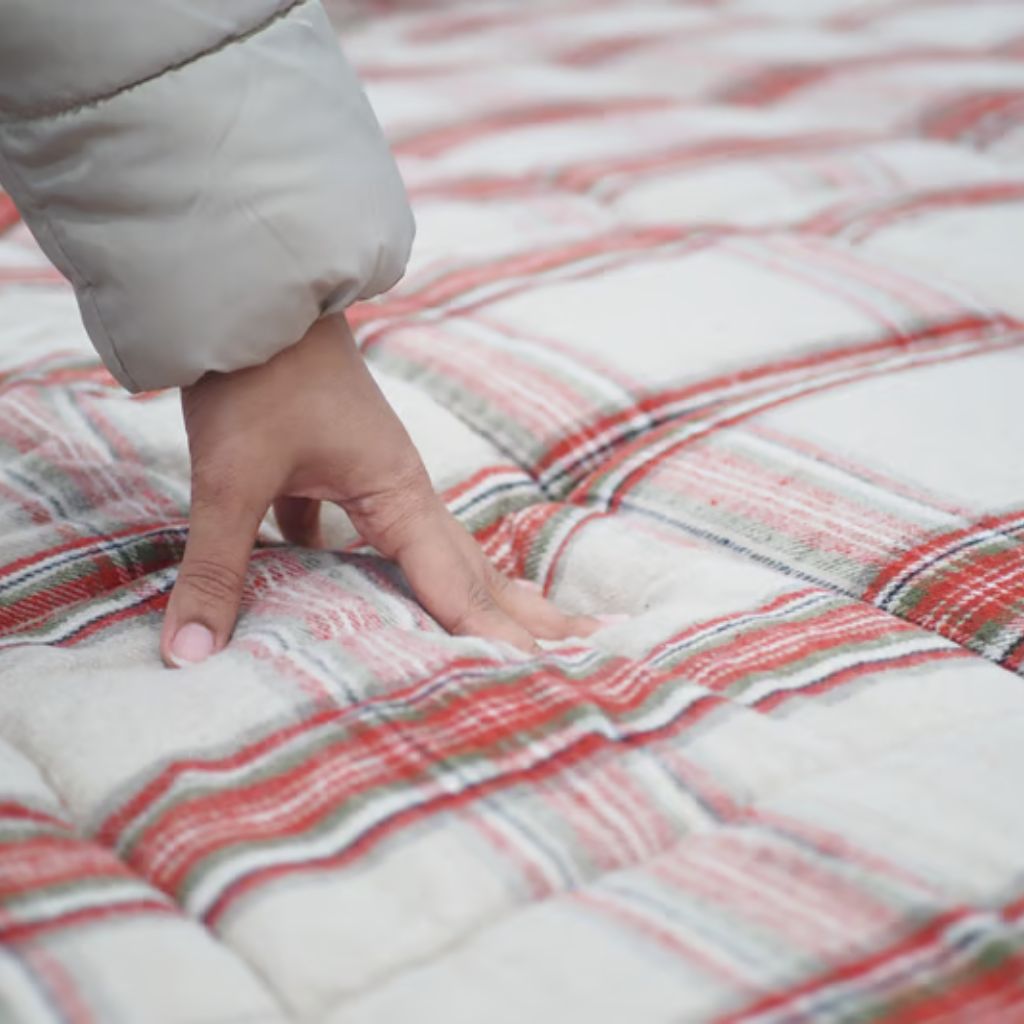
Climate Lock Winter Fabric traps body heat efficiently. It creates micro air pockets within its fibers. Therefore, warm air remains close to the skin.
Unlike ordinary materials, it reduces heat loss quickly. Consequently, wearers feel warm even in freezing weather. This feature makes it ideal for harsh winters.
Windproof and Water-Resistant Design
Strong outer layers block cold winds effectively. At the same time, the fabric resists light rain and snow. Therefore, moisture stays outside the garment.
However, it still allows internal moisture to escape. As a result, users remain dry and comfortable. This balance improves winter performance significantly.
Breathability and Comfort
Breathability remains essential for winter clothing. Climate Lock Winter Fabric supports airflow regulation naturally. Consequently, sweat does not build up easily.
During physical activity, the fabric releases excess heat. Therefore, wearers avoid overheating. This feature ensures comfort during sports and daily use.
Lightweight Yet Durable Structure
Although it feels light, the fabric resists tearing. Advanced weaving techniques strengthen fiber bonds. As a result, garments last longer.
Moreover, lightweight construction improves mobility. People can move freely without heavy clothing pressure. Therefore, it suits both casual and outdoor wear.
Soft and Skin-Friendly Texture
Climate Lock thermal fabric feels smooth against skin. Manufacturers treat fibers to reduce irritation. Therefore, sensitive skin users experience comfort.
Additionally, softness enhances everyday wearability. Unlike rough wool, it feels gentle and flexible. Consequently, users enjoy warmth without discomfort.
Benefits of Climate Lock Winter Fabric
Climate Lock Winter Fabric keeps users warm during extreme cold. At the same time, it prevents overheating indoors. Therefore, temperature regulation improves daily comfort.
Moreover, it reduces sweat accumulation effectively. Because moisture escapes quickly, skin remains dry. As a result, the risk of chills decreases.
Durability also adds long-term value. High-quality fiber bonding prevents early wear. Consequently, winter garments maintain shape and function longer.
Versatility increases its market appeal significantly. Designers use it for jackets, gloves, scarves, and hats. Therefore, consumers find multiple winter solutions in one technology.
Some manufacturers also use recycled fibers. As a result, eco-conscious buyers support sustainable fashion choices.
Comparison With Other Winter Fabrics
| Feature | Climate Lock Winter Fabric | Polar Shield Fabric | ThermoGuard Fabric | Cloud Fleece |
|---|---|---|---|---|
| Insulation | Advanced layered microfibers | Moderate insulation | High thermal lining | Soft warmth |
| Wind Resistance | Strong windproof barrier | Partial resistance | Moderate resistance | Low resistance |
| Water Resistance | Light rain protection | Minimal | Moderate | Low |
| Breathability | High airflow balance | Medium | Medium | High |
| Weight | Lightweight | Medium | Heavy | Light |
| Durability | High | Moderate | High | Moderate |
Climate Lock Winter Fabric offers balanced performance overall. While ThermoGuard provides heavy warmth, it feels bulky. Meanwhile, Cloud Fleece feels softer but lacks wind protection. Therefore, Climate Lock technology combines strength and comfort effectively.
How Climate Lock Technology Works
Climate Lock Winter Fabric uses layered construction technology. First, inner fibers trap body heat in micro pockets. Then, a middle membrane blocks wind penetration. Finally, the outer shell resists moisture exposure.
Because of this structure, warmth stays inside the garment. At the same time, sweat vapor moves outward. This process occurs through breathable microscopic gaps.
Scientifically, trapped air acts as insulation. Air slows heat transfer significantly. Therefore, the body remains warm longer. Additionally, hydrophobic fibers repel water molecules. As a result, rain droplets slide off the surface.
Why Climate Lock Winter Fabric is Essential
Modern winters bring unpredictable weather changes. Therefore, clothing must adapt quickly. Climate Lock Winter Fabric supports dynamic temperature control.
Moreover, urban lifestyles require lightweight outerwear. Heavy garments feel uncomfortable during travel. However, this fabric maintains warmth without bulk.
Outdoor sports also demand flexible protection. Because conditions shift rapidly, reliable insulation matters. Consequently, Climate Lock textile provides dependable winter safety.
Common Uses of Climate Lock Winter Fabric
Jackets, Coats, and Parkas
Designers frequently use Climate Lock Winter Fabric in outerwear. It ensures warmth without excessive thickness. Therefore, jackets remain stylish and functional.
Parkas benefit from its windproof construction. As a result, wearers stay protected during snowstorms.
Gloves, Scarves, and Winter Hats
Accessories also use Climate Lock thermal fabric. Gloves retain finger warmth effectively. Meanwhile, scarves block cold air near the neck.
Hats made from this fabric trap head heat efficiently. Therefore, body temperature remains stable overall.
Outdoor Sports Gear
Skiers and hikers prefer advanced winter textiles. Climate Lock Winter Fabric supports active movement easily. Consequently, athletes stay warm without overheating.
Furthermore, its breathability prevents sweat chills. This feature enhances endurance during long adventures.
Everyday Winter Clothing
Urban commuters need practical winter clothing. Climate Lock fabric suits sweaters and casual coats. Therefore, daily wear becomes more comfortable.
Additionally, office workers appreciate lightweight warmth indoors. Thus, it balances style and function perfectly.
Tips for Choosing the Right Climate Lock Winter Clothing
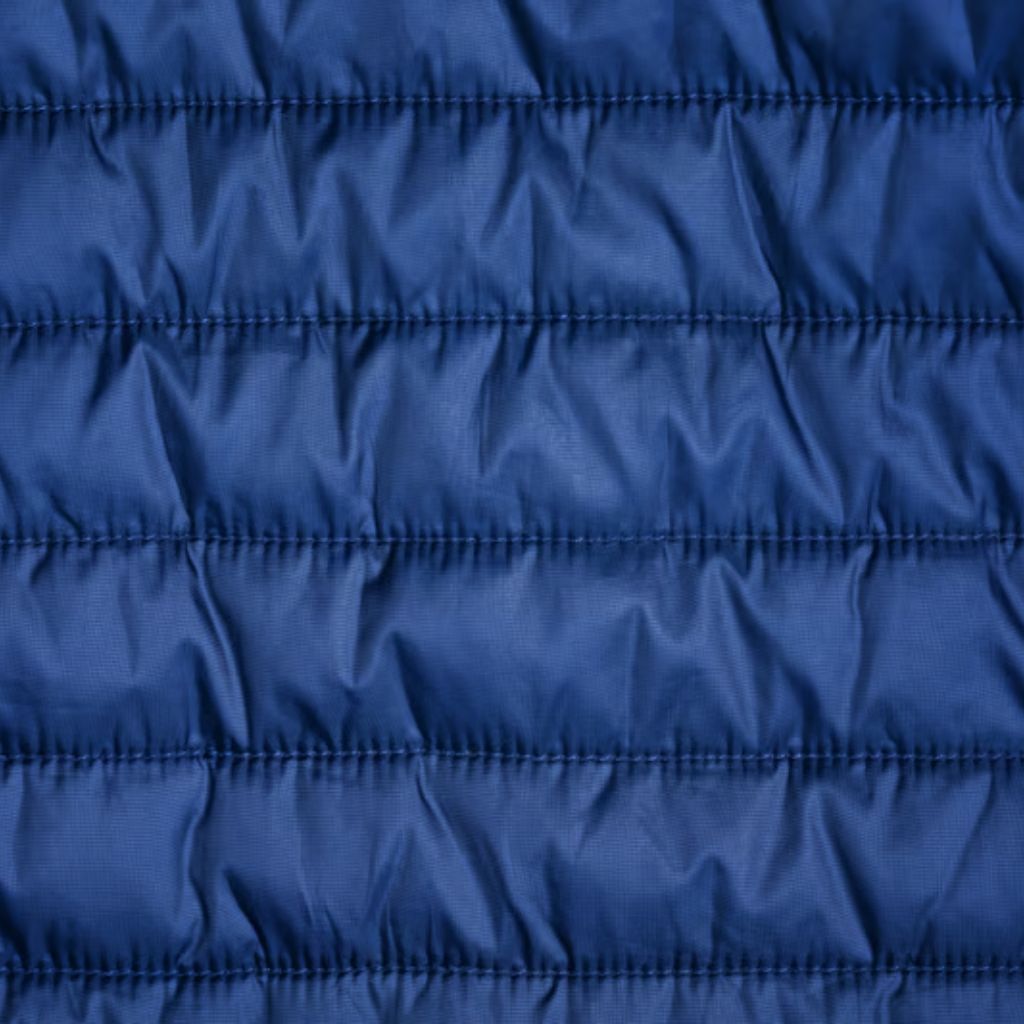
First, check fabric density and stitching quality. Strong seams increase garment durability significantly. Therefore, invest in well-constructed pieces.
Next, choose according to activity level. Lightweight versions suit casual city wear. However, heavy-duty types serve mountain trips better.
Layering also improves performance dramatically. Wear a moisture-wicking base layer underneath. Then add Climate Lock insulation as a mid-layer. Finally, use a protective outer shell if needed.
Customer Reviews and Testimonials
Many users praise Climate Lock Winter Fabric strongly. One customer said, “This jacket kept me warm in freezing winds.” Another shared, “I stayed dry during unexpected snowfall.”
Outdoor enthusiasts appreciate breathability during hiking. Meanwhile, commuters love its lightweight comfort. Therefore, feedback consistently highlights warmth and durability.
Long-term users report minimal wear after multiple winters. Consequently, satisfaction rates remain high.
Where to Buy Climate Lock Winter Fabric Products
Many winter apparel brands offer Climate Lock Winter Fabric collections. Online marketplaces provide various options and price ranges. Typically, jackets range from mid to premium pricing levels.
Sporting goods stores also stock outdoor gear versions. Moreover, seasonal discounts appear during winter promotions. Limited-edition high-performance parkas cost more. However, they provide enhanced insulation layers.
Always check authenticity and product details carefully. Therefore, you ensure genuine Climate Lock textile quality.
Best Uses Of Climate Lock Winter Clothing
Climate Lock Winter Fabric offers excellent performance in various winter situations. Therefore, many designers use it for high-quality outerwear. Jackets and winter coats remain the most popular use. Because the fabric traps body heat effectively, it keeps wearers warm in freezing temperatures. At the same time, it stays lightweight and comfortable. As a result, people can move freely without feeling bulky.
Moreover, parkas made with Climate Lock Winter Fabric provide strong wind protection. This feature makes them suitable for snowy and windy regions. Outdoor workers and travelers benefit greatly from this protection. In addition, the water-resistant layer helps during light rain or snowfall. Consequently, the garment remains dry and functional for longer periods.
Another excellent use involves winter sportswear. Skiers, hikers, and trekkers rely on reliable insulation. Climate Lock thermal fabric supports body warmth while allowing breathability. Therefore, it prevents sweat buildup during intense activity. Because of its flexible structure, athletes maintain comfort and mobility. This combination improves endurance and overall performance outdoors.Accessories also benefit from Climate Lock Winter Fabric technology. Gloves made from this fabric keep hands warm without restricting movement. Scarves and neck warmers block cold air effectively. Meanwhile, winter hats trap heat around the head, which reduces overall heat loss. As a result, full-body warmth improves significantly.
Care and Maintenance of Climate Lock Winter Fabric
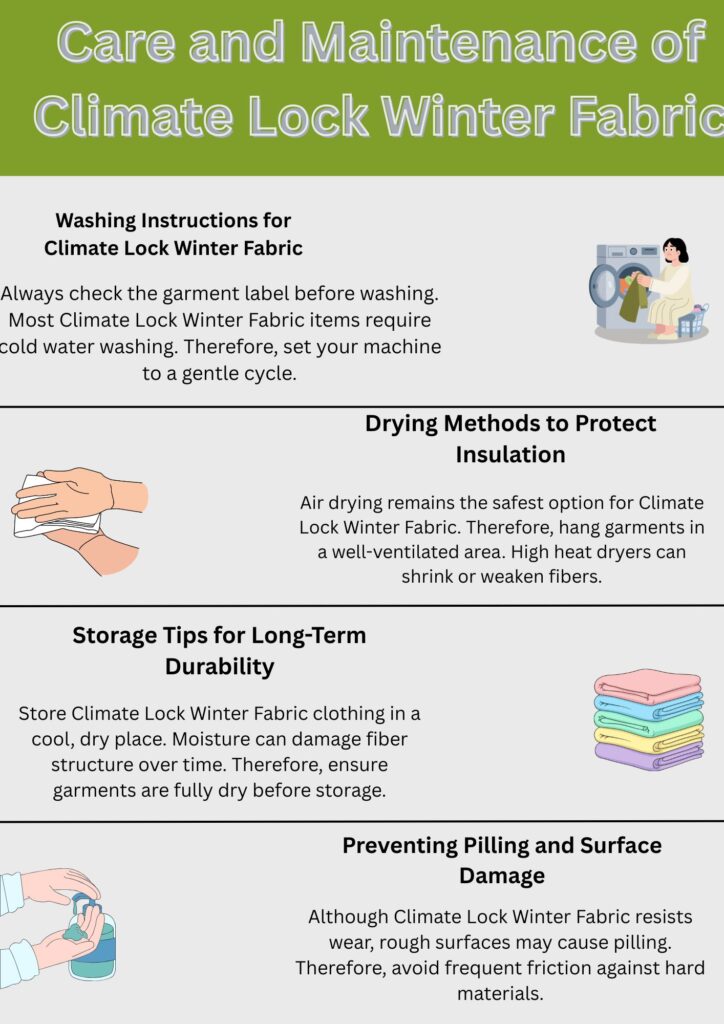
Proper care keeps Climate Lock Winter Fabric performing at its best. Therefore, you must follow correct washing and storage methods. Although the fabric is durable, careless handling reduces insulation strength. Moreover, high heat and harsh chemicals can weaken fibers. With simple steps, you can extend garment life for many winters. Below are essential care guidelines for maintaining Climate Lock thermal fabric quality.
Washing Instructions for Climate Lock Winter Fabric
Always check the garment label before washing. Most Climate Lock Winter Fabric items require cold water washing. Therefore, set your machine to a gentle cycle.
Use mild liquid detergent without bleach. Harsh chemicals damage insulation layers quickly. Additionally, avoid fabric softeners because they reduce breathability. For best results, wash similar colors together and avoid overcrowding the machine.
Drying Methods to Protect Insulation
Air drying remains the safest option for Climate Lock Winter Fabric. Therefore, hang garments in a well-ventilated area. High heat dryers can shrink or weaken fibers.
If you must use a dryer, select low heat only. Moreover, remove the garment promptly after drying. This step prevents wrinkles and insulation compression. Proper drying helps maintain thermal performance.
Storage Tips for Long-Term Durability
Store Climate Lock Winter Fabric clothing in a cool, dry place. Moisture can damage fiber structure over time. Therefore, ensure garments are fully dry before storage.
Avoid compressing heavy jackets tightly for long periods. Instead, hang them on wide hangers. This method protects insulation layers and maintains garment shape. Breathable garment bags also prevent dust buildup.
Preventing Pilling and Surface Damage
Although Climate Lock Winter Fabric resists wear, rough surfaces may cause pilling. Therefore, avoid frequent friction against hard materials.
Turn garments inside out before washing to reduce abrasion. Additionally, avoid washing with heavy items like denim. These simple habits keep the fabric surface smooth and soft.
Souitable Climate Lock Winter Fabric
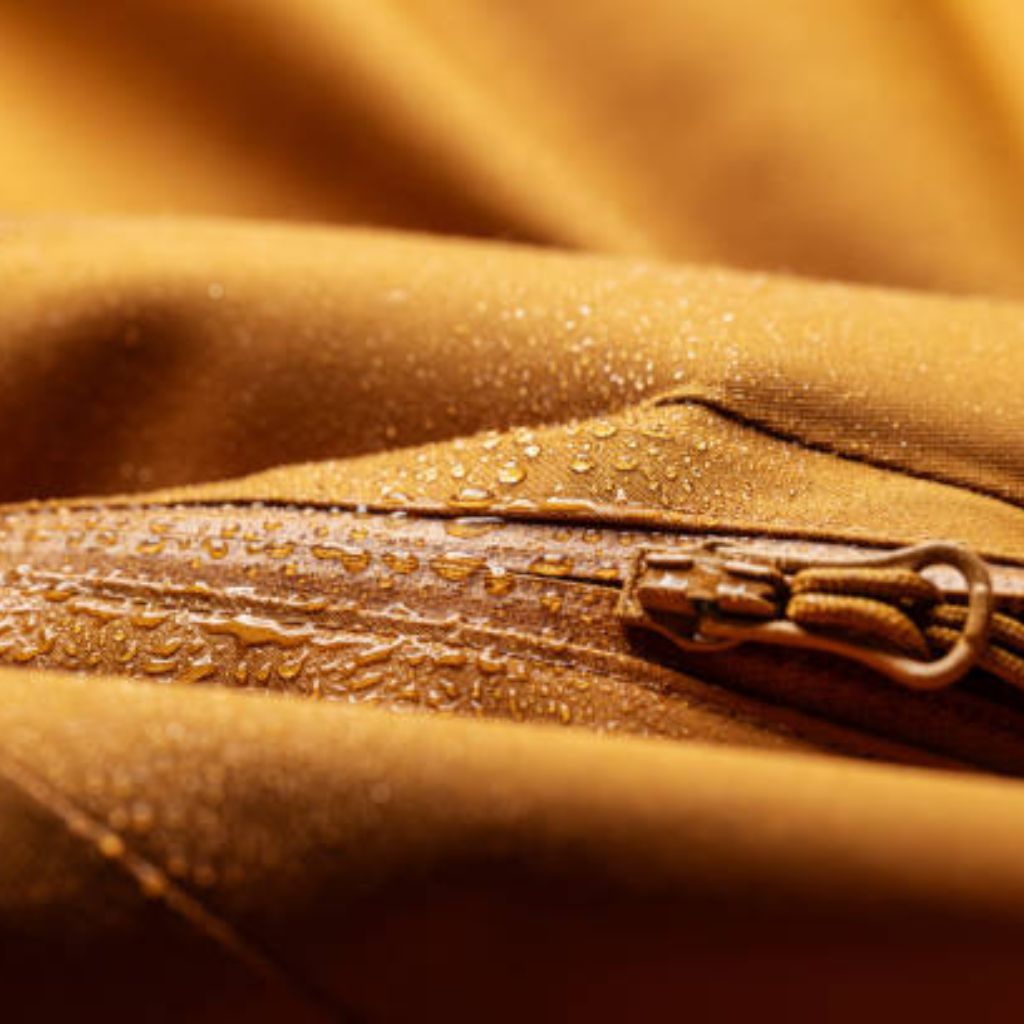
Climate Lock Winter Fabric requires proper care to maintain its warmth and durability. First, always check the care label before washing. Most garments made from Climate Lock thermal fabric need cold water washing. Therefore, use a gentle machine cycle to protect the insulation layers. Choose a mild liquid detergent without bleach. Harsh chemicals can weaken fibers and reduce performance. Additionally, avoid fabric softeners because they can block breathability.
After washing, handle the garment carefully. Air drying works best for Climate Lock Winter Fabric. Hang the clothing in a well-ventilated area away from direct sunlight. High heat from dryers can damage synthetic fibers. However, if you must use a dryer, select the lowest heat setting. Remove the garment immediately after drying to prevent wrinkles and compression. Proper drying keeps the insulation fluffy and effective.
Storage also plays an important role in fabric longevity. Always store Climate Lock Winter Fabric clothing in a cool and dry place. Make sure the garment is completely dry before storing it. Moisture trapped inside can cause odor or fiber damage. Instead of folding heavy jackets tightly, hang them on wide hangers. This method helps maintain shape and insulation strength. You can also use breathable garment bags to prevent dust buildup.
Conclusion
Climate Lock Winter Fabric delivers modern winter protection effectively. It combines insulation, breathability, and durability seamlessly. Therefore, it suits both daily wear and extreme adventures.
Unlike traditional materials, it balances warmth and comfort smartly. Moreover, its lightweight structure improves movement freedom. Consequently, winter dressing becomes easier and safer.
If you value quality winter clothing, choose advanced thermal textiles. Explore Climate Lock Winter Fabric products today. Stay warm, stay dry, and enjoy winter confidently.
FAQs
What makes Climate Lock Winter Fabric different from regular winter fabrics?
Climate Lock Winter Fabric uses advanced layered insulation technology. Therefore, it traps body heat more effectively than standard fleece or wool.
Is Climate Lock Winter Fabric suitable for extreme cold weather?
Yes, Climate Lock Winter Fabric performs well in freezing conditions. Heavy-duty versions provide maximum insulation for snowy environments.
Can I wear Climate Lock Winter Fabric for sports and outdoor activities?
Absolutely, this fabric supports active movement comfortably. Because it remains breathable, it prevents sweat buildup during exercise.
Is Climate Lock Winter Fabric waterproof?
However, it may require an outer waterproof shell during heavy rainfall. Still, it dries faster than wool or cotton fabrics. Therefore, it maintains comfort in damp weather.