
Gore-Tex is one of the most renowned waterproof fabrics in the world. Developed in 1969, it changed outdoor apparel by combining waterproofing with breathability, something rarely achieved by other fabrics. Understanding how Gore-Tex fabric works explains why it is a premium choice for both professional and casual users.
Outdoor enthusiasts, skiers, hikers, and even military personnel rely on Gore-Tex for protection against harsh weather. Its versatility extends to everyday wear, providing reliable comfort in rain or wind. The fabric’s reputation comes from its ability to keep water out while letting sweat escape, ensuring dryness and comfort under a variety of conditions.
What Is Gore-Tex Made Of?
Gore-Tex owes its unique properties to expanded polytetrafluoroethylene, or ePTFE. How Gore-Tex Fabric Works:This polymer is stretched into a microporous membrane, forming the heart of the fabric. These pores are incredibly small roughly 20,000 times smaller than a water droplet but large enough to allow water vapor to escape.
The membrane is extremely thin, often thinner than a human hair, yet it offers excellent durability against tears and abrasions. This combination of strength and flexibility is what makes Gore-Tex materials so effective across a variety of activities, from extreme mountaineering to casual rain jackets.
History Of Gore-Tex Fabric
Gore-Tex has a fascinating history that begins in the late 1960s, when researchers were exploring the potential of polytetra fluoro ethylene, or PTFE, a synthetic polymer known for its durability and chemical resistance.How Gore-Tex Fabric Works: In 1969, Wilbert L. Gore and his son Robert W. Gore discovered that by stretching PTFE under controlled conditions, it could be transformed into a microporous material called expanded PTFE, or ePTFE. This material had unique properties: it was extremely thin yet strong, and it contained billions of microscopic pores that were small enough to block liquid water but large enough to allow water vapor to pass through.
How Gore-Tex Fabric Works
Understanding how Gore-Tex fabric works requires exploring the science behind its waterproofing, breathability, and wind resistance.
The Science Behind Waterproofing
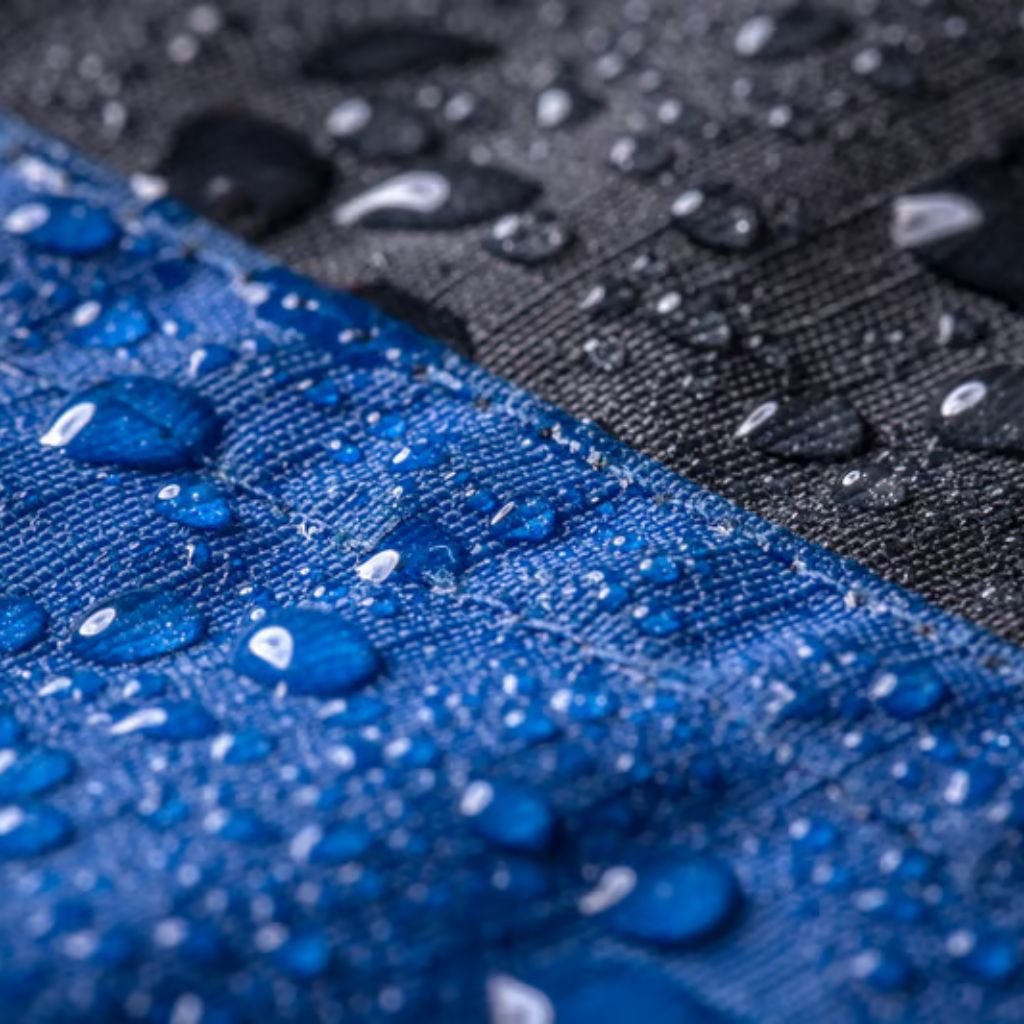
Gore-Tex is waterproof due to its microporous membrane. Each pore is smaller than a water droplet, preventing liquid water from entering while still allowing air and water vapor to pass. Even in heavy rainfall, water beads up and rolls off the fabric. Seams are taped or bonded to eliminate weak points, ensuring complete protection against leaks.
How Gore-Tex Remains Breathable
Breathability is achieved because sweat molecules are smaller than rain droplets. Water vapor escapes through the pores, keeping the wearer dry and comfortable during physical activity.How Gore-Tex Fabric Works: How Gore-Tex Fabric Works:This allows the fabric to regulate temperature and prevent moisture buildup inside garments.
Waterproof, Windproof, and Breathable Explained
Gore-Tex provides triple protection: it repels water, blocks wind, and lets sweat escape. This combination ensures comfort in varying conditions. Whether hiking in rain or skiing in cold winds, the fabric adapts without compromising performance.
Different Types of Gore-Tex Fabrics
Gore-Tex has evolved over decades to meet the needs of various activities and weather conditions. The company has developed several fabric types, each engineered for specific performance goals. Understanding the differences helps users choose the right gear for their needs.
Gore-Tex Pro
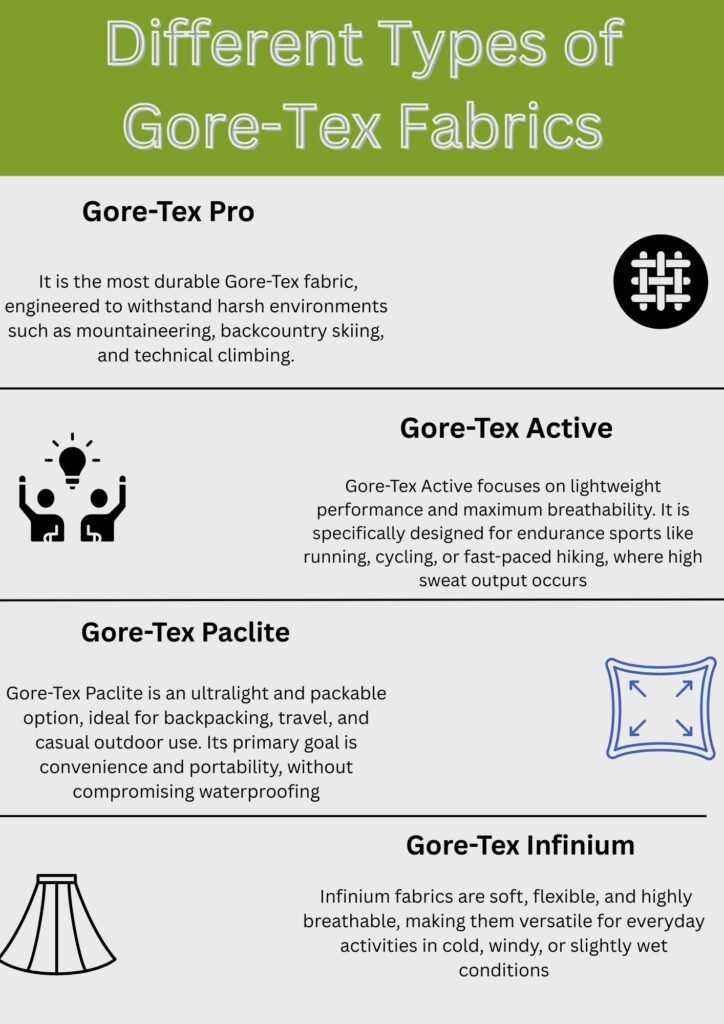
Gore-Tex Pro is designed for extreme conditions and professional use.How Gore-Tex Fabric Works: It is the most durable Gore-Tex fabric, engineered to withstand harsh environments such as mountaineering, backcountry skiing, and technical climbing. The fabric combines a robust outer layer with a high-performance membrane to provide unmatched waterproofing, wind resistance, and breathability. Gore-Tex Pro is heavier than other types but offers superior long-term protection, making it ideal for heavy-duty outdoor adventures where reliability is critical.
Gore-Tex Active
Gore-Tex Active focuses on lightweight performance and maximum breathability. It is specifically designed for endurance sports like running, cycling, or fast-paced hiking, where high sweat output occurs. The fabric is thinner, lighter, and highly breathable while still maintaining full waterproofing. Gore-Tex Active is perfect for activities where mobility and ventilation are prioritized without sacrificing protection against rain or snow.
Gore-Tex Paclite
Gore-Tex Paclite is an ultralight and packable option, ideal for backpacking, travel, and casual outdoor use. Its primary goal is convenience and portability, without compromising waterproofing.How Gore-Tex Fabric Works: The fabric uses a simplified inner lining or sometimes none at all, which reduces weight and bulk. Paclite garments can be folded into a small space, making them a practical choice for travelers who need reliable protection on the go.
Gore-Tex Infinium
Unlike the other types, Gore-Tex Infinium is designed for comfort and wind protection rather than full waterproofing. It excels in urban wear, cycling jackets, and casual outdoor clothing where windproofing and thermal comfort are more important than heavy rain protection.How Gore-Tex Fabric Works: Infinium fabrics are soft, flexible, and highly breathable, making them versatile for everyday activities in cold, windy, or slightly wet conditions.
Gore-Tex Fabric Layer Construction
Gore-Tex garments are engineered using different layer constructions to provide varying levels of durability, weight, and comfort. The number of layers affects performance, mobility, and protection, making it important to understand the differences before choosing a jacket or other gear.

Layer Gore-Tex
Two-layer Gore-Tex garments feature a robust outer fabric bonded to the Gore-Tex membrane, with a separate removable lining for comfort. The outer fabric protects against abrasion, while the membrane ensures full waterproofing and breathability. How Gore-Tex Fabric Works:The removable lining allows for easier washing and adds comfort against the skin. Two-layer constructions are slightly heavier than 2.5-layer garments but provide excellent protection for casual hiking, city use, and moderate outdoor conditions.
Layer Gore-Tex
Two-and-a-half-layer Gore-Tex uses a printed inner layer instead of a full lining, which reduces weight and bulk. This construction maintains waterproofing and breathability while offering a lighter, more packable option. 2.5-layer garments are ideal for backpacking, travel, and activities where minimizing weight is critical. The printed inner layer protects the membrane from abrasion without adding extra material, making it perfect for lightweight jackets or shells.How Gore-Tex Fabric Works:
Layer Gore-Tex
Three-layer Gore-Tex garments bond the membrane directly to both the outer fabric and inner lining, creating a highly durable and long-lasting design. How Gore-Tex Fabric Works:This construction is ideal for professional and extreme outdoor activities such as mountaineering, technical climbing, and backcountry skiing. 3-layer garments provide maximum waterproofing, windproofing, and breathability, along with superior resistance to wear and tear. Although slightly heavier, the added durability makes it a preferred choice for harsh conditions and extended use.
Comparison Table of Gore-Tex Layer Constructions
| Layer Type | Durability | Weight | Best Use |
| 2-Layer | Moderate | Medium | Casual hiking, city wear |
| 2.5-Layer | Moderate | Light | Backpacking, travel, ultralight activities |
| 3-Layer | High | Medium | Professional use, mountaineering, extreme sports |
Understanding the layer construction helps users choose the right Gore-Tex garment based on activity, weather, and personal comfort. Each layer type balances protection, breathability, and weight to meet specific outdoor demands.
Is Gore-Tex Truly Waterproof?
Gore-Tex has earned a reputation as one of the most reliable waterproof fabrics, but many people still ask, “Is Gore-Tex waterproof?” The answer is yes, but with some conditions. Its waterproof performance depends on the combination of its microporous membrane, seam sealing, and the Durable Water Repellent (DWR) coating applied to the outer fabric.How Gore-Tex Fabric Works: Understanding how these elements work together helps explain why Gore-Tex remains a premium choice for outdoor enthusiasts, athletes, and urban users alike.
Gore-Tex uses a microporous ePTFE membrane that contains billions of microscopic pores. Each pore is approximately 20,000 times smaller than a water droplet, making it impossible for liquid water to penetrate. Even during heavy rain, snow, or sleet, water beads up on the surface and rolls off naturally. At the same time, the membrane allows water vapor from sweat to escape, which prevents moisture buildup inside the garment. This combination of waterproofing and breathability is what separates Gore-Tex from other fabrics, which might repel water but trap sweat inside.How Gore-Tex Fabric Works:
Seam Sealing Technology
A critical part of waterproofing is seam sealing.How Gore-Tex Fabric Works: Even the strongest membrane can fail if water seeps in through stitched seams. Gore-Tex garments address this by taping or bonding all seams, ensuring there are no weak points for water to enter. Modern seam technology ensures that even areas with heavy stitching, such as under the arms or around zippers, remain fully waterproof. This is why Gore-Tex jackets can withstand hours of rain or snow without leaks, making them suitable for extreme outdoor conditions like mountaineering or long hikes.
Durable Water Repellent (DWR) Coating
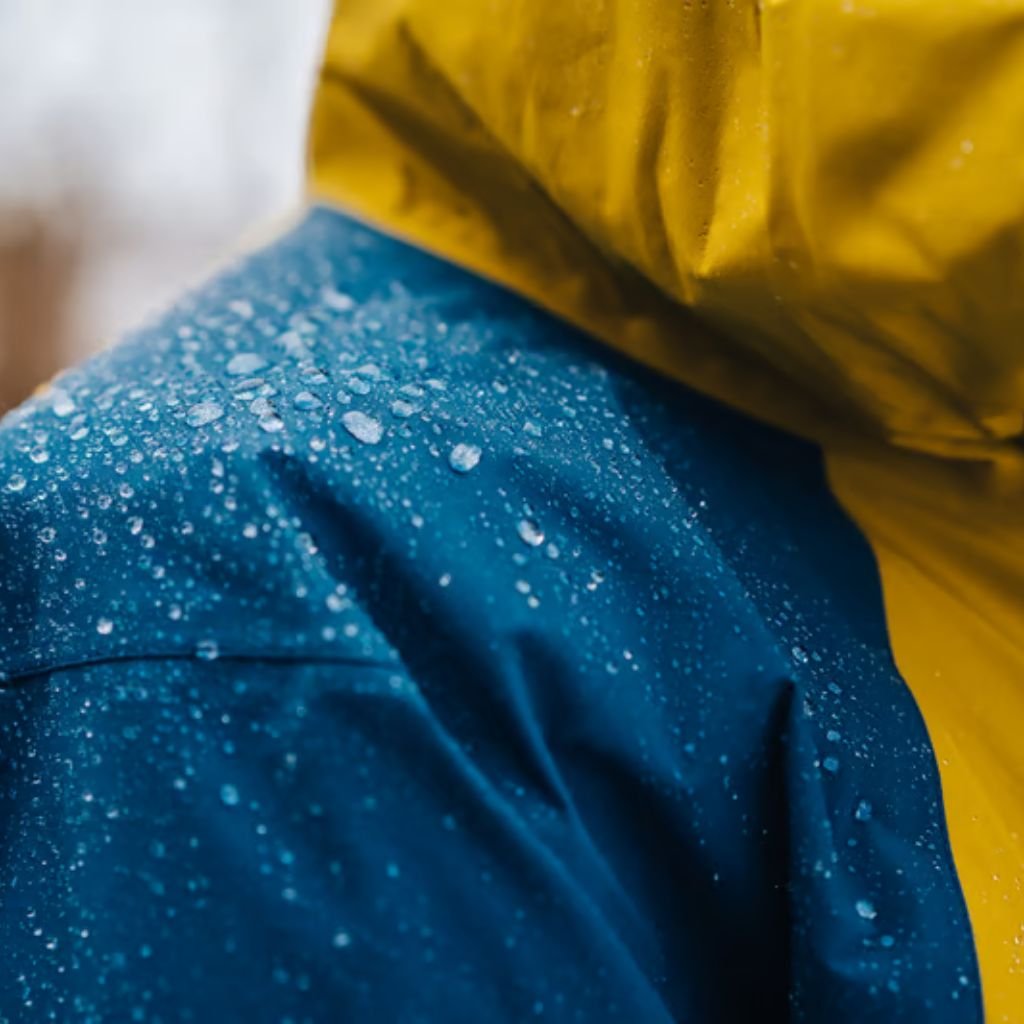
While the membrane and seam sealing keep water from entering, the outer layer of Gore-Tex garments is treated with a Durable Water Repellent (DWR) coating. This coating causes water to bead up and roll off the fabric rather than soaking in. Over time, however, the DWR coating can wear off due to dirt, sweat, or friction. If this happens, water may start to soak into the outer fabric, giving the appearance that the garment is no longer waterproof. Reapplying DWR is essential to restore full performance and maintain the waterproof barrier.
Real-World Performance
In real-world conditions, Gore-Tex performs exceptionally well. Hikers trekking through heavy rain or snow, skiers in wet conditions, and cyclists riding in downpours benefit from its waterproofing. How Gore-Tex Fabric Works:Unlike cheaper alternatives, Gore-Tex does not saturate quickly, which prevents garments from becoming heavy and uncomfortable. The breathability ensures that users remain dry inside, even during high-intensity activities.
However, it’s important to note that Gore-Tex is not invincible. Extremely prolonged exposure to heavy rain without reproofing, or damage to the membrane, can reduce its waterproofing. Maintaining the DWR coating and avoiding heavy abrasion will ensure that the fabric remains highly effective for years.
How Long Does Gore-Tex Last?
Gore-Tex is known for its durability and long-term performance, but like any technical fabric, it has a finite lifespan. Understanding how long Gore-Tex lasts, what affects its durability, and when maintenance is needed is essential for maximizing the fabric’s performance.How Gore-Tex Fabric Works:Proper care and use can significantly extend the life of your Gore-Tex garments, keeping them waterproof, breathable, and comfortable for years.
Durability of the Membrane
The heart of Gore-Tex is its ePTFE membrane, which provides both waterproofing and breathability. Under normal usage, the membrane itself can last several years, often up to a decade in some cases. It is designed to resist tearing, stretching, and general wear. However, extreme activities such as mountaineering, rock climbing, or repeated abrasion against rough surfaces can reduce its lifespan. How Gore-Tex Fabric Works:Frequent exposure to dirt, oils, and harsh detergents can also compromise the membrane over time. Despite this, Gore-Tex remains one of the most durable waterproof fabrics available on the market.
When Gore-Tex Stops Working
Even the most durable Gore-Tex garments may eventually show signs of reduced performance. The most common issues include leaks in seams, reduced breathability, or water soaking into the outer fabric rather than beading off. Often, the problem is not the membrane itself but the outer layer’s Durable Water Repellent (DWR) coating or compromised seam sealing. How Gore-Tex Fabric Works:When water no longer beads on the fabric surface or condensation builds up inside, it is a clear indication that reproofing or maintenance is needed.
Signs Your Gore-Tex Needs Reproofing
Knowing when to reproof your Gore-Tex is crucial to maintaining its waterproof and breathable properties. Some key signs include:
- Water beads no longer form on the surface, and the fabric appears wet after rain.
- Condensation builds up inside the garment during moderate activity.
- Stains or dirt have accumulated, causing the DWR coating to degrade.
Reproofing restores the DWR coating and helps maintain the fabric’s natural water repellency. Simple maintenance, like washing with mild detergent and applying a spray-in or wash-in treatment, can significantly extend the lifespan of Gore-Tex garments.How Gore-Tex Fabric Works:
Factors Affecting Longevity
Several factors influence how long Gore-Tex lasts, including frequency of use, environmental conditions, and type of activity.How Gore-Tex Fabric Works: Jackets used for casual city wear may last longer than those exposed to frequent heavy rain, snow, or abrasion in outdoor adventures. Proper storage is also important; storing wet or dirty garments for extended periods can damage both the membrane and DWR coating.
Gore-Tex vs Other Waterproof Fabrics
Gore-Tex is often compared to other waterproof fabrics because its performance is considered the industry benchmark. Understanding the differences between Gore-Tex and alternative materials helps consumers make informed choices when selecting outdoor gear or technical clothing.
Gore-Tex vs eVent
Both Gore-Tex and eVent fabrics use microporous membranes to combine waterproofing and breathability. eVent is slightly more breathable in extremely active situations because it uses a Direct Venting technology that allows water vapor to escape faster. How Gore-Tex Fabric Works:However, Gore-Tex tends to be more durable and long-lasting, especially in harsh outdoor conditions. The membrane in Gore-Tex is also complemented by advanced seam sealing and a DWR coating, providing a reliable triple protection system. For activities requiring extreme durability and long-term weather resistance, Gore-Tex generally outperforms eVent, even though eVent may feel more ventilated during high-intensity workouts.
Gore-Tex vs Polyurethane-Coated Fabrics
Polyurethane-coated fabrics are often cheaper alternatives to Gore-Tex and are widely used in budget rain jackets and shells. While they provide initial waterproofing, they lack breathability, meaning sweat cannot escape efficiently. Over time, PU coatings tend to crack, peel, or degrade, reducing their waterproofing capabilities. Gore-Tex, on the other hand, maintains performance over years with proper care and reproofing, making it a more reliable long-term investment. The combination of a microporous membrane, DWR coating, and seam sealing ensures that Gore-Tex continues to keep users dry and comfortable even after extensive use.
Gore-Tex vs Softshell Fabrics
Softshell fabrics are designed for flexibility, comfort, and moderate weather protection rather than full waterproofing.How Gore-Tex Fabric Works: How Gore-Tex Fabric Works:They excel in wind resistance and breathability, but they cannot provide the same level of waterproofing as Gore-Tex. Softshells may be water-resistant, shedding light rain for a short time, but they will eventually saturate under heavy rain or prolonged exposure.How Gore-Tex Fabric Works: Gore-Tex, by contrast, combines waterproofing, windproofing, and breathability in one garment. For activities like mountaineering, hiking in wet climates, or skiing, Gore-Tex offers protection that softshell fabrics cannot match.
How to Care for Gore-Tex Fabric
Proper care is essential to maintain the waterproofing, breathability, and durability of Gore-Tex garments. While the fabric is built to last, neglecting washing, drying, or reproofing can reduce its performance over time. How Gore-Tex Fabric Works:Understanding the correct care techniques ensures that your Gore-Tex jackets, pants, or gloves continue to protect you from rain, wind, and snow for years.
Washing Gore-Tex
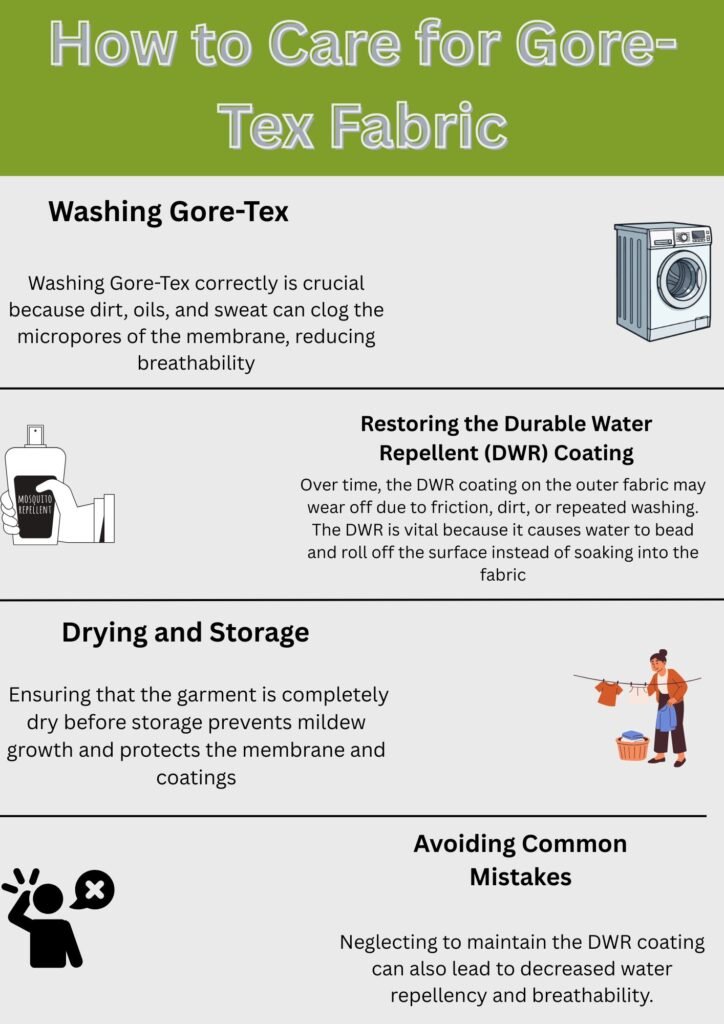
Washing Gore-Tex correctly is crucial because dirt, oils, and sweat can clog the micropores of the membrane, reducing breathability. To clean the garment effectively, it is best to use warm water and a mild liquid detergent specifically designed for technical fabrics. How Gore-Tex Fabric Works:Powdered detergents, bleach, and fabric softeners should always be avoided, as they can damage the membrane and diminish the Durable Water Repellent (DWR) coating.
Restoring the Durable Water Repellent (DWR) Coating
Over time, the DWR coating on the outer fabric may wear off due to friction, dirt, or repeated washing. The DWR is vital because it causes water to bead and roll off the surface instead of soaking into the fabric. Once this coating diminishes, the garment may appear wet on the outside while the membrane underneath still functions.
Drying and Storage
Proper drying and storage practices are equally important for maintaining Gore-Tex performance. Air-drying on a hanger is ideal, but low-temperature tumble drying can also be used when heat activation is needed for DWR restoration.How Gore-Tex Fabric Works: Ensuring that the garment is completely dry before storage prevents mildew growth and protects the membrane and coatings.
Avoiding Common Mistakes
Many users unintentionally reduce the lifespan of their Gore-Tex garments by using fabric softeners, bleach, ironing, dry cleaning, or storing wet and dirty garments for long periods. Neglecting to maintain the DWR coating can also lead to decreased water repellency and breathability.
Advantages and Disadvantages of Gore-Tex
Gore-Tex provides exceptional breathability, long-lasting waterproofing, and wind resistance. However, it comes with a higher cost, requires regular maintenance, and raises environmental concerns due to chemical treatments. Despite these drawbacks, the performance benefits often outweigh the negatives, making Gore-Tex a valuable investment.
Is Gore-Tex Environmentally Friendly?
Recent innovations in Gore-Tex include PFC-free membranes to reduce chemical impact. Sustainability programs focus on recycling old garments and minimizing waste. These initiatives demonstrate Gore-Tex’s commitment to high-performance fabrics while addressing environmental concerns, making it a more eco-conscious choice than earlier versions.

Common Myths About Gore-Tex Fabric
Several myths exist about Gore-Tex. It does breathe, contrary to popular belief. It is not maintenance-free, as washing and reproofing are essential. How Gore-Tex Fabric Works:Finally, not all Gore-Tex fabrics are identical; different types serve specific activities and environments. Understanding these facts helps users make better purchasing and care decisions.
Best Uses of Gore-Tex Fabric
Gore-Tex is widely used in outdoor jackets, hiking boots, gloves, pants, and urban winter wear. Its versatility makes it suitable for both extreme outdoor conditions and daily commuting. The fabric ensures comfort, dryness, and wind protection in nearly any scenario, making it a preferred choice for active and casual users alike.
Who Should Buy Gore-Tex Clothing?
Outdoor enthusiasts, hikers, skiers, travelers, and individuals in cold or wet climates benefit the most.How Gore-Tex Fabric Works: Casual users may choose lighter versions for urban wear, while professionals in demanding environments prefer heavier-duty models. Gore-Tex offers protection for a wide range of users and activities.
Conclusion
Gore-Tex combines waterproofing, breathability, and wind resistance, making it ideal for outdoor adventures and everyday use. Its higher cost is balanced by durability, comfort, and performance. Proper care ensures long-term effectiveness, confirming its status as a premium weather-protection fabric. Understanding how Gore-Tex fabric works highlights why it remains the top choice for millions of users worldwide.
FAQs
How does Gore-Tex keep water out?
Its microporous membrane blocks water droplets while allowing sweat to escape.
Does Gore-Tex stop wind?
Yes, the membrane is windproof, preventing heat loss.
Is Gore-Tex better than waterproof coating?
Yes, it is more durable, breathable, and long-lasting.
Can Gore-Tex fail over time?
Yes, the DWR coating and seams may wear down, but reproofing restores performance.