
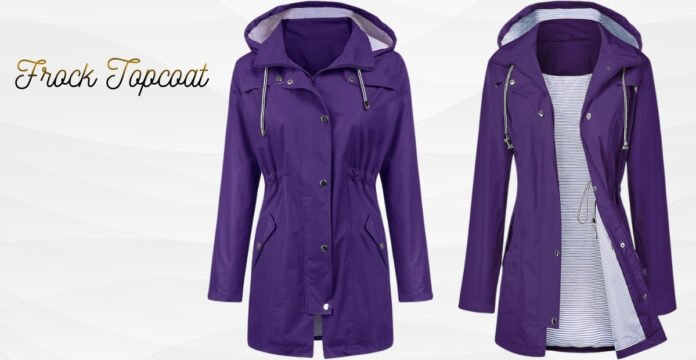
Trends in menswear can shift in the blink of an eye. A selected few garments are able to endure the test of time due to their unending demand across generations. The frock topcoat is such a selection. Despite its historical associations with the Victorian Era, the frock top coat has tied itself to both the versatility and elegance of modern business casual wear.
Frock topcoats are no longer merely a glimpse into the past of menswear styles. Frock topcoats can be found in modern edits of sophisticated menswear. Frock topcoats provide insulation, structure, and unparalleled sophistication. Frock topcoats command attention and maintain their functional versatility for all modern business casual occasion.
The Origins of the Frock Topcoat
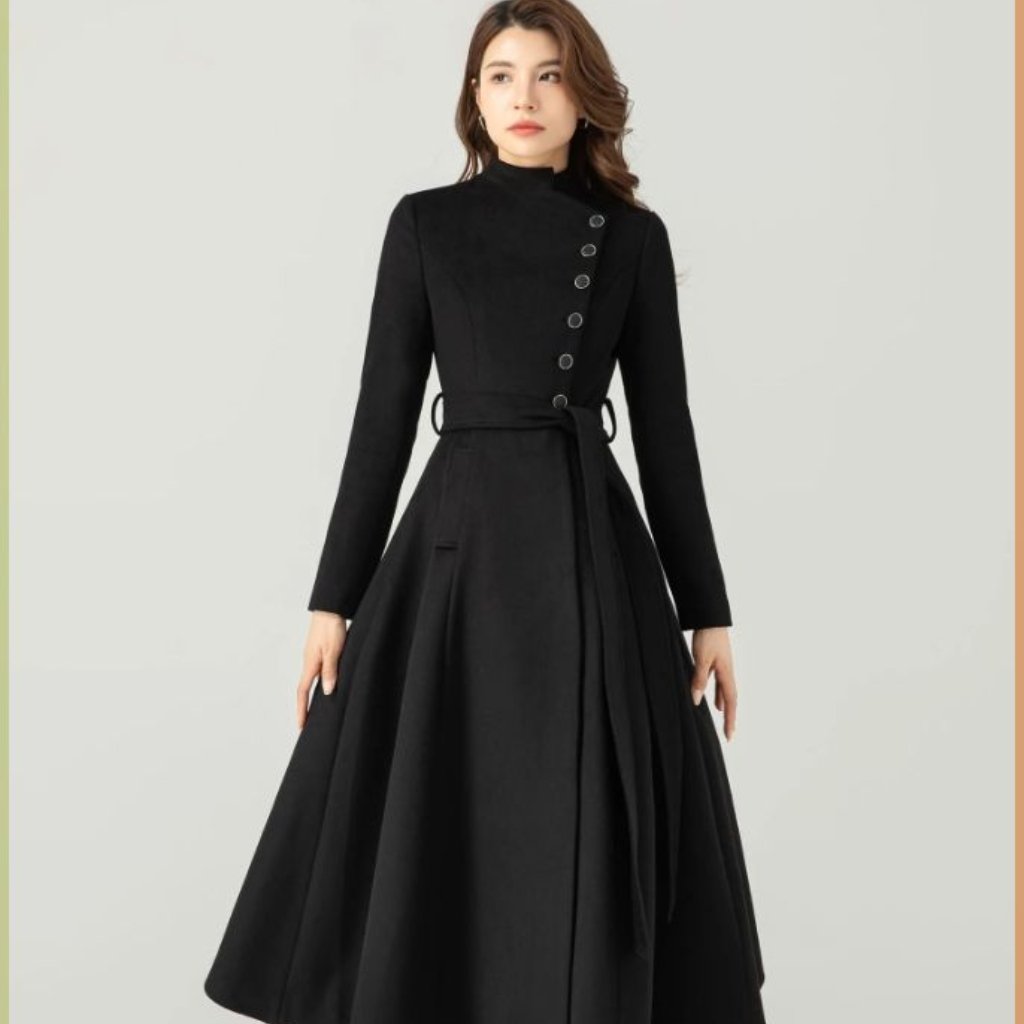
This guide analyses the frock top coat in its entirety, looking into its history, design, fabric, and construction; as well as modern styling to showcase the frock topcoat as an enduring classic of modern menswear.A look at the history of the frock topcoat, in particular, its frock coat component, sheds some light on what the frock topcoat means for the owner. The frock coat component of the topcoat has its origins in the early days of the 19th century. During this period, the frock coat was an essential symbol of formal wear for men. The coat signified a sophisticated impression and a dignified order of dress amongst statesmen, military officers, and professionals.
Defining Features of a Frock Topcoat
With the introduction of lounge suits, everyday use of frock coats dropped tremendously. Frock coats became predominantly associated with formal wear and ceremonial dressing, as well as with traditional tailoring. This is how frock coats popularly survived the passage of time.
The Frock top coat features a distinctive structure that makes it instantly recognizable. Unlike many coats that prioritize comfort over other features, the windproof topcoat favors structure and silhouette over comfort.
Structured Upper Body
To begin with, a sharply structured upper body is visible. And, the shoulders are padded and defined. As a result, the wearer looks straight and commanding. In many cases, there is a chest canvas in order to keep it from losing its shape.
Waist Suppression
Moving on, the waist is softly suppressed. This design is a shaping of an hourglass, and that also improves the posture and presence of a person. In this way, the coat is able to accommodate many body types.
Skirted Lower Half
The unlike modern overcoats, the frosting top coat has a skirted lower section. This section has a slight flare from the waist, allowing a balanced combination of ease of movement and the ability to sustain grace.
Single or Double Breasted Front
In the olden days, the frock top coats were made to be single breasted. Nowadays, it is quite common to make double breasted. Both of these styles present an authoritative look, although the double breasted tends to be more formal.
Lapels and Buttons
Out of all the options available, the lapels are the most common, but notch lapels can be seen too. To present an extra ceremonial feel to the coat, the buttons can be covered and polished.
Fabrics Used in Frock Topcoats
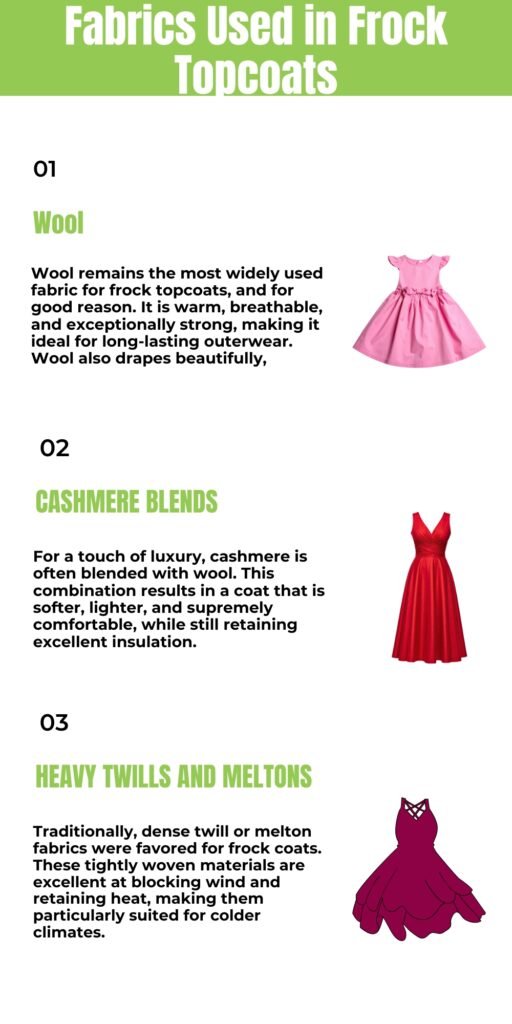
The fabric from which the top coat is made must provide comfort as well as a long life, which must be well balanced.
Wool:
Wool is still the largest and most common material used. This is due to the many great qualities it has including being warm, breathable and very strong. Plus, it has an amazing ability to be draped, which improves the structured look of the coat even more.
Cashmere Blends
Luxury cashmere is frequently coupled with wool. As a result, the coat becomes softer, lighter, and still maintains the necessary insulation.
Heavy Twills and Meltons
Historically, the use of dense melton or twill fabrics were used. These materials are tightly woven and often block wind and retain heat. Therefore, they are suited for colder climates.
Importance of Fit in a Frock Topcoat
Arguably the most important element of a men topcoat is the fit. The more structured the garment, the more obvious errors become.
Shoulder Fit
Shoulders must sit with the wearer’s natural shoulder line. If there is misalignment, the whole silhouette gets thrown off, which is why this is the first area to check.
Chest and Waist
The chest section should be able to offer movement, and should even be able to allow for a little bit of excess fabric. The waist however, should be shaped to offer a bit more of a restrictive fit. The coat should contour to the natural shape of the body.
Sleeve Length
Ideally sleeves should sit a little above the wrist. This way, a bit of the shirt and the cuff should be visible.
Overall Length
Oftentimes, the frock topcoat will sit just below the knee. This is to achieve a good balance between warmth and formality. As such, modern versions will be a bit shorter, though they should not be shortened too much.
Formal Occasions for Wearing a Frock Topcoat
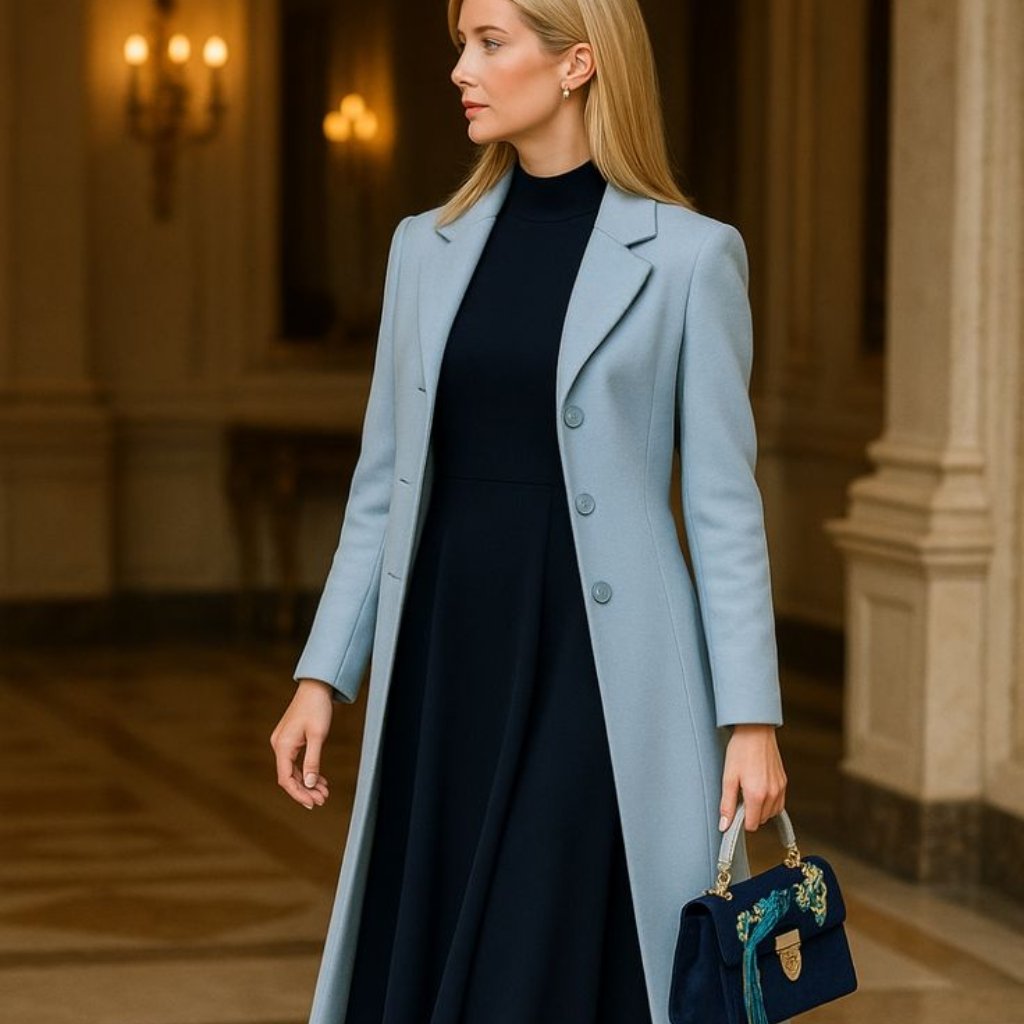
The frock topcoat is typically known as a formal piece of attire, so knowing when and where to wear this topcoat is exactly what makes this piece of clothing so special and what can enhance formal attire the most.
Weddings
The frock topcoat can be a fantastic component of your attire for winter weddings, particularly for the more formal components of the wedding, i.e. the wedding ceremony. The paletot topcoat can go perfectly with three-piece suits as well as full morning dress.
Ceremonial Events
the frock topcoat can be the perfect accompaniment to state functions, official ceremonies, and all other formal gatherings that require a more traditional style of outerwear.
Evening Functions
When the frock topcoat is worn over a tuxedo or a formal suit, it can be a frock topcoat of black or charcoal color, and this can make your entire outfit even more fantastic and can make your entire outfit even more formal.
Modern Styling of the Frock Topcoat
Even though the frock topcoat is full of tradition, it can be worn for modern and contemporary situations as well.
With Business Attire
The frock topcoat has the ability to make the outfit even more stunning in the even the white topcoat is worn with a tailored suit. When the entire outfit is worn, the frock top coat provides a sense of confidence and professionalism, which is perfect for top-level and formal business and other formal events.
With Smart Casual Looks
The frock topcoat can also be worn with knitwear and other items, so frock top coat, along with other components can reflect a more modern urban style.
Color Preferences
Black and charcoal, as always, are sure to remain highly classic, but more modern colors are sure to be black, deep green, navy, and more modern colors in frock top coats, which are sure to be deep brown, and other colors. Top coats in these colors are sure to remain formal but also stylish.
Construction Techniques and Craftsmanship
The internal craftsmanship and construction of a frock topcoat is what makes a great one.
Canvas Structure
Traditionally, a full canvas interior is made. This canvas is hand-stitched to the fabric. Over time, it adjusts itself to the wearer, improving fit and comfort.
Hand Finished Details
Lapels are hand-pressed, and buttonholes are hand-sewn. This makes the coat develop character with age.
Lining and Interfacing
Viscose linings and silk linings are materials that are used to line the frock topcoat.
Caring for Your Frock Topcoat
A topcoat is a frock topcoat is a topcoat
Regular Brushing
The coat should be brushed after every wear to remove dust, and it should be brushed regularly to keep the surface to preserve the fabric.
Proper Storage
Use wide wooden hangers. a coat should be stored in a garment bag.
Professional Cleaning
The coat should not be dry cleaned often. Dry Cleaning should be reserved for visible stains or seasonal maintenance, as cleaning the coat too often can weaken the coat.
The Frock Topcoat in Contemporary Menswear
The frock topcoat has been reinvented by many designers in the past few years. They now often use slimmer cuts, lighter fabrics, and minimalist details.
While the silhouette may have been adjusted, the frock topcoat still symbolizes discipline, elegance, and restraint.
Why Every Gentleman Should Own a Frock Topcoat
There are many reasons why the topcoat still stands strong and remains relevant.
To start, topcoats offer the highest level of formal attire. Secondly, Topcoats provide great insulation from the cold. Lastly, topcoats provide an elevated level of style and sophistication to any ensemble.
Also, topcoats will never go out of style. With its classic aesthetic, a quality topcoat never looks out of touch.
Conclusion:
A frock topcoat made from quality material signifies refinement and discipline. Any gentleman who wears a topcoat for a formal occasion or pairs it with a modern outfit from today will look sophisticated.
Topcoats are perfect for gentlemen who appreciate a quality garment that combines tradition, structured design, and enduring sophisticated style.
FAQs
What occasions are suitable for wearing a frock topcoat?
A: Frock topcoats are ideal for formal events, weddings, state ceremonies, and evening functions. They also complement business attire for professional settings.
How should a frock topcoat fit?
A: The coat should have structured shoulders, a tapered waist, and sleeves ending just above the wrist bone. It should follow the natural contours of the body without restriction.
Which fabrics are best for frock topcoats?
A: Wool, wool-cashmere blends, and heavy twill or melton fabrics are preferred for warmth, durability, and a refined drape.


