Vegan Winter Fabric Explained is a new approach to winter clothes. It talks of clothes that are warming without involving any animal fabric. These fabrics do not use wool, fur, silk, leather, and all the animal coating. They instead use plant fibers and high technology synthetic. This makes winter fashion more amiable, protective, and welcoming to most individuals.
Vegan winter clothes are becoming popular in the fashion industry today. Customers are now wondering about the way their garments are produced.Vegan Winter Fabric Explained: They are animal welfare and environmental conscious. Thus, cruelty-free winter collections are created by the brands at a rapid pace. This change is not a trend. It is a slow movement towards green fashion.
In addition, vegan fabrics are not the same as cruelty-free and sustainable fabrics. Vegan fabrics do not include any animal contribution. Cruelty-free fabrics do not involve testing, however, they could make use of wool or silk. Environmentally friendly fabrics are concerned with environmental degradation. The terms are of different meanings. Such differences are known to enable buyers make better decisions.
Vegan Winter Fabric Explained is noticeable in the first hundred words. This enhances the visibility of search. Concurrently, it leads the readers in the right direction. Nonwool warm clothes will be applied in practice to cold seasons.
History of Vegan Winter Fabrics
Vegan Winter Fabric Explained has roots that stretch back more than a century. The idea of replacing animal fibers began during early industrial textile development. When wool shortages appeared during wars and economic crises, scientists searched for alternatives.Vegan Winter Fabric Explained: As a result, the first synthetic fibers entered winter clothing production.
In the late nineteenth century, rayon became the first regenerated plant fiber. It offered a silk-like feel without using silkworms. Although rayon lacked strong warmth, it proved that animal-free textiles were possible. This moment marked the beginning of vegan textile history.
What Makes a Fabric Vegan?
A vegan cloth has no animal substance of any sort in the manufacturing process. This is applicable to fibers, dyes, finishes and processing agents. By even assessing minor quantities of coating of animal origin, a fabric is automatically not a vegan one. Hence, rigid discipline is still necessary.Vegan Winter Fabric Explained:
Wool, cashmere, alpaca, fur, silk and leather are animal materials to be avoided. The Lanolin contained in the sheep wool also violates the vegan principle. Because of this, manufacturers have to be able to scrutinize all the supply stages. Vegan fashion starts to be based on transparency.
The certification is significant. PETA-Approved Vegan labels assure that no animal products are used. OEKO-TX certification guarantees safety of chemicals. It is GOTS certified organic plant firbers. Such labels save the buyer the price of false statements.Vegan Winter Fabric Explained:
It is also clear labelling which helps in preventing confusion. Other fabrics appear vegan and have abstract animal finishes. Hence, tag reading needs careful attention. Ethical shopping is enlightened.
Why Choose Vegan Winter Fabrics?
Most winter clothes are based on ethical values. Animal suffering is eliminated by vegan winter fabrics. They eliminate farming, shearing, and trapping of the fashion chain. Winter clothes are therefore a charitable affair.
Another reason is provided by environmental protection.Vegan Winter Fabric Explained: Farming of animals consumes a lot of water and land. It is a source of greenhouse gases as well. Vegan Winter Fabric Explained:Vegan clothing eases this load by a long way. When plant fibers and recycled ones are used, emissions reduce even more.
The vegan materials also crack and are pleasant to the skin. A lot of individuals are itchy towards wool. Fabrics of vegan are smoother and soft to the touch. Hence, they are highly favored by skin sensitive users.
Moreover, the irritation is decreased by hypoallergenity. Eczematous and allergic people are beneficiaries. One cloth option fulfills the needs of comfort and ethics.
Best Vegan Winter Fabrics Explained
Brushed or fleeced, organic cotton is warmly soft. It encloses air between fibers and forms light weight insulation. The breathability is also good and this avoids overheat. Absorptive product Moisture absorption is natural and keeps the skin dry. Organic agriculture lowers the application of pesticides and safeguards the condition of the soil. Hoodies, pajamas, liners, light winter suitings are some of the garments that fit this fabric.
Hollow fibers give good insulation by using recycled polyester. It is effective at harnessing heat even in cold air. Modern methods of weaving enhance the breathability.Vegan Winter Fabric Explained: Moisture wicking ensures the body does not get wet when it is in use. Sustainability is enhanced through minimization of plastic waste. This cloth is the leading one in jackets, puffers, and insulated coats.
TENCEL™ Lyocell is lightweight, and it offers high temperature control. It acclimates to the warmth of the body and eliminates chilliness.Vegan Winter Fabric Explained: In layered systems, breathability remains high. The moisture is diffused rapidly off the skin. The closed-loop production restricts the waste of chemicals. It is a cloth that is most efficient in thermal underwear and base layers.
The bamboo is a moderate warm material that has a natural softness. It is well balanced in terms of insulation and air flow. Daily wear is maintained when keeping moisture. Sustainability relies on processing procedures. It is responsible production that enhances its eco profile.Vegan Winter Fabric Explained: This cloth is good in long-sleeved tops, liners, and sweaters.
Modal fabric offers soft warmth and is smooth. It controls heat and does not retain unnecessary moisture. The movement is not accompanied by changes in breathability. The sourcing is made more environmentally friendly. This is a cloth used in indoor winter attire and base.Vegan Winter Fabric Explained:
Wool-like acrylic fabric has the same insulating power. It is very effective with capturing air and is lightweight. Breathability remains moderately high and needs to be layered. There is still limited moisture control. Sustainability remains low because of petroleum origin. This cloth comes in sweaters, scarves and knitwear.
Vegan leather keeps the wind out and keeps the surface heat. It is effective as an external coating. There is still low breathability and, therefore, lining is necessary. Bio based forms minimise environmental impact. The material is applicable in jackets, coats and winter boots.
Warmth Comparison: Vegan vs Animal-Based Fabrics
Wool and cashmere insulate by the means of natural crimped fibers. They entrap air and trap heat effectively. On the contrary, vegan fabrics are based on artificial fibers. Vegan Winter Fabric Explained:The modern insulation is not far behind this performance.
Extremely cold conditions makes layering the primary technique. The vegan insulation involves hollow fiber, quilted batting and thermal lining. These techniques conserve the body heat.Vegan Winter Fabric Explained: That is why vegan winter clothing can be used even during extreme weather conditions.
High-tech stitching and shell fabrics enhance the ability to resist the wind. The amount of heat loss is minimized. Consequently, the vegan coats have become as warm as the traditional wool coats.
Types of Vegan Winter Fabrics Explained
Vegan Winter Fabric Explained includes a wide range of fabric types designed for cold climates. Each type offers a different balance of warmth, breathability, durability, and sustainability. Understanding these types helps buyers choose fabrics that match their climate, activity level, and ethical goals.
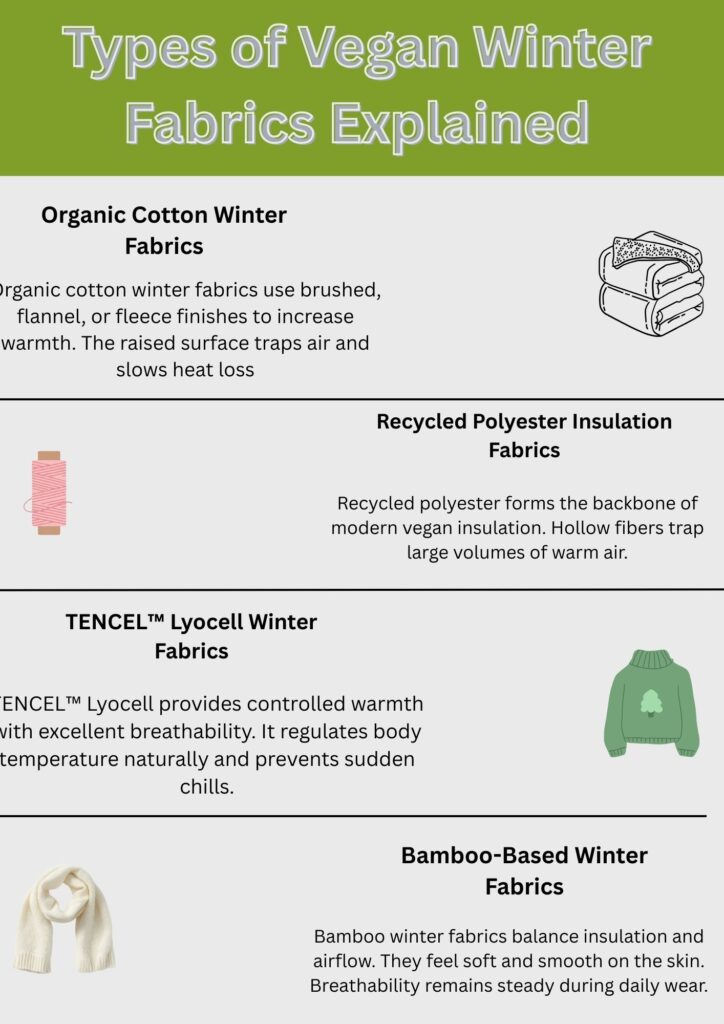
Organic Cotton Winter Fabrics
Organic cotton winter fabrics use brushed, flannel, or fleece finishes to increase warmth. The raised surface traps air and slows heat loss. Breathability remains high, which prevents overheating indoors.
Moisture absorption keeps the skin dry in mild cold. Organic farming reduces chemical pollution and protects soil health. Therefore, organic cotton suits light winter layers and indoor garments.
Recycled Polyester Insulation Fabrics
Recycled polyester forms the backbone of modern vegan insulation. Hollow fibers trap large volumes of warm air. Heat retention remains strong even in freezing temperatures.
Moisture moves away from the body quickly. Sustainability improves by reusing plastic waste. As a result, this fabric dominates jackets, puffers, and thermal coats.
TENCEL™ Lyocell Winter Fabrics
TENCEL™ Lyocell provides controlled warmth with excellent breathability. It regulates body temperature naturally and prevents sudden chills.
Closed-loop production reduces chemical waste. Soft texture protects sensitive skin. Therefore, this fabric works best in base layers and thermal underwear.
Bamboo-Based Winter Fabrics
Bamboo winter fabrics balance insulation and airflow. They feel soft and smooth on the skin. Breathability remains steady during daily wear.
Moisture control works naturally through fiber structure. Sustainable impact depends on processing method. This fabric suits sweaters and inner layers.
Are Vegan Winter Fabrics Eco-Friendly?
Vegan Winter Fabric Explained often raises an important environmental question.Vegan Winter Fabric Explained: Many buyers assume vegan always means green. However, eco-friendliness depends on fiber type, production method, and end-of-life impact. Therefore, this topic requires careful and balanced analysis.Vegan Winter Fabric Explained:
Vegan winter fabrics include both natural and synthetic materials. Each category affects the planet in a different way. Understanding these differences helps consumers choose more responsible winter clothing.Vegan Winter Fabric Explained:
Natural Vegan Fabrics and Environmental Impact
Natural vegan fabrics such as organic cotton, bamboo, hemp, and TENCEL™ come from plants or regenerated cellulose. These fibers usually break down naturally over time. Therefore, their long-term pollution risk remains low.
Organic farming reduces pesticide use and protects soil health. temperaturesWater use still matters, especially for cotton. However, certified organic systems manage resources more carefully. Vegan Winter Fabric Explained:As a result, natural vegan fabrics often show a smaller environmental footprint.
Synthetic Vegan Fabrics and Microplastic Concerns
Synthetic vegan fabrics include recycled polyester, acrylic, and polyurethane. These materials provide strong warmth and durability. However, they release microplastics during washing.temperatures These tiny fibers enter rivers and oceans easily.
Modern filtration systems and washing bags reduce this problem. Brands also develop low-shed yarns. Therefore, synthetic impact can be managed with better technology and consumer care.
Recycled Fibers and Circular Fashion
Recycled polyester and recycled nylon reduce plastic waste significantly. They turn bottles and fishing nets into insulation fibers. This process saves energy compared to virgin plastic production.
Circular fashion models encourage reuse and recycling. Vegan Winter Fabric Explained:Garments designed for disassembly improve end-of-life recovery. Vegan Winter Fabric Explained:As a result, recycled vegan fabrics support a more sustainable fashion system.
Sustainable Production Methods
Eco-friendly production focuses on clean energy, low water use, and safe chemicals. Closed-loop systems recover solvents and reuse water. Certifications verify these practices clearly.
When brands combine vegan ethics with clean production, environmental benefits increase strongly. Therefore, vegan winter fabrics can become both cruelty-free and truly sustainable.
Common Uses of Vegan Winter Fabrics
Vegan Winter Fabric Explained shows that cruelty-free materials fit every part of winter life. These fabrics appear in daily clothing, outdoor gear, home textiles, and accessories. Their versatility makes them practical for both urban and cold rural environments. Understanding their common uses helps buyers select the right fabric for each purpose.
Winter Jackets and Coats
Winter jackets rely heavily on vegan insulation. Recycled polyester fills trap warm air efficiently. Windproof shells block cold drafts and snow. Vegan Winter Fabric Explained:As a result, vegan coats protect the body even in freezing temperatures.
Designers also use layered construction to improve heat retention.temperatures Quilted panels distribute warmth evenly. Therefore, vegan winter jackets now match traditional wool coats in performance.
Sweaters and Hoodies
Sweaters and hoodies use acrylic, organic cotton, bamboo, and modal blends. These fabrics provide moderate warmth with soft texture. Breathability remains balanced for indoor and outdoor use.
Moisture control keeps the skin dry during movement. Therefore, vegan knitwear suits daily wear, travel, and casual winter activities.
Thermal Wear and Base Layers
Thermal wear plays a vital role in winter comfort. TENCEL™, bamboo, and recycled polyester manage sweat effectively. They move moisture away from the skin quickly.
These base layers prevent chilling during rest. As a result, they improve overall warmth when layered under outer garments.
Blankets and Bedding
Vegan winter fabrics also appear in home textiles. Brushed cotton and microfiber provide gentle insulation. They retain body heat without heavy weight.
Breathability prevents overheating during sleep. Therefore, vegan blankets and bedding improve winter comfort indoors.
Accessories: Scarves, Gloves, and Hats
Accessories complete winter protection. Fleece, acrylic, and recycled knits insulate hands, neck, and head. These areas lose heat quickly in cold air.
Soft textures prevent skin irritation. As a result, vegan accessories offer both warmth and comfort throughout winter days.
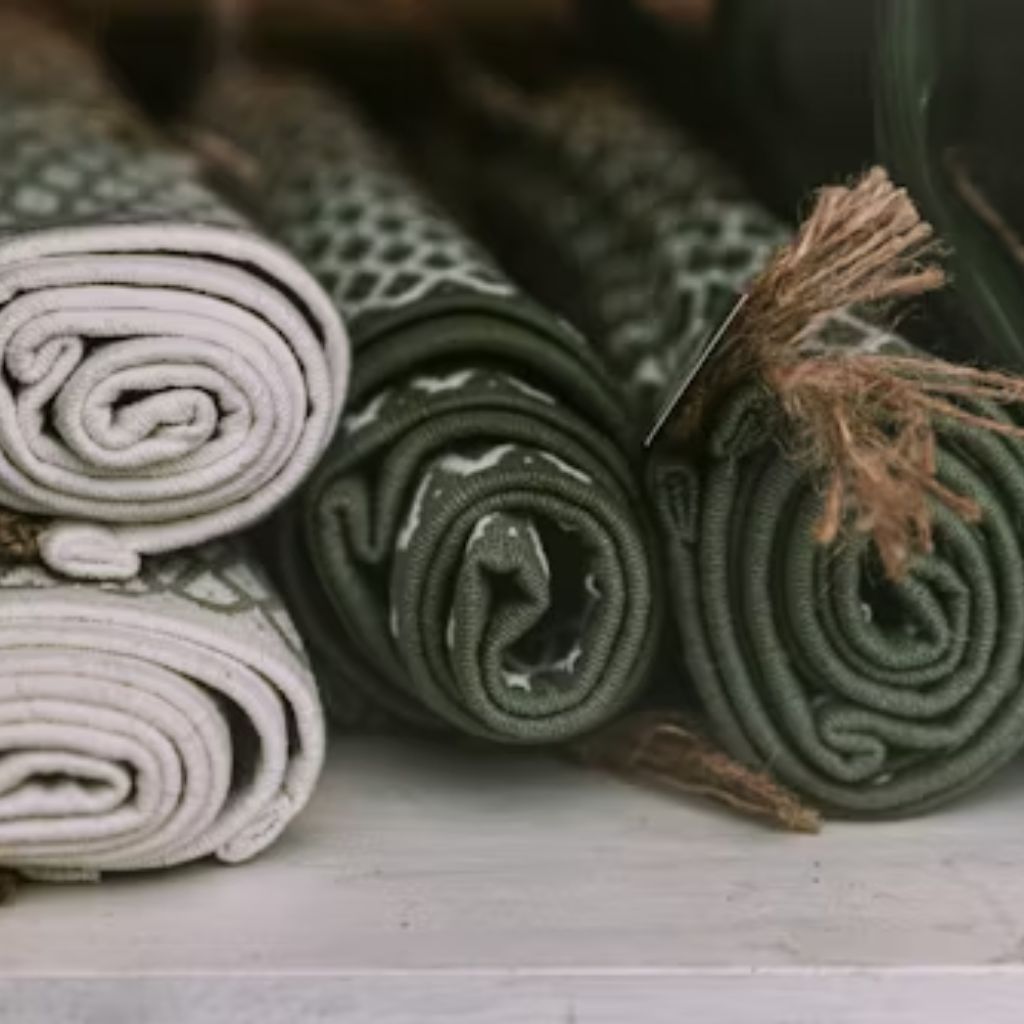
Vegan Winter Fabrics for Extreme Cold
Vegan Winter Fabric Explained proves that cruelty-free materials can protect the body even in severe winter conditions. Extreme cold places heavy demands on clothing systems. Low temperatures, strong winds, and snow increase heat loss rapidly. Therefore, vegan winter fabrics must work together through smart layering and insulation design.
In very cold climates, a single fabric never provides enough protection. Instead, warmth depends on a complete clothing system. Each layer performs a specific role. When these layers work in balance, vegan winter clothing can maintain comfort even below freezing.
Layering Systems with Vegan Materials
Layering remains the most reliable method for extreme cold protection. The base layer touches the skin and manages moisture. Bamboo, TENCEL™, and recycled polyester move sweat away quickly. This prevents dampness, which causes rapid heat loss.temperatures
The mid layer traps warm air close to the body.Vegan Winter Fabric Explained: Fleece, brushed cotton, and lightweight synthetic insulation perform this task well. These materials create air pockets that slow heat escape. Therefore, body temperature remains stable during rest and movement.
The outer layer blocks wind, snow, and rain. Vegan shells made from recycled polyester or polyurethane form a strong barrier. Windproof membranes reduce convective heat loss significantly. As a result, inner layers can retain warmth effectively.
Insulated Vegan Outerwear
Insulated vegan jackets use synthetic down alternatives. These fibers mimic the loft of animal down. They trap large volumes of air while staying light in weight. Even when wet, synthetic insulation continues to provide warmth.
Modern quilting techniques distribute insulation evenly. Cold spots reduce greatly through smart stitching patterns. Therefore, heat remains balanced across the entire garment surface.temperatures
Shell fabrics also improve thermal performance.Vegan Winter Fabric Explained: Durable water-repellent coatings keep snow from soaking in. Wind-resistant weaves reduce heat loss during storms. These features allow vegan outerwear to perform well in polar conditions.
Best Fabric Combinations for Harsh Climates
Extreme cold requires careful fabric combinations.temperatures A moisture-wicking base layer pairs best with a thick insulating mid layer. This system prevents sweat buildup while trapping heat efficiently.
Recycled polyester insulation works well with fleece mid layers. Bamboo or TENCEL™ base layers add comfort and dryness. Together, these fabrics create a stable thermal system.
Outer shells made from laminated recycled fabrics block wind penetration. When sealed seams are added, snow and ice stay outside.
How to Care for Vegan Winter Fabrics
Vegan Winter Fabric Explained also depends on proper care for long-term performance. Winter fabrics face stress from cold, moisture, and frequent washing.Vegan Winter Fabric Explained: Without correct care, fibers lose strength and insulation drops. Therefore, learning proper maintenance becomes essential for durability and comfort.
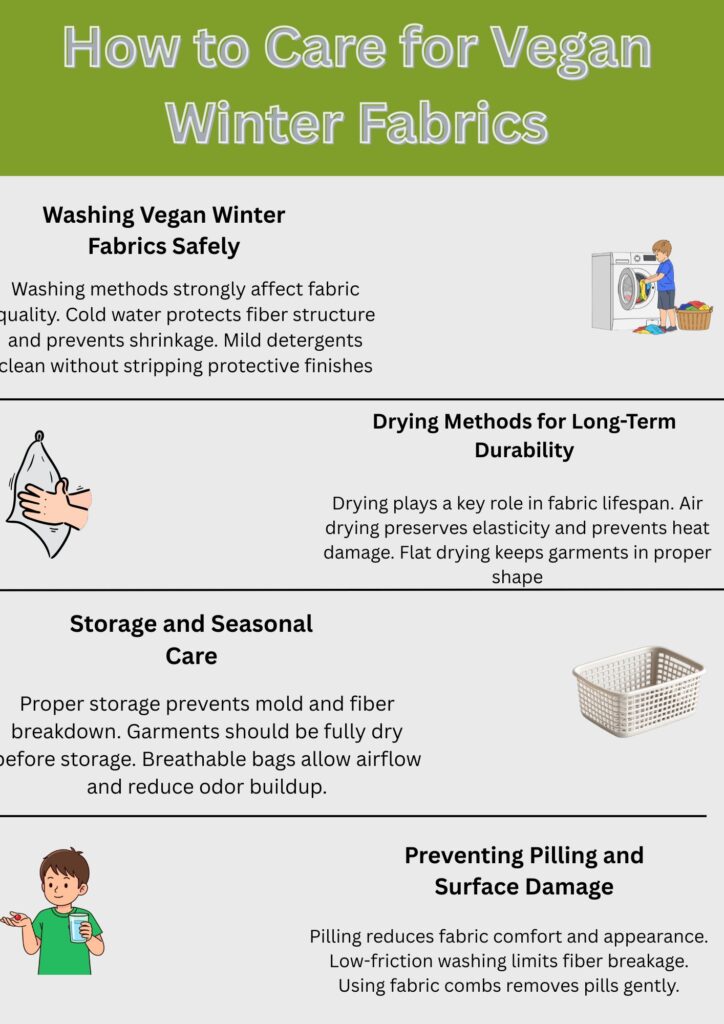
Washing Vegan Winter Fabrics Safely
Washing methods strongly affect fabric quality. Cold water protects fiber structure and prevents shrinkage. Mild detergents clean without stripping protective finishes. Gentle cycles reduce friction and surface damage.
Turning garments inside out protects outer surfaces. Washing similar fabrics together prevents abrasion. Therefore, careful washing preserves softness and insulation.
Drying Methods for Long-Term Durability
Drying plays a key role in fabric lifespan. Air drying preserves elasticity and prevents heat damage. Flat drying keeps garments in proper shape. Low tumble settings may be used for sturdy synthetics.
High heat weakens fibers and reduces loft. Therefore, slow drying protects warmth and texture for many seasons.
Storage and Seasonal Care
Proper storage prevents mold and fiber breakdown. Garments should be fully dry before storage. Breathable bags allow airflow and reduce odor buildup.
Folding heavy knits prevents hanger stretching. Clean storage protects fabrics during long off-season periods.
Preventing Pilling and Surface Damage
Pilling reduces fabric comfort and appearance. Low-friction washing limits fiber breakage. Using fabric combs removes pills gently.
Avoiding rough surfaces prevents abrasion. Therefore, surface care maintains smoothness and insulation.
Pros and Cons of Vegan Winter Fabrics
Vegan winter fabrics offer cruelty-free production. They remain affordable and widely available. Innovation continues to improve warmth and comfort.
Some fabrics still have warmth limits. Synthetic sustainability concerns remain. However, research reduces these drawbacks steadily.
Vegan Winter Fabric Certifications to Know
PETA-Approved Vegan confirms animal-free production. GOTS certifies organic fibers. OEKO-TEX® ensures chemical safety. GRS verifies recycled content. These labels guide ethical purchasing clearly.
Common Myths About Vegan Winter Fabrics
Many believe vegan fabrics cannot provide enough warmth. Modern insulation proves this wrong. Some think all vegan fabrics are synthetic.temperatures Many plant-based options exist. Others believe vegan always means eco-friendly. Sustainability still depends on production.
How to Choose the Best Vegan Winter Fabric
Climate remains the first factor. Cold regions require strong insulation. Activity level affects breathability needs. Budget guides material choice. Sustainability preference refines the final decision.
Balancing warmth, comfort, and ethics leads to smart choices. Informed selection improves winter comfort greatly.
Conclusion
Vegan Winter Fabric Explained shows that ethical warmth is no longer a dream. Modern textile science now provides cruelty-free materials that protect the body in cold climates. temperaturesThese fabrics avoid animal suffering while offering reliable insulation and comfort. Therefore, winter fashion can become both humane and high performing.
Throughout this article, the history, types, uses, and care of vegan winter fabrics reveal steady progress. Innovation has replaced wool, fur, and down with advanced plant-based and synthetic alternatives. As a result, consumers no longer need to choose between warmth and ethics.
FAQs
What Is the Warmest Vegan Fabric for Winter?
Recycled polyester insulation provides the highest warmth among vegan fabrics. Hollow fibers trap large volumes of air and slow heat loss effectively. When used in thick jackets, this insulation performs well even in freezing climates. Therefore, it suits extreme cold conditions strongly.
Is Vegan Fabric Better Than Wool?
Vegan fabric offers ethical advantages by avoiding animal use. In terms of warmth, modern vegan insulation can match wool through engineered fiber design. Wool regulates moisture naturally, while vegan fabrics rely on structure and layering. Therefore, both can perform well when chosen correctly.
Are Vegan Winter Fabrics Sustainable?
Some vegan winter fabrics are highly sustainable. Organic cotton, TENCEL™, and recycled polyester reduce environmental damage. However, not all vegan fabrics are eco-friendly. Sustainability still depends on production methods and fiber source.