Winter creates unique challenges for people with sensitive skin, especially during prolonged cold exposure.
Cold air outside and dry heat indoors remove natural moisture from the skin quickly.As a result, the skin barrier weakens and becomes more reactive.
Even people without skin conditions often notice dryness, tightness, and discomfort during winter.For those with sensitive skin, these effects feel stronger and last longer.Fabric choice therefore becomes a critical part of winter comfort and skin protection.Sensitive skin reacts easily to friction, pressure, and trapped moisture.When rough or stiff fabrics rub against dry skin, irritation increases rapidly.Soft Winter Fabrics for Sensitive Skin:This friction often leads to itching, redness, and painful rashes.Many people also experience flare-ups of eczema, dermatitis, or allergic reactions.Unfortunately, winter clothing often uses thick and coarse materials.These fabrics may provide warmth but worsen skin sensitivity.Soft Winter Fabrics for Sensitive Skin:
History of Soft Winter Fabrics for Sensitive Skin
Winter clothing has existed for centuries, yet comfort was not always a priority.In early times, people used thick animal hides and coarse wool for warmth.Although these materials protected against cold, they irritated skin severely.civilizations advanced, textile techniques slowly improved fiber refinement.Spinning and weaving methods helped reduce roughness and stiffness.Eventually, softer natural fibers gained popularity for everyday winter wear.Later, cotton processing improved softness through better cleaning and spinning.Silk and fine wool appeared among higher social classes for comfort.Soft Winter Fabrics for Sensitive Skin:In modern times, textile science focuses on skin health and fabric safety.As a result, soft winter fabrics for sensitive skin now dominate conscious fashion.
What Makes a Winter Fabric Safe for Sensitive Skin
A winter fabric must do more than provide warmth for sensitive skin.It must protect the skin without causing irritation or discomfort.During winter, the skin becomes dry, fragile, and easily reactive.Cold air and indoor heating weaken the skin’s natural barrier.Therefore, fabrics that touch the skin directly play a crucial role.A safe winter fabric supports skin health while maintaining comfort.Softness remains the most important quality for sensitive skin.When fabric fibers feel rough, they scratch the skin surface constantly.Soft Winter Fabrics for Sensitive Skin:This friction damages already dry skin and increases itching quickly.In contrast, soft fibers glide smoothly across the skin.They reduce friction and prevent micro-irritation throughout the day.Soft winter fabrics for sensitive skin create a calm and soothing feel.Breathability also determines whether a fabric feels safe in winter.The body naturally releases heat and moisture during daily activity.If fabric traps this moisture, the skin becomes damp and irritated.Sweat buildup encourages bacteria growth and inflammation.Breathable fabrics allow air circulation and moisture escape.As a result, the skin remains dry, balanced, and comfortable.
Types of Soft Winter Fabrics for Sensitive Skin
Choosing the right type of winter fabric plays a major role in protecting sensitive skin.Different fabrics behave differently when exposed to cold temperatures and moisture.Some fabrics feel gentle and breathable, while others trap heat and irritate skin.Understanding fabric types helps people make better winter clothing decisions.Soft winter fabrics for sensitive skin focus on comfort, warmth, and skin safety together.
Organic Cotton as a Gentle Winter Fabric
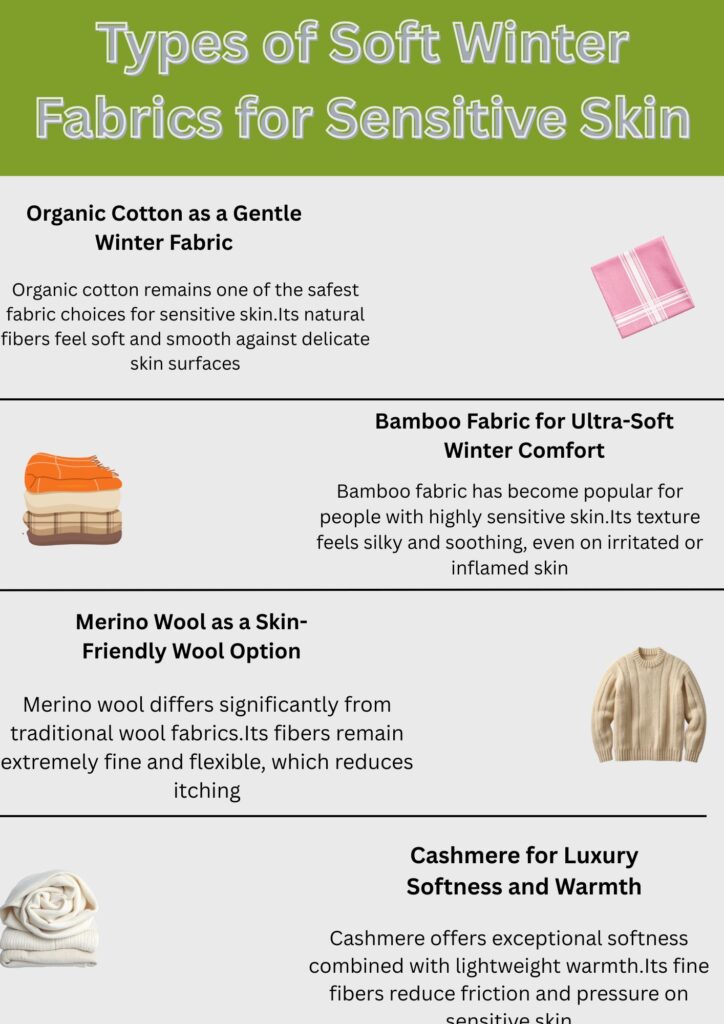
Organic cotton remains one of the safest fabric choices for sensitive skin.Its natural fibers feel soft and smooth against delicate skin surfaces.Because organic cotton avoids harsh chemicals, it reduces irritation risks greatly.The fabric allows airflow, which prevents sweat buildup during winter wear.During colder months, organic cotton works well for layering purposes.It provides moderate warmth while maintaining breathability and comfort.Sensitive skin benefits from its moisture-absorbing ability.As a result, itching and redness occur less frequently.
Bamboo Fabric for Ultra-Soft Winter Comfort
Bamboo fabric has become popular for people with highly sensitive skin.Its texture feels silky and soothing, even on irritated or inflamed skin.The fabric naturally resists bacteria, which helps prevent skin infections.This feature makes bamboo ideal for eczema-prone individuals.Bamboo also regulates temperature efficiently during winter.It keeps the body warm without overheating.The fabric manages moisture well and prevents dampness.Therefore, bamboo supports calm and balanced skin throughout the day.
Merino Wool as a Skin-Friendly Wool Option
Merino wool differs significantly from traditional wool fabrics.Its fibers remain extremely fine and flexible, which reduces itching.Unlike coarse wool, merino wool does not scratch sensitive skin.This quality makes it suitable for direct skin contact.Merino wool also regulates body temperature naturally.It keeps the body warm in cold conditions.At the same time, it releases excess heat effectively.Soft Winter Fabrics for Sensitive Skin:Sensitive skin benefits from this balanced insulation.
Cashmere for Luxury Softness and Warmth
Cashmere offers exceptional softness combined with lightweight warmth.Its fine fibers reduce friction and pressure on sensitive skin.Many people with severe sensitivity prefer cashmere for winter accessories.The fabric feels gentle even after long hours of wear.
Fabrics Sensitive Skin Should Avoid in Winter
Winter fabrics can either protect sensitive skin or worsen irritation quickly.Many materials feel warm but cause discomfort after extended wear.Sensitive skin reacts strongly to rough textures and trapped moisture.Soft Winter Fabrics for Sensitive Skin:Therefore, understanding which fabrics to avoid becomes essential.Avoiding problematic materials helps prevent itching and inflammation.Soft winter fabrics for sensitive skin work best when harmful fabrics stay excluded.
Rough Wool and Coarse Animal Fibers
Traditional wool often contains thick and uneven fibers.These fibers scratch the skin surface during movement.This friction leads to redness, itching, and discomfort.People with sensitive skin usually feel irritation within minutes.Coarse animal fibers lack flexibility and smoothness.They press harshly against dry winter skin.Even layering may not prevent irritation completely.Therefore, rough wool rarely suits sensitive skin needs.
Acrylic Fabrics and Synthetic Wool Alternatives
Acrylic fabrics often mimic the look of wool.However, they trap heat and restrict airflow.This causes excessive sweating and damp skin.Moisture buildup worsens irritation quickly.Acrylic fibers also lack breathability.They create a warm but uncomfortable environment for skin.Sensitive skin may develop itching and rashes.Prolonged wear often increases discomfort significantly.
Polyester Blends with Chemical Finishes
Polyester blends frequently undergo chemical treatments.These finishes improve durability and appearance.However, chemicals often irritate delicate skin.Sensitive individuals may experience burning or redness.Polyester also traps heat and moisture easily.Soft Winter Fabrics for Sensitive Skin:This combination encourages bacteria growth.Skin inflammation becomes more likely during winter.Therefore, polyester blends require caution.
Tight Weaves and Heavy Fabric Constructions
Some winter fabrics use tight weaving techniques.These fabrics block airflow completely.
As a result, sweat remains trapped against the skin.Damp skin becomes irritated and inflamed.Heavy fabric weight also affects comfort negatively.Thick materials press against sensitive skin.This pressure increases friction during movement.Sensitive skin benefits from lighter, flexible fabrics instead.
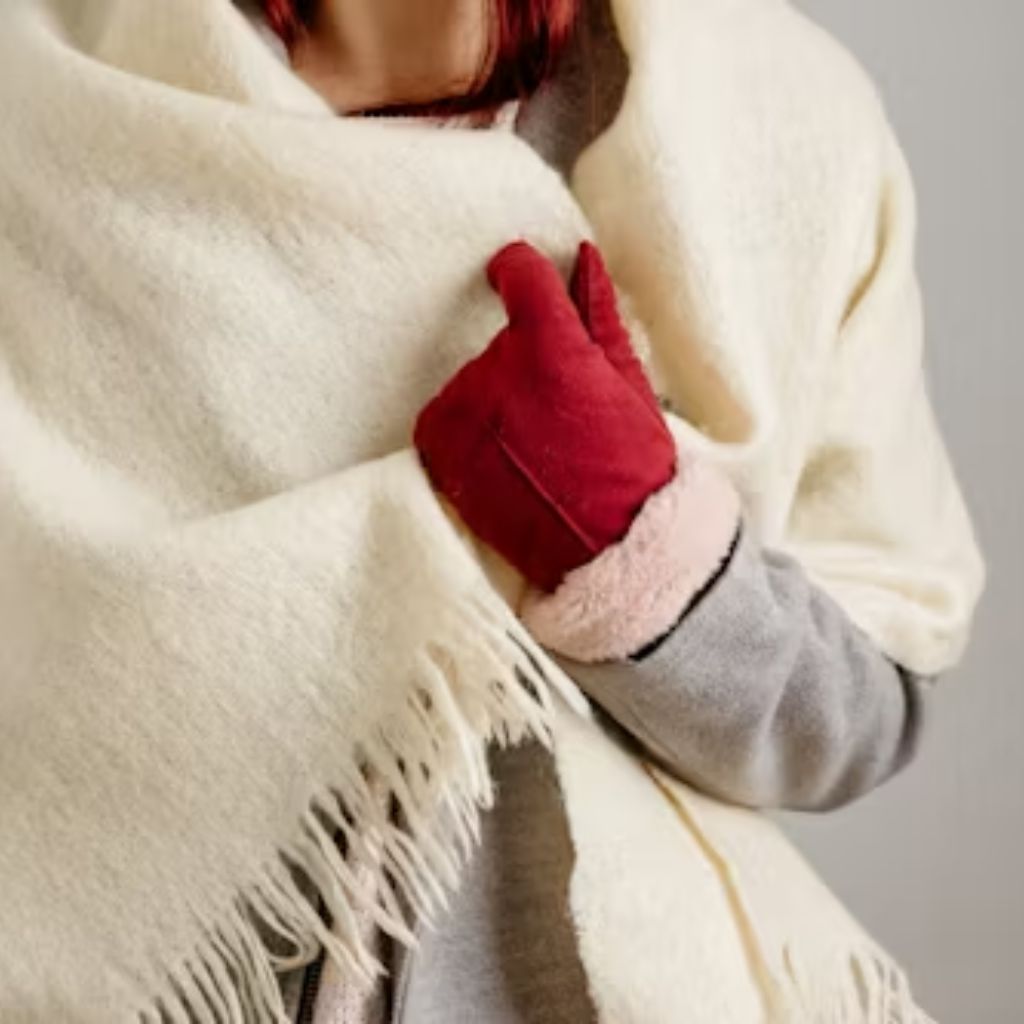
Natural vs Synthetic Winter Fabrics for Sensitive Skin
Choosing between natural and synthetic winter fabrics often confuses people with sensitive skin.Both fabric types provide warmth, yet they affect skin very differently.Sensitive skin reacts quickly to trapped moisture and rough textures.Therefore, understanding fabric behavior helps prevent winter discomfort.Soft winter fabrics for sensitive skin usually balance comfort, breathability, and safety.
How Natural Winter Fabrics Affect Sensitive Skin
Natural winter fabrics come from plant or animal sources.They usually feel softer and more breathable against the skin.These fabrics allow air to circulate naturally.
As a result, sweat evaporates more easily.
Natural fibers also adapt well to temperature changes.They keep the body warm without overheating.balance reduces moisture buildup on the skin.Sensitive skin remains calmer throughout the day.Another benefit involves chemical exposure.Natural fabrics often require fewer synthetic treatments.This reduces the risk of allergic reactions.People with eczema often tolerate natural fabrics better.
How Synthetic Winter Fabrics Affect Sensitive Skin
Synthetic winter fabrics come from chemical-based fibers.They often feel smooth at first touch.However, many synthetic fabrics trap heat quickly.This causes excessive sweating during winter wear.Trapped moisture creates an unhealthy skin environment.Bacteria grow more easily on damp skin.This leads to itching and irritation.Sensitive skin reacts faster under these conditions.Soft Winter Fabrics for Sensitive Skin:Chemical finishes also affect skin reactions.Synthetic fabrics often receive dyes and coatings.These substances may irritate delicate skin.Long wear increases discomfort and inflammation.
Breathability and Moisture Control Differences
Breathability plays a major role in skin comfort.Natural fabrics allow better airflow through fibers.They absorb moisture and release it slowly.This process keeps skin dry and balanced.Synthetic fabrics often block airflow.They hold moisture close to the skin.This leads to overheating and irritation.Sensitive skin suffers more in such environments.
Best Soft Winter Fabrics for Babies and Kids
Babies and young children have extremely delicate skin that reacts quickly during winter months.Cold air and indoor heating remove moisture from their skin very fast.As a result, dryness, redness, and irritation appear more easily.Fabric choice therefore becomes a major factor in protecting young skin.Soft winter fabrics for sensitive skin play an essential role in children’s comfort.Soft Winter Fabrics for Sensitive Skin:Gentle materials help prevent discomfort and promote healthy skin.Organic cotton remains one of the safest fabric choices for babies and kids.Soft Winter Fabrics for Sensitive Skin:Its fibers feel smooth and soft against fragile skin surfaces.Because organic cotton avoids harsh chemicals, it reduces irritation risks.The fabric also allows airflow, which helps regulate body temperature.Children stay warm without overheating or sweating excessively.This balance keeps skin calm and comfortable throughout winter.Bamboo fabric also works well for children with sensitive skin.Its silky texture feels soothing and gentle.Bamboo naturally resists bacteria growth.Soft Winter Fabrics for Sensitive Skin:This quality helps protect babies from skin infections.The fabric absorbs moisture effectively and keeps skin dry.Dry skin experiences less itching and irritation.
How to Choose Winter Fabric for Eczema or Allergies
Choosing winter fabrics becomes especially important for people with eczema or allergies.Cold weather weakens the skin barrier and increases sensitivity.As a result, skin reacts faster to friction, heat, and chemicals.Fabric that touches the skin directly can either calm or irritate it.Therefore, careful selection helps prevent flare-ups during winter.Soft winter fabrics for sensitive skin offer essential protection for eczema-prone individuals.Soft Winter Fabrics for Sensitive Skin:The first factor to consider involves fabric softness.or stiff fibers damage inflamed skin easily.They cause itching and worsen redness quickly.Smooth fabrics reduce friction and soothe irritated skin.Soft textures help calm the skin throughout the day.This comfort becomes crucial during long winter wear.Breathability also plays a major role in fabric selection.Eczema worsens when skin becomes overheated or damp.Non-breathable fabrics trap sweat against the skin.This moisture creates irritation and itching.Soft Winter Fabrics for Sensitive Skin:Breathable fabrics allow air circulation.They help keep the skin dry and balanced.Moisture control further supports eczema management.Winter fabrics should absorb sweat without staying wet.should also release moisture gradually.This balance prevents sudden temperature changes.Stable skin temperature reduces flare-up risks.Sensitive skin benefits from controlled moisture levels.

Why Soft Winter Fabrics Matter for Skin Health
Winter can be particularly harsh on the skin, especially for those with sensitive or reactive skin types. The cold air outside combined with dry indoor heating removes natural moisture from the skin. When this happens, the skin barrier weakens, making it more prone to irritation and inflammation. In such conditions, the fabrics that touch the skin directly play a crucial role in maintaining comfort and protecting skin health. Soft winter fabrics for sensitive skin are not just about warmth; they provide a protective layer that minimizes friction, reduces moisture loss, and prevents flare-ups of conditions like eczema or dermatitis. Soft Winter Fabrics for Sensitive Skin:Choosing the right fabrics can mean the difference between enjoying winter and suffering through constant itching and irritation.
Friction is one of the main reasons harsh winter fabrics can damage the skin. Rough or stiff fibers scrape against the skin surface with every movement. Over time, this friction causes micro-tears in the skin, leading to redness, itching, and discomfort. Even people without pre-existing skin conditions can experience irritation if they wear coarse fabrics for extended periods.Soft Winter Fabrics for Sensitive Skin: Soft winter fabrics, on the other hand, have fine, smooth fibers that glide over the skin. These fabrics reduce friction and allow the skin to move naturally. The result is a gentle, soothing sensation that protects sensitive skin during everyday activities.
Uses of Soft Winter Fabrics for Sensitive Skin
Soft winter fabrics for sensitive skin serve many important purposes during the cold months. They are not only essential for warmth but also play a critical role in protecting the skin from irritation. Winter clothing often comes into direct contact with the skin for long hours. Soft Winter Fabrics for Sensitive Skin:If the fabric is rough or poorly designed, friction can cause redness, itching, and flare-ups of sensitive skin conditions. Using soft fabrics ensures that the skin remains calm and comfortable throughout the day, allowing people to move, work, and relax without constant distraction from discomfort.
One of the main uses of soft winter fabrics is for layering clothing. Base layers that touch the skin need to feel smooth and gentle. Soft fabrics like organic cotton, bamboo, and fine merino wool provide insulation while minimizing friction. They allow the skin to breathe and manage moisture effectively. When combined with outer layers, these fabrics keep the body warm without causing sweating or irritation. Layering with soft materials also allows people to adjust to changing temperatures, which is especially helpful during outdoor winter activities.
Caring for Soft Winter Fabrics to Prevent Irritation
Proper care of soft winter fabrics is essential for maintaining both comfort and skin health. Fabrics designed for sensitive skin often require extra attention to preserve their gentle texture. Without careful maintenance, even the softest fabrics can become rough, lose their insulating properties, or trap irritants that may harm delicate skin. Understanding the right cleaning, drying, and storage practices ensures these fabrics remain protective and itch-free throughout the winter season.
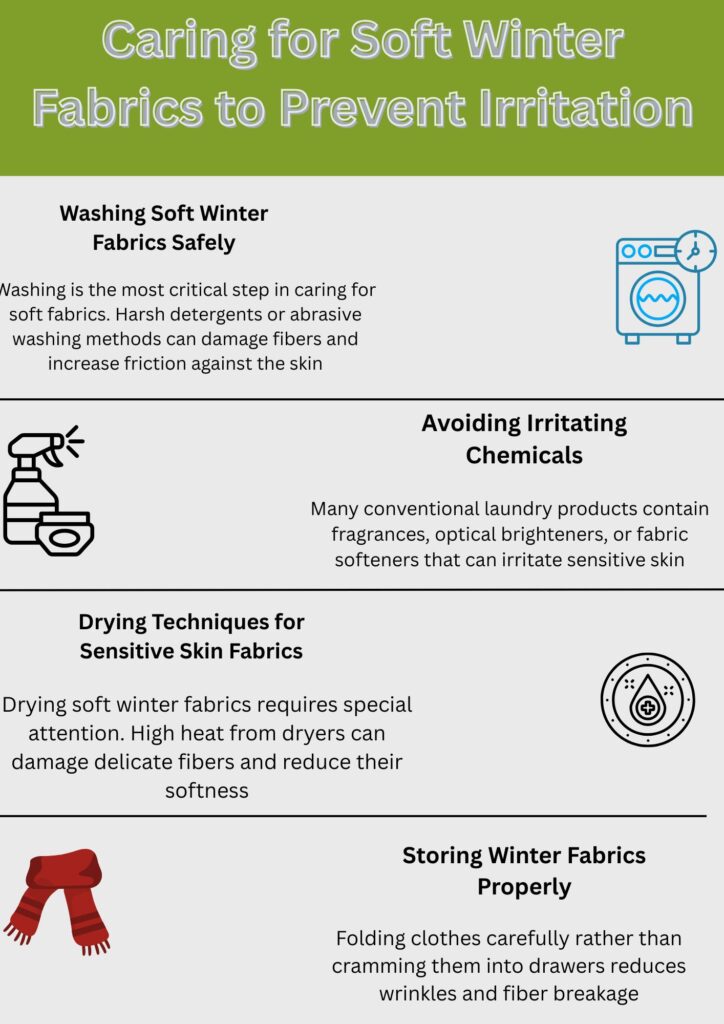
Washing Soft Winter Fabrics Safely
Washing is the most critical step in caring for soft fabrics. Harsh detergents or abrasive washing methods can damage fibers and increase friction against the skin. Gentle washing with mild, fragrance-free detergents is recommended. These detergents clean effectively while avoiding chemical residues that may trigger irritation. For fabrics like bamboo, organic cotton, or merino wool, washing in cold or lukewarm water preserves softness and prevents shrinkage. Using short wash cycles and avoiding aggressive spinning also protects fiber integrity. Regular washing prevents dirt, sweat, and oils from building up, which helps sensitive skin remain calm and comfortable.
Avoiding Irritating Chemicals
Many conventional laundry products contain fragrances, optical brighteners, or fabric softeners that can irritate sensitive skin. Soft winter fabrics benefit from chemical-free washing routines. Fabric softeners, although they make fabrics feel smooth temporarily, often leave residues that block breathability and trap moisture. These residues increase friction and can trigger redness, itching, or eczema flare-ups. By avoiding these chemicals, soft fabrics maintain their natural texture and allow the skin to breathe properly. Careful washing ensures that fabrics stay gentle and safe for daily wear.
Drying Techniques for Sensitive Skin Fabrics
Drying soft winter fabrics requires special attention. High heat from dryers can damage delicate fibers and reduce their softness. It can also shrink fabrics, especially natural fibers like cotton or wool, making them stiff and uncomfortable. Air drying is the preferred method, as it preserves fiber flexibility and breathability. Hanging clothes in a shaded, ventilated area prevents sun damage while allowing moisture to evaporate evenly. For indoor drying, flat drying for woolens and fine knits prevents stretching or misshaping. Proper drying keeps fabrics smooth, soft, and safe for sensitive skin contact.
Storing Winter Fabrics Properly
Storage is often overlooked, yet it directly affects fabric quality. Winter fabrics should be kept in a clean, dry environment to prevent mold or mildew growth. Moisture can leave fabrics musty and rough, which irritates sensitive skin. Folding clothes carefully rather than cramming them into drawers reduces wrinkles and fiber breakage. Soft Winter Fabrics for Sensitive Skin:Using breathable storage bags or fabric organizers helps maintain airflow and protects fabrics from dust or pests. Thoughtful storage ensures soft winter fabrics retain their protective properties from season to season.
Sustainable and Eco-Friendly Soft Winter Fabrics (2025 Trend)
Sustainability now shapes fabric choices worldwide.Eco-friendly fabrics reduce environmental harm and skin irritation.GOTS-certified cotton ensures safer production standards.Bamboo and TENCEL™ require fewer chemicals and resources.These fabrics protect both skin health and nature.Therefore, sustainability and comfort now go hand in hand.
Common Mistakes When Choosing Winter Fabrics for Sensitive Skin
Many people focus only on warmth while shopping.They often ignore breathability and fiber quality.Chemical treatments remain unnoticed on fabric labels.Over-layering synthetic fabrics traps sweat excessively.Such mistakes increase skin irritation during winter.Awareness helps prevent unnecessary discomfort.
Conclusion
Soft winter fabrics for sensitive skin create warmth without irritation.They protect delicate skin from dryness and friction.Breathable and chemical-free materials improve comfort significantly.Mindful fabric selection prevents itching and flare-ups.Ultimately, the right winter fabric supports healthier skin and better comfort.
FAQs
What is the softest winter fabric for sensitive skin?
The softest winter fabrics for sensitive skin are usually natural fibers such as organic cotton, bamboo, fine merino wool, and cashmere. These fabrics feel gentle against the skin, reduce friction, and allow air circulation. They also manage moisture effectively, which prevents irritation, redness, and itching. Choosing chemical-free or minimally processed fabrics further enhances comfort for sensitive or eczema-prone skin.
Is wool bad for sensitive skin?
Traditional coarse wool can irritate sensitive skin and cause itching or redness. However, fine merino wool is an exception. Merino fibers are thin, soft, and flexible, allowing them to provide warmth without scratching or irritating the skin. Merino wool also helps regulate temperature, keeping the skin comfortable in cold conditions. It is recommended to test wool fabrics on a small area first if your skin is highly reactive.
Which winter fabrics do not itch?
Fabrics that do not itch include organic cotton, bamboo, modal, TENCEL™ Lyocell, and cashmere. These fabrics have smooth textures and excellent moisture management, which helps prevent irritation. Proper care, such as washing with gentle detergents and avoiding chemical treatments, ensures these fabrics remain soft and skin-friendly. These materials are ideal for long hours of winter wear and provide consistent comfort.