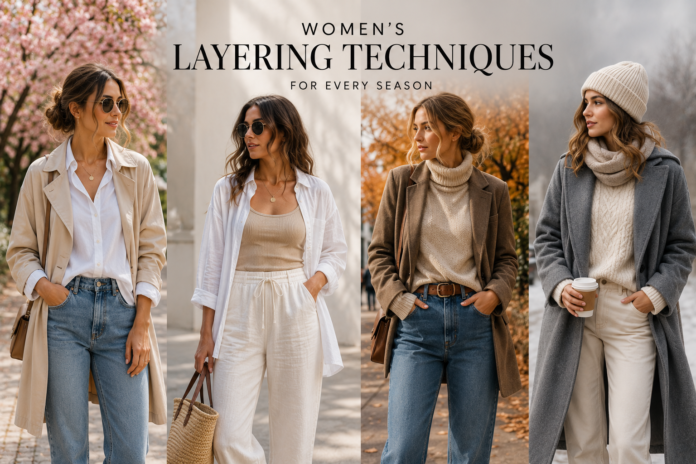
Women’s layering techniques focus on creating a stylish practical outfit for any season. Layering involves clothing pieces being worn in a specific way with the example of a top being worn with a cardigan. Layering can keep a person warm and provide a visually complete and full look. Layering brings shape to clothing.
Women’s layering techniques vary with the season, style, purpose, fabric, and the weather. Spring and summer use light layers, warm and heavy layers are used in fall and winter. Layering should be visually and physically balanced and not feel bulky or messy.
What Are Women’s Layering Techniques?
Women’s layering techniques involve combining clothing pieces to create coverage, warmth, comfort, and balance. The base layer is the closest to the skin, the middle layers add warmth or style, and the outer layers complete the look and provide protection from the elements.
For example, women’s tailored trousers can be paired with a tucked blouse, lightweight cardigan, and blazer for a polished layered look. The goal is to make every layer useful instead of adding clothing randomly.
Why Layering Matters in Women’s Fashion
Layering is important because weather can change during the day and so can activities. Morning temperatures can feel cool and then warm in the afternoon, and then turn cold in the evening. Layering helps you stay comfortable throughout the day and prevents you from changing your outfit multiple times.
Layering can also help complement the shape of your outfit, adding vertical balance, structure, or defining your waist. Layering helps the outfits look intentional and not like too much thought and effort was put into them.
Start With a Comfortable Base Layer
All layered outfits start with a base layer. Base layers can include T-shirts, blouses, camis, tanks, fitted tops, turtlenecks, and knits. Base layers have to include soft, breathable, and comfortable fabrics since they are next to your skin.
Have your base layers include neutral color options that can easily match your skirts, trousers, cardigans, jackets, and dresses. A good base layer gives your outfit a clean look.
Spring Layering Techniques
Spring layering should feel lighter and fresher. Since temperatures can change between cool and warm, removable layers are key. These can include blouses with cardigans, dresses with denim jackets, and trousers with lightweight blazers.
For spring, casual dresses for women can be layered with cardigans, cropped jackets, or light coats. Choose soft colors like cream, pastel pink, light blue, sage, beige, and white for a fresh seasonal look.
Summer Layering Techniques
Summer layering must remain lightweight. Heavy layers make outfits uncomfortable in the heat. Summer layers should include breathable fabrics like cotton, linen blends, viscose, modal, and lightweight jersey. Choose layers that provide coverage without trapping heat.
Women’s sundresses can be layered with a lightweight shrug, open shirt, thin cardigan, or breathable scarf. Summer layering works best when the pieces are loose, airy, and easy to remove.
Fall Layering Techniques
Fall is one of the most enjoyable seasons for layering. The weather is cool, but not yet cold enough to require heavy outerwear. Layer shirts, sweaters, cardigans, blazers, denim jackets, and trench coats. Fall colors of brown, camel, olive, burgundy, cream, and charcoal are all suitable.
A black maxi skirt can be styled with a tucked top, ankle boots, and a cardigan for a balanced fall outfit. Maxi skirts are useful because they add coverage while still looking elegant.
Winter Layering Techniques
Winter layering should add warmth without excessive bulk. Start with a fitted or thermal base layer, add a cardigan or sweater, and finish with an outer layer of a coat or jacket. The outer layers should block cold air, and the inner layers should maintain heat.
A winter outfit can include tailored trousers, a turtleneck, a long coat, boots, and a scarf. For a winter dress, layering can include warm tights, a knit layer, and a structured coat. The best women’s winter layering techniques use warm fabrics in a thoughtful manner.
Layering With Maxi Dresses
Maxi dresses have the advantage of full coverage for the whole outfit. With good layering, they can be styled for all seasons. In the spring, style the dress with a light cardigan. In the fall, add a pair of boots and a nice jacket. Layer the dress with a sweater and an over coat in the winter.
A women’s maxi dress can look casual, smart casual, or elegant depending on the added layers. Keep the outer layer structured if the dress is flowy so the outfit does not look shapeless.
Layering With Skirts
Skirts offer so much flexibility for layering because you can use so many different options of tops, sweaters, blouses, jackets, and coats. A flowy skirt with a fitted top is a great balance. A cozy winter look can be achieved with a chunky sweater and a slim skirt. A smart casual outfit can be a blouse with a blazer and a skirt.
Balance is key when layering with skirts and is all about length. Full skirts can make a long top that isn’t tucked or shaped look messy. A cropped layer, a tucked top, or a belt can keep balance in the outfit.
Layering With Trousers
Trousers create a neat base, and when layered with a fitted top, look polished, especially when paired with a blazer. Casual looks can easily be created with soft sweaters and open cardigans, and because they create a structure to the lower half, layering is simplified with trousers.
Layering for Smart Casual Outfits
When layering to achieve a smart casual look, be sure it doesn’t appear too formal.
Consider dressing up a blazer with a dress, pairing a cardigan with trousers, or adding a structured jacket to a skirt. Layer combinations should look neat, polished, and versatile enough for work, dinner, travel, or social engagements.
When layering smart casual outfits, avoid large, oversized clothing. If a top is loose, consider adding a belt or structured piece. Smart casual layering works when the outfit is shaped distinctly.
Layering for Special Occasions
Layering for special occasions should feel polished and effortless. For added coverage that compliments the outfit, consider a shawl, cropped jacket, or light blazer. Layering should be reflective of the style and fabric of the dress.
For example, women’s party dresses can be styled with a soft shawl, fitted blazer, or elegant coat. The layer should not compete with the dress. It should support the full look.
Layering for Wedding and Formal Looks
Layering for weddings and other formal events is more thoughtful. A formal dress should still look elegant when paired with a short structured layer or a light wrap. Avoid anything bulky, as it will detract from the formal nature of the dress.
Short wedding dresses can look balanced with soft outer layers, elegant shoes, and simple jewelry. The layering should add comfort and coverage while keeping the occasion look polished.
Color Matching in Layered Outfits
When layering women’s outfits, consider that color matching is vital. Outfits with too many competing colors can look chaotic. Start with a maximum of three colors.
Stick with neutral shades and only add an accent color when necessary.
This could mean black pants, a cream shirt, and a beige coat. That could also mean a navy dress, gray cardigan, and brown shoes. Using a simple color scheme for your outfit makes it easy to use layers and stay fashionable.
Fabric Weight Matters
When layering an outfit it is important for the weights of the fabrics to balance. Generally, lighter fabrics sit closer to the body, while heavier fabrics sit on the outside. A great example of this is a thin cotton top sitting under a cotton cardigan. An example of an unbalanced outfit is a heavy sweater under a form-fitting blazer.
In the summer, layering lighter fabrics is best. In the winter, using fabrics that maintain warmth while remaining breathable is a good choice. The best women’s layering techniques balance the weights of the fabrics and keep the overall outfit comfortable and visually appealing.
Women’s Layering Techniques Checklist
Use this checklist to layer in any season:
- starting closest to your body, use thin fabrics to layer.
- closer to your body, use heavy fabrics.
- define the waist with a belt.
- keep balanced between the fitted and loose.
- use a simple color scheme.
- layer dresses with some sort of cardigan or jacket.
- avoid bulkiness by limiting layers.
Common Layering Mistakes to Avoid
When using a lot of loose fabrics, body shape gets hidden. A great example of this is a loose dress, a loose cardigan, and an oversized coat. Also, it is important to keep layering balanced.
If one layer is loose, you’ll want to tighten the next layer. Tighten the next layer to balance the loose layer.
You also want to pay attention to the fabric thickness. Heavy fabrics can make the outfit uncomfortable and provide too much warmth. Layers with thin fabrics may leave you too exposed to the elements. The best layering warms you while keeping you comfortable and is appropriate for the season and the occasion.
Conclusion
Constructing layers for women is capable of bringing style to clothing, while also enhancing comfort and practicality year round. Additionally, the right layering techniques can make clothing simple and visually complete. There are many components of an outfit that can be utilized to achieve the desired style, such as tops, dresses, skirts, trousers, cardigans, blazers, coats, and accessories.
Balance is crucial for layering. Structured pieces should underscore light layers in warm weather. Conversely, the layers should be warm in cold weather.
Use colors wisely. Be mindful of fabric weights & avoid bulk. With these layering tips for women, you’ll be on your way to streamline everyday attire that’s crisp & fashionable.
FAQs
What are women’s layering techniques?
Women’s layering techniques are styling methods that combine base, middle, and outer layers for comfort, coverage, warmth, and style.
How do women layer clothes in summer?
Use lightweight fabrics, breathable tops, open shirts, thin cardigans, and airy dresses. Avoid heavy layers.
How do women layer clothes in winter?
Start with a warm base layer, add a sweater or cardigan, and finish with a coat, boots, and scarf.
How can layering look stylish instead of bulky?
Use thin inner layers, structured outer layers, simple colors, and balanced fits.