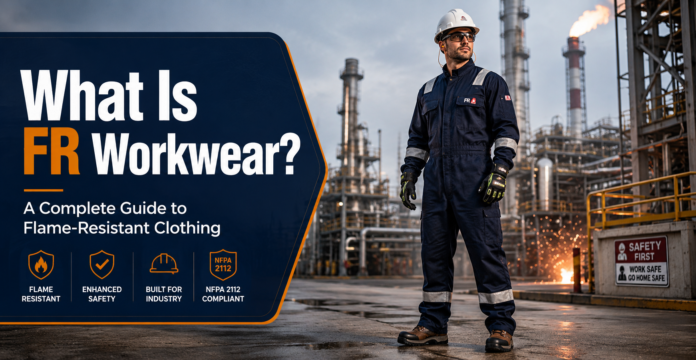
FR workwear means flame-resistant workwear. It is special protective clothing made for workers who may face fire, flash fire, sparks, heat, or electric arc hazards. So, what is FR workwear in simple words? It is clothing that helps reduce burn injuries because the fabric is made to resist ignition and stop burning after the heat source is removed. FR does not mean fireproof. A worker can still get hurt in a serious accident, but the right FR clothing can reduce how badly the fabric burns on the body. This is why what is FR workwear is an important question for oil and gas workers, welders, electrical crews, utility workers, factory teams, and people working near flame or heat. Normal clothing may catch fire quickly, and some synthetic fabrics can melt against the skin. FR clothing is different because it is designed for dangerous work areas where normal uniforms are not enough. OSHA guidance says employers must assess flame and electric-arc hazards and make sure exposed workers wear suitable protective clothing when needed.
What is FR workwear?
What is FR workwear? It is a safety clothing system, not just a shirt or jacket with a tough look. FR workwear can include shirts, pants, coveralls, jackets, hoodies, vests, and outer layers that are made with flame-resistant fabric. These garments are used where a short fire event can happen suddenly. The main job of FR clothing is to give the worker extra time and reduce the chance of clothing continuing to burn. When companies plan protective uniforms, they often begin with a full workwear range so they can match shirts, pants, jackets, and coveralls with the actual job. This is important because what is FR workwear is not only about one product; it is about correct coverage from the neck to the wrists and ankles. A worker should not wear one FR shirt with unsafe casual pants and think the full body is protected. FR workwear works best when the full outfit, fit, fabric, and layering are chosen for the same workplace risk.
Why FR Clothing Is Not the Same as Normal Workwear
Normal workwear is made for comfort, dirt, abrasion, weather, and daily job use. FR workwear is made for safety in heat and flame-risk areas. That is the big difference. If someone asks what is FR workwear, the answer should always include protection from ignition and burning. A normal cotton shirt may burn if exposed to flame. A polyester shirt may melt and stick to the skin. A normal jacket may look strong but still fail badly near sparks or flash fire. FR clothing is built to lower that risk. It should also be tested, labeled, and used according to the hazard. OSHA’s electric power PPE guidance explains that protective equipment may include flame-resistant clothing along with other PPE, depending on the task and risk. This means FR clothing is not fashion clothing and not simple branding wear. It is part of a safety system. When a buyer understands what is FR workwear, they stop choosing garments only by price, color, or style and start checking rating, fabric, fit, comfort, washing rules, and worker movement.
Main Jobs Where FR Workwear Is Used
FR workwear is used in jobs where fire, flame, sparks, heat, or arc flash can happen. Common users include welders, electricians, linemen, oil refinery workers, gas plant workers, metal workers, chemical plant workers, utility workers, and industrial maintenance teams. In these jobs, workers may be near hot surfaces, electrical equipment, open flame, flammable dust, fuel, or sudden flash fire risks. This is why what is FR workwear matters for both workers and buyers. If the job has no flame risk, normal durable workwear may be enough. But if the job includes a real fire or arc hazard, FR clothing becomes much more important. OSHA notes that electric-arc protective clothing and equipment should have an arc rating at least equal to the estimated heat energy in certain electric power work situations. That is why companies should not guess. They should check the hazard, job role, and safety policy before ordering. What is FR workwear also depends on the worksite. A welder may need different garments than an electrical utility worker, and a refinery worker may need a different setup than a warehouse worker.
Common FR Garments Workers Wear
The most common FR garments are shirts, pants, coveralls, jackets, and layered sets. FR shirts and pants are often used for daily work because they are easy to wear and easy to replace. Coveralls are useful when workers need one-piece body coverage. Jackets are helpful for cold weather, outdoor work, and extra upper-body protection. For heavy industrial teams, flame-resistant coveralls can be useful because they cover the upper and lower body in one garment. Still, what is FR workwear should not be answered by garment name alone. A coverall is only useful if its fabric, label, fit, closures, seams, and care rules match the job risk. FR pants must cover the legs properly. FR shirts should have long sleeves and a safe fit. FR jackets should close correctly over inner layers. Pockets, cuffs, zippers, snaps, and trims should also be practical for the job. If you are asking what is FR workwear for real buying, the answer is simple: choose the garment type after you understand the hazard, not before.
FR Fabric Types and How They Work
FR fabric can be made in different ways. Some fabrics are inherently flame-resistant, which means the flame resistance is part of the fiber itself. Some fabrics are treated with flame-resistant chemicals, which means the protection is added during fabric processing. Both types can work when made and tested correctly, but they must be cared for properly. This is another reason why what is FR workwear is not only a simple clothing question. Fabric weight, weave, breathability, durability, shrinkage, and washing life all matter. Heavy fabric may feel stronger, but it may also feel hotter in summer. Lighter fabric may feel more comfortable, but it must still meet the required protection level. Good FR fabric should help reduce burning, but it should also allow workers to move, bend, climb, and work long shifts. OSHA also explains that 100% cotton or wool clothing may be acceptable only if the weight is suitable for the flame and electric-arc conditions, so fabric choice must match the real exposure. When people ask what is FR workwear, fabric performance is one of the most important parts of the answer.
FR Workwear Buying Checklist
Before buying FR clothing, use a simple checklist so the order is safe and practical. What is FR workwear without proper checking? It is only a risky guess, so every buyer should review the main points before placing bulk orders:
- Check that the garment is truly flame-resistant.
- Match the clothing to the real workplace hazard.
- Ask for clear labels and fabric details.
- Choose the right size for safe movement.
- Cover arms, legs, and body properly.
- Avoid unsafe synthetic layers under FR clothing.
- Check seams, closures, cuffs, and pockets.
- Select breathable fabric for hot work areas.
- Use jackets or coveralls when more coverage is needed.
- Test samples before bulk production.
- Follow the washing instructions carefully.
- Replace torn, damaged, or contaminated garments.
This checklist helps buyers understand what is FR workwear from a real-world angle. It is not only about ordering a shirt with FR written on it. It is about buying clothing that workers can wear correctly every day.
Fit, Comfort, and Movement Are Safety Factors
FR clothing must fit well because poor fit can create safety problems. If a garment is too tight, it can limit movement and make work harder. If it is too loose, it can catch on tools, machines, ladders, or equipment. A good FR shirt should let the worker raise both arms without exposing the waist. FR pants should allow kneeling, climbing, and bending without pulling too tightly. A jacket should close easily over the layers below it, and flame-resistant jackets can be useful when teams need protective outerwear for cold or outdoor work. This is why what is FR workwear must include comfort, not only protection. If clothing is too hot, heavy, stiff, or uncomfortable, workers may roll up sleeves, leave buttons open, or avoid wearing it properly. That can reduce protection. Good FR clothing should feel strong but still wearable. Workers need to move fast, carry tools, climb stairs, bend near equipment, and work for long hours. What is FR workwear in daily use? It is clothing that protects without stopping the worker from doing the job.
Layering FR Clothing the Right Way
Layering means wearing more than one garment together, such as an FR shirt under an FR jacket. Layering can help, but it must be done carefully. If a worker wears a non-FR synthetic T-shirt under FR clothing, that inner layer may melt in high heat. If a worker wears a normal hoodie over an FR shirt, the outer layer may catch fire. So, what is FR workwear also includes what workers wear under and over the main garment. The full clothing system should be safe. Inner layers, outer layers, rainwear, winter wear, and high-visibility layers should all be reviewed. This is especially important in electrical, oil, gas, welding, and utility work. Workers should not mix protective clothing with unsafe casual layers just because they feel cold or want extra comfort. Companies should give clear rules for hot weather and cold weather. They should also explain which layers are approved. What is FR workwear becomes easier to understand when workers see it as a complete outfit, not a single item. The safest clothing plan is simple, clear, comfortable, and matched to the job.
Care, Washing, and Replacement Rules
FR clothing must be washed and cared for in the right way. Dirty or damaged clothing may not perform as expected. Oil, grease, fuel, paint, and chemicals can affect safety, so contaminated garments should be cleaned or replaced based on company rules and the garment label. Workers should avoid bleach, harsh chemicals, and fabric softeners unless the care label allows them. What is FR workwear after it is torn, badly stained, or missing its label? It may become hard to trust. Labels are important because they show the fabric details, protection information, and care instructions. If a shirt has holes, broken buttons, damaged cuffs, or open seams, it should be repaired correctly or replaced. A jacket with a broken closure may not cover the body properly. Pants with heavy damage can expose skin. Companies should train workers to inspect their garments before use. What is FR workwear in a long-term safety program? It is clothing that must be selected, worn, washed, checked, and replaced with care. Good maintenance helps protect workers and also saves money by extending garment life.
Conclusion
Now the answer to what is FR workwear is clear. It is flame-resistant protective clothing made for jobs where fire, flash fire, sparks, heat, or electric arc hazards may happen. It is not fireproof, and it is not a replacement for safe work practices, but it can reduce burn injury when selected and worn correctly. Good FR clothing should match the hazard, cover the body, fit well, allow movement, and stay comfortable during real work. Buyers should check fabric, labels, garment type, layering, washing rules, and replacement needs before ordering. Workers should know how to wear FR clothing correctly and why unsafe layers can increase risk. What is FR workwear is more than a product question. It is a safety question, a comfort question, and a buying decision that affects real people on real job sites every day.
FAQs
What is FR workwear used for?
FR workwear is used to help protect workers from flame, flash fire, sparks, heat, and arc flash hazards. It is common in welding, electrical, oil, gas, utility, and industrial work.
Is FR workwear fireproof?
No, FR workwear is not fireproof. It is flame-resistant, which means it is designed to resist ignition and reduce burning after the heat source is removed.
Can FR workwear be washed at home?
Some FR garments can be washed at home, but always follow the care label. Avoid bleach, harsh chemicals, and fabric softeners unless the label allows them.
When should FR workwear be replaced?
Replace FR workwear when it is torn, badly stained, contaminated, missing labels, or no longer fits safely. Damaged clothing may not protect the worker properly.