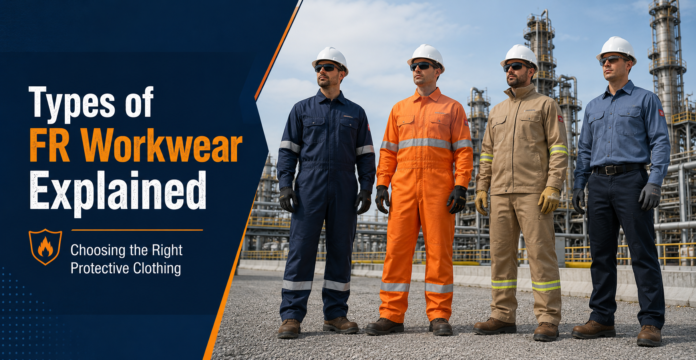
Flame-resistant workwear is made for jobs where heat, sparks, flames, or arc flash risks can happen. Normal clothes can catch fire, melt, or keep burning when they face high heat. FR clothing is different because it is made to resist ignition and reduce the chance of serious burn injuries. This is why many workers in welding, oil and gas, electrical utilities, manufacturing, construction, and industrial maintenance need proper protective clothing before they start work. The right clothing does not make a dangerous job fully safe, but it gives the worker an extra layer of protection when something goes wrong. This is why understanding the types of FR workwear is very important for buyers, safety managers, and workers. Every worksite has different risks, so one garment is not right for every job. A welder may need a jacket and pants. An electrical worker may need arc-rated shirts and trousers. A refinery worker may need coveralls. When you understand the types of FR workwear, it becomes easier to choose clothing that matches the real hazard, not just the company uniform style.
2. types of FR workwear
The main types of FR workwear include FR shirts, FR pants, FR jackets, FR coveralls, FR hoodies, FR rainwear, FR base layers, and arc-rated clothing systems. Each type has a different job. Some garments are made for daily use, while others are made for high-risk or short-term tasks. FR shirts and pants are usually used as daily protective clothing because they are easy to wear for long shifts. FR jackets are useful in cold weather or when extra upper-body protection is needed. FR coveralls give full-body coverage in one garment, which makes them useful for industrial sites where workers need simple and complete protection. FR base layers are worn under outer garments and should also be flame-resistant when the hazard is serious. The types of FR workwear should never be chosen only by looks. Buyers should check the fabric, rating, comfort, stitching, closure style, care instructions, and job risk. A good FR clothing plan starts with the hazard first and the garment second.
FR Shirts for Daily Protection
FR shirts are one of the most common types of FR workwear because they are easy to wear every day. They are usually long-sleeve because the arms need proper coverage during hot work, electrical work, and industrial tasks. A good FR shirt should cover the body well without feeling too tight or too loose. It should allow the worker to reach, bend, lift, and move tools without pulling at the shoulders or sleeves. FR shirts are often worn with FR pants to create a basic daily clothing system. For teams building a protective clothing range, Eco Jersey’s workwear collection can be used as a starting point to understand different workwear options for industrial and safety-focused jobs. FR shirts are useful for utility crews, factory workers, welders, maintenance teams, and workers who need light but regular flame-resistant protection. Among the types of FR workwear, shirts are popular because they feel familiar, simple, and practical for long shifts.
FR Pants for Lower-Body Safety
FR pants protect the legs from sparks, heat, flash fire risks, and other worksite hazards. Many workers focus too much on shirts and jackets but forget that legs also need protection. FR pants should be strong enough for kneeling, climbing, bending, and walking during long shifts. They should not be too tight because tight clothing can limit movement and make work uncomfortable. They should also not be too loose because extra loose fabric can catch on tools, ladders, or machinery. Good FR pants should have practical pockets, strong seams, safe closures, and comfortable fabric. Some pants are made for general flame resistance, while others are part of an arc-rated system for electrical work. This is why workers and buyers must understand the types of FR workwear before ordering. A shirt without matching FR pants can leave part of the body exposed. For better protection, FR pants should be selected as part of the full clothing system, not as a separate fashion item.
FR Coveralls for Full-Body Coverage
FR coveralls are one-piece garments that cover the upper body, lower body, arms, and legs. They are one of the most useful types of FR workwear for industrial sites because they reduce gaps between separate garments. Coveralls are common in oil and gas, refineries, utilities, manufacturing, mechanical maintenance, and heavy-duty work areas. Workers often prefer coveralls when they need quick full-body coverage over a base layer. Buyers may also choose them when they want a simple uniform system for teams working around heat, sparks, or flash fire risks. Eco Jersey’s flame-resistant coveralls are a relevant example for businesses that need full-body FR clothing for tough work environments. A good FR coverall should fit well around the shoulders, chest, waist, and legs. It should allow sitting, climbing, kneeling, and reaching without opening gaps. Among the types of FR workwear, coveralls are often chosen when coverage and simplicity matter most.
FR Jackets for Cold and High-Risk Work
FR jackets are used when workers need warmth, outer-layer protection, or extra coverage over FR shirts. They are important for outdoor crews, winter work, night shifts, repair teams, and workers exposed to changing weather. A normal winter jacket should not be worn over FR clothing during flame or arc-risk work because it may catch fire or melt. That is why FR jackets are one of the most important types of FR workwear for cold or outdoor jobs. A proper jacket should close safely, cover the arms and body, and fit over inner FR layers without becoming too tight. Eco Jersey’s flame-resistant jacket is a useful option for teams planning protective outerwear for industrial or utility work. Buyers should check whether the jacket is only flame-resistant or also arc-rated if electrical risk is present. The best FR jacket is warm, protective, easy to move in, and suitable for the actual job hazard.
Quick Buyer Checklist for FR Clothing
Before choosing the types of FR workwear, buyers should check the job risk, garment rating, fabric quality, comfort, and full-body coverage because protective clothing works best when every part of the system supports safety.
- Choose FR shirts for daily upper-body protection.
- Choose FR pants for complete lower-body coverage.
- Choose FR coveralls when workers need one-piece full-body protection.
- Choose FR jackets for cold weather and outer-layer safety.
- Choose arc-rated clothing when electrical arc flash risk is present.
- Avoid normal synthetic layers under FR garments.
- Check labels before buying or using the garment.
- Test samples before placing a bulk order.
- Make sure workers can move, bend, climb, and reach easily.
- Replace torn, damaged, contaminated, or badly worn FR clothing.
Arc-Rated FR Workwear for Electrical Jobs
Arc-rated clothing is used when workers may face electrical arc flash hazards. It is part of the wider family of types of FR workwear, but it has a special job. Flame-resistant clothing resists burning, while arc-rated clothing is tested for electrical arc heat exposure. This matters because electrical work can create sudden and extreme heat in a very short time. Utility workers, electricians, substation teams, panel workers, and maintenance crews may need arc-rated garments depending on their work risk. Arc-rated clothing can include shirts, pants, coveralls, jackets, face protection, gloves, and other safety equipment. Buyers should not assume that every FR garment is automatically correct for electrical work. The garment must match the hazard level and company safety rules. If the work involves electricity, the clothing plan should be reviewed by a trained safety person. Among all types of FR workwear, arc-rated garments need extra attention because the wrong choice can leave workers underprotected.
FR Rainwear, Hoodies, and Base Layers
Some types of FR workwear are made for special conditions. FR rainwear is used when workers face wet weather but still need flame-resistant or arc-rated protection. Normal rain jackets can be dangerous near flame or electrical hazards because many are made from synthetic materials that may melt. FR hoodies are used when workers need comfort, warmth, and flexible movement, but they should be selected carefully because not every hoodie is suitable for high-risk work. FR base layers are also important because they sit close to the skin. If a worker wears a normal polyester T-shirt under FR clothing, it may melt during high heat exposure. This can reduce the benefit of the outer protective layer. A safe clothing system looks at everything the worker wears, not just the visible outer garment. When choosing the types of FR workwear, buyers should think about weather, comfort, sweat control, layering, and the full shift environment.
Common Mistakes When Choosing FR Workwear
Many companies make mistakes when buying FR clothing because they focus only on price, color, or basic style. One common mistake is buying flame-resistant clothing without checking whether it is suitable for the exact job risk. Another mistake is choosing heavy clothing and thinking it is always safer. Heavy fabric may feel strong, but protection depends on testing, rating, fabric design, and correct use. Some buyers also forget comfort. If clothing is too hot, stiff, or uncomfortable, workers may roll up sleeves, leave jackets open, or avoid wearing the right layer. That reduces safety. Another mistake is mixing FR clothing with normal non-FR layers. The types of FR workwear should work together as one system. A good shirt with unsafe pants is not enough. A good jacket over a poor base layer is also not enough. Buyers should test garments, check labels, review care instructions, and choose sizes carefully before placing a large order.
Conclusion
The right FR clothing depends on the job, hazard, weather, comfort needs, and required protection level. FR shirts and pants are good for daily protection. FR coveralls are useful when workers need simple full-body coverage. FR jackets help in cold or outdoor conditions. Arc-rated clothing is important for electrical work. Rainwear, hoodies, and base layers can also be part of the system when they match the risk. The best way to choose between the types of FR workwear is to start with the real danger first. Then select garments that protect the right body areas, fit well, and stay comfortable for long shifts. Good FR clothing should not only sit in a safety manual. Workers should actually want to wear it because it feels practical, safe, and suitable for the job. When companies understand the types of FR workwear, they can make better buying decisions, reduce unsafe clothing mistakes, and build a stronger protection plan for their teams.
FAQs
What are the main types of FR workwear?
The main types of FR workwear include FR shirts, pants, jackets, coveralls, hoodies, rainwear, base layers, and arc-rated clothing. Each type is used for different work risks, weather conditions, and protection needs.
Is all FR workwear arc-rated?
No, all FR workwear is not always arc-rated. FR clothing resists flame, while arc-rated clothing is tested for electrical arc flash heat. Electrical workers should check the arc rating before use.
Are FR coveralls better than FR shirts and pants?
FR coveralls give full-body coverage in one garment, but they are not always better for every job. FR shirts and pants may be better for daily work when workers need comfort, movement, and easy layering.
How should I choose the right FR workwear?
Choose FR workwear by checking the job hazard, garment rating, fabric, fit, comfort, weather, and full-body coverage. The safest choice is the one that matches the actual work risk.