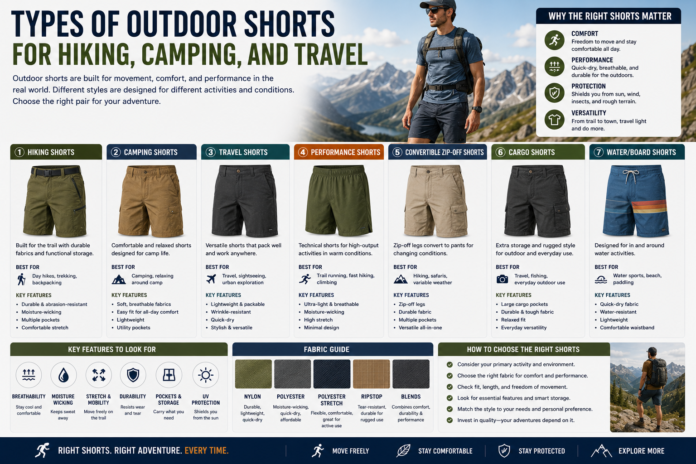
Outdoor shorts are among the most commercially active categories in warm-weather outdoor apparel. Every hiker, camper, and traveler needs reliable shorts that handle physical activity, variable terrain, and unpredictable conditions without failing at inconvenient moments. But types of outdoor shorts vary significantly in construction, fabric, and intended use — and understanding these differences helps brands build collections that genuinely serve outdoor customers rather than simply filling seasonal inventory with similar-looking products.
Here’s a complete guide to every major outdoor short type and what makes each one the right choice for specific activities.
Hiking Shorts — Trail Performance Essentials
Hiking shorts are the foundational outdoor short category — built specifically around the performance demands that trail use creates. They balance mobility, durability, moisture management, and weather resistance in constructions optimized for sustained physical activity across varied terrain.
Key performance requirements distinguish quality hiking shorts from casual alternatives. Four-way stretch fabrics accommodate the full leg extension and hip flexion that steep trail climbing demands without restricting natural movement. Quick-drying synthetic fabrics manage perspiration effectively — preventing the heavy, saturated feeling that cotton alternatives create during high-intensity uphill sections.
Reinforced seat and thigh panels withstand the abrasion from rock scrambling, stream crossings, and pack contact that trail hiking imposes regularly. Secure zippered pockets prevent trail essentials from falling during scrambling sections where pocket contents shift with body position changes.
A professional hiking clothing manufacturer builds hiking shorts with the specific construction details trail users depend on — including inseam length optimized for trail movement freedom, waistband construction compatible with pack hip belt positioning, and fabric weight balanced between durability and packability for multi-day trail applications.
Trail Running Shorts — Ultralight and Unrestricted
Trail running shorts prioritize minimum weight, maximum freedom of movement, and superior moisture management above all other performance characteristics. Every gram matters when running long distances — and shorts that restrict stride or cause friction during high-turnover running gait create cumulative discomfort that significantly undermines performance and enjoyment across long distances.
Lightweight nylon or polyester fabrics — typically 30 to 60 denier — create the lightest possible constructions without completely sacrificing durability. Built-in liner shorts eliminate the need for separate base layer shorts — reducing total weight while preventing chafing through integrated construction that maintains correct position throughout running movement.
Split hems and deep side vents maximize leg freedom during running stride — allowing complete hip extension without fabric restriction at the front hem that standard outdoor short constructions create during running movement.
Cargo Shorts — Storage-Focused Field Performance
Outdoor cargo shorts combine the basic function of shorts with multiple storage pockets specifically designed for field use — creating garments that carry equipment, tools, and essentials without requiring additional carrying systems. Multiple thigh pockets, back pockets, and side slash pockets distribute storage across accessible positions that remain usable during active movement.
Outdoor cargo pants and cargo shorts serve similar storage functions — with shorts offering the mobility and temperature advantages of reduced leg coverage during warm weather outdoor activities. Fishing, photography, field research, and light tactical applications all benefit from cargo short constructions that keep essential items within immediate reach throughout activity.
Ripstop nylon and durable cotton-nylon blends suit cargo short face fabrics — providing the abrasion resistance and tear strength that multiple pocket hardware placements and field activity contact demands across extended regular use.
Swim and Amphibious Shorts — Water-Ready Versatility
Amphibious shorts bridge the gap between dedicated swim shorts and land activity shorts — performing effectively in both aquatic and terrestrial environments without requiring outfit changes during activities that involve both. Stream crossings, coasteering, kayaking, and beach camping all benefit from amphibious constructions that dry rapidly after water immersion and return to comfortable land activity performance within minutes.
Quick-dry polyester mesh fabrics — sometimes combined with stretch nylon face fabrics — achieve the fast-drying performance that true amphibious use demands. Water-shedding DWR treatments accelerate surface drying by preventing fabric saturation during brief water contact. Internal mesh liners provide modest support without the slow-drying foam padding that dedicated swim shorts use.
Camping apparel brands find amphibious shorts among their strongest warm-weather performers — because the versatility of a single garment serving both water and land activities appeals powerfully to weight-conscious outdoor travelers who minimize kit through intelligent gear selection.
Softshell Shorts — Cool Weather Outdoor Performance
Softshell shorts use the same stretch woven face constructions as softshell jackets — providing wind resistance and moderate water resistance alongside meaningful stretch performance for cool weather outdoor activities where standard lightweight shorts would leave legs cold and wind-exposed.
These shorts suit shoulder-season hiking, trail running in cool conditions, and mountain activities where temperatures and wind conditions make bare-leg exposure in standard shorts uncomfortable without warranting the full coverage of long trousers. Stretchy face fabrics accommodate full athletic movement while the windproof construction prevents the wind chill that exposed lightweight shorts suffer in exposed terrain.
Convertible Shorts — Two Garments in One
Convertible shorts feature zip-off legs that transform full-length trousers into shorts at the zip line — providing both coverage and shorts functionality in a single garment without carrying separate pieces. The value proposition is clear — one garment serves variable temperature and terrain conditions across a full outdoor day without requiring additional pack weight for separate shorts.
The zip-off design suits multi-day hiking, travel, and camping where pack weight management matters and conditions change sufficiently throughout the day or trip to make both full leg coverage and shorts desirable across different sections. Hiking clothing collections that include convertible styles serve weight-conscious outdoor consumers who optimize kit selection for maximum versatility from minimum gear investment.
Board Shorts — Recreational Water and Lifestyle
Board shorts use fast-drying woven polyester or nylon constructions in longer inseam lengths — originally developed for surfing and water sports but now serving broad recreational outdoor, beach, and lifestyle markets simultaneously. Their longer length — typically hitting at or just above the knee — provides more sun protection and moderate coverage than shorter alternatives.
Stretch fabrics have improved board short athletic performance significantly — allowing the hip mobility that active water sports and beach activities require while maintaining the casual aesthetic that lifestyle outdoor consumers prefer. Secure pocket constructions prevent contents loss during water activities — particularly important for consumers who carry phones and valuables during casual outdoor and beach use.
Bouldering and Climbing Shorts — Technical Movement Optimized
Climbing and bouldering shorts prioritize stretch performance above all other characteristics — because technical climbing positions demand the absolute maximum hip and leg mobility that any outdoor short construction must deliver without restriction. High-stretch fabrics — typically incorporating 15% to 25% elastane — accommodate deep hip flexion, high foot placement, and extreme leg extension positions that standard outdoor short constructions restrict uncomfortably.
Articulated construction — pre-shaped crotch gussets and positioned seam lines — supplements fabric stretch by ensuring the short’s shape matches athletic body positions rather than fighting against them. Minimal pocket hardware reduces the profile snagging that climbing movement creates on protruding pocket zippers and hardware against rock surfaces.
Tactical and Field Shorts — Durability and Utility
Tactical shorts serve law enforcement, military, security, and serious outdoor enthusiasts who need garment durability, pocket organization, and performance characteristics that casual outdoor shorts don’t provide. Reinforced construction throughout, multiple accessible pockets with secure closures, and durable face fabrics that withstand sustained rough field use define this category.
Tactical outdoor apparel manufacturers understand the specific durability requirements, pocket configurations, and construction standards that professional tactical users evaluate through real operational field experience — distinguishing genuinely tactical garments from fashion-inspired alternatives that look tactical without performing to professional field standards.
Building Your Outdoor Shorts Collection
The types of outdoor shorts each serve specific customer activities and performance needs that other types cannot optimally replace. Brands building outdoor apparel collections benefit from understanding which short types serve their specific target customer most directly — and building those styles with genuine performance credentials rather than simply adding outdoor aesthetics to basic construction.
Working with a professional outdoor shorts manufacturer ensures fabric performance verification, construction quality standards, and feature execution that creates outdoor shorts customers depend on across genuine field use rather than simply wearing occasionally during casual outdoor activities.
Conclusion
Understanding the types of outdoor shorts — hiking, trail running, cargo, amphibious, softshell, convertible, board shorts, climbing, and tactical — gives outdoor brands the knowledge to build collections that serve real outdoor customers across real activities and conditions. Each type makes specific construction choices that optimize performance for its intended use case — and covering the right combination for your target market creates an outdoor shorts range that performs reliably, sells consistently, and builds the brand reputation that serious outdoor customers reward with long-term loyalty.
FAQs
What fabric works best across most outdoor short types?
Lightweight nylon or polyester with four-way stretch suits the majority of outdoor short applications — providing quick-drying performance, freedom of movement, and durability appropriate for hiking, trail running, and general outdoor use across most warm-weather conditions.
What inseam length suits most hiking applications?
5 to 7 inch inseam lengths suit most hiking use — providing adequate coverage for sun protection and brush contact resistance while maintaining the freedom of movement that trail climbing and technical terrain demands.
Can all outdoor short types be produced under a private label?
Yes. All outdoor short types support full private label production with custom fabrics, performance treatments, pocket configurations, colors, labels, and packaging — giving outdoor brands complete creative and commercial control over their shorts collection.
How many outdoor short types should a new outdoor brand launch with initially?
Start with two to three types serving your core customer most directly — typically hiking shorts, a cargo option, and one activity-specific style relevant to your brand’s outdoor focus. This covers your broadest market without overextending initial production investment.