The outdoor jacket market is one of the most commercially diverse categories in apparel manufacturing. Different activities, different environments, and different weather conditions all demand different jacket solutions — and understanding the types of outdoor jackets and what each one genuinely does helps brands build collections that serve real outdoor needs rather than simply filling shelves with similar-looking products. Here’s a complete breakdown of every major outdoor jacket type and its specific use case.
Hardshell Jacket — Maximum Weather Protection
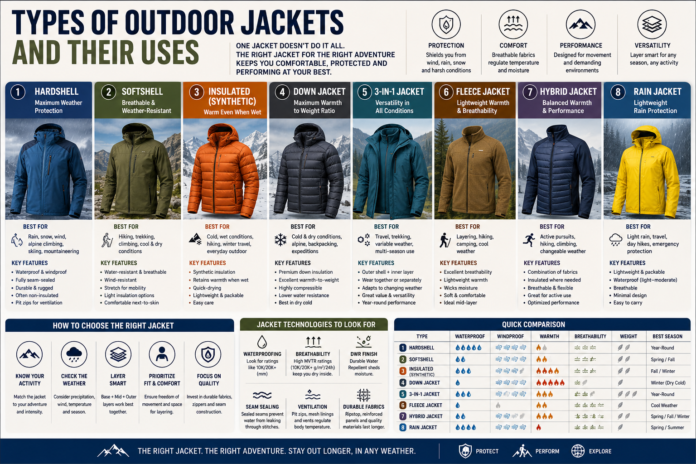
Hardshell jackets represent the pinnacle of weather protection in outdoor apparel. Built from rigid waterproof breathable membrane laminates — Gore-Tex, eVent, or equivalent technologies — hardshells provide complete protection against rain, snow, and wind without compromising breathability during high-intensity activity.
Hardshells contain no insulation — they function purely as weather barriers worn over insulating mid-layers. This design philosophy makes them extremely versatile across wide temperature ranges — the same hardshell serves both cold alpine environments and warm wet lowland hiking depending on the layers worn beneath it.
Hardshell jackets suit mountaineering, alpine climbing, backcountry skiing, and any activity where maximum weather protection and pack weight efficiency matter more than built-in warmth.
Softshell Jacket — Versatile Active Layer
Softshell jackets sacrifice some weather protection in exchange for significantly improved stretch, breathability, and comfort during high-output physical activity. Their fabric construction — typically a stretch woven face bonded to a fleece or gridback lining — provides moderate wind and light rain resistance while moving freely with the body and regulating temperature effectively during sustained effort.
Softshell jackets suit trail running, fast hiking, ski touring, and any activity where the intensity of movement generates significant body heat — making breathability and freedom of movement more important than maximum weather protection. They work exceptionally well as outer layers in dry but cold and windy conditions.
Waterproof Jacket — Reliable Rain Protection
Waterproof jackets cover a broad category between entry-level rain protection and premium membrane performance. They use DWR-treated face fabrics combined with either membrane lamination or polyurethane coating to prevent water penetration during rain and wet conditions.
The key distinction between waterproof jackets lies in breathability performance. Membrane-laminated waterproof jackets breathe significantly better than coated alternatives — making them more comfortable during active use where body heat and perspiration accumulate. For outdoor brands building versatile jacket ranges, waterproof styles serve the broadest possible customer base across hiking, camping, travel, and everyday wet weather use.
Windbreaker Jacket — Lightweight Wind Defence
Windbreaker jackets prioritize wind protection and packability above all other performance properties. Constructed from tightly woven lightweight nylon or polyester with DWR treatment, they block wind chill effectively while packing down to remarkably compact sizes — often fitting into their own chest pocket for effortless transport.
Windbreaker jackets suit running, cycling, casual hiking, and any activity where lightweight wind protection matters but serious weather protection isn’t required. They also serve as the lightest possible outer layer during warm but breezy conditions where any heavier jacket would cause overheating.
Puffer Jacket — Insulated Warmth Champion
Puffer jackets use either down or synthetic insulation trapped within baffle constructions to provide exceptional warmth retention across cold conditions. Their distinctive quilted appearance comes from the stitching or welding that separates insulation baffles — preventing fill migration that would create cold spots across the jacket surface.
Down puffer jackets deliver unmatched warmth-to-weight ratios for dry cold conditions. Synthetic versions maintain performance when wet — making them more reliable for damp outdoor environments. Puffer jackets suit cold weather hiking, camping, ski resort use, and urban cold weather environments — making them one of the most commercially versatile types of outdoor jackets across both technical and lifestyle markets simultaneously.
Fleece Jacket — Comfortable Mid-Layer Essential
Fleece jackets provide reliable warmth through trapped air within their fiber structure — functioning primarily as mid-layers worn beneath waterproof shells in wet conditions and as standalone outer layers in dry cold environments. Their open fiber construction allows excellent moisture vapor transmission — preventing dampness accumulation within layering systems during active outdoor use.
Outdoor fleece jackets in varying weights — 100, 200, and 300-weight constructions — serve different temperature ranges and activity intensities. Lightweight fleece suits active hiking as a standalone layer. Heavyweight fleece serves as serious insulation in cold camping and mountain environments where maximum warmth retention matters above all other performance considerations.
Insulated Jacket — Combined Warmth and Protection
Insulated jackets combine waterproof or water-resistant outer shells with internal insulation fill — delivering warmth retention and weather protection in a single garment without requiring separate shell and mid-layer combinations. They suit recreational outdoor users who prefer simpler layering approaches and activities where temperature conditions remain relatively stable throughout the day.
Outdoor jackets that combine insulation with weather protection serve the largest casual outdoor market segment — hikers, campers, and outdoor lifestyle consumers who want reliable all-condition performance without the complexity of separate technical layering systems.
Rain Jacket — Dedicated Wet Weather Protection
Rain jackets focus specifically on precipitation protection — designed primarily for walking, hiking, and outdoor activities in wet lowland environments where wind chill and cold temperatures are less demanding than waterproofing performance. Packable construction, taped seams, and waterproof zippers provide reliable wet weather protection across sustained rainfall without the premium weight and cost of full mountain hardshell construction.
Rainwear suits outdoor brands targeting walkers, travellers, festival-goers, and casual outdoor enthusiasts who need reliable rain protection for moderate use rather than extreme mountain conditions.
Hunting Jacket — Specialized Field Performance
Hunting jackets combine specific performance requirements that general outdoor jackets don’t address — camouflage patterns for concealment, scent-control treatments, silent fabric constructions that don’t rustle during stealthy movement, and reinforced panels for brush and terrain contact resistance.
Hunting apparel manufacturers understand these specialized requirements deeply — building jackets that serve active hunters across varied terrain, weather conditions, and specific game hunting scenarios where standard outdoor performance simply doesn’t meet the precise functional demands that field hunting imposes.
Hiking Jacket — Trail-Optimized Performance
Hiking jackets balance weight, packability, weather protection, and freedom of movement specifically for trail use. They typically feature articulated construction for uphill climbing mobility, pit zip ventilation for heat management during ascents, and multiple accessible pockets for trail essentials. Weight efficiency matters enormously for multi-day hiking applications where every gram of pack weight impacts endurance across long distances.
Hiking clothing specialists build hiking jackets with the specific functional priorities that trail users depend on — distinguishing genuinely trail-optimized products from general outdoor jackets that technically work on trails but don’t serve hikers with the same precision.
Building a Complete Outdoor Jacket Collection
Understanding the types of outdoor jackets and their distinct uses helps outdoor brands build collections that genuinely serve different customers rather than producing variations of the same product with different colorways. Each jacket type attracts a specific outdoor enthusiast with specific activity needs — and covering the right combination for your target market creates a collection with genuine commercial depth.
Working with a professional outdoor apparel manufacturer ensures fabric performance credentials, construction quality, and technical feature execution meet the real-world demands each jacket type faces across genuine outdoor use.
Conclusion
The types of outdoor jackets — hardshells, softshells, waterproofs, windbreakers, puffers, fleece, insulated, rain jackets, hunting jackets, and hiking jackets — each serve distinct outdoor needs that no single jacket type can replicate across all situations. Brands that understand these distinctions build outdoor jacket collections with genuine commercial intelligence — serving specific customers, specific activities, and specific conditions with products that perform exactly as promised every time they’re needed in the field.
FAQs
What is the most versatile outdoor jacket type for general use?
Waterproof insulated jackets offer the broadest versatility — combining weather protection and warmth in one garment that serves casual hikers, campers, and outdoor lifestyle consumers across the widest range of conditions and activities.
What is the difference between a hardshell and softshell jacket?
Hardshells provide maximum waterproof weather protection with no insulation. Softshells prioritize stretch, breathability, and comfort during high-output activity — offering moderate wind and light rain resistance rather than full waterproof performance.
Can all outdoor jacket types be produced under a private label?
Yes. Professional outdoor apparel manufacturers offer complete private label production across all jacket types — with custom fabrics, performance treatments, colors, hardware, labels, and packaging giving brands full creative and commercial control.
How many outdoor jacket types should a new brand launch with initially?
Start with two to three core types that serve your specific target customer most directly — typically a waterproof jacket, an insulated puffer, and one activity-specific style relevant to your brand’s outdoor focus. Expand strategically as revenue and market understanding develop.