When conditions get genuinely serious outdoors — sustained rain, alpine storms, blizzard conditions, or exposed ridgeline winds — hardshell jackets are the garments that stand between comfort and genuine discomfort or danger. But not all hardshells are built the same. Understanding the types of hardshell jackets available helps outdoor enthusiasts choose correctly for their specific adventure and helps brands build collections that serve real outdoor needs with genuine technical credibility. Here’s a complete breakdown.
What Makes a Jacket a Hardshell?
Before diving into specific types, understanding what defines hardshell construction clarifies every comparison that follows. Hardshell jackets use rigid waterproof breathable membrane laminates — Gore-Tex, eVent, Pertex Shield, or equivalent technologies — bonded to face fabrics to create complete weather barriers.
They contain no insulation. That deliberate absence makes them extremely temperature-versatile — the same hardshell works across a wide range of conditions depending on what insulating layers are worn beneath it. Fully sealed seams prevent water entry through construction points. Waterproof zippers prevent moisture penetration at closure points. These construction standards together define genuine hardshell performance — distinguishing it from water-resistant softshell or DWR-only windbreaker alternatives.
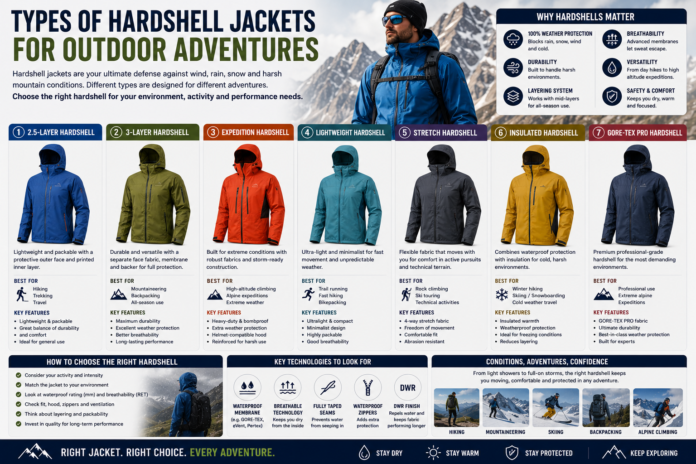
Three-Layer Hardshell — Maximum Durability and Performance
Three-layer hardshell construction bonds three components into a single unified fabric — face fabric, waterproof breathable membrane, and interior backer — creating the most durable and highest-performing hardshell construction available.
The unified construction eliminates the separate lining fabric found in two-layer constructions — reducing bulk, improving breathability, and extending jacket service life by preventing the delamination that separate-layer constructions eventually experience under hard use. Three-layer hardshells feel slightly stiffer against the body than softer alternatives but deliver unmatched durability for the demanding mechanical stresses that mountaineering, alpine climbing, and backcountry skiing impose.
Hardshell jackets built in three-layer construction represent the premium tier of waterproof outerwear — commanding higher retail prices through genuine performance superiority that serious outdoor users recognize and pay for without hesitation.
Two-Layer Hardshell — Comfortable and Versatile
Two-layer hardshell construction bonds the waterproof membrane to the face fabric interior — leaving a separate hanging lining fabric loose inside the jacket rather than bonded directly to the membrane. This construction feels softer and more comfortable against base layers and mid-layers than three-layer alternatives — at the cost of slightly reduced durability and marginally lower breathability performance.
Two-layer hardshells suit recreational outdoor users who prioritize wearing comfort alongside weather protection — hikers, campers, and general outdoor enthusiasts who encounter serious weather conditions but don’t subject their jackets to the sustained extreme mechanical stresses that professional alpinists and mountaineers impose through daily hard use.
This construction also allows more flexibility in interior lining design — mesh linings, taffeta linings, and printed interior fabrics all work within two-layer constructions — providing opportunities for brand expression and comfort differentiation that three-layer bonded constructions cannot accommodate.
2.5-Layer Hardshell — Ultralight Emergency Protection
2.5-layer constructions bond a waterproof membrane to the face fabric interior and protect the membrane with a printed or embossed pattern coating rather than a separate lining fabric. The result is the lightest and most packable hardshell construction achievable — often producing jackets under 200 grams that compress to fist-sized packed volumes.
The 0.5 layer designation refers to this interior coating — substantial enough to protect the membrane from abrasion during wear but insufficient to qualify as a full interior lining layer. Comfort against the skin is lower than two-layer or three-layer alternatives — the unlined interior feels clammy during sustained wear over base layers.
2.5-layer hardshells suit emergency carry applications — jackets packed and worn only when conditions deteriorate unexpectedly during activities where continuous jacket wearing isn’t anticipated. Trail runners, fast packers, and mountain bikers all benefit from 2.5-layer hardshells that provide genuine weather protection in negligible pack weight and volume.
Alpine and Mountaineering Hardshell — Expedition Grade Performance
Alpine hardshells represent the most technically specified category within hardshell jacket construction — built specifically for the extreme demands of high-altitude mountaineering, technical climbing, and serious alpine adventures where jacket failure creates genuine safety consequences.
These jackets feature the most durable three-layer face fabric constructions available, helmet-compatible hoods with precise adjustment systems, harness-compatible hem and pocket design that maintains functionality when a climbing harness is worn, and reinforced panels at high-wear zones where rope, crampon straps, and pack contact regularly abrades jacket surfaces.
Construction quality tolerances are tighter than general outdoor hardshells — seam taping is more extensive, zipper specifications are higher, and hardware is selected specifically for reliable operation in extreme cold where lubricants freeze and metal components contract. Brands building serious outdoor jackets collections find alpine hardshells anchor their premium product tier — attracting the most technically sophisticated outdoor customers whose recommendations within climbing and mountaineering communities carry significant influence.
Ski and Snowboard Hardshell — Mountain Sport Specific
Ski and snowboard hardshells adapt standard hardshell construction for the specific demands of mountain snow sports — adding features that general outdoor hardshells don’t require but ski and snowboard use genuinely demands.
Internal powder skirts seal against ski pant waistbands — preventing snow entry during falls and deep powder runs. Helmet-compatible hood designs accommodate the specific volume and shape of ski helmets. Lift pass pockets with RFID-transparent windows allow pass scanning without pocket access. Goggle pockets with soft internal lining prevent lens scratching during jacket storage.
Ski wear hardshells often incorporate slightly softer membrane constructions than alpine climbing alternatives — prioritizing the freedom of movement that ski technique demands over the maximum abrasion resistance that rope-work and rock contact requires in climbing applications.
Waterproof Hiking Hardshell — Trail Optimized Performance
Hiking hardshells balance weather protection, breathability, weight, and packability specifically around the demands of trail use — where sustained physical activity generates significant moisture vapor that less breathable constructions trap uncomfortably, and where pack weight directly impacts hiking endurance across long distances.
These jackets use high-breathability membrane specifications — prioritizing moisture vapor transmission rates alongside waterproofing performance — because hikers generate significant perspiration during uphill sections that hardshells with lower breathability ratings handle poorly. Pit zip ventilation systems supplement passive membrane breathability during maximum exertion sections where even high-specification membranes cannot evacuate perspiration heat accumulation fast enough for comfortable sustained effort.
Waterproof clothing designed specifically for hiking trails serves the largest outdoor activity market segment — making hiking hardshells the highest-volume hardshell category for most outdoor apparel brands building broad-market outdoor jacket collections.
Packable Hardshell — Lightweight Weather Insurance
Packable hardshells prioritize compressed volume and weight reduction while maintaining genuine waterproof breathable membrane performance — creating jackets that provide real hardshell protection in packable formats approaching windbreaker compactness.
These jackets use lighter face fabric deniers than durability-focused alternatives — accepting some reduction in abrasion resistance to achieve the packability that emergency carry applications demand. They suit day hikers, travelers, and casual outdoor users who need reliable weather protection available at all times without carrying jacket weight during the majority of outings when conditions remain benign.
The packable hardshell category serves camping apparel markets effectively — campers who need reliable weather protection available for unexpected deterioration without dedicating significant pack space or weight budget to outerwear on every trip.
Softshell-Hardshell Hybrid — Versatility Across Conditions
Hybrid jackets combine hardshell weather protection panels at high-exposure zones — chest, shoulders, and hood — with softshell stretch construction across high-mobility zones — sides, underarms, and back. The result is a jacket that provides meaningful weather protection alongside softshell levels of stretch and breathability during active use.
These hybrid constructions suit activities involving alternating high-intensity movement and exposure to weather — ski touring, trail running in mountain environments, and fast alpine travel where conditions change rapidly and activity intensity fluctuates significantly throughout the day.
Softshell jackets and hardshell hybrid constructions represent premium product innovation within outdoor jacket manufacturing — attracting technically sophisticated customers willing to pay premium prices for performance combinations that single-construction alternatives cannot deliver.
Building a Hardshell Collection That Covers Your Market
The types of hardshell jackets each serve specific outdoor activities and customer needs that other types cannot optimally replace. Brands building outdoor apparel collections benefit from carrying multiple hardshell types — covering entry-level packable styles for casual outdoor consumers alongside premium alpine specifications for serious outdoor enthusiasts.
Working with a professional outdoor apparel manufacturer who understands membrane technology, seam sealing requirements, and construction specifications for each hardshell type ensures your collection delivers the genuine waterproof breathable performance that outdoor customers evaluate through real-world use rather than specification sheets alone.
Conclusion
Understanding the types of hardshell jackets — three-layer, two-layer, 2.5-layer, alpine, ski-specific, hiking-optimized, packable, and hybrid constructions — gives outdoor brands the technical knowledge to build collections that genuinely serve different outdoor customers across different activities and conditions. Each hardshell type makes specific construction choices that optimize performance for particular use cases — and matching the right construction to the right customer creates outdoor jacket collections that build genuine brand reputation through real-world performance that serious outdoor enthusiasts recognize, respect, and recommend.
FAQs
What is the most durable hardshell jacket construction?
Three-layer construction delivers maximum durability — the bonded face fabric, membrane, and backer eliminate the delamination risk of separate-layer constructions and withstand the sustained mechanical stresses that demanding alpine and mountaineering use imposes.
Which hardshell type offers the best breathability for active hiking?
Hiking-specific hardshells with high breathability membrane specifications — prioritizing moisture vapor transmission alongside waterproofing — plus pit zip ventilation systems provide the best active breathability for sustained uphill hiking effort.
Are packable hardshells as waterproof as heavier alternatives?
Yes — waterproof membrane performance is determined by membrane specification rather than jacket weight. Packable hardshells with quality membrane construction deliver equivalent waterproofing to heavier alternatives at reduced face fabric durability rather than reduced weather protection performance.
Can hardshell jackets be produced under a private label for outdoor brands?
Yes. Professional outdoor apparel manufacturers offer complete private label hardshell production with certified membrane technologies, custom fabrics, seam sealing, colors, hardware, labels, and packaging — giving outdoor brands full technical and commercial control over their hardshell jacket collection.