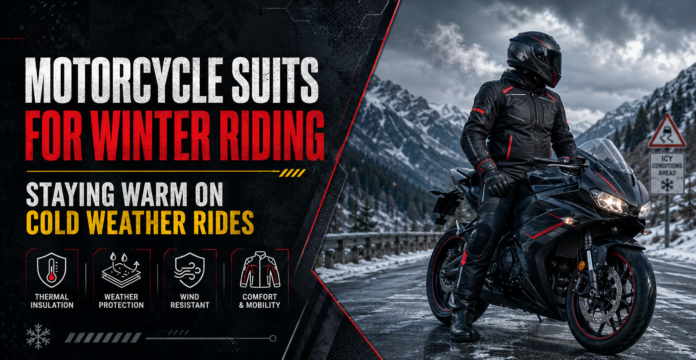
Cold weather riding feels exciting, but it can also become risky when the body is not protected properly. Low temperature, fast wind, rain, fog, and wet roads can make a short ride feel much harder than expected. This is why motorcycle suits for winter riding are not only about warmth. They are also about comfort, control, and safety. When a rider becomes too cold, hands may get stiff, shoulders may tighten, and focus may drop. That can affect braking, turning, and reaction time.
A normal jacket or casual pants may feel warm while standing still, but they often fail when wind hits the body at riding speed. Winter motorcycle suits are designed to reduce wind chill, block cold air, protect against light rain, and keep protective armor in the correct place. Motorcycle suits for winter riding should cover the body properly from neck to ankle without leaving gaps. The goal is simple: stay warm enough to think clearly, move easily, and ride safely in cold conditions.
What Makes a Winter Motorcycle Suit Different
A winter riding suit is different from regular motorbike clothing because it must manage more than one problem at the same time. It needs to block cold wind, hold body heat, manage moisture, protect against abrasion, and support impact protection. Good motorcycle suits for winter riding often include thicker fabrics, thermal lining, water-resistant panels, storm flaps, adjustable cuffs, sealed openings, and built-in armor zones. These features help the rider stay protected without wearing too many loose layers.
A winter suit should also feel balanced. If it is too bulky, it can make movement difficult. If it is too light, it may not protect well from wind and cold. Riders who want different suit styles can explore Eco Jersey’s motorcycle suits collection when comparing one-piece and two-piece options for cold-weather riding. The best motorcycle suits for winter riding should feel secure, flexible, and warm without making the rider feel trapped inside heavy clothing.
Motorcycle Suits for Winter Riding
Motorcycle suits for winter riding are made to help riders stay warm, dry, and protected during cold weather rides. These suits are useful for daily commuters, touring riders, weekend riders, and anyone who does not want to stop riding when the temperature drops. A winter motorcycle suit usually works better than mixing random jackets and pants because the suit is designed as a full system. It protects the chest, back, arms, hips, knees, and legs in a more organized way.
The keyword here is balance. Motorcycle suits for winter riding should not only feel warm in the first five minutes. They should remain comfortable during longer rides, changing weather, and different road speeds. Riders should check the suit’s outer shell, lining, armor, closure system, and ventilation options before buying. A good suit gives enough warmth but still allows breathing and movement. This is important because sweating inside a winter suit can later make the rider feel colder when the body cools down.
The Biggest Problem Is Wind Chill
Many new riders think winter riding is only about the outside temperature, but wind chill is often the real problem. When a motorcycle moves fast, cold air hits the body with much more force. A day that feels cool while walking can feel freezing on a bike. This is why motorcycle suits for winter riding must block air from entering through the neck, wrists, waist, zippers, and ankles. Small gaps can let cold air move inside the suit and make the rider uncomfortable very quickly.
A proper winter suit uses adjustable cuffs, high collars, zipper covers, and fitted openings to reduce this problem. The suit should also fit close enough to stop air from ballooning inside, but not so tight that it limits movement. Wind protection is one of the main reasons riders choose a complete winter suit instead of casual winter clothing. Motorcycle suits for winter riding help reduce cold air pressure on the body and keep the rider more stable during long rides.
Warmth Should Not Reduce Safety
Warmth is important, but it should never come at the cost of safety. Some riders wear thick casual coats, hoodies, or loose trousers in winter, but these items are not made for motorcycle protection. They may not resist abrasion, they may move out of place in a slide, and they may not hold armor correctly. Motorcycle suits for winter riding should include protective zones at the shoulders, elbows, back, hips, and knees. The outer fabric should be strong enough for road use, and the suit should stay in position while riding.
A suit that is too loose can shift during movement. A suit that is too tight can make the rider uncomfortable and reduce control. Women riders may need a different cut for better fit, and options like Eco Jersey’s women’s motorbike suit can be useful when planning suit styles for different body shapes. The safest motorcycle suits for winter riding keep warmth, comfort, and protection working together.
Layering the Right Way Under a Winter Suit
Layering is one of the smartest ways to stay warm, but layers must be chosen carefully. A winter motorcycle suit should not be treated like the only warm item. Instead, it should work with a base layer and, when needed, a mid-layer. The base layer should sit close to the skin and help move sweat away. The mid-layer should add warmth without becoming too bulky. The outer suit should block wind and protect the rider. Motorcycle suits for winter riding work best when the rider avoids thick cotton layers that hold sweat and become cold later. Thin thermal tops, fleece layers, or technical riding layers usually perform better.
Riders should also avoid wearing too many layers because this can make the suit tight and reduce comfort. If armor shifts because of extra clothing, protection may become weaker. Motorcycle suits for winter riding should leave enough space for smart layering while still keeping the body secure and covered.
One Quick Winter Suit Checklist
Before buying or wearing motorcycle suits for winter riding, check these points carefully:
- Choose a suit that blocks wind at the collar, cuffs, waist, and ankles.
- Make sure the suit includes impact protection in key areas.
- Pick a fit that allows easy bending, reaching, and turning.
- Use a moisture-managing base layer under the suit.
- Avoid bulky casual layers that move armor out of place.
- Check if the lining is removable for changing weather.
- Choose water resistance if winter rain is common in your area.
- Test the suit while sitting in a riding position.
- Make sure zippers, cuffs, and closures are easy to use with gloves.
- Check that pants and jacket overlap well in a two-piece suit.
- Keep the suit clean and dry after every cold-weather ride.
Rain, Wet Roads, and Cold Weather Comfort
Winter riding often brings more than cold air. Rain, mist, road spray, and wet seats can make the body lose heat faster. This is why motorcycle suits for winter riding should offer some level of water resistance or waterproof protection, depending on the riding environment. A suit does not always need to be heavy rain gear, but it should stop light rain and road spray from making the rider cold. Wet clothing can quickly reduce comfort, especially when wind hits it at speed.
A rain-ready suit should have covered zippers, sealed or protected seams, strong outer fabric, and closures that stop water from entering common weak points. Riders who often face wet conditions may also compare purpose-built options like Eco Jersey’s motorbike rain suit for extra weather protection. The best motorcycle suits for winter riding help riders stay dry enough to keep body temperature stable and avoid distraction on the road.
Fit Matters More Than Many Riders Think
Fit is one of the most important parts of winter motorcycle clothing. Even an expensive suit can feel unsafe if it does not fit correctly. Motorcycle suits for winter riding should feel comfortable while sitting on the bike, not only while standing in front of a mirror. Sleeves should cover the wrists when the rider holds the handlebar. The back should not pull tight when leaning forward. Pants should cover the ankles when knees are bent. Knee armor should stay over the knee, and elbow armor should stay over the elbow.
If the suit is too short, cold air can enter. If it is too long, extra fabric can bunch up and feel uncomfortable. A good winter suit should also leave enough room for a base layer without becoming loose. Motorcycle suits for winter riding need a riding fit, which means the shape should support real riding positions. Riders should always test movement before deciding if a suit is right.
Common Mistakes Riders Should Avoid
Many riders make simple winter clothing mistakes that can affect safety. One mistake is wearing a normal winter coat instead of protective gear. Another mistake is wearing too many thick layers, which can make movement harder and shift armor. Some riders forget about the neck, wrists, and ankles, even though these small gaps let cold air enter quickly. Others choose waterproof clothing but ignore breathability, which can lead to sweating and discomfort.
Motorcycle suits for winter riding should solve these problems with a full-body approach. Riders should also avoid buying a suit only because it looks stylish. Style matters, but protection, warmth, and fit matter more. Another common mistake is not maintaining the suit. Dirt, sweat, moisture, and damaged zippers can reduce comfort and performance. Motorcycle suits for winter riding should be checked before the season starts and after long rides. A clean, dry, well-fitted suit is always better than a stylish one that does not protect properly.
Conclusion
Motorcycle suits for winter riding are a smart choice for riders who want warmth without losing safety. Cold weather can make riding harder, but the right suit helps reduce wind chill, hold body heat, manage light rain, and keep armor in place. A good winter suit should fit well, support layering, protect key body areas, and feel comfortable in a real riding position. Riders should not depend on casual winter clothes because they are not designed for road protection. The better approach is to choose motorcycle suits for winter riding that match the weather, ride length, and safety needs. When the body stays warm and dry, the mind stays clearer, and the rider can focus better on the road. In the end, winter riding is not only about fighting the cold. It is about preparing properly so every cold-weather ride feels safer, smoother, and more controlled.
FAQs
Are motorcycle suits for winter riding better than a jacket and pants?
Yes, they can be better because they give more complete coverage and reduce cold gaps. A two-piece suit can also work well if the jacket and pants overlap properly.
Should a winter motorcycle suit be waterproof?
It should be water-resistant or waterproof if you ride in rain, fog, or wet road conditions. Dry clothing helps your body stay warmer.
Can I wear normal winter clothes under a motorcycle suit?
You can wear layers, but avoid bulky cotton or loose clothing. Use thin thermal layers that keep warmth without moving the armor out of place.
How should motorcycle suits for winter riding fit?
They should feel comfortable in a riding position, cover wrists and ankles, allow movement, and keep armor over the right body areas.