Wear is the largest, most commercially consistent, and most profitable category in fashionwear. It is the category people wear the most — in their homes, on errands, social engagements, at home workspace, and all the more mundane parts of daily life that don’t need to be formal.
With that constant everyday demand, types of casualwear are one of the most trustworthy categories to base a fashion business on. Casualwear also isn’t one item — it’s an umbrella term of many items and styles, each with its own construction preferences and appeals to different customers, and each with its own commercial opportunities.
This guide simply articulates the main styles of casualwear and the range they cover to help you develop your collection.
How is Casualwear Different From Other Fashionwear?
Casualwear is the relaxed, comfortable end of fashionwear. What takes precedence is the sort of relaxed structure of soft fabric, and a fit that has leeway, covering a wide range of everyday scenarios and can be worn with minimal style effort.
That being said, casualwear certainly can be challenging to produce well, and done well, can be highly commercially successful. The most successful casualwear brands have done just that, building basic shapes and silhouettes to new heights, providing more quality in fabric, with basics, and maintaining a strong brand identity. A premium, thick, and soft hoodie can look eerily similar to a cheaply made one on a hanger, but the difference in construction, fabric, and finishing is immediately identifiable once picked up and weighed.Premium heavyweight hoodie and a cheap one might look similar on a hanger — but the difference in fabric, construction, and finish is immediately apparent when you pick them up.
A dedicated casual wear manufacturer who understands what separates good casual wear from commodity products is the right starting point for any brand building in this category.
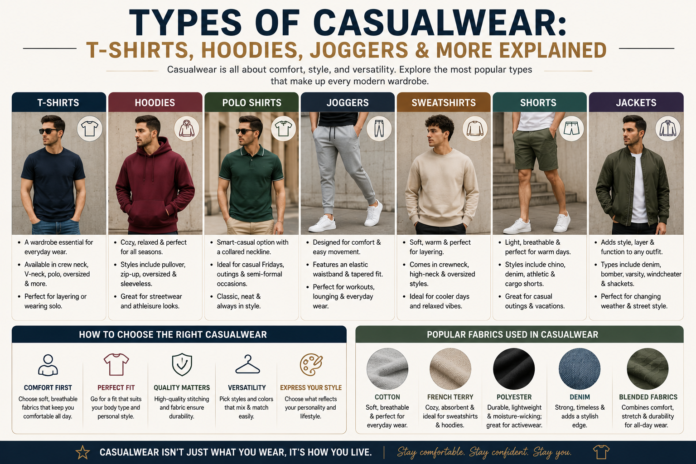
1. T-Shirts
Casual wear worldwide is most commonly recognised by an item that people often refer to simply as a t-shirt. Because entering casualwear is as simple as producing basic t-shirts, there are a lot of businesses producing t-shirts, making the industry equally competitive, regardless of where in the world it is taking place.
What most differentiates t-shirts that sell, and those that don’t, is rarely the shape of the t-shirt itself. Instead, it most often is the weight, fit, etc. of the fabric used. For example, a t-shirt produced with a clean neck finish and weighty cotton with a fabric weight of 220 to 260 GSM that has accurately located shoulder seams and consistent sizing will look and feel fundamentally different from similar-priced t-shirts that are thin and misshapen.
For brands building a casualwear range, the t-shirt is the right starting product — because it validates fabric and fit decisions that carry through to every other product in the range. A t-shirt manufacturer with strong fabric sourcing and consistent construction gives brands a reliable foundation.
2. Hoodies
The hoodie is the second most commercially important piece of casualwear, and some would argue the number one piece in terms of expressiveness of the brand. Compared to a T-shirt, a hoodie is bigger, has more branding space, and has more design elements. Because of this, hoodies tend to be more expensive, which gives companies more commercial room to produce better quality products.
When looking at hoodies, a good sign of quality is the weight of the material. A good quality hoodie should be made of a 320 to 400 GSM French terry or fleece. Anything below 280 GSM feels more like a disposable product, regardless of construction quality.
Ribbed cuffs and hems should maintain their shape after multiple washes, and construction quality can also be shown by a kangaroo pocket that stays flat and a hood that has a proper cut, so that it is not sagging or misshapen.
A hoodies manufacturer experienced in premium casualwear understands these quality indicators and builds them into production standards — rather than treating them as optional details.
3. Sweatshirts
The sweatshirt is a streamlined design cousin of the hoodie where the silhouette is free of a drawstring and hood. Your choices for necklines are crew or mock. Available in fleece or french terry, this design is perfect for brands looking for a more elevated casualwear staple.
Sweatshirts have found their way into the premium casualwear tier (which is where they’d likely find their strongest market) as the clean design of the silhouette is perfect for where they’d likely find their strongest market. As a canvas for embroidery, branding, tonal prints, and graphic details, the design remains clean, unlike other silhouettes where the presence of a hood creates visual clutter.
The construction requirements are simpler than a hoodie, which can make the sweatshirt a more cost-efficient product at the same fabric quality level. For brands building a coordinated casualwear range, a sweatshirts manufacturer that produces sweatshirts and hoodies in matching fabrics and washes creates a coherent range without requiring multiple fabric sourcing relationships.
4. Joggers
Joggers are the pants equivalent of hoodies and sweatshirts; they’re the most versatile and commercially viable option for casual wear. They’re functional for loungewear and casual daywear, and can serve as a stylish option for structured trousers as a better alternative.
Quality joggers have an elastic waistband, but the drawstrings are fed and stay flat when adjusted. They also have tapered leg construction that maintains its shape through washes, as well as ribbed cuffs that don’t slide when joggers are worn.
The commercially viable option for joggers is dependent on the fabric. A breathable midweight option is French terry of 280 to 340 GSM. For a warmer option for autumn and winter, heavyweight fleece works. For an option with a summer fit, a lightweight jersey gives a more relaxed choice.
A joggers manufacturer who works across multiple fabric weights and has strong waistband and cuff construction experience gives casualwear brands the production quality their jogger range needs.
5. Co-ord Sets
Co-ord sets, tops and bottoms made as an intentional pairing have quickly become a favourite among casualwear products. The convenience of the single purchase solution to styling encourages repeat business.
Co-ord casual wear consists of a pair of hoodies/sweatshirts with matching jogger pants. These elements are the same fabric and dye lots and have the same weight. The essential requirement for production is fabric or dye lot consistency. Without matching fabric, the co-ord proposition can’t be. A co-ord set manufacturer who produces both pieces from the same fabric, cut and dye lot, eliminates this risk.
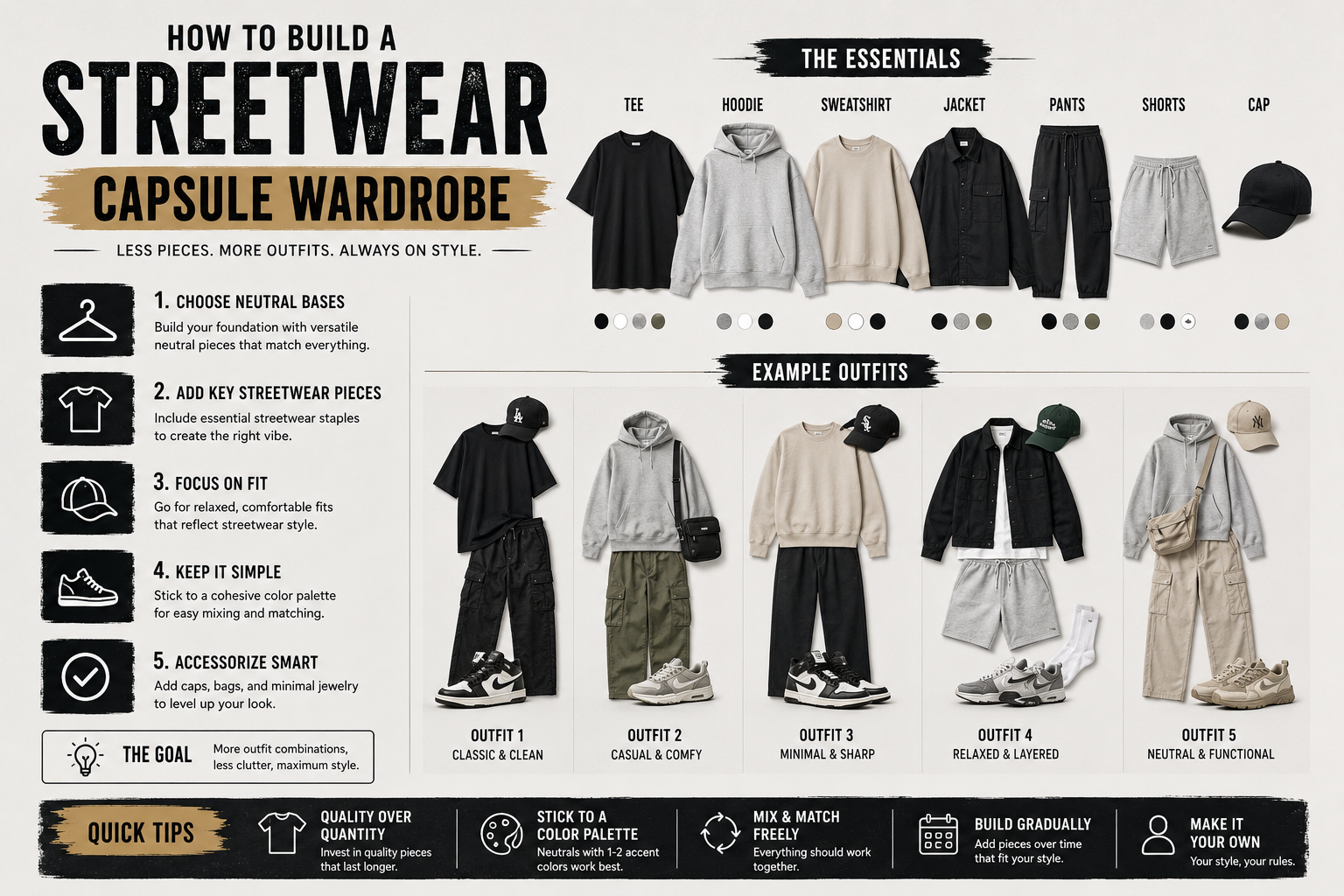
6. Cargo Pants
There has been an increasing interest in a certain type of workwear pants. Functional aesthetics have grown to become a popular element among most casual clothing on the market. Conversely, cargo pants have gone from utility workwear to commonplace pants for the everyday person.
Among cargo pants, the defining trait, most noticeable aspect, and most instrumental piece to consider is the side cargo pocket — the large, often flap-covered pocket on the outer thigh. The craftsmanship of cargo pants must be flawless to avoid a poor construction quality appearance. Pockets that bulge, flaps that sit unevenly, or pocket seams that pucker are all poor construction quality.
For brands targeting streetwear-influenced or utility-aesthetic casualwear markets, cargo pants are a strong commercial opportunity. A cargo pants manufacturer with experience in multi-pocket construction gives brands the precision execution this style requires.
7. Flannel Shirts
Flannel shirts are a seasonally strong casualwear product — particularly in autumn and winter collections. The brushed surface of flannel fabric gives a warm, soft handfeel that is strongly associated with casual comfort and heritage aesthetics.
Flannel works across genders and age groups — and coordinates naturally with jeans, cargo pants, and joggers across a casualwear range. A flannel shirt manufacturer with experience in check pattern matching — ensuring that the plaid or check pattern aligns across seams — produces a noticeably more premium product than one who treats flannel like any other woven fabric.
Conclusion
Types of casualwear include a variety of products with specific construction needs and customer demographics. A good range of products requires depth. T-Shirts and Hoodies form the core of cash sales. Trousers and co-ords supplement depth. Seasonal and aesthetic variety is provided by Cargo Pants and Flannel Shirts.
When you’re ready to build your casualwear collection, explore the full range of casual wear manufacturing options and find the right production partner for your brand.
FAQs
What are the most commercially reliable casualwear products?
T-shirts and hoodies are the most consistently commercial — they sell across seasons and form the foundation of most successful casualwear ranges.
What fabric weight should a quality hoodie be?
320 to 400 GSM is the range that delivers a premium feel. Below 280 GSM starts to feel thin regardless of construction quality.
What makes a co-ord set commercially strong?
It solves the customer’s styling problem in one purchase — which drives strong conversion rates and repeat buying from customers who value the matching proposition.
Are cargo pants suitable for all casualwear brands?
They work best for brands targeting streetwear-influenced, utility-aesthetic, or younger-demographic customers. They carry more risk for brands with a clean, minimal casualwear positioning.
Can I coordinate all casualwear products in a single fabric?
Some products — hoodies and joggers for example — coordinate naturally in the same fabric. Others — like flannel shirts and cargo pants — use different materials that need to be coordinated through colour and design rather than fabric.