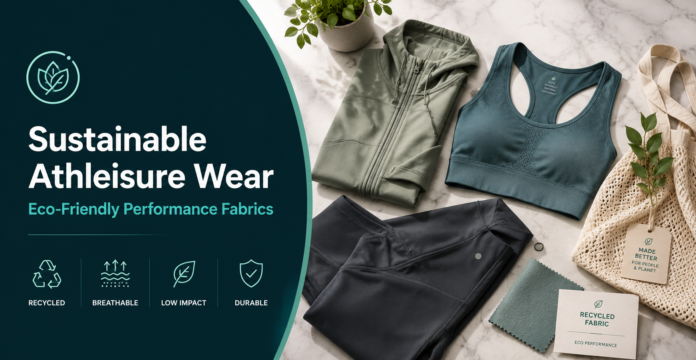
Sustainable athleisure wear is clothing made for comfort, movement, and everyday style while using eco-friendly materials and cleaner production choices. It is not only gym clothing and it is not only casual clothing. It sits between both worlds, which means you can wear it for walking, travel, light workouts, daily errands, lounging, and relaxed office days. The main idea is simple: the clothing should feel soft, stretch well, breathe properly, and last longer without creating unnecessary waste. Sustainable athleisure wear matters because people now want clothing that supports their lifestyle and also reduces harm to the planet. A good hoodie, jogger, T-shirt, tank top, or legging should not feel heavy, rough, or uncomfortable after a few washes. It should stay useful for a long time. That is why eco-friendly performance fabrics are becoming more important in modern active fashion.
What Makes Sustainable Athleisure Wear Different?
Sustainable athleisure wear is different because it focuses on fabric choice, comfort, durability, and lower environmental impact at the same time. Normal athleisure may look stylish and feel comfortable, but it may use materials that are harder to recycle, need more water, or wear out quickly. Sustainable athleisure wear tries to solve these issues by using recycled polyester, organic cotton, bamboo blends, Tencel, modal, hemp blends, and other responsible materials. These fabrics can reduce waste, support better resource use, and still give the wearer the stretch and softness needed for daily movement. When customers shop for modern athleisure wear, they usually want clothing that looks clean, feels relaxed, and works in different situations. Sustainable athleisure wear answers that need by combining performance with responsibility, so the clothes are not only good for style but also better for long-term use.
Sustainable Athleisure Wear and Fabric Comfort
Sustainable athleisure wear should feel comfortable from the first wear because comfort is the main reason people choose athleisure in the first place. Fabric softness, stretch, breathability, and weight all affect how the garment feels on the body. Organic cotton can feel soft and natural, while recycled polyester can add strength and quick-dry performance. Tencel and modal can make the fabric smoother, cooler, and more pleasant for warm weather. Bamboo blends are often used for a soft hand feel and relaxed comfort. The best sustainable athleisure wear does not depend on one fabric only. It uses the right blend for the right purpose. For example, a daily T-shirt may need softness and airflow, while joggers may need durability and shape recovery. A hoodie may need warmth without feeling too bulky. Good fabric comfort means the clothing supports your body instead of distracting you.
Why Eco-Friendly Performance Fabrics Matter
Eco-friendly performance fabrics matter because clothing is used, washed, stretched, and worn many times. If the fabric is weak, uncomfortable, or badly made, the garment may be replaced quickly, which creates more waste. Sustainable athleisure wear tries to reduce this problem by using stronger fabrics that stay useful for longer. Recycled polyester can help reuse plastic waste and still provide performance features like moisture control and durability. Organic cotton can reduce chemical-heavy farming compared with conventional cotton. Tencel and modal are valued for softness and comfort when made through responsible systems. When brands design activewear with better fabric planning, the final product can support workouts, travel, and everyday use without feeling cheap or short-lived. Sustainable athleisure wear is not only about saying “eco-friendly.” It is about making clothing that performs well, lasts longer, and feels better in real life.
Breathability in Sustainable Athleisure Wear
Breathability is one of the most important features of sustainable athleisure wear because people wear this clothing for long hours. Breathable fabric allows heat and moisture to move away from the body more easily. This helps the wearer feel cooler, fresher, and less sticky. Lightweight recycled polyester blends can dry quickly, while Tencel, modal, and bamboo blends can feel cooler against the skin. Organic cotton can feel breathable for casual use, but it may hold moisture longer during heavy sweating. That is why fabric choice should match the activity. For walking, travel, and everyday comfort, natural or cellulosic blends can work very well. For training, gym use, or higher movement, recycled polyester with elastane may be better. Sustainable athleisure wear becomes more useful when breathability is planned correctly because the wearer can move from home to outside activities without changing clothes.
Stretch, Fit, and Daily Movement
Sustainable athleisure wear must support movement because people use it for many parts of daily life. Stretch is important when sitting, walking, bending, traveling, exercising, or doing simple home tasks. Elastane or spandex is often added in small amounts to give fabric flexibility and shape recovery. Without stretch, leggings may feel tight, T-shirts may pull at the shoulders, and joggers may feel uncomfortable around the knees. A good fit should not be too loose or too tight. It should allow natural movement while still looking clean. Sustainable athleisure wear is best when it balances relaxed comfort with a neat shape. For example, athletic T-shirts can be designed with lightweight fabric, easy stretch, and breathable construction for daily performance. The goal is not to make clothing only for athletes. The goal is to make clothing that helps normal people move comfortably every day.
Key Features of Sustainable Athleisure Wear
- Sustainable athleisure wear should use responsible fabrics such as recycled polyester, organic cotton, Tencel, modal, bamboo blends, or other lower-impact materials.
- Sustainable athleisure wear should feel soft on the skin so it can be worn for long hours without irritation.
- Sustainable athleisure wear should provide enough stretch for walking, sitting, bending, training, and everyday movement.
- Sustainable athleisure wear should be breathable enough to reduce heat buildup during daily use.
- Sustainable athleisure wear should keep its shape after washing so the garment does not look loose or worn out too quickly.
- Sustainable athleisure wear should be strong enough to handle repeated wear without fast pilling, tearing, or fabric thinning.
- Sustainable athleisure wear should have clean stitching and a practical fit so it works for both casual and active use.
- Sustainable athleisure wear should be easy to style with hoodies, joggers, T-shirts, tank tops, leggings, and light jackets.
Best Fabrics Used in Sustainable Athleisure Wear
The best fabrics for sustainable athleisure wear depend on the purpose of the garment. Recycled polyester is useful for performance because it is strong, lightweight, and quick drying. Organic cotton is good for softness and daily comfort, especially in T-shirts, hoodies, and relaxed joggers. Tencel and modal are excellent for smoothness, breathability, and a cooler hand feel. Bamboo blends are popular for soft casual athleisure, although quality depends on how the fabric is processed. Hemp blends can add strength and natural texture, but they are usually better when mixed with softer fibers. Sustainable athleisure wear often works best when fabrics are blended carefully. A recycled polyester and elastane blend may work well for active tops, while organic cotton and recycled polyester may work well for hoodies and joggers. The right fabric is not only the one that sounds eco-friendly. It is the one that fits the activity, comfort need, and expected garment life.
Sustainable Athleisure Wear for Everyday Style
Sustainable athleisure wear is popular because it looks simple and clean while still feeling practical. People can wear it at home, on the street, during travel, after the gym, or for casual meetings. The style is usually relaxed, but it should not look careless. Neutral colors, smooth fabric surfaces, simple cuts, and good finishing make athleisure easier to wear in many places. A sustainable hoodie can work with joggers, jeans, or shorts. A breathable T-shirt can work under a jacket or with training pants. A tank top can be useful for warm weather, workouts, or layering. Sustainable athleisure wear gives people fewer clothing problems because one good piece can serve many purposes. This is also part of sustainability. When people buy fewer but better garments, they can reduce waste and build a more useful wardrobe.
How to Choose the Right Sustainable Athleisure Wear
Choosing sustainable athleisure wear should be based on comfort, fabric, activity, fit, and durability. First, check what the garment is made from. Recycled polyester, organic cotton, Tencel, modal, and responsible blends are usually better choices than low-quality synthetic fabrics with no clear purpose. Second, think about how you will use it. If you need clothing for heavy sweating, choose quick-dry and stretch fabrics. If you need clothing for daily comfort, choose softer and more breathable fabrics. Third, check stitching, seams, waistband quality, and fabric thickness. A garment can be eco-friendly but still poorly made, so construction matters. Fourth, choose pieces that match your normal lifestyle. Sustainable athleisure wear is most valuable when you actually wear it often. A comfortable hoodie, jogger, T-shirt, legging, or tank top should make your day easier, not just look good in product photos.
Conclusion
Sustainable athleisure wear is better for people who want comfort, movement, and cleaner fabric choices in one wardrobe. It is useful because it can support casual life, light training, travel, lounging, and everyday movement without feeling too sporty or too formal. The best sustainable athleisure wear uses eco-friendly performance fabrics that are soft, breathable, flexible, and durable. Recycled polyester, organic cotton, Tencel, modal, bamboo blends, and other responsible materials can all play a role when used correctly. The most important thing is balance. A garment should feel good, perform well, last longer, and match the way people actually live. When clothing is comfortable enough to wear often and strong enough to stay useful, it becomes a smarter choice for the body, the wardrobe, and the planet.
FAQs
What is sustainable athleisure wear?
Sustainable athleisure wear is casual performance clothing made with eco-friendly fabrics and responsible design choices for comfort, movement, and daily use.
Which fabric is best for sustainable athleisure wear?
Recycled polyester, organic cotton, Tencel, modal, bamboo blends, and elastane blends are common choices depending on the garment’s purpose.
Is sustainable athleisure wear good for workouts?
Recycled polyester, organic cotton, Tencel, modal, bamboo blends, and elastane blends are common choices depending on the garment’s purpose.
How is sustainable athleisure wear different from normal athleisure?
Normal athleisure focuses mainly on comfort and style, while sustainable athleisure wear also considers fabric impact, durability, and waste reduction.