Home Blog Page 78

Maximum Warmth Winter Coat: Your Shield Against Icy Weather

A Maximum Warmth Winter Coat is more than just cold-weather clothing.It is a protective layer designed to shield the body from harsh winter extremes.This type of coat focuses on trapping body heat while blocking icy wind and snow.Unlike ordinary winter jackets, it delivers consistent warmth in severe conditions.It is engineered for environments where cold becomes uncomfortable or dangerous.Because of this, it stands as a critical winter essential.The meaning of maximum warmth goes beyond thickness alone.It refers to advanced insulation, smart layering, and controlled heat retention.A true maximum warmth winter coat reduces heat loss from every angle.It protects the core, arms, neck, and even the lower body effectively.

History of the Maximum Warmth Winter Coat

The history of the Maximum Warmth Winter Coat is deeply connected to human survival.From the earliest times, people searched for ways to protect themselves from cold.Ancient humans used animal skins and thick furs to stay warm in harsh climates.These early garments focused on insulation rather than style or comfort.Warmth was necessary for survival during long winters.This need laid the foundation for modern winter coats.As civilizations developed, winter clothing also improvedOver time, layered clothing became more common.This approach helped trap body heat more efficiently.It marked an important step toward maximum warmth designs.During the nineteenth century, winter coats became more structured.Tailoring improved the fit and coverage of cold-weather garments.Heavy fabrics and long silhouettes offered better protection.

A man outdoors in a snowy setting wearing a beige military-inspired winter jacket with a high collar and a fur-lined hood, looking to the side.Maximum Warmth Winter Coat:
Military-inspired winter jacket in a winter landscape.

Types of Maximum Warmth Winter Coats

Maximum warmth winter coats come in several styles, each designed for specific needs.Understanding these types helps buyers choose a coat that matches their lifestyle and climate.Modern coats balance insulation, mobility, and weather protection.Even subtle design differences affect heat retention and comfort.Below are the main types and what makes each unique.
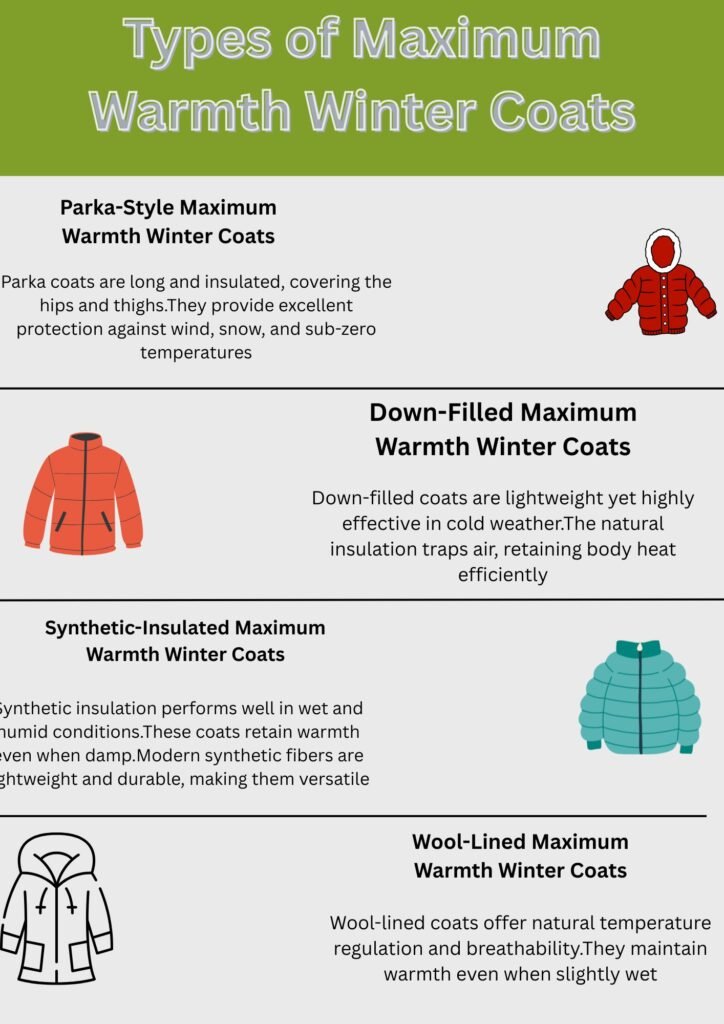
An infographic titled “Types of Maximum Warmth Winter Coats.” The page is divided into four sections:
Parka-Style Maximum Warmth Winter Coats with an illustration of a red parka; text explains long, insulated coats that cover hips and thighs for protection against wind, snow, and sub-zero temperatures.
Down-Filled Maximum Warmth Winter Coats with an illustration of a red down-filled jacket; text notes lightweight warmth with natural insulation that traps air to retain body heat.
Synthetic-Insulated Maximum Warmth Winter Coats with an illustration of a teal synthetic-insulated jacket; text describes performance in wet and humid conditions, warmth retention when damp, and lightweight, durable fibers.
Wool-Lined Maximum Warmth Winter Coats with an illustration of a white coat; text highlights natural temperature regulation and breathability, keeping warmth even when slightly wet.
Maximum Warmth Winter Coat:
Types of Maximum Warmth Winter Coats: Parka-Style, Down-Filled, Synthetic-Insulated, and Wool-Lined, with illustrations and brief notes on features of each coat type.

Parka-Style Maximum Warmth Winter Coats

Parka coats are long and insulated, covering the hips and thighs.They provide excellent protection against wind, snow, and sub-zero temperatures.The extended length reduces heat loss from the lower body.Parka coats often include fur-lined hoods and adjustable features for better fit.These coats are ideal for extreme winter conditions or outdoor activities.They offer a combination of durability, comfort, and maximum thermal protection.

Down-Filled Maximum Warmth Winter Coats

Down-filled coats are lightweight yet highly effective in cold weather.The natural insulation traps air, retaining body heat efficiently.These coats compress easily for storage or travel without losing warmth.However, they require protection from moisture to maintain performance.Down-filled coats are perfect for both daily use and outdoor adventures.They represent a blend of warmth, comfort, and portability.

Synthetic-Insulated Maximum Warmth Winter Coats

Synthetic insulation performs well in wet and humid conditions.These coats retain warmth even when damp.Modern synthetic fibers are lightweight and durable, making them versatile.They are ideal for outdoor workers or frequent travelers.Synthetic coats require less maintenance than down.They provide reliable insulation at an affordable cost.

Wool-Lined Maximum Warmth Winter Coats

Wool-lined coats offer natural temperature regulation and breathability.They maintain warmth even when slightly wet.These coats feel soft against the skin and allow some airflow.They are suitable for variable climates and everyday wear.Wool-lined coats blend elegance with thermal protection.They provide a classic option for winter without compromising warmth.

What Makes a Winter Coat Provide Maximum Warmth?

A winter coat provides maximum warmth through smart construction.Every layer plays a specific role in heat management.The outer shell blocks wind and moisture effectively.The inner layers trap warm air close to the body.Meanwhile, modern linings reflect body heat inward.Together, these elements reduce heat loss significantly.Insulation type remains the most important factor.Fill power determines how efficiently warmth is trapped.Thickness also affects how much heat stays inside.Windproof materials prevent cold air penetration.Thermal barriers maintain consistent body temperature.Because of this combination, maximum warmth jackets outperform standard coats.

Best Insulation Materials for Maximum Warmth

Insulation is the heart of a Maximum Warmth Winter Coat.It determines how well the coat traps heat and blocks cold air.The right insulation keeps the body warm without excessive bulk.Different materials perform differently in cold environments.Climate, moisture, and activity level affect insulation choice.Understanding these materials helps buyers choose wisely.

Down Insulation for Maximum Warmth Winter Coats

Down insulation is one of the warmest options available.It uses fine feathers to trap air and retain body heat.This structure creates excellent insulation with very little weight.Because of this, down coats feel warm yet comfortable.However, down loses efficiency when exposed to moisture.Modern shells now protect down from wet snow and rain.

Synthetic Insulation for Extreme Cold Performance

Synthetic insulation is designed for harsh and wet winters.It continues to provide warmth even when damp.This makes it suitable for unpredictable weather conditions.Synthetic fibers also dry faster than natural insulation.They are easier to maintain and more durable.Many extreme cold winter coats rely on advanced synthetic fills.

Wool Insulation for Natural Temperature Control

Wool insulation offers natural warmth and breathability.It regulates body temperature effectively in cold climates.Wool remains warm even when exposed to moisture.This quality makes it ideal for changing winter conditions.It also allows air circulation to prevent overheating.Some maximum warmth winter coats include wool linings for comfort.

Fleece and Thermal Linings for Added Heat Retention

Fleece and thermal linings enhance inner comfort.They create an extra layer that traps warmth close to the body.These linings feel soft and reduce cold spots inside the coat.They also improve insulation efficiency without adding weight.When combined with outer insulation, they boost performance.This layering approach defines a high warmth jacket.

Temperature Ratings: How Warm Is “Maximum Warmth”?

Temperature ratings help explain how a Maximum Warmth Winter Coat performs in cold weather.These ratings show the lowest temperature the coat can handle comfortably.Manufacturers test coats under controlled winter conditions.The results help buyers choose the right level of insulation.However, personal tolerance also affects warmth perception.Still, temperature ratings remain an essential guide.
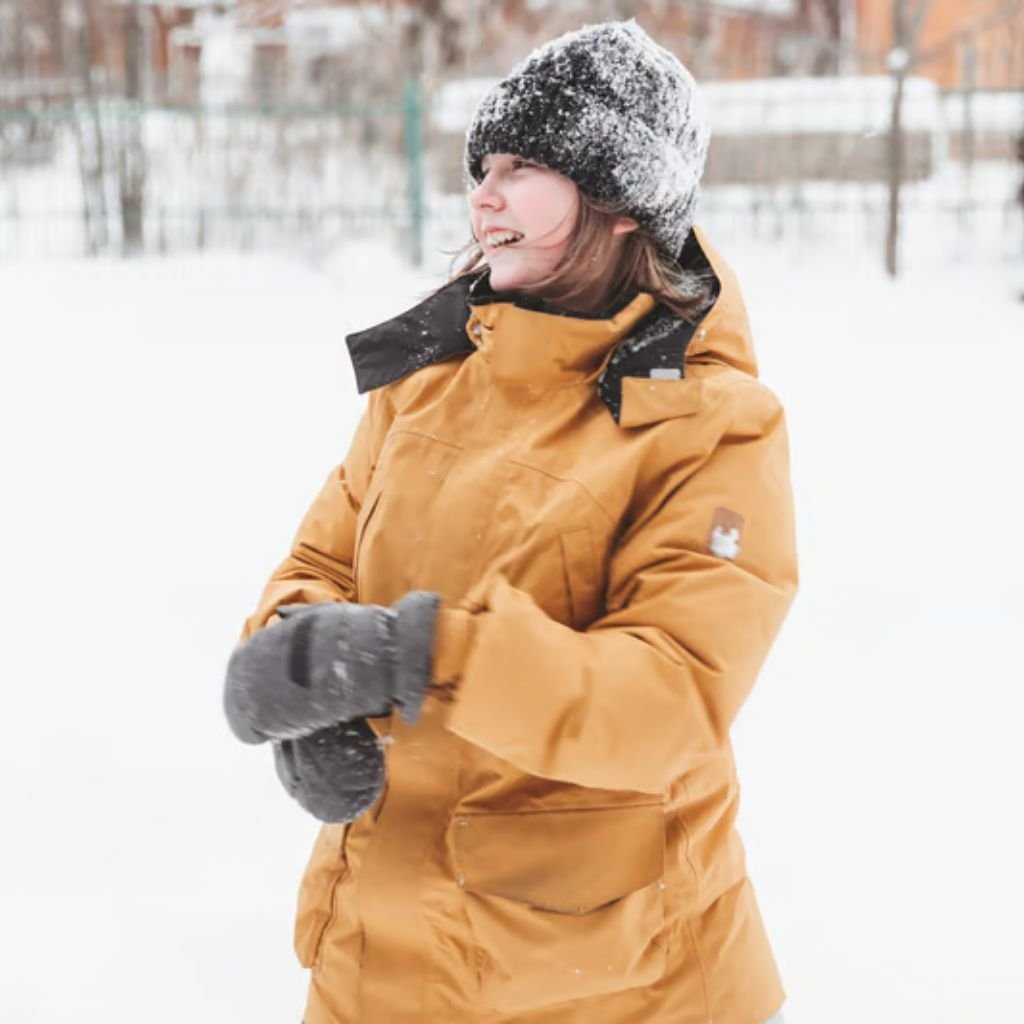
A smiling person outdoors in a snowy scene, wearing a mustard-brown military-inspired winter jacket with a high collar, gray gloves, a dark knit beanie, and snow on the hood.
Maximum Warmth Winter Coat:
Military-inspired winter jacket in a chilly, snowy setting.

Understanding Temperature Ratings in Winter Coats

Temperature ratings usually appear in Celsius or Fahrenheit.Lower numbers indicate stronger warmth protection.These ratings reflect heat retention during low activity levels.Wind chill and humidity can affect real-world performance.Therefore, users should consider local climate conditions.A well-rated coat ensures better winter safety.

Temperature Ratings for Mild Winter Conditions

Mild winter climates require moderate insulation.Coats rated around freezing temperatures feel comfortable.They provide warmth without overheating.These ratings suit daily wear and city environments.Breathability becomes more important in mild cold.A balanced Maximum Warmth Winter Coat works best here.

Temperature Ratings for Heavy Snow and Cold Regions

Snowy regions demand stronger thermal protection.Coats rated below freezing perform better in these conditions.They block wind and trap body heat effectively.Such ratings support long outdoor exposure.Snowstorms require reliable insulation systems.These coats offer consistent warmth during severe weather.

Temperature Ratings for Extreme Sub-Zero Environments

Extreme cold climates require maximum insulation.Coats rated for sub-zero temperatures ensure survival.They protect against frostbite and heat loss.These ratings suit Arctic and high-altitude regions.Advanced insulation systems support long wear.A true Maximum Warmth Winter Coat excels in such conditions.

Key Features to Look for in a Maximum Warmth Winter Coat

The features of a Maximum Warmth Winter Coat determine how well it performs in harsh cold.Warmth alone is not enough without proper design support.Each feature works together to protect the body from freezing conditions.When these elements combine, the coat delivers reliable thermal comfort.Understanding these features helps buyers avoid poor choices.A well-designed coat ensures long-lasting winter protection.A properly shaped hood protects the head and face from icy wind.Adjustable hoods allow a snug fit that prevents heat escape.Fur-lined or insulated hoods add an extra barrier against cold air.Longer coats cover more of the body and reduce heat loss.They protect the hips and thighs from freezing air.This added coverage improves overall thermal efficiency.Shorter coats allow more freedom of movement.

Maximum Warmth Winter Coat vs Regular Winter Coat

A Maximum Warmth Winter Coat is built for severe cold conditions.A regular winter coat focuses on moderate warmth and everyday comfort.Although both serve winter needs, their performance differs greatly.Understanding these differences helps buyers make better choices.Climate, activity level, and exposure time matter greatly.The right coat depends on how cold your environment becomes.

Warmth and Insulation Performance

A maximum warmth winter coat uses high-level insulation systems.It traps body heat efficiently and reduces heat loss.This makes it suitable for freezing and sub-zero temperatures.A regular winter coat provides limited insulation.It works best in mild to moderate cold.Extreme weather quickly exposes its limitations.

Weight and Comfort Differences

Maximum warmth winter coats often feel heavier.The extra insulation adds weight but improves protection.Modern designs now reduce bulk significantly.Regular winter coats remain lighter and easier to wear.They suit short outdoor exposure.Comfort depends on intended use.

Breathability and Temperature Control

Breathability plays an important role in comfort.Maximum warmth winter coats use advanced breathable layers.They release moisture while keeping heat inside.Regular coats offer basic airflow.They may feel uncomfortable during activity.Proper breathability improves long-term wear.

Best Use Cases for Each Coat Type

A maximum warmth winter coat suits extreme climates.It supports long outdoor work and travel.A regular winter coat fits daily city wear.It works well for short commutes.Choosing the correct coat prevents discomfort.Purpose defines the best option.

Best Maximum Warmth Winter Coats for Extreme Cold (2026 Guide)

Extreme winter conditions demand advanced protection.A Maximum Warmth Winter Coat becomes essential in such environments.In 2026, winter coat technology focuses on insulation efficiency and comfort.Manufacturers now balance warmth, mobility, and durability.Coats are designed to handle intense cold exposure.This guide highlights the most effective performance categories.

Maximum Warmth Winter Coats for Heavy Snowstorms

Winter coats designed for snowstorms prioritize weather resistance.They feature insulated cores with protective outer shells.These coats block snow, wind, and freezing rain effectively.Heat retention remains stable during long storms.Such designs suit regions with frequent blizzards.They provide dependable protection in unpredictable weather.

Maximum Warmth Winter Coats for Arctic-Level Cold

Arctic-level cold requires the highest insulation standards.These maximum warmth winter coats use advanced thermal systems.They maintain body heat in sub-zero temperatures.Designs often include extended length for full coverage.Cold air penetration stays minimal.These coats support survival in extreme environments.

Lightweight Maximum Warmth Winter Coats

Lightweight designs focus on efficient insulation rather than bulk.They use modern materials to trap heat effectively.These coats allow easy movement and flexibility.They suit active winter lifestyles.Despite lighter weight, warmth remains reliable.This balance appeals to modern users.

Budget-Friendly Maximum Warmth Winter Coats

Affordable maximum warmth winter coats now offer strong performance.Manufacturers use durable synthetic insulation.These coats deliver dependable warmth in severe cold.They reduce cost without sacrificing essential protection.Budget designs suit daily winter use.They prove that warmth does not always require high expense.

How to Choose the Right Maximum Warmth Winter Coat

Choosing the right coat requires thoughtful evaluation.Climate remains the most important factor.Daily wear needs differ from outdoor activities.Fit also affects warmth retention.Proper layering space improves comfort.Gender-specific cuts enhance mobility.Cold regions require stronger insulation.Active users need breathable designs.City wear benefits from balanced warmth.A snug fit prevents heat loss.However, tight coats reduce layering ability.The right choice ensures long-term satisfaction.

A smiling person outdoors in a snowy setting, wearing a light gray puffer jacket with a large faux-fur hood.
Maximum Warmth Winter Coat:
Military-inspired winter jackets: cozy, fur-trimmed hooded puffer in a snowy landscape.

Are Maximum Warmth Winter Coats Breathable?

Many people believe warm coats lack breathability.Modern designs prove this belief wrong.Advanced materials allow moisture escape.This prevents sweat buildup inside the coat.Comfort improves during long wear.Breathability now complements insulation.Moisture-wicking layers move sweat outward.Breathable membranes regulate airflow.This balance keeps the body dry.Dry warmth feels more comfortable.Therefore, breathability enhances overall performance.It is no longer sacrificed for warmth.

Sustainable and Eco-Friendly Maximum Warmth Coats

Sustainability shapes modern winter fashion.Manufacturers now reduce environmental impact.Eco-friendly insulation matches traditional warmth.Ethical sourcing improves industry standards.Consumers increasingly demand responsible options.This shift benefits the planet.Recycled materials reduce waste.Ethical down protects animal welfare.Durable coats reduce fast fashion consumption.Long-lasting warmth lowers replacement needs.Sustainable coats offer long-term value.They prove warmth and responsibility can coexist.

How to Style a Maximum Warmth Winter Coat

Style remains important during winter.Modern coats combine fashion and function.Designs suit various lifestyles easily.Styling improves confidence and comfort.Layering enhances warmth and appearance.Coats now complement everyday outfits.Casual looks pair well with parkas.Workwear styling favors clean silhouettes.Travel outfits focus on comfort.Outdoor styling emphasizes performance.Accessories complete winter looks.Style no longer sacrifices warmth.

Common Myths About Maximum Warmth Winter Coats

Misconceptions often confuse buyers.Myths lead to poor purchasing decisions.Understanding facts improves satisfaction.Truth helps identify quality designs.Let us address common misunderstandings.Knowledge empowers smarter choices.Heavier coats do not guarantee warmth.Down insulation works well with protection.Long coats allow flexible movement.Design matters more than weight.Technology defines warmth efficiency.
Myths should never guide purchases.

Care and Maintenance Tips to Retain Maximum Warmth

Proper care is essential for preserving the performance of a Maximum Warmth Winter Coat.Even the best insulation can lose efficiency without correct maintenance.Dirt, moisture, and compression reduce heat retention over time.Good care habits help maintain insulation loft and structure.They also extend the life of the coat.Consistent maintenance ensures reliable warmth every winter.
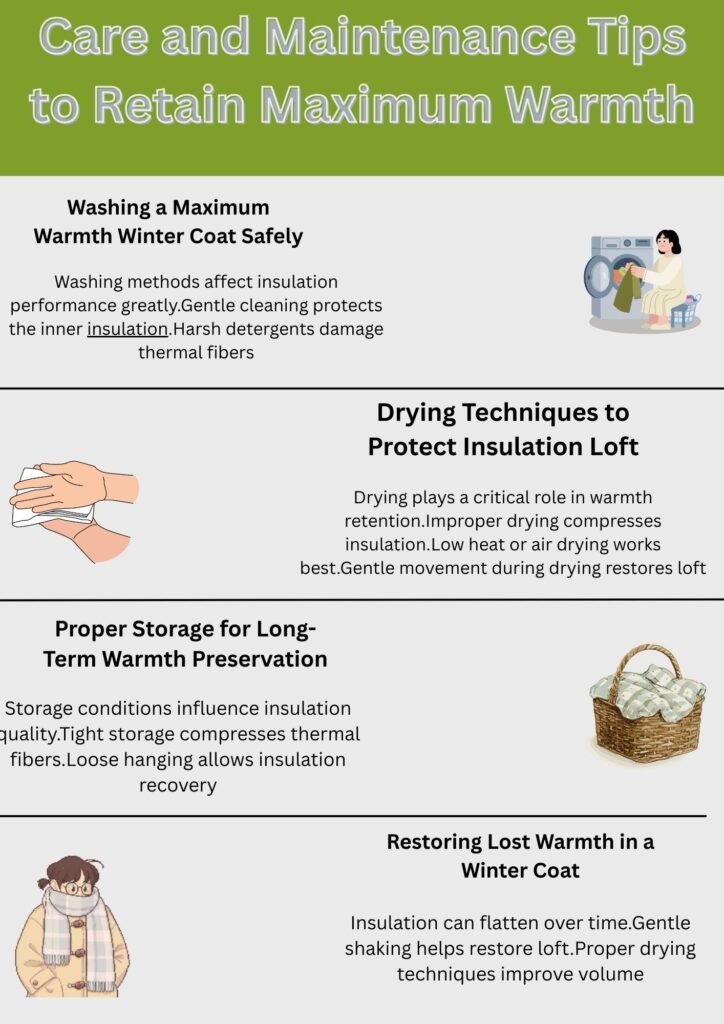
An infographic titled “Care and Maintenance Tips to Retain Maximum Warmth.” The page is divided into four sections with illustrations:
Washing a Maximum Warmth Winter Coat Safely – shows a person using a washing machine; text notes gentle cleaning protects inner insulation and avoids harsh detergents.
Drying Techniques to Protect Insulation Loft – shows hands pressing a cloth; text emphasizes proper drying to preserve loft and avoid heat damage.
Proper Storage for Long-Term Warmth Preservation – shows a basket with a stored coat; text mentions tight storage to prevent fiber compression and support recovery.
Restoring Lost Warmth in a Winter Coat – shows a person wearing a scarf and coat; text explains insulation can flatten over time and proper drying/shaking can help restore volume.Maximum Warmth Winter Coat:
Care and Maintenance Tips to Retain Maximum Warmth: washing safely, drying to protect loft, proper storage, and restoring warmth.

Washing a Maximum Warmth Winter Coat Safely

Washing methods affect insulation performance greatly.Gentle cleaning protects the inner insulation.Harsh detergents damage thermal fibers.Mild cleaners preserve fabric strength.Cold water prevents material stress.Careful washing maintains long-term warmth.

Drying Techniques to Protect Insulation Loft

Drying plays a critical role in warmth retention.Improper drying compresses insulation.Low heat or air drying works best.Gentle movement during drying restores loft.Fully dry insulation performs better.Moisture left inside reduces warmth.

Proper Storage for Long-Term Warmth Preservation

Storage conditions influence insulation quality.Tight storage compresses thermal fibers.Loose hanging allows insulation recovery.Dry environments prevent moisture damage.Breathable storage protects fabric health.Good storage habits preserve warmth.

Restoring Lost Warmth in a Winter Coat

Insulation can flatten over time.Gentle shaking helps restore loft.Proper drying techniques improve volume.Occasional professional cleaning may help.Restored insulation traps heat better.These steps revive coat performance.

Conclusion: Is a Maximum Warmth Winter Coat Worth It?

A Maximum Warmth Winter Coat delivers superior cold protection.It combines insulation, smart design, and durability.Therefore, it becomes essential in harsh climates.It improves comfort and safety significantly.Although the initial cost may be higher, value lasts longer.Investing in warmth protects health and well-being.If winters feel unforgiving, choose wisely.The right coat changes everything.

FAQs

What is the warmest winter coat material?

The warmest material for a Maximum Warmth Winter Coat is down insulation. Down traps air efficiently and keeps the body warm without adding much weight. Modern down coats often include water-resistant shells to protect the feathers. Synthetic insulation is also effective, especially in wet conditions, because it retains warmth even when damp. Wool and thermal linings provide additional options, offering natural heat retention for moderate winter climates. The right material depends on your climate and activity level, but down remains the top choice for extreme cold.

Are maximum warmth winter coats good for daily use?

Yes, maximum warmth winter coats can be suitable for daily use. Modern designs focus on balancing warmth, mobility, and breathability. For city environments with mild winters, lightweight down or synthetic coats work well. In colder regions, longer parkas and heavily insulated coats are better for daily outdoor wear. Even with heavy insulation, these coats allow reasonable movement and comfort. Layering under the coat can adjust warmth for different activities. With the correct style, a maximum warmth winter coat is practical for everyday life.

How much should a maximum warmth winter coat weigh?

The weight of a Maximum Warmth Winter Coat varies depending on insulation and design. Down-filled coats are generally lighter while still offering high warmth. Synthetic or blended insulation tends to add more weight, but it performs better in wet conditions. The goal is to balance warmth with wearability. A coat that is too heavy can cause fatigue during long periods of use. Modern manufacturing techniques reduce unnecessary bulk while keeping insulation effective, ensuring comfort without sacrificing protection.
Storm-Guard Winter Coat: Best Choice for Cold Stormy Winters

A Storm-Guard Winter Coat is a high-performance outerwear option designed to protect the body during severe winter storms. It focuses on shielding the wearer from strong winds, heavy snowfall, freezing rain, and extreme cold temperatures. Unlike standard winter coats, this type of coat is built specifically for unpredictable and harsh weather conditions. It combines advanced fabric technology, reinforced construction, and smart insulation systems to ensure consistent warmth and comfort.

Storm protection becomes essential during cold winters because harsh weather can quickly affect body temperature. Cold winds remove heat from the skin faster than still air, which increases the risk of discomfort and illness. At the same time, snow and rain can soak clothing and reduce insulation efficiency. Because of these challenges, the Storm-Guard Winter Coat has become a reliable solution for people who face long winters, frequent storms, or outdoor exposure. Within the first few moments of wearing it, the difference in protection becomes noticeable.

What Makes a Winter Coat “Storm-Guard”?

A winter coat earns the title of Storm-Guard Winter Coat because of its ability to defend against multiple weather threats at once. It is not designed only for warmth but also for resistance against wind, water, and snow. Each part of the coat plays a role in creating a protective barrier around the body. This design approach ensures that heat stays inside while cold air and moisture stay outside.

The outer shell of a Storm-Guard coat blocks powerful winter winds that usually cut through regular jackets. These coats also rely on advanced fabric treatments that resist or fully block water penetration. In addition, sealed seams and reinforced stitching prevent moisture from entering through weak points. High collars and structured hoods protect sensitive areas such as the neck and face. Adjustable cuffs and hems further improve insulation by closing gaps where cold air could enter. Together, these elements transform a winter coat into a true storm defense system.

History of the Storm-Guard Winter Coat

The history of the Storm-Guard Winter Coat is closely connected to human survival in cold and stormy environments. Long before modern fashion existed, people living in harsh climates needed clothing that could protect them from wind, snow, and freezing rain. Early civilizations in cold regions used animal skins, fur, and layered wool to guard against extreme weather. These early garments were heavy, but they laid the foundation for storm-protective winter clothing. The main goal was simple survival, yet the basic idea of blocking wind and retaining heat was already present.

As societies developed, winter outerwear slowly improved in structure and function. During the medieval period, people in Northern Europe began using thicker woven wool cloaks with tighter stitching. These garments reduced wind penetration and improved warmth during long winters. However, they still lacked proper water resistance. When storms brought snow or rain, clothing became heavy and uncomfortable. Even so, these early designs influenced future winter coat construction by emphasizing coverage, layering, and durability.

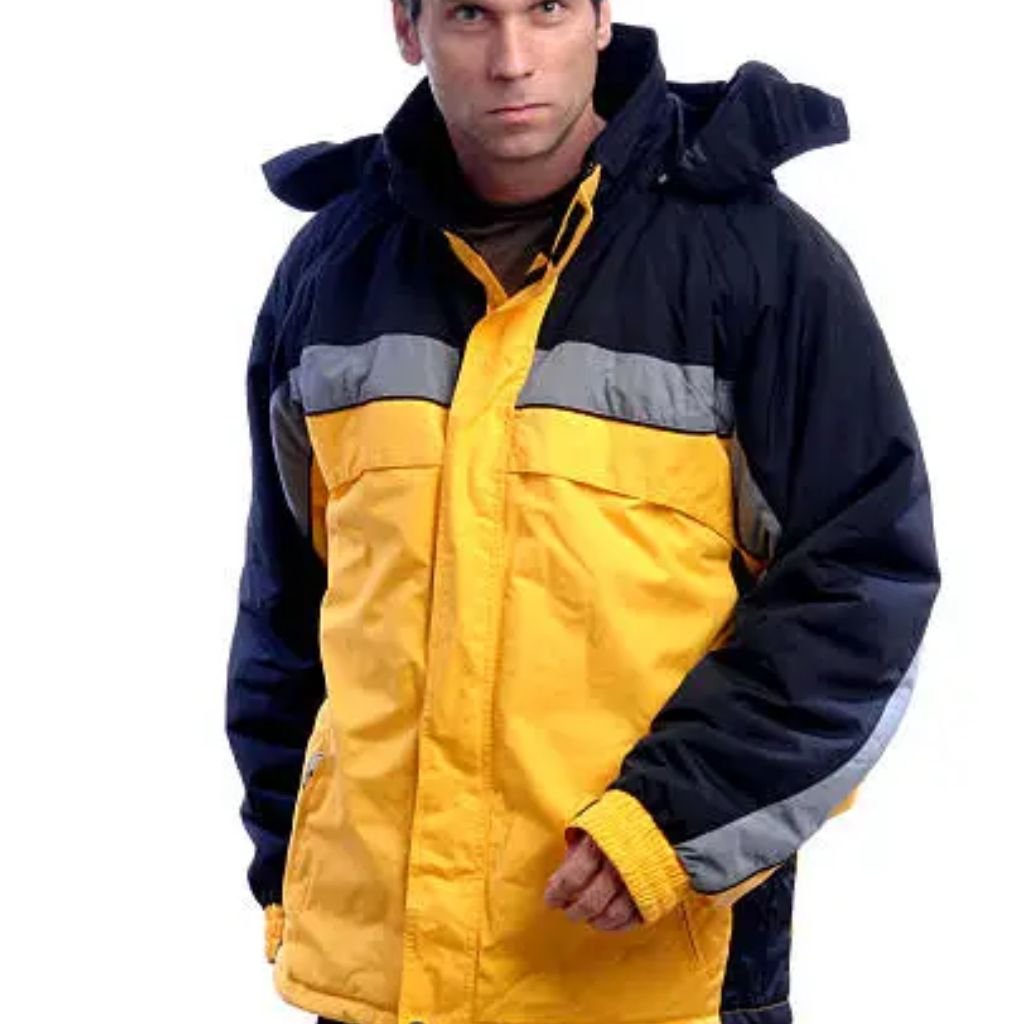
Alt text: A man stands against a white background wearing a color-blocked yellow and black jacket with gray stripes across the chest and arms; he has a serious expression and looks at the camera.Storm-Guard Winter Coat:
Caption: Bold contrast: yellow and black military-inspired jacket with gray accents.

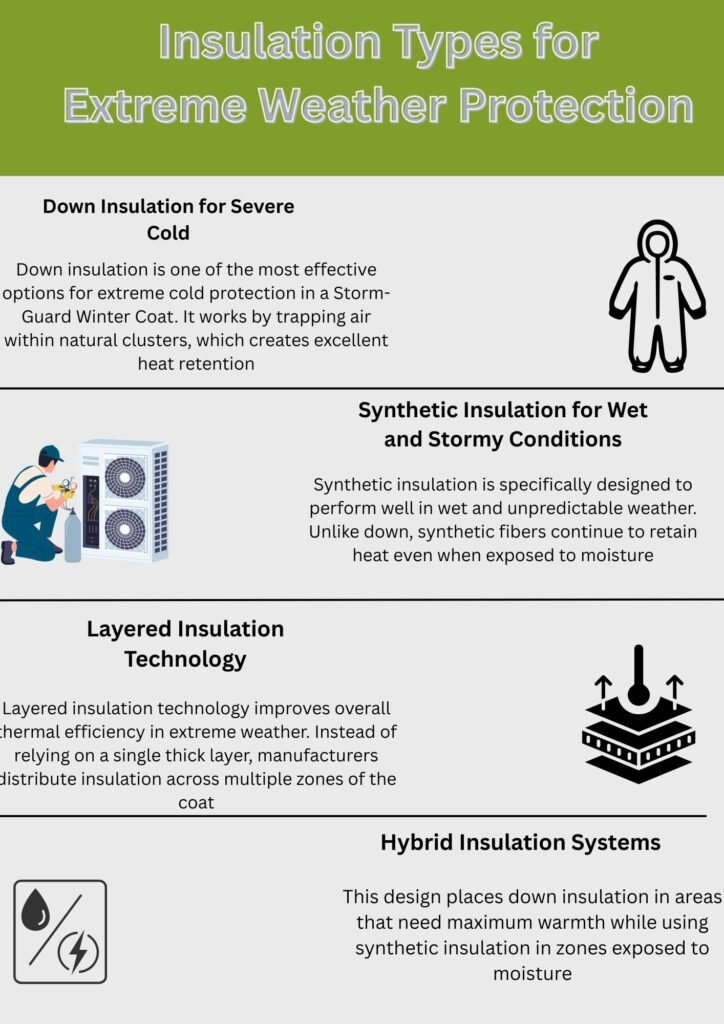
Insulation Types for Extreme Weather Protection

Alt text: An infographic titled “Insulation Types for Extreme Weather Protection” with four sections: Down Insulation for Severe Cold (with a person in a suit icon), Synthetic Insulation for Wet and Stormy Conditions (with an air conditioner illustration), Layered Insulation Technology (with a layered material icon), and Hybrid Insulation Systems (with a moisture/thermal icon). Section dividers separate each part on a light gray background.Storm-Guard Winter Coat:
Caption: Infographic: Insulation types for extreme weather protection.

Down Insulation for Severe Cold

Down insulation is one of the most effective options for extreme cold protection in a Storm-Guard Winter Coat. It works by trapping air within natural clusters, which creates excellent heat retention. This type of insulation provides high warmth without adding excessive weight, making the coat comfortable for long wear. Down insulation performs best in dry and very cold environments where moisture exposure is limited. Because of its superior warmth-to-weight ratio, it remains a popular choice for harsh winter climates.

Synthetic Insulation for Wet and Stormy Conditions

Synthetic insulation is specifically designed to perform well in wet and unpredictable weather. Unlike down, synthetic fibers continue to retain heat even when exposed to moisture. This makes synthetic insulation highly reliable for stormy winters with snow, sleet, or freezing rain. In a Storm-Guard Winter Coat, synthetic insulation ensures consistent warmth during prolonged exposure to damp conditions. It also dries faster and requires less delicate care, which adds to its practicality.

Layered Insulation Technology

Layered insulation technology improves overall thermal efficiency in extreme weather. Instead of relying on a single thick layer, manufacturers distribute insulation across multiple zones of the coat. This approach reduces cold spots and improves heat circulation around the body. In a Storm-Guard Winter Coat, layered insulation also enhances flexibility and comfort during movement. Because heat is evenly distributed, the wearer experiences stable warmth even in strong winds.

Hybrid Insulation Systems

Many modern Storm-Guard Winter Coats use hybrid insulation systems that combine down and synthetic materials. This design places down insulation in areas that need maximum warmth while using synthetic insulation in zones exposed to moisture. The result is a balanced coat that offers warmth, durability, and moisture resistance.

Storm-Guard Winter Coat vs Regular Winter Coat

Overall Design and Purpose

A Storm-Guard Winter Coat is designed specifically to handle extreme winter conditions. Its main purpose is to protect the wearer from strong winds, heavy snowfall, freezing rain, and sudden weather changes. Every part of the coat supports storm defense, from the outer shell to the insulation system. In contrast, a regular winter coat focuses mainly on basic warmth and everyday comfort. It works well in calm, cold weather but lacks specialized storm protection. Because of this difference in purpose, the Storm-Guard Winter Coat performs better when winter conditions become harsh and unpredictable.

Protection Level in Harsh Weather

The level of protection clearly separates a Storm-Guard Winter Coat from a regular winter coat. A Storm-Guard coat blocks cold wind and prevents moisture from entering through seams and zippers. It keeps the body dry even during heavy snow or icy rain. On the other hand, a regular winter coat often allows wind penetration and moisture buildup during storms. As a result, body heat escapes faster and comfort decreases. For people who face frequent storms, the Storm-Guard option offers stronger and more reliable protection.

Performance in Wind, Snow, and Rain

When exposed to strong winds, a Storm-Guard Winter Coat maintains warmth by stopping airflow through the fabric. It also repels or blocks snow and rain effectively. This helps preserve insulation performance for long periods outdoors. A regular winter coat usually struggles in these conditions because it lacks windproof layers and waterproof treatments. Snow can melt into the fabric, and wind can reach inner layers. Therefore, performance drops quickly during bad weather when wearing a standard winter coat.

Durability and Long-Term Use

Durability is another important difference between the two coats. A Storm-Guard Winter Coat uses reinforced fabrics and strong stitching that resist wear from harsh environments. It holds its shape and performance over many winters. In comparison, a regular winter coat may show signs of wear sooner, especially when used in severe weather. Over time, insulation can break down faster in regular coats. Because of its strong construction, the Storm-Guard coat offers better long-term value.

Best Materials Used in Storm-Guard Winter Coats

Alt text (short, screen-reader friendly): A man with light brown hair wears a dark blue winter coat with a hood and a black beanie against a white background.Storm-Guard Winter Coat:
Caption: Close-up in winter style: man in a navy hooded coat with a black beanie.

High-Performance Outer Shell Fabrics

The outer shell is the first line of defense in a Storm-Guard Winter Coat. Manufacturers usually select strong fabrics that can block wind and resist moisture. Nylon and polyester are widely used because they offer excellent durability and flexibility. These materials withstand harsh weather without becoming stiff or heavy. In addition, tightly woven shells reduce wind penetration and help maintain body heat. Because of their strength and reliability, these fabrics form the backbone of storm-ready winter coats.

Waterproof and Weather-Resistant Materials

Water protection is essential for any Storm-Guard Winter Coat. Many coats use advanced waterproof materials that prevent rain and melting snow from soaking into the fabric. Laminated or treated surfaces create a barrier that keeps the inner layers dry. At the same time, water-resistant coatings help shed light moisture during short exposure. This combination ensures that insulation stays effective even during long periods of stormy weather. As a result, comfort and warmth remain consistent.

Breathable Membranes for Temperature Control

Breathability plays a crucial role in maintaining comfort during winter activity. Storm-Guard Winter Coats often include breathable membranes beneath the outer shell. These membranes allow moisture from sweat to escape while blocking cold air and water from entering. This process helps regulate body temperature and prevents dampness inside the coat. Because of this balance, the wearer stays warm without overheating during movement. Breathable materials significantly improve long-term wear comfort.

Insulated Lining Materials

The lining of a Storm-Guard Winter Coat determines how well it retains heat. Down insulation offers excellent warmth and a lightweight feel, making it suitable for extremely cold and dry environments. Synthetic insulation provides reliable warmth even when exposed to moisture. Many modern coats use a blend of insulation types to improve performance. This layered approach distributes warmth evenly and reduces cold spots. Proper lining materials ensure steady insulation throughout the winter season.

Eco-Friendly and Recycled Fabric Options

Sustainability has become an important focus in modern Storm-Guard Winter Coats. Many manufacturers now use recycled polyester and eco-friendly fabrics to reduce environmental impact. These materials maintain strong performance standards while supporting responsible production. Recycled fabrics still offer durability, insulation support, and weather resistance. By choosing sustainable materials, Storm-Guard coats combine advanced protection with environmental awareness.

Key Features to Look for in a Storm-Guard Winter Coat

A Storm-Guard Winter Coat stands apart from ordinary winter outerwear because of its carefully engineered features. These features are not added for style alone but serve a clear purpose in protecting the body during severe winter storms. Each element works together to block wind, repel moisture, and preserve body heat. Understanding these key features helps buyers choose a coat that performs reliably in harsh and unpredictable weather. When these details are present and well-designed, the coat delivers comfort, safety, and long-term value.

Fully Sealed Seams for Complete Weather Protection

Seam sealing is one of the most important features in a Storm-Guard Winter Coat. During storms, water often enters through stitched areas rather than the fabric itself. Fully sealed seams prevent this problem by closing off tiny gaps where moisture could pass through. This feature keeps the inner layers dry even during heavy snow or freezing rain. As a result, insulation remains effective and body warmth stays consistent. Without sealed seams, even a thick coat can fail in stormy conditions.

Windproof Outer Shell Construction

A strong windproof outer shell is essential for extreme winter protection. Cold winds quickly remove heat from the body and increase discomfort. A Storm-Guard Winter Coat uses tightly woven or specially treated fabrics to block airflow. This barrier prevents wind chill and helps maintain a stable internal temperature. Even during strong gusts, the coat continues to protect the wearer. Because of this feature, outdoor exposure becomes safer and more comfortable.

Waterproof or Highly Water-Resistant Fabric

Moisture is one of the biggest threats during winter storms. A Storm-Guard Winter Coat uses waterproof or advanced water-resistant fabrics to prevent snow and rain from soaking through. These materials allow water to bead and roll off the surface instead of penetrating the coat. Keeping moisture out protects the insulation and reduces heat loss. This feature is especially important during long hours outdoors when weather conditions can change suddenly.

Is a Storm-Guard Winter Coat Waterproof and Windproof?

A Storm-Guard Winter Coat is designed to be both waterproof and windproof. Waterproof fabrics prevent rain and melting snow from soaking into the coat, while windproof layers block cold air that causes heat loss. These two functions work together to maintain a stable internal temperature.

It is important to understand the difference between waterproof and water-resistant materials. Waterproof materials block moisture completely, while water-resistant fabrics only repel light moisture. Storm-Guard coats usually rely on fully waterproof designs to ensure maximum protection. At the same time, breathability remains essential. Advanced membranes allow moisture from sweat to escape, which prevents overheating and discomfort. This balance between protection and airflow makes the coat suitable for long wear.

Best Storm-Guard Winter Coats for Different Needs

Different lifestyles require different designs within the Storm-Guard Winter Coat category. Manufacturers create variations that suit specific activities and environments while maintaining core storm-protection features.

For heavy snow and blizzard conditions, these coats offer maximum insulation and extended coverage. Urban-focused designs prioritize comfort, mobility, and modern appearance while still delivering weather resistance. Outdoor adventure coats emphasize breathability and reduced weight, which helps during hiking or active movement. For extreme cold climates, Storm-Guard coats include deeper insulation and longer lengths to protect more of the body. This variety allows wearers to choose a coat that matches their daily needs without sacrificing protection.

Alt text (short, screen-reader friendly): A man stands outdoors in winter, leaning against a wooden door. He wears a blue fur-trimmed parka, black jeans, black sneakers, and sunglasses, with snow on the ground.Storm-Guard Winter Coat:
Caption: Urban winter style: a man in a navy parka with a fur-trimmed hood, black jeans, and sneakers poses against a snow-dusted doorway.

How to Choose the Right Storm-Guard Winter Coat

Choosing the right Storm-Guard Winter Coat requires careful consideration of climate, activity level, and personal comfort. The coldest environments demand thicker insulation and stronger wind protection. Wetter regions require reliable waterproofing and fast-drying materials.

Activity level also matters because high movement generates body heat. Active users benefit from breathable designs that release moisture quickly. Fit and length affect warmth retention, with longer coats offering more coverage and shorter jackets providing greater flexibility. Weight and packability influence comfort during travel or long wear. By balancing these factors, buyers can find a Storm-Guard coat that performs well in their specific conditions.

Storm-Guard Winter Coat Size and Fit Guide

Proper sizing plays a major role in how a Storm-Guard Winter Coat performs. A coat that is too tight restricts movement and reduces layering space. A coat that is too loose allows heat to escape and reduces efficiency.

Layering compatibility is essential because winter wear often includes base layers and sweaters. Men’s and women’s Storm-Guard coats differ in shape to match body contours and movement patterns. Sleeve length should fully cover the wrists, especially when arms are raised. Hood design also matters because a well-fitted hood improves head and neck protection. When sizing is correct, the coat performs as intended and remains comfortable throughout the day.
Benefits of Wearing a Storm-Guard Winter Coat

The benefits of wearing a Storm-Guard Winter Coat extend beyond basic warmth. These coats provide reliable protection against severe weather, which improves safety and confidence outdoors. By blocking wind and moisture, they help maintain stable body temperature even during prolonged exposure.

Thermal comfort improves because insulation systems reduce heat loss and prevent cold spots. Durability ensures that the coat remains functional for many winters, which increases overall value. Versatility allows the same coat to handle different winter conditions, from daily commuting to outdoor adventures. These combined benefits make Storm-Guard coats a practical and dependable choice.

Common Mistakes to Avoid When Buying a Storm-Guard Coat

Some buyers make mistakes that reduce the effectiveness of a Storm-Guard Winter Coat. Ignoring seam sealing often leads to water leakage during heavy storms. Choosing appearance over function can result in poor protection when conditions worsen.

Non-breathable materials cause moisture buildup inside the coat, which reduces comfort. Selecting the wrong insulation for the local climate can also create problems, such as overheating or insufficient warmth. Avoiding these mistakes helps ensure that the coat performs as expected and delivers long-term satisfaction.

Are Storm-Guard Winter Coats Worth the Investment?

A Storm-Guard Winter Coat usually costs more than a standard winter coat, but the investment often proves worthwhile. The higher price reflects advanced materials, stronger construction, and better performance. Over time, durability reduces the need for frequent replacements.

Long-term savings become clear when the coat lasts through multiple winters without losing effectiveness. Compared to regular coats, Storm-Guard designs deliver consistent protection and comfort. For people who experience harsh winters, the value of reliable weather defense outweighs the initial cost.

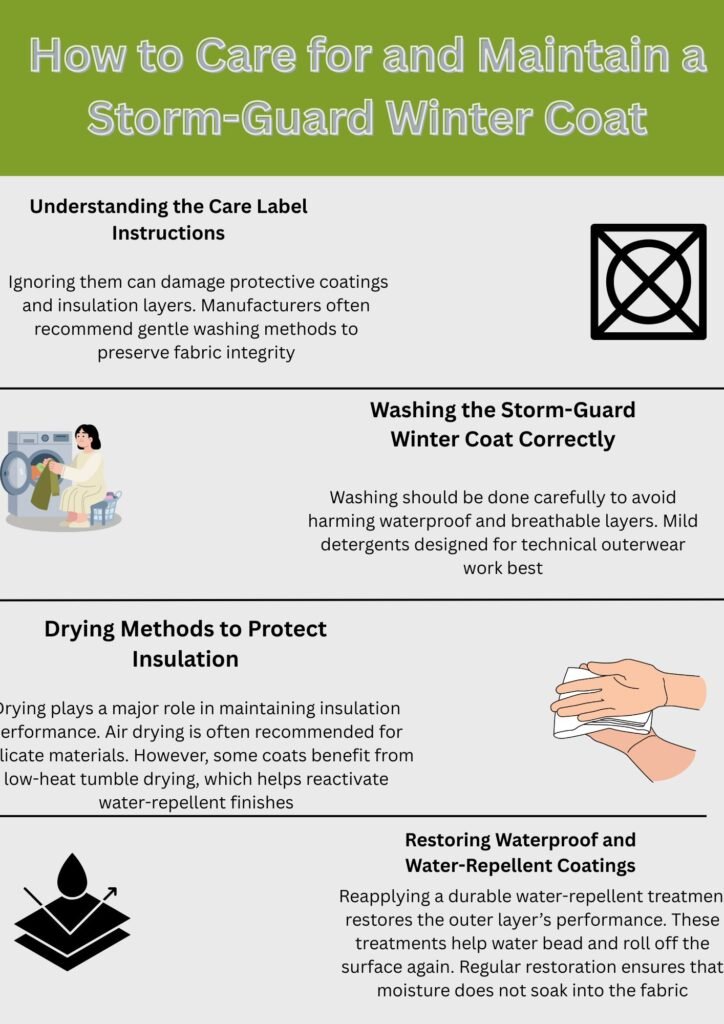
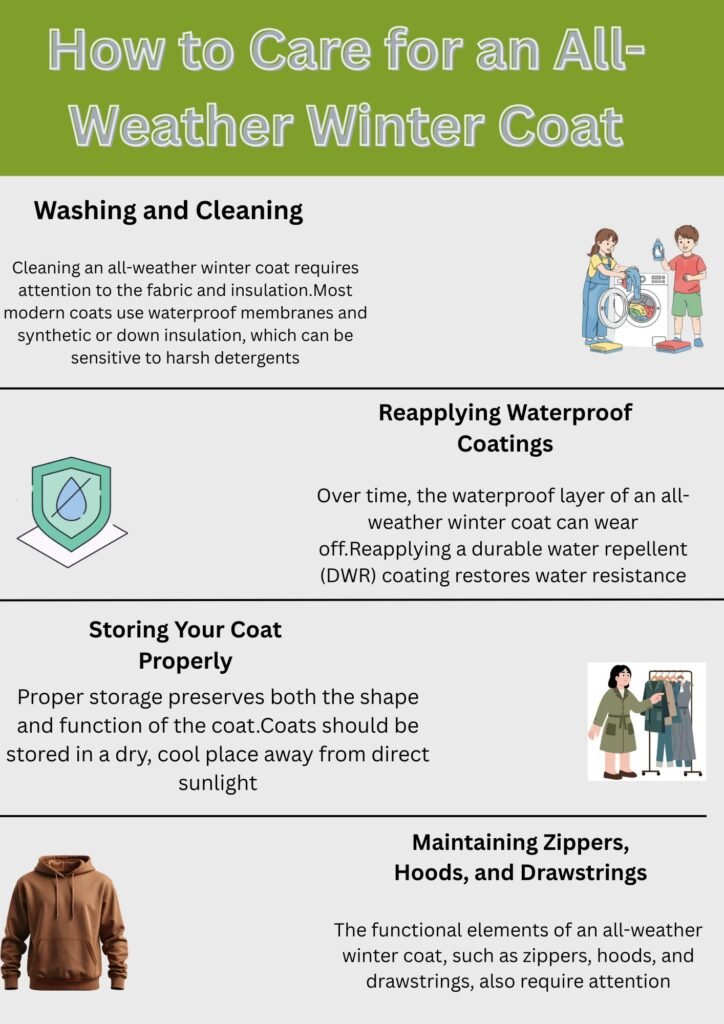
How to Care for and Maintain a Storm-Guard Winter Coat

Proper care and maintenance are essential for preserving the performance of a Storm-Guard Winter Coat. These coats are designed with advanced materials and protective features that require thoughtful handling. When cared for correctly, the coat continues to block wind, resist moisture, and retain warmth for many winters. Neglecting maintenance can reduce waterproofing, weaken insulation, and shorten the coat’s lifespan. Therefore, following proper care practices helps protect both comfort and long-term value.

Alt text: An infographic titled “How to Care for and Maintain a Storm-Guard Winter Coat” with sections on care label instructions, washing, drying, and restoring waterproof coatings, using simple icons and muted colors.
Storm-Guard Winter Coat:
Caption: Quick guide: care and maintenance steps for a storm-guard winter coat.

Understanding the Care Label Instructions

Every Storm-Guard Winter Coat includes a care label that provides important guidance. These instructions are based on the specific materials used in the coat. Ignoring them can damage protective coatings and insulation layers. Manufacturers often recommend gentle washing methods to preserve fabric integrity. By following the care label closely, wearers maintain the coat’s original performance and appearance. This step forms the foundation of proper maintenance.

Washing the Storm-Guard Winter Coat Correctly

Washing should be done carefully to avoid harming waterproof and breathable layers. Mild detergents designed for technical outerwear work best. Strong chemicals and fabric softeners can clog breathable membranes and reduce water resistance. Washing in cold or lukewarm water on a gentle cycle helps protect the fabric. Proper washing keeps the coat clean while preserving its storm-guarding abilities.

Drying Methods to Protect Insulation

Drying plays a major role in maintaining insulation performance. Air drying is often recommended for delicate materials. However, some coats benefit from low-heat tumble drying, which helps reactivate water-repellent finishes. High heat should always be avoided because it can damage fabric layers and insulation. Ensuring the coat dries completely prevents mold and odor buildup. Proper drying keeps insulation fluffy and effective.

Restoring Waterproof and Water-Repellent Coatings

Over time, the outer shell may lose its ability to repel water. This does not mean the coat is damaged, but it does require maintenance. Reapplying a durable water-repellent treatment restores the outer layer’s performance. These treatments help water bead and roll off the surface again. Regular restoration ensures that moisture does not soak into the fabric. This step is especially important for coats used in heavy snow or rain.

Conclusion

A Storm-Guard Winter Coat stands as a dependable solution for cold, windy, and stormy winter conditions. Throughout this guide, it becomes clear that this type of coat is designed with purpose and precision. Every material, feature, and construction detail works together to protect the body from harsh weather. Unlike ordinary winter coats, it delivers consistent performance when snow, wind, and moisture combine to create challenging environments. This level of protection makes a noticeable difference during daily wear and extended outdoor exposure.

FAQs

Can a Storm-Guard Winter Coat handle extreme winter storms?

Yes, a Storm-Guard Winter Coat is specifically designed for extreme winter storms. It blocks strong winds, resists heavy snowfall, and prevents moisture from entering. Because of sealed seams and windproof fabrics, it maintains warmth even in harsh conditions. This makes it suitable for blizzards and prolonged outdoor exposure. Its design focuses on safety and comfort during severe weather.

Is a Storm-Guard Winter Coat suitable for everyday wear?

A Storm-Guard Winter Coat works well for daily use, especially in cold regions. Modern designs balance protection with comfort and mobility. Breathable layers prevent overheating during regular activities. Many styles also suit urban settings without looking bulky. This makes the coat practical for commuting and daily routines.

How long does a Storm-Guard Winter Coat last?

With proper care, a Storm-Guard Winter Coat can last many years. High-quality materials and reinforced construction improve durability. Regular cleaning and correct storage help maintain performance. Waterproof coatings can also be restored when needed. Over time, this longevity adds strong value to the investment.

Cold Wind Blocking Winter Coat: Built to Stop Freezing Winds

Winter weather becomes far more uncomfortable when cold winds start blowing.Even moderate temperatures can feel unbearable once wind enters the picture.This happens because moving air strips warmth from the skin rapidly.As a result, the body struggles to maintain its natural heat balance.Many people believe thick winter coats are enough for protection.However, thickness alone fails when cold air passes through fabric layers.This is exactly where a Cold Wind Blocking Winter Coat makes a difference.It focuses on stopping air movement before it reaches your body.By blocking wind, the coat reduces heat loss significantly.Therefore, you feel warmer even in harsh outdoor conditions.Unlike standard jackets, these coats work with science, not against it.Within the first few minutes outdoors, the difference becomes obvious.

History of Cold Wind Blocking Winter Coats

Humans have always searched for ways to block cold winds.Early civilizations relied on animal hides and layered furs.These natural materials trapped warmth while stopping airflow.Indigenous Arctic communities perfected this method centuries ago.Their clothing designs focused on sealing the body completely.Wind protection was always the first priority.As time progressed, textile technology evolved significantly.During the industrial era, woven wool coats became popular.They offered moderate wind resistance but lacked full protection.The real breakthrough came during military research in the 20th century.Scientists developed windproof fabrics for soldiers in extreme climates.These innovations later entered civilian outerwear.Outdoor brands adopted wind-blocking technology for explorers and climbers.Eventually, urban consumers recognized its everyday benefits.

Alt text (short description): A man stands in heavy snowfall wearing a black coat over a light green hoodie and black gloves, shielding his face with his hand.Cold Wind Blocking Winter Coat
Caption: Winter shield: a man braves a snowy scene in a black coat and hoodie.

What Is a Cold Wind Blocking Winter Coat?

A Cold Wind Blocking Winter Coat is designed to stop airflow completely.Its primary function is to prevent cold wind from reaching your skin.Unlike ordinary jackets, it uses specialized outer shell fabrics.These fabrics create a barrier against moving air.As a result, internal warmth stays trapped inside the coat.This design dramatically improves thermal efficiency.Standard winter jackets often focus only on insulation thickness.However, insulation becomes useless if wind penetrates the shell.Cold wind blocking winter coats solve this flaw at the source.They combine windproof materials with effective insulation.This combination works in both urban and outdoor environments.Therefore, these coats perform consistently across different winter conditions.People wear these coats during commuting, travel, and snowstorms.They also work well during long outdoor exposure

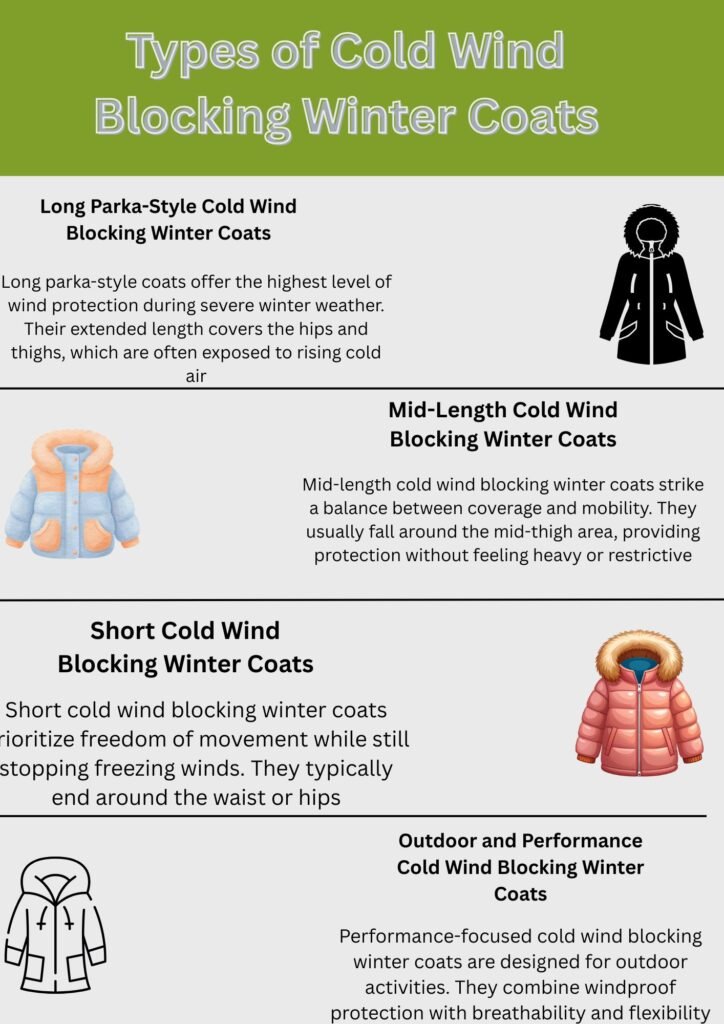
Types of Cold Wind Blocking Winter Coats

Cold wind blocking winter coats come in several styles, each designed to handle specific winter conditions and lifestyles. Although all of them focus on stopping freezing winds, their structure, length, and insulation levels vary. Understanding these types helps you select a coat that matches your environment, activity level, and comfort needs.

Alt text: An infographic titled “Types of Cold Wind Blocking Winter Coats” showing four coat categories with simple illustrations: Long Parka-Style, Mid-Length, Short Cold Wind Blocking, and Outdoor Performance coats, each with descriptive text and a small icon or image.Cold Wind Blocking Winter Coat
Caption: A quick guide to four styles of wind-blocking winter coats.

Long Parka-Style Cold Wind Blocking Winter Coats

Long parka-style coats offer the highest level of wind protection during severe winter weather. Their extended length covers the hips and thighs, which are often exposed to rising cold air. Because wind tends to travel upward from the ground, this added coverage significantly reduces heat loss. These coats usually feature strong windproof outer shells combined with thick insulation, making them ideal for regions with extreme cold and constant wind.

Mid-Length Cold Wind Blocking Winter Coats

Mid-length cold wind blocking winter coats strike a balance between coverage and mobility. They usually fall around the mid-thigh area, providing protection without feeling heavy or restrictive. These coats work well in urban environments where wind exposure is frequent but movement is constant. Because they block wind effectively while allowing flexibility, they suit commuting and everyday activities.

Short Cold Wind Blocking Winter Coats

Short cold wind blocking winter coats prioritize freedom of movement while still stopping freezing winds. They typically end around the waist or hips. Although shorter in length, they rely on high-performance windproof shells to maintain warmth. These coats work best in milder winter climates or for short outdoor exposure.

Outdoor and Performance Cold Wind Blocking Winter Coats

Performance-focused cold wind blocking winter coats are designed for outdoor activities. They combine windproof protection with breathability and flexibility. These coats allow moisture to escape during physical movement while preventing cold wind from entering. As a result, they maintain comfort during hiking, winter sports, or long outdoor tasks.

How Cold Wind Affects Body Heat and Wind Chill

Wind chill describes how cold air feels colder due to wind.When wind blows, it removes the warm air surrounding your body.This process increases heat loss through convection.As wind speed rises, heat loss accelerates rapidly.Therefore, the body loses warmth faster than expected.Even mild temperatures can feel freezing under windy conditions.Without wind protection, your body works harder to stay warm.Energy consumption increases, leading to faster fatigue.Prolonged exposure may cause numbness or discomfort.In extreme cases, it increases health risks.Windproof outer layers stop this heat loss effectively.They preserve the insulating air layer around the body.A cold wind blocking winter coat prevents wind from entering fabric layers.

Key Features That Make a Winter Coat Wind Blocking

A winter coat becomes truly effective against harsh winds when its design focuses on stopping airflow rather than just adding thickness. Wind blocking depends on a combination of fabric technology, construction quality, and smart design choices. Each feature plays a specific role, and together they create a protective barrier that keeps cold air out while preserving body heat inside.

Windproof Outer Shell Materials

The outer shell is the first and most important defense against cold wind. Wind blocking winter coats use tightly woven or membrane-based fabrics that prevent air from passing through. Materials like advanced nylon, high-density polyester, and technical membranes are engineered to stop wind penetration at the surface level. Because the air cannot move through the fabric, the chilling effect of wind is reduced immediately. This allows the warmth generated by your body to remain stable, even during strong gusts or open exposure.

In addition, many outer shells feel smooth and compact, which further reduces air friction. This structure ensures that cold wind slides over the coat instead of pushing through it. As a result, the coat performs well in both urban wind tunnels and open outdoor environments.

Durable Water Repellent Coating for Wind Support

Although wind blocking and waterproofing are different functions, a durable water repellent coating strengthens wind resistance. This coating prevents snow and light moisture from soaking into the fabric. When fabric stays dry, it maintains its windproof structure more effectively. Wet fabric tends to collapse and allow airflow, which reduces insulation performance.

By keeping the outer shell dry, the coat preserves its ability to block wind consistently. This feature becomes especially important in snowy or damp winter conditions where wind and moisture work together to increase cold exposure.

Insulation That Works with Wind Protection

Insulation alone does not stop wind, but it works best when wind is blocked first. In a wind blocking winter coat, insulation stays protected behind a sealed outer shell. This allows materials like down or synthetic fibers to trap warm air properly. When wind cannot disturb the insulation layer, heat retention improves significantly.

Synthetic insulation performs particularly well in windy and wet climates because it maintains loft even when exposed to moisture. Down insulation also benefits greatly from wind blocking shells, as airflow is one of the main reasons down loses warmth efficiency in harsh conditions.

Sealed Construction and Stitching

Even the best fabric fails if wind enters through weak points. That is why sealed construction is a defining feature of wind blocking winter coats. Taped or sealed seams prevent air leakage through stitching lines. Without this protection, cold wind finds its way inside through tiny gaps.

Zippers also receive special attention in wind blocking designs. Storm flaps and internal guards cover zipper tracks to stop drafts from reaching the body. These details may seem small, but they dramatically improve overall warmth during prolonged outdoor exposure.

Windproof Versus Wind Resistant Winter Coats

Many people assume that windproof and wind resistant winter coats offer the same level of protection. However, this assumption often leads to disappointment during harsh winter weather. Although both types of coats aim to reduce the impact of cold wind, their performance differs greatly. Understanding this difference helps you choose the right outerwear for your climate and lifestyle.
Windproof winter coats are designed to block cold air completely. Their fabrics prevent wind from passing through the outer shell. As a result, the warm air trapped inside the coat remains stable. This feature becomes especially important during strong winds, open exposure, or long outdoor stays. When wind cannot enter the coat, your insulation works efficiently and consistently.In contrast, wind resistant winter coats only slow down airflow. They reduce wind penetration but do not stop it fully. These coats rely on tightly woven fabrics rather than specialized wind-blocking membranes. While they feel comfortable in mild winter conditions, they struggle during strong gusts. Over time, cold air seeps through the fabric and lowers body temperature.

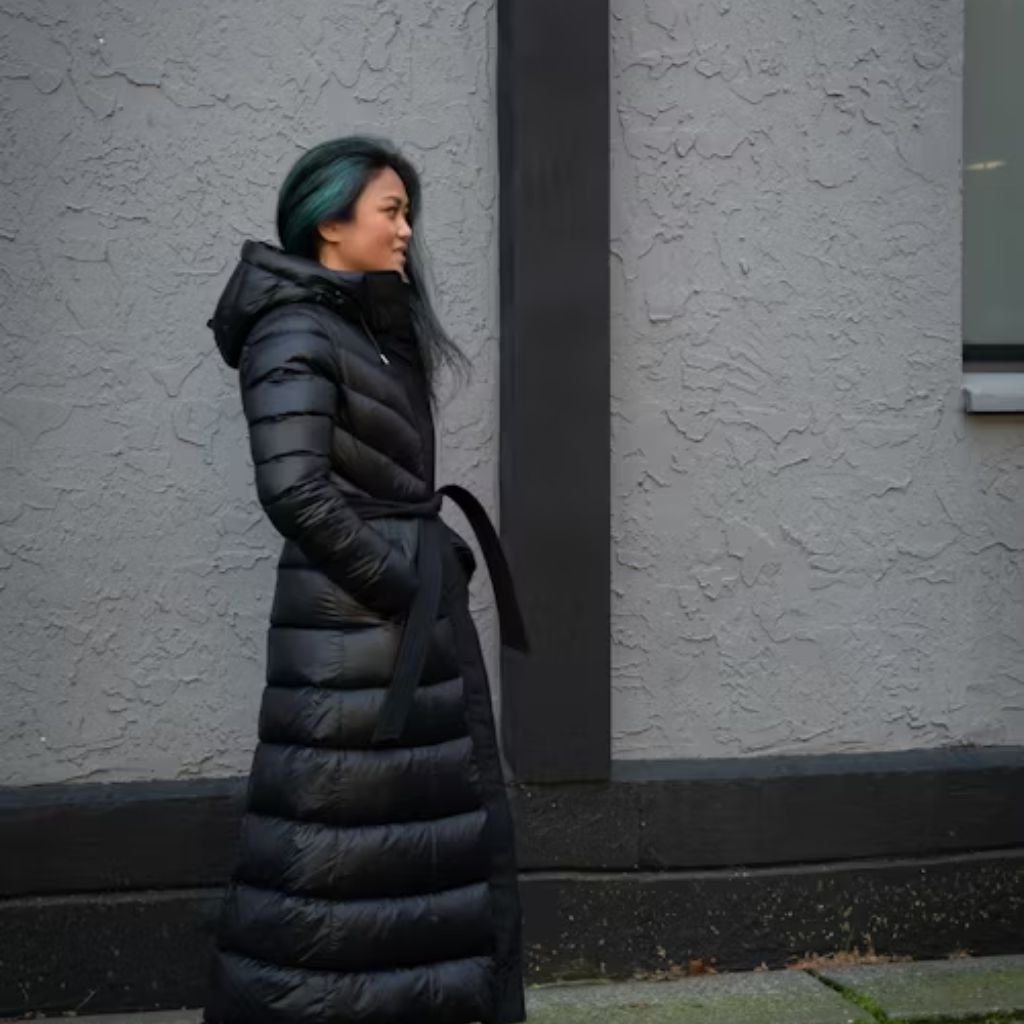
Alt text (short description): A woman with teal and black hair wearing a long black puffer coat with a hood and belt, standing outdoors against a textured gray wall.Cold Wind Blocking Winter Coat
Caption: Sleek and warm: a long black puffer coat with a belt, hood, and bold hair color.

How to Choose the Right Cold Wind Blocking Winter Coat

Choosing the right cold wind blocking winter coat requires more than picking a thick jacket. Wind protection, fit, and usability all work together to determine how warm you feel outdoors. When you understand what truly matters, you can select a coat that performs well in real winter conditions and stays comfortable throughout the season.

Choosing the Correct Fit for Wind Protection

Fit plays a critical role in how well a cold wind blocking winter coat performs. A coat that fits too loosely allows cold air to circulate inside. This airflow reduces the effectiveness of insulation and increases heat loss. On the other hand, a coat that fits too tightly restricts movement and limits layering.

Selecting the Right Length for Maximum Wind Coverage

Length directly affects how much of your body stays protected from wind. Longer coats provide better coverage by blocking wind from the lower body. This is especially important in windy regions where cold air rises from the ground. Mid-length coats offer a balance between warmth and mobility, making them suitable for daily wear.

Evaluating the Outer Shell Fabric

The outer shell determines how well the coat blocks wind. High-quality cold wind blocking winter coats use tightly woven or membrane-based fabrics. These materials prevent airflow from passing through the coat. When the shell stops wind, insulation remains stable and effective.

Understanding Insulation and Layering Compatibility

Insulation works best when wind stays outside the coat. Down insulation offers excellent warmth in dry conditions, while synthetic insulation performs better in wet and windy environments. However, insulation alone does not guarantee warmth. It must work alongside a windproof shell.

Are Cold Wind Blocking Winter Coats Waterproof?

Windproof and waterproof features serve different purposes.Windproof fabrics block air movement.Waterproof fabrics block liquid penetration.Some coats combine both technologies.This combination benefits snowy and rainy climates.However, breathability must remain balanced.Not all windproof coats are fully waterproof.Many resist light moisture only.Heavy rain requires waterproof membranes.Snowy regions benefit from dual protection.Dry cold climates prioritize wind blocking.Understanding weather patterns helps selection.Modern fabrics often integrate both functions.They block wind while shedding moisture.These advanced materials improve versatility.However, they usually cost more.
Performance justifies the investment.Comfort remains consistent across conditions.

Cold Wind Blocking Winter Coats for Men, Women, and Kids

Men’s cold wind blocking winter coats emphasize durability.They often feature broader shoulders and longer cuts.Women’s designs focus on tailored insulation placement.These designs improve warmth without bulk.Kids’ coats prioritize flexibility and lightweight comfort.All designs share the same windproof principles.Children benefit greatly from wind protection.They lose heat faster than adults.Wind-blocking coats reduce exposure during play.Parents prefer these coats for safety.Comfort encourages outdoor activity.Winter becomes more enjoyable for families.Sizing accuracy remains essential across all categories.Proper fit ensures full wind protection.Adjustable features accommodate growth in kids.Family winter wear trends now emphasize function.Matching sets gain popularity.Protection remains the shared goal.

Sustainable and Eco-Friendly Cold Wind Blocking Winter Coats

Sustainability influences modern winter outerwear.Many brands now use recycled fabrics.Recycled polyester reduces environmental waste.PFC-free coatings replace harmful chemicals.These changes protect ecosystems.Consumers increasingly value ethical production.Insulation alternatives also support sustainability.Recycled synthetic fibers perform efficiently.Responsibly sourced down reduces animal harm.Eco-friendly options no longer sacrifice performance.Wind protection remains uncompromised.Sustainability meets functionality.Demand for ethical winter coats continues to rise.Consumers seek long-lasting products.Durability reduces frequent replacements.This approach benefits both users and the planet.Wind-blocking coats align well with this mindset.Responsible choices shape future fashion.

Common Mistakes to Avoid When Buying a Wind Blocking Coat

Many buyers overlook breathability.Poor ventilation causes sweating and discomfort. Others prioritize style over protection.Fashion-focused coats often lack proper sealing.Incorrect sizing reduces thermal efficiency. These mistakes lead to dissatisfaction. Marketing claims often confuse consumers.Terms like wind resistant sound impressive. However, they may lack real protection.Always check fabric specifications carefully.Test mobility and comfort.Informed decisions prevent regret.Ignoring climate conditions also causes problems.A coat suited for mild winters fails elsewhere.Regional weather should guide selection.Proper research saves money.Performance matters more than appearance.Winter demands preparation. Read more about:Pioneer Topcoat

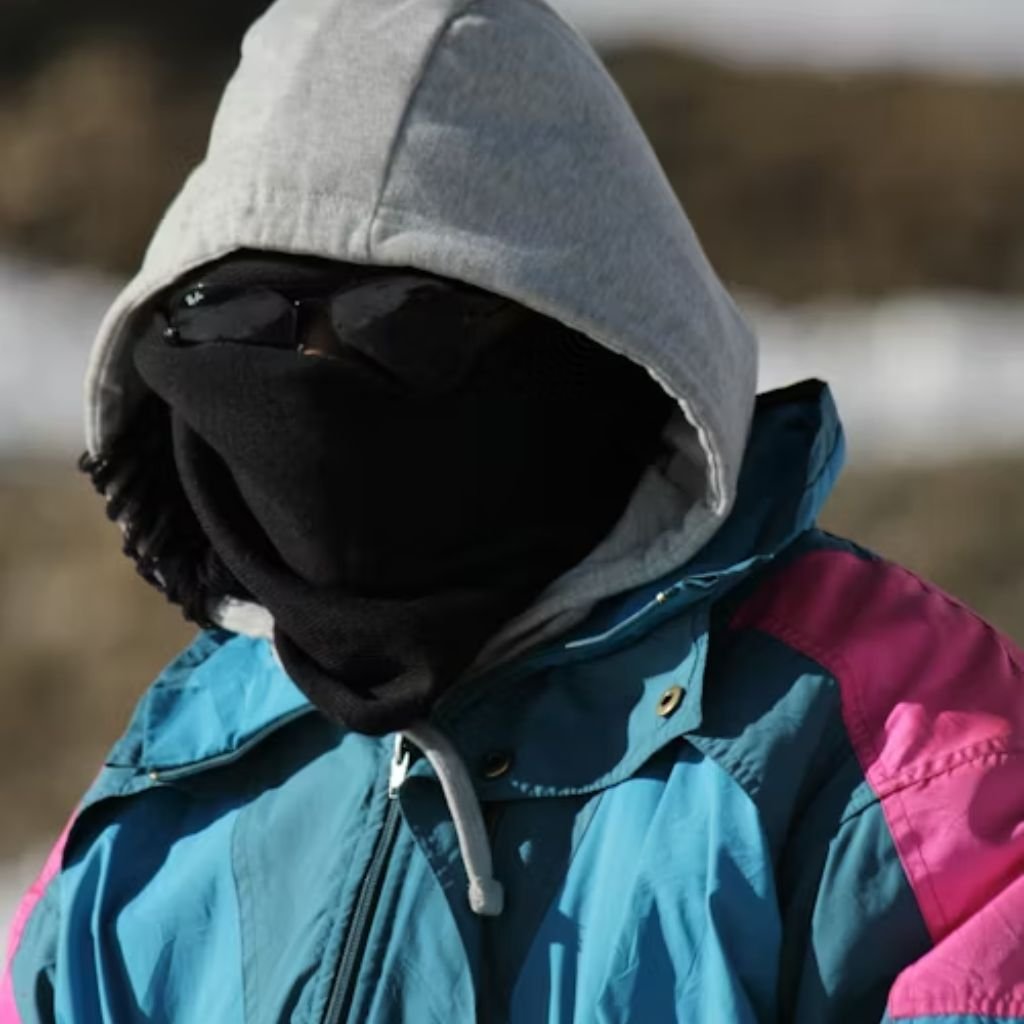
Alt text (short description): A person bundled in winter gear, wearing a gray hooded sweatshirt, sunglasses, a black face covering, and a teal and pink jacket against a snowy backdrop.
Cold Wind Blocking Winter Coat
Caption: Winter layers in bold color: a teal and pink jacket paired with a gray hoodie and face covering.

How to Care for a Cold Wind Blocking Winter Coat

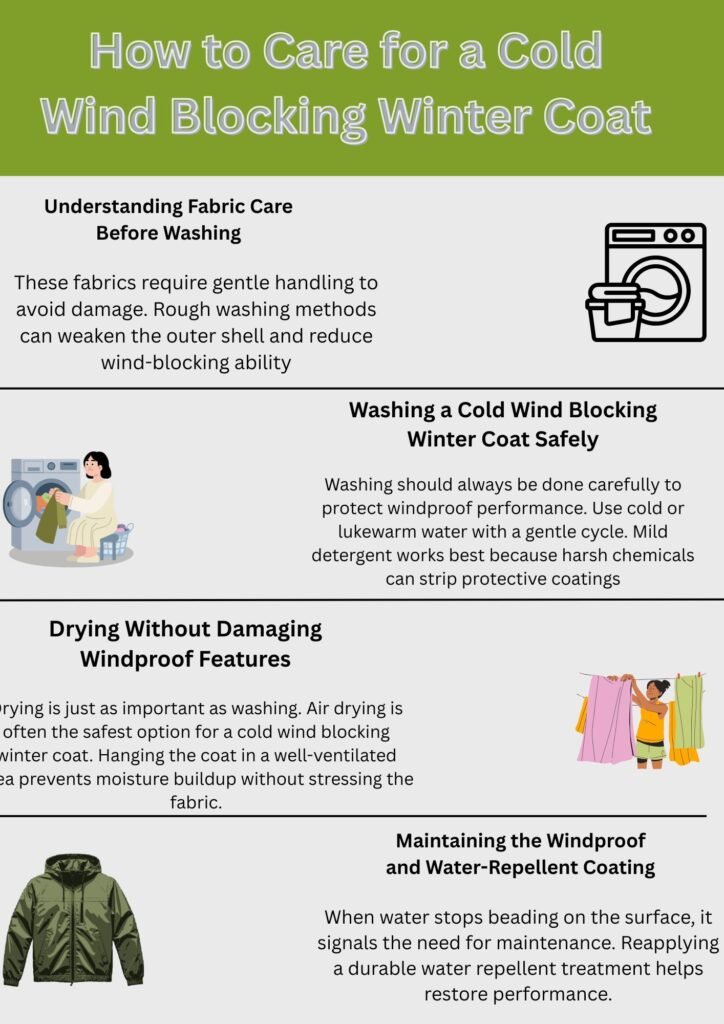
Proper care plays a major role in preserving the performance of a cold wind blocking winter coat. Even the most advanced materials lose effectiveness if they are not maintained correctly. When you follow the right care routine, the coat continues to block freezing winds and provide reliable warmth season after season.

Alt text (short description): A four-section infographic titled “How to Care for a Cold Wind Blocking Winter Coat,” with illustrations and tips on fabric care, washing, drying, and coating maintenance.Cold Wind Blocking Winter Coat
Caption: Quick care guide for winter coats: washing, drying, and protection tips.

Understanding Fabric Care Before Washing

Before washing your cold wind blocking winter coat, it is important to understand the fabric structure. Windproof shells often use tightly woven materials or special membranes. These fabrics require gentle handling to avoid damage. Rough washing methods can weaken the outer shell and reduce wind-blocking ability.

Washing a Cold Wind Blocking Winter Coat Safely

Washing should always be done carefully to protect windproof performance. Use cold or lukewarm water with a gentle cycle. Mild detergent works best because harsh chemicals can strip protective coatings. Avoid fabric softeners because they clog fabric pores and reduce breathability.

Drying Without Damaging Windproof Features

Drying is just as important as washing. Air drying is often the safest option for a cold wind blocking winter coat. Hanging the coat in a well-ventilated area prevents moisture buildup without stressing the fabric. If machine drying is allowed, use low heat only.

Maintaining the Windproof and Water-Repellent Coating

Over time, the outer coating of a wind blocking winter coat may lose effectiveness. When water stops beading on the surface, it signals the need for maintenance. Reapplying a durable water repellent treatment helps restore performance.

Conclusion

A cold wind blocking winter coat is more than just a seasonal clothing item. It is a practical solution designed to protect the body from one of winter’s most uncomfortable elements. Cold wind increases heat loss, intensifies chill, and makes even mild temperatures feel harsh. When wind is properly blocked, warmth becomes easier to maintain and outdoor comfort improves immediately.

FAQs

Do cold wind blocking winter coats really keep you warmer?

Yes, cold wind blocking winter coats keep you noticeably warmer because they stop moving air from reaching your body. When wind cannot pass through the fabric, heat loss slows down significantly. As a result, your body maintains a stable temperature even in harsh winter conditions.

Is a cold wind blocking winter coat enough for extreme cold weather?

A cold wind blocking winter coat provides essential protection, but insulation level also matters in extreme cold. When strong wind protection combines with proper insulation, the coat performs very well. In extremely low temperatures, layering underneath further improves warmth and comfort.

Can cold wind blocking winter coats remain breathable?

Yes, modern cold wind blocking winter coats are designed to balance wind protection and breathability. Advanced fabrics allow moisture to escape while stopping cold air from entering. This balance keeps you dry and comfortable during daily movement or outdoor activities.

Weather-Resistant Winter Coat: Built for Wind, Rain and Snow

A Weather-Resistant Winter Coat is more than just an outer layer; it is a crucial piece of winter attire designed to protect against unpredictable weather conditions. Winter can be unpredictable, with snow, rain, wind, and cold temperatures often appearing within hours. In such environments, choosing a coat that effectively shields the body from these elements becomes essential. Unlike regular jackets, a weather-resistant coat offers a balance between warmth, moisture protection, and breathability, making it a versatile solution for daily wear.

The value of a weather-resistant coat lies in its ability to keep the wearer dry and comfortable in moderately wet conditions while blocking cold air and wind. This type of coat works well for everyday urban life, commuting, and casual outdoor activities. It allows free movement without the heaviness or restriction often found in fully waterproof jackets, providing a more natural and comfortable wearing experience. Whether navigating a snowy city street, traveling, or enjoying outdoor winter activities, the coat offers consistent protection while maintaining a polished and stylish appearance.

What Is a Weather-Resistant Winter Coat?

A weather-resistant winter coat is designed to repel light rain, snow, and wind while providing adequate warmth. Unlike fully waterproof coats, which are meant to withstand heavy rainfall or prolonged exposure to wet conditions, weather-resistant coats prioritize balance. They maintain comfort and flexibility while offering a protective barrier against winter elements. This makes them ideal for urban life and daily wear, where moderate weather protection is often sufficient.

The primary distinction between weather-resistant and waterproof coats lies in breathability. Weather-resistant coats allow air circulation, preventing the build-up of moisture inside the garment. This feature makes them comfortable for longer periods, especially during active movement, such as commuting or walking. These coats are crafted using materials that resist water penetration, block wind, and often include insulating layers that retain heat. Common terms associated with this outerwear include cold-weather coat, protective winter jacket, and winter outerwear. These coats are carefully engineered to ensure that warmth and comfort are maintained without compromising style or mobility.

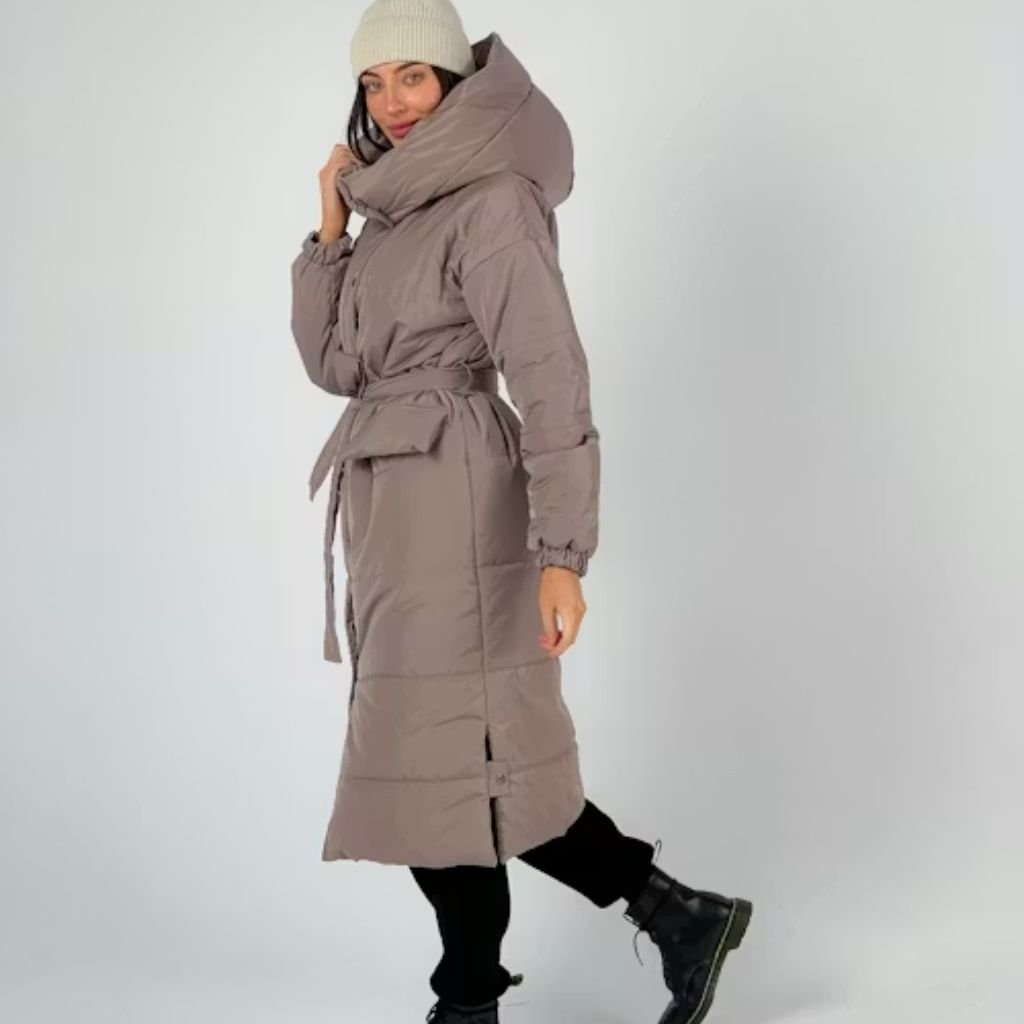
Alt text (short description): A woman wearing a long taupe puffer coat with a belt, high collar, and a knit beanie, standing against a light background.
Weather-Resistant Winter Coat:
Caption: Wrapped up in style: a cozy, military-inspired long puffer with a belt and oversized hood.

Key Features of a Weather-Resistant Winter Coat

The performance of a weather-resistant winter coat depends on multiple factors, each carefully considered during design and manufacturing. Fabric choice is critical, as water-resistant textiles such as treated polyester or nylon shells repel moisture while remaining flexible. These materials prevent light rain or snow from soaking the wearer and allow water to roll off the surface. Advanced coatings improve durability and resistance to wear while maintaining a comfortable texture. The fabric is designed to handle daily abrasion without losing its weather-resistant properties, making the coat suitable for long-term use.

Windproof construction is equally important. By employing tightly woven materials and layered shells, these coats block cold air from penetrating, preserving body heat. This feature is crucial for maintaining warmth in exposed outdoor environments or during windy commutes. When wind is blocked effectively, the wearer retains heat more efficiently, and the coat’s insulation works as intended.

Types of Weather-Resistant Winter Coats

Weather-resistant winter coats come in a variety of styles and designs, each suited to specific winter conditions, activities, and personal preferences. Understanding the different types helps you select a coat that combines warmth, protection, and style for your lifestyle. From casual urban wear to outdoor adventure-ready designs, these coats are crafted to meet diverse needs while maintaining core weather-resistant qualities.

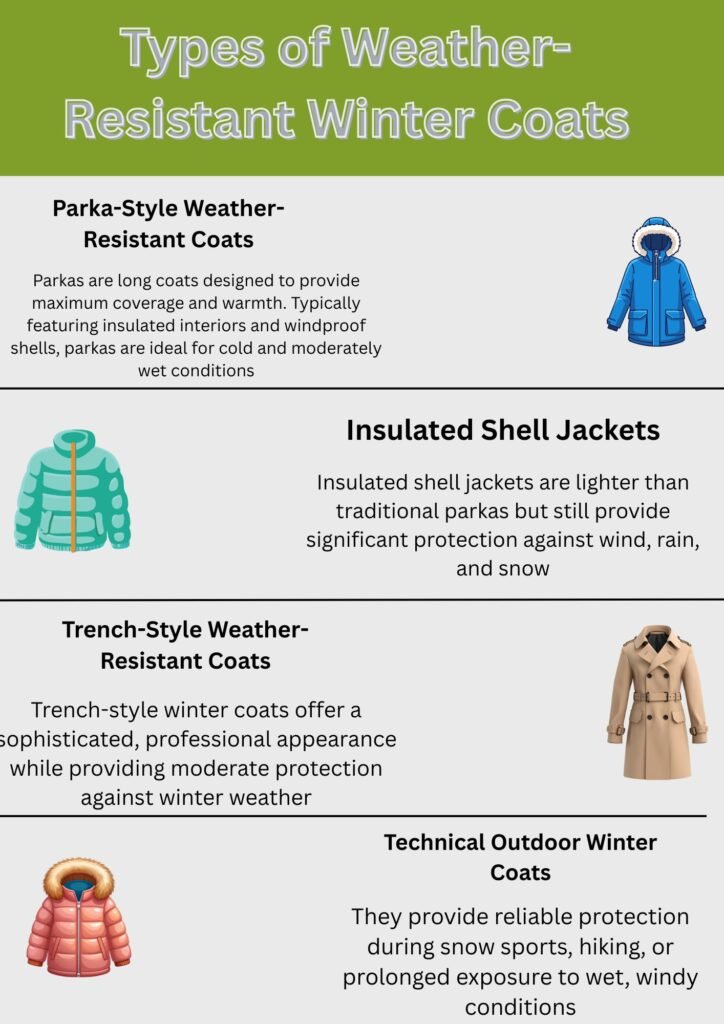
Alt text (short description): An infographic showing four types of weather-resistant winter coats: Parka-Style, Insulated Shell Jackets, Trench-Style, and Technical Outdoor coats, each with a brief description.Weather-Resistant Winter Coat:
Caption: A quick guide to four popular weather-resistant winter coats.

Parka-Style Weather-Resistant Coats

Parkas are long coats designed to provide maximum coverage and warmth. Typically featuring insulated interiors and windproof shells, parkas are ideal for cold and moderately wet conditions. Many parkas include adjustable hoods lined with faux or real fur, which offer additional protection against wind and snow.

Insulated Shell Jackets

Insulated shell jackets are lighter than traditional parkas but still provide significant protection against wind, rain, and snow. These coats combine a durable outer shell with synthetic or down insulation, offering warmth while remaining flexible. They are particularly suitable for active individuals who need a weather-resistant coat that allows freedom of movement for activities like walking, cycling, or light outdoor sports.

Trench-Style Weather-Resistant Coats

Trench-style winter coats offer a sophisticated, professional appearance while providing moderate protection against winter weather. Made from treated cotton blends or synthetic fabrics, these coats repel light rain and snow while maintaining a tailored look. Trench coats are ideal for work environments or occasions where style is as important as functionality.

Technical Outdoor Winter Coats

Technical outdoor coats are designed for extreme conditions and outdoor enthusiasts. Often constructed with waterproof and windproof membranes, synthetic insulation, and reinforced seams, these coats are engineered for durability and high performance. They provide reliable protection during snow sports, hiking, or prolonged exposure to wet, windy conditions. Features like adjustable hoods, storm flaps, and ventilation zippers enhance functionality while allowing wearers to regulate warmth and breathability.

Best Materials Used in Weather-Resistant Winter Coats

Choosing the right material is crucial for a Weather-Resistant Winter Coat, as it directly impacts warmth, durability, and protection against wind, rain, and snow. Modern coats combine multiple materials to achieve optimal performance while maintaining comfort. The choice of outer shells, insulation, and lining all play an important role in keeping the wearer dry and warm in unpredictable winter conditions.

Polyester and Nylon Shells

Polyester and nylon are among the most common materials used in weather-resistant coats. Their tightly woven fibers naturally resist water and wind while remaining lightweight and flexible. These materials allow rain and snow to bead and roll off the surface, preventing the coat from becoming saturated. In addition, both polyester and nylon are highly durable, resisting wear and tear caused by daily use. This durability ensures that a coat maintains its protective properties and shape over several winter seasons.

Treated Cotton Blends

Cotton blends are valued for their softness and breathability, making them comfortable for extended wear. However, untreated cotton absorbs moisture easily, which can reduce warmth and comfort in wet conditions. To overcome this, treated cotton blends incorporate water-resistant finishes that repel light rain and snow. These coatings allow the fabric to maintain its natural feel while improving protection against moisture and wind.

Down vs Synthetic Insulation

Insulation plays a pivotal role in the warmth of a Weather-Resistant Winter Coat. Down, made from fine bird feathers, offers excellent warmth-to-weight ratio. It traps heat efficiently, keeping the body insulated without adding bulk. Down is lightweight and compressible, which makes coats easy to carry or pack for travel. However, down loses insulating ability when exposed to moisture, which makes it less effective in wet or snowy conditions.

Breathable Membranes

Breathable membranes are thin layers embedded within the coat to manage moisture and airflow. These membranes allow sweat and internal moisture to escape while preventing external water from entering. This ensures that the wearer stays dry and comfortable during physical activity or prolonged wear. Unlike fully waterproof coats, breathable membranes maintain a natural balance of warmth and ventilation, reducing the risk of overheating.

How Warm Is a Weather-Resistant Winter Coat?

The warmth of a Weather-Resistant Winter Coat is one of the most important considerations when choosing winter outerwear. People often ask, “Is it warm enough for my winter activities?” Understanding how these coats provide insulation, block wind, and interact with layering is crucial to answering this question. Unlike traditional coats that rely solely on thickness or heavy fabrics, weather-resistant coats are designed to trap heat efficiently while allowing breathability, creating a balance between warmth and comfort.

One of the primary factors affecting warmth is the type of insulation used. Down insulation, for example, offers exceptional heat retention by trapping warm air in small pockets formed by fine feathers. This trapped air acts as a natural barrier against cold temperatures, keeping the body insulated even in freezing conditions. Down is lightweight, compressible, and highly efficient, which is why it is commonly used in high-end winter coats. However, down can lose its insulating properties when exposed to moisture, so in wet conditions, the warmth it provides may be reduced. This is where synthetic insulation becomes advantageous.

Weather-Resistant Winter Coat:
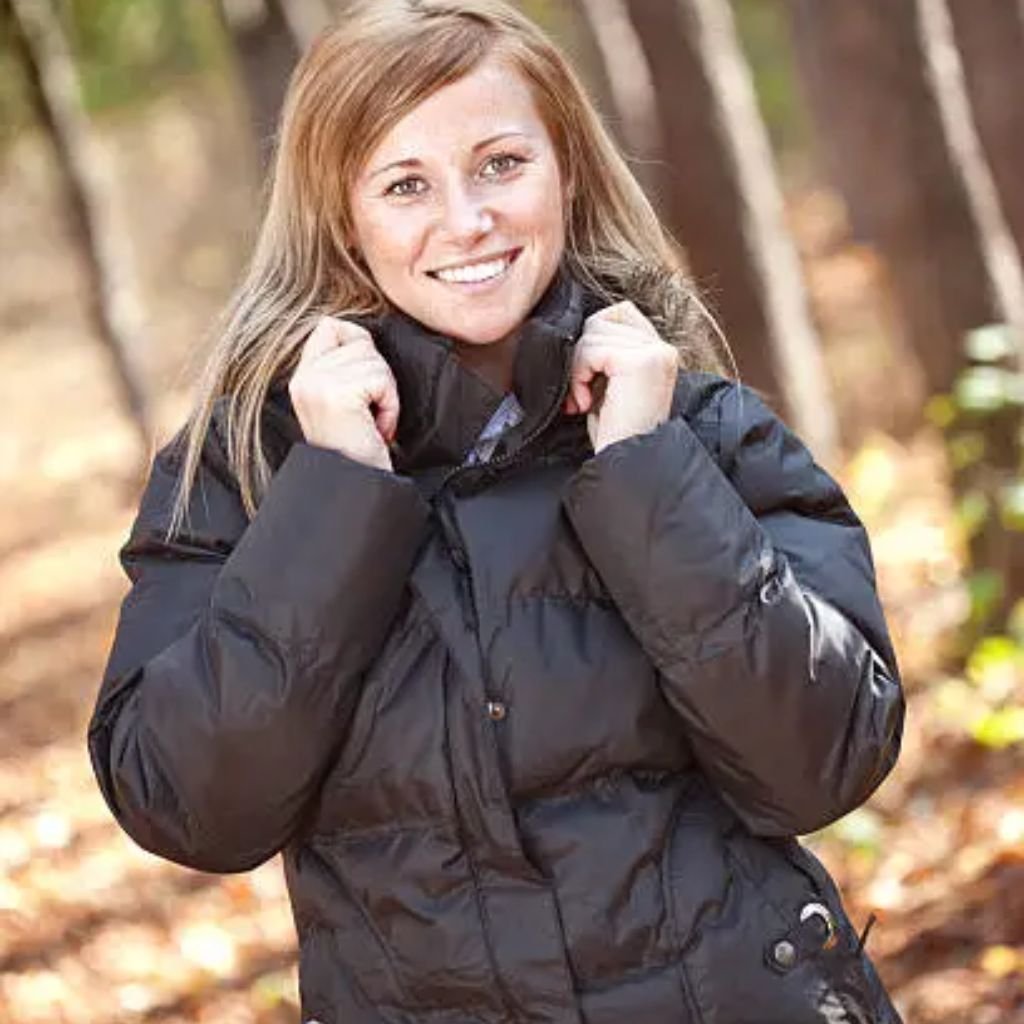
Alt text (short description): A smiling woman stands in a forest wearing a black puffy winter coat, with her hands holding the collar near her neck.

Weather-Resistant vs Waterproof Winter Coats

When choosing winter outerwear, understanding the difference between a Weather-Resistant Winter Coat and a fully waterproof coat is essential. Both types of coats are designed to protect the wearer from winter elements, but they serve different purposes and perform differently in various conditions. By exploring their materials, construction, and intended use, you can make an informed decision about which coat best suits your lifestyle and climate.

Performance Differences

A weather-resistant winter coat is designed to handle light moisture and moderate winter conditions. It repels drizzle, snow flurries, and light rain while blocking wind and retaining warmth. These coats often feature water-resistant shells, insulation layers, and breathable membranes that allow moisture from the body to escape. This makes them ideal for daily use, where comfort and mobility are as important as protection. Weather-resistant coats are flexible, lightweight, and breathable, allowing the wearer to remain comfortable even during long walks, commuting, or city activities.

Pros and Cons of Weather-Resistant Winter Coats

Weather-resistant coats excel in comfort, breathability, and versatility. Their lighter design and ability to manage moderate moisture make them perfect for urban environments and everyday wear. They allow for layering without feeling bulky and offer sufficient warmth for most winter climates. Additionally, weather-resistant coats often have adjustable features, such as hoods, cuffs, and hems, which improve insulation and heat retention while maintaining flexibility.

Pros and Cons of Waterproof Winter Coats

Waterproof coats provide unparalleled protection from rain, snow, and wet wind. Their sealed seams and waterproof membranes prevent water from entering, making them essential for extreme weather conditions or outdoor adventures. These coats are ideal for hiking, winter sports, or regions where wet snow and rain are frequent and heavy.

Which One Is Better for Daily Winter Wear?

For most people living in urban areas or dealing with moderate winter conditions, a Weather-Resistant Winter Coat is often the more practical choice. Its balance of warmth, wind protection, light water repellence, and breathability makes it ideal for commuting, errands, and casual outdoor activities. It allows wearers to stay comfortable without overheating, provides enough protection against sudden snow or drizzle, and can easily accommodate layering for colder days.

Benefits of Wearing a Weather-Resistant Winter Coat

The advantages of wearing a weather-resistant winter coat extend beyond basic warmth and protection. These coats shield against sudden changes in weather, including wind, drizzle, and light snow, ensuring the wearer remains dry and comfortable. Their breathable design prevents overheating, even during physical activity, allowing for extended wear without discomfort.

Durability is another benefit. Quality materials and thoughtful construction result in long-lasting outerwear capable of handling repeated exposure to winter conditions. This durability improves the cost-effectiveness of owning a weather-resistant coat, as it can be used season after season without significant degradation. Additionally, these coats combine function with aesthetics, providing a stylish appearance suitable for a variety of settings, from casual outings to work environments.

How to Choose the Right Weather-Resistant Winter Coat

Selecting the right weather-resistant winter coat requires consideration of climate, insulation, length, and lifestyle. In milder climates, lighter insulation may suffice, while colder regions may require thicker fillings. The length of the coat affects warmth retention, with longer designs providing better coverage and wind protection.
Lifestyle considerations also influence choice. For commuting, a coat that balances warmth and mobility is ideal. Outdoor enthusiasts may prefer coats with higher wind and moisture resistance. For casual urban wear, aesthetic appeal becomes more important, along with moderate insulation and lightweight design. Understanding one’s personal needs ensures the coat provides both comfort and protection throughout the winter season.

Weather-Resistant Winter Coats for Different Uses

For everyday city wear, weather-resistant coats offer the perfect combination of style, warmth, and comfort. They protect against light snow and drizzle while allowing ease of movement during commuting or walking. Outdoor activity coats emphasize flexibility, durability, and insulation, making them suitable for winter hiking, casual sports, or weekend adventures. Travel and commuting require lightweight protection that can adapt to varying climates and weather conditions, ensuring comfort over long periods. Even in light snow and rain conditions, these coats prevent moisture from penetrating the outer layer, keeping the wearer dry and warm throughout the day.

Styling Tips: How to Wear a Weather-Resistant Winter Coat

A Weather-Resistant Winter Coat is not only functional but can also elevate your winter wardrobe when styled correctly. Modern coats are designed to balance warmth, protection, and aesthetics, allowing wearers to look polished while staying comfortable in cold weather. By understanding how to pair your coat with different outfits and layering techniques, you can make the most of this versatile winter essential.

Alt text (short description): A woman standing in a snowy landscape wearing a dark winter coat, red scarf, black hat, striped mittens, and red pants.Weather-Resistant Winter Coat:
Caption: Winter-ready: stylishly bundled up in a military-inspired jacket, red scarf, and coordinating accessories in the snow.

Casual Winter Outfits

For everyday casual wear, a weather-resistant coat pairs effortlessly with jeans, sweaters, and boots. Opt for neutral colors like black, navy, gray, or olive to ensure versatility across different casual looks. Layering is key; combining a thermal shirt or light sweater under the coat adds warmth while maintaining a relaxed style. Accessories like scarves, beanies, and gloves can enhance both warmth and visual interest, creating a balanced winter look. Casual weather-resistant coats work particularly well for walking in the city, running errands, or meeting friends while providing reliable protection from wind and light precipitation.

Smart-Casual and Work Looks

Weather-resistant winter coats can also complement smart-casual or professional attire. Coats with clean lines, tailored cuts, and structured designs integrate seamlessly with dress pants, shirts, and ankle boots or dress shoes. Neutral or dark colors maintain a polished appearance suitable for work, meetings, or semi-formal occasions. Adding a scarf in a complementary color or texture can enhance style while providing additional warmth. The coat’s protective features, such as adjustable hoods and windproof cuffs, remain functional even in professional settings, ensuring comfort without sacrificing elegance.

Layering Ideas for Maximum Comfort

Layering is one of the most effective ways to style a weather-resistant coat while maintaining warmth. Lightweight sweaters, hoodies, or vests can be worn under the coat to create a comfortable and insulated outfit. Layering also allows flexibility, so you can remove inner layers when transitioning from cold outdoor environments to heated indoor spaces. Additionally, layering adds depth to an outfit, making your winter style more visually interesting. Combining textures, such as knitwear with smooth coat fabrics, creates a sophisticated yet practical ensemble suitable for various winter conditions.

Accessorizing with a Weather-Resistant Winter Coat

Accessories are essential for maximizing both style and comfort. Hats, scarves, gloves, and boots can complement the coat’s design while enhancing protection against wind, snow, and rain. Neutral or matching colors create a cohesive outfit, while contrasting accessories can add a pop of color and personality. Choosing functional accessories made from warm and breathable materials, such as wool or fleece, ensures that protection is not compromised for style. Properly chosen accessories elevate the coat from a purely functional item to a statement piece in your winter wardrobe.

Are Weather-Resistant Winter Coats Worth Buying?

Investing in a weather-resistant winter coat provides significant value for daily wear. The balance of warmth, wind protection, and water repellence ensures comfort in unpredictable conditions. These coats suit a variety of lifestyles, from urban commuting to light outdoor activities. Their durability supports repeated seasonal use, enhancing long-term value. While not a replacement for heavy-duty waterproof outerwear in extreme weather, a weather-resistant coat meets the needs of most winter scenarios efficiently. The combination of protection, comfort, and style makes them a worthwhile investment for anyone seeking reliable winter outerwear.

Care & Maintenance Tips for a Weather-Resistant Winter Coat

Proper care of a Weather-Resistant Winter Coat is essential to maintain its protective qualities, warmth, and appearance over multiple winter seasons. These coats often combine specialized fabrics, coatings, and insulation that require gentle handling. By following specific cleaning and maintenance practices, you can ensure that your coat continues to repel water, block wind, and provide reliable warmth without losing its structure or style.

Alt text (short description): An infographic titled “Care & Maintenance Tips for a Weather-Resistant Winter Coat” showing sections on cleaning, drying, water resistance, and insulation handling.Weather-Resistant Winter Coat:
Caption: Quick care guide: essential tips for cleaning, drying, water resistance, and insulation care for winter coats.

Cleaning Without Damaging the Coat

Cleaning a weather-resistant coat requires careful attention to its materials and coatings. Most coats come with care labels indicating whether machine washing, hand washing, or dry cleaning is recommended. Using mild detergents specifically formulated for technical fabrics is essential, as harsh soaps can degrade water-repellent coatings. If machine washing is allowed, it is usually best to use a gentle cycle with cold water to avoid damaging the fabric or insulation.

Drying and Storage Tips

Proper drying is crucial to maintain the coat’s structure and insulation. Air drying is recommended for most weather-resistant coats to prevent shrinkage, warping, or damage to synthetic and down fills. Avoid high-heat drying, as this can degrade water-repellent finishes and damage insulation fibers. Once dry, store the coat in a cool, dry place on a hanger to maintain its shape and prevent creasing. Avoid compressing the coat for long periods, especially those with down or synthetic insulation, as this can reduce loft and warmth.

Maintaining Water Resistance

Over time, water-repellent coatings on a weather-resistant coat can wear off due to regular use and washing. To restore water resistance, reapply a durable water repellent (DWR) treatment, which is available in sprays or wash-in forms. These treatments revive the coat’s ability to repel moisture without affecting breathability. Regularly checking the coat for worn areas, especially on high-contact zones like sleeves, shoulders, and hems, ensures that protection remains consistent.

Handling Insulation and Layering Effects

Insulation in weather-resistant coats, whether down or synthetic, requires careful handling during cleaning and maintenance. Avoid over-compressing the coat when storing, as this can flatten insulation and reduce warmth. After washing, gently shake or fluff coats with down or synthetic fill to restore loft. If layering additional garments beneath the coat, ensure that zippers, buttons, and closures do not snag or tear the outer fabric, as damage to the shell can compromise the coat’s weather-resistant properties.

Conclusion

A Weather-Resistant Winter Coat delivers balanced winter protection.It shields against wind, rain, and snow effectively.Therefore, comfort remains consistent.These coats support daily movement and style.They suit urban life and travel needs.As a result, they offer excellent value.Choosing the right weather-resistant winter coat ensures warmth, durability, and confidence throughout winter.

FAQs

Is a weather-resistant winter coat good for snow?

Yes, it handles light snow effectively and comfortably.

Can it replace a waterproof coat?

It can for daily wear, but not heavy rain.

How long does weather resistance last?

With care, it lasts several seasons.

Are weather-resistant coats breathable?

Are weather-resistant coats breathable?

Recycled Fabric Winter Coat: Future of Ethical Fashion Today

Winter fashion has entered a new era of responsibility.People now care deeply about how their clothing is made.They no longer focus only on warmth and appearance.Instead, they consider environmental and ethical impact.A Recycled Fabric Winter Coat reflects this important shift.It combines modern design with sustainable materials.As climate awareness grows, fashion choices continue to evolve.Therefore, recycled winter coats now lead ethical outerwear trends.Traditional winter clothing consumes massive natural resources.This process damages ecosystems and increases pollution.Recycled fabric winter coats reduce this damage significantly.They reuse existing materials instead of creating new waste.Most importantly, these coats do not compromise performance.They provide warmth, comfort, and durability.As a result, they represent the future of winter fashion.

History of Recycled Fabric Winter Coats

The idea of recycled fabrics began in performance clothing.Outdoor brands first experimented with recycled polyester.Initially, these fabrics lacked softness and insulation.However, innovation quickly changed this limitation.Textile technology improved dramatically over time.Manufacturers learned how to refine recycled fibers.They strengthened yarns while maintaining flexibility.This advancement opened doors for winter outerwear.As sustainability gained global attention, fashion followed.Consumers demanded transparency and ethical production.Brands responded by investing in recycled materials.Thus, recycled fabric winter coats entered mainstream fashion.Today, these coats symbolize innovation and responsibility.They prove that fashion can evolve sustainably.

Alt text: A brown wool-like jacket with black trim hangs on a wire hanger against a dark, weathered wooden wall. The jacket shows a blue lining and an orange accent at the collar, with a decorative pocket on one side; it looks aged and rustic.Recycled Fabric Winter Coat:
Caption: Rustic vintage brown wool jacket with blue lining and orange collar peek.

What Is a Recycled Fabric Winter Coat?

A Recycled Fabric Winter Coat uses materials made from waste.These materials come from previously discarded products.instead of virgin fibers, manufacturers reuse existing resources.This approach reduces environmental strain.Recycled fabrics undergo advanced processing.They are cleaned, broken down, and reshaped into fibers.These fibers are then woven into durable fabrics.Quality control ensures warmth and strength.Modern recycled winter coats meet strict performance standards.They provide insulation, breathability, and weather resistance.Therefore, they function just like traditional winter coats.

Types of Recycled Fabric Winter Coats

Recycled fabric winter coats come in many styles to suit different climates and lifestyles. Designers now combine sustainable materials with functional design. As a result, consumers can choose ethical winter outerwear without giving up comfort or fashion. Each type of recycled fabric winter coat serves a specific purpose while maintaining environmental responsibility.

Alt text: An infographic titled “Types of Recycled Fabric Winter Coats” showing four coat styles: Recycled Puffer Winter Coats (orange puffer), Longline Recycled Fabric Winter Coats (two long blue coats), Recycled Shell Winter Coats (beige shell with blue lining), and Recycled Parka Winter Coats (green parka with fur-lined hood). Each section includes a short description and a small illustration.
Recycled Fabric Winter Coat:
Caption: Four recycled-coat styles at a glance: puffer, longline, shell, and parka coats, with notes on insulation, length, and protection.
Recycled Puffer Winter Coats

Recycled puffer winter coats focus on insulation and warmth. They use recycled synthetic insulation made from plastic waste. This insulation traps body heat effectively during cold weather. At the same time, the coat remains lightweight and easy to wear. Recycled puffer coats work well for daily winter use, especially in cold urban environments.

Longline Recycled Fabric Winter Coats

Longline recycled fabric winter coats provide extended coverage below the hips or knees. This extra length helps block cold air and strong winds. As a result, wearers stay warmer during extreme winter conditions. These coats are popular for commuting and outdoor walking. Their sleek design also adds a modern fashion touch.

Recycled Shell Winter Coats

Recycled shell winter coats focus on weather protection rather than heavy insulation. They are made from recycled nylon or polyester fabrics. These coats resist wind, rain, and snow effectively. Breathable layers allow moisture to escape, which improves comfort. Recycled shell coats suit active lifestyles and outdoor winter activities.
Recycled Parka Winter Coats

Recycled parka winter coats combine insulation with weather resistance. They usually include a hood and longer length for added protection. Recycled insulation keeps the body warm during freezing temperatures. At the same time, the outer fabric blocks harsh weather. These coats work well in very cold climates and snowy conditions.

Common Recycled Materials Used in Winter Coats

Recycled fabric winter coats rely on carefully selected materials that balance warmth, durability, and sustainability. These materials come from waste sources that would otherwise harm the environment. Through advanced processing, manufacturers transform discarded items into high-quality fabrics suitable for winter outerwear. As a result, recycled materials now perform as well as traditional fabrics while offering a much lower environmental impact.

Recycled Polyester (rPET) in Winter Coats

Recycled polyester is one of the most widely used materials in recycled fabric winter coats. It is mainly produced from discarded plastic bottles that are cleaned and melted into fibers. These fibers are then spun into yarn and woven into fabric. Recycled polyester provides excellent insulation and moisture resistance. It also dries quickly and maintains its shape during long-term use. Because of these qualities, rPET works especially well for cold and wet winter conditions.

Recycled Nylon for Strength and Weather Resistance

Recycled nylon plays an important role in high-performance winter coats. Manufacturers often source it from abandoned fishing nets and industrial waste. After recycling, the material becomes strong and flexible. Recycled nylon resists tearing and abrasion, making it ideal for harsh winter environments. It also performs well against wind and snow. This durability helps extend the life of recycled fabric winter coats significantly.

Recycled Wool for Natural Warmth

Recycled wool is created from leftover wool fibers and old wool garments. These fibers are cleaned and reprocessed into usable yarn. Recycled wool retains its natural ability to trap heat and regulate body temperature. It also allows air to circulate, which prevents overheating. Because it uses existing wool, this material reduces the demand for new animal resources. As a result, recycled wool supports both sustainability and comfort.

Recycled Cotton Blends for Softness and Comfort

Recycled cotton blends are commonly used in casual recycled fabric winter coats. Cotton waste from factories and old clothing is collected and processed into new fibers. On its own, recycled cotton lacks strength for winter use. Therefore, manufacturers blend it with recycled synthetic fibers. This combination improves durability while keeping the fabric soft and breathable. These blends work well for everyday winter wear in mild to moderate cold.

Why Recycled Fabric Winter Coats Are Beneficial

Recycled fabric winter coats offer more than seasonal warmth. They represent a responsible approach to modern fashion. As environmental concerns continue to grow, consumers increasingly seek clothing that aligns with their values. A recycled fabric winter coat answers this need by combining sustainability, comfort, and long-term practicality. These coats support both personal well-being and global environmental health.
Alt text: A person wearing a long, cream-colored fur coat stands indoors. The garment is loose and plush, with wide sleeves and a soft, luxurious texture.Recycled Fabric Winter Coat:
Caption: Elegant, oversized cream fur coat for a chic winter look.

Environmental Protection Through Waste Reduction

One of the strongest benefits of recycled fabric winter coats is their ability to reduce waste. Manufacturers use discarded plastics, old garments, and industrial textile leftovers. This process prevents harmful materials from ending up in landfills or oceans. As a result, recycled winter coats help control pollution and reduce environmental damage. Over time, this approach supports a cleaner and healthier planet.

Lower Carbon Footprint in Fabric Production

Traditional fabric production consumes large amounts of energy. It also releases high levels of carbon emissions into the atmosphere. In contrast, recycled fabric winter coats require far less energy during manufacturing. Recycling existing materials reduces the need for raw resource extraction. Therefore, each recycled winter coat contributes to lowering overall carbon emissions and slowing climate change.
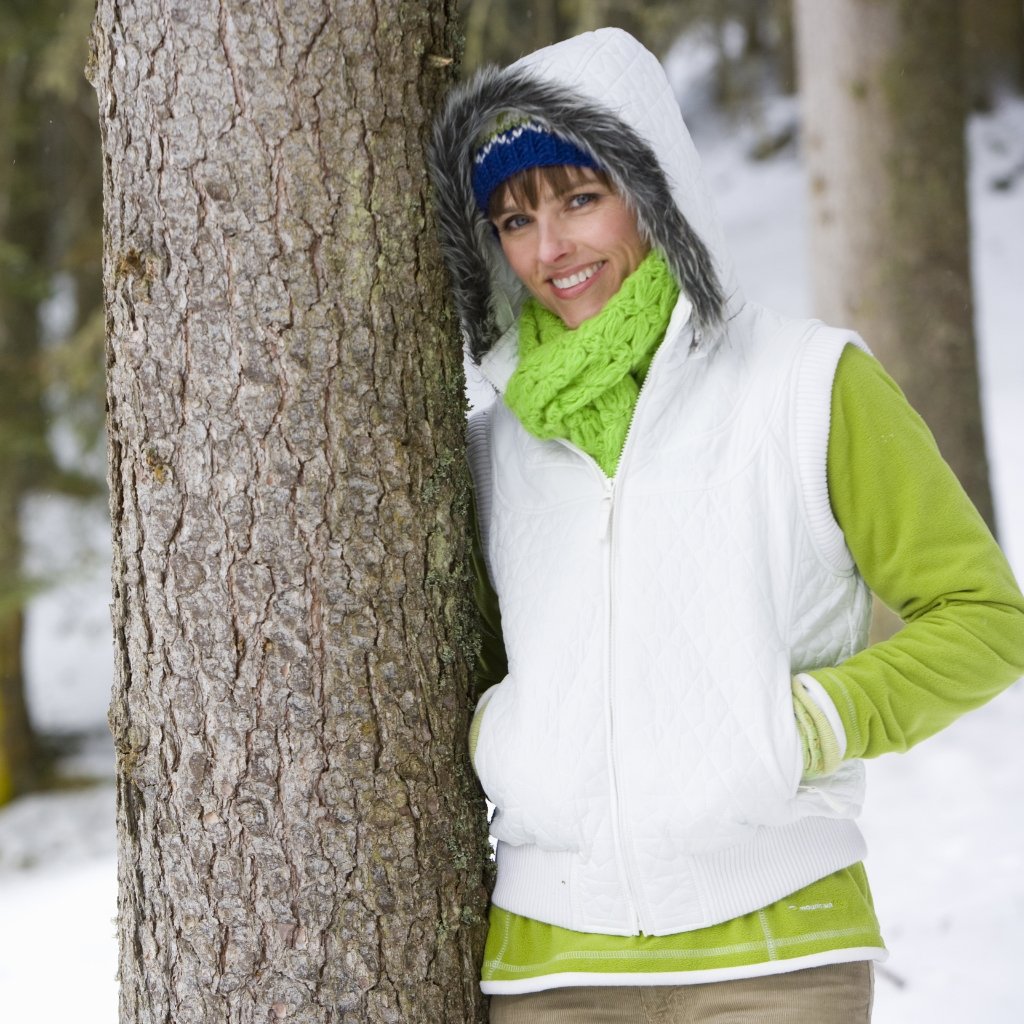
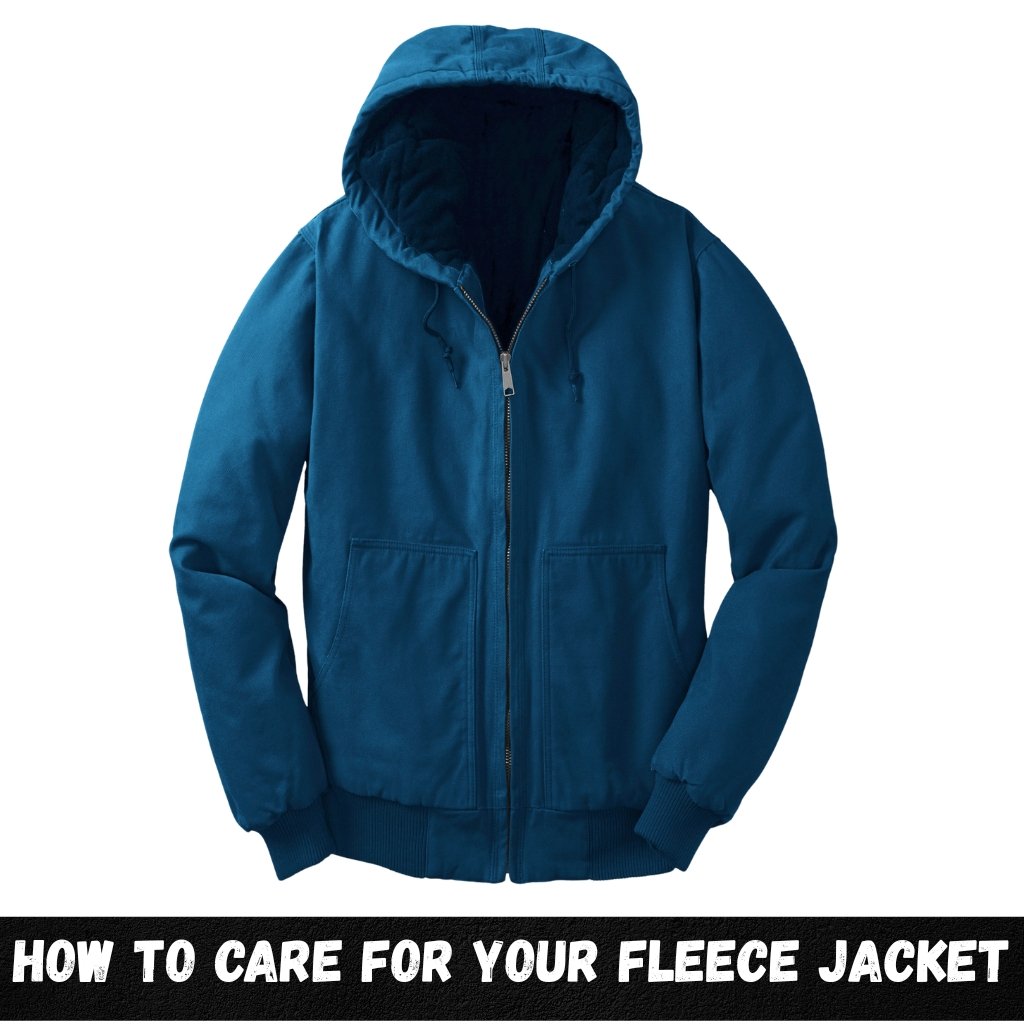
Reduced Water Consumption in Manufacturing

Water conservation is another major advantage of recycled fabric winter coats. Conventional textile production uses enormous quantities of freshwater. This practice strains water resources in many regions. Recycled fabrics significantly reduce water usage because they reuse existing fibers. By choosing recycled winter coats, consumers indirectly support water preservation efforts across the globe.

Long-Lasting Durability and Strength

Many people assume recycled fabrics lack durability. However, modern technology has changed this perception. Recycled fabric winter coats now match or exceed traditional coats in strength. Advanced processing techniques create fibers that resist wear and tear. As a result, these coats maintain their structure and insulation over many winter seasons. Durability makes recycled coats a practical long-term investment.

Warmth and Performance of Recycled Fabric Winter Coats

Recycled fabric winter coats deliver reliable warmth and strong performance in cold conditions. Many people assume recycled materials cannot provide proper insulation. However, modern textile technology has completely changed this perception. Manufacturers now design recycled fabrics to meet the same performance standards as traditional winter materials. As a result, recycled fabric winter coats protect the body effectively during harsh winter weather.

Insulation plays a key role in winter coat performance. Recycled winter coats often use advanced synthetic insulation made from recycled plastics. These fibers trap warm air close to the body. This trapped air creates a thermal barrier against cold temperatures. Even in freezing conditions, recycled insulation helps maintain stable body heat. Therefore, wearers stay warm during long outdoor exposure.

Wind protection also contributes to overall warmth. Many recycled fabric winter coats feature tightly woven outer shells. These shells prevent cold air from penetrating the coat. As a result, body heat remains trapped inside. This feature becomes especially important in windy winter environments. Without wind resistance, even thick insulation can lose effectiveness.

Recycled Fabric Winter Coat Versus Traditional Winter Coat

Recycled fabric winter coats and traditional winter coats serve the same basic purpose. Both aim to protect the body from cold temperatures. However, the difference lies in how they are made and how they impact the environment. Understanding this comparison helps consumers make informed and responsible choices. As sustainability becomes more important, this comparison grows increasingly relevant.

Traditional winter coats rely heavily on virgin materials. These materials include new polyester, nylon, wool, and down. Producing virgin fabrics requires extensive energy and raw resources. The process also involves high water consumption and chemical treatments. Over time, this method contributes to pollution and environmental strain. In contrast, a recycled fabric winter coat uses existing materials. Manufacturers reuse plastic waste, textile leftovers, and discarded garments. This reuse significantly reduces the need for new resource extraction.

Environmental impact remains the most noticeable difference between the two. Traditional winter coats contribute to carbon emissions during raw material production. Mining, farming, and processing increase the carbon footprint. Recycled fabric winter coats reduce emissions by shortening the production cycle. Recycling materials requires less energy than producing new fibers. As a result, recycled coats support climate-friendly fashion practices.

How to Choose the Best Recycled Fabric Winter Coat

Choosing the right recycled fabric winter coat requires thoughtful consideration. Winter conditions vary greatly from one region to another. Personal lifestyle also plays an important role in this decision. A well-chosen coat provides warmth, comfort, and long-term value. At the same time, it supports sustainable fashion choices. Understanding key factors helps ensure the best purchase.

Alt text: A woman wearing an oversized cream-colored fur coat with a peach-toned scarf tied around her shoulders. She has a gray turtleneck underneath and small orange-brown earrings, standing with her hands resting near the coat.
Recycled Fabric Winter Coat:
Caption: Cozy luxury: plush cream fur coat with a soft peach scarf.

Understanding Insulation and Warmth Levels

Insulation determines how well a recycled fabric winter coat protects against cold. Different insulation types offer different warmth levels. Recycled synthetic insulation works especially well in damp and snowy climates. It continues to insulate even when exposed to moisture. Recycled wool blends provide natural warmth and breathability. These blends suit dry and cold winter conditions. Choosing insulation based on climate ensures lasting comfort.

Evaluating Fabric Thickness and Construction

Fabric thickness plays a major role in heat retention. Thicker fabrics block cold air more effectively. They also add durability to the coat’s structure. However, heavier fabrics may feel bulky during daily use. Lightweight recycled fabrics offer flexibility and comfort. These fabrics suit mild to moderate winter temperatures. Balanced construction improves warmth without restricting movement.

Considering Weather Resistance and Climate Suitability

Weather resistance is essential for winter outerwear. Recycled fabric winter coats often include windproof and water-resistant layers. These features protect against rain, snow, and strong winds. In wet climates, waterproof coatings become especially important. In dry and windy regions, wind resistance matters more. Selecting a coat designed for local weather improves overall performance.

Choosing the Right Fit and Length

Fit influences warmth and comfort significantly. A well-fitted recycled fabric winter coat traps body heat efficiently.Loose coats allow cold air to enter. Extremely tight coats restrict movement and layering. Length also affects protection. Longer coats provide better coverage for the lower body. Shorter coats offer flexibility and ease of movement. Choosing the right fit ensures daily comfort.Style and Design Trends in Recycled Fabric Winter CoatsRecycled fabric winter coats now reflect modern fashion.Designers focus on clean and versatile aesthetics.Minimalist designs dominate current collections.They suit everyday and professional settings.These styles remain timeless and practical.Longline and puffer silhouettes stay popular.

Best Uses of a Recycled Fabric Winter Coat

Recycled fabric winter coats adapt to many situations.Their versatility increases daily comfort.For commuting, lightweight coats perform well.They provide warmth without restricting movement.During travel and outdoor activities, insulated coats excel.They resist changing weather conditions.This reliability supports active lifestyles.In extreme cold, heavily insulated coats perform best.They protect against harsh temperatures.Extended coverage improves comfort.Both casual and formal outfits benefit.Tailored styles suit professional environments.Casual designs suit relaxed winter wear.

Are Recycled Fabric Winter Coats Worth the Price?

Recycled fabric winter coats may cost more initially.However, long-term benefits outweigh the expense.Durability reduces replacement frequency.This longevity saves money over time.Environmental impact reduction adds ethical value.Supporting sustainable brands encourages innovation.This investment benefits future fashion.

How to Care for a Recycled Fabric Winter Coat

Proper care plays a major role in maintaining the quality of a recycled fabric winter coat. Although recycled materials are durable, they still need gentle handling. With correct care, these coats retain warmth, shape, and performance for many winters. Understanding basic care practices helps protect both the fabric and the environment.

Alt text: An infographic titled “How to Care for a Recycled Fabric Winter Coat” with sections: Reading and Following the Care Label (info text and icon of a hand in a wash tub), Washing a Recycled Fabric Winter Coat Correctly (washer icon), Protecting Insulation During Cleaning (shield with flame icon), and Drying Methods That Preserve Fabric Quality (clothesline with drying clothes). Each section includes a short description and an accompanying illustration.Recycled Fabric Winter Coat:
Caption: Care tips for recycled fabric winter coats: read care labels, wash only when needed, protect insulation, and air-dry to preserve fabric quality.

Reading and Following the Care Label

Every recycled fabric winter coat includes a care label. This label provides important washing and drying instructions. Manufacturers design these guidelines to protect recycled fibers. Ignoring the label may damage insulation or fabric coatings. Therefore, always read and follow care instructions carefully before cleaning the coat.

Washing a Recycled Fabric Winter Coat Correctly

Washing should be done only when necessary. Frequent washing can weaken recycled fibers over time. Cold water works best for recycled fabrics. Mild detergent helps preserve fabric structure. Gentle wash cycles reduce stress on insulation. Proper washing keeps the coat clean without reducing performance.

Protecting Insulation During Cleaning

Insulation requires special attention during washing. Recycled insulation can clump if handled roughly. Gentle washing helps maintain even insulation distribution. Using proper settings prevents fiber damage. After washing, reshaping the coat ensures insulation remains evenly spread.

Drying Methods That Preserve Fabric Quality

Drying affects the lifespan of a recycled fabric winter coat. Air drying is the safest option. It prevents heat damage to recycled fibers. If machine drying is necessary, low heat settings work best. High heat can damage insulation and outer coatings. Proper drying preserves warmth and fabric strength.

Conclusion

A recycled fabric winter coat is more than just a piece of clothing; it is a reflection of conscious choices and modern responsibility. Choosing recycled materials reduces environmental impact, minimizes waste, and lowers the carbon footprint associated with traditional winter coat production. At the same time, these coats offer warmth, durability, and style, proving that sustainable fashion no longer requires compromising on performance or comfort.

FAQs

Are recycled fabric winter coats as warm as traditional coats?

Yes, recycled fabric winter coats are designed to provide warmth comparable to traditional winter coats. Modern recycled materials, including synthetic insulation derived from plastic waste or recycled wool, trap heat efficiently and retain it even in damp conditions.

Are recycled fabric winter coats waterproof?

Many recycled fabric winter coats are water-resistant, although not all are fully waterproof. Coats often feature eco-conscious coatings that repel snow and light rain, preventing moisture from reaching the insulation. This ensures that the coat maintains its thermal properties during wet conditions.

Do recycled fabric winter coats shed microplastics when washed?

High-quality recycled fabric winter coats minimize microplastic shedding, thanks to improved manufacturing techniques. Fibers from recycled plastic bottles or industrial waste are treated to retain strength during washing.


All-Weather Winter Coat: Protection From Rain, Snow & Wind

An All-Weather Winter Coat is designed to handle every challenge winter brings.It offers reliable protection from rain, snow, cold temperatures, and strong winds.Unlike traditional winter jackets, this coat focuses on adaptability.Therefore, it performs well in changing and unpredictable weather conditions.Modern winters no longer follow one clear pattern.As a result, outerwear must work in more than one situation.Later, strong winds may lower the temperature suddenly.Because of this, relying on a single-purpose coat often fails.An All-Weather Winter Coat solves this problem effectively.It combines warmth, weather resistance, and comfort in one design.People today spend time both indoors and outdoors.An all-weather design allows heat to escape when needed.At the same time, it traps warmth during colder moments.This balance improves comfort throughout the day.

History of the All-Weather Winter Coat

The history of the All-Weather Winter Coat is closely connected to human survival.From the earliest times, people needed protection from cold, wind, and moisture.Early humans used animal skins and natural fibers to stay warm.These materials offered basic insulation but limited weather resistance.As societies developed, clothing became more structured and functional.This marked the beginning of purpose-driven winter outerwear.In colder regions, extreme weather forced innovation.People living in snowy and windy climates layered garments carefully.They learned that blocking wind mattered as much as trapping heat.Over time, woven fabrics replaced raw hides.These fabrics improved durability and comfort.However, protection from rain and snow remained limited.

The next major development came from exploration and travel.Explorers crossing mountains and polar regions needed reliable outerwear.They required coats that worked in freezing temperatures and harsh winds.Therefore, layered systems became more common.Heavy outer shells protected against wind and snow.Inner layers focused on warmth and insulation.Military needs played a crucial role in shaping winter coats.Soldiers operated in cold and wet environments for long periods.Standard coats often failed during rain or snowfall.As a result, military designers introduced water-resistant fabrics.They also improved insulation techniques.These designs later influenced civilian winter clothing.

Alt text: A young girl in a bright red hooded winter jacket and a pink knitted hat smiles at the camera. Her braided pigtails peek from under the hood, and there are a few specks of snow on her clothing against a white background.
All-Weather Winter Coat:
Caption: Winter sunshine: a cheerful girl in a red hooded coat and pink knit hat.

Types of All-Weather Winter Coats

The market for All-Weather Winter Coats offers a wide variety of styles to suit different needs.Understanding these types helps buyers choose the best coat for their lifestyle.Each style balances warmth, protection, and mobility differently.Some are designed for extreme outdoor conditions, while others focus on urban style.The choice depends on daily activities, climate, and personal preference.Despite differences, all types share core all-weather features like insulation, breathability, and moisture protection.

Alt text: An infographic titled “Types of All-Weather Winter Coats” showing four coat styles: Parka-Style All-Weather Coats with an illustration of a red parka; Minimal Urban Designs with a rolled-up towel icon; Outdoor and Adventure-Ready Coats with two children in winter outfits; and Longline All-Weather Winter Coats with a green long coat illustration. Each section includes a brief descriptive paragraph.All-Weather Winter Coat:
Caption: Four winter coat styles at a glance: parka-style, minimalist urban, outdoor/adventure-ready, and longline all-weather coats.

Parka-Style All-Weather Coats

Parka-style coats are among the most popular all-weather designs.They feature extended lengths, often reaching mid-thigh or below.This provides extra coverage against wind and snow.The hood is usually insulated and adjustable, offering head and neck protection.Parkas are heavier than other styles, but they excel in extremely cold environments.They often include multiple layers and reinforced materials for durability.This style is ideal for regions that experience long winters and heavy snowfall.

Minimal Urban Designs

Minimalist urban coats focus on clean lines and style.They are usually shorter, ending around the hip area.Despite their simpler appearance, they retain all-weather features.The outer shell blocks rain and wind efficiently.Insulation remains adequate for moderate winter temperatures.These coats appeal to urban professionals who prioritize style alongside protection.

Outdoor and Adventure-Ready Coats

Adventure-ready all-weather coats focus on extreme functionality.They are made from durable fabrics that resist abrasion and wear.The insulation is designed to perform even in wet conditions.These coats include reinforced hoods, adjustable hems, and protective collars.They are ideal for hiking, skiing, or extended outdoor activities.Performance and durability take priority over aesthetic considerations.

Longline All-Weather Winter Coats

Longline coats provide maximum coverage and protection.They extend below the knees in some designs.This style excels in wind-prone and snowy regions.The extended length prevents cold drafts from reaching the legs.They often include insulated linings and adjustable features for warmth.Longline coats combine durability with comfort for extended wear.

What Is an All-Weather Winter Coat?

An All-Weather Winter Coat is a winter garment designed for changing conditions.It protects the body from cold temperatures, rain, snow, and strong wind.Unlike traditional winter coats, it does not serve one single purpose.Instead, it adapts to different weather situations throughout the season.This adaptability makes it suitable for modern winter lifestyles.People no longer face the same weather every day during winter.At its core, an All-Weather Winter Coat combines protection and comfort.It includes an outer layer that resists moisture and wind.At the same time, it contains insulation that traps body heat.This combination keeps the wearer warm and dry.However, the coat also allows excess heat to escape.As a result, it prevents overheating during movement.

A key feature of this type of coat is balance.Too much insulation can feel heavy and uncomfortable.Too little insulation can leave the body cold.An all-weather design avoids both problems.It provides enough warmth without adding unnecessary bulk.Therefore, it feels comfortable during long wear.Another important aspect is weather resistance.Winter often brings rain mixed with snow.Moisture can quickly reduce body warmth.An All-Weather Winter Coat blocks moisture effectively.This helps maintain a stable body temperature.Consequently, the wearer stays comfortable even in wet conditions.

Key Features of an All-Weather Winter Coat

An All-Weather Winter Coat stands out because of its carefully designed features.Each feature works together to provide protection, comfort, and flexibility.Unlike ordinary winter jackets, these coats focus on balance.They protect against harsh weather while maintaining breathability.This combination makes them suitable for daily wear.Understanding these features helps buyers make better choices.

Weatherproof Outer Shell Protection

The outer shell plays a crucial role in an All-Weather Winter Coat.It acts as the first line of defense against rain and snow.High-quality shells prevent water from soaking into the fabric.At the same time, they block strong winter winds.This protection helps the body retain warmth.As a result, the wearer stays dry and comfortable for longer periods.A durable outer shell also improves the coat’s lifespan.It resists wear from daily use and outdoor exposure.Therefore, the coat performs well season after season.This reliability defines true all-weather performance.

Thermal Insulation for Consistent Warmth

Insulation determines how warm a winter coat feels.An All-Weather Winter Coat uses insulation wisely.It traps heat close to the body without excessive bulk.This keeps the wearer warm during cold temperatures.At the same time, it avoids the heavy feeling of traditional coats.Good insulation adjusts to changing conditions.It provides warmth during freezing weather.However, it does not overheat during mild winter days.This flexibility improves comfort throughout the day.

Breathability and Moisture Control

Breathability is essential for all-day comfort.Physical movement creates heat and moisture inside the coat.Without airflow, sweat builds up quickly.An All-Weather Winter Coat allows moisture to escape gradually.This keeps the inner layers dry.As a result, the wearer feels comfortable during activity.Moisture control also helps maintain body temperature.Dry clothing retains heat more effectively.Therefore, breathability directly supports warmth.This feature separates all-weather coats from heavy jackets.

Adjustable Design for Better Fit

Fit greatly affects winter comfort.An All-Weather Winter Coat includes adjustable elements.These adjustments help seal warmth inside the coat.They also block cold air from entering.As a result, heat stays where it is needed most.A flexible fit also allows layering.This becomes useful during extreme cold.The coat adapts easily without restricting movement.Therefore, comfort remains consistent throughout winter.

Best Materials Used in All-Weather Winter Coats

The performance of an All-Weather Winter Coat depends heavily on the materials used.Each layer plays a specific role in protecting the body.Manufacturers carefully select fabrics to balance warmth, durability, and comfort.Modern technology has improved material performance significantly.As a result, today’s all-weather coats perform better than older winter designs.Material choice directly affects how the coat feels and functions.

Waterproof Membranes and Advanced Shell Fabrics

The outer shell is the first line of defense against harsh weather.High-quality all-weather winter coats use advanced waterproof membranes.These membranes block rain and snow effectively.At the same time, they allow internal moisture to escape.This balance keeps the wearer dry from both outside and inside.Therefore, comfort remains stable throughout the day.Many modern membranes are bonded to durable fabrics.This construction improves strength and flexibility.It also prevents cracking during cold temperatures.As a result, the coat lasts longer.The wearer experiences consistent protection.This reliability defines a true All-Weather Winter Coat.

Gore-Tex and Similar Performance Technologies

Gore-Tex remains one of the most trusted materials in winter outerwear.It provides exceptional waterproof protection.At the same time, it offers strong breathability.This combination suits unpredictable winter conditions perfectly.Therefore, it is widely used in premium all-weather coats.Its reputation is built on long-term performance.Other similar technologies now offer comparable results.These alternatives focus on flexibility and lightweight design.They also reduce stiffness during cold weather.As a result, movement feels more natural.This improves comfort during daily wear.Innovation continues to improve these materials.

Recycled Polyester and Eco-Friendly Fabrics

Sustainability now plays an important role in winter coat materials.Many brands use recycled polyester for outer shells.This material reduces waste and conserves resources.At the same time, it maintains durability and strength.Therefore, performance does not suffer.Eco-conscious buyers benefit greatly from this approach.Recycled fabrics also resist moisture effectively.They hold waterproof coatings well.This helps the coat maintain weather protection.Additionally, they reduce environmental impact.As a result, sustainability and performance work together.This aligns with modern consumer values.

Merino Wool Blends for Natural Temperature Control

Merino wool blends add natural performance benefits.They regulate body temperature effectively.This helps maintain warmth without overheating.Wool fibers trap air naturally.At the same time, they wick moisture away from the skin.This keeps the body dry and comfortable.In all-weather winter coats, wool is often blended with synthetics.This improves durability and reduces weight.The blend also dries faster than pure wool.As a result, the coat performs well in wet conditions.This combination enhances overall comfort.It suits long winter days perfectly.

How an All-Weather Winter Coat Protects in Different Conditions

An All-Weather Winter Coat is designed to handle changing winter environments.It does not focus on one condition alone.Instead, it adapts to rain, snow, wind, and temperature shifts.This adaptability makes it more reliable than traditional winter coats.Each weather condition presents different challenges.However, an all-weather design responds effectively to each one.

Alt text: A woman stands in a snowy outdoor setting wearing a gray beanie, tan winter coat, dark scarf, and gray gloves. Snow is falling around her with trees in the background.All-Weather Winter Coat:
Caption: Winter calm: a cozy tan coat paired with a dark scarf and gray accessories amid falling snow.

Protection in Rain and Wet Snow Conditions

Rain and wet snow create the most discomfort in winter.Moisture quickly penetrates low-quality winter jackets.An All-Weather Winter Coat prevents this problem.Its outer shell blocks water from entering the fabric.At the same time, seams are sealed carefully.This prevents leakage through stitching.Wet snow often melts on contact with body heat.Therefore, moisture resistance becomes critical.The coat allows water to slide off the surface.As a result, inner layers remain dry.Dry clothing maintains warmth more effectively.This improves comfort during long exposure.

Protection in Extreme Cold Temperatures

Extreme cold demands reliable insulation.An All-Weather Winter Coat traps body heat efficiently.It creates a thermal barrier around the body.This barrier slows heat loss significantly.Therefore, warmth stays consistent even during freezing conditions.This protection becomes essential in harsh climates.The coat also reduces cold spots.Heat remains evenly distributed across the body.As a result, comfort improves during extended wear.The wearer does not need excessive layering.This simplifies winter dressing.It also improves mobility.

Protection in Windy Winter Environments

Wind increases the feeling of cold quickly.It strips away body heat through convection.An All-Weather Winter Coat blocks wind effectively.Its tightly woven outer fabric resists airflow.This prevents cold air from reaching inner layers.As a result, warmth stays locked inside.Wind protection also improves energy retention.The body does not work harder to stay warm.This reduces fatigue during outdoor activities.Urban environments benefit greatly from this feature.Open areas amplify wind exposure.The coat ensures consistent protection.

All-Weather Winter Coat vs Regular Winter Coat

An All-Weather Winter Coat differs significantly from a regular winter coat in purpose and performance.A regular winter coat usually focuses only on warmth.It works well in cold temperatures but struggles in changing weather.In contrast, an all-weather winter coat handles multiple conditions.It protects against cold, rain, snow, and wind at the same time.This makes it more adaptable to modern winter environments.Warmth is often the main feature of traditional winter coats.They rely on thick insulation and heavy fabrics.While this provides heat, it can feel bulky.Movement often becomes restricted.An All-Weather Winter Coat approaches warmth differently.It traps heat efficiently without excessive thickness.Weather resistance highlights another major difference.Regular winter coats may absorb water during rain or wet snow.Once wet, insulation loses effectiveness

How to Care for an All-Weather Winter Coat

Proper care is essential to maintain the performance and longevity of an All-Weather Winter Coat.Because these coats are designed to protect against rain, snow, wind, and cold, the fabrics and insulation require careful handling.Regular maintenance ensures that the coat remains effective season after season.Neglecting care can reduce warmth, compromise waterproofing, and make the coat less comfortable over time.Understanding proper cleaning, drying, and storage techniques helps preserve both the appearance and functionality of the coat.

Alt text: A infographic poster with the title “How to Care for an All-Weather Winter Coat.” It features sections on Washing and Cleaning, Reapplying Waterproof Coatings, Storing Your Coat Properly, and Maintaining Zippers, Hoods, and Drawstrings, with small illustrations beside each section.
All-Weather Winter Coat:
Caption: Quick care guide for all-weather winter coats: washing, waterproofing, storage, and hardware maintenance.

Washing and Cleaning

Cleaning an all-weather winter coat requires attention to the fabric and insulation.Most modern coats use waterproof membranes and synthetic or down insulation, which can be sensitive to harsh detergents.It is important to use a mild detergent designed for technical outerwear.Harsh soaps or fabric softeners can damage waterproof coatings and reduce breathability.Machine washing is often possible, but gentle cycles with cold water are recommended to avoid weakening the fibers.Spot cleaning is useful for small stains or dirt, preventing unnecessary full washes.

Reapplying Waterproof Coatings

Over time, the waterproof layer of an all-weather winter coat can wear off.Reapplying a durable water repellent (DWR) coating restores water resistance.This is especially important for coats exposed to frequent rain or snow.Water that beads and rolls off the fabric indicates the coating is active.If water starts soaking into the fabric, it is time to refresh the treatment.Sprays, wash-in products, or professional services can be used depending on the manufacturer’s recommendations.Maintaining the waterproof coating ensures the coat continues to perform in wet conditions while prolonging its lifespan.

Storing Your Coat Properly

Proper storage preserves both the shape and function of the coat.Coats should be stored in a dry, cool place away from direct sunlight.Excessive heat or moisture can damage fabrics and insulation.Hanging the coat on a wide, sturdy hanger helps maintain the shape of the shoulders and prevents creasing.Avoid compressing down or synthetic insulation for extended periods, as this reduces loft and warmth.During off-seasons, lightly covering the coat with a breathable garment bag protects it from dust and accidental damage.Regularly checking the coat for damage, loose threads, or worn areas also ensures that minor repairs can be made before problems worsen.

Maintaining Zippers, Hoods, and Drawstrings

The functional elements of an all-weather winter coat, such as zippers, hoods, and drawstrings, also require attention.Zippers should be kept clean and free of dirt or debris, as this ensures smooth operation.Occasionally lubricating the zipper with a technical wax or silicone product prolongs its lifespan.Hoods, especially insulated and adjustable ones, should be adjusted carefully to avoid tearing seams.Drawstrings and elastic components should be checked for fraying or loss of elasticity.Proper care of these functional parts ensures the coat maintains both fit and performance over time.

Why All-Weather Winter Coats Are Important

An All-Weather Winter Coat simplifies winter dressing.It replaces the need for multiple jackets.This saves money and storage space.It also reduces decision fatigue during winter mornings.Moreover, it provides reliable protection every day.Therefore, it supports both comfort and convenience.

Alt text: A person stands against a plain white background wearing a white puffy winter jacket with a hood, a fluffy white hat, and matching fluffy mittens. Black straps are visible on the front, and the person is looking slightly to the right.All-Weather Winter Coat:
Caption: Pure winter coziness: a fluffy white ensemble with a puffer jacket, hat, and mittens.

Uses of an All-Weather Winter Coat

Daily commuting becomes easier with proper protection.Traveling feels more comfortable across regions.Outdoor activities remain enjoyable in winter.Work environments benefit from reliable warmth.Students and professionals stay protected throughout the day.
Thus, the coat suits many uses.

Who Should Buy an All-Weather Winter Coat

Daily commuters face sudden weather changes.Travelers experience varying climates.Urban professionals require style and function.Students walk long distances in winter.Outdoor workers face harsh conditions daily.Therefore, this coat suits a wide audience.

How to Choose the Best All-Weather Winter Coat

Climate and Temperature Consideration

Climate determines insulation needs.Colder regions require higher thermal protection.Milder climates need breathable designs.Therefore, choose according to location.

Fit and Layering Compatibility

Proper fit allows layering underneath.Avoid overly tight designs.Comfort and movement remain essential.

Length and Design

Longer coats provide extra coverage.Shorter styles improve flexibility.Choose based on activity level.

Hood and Collar Design

A protective hood shields the head.High collars block cold air.These features enhance overall warmth.

Sustainable and Eco-Friendly All-Weather Winter Coats

Sustainability now shapes winter fashion.Many brands use recycled materials.This reduces environmental impact significantly.PFC-free coatings protect water systems.Ethical manufacturing supports fair labor.Therefore, eco-friendly coats benefit everyone.

Common Myths About All-Weather Winter Coats

Many believe these coats are too heavy.Modern materials prove otherwise.Others think they suit extreme cold only.Breathability makes them suitable for mild winters.Some assume they lack airflow.Advanced fabrics allow proper ventilation.

Price Range and Value for Money

Prices vary based on materials and technology.Budget options offer basic protection.Premium coats include advanced features.Cost-per-wear makes higher prices worthwhile.Durable construction ensures long-term use.Therefore, value remains high.

Alt text: A woman stands in a snowy park wearing a long beige puffer coat, a light pink knit hat, and a long white scarf. She has her hands up to adjust her hat, looking to the side, with bare trees and wrought-iron fencing in the background.All-Weather Winter Coat:
Caption: Winter chic in beige: cozy puffer coat, soft scarf, and a touch of pink for the season.

conclusion

The All-Weather Winter Coat is more than just a winter jacket; it represents a complete solution for unpredictable cold-weather conditions.It combines warmth, wind protection, waterproofing, and breathability in a single garment, allowing wearers to face rain, snow, and gusty winds with confidence.Unlike traditional winter coats, which often focus only on insulation, the all-weather design adapts to changing climates and daily activity levels, keeping the body comfortable without restricting movement.Its versatility makes it suitable for urban commuting, outdoor adventures, travel, and daily routines, eliminating the need for multiple coats for different conditions.

FAQs

Is an All-Weather Winter Coat Worth It?

An All-Weather Winter Coat is a valuable investment because it replaces multiple jackets.Unlike regular winter coats, it adapts to rain, snow, wind, and temperature changes.Its versatility reduces the need for buying separate coats for different conditions.Moreover, high-quality materials and construction extend the lifespan of the coat.Over time, this makes it cost-effective and practical for anyone facing unpredictable winter weather.Therefore, investing in an all-weather winter coat is worthwhile for comfort, convenience, and long-term performance.

Can I Wear an All-Weather Winter Coat in Rain and Snow?

Yes, an all-weather winter coat is specifically designed for wet conditions.Its outer shell blocks water and prevents moisture from reaching inner layers.Sealed seams enhance this protection, stopping rain and snow from leaking through stitching.Aany all-weather coats also feature water-repellent coatings that cause water to bead and roll off the fabric.This ensures that the wearer remains dry during prolonged exposure to wet weather.At the same time, insulation continues to provide warmth even if the outer layer gets damp on the surface.

Are All-Weather Winter Coats Warm Enough for Freezing Temperatures?

Most all-weather winter coats are equipped with thermal insulation that retains body heat efficiently.The insulation can be synthetic or down, both of which trap warmth close to the body.Additionally, windproof outer fabrics prevent heat loss from gusts, keeping the wearer comfortable.Layering underneath the coat can further enhance warmth for extreme cold.The coat’s adaptability ensures it performs well in freezing conditions without causing overheating during mild activity.As a result, these coats are suitable for both moderate and harsh winter climates.

Zip-Up Hoodie: Stylish, comfort and Perfect for Every Season

0

Zip-up hoodies have become a fashion staple. They are not just for casual wear. Zip-up hoodies are perfect for the gym, a night out with friends or just lounging around at home. They combine comfort, style and practicality. This blog will cover everything you need to know about zip-up sweatshirts, from their history, styles, styling tips, and care instructions, to why they’re a wardrobe must-have.

What are Zip-Up Hoodies?

Zip-up sweatshirts are, as their name implies, hooded sweatshirts that have a zipper on the front. They are easier to wear and remove than pullover hoodies. These hoodies are often equipped with drawstrings and pockets in the front. They’re perfect for everyday wear.

Interestingly, zip-up hoodies are versatile. These hoodies can be worn over t-shirts, shirts or thin sweaters. Their zip design gives them a sporty, casual look that appeals to men and women alike.

Zip-Up Hoodies: A Brief History

Zip-up hoodies are a descendant of the classic hoodie. This style has its roots in New York in the 1930s. In cold warehouses, workers needed sweatshirts that could withstand the elements. Hoodies didn’t become fashionable until the 1970s.

Later, the zip-up version emerged as a more practical option. It was a fashionable alternative to pullovers, which made it popular with athletes, students and mainstream fashion lovers.

Zip-Up Hoodies: Key Features

The zip-up hoodies have many features that make them functional and stylish.

  1. Zipper Closure– The most distinguishing feature, which allows easy layering and rapid removal.
  2. Hood Adjustable with drawstrings for protection from wind or rain.
  3. Pockets– These are usually kangaroo pockets or side pockets that can be used to store essentials.
  4. Materials– Usually made of cotton, polyester or fleece to provide warmth and comfort.
  5. Fit Can be slim-fit or regular-fit depending on the style.

Zip-up hoodies are a great option for casual or semi-casual events.

Zip-Up Hoodies: Types and Styles

A vertical infographic titled “ZIP-UP HOODIES: TYPES AND STYLES.” It features four circular graphic elements with hoodies: Casual Zip-Up Jackets (pink hoodie on the left with a blue label describing casual wear), Athletic Zip-Up Hoodies (gray hoodie on the right with a blue label describing athletic use), Fashion Zip-Up Hoodies (red hoodie on the left with a blue label describing fashion aesthetics), and Oversized Zip-Up Hoodies (pink oversized hoodie on the right with a blue label describing oversized/cozy wear). Each section includes a short descriptive paragraph about the category.
Four common zip-up hoodie styles: casual, athletic, fashion, and oversized—each with distinctive fabrics, fits, and purposes.

1. Casual Zip-Up Jackets

Zip-up hoodies for casual wear are ideal. These hoodies are soft and lightweight. They often come in neutral colours like black, gray, or navy. They are perfect for running errands or going on casual outings.

2. Athletic Zip-Up Hoodies

These hoodies are designed for athletes and gym goers. They often have breathable fabrics, moisture-wicking fabric, and ergonomic designs. These hoodies are ideal for outdoor workouts or pre/post gym wear.

3. Fashion Zip-Up Hoodies

Fashion zip-up hoodies focus on aesthetics. These hoodies may feature designer logos, patterns or prints. They are usually paired with jeans or sneakers to create an urban streetwear look.

4. Oversized Zip-Up Hoodies

The comfort and coziness of oversized hoodies is a trend. These hoodies are great for casual gatherings or lounging. A hoodie that is oversized can be paired with leggings, fitted jeans or even a pair of fitted jeans to create a balanced look.

Zip-Up Hoodies: How to Style?

An infographic titled “Zip-Up Hoodies: How to Style?” showing four sections with rounded brown panels and simple illustrations: Layering in Cold Weather (a hoodie under a jacket over a T-shirt), Casual Chic Look (a pink hoodie paired with jeans and sneakers), Sporty Look (a person in a green shirt and shorts with a racket), and Office Casual (people at a desk in a smart-casual scene). Each section includes brief styling tips.
Four practical zip-up hoodie styling ideas: layering for warmth, casual chic, sporty outfits, and office casual.

Zip-up hoodies are easy to style, but still striking. Here are some styling tips:

Layering in Cold Weather

Layer a zip up hoodie under your jacket and over a T-shirt. This will keep you warm while still maintaining a structured, yet casual look.

Casual Chic Look

Second, pair a neutral zip up hoodie and skinny jeans with sneakers. Add a cap or beanie for a street style vibe.

Sporty Look

Combining a zip-up sweatshirt with track pants or jeans is a third option. Running shoes will complete the sporty look.

Office Casual

Zip-up hoodies are also a great addition to a smart casual outfit. Combine a minimalistic zip-up hoodie and chinos with loafers. The hoodie should be in a neutral color such as black, grey or navy.

Material and Fabric Options

There are many different fabrics available for zip-up hoodies. The right fabric can affect comfort, durability and style.

  1. Cotton Soft, breathable and perfect for everyday use.
  2. Polyester– Easy to wash, durable, and resistant to wrinkles.
  3. Fleece– Ideal for winter, warm and cozy.
  4. Blends Cotton-polyester mixes combine comfort and durability.

Some premium hoodies also include moisture-wicking technologies for athletic wear. This adds functionality without compromising on style.

Zip-Up Hoodies: Benefits

Zip-up hoodies have become popular for a variety of reasons.

  1. Convenience– Easy to wear or remove.
  2. Versatility– Applicable for multiple occasions.
  3. Comfort Soft fabrics will keep you comfortable all day.
  4. Style Can be casual, sportswear, or trendy.
  5. Layering is perfect for changing weather conditions.

Zip-up hoodies are a wardrobe staple for people of all ages because they offer so many benefits.

The Right Zip-Up Jacket

Consider the following when buying a zip up hoodie:

  • Fit– Slim-fit to create a sleek appearance, regular-fit daily wear or oversized for a cozy look.
  • Material Cotton for comfort, fleece to keep you warm, and polyester to make it durable.
  • Color Neutral colors to suit all styles, vibrant colors to make a bold statement.
  • Brands and Prices– Investing in quality will ensure that your hoodie is durable and maintains its shape even after washing.

Check for quality features such as reinforced zippers or stitching.

How to Care for Zip-Up Hoodies

A black zip-up hoodie with a silver zipper, fit-and-flare silhouette, long sleeves, and a hood. The text at the bottom reads, “Protect your colors by avoiding bleach.”
How to Care for Zip-Up Hoodies

Your hoodie will last longer if you take care of it properly.

  • Avoid shrinkage by washing in cold water.
  • Maintain the fabric’s quality by using a mild detergent.
  • Protect your colors by avoiding bleach.
  • To maintain shape, air dry or tumble-dry on low heat.
  • Zip the zipper before washing.

Even after several washes, your hoodie will still look brand new if you follow these tips.

Zip-Up Hoodies for Men vs. Women

Although zip-up hoodies can be worn by both men and women, the designs are slightly different.

  • Men – Often features straight cuts, darker colors, and designs inspired by sports.
  • Women– Includes fitted shapes, pastel colors, and stylish details such as embellishments or patterns.

Zip-up hoodies are available for both men and women. They prioritize comfort and functionality.

Popular Zip-Up Hoodie Brands

Zip-up hoodies are a signature style of several brands.

  1. Nike– A brand known for its athletic and sports hoodies.
  2. Adidas: Casual and performance options.
  3. Champions: Iconic streetwear and classic designs.
  4. Uniqlo : Affordable, minimalistic, and high quality hoodies.
  5. H&M: Trendy styles at affordable prices.

Each brand has its own unique design, so everyone can find the hoodie to suit their personal style.

Zip-up Hoodie mistakes to avoid

Hoodies are often worn or purchased incorrectly. Avoid these mistakes:

  • Wearing a too-tight or too-loose hoodie.
  • Neglecting color coordination when purchasing clothing.
  • Buy low-quality fabric that shrinks or fades quickly.
  • Overwashing can shorten the life of a hoodie.

You can make your hoodie more appealing by paying attention to the fit, style, and material.

Zip-Up Hoodies are Popular in Popular Culture

Zip-up hoodies have become more than just clothing. They are a part of popular culture. Influencers, celebrities, and athletes often wear hoodies with jeans or joggers. The hoodie has become a symbol for casual cool thanks to movies, music videos and social media. Read more …tyes of hoodie

Why Every Wardrobe Should Have a Zip-Up Jacket

Zip-up hoodies can be summarized as:

  • Practical– Easy to wear, versatile and comfortable.
  • Comfortable — Soft and cozy.
  • Style Can be dressed down or up.
  • Durable– Long lasting with proper care.

Zip-up hoodies come in a variety of colors, styles and fabrics. They are essential to modern lifestyles. They are perfect for casual wear, exercise, or lounging.

Conclusion

Zip-up hoodies combine style, comfort and versatility. These hoodies are perfect for a variety of occasions, including casual wear and workouts. A high-quality zip up hoodie will ensure both durability and style.

Zip-up hoodies will never go out of style, whether you like neutral colors or vibrant ones, slim-fitting or oversized. They can be your favorite wardrobe staple with the right styling and care.

FAQs

Are zip-up hoodies suitable for winter?

Yes, especially fleece-lined or thick cotton hoodies, which provide warmth and comfort.

How should I choose the right size?

Check the brand’s size chart and consider if you prefer a slim, regular, or oversized fit.

Can zip-up hoodies be worn to work?

For casual or semi-casual workplaces, a minimalistic, neutral-colored hoodie can be paired with chinos.

Fleece Hoodie: Cozy, Stylish and Perfect for Every Season

0

Fleece-lined hoodies offer more than just comfort and style. They also provide functionality. Fleece hoodies are perfect for lounging around at home or running errands. They also look great when you’re out on a walk. This blog will cover everything you need to know about fleece hoodies, including types, fabrics and styling tips. We’ll also discuss their benefits and care instructions.

What are fleece hoodies?

Fleece is a fabric that’s soft, warm and usually made of polyester. The fleece hoodie is lighter and warmer than traditional cotton hoodies. The fleece hoodies also wick away moisture, so they will keep you dry during even light workouts and cold weather conditions.

In the 1970s, it was developed as a synthetic substitute for wool. Since then, fleece has taken on many forms including microfleece and polar fleece. Each is designed for specific weather and activity conditions.

Fleece Hoodies: Types and Designs

The right fleece hoodie for you depends on the climate, your style preferences, and your needs. Here are some of the most common types:

A vertical infographic titled “Fleece Hoodies: Types and Designs.” It features four circular image highlights with corresponding dark blue description panels: Classic Pullover Fleece Hoodies, Zip-Up Fleece Hoodies, Lightweight Fleece Hoodies, and Heavyweight Fleece Hoodies. Each panel describes the features of that hoodie type, set against a light blue background with subtle wave patterns.
Types and designs of fleece hoodies: classic pullover, zip-up, lightweight, and heavyweight, with brief descriptions of their best uses.

Classic Pullover Fleece Hoodies

They are comfortable, simple and timeless. These hoodies are great for everyday use and come in different thicknesses. The drawstring hood is functional and stylish.

Zip-Up Fleece Hoodies

Zip-up hoodies can be worn in many ways, which makes layering much easier. You can wear them openly over a tee shirt or zip up the hood for extra warmth. This style is ideal for casual or outdoor activities.

Lightweight Fleece Hoodies

These lightweight fleece hoodies work well in milder weather conditions or under jackets. They retain warmth and comfort despite their thinner fabric.

Heavyweight Fleece Hoodies

The heavyweight fleece is ideal for extreme cold or winter conditions. These hoodies are bulkier but offer more insulation and comfort.

Fabric and Material Considerations

Most fleece hoodies contain 100% polyester. However, some are made with cotton and spandex. What you need to know:

Microfleece is soft and lightweight. Perfect for layering.

Polar Fleece is thicker and perfect for cold weather.

Recycled fleece: Eco-friendly and made from plastic bottles that have been used after they were consumed.

The inner lining is also important for comfort. Some hoodies have brushed interiors to provide extra softness. Others are smooth for a lightweight feel.

Fleece hoodies: Benefits and Uses

Fleece fleece hoodies are much more than fashion statements. These are the top 5 reasons they are so popular.

Warmth without Bulk

Fleece hoodies are lightweight and insulating thanks to their fibers.

Softness and Comfort

Fleece hoodies are ideal for lounging or casual wear because of their plush texture.

Versatility

You can choose from styles for outdoor adventures, casual outings or workouts.

Moisture-Wicking

The natural moisture repellent properties of fleece will keep you dry and comfortable during any light activity.

Durability

The fleece hoodies are made of high-quality materials that resist pilling. They also maintain their shape after washing.

Styling Your Fleece Hoodie

Woman standing in a snowy forest beside a tree, wearing a white quilted vest with fur-trimmed hood, a bright green sweater and scarf, blue knit hat poking out, smiling at the camera. fleece hoodie
Winter styling: bright green layers shine against a snowy backdrop.

Fleece sweatshirts are extremely versatile. Here are some styling tips.

Casual Look: Wear a classic fleece pullover with jeans or leggings to create a casual look.

Layering: Add warmth and style by layering a fleece zip-up hoodie underneath a leather or denim jacket.

Athleisure: Combine lightweight fleece hoodies with joggers and track pants to create a sporty outfit.

Accessorize your hoodie with beanies, scarves or sneakers.

The fleece hoodies are available in a variety of colors, from greys and blacks to bright shades such as red or neon, so you can express your own style.

The Right Fleece Hoodie Jacket

Consider the following when choosing a fleece-lined hoodie:

Fit: Choose a hoodie with a shape that compliments your body while still allowing for plenty of movement.

Weight: Choose lightweight fleece in milder weather, and heavier weight for winter.

Durability: Make sure the stitching is good and that the fabric quality is high.

Features: Pockets, zippers and hoods are all functional features.

You can make your hoodie both fashionable and functional by following these tips.

How to Care for Your Fleece Jacket

Front view of a blue hooded fleece jacket with zipper, two front pockets, and a visible interior lining against a white background.
How to care for your fleece jacket: keep it looking fresh.

The fleece hoodies require little maintenance, but with the right care they will last much longer.

Avoid shrinkage by washing in cold water.

To maintain softness, use gentle detergents.

Avoid fabric softeners as they can reduce the moisture-wicking abilities of clothing.

To avoid damage, air dry or tumble-dry on low heat.

Maintaining your hoodie regularly will keep it looking brand new and comfortable while maintaining its performance.

Fleece Hoodies are Perfect for All Seasons

It is a myth that fleece hoodies only come out in winter. Heavyweight fleece works well for winter, but lightweight fleece is great for spring or fall. Layering fleece hoodies allows them to be worn in any weather.

They are also perfect for traveling. The hoodies are light, compact, and warm without taking much room in your luggage. Fleece hoodies are perfect for any lifestyle, whether you’re on a hike, commute, or just relaxing at home.

Popular Trends and Brands

There are several brands that produce high-quality fleece jackets. Some of the most notable include:

The North Face is known for its outdoor fleece hoodies that have technical features.

Patagonia offers eco-friendly fleece made from recycled materials.

Nike & Adidas: Fleece hoodies that combine style and performance.

Uniqlo & H&M fleece hoodies are affordable and trendy for everyday wear.

The trend for oversized hoodies, zip-up tech fleeces and streetwear is to wear them with comfort.

Conclusion

Due to their comfort, style, and versatility, fleece hoodies are wardrobe staples. They adapt to any situation, whether it’s casual wear or outdoor adventures. Your fleece hoodie will be your favorite for many years to come if you choose the right fabric, fit and type.

In the end, buying a high quality fleece hoodie means that you embrace comfort, style and practicality all in one package.

FAQs

Are fleece hoodies warm enough for winter?

Yes, especially heavyweight fleece hoodies, which provide excellent insulation. Layering can further enhance warmth.

Can fleece hoodies be machine washed?

Absolutely. Wash in cold water and avoid harsh detergents or high heat to maintain softness.

Do fleece hoodies shrink?

Most high-quality fleece hoodies resist shrinking. Always check care instructions for the specific brand.

Cosplay Topcoat: Ultimate Style Guide for Bold Winter Looks.

0

Cosplay has evolved beyond conventions, themed events, and photoshoots. It has now influenced fashion in a variety of creative and exciting new ways. ‘s cosplay topcoat is one of the most stylish items inspired by the cosplay culture. The topcoat combines a character-inspired look with practicality. It allows fans to express their personality and stay warm while looking fashionable.

A cosplay topcoat does not just mean dressing up like a particular character. It is more about telling a story through clothing. Cosplay topcoats combine function with fantasy and flair. They appeal to fashion enthusiasts, pop culture fans, and trend-setters.

This comprehensive guide will teach you what a fantasy topcoat for cosplay is, why they are so popular, how to style them, and how to pick the right one. You will also learn how to style it, maintain it, and wear it every day. You will understand by the end why this piece is a must-have in your wardrobe.

What is a Cosplay Topcoat?

A young woman with wavy blonde hair stands outdoors in front of a columned building, wearing a cream-colored double-breasted wool coat with a wide lapel and a belt tied at the waist; one hand is in her pocket, and blurred figures are in the background.
Elegant cream coat with a belted waist on a stylish city stroll.

men topcoat are long coats that are inspired by characters in movies, animes, comics, video games or fantasy worlds. These coats, unlike full-on costumes, are meant to be worn every day. They are practical while still retaining iconic character elements.

A cosplay topcoat, for example, may include:

  • Dramatic collars
  • Unique buttons and trims
  • Signature colors
  • Embroidered symbols
  • Structured silhouettes

Sometimes design elements can be exaggerated. Modern versions tend to be more muted. They are therefore more wearable.

In the beginning, these coats were mainly seen at conventions. In time, streetwear and high-fashion began to adopt them. Cosplay has become a mainstream fashion.

Why Cosplay Topcoats are Trending

1. Pop Culture Influence

Pop culture is booming. Worldwide, movies, anime and games are popular. Fans want to show their passions through fashion. windproof topcoat allow fans to express themselves without wearing a full costume.

2. Rise of Individual Style

People now value unique fashion. They prefer to stand out, rather than blend in. Clothing inspired by cosplay is popular. It shows personality and creativity.

3. Social Media Exposure

Instagram, TikTok and Pinterest all feature cosplay. These styles are now widely known. Influencers mix fantasy with everyday wear. urban topcoat have become increasingly popular.

4. Versatility

Many cosplay topcoats, despite their bold appearance, are very versatile. Styles can be casual or formal. They are not only for events.

The Key Features of Cosplay Topcoat

A collage illustrating the key features of a cosplay topcoat: four coats in different styles and colors, paired with sections labeled Dramatic Design, Signature Colors, Premium Materials, and Symbolic Details.
The Key Features of a Cosplay Topcoat: Dramatic Design, Signature Colors, Premium Materials, and Symbolic Details.

1. Dramatic Design

Cosplay topcoats are often characterized by dramatic silhouettes. Common features include high collars, flared edges, and structured shoulders. These elements can create a mysterious or heroic look.

2. Signature Colors

Colors are often inspired by characters. As an example:

  • Dark heroes in black and red
  • White and silver futuristic themes
  • For fantasy aesthetics, deep blues or greens are ideal.

Neutral tones are available. There are subtle options for everyday wear.

3. Premium Materials

The following materials are used to make quality cosplay topcoats:

  • Wool blends
  • Faux leather
  • Cotton twill
  • Cashmere blends

These materials are durable and warm. They also enhance the appearance.

4. Symbolic Details

You can include a unique closure, a crest, or embroidery. These details can be inspired by fictional universes. Often, however, they are simplified. The coat is still wearable.

How to Style Cosplay Topcoat

Casual Style

Pair your topcoat with these items for a more relaxed look:

  • Slim-fit jeans
  • A plain turtleneck
  • Sneakers or boots

This combination is a balance of boldness and simplicity. The coat is the focal point.

Smart Casual Look

Overlayer the coat:

  • A knit sweater
  • Dark denim
  • Leather Boots

Alternatively, neutral accessories may be added. The outfit looks polished and creative.

Formal Style

A cosplay topcoat is formal. Choose minimal designs. Pair with:

  • Tailored trousers
  • Dress shoes
  • Crisp shirt

You can achieve elegance by adding a twist.

Streetwear Vibe

A bold approach is needed:

  • Add chunky sneakers
  • Wear layered hoodies
  • Include statement accessories

The outfit is modern and expressive.

The Right Cosplay Topcoat

1. Focus on Fit

Fit is important. It is important to align the shoulders correctly. The sleeves should be positioned at the wrist. The coat should also allow for layering. Comfort is assured.

2. Consider Length

Long coats look dramatic. Mid-length coats are more practical. Select based on your height and style preferences.

3. Select Wearable Designs

While flashy designs can be fun, subtler ones are more versatile. They are therefore used more frequently.

4. Check Fabric Quality

A good fabric will last longer. It also looks better. Invest wisely.

Topcoats Cosplay for All Seasons

A woman stands outdoors in front of a classical stone building, wearing a beige turtleneck dress and a long light beige coat, and holding a small intricately designed purse.
Timeless elegance: a monochrome beige ensemble with a tailored coat and chic handbag against a classical architectural backdrop.

Winter

The heavy wool versions are the best. Insulation is provided by these garments. They are stylish and warm.

Fall

Medium-weight fabrics work best. Autumn colors also enhance the aesthetic of cosplay.

Spring

Blends that are lightweight are ideal. Layering is easy.

Wearing a Cosplay Topcoat Has Many Benefits

Confidence Boost

Confidence is often boosted when unique clothing is worn. People are more expressive and confident.

Self-Expression

Fashion is a way to tell a story. Topcoats for cosplay allow fans to show their fandom. Personality shines through.

Conversation Starter

Unique coats attract attention. Often, compliments are received. Social interactions can improve.

Long-Term Style Value

Unlike fast fashion, statement coats remain stylish. They are therefore a good investment.

How to maintain your Cosplay topcoat

  1. When needed, dry clean – delicate fabrics are protected.
  2. Use wide hangers to store.
  3. Do not over-wash. This will extend the fabric’s life.
  4. Brush Wool Coats- Lint is removed.

Durability is ensured by proper care. The coat will remain impressive.

Cosplay meets everyday fashion

The cosplay style has evolved. It was a niche before. It is now widely appreciated. Designers are inspired by fantasy worlds. Modern collections are often characterized by dramatic coats.

People also enjoy the blending of reality and fantasy. Cosplay topcoats are therefore perfect for modern wardrobes.

How to wear Cosplay Fashion Subtly

Not everyone is interested in a bold style. The subtle look is effective.

  • Choose neutral colors
  • Avoid heavy symbols
  • Wear with simple outfits
  • Accessories should be kept to a minimum

The cosplay effect is still tasteful.

Fashion Inspired by Cosplay: The Future

Fashion is always evolving. Fandom culture is growing. Cosplay clothing is likely to expand.

Sustainability is also on the rise. Coats of high quality are worn longer. Investment pieces such as cosplay topcoats increase in value.

Final Thoughts

ATopcoat Bold Outerwear for cosplay is more than just a coat. It’s a statement. It combines imagination with fashion. It allows for creativity to be incorporated into daily style.This coat is perfect for anyone who loves fantasy, trends, or wants a bold outerwear. Adding one to your closet can help you elevate your style. Fashion should, at its core, be enjoyable. Crown topcoat for cosplay make fashion exciting, expressive and memorable. Read more about: Pioneer Topcoat

FAQs

What is a cosplay topcoat?

A cosplay topcoat is a character-inspired long coat designed with stylish elements from anime, movies, or games while still being wearable for daily fashion.

Can a cosplay topcoat be worn casually?

Yes. When paired with simple outfits like jeans and sweaters, a cosplay topcoat can look stylish and casual.

Are cosplay topcoats warm for winter?

Most cosplay topcoats are made from wool blends or thick fabrics, so they provide good warmth during cold seasons.

Mustard Topcoat: A Stylish Winter Essential for Modern Men.

0

Fashion is always changing, but some pieces are timeless. mustard coat is a standout among these classics. It’s a stylish yet bold outerwear option. A mustard topcoat is a great alternative to the black and gray coats that dominate winter wardrobes. It offers warmth, personality and elegance. It is a popular choice for men who like to be different without sacrificing their sophistication.

A mustard topcoat not only protects you from the cold, but also adds a touch of style to your outfit. It is also suitable for formal, casual and business settings. A winter coat can completely transform your style.

This guide will teach you why a topcoat in mustard is so important, how to wear it, which fabrics to select, and how to care for it. You will also learn how to confidently wear it.

Why the Mustard Topcoat Is Trending

1. Neutral Colors are not the Only Alternative

Winter wardrobes tend to be dominated by safe colors. Mustard adds warmth and vibrancy. Your outfit will feel lively, even in the rain. Moreover, mustard goes well with a wide range of colors. This makes styling easier.

Although navy and black are timeless, they can be repetitive. Mustard, on the other hand, is unique without being flashy. It is therefore perfect for men looking for subtle distinction. Read more: Horizon Topcoat

2. Timeless Yet Modern Appeal

Earthy colors are timeless. Mustard is a part of this timeless palette. It never goes out of style because it is so warm. Designers often include mustard in their fall and winter collections.

Mustard continues to be a trend that is re-emerging. It is therefore both timeless and trendy.

3. Versatility Across Occasions

The mustard topcoat is versatile and can be worn in a variety of ways. It looks great over a suit, for example. It also looks great with jeans and sweaters. One coat can be used for multiple looks.

This coat is perfect for weekend trips or meetings. It is a great investment for your wardrobe.

Key Features of a Quality Mustard Topcoat

Choose from a wide range of fabrics

Fabric is the key to comfort and durability. windproof Topcoats of high quality are typically made from:

  • Wool
  • Wool-cashmere blends
  • Tweed
  • Blends of heavy cotton

Wool retains warmth while maintaining breathability. Cashmere blends also add softness. Luxury and comfort are thus combined.

Structured Fit

Your silhouette should be enhanced by a white topcoat. The shoulders should be aligned properly. The sleeves should also end at the wrist. When the fit is right, layering is easy.

A tailored fit is more stylish than an oversized coat. Balance is the key.

Length Matters

The length of a coat can affect both its style and functionality. The classic elegance of knee-length coats is evident. Mid-thigh styles are more relaxed and modern. The longer coats provide maximum warmth.

Consider your height and lifestyle. The right length will enhance your appearance.

How to Style a Mustard Topcoat

Infographic titled 'How to Style a Mustard Topcoat' showing four style ideas: 01 Smart Casual Look with a mustard turtleneck sweater; 02 Business Professional Style with a navy suit; 03 Weekend Casual Outfit with a black leather jacket; 04 Monochrome Balance with a neutral cardigan. Each section includes brief styling notes and small corresponding images on the right.
How to Style a Mustard Topcoat: Four versatile looks — Smart Casual, Business Professional, Weekend Casual, and Monochrome Balance — with quick tips for each.

1. Smart Casual Look

Pair your coat with these items for a stylish yet relaxed look:

  • Dark denim jeans
  • Neutral sweater
  • Chelsea Boots

A scarf can also be used to add texture. Your outfit will look stylish and layered.

2. Business Professional Style

The men topcoat is a great addition to formal attire. You can, for example:

  • Navy or charcoal suit
  • Crisp white shirt
  • Leather gloves
  • Oxford shoes

This pairing is refined because mustard and navy complement each other. This combination is perfect for the office.

3. Weekend Casual Outfit

Mustard tones are great for casual outfits. Combine:

  • Black jeans
  • Hoodie or knitwear
  • Sneakers or boots

This mix is youthful. Comfort is also maintained without sacrificing style.

4. Monochrome Balance

Mustard is best when paired with neutrals. Consider:

  • Beige
  • White
  • Brown
  • Black

Wearing too many vibrant colors can make the outfit look overwhelming. Neutrals bring harmony.

Seasonal Benefits of a Mustard Topcoat

Three-section fashion guide showing seasonal benefits of a mustard topcoat: Fall with a gray blazer, Winter with a mustard knit beanie, and Early Spring with a light brown sweater.
Seasonal Benefits of a Mustard Topcoat: Fall Favorite, Winter Brightness, and Early Spring Transition.

Fall Favorite

Autumn colors complement mustard beautifully. The warm colors of the leaves and landscapes make mustard blend beautifully. It is therefore a seasonally appropriate color.

Winter Brightness

Winter clothes can be dull. Mustard adds life. Your look will stand out amongst the sea of dark coats.

Early Spring Transition

A lighter mustard coat is still appropriate as the temperatures increase. It is easy to transition between seasons.

Choosing the Right Shade of Mustard

A woman stands outdoors in a snowy scene wearing a long light gray coat with fur cuffs, cream gloves, and a light turtleneck. A decorative brooch is pinned to the lapel, and she stands near a stone railing and columns.
Choosing the Right Shade of Mustard: Winter Elegance in Grey

All mustard colors are not the same. Some mustard tones lean towards yellow, while others tend toward brown. Skin tone is important.

  • Fair skin – deeper mustard
  • Classic mustard – Medium skin
  • Dark skin – brighter yellow

Your style will improve if the color complements your skin tone.

Maintenance and Care Tips

A good coat deserves proper care. If you don’t, it will wear out faster.

Cleaning

Dry cleaning is recommended. Wool can shrink when machine washed.

Storage

Use sturdy hangers. Store your garments in bags that breathe. In this way, the shape is maintained.

Brushing

A fabric brush removes dust. Your coat will stay fresher for longer.

Why Every Man Should Own One

It is more than just clothing. A mustard topcoat makes a statement. It is a sign of confidence. It also signals creativity.

Even though some men are hesitant to wear bright colors, mustard can be worn by most men. It is often loved once it has been tried. It becomes a signature item.

Mustard Topcoat and Confidence

Clothing can affect confidence. Wearing something unique makes you feel more noticed. In turn, posture is improved. Additionally, self-expression grows. It creates a positive impression because it is warm and inviting. It is therefore beneficial in both social and professional settings. Read more about: Pioneer Topcoat

Budget vs Luxury Options

Premium materials are used in the manufacture of luxury coats. Affordable options can still look good. The main factors are:

  • Fit
  • Fabric quality
  • Stitching
  • Lining

Even budget coats can look refined if they have strong elements.

Sustainability Angle

Fashion sustainability is important today. Wool coats are durable and can last for many years. They reduce the amount of fast fashion waste.

Quality over quantity is better for the environment. It also saves you money in the long run.

Final Thoughts

The mustard topcoat is a blend of elegance and boldness. It is classy, but still daring. It is therefore perfect for modern men.

This coat is a great way to upgrade your wardrobe. This coat is not only stylish, but also versatile. It is a wise investment.

Fashion should ultimately express personality. The mustard fantasy topcoat is a great example of this. If you’re looking to make a statement, then this is the piece for you. Read more: Crown Topcoat

FAQs

Is a mustard topcoat easy to style?

Yes, a mustard topcoat is surprisingly versatile. It pairs well with neutral colors like black, navy, grey, white, and beige. Therefore, it can be styled for both casual and formal looks.

Can I wear a mustard topcoat to formal events?

Absolutely. When it is layered over a navy or charcoal suit, a mustard topcoat looks elegant and refined. As a result, it works well for business and formal occasions.

What colors go best with a mustard topcoat?

Neutral shades work best. For instance, black, white, brown, navy, and grey balance the bold mustard tone. Consequently, your outfit looks stylish without being overwhelming.