International Epilepsy Day is a global awareness day. It focuses on epilepsy, a neurological condition that affects millions of people worldwide. This day encourages understanding, education, and support for people living with epilepsy. Most importantly, it works to break myths and reduce stigma.
When Is International Epilepsy Day Celebrated?
Epilepsy Day is observed every year on the second Monday of February. People, organizations, and health experts come together on this day to spread awareness and promote inclusion.
What Is Epilepsy?
Epilepsy is a brain disorder. It causes repeated seizures due to unusual electrical activity in the brain. These seizures can vary. Some people may stare blankly for a few seconds, while others may experience full-body convulsions.
Epilepsy is not contagious. Anyone can develop it, regardless of age, gender, or background.
Why International Epilepsy Day Matters
International Epilepsy Day plays an important role in society. It helps people understand the condition better. As a result, fear and misinformation slowly disappear.
This day aims to:
Educate people about epilepsy
Support those living with epilepsy
Promote equal rights and opportunities
Encourage early diagnosis and treatment
Common Myths About Epilepsy
Many people still believe false information about epilepsy. Sadly, these myths lead to discrimination.
Some common myths include:
Epilepsy is a mental illness
People with epilepsy cannot work or study
Seizures always look the same
In reality, epilepsy is a medical condition, and most people with epilepsy live full and active lives.
How People Observe International Epilepsy Day
People observe International Epilepsy Day in many ways. Around the world, organizations host events and campaigns.
Popular activities include:
Educational seminars and workshops
Social media awareness campaigns
Purple-themed events (purple is the epilepsy awareness color)
Sharing personal stories to inspire others
How You Can Support International Epilepsy Day
You can make a difference, even in small ways. Supporting International Epilepsy Day starts with learning and sharing.It’s about understanding epilepsy and dispelling myths. A simple conversation can educate someone, and that’s a step towards a more inclusive world. Join the global movement on the second Monday of February. Wear purple, spread awareness, and show your support. Together, we can make life better for people with epilepsy.
Here’s how you can help:
Learn basic seizure first aid
Share reliable information online
Support epilepsy organizations
Treat people with epilepsy with respect and kindness
Living with Epilepsy: Hope and Strength
Proper treatment helps many people with epilepsy manage seizures and improve their quality of life through medicine, lifestyle changes, and emotional support.It is important to work closely with healthcare professionals to develop a personalized treatment plan. With the right approach, individuals with epilepsy can lead full and active lives.
Most importantly, understanding and acceptance from society make a huge difference.It shapes policy, influences funding for research and support programs, and ultimately determines the quality of life for those affected. We need open conversations, accurate representation in media, and education initiatives that dispel myths and foster empathy. It’s about recognizing the inherent worth and dignity of every individual, regardless of their challenges. When we create a society that truly understands and accepts neurodiversity, mental health conditions, or any other difference, we empower individuals to thrive, contribute their unique talents, and live fulfilling lives. And that benefits everyone.
Conclusion
International Epilepsy Day reminds us that awareness leads to acceptance. By learning the facts, we help break stigma and support millions of people worldwide. Together, we can create a world where people with epilepsy feel safe, respected, and empowered.
Each day on the calendar has a special meaning. Some days are for celebration, while others are for awareness. 9 February is special for Health, Culture, Food, and Social Responsibility. There are no official Today’s International Days, but several worldwide recognized observances are relevant to this date.
Let’s look into today’s International Days and their significance.To provide you with information on today’s International Days and their significance, I would need access to a search engine to retrieve current, real-time information. Would you like me to suggest enabling the `search` tool for this purpose?
International Epilepsy Day (Second Monday of February)
Today’s International Days Epilepsy Day is commemorated on the second Monday of February, which often lands on 9 February.The day is dedicated to raising awareness of epilepsy, a neurological disorder affecting millions worldwide. It’s a chance for people to learn more about the condition, show support for those living with it, and advocate for better resources and understanding.
This day is recognized to create awareness for epilepsy, support people who live with the disease, and alleviate fear, myths, and stigmas.
Why International Epilepsy Day is Important
Epilepsy is a disease that affects millions around the world
Discrimination is still a prevalent
Awareness aids in early diagnosis
The quantity and complexity of life are improved
On this day, people share their experiences with epilepsy. Organizations and communities promote empathy and understanding.
International Pizza Day
Today’s International Days Pizza Day occurs every February 9th. It is loved by many. 🍕It is estimated that 5 billion pizzas are sold worldwide each year. 🍕😋
Regardless of the country, people enjoy pizza. It is comforting, and the many different styles and toppings show creativity. Each style of pizza represents the culture of the country and people making it.From the thin, crispy Roman-style pizza to the thick, saucy Chicago deep-dish, there’s a pizza for everyone. Pizza makers use local ingredients to represent the flavors of their home.
How People Celebrate Pizza Day
Eat pizza with family or friends
Experiment with a new topping or crust recipe
Support nearby pizza restaurants
Post pictures of their pizza on social media
This day is a reminder of how food and culture are brought together all over the world.
International Dentist’s Day
Today’s International Days International Dentist’s Day is a day to celebrate and recognize the work of dentists and oral health providers.It is celebrated every year on March 6th. This day is a great opportunity to show your appreciation for your dentist and the important work they do to keep our smiles healthy and bright. Many people use this day to book an appointment with their dentist for a check-up or cleaning. It’s also a good time to learn more about oral hygiene and how to take care of your teeth and gums.
On this day, people are encouraged to recognize the significance and value of taking good care of their oral health. On this day, people are encouraged to recognize the significance and value of taking good care of their oral health. It’s a time to reflect on our daily habits and make sure we’re doing everything we can to keep our teeth and gums healthy. This might involve brushing twice a day with fluoride toothpaste, flossing daily, and visiting the dentist regularly for check-ups and cleanings. Good oral hygiene not only prevents cavities and gum disease but also contributes to our overall well-being. Today’s International Days.
Why Taking Care of Your Teeth is Important
Your overall health is also taken care of.
It prevents you from having to deal with dental problems later
Helps you establish good habits early on.
It increases confidence and mental health
The smile is considered the most beautiful part of a person, and dentists help to keep it that way.
International Greek Language Day
On Today’s International Days Greek Language Day we celebrate the Greek language and all of its rich history.The Greek language has been around for thousands of years and is still spoken today by millions of people. It is a language that has influenced many other languages, including English. The Greek language is also the language of some of the greatest works of literature and philosophy ever written. Today, we celebrate the Greek language and all of its contributions to the world.
The Greek language is one of the earliest written languages. It has shaped many fields, including science, medicine, philosophy, and literature. Today’s International Days.
Why Today Matters
Respects cultures
Values and keeps cultures
Values and keeps education and cultures
Values and keeps cultures
All cultures and values are true.
World Zoothanasia Day
Today’s International Days World Zoothanasia Day is a day that focuses on raising awareness for the killing of perfectly healthy animals in zoos.
This day focuses on helping animals that get overlooked. It focuses on animal rights and the proper care and management of animals.
Main Message of the Day
Protect animals
Find better alternatives to killing healthy animals
Support the management of healthy animals
Be open with zoos
This day supports the true respect and dignity of animals.
Clean Out Your Computer Day
This day encourages the digital organization of files.
Many people find it necessary to organize their files, get rid of unneeded files or folders and even better organize their folders. From this people feel better mentally and their device is immediately improved.
Ways to Celebrate
Clean out unneeded files
Get documents organized
Make a copy of important files
Do system updates
This is a day that encourages being productive.
Why Today’s International Days Matter
The observances on the 9th of February are all purposeful and for a reason. Some of the reasons are to pass on awareness, and to pass on positivity.
Even the smallest of actions are capable of the largest of impacts.
Conclusion
Holidays and celebrations provide a sense of community and highlight the many unique customs practiced around the world. Pizza and epilepsy awareness events show just how many unique holidays can happen on the same day. February 9 is a great example of this.
Winter Lock Fabric has become a popular choice for modern winter clothing. It offers strong warmth without making outfits heavy or bulky. Many brands now use it for jackets, hoodies, and thermal sets. That is because it locks heat and blocks cold air.
People want winter wear that feels soft and still performs well. Therefore, Winter Lock Fabric fits perfectly in today’s lifestyle needs. It keeps the body warm while allowing easy movement. In addition, it looks stylish in both casual and sporty clothing.
Another reason behind its popularity is comfort. Unlike rough wool or stiff fabrics, this fabric feels smooth and cozy. Moreover, it supports daily wear as well as outdoor adventures. That is why it is called a hidden secret of ultra-warm winter fashion.
Winter wear buyers also prefer fabrics that hold warmth for long hours. So, Winter Lock Fabric is becoming a top choice worldwide. Most importantly, it works well for people who hate heavy winter layers.
History of Winter Lock Fabric
Winter Lock Fabric is a modern innovation in textile development. Traditional winter fabrics like wool and fur dominated for centuries. However, these fabrics were heavy and difficult to maintain. Therefore, textile makers searched for lighter insulation materials.
During the late 20th century, synthetic fibers became more common. Polyester and acrylic were used to create warm but lightweight winter fabrics. As a result, manufacturers started experimenting with layered fabric technology.
Later, heat-locking fabric designs became popular in sportswear. Outdoor brands needed fabric that could trap heat while controlling moisture. Therefore, textile engineers improved thermal insulation fabric structures.
Over time, the Winter Lock Fabric concept developed as a combination of insulation layers. It also added wind-blocking surfaces and soft inner linings. As a result, it became a reliable fabric choice for modern winter clothing.
Today, Winter Lock Fabric continues to evolve with better fiber blends. It now supports both fashion wear and high-performance winter gear. Therefore, it has become a key fabric in the winter clothing industry.
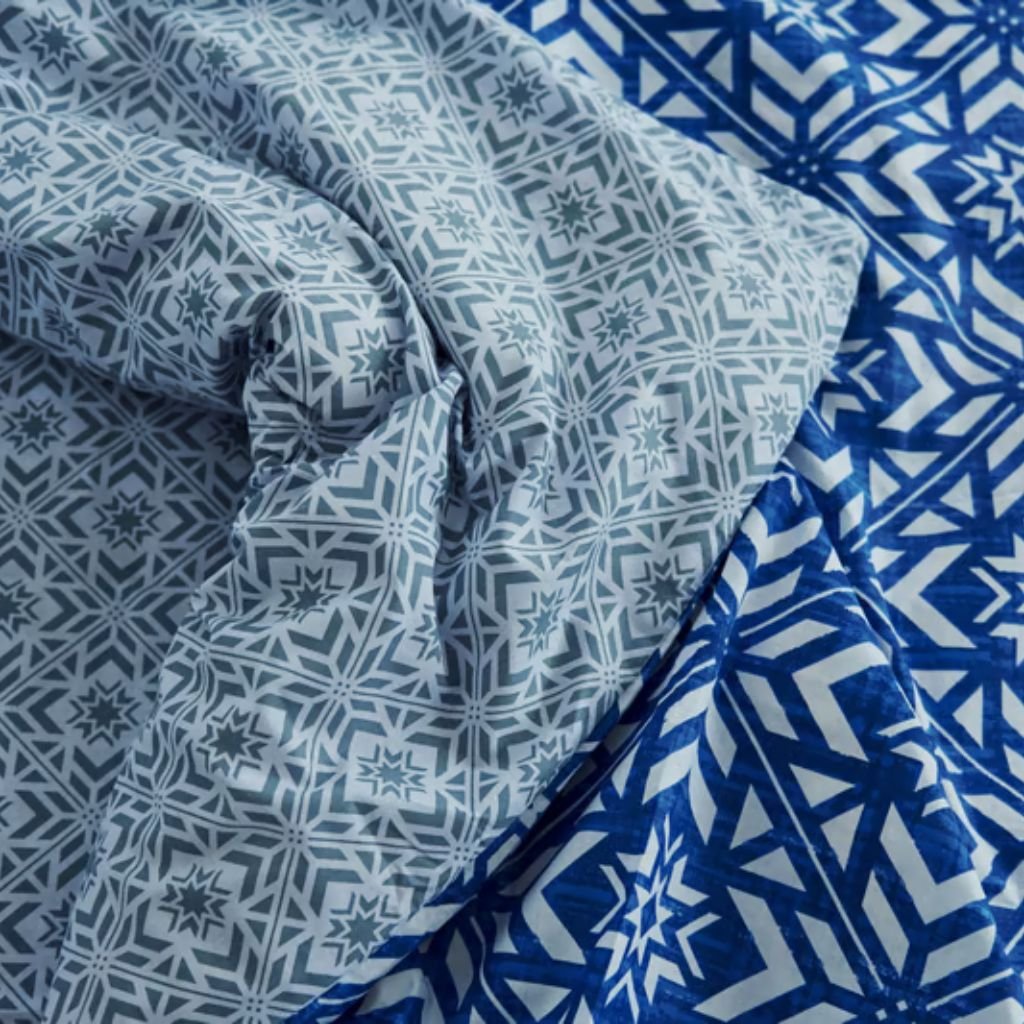
Caption: Layered blue fabrics with intricate geometric patterns.
Types of Winter Lock Fabric
Winter Lock Fabric comes in different forms depending on use. Each type offers different thickness, softness, and insulation. Therefore, buyers should understand the main categories.
Some types focus on fashion wear. Others are built for extreme cold outdoor gear. In addition, certain types are designed for sportswear and flexibility.
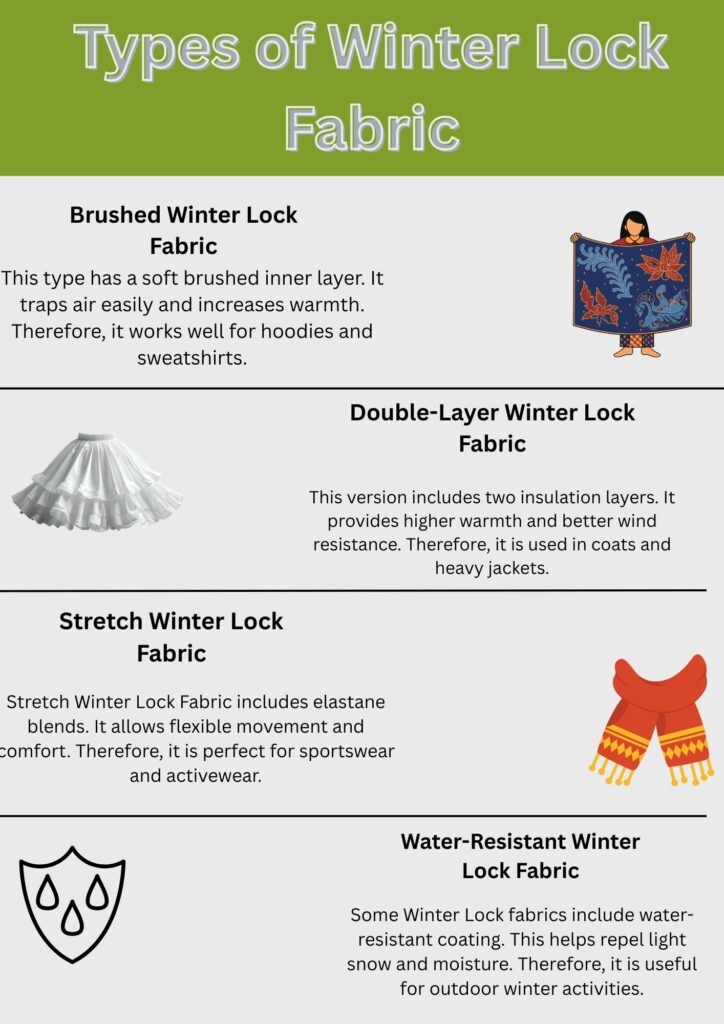
Caption: A quick guide to common Winter Lock fabric types and their uses.
Brushed Winter Lock Fabric
This type has a soft brushed inner layer. It traps air easily and increases warmth. Therefore, it works well for hoodies and sweatshirts.
It feels smooth on the skin and improves comfort. Moreover, it reduces irritation during long wear.
Double-Layer Winter Lock Fabric
This version includes two insulation layers. It provides higher warmth and better wind resistance. Therefore, it is used in coats and heavy jackets.
It also performs better in snowy climates. So, it is ideal for extreme winter regions.
Stretch Winter Lock Fabric
Stretch Winter Lock Fabric includes elastane blends. It allows flexible movement and comfort. Therefore, it is perfect for sportswear and activewear.
It also supports layering without feeling tight. So, it suits winter fitness clothing.
Water-Resistant Winter Lock Fabric
Some Winter Lock fabrics include water-resistant coating. This helps repel light snow and moisture. Therefore, it is useful for outdoor winter activities.
However, it may not be fully waterproof. So, heavy rain still requires an outer shell.
Why Winter Lock Fabric Is So Popular
Winter Lock Fabric has gained popularity because it solves common winter problems. People want warmth without bulky layers. Therefore, this fabric meets modern needs.
It also provides comfort and softness for daily wear. In addition, it supports outdoor performance in harsh climates. That makes it suitable for many lifestyles.
Another reason is its stylish appearance. Unlike thick wool, it offers a clean modern look. Therefore, fashion brands can design trendy winter outfits easily.
Most importantly, Winter Lock Fabric works well for long winter hours. It holds warmth, blocks wind, and manages moisture. So, it provides full winter protection.
What Is Winter Lock Fabric?
Winter Lock Fabric is a modern winter textile designed for high warmth. It uses special construction that traps heat inside the fabric layers. As a result, it keeps the body warm even in harsh cold.
In simple terms, Winter Lock Fabric is a heat-holding fabric made for winter clothing. It combines insulation, softness, and wind resistance in one material. Therefore, it works better than many traditional winter fabrics.
Definition in Simple Terms
Winter Lock Fabric is a layered fabric that locks warmth near your skin. It reduces heat escape and keeps cold air out. That is why it feels warmer than normal winter cloth.
It often includes a soft inner lining and a protective outer surface. In addition, some versions include thermal microfibers. These fibers create tiny air pockets that store heat.
Why It’s Called “Winter Lock”
It is called “Winter Lock” because it locks body heat inside. The fabric acts like a barrier that slows down heat loss. Therefore, the warmth stays trapped for longer periods.
Also, it blocks winter winds that normally steal warmth quickly. That makes it ideal for jackets and outdoor clothing. So, the name clearly matches its performance.
How It Works to Trap Heat
Winter Lock Fabric traps heat through its tight weave and layered structure. It holds warm air inside the fabric surface. As a result, the body stays warm naturally.
The inner layer often feels brushed or fleece-like. This creates more trapped air. Moreover, trapped air works as a natural insulator. That is why the fabric feels extra warm.
Difference Between Winter Lock Fabric and Regular Winter Fabrics
Regular winter fabrics often provide warmth but lack full heat control. Some fabrics keep you warm but allow wind to pass. Others trap heat but cause sweating.
However, Winter Lock Fabric balances warmth, airflow, and comfort. It reduces wind penetration and improves insulation. Therefore, it offers better winter protection overall.
How Winter Lock Fabric Works
Winter Lock Fabric works by using heat-locking textile technology. It combines insulation fibers and a compact structure. Therefore, it slows down heat escape from the body.
This fabric often uses synthetic blends or thermal yarns. These materials hold heat efficiently and resist cold air entry. In addition, they dry faster than natural wool.
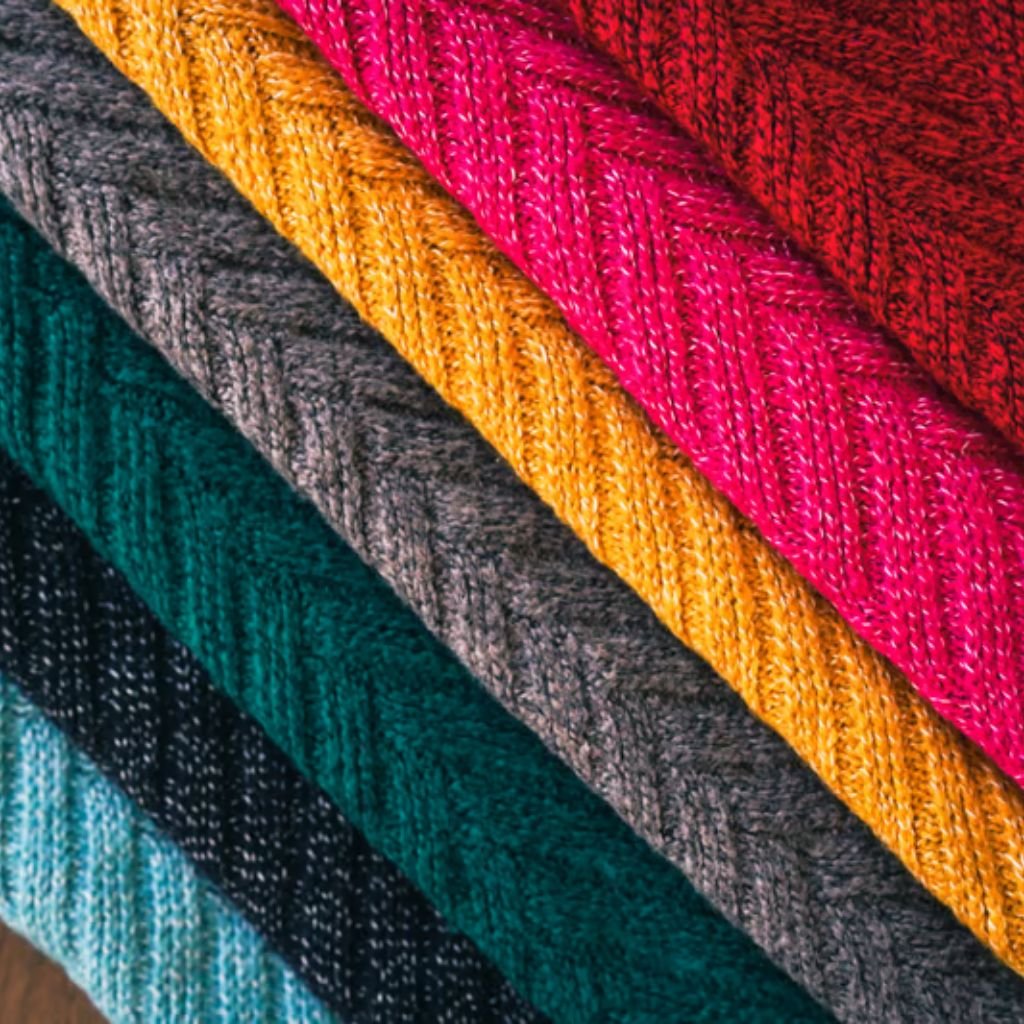
Caption: A vibrant assortment of knitted textiles stacked together.
Heat-Locking Technology Explained
Heat-locking fabric technology relies on trapped air pockets. These pockets hold warm air close to the skin. As a result, the body stays warm without extra layers.
The fabric weave also reduces airflow from outside. Therefore, cold winds cannot enter easily. This makes it perfect for windy winter weather.
Insulation Mechanism
Winter Lock Fabric acts like a thermal insulation fabric. It keeps warmth by slowing heat movement. It does this by using dense fibers and inner brushing.
Also, the fabric creates a stable microclimate inside clothing. That means your body heat stays protected. So, you feel warm for longer hours.
Breathability vs Heat Retention
Many winter fabrics trap heat but reduce airflow too much. That causes sweating and discomfort. However, Winter Lock Fabric often includes breathable zones.
So, it balances breathability and heat retention. It allows moisture vapor to escape slowly. Therefore, you stay warm but not sweaty.
Moisture Control and Airflow
Moisture control is essential in winter wear. Sweat can cool the body quickly. Winter Lock Fabric helps by pulling moisture away from the skin.
Many versions use moisture-wicking fibers. As a result, sweat evaporates faster. Therefore, your body stays dry and warm at the same time.
Key Features of Winter Lock Fabric
Winter Lock Fabric includes several performance features. These features make it suitable for both casual and extreme winter use. Therefore, it is becoming a premium winter textile choice.
It combines warmth, softness, and durability in one package. In addition, it stays lightweight, which makes wearing it easier. That is why many buyers prefer it.
Superior Warmth Retention
This fabric stores heat efficiently through layered insulation. It holds warm air inside its fibers. Therefore, it provides long-lasting warmth.
Even in freezing winds, it helps reduce body heat loss. So, the wearer stays comfortable outdoors. That is a major advantage for winter clothing.
Wind-Blocking Ability
Wind reduces warmth quickly in cold conditions. Winter Lock Fabric blocks wind using tight weaving and coated layers. Therefore, it protects the body from cold gusts.
Many winter jackets use it as an outer layer. That improves wind resistance and comfort. As a result, outdoor activities become more enjoyable.
Soft Inner Lining
Most Winter Lock Fabric clothing includes a soft inner lining. This lining feels smooth and gentle on the skin. Therefore, it works well for daily wear.
It also prevents itching, which is common in wool. In addition, it adds comfort for kids and sensitive skin users.
Lightweight Yet Insulating
Heavy winter coats can feel uncomfortable. However, Winter Lock Fabric provides warmth without heavy weight. It uses advanced fibers that insulate efficiently.
So, the wearer can move easily. This makes it ideal for travel and active winter lifestyles.
Stretch and Comfort
Some Winter Lock Fabric types include spandex or elastane blends. That gives the fabric flexibility. Therefore, it supports movement during walking or sports.
Stretch also improves fit and comfort. In addition, it prevents clothing from feeling stiff in cold weather.
Durability in Cold Weather
Cold weather fabrics often crack or lose softness. However, Winter Lock Fabric stays stable in winter conditions. It resists fiber damage and keeps its shape.
Moreover, it handles repeated washing better than many thermal materials. So, it becomes a long-term investment for winter wardrobes.
Benefits of Winter Lock Fabric in Cold Weather
Winter Lock Fabric offers strong winter fabric benefits for all age groups. It protects the body against cold winds and freezing temperatures. Therefore, it supports both comfort and health.
It is designed to work for long winter days. In addition, it reduces the need for heavy layering. That makes winter dressing easier.
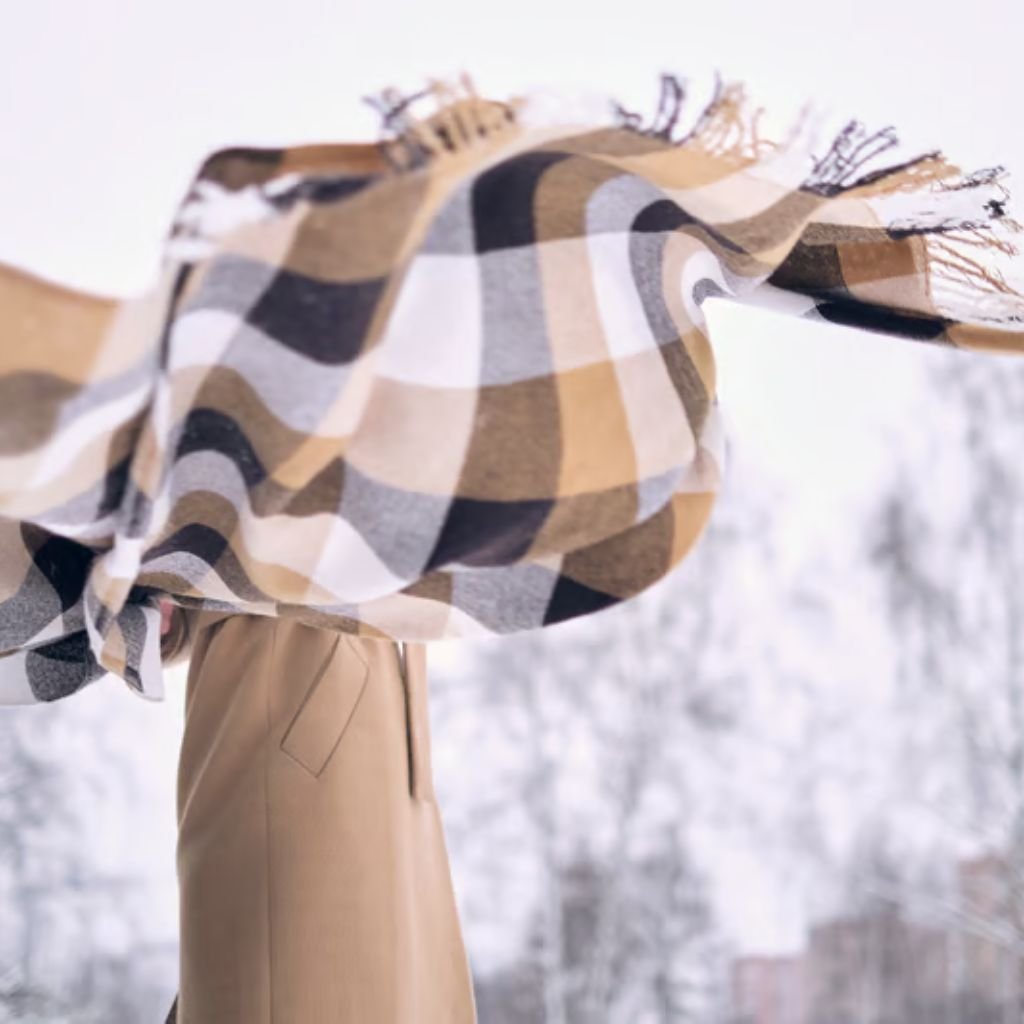
Caption: Cozy winter layers: a patterned scarf draped over a tan coat in a snowy setting.
Keeps Body Temperature Stable
Temperature stability matters in winter. Sudden cold exposure can cause discomfort quickly. Winter Lock Fabric helps maintain steady warmth.
It traps heat and reduces cold air contact. Therefore, the body stays balanced even outdoors.
Prevents Heat Loss
Heat escapes quickly through thin fabrics. However, Winter Lock Fabric reduces heat loss by using thick insulation zones. So, the warmth stays inside longer.
This feature makes it useful for snow areas. Moreover, it works well in windy climates too.
Comfortable for Long Wear
Many warm fabrics feel heavy after hours. Winter Lock Fabric stays light and breathable. Therefore, it feels comfortable for long wear.
It also reduces itching and skin irritation. That is why many people use it daily.
Suitable for Extreme Winter Conditions
This fabric is built for strong cold protection fabric needs. It works in harsh winters with low temperatures. In addition, it performs well in snow environments.
Therefore, it is often used in outdoor gear. It supports people who work in cold climates too.
Ideal for Outdoor Activities
Outdoor sports need flexible and warm clothing. Winter Lock Fabric supports skiing, hiking, and winter walking. It keeps warmth stable while allowing movement.
Also, it handles sweat better than heavy wool. Therefore, it is a smart fabric choice for winter athletes.
Winter Lock Fabric vs Other Winter Fabrics
Choosing the right winter fabric depends on warmth, comfort, and durability. Therefore, comparing Winter Lock Fabric with other fabrics helps buyers decide better.
Some fabrics offer softness but less wind protection. Others offer warmth but become heavy. Winter Lock Fabric aims to balance everything.
Common Uses of Winter Lock Fabric
The uses of Winter Lock fabric are increasing every year. Many brands prefer it because it works in different clothing categories. Therefore, it is now seen in both fashion and sportswear.
It supports daily winter needs as well as extreme cold protection. In addition, it provides a premium feel in clothing. That makes it popular in winter collections.
Winter Jackets & Coats
Winter Lock Fabric is widely used in jackets and coats. It blocks wind and keeps warmth stable. Therefore, it works well in outdoor winter wear.
It also gives coats a structured and stylish look. In addition, it reduces bulkiness. So, jackets look modern and feel comfortable.
Hoodies and Sweatshirts
Winter hoodies need warmth but also softness. Winter Lock Fabric gives both. It keeps the body warm during casual winter days.
Moreover, it works well for layering under coats. So, it is a strong fabric option for streetwear brands.
Thermal Wear
Many thermal underlayers now use Winter Lock Fabric blends. This improves insulation while keeping the body dry. Therefore, it supports winter comfort indoors and outdoors.
It also feels smooth on the skin. So, it is suitable for long daily wear.
Sportswear & Activewear
Winter sportswear needs flexibility and warmth. Winter Lock Fabric provides stretch and insulation together. Therefore, it is ideal for gym wear and outdoor training.
It also controls sweat better than thick fleece. So, athletes stay warm but not overheated.
Gloves, Caps, and Winter Accessories
Winter accessories must trap heat in small areas. Winter Lock Fabric helps gloves and caps stay warm. It reduces wind entry and keeps hands protected.
In addition, it stays soft and comfortable. Therefore, it is ideal for winter fashion accessories.
Is Winter Lock Fabric Good for Extreme Cold?
Winter Lock Fabric performs well in extreme cold conditions. It provides insulation, wind blocking, and comfort. Therefore, it suits buyers who live in snowy regions.
However, extreme cold performance also depends on thickness and layering. So, buyers should check fabric quality carefully.
Temperature Range Suitability
Most Winter Lock Fabric clothing works well between 0°C to -15°C. Some heavy versions can handle colder temperatures too. Therefore, it fits many winter climates.
If the fabric includes extra padding, it may perform even below -20°C. However, layering still matters in severe cold.
Layering Compatibility
Winter Lock Fabric works well with layering systems. You can wear it over thermals or under a coat. Therefore, it adapts to different winter needs.
It also stays flexible when layered. So, it does not restrict movement during outdoor work.
Performance in Snow & Wind
Snow and wind can quickly reduce warmth. Winter Lock Fabric blocks wind strongly and maintains insulation. Therefore, it works well in snow weather.
It also dries faster than wool after light moisture exposure. However, it is not always fully waterproof.
Best Climates for Winter Lock Fabric
This fabric works best in cold, windy, and snowy climates. It is ideal for mountain areas and winter cities. Therefore, it suits both daily and travel use.
It may feel too warm in mild winters. So, warm-climate users should choose lighter versions.
Winter Lock Fabric for Men, Women & Kids
Winter Lock Fabric works well for every age group. It provides warmth without heavy weight. Therefore, men, women, and children can wear it comfortably.
It also supports fashion variety. In addition, it comes in many textures and thickness levels. That makes it suitable for all wardrobes.
Comfort and Fit for All Age Groups
Men prefer it in jackets and hoodies because it feels strong. Women like it because it looks stylish and slim. Kids benefit because it stays soft and warm.
Also, it does not feel stiff in winter weather. Therefore, it supports natural movement in daily life.
Skin-Friendly Qualities
Many winter fabrics cause itching or irritation. Winter Lock Fabric often feels smooth and gentle. Therefore, it suits sensitive skin types.
It also reduces allergic reactions compared to rough wool. So, it is a safer option for children.
Flexibility for Movement
Stretch versions allow free movement for active users. Kids can play freely without discomfort. Adults can walk or travel easily as well.
Therefore, Winter Lock Fabric supports comfort and performance together. That is why it fits every age group.
How to Choose High-Quality Winter Lock Fabric
Choosing the right Winter Lock Fabric requires attention to details. Some products look warm but fail in real winter. Therefore, buyers should check construction carefully.
A high-quality fabric offers insulation, softness, and durability. In addition, it should resist wind and hold warmth longer.
Fabric Thickness Guide
Thickness plays a major role in warmth. Thick Winter Lock Fabric offers stronger insulation. However, lightweight options suit mild cold.
Therefore, buyers should choose based on climate needs. Always check whether the fabric feels dense and layered.
Inner Lining Check
A soft inner lining improves comfort and warmth. Brushed or fleece-like linings trap heat better. Therefore, lining quality is essential.
If the lining feels rough, avoid it. Smooth lining improves daily wear comfort.
Stitching and Construction
Good stitching prevents heat leakage. Poor stitching creates gaps where cold air enters. Therefore, always check seams and edges.
Also, double stitching improves durability. So, high-quality construction ensures longer fabric life.
GSM Importance
GSM means grams per square meter. It shows fabric density and thickness. Higher GSM usually means warmer fabric. Therefore, GSM is important in winter buying.
For strong winter wear, 250 to 400 GSM is often ideal. However, lighter wear may use lower GSM.
Brand or Material Blend Considerations
Some Winter Lock Fabric uses polyester blends. Others include cotton, spandex, or acrylic. Therefore, blend choice affects warmth and breathability.
A good blend improves flexibility and moisture control. So, always check fabric composition before buying.
Care & Maintenance of Winter Lock Fabric
Caring for Winter Lock Fabric properly increases its lifespan. Many people damage winter clothing through harsh washing. Therefore, care instructions are important.
Good care also maintains insulation strength. In addition, it keeps the fabric soft and comfortable for years.
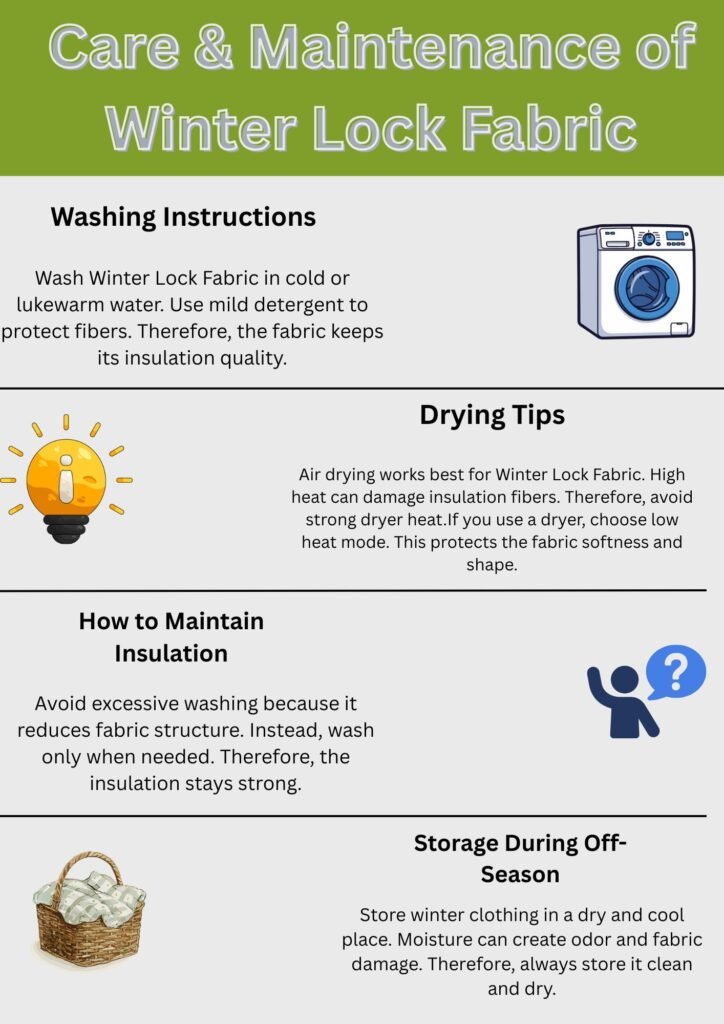
Caption: Quick care guide for Winter Lock Fabric: washing, drying, insulation, and storage tips.
Washing Instructions
Wash Winter Lock Fabric in cold or lukewarm water. Use mild detergent to protect fibers. Therefore, the fabric keeps its insulation quality.
Avoid bleach because it weakens fabric layers. Also, turn garments inside out before washing.
Drying Tips
Air drying works best for Winter Lock Fabric. High heat can damage insulation fibers. Therefore, avoid strong dryer heat.
If you use a dryer, choose low heat mode. This protects the fabric softness and shape.
How to Maintain Insulation
Avoid excessive washing because it reduces fabric structure. Instead, wash only when needed. Therefore, the insulation stays strong.
Also, avoid ironing directly on the fabric. High heat can flatten the heat-locking fibers.
Storage During Off-Season
Store winter clothing in a dry and cool place. Moisture can create odor and fabric damage. Therefore, always store it clean and dry.
Use breathable storage bags instead of plastic. This prevents trapped moisture and keeps fabric fresh.
Pros and Cons of Winter Lock Fabric
Every fabric has strengths and weaknesses. Winter Lock Fabric offers strong warmth but may not fit every climate. Therefore, knowing pros and cons helps buyers decide wisely.
This section also builds trust because it gives honest guidance. In addition, it helps shoppers choose the best winter fabric.
Caption: Winter warmth: a cheerful portrait in a frost-covered park.
Pros of Winter Lock Fabric
Winter Lock Fabric provides excellent insulation for cold climates. It stays lightweight, which improves comfort. Moreover, it feels soft on the skin.
It also blocks wind better than many fabrics. Therefore, it performs well in outdoor conditions. It is durable and holds shape after many washes.
Cons of Winter Lock Fabric
It may feel too warm in mild winters. Therefore, it is not ideal for warm regions. Some versions may cost slightly more than fleece.
Also, not every Winter Lock product has the same quality. So, buyers must check GSM and lining carefully.
Is Winter Lock Fabric Worth Buying?
Winter Lock Fabric is worth buying if you face cold winters. It offers strong warmth, comfort, and wind resistance. Therefore, it gives good value for money.
It also reduces the need for heavy layering. In addition, it suits both daily wear and outdoor activities. That makes it a smart winter investment.
Value for Money
Although it may cost more than basic fleece, it lasts longer. It also performs better in wind and snow. Therefore, the price often feels justified.
A good Winter Lock Fabric jacket can last many winters. So, it becomes cost-effective over time.
Who Should Buy It
People living in cold climates should consider this fabric. Travelers visiting snowy areas will also benefit. Moreover, outdoor workers can rely on its warmth.
Parents should also choose it for kids. It keeps children warm without heavy clothing layers.
Best Use Cases
Winter Lock Fabric works best in jackets, hoodies, and thermal wear. It is also perfect for winter sports clothing. Therefore, it fits both fashion and function.
If you want a lightweight but warm fabric, it is a great choice.
Final Verdict
Yes, Winter Lock Fabric is worth buying for real winter protection. It provides insulation, comfort, and durability. Therefore, it is one of the best modern winter fabrics available today.
Cnclusion
Winter Lock Fabric is a modern solution for serious winter warmth. It traps heat, blocks wind, and stays lightweight. Therefore, it works better than many traditional winter fabrics.It also offers comfort for men, women, and kids. In addition, it supports outdoor activities and extreme cold climates. That makes it a strong investment for winter wardrobes.
If you want warmth without heavy clothing, Winter Lock Fabric is a great option. Moreover, it provides durability and easy care. So, it truly deserves its growing popularity in winter fashion.
FAQs
Is Winter Lock fabric waterproof?
Winter Lock Fabric is not always waterproof. However, some versions are water-resistant. They can handle light snow and small moisture exposure.
Is Winter Lock fabric breathable?
Yes, Winter Lock Fabric is usually breathable. It balances insulation and airflow through layered construction. Therefore, it prevents excessive sweating in cold weather.
Can Winter Lock fabric be worn daily?
Yes, you can wear Winter Lock Fabric daily. It feels soft and lightweight, which improves comfort. Therefore, it works well for office wear and casual outfits.
Wind Armor Fabric is a modern textile designed to block harsh winds. It also helps the body stay warm in cold conditions. Because of this, it has become popular in outdoor clothing. It is also widely used in sports gear and winter equipment. Many brands prefer it because it offers strong protection without heavy weight.
Wind can quickly reduce body temperature during outdoor activities. Therefore, windproof fabrics play a major role in safety and comfort. Wind Armor Fabric provides reliable wind-blocking performance. At the same time, it supports breathability for better comfort. That is why hikers, cyclists, and winter travelers often choose it.
Today, people want clothing that feels light but works hard. As a result, Wind Armor Fabric is now a top choice in protective clothing material. It fits outdoor fashion, performance sportswear, and tactical clothing. Most importantly, it gives advanced wind defense in changing weather.
What is Wind Armor Fabric? (Windproof Fabric Explained)
Wind Armor Fabric is a technical windproof fabric made to resist strong air pressure. It reduces wind penetration and protects the skin from cold air. In simple words, it acts like a shield against wind. However, it still stays flexible and wearable. This makes it perfect for active use.
Unlike regular fabrics, Wind Armor Fabric uses special construction methods. Standard cotton or basic polyester allows air to pass easily. Because of that, the body loses heat quickly. Wind Armor Fabric solves this issue by tightening the weave or adding protective layers. As a result, it performs better in extreme outdoor environments.
Many manufacturers create Wind Armor Fabric using polyester blends. Some versions include nylon fibers for added toughness. In addition, some types contain membranes like TPU or PU films. These membranes stop wind and reduce water absorption. That is why this durable fabric works well in stormy weather.
Wind Armor Fabric also falls into the category of protective clothing material. It supports outdoor safety and long-lasting wear. Therefore, many winter jackets and windbreakers use it as a key outer layer. It combines function, comfort, and durability in one textile.
Caption: Macro shot of contrasting textile textures in bold colors.
History and Evolution of Wind Armor Fabric Technology
Windproof fabric technology started with tightly woven cotton fabrics. Early explorers used thick canvas and waxed cloth. These fabrics blocked wind but felt heavy. They also trapped sweat and caused discomfort. Because of this, textile engineers searched for better solutions.Later, synthetic fibers like polyester changed the industry. Polyester offered strength and water resistance. It also dried faster than natural materials. Therefore, it became a top choice for outdoor gear. Soon, brands began mixing polyester with nylon for better results.
After that, laminate technology improved wind protection. Manufacturers added thin membranes between fabric layers. This method created stronger wind barriers. At the same time, the fabric stayed lightweight. As a result, modern Wind Armor Fabric became more advanced and practical.
Types of Wind Armor Fabric (Wind Armor Fabric Variations)
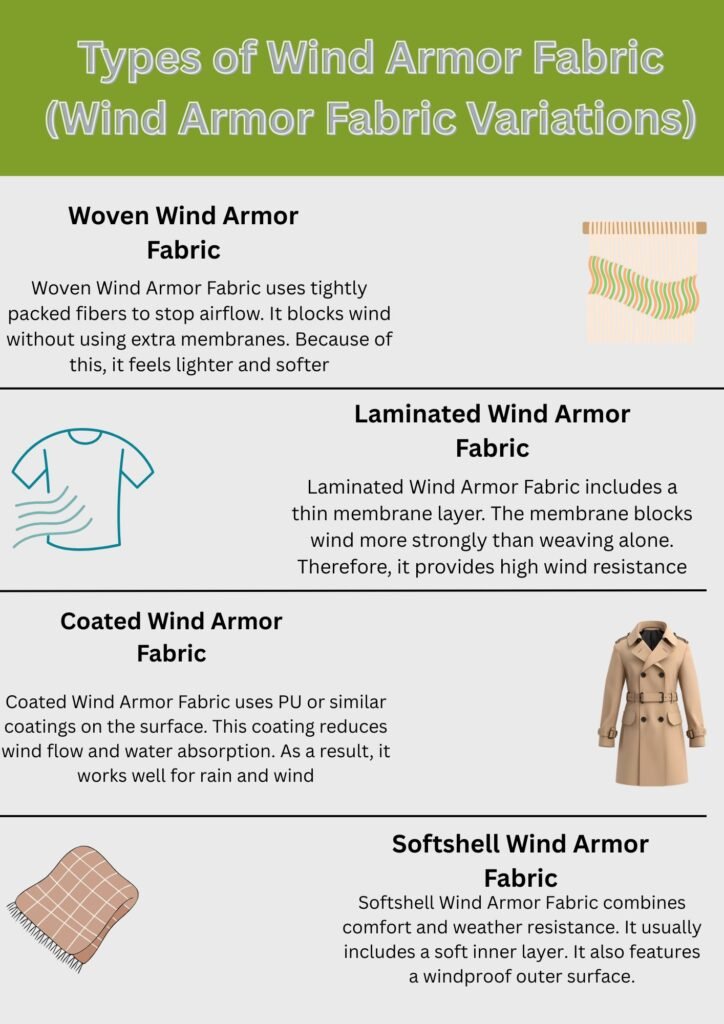
Wind Armor Fabric comes in several types based on structure and use. Each type serves a specific purpose. Some versions focus on breathability, while others focus on toughness. Therefore, buyers should understand the common categories.
Caption: A visual guide to four wind armor fabrics: woven, laminated, coated, and softshell.
Woven Wind Armor Fabric
Woven Wind Armor Fabric uses tightly packed fibers to stop airflow. It blocks wind without using extra membranes. Because of this, it feels lighter and softer. It also works well for everyday windbreakers.
This type offers good flexibility and smooth texture. In addition, it allows moderate breathability. However, it may not handle heavy rain. Therefore, it suits mild winter and dry windy climates.
Laminated Wind Armor Fabric
Laminated Wind Armor Fabric includes a thin membrane layer. The membrane blocks wind more strongly than weaving alone. Therefore, it provides high wind resistance. It also improves water resistance in many cases.
This type is used in performance jackets and hiking coats. It works well in high mountain winds. However, it may cost more due to advanced construction. Still, it delivers stronger long-term protection.
Coated Wind Armor Fabric
Coated Wind Armor Fabric uses PU or similar coatings on the surface. This coating reduces wind flow and water absorption. As a result, it works well for rain and wind. It also gives a smooth outer finish.
This type is common in budget-friendly outerwear. It is also used in casual sports clothing. However, coatings may wear off with poor washing habits. Therefore, proper care becomes very important.
Softshell Wind Armor Fabric
Softshell Wind Armor Fabric combines comfort and weather resistance. It usually includes a soft inner layer. It also features a windproof outer surface. Because of this, it feels warm and flexible.
Softshell types are ideal for active sports. For example, runners and climbers love softshell jackets. They provide warmth without stiffness. In addition, they work well in light rain and cold wind.
Key Features of Wind Armor Fabric
Wind Armor Fabric provides multiple performance features in one material. These features make it different from ordinary textiles. Moreover, they improve comfort and protection in outdoor conditions.
Strong Windproof Protection
Wind Armor Fabric blocks wind by using tight fibers or membranes. This reduces heat loss from the body. Therefore, it helps maintain warmth. It also prevents cold air from reaching the skin.
Windproof performance is especially useful in mountain areas. It also helps during winter cycling or running. Because of this, the fabric is trusted for extreme weather clothing.
Water-Resistant Performance
Many Wind Armor Fabric types include water-resistant coatings. These coatings make rain droplets slide off. Therefore, the fabric stays dry longer. It also reduces the risk of soaking in snow conditions.
However, water resistance does not always mean full waterproofing. Still, it works well for light rain and mist. Because of this, it fits outdoor jackets and camping gear.
Lightweight but Strong Structure
Wind Armor Fabric stays light while offering durability. This makes movement easy and comfortable. Therefore, it works well for sportswear andhiking clothing. Heavy materials slow down performance, but this fabric avoids that issue.
At the same time, it stays strong against pressure. It resists stretching and damage. Because of this, it performs well in harsh outdoor use.
Breathability for Comfort
Breathability is important during physical activity. Wind Armor Fabric supports airflow through micro pores or fabric structure. As a result, sweat escapes instead of building inside. This improves comfort during long outdoor trips.
Breathable windproof fabric helps prevent overheating. It also reduces sticky sweat feeling. Therefore, it supports better body temperature control.
Durability for Long-Term Use
Wind Armor Fabric is a durable fabric designed for repeated use. It resists friction from backpacks and equipment. It also handles outdoor wear without tearing easily. Because of this, it lasts longer than basic fabrics.
In addition, many versions resist fading and shrinking. Therefore, the clothing stays in good shape. This makes it valuable for both casual and professional outdoor users.
Temperature Regulation in Cold Weather
Wind Armor Fabric traps warmth by blocking cold air. This reduces the cooling effect of wind chill. Therefore, the body stays warmer even in freezing weather. It helps outdoor workers and travelers remain safe.
It also works well when layered with insulation. For example, it pairs well with fleece or down jackets. As a result, it becomes a strong winter defense system.
Tear and Scratch Resistance
Wind Armor Fabric often includes nylon reinforcement. This improves resistance against scratches and sharp surfaces. Therefore, it is useful for hiking and tactical use. It also reduces damage from rough rocks and tree branches.
Tear resistance increases product lifespan. It also makes the fabric reliable for extreme adventures. Because of this, it is a popular protective clothing material worldwide.
How Wind Armor Fabric Works (Wind-Blocking Technology)
Wind Armor Fabric works by stopping air from passing through the textile. It does this through tight weaving, coatings, or membrane layers. These technologies reduce air gaps between fibers. Therefore, cold wind cannot penetrate easily.
Many Wind Armor Fabric designs use microfibers. Microfibers are extremely thin fibers packed closely together. This tight structure blocks wind naturally. At the same time, it keeps the fabric flexible and smooth.
Some versions use laminated membranes. These membranes contain microscopic pores. The pores allow moisture vapor to escape. However, they block wind and water droplets. Therefore, the fabric stays breathable while offering protection.
Wind Armor Fabric differs from Gore-Tex in purpose and design. Gore-Tex focuses more on waterproofing and breathability. Meanwhile, Wind Armor Fabric focuses mainly on wind defense. It may offer water resistance, but not always full waterproof performance.
Wind Armor Fabric also differs from ripstop fabric. Ripstop uses special grid weaving to prevent tearing. However, ripstop alone may not block strong wind. Wind Armor Fabric provides better wind shielding due to its tighter structure.
Caption: A macro shot of military-inspired fabric showing its tight, woven texture.
Why Wind Armor Fabric is Important for Outdoor Protection
Wind is not just uncomfortable, it can be dangerous. Cold wind increases heat loss through wind chill. Therefore, it can quickly lead to body temperature drops. This is especially risky in mountains and snowy areas.
Wind Armor Fabric protects the body by reducing wind exposure. It helps maintain warmth during outdoor travel. It also improves safety for hikers and winter campers. Because of this, it plays an important role in survival clothing.
Another reason is comfort during movement. People often sweat during sports activities. However, wind can cool sweat quickly and cause chills. Wind Armor Fabric reduces this effect. As a result, it helps keep the body stable.
Outdoor clothing must also last long. Many fabrics tear easily during hiking. Wind Armor Fabric solves this problem with tough fibers and coatings. Therefore, it supports long-term use and better value.
Benefits of Wind Armor Fabric
Wind Armor Fabric offers many advantages for outdoor users. These benefits make it a trusted fabric for modern clothing. Moreover, it supports comfort and performance in every season.
Protection from Extreme Winds
Wind Armor Fabric blocks strong air pressure effectively. Therefore, it reduces cold wind impact on the body. It also prevents discomfort during storms. This makes it perfect for winter travel and outdoor sports.
People feel warmer even without heavy layers. As a result, it supports better mobility. It also helps reduce the risk of cold stress.
Lightweight and Flexible for Movement
Heavy jackets restrict movement and cause fatigue. Wind Armor Fabric stays light and flexible. Therefore, it supports running, cycling, and climbing. It also makes hiking more comfortable during long trips.
Because it bends easily, it feels natural while wearing. It also fits modern sports clothing designs. That is why many athletes prefer it.
Excellent for Jackets and Outdoor Gear
Wind Armor Fabric is widely used in jackets, coats, and vests. It also works well in outdoor pants and gloves. Therefore, it becomes a full-body protective solution. It is also used in tents and windproof covers.
This fabric supports both casual and professional outdoor needs. It also works well for camping equipment. As a result, it becomes a complete outdoor fabric choice.
Long Lifespan and High Durability
Wind Armor Fabric resists wear and tear better than normal fabrics. It handles repeated washing and rough outdoor use. Therefore, it lasts longer and saves money. It also stays strong even after heavy use.
Many versions resist scratches and abrasion. This improves performance in hiking and tactical conditions. Therefore, it is a strong long-term investment.
Comfort in Different Climates
Wind Armor Fabric works in cold wind and mild weather. It keeps wind out while allowing sweat vapor to escape. Therefore, it prevents overheating. It also helps the body stay balanced during climate changes.
Because of this, it suits both winter and spring seasons. It also works for travel clothing. As a result, it becomes useful year-round.
Applications of Wind Armor Fabric (Where It Is Used)
Wind Armor Fabric is widely used across many industries. Its strong wind resistance makes it suitable for outdoor and tactical needs. Moreover, it is now used in modern fashion designs.
Outdoor Clothing Applications
Outdoor jackets often use Wind Armor Fabric as the outer shell. It blocks cold wind and improves warmth. Therefore, hikers and travelers benefit greatly. It is also used in windproof pants and insulated vests.
Many winter coats include this fabric in layered designs. This improves protection during storms. In addition, it keeps the wearer comfortable during long outdoor exposure.
Sports Gear and Performance Wear
Wind Armor Fabric is common in ski and snowboard jackets. It protects athletes from strong mountain winds. It is also used in cycling clothing because wind resistance matters at high speed.
Runners also benefit from lightweight windproof fabric. It blocks wind without overheating the body. Therefore, it supports better performance in outdoor training.
Military and Tactical Gear
Military uniforms need protection, strength, and flexibility. Wind Armor Fabric supports all these needs. It offers durability in harsh environments. It also resists tearing from rough terrain.
Tactical jackets and combat pants often use this fabric. It supports outdoor missions and extreme training. Therefore, it is trusted for defense clothing systems.
Camping and Adventure Equipment
Camping tents use wind-resistant materials to prevent collapse. Wind Armor Fabric can be used in tent panels and rain covers. It is also used in sleeping bag shells for added protection.
Backpack covers also use similar windproof coatings. This helps protect gear during storms. Therefore, it becomes valuable for serious adventurers.
Fashion and Streetwear Use
Windproof streetwear has become trendy in recent years. Wind Armor Fabric fits modern fashion needs. It offers sleek looks and protective performance. Therefore, it is used in urban jackets and hoodies.
Many brands now design lightweight windproof coats for daily wear. This creates stylish clothing with outdoor-level protection. As a result, the fabric works for both fashion and function.
Wnd Armor Fabric vs Other Fabrics (Comparison Guide)
Many fabrics claim protection, but not all perform equally. Wind Armor Fabric stands out because it focuses on wind defense. Still, comparing it with other materials helps buyers choose wisely.
Caption: A detailed macro shot of camo fabric highlighting its woven texture and natural color variations.
Wid Armor Fabric vs Cotton
Cotton feels soft and breathable. However, it absorbs moisture quickly. It also allows wind to pass easily. Therefore, cotton is not ideal for cold windy weather.
Wind Armor Fabric blocks wind and dries faster. It also offers better durability. Because of this, it works better for outdoor clothing.
Aror Fabric vs Polyester
Basic polyester is lightweight and water resistant. However, it may not be fully windproof. It depends on the weave quality. Therefore, regular polyester may fail in strong winds.
Wind Armor Fabric uses advanced weaving or membranes. As a result, it provides stronger protection. It also lasts longer in extreme conditions.
Wind Armor Fabric vs Fleece
Fleece provides warmth and softness. However, it does not block wind well. Wind can pass through fleece fibers easily. Therefore, fleece alone is not enough in storms.
Wind Armor Fabric blocks wind effectively. It also works well as an outer shell over fleece. Therefore, combining both creates excellent winter layering.
Wind Armor Fabric vs Gore-Tex
Gore-Tex is known for waterproof and breathable technology. It performs well in heavy rain. However, it often costs more than other fabrics. It also focuses on waterproofing rather than only wind resistance.
Wind Armor Fabric provides strong wind protection at a lighter cost. It also works well in dry and windy climates. Therefore, it is ideal when wind defense is the main need.
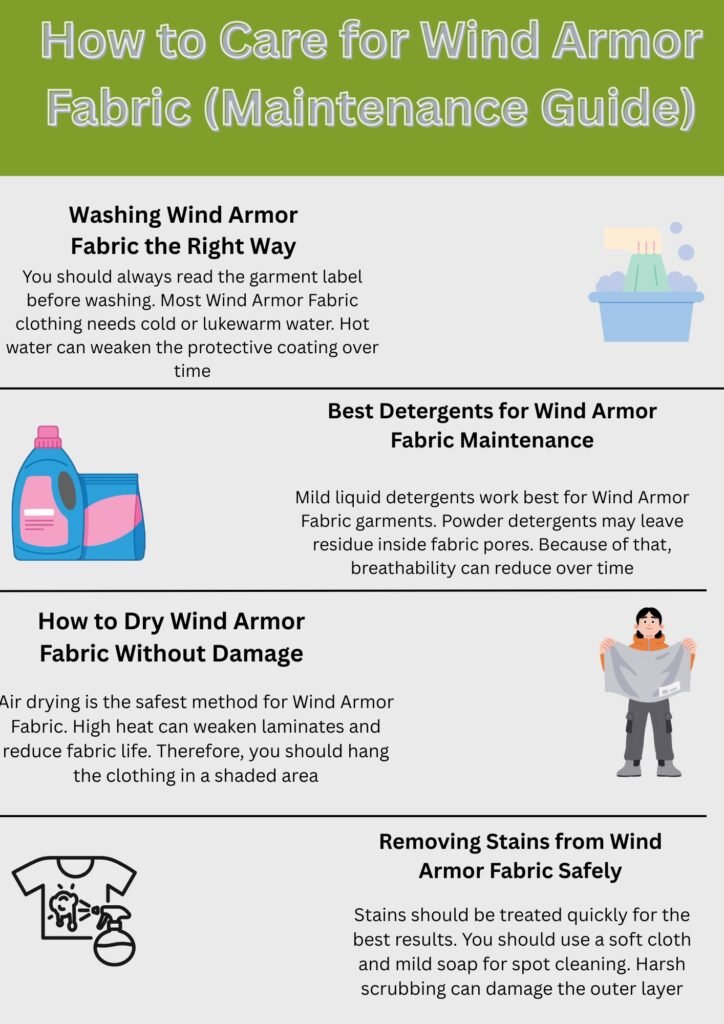
How to Care for Wind Armor Fabric (Maintenance Guide)
Wind Armor Fabric is designed for strength and windproof protection. However, proper care is still necessary for long life. If you wash or store it incorrectly, the wind-blocking coating can weaken. Therefore, you must follow the right maintenance steps. Good care keeps the fabric breathable, durable, and comfortable. It also helps the jacket or gear maintain its original shape. Most importantly, correct maintenance protects the fabric’s windproof and water-resistant performance.
Caption: A step-by-step maintenance guide for wind armor fabric with icons and brief explanations.
Washing Wind Armor Fabric the Right Way
You should always read the garment label before washing. Most Wind Armor Fabric clothing needs cold or lukewarm water. Hot water can weaken the protective coating over time. Therefore, use a gentle washing cycle for better results. Also, choose a mild detergent that does not contain bleach. Strong chemicals can damage the fabric layers and reduce wind resistance.
Best Detergents for Wind Armor Fabric Maintenance
Mild liquid detergents work best for Wind Armor Fabric garments. Powder detergents may leave residue inside fabric pores. Because of that, breathability can reduce over time. In addition, you should avoid fabric softeners completely. Fabric softeners create a layer that blocks moisture release. Therefore, they can reduce comfort and performance.
How to Dry Wind Armor Fabric Without Damage
Air drying is the safest method for Wind Armor Fabric. High heat can weaken laminates and reduce fabric life. Therefore, you should hang the clothing in a shaded area. Direct sunlight can also fade colors over time. So, drying in a cool place gives better results.
Removing Stains from Wind Armor Fabric Safely
Stainsshould be treated quickly for the best results. You should use a soft cloth and mild soap for spot cleaning. Harsh scrubbing can damage the outer layer. Therefore, gently rub the stained area without applying too much pressure.
Conclusion
Wind Armor Fabric is a high-performance windproof fabric designed for modern outdoor needs. It blocks harsh wind while staying lightweight and flexible. In addition, it offers durability and comfort for long-term use. Because of these qualities, it has become a trusted protective clothing material.
This fabric works well for jackets, pants, sportswear, and tactical gear. It also supports camping and adventure equipment. Moreover, it fits modern streetwear trends, which makes it even more valuable. When compared to cotton, fleece, and basic polyester, Wind Armor Fabric offers stronger wind defense.
FAQs
Is Wind Armor Fabric waterproof?
Wind Armor Fabric is usually water-resistant, not fully waterproof. It can handle light rain and snow. However, heavy rainfall may soak through over time. For full waterproofing, a sealed membrane version works better.
Can Wind Armor Fabric be used in extreme cold?
Yes, Wind Armor Fabric works well in extreme cold when layered properly. It blocks wind chill, which is a major cold factor. However, it needs insulation underneath for deep winter warmth.
How breathable is Wind Armor Fabric?
Breathability depends on the type of Wind Armor Fabric. Woven and softshell types breathe better. Laminated types may breathe slightly less. Still, most designs allow sweat vapor to escape effectively.
Velvet is a soft and luxurious fabric that is famous for its smooth feel and rich appearance. People often describe velvet as a premium textile because it looks elegant and feels comfortable. In winter seasons, velvet becomes even more popular because it helps keep the body warm. This happens because velvet has a special surface texture called a pile, which holds warmth better than flat fabrics. In this Velvet Warm Fabric Explained guide, you will understand why velvet works so well in cold weather. You will also learn how velvet is used in winter clothing and home interiors.
Velvet is commonly used in jackets, blazers, and winter dresses because it gives warmth without making clothing look bulky. At the same time, velvet is also used in furniture coverings, curtains, and blankets. This is because velvet not only adds insulation but also makes a room feel cozy. Since velvet looks stylish, it becomes a top choice for festive winter outfits. Overall, velvet is considered a warm fabric because it combines softness, thickness, and heat retention in a unique way.
History of Velvet Warm Fabric (Velvet Warm Fabric Explained in Detail)
Velvet has a long and fascinating history that connects it with luxury and royalty. Many historians believe velvet was first developed in Asia and later became popular in the Middle East. Over time, velvet reached Europe through trade routes and quickly became a symbol of wealth. Rich families and royal leaders loved velvet because it looked expensive and felt warm during cold seasons. For this reason, velvet was often used in winter robes, cloaks, and ceremonial clothing.
During the Renaissance era, velvet became even more valuable and was seen as a fabric of high social class. At that time, velvet was mainly made from silk, which made it costly and rare.Velvet Warm Fabric Explained: Only wealthy people could afford it, so velvet became linked with nobility and prestige. Later, cotton velvet became more common and slightly more affordable. In modern times, synthetic velvet became widely available, which made velvet accessible for everyone. Still, velvet remains connected to winter fashion and luxury interiors because of its warmth and beauty.
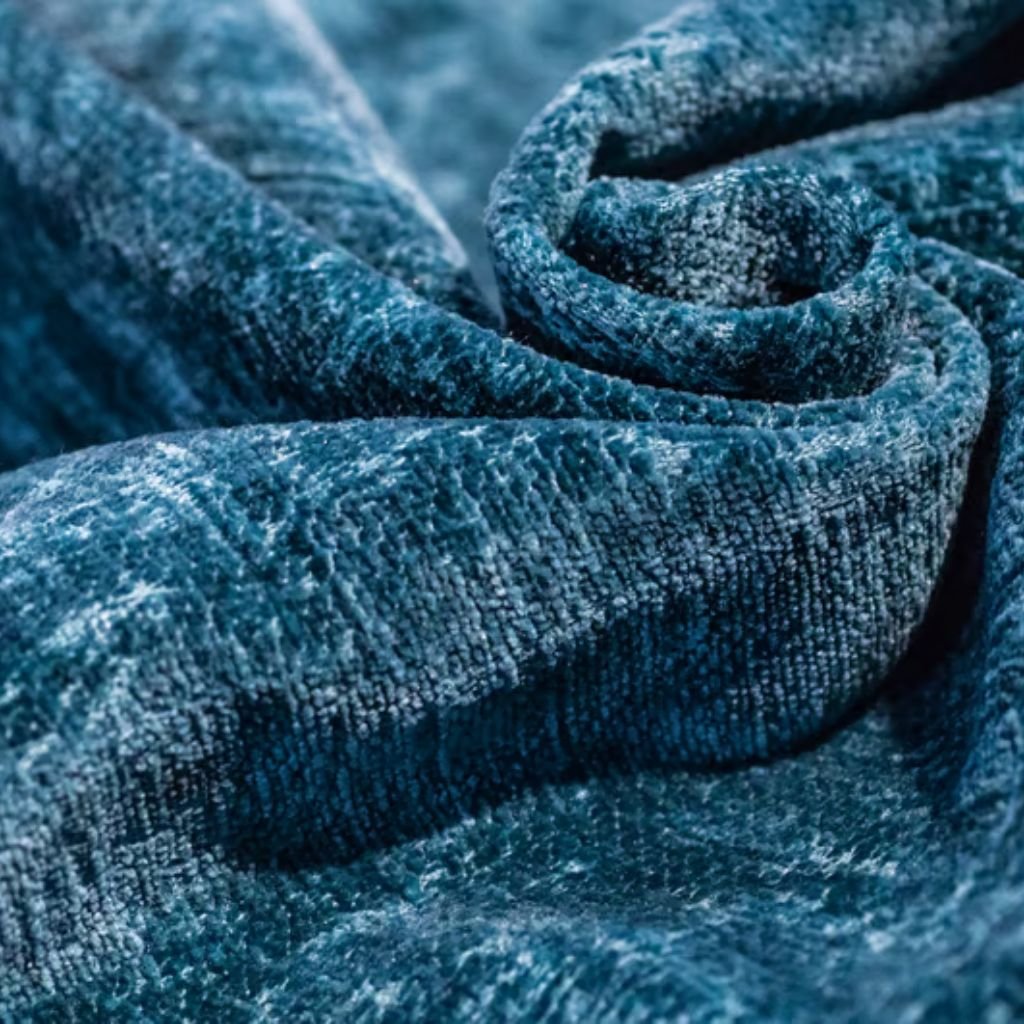
“Luxurious velvet fabric in deep blue tones.”
What Is Velvet Fabric Made Of? (Velvet Warm Fabric Explained by Composition)
Velvet is not limited to one material because manufacturers can create velvet using different fibers. The surface pile of velvet may be made from natural fibers, synthetic fibers, or a blend of both. This is important because velvet fabric composition affects how warm, soft, and breathable it feels. When people search for velvet material types, they usually want to know which velvet is best for winter wear. The truth is that the material choice plays a big role in warmth level.Velvet Warm Fabric Explained:
Natural velvet is often made from silk or cotton. Silk velvet feels extremely soft and luxurious, and it also provides good warmth because the fabric is dense. However, silk velvet is expensive and requires careful maintenance. Cotton velvet, on the other hand, feels warmer and more breathable at the same time.Velvet Warm Fabric Explained: It absorbs moisture better than synthetic velvet, so it feels comfortable for long winter use. Because of this, cotton velvet is often preferred for everyday winter clothing.
Why Is Velvet Considered a Warm Fabric? (Velvet Warm Fabric Explained Clearly)
Velvet is considered warm because of its dense pile structure. Unlike flat fabrics, velvet has thousands of tiny upright fibers that create a thick and soft surface. These fibers trap air between them, and trapped air works as insulation. This means velvet slows down heat loss from the body, which helps maintain warmth. That is why velvet is often described as a heat-retaining velvet fabric and a reliable winter textile.
Another reason velvet feels warm is that it blocks airflow better than many lightweight fabrics. Flat fabrics allow cold air to pass through easily, but velvet’s thickness reduces wind penetration. As a result, velvet protects the body from cold air, especially in dry winter climates. Velvet also creates a cozy feel because its surface is smooth and soft. This comfort makes velvet an ideal fabric for cold-weather clothing and indoor winter décor.
Compared to summer fabrics like linen or thin cotton, velvet performs much better in winter. Linen feels cool because it allows air movement, but velvet prevents that cooling effect.Velvet Warm Fabric Explained: That is why velvet works as an insulating fabric for cold seasons. In simple words, velvet keeps you warm because its pile traps heat and reduces cold airflow. This makes velvet one of the best winter fabrics for style and comfort.
Types of Velvet Warm Fabrics (Velvet Warm Fabric Explained for Buyers)
Velvet is not just one fabric type. Instead, it comes in several variations that differ in texture, stretch, shine, and warmth. Each velvet type is designed for a specific purpose, which is why some velvet fabrics work better for winter clothing while others are ideal for home décor. When you understand the types of velvet warm fabrics, you can easily choose the right one for your needs. This section of Velvet Warm Fabric Explained will help buyers identify the best velvet fabric for winter use.
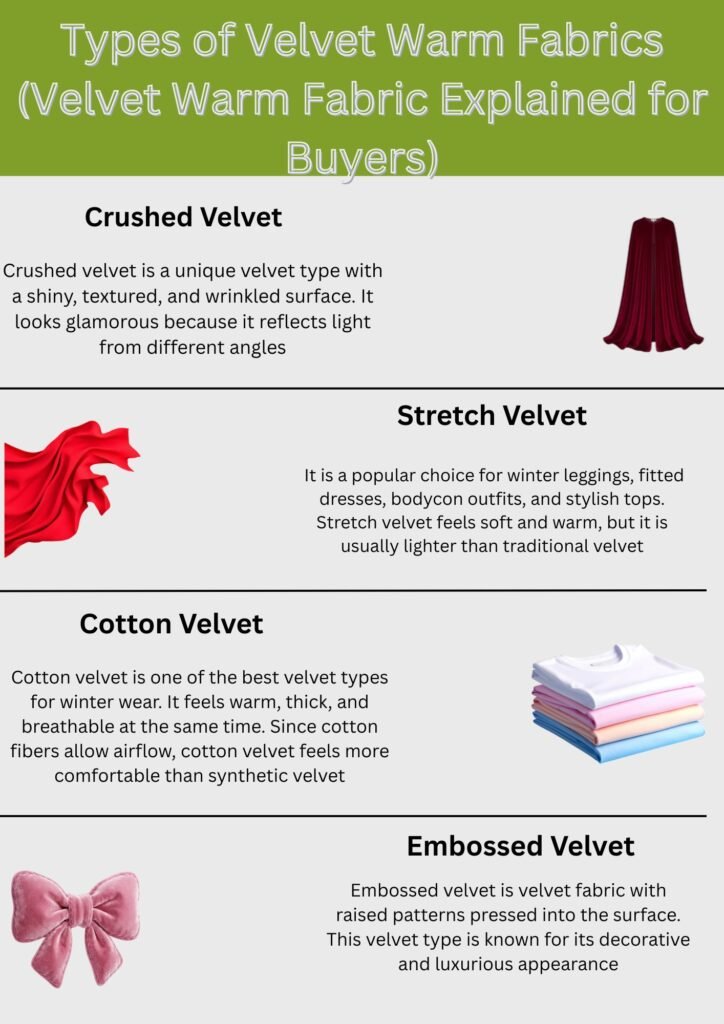
“Comparing velvet varieties: crushed, stretch, cotton, and embossed velvet with quick notes on texture, warmth, and appearance.”
Crushed Velvet
Crushed velvet is a unique velvet type with a shiny, textured, and wrinkled surface. It looks glamorous because it reflects light from different angles. This velvet type is often chosen for winter party dresses, festive outfits, and stylish evening wear. Since crushed velvet still has a dense pile structure, it provides good warmth in cold weather.
Stretch Velvet
Stretch velvet is velvet fabric mixed with elastane or spandex. Because of this, it stretches easily and fits the body comfortably. It is a popular choice for winter leggings, fitted dresses, bodycon outfits, and stylish tops. Stretch velvet feels soft and warm, but it is usually lighter than traditional velvet.
Cotton Velvet
Cotton velvet is one of the best velvet types for winter wear. It feels warm, thick, and breathable at the same time. Since cotton fibers allow airflow, cotton velvet feels more comfortable than synthetic velvet. This makes it ideal for winter jackets, trousers, coats, and even cozy winter robes.
Embossed Velvet
Embossed velvet is velvet fabric with raised patterns pressed into the surface. This velvet type is known for its decorative and luxurious appearance. Many interior designers prefer embossed velvet for winter curtains, cushions, and furniture upholstery. It adds richness to home décor while also providing insulation.
Velvet Fabric Warmth Level Compared to Other Fabrics (Velvet Warm Fabric Explained)
Velvet is widely known as a warm and cozy fabric. However, many people still wonder how velvet compares with other popular winter fabrics. Velvet Warm Fabric Explained:This comparison is important because different fabrics perform differently in cold weather. Some fabrics trap heat better, while others feel lighter and more breathable. In this part of Velvet Warm Fabric Explained, you will clearly understand where velvet stands in terms of warmth level.
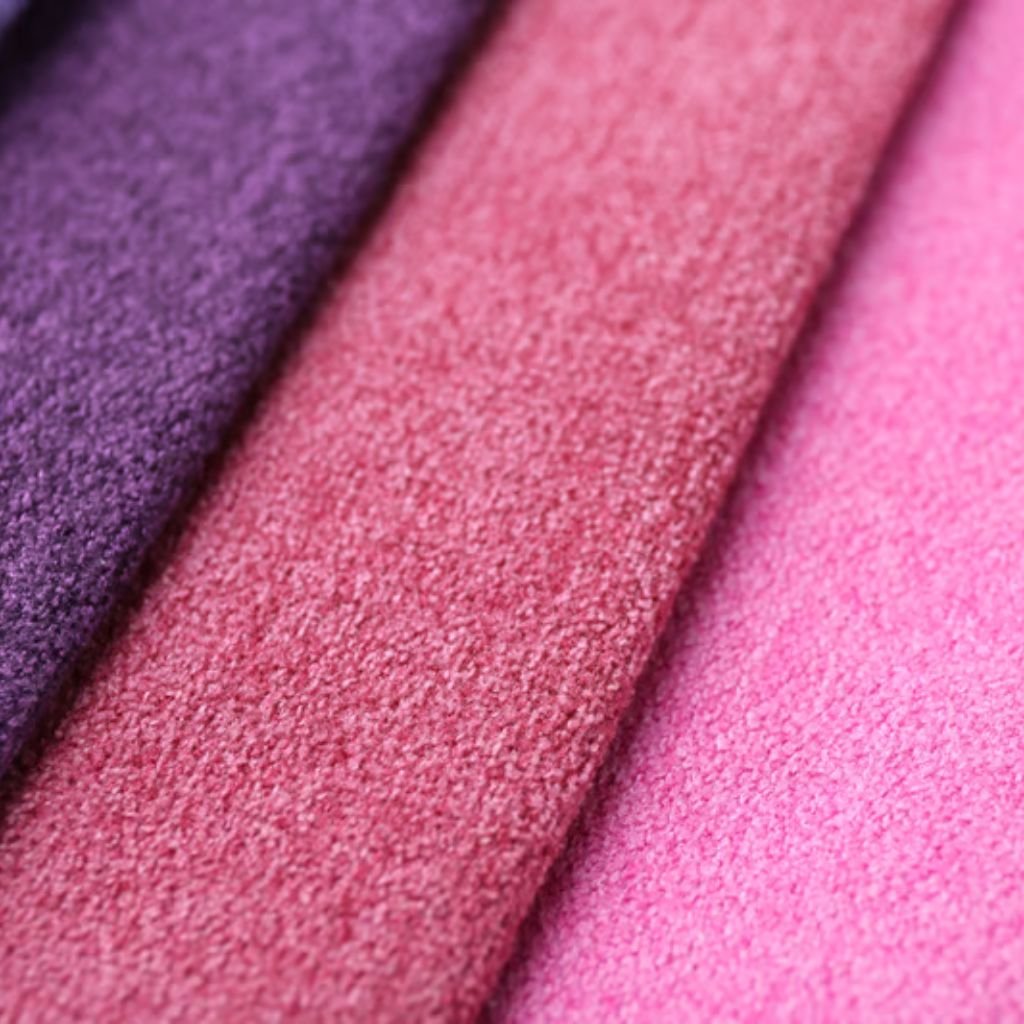
“Gradient of plush fabrics: deep purple to pink.”
Velvet vs Wool (Warmth and Insulation Comparison)
Wool is one of the warmest winter fabrics available. It naturally traps heat and keeps the body warm even in harsh climates. Wool also handles moisture well, which makes it a reliable choice for snow and damp conditions. Compared to velvet, wool performs better in extreme cold because it provides deeper insulation.
Velvet vs Fleece (Which Feels Warmer?)
Fleece is popular because it is lightweight and warm. It traps heat efficiently and works well for casual winter jackets and hoodies. Fleece also dries quickly and performs well in active outdoor use. Velvet Warm Fabric Explained:When people search velvet vs fleece warmth, they usually want to know which fabric gives more comfort in winter.
Velvet vs Sherpa (Cozy Warmth Comparison)
Sherpa fabric is extremely warm because it has a fluffy and thick texture. It is often used as lining inside jackets and hoodies. Sherpa traps a large amount of air, which makes it ideal for cold climates. Compared to velvet, sherpa usually provides higher warmth because it is heavier and thicker.
Velvet vs Corduroy (Texture and Warmth Difference)
Corduroy is a winter-friendly fabric known for its ridged texture. It is thicker than normal cotton fabric, which helps it trap warmth. Corduroy is often used in trousers, jackets, and winter shirts. Compared to velvet, corduroy feels slightly rougher but still provides decent warmth.
Is Velvet Suitable for Winter Wear? (Velvet Warm Fabric Explained for Clothing)
Yes, velvet is very suitable for winter wear, especially when the weather is dry and cold. Velvet provides warmth while still looking fashionable, which makes it popular in winter clothing collections. Many designers use velvet in winter because it looks rich and feels cozy. Velvet also feels soft against the skin, so it is a great option for people who dislike itchy fabrics like wool.
Velvet jackets and coats are widely worn in winter because they provide insulation and elegance together. Many velvet coats also include inner linings, which increase warmth and comfort. Velvet dresses are also common in winter parties and festive events because they feel warmer than silk or satin. Velvet Warm Fabric Explained:Velvet trousers are another stylish option because they provide warmth without looking heavy.
Breathability & Comfort of Velvet Fabric
Velvet comfort depends greatly on the material used to create it. Cotton velvet is more breathable and absorbs moisture better, which makes it more comfortable for long wear. Polyester velvet is warmer, but it can trap moisture, which may cause discomfort in heated indoor spaces.Velvet Warm Fabric Explained: That is why velvet feels best in cool environments where extra warmth is needed.
Velvet generally feels comfortable because it is smooth and soft. It does not irritate the skin, which makes it a good choice for sensitive users. However, velvet may feel too warm if worn indoors for long hours. For example, wearing a thick velvet jacket in a heated room can feel uncomfortable. Still, for outdoor winter use, velvet performs well because it provides warmth quickly. In simple terms, velvet offers great comfort, but you should choose the right velvet type depending on your climate.Polyester
Pros and Cons of Velvet Warm Fabric (Velvet Warm Fabric Explained Simply)
Velvet offers many advantages that make it a strong winter fabric choice. It feels luxurious, looks elegant, and provides excellent heat retention. Since velvet has a dense pile, it traps warmth effectively and keeps the body cozy. Velvet also has a stylish winter appeal, which makes it perfect for festive clothing. Many people prefer velvet because it creates a premium look without needing heavy layering.Velvet Warm Fabric Explained:
However, velvet also has some disadvantages. Velvet can feel heavier compared to lighter fabrics like fleece. It also attracts dust and lint easily, which means it needs frequent cleaning.
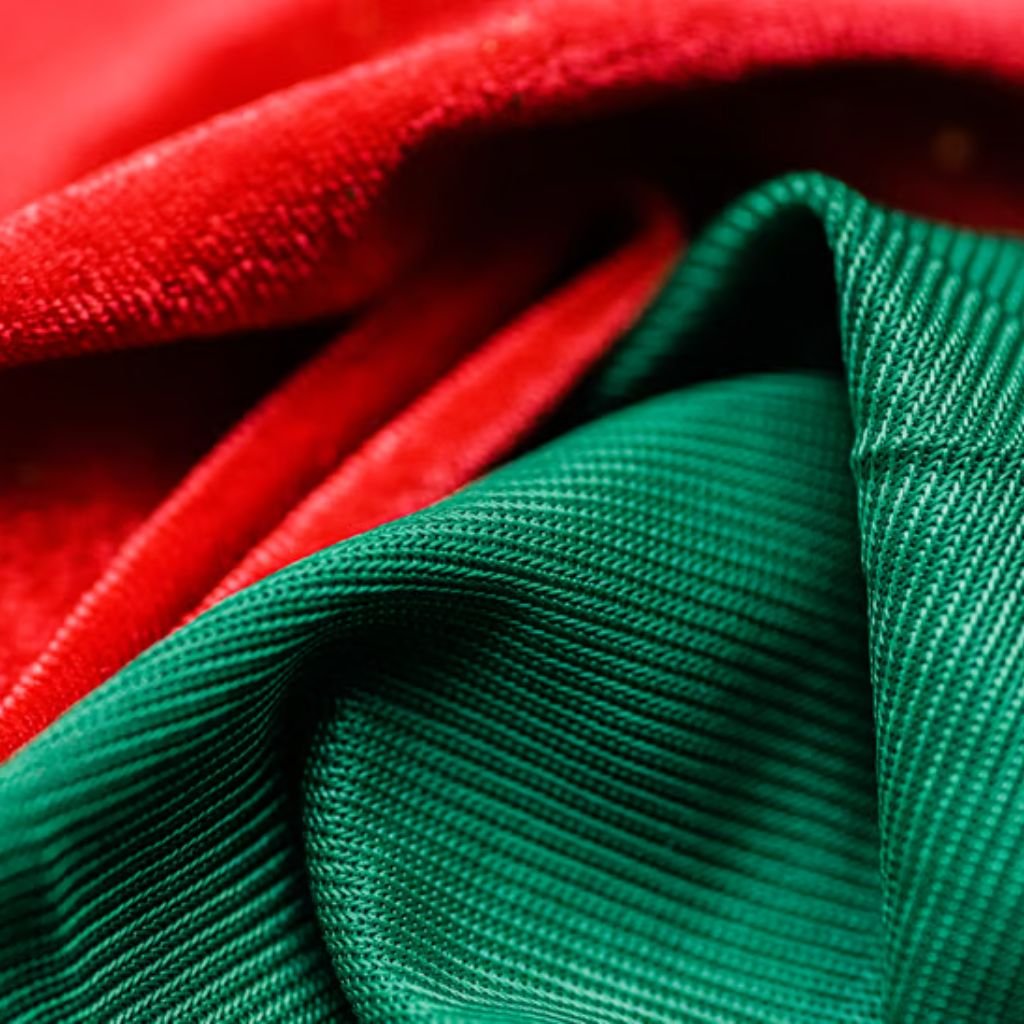
“Military-inspired winter jacket fabrics in bold red and green tones.”
Best Uses of Velvet Warm Fabric (Velvet Warm Fabric Explained for Practical Use)
Velvet is one of the most useful fabrics for winter because it combines warmth with luxury. It feels soft, thick, and cozy, which makes it perfect for cold weather.Velvet Warm Fabric Explained: At the same time, velvet also looks stylish, so it improves the appearance of clothing and home décor. That is why many people prefer velvet during winter seasons. In this section of Velvet Warm Fabric Explained, you will explore the best practical uses of velvet fabric.
Velvet Winter Coats and Jackets
Velvet is commonly used in winter coats because it provides warmth without looking bulky. The dense pile structure helps trap body heat, which keeps you comfortable outdoors. Many velvet coats also include extra lining, which increases insulation even more. Velvet Warm Fabric Explained:Therefore, velvet coats work well for evening outings and cold weather gatherings.
Velvet Blazers and Formal Winter Wear
Velvet blazers are one of the most popular winter fashion items. They provide moderate warmth while giving a rich and classy appearance. Many men wear velvet blazers in winter weddings, dinners, and formal events. Women also prefer velvet blazers because they look stylish and feel cozy.
Velvet Dresses and Party Outfits
Velvet dresses are a winter favorite because they feel warm and look glamorous. Unlike silk or satin, velvet traps heat better, which makes it comfortable for cold evenings. Velvet is also available in rich colors, so it looks perfect for parties. Therefore, velvet dresses are often worn during Christmas, weddings, and winter festivals.
Velvet Trousers, Skirts, and Winter Bottom Wear
Velvet trousers are a practical winter option because they provide warmth while staying stylish. They work well with sweaters, hoodies, and long coats. Since velvet feels thick, it protects the legs from cold air. Therefore, velvet trousers are a smart choice for mild to moderate winters.
Is Velvet Fabric Eco-Friendly?
Velvet eco-friendliness depends on the fiber type used in its production. Natural velvet fabrics like cotton velvet and silk velvet are biodegradable, which makes them more eco-friendly than synthetic options. However, silk velvet requires more resources and careful production, so it may not always be the most sustainable choice. Cotton velvet is biodegradable, but cotton farming often uses large amounts of water. Velvet Warm Fabric Explained:Organic cotton velvet is a better alternative because it reduces chemical use and supports healthier soil.
How to Choose the Best Velvet Warm Fabric (Velvet Warm Fabric Explained Buying Guide)
Choosing velvet for winter requires careful attention because velvet quality can vary greatly. The warmth of velvet depends on fabric thickness, GSM, and pile height. Higher GSM velvet is thicker and provides more warmth, which makes it better for coats, upholstery, and winter curtains. Velvet Warm Fabric Explained:Pile height also affects warmth because taller pile traps more air. However, taller pile velvet may attract more dust, so you should balance warmth with maintenance needs.
How to Care for Velvet Fabric in Winter (Velvet Warm Fabric Explained for Maintenance)
Velvet is a delicate fabric that needs proper care to stay soft and beautiful. Since velvet has a raised pile surface, rough washing or drying can crush the fibers. Velvet Warm Fabric Explained:As a result, velvet may lose its smooth texture and luxury shine. That is why winter velvet care is very important, especially when velvet is used in coats, dresses, and home décor. In this part of Velvet Warm Fabric Explained, you will learn the best care methods for long-lasting velvet.
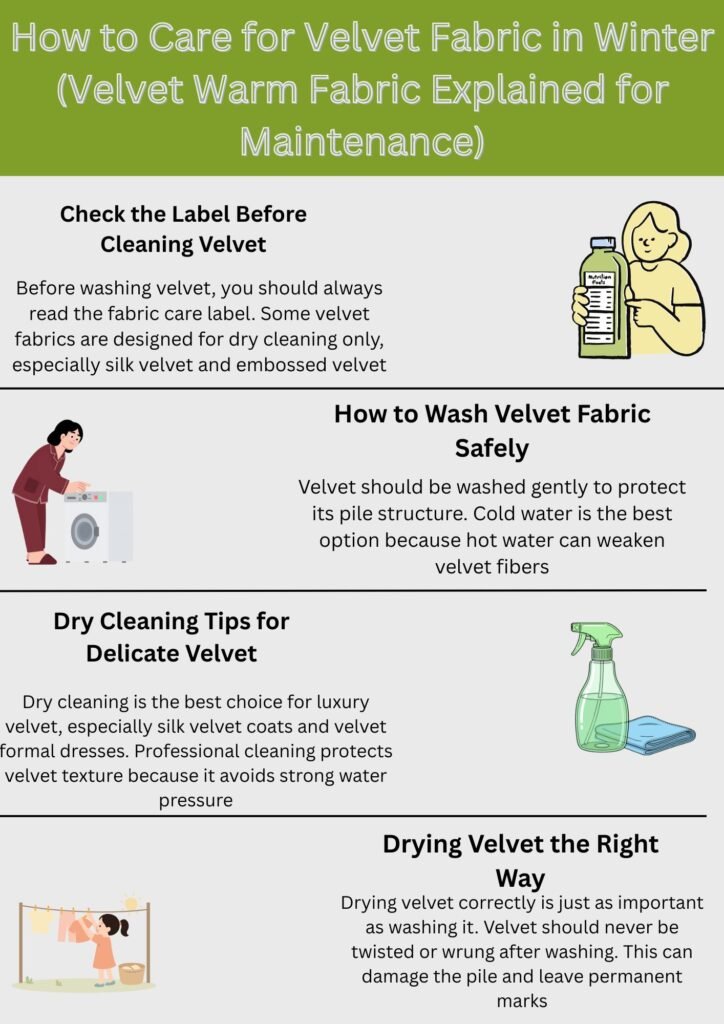
“Seasonal velvet care guide: read labels, wash gently with cold water, consider dry cleaning for luxury velvet, and dry properly to protect pile and texture.”
Check the Label Before Cleaning Velvet
Before washing velvet, you should always read the fabric care label. Some velvet fabrics are designed for dry cleaning only, especially silk velvet and embossed velvet. If you ignore the label, the velvet pile may get damaged permanently. That is why checking the cleaning instructions is the first and most important step.
How to Wash Velvet Fabric Safely
Velvet should be washed gently to protect its pile structure. Cold water is the best option because hot water can weaken velvet fibers. Mild detergent should also be used because harsh chemicals can remove velvet softness. If velvet is rubbed too strongly, the fabric pile may flatten and look dull.
Dry Cleaning Tips for Delicate Velvet
Dry cleaning is the best choice for luxury velvet, especially silk velvet coats and velvet formal dresses. Professional cleaning protects velvet texture because it avoids strong water pressure.Velvet Warm Fabric Explained: It also reduces the risk of crushing the velvet pile. That is why dry cleaning is recommended for expensive velvet items.
Drying Velvet the Right Way
Drying velvet correctly is just as important as washing it. Velvet should never be twisted or wrung after washing. This can damage the pile and leave permanent marks. Instead, you should gently press the fabric using a clean towel. This removes extra water without harming the velvet surface.
Conclusion
Velvet is a very good warm fabric for cold weather because of its thick pile structure. It traps air between fibers and prevents body heat from escaping quickly. This makes velvet ideal for moderate winter climates, cold evenings, and indoor winter comfort. Velvet also feels smooth and soft, which makes it comfortable for sensitive skin. At the same time, velvet offers a rich and stylish look, which makes it perfect for winter fashion.
FAQs
Is velvet warmer than fleece?
Velvet can feel warmer than fleece in calm winter weather because it blocks airflow better. Its dense pile traps warm air and reduces heat loss. However, fleece performs better during outdoor activities because it dries quickly. Fleece also feels lighter, so it is easier to wear for long hours.
Can velvet be worn in snow?
Yes, velvet can be worn in light snow if the weather stays dry. However, velvet is not a water-friendly fabric, so wet snow can damage its surface. Moisture may leave stains or marks on velvet, especially on silk velvet. Therefore, velvet is better for cold dry weather rather than heavy snowfall.
Does velvet trap heat?
Yes, velvet traps heat very well because of its thick pile structure. The raised fibers hold air between them, and that air works as insulation. This slows down body heat escape and keeps the wearer warm. That is why velvet is often called a heat-retaining winter fabric.
An Extreme Cold Protection Winter Coat is a heavy-duty coat built for severe winter conditions. It protects the body during sub-zero temperatures. It also blocks strong winds and heavy snowfall.Unlike standard winter jackets, this coat is made for dangerous cold exposure. It often uses thick insulation layers. It also includes windproof and snow-resistant shells. Therefore, it works well in snowstorms and blizzards.Most coats in this category perform best between -20°C to -50°C. Some expedition-grade models handle even colder weather. However, performance depends on wind-chill and activity level.
People who travel in harsh winter regions need this coat. Mountaineers rely on it for survival. Outdoor workers also depend on it for long shifts. Even commuters in freezing cities can benefit from it.If you face long snowstorms, this coat becomes essential. It keeps your body stable and warm. It also reduces the risk of frostbite and hypothermia.
History of Extreme Cold Protection Winter Coats
Humans have battled extreme cold for centuries. Early Arctic communities used animal fur. They also used thick hides for insulation. These coats trapped heat effectively. However, they were heavy and hard to dry.Later, explorers improved coat designs for long expeditions. They added layered wool and windproof fabrics. Over time, military forces also shaped winter coat technology. They needed strong outerwear for freezing battlefields.During the 20th century, down insulation became more common. It offered strong warmth with less weight. Soon after, synthetic insulation appeared. It worked better in wet and icy climates.
Today, an Extreme Cold Protection Winter Coatuses modern fabrics and advanced insulation. It focuses on warmth, wind resistance, and comfort. As a result, modern coats can handle polar-level cold conditions.
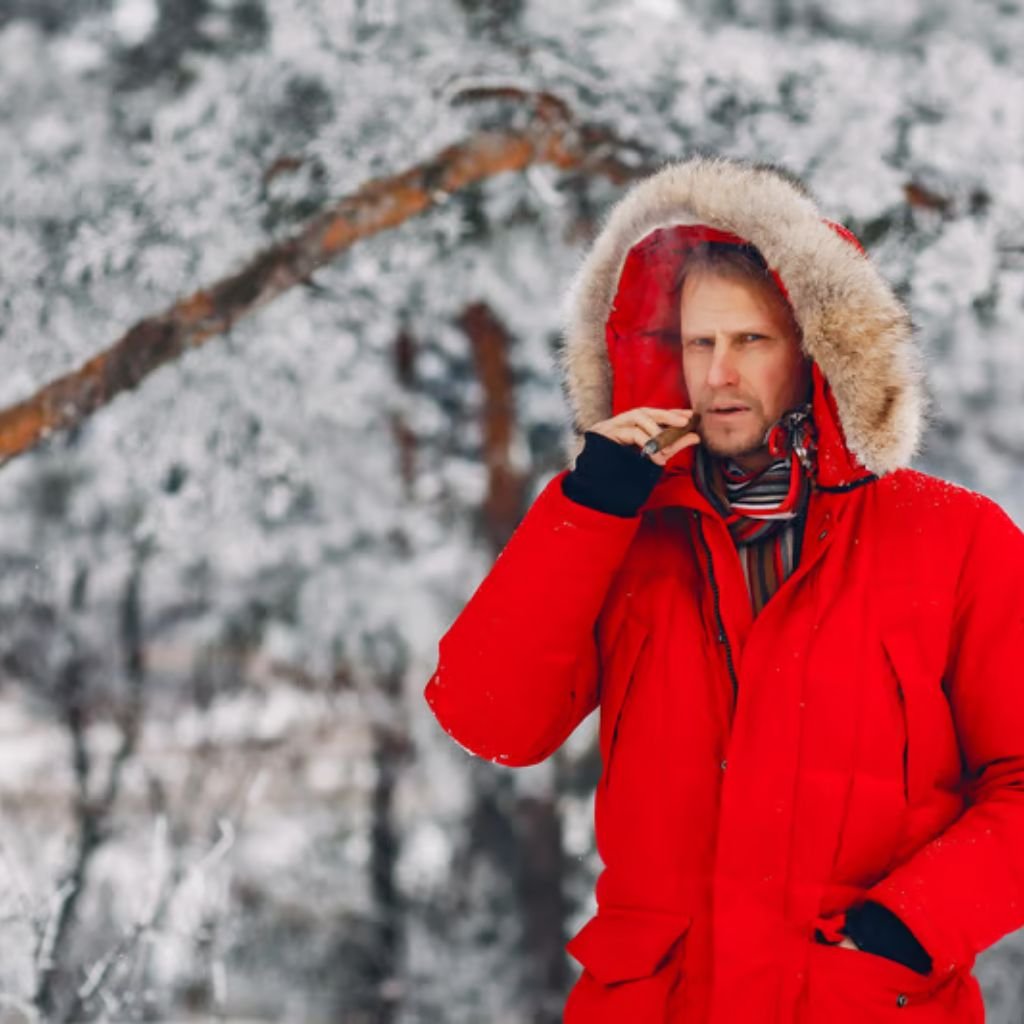
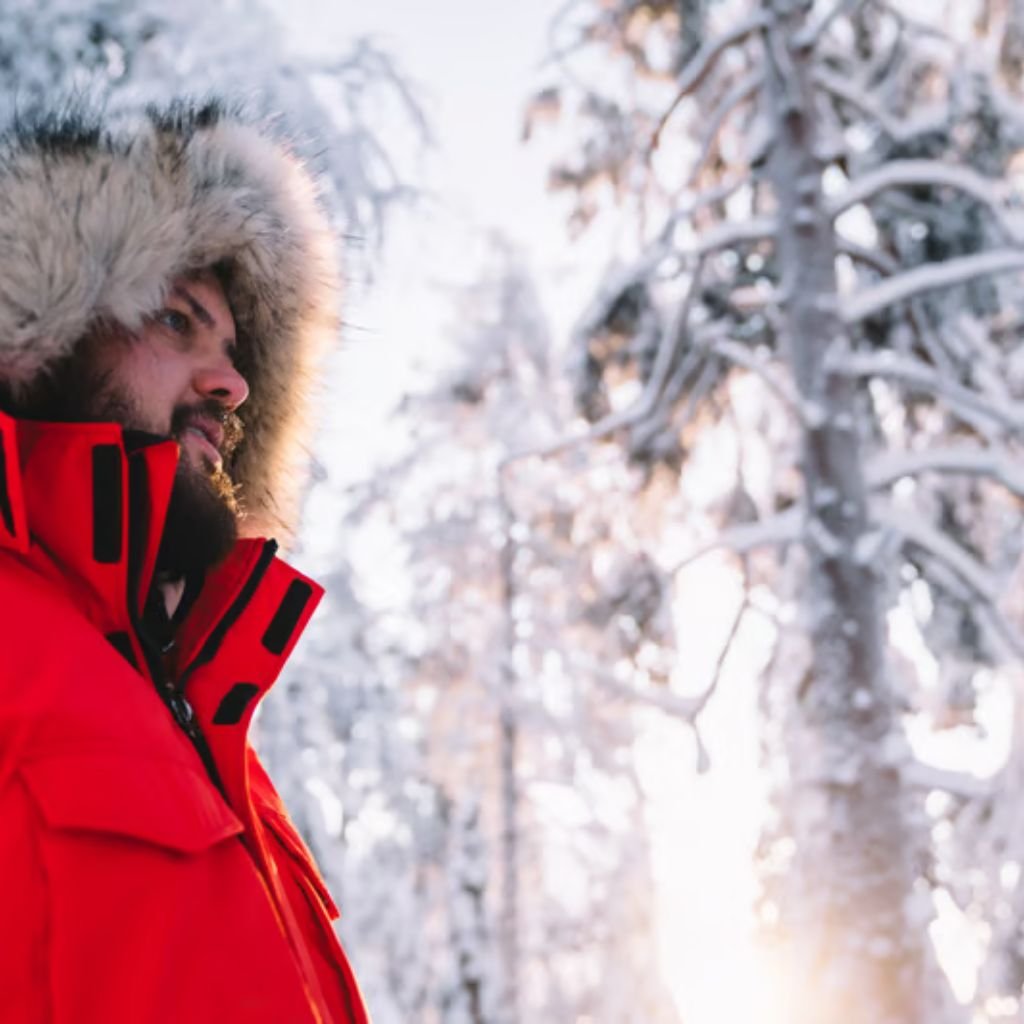
“Bold red parka in a snowy woodland with a relaxed, rugged vibe.”
Types of Extreme Cold Protection Winter Coats
An Extreme Cold Protection Winter Coat comes in different styles, and each type serves a specific winter need. Some coats focus on expedition-level warmth, while others balance insulation with daily comfort. Therefore, understanding coat types helps you choose the best option for snowstorms, freezingwinds, and long outdoor exposure.
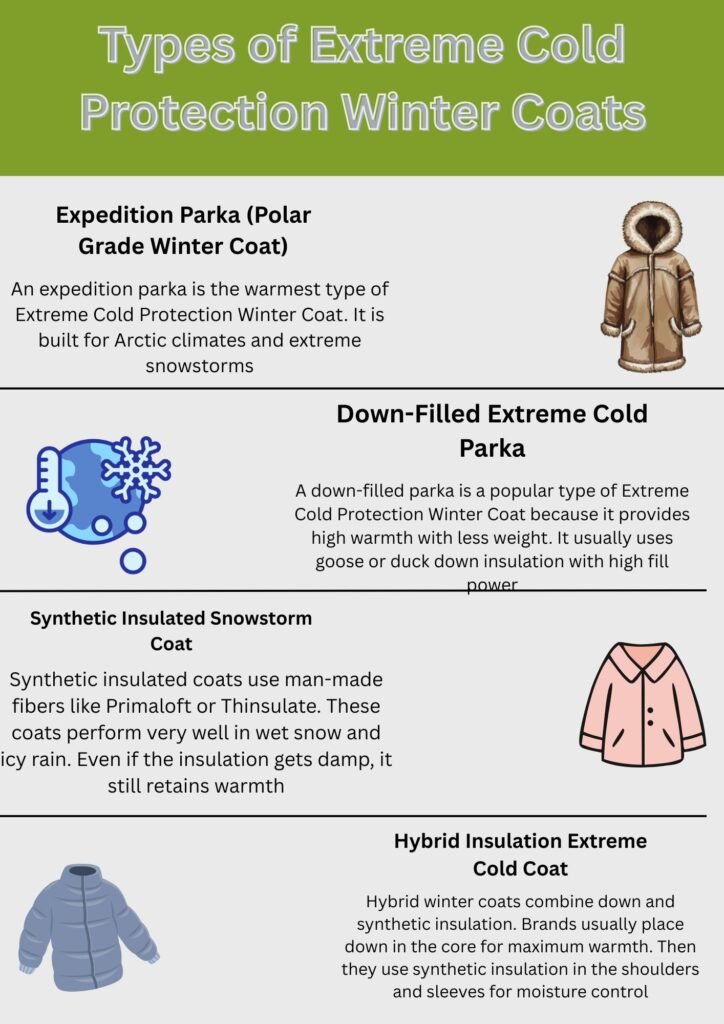
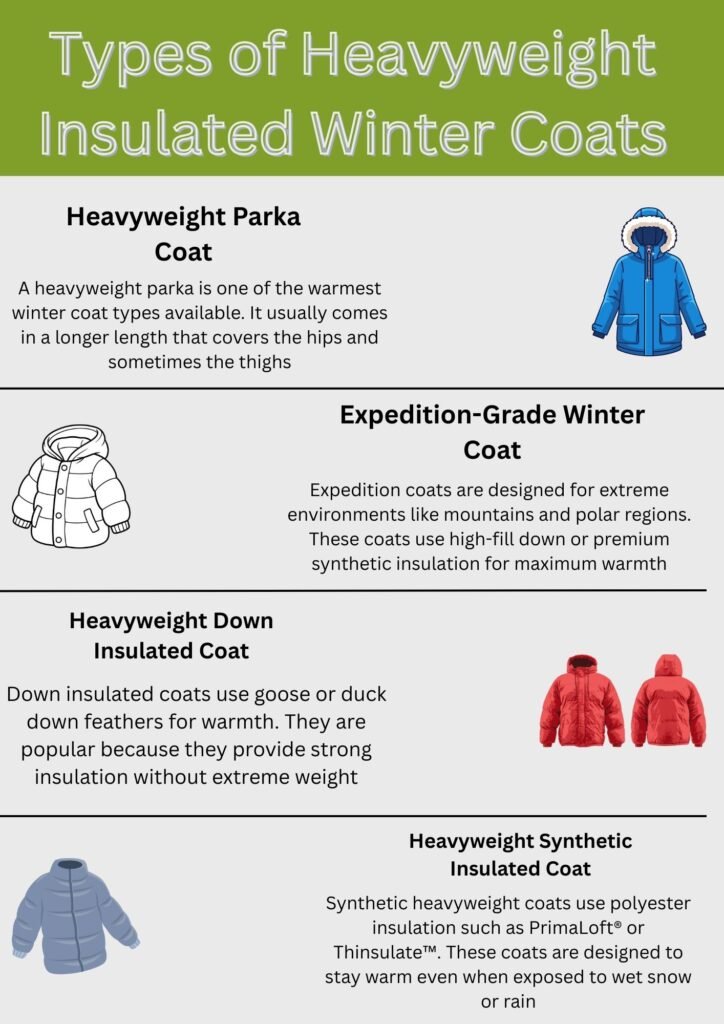
Types of Extreme Cold Protection Winter Coats: Expedition Parka, Down-Filled Parka, Synthetic Insulated Snowstorm Coat, and Hybrid Insulation Extreme Cold Coat, each with its defining features and insulation.
Expedition Parka (Polar Grade Winter Coat)
An expedition parka is the warmest type of Extreme Cold Protection Winter Coat. It is built for Arctic climates and extreme snowstorms. These coats usually feature heavy down insulation, thick shell fabric, and long coverage below the hips.
Down-Filled Extreme Cold Parka
A down-filled parka is a popular type of Extreme Cold Protection Winter Coat because it provides high warmth with less weight. It usually uses goose or duck down insulation with high fill power. As a result, it traps heat efficiently even in sub-zero temperatures.
Synthetic Insulated Snowstorm Coat
Synthetic insulated coats use man-made fibers like Primaloft or Thinsulate. These coats perform very well in wet snow and icy rain. Even if the insulation gets damp, it still retains warmth. That makes them a reliable Extreme Cold Protection Winter Coat choice.
Hybrid Insulation Extreme Cold Coat
Hybrid winter coatscombine down and synthetic insulation. Brands usually place down in the core for maximum warmth. Then they use synthetic insulation in the shoulders and sleeves for moisture control. Therefore, this design offers both heat retention and wet-weather reliability.
What Makes a Coat Suitable for Extreme Cold?
An Extreme Cold Protection Winter Coat must provide reliable warmth. It must also prevent heat loss. Several core elements decide its performance.
Insulation Thickness and Fill Power
Insulation traps warm air near the body. Thicker insulation usually means better warmth. Fill power also matters in down coats. Higher fill power provides more warmth per ounce.
Wind-Blocking Outer Shell
Cold wind quickly removes body heat. That is why windproof shells are critical. A good outer shell blocks air movement completely. As a result, the coat stays effective in blizzards.
Heat Retention vs Breathability Balance
A coat must hold heat without overheating. Breathable materials allow moisture to escape. This matters during hiking or working. Otherwise, sweat can freeze inside the coat.
Layering Compatibility
Extreme cold coats must fit over layers. They should not feel tight. At the same time, they must not allow air gaps. A proper fit improves warmth and comfort.
Temperature Ratings Explained (Very Important for SEO)
Temperature ratings help buyers choose the right coat. However, many people misunderstand these numbers.
Most ratings are based on testing in controlled conditions. They assume proper layering and average wind levels. Because of that, real-world cold can feel different.
Comfort vs Survival Ratings
Comfort rating means you can stay warm normally. Survival rating means you may avoid hypothermia. However, survival does not mean comfort. It often means you will still feel very cold.
How to Choose Based on Climate
If your winters stay around -10°C, you may not need an expedition coat. However, if wind chill drops below -25°C, you need better protection. For Arctic travel, choose a coat rated below -40°C.
An Extreme Cold Protection Winter Coat should match your coldest expected weather. It should also match your activity level.
Common Uses Of Extreme Cold Protection Winter Coat
Extreme Cold Protection Winter Coats are widely used in environments where normal winter jackets fail to provide enough warmth and safety. One of the most common uses is in Arctic and polar travel, where temperatures can fall far below freezing and strong winds increase the danger. In these regions, an Extreme Cold Protection Winter Coat becomes essential because it prevents frostbite and keeps body heat stable for long periods.Extreme Cold Protection Winter Coats are also commonly worn in snowfall-heavy cities where blizzards and snowstorms occur regularly. In such areas, people often spend long hours outdoors while commuting, walking, or waiting for transport.
Another major use is in mountaineering and high-altitude expeditions. Climbers often face freezing air, heavy snowfall, and sudden storms. Since temperatures drop rapidly at higher elevations, these coats help protect the chest, arms, and core from extreme heat loss. They also support survival during rest breaks, when the body stops generating warmth through movement.
“Winter essentials: bold parka and a playful moment in the snow.”
Outer Shell Materials That Block Extreme Cold
The outer shell protects the insulation inside. It blocks wind and prevents snow buildup. It also decides how waterproof the coat feels.
Gore-Tex and Similar Membranes
Gore-Tex is a waterproof breathable membrane. It stops water but allows vapor escape. Similar membranes include eVent and proprietary coatings. These materials perform well in snowstorms.
Nylon vs Polyester Shells
Nylon is stronger and more abrasion-resistant. It works well for climbing and heavy use. Polyester resists UV damage better. It also handles moisture well. Both fabrics can be effective with coatings.
Windproof, Waterproof, and Snow-Resistant Coatings
Many coats include DWR coatings. These coatings make water bead off. Windproof laminates also stop air penetration. Sealed seams improve storm resistance further.
A strong shell turns a warm coat into a snowstorm-ready coat.
Key Features of an Extreme Cold Protection Winter Coat
A true Extreme Cold Protection Winter Coat includes specific features for harsh storms. These features improve warmth and prevent heat loss.
Thermal-lined hoods for head protection in blizzards
Fur-trimmed or insulated collars to block wind near the face
Storm flaps and sealed seams to stop snow entry
Adjustable cuffs and hems to prevent cold air leaks
Insulated pockets to keep hands warm longer
YKK zippers for durability in freezing conditions
High collar design to protect the neck and chin
Two-way front zipper for easier movement and ventilation
These details may seem small. However, they decide how well a coat performs in real storms.
Extreme Cold Winter Coat vs Regular Winter Coat
Many people confuse these coat types. Yet they serve different winter needs.
Insulation Weight Comparison
Regular winter coats use moderate insulation. Extreme cold coats use heavy insulation. They often include thicker down or synthetic fill. That difference matters in long snowstorms.
Weather Resistance Differences
Regular coats resist light snow and wind. Extreme cold coats resist heavy snow, ice, and storms. They usually include sealed seams and better shells.
Mobility and Bulk Comparison
Extreme coats are bulkier. They can limit movement slightly. However, premium designs reduce stiffness and improve flexibility.
Best Use Cases for Each
Regular coats suit mild winter cities. Extreme cold coats suit harsh climates. They also work best for outdoor work and expeditions.
Best Uses of Extreme Cold Protection Winter Coats
An Extreme Cold Protection Winter Coat works best in extreme environments. It also performs well in snow-heavy locations.
Arctic and Polar Travel
Polar regions have constant wind chill. Temperatures drop quickly after sunset. Therefore, travelers need maximum insulation and wind protection.
Mountaineering and Expeditions
High altitudes increase cold exposure. Winds become stronger and more dangerous. Expedition coats provide survival warmth and storm coverage.
Snowfall-Heavy Cities
Some cities face daily snowstorms. Roads become icy and temperatures stay below freezing. In such places, extreme cold coats improve comfort and safety.
Outdoor Work and Industrial Use
Construction crews and delivery workers face cold for hours. They need durable coats with insulation. They also need mobility and strong pockets.
How to Choose the Best Extreme Cold Protection Winter Coat
Buying the right coat requires smart decisions. A wrong choice can lead to discomfort or danger. Therefore, focus on these factors carefully.
“Bold red parka in a sunlit winter forest.”
Climate and Temperature Needs
Start by checking your coldest winter days. Then include wind chill values. If your climate drops below -25°C often, you need a true extreme coat.
Activity Level: Active vs Static Warmth
If you hike or climb, you generate body heat. You need breathability more than bulk. If you stand still for work, you need heavier insulation.
Fit and Length: Parka vs Jacket
Parkas cover more body area. They protect the thighs and hips. Jackets are lighter but shorter. Parkas are the better snowstorm choice.
Hood and Collar Importance
Heat escapes quickly from the head and neck. A deep hood prevents frostbite on ears. A high collar protects the chin and face.
Weight vs Warmth Trade-Off
Heavier coats feel warmer but reduce movement. Lightweight coats feel flexible but may need layering. Choose a balance that matches your lifestyle.
Men’s vs Women’s Extreme Cold Protection Coats
Men’s and women’s coats differ in fit and design. They are not only different in style. They also differ in insulation placement.
Fit Differences
Women’s coats often have narrower shoulders. They also have more waist shaping. Men’s coats usually offer a straighter cut.
Insulation Placement
Some women’s coats add insulation near the core. This helps warmth retention. Men’s coats often spread insulation evenly. Both can work well if fitted correctly.
Length and Mobility Variations
Women’s parkas may offer longer cuts. Men’s coats may prioritize movement. However, modern designs now focus on both warmth and flexibility.
Are Extreme Cold Protection Winter Coats Waterproof?
Not all extreme cold coats are fully waterproof. Many are only water-resistant. However, they still handle snowstorms well.
“Cold-weather style: fur-trimmed hood and cozy winter gear in a snowy landscape.”
Waterproof vs Water-Resistant
Waterproof coats block water completely. Water-resistant coats repel light moisture. In heavy rain, water-resistant shells can soak through.
DWR Coatings Explained
DWR is a durable water repellent coating. It helps snow and water slide off. However, DWR wears out over time. That is why it needs reapplication.
When Waterproofing Matters Most
Waterproofing matters during wet snowstorms. It also matters during freezing rain. If you travel in mixed winter climates, choose waterproof membranes like Gore-Tex.
How to Layer with an Extreme Cold Protection Coat
Layering increases warmth and improves comfort. It also helps regulate sweat and moisture. Therefore, layering is essential for extreme cold safety.
Base Layer Fabrics
Choose merino wool or synthetic base layers. These fabrics pull sweat away from skin. Cotton should be avoided because it holds moisture.
Mid-Layer Insulation Types
Fleece is breathable and warm. Down sweaters provide high insulation. Synthetic puff layers work better in wet snowstorms.
How Layering Boosts Thermal Efficiency
Each layer traps warm air. It also prevents heat loss through wind exposure. When layers work together, your Extreme Cold Protection Winter Coat becomes far more effective.
Sustainability and Ethical Insulation Options
Sustainability is now important in winter outerwear. Many brands offer eco-friendly choices. These options reduce environmental impact while maintaining warmth.
Recycled Insulation
Some coats use recycled polyester insulation. This reduces waste and saves resources. It also performs well in cold and wet weather.
Responsible Down Standard (RDS)
RDS-certified down ensures ethical sourcing. It protects animal welfare standards. Many premium brands now use RDS down.
Eco-Friendly Winter Outerwear
Some shells use recycled nylon. Others use PFC-free DWR coatings. These materials reduce chemical pollution. Therefore, sustainable winter coats are growing in demand.
Care and Maintenance for Extreme Cold Winter Coats
Taking care of an Extreme Cold Protection Winter Coat is essential if you want long-term warmth and performance. These coats use advanced insulation and technical shells, so careless washing can reduce their efficiency. Moreover, poor storage can flatten insulation and destroy loft. Therefore, regular maintenance helps your coat stay reliable in snowstorms and sub-zero temperatures.
Care and maintenance tips for extreme cold winter coats: follow care labels, wash down coats gently, wash synthetic insulated coats carefully, and use proper drying techniques to preserve warmth and loft.
Read the Care Label Before Anything Else
Every Extreme Cold Protection Winter Coat comes with a care label for a reason. Some coats allow machine washing, while others require professional cleaning. If you ignore these instructions, you can damage the insulation or shrink the outer fabric.
Washing Down Extreme Cold Winter Coats Properly
Down-filled coats need gentle handling because down clusters break easily. You should always use cold or lukewarm water. Also, use a mild detergent made specifically for down garments. Regular detergent can strip natural oils and reduce loft.
Washing Synthetic Insulated Winter Coats Safely
Synthetic insulation is easier to wash compared to down. However, you still need to be careful. Always choose a gentle wash cycle and avoid hot water. Hot water can weaken synthetic fibersand reduce insulation power.
Drying Techniques to Restore Warmth and Loft
Drying is the most important part of cape coat maintenance. If you dry your coat incorrectly, insulation may clump and lose performance. Down coats should be tumble-dried on low heat. Adding dryer balls helps break clumps and restores loft faster.
Conclusion
An Extreme Cold Protection Winter Coat is absolutely worth it for harsh winters. It provides powerful insulation and wind resistance. It also keeps your body stable in heavy snowstorms.If you live in a snowfall-heavy city, you will feel the difference immediately. If you travel to polar regions, it becomes essential gear. Outdoor workers also benefit because they stay warm longer.However, if your climate is mild, it may feel too heavy. In that case, a regular winter jacket may be enough. Still, for blizzards and extreme cold, nothing beats a true expedition-style parka.
FAQs
How cold is an extreme cold protection winter coat rated for?
Most are rated between -20°C and -50°C. Expedition models may handle even lower temperatures. However, wind chill changes real performance.
Are these coats too warm for daily use?
Yes, they can feel too warm in mild winter cities. If temperatures stay above -5°C, you may overheat. However, they are perfect for harsh snowstorm commuting.
Can I wear one in snowstorms?
Yes, that is their best purpose. An Extreme Cold Protection Winter Coat blocks wind and keeps snow out. It also maintains warmth for long outdoor exposure.
What is the warmest winter coat type?
A high-fill-power down parka is usually the warmest. Coats with 800+ fill power perform extremely well. However, synthetic coats win in wet snowstorms.
An Ultra-Warm Thermal Winter Coat is a high-performance winter coat designed for extreme cold. It focuses on maximum heat retention and strong weather resistance. Unlike standard jackets, it uses advanced insulation layers to trap body warmth. It also blocks harsh wind, snow, and freezing rain. That is why it works as true cold-weather armor.The main purpose of an Ultra-Warm Thermal Winter Coat is simple. It keeps your core temperature stable in dangerous winter conditions. It also helps reduce the risk of frostbite and hypothermia. Because of its design, it performs well in deep snow and icy winds. In addition, it stays warm even when temperatures drop quickly.
Ultra-warm thermal coats are essential for extreme cold because normal coats fail in harsh climates. Regular jackets may feel warm at first. However, they lose heat fast in strong wind. On the other hand, an Ultra-Warm Thermal Winter Coat holds heat for longer periods. It also protects the body during long outdoor exposure.
How an Ultra-Warm Thermal Winter Coat Works
An Ultra-Warm Thermal Winter Coat works by trapping warm air close to the body. It creates a protective thermal barrier. This barrier slows down heat loss in freezing temperatures. As a result, the body stays warm without constant movement.Thermal insulation follows a simple principle. Warm air gets trapped inside the insulation fibers. Since air is a poor heat conductor, it prevents body warmth from escaping. Therefore, the coat maintains heat retention throughout the day. In addition, the insulation reduces cold penetration from outside.Heat-trapping layers play a major role in performance. Most thermal coats use multiple layers for better protection.
“Winter style: a vibrant green parka with a plush fur hood in a snowy woodland.”
Types of Ultra-Warm Thermal Winter Coat
Ultra-warm thermal winter coats come in different styles to match different weather needs. Each type offers a unique level of warmth, coverage, and comfort. Some coats focus on heavy insulation for extreme cold zones. Meanwhile, others balance warmth with lightweight design for easier movement. Therefore, choosing the right type depends on your lifestyle and winter conditions. Below are the most common types of Ultra-Warm Thermal Winter Coat designs.
“Types of Ultra-Warm Thermal Winter Coats: parkas, down-filled, synthetic insulated, and heat-reflective varieties with brief descriptions.”
Thermal Parka Coat (Full-Length Protection)
A thermal parka is one of the warmest types of Ultra-Warm Thermal Winter Coat. It usually covers the hips or reaches the knees. Because of this length, it blocks cold air from reaching the lower body. In addition, it offers strong protection during snowstorms and blizzards.
Down-Filled Ultra-Warm Thermal Winter Coat
Down-filled coats use goose or duck feathers for insulation. They provide excellent heat retention while staying lightweight. Therefore, they feel warm without adding heavy bulk. These coats are also easy to pack for travel.
Synthetic Insulated Thermal Coat
Synthetic insulated coats use polyester fibers instead of natural down. They are designed to keep warmth even in wet conditions. Therefore, they perform well in snowy and rainy winter areas. They also dry quickly compared to down coats.
Heat-Reflective Thermal Winter Coat
Heat-reflective coats include special inner linings that reflect body heat back inside. This technology increases warmth without adding extra insulation layers. As a result, the coat stays lighter while still feeling extremely warm. Many modern winter brands use this design.
Key Features of an Ultra-Warm Thermal Winter Coat
A high-quality Ultra-Warm Thermal Winter Coat includes advanced features for maximum protection. These features work together to fight cold air, snow, and wind. Without them, even thick coats may fail in severe winter conditions. Therefore, buyers should always check construction details before purchase.
This type of coat is not just about insulation thickness. It also depends on design, stitching, and fabric quality. Moreover, small features like cuffs and flaps make a big difference. Because of that, premium coats feel warmer and last longer. Let’s explore the key features in detail.
Multi-Layer Thermal Insulation
Multi-layer insulation provides stronger heat retention. It traps warm air in different sections of the coat. As a result, heat stays stable even during strong wind. In addition, it reduces cold spots around the shoulders and chest.
Windproof Outer Shell
A windproof shell blocks icy air from entering the coat. Wind removes body warmth faster than dry cold. Therefore, wind resistance is essential for extreme climates. Most coats use nylon or polyester shells for this purpose.
Waterproof or Water-Resistant Fabric
Snow often melts when it touches warm fabric. That moisture can quickly lower body temperature. Because of that, waterproof fabric keeps the coat dry. Water-resistant coats also help during light snow or drizzle.
Heat-Reflective Lining
Some thermal coats include reflective lining technology. This lining reflects body heat back toward the skin. As a result, the coat feels warmer without extra bulk. It also improves energy efficiency during outdoor activities.
Sealed Seams & Storm Flaps
Sealed seams prevent cold air and moisture leaks. Storm flaps cover zippers to stop wind entry. Therefore, these features improve cold-weather insulation. They also keep the inside dry during heavy snowstorms.
Adjustable Hood, Cuffs, and Hem
Adjustable parts help seal the body from wind exposure. Tight cuffs prevent cold air from entering sleeves. A drawstring hem blocks air from entering from below. Similarly, an adjustable hood protects the head and neck.
Best Insulation Materials Used in Ultra-Warm Thermal Winter Coats
Insulation is the heart of every Ultra-Warm Thermal Winter Coat. It determines warmth, weight, and performance. Some insulation types work better in dry cold. Others perform best in wet snow climates. Therefore, choosing the right insulation matters a lot.
Many buyers focus only on thickness. However, insulation quality matters more than size. A thin high-quality coat can feel warmer than a thick cheap one. In addition, insulation affects breathability and movement. Let’s review the best insulation materials.
“Bright red winter parka with faux fur hood, designed for warmth in cold weather.”
Down Insulation (Pros & Cons)
Down insulation comes from duck or goose feathers. It is lightweight and extremely warm. It also compresses easily for packing. Therefore, it works well for travelers and mountain climbers.
However, down has one major weakness. It loses warmth when wet. If snow melts inside the coat, down clumps together. As a result, heat retention drops quickly. That is why down coats need strong waterproof shells.
Synthetic Thermal Insulation
Synthetic insulation uses polyester fibers designed to mimic down. It stays warm even when wet. That makes it ideal for snowy and damp climates. In addition, it dries faster than down insulation.
Synthetic coats may feel slightly heavier than down. However, they usually cost less. They also require less maintenance. Therefore, they work well for daily commuters and workers.
Fleece & Thermal Lining
Fleece lining adds comfort and warmth inside the coat. It feels soft against the skin. It also supports heat retention by trapping air. Many coats combine fleece with down or synthetic insulation.
Thermal linings also reduce cold contact. They improve comfort in harsh climates. However, fleece alone is not enough for extreme cold. That is why it works best as an inner support layer.
Comparison: Down vs Synthetic for Extreme Cold
Down provides the highest warmth-to-weight ratio. Therefore, it works best in dry, freezing regions. Synthetic insulation performs better in wet snow climates. It also handles repeated use without losing shape.
For buyer-intent searches, synthetic is often the safer choice. Down is premium but needs careful care. In contrast, synthetic is practical and long-lasting. Your choice should match your climate and activity level.
Temperature Ratings: How Warm Is Ultra-Warm?
Temperature ratings help buyers understand coat performance. A true Ultra-Warm Thermal Winter Coat often includes tested temperature limits. These limits show how much cold the coat can handle. However, ratings are not always universal across brands.Most high-end coats perform well between -20°C to -40°C. That range makes them suitable for snowstorms and deep winter travel. However, the actual warmth depends on your base layers. It also depends on wind and humidity levels.Wind chill changes everything in extreme cold. Even -15°C can feel like -30°C with strong wind. That is why windproof shells matter. In addition, real-feel temperatures drop faster during storms. Therefore, buyers should choose coats rated for colder conditions.
Ultra-warm coats work best for deep winter zones. They are ideal for mountain regions and arctic climates. They also support outdoor work in freezing air. If you often face icy winds, a -40°C rated coat is the best option.
Benefits of Wearing an Ultra-Warm Thermal Winter Coat
An Ultra-Warm Thermal Winter Coat offers benefits beyond simple warmth. It protects your body during harsh winter conditions. It also improves comfort and reduces health risks. That makes it valuable for both daily and professional use.The biggest benefit is maximum cold protection. The coat blocks freezing air and snow exposure. It keeps the core warm, which supports blood circulation. As a result, you stay safer outdoors.Another benefit is energy efficiency. You do not need heavy layering under the coat. Therefore, you can move freely and stay comfortable. This also reduces sweating, which prevents chilling later.
Ultra-warm thermal coats provide long-lasting warmth. High-quality insulation stays effective for years. In addition, strong fabrics resist wear and tear. That makes the coat a long-term investment.
Best Uses & Ideal Scenarios
An Ultra-Warm Thermal Winter Coat works best in harsh winter environments. It is built for extreme cold exposure. It also performs well during long outdoor hours. Therefore, it suits many different situations.Snowstorms and blizzards are the top use cases. These coats block wind-driven snow effectively. They also keep the inner layers dry. As a result, the wearer stays warm even in heavy storms.Arctic and mountain travel also require ultra-warm protection. Temperatures drop suddenly in such regions. Therefore, thermal coats provide safety and comfort. They also reduce the risk of frostbite during travel.
Daily winter commuting is another common use. People who wait for buses in freezing air benefit greatly. A thermal coat keeps the body warm without extra blankets. It also helps maintain comfort in windy streets.Skiing and outdoor adventures demand flexible warmth. Thermal coats allow movement while keeping heat retention strong. In addition, they protect against snow contact. That makes them ideal for hiking and winter sports.
How to Choose the Best Ultra-Warm Thermal Winter Coat
Buying the best Ultra-Warm Thermal Winter Coat requires careful checking. Not all coats offer the same performance. Some focus on fashion rather than protection. Therefore, you should always compare features.Fit and length matter greatly. Parkas provide longer coverage and better warmth. Jackets are shorter and easier to move in. If you live in heavy snow, a parka is better.Insulation type should match your climate. Down works best in dry cold. Synthetic works better in wet and snowy regions. Therefore, always consider your environment first.
Pockets and storage are often overlooked. Large insulated pockets keep hands warm. Inner pockets protect phones and wallets. In addition, secure zippers prevent snow entry.
“Winter style: a light-gray puffer coat paired with a bold red scarf and hat in a snowy landscape.”
Ultra-Warm Thermal Winter Coat for Men, Women & Kids
Ultra-warm coats are designed differently for men, women, and kids. The main goal remains warmth and protection. However, body structure affects fit and insulation placement. Therefore, brands create separate designs.Men’s coats often have broader shoulders and straighter cuts. They also include extra space for layering. Women’s coats usually offer waist shaping for better fit. They also focus on warmth around the hips and torso.Kids’ ultra-warm coats focus on comfort and safety. They often include extra hood protection and reflective strips. In addition, they use lightweight insulation for easy movement. Since children lose heat faster, strong thermal lining is important.
Always choose a coat based on fit and climate. Comfort is essential for long wear. Therefore, sizing should never be ignored.
Common Myths About Ultra-Warm Thermal Coats
Many people misunderstand how thermal coats work. These myths often lead to poor buying decisions. Therefore, clearing them helps buyers choose correctly.The first myth is “heavier means warmer.” This is not always true. Modern insulation can provide high warmth with low weight. Therefore, a lighter coat can still be extremely warm.Another myth is “down is always better.” Down is excellent in dry cold. However, it performs poorly when wet. Synthetic insulation can outperform down in snowy climates. Therefore, down is not always the best option.The third myth is “thermal coats aren’t breathable.” Many modern thermal coats include breathable membranes. These membranes release moisture while trapping heat. As a result, you stay warm without sweating too much.
Some also believe thermal coats are only for arctic travel. That is false. Many commuters and workers use them daily. Therefore, thermal coats suit both extreme and everyday winter life.
Are Ultra-Warm Thermal Winter Coats Worth the Price?
An Ultra-Warm Thermal Winter Coat often costs more than regular coats. However, it delivers higher protection and better durability. Therefore, the price often matches the performance.Cost vs performance becomes clear in extreme cold. Cheap coats may feel warm indoors. However, they fail in snowstorms and icy wind. Premium thermal coats maintain heat retention in real winter conditions.Long-term value is another strong advantage. A quality thermal coat can last many years. It also reduces the need for multiple layers and extra clothing. Therefore, it saves money in the long run.Still, budget options can work in mild climates. If your winters stay above freezing, you may not need extreme insulation. However, for -20°C and below, premium coats are worth it.
In short, the coat is worth the price if you face harsh winters. It is also worth it for outdoor work and travel. Safety should always come first.
Care and Maintenance for Ultra-Warm Thermal Winter Coat
Taking proper care of an Ultra-Warm Thermal Winter Coat is very important for long-term performance. These coats are designed for extreme cold, so their insulation and fabric need special attention. If you wash or store the coat incorrectly, it may lose heat retention. As a result, the coat may feel less warm over time.
“Care and maintenance tips for Ultra-Warm Thermal Winter Coats, covering care labels, spot cleaning, proper washing, and down-filled coat care.”
Always Read the Care Label First
Every Ultra-Warm Thermal Winter Coat comes with a care label inside. This label explains the correct washing temperature and drying method. Since insulation types vary, washing rules also change. Therefore, you should never ignore this label.
Spot Cleaning for Small Stains
Spot cleaning is the best option for small dirt marks. It helps avoid frequent full washing, which can weaken insulation. You can use a soft cloth and mild soap for this process. In addition, warm water works better than hot water.
Washing an Ultra-Warm Thermal Winter Coat Properly
When washing your Ultra-Warm Thermal Winter Coat, use cold or lukewarm water. Always select the gentle or delicate cycle. Harsh washing can break insulation fibers and reduce warmth. Therefore, a soft cycle is always safer.
How to Wash Down-Filled Thermal Coats
Down-filled Ultra-Warm Thermal Winter Coats require special care. Down insulation clumps easily if washed incorrectly. Therefore, use a down-safe detergent for best results. It cleans the coat without damaging feather structure.
Conclusion
An Ultra-Warm Thermal Winter Coat is the ultimate cold-weather armor for harsh winter climates. It provides extreme cold protection through advanced insulation and smart layering. It also blocks wind, snow, and moisture more effectively than regular coats. As a result, it keeps your body warm in dangerous temperatures.
This coat is ideal for snow regions, travelers, and outdoor workers. It is also perfect for mountain adventures and winter sports. Since it reduces the need for layering, it improves comfort and movement. In addition, it delivers long-term value through durability and strong performance.
FAQs
What is the warmest winter coat for extreme cold?
The warmest option is an Ultra-Warm Thermal Winter Coat with multi-layer insulation. Down or synthetic insulation works best. A windproof and waterproof shell is also important.
Are ultra-warm thermal coats waterproof?
Many ultra-warm coats are waterproof or water-resistant. Waterproof models perform better in snowstorms. Always check fabric rating and seam sealing.
Can I wear it in snowstorms?
Yes, you can wear an Ultra-Warm Thermal Winter Coat in snowstorms. It blocks wind, traps body warmth, and prevents moisture entry. It works best with sealed seams and storm flaps.
A Heavyweight Insulated Winter Coat is a thick, highly insulated outerwear designed for extreme cold temperatures. It uses high-fill insulation materials that trap body heat effectively. These coats often include windproof shells, thermal linings, and weather-protection features. In addition, they usually come in longer lengths like parkas for more coverage.A Heavyweight Insulated Winter Coat Explained simply means a coat built to handle freezing climates. It performs best in strong winds, snowfall, and long outdoor exposure. It offers far more warmth than normal winter jackets. That is why it becomes essential in harsh environments.
Heavyweight insulation matters because extreme cold drains body heat quickly. If you lose heat fast, you risk hypothermia and frostbite. Therefore, a heavyweight coat acts as a protective barrier. It keeps your core temperature stable for longer periods.
History Of Heavyweight Insulated Winter Coat
The history of heavyweight insulated winter coatsbegins with the basic human need to survive extreme cold. Long before modern fabrics existed, people living in freezing regions relied on animal skins, fur, and thick wool garments to stay warm. Early Arctic communities, including Inuit groups, created heavy outerwear using seal skin and caribou fur. These natural materials trapped air effectively and protected the body from icy winds. Heavyweight Insulated Winter Coat Explained:Since survival depended on warmth, these coats were designed for function rather than fashion. Over time, these early designs influenced modern winter coat construction.
Sleek winter style: blue parka with fur hood and multiple pockets in a studio shot.
Heavyweight Insulated Winter Coat Explained: What Makes a Coat “Heavyweight”?
A coat becomes “heavyweight” mainly due to its insulation thickness and material density. Manufacturers measure insulation in grams per square meter (GSM). Higher GSM means more insulation packed into the coat. As a result, the coat traps more air and retains more heat.
Most lightweight coats range between 60 to 100 GSM. Heavyweight Insulated Winter Coat Explained:Midweight jackets often sit between 100 and 200 GSM. However, heavyweight winter jackets usually exceed 200 GSM. Some expedition coats even go above 300 GSM. That difference directly impacts warmth performance.
Heavyweight coats also feel bulkier because they include extra protective layers. They may include thicker linings, stronger shells, and reinforced seams. Therefore, the weight increases, but the protection improves. That is the trade-off most buyers accept.
Temperature ratings also help define heavyweight coats. Heavyweight Insulated Winter Coat Explained:Many are designed for 0°F to -30°F (-18°C to -34°C) conditions. Some extreme cold winter coats can handle even lower temperatures. Still, wind chill and humidity also affect warmth levels.
Types of Heavyweight Insulated Winter Coats
Heavyweight insulated winter coats come in different types, and each one serves a specific winter need. Some coats focus on extreme warmth for polar conditions, while others balance warmth with daily comfort. Heavyweight Insulated Winter Coat Explained:Since climate and lifestyle vary, manufacturers design coats with different lengths, insulation levels, and shell materials.
A quick guide to heavyweight insulated winter coats: parkas, expedition-grade, down insulated, and synthetic insulated styles.
Heavyweight Parka Coat
A heavyweight parka is one of the warmest winter coat types available. It usually comes in a longer length that covers the hips and sometimes the thighs. Because of this extra coverage, it blocks cold wind from reaching the lower body. Most parkas include thick insulation, a large hood, and storm cuffs for sealing warmth.
Expedition-Grade Winter Coat
Expedition coats are designed for extreme environments like mountains and polar regions. These coats use high-fill down or premium synthetic insulation for maximum warmth. They often include windproof shells, reinforced stitching, and large insulated hoods. Since expedition travelers face harsh wind chill, these coats focus heavily on full-body heat protection.
Heavyweight Down Insulated Coat
Down insulated coats use goose or duck down feathers for warmth. They are popular because they provide strong insulation without extreme weight. Most heavyweight down coats use 700 to 900+ fill power, which increases loft and heat retention. However, down coats perform best in dry cold conditions because moisture reduces down efficiency.
Heavyweight Synthetic Insulated Coat
Synthetic heavyweight coats use polyester insulation such as PrimaLoft® or Thinsulate™. These coats are designed to stay warm even when exposed to wet snow or rain. Since synthetic fibers resist moisture, they dry faster and remain reliable in harsh winter conditions.
Heavyweight Insulated Winter Coat Explained: Key Features
A heavyweight coat does not rely on insulation alone. It also depends on smart design features that block cold air. These features improve heat retention and comfort. That is why premium coats include advanced construction details.
Below are the most important features you should look for. Heavyweight Insulated Winter Coat Explained:These details separate a true extreme cold winter coat from a normal jacket.
Key Features (Bullet Points for SEO)
Thermal lining for heat reflection and warmth retention
Windproof outer shell to stop cold air penetration
Water-resistant or waterproof fabric for snow and wet storms
Adjustable insulated hood for head and neck protection
Storm cuffs and draft collars to block airflow gaps
Multiple insulated pockets to protect hands and store items safely
Two-way zipper and storm flap for better movement and sealing
Longer parka length for extra coverage in deep cold
Thermal lining plays a major role in comfort. It prevents heat loss and improves overall warmth. Windproof shells also help because wind removes body heat quickly. Therefore, wind protection becomes essential in blizzard conditions.
Waterproof fabrics protect you in heavy snow and slush. Heavyweight Insulated Winter Coat Explained:Meanwhile, water-resistant coats work better for dry snow. Adjustable hoods and cuffs help seal warmth inside. As a result, you stay protected even in strong winds.
How Warm Is a Heavyweight Insulated Winter Coat?
A heavyweight insulated coat can handle extreme cold temperatures with ease. Most models perform best between 0°F to -30°F (-18°C to -34°C). Expedition-grade coats may go lower, depending on insulation and layering.
However, warmth also depends on wind chill. Wind can make -5°F feel like -25°F quickly. Heavyweight Insulated Winter Coat Explained:Therefore, a windproof shell becomes just as important as insulation. If the coat blocks wind well, it feels much warmer.
Layering compatibility also improves warmth. Heavyweight coats work best with thermal base layers and fleece mid-layers. That layering system traps more warm air. As a result, you stay comfortable for long outdoor hours.
Compared to regular winter coats, heavyweight coats feel far warmer. Standard jackets may work for 20°F to 40°F weather. However, they fail in deep cold.Heavyweight Insulated Winter Coat Explained: That is why a heavyweight coat becomes necessary in harsh winters.
Winter fun in gray: a man throws a snowball with a cheerful grin.
Heavyweight vs Midweight vs Lightweight Winter Coats
Choosing the right winter coat depends on climate and daily needs. Many people buy the wrong weight category and regret it. Therefore, comparing coat weights helps you make the right decision.
Feature
Lightweight
Midweight
Heavyweight
Insulation
Low
Medium
Hight
Best For
Mild winter
Cold weather
Extreme cold
Weight
Light
Moderate
Heavy
Breathability
High
Medium
Lower
Coverage
Short
Medium
Often long
Lightweight jackets work best for short trips and mild cold. Midweight coats suit typical winter cities. However, heavyweight winter jackets are built for deep freezes.Heavyweight Insulated Winter Coat Explained: Therefore, they offer the highest warmth but less airflow.
Best Uses of Heavyweight Insulated Winter Coats
Heavyweight insulated winter coats are designed for extreme cold conditions where regular jackets fail to provide enough warmth. They offer thick insulation, wind-blocking layers, and strong outer shells that protect the body from freezing air.Heavyweight Insulated Winter Coat Explained: Because of their high heat retention, these coats work best in harsh winter climates and demanding outdoor situations. In addition, they provide comfort during long hours outside, even when temperatures drop below zero. That is why they are considered essential winter gear for people who face severe cold regularly.
Extreme Winter Climates and Sub-Zero Regions
Heavyweight insulated winter coats perform best in regions where winter stays long and brutal. These coats help the body maintain warmth even when temperatures fall below 0°F (-18°C).Heavyweight Insulated Winter Coat Explained: Since extreme cold quickly drains body heat, thick insulation becomes necessary for survival and comfort. Moreover, these coats often include storm flaps and insulated hoods that seal out icy air. Therefore, they are ideal for areas like Canada, Northern Europe, and mountain towns.
Outdoor Work and Construction Jobs
Workers who spend hours outdoors need consistent warmth more than anyone. Heavyweight coats help construction workers, delivery drivers, and road crews stay protected in freezing winds. Since these jobs often involve standing still, the body produces less heat naturally. As a result, a high insulation winter coat becomes essential for preventing cold stress.Heavyweight Insulated Winter Coat Explained: In addition, many heavyweight coats include durable shells that resist tearing and abrasion. That makes them perfect for demanding job sites and winter labor.
Mountaineering and Winter Expeditions
Mountaineers and expedition travelers face some of the coldest conditions on earth. Heavyweight insulated coats provide critical protection at high altitudes where wind chill becomes dangerous. These coats trap body heat and reduce heat loss during long climbs and rest periods. Heavyweight Insulated Winter Coat Explained:Furthermore, many expedition-grade parkas come with adjustable hoods and reinforced fabric panels. Because weather can change suddenly in the mountains, a heavyweight coat becomes a safety essential. That is why climbers often choose them over regular winter jackets.
Snowstorms and Blizzard Conditions
Snowstorms bring heavy wind, moisture, and rapidly dropping temperatures. A heavyweight insulated winter coat keeps you warm and protected when visibility and conditions become harsh. Heavyweight Insulated Winter Coat Explained:Since blizzards create strong wind chill, windproof shells make a huge difference. Many coats also include storm cuffs that stop snow from entering sleeves. As a result, you stay comfortable even when snow piles up and temperatures fall quickly. Therefore, these coats are a reliable option for storm preparedness and emergency winter travel.
How to Choose the Best Heavyweight Insulated Winter Coat
Choosing the right heavyweight insulated winter coat is important because not every coat suits every climate or lifestyle. Some coats focus on extreme warmth, while others balance warmth with mobility. Since winters can vary greatly by region, you should always match the coat to your temperature needs. In addition, your daily activities matter because a coat for hiking differs from one for standing outdoors. Heavyweight Insulated Winter Coat Explained:That is why selecting the best coat requires checking insulation, shell material, fit, and comfort features. A smart choice ensures you stay warm, dry, and protected all winter long.
Consider Your Climate and Winter Temperature Range
The first step is understanding your local winter conditions. If your area regularly drops below 0°F (-18°C), you need a true heavyweight insulated coat. These coats are built to trap heat in severe cold and reduce the risk of frostbite. However, if winters stay around 20°F (-6°C), a midweight coat might be enough. Heavyweight Insulated Winter Coat Explained:Therefore, checking average winter temperatures helps you avoid buying a coat that feels too hot. Choosing the correct warmth level ensures comfort without overheating.
Match the Coat to Your Activity Level
Your activity level changes how warm you feel in winter. If you walk, hike, or work actively, your body produces heat naturally. In that case, you may need a coat with better breathability to prevent sweating. However, if you spend long hours standing outdoors, you need maximum static warmth. Heavyweight Insulated Winter Coat Explained:That is why workers, security guards, and delivery drivers often need heavyweight insulation. A good coat should match your movement level so you stay warm without feeling trapped.
Choose the Right Insulation Type (Down vs Synthetic vs Hybrid)
Insulation type plays a major role in performance. Down insulation provides excellent warmth with lighter weight, making it ideal for dry and freezing climates. However, down performs poorly when wet, so it requires careful use. Synthetic insulation works better in wet snow and rainy winter conditions because it stays warm even when damp. Hybrid insulation combines both, offering warmth and moisture protection together. Heavyweight Insulated Winter Coat Explained:Therefore, you should choose insulation based on your weather conditions and lifestyle needs.
Check Insulation Weight and Fill Power
A heavyweight coat should have strong insulation levels. Synthetic insulation is often measured in GSM, and higher GSM means better warmth retention. Down insulation uses fill power ratings, usually ranging from 600 to 900+. Higher fill power provides more loft and warmth with less bulk. Therefore, if you want serious warmth, look for 700+ fill down or high-GSM synthetic insulation. This feature matters most in extreme cold climates where heat loss happens quickly.
Pros and Cons of Heavyweight Insulated Winter Coats
Heavyweight winter coats provide serious benefits. However, they also come with drawbacks. Therefore, you should understand both sides before buying.
Pros
Maximum warmth is the biggest advantage. These coats protect you in deep cold climates. They also block wind effectively, which prevents sudden heat loss. In addition, many models offer long-lasting durability and strong materials.
Heavyweight coats also provide better comfort during long outdoor exposure. Workers and travelers benefit greatly from this protection. Heavyweight Insulated Winter Coat Explained:Therefore, they improve safety and reduce cold stress.
Cons
The main disadvantage is weight. Heavyweight coats can feel bulky and tiring. They also feel less breathable, especially during movement. As a result, they can cause overheating in mild winters.
They also take more space in storage and luggage. In addition, high-end models can cost more. Therefore, they suit serious winter users more than casual buyers.
Cold-weather style: a man in a bold navy parka with orange accents stands confidently in a snowy backdrop.
Maintenance & Care Tips
Proper maintenance is essential if you want your heavyweight insulated winter coat to stay warm and comfortable for years. Even the best coat can lose insulation power if you wash it incorrectly or store it the wrong way. Since insulation works by trapping air, keeping the material fluffy and clean matters a lot.Heavyweight Insulated Winter Coat Explained: In addition, dirt and body oils can reduce breathability and lower warmth performance. That is why regular care protects both the outer shell and the inner insulation. With the right cleaning routine, your coat will continue to perform well in harsh winter weather.
Quick guide: how to read care labels and properly wash and dry heavyweight insulated coats.
Read the Care Label Before Washing
Before you clean your coat, always check the manufacturer’s care label. Different coats use different insulation materials, and each requires specific handling. Some coats allow machine washing, while others need professional cleaning. If you ignore the instructions, you may damage the shell fabric or ruin the insulation loft. Therefore, reading the label first prevents expensive mistakes.Heavyweight Insulated Winter Coat Explained: It also ensures the coat stays in good condition for long-term use.
Washing Down Insulated Coats the Right Way
Down insulation needs extra care because it can clump when wet. You should wash down coats using cold water and a gentle cycle. A down-specific detergent works best because regular detergent strips natural oils from feathers. Heavyweight Insulated Winter Coat Explained:If the oils disappear, the down loses its softness and warmth.
Washing Synthetic Insulated Coats Safely
Synthetic insulation is easier to clean than down, which makes it popular for daily winter wear. You can usually machine wash synthetic coats with mild detergent and cold water. However, you should avoid strong detergents and fabric softeners because they reduce insulation performance.
Drying Methods to Maintain Insulation Loft
Drying is the most important step, especially for down coats. You should dry down coats on low heat to prevent feather damage. Adding dryer balls or clean tennis balls helps break down clumps and restore loft. If down stays damp, it may develop odor and lose warmth.Heavyweight Insulated Winter Coat Explained: Synthetic coats also dry best on low heat because high heat can melt fibers.
Are Heavyweight Insulated Winter Coats Worth It?
A heavyweight coat costs more than a regular winter jacket. However, it delivers better warmth and stronger protection. Therefore, the value depends on your climate and lifestyle.
If you live in a region with long winters, it becomes a smart investment. It reduces the need for multiple layers and extra accessories.Heavyweight Insulated Winter Coat Explained: It also protects your health during freezing weather. Over time, that benefit becomes priceless.
Workers who spend hours outside also gain long-term value. A cheap coat may fail within one season. Meanwhile, a durable heavyweight coat can last many years. Therefore, it often saves money in the long run.
However, if you live in a mild climate, it may not be worth it. It will sit unused most of the year. In that case, a midweight coat makes more sense.
Conclusion
A Heavyweight Insulated Winter Coat Explained comes down to one simple truth: this coat is built for serious cold. Heavyweight Insulated Winter Coat Explained:It provides maximum insulation, strong wind blocking, and reliable winter protection. Therefore, it becomes a must-have for harsh climates.
You should buy a heavyweight coat if you live in sub-zero regions. It also suits outdoor workers, winter travelers, and mountaineers. In addition, it works well for anyone who struggles with cold easily.
FAQs
What temperature is a heavyweight winter coat for?
A heavyweight winter coat is usually designed for 0°F to -30°F (-18°C to -34°C). Some expedition coats handle even colder weather. Wind chill and layering also affect performance.
Is heavyweight insulation too warm?
Yes, it can feel too warm in mild winters. If temperatures stay above 25°F (-4°C), you may overheat. Therefore, it works best for freezing climates and long outdoor exposure.
Can I wear it in snow and rain?
Yes, most heavyweight coats handle snow very well. Many models include DWR coatings or waterproof shells. However, down coats need extra protection in heavy rain.
How heavy is a heavyweight insulated coat?
Most heavyweight coats weigh between 1.5 to 3.5 pounds (0.7 to 1.6 kg). Expedition parkas can weigh more. Materials and insulation type control the weight.
Comfort is essential when the weather gets cold, but style shouldn’t be compromised. Frostline Jacket is the perfect solution. This jacket is a favorite of outdoor enthusiasts and city dwellers who want warmth without bulk or elegance without effort. It combines modern aesthetics and practical insulation to make it a reliable companion in unpredictable weather.
Outerwear needs to be durable because winter conditions can quickly change. The Frostline Jacket has been designed with precision to provide protection against chilly winds and breathability. The result is that the wearer can enjoy comfort during long outdoor days or short trips on frosty roads. The jacket is also very adaptable to different lifestyles. This is why it continues gaining popularity.
A Design that Feels Easy
Frostline Jacket of Comfort: Lightweight warmth for outdoor adventures.
Frostline Jacket is distinguished by its elegant silhouette. Though it may appear lightweight, the thoughtful construction delivers exceptional warmth. Every detail was carefully thought out to make movement feel natural and not restricted. It allows you to be free whether you’re commuting or traveling or exploring the outdoors.
The jacket’s clean lines and proportions are also timeless. This design is timeless, regardless of the changing trends. The Frostline Jacket is a great investment for your wardrobe.puffer jacket
Engineered to Perform in Cold Weather
Insulation is essential in cold environments. Premium materials are used in order to trap heat while releasing excess. The body temperature is regulated, even when wearing the garment for a long time. The inner layers feel soft on the skin and enhance comfort.
The outer shell is designed to resist light moisture and wind. The barrier protects the body from cold, even if weather conditions change unexpectedly. Frostline Jackets can handle harsh cold without difficulty.
Comfort that lasts all day
Comfort that lasts all d
The Frostline Jacket is a great example of how comfort can be a key factor in winter clothing. Weight has been reduced, reducing fatigue during extended use. The interior lining was chosen because of its smooth texture. This prevents irritation and excessive heat.
The jacket is designed to be worn comfortably over base layers or sweaters, as layering can often be necessary in the colder months. It also avoids appearing bulky. It provides warmth without compromising on appearance.
The Perfect Choice for Any Lifestyle
The Perfect Choice for Any Lifestyle: navy blue frostline jacket with breathable warmth and practical details.
The Frostline Jacket is perfect for urban fashion and outdoor adventures. It is perfect for everyday wear. It looks great with casual outfits. When worn outside, however, the durability and warmth are not compromised.
Its versatility also makes it ideal for traveling. It is easy to transport, as it balances warmth with packability. The jacket can easily transition from city streets to mountain trails.
You Can Trust Our Quality
Frostline Jacket is a product of quality craftsmanship. Each seam has been reinforced to ensure durability. The fabric is also designed to resist wear, even after frequent use. The jacket will maintain its performance and shape over time.
This jacket is made to maintain warmth year after season, even though many jackets are designed to lose their insulation. It is a jacket of exceptional quality and reliability. The jacket will continue to perform as designed when you follow the care instructions.
Style that elevates cold weather fashion
Frostline Jacket is a great way to add a new twist to your winter outfits. The sleek design of the Frostline Jacket complements a variety of styles from casual denim to refined winter outfits. It allows for personal expression, even in the colder months.
The jacket is easy to style thanks to the neutral colors and subtle details. It is versatile and works with many wardrobes because it’s simple. This versatility makes this a staple piece, rather than a layer.
The Differences That Thoughtful Features Make
The Frostline Jacket is a perfect example of how small details can make a great outerwear. The Frostline Jacket has a secure closure that blocks cold air while the adjustable elements provide a custom fit. The warmth is therefore maintained more effectively.
Moreover, the practical pocket placement makes sure that essentials are accessible and protected. Convenience is not compromised because functionality has been given priority. These thoughtful features improve everyday wear as well as outdoor performance.
Designed to adapt to changing weather conditions
The weather can be unpredictable during the colder months. Frostline Jackets are designed to be adaptable. When temperatures drop, insulation will trap warmth while Breathable materials allow heat to escape.
The jacket adapts to changing conditions. It can be worn in a variety of environments. Its adaptability makes this a great option for those who value preparedness.
Making a Sustainable and Responsible Decision
The Frostline Jacket is designed to meet the needs of modern consumers who are concerned about sustainability. The emphasis has been placed on responsible material sourcing, and efficient manufacturing techniques. This reduces the environmental impact without sacrificing performance.
Durability is also important for sustainability. The jacket will last longer and require less replacement. Waste is reduced while the value of the jacket is increased.
Simple Care for Everyday Convenience
The Frostline Jacket is easy to care for and maintain. The cleaning process has been simplified to ensure that it stays fresh and clean with minimum effort. The materials also resist odors and fade.
The jacket will continue to look brand new, even after repeated wear. This convenience is ideal for those who are busy and value their time.
Perfect for Outdoor Exploration
The Frostline Jacket is a reliable choice for those who love the outdoors. The warmth is consistent, whether you are walking on snowy paths or facing crisp winds. Outdoor activities become more enjoyable.
Flexibility allows for free movement which is important during active pursuits. As comfort is maintained, the focus is on the experience and not the cold.
Urban Clothing for Everyday Use
The Frostline Jacket is the perfect solution for city life. The Frostline Jacket’s stylish design blends in seamlessly with urban environments. Insulation keeps commuters warm and comfortable. It is a must-have during the colder months.
It is not necessary to change your outfits because it can easily transition from day to evening. This convenience makes it appealing to modern lifestyles.
Frostline Jacket: Why it Stands Out
Few jackets deliver on their promise of warmth and style. The Frostline Jacket effortlessly combines style, insulation and breathability. It is therefore different from other outerwear options.
Attention to detail also ensures that every feature has a purpose. Wearers feel confident in any setting because functionality and fashion are coexisting.
The Best Investments for the Cold Seasons
Over time, investing in outerwear of high quality pays off. The Frostline Jacket is timeless and durable, so it’s a great choice for all seasons. It is more than just an investment for winter.
Moreover, the consistent performance of the product ensures that you will be satisfied with your purchase. Peace of mind comes with comfort and protection guaranteed.
Elevate your Winter Wardrobe
Winter clothing no longer has to be restrictive. The Frostline Jacket combines warmth with elegance. Cold weather is no longer a problem.
This jacket is perfect for any outfit, whether it’s casual or stylish. It adapts easily and supports confidence all season long.
Final Thoughts
The Frostline Jacket is the perfect combination of warmth, style, and comfort. It is designed for daily use, but also for high performance. Its durability and adaptability also make it an excellent choice for colder weather.
Choosing the right outerwear is important when temperatures fall. Frostline Jacket offers protection without compromising. As a consequence, cold days are more comfortable, stylish and manageable.
FAQs
What makes the Frostline Jacket suitable for cold weather
The Frostline Jacket is designed with advanced insulation and wind-resistant materials that help retain body warmth. As a result, it provides reliable comfort during chilly conditions while remaining breathable.
Is the Frostline Jacket comfortable for all-day wear
Yes, the jacket is lightweight and thoughtfully constructed to reduce bulk. Because of this, it can be worn for extended periods without feeling heavy or restrictive
Is the Frostline Jacket easy to style
The jacket features a clean and modern design that pairs well with casual and smart winter outfits. Because of its versatile appearance, it complements a wide range of wardrobes.
Parents are naturally looking for clothing that is durable, comfortable, and warm when the weather gets colder. Children also want clothes that are comfortable, stylish, and have room for movement. A kids fleece jacket is a great choice for both boys and girls because it strikes the right balance. Parents and children alike love it. It is also designed to keep adventurers warm and support their active lifestyles.
The lightweight warmth of fleece jackets and their cozy feel have made them popular around the world. They are therefore often worn for outdoor activities, school days, family trips, and relaxing weekends. The fabric is also known to be gentle for sensitive skin. This makes it perfect for children of any age. When comfort and practicality matter equally, fleece outerwear often gets chosen without hesitation.
This guide will explore everything you need about fleece jackets for kids, both boys and girls. This blog is full of information to help parents make informed decisions. It covers everything from fabric benefits to style ideas, to seasonal use and care tips.
What Makes a Kids Fleece Jacket a Must-Have
Matching Kids Fleece Jackets: Cozy, stylish warmth for everyday adventures.
Fleece jackets are made from soft synthetic fibers which trap heat while remaining breathable. This structure allows body heat to be retained without overheating. Children are kept warm and comfortable, even when they play.
Moreover, fleece jackets feel great on the body. They do not limit movement, unlike heavy winter coats. Kids can therefore run, jump and climb freely. Layering is also easier because fleece can be worn over and under outerwear.
Durability is another reason why fleece jackets are popular. Fabrics are designed to be durable and withstand daily wear. The fabric is designed to resist wear, so it holds up well against daily use.
These features make fleece jackets a great everyday choice, rather than just a luxury for the holidays.
Designed for Boys and Girls Alike
Boys and Girls Alike: Friends posing outdoors.
The versatility of kids fleece jackets is a key consideration when designing them. Modern designs do not limit styles to a single gender but instead focus on comfort, color variation, and universal appeal. Parents can choose options to suit each child’s personality.
Boys’ fleece jackets often feature bold colors, sports designs, and tones inspired by nature. Meanwhile, girls’ fleece jackets may feature softer colors, playful prints, or elegant details. Many collections include unisex styles that are appealing to both men and women.
As the fashion tastes of children vary, fleece jackets come in many colors and patterns. Kids can be themselves and still stay warm.Read more kids leather jacket
Soft Fabric That Feels Gentle on Skin
Cozy pink fleece jacket with a zip-front and ribbed cuffs.
The softness of fleece jackets is one of the main reasons why parents buy them. Rough materials can irritate children’s sensitive skin. The plush texture of fleece makes it a popular choice.
The fibers have been brushed to produce a smooth surface. This creates a soft feel with each wear. Often, the seams are designed to avoid discomfort. Fleece jackets are comfortable enough to wear all day.
This softness makes fleece jackets popular not only for wearing outdoors, but also inside during cooler weather. These jackets are more comfortable for young children because they feel like a blanket.
Ideal for Changing Weather Conditions
The weather can be unpredictable, especially in transitional seasons. Parents need clothing that can be easily adapted. In this case, a kids fleece jacket is ideal for both boys and girls.
The fleece jacket is perfect for a cool morning. When temperatures increase, you can remove the jacket without any hassle. The fleece also dries fast, so light moisture or rain does not cause a problem.
The breathable nature of fleece jackets regulates body temperature naturally. Kids can be comfortable while standing or playing.Read more dino Dash jacket for kids
Easy to Layer for Extra Warmth
In colder climates, layering is a must. Fleece jackets work well for layering. They are flexible and lightweight, so they can be worn comfortably under jackets or sweaters.
In winter, you can wear a fleece coat under a heavier outer layer to increase warmth. During milder weather, the jacket can be worn alone. A fleece jacket can therefore be worn in multiple seasons.
The adaptability of fleece jackets makes them a practical and cost-effective investment for children.
Perfect for School, Play, and Travel
Kids fleece jackets have been designed to be worn every day. Fleece jackets are perfect for children who go to school, on family trips, or play outdoors.
They are popular at school because they are so easy to wear and remove. They are also not bulky enough to wear indoors. Flexibility and warmth is maintained during playtime, allowing children to move freely.
Fleece jackets can be very useful when traveling. These jackets are light, easy to pack and dry quickly. They are therefore often selected for outdoor adventures and vacations.
Easy Care for Busy Parents
Clothing that is easy-to-clean is highly valued by parents. Fleece jackets are a great way to meet this need. The majority of fleece jackets can be machine washed and retain their shape even after multiple washings.
As fleece is wrinkle resistant, it rarely needs to be ironed. The colors will also remain vibrant after repeated cleaning. The jackets will continue to look new and fresh for longer.
This low-maintenance feature makes fleece jackets more appealing to parents who are short on time.
Long-Lasting Quality for Growing Kids
Durability is important for children because they grow so quickly. The fleece jackets can be used repeatedly without losing their comfort.
The fabric is also maintained in quality over time. Due to this, fleece jackets are often durable enough to pass on to younger siblings. They are also very cost-effective.
Softness and warmth can be maintained for months. Fleece jackets are a good choice for the entire season.
Style Meets Function in Every Design
Style is just as important as warmth and comfort. Fleece jackets for kids are made to look good.
Modern fleece jackets are characterized by clean lines, fashionable colors and thoughtful details. The pockets, zippers, and collars of modern fleece jackets are not just functional but also visually appealing. Kids feel comfortable and confident wearing these clothes.
Fleece jackets are a great choice for children’s Clothing because they combine style with function.
A Sustainable and Smart Choice
Today, many fleece jackets are made from recycled materials. They are environmentally friendly fashion choices. Choose fleece jackets to reduce waste if you are a parent who is concerned about the environment.
The long life of fleece jackets also means that fewer replacements will be needed. In turn, this reduces both clothing costs and environmental impact.
The thoughtful design of fleece jackets makes them a smart, responsible choice for families today.
Why Every Child Needs a Fleece Jacket
A kids fleece jacket is much more than outerwear. It is an indispensable companion in daily life. It provides warmth, comfort, and support for freedom of movement.
They are stylish, easy to maintain, soft and durable. This makes them ideal for both children and parents. They are also easily adaptable to changes in weather and hectic schedules.
Fleece jackets are comfortable and confident, whether they’re worn at school, for outdoor adventures or in cozy family moments. A high-quality jacket will make your child feel confident and comfortable.
Final thought
A kids fleece jacket is the perfect combination of warmth, comfort and practicality. The jacket is designed to keep kids warm while still allowing them to enjoy their day. The fabric is lightweight, soft and easy to maintain, so it’s a popular choice among parents and children alike. Its versatility allows it to be worn for a variety of occasions, including school, travel and layering during the season. A plush jacket for men is more than an outerwear piece when it combines style, comfort, and durability in one item. It becomes a staple of every child’s wardrobe.
FAQs
What is a kids fleece jacket made of
A kids fleece jacket is made from soft synthetic fibers that are designed to trap warmth while remaining breathable. As a result, comfortable insulation is provided without adding heavy weight.
Can kids wear fleece jackets in all seasons
Fleece jackets are ideal for cool and mild weather. During colder months, they can be layered under heavier outerwear. Therefore, they are suitable for multiple seasons.
How should a kids fleece jacket be washed
Most fleece jackets can be machine washed using cold water and mild detergent. It is recommended that they be air dried so the softness and shape are maintained.