Cashmere wool is synonymous with warmth, luxury and elegance. Cashmere Twill Fabric Guide is one of the premium variations that stands out because of its unique texture, durability and sophisticated appearance. This fabric is a combination of soft cashmere and the structure and strength of the twill weaving, resulting in a luxurious and practical material.
Cashmere twill has become increasingly popular in the fashion and textile industries. Fashion designers, manufacturers and enthusiasts love its refined and versatile look. It is also durable and offers exceptional comfort, which makes it ideal for high-end clothing and accessories.
This comprehensive guide will cover everything you need know about Cashmere Twill fabric including its features, production process and benefits. We’ll also discuss how to care for it. You will also learn why this fabric is still a popular choice for high-end fashion products.
What is Cashmere Twill Fabric Guide?
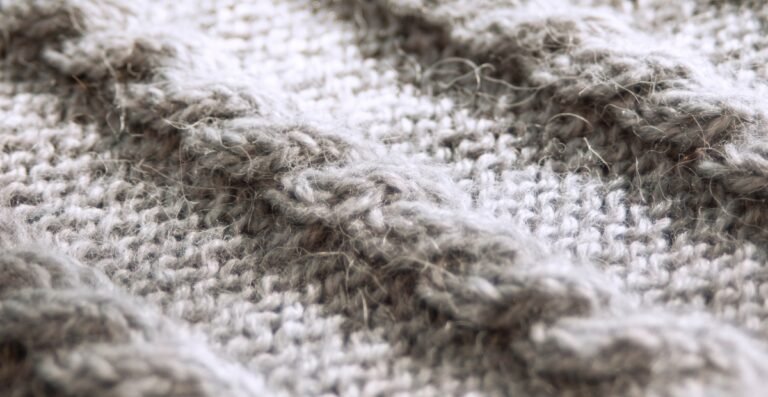
Cashmere Twill Fabric Guide is a type fabric created by weaving fibers of cashmere with a pattern of twill weave. This weaving technique involves the yarn passing over and under the threads in a pattern that creates diagonal lines on the surface of fabric.
The fabric then develops an unusual diagonal texture, which makes it stand out from plain weaves. The twill weave also makes the fabric stronger, and less likely to wrinkle. Cashmere twill is soft and durable.
Twill cashmere is more structured than traditional plain-woven fabrics. Cashmere retains its luxurious softness. It is therefore widely used for premium clothing and accessories.
Cashmere fibers are a natural product.
Cashmere Twill Fabric Guide is derived from the undercoat of cashmere goats. These goats are mainly found in Mongolia and Central Asia. The goats create a thin insulating coat to protect them from the cold.
The Cashmere Twill Fabric Guide goats naturally shed their soft undercoat every spring. Farmers collect fibers by combing or shearing. The fibers are then cleaned, sorted and processed, before they are spun into yarn.
Cashmere is made by a laborious process. Cashmere is made from the fleece of multiple goats. Cashmere fabrics are therefore considered premium textiles.
Understanding Twill Weave
Understanding the weave structure is crucial to fully appreciate the cashmere twill. Twill weaving produces a diagonal pattern of ribs on the surface of fabric.
This method involves the weft passing over two or three warps, and then underneath another two or three warps. The pattern changes slightly with every row to form the recognizable diagonal pattern.
Cashmere Twill Fabric Guide have several benefits.
Greater durability
Better drape
Increased resistance to wrinkles
Surfaces with a more textured texture
Due to these qualities, twill weave is used widely for fabrics like denim, gabardine and luxury wool textiles.
Cashmere fibers woven into this pattern create a fabric that combines elegance and practicality.
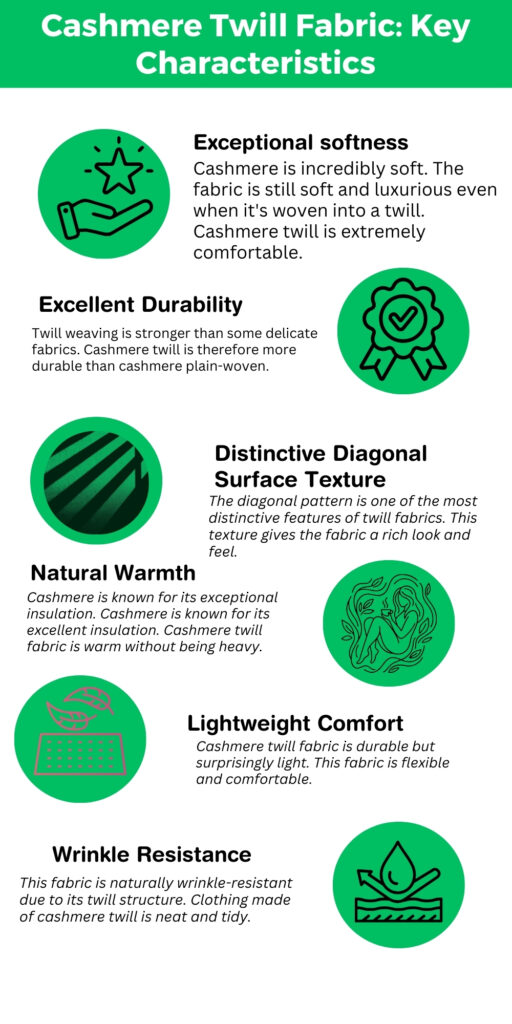
Cashmere Twill Fabric Guide: Key Characteristics
Cashmere twill fabric is a unique fabric in the textile industry. Understanding its characteristics will help both manufacturers and consumers to appreciate its value.
Cashmere is incredibly soft. The fabric is still soft and luxurious even when it’s woven into a twill. Cashmere twill is extremely comfortable.
2. Excellent Durability
Twill weaving is stronger than some delicate fabrics. Cashmere twill is therefore more durable than cashmere plain-woven.
It is ideal for clothing that requires long-lasting quality.
3. Distinctive Diagonal Surface Texture
The diagonal pattern is one of the most distinctive features of twill fabrics. This texture gives the fabric a rich look and feel.
The pattern also enhances the fabric’s aesthetic appeal and makes it ideal for sophisticated designs.
4. Natural Warmth
Cashmere is known for its exceptional insulation. Cashmere is known for its excellent insulation. Cashmere twill fabric is warm without being heavy.
It is perfect for clothing that needs to be worn in cold weather.
5. Lightweight Comfort
Cashmere twill fabric is durable but surprisingly light. This fabric is flexible and comfortable.
6. Wrinkle Resistance
This fabric is naturally wrinkle-resistant due to its twill structure. Clothing made of cashmere twill is neat and tidy.
Cashmere Twill Fabric Manufacturing Process
Cashmere Twill Fabric Guide production involves several steps. Each step contributes to the final luxury and quality of the fabric.
1. Fiber Collection
Cashmere goats’ undercoat is first collected. Farmers typically comb goats when they molt.
After collection, fibers are cleaned according to their quality and then sorted.
2. Dehairing and Cleaning
Cashmere fibres are raw and contain coarse guard hairs. These must be removed. Specialized machines separate soft fibers from rough fibers.
The final yarn will be smooth and comfortable.
3. Spinning Yarn
The purified fibers of cashmere are then spun into fine yarn. To maintain softness and strength, this step requires precision.
4. Twill Weaving
The yarn is then prepared and woven using the twill technique. Textile manufacturers who are skilled in the art carefully control the pattern, creating the characteristic diagonal texture.
5. The Finishing Process
The fabric is then finished with washing, brushing and pressing. These steps improve the appearance and softness of the fabric.
Cashmere Twill Fabric: Benefits
Cashmere twill offers many benefits, which makes it a popular fabric in the fashion world.
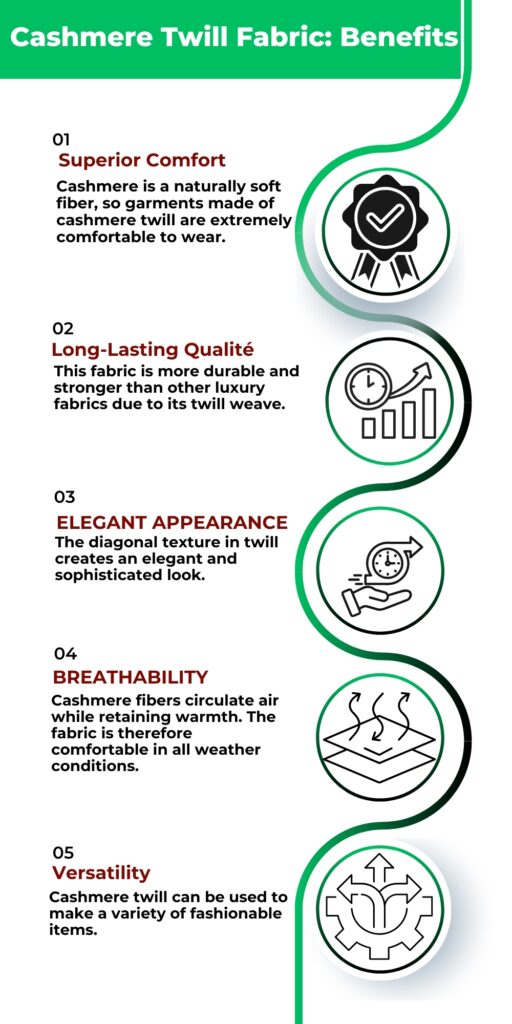
Cashmere Twill Fabric Benefits: Superior Comfort, Durability, Elegant Appearance, Breathability, and Versatility.
Superior Comfort
Cashmere is a naturally soft fiber, so garments made of cashmere twill are extremely comfortable to wear.
Long-Lasting Qualité
This fabric is more durable and stronger than other luxury fabrics due to its twill weave.
Elegant Appearance
The diagonal texture in twill creates an elegant and sophisticated look.
Breathability
Cashmere fibers circulate air while retaining warmth. The fabric is therefore comfortable in all weather conditions.
Versatility
Cashmere twill can be used to make a variety of fashionable items.
Cashmere Twill Fabric Guide: Common uses
Cashmere twill fabric, with its luxurious qualities is used in many fashion applications and textiles.
1. Luxury Coats & Jackets
Cashmere twill is often used by designers to create high-end jackets and coats. The fabric is warm and elegant.
2. Scarves & Shawls
Cashmere twill scarfs are very popular, as they provide warmth and softness with a refined look.
3. Premium Trousers
Cashmere twill is used by some luxury fashion brands to create tailored trousers and sophisticated garments.
4. Designer Dresses
Cashmere twill is also suitable for elegant dresses and skirts due to its smooth drape.
5. Accessories
Fabric is also used to make accessories, such as wraps or fashion items.
Cashmere Twill and Other Cashmere Fabrics
Cashmere Twill Fabric Guide is woven differently, each producing a different type of fabric.
Twill vs Plain Weave
Cashmere plain weave fabrics are lightweight and smooth. They may not last as long as twill fabrics.
Cashmere twill fabrics are more durable and have a textured look.
Cashmere vs Twill
Knitted fabrics of cashmere are soft and stretchy. Cashmere fabrics woven in twill provide greater structure and strength.
For tailored garments, twill fabric is often the preferred choice.
Sustainability and ethical considerations
Cashmere Twill Fabric Guide is a sustainable product. Cashmere goats overgrazing can damage grasslands and ecosystems.
Many manufacturers adopting sustainable practices. These include:
Responsible goat farming
Eco-friendly Processing Methods
Cashmere recycling production
Customers are increasingly choosing brands that place a high priority on ethical sourcing, environmental responsibility and other factors.
Cashmere Twill Fabric Guide: How to care for it
Cashmere twill clothing should be properly cared for to ensure their beauty and durability.
Gently Washing
Cashmere Twill Fabric Guide clothing should be hand washed with mild detergent. Dry cleaning by professionals is also an option.
Avoid Harsh Chemicals
Cashmere is delicate and can be damaged by strong detergents or bleach.
Drying Properly
To dry cashmere, lay the garments flat. The fabric may be stretched if they are hung.
Store with Care
Cashmere should be stored in a dry, cool place. Use breathable garment bags to protect your cashmere from dust and moths.
Why Cashmere Twill Fabric Is a Premium Option
Cashmere Twill Fabric Guide is the perfect combination of luxury and functionality. Softness, durability and an elegant appearance are what make this fabric so desirable in the fashion industry.
The twill weave also increases the strength of fabric without compromising on comfort. Designers and consumers appreciate the fabric’s versatility.
Cashmere textiles can also be responsibly produced with the increasing focus on sustainable production. Cashmere textiles are valued and reputaion is maintained by this development.
Cashmere Twill Fabric Guide: The future of cashmere
Cashmere twill looks to have a bright future. Manufacturers continue to innovate on fiber processing and weaving technology in response to the increasing demand for luxury sustainable textiles.
Designers are also exploring new ways of incorporating cashmere twill in modern fashion collections. The possibilities are endless, from high-end coats and elegant accessories to high-end jackets.
Cashmere twill will remain a symbol for luxury and sophistication as consumers continue to appreciate quality and craftsmanship.
Conclusion:
Cashmere Twill Fabric Guide is a fabric that offers luxury, durability and timeless elegance. Cashmere twill fabric is a beautiful and functional fabric created by combining the softness of the cashmere fibers, with the strength of a twill weave.
Its distinctive diagonal texture gives garments a sophisticated look, and its warmth makes it ideal for winter fashion. The fabric is durable, allowing high-quality garments to last many years.
FAQs
What is Cashmere Twill Fabric?
Cashmere Twill Fabric Guide is a luxurious textile made from cashmere fibers woven in a twill pattern that creates diagonal lines and improves durability.
Why is Cashmere Twill Fabric considered premium?
It is considered premium because it combines the softness of cashmere with the Cashmere Twill Fabric Guide strength and texture of the twill weave, offering both comfort and durability.
What are the main features of Cashmere Twill Fabric?
The key features include softness, warmth, durability, wrinkle resistance, and a distinctive diagonal texture.
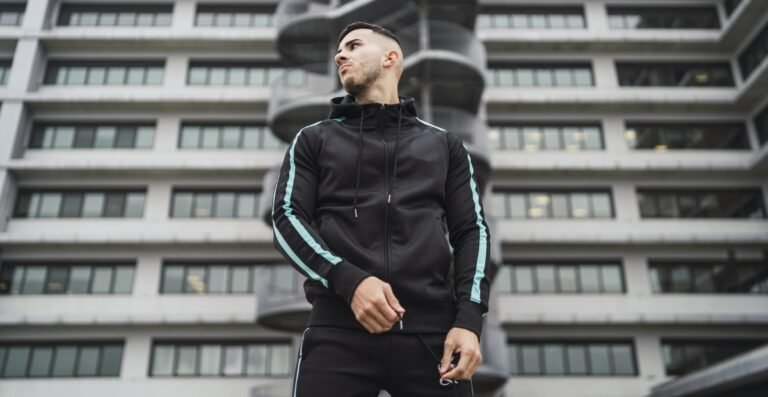
Fashion is constantly evolving. However, some trends stand out because they perfectly blend style, functionality, and comfort. One such trend is the Techwear Half-Zip Hoodie. In recent years, techwear has moved from a niche fashion category to a global streetwear phenomenon. As a result, modern fashion enthusiasts are increasingly choosing clothing that looks stylish while also offering practical features.
The Techwear Half-Zip Hoodie represents this perfect balance. It combines futuristic aesthetics with innovative materials, making it a must-have item for urban explorers and streetwear lovers. Moreover, its half-zip design provides versatility that traditional hoodies cannot match.
In this blog, we will explore everything you need to know about the Techwear Half-Zip Hoodie, including its features, benefits, styling tips, materials, and why it has become a favorite in modern streetwear culture.
What Is a Techwear Half-Zip Hoodie?
A Techwear Half-Zip Hoodie is a modern hoodie designed with advanced materials and functional elements inspired by technical outdoor gear and urban fashion. Unlike traditional hoodies, techwear garments are built for both performance and aesthetics.
The half-zip design allows wearers to adjust ventilation easily. In addition, the hoodie can be layered effortlessly with other clothing pieces.
Techwear fashion is often recognized for:
Minimalist yet futuristic designs
Functional pockets and compartments
Weather-resistant materials
Neutral and dark color palettes
Tactical and urban aesthetics
Because of these features, the Techwear Half-Zip Hoodie has become a staple piece for streetwear enthusiasts, travelers, and urban adventurers.
Key Features of a Techwear Half-Zip Hoodie
1. Innovative Fabric Technology
One of the most impressive aspects of a Techwear Half-Zip Hoodie is its advanced fabric technology. Typically, these hoodies are made from materials designed to withstand harsh conditions.
For example, many techwear hoodies include:
Water-resistant fabrics
Breathable synthetic blends
Durable performance materials
As a result, comfort is maintained even during long outdoor activities. Additionally, moisture is often repelled by the fabric, keeping the wearer dry.
2. Functional Half-Zip Design
The half-zip feature is not just about style; it also improves practicality.
Firstly, it allows quick temperature control. When the weather becomes warm, the zipper can simply be opened. On the other hand, it can be zipped up to provide warmth during colder conditions.
Secondly, the half-zip design makes the hoodie easier to wear and remove. Because of this convenience, it is often preferred by people with active lifestyles.
3. Tactical Pockets and Utility
Another defining feature of techwear clothing is utility-focused design. Therefore, the Techwear Half-Zip Hoodie often includes multiple pockets.
These pockets are designed for practical purposes such as:
Carrying smartphones
Storing keys or wallets
Holding small gadgets
In many designs, the pockets are strategically placed for easy access. As a result, the hoodie becomes more than just a fashion piece—it becomes functional gear.
4. Futuristic Urban Aesthetic
The visual appeal of techwear cannot be ignored. Most Techwear Half-Zip Hoodies feature clean lines, structured silhouettes, and minimalistic branding.
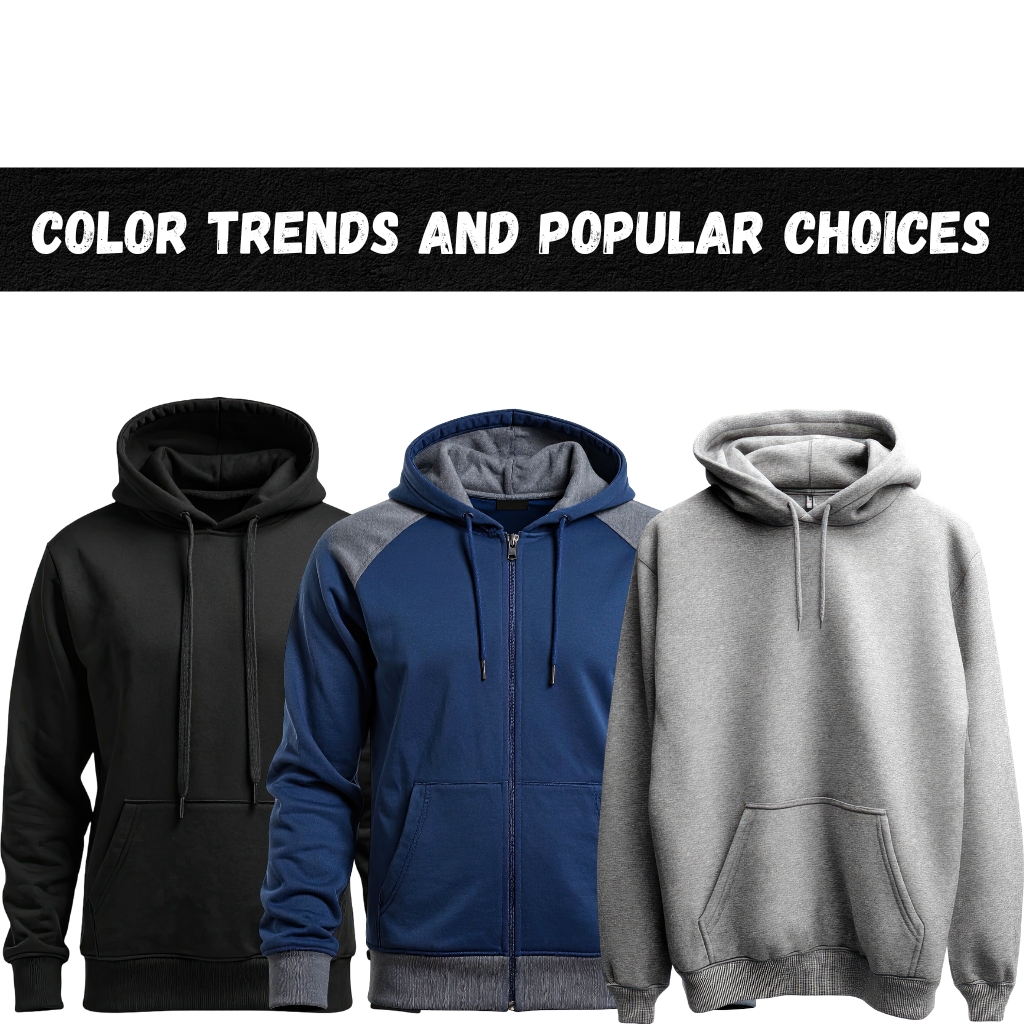
Typically, colors such as black, gray, olive, and navy dominate the techwear palette. Consequently, the hoodie can easily be paired with other urban fashion items.
Additionally, reflective details are sometimes added. These elements enhance both style and visibility during nighttime activities.
Why Techwear Half-Zip Hoodies Are So Popular
1. Perfect Blend of Fashion and Function
Modern consumers are no longer satisfied with clothing that looks good but lacks practicality. Instead, garments are expected to perform multiple roles.
The Techwear Half-Zip Hoodie fulfills this expectation. Not only does it look stylish, but it also offers practical features like weather resistance, breathability, and storage.
Because of this versatility, it has become a favorite among modern fashion lovers.
2. Ideal for Urban Lifestyles
City life often requires clothing that adapts quickly to different situations. For instance, people may travel through crowded streets, public transport, and changing weather conditions.
Fortunately, the Techwear Half-Zip Hoodie is designed for these environments. Its lightweight construction and functional design make it ideal for daily wear.
Furthermore, the hoodie is often layered with other garments, which enhances its adaptability.
3. Influenced by Streetwear Culture
Streetwear culture has played a significant role in popularizing techwear fashion. Influencers, designers, and fashion enthusiasts have embraced the futuristic look.
Consequently, the Techwear Half-Zip Hoodie has been widely showcased on social media platforms. As trends spread quickly online, its popularity continues to grow.
Materials Used in Techwear Half-Zip Hoodies
High-quality materials are essential for techwear clothing. Therefore, manufacturers focus on fabrics that offer durability and performance.
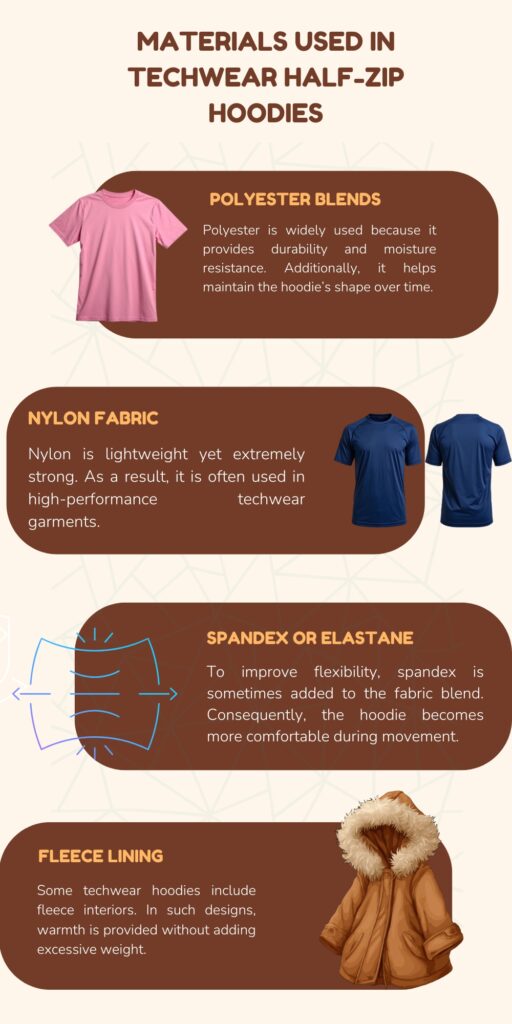
Materials Used in Techwear Half-Zip Hoodies: polyester blends, nylon fabric, spandex or elastane, and fleece lining explained with illustrations.
Common materials include:
Polyester Blends
Polyester is widely used because it provides durability and moisture resistance. Additionally, it helps maintain the hoodie’s shape over time.
Nylon Fabric
Nylon is lightweight yet extremely strong. As a result, it is often used in high-performance techwear garments.
Spandex or Elastane
To improve flexibility, spandex is sometimes added to the fabric blend. Consequently, the hoodie becomes more comfortable during movement.
Fleece Lining
Some techwear hoodies include fleece interiors. In such designs, warmth is provided without adding excessive weight.
How to Style a Techwear Half-Zip Hoodie
Styling a Techwear Half-Zip Hoodie can be both fun and creative. Since the hoodie has a modern aesthetic, it pairs well with many streetwear pieces.
Streetwear Look
For a classic streetwear outfit:
Pair the hoodie with cargo pants
Add chunky sneakers
Include a crossbody techwear bag
This combination creates a bold urban appearance.
Minimalist Urban Style
Alternatively, a minimalist look can be achieved by wearing:
Black slim-fit jeans
Neutral sneakers
A simple techwear hoodie
Because the color palette remains clean, the overall outfit appears sleek and modern.
Layered Winter Outfit
During colder months, layering becomes essential.
For example:
Wear the hoodie under a techwear jacket
Combine it with tactical pants
Add combat boots
In this setup, warmth is provided while the futuristic style is preserved.
Benefits of Wearing a Techwear Half-Zip Hoodie
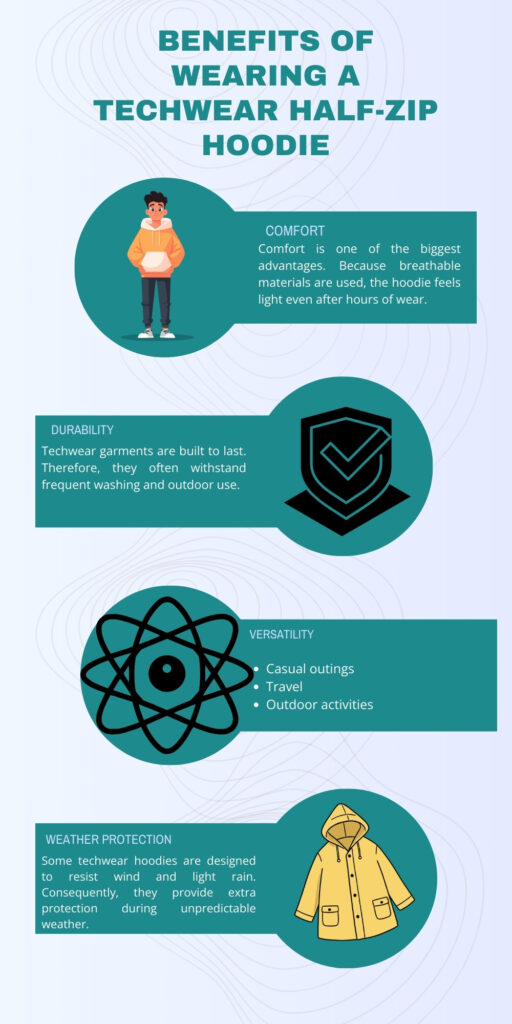
Infographic: Benefits of Wearing a Techwear Half-Zip Hoodie — comfort, durability, versatility, and weather protection illustrated with icons and brief descriptions.
Comfort
Comfort is one of the biggest advantages. Because breathable materials are used, the hoodie feels light even after hours of wear.
Durability
Techwear garments are built to last. Therefore, they often withstand frequent washing and outdoor use.
Versatility
The hoodie can be worn for many occasions, including:
Casual outings
Travel
Outdoor activities
Streetwear fashion events
Weather Protection
Some techwear hoodies are designed to resist wind and light rain. Consequently, they provide extra protection during unpredictable weather.
Techwear Half-Zip Hoodie vs Traditional Hoodie
Feature
Techwear Half-Zip Hoodie
Traditional Hoodie
Design
Futuristic
Classic
Fabric
Performance materials
Cotton
Functionality
Multiple features
Basic
Weather Resistance
Often included
Rare
Style
Urban techwear
Casual
As shown above, the Techwear Half-Zip Hoodie offers more advanced features, which explains its growing popularity.
Who Should Wear a Techwear Half-Zip Hoodie?
This hoodie is ideal for many types of people.
Streetwear Enthusiasts
Fashion lovers who follow modern trends will appreciate the futuristic design.
Urban Travelers
People who commute daily benefit from the hoodie’s practicality.
Outdoor Explorers
Because some models are weather-resistant, they are suitable for light outdoor adventures.
Minimalist Fashion Fans
Those who prefer clean and functional clothing will also enjoy techwear designs.
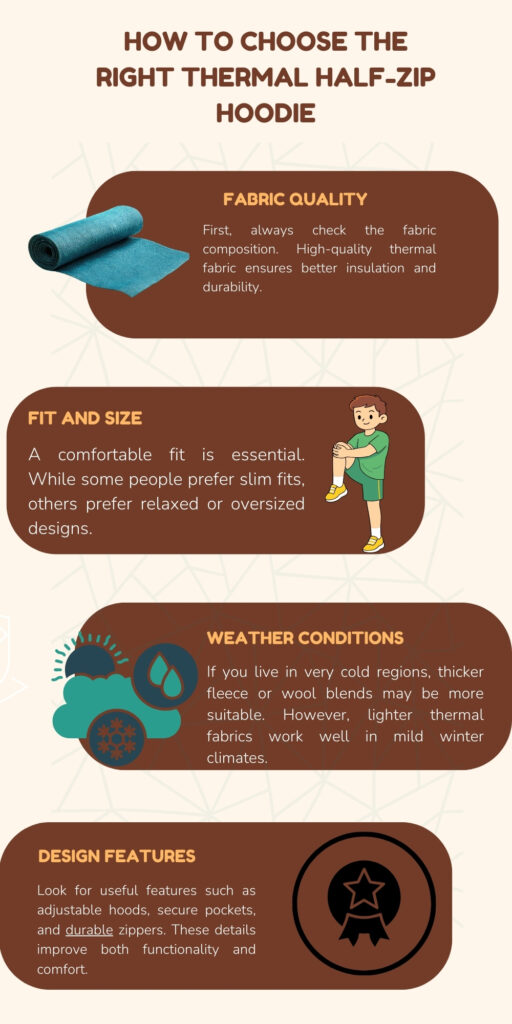
How to Choose the Best Techwear Half-Zip Hoodie
When purchasing a techwear hoodie, several factors should be considered.
Fabric Quality
Firstly, check whether the material is durable and breathable.
Fit and Comfort
Secondly, ensure the hoodie fits properly. Oversized and regular fits are both common in techwear.
Pocket Design
Additionally, examine the number and placement of pockets.
Weather Resistance
If you plan to wear it outdoors, water-resistant materials may be beneficial.
Caring for Your Techwear Half-Zip Hoodie
Proper care ensures that the hoodie lasts longer.
Here are some helpful tips:
Wash with cold water
Avoid harsh detergents
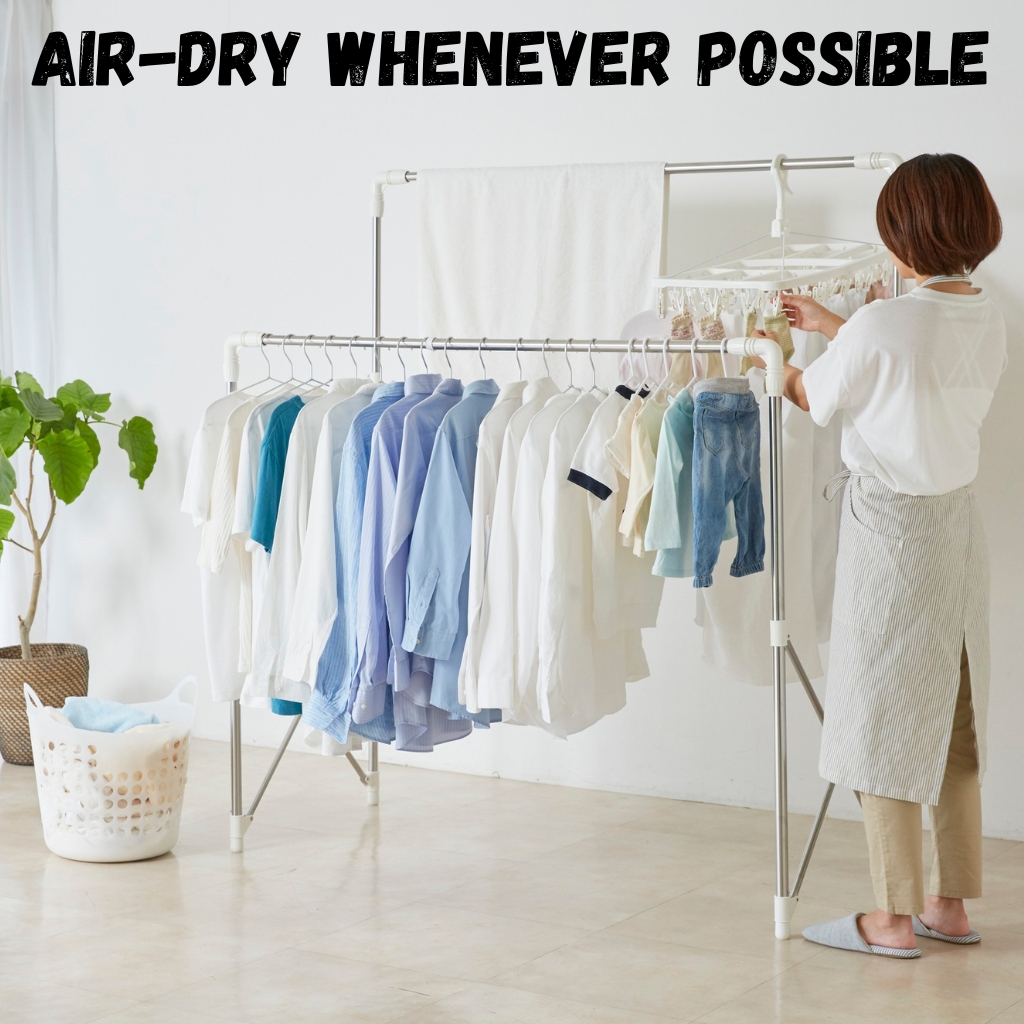
Air dry instead of machine drying
Do not use high heat
By following these steps, the fabric’s performance features will be preserved.
The Future of Techwear Fashion
Techwear continues to evolve as technology improves. In the future, clothing may include even more advanced features such as:
Smart fabrics
Temperature regulation systems
Integrated wearable technology
Therefore, the Techwear Half-Zip Hoodie represents only the beginning of a larger fashion movement.
Conclusion
The Techwear Half-Zip Hoodie is more than just another fashion trend. Instead, it represents a shift toward functional, stylish, and technology-inspired clothing.
Because it combines comfort, durability, and modern design, it has become a must-have item in contemporary streetwear wardrobes. Moreover, its versatility makes it suitable for everyday use as well as outdoor activities.
As techwear fashion continues to grow, the popularity of the Techwear Half-Zip Hoodie will likely increase. Consequently, anyone interested in modern urban fashion should consider adding this innovative garment to their collection.
FAQs
What is a Techwear Half-Zip Hoodie?
A Techwear Half-Zip Hoodie is a modern hoodie designed with functional fabrics, urban aesthetics, and a half-zip closure for style, comfort, and versatility.
Why is the Techwear Half-Zip Hoodie popular?
It is popular because it combines futuristic streetwear style with practical features like breathable fabrics, weather resistance, and functional pockets.
What materials are used in Techwear Half-Zip Hoodies?
They are usually made from polyester blends, nylon, and performance fabrics that provide durability, flexibility, and moisture resistance.
Fashion trends may change every season; however, some styles never truly disappear. Instead, they evolve and return stronger than before. One such timeless clothing item is the Vintage Half-Zip Hoodie. While modern streetwear continues to grow rapidly, vintage fashion has gained equal popularity among people who value authenticity and individuality.
The Vintage Half-Zip Hoodie perfectly blends retro aesthetics with modern comfort. It provides warmth, style, and versatility, which makes it a wardrobe essential for many fashion lovers. Moreover, its unique half-zip design offers a stylish alternative to traditional hoodies.
In this detailed guide, we will explore everything about vintage half-zip hoodies—from their history and design features to styling tips, fabric choices, and reasons why they remain popular today.
What Is a Vintage Half-Zip Hoodie?
A Vintage Half-Zip Hoodie is a hoodie designed with a zipper that runs halfway down the front rather than the full length. Typically, the design was inspired by sportswear and outdoor clothing from the past decades.
Unlike modern fast-fashion pieces, vintage hoodies often reflect classic craftsmanship, durable fabrics, and nostalgic designs. Therefore, these hoodies are loved by people who appreciate timeless fashion.
Additionally, vintage hoodies often feature:
Retro color combinations
Old-school logos or prints
Heavy cotton or fleece fabrics
Relaxed and comfortable fits
Because of these characteristics, the hoodie provides both style and practicality.
The History of Vintage Half-Zip Hoodies
The hoodie itself dates back to the 1930s, when it was originally designed for workers who needed warm clothing in cold warehouses. Over time, the garment was adopted by athletes, students, and later by streetwear culture.
During the 1970s and 1980s, half-zip hoodies became popular among sports teams and outdoor enthusiasts. At that time, many brands produced durable hoodies with simple yet stylish designs.
Later on, during the 1990s and early 2000s, vintage sportswear started influencing street fashion. As a result, many retro hoodie designs became fashion statements.
Today, vintage half-zip hoodies are celebrated because they represent heritage, authenticity, and individuality.
Key Features of a Vintage Half-Zip Hoodie
Several distinctive elements make vintage half-zip hoodies different from regular hoodies.
1. Half-Zip Front Design
The half-zip closure allows easy wear while maintaining a clean and stylish look. It also provides ventilation when the zipper is opened slightly.
2. Retro Aesthetic
Vintage hoodies often feature classic logos, faded colors, and minimalistic graphics. These details help create a nostalgic appearance.
3. High-Quality Fabrics
Most vintage-style hoodies are made using thick cotton, fleece, or cotton-blend materials. Consequently, warmth and durability are ensured.
4. Comfortable Fit
Unlike modern slim fits, vintage hoodies typically offer a relaxed and roomy fit, which enhances comfort.
5. Durable Construction
Because older clothing was often made to last longer, strong stitching and heavy fabric were commonly used.
Why Vintage Half-Zip Hoodies Are Popular Today
Although fashion trends constantly change, vintage hoodies continue to gain popularity. There are several reasons behind this growing demand.
1. Nostalgic Appeal
Many people enjoy wearing clothing that reflects past decades. Vintage fashion reminds them of classic sportswear, college culture, and old street style.
2. Unique Style
Unlike mass-produced modern clothing, vintage pieces often look unique. Therefore, individuals can express their personal style more easily.
3. Sustainability
Fast fashion creates a lot of waste. However, vintage clothing promotes sustainable fashion because existing garments are reused rather than discarded.
4. Comfort and Practicality
Vintage hoodies are usually made from thicker fabrics. As a result, they provide better warmth and comfort during cooler seasons.
5. Versatile Fashion
The Vintage Half-Zip Hoodie can easily be paired with many outfits. It works well with both casual and streetwear styles.
Best Fabrics Used in Vintage Half-Zip Hoodies
The fabric plays an important role in the comfort and durability of a hoodie. Several materials are commonly used in vintage designs.
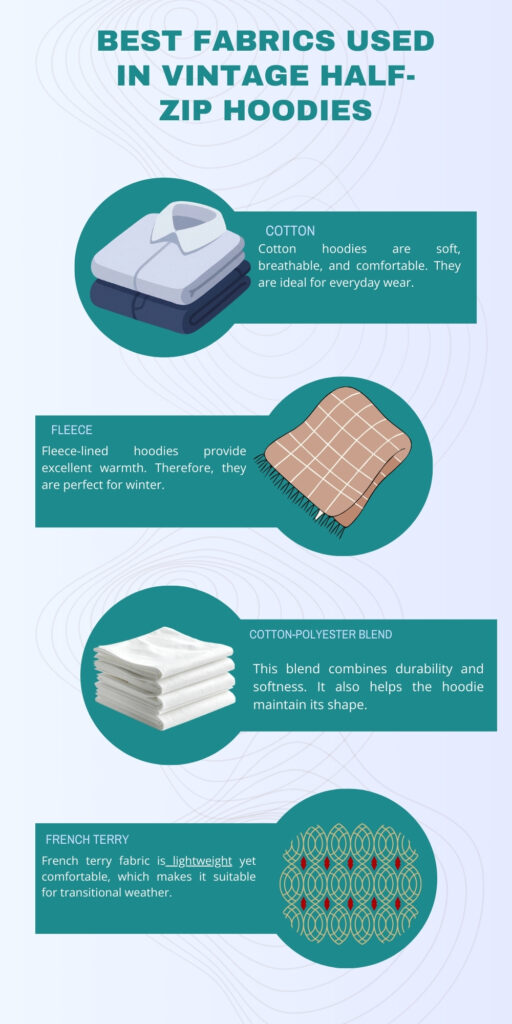
Fabrics that make vintage half-zip hoodies comfortable and practical: cotton, fleece, cotton-polyester blend, and French terry.
Cotton
Cotton hoodies are soft, breathable, and comfortable. They are ideal for everyday wear.
Fleece
Fleece-lined hoodies provide excellent warmth. Therefore, they are perfect for winter.
Cotton-Polyester Blend
This blend combines durability and softness. It also helps the hoodie maintain its shape.
French Terry
French terry fabric is lightweight yet comfortable, which makes it suitable for transitional weather.
How to Style a Vintage Half-Zip Hoodie
One of the biggest advantages of this hoodie is its styling flexibility. With the right combination, it can create several fashionable looks.
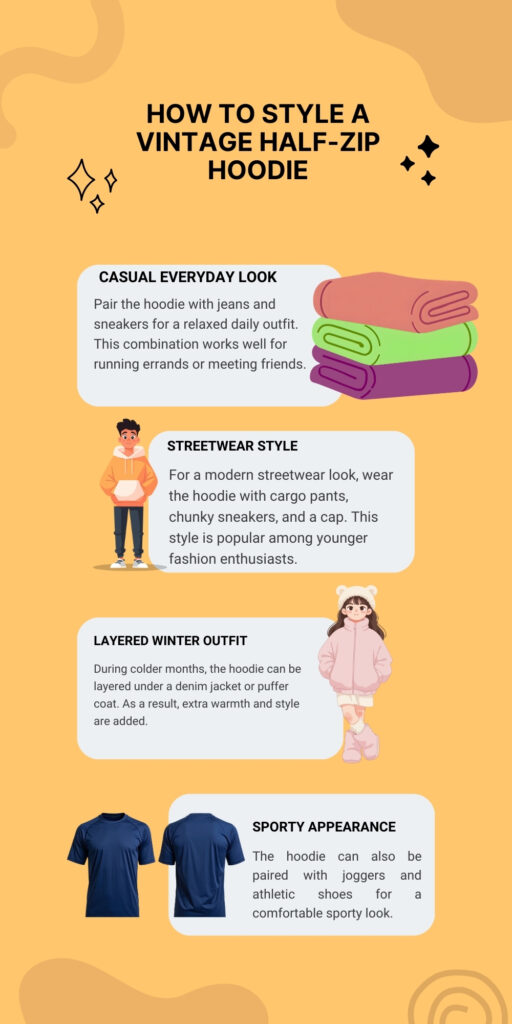
How to style a vintage half-zip hoodie: casual everyday, streetwear, layered winter, and sporty looks.
Casual Everyday Look
Pair the hoodie with jeans and sneakers for a relaxed daily outfit. This combination works well for running errands or meeting friends.
Streetwear Style
For a modern streetwear look, wear the hoodie with cargo pants, chunky sneakers, and a cap. This style is popular among younger fashion enthusiasts.
Layered Winter Outfit
During colder months, the hoodie can be layered under a denim jacket or puffer coat. As a result, extra warmth and style are added.
Sporty Appearance
The hoodie can also be paired with joggers and athletic shoes for a comfortable sporty look.
Vintage vs Modern Half-Zip Hoodies
Understanding the differences between vintage and modern hoodies can help buyers choose the right style.
Feature
Vintage Half-Zip Hoodie
Modern Hoodie
Style
Retro and classic
Trend-focused
Fit
Relaxed and loose
Slim or fitted
Fabric
Heavy cotton or fleece
Lightweight blends
Design
Minimal graphics
Bold prints
Durability
Often long-lasting
Varies by brand
Although modern hoodies may look more contemporary, vintage styles offer timeless appeal and durability.
Who Should Wear a Vintage Half-Zip Hoodie?
The Vintage Half-Zip Hoodie is suitable for many different people.
Fashion Enthusiasts
Those who enjoy retro clothing will appreciate the classic design.
Students
Students often prefer comfortable clothing that still looks stylish.
Outdoor Lovers
The hoodie provides warmth and flexibility for casual outdoor activities.
Streetwear Fans
Vintage fashion is strongly connected with modern streetwear culture.
How to Choose the Right Vintage Half-Zip Hoodie
Before purchasing a vintage hoodie, several factors should be considered.
Check Fabric Quality
High-quality cotton or fleece ensures comfort and durability.
Look for Authentic Details
Vintage logos, embroidery, and unique stitching can indicate authenticity.
Choose the Right Fit
Oversized fits are common in vintage styles; however, the size should still feel comfortable.
Inspect Condition
If buying second-hand, check for damage, fading, or fabric wear.
Caring for Your Vintage Half-Zip Hoodie
Proper care helps maintain the quality and lifespan of a hoodie.
Wash with Cold Water
Cold water prevents shrinking and color fading.
Use Mild Detergent
Harsh chemicals can damage vintage fabrics.
Air Dry When Possible
Air drying protects the fabric and maintains its shape.
Store Properly
Fold the hoodie neatly and keep it in a dry place.
Vintage Half-Zip Hoodies in Modern Fashion
Vintage fashion has become a major trend in recent years. Many designers and brands now produce clothing inspired by past decades.
Consequently, the Vintage Half-Zip Hoodie has become a staple in streetwear collections. It is often styled with oversized pants, retro sneakers, and minimal accessories.
Social media has also played an important role in promoting vintage fashion. Influencers frequently showcase retro outfits, which inspires younger generations to adopt vintage styles.
Benefits of Wearing a Vintage Half-Zip Hoodie
There are many advantages to adding this hoodie to your wardrobe.
Timeless and stylish design
Comfortable and warm fabric
Versatile outfit combinations
Sustainable fashion choice
Unique and nostalgic appearance
Because of these benefits, the hoodie remains popular across different age groups.
Conclusion
The Vintage Half-Zip Hoodie represents the perfect balance between classic fashion and modern comfort. Its retro aesthetic, durable fabric, and versatile design make it a timeless wardrobe essential.
While many fashion trends come and go, vintage clothing continues to hold a special place in the fashion world. Therefore, investing in a vintage half-zip hoodie is not only a stylish choice but also a sustainable one.
Whether you prefer casual outfits, streetwear looks, or layered winter styles, this hoodie can easily adapt to your fashion needs. Ultimately, the vintage half-zip hoodie proves that classic designs never truly go out of style.
FAQs
What is a Vintage Half-Zip Hoodie?
A Vintage Half-Zip Hoodie is a retro-style hoodie with a zipper that opens halfway down the front, combining classic fashion with comfortable everyday wear.
Why are vintage half-zip hoodies popular?
They are popular because of their nostalgic design, durable fabrics, unique style, and ability to fit both casual and streetwear fashion trends.
What fabric is commonly used in vintage half-zip hoodies?
Most vintage half-zip hoodies are made from cotton, fleece, or cotton-polyester blends that provide warmth, comfort, and long-lasting durability.
Gym and fitness training outfits are specially designed clothes for exercise and physical activity. These outfits support movement, improve comfort, and help manage sweat during workouts. Unlike regular clothing, fitness apparel uses technical fabrics and flexible designs. Therefore, athletes and beginners both benefit from wearing proper gym wear.
Choosing the right gym and fitness training outfits improves performance in many ways. First, the correct clothing allows free body movement during exercises. Second, breathable materials help regulate body temperature during intense workouts. As a result, athletes stay focused and comfortable for longer sessions.
Style also plays an important role in fitness clothing. When people wear stylish workout outfits, they often feel more confident. Confidence then increases motivation to exercise regularly. Moreover, attractive gym outfits encourage people to maintain healthy routines.
Additionally, modern gym wear blends fashion with function. Many brands design clothing that looks good both inside and outside the gym. Therefore, people often wear fitness outfits for casual daily activities.
Overall, the right gym and fitness training outfits create a balance between performance, comfort, and style.
History of Gym and Fitness Training Outfits
Urban cyclist in bold pink gear.
The history of gym clothing reflects the growth of fitness culture worldwide. In early times, people exercised in simple cotton clothes or basic athletic uniforms. These outfits were comfortable but lacked advanced performance features.
During the 1970s and 1980s, fitness culture expanded rapidly. Aerobics classes became popular, and colorful workout outfits appeared. Stretch fabrics and synthetic fibers also started improving sports clothing. As a result, gym outfits became more flexible and functional.
Later, technological developments transformed athletic wear. Moisture-wicking fabrics and compression materials improved athlete performance. These innovations helped regulate sweat and support muscles during exercise.
Today, modern gym and fitness training outfits combine technology, comfort, and fashion. Many brands focus on performance fabrics and stylish designs. Additionally, sustainability now influences clothing production. Eco-friendly fabrics are becoming more common in fitness apparel.
Therefore, gym wear has evolved from simple clothing to advanced performance gear.
Types of Gym and Fitness Training Outfits
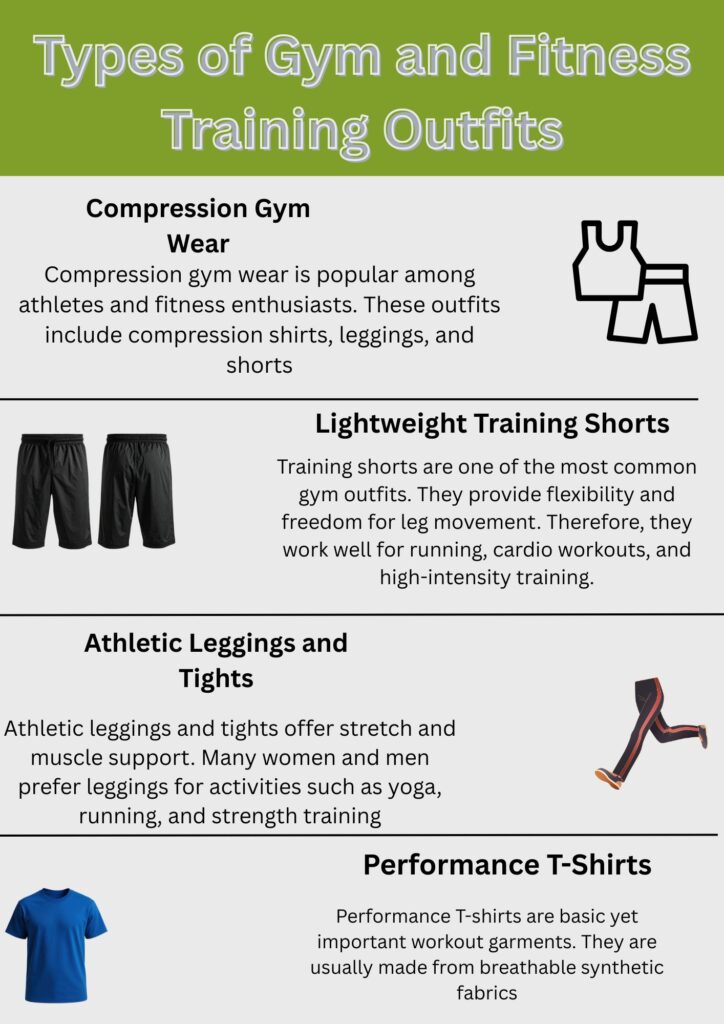
Types of Gym and Fitness Training Outfits: A quick guide to common workout clothing categories.
Gym and fitness training outfits come in many styles and designs. Each type serves a specific purpose during workouts. Therefore, athletes choose clothing based on comfort, performance, and training needs.
Modern fitness apparel also combines technology with style. Breathable fabrics, stretch materials, and ergonomic designs improve workout experiences. As a result, people can exercise more efficiently and comfortably.
Moreover, different workouts require different clothing features. For example, running outfits differ from yoga wear. Consequently, understanding various types of gym and fitness training outfits helps people make better choices.
Compression Gym Wear
Compression gym wear is popular among athletes and fitness enthusiasts. These outfits include compression shirts, leggings, and shorts. The fabric applies gentle pressure to muscles during exercise.
As a result, blood circulation improves and muscle fatigue reduces. Compression wear also supports muscles during intense workouts. Therefore, many athletes prefer this type of gym clothing for strength training and endurance activities.
Lightweight Training Shorts
Training shorts are one of the most common gym outfits. They provide flexibility and freedom for leg movement. Therefore, they work well for running, cardio workouts, and high-intensity training.
Most training shorts use breathable and moisture-wicking fabrics. These materials keep athletes cool and comfortable during exercise. Consequently, lightweight shorts remain essential gym clothing for many people.
Athletic Leggings and Tights
Athletic leggings and tights offer stretch and muscle support. Many women and men prefer leggings for activities such as yoga, running, and strength training. These outfits fit closely to the body.
Additionally, leggings often include sweat-resistant fabrics. This feature keeps the body dry during workouts. Therefore, leggings are a versatile option for modern gym and fitness training outfits.
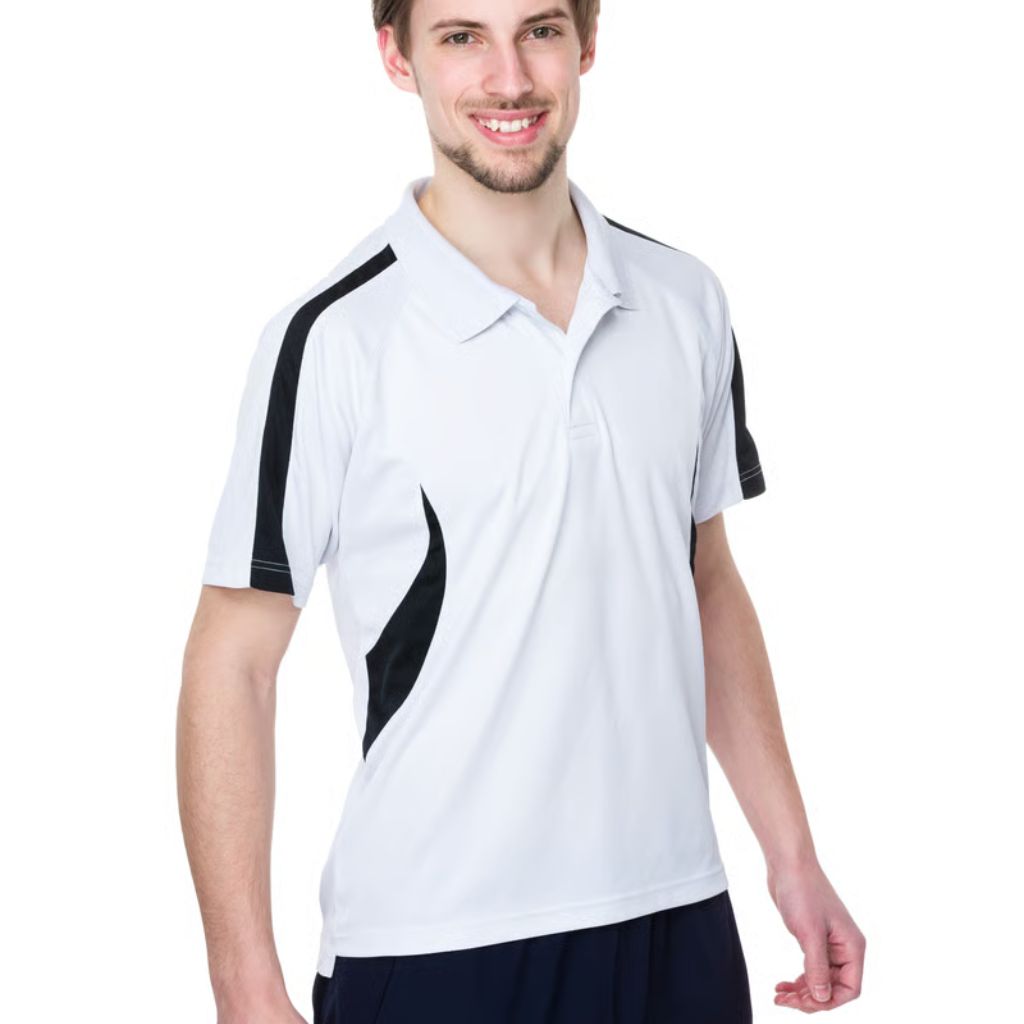
Performance T-Shirts
Performance T-shirts are basic yet important workout garments. They are usually made from breathable synthetic fabrics. Therefore, they absorb sweat and allow air circulation.
Athletes often wear performance tees during cardio, weight training, or sports activities. These shirts also provide comfort without restricting body movement.
What Are Gym and Fitness Training Outfits?
Gym and fitness training outfits are special clothing designed for physical exercise and sports activities. These outfits help people perform workouts comfortably and safely. Unlike regular clothes, fitness apparel uses technical fabrics that support movement and manage sweat. Therefore, athletes and beginners both benefit from wearing proper workout clothing.
These outfits include items such as leggings, shorts, training shirts, sports bras, and compression wear. Each piece is designed to support different types of physical activities. For example, flexible fabrics allow stretching during yoga or strength training. As a result, gym clothing helps improve movement and performance.
Why Choose the Right Gym and Fitness Training Outfits?
Choosing the right gym and fitness training outfits is essential for effective workouts, safety, and confidence. Wearing improper clothing can make exercise uncomfortable, reduce performance, and even increase the risk of injury. Therefore, selecting suitable workout outfits is as important as following a proper training routine.
Why Comfort Matters
Comfort is the first reason to choose the right gym outfit. Breathable, stretchable, and moisture-wicking fabrics keep the body cool and dry. When athletes feel comfortable, they focus more on their exercises. Discomfort or restrictive clothing may distract from the workout and reduce efficiency.
Why Performance Depends on Clothing
Performance improves significantly with proper fitness apparel. Compression wear supports muscles and reduces fatigue, while lightweight fabrics allow free movement. Proper gym outfits enable better posture, stretching, and endurance. Therefore, the right clothing directly contributes to achieving training goals.
Why Safety Is a Priority
Gym outfits also protect the body from injuries. Well-fitted shoes provide support for running or weightlifting. Stretchable and secure clothing prevents accidents caused by tripping or catching fabric on equipment. Additionally, moisture-wicking materials reduce the chance of skin irritation or rashes.
Why Confidence Boosts Motivation
Style and appearance matter too. Wearing fashionable and well-fitted gym clothing boosts confidence. Feeling confident in your outfit encourages consistent training. Motivation often increases when athletes enjoy both the look and comfort of their workout wear.
Importance of Choosing the Right Gym and Fitness Training Outfits
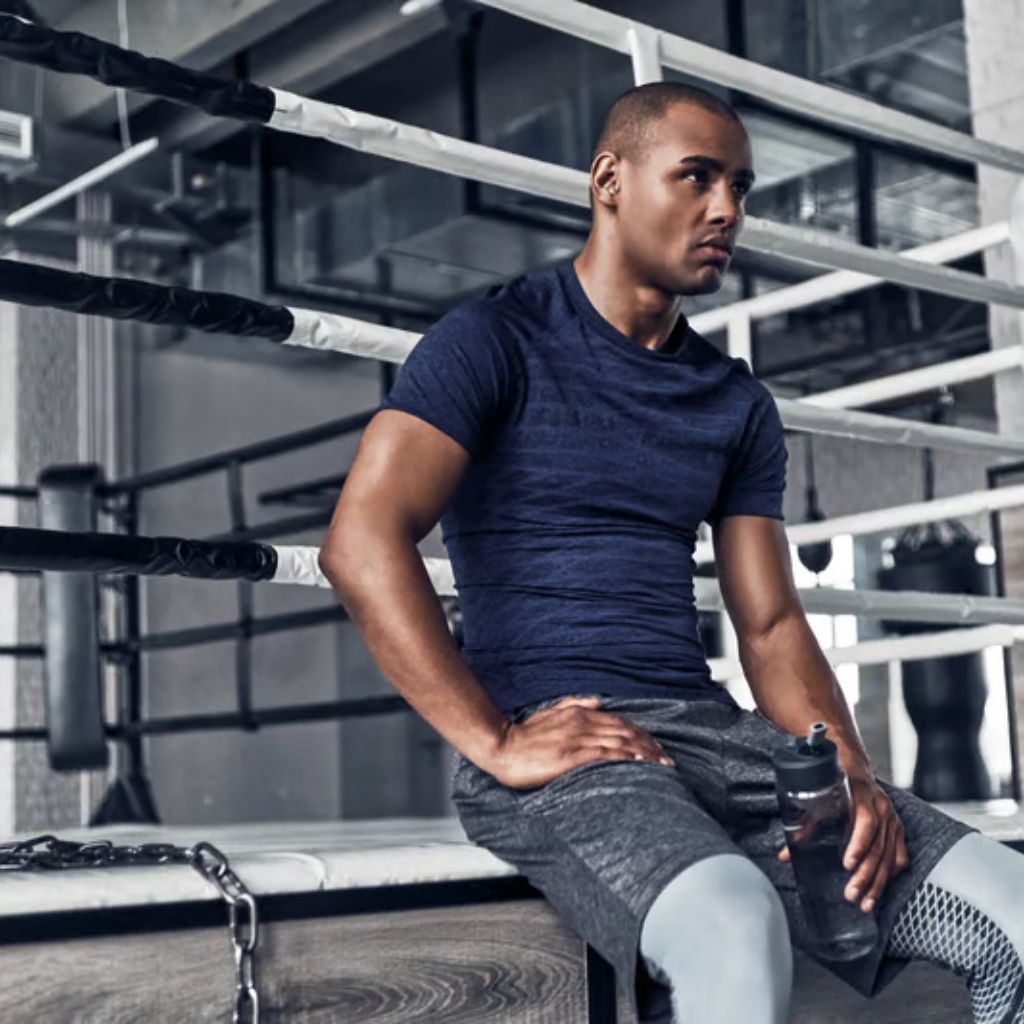
Athlete taking a break ringside.
Selecting proper gym clothing improves exercise experience significantly. The right outfit supports physical activity while also preventing discomfort. Therefore, athletes can focus entirely on training goals.
Performance
Performance improves greatly when people wear appropriate gym and fitness training outfits. Flexible fabrics allow smooth movement during workouts. As a result, exercises such as squats, lunges, and stretches become easier.
Compression clothing also supports muscles and improves blood circulation. Consequently, athletes experience reduced fatigue during intense training sessions.
Comfort
Comfort remains a key factor in fitness clothing. Breathable materials allow air to circulate around the body. Therefore, body temperature stays balanced even during intense workouts.
Additionally, moisture-wicking fabrics absorb sweat and keep skin dry. As a result, athletes avoid irritation and discomfort during long training sessions.
Safety
Safety also depends on appropriate gym outfits. Proper shoes support the feet during running or weightlifting. Therefore, they reduce the risk of injuries and strain.
Well-fitted clothing also prevents accidents. Loose garments may catch equipment or limit movement. Therefore, choosing suitable gym wear protects athletes during workouts.
Style and Confidence
Style strongly influences workout motivation. When people wear attractive gym and fitness training outfits, they feel confident. Confidence encourages consistent training and positive fitness habits.
Furthermore, fashionable gym clothing allows individuals to express personal style. Therefore, fitness outfits combine practicality with self-expression.
Fabric Types Used in Gym and Fitness Training Outfits
Fabric choice directly affects comfort and performance. Modern gym clothing uses advanced materials designed for athletic activities.
Moisture-Wicking Fabrics
Moisture-wicking fabrics draw sweat away from the skin. These materials keep athletes dry during intense workouts. Therefore, body temperature stays balanced during exercise.
Polyester and synthetic blends often provide strong moisture control. Consequently, they remain popular choices for gym clothing manufacturers.
Compression Fabrics
Compression fabrics apply gentle pressure to muscles. This pressure improves blood circulation and reduces muscle fatigue. Therefore, athletes recover faster after intense workouts.
Additionally, compression clothing supports muscles during weightlifting or high-intensity training.
Breathable Knits
Breathable knit fabrics allow air to circulate easily. These materials increase ventilation and reduce heat buildup. Therefore, athletes feel cooler during workouts.
Mesh panels also improve airflow in many modern gym outfits. Consequently, athletes enjoy greater comfort during long training sessions.
Stretch Fabrics
Stretch fabrics allow full range of motion during exercise. Materials such as spandex and elastane provide excellent flexibility. Therefore, athletes can perform complex movements comfortably.
These fabrics also maintain shape even after repeated stretching.
Sustainable Fabrics
Sustainable fabrics are becoming more common in gym and fitness training outfits. Bamboo fibers and recycled polyester offer eco-friendly alternatives. These materials reduce environmental impact while maintaining performance.
Many brands now prioritize sustainability in athletic clothing production.
Outfit Tips Based on Workout Type
Different workouts require specific clothing features. Therefore, choosing the correct outfit improves both safety and performance.
Cardio Workouts
Cardio exercises require lightweight and breathable clothing. Running or cycling generates large amounts of body heat. Therefore, moisture-wicking fabrics help regulate temperature.
Loose yet fitted clothing also supports comfortable movement during cardio activities.
Weight Training
Weight training requires supportive and flexible clothing. Compression garments stabilize muscles during heavy lifting. Consequently, athletes experience better performance and reduced fatigue.
Supportive gym shoes also improve balance during strength training.
Yoga and Pilates
Yoga and Pilates require soft and stretchable fabrics. These workouts involve controlled movements and deep stretching. Therefore, flexible clothing ensures complete freedom of motion.
Seamless designs also reduce skin irritation during floor exercises.
High-Intensity Training
High-intensity workouts produce significant sweat and heat. Therefore, quick-dry fabrics become essential for comfort. These materials absorb sweat quickly and dry faster.
Additionally, fitted clothing prevents distractions during fast movements.
Accessories and Footwear for Gym Training
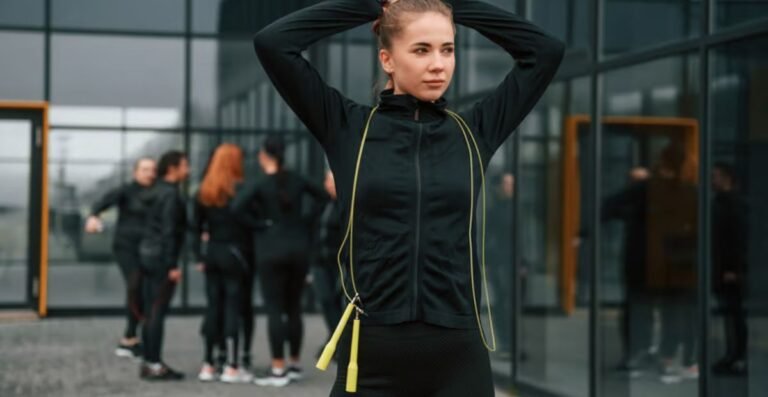
Athlete posing in performance gear.
Accessories enhance both comfort and performance during workouts. Therefore, athletes often combine gym outfits with useful training gear.
Gym Shoes
Gym shoes remain the most important fitness accessory. Running shoes support forward movement and absorb shock. Cross-training shoes provide stability for multiple workout styles.
Therefore, choosing the right footwear improves performance and prevents injuries.
Gloves, Wristbands, and Headbands
Gym gloves protect hands during weightlifting exercises. They reduce friction and improve grip strength. Wristbands absorb sweat and keep hands dry.
Headbands also prevent sweat from reaching the eyes. Therefore, athletes maintain focus during workouts.
Smart Fitness Gear
Modern gym clothing sometimes supports wearable technology. Heart rate monitors and fitness trackers help measure performance. Therefore, athletes can track progress more accurately.
Smart gym gear integrates technology with athletic clothing for improved training results.
Trending Styles in Gym and Fitness Training Outfits
Fitness fashion continues evolving with new trends every year. Modern gym wear blends athletic performance with lifestyle fashion.
Athleisure Fashion
Athleisure combines gym clothing with everyday fashion. People wear stylish workout outfits outside gyms as casual clothing. Therefore, fitness wear becomes part of daily lifestyle.
Athleisure designs focus on comfort while maintaining fashionable appearances.
Color and Pattern Trends
Bright colors and bold patterns dominate modern gym fashion. Neon shades and color-blocking designs attract attention. Therefore, athletes express personality through their workout outfits.
Seasonal trends also influence gym clothing collections each year.
Celebrity and Influencer Style
Fitness influencers strongly influence gym fashion trends. Many celebrities promote stylish gym outfits on social media platforms. Therefore, fans often follow these fashion trends.
As a result, gym clothing has become an important part of fitness culture.
Uses of Gym and Fitness Training Outfits
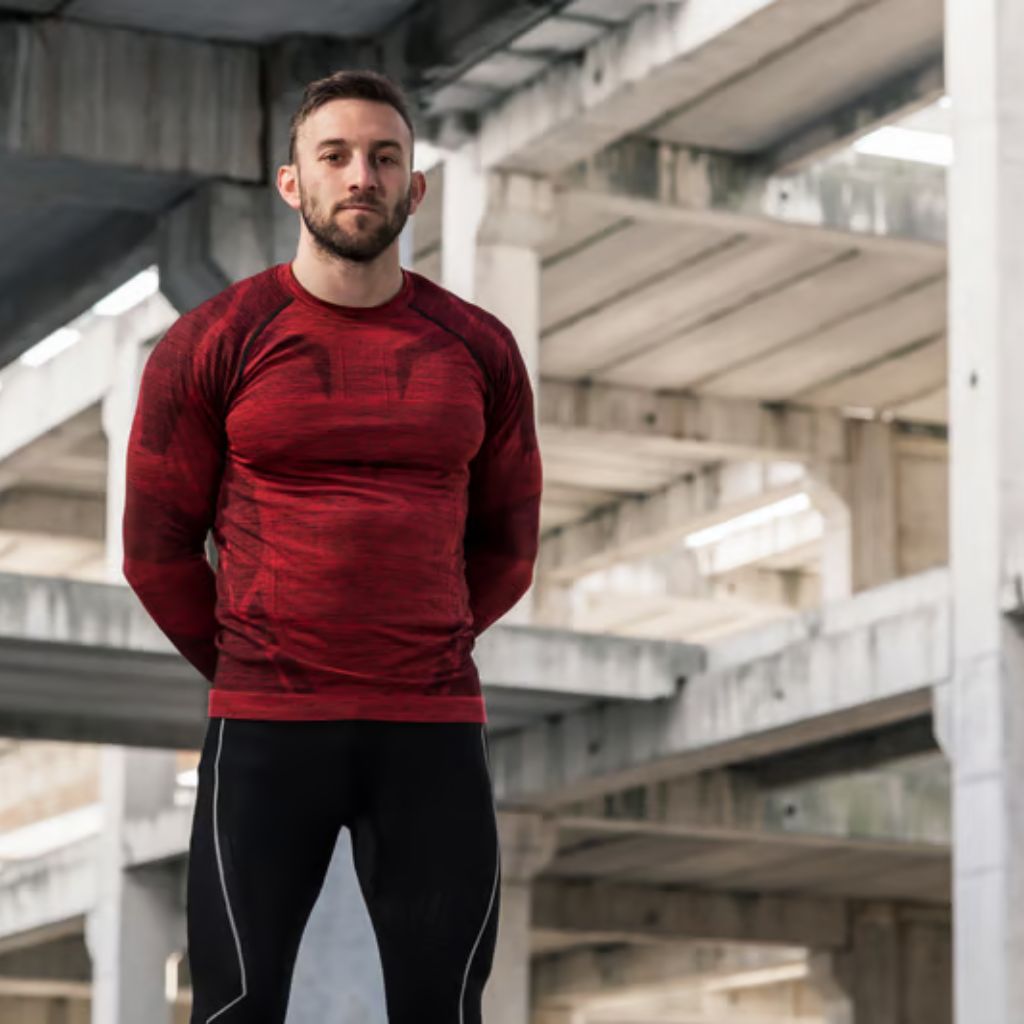
Urban workout pose under a concrete framework.
Gym and fitness training outfits serve many purposes beyond exercise. These garments support physical activity and healthy lifestyles.
First, they improve athletic performance during training sessions. Flexible fabrics allow smooth movement and reduce restrictions. Therefore, athletes perform exercises more effectively.
Second, gym clothing supports muscle recovery and comfort. Compression garments improve blood circulation during workouts. Consequently, athletes experience less muscle fatigue.
Additionally, fitness outfits encourage consistent exercise habits. When people feel comfortable and confident, they stay motivated to train regularly.
Finally, gym clothing supports casual lifestyles through athleisure fashion. Many people wear fitness apparel for daily errands or travel.
Buying Guide for Gym and Fitness Training Outfits
Choosing the right fitness clothing requires careful consideration. Many factors influence the final purchase decision.
Where to Shop
Many sportswear brands offer high-quality gym outfits. Online stores also provide wide product selections. Therefore, customers can compare styles and prices easily.
Local sports stores allow customers to test clothing comfort before purchasing.
Price and Value
Gym clothing ranges from affordable to premium options. Higher prices often reflect better fabric technology and durability. Therefore, investing in quality clothing can provide long-term value.
However, many affordable brands also offer reliable fitness apparel.
Choosing the Perfect Fit
The perfect fit depends on body type and workout style. Fitted clothing supports active movements and prevents distractions. Therefore, athletes perform exercises more comfortably.
Trying different sizes and styles helps find the most suitable gym outfit.
Care Tips for Gym and Fitness Training Outfits
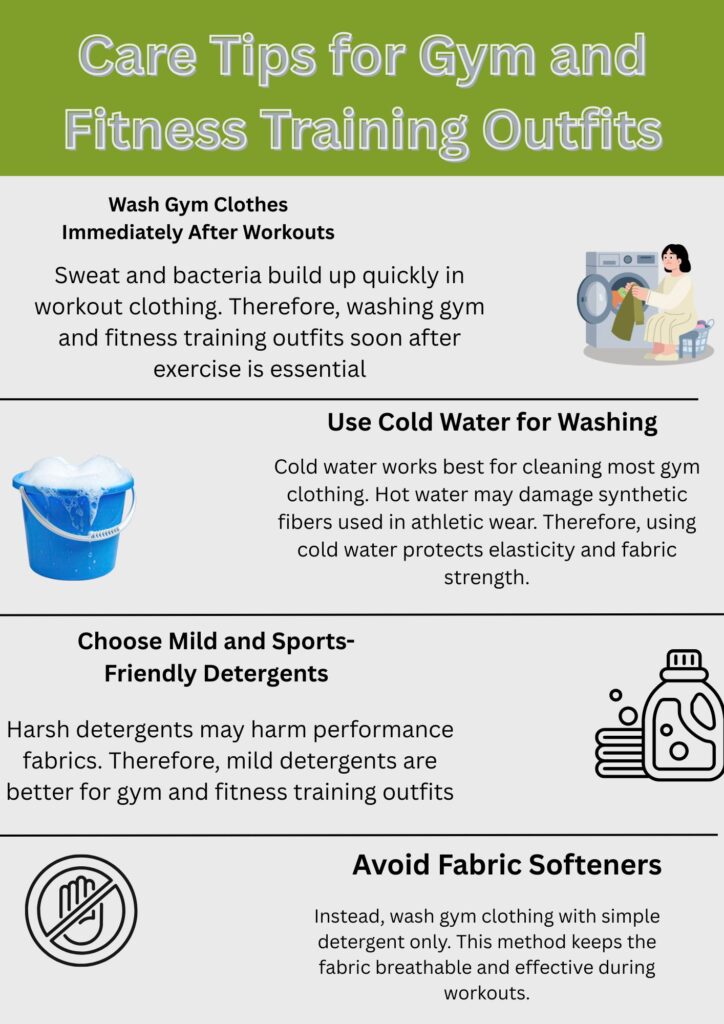
Care Tips for Gym and Fitness Training Outfits: Quick guidelines for washing and caring for workout clothing.
Proper care keeps gym and fitness training outfits fresh, durable, and effective. Workout clothes often absorb sweat, bacteria, and body oils. Therefore, correct cleaning and storage become very important. Good care also protects fabric technology such as moisture-wicking and compression features.
Moreover, when people maintain their fitness clothing properly, the garments last longer. As a result, athletes save money and enjoy consistent performance from their workout apparel. The following care tips help keep gym outfits comfortable, hygienic, and long-lasting.
Wash Gym Clothes Immediately After Workouts
Sweat and bacteria build up quickly in workout clothing. Therefore, washing gym and fitness training outfits soon after exercise is essential. Fresh washing prevents unpleasant odors and bacterial growth inside fabrics.
Additionally, quick cleaning helps maintain moisture-wicking technology. If sweat stays too long in the fabric, it may damage fibers. Consequently, prompt washing keeps workout clothes fresh and functional.
Use Cold Water for Washing
Cold water works best for cleaning most gym clothing. Hot water may damage synthetic fibers used in athletic wear. Therefore, using cold water protects elasticity and fabric strength.
Furthermore, cold water helps preserve the color of gym outfits. Bright colors and patterns remain vibrant when washed gently. As a result, your fitness clothing looks new for a longer time.
Choose Mild and Sports-Friendly Detergents
Harsh detergents may harm performance fabrics. Therefore, mild detergents are better for gym and fitness training outfits. Gentle cleaners remove sweat and odors without damaging fabric technology.
Additionally, specialized sports detergents help maintain moisture-wicking properties. These detergents remove bacteria effectively while protecting fabric fibers. Consequently, gym outfits remain breathable and comfortable.
Avoid Fabric Softeners
Fabric softeners may seem helpful, but they can damage athletic fabrics. These products create a coating on moisture-wicking materials. Therefore, the fabric loses its ability to absorb and release sweat.
Instead, wash gym clothing with simple detergent only. This method keeps the fabric breathable and effective during workouts.
Conclusion
Gym and fitness training outfits play an important role in exercise performance. Proper clothing improves comfort, flexibility, and sweat management. Therefore, athletes can focus fully on their workouts.Additionally, stylish gym outfits increase confidence and motivation. When people feel good in their clothing, they exercise more consistently.
Therefore, choosing the right gym and fitness training outfits benefits both beginners and professional athletes.
FAQs
What should I look for in a gym outfit?
When choosing gym outfits, prioritize comfort, flexibility, and breathability. Look for moisture-wicking fabrics, proper fit, and support for your activity type. High-quality shoes and accessories also improve safety and performance.
Can I wear the same outfit for different workouts?
Some gym outfits are versatile, such as performance T-shirts or leggings. However, specialized workouts may require specific clothing. For example, compression wear is ideal for weight training, while soft stretch fabrics are better for yoga.
How often should I wash my gym clothes?
Gym and fitness training outfits should be washed after every workout. Sweat and bacteria can build up quickly, causing odor or skin irritation. Washing promptly also preserves moisture-wicking and stretch properties.
Athletes always look for ways to improve performance and comfort. Therefore, advanced sports fabrics have become extremely popular in modern sportswear. Among these innovations, Power Fit Compression Fabric stands out as a high-performance material. It supports muscles while improving movement during intense workouts.
Modern fitness culture also increased demand for performance clothing. Gym enthusiasts, runners, and professional athletes now prefer specialized sports fabrics. Consequently, compression technology has become a key feature in many athletic garments.
Power Fit Compression Fabric offers both support and flexibility. Additionally, it improves circulation and reduces muscle fatigue. Because of these benefits, athletes often wear compression clothing during training sessions and competitions.
History of Compression Fabrics
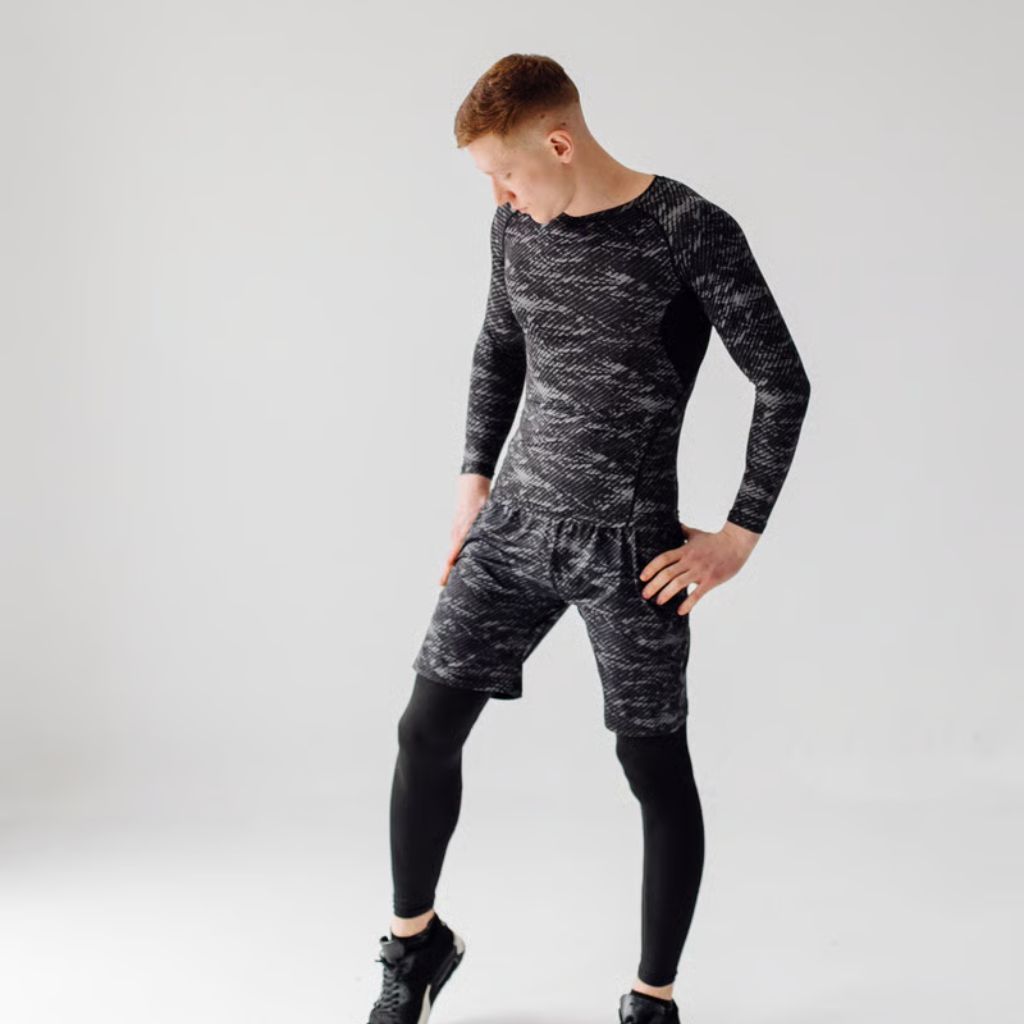
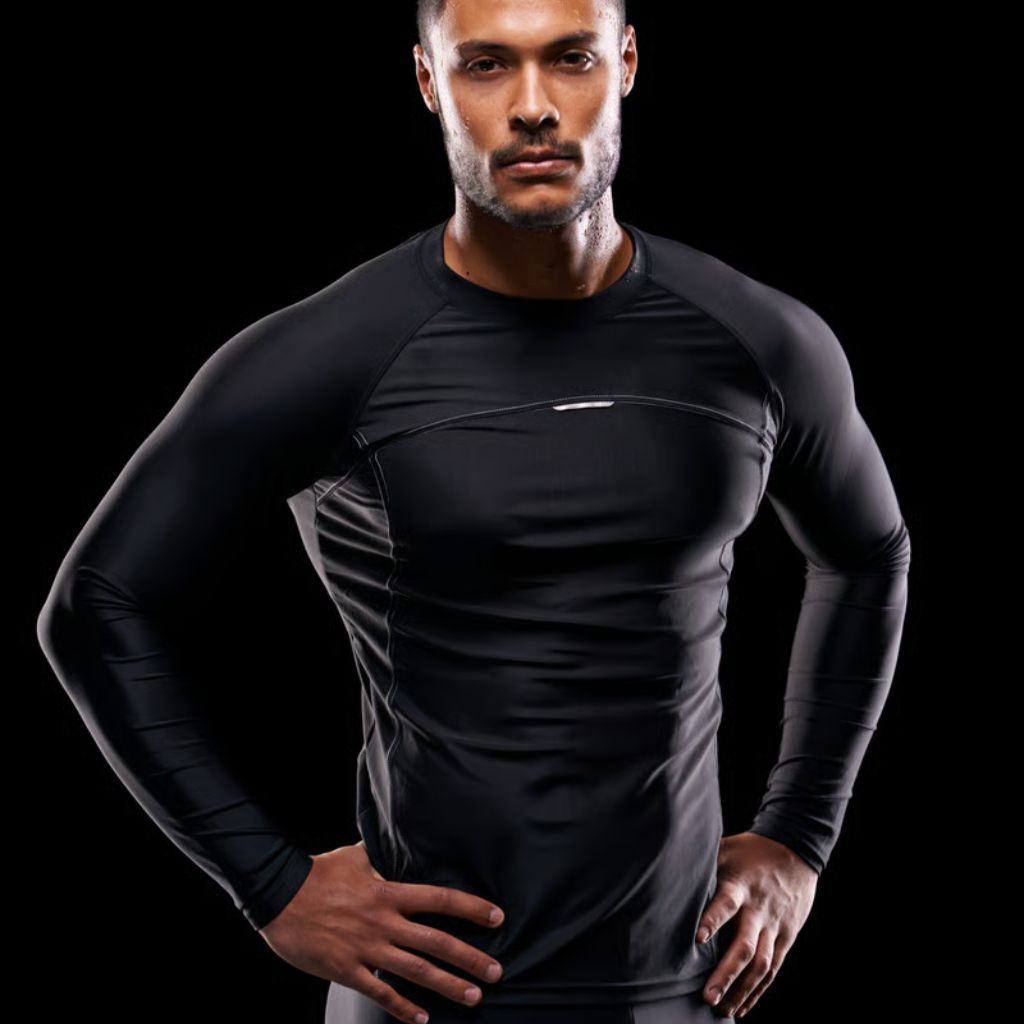
Athletic model in a black form-fitting outfit against a black backdrop.
Compression fabrics did not start in the sports industry. Instead, medical professionals first used compression garments many decades ago. Doctors designed them to improve blood circulation in patients with vein disorders. These garments helped reduce swelling and pain in the legs. As a result, compression therapy became an important medical treatment.
Later, sports scientists noticed similar benefits for athletes. They realized that controlled pressure could stabilize muscles during physical activity. Therefore,Outfits sportswear companies started experimenting with compression technology in the 1980s and 1990s. Early designs focused mainly on recovery garments rather than active sportswear.
However, textile technology improved rapidly over time. Advanced fibers such as elastane and spandex allowed manufacturers to create stretchable fabrics. Consequently, designers developed modern athletic compression garments. These fabrics supported muscles while allowing full flexibility.
Types of Power Fit Compression Fabric
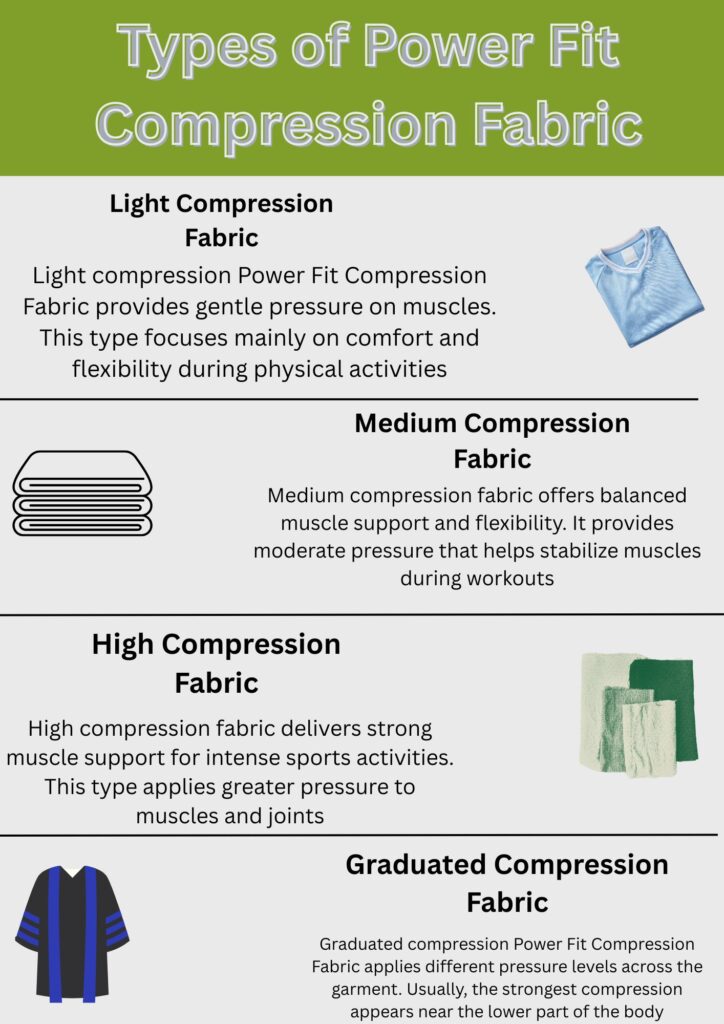
Types of Power Fit Compression Fabric: Light, Medium, High, and Graduated, with brief descriptions and sample visuals.
Power Fit Compression Fabric is available in several types to meet different athletic and performance needs. Manufacturers design each type with specific stretch levels, compression strength, and breathability features. Therefore, athletes can choose the fabric type that best supports their training activities.
Moreover, different sports require different levels of muscle support and flexibility. Some fabrics focus on strong compression for muscle stabilization. Others provide lighter compression for comfort and movement. As a result, the variety of Power Fit Compression Fabric types helps athletes perform efficiently in various sports and workouts.
Light Compression Fabric
Light compression Power Fit Compression Fabric provides gentle pressure on muscles. This type focuses mainly on comfort and flexibility during physical activities. Athletes often wear this fabric for everyday workouts and low-impact training.
Furthermore, light compression garments allow excellent airflow and breathability. Therefore, they work well for yoga, walking, and light gym exercises. This type also suits beginners who prefer comfort over strong compression.
Medium Compression Fabric
Medium compression fabric offers balanced muscle support and flexibility. It provides moderate pressure that helps stabilize muscles during workouts. Many athletes prefer this type because it supports movement without feeling too tight.
Additionally, medium compression Power Fit Compression Fabric is widely used in fitness training, running, and cycling apparel. The fabric helps reduce muscle vibration during activity. Consequently, athletes experience better endurance and reduced fatigue.
High Compression Fabric
High compression fabric delivers strong muscle support for intense sports activities. This type applies greater pressure to muscles and joints. As a result, it helps stabilize muscles during heavy workouts and competitive sports.
Athletes often wear high compression garments during weight training, sprinting, and professional sports competitions. Furthermore, this fabric improves circulation and reduces muscle strain. Therefore, it is ideal for high-performance athletic environments.
Graduated Compression Fabric
Graduated compression Power Fit Compression Fabric applies different pressure levels across the garment. Usually, the strongest compression appears near the lower part of the body. The pressure gradually decreases toward the upper areas.
Common Uses of Power Fit Compression Fabric
Power Fit Compression Fabric is widely used in modern sportswear and performance clothing. Athletes, fitness trainers, and active individuals rely on this fabric for support and comfort. The fabric combines elasticity, breathability, and muscle stabilization in one material. Therefore, it works well in many athletic and fitness applications.
Compression Leggings and Tights
Compression leggings are one of the most common uses of Power Fit Compression Fabric. Athletes wear them during running, gym workouts, and training sessions. These leggings provide firm support to leg muscles while allowing full flexibility.
Additionally, compression tights help reduce muscle vibration during movement. This feature decreases fatigue and improves endurance. As a result, runners and fitness enthusiasts often prefer compression leggings for long training sessions.
Sports Shirts and Athletic Tops
Many sports shirts and athletic tops use Power Fit Compression Fabric technology. These garments support upper body muscles during workouts and sports activities. They fit closely to the body while allowing natural movement.
Furthermore, compression shirts improve posture during physical activity. They also help manage sweat by pulling moisture away from the skin. Therefore, athletes remain dry and comfortable during intense exercise sessions.
Running and Cycling Apparel
Running and cycling clothing frequently uses Power Fit Compression Fabric. These sports require endurance and continuous muscle movement. Compression garments help stabilize muscles during repetitive motion.
Consequently, athletes experience less muscle strain and improved stamina. Cyclists and runners also benefit from better blood circulation during long-distance training. This support allows them to maintain performance over extended periods.
Gym and Fitness Training Outfits
Fitness trainers and gym enthusiasts often wear compression clothing during workouts. Power Fit Compression Fabric provides muscle support during weightlifting and strength training. It also allows flexibility for stretching and body movement.
Additionally, compression outfits help maintain proper muscle alignment during exercises. This support reduces the risk of muscle strain. As a result, many fitness professionals recommend compression clothing for training sessions.
What is Power Fit Compression Fabric?
Power Fit Compression Fabric refers to a performance textile designed to provide muscle support. It combines stretchable fibers with durable materials to create flexible garments. As a result, athletes enjoy both mobility and stability during exercise.
Manufacturers use advanced knitting and weaving techniques to produce this fabric. These techniques create a structure that stretches while applying consistent pressure. Consequently, the fabric performs well in many sports activities.
Furthermore, compression fabrics adapt to body movements during workouts. They support muscles without restricting natural motion. Therefore, athletes can perform intense movements comfortably.
Definition and Core Concept
The core concept of Power Fit Compression Fabric involves controlled muscle compression. The fabric gently squeezes muscles during physical activity. This pressure stabilizes muscles and reduces excessive movement.
Additionally, the fabric distributes pressure evenly across the body. As a result, athletes experience improved comfort and performance.
How Compression Fabric Technology Works
Compression fabric technology relies on elastic fibers and tight knitting structures. These fibers stretch while maintaining tension around muscles. Consequently, the garment applies gentle pressure during movement.
This pressure improves blood circulation and oxygen delivery. As a result, muscles receive the nutrients they need during workouts.
Materials Used in Compression Fabrics
Manufacturers combine different fibers to create high-performance compression fabrics. These fibers provide elasticity, durability, and moisture control.
Polyester
Polyester serves as the base material for many compression fabrics. It offers excellent durability and resistance to wear. Additionally, polyester dries quickly after absorbing moisture.
Because of these properties, athletes remain comfortable during long training sessions. Polyester also helps maintain the fabric’s shape after repeated washing.
Spandex
Spandex is responsible for the fabric’s exceptional elasticity. This fiber stretches significantly without losing its original shape. As a result, compression garments maintain their tight fit over time.
Furthermore, spandex allows athletes to move freely during physical activities.
Elastane Blends
Elastane fibers enhance flexibility and compression performance. Manufacturers often blend elastane with polyester or nylon. Consequently, the fabric becomes both durable and stretchable.
This combination creates the perfect balance between support and comfort.
Key Features of Power Fit Compression Fabric
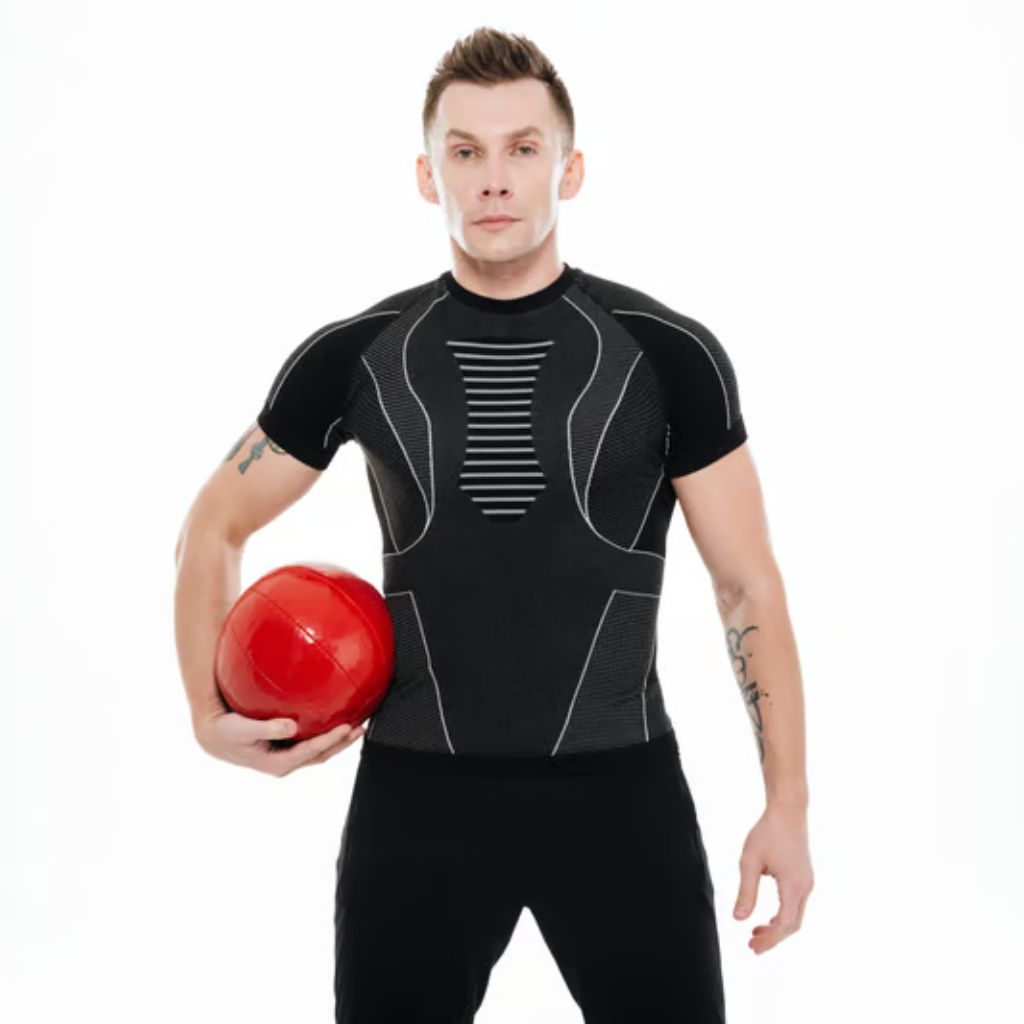
Athlete with red ball in hand, dressed in black athletic wear.
Power Fit Compression Fabric includes several advanced features that improve athletic performance. These features combine textile innovation with ergonomic design. Therefore, athletes experience better support and comfort during workouts.
Additionally, modern compression fabrics include moisture management systems. These systems help control sweat and maintain breathability.
Key Features Include
• High elasticity and stretch The fabric stretches easily while maintaining its shape. Therefore, athletes enjoy full flexibility during movement.
• Muscle support and compression Compression technology stabilizes muscles during workouts. Consequently, muscle fatigue decreases significantly.
• Moisture-wicking technology The fabric moves sweat away from the skin quickly. As a result, athletes remain dry during intense exercise.
• Breathability and ventilation Special knit structures allow air to circulate freely. Therefore, body temperature stays balanced during workouts.
• Lightweight yet durable structure Despite its lightweight feel, the fabric remains extremely durable. Consequently, athletes can use it for long periods.
• Sweat and odor control Many compression fabrics include antibacterial treatments. As a result, unpleasant odors remain under control.
Benefits of Power Fit Compression Fabric
Power Fit Compression Fabric provides several important benefits for athletes. These advantages improve both performance and recovery. Therefore, many professional athletes rely on compression clothing.
Furthermore, the fabric supports muscles during demanding physical activities. Consequently, athletes experience less fatigue and discomfort.
Improves Blood Circulation
Compression garments apply gentle pressure to blood vessels. This pressure helps blood circulate efficiently throughout the body.
As a result, oxygen reaches muscles faster during exercise.
Reduces Muscle Fatigue
Muscle vibrations occur naturally during intense physical activities. Compression fabrics reduce these vibrations significantly.
Consequently, muscles feel less strain during workouts.
Enhances Athletic Performance
Athletes perform better when muscles receive proper support. Power Fit Compression Fabric stabilizes muscles during movement.
Therefore, athletes experience improved endurance and strength.
Speeds Up Recovery After Workouts
Compression garments also assist in muscle recovery. They improve circulation after physical activity.
As a result, athletes recover faster from intense training sessions.
Provides Better Body Fit and Posture
Compression clothing fits closely to the body. This fit encourages proper posture during movement.
Consequently, athletes maintain better alignment during workouts.
How Power Fit Compression Fabric Works
Power Fit Compression Fabric works through advanced textile engineering. The fabric applies controlled pressure across muscle groups. Therefore, muscles remain stable during physical activity.
Additionally, the fabric adapts to body movements naturally. Consequently, athletes enjoy both flexibility and support.
Compression Technology Explained
Compression garments use elastic fibers to apply consistent pressure. This pressure improves blood flow and muscle support.
Therefore, athletes experience greater endurance during workouts.
Muscle Stabilization and Reduced Vibration
Muscles often vibrate during running and jumping activities. Compression fabrics minimize these vibrations effectively.
As a result, muscles remain stable and fatigue decreases.
Temperature Regulation During Workouts
Power Fit Compression Fabric also regulates body temperature efficiently. Breathable fibers allow heat and moisture to escape.
Consequently, athletes stay cool and comfortable.
Advantages for Athletes and Fitness Enthusiasts
Power Fit Compression Fabric offers several advantages for active individuals. These benefits improve training results and overall comfort.
Better Endurance During Workouts
Improved blood circulation helps deliver oxygen to muscles. Therefore, athletes maintain energy during intense workouts.
Reduced Injury Risk
Muscle stabilization reduces the chance of strain or injury. As a result, athletes train more safely.
Enhanced Comfort and Flexibility
The fabric stretches smoothly while maintaining a secure fit. Consequently, athletes move freely without discomfort.
Improved Training Results
Better support leads to more effective training sessions. Therefore, athletes achieve their fitness goals faster.
How to Choose the Best Power Fit Compression Fabric
Choosing the right compression fabric ensures comfort and durability. Therefore, buyers should consider several important factors.
Fabric Blend Quality
High-quality blends of polyester and elastane provide better durability. Consequently, garments last longer.
Stretch Percentage
A higher stretch percentage ensures better compression performance. Therefore, garments maintain shape after repeated use.
Breathability Level
Breathable fabrics improve airflow and reduce heat buildup. As a result, athletes remain comfortable.
Proper sizing ensures effective compression and comfort. Therefore, athletes should choose garments carefully.
Future Trends in Compression Fabric Technology
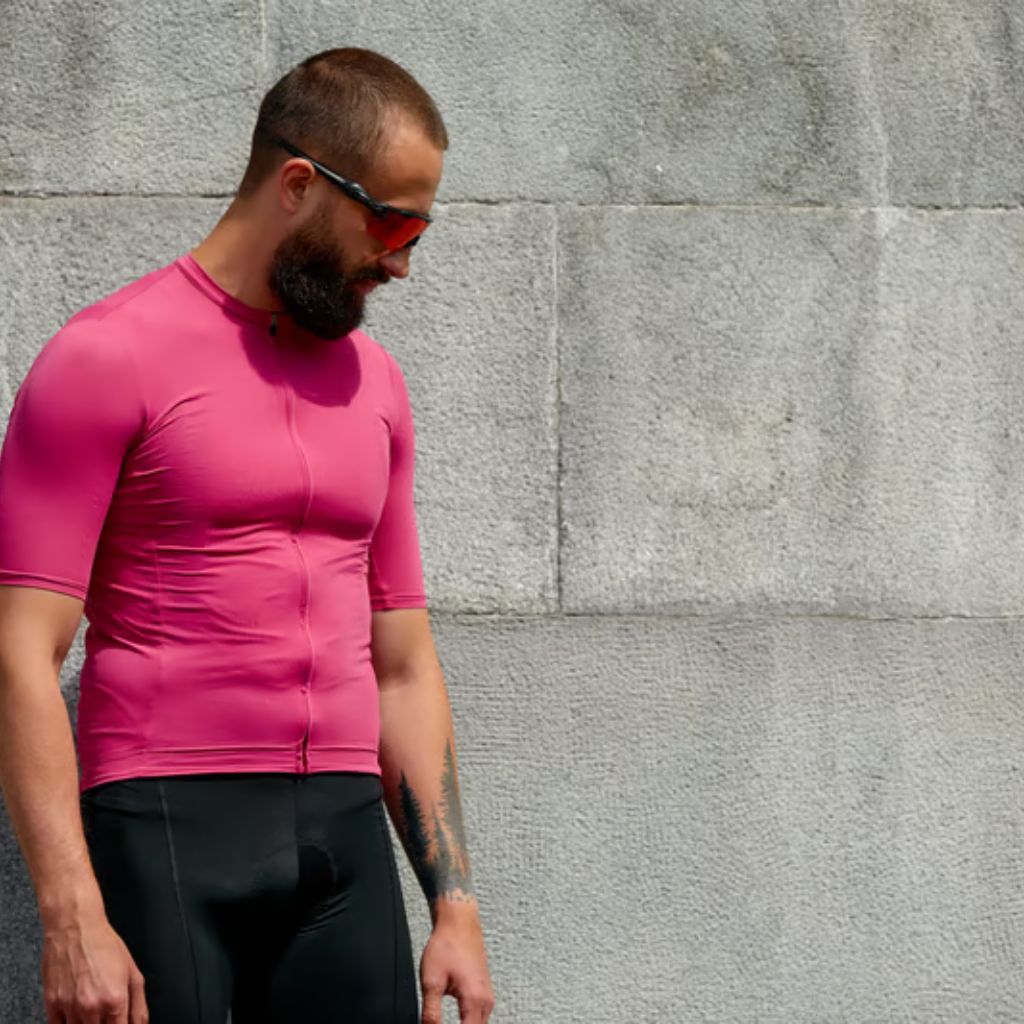
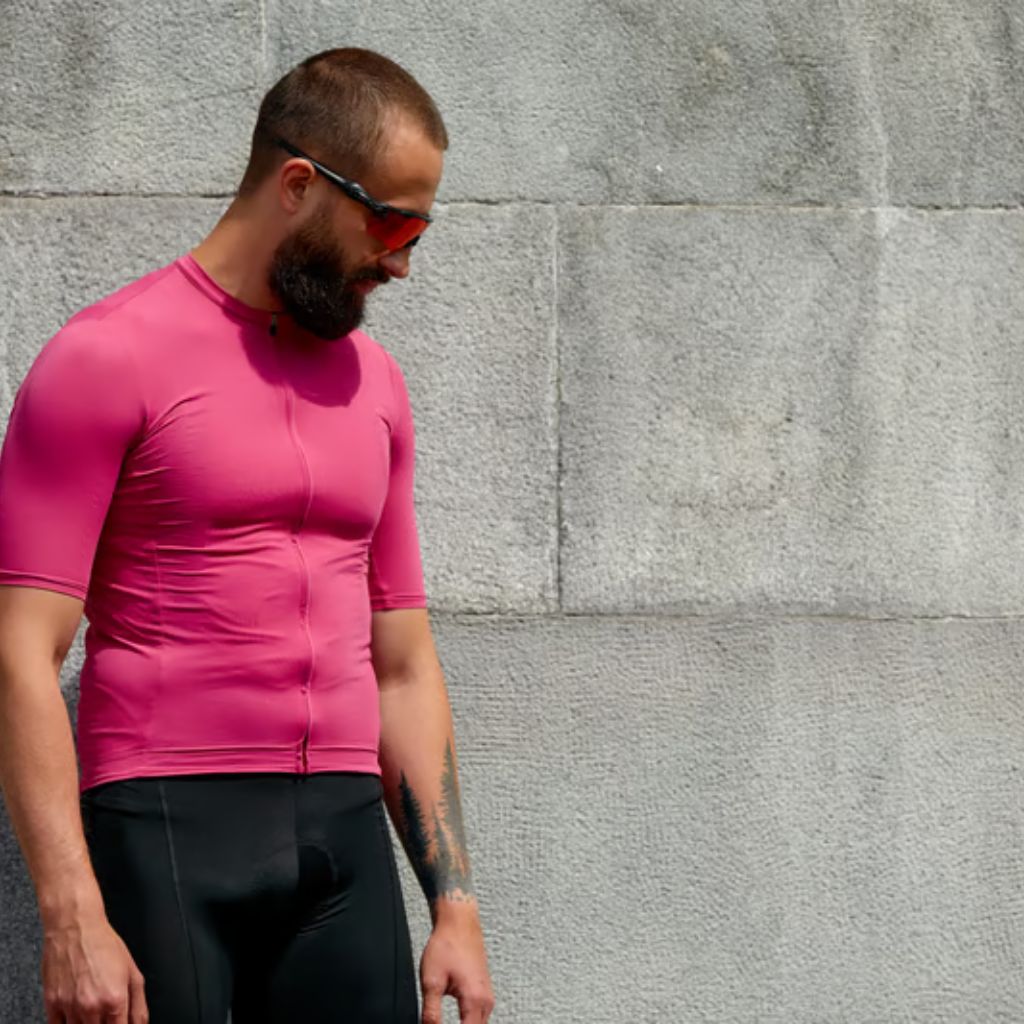
Athletic figure in pink cycling jersey against a gray wall.
Compression fabric technology continues to evolve rapidly. Researchers constantly develop new materials and smart textiles.
Smart Textiles
Future compression fabrics may include built-in sensors. These sensors could track muscle activity and body movement.
Eco-Friendly Performance Fabrics
Sustainability is becoming important in sportswear production. Many brands now use recycled polyester materials.
Advanced Moisture-Control Systems
Future fabrics will include improved sweat management technologies. Consequently, athletes will stay cooler during intense workouts.
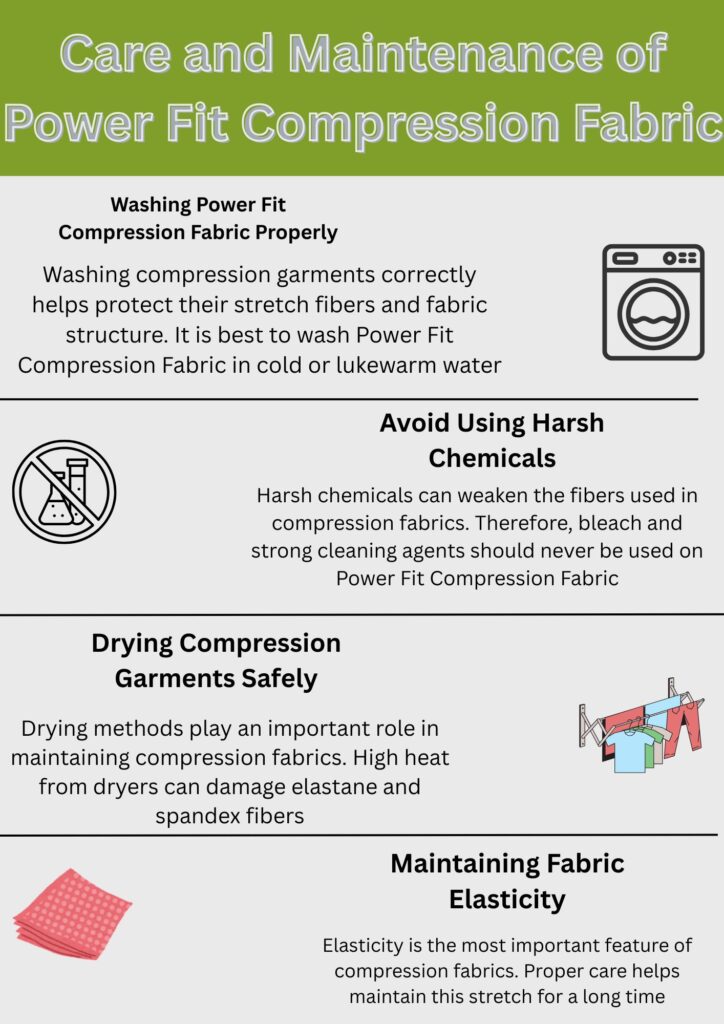
Care and Maintenance of Power Fit Compression Fabric
Care and Maintenance of Power Fit Compression Fabric: tips for washing, avoiding harsh chemicals, safe drying, and preserving elasticity.
Proper care is essential to maintain the quality and performance of Power Fit Compression Fabric. Compression garments rely on elastic fibers that provide stretch and muscle support. Therefore, careful maintenance helps preserve their elasticity, durability, and moisture-wicking ability. When users follow correct care methods, the fabric can last longer and continue delivering the same level of support during workouts.
Washing Power Fit Compression Fabric Properly
Washing compression garments correctly helps protect their stretch fibers and fabric structure. It is best to wash Power Fit Compression Fabric in cold or lukewarm water. Mild detergents should always be used because strong chemicals can damage elastic fibers.
Furthermore, athletes should turn garments inside out before washing. This simple step protects the outer surface from friction and fading. Hand washing is often the safest option, although a gentle machine cycle also works well. Proper washing methods help maintain the fabric’s moisture-wicking and compression properties.
Avoid Using Harsh Chemicals
Harsh chemicals can weaken the fibers used in compression fabrics. Therefore, bleach and strong cleaning agents should never be used on Power Fit Compression Fabric. These chemicals break down elastic fibers and reduce the garment’s stretch.
Additionally, fabric softeners should be avoided because they coat the fibers and reduce breathability. Instead, a mild sports detergent will keep the fabric clean without harming its performance features. This approach ensures that compression garments maintain their strength and flexibility.
Drying Compression Garments Safely
Drying methods play an important role in maintaining compression fabrics. High heat from dryers can damage elastane and spandex fibers. As a result, the garment may lose its elasticity and supportive fit.
Air drying is the best method for Power Fit Compression Fabric clothing. Athletes should lay garments flat or hang them in a shaded area. Direct sunlight should be avoided because excessive heat may weaken the fibers. Gentle drying helps maintain both the structure and stretch of the fabric.
Maintaining Fabric Elasticity
Elasticity is the most important feature of compression fabrics. Proper care helps maintain this stretch for a long time. Avoid pulling the fabric too aggressively when putting on or removing the garment.
Additionally, washing garments after heavy workouts helps remove sweat and salt buildup. These substances can damage fibers if left on the fabric. By cleaning and handling the garments carefully, athletes can maintain the compression level and flexibility.
Conclusion
Power Fit Compression Fabric has transformed modern sportswear through advanced textile technology and smart design. Athletes now expect clothing that supports muscles, improves comfort, and enhances overall performance. Therefore, compression fabrics have become an essential part of athletic and fitness apparel. They provide the perfect balance of flexibility, durability, and muscle support.
FAQs
What is Power Fit Compression Fabric used for?
Power Fit Compression Fabric is used in athletic clothing and sportswear. It supports muscles and improves performance.
Is compression fabric good for workouts?
Yes, compression fabric improves circulation and reduces fatigue. Therefore, it benefits athletes during exercise.
Does compression fabric improve performance?
Compression garments stabilize muscles and enhance endurance. Consequently, athletes perform better.
Can compression fabric help muscle recovery?
Yes, compression clothing improves circulation after workouts. As a result, muscles recover faster.
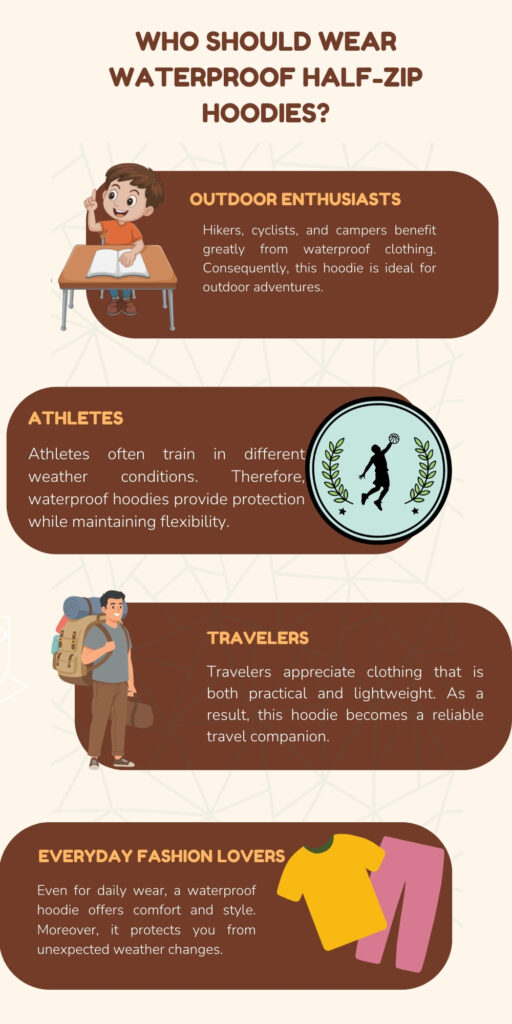
Fashion today is not only about looking good; it is also about feeling comfortable and staying protected in different weather conditions. Therefore, clothing that combines style, functionality, and durability has become extremely popular. One such garment that has gained attention in recent years is the Waterproof Half-Zip Hoodie.
At first glance, it may look like a simple hoodie. However, it offers far more than a traditional sweatshirt. Because it is designed with water-resistant or waterproof materials, it protects you from light rain and moisture while maintaining a stylish appearance. Moreover, the half-zip design provides both convenience and ventilation, which makes it perfect for everyday wear.
In this comprehensive guide, we will explore everything about waterproof half-zip hoodies—including their features, benefits, styling tips, fabric technology, and buying advice. By the end of this article, you will clearly understand why this hoodie deserves a place in your wardrobe.
What Is a Waterproof Half-Zip Hoodie?
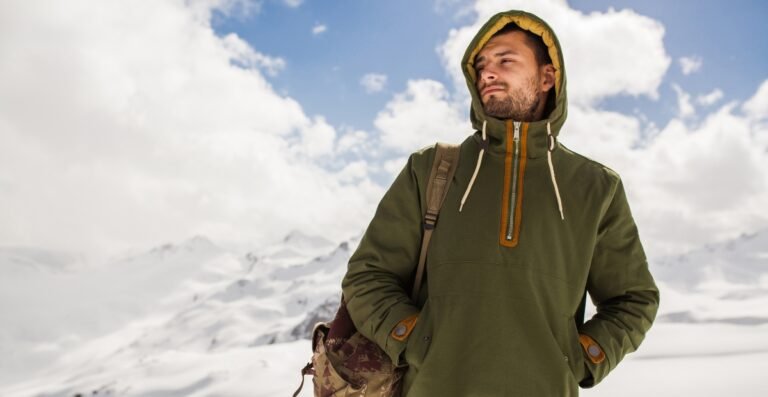
A waterproof half-zip hoodie is a modern outerwear garment that blends the comfort of a hoodie with the protection of waterproof clothing. Unlike traditional hoodies, this version is made with water-repellent fabrics that prevent moisture from soaking into the material.
The half-zip design means that the zipper usually extends from the chest to the neck. As a result, it allows you to easily adjust ventilation depending on the weather.
Additionally, this hoodie often includes features such as:
Waterproof or water-resistant fabric
Adjustable hood for extra protection
Breathable inner lining
Durable zippers
Lightweight construction
Because of these features, it is widely used for outdoor activities, casual fashion, travel, and sportswear.
Why Waterproof Hoodies Are Becoming Popular
In recent years, fashion trends have shifted toward functional clothing. People want garments that not only look stylish but also provide practical benefits. Consequently, waterproof half-zip hoodies have become highly desirable.
1. Protection From Rain
First and foremost, the biggest advantage is rain protection. Light rain or drizzle can easily ruin regular hoodies. However, waterproof materials ensure that water is repelled from the surface.
As a result, you can stay dry even when the weather suddenly changes.
2. Lightweight and Comfortable
Traditional rain jackets sometimes feel heavy or bulky. In contrast, waterproof hoodies are designed to be lightweight and flexible. Therefore, they provide comfort without sacrificing protection.
Moreover, modern fabrics allow airflow, so overheating is less likely.
3. Stylish Design
Another reason for their popularity is style. Unlike raincoats that look purely functional, waterproof half-zip hoodies offer a modern, sporty appearance.
Because of this, they can easily be worn with:
Jeans
Joggers
Athletic shorts
Casual trousers
Thus, they work perfectly for both casual outfits and active lifestyles.
4. Versatility
Perhaps the most appealing aspect is versatility. A waterproof hoodie can be worn in many situations, including:
Outdoor workouts
Hiking or camping
Traveling
Daily commuting
Casual streetwear
Consequently, it becomes a multi-purpose clothing item.
Key Features of a High-Quality Waterproof Half-Zip Hoodie
When purchasing a waterproof hoodie, several important features should be considered. After all, not all hoodies offer the same level of protection and durability.
Waterproof Fabric Technology
Most waterproof hoodies are made from advanced synthetic fabrics. These fabrics are engineered to block water while still allowing moisture vapor to escape.
For example, common materials include:
Polyester blends
Nylon waterproof fabric
Laminated performance textiles
In many cases, a water-repellent coating is applied to the fabric. Because of this treatment, water droplets slide off the surface instead of soaking in.
Breathability
While waterproofing is important, breathability is equally essential. Without proper airflow, sweat can accumulate inside the hoodie.
Therefore, many designs include ventilation panels or breathable membranes. This ensures that the wearer remains comfortable during physical activity.
Adjustable Hood
An adjustable hood adds extra protection during windy or rainy conditions. Usually, drawstrings are included so the hood can be tightened around the head.
As a result, rain is less likely to enter through the sides.
Durable Zipper System
Since the zipper is exposed to moisture, it must be durable and rust-resistant. In many high-quality hoodies, water-resistant zippers are used.
Additionally, the half-zip design allows quick temperature control.
Practical Pockets
Many waterproof hoodies include zippered pockets. These pockets help protect personal items such as:
Smartphones
Keys
Wallets
Because the pockets are sealed, water damage can be avoided.
Benefits of Wearing a Waterproof Half-Zip Hoodie
Although there are many types of hoodies available today, the waterproof half-zip version provides unique advantages.
Weather Protection
Firstly, it protects against light rain, wind, and moisture. Therefore, it is ideal for unpredictable weather conditions.
All-Season Use
Another advantage is seasonal versatility. For instance:
In spring, it protects against rain showers.
In autumn, it provides warmth and comfort.
In summer evenings, it acts as a light outer layer.
Consequently, it can be worn throughout most of the year.
Easy to Layer
Layering is an important aspect of modern fashion. Fortunately, waterproof hoodies work well with many layers.
Thus, you can easily adapt your outfit to different temperatures.
Travel Friendly
Travelers often prefer lightweight clothing. Since waterproof half-zip hoodies are compact and flexible, they can be packed easily in backpacks or luggage.
Therefore, they are perfect for trips, outdoor adventures, and long journeys.
Styling Tips for Waterproof Half-Zip Hoodies
Although these hoodies are practical, they can also be styled in fashionable ways. With the right combinations, you can create a modern and attractive look.
Casual Streetwear Look
For a relaxed outfit, pair your waterproof hoodie with:
Slim-fit jeans
Sneakers
A simple T-shirt
This combination looks effortless yet stylish.
Sporty Athletic Style
If you prefer a sporty look, try wearing the hoodie with:
Joggers
Running shoes
A cap
As a result, you will achieve a comfortable athletic appearance.
Outdoor Adventure Outfit
For hiking or outdoor activities, combine the hoodie with:
Cargo pants
Hiking boots
A lightweight backpack
Because the hoodie protects against rain, it becomes an essential part of your outdoor gear.
Minimalist Fashion
Minimalist fashion focuses on simple colors and clean designs. Neutral colors such as black, grey, navy, and olive are particularly popular.
Therefore, choosing a minimalist waterproof hoodie can easily elevate your wardrobe.
How to Choose the Right Waterproof Hoodie
Buying the right hoodie requires careful consideration. After all, different designs offer different levels of comfort and durability.
Check the Waterproof Rating
Some hoodies are only water-resistant, while others are fully waterproof. Therefore, check the product description carefully before purchasing.
Consider Fabric Quality
High-quality fabrics usually last longer and provide better protection. Although they may cost more, they offer greater value in the long run.
Evaluate Fit and Comfort
A good hoodie should allow easy movement. Therefore, ensure that it fits comfortably around the shoulders and arms.
Look for Breathable Materials
Breathability prevents overheating. As a result, it improves comfort during physical activity.
Choose a Versatile Color
Neutral colors are easier to style. Therefore, black, navy, or grey hoodies are often preferred.
Caring for Your Waterproof Half-Zip Hoodie
Proper care helps maintain waterproof performance. Without maintenance, the protective coating may weaken over time.
How to care for your waterproof half-zip hoodie: wash cold, skip fabric softener, air-dry (or low-heat tumble dry for some fabrics), and reapply a water-repellent spray as needed.
Washing Tips
Wash with cold water.
Avoid strong detergents.
Do not use fabric softener.
These steps help preserve the waterproof coating.
Drying
Air drying is usually recommended. However, some waterproof fabrics can be tumble-dried at low heat.
Reapplying Water Repellent
Over time, the waterproof layer may fade. Therefore, a water-repellent spray can be applied to restore protection.
Who Should Wear Waterproof Half-Zip Hoodies?
This hoodie style is suitable for many people.
Who should wear waterproof half-zip hoodies? From outdoor enthusiasts to everyday fashion lovers, these hoodies fit every lifestyle.” “Road-tested versatility: waterproof half-zip hoodies for hikers, athletes, travelers, and daily wear.” “Gear for all adventures: discover why four distinct groups choose waterproof half-zip hoodies.
Outdoor Enthusiasts
Hikers, cyclists, and campers benefit greatly from waterproof clothing. Consequently, this hoodie is ideal for outdoor adventures.
Athletes
Athletes often train in different weather conditions. Therefore, waterproof hoodies provide protection while maintaining flexibility.
Travelers
Travelers appreciate clothing that is both practical and lightweight. As a result, this hoodie becomes a reliable travel companion.
Everyday Fashion Lovers
Even for daily wear, a waterproof hoodie offers comfort and style. Moreover, it protects you from unexpected weather changes.
The Future of Waterproof Hoodie Fashion
Fashion technology continues to evolve rapidly. As a result, waterproof hoodies are becoming more advanced each year.
Future designs may include:
Smart temperature-regulating fabrics
Sustainable eco-friendly materials
Improved waterproof coatings
Enhanced breathability systems
Because innovation is ongoing, the waterproof hoodie will likely remain a popular fashion item.
Conclusion
The Waterproof Half-Zip Hoodie represents the perfect balance between style, functionality, and comfort. Unlike traditional hoodies, it provides protection against rain while maintaining a modern and versatile look.
Moreover, its lightweight design, breathable fabric, and adjustable features make it suitable for many activities. Whether you are traveling, exercising, hiking, or simply enjoying casual fashion, this hoodie can easily adapt to your lifestyle.
Therefore, investing in a high-quality waterproof half-zip hoodie is a smart choice. Not only will it enhance your wardrobe, but it will also ensure that you stay comfortable and protected in changing weather conditions.
In the end, fashion that combines practicality and style will always remain valuable—and the waterproof half-zip hoodie is a perfect example of that balance.
FAQs
What is a Waterproof Half-Zip Hoodie?
A Waterproof Half-Zip Hoodie is a hoodie made with water-resistant fabric and a half zipper that protects against light rain while offering comfort and style.
Is a waterproof hoodie suitable for heavy rain?
Most waterproof hoodies protect against light to moderate rain. However, for heavy rain, a fully waterproof jacket may provide better protection.
Can I wear a waterproof half-zip hoodie for sports?
Yes, it is perfect for outdoor sports like jogging, hiking, and cycling because it is lightweight, breathable, and weather-resistant.
When the temperature drops, people naturally begin searching for clothing that offers both warmth and comfort. Among the many winter wardrobe options available today, the Thermal Half-Zip Hoodie has quickly become a favorite choice. Not only does it provide excellent insulation, but it also offers a stylish and practical design that fits perfectly into modern fashion trends.
In recent years, winter clothing has evolved significantly. While traditional hoodies remain popular, thermal hoodies are now preferred by many individuals who want better warmth without sacrificing style. Moreover, the half-zip design adds convenience and flexibility, allowing wearers to adjust ventilation according to their comfort.
A Thermal Half-Zip Hoodie is designed using special insulating fabrics that trap body heat. As a result, the wearer stays warm even in cold environments. At the same time, the breathable material ensures that the hoodie does not feel heavy or uncomfortable.
Furthermore, this hoodie style is versatile enough to be worn in many situations. Whether you are heading outdoors, exercising in cool weather, traveling, or simply relaxing at home, a thermal half-zip hoodie can easily become your go-to outfit.
This comprehensive guide will explore everything you need to know about Thermal Half-Zip Hoodies. We will discuss their features, benefits, materials, styling tips, and reasons why they are becoming a must-have item in modern wardrobes.
What Is a Thermal Half-Zip Hoodie?
A Thermal Half-Zip Hoodie is a hoodie designed specifically to provide extra warmth while maintaining comfort and breathability. Unlike traditional hoodies, this style includes a zipper that extends halfway down the front. Because of this design, it allows the wearer to regulate temperature more easily.
Typically, thermal hoodies are made from insulating fabrics such as thermal cotton blends, fleece, or performance materials. These fabrics help trap heat close to the body. Consequently, the hoodie keeps the wearer warm during chilly days.
Additionally, the half-zip design serves both functional and aesthetic purposes. For instance, when the zipper is closed, the hoodie provides maximum warmth. However, when it is opened slightly, airflow increases, which helps prevent overheating.
Another important feature is the hood itself. In many designs, the hood is lined with soft fabric that enhances comfort and warmth. As a result, protection from cold wind is significantly improved.
Moreover, thermal half-zip hoodies are widely used in casual wear, sportswear, and outdoor clothing. Because of their versatility, they are considered a practical choice for everyday winter fashion.
Key Features of Thermal Half-Zip Hoodies
Thermal half-zip hoodies have several unique features that make them different from regular hoodies. These features are designed to improve comfort, warmth, and usability.
1. Insulating Thermal Fabric
One of the most important characteristics of a thermal hoodie is its fabric. Thermal materials are specifically engineered to retain body heat. Therefore, they keep the wearer warm even when the temperature drops.
In many cases, a waffle-knit structure is used in thermal fabrics. This pattern creates small air pockets that trap heat. Consequently, the insulation level is increased without adding excessive weight.
2. Half-Zip Front Design
The half-zip front is not only stylish but also practical. With this design, the hoodie can easily be put on or taken off. In addition, temperature regulation becomes much easier.
For example, when the zipper is slightly opened, cool air can circulate. As a result, the wearer stays comfortable even during physical activity.
3. Comfortable Hood
The hood adds another layer of protection against cold weather. In many designs, the hood is adjustable using drawstrings. Therefore, it can be tightened when the wind becomes stronger.
Moreover, the inner lining of the hood is often made from soft fleece or brushed fabric. Because of this, additional warmth and comfort are provided.
4. Soft Inner Lining
Many thermal hoodies include a soft interior lining. This lining enhances comfort and ensures that the hoodie feels pleasant against the skin.
In some models, fleece lining is used. As a result, warmth is significantly increased while maintaining a lightweight feel.
5. Practical Pockets
Thermal half-zip hoodies often include front pockets or kangaroo pockets. These pockets allow the wearer to keep hands warm or store small items.
Additionally, some modern designs include zippered pockets for better security. Therefore, valuables such as keys or phones can be carried safely.
Benefits of Wearing a Thermal Half-Zip Hoodie
There are several reasons why thermal half-zip hoodies have become increasingly popular. Not only do they provide warmth, but they also offer comfort, style, and practicality.
Superior Warmth
First and foremost, thermal hoodies are designed to retain heat. Because of their insulating fabric, body warmth is trapped efficiently. As a result, they provide better protection against cold weather compared to many standard hoodies.
Breathability
Although warmth is important, breathability is equally essential. Fortunately, most thermal fabrics are designed to allow moisture to escape. Consequently, the wearer remains comfortable even during movement.
Versatile Style
Thermal half-zip hoodies can easily be paired with many outfits. For example, they look great with jeans, joggers, or athletic pants. Therefore, they are suitable for casual outings, workouts, or travel.
Easy Temperature Control
Thanks to the half-zip design, adjusting comfort levels becomes simple. When the zipper is opened slightly, ventilation improves. Meanwhile, when it is closed fully, warmth is maximized.
Lightweight Comfort
Despite their warmth, many thermal hoodies are surprisingly lightweight. Because of this, they are comfortable enough to wear throughout the day.
Best Materials Used in Thermal Half-Zip Hoodies
The material used in a thermal hoodie greatly affects its performance. Different fabrics provide varying levels of warmth, comfort, and durability.
Best Materials Used in Thermal Half-Zip Hoodies: Cotton Thermal Fabric, Fleece Fabric, Polyester Performance Fabric, and Wool Blends.
Cotton Thermal Fabric
Cotton thermal fabric is one of the most common materials used in these hoodies. It is soft, breathable, and comfortable for everyday wear.
Moreover, cotton blends are often used to increase durability. Therefore, the hoodie becomes long-lasting while maintaining comfort.
Fleece Fabric
Fleece is widely known for its excellent insulation. Because it traps heat efficiently, it is commonly used in winter clothing.
Additionally, fleece hoodies feel extremely soft. As a result, they are very comfortable for daily use.
Polyester Performance Fabric
Many modern thermal hoodies use polyester performance blends. These fabrics are designed to wick moisture away from the body.
Consequently, they are ideal for sports or outdoor activities.
Wool Blends
Some premium thermal hoodies include wool blends. Wool provides natural insulation and temperature regulation.
Although wool hoodies are slightly more expensive, they offer excellent warmth and durability.
How to Style a Thermal Half-Zip Hoodie
Thermal hoodies are not only practical but also stylish. With the right combinations, they can enhance your winter wardrobe significantly.
Styling the Pullover Half-Zip Hoodie: Casual Everyday, Athleisure Vibe, and Smart Casual outfits.
Casual Everyday Look
For a simple casual look, pair a thermal half-zip hoodie with jeans and sneakers. This outfit is comfortable and suitable for daily activities.
Additionally, neutral colors such as grey, black, or navy work well for casual styling.
Sporty Outfit
If you prefer an athletic style, wear the hoodie with joggers and running shoes. Because thermal hoodies are breathable, they are ideal for light workouts or outdoor walks.
Layered Winter Outfit
Layering is another great styling option. For example, a thermal hoodie can be worn under a winter jacket or coat.
As a result, extra warmth is provided without sacrificing style.
Streetwear Style
Streetwear fashion often includes oversized hoodies. Therefore, choosing a slightly loose thermal hoodie can create a trendy urban look.
Pair it with cargo pants and stylish sneakers to complete the outfit.
How to Choose the Right Thermal Half-Zip Hoodie
Choosing the perfect hoodie requires considering several factors.
How to Choose the Right Thermal Half-Zip Hoodie: Fabric Quality, Fit and Size, Weather Conditions, and Design Features.
Fabric Quality
First, always check the fabric composition. High-quality thermal fabric ensures better insulation and durability.
Fit and Size
A comfortable fit is essential. While some people prefer slim fits, others prefer relaxed or oversized designs.
Weather Conditions
If you live in very cold regions, thicker fleece or wool blends may be more suitable. However, lighter thermal fabrics work well in mild winter climates.
Design Features
Look for useful features such as adjustable hoods, secure pockets, and durable zippers. These details improve both functionality and comfort.
Care and Maintenance Tips
Proper care ensures that your thermal hoodie lasts longer.
First, always follow the washing instructions provided by the manufacturer. Usually, thermal hoodies should be washed in cold water.
Additionally, avoid using high heat during drying. Excessive heat can damage the fabric fibers.
Furthermore, turning the hoodie inside out before washing can help preserve its color and texture.
By maintaining proper care, the hoodie’s warmth and quality will be preserved for many seasons.
Why Thermal Half-Zip Hoodies Are Trending
In recent years, thermal half-zip hoodies have become increasingly popular in the fashion industry. Several factors contribute to this trend.
First, people are prioritizing comfort more than ever before. As a result, clothing that combines warmth and style is highly valued.
Second, athleisure fashion continues to grow in popularity. Thermal hoodies fit perfectly into this trend because they are both sporty and stylish.
Additionally, many brands are now focusing on innovative fabrics. Consequently, modern thermal hoodies offer better performance and durability.
Because of these factors, thermal half-zip hoodies are expected to remain a popular choice for winter fashion.
Conclusion
The Thermal Half-Zip Hoodie is a perfect blend of warmth, comfort, and modern style. Thanks to its insulating fabric and practical half-zip design, it provides excellent protection during cold weather.
Moreover, its versatility makes it suitable for many occasions. Whether you are going for a casual outing, exercising outdoors, or simply relaxing at home, this hoodie can easily become part of your everyday wardrobe.
Additionally, the variety of materials and designs available today allows everyone to find a hoodie that matches their personal style. From lightweight cotton blends to warm fleece fabrics, the options are extensive.
By choosing a high-quality thermal half-zip hoodie and taking proper care of it, you can enjoy both comfort and durability for many winters to come.
Ultimately, if you are looking for a winter garment that combines practicality with style, the thermal half-zip hoodie is undoubtedly an excellent choice.
FAQs
What is a Thermal Half-Zip Hoodie?
A Thermal Half-Zip Hoodie is a warm hoodie made with insulating fabric and a half-zip front that helps regulate temperature while providing comfort in cold weather.
Is a thermal hoodie good for winter?
Yes, thermal hoodies are designed to retain body heat. Therefore, they provide excellent warmth and are ideal for cold weather and winter activities.
What materials are used in thermal half-zip hoodies?
They are commonly made from thermal cotton blends, fleece, polyester performance fabrics, or wool blends to improve insulation and comfort.
Velocity AirFlow Performance Knit represents a modern breakthrough in sports textiles. Today, athletes demand more than simple comfort from their clothing. Instead, they expect ventilation, flexibility, and moisture control in every movement. Therefore, manufacturers created advanced knit fabrics that enhance airflow and regulate body temperature. As a result, this breathable sports fabric has become popular across global sportswear markets.
In recent years, textile engineering has evolved rapidly. Consequently, performance fabrics now combine science with athletic needs. Velocity AirFlow Performance Knit: Breathable Sports Fabric blends lightweight fibers with airflow channels. Moreover, it improves cooling efficiency during intense workouts. Because of these advantages, professional athletes and fitness enthusiasts increasingly prefer this fabric.
Historically, sportswear relied heavily on cotton and basic polyester. However, those materials often trapped heat and moisture. Therefore, performance knit technology emerged to solve these issues. Today, airflow knit systems integrate stretch zones and ventilation panels. As a result, sports apparel feels lighter and performs better than ever before.
History Of Velocity AirFlow Performance Knit
White polo with bold black accents for a sporty, modern look.
Velocity AirFlow Performance Knit: Breathable Sports Fabric has its roots in the evolution of sports textiles over the last few decades. Initially, athletes relied heavily on cotton and basic polyester garments for comfort and durability. While these materials were soft and affordable, they often trapped heat and absorbed sweat, making them unsuitable for high-intensity training. This created a demand for fabrics that could provide better moisture management, airflow, and stretch to support dynamic movements.
In the late 20th century, performance fabrics began to emerge, driven by innovations in synthetic fibers and knitting technologies. Polyester, nylon, and elastane became common in athletic apparel, offering lightweight, stretchable, and moisture-wicking alternatives to natural fibers. Engineers experimented with various knit patterns to create fabrics that could enhance airflow, regulate temperature, and improve comfort during prolonged exercise.
What Velocity AirFlow Performance Knit Is
Velocity AirFlow Performance Knit is an engineered sports textile. Manufacturers design it using specialized knitting machines. These machines create structured ventilation pathways within the fabric. Consequently, air moves freely through the garment. Moreover, the fabric stretches naturally with body movement.
This performance knit typically includes polyester, elastane, and sometimes recycled fibers. Polyester ensures strength and moisture-wicking ability. Elastane adds flexibility and recovery. Therefore, the fabric maintains shape even after repeated wear.
Types of Velocity AirFlow Performance Knit
Types of Velocity AirFlow Performance Knit: Lightweight, Stretch-Enhanced, Compression, and Mesh-Integrated varieties with corresponding knit examples.
Velocity AirFlow Performance Knit comes in several specialized types. Each type serves a specific athletic purpose. Although all versions focus on breathability, their structure varies slightly. Therefore, brands select different variations depending on activity level. Moreover, these types balance airflow, stretch, and durability differently.
Below are the main types of Velocity AirFlow Performance Knit: Breathable Sports Fabric used in modern sportswear.
Lightweight AirFlow Knit
Lightweight Velocity AirFlow Performance Knit is designed for maximum ventilation. Manufacturers use fine yarns and open knit structures. As a result, the fabric feels extremely light and soft.
This type works best for high-intensity workouts. Because it allows rapid airflow, body heat escapes quickly. Therefore, runners and cyclists prefer this variation. Additionally, it dries very fast after sweating.
Stretch-Enhanced AirFlow Knit
Stretch-enhanced AirFlow Performance Knit contains higher elastane content. Consequently, it offers superior flexibility and recovery. Athletes performing dynamic movements benefit greatly from this type.
This version supports activities like yoga, training, and gymnastics. Because it stretches in multiple directions, movement feels natural. Moreover, it maintains shape even after repeated use.
Compression AirFlow Knit
Compression-based Velocity AirFlow Performance Knit provides muscle support. Manufacturers design it with tighter knit density. Therefore, it fits closely to the body.
Although it offers firm support, it still maintains breathability. Consequently, athletes enjoy both airflow and stability. This type works well for long-distance running and strength training.
Mesh-Integrated AirFlow Knit
Mesh-integrated AirFlow Performance Knit combines knit structure with mesh panels. Designers place mesh zones in high-sweat areas. As a result, ventilation increases strategically.
This type is common in athletic shirts and training tops. Because airflow targets key body zones, cooling improves significantly. Additionally, it balances durability with breathability.
Why It Is Popular in Modern Sportswear
Modern sportswear focuses on performance and comfort equally. Therefore, brands choose Velocity AirFlow knit for active collections. Athletes appreciate its breathable construction. Moreover, they value its soft texture and stretchability.
Additionally, fitness culture has grown worldwide. As a result, consumers demand technical fabrics for daily workouts. Because Velocity AirFlow Performance Knit enhances cooling and flexibility, it meets these expectations perfectly.
Brief Overview of Its Key Benefits
This breathable performance knit offers multiple advantages. First, it promotes consistent airflow during exercise. Second, it manages sweat effectively through moisture-wicking fibers. Third, it provides long-lasting durability and stretch recovery. Therefore, athletes experience both comfort and performance support.
What Is Velocity AirFlow Performance Knit Fabric?
Velocity AirFlow Performance Knit fabric refers to a breathable, stretchable knit textile. Engineers design it specifically for athletic performance. Unlike woven fabrics, knit fabrics interlock yarn loops. Therefore, they naturally provide flexibility and comfort.
However, Velocity AirFlow knit goes beyond basic knit construction. It integrates airflow channels within the fabric structure. Consequently, ventilation improves significantly. Moreover, the knit pattern enhances moisture evaporation.
Definition and Fabric Composition
Velocity AirFlow Performance Knit combines advanced synthetic fibers. Polyester forms the base structure. It offers durability and moisture management. Elastane provides stretch and shape retention.
Some manufacturers incorporate recycled polyester for sustainability. Therefore, the fabric reduces environmental impact while maintaining performance. The combination of fibers creates a lightweight yet resilient material.
How Performance Knit Fabrics Are Engineered
Engineers use circular knitting machines for production. These machines create seamless or semi-seamless garments. As a result, friction and irritation decrease.
During knitting, designers adjust loop density and pattern geometry. Therefore, ventilation zones form naturally within the structure. Moreover, micro-perforations improve air exchange. Consequently, athletes feel cooler during activity.
Difference Between Standard Knit and AirFlow Performance Knit
Standard knit fabrics provide comfort and stretch. However, they may lack targeted ventilation. In contrast, Velocity AirFlow Performance Knit integrates airflow technology. Therefore, it enhances breathability and sweat management.
Additionally, airflow knit dries faster than ordinary knit fabrics. Consequently, it supports high-intensity workouts more effectively.
Common Uses of Velocity AirFlow Performance Knit
Casual white polo shirt with a black mask and hands in pockets.
Velocity AirFlow Performance Knit: Breathable Sports Fabric is engineered to meet the demands of active lifestyles. Its unique combination of airflow channels, stretchability, and moisture-wicking properties makes it ideal for a wide range of sports and fitness activities. The fabric’s versatility allows brands and athletes to use it in multiple applications, from training sessions to outdoor adventures.
Athletic Shirts and T-Shirts
Athletic shirts made from Velocity AirFlow Performance Knit provide superior breathability. The fabric ensures continuous airflow across the torso, keeping the body cool during workouts.
Because of its lightweight and stretchable properties, it offers unrestricted movement. These shirts are perfect for running, gym workouts, and high-intensity training. Additionally, moisture-wicking prevents sweat buildup, keeping athletes comfortable for longer periods.
Running Gear
Runners benefit significantly from Velocity AirFlow knit. The lightweight structure and ventilation zones reduce overheating during long-distance runs.
Shorts, tops, and jackets made from this fabric allow air to circulate freely. As a result, body temperature remains balanced. The fabric also dries quickly, preventing chafing and discomfort from sweat accumulation.
Training and Gym Apparel
Gym and training apparel often require flexibility and durability. Velocity AirFlow Performance Knit supports dynamic movements while maintaining shape.
Compression tops, leggings, and training sets utilize this knit for its stretch recovery. It also wicks moisture away from the skin, reducing irritation during weightlifting or circuit training. Therefore, athletes can train harder without compromising comfort.
Outdoor Sports Clothing
Outdoor activities like cycling, hiking, or field sports demand temperature regulation. Velocity AirFlow Performance Knit adapts to changing environmental conditions.
Its ventilation zones allow airflow even in hot weather. Moreover, its thermal-regulating variants help maintain comfort in cooler conditions. Lightweight and durable, it resists wear and tear during outdoor use, making it ideal for active lifestyles.
Best Materials for Velocity AirFlow Performance Knit
The quality of Velocity AirFlow Performance Knit: Breathable Sports Fabric largely depends on the materials used. Performance, comfort, and durability are influenced by fiber selection. Modern engineering combines synthetic and sometimes eco-friendly fibers to achieve the perfect balance of breathability, stretch, and moisture control. Choosing the right materials ensures long-lasting garments that support athletic performance in any condition.
Below are the best materials commonly used in Velocity AirFlow Performance Knit:
Polyester
Polyester is the primary material in most Velocity AirFlow knits. It provides several key benefits:
Durability: Polyester fibers resist wear and tear, even during intensive workouts.
Moisture-Wicking: It draws sweat away from the skin, allowing quick drying.
Lightweight: Polyester helps maintain a light fabric that doesn’t weigh athletes down.
Shape Retention: The fabric maintains its structure after repeated stretching and washing.
Polyester’s synthetic nature also allows engineers to blend it seamlessly with other fibers to optimize performance.
Elastane (Spandex or Lycra)
Elastane is added for stretch and flexibility. Its inclusion enhances movement and ensures garments fit closely without restriction.
Stretch Recovery: Garments regain their original shape after movement or washing.
Enhanced Mobility: Four-way stretch supports complex athletic motions like yoga, running, or strength training.
Comfort: It prevents garments from feeling tight or restrictive, even during extended workouts.
Elastane is usually blended in small percentages (5–15%) to maximize stretch while maintaining durability.
Nylon
Some high-performance Velocity AirFlow knits incorporate nylon for additional strength.
Abrasion Resistance: Nylon resists friction and wear, increasing garment longevity.
Soft Texture: It adds a smooth feel against the skin.
Lightweight Reinforcement: Nylon enhances structural integrity without making the fabric heavy.
Nylon blends are often used in areas of high stress, such as knees, elbows, or shoulder panels.
Recycled Polyester
Eco-conscious brands increasingly use recycled polyester. It retains all benefits of regular polyester while reducing environmental impact.
Sustainability: Uses post-consumer or post-industrial plastic waste.
Durability: Matches the strength and moisture-wicking ability of standard polyester.
Eco-Friendly: Reduces carbon footprint and conserves resources.
Recycled polyester also integrates well with elastane or nylon for full-performance garments.
Key Features of Velocity AirFlow Performance Knit
Black textured polo shirt with collar and short sleeves.
Velocity AirFlow Performance Knit: Breathable Sports Fabric offers advanced features for athletic performance. Each feature works together to improve comfort and efficiency.
Breathability and Airflow Technology
The fabric includes engineered ventilation channels. These channels allow continuous air circulation. Therefore, body heat escapes quickly.
Moreover, airflow reduces overheating during long sessions. Consequently, athletes maintain stable temperature levels. This feature remains essential for endurance sports.
Lightweight and Flexible Design
Velocity AirFlow knit feels soft and lightweight. Therefore, athletes move freely without restriction. Elastane fibers enhance flexibility and recovery.
Additionally, the knit structure adapts to body contours. Consequently, the garment fits comfortably without tight pressure.
Moisture-Wicking Capability
The fabric draws sweat away from the skin. Then, moisture spreads across the outer surface. As a result, evaporation occurs faster.
Therefore, athletes stay dry and comfortable. Moreover, moisture-wicking prevents unpleasant odors caused by dampness.
Sweat Management
Sweat management improves hygiene and comfort. Because moisture does not remain trapped, irritation decreases. Furthermore, the fabric feels fresh even during extended workouts.
Durability and Stretchability
Velocity AirFlow Performance Knit resists wear and tear. High-quality fibers ensure long-term durability. Moreover, the fabric maintains elasticity after multiple washes.
Therefore, athletes benefit from reliable performance over time.
Benefits of Velocity AirFlow Performance Knit for Athletes
Athletes require clothing that supports physical performance. Therefore, this breathable sports fabric delivers multiple advantages.
Keeps the Body Cool During Workouts
Airflow technology enhances ventilation. Consequently, warm air escapesquickly. This process stabilizes body temperature.
Therefore, athletes feel cooler even in intense environments. Moreover, reduced heat improves endurance.
Enhances Mobility and Comfort
Stretch fibers move with the body. Therefore, athletes perform complex movements easily. Seamless construction reduces friction points.
As a result, comfort increases significantly. Additionally, better mobility enhances overall performance.
Comfort directly influences performance. Because distractions decrease, focus improves. Therefore, athletes achieve better training results.
How Velocity AirFlow Technology Works
Velocity AirFlow technology relies on structural engineering. Designers create airflow pathways during knitting. Therefore, ventilation becomes part of the fabric itself.
Air Circulation Structure
The knit pattern forms micro air pockets. Fresh air enters through these pockets. Meanwhile, warm air exits efficiently.
Consequently, cooling becomes continuous.
Advanced Knit Patterns
Engineers design mesh-like sections within the knit. These sections increase breathability. Furthermore, denser areas provide structural support.
Therefore, the fabric balances ventilation and durability.
Moisture Evaporation Process
Sweat transfers from skin to fabric surface. Then, airflow speeds evaporation. As a result, cooling intensifies naturally.
Velocity AirFlow Performance Knit vs Traditional Sports Fabrics
Traditional fabrics serve basic sports needs. However, they often lack advanced ventilation. Therefore, Velocity AirFlow Performance Knit outperforms them.
Cotton Sportswear
Cotton absorbs moisture heavily. Consequently, it becomes heavy and damp. In contrast, airflow knit dries rapidly.
Polyester Performance Fabrics
Standard polyester resists moisture but traps heat. However, airflow knit integrates ventilation channels. Therefore, cooling improves significantly.
Mesh Sports Fabrics
Mesh allows airflow but may lack durability. Velocity AirFlow knit combines stretch and strength. Therefore, it provides balanced performance.
Common Uses of Velocity AirFlow Performance Knit
This breathable performance knit suits various sports applications.
Athletic Shirts
Manufacturers design training shirts using airflow knit. Therefore, athletes stay cool and comfortable.
Running Gear
Runners benefit from lightweight ventilation. Consequently, long-distance comfort improves.
Training Apparel
Training apparel requires flexibility. Therefore, this knit supports dynamic movement.
Future fabrics may combine lighter yarns and stronger fibers. Consequently, performance will improve further.
Smart Textiles and Breathable Technology
Smart textiles may include temperature sensors. Therefore, garments could adjust ventilation automatically.
Care Guide for Velocity AirFlow Performance Knit
Care Guide for Velocity AirFlow Performance Knit: washing in cold water, gentle detergent, no fabric softeners, and low-heat drying.
Proper care keeps Velocity AirFlow Performance Knit performing at its best. Although this breathable sports fabric is durable, you must maintain it correctly. Otherwise, airflow channels and stretch fibers may lose efficiency. Therefore, always follow simple but effective care practices. Moreover, good maintenance extends garment life and preserves moisture-wicking ability.
Washing Instructions for Velocity AirFlow Performance Knit
Always wash Velocity AirFlow Performance Knit garments in cold water. Cold water protects synthetic fibers from damage. Additionally, it helps maintain elasticity and airflow structure.
Use a gentle wash cycle whenever possible. Because high agitation weakens fibers, mild cycles preserve performance. Furthermore, wash similar colors together to prevent dye transfer. Avoid mixing heavy fabrics like denim with lightweight sportswear.
Choosing the Right Detergent
Select a mild, liquid detergent for best results. Harsh detergents can break down performance fibers. Consequently, moisture-wicking capability may reduce over time.
Avoid bleach completely. Bleach weakens synthetic yarns and damages airflow channels. Moreover, strong chemicals may cause discoloration. Therefore, choose performance-safe detergents designed for activewear.
Avoid Fabric Softeners
Do not use fabric softeners on Velocity AirFlow Performance Knit. Fabric softeners leave residue on fibers. As a result, airflow and sweat-wicking performance decrease.
Additionally, softener buildup blocks micro-ventilation channels. Therefore, garments may trap heat instead of releasing it. To maintain breathability, skip softeners entirely.
Drying Recommendations
Air drying remains the safest method. Hang garments in a shaded, well-ventilated area. Because high heat damages elastane, avoid tumble drying on high settings.
If you must use a dryer, select a low-heat option. Excessive heat weakens stretch fibers and reduces shape retention. Therefore, gentle drying preserves flexibility and structure.
Conclusion
Velocity AirFlow Performance Knit: Breathable Sports Fabric defines modern athletic apparel. It combines ventilation, stretch, and moisture control in one structure. Therefore, it meets the demands of intense training sessions.
Moreover, its durability and sustainability make it future-ready. As textile innovation continues, airflow knit systems will become even more advanced. Ultimately, this performance fabric empowers athletes to train harder, move freely, and stay cool in every condition.
FAQs
What is Velocity AirFlow Performance Knit fabric?
It is a breathable, stretchable sports fabric. It enhances airflow and moisture management.
Is Velocity AirFlow fabric good for workouts?
Yes, it keeps athletes cool and dry. Therefore, it supports high-intensity exercise.
Does AirFlow knit keep you cool during exercise?
Yes, airflow channels release heat effectively. Consequently, body temperature remains balanced.
Athletes often struggle with stiff and sweat-soaked clothing. Traditional sports fabrics restrict movement and trap moisture. As a result, performance suffers and comfort declines. Many textiles lose shape after repeated stretching. Others feel heavy during intense workouts.
However, Ultra Motion Dynamic Stretch Weave solves these problems effectively. This dynamic stretch sports fabric offers 4-way stretch performance weave technology. Moreover, it supports muscle movement while maintaining breathability. The flexible athletic textile structure improves comfort and durability. Therefore, athletes experience better mobility, faster recovery, and long-lasting wear.
In addition, the fabric dries quickly and resists wrinkles. Because of its engineered textile structure, it adapts to body motion. Consequently, users stay comfortable during high-impact activities.
History of Stretch Performance Fabrics
“Diagonal-knit texture with subtle shine in a dark gray fabric.”
Stretch fabrics evolved with sports innovation. Early athletic wear used cotton and wool. However, these materials absorbed sweat heavily. Later, synthetic fibers like polyester improved durability.
In the 1960s, elastane transformed the industry. Brands started blending spandex with woven textiles. As a result, flexibility improved dramatically. Yet, early stretch fabrics lacked breathability.
Eventually, engineers developed dynamic stretch sports fabric technology. Ultra Motion Dynamic Stretch Weave represents this advancement. It combines strength, airflow, and elasticity in one engineered textile structure.
What is Ultra Motion Dynamic Stretch Weave?
Ultra Motion Dynamic Stretch Weave is an engineered 4-way stretch performance weave. It blends polyester microfibers with elastane or spandex. This combination creates controlled elasticity and shape retention.
Unlike regular stretch textiles, this fabric distributes tension evenly. Therefore, it reduces stress points during movement. The elasticity modulus remains stable under pressure. Consequently, athletes gain reliable flexibility.
Furthermore, manufacturers design the weave pattern carefully. The structure enhances both mechanical stretch and fiber stretch. Thus, the material responds dynamically to body motion.
Types of Ultra Motion Dynamic Stretch Weave
“Overview of four Ultra Motion Dynamic Stretch Weave fabrics: Lightweight, Compression-Enhanced, Heavy-Duty Performance, and Breathable Mesh-Integrated.”
Ultra Motion Dynamic Stretch Weave comes in several performance-focused variations. Each type serves a specific athletic purpose. Although all versions share 4-way stretch performance weave technology, they differ in density, compression level, and airflow design. Therefore, brands can select the most suitable dynamic stretch sports fabric for their product line. Moreover, these variations help athletes match fabric performance with activity intensity.
Lightweight Ultra Motion Dynamic Stretch Weave
This type focuses on breathability and reduced weight. Manufacturers use fine microfiber polyester blended with elastane. As a result, the fabric feels soft and almost weightless.
Athletes prefer this flexible athletic textile for high-intensity cardio sessions. It enhances airflow and supports rapid sweat evaporation. Therefore, it performs exceptionally well in hot weather training.
Compression-Enhanced Dynamic Stretch Weave
This variation offers higher elastane content. Consequently, it provides targeted muscle support and controlled pressure. The elasticity modulus remains firm yet comfortable.
Moreover, this type improves circulation during workouts. Athletes often choose it for recovery wear and performance leggings. Therefore, it suits strength training and endurance sports.
Heavy-Duty Performance Weave
Heavy-duty Ultra Motion Dynamic Stretch Weave includes reinforced warp and weft engineering. As a result, it resists abrasion and fabric fatigue.
This type works well for team sports uniforms and outdoor gear. It maintains 4-way stretch capability while offering additional durability. Therefore, it performs reliably in demanding environments.
Breathable Mesh-Integrated Stretch Weave
Manufacturers integrate mesh airflow panels into this dynamic stretch sports fabric. Consequently, ventilation improves significantly in high-sweat zones.
This type supports athletes who require constant cooling. It combines engineered textile structure with advanced airflow channels. Therefore, it remains ideal for running and cross-training apparel.
Fabric Construction Technology
Manufacturers use advanced warp and weft engineering. They interlace fibers strategically to create balanced stretch zones. As a result, the fabric expands horizontally and vertically.
Additionally, heat-setting stabilizes elasticity. This process locks fiber memory into the structure. Therefore, the textile recovers quickly after stretching.
Fiber Composition and Blend
Most Ultra Motion Dynamic Stretch Weave fabrics contain polyester and elastane blends. Polyester provides durability and moisture control. Elastane delivers flexibility and recovery strength.
Sometimes, microfiber integration enhances softness. Therefore, the fabric feels smooth against skin. This balanced blend ensures both performance and comfort.
Knit vs Woven Stretch Fabrics
Knit fabrics stretch naturally due to loop construction. However, they may lose shape faster. Woven fabrics offer structure but limited flexibility.
Ultra Motion Dynamic Stretch Weave combines woven strength with mechanical stretch. Therefore, it delivers structure and mobility together. This engineered textile structure improves long-term durability.
Dynamic Stretch vs Regular Stretch
Regular stretch fabrics expand in one or two directions. However, dynamic stretch sports fabric responds in four directions.
Moreover, dynamic stretch adapts to motion patterns. It maintains elasticity modulus under repeated strain. Therefore, it performs better during high-intensity training.
Key Features of Ultra Motion Dynamic Stretch Weave
“Neatly aligned crop rows from above, creating a textured striped pattern in the field.”
• 4-Way Stretch Capability: The fabric stretches horizontally and vertically. Therefore, athletes move freely without resistance.
• High Shape Retention: Heat-set elasticity prevents sagging. Consequently, garments maintain original structure longer.
• Moisture-Wicking Performance: Polyester microfibers pull sweat away quickly. As a result, the body stays dry.
• Lightweight Yet Durable Structure: The textile feels light but resists abrasion. Thus, it supports intense training sessions.
• Anti-Wrinkle and Quick Recovery: The weave rebounds instantly after stretching. Hence, it looks neat and smooth.
Common Uses of Ultra Motion Dynamic Stretch Weave
Ultra Motion Dynamic Stretch Weave serves a wide range of athletic and lifestyle needs. Because of its 4-way stretch performance weave, it adapts easily to body movement. Moreover, the dynamic stretch sports fabric maintains breathability and durability in demanding conditions. Therefore, brands use this flexible athletic textile across multiple product categories.
Below are the most common and practical uses of Ultra Motion Dynamic Stretch Weave in modern apparel manufacturing.
Gym and Training Wear
Gym clothing requires flexibility and sweat control. Ultra Motion Dynamic Stretch Weave stretches smoothly during squats, lunges, and lifts. Therefore, athletes move without restriction.
Additionally, moisture-wicking fibers pull sweat away from the body. As a result, workouts feel more comfortable and focused. Many brands use this fabric in leggings, shorts, and training tops.
Yoga and Pilates Apparel
Yoga demands deep stretching and balance control. The 4-way stretch performance weave supports full extension in every pose. Consequently, practitioners experience smooth and natural movement.
Moreover, the soft microfiber blend feels gentle on skin. Therefore, this dynamic stretch sports fabric works perfectly for yoga pants and fitted tops.
Running and Cardio Gear
Runners need lightweight and breathable clothing. Ultra Motion Dynamic Stretch Weave enhances airflow through engineered channels. As a result, body temperature remains balanced.
Furthermore, its quick recovery prevents sagging during long runs. Therefore, it is commonly used in running tights, shorts, and performance shirts.
Compression and Recovery Wear
Compression garments require controlled elasticity. This flexible athletic textile provides consistent pressure support. Consequently, muscle vibration reduces during high-impact activity.
Additionally, improved circulation may support recovery after exercise. Therefore, brands choose Ultra Motion Dynamic Stretch Weave for compression leggings and sleeves.
Common Mistakes When Using Ultra Motion Dynamic Stretch Weave
Ultra Motion Dynamic Stretch Weave delivers strong flexibility and durability. However, users often reduce its lifespan through simple mistakes. Although this dynamic stretch sports fabric resists wear, improper handling weakens elasticity over time. Therefore, understanding common errors helps protect the 4-way stretch performance weave. Moreover, avoiding these issues ensures long-term comfort and performance.
Below are the most frequent mistakes people make with this flexible athletic textile.
Washing in Hot Water
Many users wash performance garments in hot water. However, high heat damages elastane fibers. As a result, elasticity modulus decreases gradually.
Ultra Motion Dynamic Stretch Weave performs best in cold or mild water. Therefore, always choose gentle temperature settings. This simple step preserves stretch recovery and shape retention.
Using Fabric Softeners
Fabric softeners may seem harmless, but they reduce performance. They coat microfiber surfaces and block airflow channels. Consequently, moisture-wicking performance declines significantly.
Because this engineered textile structure depends on open fiber surfaces, avoid softeners completely. Instead, use mild liquid detergent for best results.
Overloading the Washing Machine
Overloading increases friction and mechanical stress. As a result, the dynamic stretch sports fabric experiences unnecessary strain.
Ultra Motion Dynamic Stretch Weave maintains durability under normal conditions. However, excessive rubbing can weaken fibers. Therefore, wash garments with enough space for movement.
High-Heat Tumble Drying
High dryer temperatures damage elastane and polyester blends. Consequently, the 4-way stretch performance weave may shrink or lose recovery strength.
Air drying remains the safest option. If tumble drying is necessary, choose the lowest heat setting. This protects fiber structure and flexibility.
Benefits for Athletes and Activewear Brands
Ultra Motion Dynamic Stretch Weave offers performance-driven advantages. Moreover, it helps brands meet modern consumer expectations.
Enhanced Mobility
Athletes require unrestricted motion during workouts. This 4-way stretch performance weave adapts instantly. Therefore, lunges, sprints, and jumps feel natural.
Additionally, the flexible athletic textile reduces friction. As a result, users experience greater comfort during long sessions.
Muscle Support and Recovery
The engineered compression zones stabilize muscle groups. Consequently, vibration decreases during high-impact activities.
Furthermore, improved blood circulation may enhance recovery. Therefore, athletes feel less fatigue after workouts.
Reduced Fabric Fatigue
Standard fabrics weaken under repeated stress. However, Ultra Motion Dynamic Stretch Weave resists fiber breakdown.
Because of controlled elasticity modulus, the fabric retains resilience. Thus, garments last longer despite frequent use.
Long-Term Performance Durability
Durability matters for professional athletes and brands. The microfiber blend withstands abrasion and washing cycles.
Ultra Motion Dynamic Stretch Weave vs Traditional Stretch Fabrics
“Detail of military-inspired winter jacket fabric: ribbed, textured surface in blue tones.”
Feature
Ultra Motion Weave
Standard Stretch Fabric
Stretch Direction
4-way
2-way
Recovery Rate
High
Moderate
Breathability
Advanced airflow
Basic
Durability
Long-lasting
Average
This comparison clearly highlights performance advantages. Therefore, athletes prefer dynamic stretch sports fabric over older options.
Applications of Ultra Motion Dynamic Stretch Weave
This flexible athletic textile serves multiple industries. Moreover, it supports various training environments.
Gym Wear
Gym clothing demands flexibility and sweat control. Therefore, Ultra Motion Dynamic Stretch Weave performs perfectly. It stretches during weightlifting and cardio sessions.
Yoga Apparel
Yoga requires deep stretching and balance. The 4-way stretch performance weave adapts smoothly. Consequently, practitioners move without restriction.
Running Gear
Runners need lightweight and breathable clothing. This engineered textile structure enhances airflow. Therefore, long-distance comfort improves significantly.
Compression Wear
Controlled elasticity supports muscle groups effectively. As a result, recovery garments maintain consistent pressure.
Team Sports Uniforms
Team sports involve rapid direction changes. Therefore, dynamic stretch sports fabric prevents tearing. It also maintains professional appearance.
Outdoor Performance Clothing
Outdoor training demands durability and flexibility. Ultra Motion Dynamic Stretch Weave resists wear while ensuring comfort.
Fabric Technology Behind the Performance
“Military-inspired winter jacket fabric detail: dark weave with yellow grid accents.”
Advanced engineering powers this performance textile. Therefore, understanding the technology builds trust and authority.
Warp and Weft Engineering
Engineers align fibers strategically in warp and weft directions. Consequently, balanced tension distribution occurs. This reduces stress concentration during stretching.
Interlock Weave Structure
The interlock weave strengthens fabric stability. However, it still allows mechanical stretch. Therefore, durability increases without sacrificing flexibility.
Microfiber Integration
Microfibers enhance softness and moisture control. Moreover, they increase surface area for sweat evaporation.
Heat-Set Elasticity Control
Heat treatment stabilizes elastane fibers. Consequently, the elasticity modulus remains consistent over time.
Sweat Channeling Systems
Engineered channels guide moisture away from skin. As a result, cooling efficiency improves during workouts.
Best Materials Used in Ultra Motion Dynamic Stretch Weave
Ultra Motion Dynamic Stretch Weave achieves superior performance because of its carefully selected materials. Manufacturers choose fibers that balance flexibility, durability, and breathability. Therefore, the final fabric supports high-intensity movement without losing shape. Moreover, these materials improve moisture control and long-term strength.
Below are the best materials commonly used in dynamic stretch sports fabric production.
Polyester Microfiber
Polyester microfiber forms the core of most Ultra Motion Dynamic Stretch Weave fabrics. It offers excellent durability and abrasion resistance. Therefore, garments withstand repeated workouts and washing cycles.
Additionally, polyester resists shrinking and wrinkling. It also supports moisture-wicking technology. As a result, sweat moves away from the skin quickly. This makes it ideal for 4-way stretch performance weave construction.
Elastane (Spandex)
Elastane, also known as spandex, provides the essential stretch factor. Even a small percentage delivers strong elasticity. Therefore, the flexible athletic textile expands and recovers easily.
Moreover, elastane improves the elasticity modulus of the fabric. It allows garments to return to their original shape quickly. Consequently, the weave maintains long-term performance under stress.
Nylon Blends
Some versions of Ultra Motion Dynamic Stretch Weave include nylon. Nylon increases tensile strength and smoothness. Therefore, the fabric feels soft yet remains tough.
Additionally, nylon improves resistance to abrasion. This makes it suitable for team sports uniforms and outdoor gear. As a result, garments last longer in demanding environments.
Recycled Polyester
Sustainable production has become essential in modern textiles. Recycled polyester offers the same durability as virgin polyester. However, it reduces environmental impact significantly.
Therefore, many brands now use recycled fibers in dynamic stretch sports fabric. This material supports eco-friendly manufacturing without compromising flexibility or breathability.
Care Guide for Ultra Motion Dynamic Stretch Weave
“Care guide for Ultra Motion Dynamic Stretch Weave: washing temperature, detergents, fabric softeners, and air drying.”
Proper care protects the elasticity and durability of Ultra Motion Dynamic Stretch Weave. Although this dynamic stretch sports fabric resists wear, incorrect washing can weaken fibers. Therefore, following correct maintenance steps ensures long-term performance. Moreover, good care preserves the 4-way stretch performance weave structure. As a result, athletes continue enjoying flexibility and breathability.
Washing Temperature Guidelines
Always wash Ultra Motion Dynamic Stretch Weave in cold or lukewarm water. High temperatures can damage elastane fibers and reduce stretch recovery. Therefore, keep water below 30°C to protect elasticity modulus.
Additionally, use a gentle cycle to reduce mechanical stress. Excessive agitation can strain the engineered textile structure. Consequently, mild washing helps maintain shape retention and moisture-wicking performance.
Use Mild Detergents Only
Choose mild, liquid detergents without harsh chemicals. Strong detergents may break down microfiber integration over time. Therefore, avoid bleach or heavy-duty cleaners completely.
Moreover, powder detergents can leave residue in airflow channels. This buildup reduces breathability and sweat-wicking efficiency. Hence, liquid formulas work best for flexible athletic textile garments.
Avoid Fabric Softeners
Fabric softeners coat the surface of the fibers. As a result, moisture-wicking performance decreases significantly. Therefore, never use softeners with Ultra Motion Dynamic Stretch Weave.
Instead, rely on proper rinsing to keep garments fresh. This simple step helps preserve sweat channeling systems and airflow pathways.
Air Drying for Maximum Longevity
Air drying remains the safest drying method. High heat from dryers weakens elastane and reduces recovery rate. Therefore, hang garments in a shaded area with good airflow.
However, if you use a dryer, select low heat only. Avoid prolonged tumble cycles completely. Consequently, the 4-way stretch performance weave retains strength and structure.
Conclusion
Ultra Motion Dynamic Stretch Weave represents the future of sports textiles. It combines flexibility, durability, and breathability seamlessly. Moreover, its engineered textile structure enhances athletic performance significantly.
Because of advanced warp and weft engineering, the fabric resists fatigue. Additionally, heat-set elasticity ensures consistent recovery. Therefore, athletes and brands both benefit greatly.
In conclusion, this 4-way stretch performance weave delivers unmatched comfort and reliability. Consequently, it stands as a leading flexible athletic textile in modern sportswear innovation.
FAQs
Is Ultra Motion Dynamic Stretch Weave good for high-intensity workouts?
Yes, it supports rapid and powerful movements. Moreover, it maintains breathability during intense training.
Does it lose elasticity over time?
No, heat-set elasticity control ensures long-term recovery. However, proper care enhances lifespan further.
Is it better than spandex alone?
Yes, because it blends polyester strength with elastane flexibility. Therefore, durability and stretch improve together.
When winter arrives and temperatures begin to fall, comfort becomes a priority. However, style should never be compromised. The Sherpa-Lined Half-Zip Hoodie perfectly balances warmth, functionality, and modern fashion. It is not just another winter garment; rather, it is a carefully designed essential that combines softness with performance.
In recent years, winter fashion has evolved significantly. While heavy coats were once considered the only option for cold weather, lighter yet insulated alternatives are now preferred. Therefore, the sherpa-lined half-zip hoodie has become a go-to piece for individuals who value both practicality and trend appeal.
What Is a Sherpa-Lined Half-Zip Hoodie?
A Sherpa-Lined Half-Zip Hoodie is a pullover-style hoodie that features a half-length zipper and a plush sherpa fleece lining inside. The sherpa fabric is designed to mimic the texture of sheep’s wool. As a result, exceptional warmth is provided without excessive bulk.
Unlike full-zip hoodies, this design offers a sleek and structured look. Moreover, the half-zip feature allows ventilation to be adjusted according to weather conditions. Because of this, it is ideal for layering during transitional seasons.
Why the Sherpa Lining Makes a Difference
First of all, sherpa lining enhances insulation. Cold air is trapped between the fibers, and body heat is retained effectively. Consequently, you stay warm even in chilly environments.
In addition, sherpa is lightweight. Although heavy winter jackets can feel restrictive, this hoodie allows freedom of movement. It is often chosen for outdoor walks, travel days, or casual office wear.
Furthermore, comfort is elevated significantly. The inner layer is brushed for softness, and irritation is prevented. Because of this, the hoodie can be worn directly over a T-shirt without discomfort.
Benefits of the Half-Zip Design
The half-zip style is both functional and fashionable. Firstly, it offers easy wearability. The hoodie can be pulled on quickly, and the zipper can be adjusted for airflow.
Secondly, the neckline structure creates a modern silhouette. Compared to traditional pullover hoodies, it appears more refined. Therefore, it can be styled for semi-casual settings as well.
Additionally, temperature control becomes simple. When indoor heating feels too warm, the zipper can be lowered. Conversely, when stepping outside, it can be zipped up fully to block cold air.
Premium Fabric Composition
Most Sherpa-Lined Half-Zip Hoodies are crafted from a cotton-polyester blend. This combination ensures durability and softness at the same time. While cotton provides breathability, polyester adds strength and shape retention.
Moreover, the sherpa lining is usually made from synthetic fleece. This material is designed to resist shrinking and maintain its plush feel even after multiple washes.
Because high-quality stitching is applied, long-lasting wear is ensured. Seams are reinforced, and stress points are strengthened to handle daily movement.
Style Versatility for Every Wardrobe
One of the most attractive features of this hoodie is its versatility. It can be styled in numerous ways, depending on the occasion.
Casual Everyday Look
Pair it with jeans and sneakers for a relaxed outfit. Additionally, neutral shades like grey, navy, or black create a timeless aesthetic.
Athleisure Appeal
It can also be worn with joggers and trainers. As athleisure trends continue to dominate fashion, this hoodie fits perfectly into that category.
Smart-Casual Outfit
Surprisingly, it works well with chinos and boots. When layered over a collared shirt, a polished yet comfortable appearance is achieved.
Ideal for Outdoor Activities
Because insulation is enhanced, this hoodie is excellent for outdoor adventures. For example, morning hikes, camping trips, and winter travel become more comfortable.
Furthermore, the hood provides additional protection against wind. When needed, it can be pulled up to shield your head and ears. Meanwhile, the kangaroo pocket keeps hands warm and essentials secure.
Even during light snowfall, warmth is maintained. However, for heavy rain, a waterproof outer layer may still be recommended.
Seasonal Adaptability
Although it is primarily associated with winter, the Sherpa-Lined Half-Zip Hoodie is surprisingly versatile across seasons.
Autumn: It can be worn alone on cool evenings.
Winter: It serves as a mid-layer beneath heavier coats.
Early Spring: It replaces bulky jackets during mild mornings.
Because of this flexibility, it becomes a year-round wardrobe investment rather than a single-season purchase.
Comfort That Feels Luxurious
Comfort is not just about warmth; it is about how a garment feels throughout the day. Sherpa lining is brushed for softness, and the sensation is often compared to a warm blanket.
Moreover, breathability is maintained despite insulation. Sweat buildup is minimized, and freshness is preserved. Consequently, the hoodie can be worn for extended hours without discomfort.
Durability and Long-Term Value
High-quality Sherpa-Lined Half-Zip Hoodies are constructed with longevity in mind. Double-stitched seams are often used, and fabric pilling is reduced through proper finishing techniques.
In addition, color retention technology ensures that fading is minimized. Even after repeated washing, the hoodie maintains its vibrant tone.
Because durability is prioritized, cost-per-wear becomes lower over time. Therefore, investing in one premium piece can be more economical than purchasing multiple low-quality alternatives.
Choosing the Right Fit
Fit plays a crucial role in overall appearance.
Slim Fit: Offers a tailored silhouette and works well for layering.
Regular Fit: Provides comfort and relaxed movement.
Oversized Fit: Delivers a trendy, streetwear-inspired look.
When selecting your size, layering preferences should be considered. If thick inner garments are planned, sizing up might be beneficial.
Color Trends and Popular Choices
Color trends and popular choices.
Neutral colors remain dominant because they are easy to style. However, bold shades have also gained popularity.
While minimalists prefer subtle tones, trendsetters often experiment with seasonal colors.
Care and Maintenance Tips
Air-dry whenever possible.
To ensure longevity, proper care is essential.
Wash in cold water to prevent shrinkage.
Use mild detergent to protect the sherpa fibers.
Avoid high heat drying, as excessive heat may damage the lining.
Air-dry whenever possible.
By following these steps, softness and shape will be preserved.
Sustainability Considerations
Many brands now prioritize eco-friendly production. Recycled polyester is often used for sherpa lining. Additionally, ethical manufacturing processes are being adopted.
Because consumers are becoming more conscious, sustainable options are increasingly available. Choosing responsibly produced garments supports environmental preservation.
Why It Is a Must-Have Winter Essential
To summarize, the Sherpa-Lined Half-Zip Hoodie offers unmatched warmth, superior comfort, and modern style. It transitions effortlessly from casual outings to semi-formal gatherings. Furthermore, it provides insulation without heaviness.
Not only is it fashionable, but it is also practical. The half-zip feature enhances functionality, while the sherpa lining ensures coziness. As a result, it becomes an indispensable winter wardrobe staple.
Conclusion
Ultimately, the Sherpa-Lined Half-Zip Hoodie represents the perfect blend of fashion and function. While winter wardrobes often focus solely on warmth, this hoodie proves that style can coexist with comfort.
Because it adapts to different occasions and weather conditions, its versatility stands out. Moreover, durability ensures long-term value.
If you are searching for a winter garment that feels luxurious, looks modern, and performs reliably, this hoodie deserves serious consideration. Once worn, its cozy sherpa interior will likely make it your favorite seasonal companion.
FAQs
Is a Sherpa-Lined Half-Zip Hoodie suitable for extreme cold?
It provides excellent insulation; however, in extreme sub-zero temperatures, layering with a heavy coat is recommended.
Does sherpa lining shed after washing?
High-quality sherpa is designed to resist shedding. Proper washing methods will further prevent fiber loss.
Can it be worn for workouts?
It is ideal for light outdoor activities. However, for intense workouts, performance-specific apparel may be better.