Home Blog Page 134

1. Can You Wash Polyester? The Do’s and Don’ts You Need to Follow

Introduction to Polyester Fabric-

Polyester as a fabric is currently among the most popular textile fabrics. Whether it is clothing or household products, polyester has gained a good reputation in terms of its strength, cheapness and ability to resist daily wear and tear. Polyester is very popular due to the fact that it is wrinkle-resistant, simple to handle, and retains its shape better than most natural fibers. But a question that comes up is whether polyester can be washed without being ruined. The solution is to learn about its characteristics and how to take proper care of it.

What is Polyester?

Polyester is a synthetic material that is produced using polymers of petroleum. It is light, powerful and very versatile, making it popular with manufacturers. Polyester, which started as a fashion, upholstery, and home decor material, has been a dependable material since it was invented in the mid-20th century. Polyester is the fabric of choice as it does not shrink, stretch, and wrinkle, like natural fibers such as cotton or wool.

Common Uses of Polyester in Clothing and Household Items
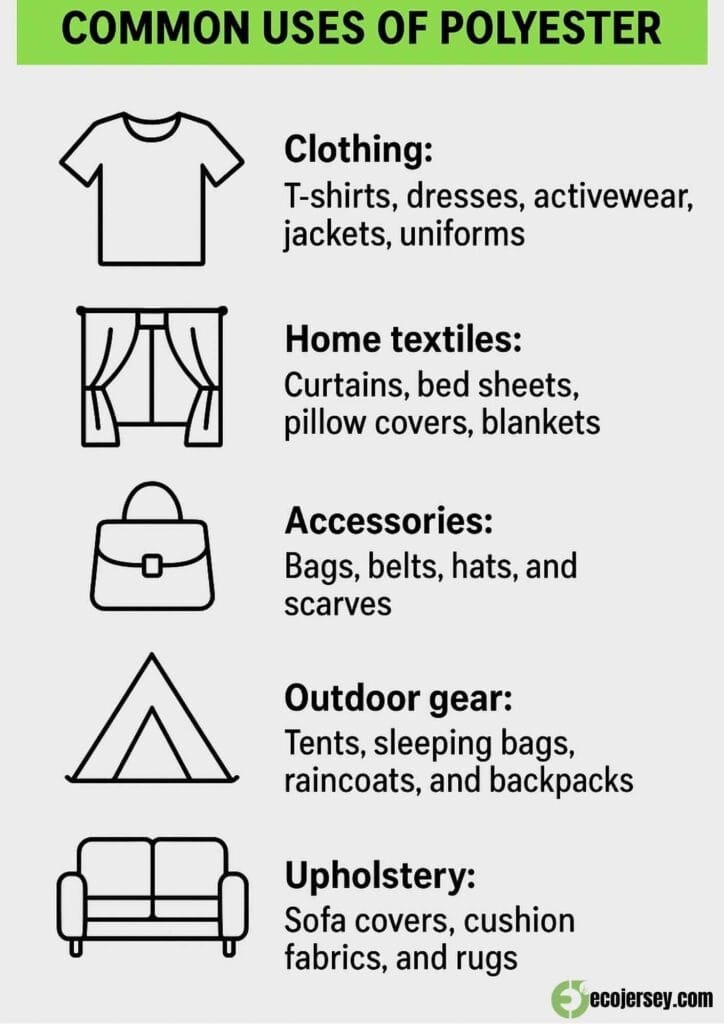
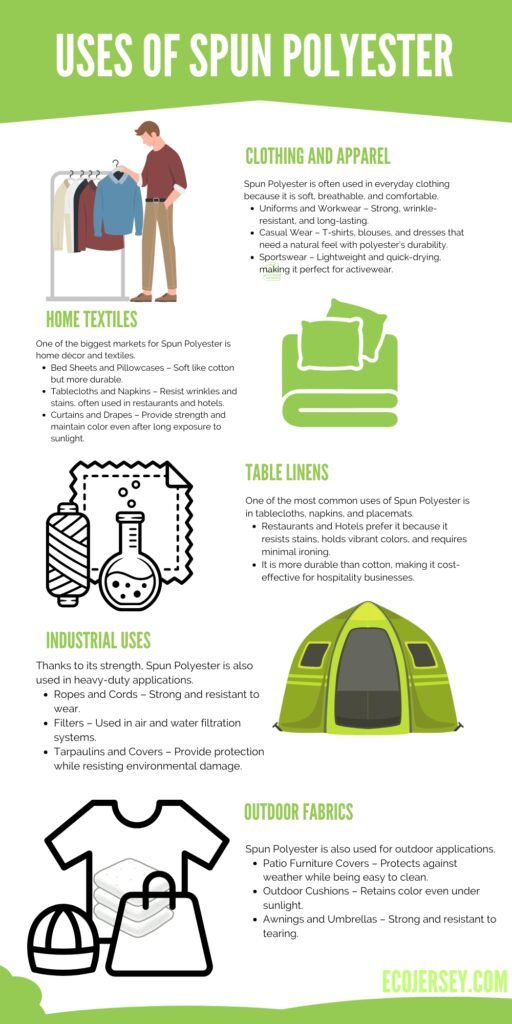
Common uses of polyester including clothing, home textiles, accessories, outdoor gear, and upholstery.
A breakdown of common uses for polyester
  • Lifestyle: activewear, jackets, uniforms, dresses, T-shirts.
  • Home textile: Curtains, bed, pillow and blanket coverings.
  • Accessories: Bags, belts, hats, and scarfs.
  • Outdoor products: Tents, sleep bags, raincoats and backpacks.
  • Upholstery: Sofa fabrics, cushions and rugs.

The reason why polyester is so popular is due to its longevity, affordability, and washing convenience. It is fast drying, and hence an ideal option in a hectic lifestyle. It is also a very versatile fabric which can be mixed with other fibres like cotton, spandex or rayon to produce fabrics with different textures and increased performance. Moreover, polyester does not fade, shrink, or wrinkle, which makes this material look shiny and polished despite being washed regularly.


Can You Wash Polyester?

Polyester is characterized as an easy to care of material but people have a question that has remained on their minds is; is it possible to wash polyester without destroying it? The good news is yes—you can. Nevertheless, there are some rules to be kept in mind to achieve maximum results.

General Guidelines for Washing Polyester

Never wash polyester clothes without looking at the label. Wash with light detergent and do not use bleach and harsh chemicals that may weaken the fibers. Polyester can always be washed with other fabrics, which ensures that they are not damaged.

Is Polyester Machine Washable?

Yes – one of the advantages of polyester is that it can be washed in the machine as a rule. Wash polyester in a normal or gentle cycle with cool/warm water. The cycle must always be gentle and avoid excessive friction and agitation. To add an additional protection, put fragile pieces of polyester in a mesh laundry bag. Always wash polyester with other similar clothes; do not put heavy clothes like jeans in the same load. Simply put, you can place polyester in the washer like cotton provided that you use the right cycle and water temperature.

Can Polyester Be Washed in Hot Water?

Polyester is not to be used with hot water. Under extreme conditions, polyester fibers may melt or be deformed by high temperatures. Use cold or warm water instead. As a rule, polyester can be washed at a 3040 C (cold to lukewarm) temperature. Fiber structure can be weaken by hot water, which may lead to shrinkage or shape loss, so avoid it. Thus, when washing polyester, cold or warm, but not hot water is the intelligent option.

Can Polyester Shrink in the Wash?

Due to being a synthetic material, polyester tends to be shrink-resistant. It is not supposed to shrink in a regular wash cycle (cool or warm water). Nevertheless, when polyester is exposed to very hot water or very hot dryer, slight shrinkage and/or distortion may occur. Practically, when you do not subject polyester clothing to maximum heat, the clothing will not shrink. Therefore, it should be low or medium settings – this is what will keep polyester in shape and fit after many washes.

How to Handle Stains on Polyester?

To remove stains, pre-treat the polyester fabric just like other fabrics. Put a little stain remover on the spot and allow it to rest a few minutes. As polyester is hydrophobic (it does not dissolve in water), dirt may stick to the surface; it may be helpful to loosen the stain with a small amount of detergent or soap. To remove smells or hard-to-clean dirt, wetting down the object in a watered-down solution of white-vinegar can rejuvenate the fabric. Pretreat then wash, on a gentle cycle. Never dry the stain unless it has disappeared, otherwise repeat. In short, wash stains as soon as possible, and lightly to ensure that polyester appears clean.


Best Practices for Washing Polyester
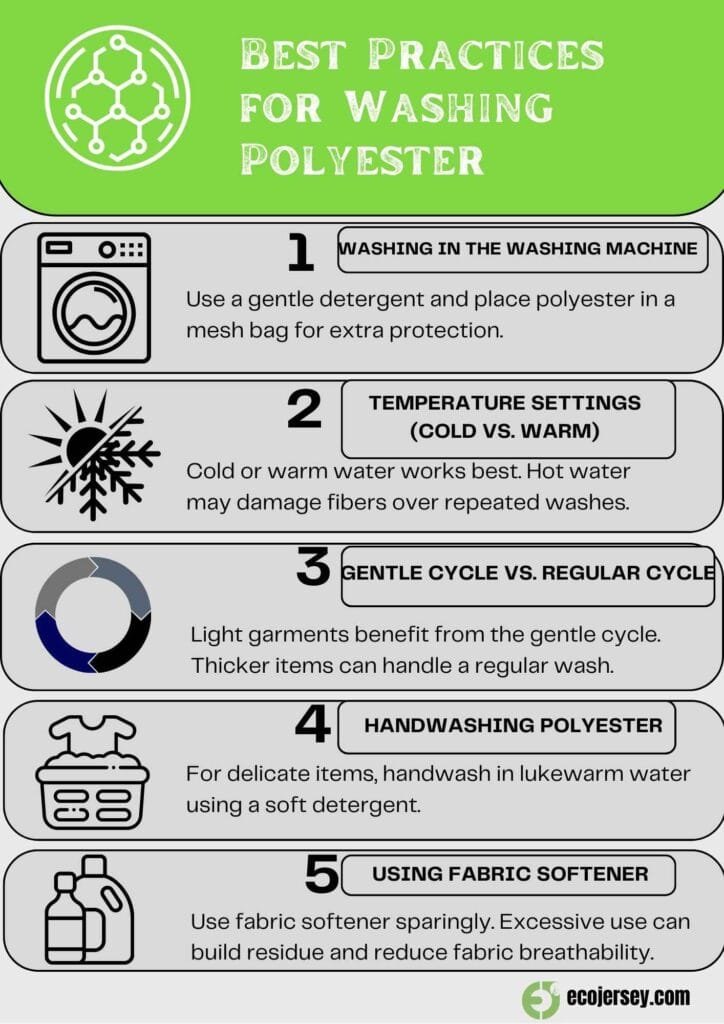
Best practices for washing polyester including machine wash, temperature settings, and handwashing.
A guide on how to properly wash polyester clothes.

Polyester Washing in Washing Machine

Wash polyester clothes in a gentle cycle always using a mild detergent. Abrasion and fading is also minimized by turning things inside out. Wash polyester with similar-colored clothes to avoid color transfer. A delicate piece such as a knit top should be put in a mesh laundry bag. The cool/warm water combined with mild detergents helps to safeguard the fibers in the washing process.

Temperature settings (Cold vs. Warm)

Polyester should be exposed to cold water because it will not put pressure on the fibers. Tougher stains can be treated with warm water (up to approximately 40 o C). Hot water should never be used since it can cause heat damage. Simply put, cool or lukewarm wash helps to save the strength and color of polyester.

Gentle cycle vs. Regular cycle

Use the soft cycle when washing polyester. A gentle cycle is less agitated, meaning less friction that may lead to pilling. Cycling might be fine on robust objects, but it is better to be gentle. Actually, it has also been found out that mild wash cycles can lessen the number of times a fabric is worn and the amount of microfibers that are released.

Hand washing Polyester Fabric

Sensitive polyester blends are safe when washed by hand. Put a little bit of detergent in a basin of cool or lukewarm water. Take the garment and swish it around gently and rub off the dirty parts. Wash in clean water. Lastly, squeeze out all the water without wringing (so it does not stretch). Washing of hands reduces stress to the material.

Polyester Fabric Softener

You may also apply a small portion of fabric softener to make polyester feel soft and to reduce or minimize static. But apply it sparingly: heavy softeners may coat synthetic fibers. Where possible, a softener that is designed to work with synthetics should be used. In general, a light conditioner (even plain white vinegar in rinse) suffices to allow polyester to lay flat and without any static.


Drying Polyester

Can You Tumble Dry Polyester?

Polyester may be tumble dried, however, only on low or medium heat. Polyester fibers can be ruined or reduced by high dryer heat. Select low dryer or permanent press. Polyester has a fast drying effect and therefore a brief cycle is sufficient. It is always advisable to keep the dryer empty to prevent overexposure to heat.

Best Way to Air Dry Polyester

Air dry is the mildest technique on polyester. Put the piece of clothing on a line or hang it in a place with plenty of air. When left outdoors, it should not be in direct sunlight, which may fade colors. Air drying maintains shape and elasticity of the fabric. The method also saves energy and prevents any risk of heat shrinkage.

Polyester is air dried to preserve the cloth. The best way to dry and flatten out wrinkles is to hang or lay things flat in shade when damp. This keeps the polyester clothes crisp and the heat of the dryer is avoided.

Anti-Wrinkles: Polyester and the Dryer.

Polyester is a naturally wrinkle-free fabric and therefore hardly requires ironing. To prevent wrinkling, clothes should be removed out of the dryer immediately and shaken out then hanged. In case you notice creases, they can be ironed out using low-heat iron/steamer. Polyester should always be ironed on a low setting, or preferably, on a cool setting; ironing at high temperatures may melt the fibers.

Will Polyester Shrink on drying?

Polyester must not contract when dried on a low or medium heat temperature. But when subjected to extreme heat it will shrink or distort. In order to avoid this, tumble dry at low-heat or air dry. Do not use high heat, or long dryer time. Practically, polyester items remain at their original size after following the care instructions (permanent press or low tumble).


Common Mistakes to Avoid When Washing Polyester

  • Excessive heat: polyester should not be subjected to excessive washing or drying to avoid damaging the material.
  • Washing with Harsh Detergents: Harsh Detergents have very strong chemicals, which destroy polyester and can lead to discoloration.
  • Do NOT Mix Polyester with Other Fabrics: Separate polyester in the wash to prevent pilling or color contamination.

Caring for Polyester to Make It Last Longer

  • Shelving Polyester Clothing: Polyester should be kept in a cool and dry area without exposure to the sun.
  • How to Prevent Fading and Pilling: Wash inside out and should not be subjected to friction with rough fabrics.
  • How to Keep Polyester Garments Shaped: It is essential to keep the shape of polyester garments by hanging or folding appropriately.

Polyester Blends: Can You Wash Them?

Washing Polyester-Cotton Blends

Polyester-cotton (usually 50/50) is very similar to pure polyester in regards to being able to be washed. Cold or lukewarm water and normal or gentle cycle must be used. This avoids the shrinking of the cotton. Use light detergent and do not use bleach. Use low or air drying to prevent shrinkage of the cotton part. Generally, polyester-cotton blends should be handled with care, although do remember that the polyester fiber stabilizes the cotton content.

Washing Polyester-Spandex Blends

Polyester-spandex (most workout clothes are made of this) needs special attention. They should be washed in cold water on a gentle cycle all the time so as not to damage the stretchy fibers. Bleach and fabric softener should be avoided because they can weaken the spandex elasticity. Even better, wash these things by hand. Laid out to dry or toss on very low fire; high fire will destroy the stretch. In case of ironing, it should be done with a very low setting.


Alternative Washing Methods for Sensitive Polyester Fabrics

Dry Cleaning Polyester Fabrics

There are also some delicate polyester garments that may need dry cleaning, particularly those that are mixed with silk or wool. Dry cleaning helps to avoid the wear which can be inflicted on delicate material by water and heat. Never put in the washing machine without looking at the care label because certain polyester clothes can lose their shape or texture when washed in the clothes machine.

Using Specialized Detergents for Sensitive Polyester

The most suitable detergents used on delicate polyester fabrics are mild and eco friendly. These are soft detergents, which do not damage the fibers and do not fade away. With special detergents you can not only prolong the life of your clothes but also make them look new.

Eco-Friendly Options for Washing Polyester

Lessening Microfiber Shedding of Polyester Fabrics: Washing of polyester releases small plastic fibers, hence, employing strategies to entrap. Wash on low (studies indicate that low cycles reduce shedding by approximately 70 percent. Collect fibers with a microfiber-capturing laundry ball or mesh bag (such as a “Cora Ball” or a “Guppyfriend bag). It can also help to install a microfiber filter on your machine. Last but not least, full load laundry and cold water can reduce wear and tear and shedding in general.


Conclusion-

And then is it possible to wash polyester? Absolutely. Polyester is among the simplest clothes to maintain as long as you do the right things. It is always best to use cold or warm water and a gentle cycle should be used where possible. Use no harsh detergents and no high heat which will destroy the fibers. Through careful washing and drying, your polyester clothes will last longer and appear fresh over time.

When washing or drying polyester, never forget to read the care label before making a mistake. Hang clothes in a cool and dry place to preserve their shape and color. The washing in and out will stop the fading and pilling with time. Your clothes and the environment can also be secured by eco-friendly laundry bags and detergents. With these little but significant measures, you can look forward to the long and comfortable life that polyester promises you.

Read More>> about types of Polyester Fabric.


FAQs

How Often Should You Wash Polyester?

Wash polyester every two to three times unless it gets very dirty or stained. Polyester is not absorbed by sweat as much as cotton is, so it has a longer shelf life. Nevertheless, it can be washed at the expense of its life, hence wash it only when required.

Can Polyester Be Washed with Other Fabrics?

Yes, polyester is not hard not to wash with other types of fabric, still, it is preferable to avoid washing it with heavy or rough loads. It can become pilled or wear at the surface when washed using some materials such as denim or towels. Polyester should be washed with other lightweight materials in order to achieve the best results.

How Can You Remove Wrinkles from Polyester?

Wipe out the wrinkles in polyester with a garment steamer or iron on a low-heat setting. High heat always to be avoided as it melts or distorts the fibers. In the case of recalcitrant creases, a thin cloth should be interposed between the iron and the polyester between the iron and the polyester.

Can You Wash Polyester Curtains or Bed Sheets?

It is true that polyester bed sheets and curtains can be washed in cold or lukewarm water. You must use a gentle cycle and a mild detergent so that the fibers are not damaged. These products should be air dried as this helps eliminate wrinkles and extends the life of the fabric.
Where Is Cotton Produced? Top Countries& Regions Explained

0

Cotton cultivation ranges from Asia to the Americas. Learn how China, India, United States, Pakistan, Brazil, and Uzbekistan have contributed to the global production of cotton and how this crop contributes to industries, trade, economies, and daily life. Cotton is universally acknowledged to be one of the most important crops grown. In one way or the other, cotton is utilized daily around the world. Natural fibers make every soft shirt and every cozy blanket, taking a significant role in the comfort of people and in the economy. Cotton production is a multifaceted sector that extends to the cooperation of people and entire nations. To fully appreciate the modern world, one must consider the history of cotton and it produced.

Why Cotton Still Matters Today

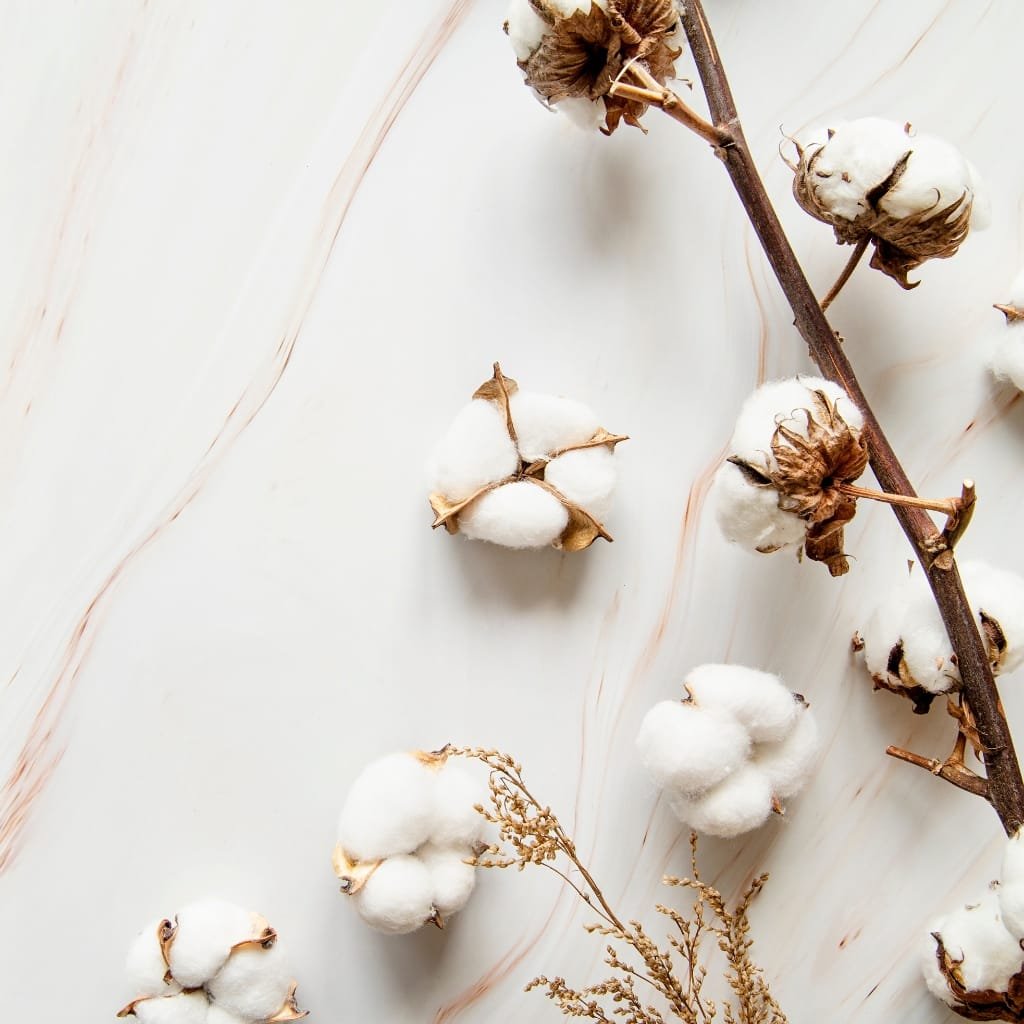
A close-up of fluffy white cotton bolls on brown branches resting on a light, marbled surface.
Why Cotton Still Matters Today

Cotton cultivation and use is estimated to have began more than 5000 years ago. Ancient civilization such as India, Egypt, and America practiced cultivating the plant for the sole purpose of trading and clothing. Cotton’s worldwide distribution as a result of global trading has made it a necessity to the economy today. Rich and poor nations alike have benefitted from the global demand, as it has led to the creation of thousands of jobs.

Ideal Conditions for Growing Cotton

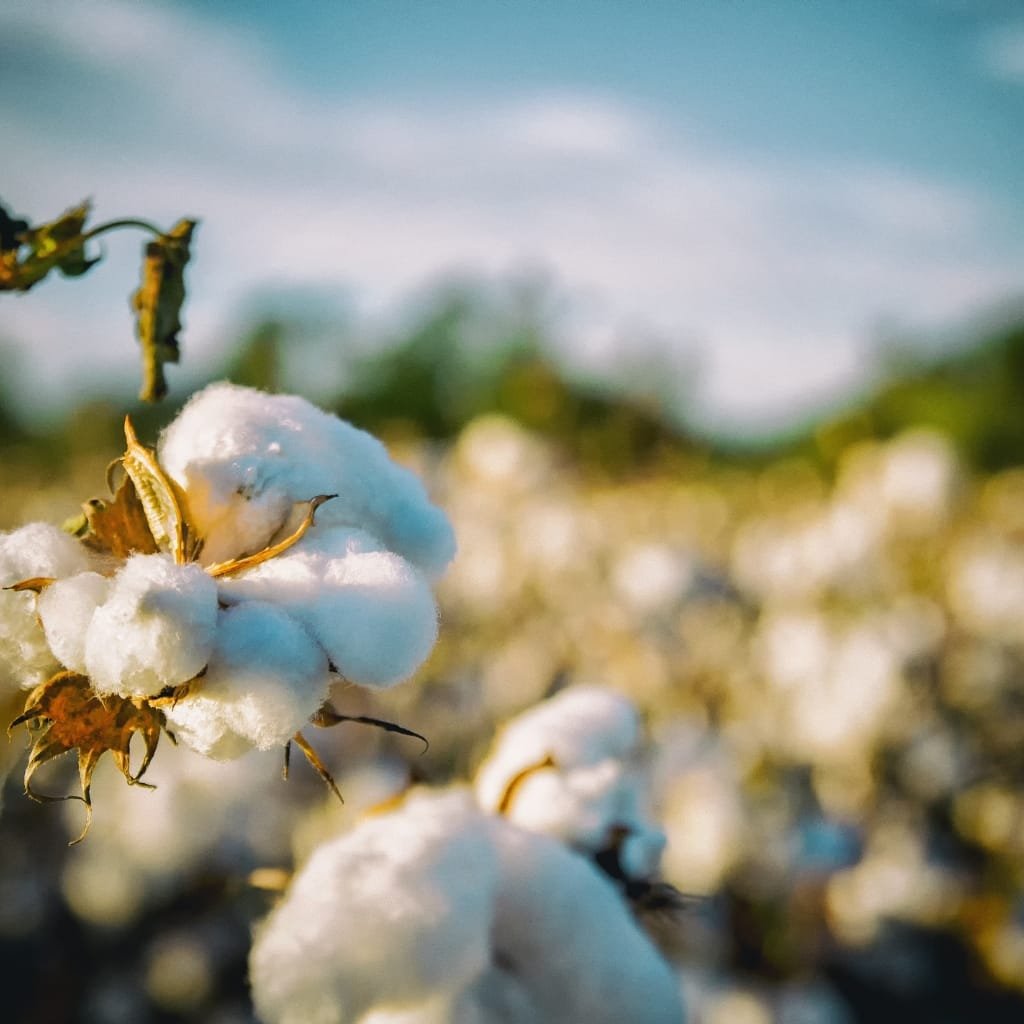
Close-up of fluffy white cotton bolls on a sunny field.
Ideal Conditions for Growing Cotton: warm days, plenty of sun, and well-drained soil.

Cotton plants prefer a warm and sunny climate. They require a long summer, rich soil, ample water, and sunlight. Excessive rainfall is harmful, and drought lowers yields. Cotton grown in tropical and subtropical regions are often very successful because of these conditions. Farmers in these regions are able to manage irrigation and pests for optimal crop yields. These attempts are a testimony to the importance of climate in conjunction with farming proficiency.

Leading Cotton Producing Countries

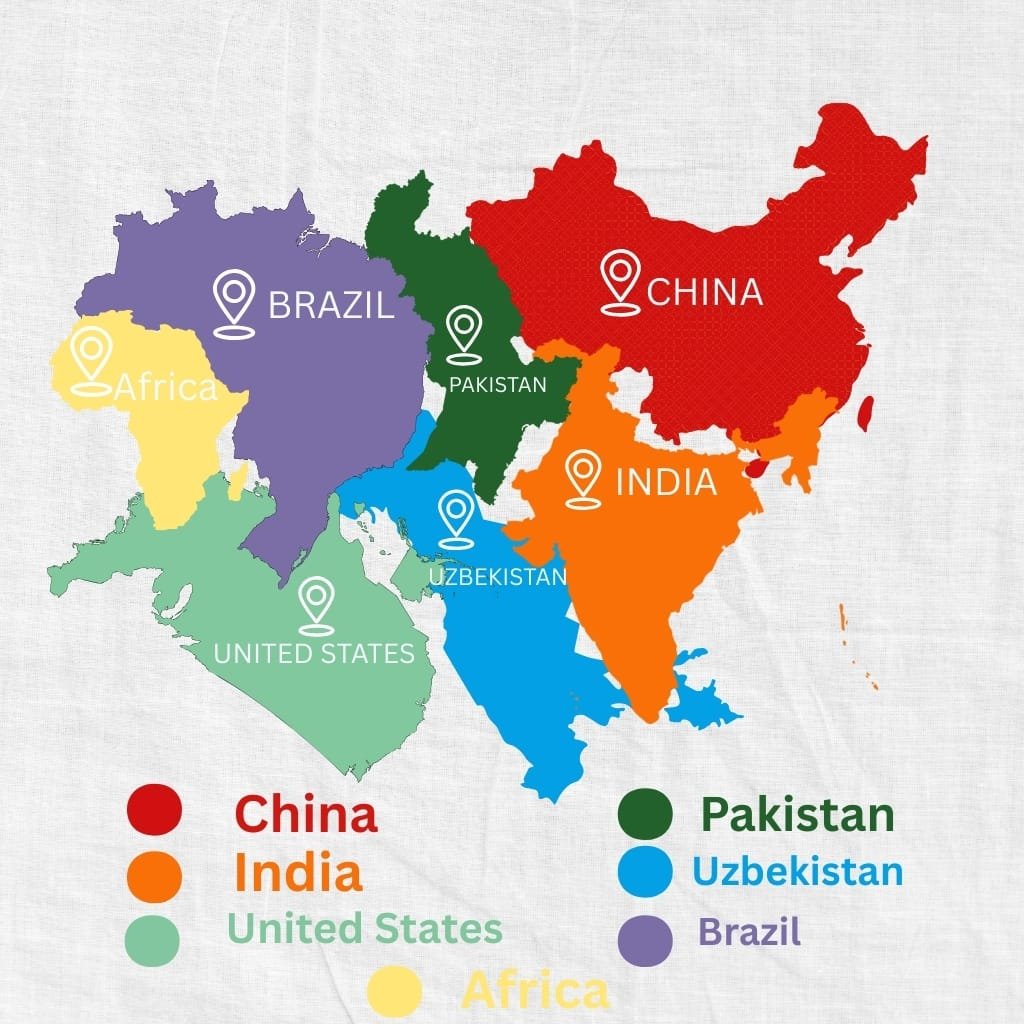
Colorful world map highlighting leading cotton-producing countries with labeled continents and country names.
Leading cotton-producing countries around the world.

Cotton Production in the US

The US is still one of the top producers of cotton in the world. Texas, Georgia, Mississippi, and Arkansas are some of the most important regions. US cotton comes from large scale dryland farms with sophisticated farming machinery. Farmers are able to quickly harvest large patches of land within a short amount of time due to enhanced cotton harvesters. A large portion of the cotton is exported, and the country’s position in international trade is very important. It also helps sustain employment and income for people living in farming towns.

Cotton in India

The Indian legacy of farming cotton is centuries old. Indian farmers grew cotton which was being traded throughout Asia and Europe. India is one of the first cotton producers in the world. Gujarat, Maharashtra and Punjab are known to be indias cotton farming states. The cotton grown in India is used in the production of textiles, used in India and exported to other nations. Farmers in this region rely on irrigiated and monsoon rainfall for production.

Cotton in China

Xinjiang is known to be the capital of farming cotton in China. China produces large amounts of cotton for the world which is then used in textiles, fabrics, clothing, and household goods. China is one of the biggest producers of textiles, leading the world in the domestic demand for cotton. Because of this, China is a low importer of cotton. The farming and industrial sectors in China works together to make the economy boom, keeping cotton the center of focus.

Cotton in Pakistan

Similar to much of the world, cotton farming in Pakistan also plays a key role in supporting the economy. The Punjab and Sindh provinces are organized in the cotton farming regions. Cotton are not only enables local farmers, supporting the local economy, but also textile mills as well. Pakistan pampers world with its fabric and garment. The economic significance of the crop is such that is often dubbed as “white gold”. The crop single handedly supports millions of families.

Cotton in Brazil

Brazil, like Pakistan, is also a fast growing nation in cotton production. The country is one of the largest land and has favorable climate, which is why cotton is grown in Brazil. Cotton are mostly exported to Asian countries that have a high demand. Unlike other countries that still rely on subsistence farming, Brazilian farmers are using advanced farming which increases yield and decreases wastage. This new farming industry enables Brazil to rival with the other cotton leaders such as India and China. The Brazilian economy is also gaining dominance in international trade.

Cotton in Uzbekistan

Uzbekistan continues to be one of the leading producers of cotton in Central Asia. It has done so since decades, and they remain both a global exporter and a reputable company for the manufacturing of cotton. This cash crop cotton has primarily driven the economy in these regions, along with changing the culture and lifestyle of rural communities. Uzbekistan cotton has also undergone progressive changes in how the crop is harvested in order to minimize the water used and maximize the productivity of the crop, and in doing so still continues generating income from cotton. Uzbekistan cotton still serves as national pride to the country.

Cotton in African Countries

African nations also participate in the global cotton market, where countries such as Mali, Benin, and Burkina Faso regard cotton cultivation as a primary cash crop and dominate the region’s production. Cotton from Africa is primarily sent to other regions of the world for sale, with local communities surrounding the farmers of these nations relying on the income produced from these exports. Falling prices and unreliable weather conditions greatly harm the farmers in these regions. Despite these trials, cotton is still a primary source of income for most families in Africa.

Cotton and Global Trade

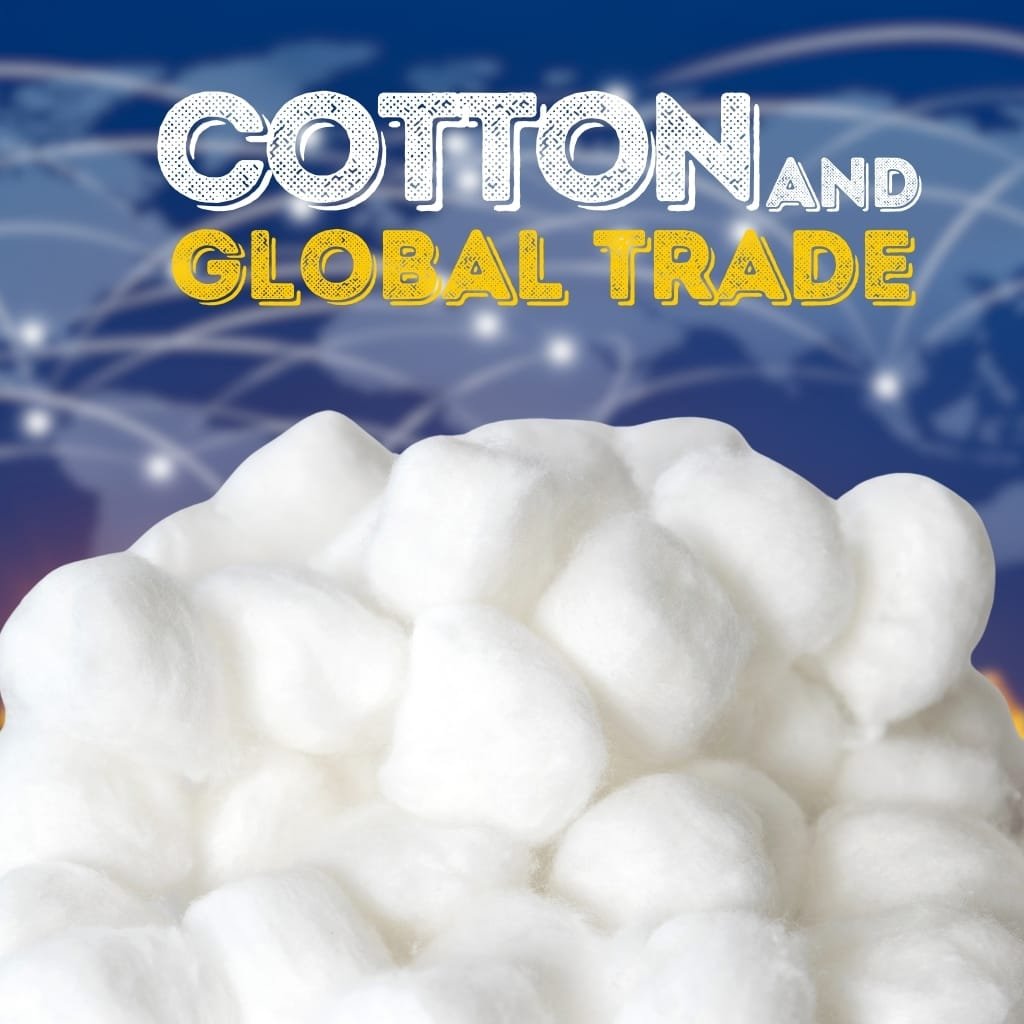
A close-up photo of fluffy white cotton bolls in the foreground with a blurred blue background featuring white lines and a global motif. The text “COTTON AND GLOBAL TRADE” appears at the top in bold white and yellow letters.
Cotton and Global Trade: A visual exploration of how cotton moves from field to global markets.

As one of the most notable traded crops worldwide, Cotton’s significance in the economy has indeed evolved. Its unique cultivation and the processing of its fibers, with the current business lines of its byproducts woven in, come with geospatial variations and inter-country economic zoning. Transnational economy interlinkages are a true demonstration of advanced global economics. Exported cotton has more benefits than just economic independence and global interdependencies; the elasticity of demand in several industries, particularly agriculture and textiles grows with every unit produced.

Cotton and Modern Technology

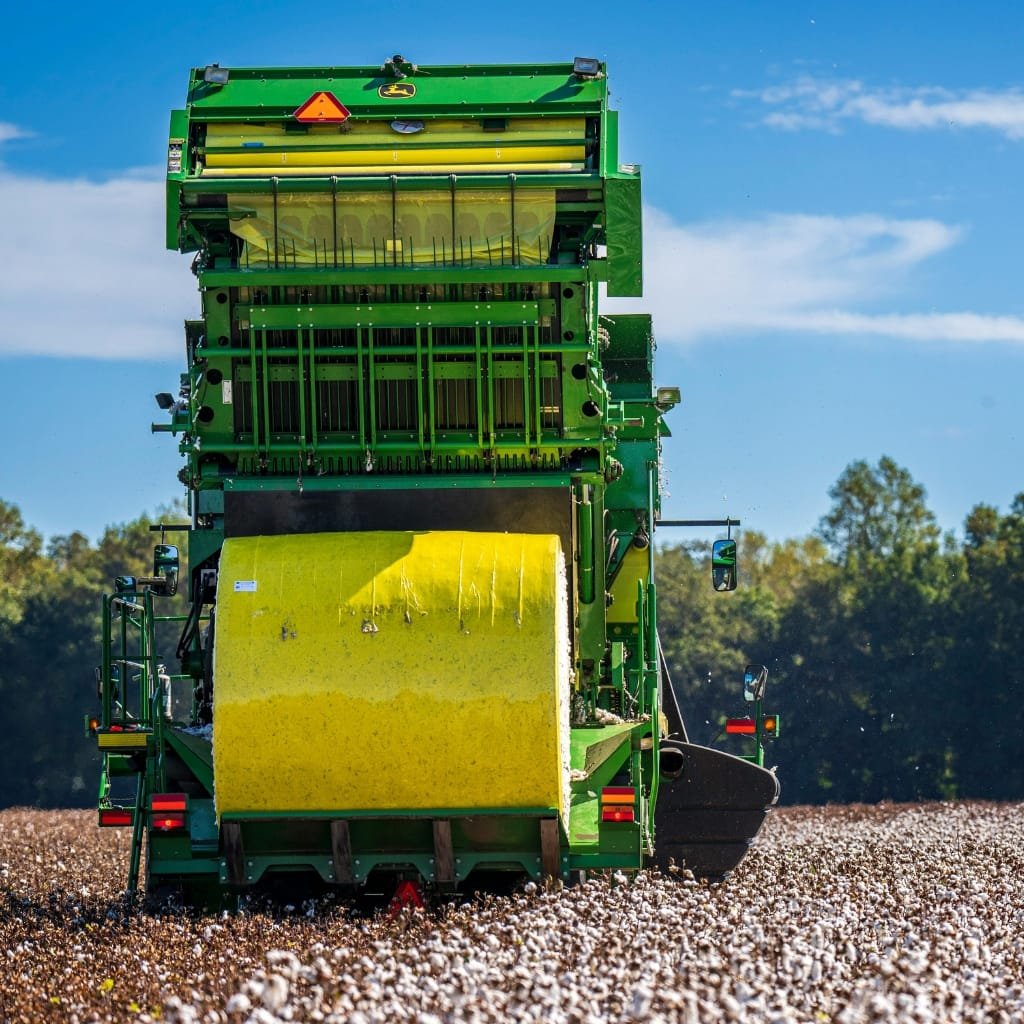
A large green modern cotton harvester operating in a field, with a bright yellow pickup drum at the front and a blue sky in the background.
Modern technology transforms cotton harvesting: a high-tech harvester at work in the field.

Unlike several centuries ago, the practice of farming has definitely undergone a revolution. Thanks to modern and advanced tools such as tractors, harvesters, and irrigation systems, the effectiveness of farming has drastically improved. Even the farming of cotton, which has been criticized for its low output, has been proven to give better yields and improved quality when modernized farming techniques are used. The increased productivity of farming has recently been attributed to better techniques used in the management of farming and the innovative development of nurturing systems for seedlings.

Cotton and Sustainability

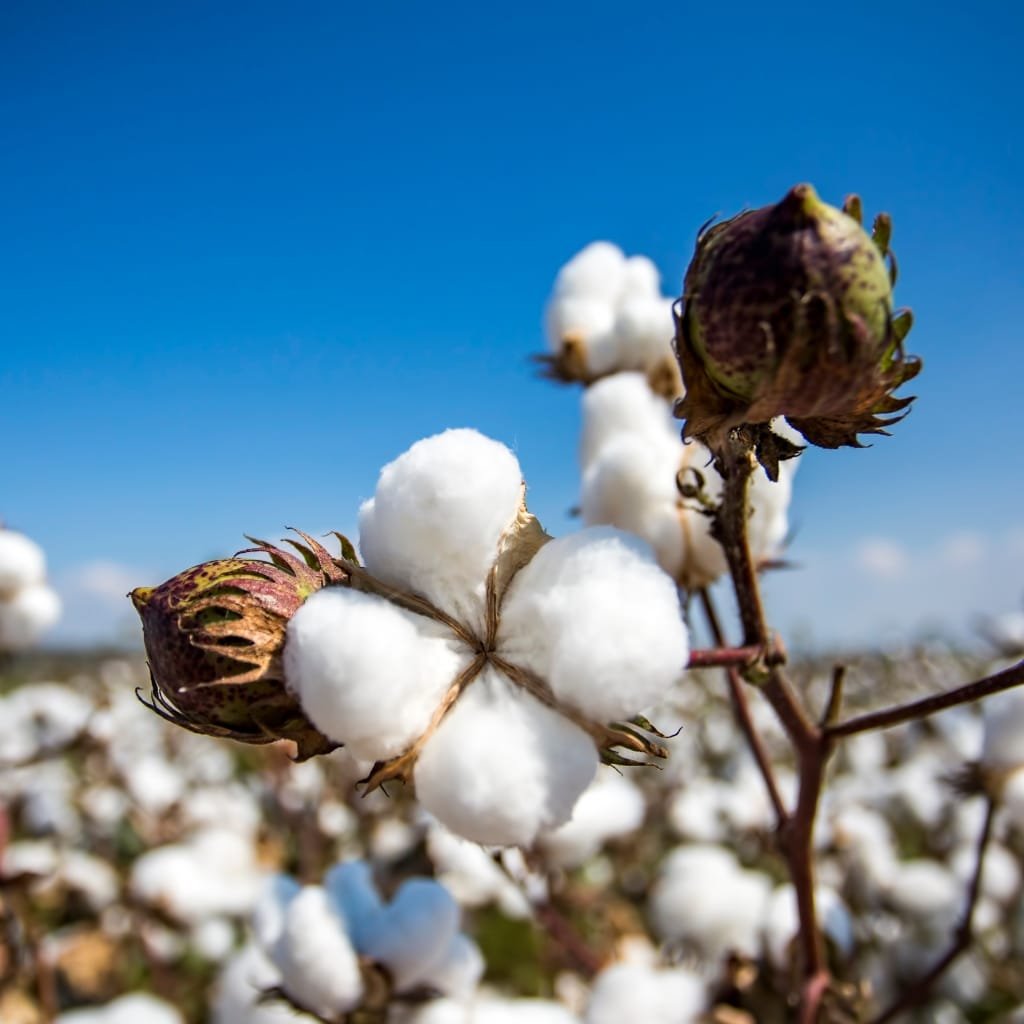
Close-up of fluffy white cotton bolls on a plant with a bright blue sky in the background, highlighting natural fibers and farm imagery.
Balancing natural fibers with eco-friendly farming practices.

Perceptions towards the environment have shifted and have started to have an impact on agrarian practices. On large scale farms, cotton production usually requires large quantities of water and numerous chemicals, which contribute to the pollution of soil and water bodies. Given this, a large number of farmers have started utilising sustainable techniques, and those which include organic farming, drip farming, and biological pest management. These techniques preserve the environment while also allowing cotton to thrive and grow. Sustainability is the future of cotton farming.

Cotton in Everyday Life

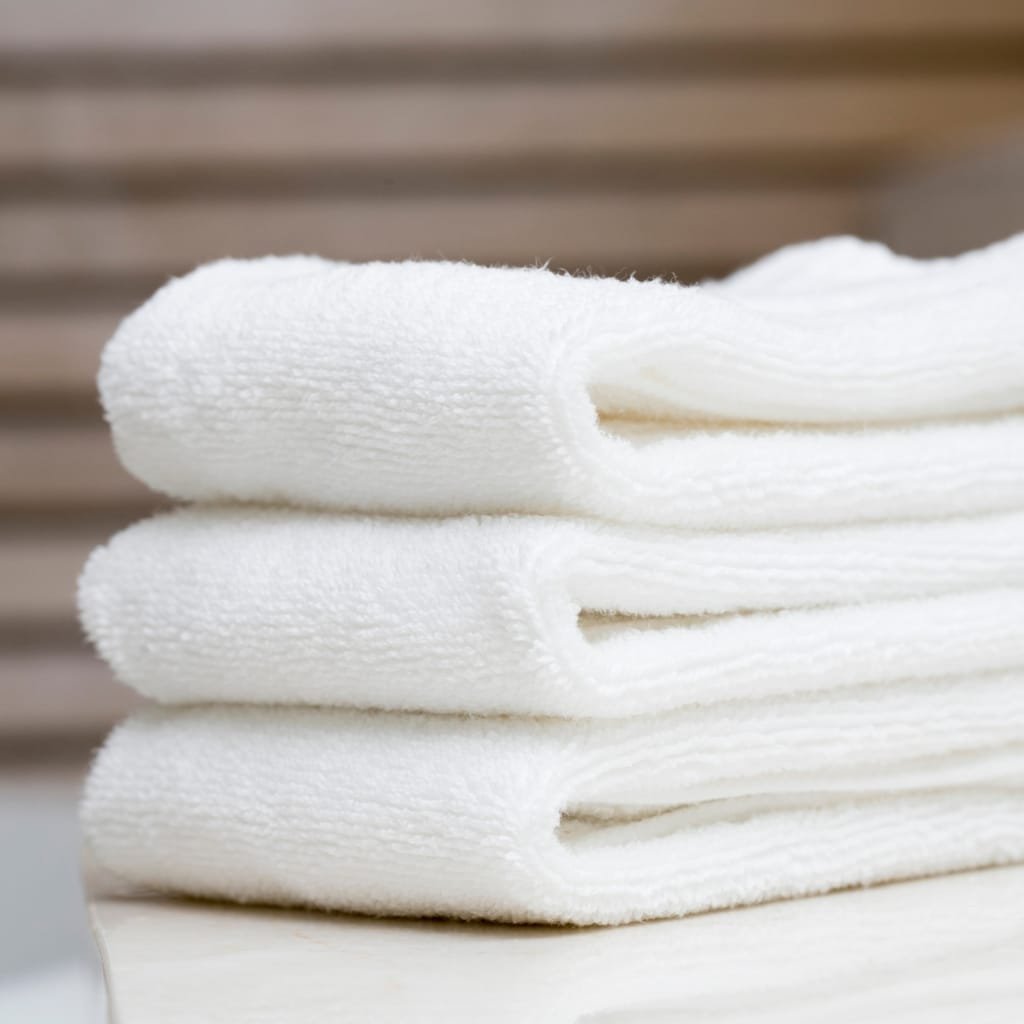
A stack of clean, white towels folded neatly, ready for everyday use.
Cotton in Everyday Life: Soft, everyday essentials for comfort and cleanliness.

It is in abundant supply, and is often taken for granted. Cotton is a component of the shirt and the towel. It is is used to make other products such as jeans, socks, bed sheets, and numerous others. Even band-aids and cotton buds originate from this agricultural product. Natural fibers such as cotton rank high due to its softness, strength, and adaptability. Everyday life without cotton would be a rather stark contrast.

How Cotton Helps Economies

The cultivation of cotton is an economic mainstay that extends beyond the confines of agriculture. The income generated by cotton farming transcends multiple continents as it provides employment to farmers, traders, and even mill workers. Countless families in countries such as India, Pakistan, and Indonesia rely solely on cotton farming in their day-to-day lives. The infrastructure that is subsequently constructed uses the debt that is acquired through exports. Such a crop proves to provide more than just materialistic fabric, it provides economic prowess.

Challenges for Cotton Farming

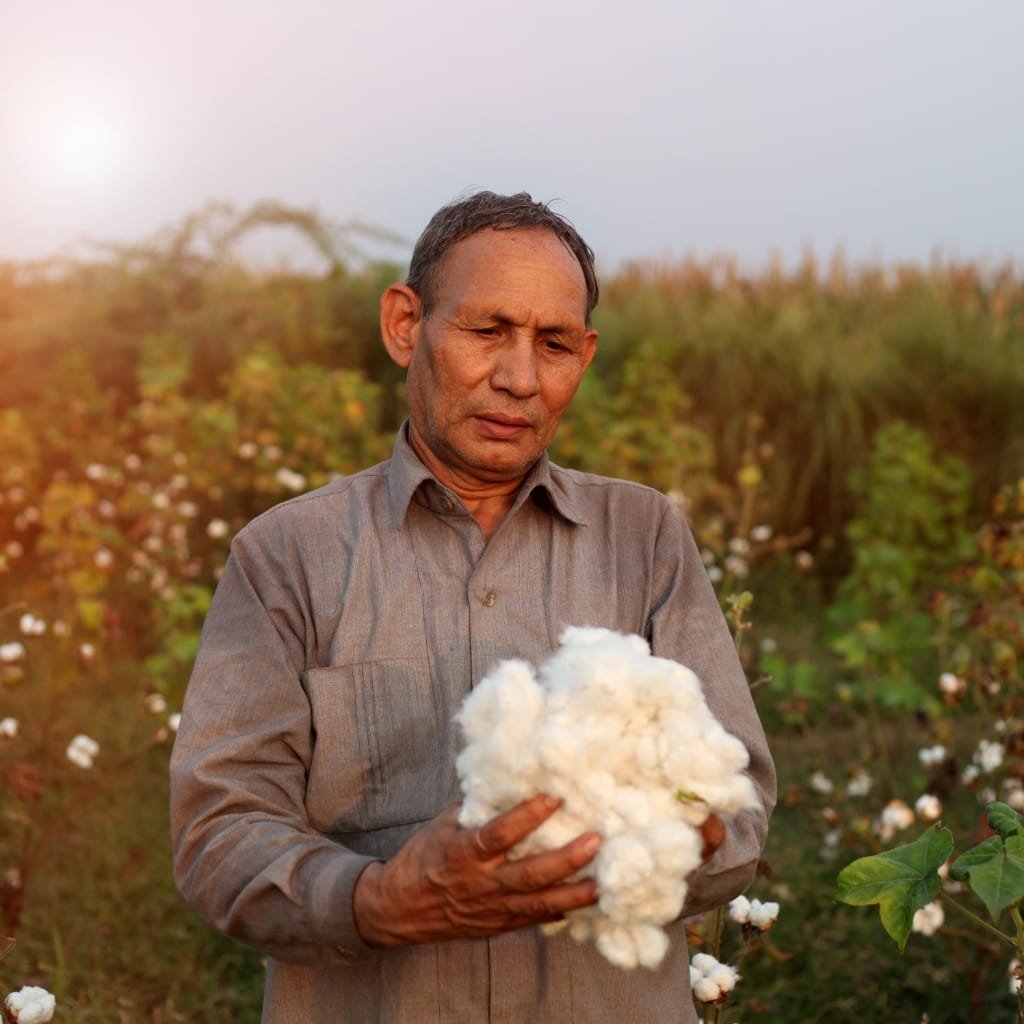
A middle-aged man standing in a cotton field at sunset, holding a large fluffy white cotton boll cluster with brownish-green plants in the background.
A farmer examines harvested cotton in a sunlit field, highlighting the hands-on challenges of cotton farming.

The positive aspects of cotton farming regarding economy and employment opportunities is undeniable, however, the farming of cotton does have its negative aspects too. Due to the constant shifting of weather patterns, harvests are impacted and crops susceptible to pests, face possible extinction. Reliable irrigation is key for cotton farms in drought-prone areas. If farmers and workers are careless, their income earned may suffer-falls global prices. The excessive use of water in some countries is a dominant concern. These issues are a product of a lack of planning that are easily resolvable with contemporary technological advancements and international cooperation.

Cotton Farming’s Tomorrow

The future of cotton farming, as well as cotton itself, appears both promising and challenging. Farmers growing cotton numerous decades from now will need to incorporate farming mechanisms which accommodate to climate change. Farmers may primarily use genetically modified seeds to suit their farming needs. Ecofriendly farming will only increase in popularity. The demand for cotton products will greatly increase as its comfort and natural feel becomes even more appreciated. More refined farming practices will only assist the plentiful cotton farming.

Conclusion

The world prospers from cotton as more than a mere crop. The product serves as a more intricate link between diverse countries, industries, and families as well. The product’s composition in China, India, the United States, Pakistan, Brazil, and even Uzbekistan shows its global reach. Cotton serves to continuously drives trade, culture, as well as a means of income from the fields of Africa all the way to the growing, flourishing farms in the United States. From soil all the way to fabric, the crop represents tremendously intertwined resilience, progress, as well as connection. Its importance in the world may even grow more than it is now, as one way or the other the world’s frost will be felt in the industries and little communities as well.
Read more Cotton Fabric? Its Properties, Production, and Uses

FAQs

Which country produces the most cotton today?

China and India lead the world, followed by the United States and Pakistan.

Why does cotton grow better in hot regions?

Cotton needs long summers, sunshine, and fertile soil to grow well.

How does cotton farming support economies?

Cotton produced worldwide provides jobs, trade income, and industrial raw materials.

Production of Linen Fabric Leads Sustainable Textiles in 2025

Introduction

The year 2025 has seen the production of linen fabric ascending in importance to the linchpin of the fashion and textile production. With climate change and the need to save resources becoming a global agenda, consumers and brands are on the lookout for environmentally friendlier substitutes to fast fashion and synthetic materials. Linen, with it’s eco-friendly origins and durability, is at the forefront of this transition. In comparison to polyester, which is based on petroleum and thus detrimental to the environment, and cotton which has a water-intensive production cycle, the production of linen fabric uses fewer resources and provides a strong, breathable, and biodegradable textile. This is not a textile fabric: it is a pledge to the worn torn world for responsible choice and a promise to progress in sustainable practices.

Linen Fabrication Begins with the Flax Plant

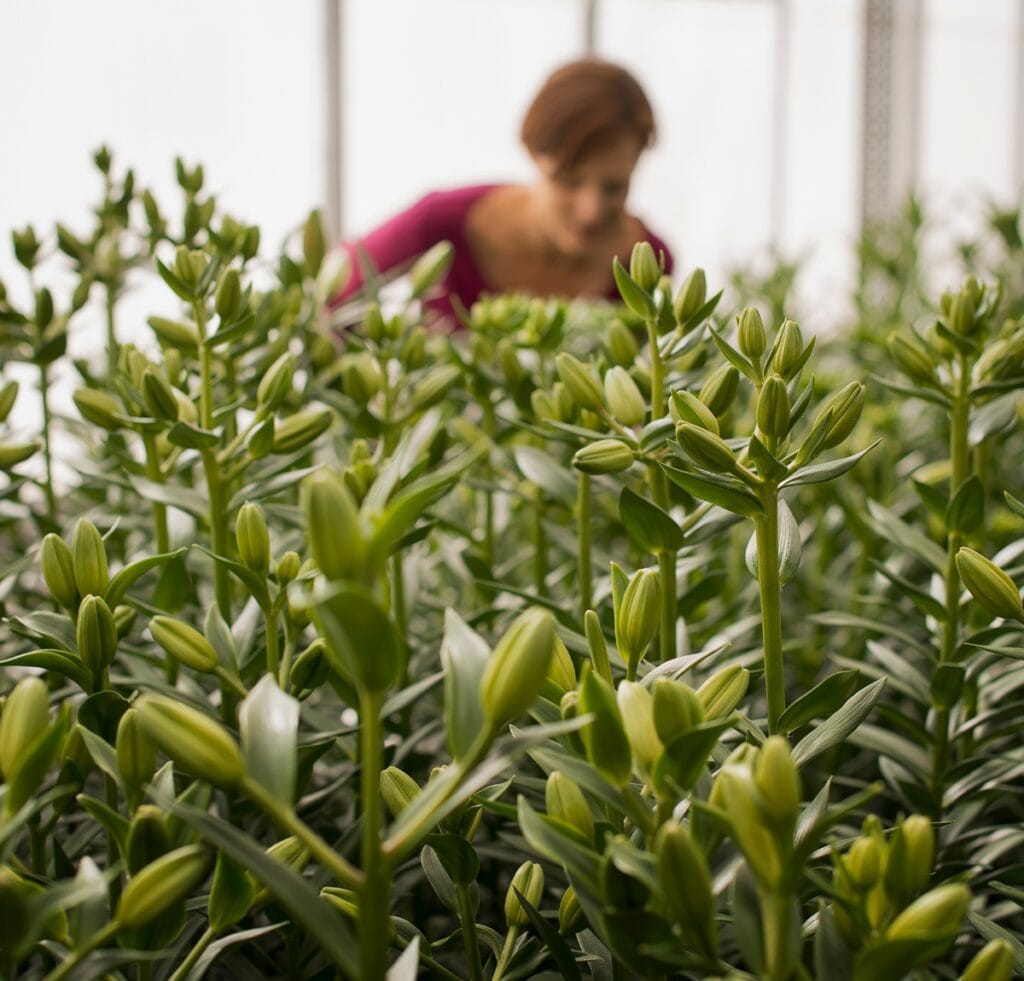
A close-up view of dense, green flax plants with closed flower buds in a greenhouse; a blurred person wearing a pink sweater tends to the plants in the background.
Linen fabrication begins with the flax plant: a thriving patch of flax in a greenhouse with a caretaker in the distance.

The Linen fabrication starts with the flax plant, which is bred in cooler climates with little need for maintenance. Unlike many other commercial crops which need excessive irrigation and pesticides to grow, flax requires very little and thrives in nutrient-dense and seasonal rainfall. Once cultivated, its stalks provide lengthy fibers which are spun into linen threads. This linen and plant transformation is practical in addition to its symbolic value. The cycle remains primal and eco conscious, a rarity for the world today. This is the current perception of linen, which indigenously relates to the long practiced heritage farming.—

The Significance in History of Linen Fabric Production

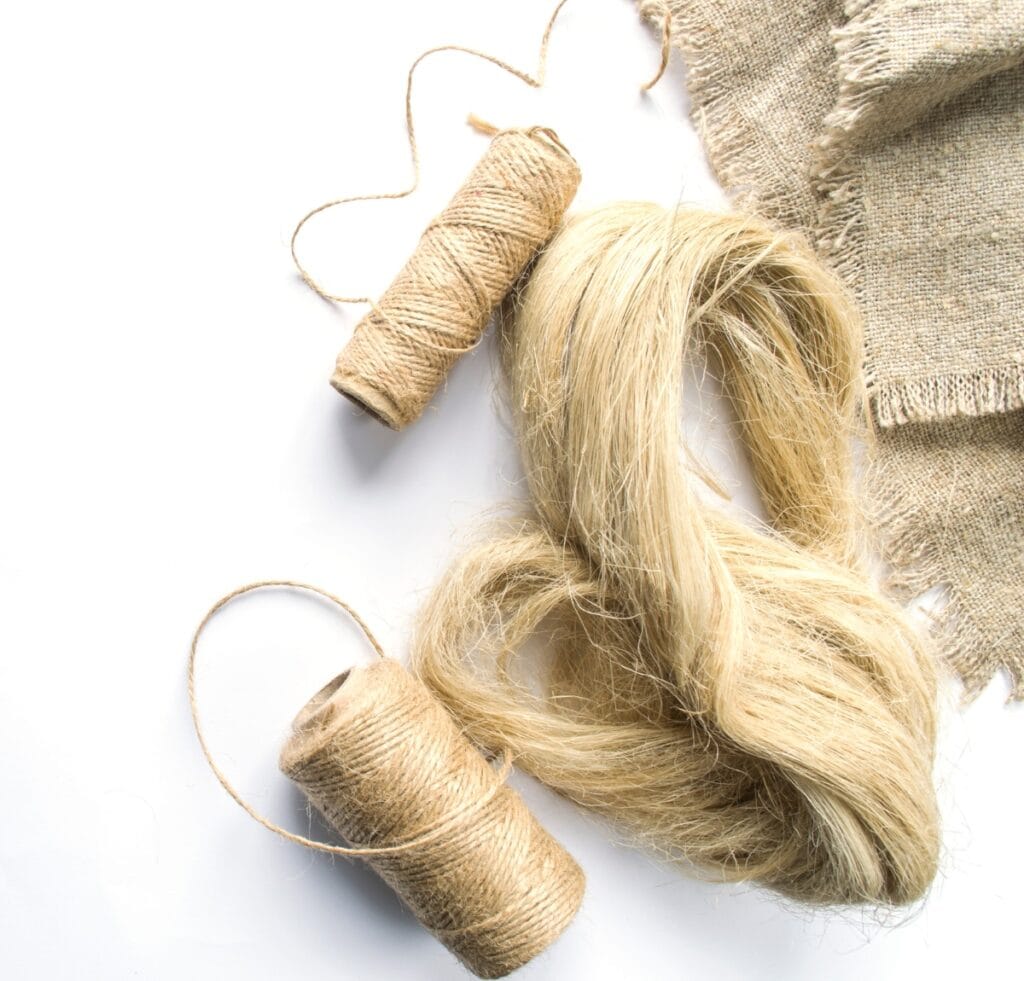
A skein of golden-beige linen fiber and two small spools of twine, with rough woven linen fabric pieces in the background.
Linen: A timeless fiber woven from flax, shaping ancient economies and enduring as a staple in clothing, sails, and textiles across civilizations.

Producing linen fabric can be associated with rich and priceless history that spans over centuries. Ancient Romans wrapped linen around mummies, and associated the cloth with the symbolism of purity and eternal life. The Romans used linen attires because of their comfort in the Mediterranean climate. During the Middle Ages linen was an essential item in European households for secondary clothes, table cloths and bed linens. Gradually, linen came to be associated with practicality as well as luxury, creating a bridge over various cultures and generations. Even in 2025, we could still honor a rich cultural and spiritual practice. The craft of producing linen fabric fulfills contemporary needs, while embracing the ancient stem of the craft.

Reasons How Flax Farming Encourages Eco-Friendly Practices

Part of sustainable agriculture linen fabric wheat cultivation begins with cultivating less water intensive crops like flax instead of cotton in water deficient or drought prone areas. This practice enhances soil fertility naturally, as the cultivation of flax requires lesser synthetic fertilizers and more natural crop rotation. Flax is a cash crop that farmers grow Spring and summer with little to no pesticides, and it is less polluting to the farmer. These farmers by growing linen help enrich soil, water, and carbon depleted areas. Linen fabric is then the linen is a prime example of sustainable agriculture.

The Updated method of producing Linen fabric

Like all fabrics, the production of linen fabric has shifted from traditional methods such as hand spinning and natural fiber retting to modern techniques. Producers still use traditional practices, but they now combine them with innovations that overcome past barriers while improving efficiency and reducing labor demands. Craftsmen and manufacturers create linen using processes that balance resource savings with waste reduction. With growing market demand and rising inflation, producers continue directing more resources toward innovative methods in the production of linen fabric. And more over, the preservation of traditional methods is evermore relevant. There would be no better reflection of perfect balance between tradition and modernity than this. And this is what is linen the world shall experience in the year 2025.

Modern Innovations vs. Traditional Techniques

Linen still undergoing its first production is still done manually through hand spinning, dece, and hand scutching. The techniques still produce high quality fabrics, however the current innovations have changed the industry for the better. Modern technology in the use of spinning machines yields smother, stronger yarns. Moreover, the finish techniques used in fabrics leave the linen soft and smooth skin friendly, and synthetic unused. It is however, remarkable, that the producers still focus on the use of pure woven linen as the basic fiber for the fabrics. The soft modern innovations and the integration of old age techno

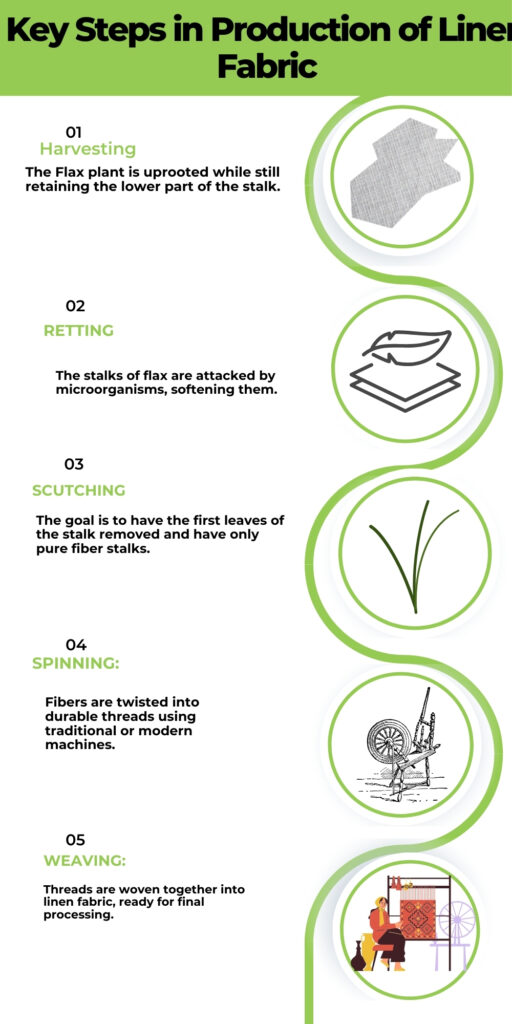
Key Steps in Production of Linen Fabric

"Infographic showing the key steps in the production of linen fabric. Five circular icons with a green decorative line: (1) Harvesting flax fibers with a crossed fabric icon, (2) Retting with stacked leaves icon, (3) Scutching with a plant stalk icon, (4) Spinning with a spinning wheel icon, (5) Weaving with a loom and sewing person icon. Each step is numbered 01–05 and includes a short caption."
“Key Steps in Production of Linen Fabric”

Harvesting: The Flax plant is uprooted while still retaining the lower part of the stalk.

Retting: The stalks of flax are attacked by microorganisms, softening them.

Scutching: The goal is to have the first leaves of the stalk removed and have only pure fiber stalks.

Spinning: Fibers are twisted into durable threads using traditional or modern machines.

Weaving: Threads are woven together into linen fabric, ready for final processing.

Every stage embodies balance in cultivation and sustainable farming, coupled with fine craftsmanship, enabling linen fabric production to stand as one of the most organic textile processes still utilized.

Why the Production of Linen Fabric Is Made to be Truly Sustainable

Another advantage for the method of the production of linen fabric is the lack of resources needed. Linen, from cultivation to the final garment, needs less linen and still outlasts and outperforms cotton, polyester, and viscose. It is less chemically intensive in production, less water is needed, and there are no environmental hazards from the fabric after its usefulness is over. There is also less electronic waste, because of the longer lifespan of the garments, which in turn leads to less waste. All of these factors combined make linen one of the most sustainable and environmentally positive fabrics in 2025.

Low Water Usage and Abridged Chemical Requirements

When it comes to the linen fabric production, it has been praised for the low impact on the environment particularly the water usage. The growing of the flax plant requires only rainfall irrigation as it sustains itself that way in most climates. This is quite the opposite of cotton which is known to drain freshwater in the areas where it is cultivated. Flax is unlike most crops as it requires almost no pesticide or fertilizer application, which leads to reduced chemical pollution of soils and groundwater. This makes linen fabric the most suitable choice for consumers who wish to spend their money on a fabric that is made in a socially and environmentally responsible way.

The Biodegradable Nature of Linen Fabrics

Linen fabric is one of the textiles which has unique and outstanding quality of being biodegradable. Contrary to polyester and nylon which are considered synthetic and take hundreds of years to decompose, linen can under the right conditions, be completely broken down within months. Linen is one of those rare textiles, which after disposal improves the quality of soil instead of polluting it. The closed-loop system of production and the end-of-life usage of the linen fabric underpin the circular fashion principles and help mitigate the industry’s long-lasting waste burden.

Longevity and Maintenance Compared to Other Fabrics

When it comes to linen fabric, linen fbrics has been proven to durable and sustain longer than other types of clothes such as cotton and synthetic clothing. Due to the proper maintenance and care of linen clothing, one can use it for many years, sometimes decades. This aspect makes linen clothing very useful in the slow fashion movement. Shifting the focus for linen fabric as an investment helps cut down on personal spending as well as the fashion we waste. Since every piece of clothing is made of linen, farming and production ensure durability. The post-consumer phase stays in line, making linen purchases less impactful on global pollution compared to plastic fabrics.

The Position of Linen in the Industry for Textiles in 2025

In 2025, line fabric and its production is still assisting in the transition of the global textile industry toward sustainability. In recent years, awareness of climate change has grown quickly. This shift increased demand for fabrics beyond polyester and fast fashion. Shoppers and brands now prefer eco-friendly materials that align with sustainability. With sustainable farming and production, linen has taken the lead in this movement. Linen also carries deep cultural value, which adds to its global appeal. It adapts easily to many uses. Designers use it in luxury fashion, casual clothing, and stylish home textiles. This makes is one of the leading fabric for the sustainable textiles revolution.

Global Demand for Eco-Friendly Fabrics

The worldwide rise in demand for eco-friendly textiles supports the production of linen fabric. Consumers want clothing made from natural and sustainably sourced fibers, and industry leaders are taking action to meet this need. Reports indicate that global demand for linen has risen steadily, and 2025 will mark the height of this trend. Brands are increasingly turning to linen for textile production. It offers a sustainable path for fashion industry growth. With demand rising, linen helps reduce fabric waste and supports eco-friendly approaches. Linen-producing brands must also lower carbon waste. At the same time, they need to address carbon emissions responsibly.

How Production of Linen Fabric Supports Circular Fashion

Circular fashion targets carbon waste reduction by closing the loop throughout the entire fabric life cycle. This approach ensures that textiles are reused, recycled, or naturally returned to the environment. The production of linen fabric fits perfectly into this model of circular use. Manufacturers can transform old clothes into repurposed fabrics, or consumers can dispose of them to biodegrade in landfills. Linen waste from production processes also finds new purpose in paper, insulation, or composite material products. The pliable nature of the fabric used in the construction of garments makes the production of linen fabric pivotal to evolving the linear fashion system into a controlled loop system for a circular economy.—

Designers Choosing Linen for Future Collections

Linen fabric lends fine cuts and natural sheen to luxury houses. It also brings soft ease to streetwear. Over the years, curators have shifted linen into a standard textile in the fashion pipeline. Linen has gained popularity for its ease in dyeing and comfort. It also offers sustainability benefits, inspiring designers. With its versatility, linen motivates creators to design unique and multifunctional pieces.

Challenges in the Production of Linen Fabric

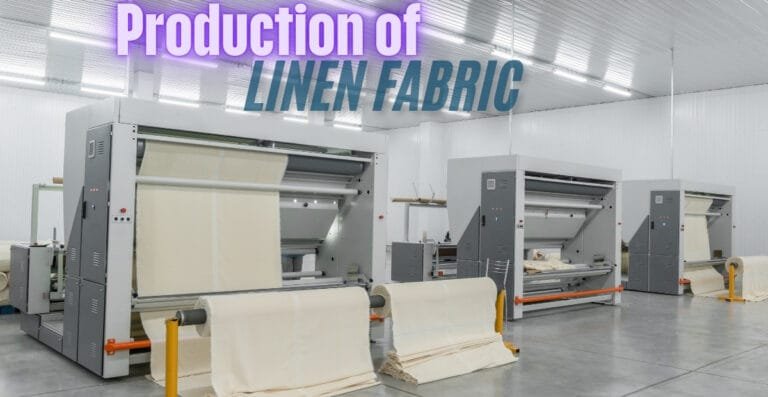
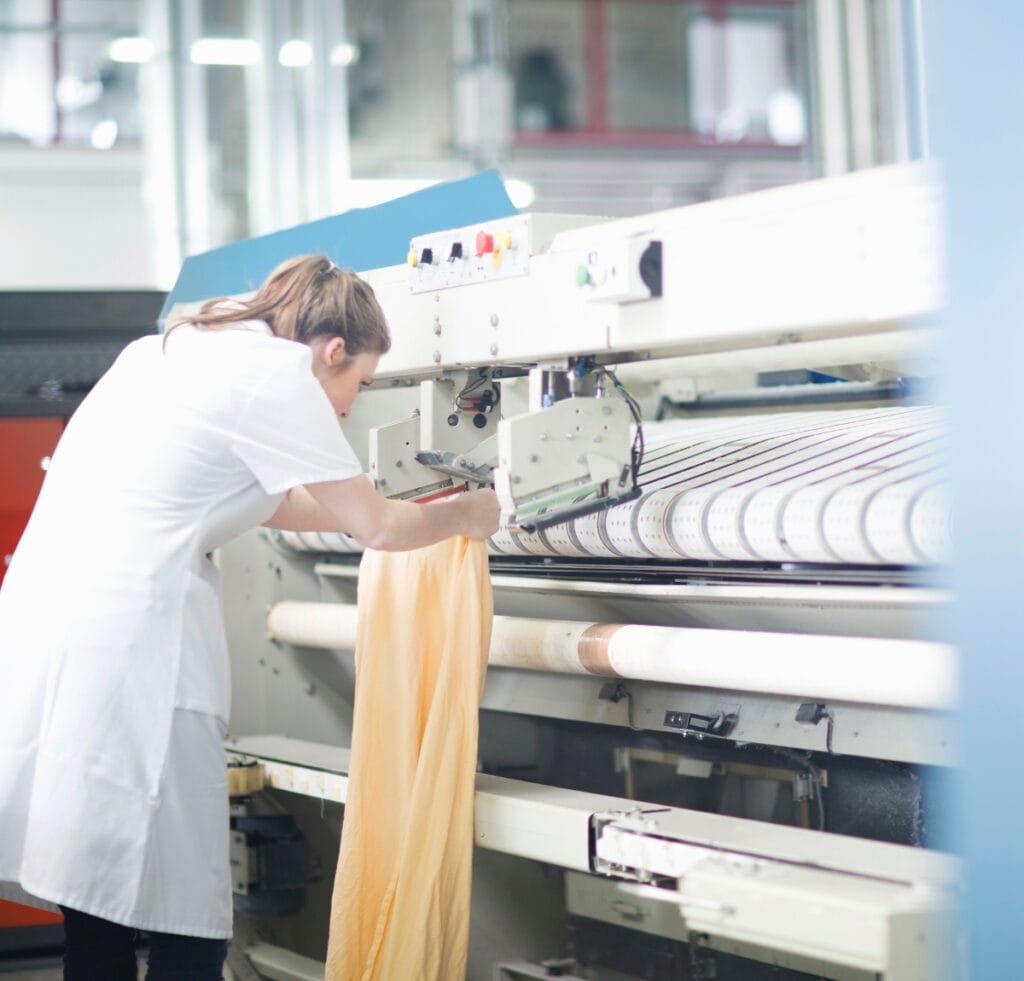
A textile worker in a white coat operates a large weaving/finishing machine, handling a long piece of pale linen fabric fed through the machinery.
Challenges in the Production of Linen Fabric: A worker feeds linen through industrial equipment, highlighting the precision, timing, and quality control required in modern linen manufacturing.

Many may believe that the production of fabric linen has many positive aspects, but, that is in fact false and the fabric has its own downsides. The costs of production and farming remain to impressionable and far lower than that of sleek and polished synthetic alternatives. Locations of flax cultivation scientifically remain to refine to areas of the world which do have geographical advantages, therefore making the cultivation of flax a worldwide disbursed and far-spread activity. In this time of modernity, rising demand sets new industrial standards, which in turn restrain certain forms of environmentalism. These problems need solving to make certain the streamlined production of linen remains in the popular and successful categories of the textile world.

Cost of Flax Cultivation and Processing

One major barrier in the production of linen fabric is the expense involved. Farmers must cultivate flax in the right climate, and turning it into linen requires a labor-intensive process. In contrast, linenette fabric sells at a lower price because of its cotton-like qualities. Polyester fabric costs even less since manufacturers produce it easily from petroleum-based crops. As a result, finished linen remains more expensive than other fabrics. However, linen clothing justifies its premium price because its durability saves people money over time. The customers who understand the value will feel like the linen is more of an investment, rather than an unnecessary expense.

Balancing Mass Production with Sustainability

While the population grows, the consumption and clothing goes hand in hand. For specialists, fabric production is overwhelming when paired with environmental responsibility. A customer’s dissatisfaction, caused by negligence, can harm biodiversity. Flax cultivation also suffers when precision is lacking, stripping vital nutrients from the soil. Success requires balancing supply and demand within the region. This must happen without compromising production quality. Linen fabric production works the same way. It needs careful methods to meet demand and protect the environment. Customers also expect clothing to stay high-quality and eco-friendly.

Future of Linen: Innovations Shaping Sustainable Textiles

The production of linen fabric has not escaped the ever-changing world linen technology which seeks to enhance quality and reduce the environmental impact of the product. New retting methods are now waterless and under controlled digital supervision. New methods of weaving produce lighter and more flexible fabrics which can be used for day-to-day and high-end usages. These changes will help the linen fabric industry stay prominent in the advancing world of textiles to remains competitive in the high environmental consciousness era.

New Technologies in Linen Fabric Production

The addition of new closed loop retting systems, energy saving weaving looms and systems for improved fiber treatment in the production of linen fabric are the highlights of this achievement. With the addition of these technologies, the energy and waste linen fabrics are exposed to are minimized and the fabrics become more soft and versatile to the different styles of fashion. Other researchers aim to blend linen with other biodegradable natural fibers and textiles. With these integrations, the linen fabric industry is beginning to embrace the harmony between efficiency and environmental care.

Forecast of Linen’s Role in Sustainable Fashion by 2030

Forecasts suggest that by 2030 the production of linen fabric will serve as a linchpin for the wider adoption of linen in the fashion industry. It will likely be the first of its kind to be adopted in the linen collection of sustainable fashion due to its signature traits of increased sustainability and versatility. Such positive linen trends will ascend in tandem with the increased demand for ethical and sustainable transparency from the brands. The linen fabric’s cultivation and refinement innovations a of bold designs and a shift in luxury-focused linen markets= will capably expand linen’s dominance within premier fabric within both niche and mass fashion.

The jacket as limb to sustainable hardware positive base linen’s on forecast consumer guide

Keen and socially responsible consumer expect to have linen as it will be the most the most growing fabric smart and chic choice. The positive forecast for the production of linen fabric guarantees that each piece of garment embodies the cultivation of positive durable as discrete, rest, oxygen fabric low resource reverse. Beyond being beauties, it is a functional fabric that possesses warmth and absorbs moisture. Having strongest in all synthetic no have the most linen and optimal care most for the fabric.

Advantages of Buying Linen Instead of Synthetic Fabrics

Linen unsually prevails compared to synthetic fabrics, such as, polyester, and nylon. Linen is suitable for the summer as it is breathable and for the winter as it is insulating. It is comfortable to wear all day because it wicks away moisture without sticking to the body. Supporting the production of linen fabric helps furthers environmentally sustainable farming practices, such as avoiding harmful synthetics and conserving water. Buying linen fabrics instead of synthetic fabrics is more than just a fashion statement; it means a more personal step toward being environmentally conscious.

How to Care for Linen to Further Increase Its Lifespan

Linen fabric is naturally strong and durable, but it needs proper care to maintain its lifespan. To preserve additional durability without weakening the fibers, people must handle linen correctly. The best way to wash linen is with mild detergent and cool water, which protects its natural strength and texture. Preserving the fabrics chemical free helps the fabric greatly. it is better to avoid the heat of the sun, and tumble drying, but it is possible to use them for time’s sake, as long as they are on low heat. it is less striking to a garment if the garment is dry and ironed than if it is moist, though it is more favorable to preserve the crisp form. Simple care of linen helps with personal linen garments, as they are a form of investment for enduring and sustainable fashion.

Conclusion

2025 will find the production of linen fabric pioneering the field of sustainable textiles. From the flax fields to advanced processing technologies, linen leads the way in responsible fashion. Minimal water use, low chemicals, biodegradability, and extreme longevity, all in one fabric, makes it ideal for consumers and designers alike. Linen has challenges in cost and scalability, however, it survives as even timeless and forward thinking textile. The production of linen fabric serves an even better purpose as more people begin to embrace linen as it safe to say that fashion can be sustainable and so can the future as a whole. Read About Article// Linen Fabric: A Complete Guide to History, Uses, and Benefits

FAQs

What is the production of linen fabric?

The production of linen fabric is the process of turning flax plants into strong, breathable, and sustainable textiles. It involves harvesting, retting, scutching, spinning, and weaving. Unlike synthetic fabrics, the production of linen fabric requires fewer resources and produces biodegradable, eco-friendly materials that last for years.

Why is the production of linen fabric considered sustainable?

The production of linen fabric is sustainable because flax grows with minimal water and pesticides. Linen is biodegradable, durable, and long-lasting, which reduces waste. Compared to cotton or polyester, the production of linen fabric leaves a much smaller environmental footprint while supporting eco-friendly farming practices.

What are the main steps in the production of linen fabric?

The production of linen fabric involves five main steps: harvesting flax stalks, retting to release fibers, scutching to remove woody parts, spinning into threads, and weaving into fabric. Each stage of the production of linen fabric blends tradition with modern techniques to ensure strength and sustainability.

How does the production of linen fabric support circular fashion?

The production of linen fabric supports circular fashion because linen is recyclable, reusable, and biodegradable. Old linen garments can be repurposed into new textiles or naturally decompose without polluting the environment. This makes the production of linen fabric a perfect match for sustainable and circular fashion models.

Why is linen more durable than other fabrics?

The production of linen fabric results in long fibers that create strong, durable textiles. Unlike cotton or polyester, linen withstands wear and becomes softer with each wash. This durability means fewer replacements, reducing waste and making the production of linen fabric a leading choice for sustainable fashion.

Is Polyester Stretchy?The Surprisingly Complex Answer

Introduction-

Polyester is one of the cheapest and most common synthetic fabrics in the world. It is derived from polymers derived from petroleum which are then spun into filaments to be woven, or knitted into fabric. A polyester fabric is lightweight and relatively strong, resistant to a lot of, moisture, mildew, deep, and creasing.

Comfort, fit, and durability are elements which are determined by the fabric’s response to movement and tension which, in most cases, determines how responsive the fabric is.

This confusion comes about because polyester is a synthetic fabric and polyester clothing, flexible and stretchable, is often mistaken for clothing made from natural fibers such, cotton, wool and the likes. The later are considered to be rigid. That is, the difference depends on the type of fiber, the type of fabric, and the blend of fabrics. Let us now discuss why the answer is more complex than a simple yes or no.is polyester stretchy

Is Polyester Naturally Stretchy?

The fiber structure of polyester determines the extent to which it can stretch. Polyester, unlike cotton or wool, consists of long polymer chain fibers. These chains are strong and inflexible, which results in a durable, but not naturally elastic, fabric.is polyester stretchy

Polyester tends to be different polyester in contrast with other fibers. Unlike wool fibers which are able to bend to a certain angle and spring back due to the crimped configuration, cotton is able to relax a bit and stretch. Polyester on the other hand comes with very little natural elasticity.is polyester stretchy

So, is polyester elastic in its pure state? The answer is a plain no. 100% polyester fabric comes with very little natural stretch, which is almost always slight and mechanical, depending on the methods used for knitting or weaving.

When Does Polyester Stretch?

Polyester is capable of stretching and it is independent of the conditions. For example, high heat, although not advisable, can cause the fibers to stretch a little.is polyester stretchy

Stretch is another important factor. Fiber under strong tension is pulled. Polyester might behave a little under tension strain, but the fiber quite often retains its original shape once the tension is released. Its bounce-back, or recovery, phenomenon is one of the polyestercore advantages.

Excellent shape retention allows polyester to not easily deform or sag as naturally some fabrics do.is polyester stretchy Thus, while pure polyester might be devoid of much stretch, its consistent form retention even after prolonged wear is remarkable.

The real polyester stretch comes alive in blended fabrics. To enhance mobility and comfort, polyester is often blended with other fibers.

Blended Fabrics: How Polyester Becomes Stretchy

When stretchability is needed, this is the most common combination used. Movement of the body is unrestricted in leggings, yoga pants and athletic tops because Spandex or Lycra in small amounts, usually 5-10, adds powerful elasticity. Even a small percentage of spandex in a polyester fabric makes it highly stretchable.

Polyester + Spandex/Lycra Blends

Cotton adds softness and breathability to fabrics, while polyester adds strength and resistance to wrinkling. The combination results in a blend that is softer than polyester alone, yet more rigid than 100% cotton.is polyester stretchy While not as stretchable as polyester-spandex materials, cotton-polyester blends remain more pliable than pure polyester.

Polyester + Cotton Blends

Most polyester blends exhibit 2-15% stretch as a result of the added fiber, while some crossover blend fabrics can reach higher stretch percentages. Poly-spandex blends are the ideal candidates, as they offer the most stretch and are intended for active and tightly-fit garments.

Common Stretch Percentages in Blends

Most polyester blends fall between 2–15% stretch, depending on the added fiber. Fabrics with higher spandex content offer greater elasticity, making them ideal for sportswear or body-hugging clothing.is polyester stretchy

Because of these qualities, polyester blends dominate the activewear industry. Athletes and fitness enthusiasts need fabrics that are lightweight, breathable, and flexible, and polyester blends deliver on all these fronts.

Stretchiness of Polyester in Different Products

The answer to the question “Is polyester stretchy?” also depends on the kind of product.

Clothing: T-Shirts, Leggings, Jeans, Sportswear

Polyester T-shirts tend to lie relatively flat with no stretch unless blended with spandex or cotton. On the contrary, leggings, as well as athletic, or activewear, almost always contain polyester-spandex blends to offer optimal range of motion. Even jeans often have polyester blended in to provide achieve a better fit, shape retention, and to facilitate ease of movement.

Home Textiles: Upholstery, Curtains, Bedding

With furnishing textiles, stretchiness is of less importance. Polyester drapes, bedding, and upholstery do line appreciated for their durability as well as their low tendency to wrinkle, or crease but elasticity is pointless within these products as well.

Outdoor Gear: Jackets, Tents, Backpacks

Is polyester stretchy? In regards to outdoor equipment, polyester is appreciated for its strength, water resistance, and durability. While being non-stretchable, it will supply stability under unfavorable weather conditions. It’s true that some spandex may be incorporated to jackets for ease of movement but rigid construction is preferable for tents and rucksacks.is polyester stretchy

Does Polyester Shrink or Lose Shape?

The other question to consider is does polyester shrink. Unlike cotton, polyester does not shrink rather easily.is polyester stretchy The synthetic structure of polyester does not tend to shrink easily which makes polyester a dependable candidate for clothes that are supposed to maintain their shape.

Unlike cotton, polyester has no inclination to stretch, and thus, it also does not easily loosen its fit as it is washed repeatedly. It, therefore, retains its fit and appearance for a longer period of time. Stretch blends, however, can easily wear out if neglected.

Polister’s resistance to shrink and sag is particularly valuable for its use in making durable clothing, and in various household products.

Common Uses of Polyester

is polyester stretchy

Activewear and Sports Clothing

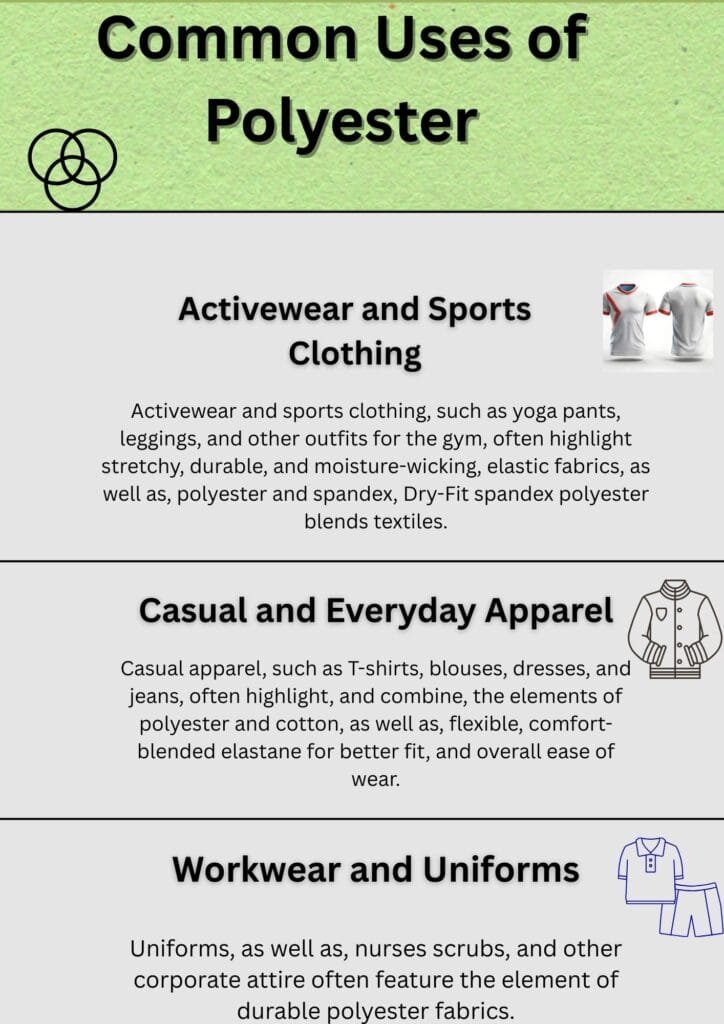
Activewear and sports clothing, such as yoga pants, leggings, and other outfits for the gym, often highlight, durable, and moisture-wicking, elastic fabrics, as well as, spandex, Dry-Fit spandex polyester blends textiles.

Casual and Everyday Apparel

Casual apparel, such as T-shirts, blouses, dresses, and jeans, often highlight, and combine, the elements of polyester and cotton, as well as, flexible, comfort-blended elastane for better fit, and overall ease of wear.

Workwear and Uniforms

Uniforms, as well as, nurses scrubs, and other corporate attire often feature the element of durable polyester fabrics. In the blended form, they highlight ease of movement, professional appearance, and wrinkle resistance throughout the day.

Home Textiles

Curtain and bed covers, in addition to, sofa throws often highlight a conjugated form of polyester, as well as, its shape retention property. In this case, the polyester ensures neat appearance and ease of use without losing shape.

Pros and Cons of Polyester Stretchiness

Pros

Wrinkles are easily removed from polyester, making it a durable fabric. It also holds its shape well and therefore, clothing does not sag after multiple wears. When soendex is blended with polyester, it allows for a much greater freedom of movement for more active individuals.

Cons

However, it does not stretch easily, and a sweater made of pure polyester is not comfortable, as it retains much of the wearers body heat, and breathability is poor due to the fabric being un of synthetic origin. Those who seek comfort and softness should reach for something other than polyester.

Tips for Caring for Stretchy Polyester Clothes

Proper care for a polyester blend helps to maintain the elasticity of the fabric.Is polyester stretchy? For example, washing polyester in cold or lukewarm water is gentler, and therefore, preserves the strength of the fibers. It is best to avoid high heat, as it can damage spandex and therefore, the stretch of the fabric.

Drying polyester on a low setting or air-drying is the safest method. Hot, dry conditions on the other hand can warp the fabric over time, causing it to dry out and become brittle.

When it comes to blends of polyester and spandex, the use of gentle detergents is ideal. To help retain the stretch of the material, fabric softeners and bleach should be avoided.

Polyester vs Other Fabrics (Stretchiness Comparison)

is polyester stretchy

Polyester vs Cotton

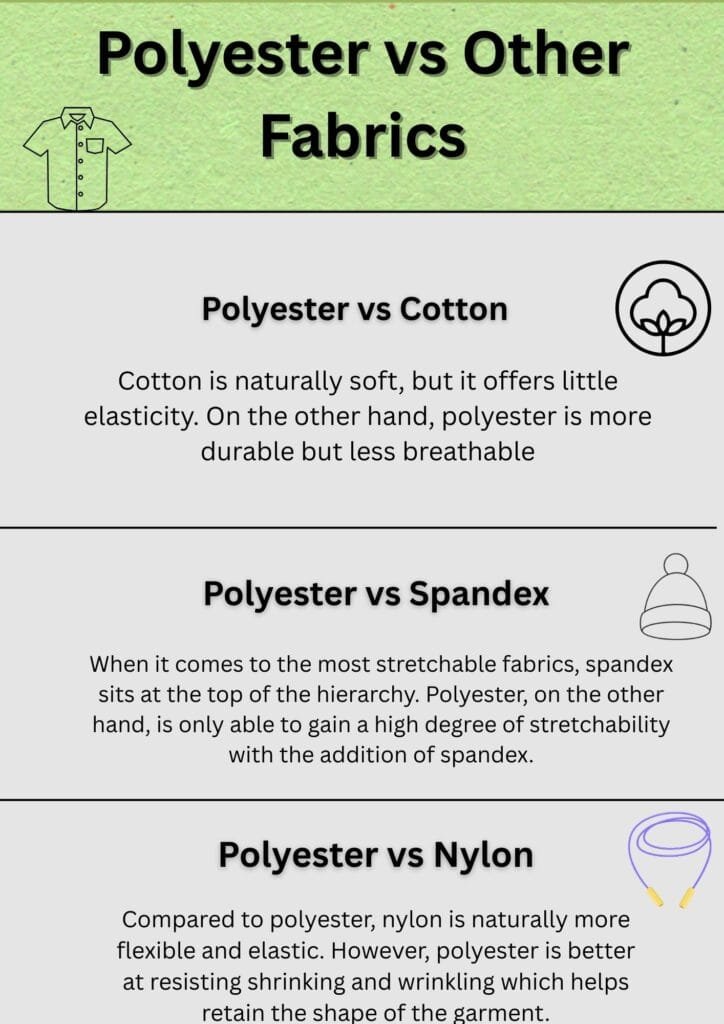
Cotton is naturally soft, but it offers little elasticity. On the other hand, polyester is more durable but less breathable. In the case of stretchability, the best option is a cotton-polyester blend.

Polyester vs Spandex

When it comes to the most stretchable fabrics, spandex sits at the top of the hierarchy. Polyester, on the other hand, is only able to gain a high degree of stretchability with the addition of spandex.

Polyester vs Nylon

Compared to polyester, nylon is naturally more flexible and elastic. However, polyester is better at resisting shrinking and wrinkling which helps retain the shape of the garment.

When it comes to comfort and flexibility, spandex and nylon are superior to polyester. However, polyester is still a strong option due to its resistance to environmental stress.

Conclusion

It depends if one is considering pure polyester or blends. Alone, polyester has very low stretch. But it can be stretched if blended with spandex or cotton. It also gains comfort for activewear or fitted clothing.

For durability, wrinkle resistance, and shape retention, 100% polyester works well.Is polyester stretchy? For more comfort and flexibility, blended polyester is the better option.

In the end, it wholly depends on one’s way of life and what clothing is needed. With the right blend, polyester may not stretch naturally, but it offers a healthy balance of performance, comfort, and style.
Read More>> About types of polyester fabric.

FAQs

Does washing polyester stretch it?

No, polyester holds its shape well and does not stretch after being washed.

Is polyester suitable for workout clothes?

Yes, but not usually on its own. Spandex blended with polyester makes the best option. Plain polyester is strong, but offers very little flexibility for exercising.

Does polyester stretch more than cotton?

Not naturally. Cotton can relax slightly more than polyester will stretch. It counterbalances the disadvantages of polyester and cotton best.

Can polyester be altered for more stretch?

Yes. Polyester can be altered to stretch more if blended with spandex, Lycra, or elastane. Unblended polyester cannot be altered to stretch more.


1. Is Polyester Warm? Pros, Cons & Best Uses for This Fabric

Introduction-

One of the most popular fabrics in the world is polyester. This is an artificial fiber produced by using petroleum based products which are then worked into long chains of polymers. Introduced in the 1940s, polyester became common by the 1950s. Polyester is not natural like cotton or wool but man-made and designed to meet a certain set of qualities as durable, not wrinkling, and even affordable.

The question that many people pose is, is polyester warm? The reason is simple. Having so many choices in clothing the question arises to the shopper is whether polyester can keep them warm during the cold season or it can make them overheated during summer. Because polyester is worn in jackets, sportswear, blankets or even bed sheets, it is significant how warm it is.

Gleaning knowledge on polyester functionality, its advantages and disadvantages, and how to wear it will help you choose more comfortable and performance-based fabrics accordingly.

Is Polyester Warm?

Yes, polyester is warm, and not in such a way as natural fabrics such as wool or down. Polyester is engineered to be a heattrap since its fibers do not readily absorb moisture. This is a property that makes the fabric be warm to your body.

But polyester is not as breathable as cotton or wool. This is because though it keeps you warm in the open air, it can also render you hot and sweaty in the house. Polyester insulation is very useful in jackets, coats, and blankets during winter. However, during summer polyester may get sticky due to limited breathability.

In other words, the brief answer is: Polyester is warm, particularly in cold, but not necessarily comfortable in heat.

How Polyester Keeps You Warm?

Polyester keeps you warm through a mixture of insulation and the construction of the fabric. Here are the key factors:

  • Insulating Properties
  • Within the fibres of polyester, air is retained in the fabric that forms a wall between your body and the cold air outside.
  • Moisture Resistance
  • Polyester is a water-resistant polymer, so when the material is wet it does not lose heat easily. This renders it dependable in wet weather.
  • Fabric Thickness
  • Fleece or padded jackets (thicker polyester fabrics) keep people warmer by trapping additional air within the fabric.
  • Layering Ability
  • Polyester is a middle or outer layer which seals in heat with the other layers attending breathability.
  • Heat Retention
  • Polyester is not quick to get rid of the heat it contains and this helps keep your body warm over a longer time.

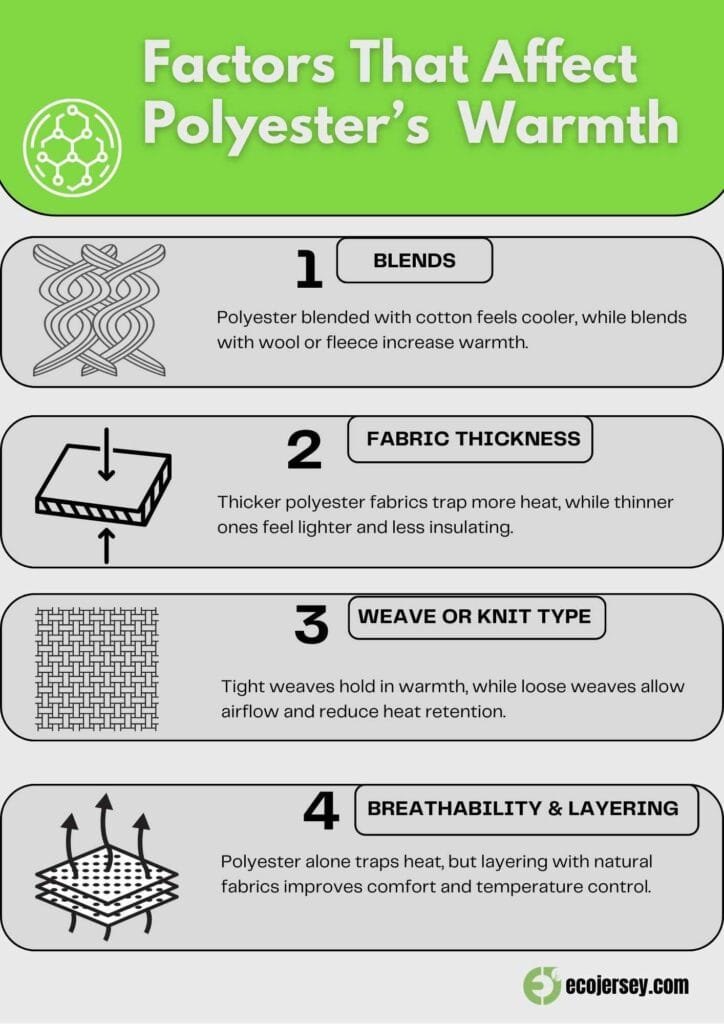
Factors That Affect Polyester’s Warmth

Infographic detailing the factors affecting polyester’s warmth, such as fabric blends, thickness, weave type, and layering.
Key factors that affect polyester’s warmth

Blends (Polyester + Cotton, Wool, Fleece)


Polyester is warmer than pure cotton (polycotton has better heat trapping capability). Likewise, polyester fabrics can be insulated by the addition of wool or fleece. As an example, a jacket made of polyester and wool can be almost as warm as wool itself and still enjoy the durability of polyester. These warm fibers combined with blends will keep you warmer in cold weather.

Weave/Knit Type


Polyester may be woven into a very thin or very thick fabric. e.g. a heavy knit/strong weave will trap more air and provide better insulation. A loose or light cloth on the other hand allows the heat to escape. Theoretically, heavy polyester fabrics (such as fleece or padded cloth) will make you warmer than silky or mesh polyester.

Breathability and Layering


Polyester is not as breathable as cotton and thus will trap heat and moisture. This is uncomfortable during the mild weather. Rather, layer polyester: a polyester foundation beneath a breathable outer covering traps heat and will allow moisture to escape. By way of illustration, a polyester base layer worn under a wool sweater may help to keep the wearer warmer and handle moisture more effectively than a single layer. Layering gives you the ability to adjust the warmth by blending polyester with other materials.


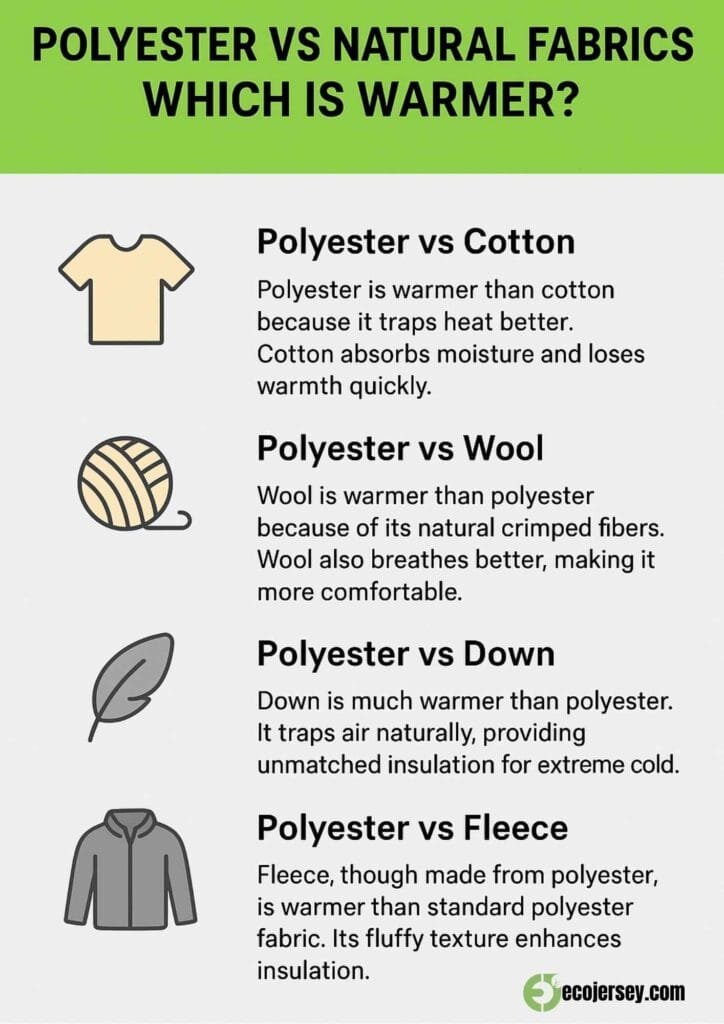
Polyester vs Natural Fabrics: Which is Warmer?

Infographic comparing the warmth of polyester with cotton, wool, down, and fleece fabrics.
Comparing polyester with natural fabrics like cotton, wool, down, and fleece for warmth.

Polyester vs Cotton

Cotton is non-insulating, very lightweight and breathable, particularly when wet. Polyester on the other hand keeps out the wet and holds in warmth. Polyester blocks the wind and catches the heat, hence polycotton is warmer than cotton. Consequently, polyester garments are warmer to wear when the weather is cold compared to cotton.

Polyester vs Wool

Wool is the best natural insulator which keeps the heat near your body. Poly-ester, however, would never be as warm as wool. Even a polyester-wool mix uses wool as the insulation. In winter, a woolen fabric is always warmer as compared to a polyester one.

Polyester vs Down

Down (goose/duck feathers) is very warm and at minimal weight. But down loses its plumage and its warmth when wet. Polyester fill is insulating even when moist. Down is warmer in dry weather, whereas polyester works better in the rainy season.

Polyester vs Fleece

Polyester fleece is polyester which has been brushed to create warmth. The downy fleece coating captures air which provides great insulation. Consequently, fleece jacket is a lot warmer than a lightweight polyester shirt. Finally, polyester fleece is also among the warmest types of polyester clothing.


Is Polyester Good for Winter Clothing__Polyester Uses?

Jackets, Coats, Thermal Wear.

Polyester Jackets: Light, but warm clothes that can be used on a daily basis.

Insulated Coats: These are stuffed with polyester padding, and they are best used in cold weather.

Thermal Base Layers: Thin and efficient in preserving heat when used on top.

Sports (Skiing, Hiking, Camping) outdoor.

Ski Jackets: Polyester resists snow and wind and it also keeps them warm.

Hiking Clothing: Lightweight and quick-drying, so it is easy to use on the trails.

Camping Blankets: Keep you warm at night when camping.


Is Polyester Warm in Summer?

Polyester is very uncomfortable when warm. Most polyester fabrics are tightly woven to trap body heat and air has minimal room to move through the garment. Consequently, you can experience hot and sticky, particularly when exercising. The moisture-wicking properties of polyester are helpful, but unless the fabric is a breathable type, the sweat will accumulate on your skin.

Basically, the same properties of polyester that keep you warm during winter make the fabric uncomfortable during hot temperatures. As such, polyester is not typically the best material to use on very hot days and natural materials can also tend to be more comfortable during summer.


Advantages of Polyester for Warmth

  • Lightweight Insulation: Polyester is lightweight but good at retaining body heat, and it can therefore be used in winter.
  • Moisture-Wicking: It attracts the moisture of the body, making you dry when performing physical work.
  • Quick-Drying: Polyester dries more quickly than cotton, and thus remains warm after it gets wet.

Disadvantages of Polyester for Warmth

  • Can Trap Sweat: Polyester is not breathable, which causes an accumulation of sweat.
  • Not Breathable like Natural Fabric: It can be very hot as compared to cotton or wool.
  • May Cause Overheating Indoors:Polyester is too warm to use in heated rooms.

When to Choose Polyester for Warmth

Best Ideal: Polyester is ideal in case you require active warmth. As an example, it functions well in wet or windy weather. Polyester is well suited to winter sports, hiking, or daily wear in cold and wet weather. This makes it a quick-drying insulator suitable as a base layer as well as a sleeping bag. In very dry and cold environments you may combine it with a warmer mid-layer.

Layering Tips: Polyester is best worn in layers. Wear polyester underwater to keep the body cool. Include a warm-up polyester fleece or wool middle-layer. Lastly, wear a breathable outer garment or jacket. Adjust the layers where necessary: de-insulate when hot, and insulate again when you feel cold. To achieve maximum benefit, synthetic polyester base layers should be worn with wool or fleece over, to provide warmth and breathability in equal measure.


Eco-Friendly Alternatives to Polyester Warmth

Recycled Polyester

The used bottle of plastic and other post-consumers are recycled to form recycled polyester. It has the same insulating qualities as virgin polyester, and it offers the same warmth and moisture control. This option will decrease the use of new plastics and decrease the environmental impact. It is, however, a man-made textile and has the same disadvantages as polyester such as shedding microplastics. Indicatively, there are outdoor companies that have started to use recycled polyester in puffer jackets as a way of combining warmth with environmental conservation.

Sustainable Warm Fabrics (Tencel, Hemp, Organic Cotton, Wool)

Certain natural fibers are warmer at reduced environmental cost. Wool is eco-friendly and is one of the warmest crushing materials, which means it should be a favorite winter selection. Organic cotton and hemp are breathable and sustainable; when woven densely they are good insulators. Tencel (wood-based) and linen are friendly to the environment but tend to be cooler, so they should be used in lighter clothes or in a cool climate. Sustainable warm products that are now available through some brands include hemp fleece or organic cotton sweaters.


Conclusion-

So, is polyester warm? The answer is yes, but under conditions. Polyester is also a good trap and thus very effective in coats, jackets and other outdoor items. It is not as breathable as natural fabrics, however can become uncomfortable in warm indoor or summer environments.

Polyester is most appropriate in cold weather, outdoor activities and where fast drying insulation is required. When you want something more sustainable, you can use recycled polyester or natural materials, such as wool and Tencel.

In a word, polyester is warm, inexpensive, and practical–although not necessarily the most breathable. Wear it carefully according to the time of the year and the activity.
Read More>> About types of polyester.


FAQs

Is polyester 100% plastic?

100% Polyester is warm, although it frequently requires to be layered. On its own, it is a moderate insulator and not as good as wool or down. Polyester can be worn as a base or as a part of a multi-layer outfit, and will serve to keep you sufficiently warm in most winter scenarios.

Is polyester warmer than cotton?

Yes, polyester is warmer than cotton is usually. Polyester fibers block wind and trap more heat, thus a polyester garment is warmer and drier than cotton. During cold days, cotton becomes cold easily once wet as compared to polyester, which has more insulation.

Is polyester fleece warm?

Absolutely. Polyester fleece is very warm. The fabric’s fluffy pile traps air and provides insulation. A fleece jacket or blanket made of polyester will keep you cozy in cold conditions.

Does polyester keep you warm when wet?

To some extent. Polyester resists moisture, so it continues to insulate when damp. While it loses some warmth if soaked, it retains more heat than cotton or down when wet. It also dries faster, which helps restore its insulation.

Is polyester suitable for sleeping bags and blankets?

Yes. Many sleeping bags and blankets use polyester because it insulates even if damp and dries quickly. Polyester-filled sleeping bags are warm and versatile. (Down is warmer per weight, but polyester is a durable, cost-effective alternative.)

1. Is Polyester Plastic? The Surprising Truth Explained

Is Polyester Plastic?

Yes, polyester is plastic. Polyester is a synthetic polymer that is formed due to a chemical reaction between the petroleum-based raw materials. Simply put, it has the same origin as ordinary plastics such as PET bottles. The primary distinction is that polyester will be processed as fibers to create textiles, instead of solid products such as bottles or wrappings. So when they pose the question, is polyester plastic? the correct answer to the question is yes. It is a fabric variety of plastic.

What is Polyester?

Polyester is one of the most popular synthetic fibers in the world. It was invented in the 1940s and soon gained popularity in the textile industry because it was durable and cheap. Polyester is not natural like cotton or wool; it is a man-made one that is not found naturally. It uses polyethylene terephthalate (PET) at its base, the material of plastic bottles and containers.

Types of Polyester

PET ( Polyethylene Terephthalate )

PET is the most usual polyester used in apparel and in bottles and packaging. It is sturdy, portable and multipurpose.

PCDT (Poly-1, 4- cyclohexylene- dimethylene terephthalate)

PCDT is more elastic and strong than PET. It finds common use in upholstery, drapery and heavy-duty.

Plant-Based Polyester

The newer version is renewable, either corn or sugarcane. It is more environmentally friendly, but still not popular in the market.

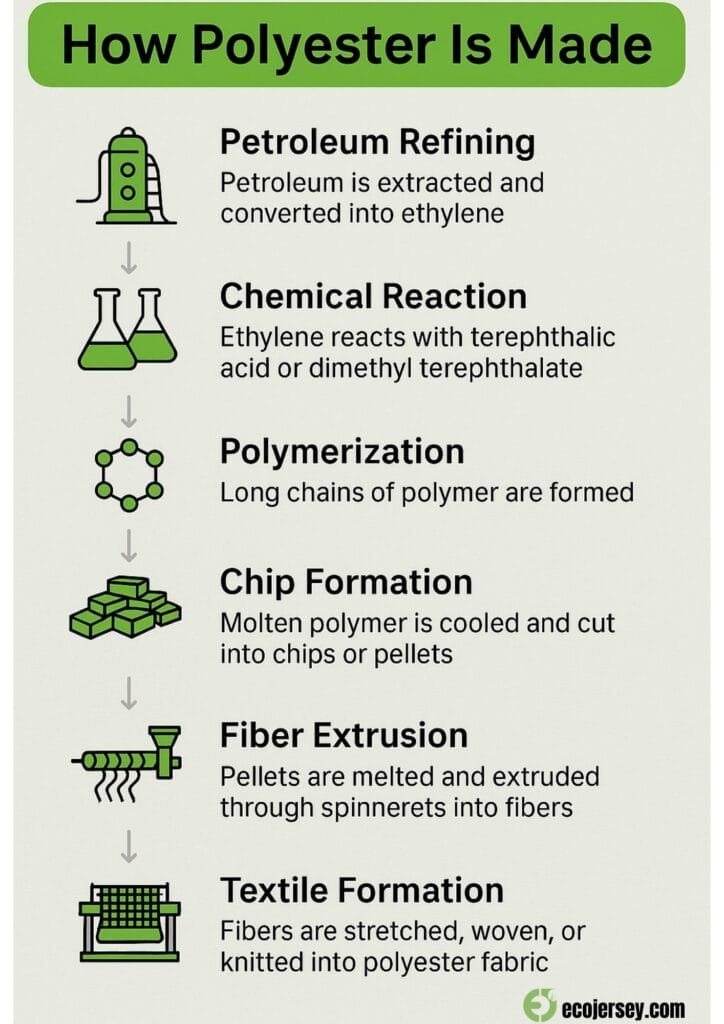
How Polyester is Made (Step-by-Step Process)

This infographic illustrates the process of how polyester is made, from refining petroleum to creating polyester fabric.
Step-by-step process of how polyester is made from petroleum refining to textile formation.

Petroleum Refining- Petroleum is refined into ethylene.

Chemical Reaction- Ethylene reacts with terephthalic acid or dimethyl terephthalate.

Polymerization – Long chains of polymer are created.

Chip Formation- Molten polymer is cooled then molded into chip form or pellets.

Fiber Extrusion – The molten pellets are extruded through spinnerets in the form of fibers.

Textile Formation- This is the process that takes place when the fibrils are stretched, woven and knitted to polyester.


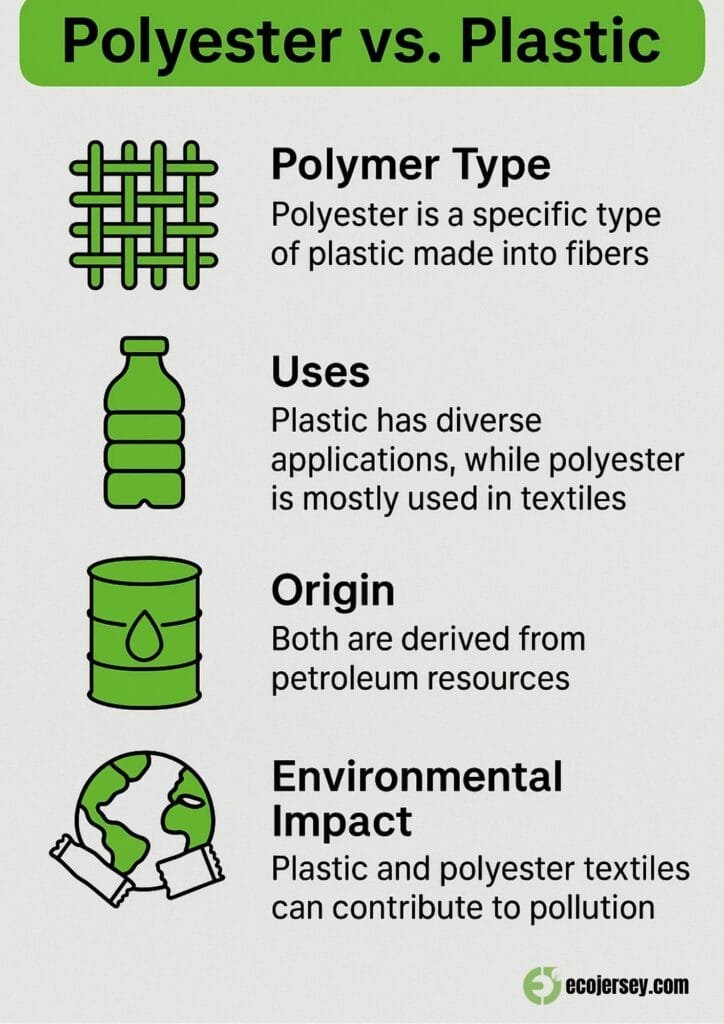
Polyester vs. Plastic

The question people ask is, is polyester plastic? Its two-fold nature as a fabric and a plastic is the source of the confusion. Although polyester is produced using the same petropolymers used to make bottles and packaging, the process of converting it into soft fibers makes it feel very different. Now, we are going to look at the similarities, differences, and technical definition.

Comparison between polyester and plastic highlighting polymer type, uses, origin, and environmental impact.
This infographic compares polyester to plastic, showing key differences in their uses, origin, and environmental impact.

Similarities

Polyester and plastic have a common background since they are both petroleum-based polymers produced by means of a chemical procedure. They are robust, tough, resistant to water, hence their use in textile and in packaging. Simply put, polyester and plastic are constructed using similar building blocks despite the fact that they are used in totally different ways.

Differences

Plastic such as PET bottles is molded into rigid shapes, but polyester is spinned to form flexible fabrics fibers. That is why a plastic bottle is hard and solid, and a polyester shirt is soft and can be worn. The distinction does not exist in the raw material but rather in the processing and application of the polymer.

Is Polyester A Plastic?

Yes, polyester is a synthetic polymer and thus it is a plastic. But this is not seen by many because polyester is used as clothes, not as a package. As a matter of fact, polyester is nothing more than plastic in a fibrous form, and this fact underlines its distinction in the textile industry when compared with traditional solid plastics.


Is Polyester Bad for the Environment?

Polyester is eco-unfriendly, as it is a product of petroleum and is not eco-biodegradable. Each time polyester clothes are washed, microplastic fibers are emitted. These nano plastics enter rivers and oceans where they damage the marine life. Also, polyester requires decades or centuries to break down in a landfill. The amount of recycling is increasing, yet the amount of textile waste in the world continues to increase.

Microplastic Shedding

Every polyester garment produces innumerable microfibers when washed in the system. These small particles that in most cases cannot be seen are transported to rivers and finally to oceans. There, they become the food of the fish and other sea creatures, part of the food chain, and dangerous not only to animals but also to people.

Non-Biodegradable Nature

The polyester is non-biodegradable as the structure of the material is made up of plastics that cannot be decomposed by nature. Polyester is not biodegradable, unlike cotton or wool, which decompose in several months; instead, it stays in landfills decades or even centuries. This high longevity implies discarded polyester contributes a lot of waste and environmental pollution in the world.

Recycling Polyester (rPET)

The rPET, which is recycled polyester, is recycled by using old textiles as well as used plastic bottles. This will help minimize the quantity of plastic waste deposited in the oceans and landfills. RPET would conserve resources by turning the existing plastic into new fibers, as well as provide polyester with a second life in sustainable fashion.

Is Polyester Biodegradable?

Polyester can not be biodegraded as it is produced using petroleum polymers which are resistant to natural degradation. Where natural fibers such as cotton, wool or silk can break down in a few months or years, polyester may take generations to break down in a landfill. Research indicates that the breaking down of polyester fabric can take between 100 and 200 years under various conditions in the environment. Polyester is one of the worst eco-textiles because of this very long degradation time which leads to plastic pollution and long-term waste issues on a global scale.


Is Polyester Recyclable?

Yes, there are two major ways of recycling polyester.

Mechanical Recycling

Old polyester is torn, melted and re-spun into new fibers. It is an energy saving technique with slight quality degradation of the fibers.

Chemical Recycling

Polyester is recycled to its chemical building blocks and then reconstructed into new polyester. This is less expensive and still maintains quality.

Typical Applications of Recycles of Polyester.

Sportswear, outdoor products, footwear, and sustainable fashion collections are some of the most common uses of recycled polyester.

Polyester vs. Natural Fabrics

Polyester vs Cotton

Cotton is a breathable soft fabric that allows the body to stay cool whereas polyester traps heat and it is also less absorbent. Polyester, on the other hand, does not wrinkle, shrink, or fade as easily as cotton, and hence is easier to maintain. When it comes to sustainability, cotton is biodegradable; however, polyester is a plastic substance that remains in landfills over decades. It makes cotton the more environmentally friendly option, but polyester tends to be less expensive, and last longer.

Polyester vs Wool

Wool is a natural thermostat, it helps you to keep warm in the winter and cool in the summer. However, polyester is warmer and therefore lacks the ability to breathe, thus uncomfortable in hot weather. Environmentally, wool is biodegradable and renewable whereas polyester causes plastic pollution. Wool is more costly; however, it is more comfortable and sustainable than polyester.

Polyester vs Silk

Silk is a natural shiny, soft and breathable luxury fabric, and the best thing is that it is comfortable to wear as delicate garments. Polyester is a material that resembles silk but it is much cheaper and could reach the mass market. Nevertheless, the production of polyester is one of the contributors to plastic waste, but the production of silk is equally problematic as its manufacture requires intensive farming and labor. They both have environmental effects, but silk is naturally biodegradable whereas polyester has a half-life of centuries.


Is Polyester Safe to Wear?

Polyester is widely usable in daily life and does not emit toxic compounds in the standard condition. Other people who have sensitive skin might however feel irritated by the fact that it is not breathable. This is why the selection of fabrics is significant in people with skin allergies or in a hot and humid climate.

Skin Sensitivities

Individuals with eczemas, rashes, or allergies will not like polyester as it retains heat and moisture. Another common thing with polyester, as compared to natural fibers, is that it does not permit a lot of air to pass through it, which can worsen sensitive skin. Most people can get away with wearing polyester, but it might not be the best option when one has chronic skin conditions.

Chemical Safety

Polyester is not thought to be a toxic substance, but in some cases, the chemical treatments that are used are of concern. Intermittent irritation or allergy may be a side effect of flame retardant, dyes, or finishing agent. Also, polyester can leech small volumes of volatile compounds when in hot conditions, but this can hardly happen when it is used normally in clothing.


Alternatives to Polyester

Fabric biodegradability from synthetic to natural, including materials like hemp, linen, cotton, bamboo, and polyester.Fabric biodegradability from synthetic to natural, including materials like hemp, linen, cotton, bamboo, and polyester.
This infographic illustrates the biodegradability of various fabrics, ranking them from fully synthetic to fully natural.

Bamboo Fabric

Bamboo is soft, breathable, and naturally antibacterial, and this quality makes it ideal to use on sensitive skin. It is also biodegradable as compared to polyester hence, disposal of this material goes back to the environment safely. Nevertheless, not all bamboo fabrics are made in a chemical manner, so when selecting bamboo, it is more environmentally friendly to choose a mechanically-produced bamboo (bamboo linen).

Organic Cotton

Organic cotton is also produced without the use of toxic pesticides or synthetic fertilizers, which are healthier to the planet and farmers. It is very comfortable, soft and breathable, something that polyester cannot achieve to the full extent. Organic cotton does not leave any residual waste since it is biodegradable and can therefore be used as a long-term substitute to clothes and bedding.

Linen

One of the oldest natural fabrics in human history is linen made of flax plants. It is very strong, breathable, and cool and is perfect in hot weather. Linen is also eco-friendly and durable, but becomes softer with each wash, making it completely biodegradable.

Hemp

Hemp is a robust, sustainable, and naturally pest-resistant fabric, so it does not need any chemical pesticides to grow. It also uses very little water when compared to cotton, which makes it one of the most environmentally friendly crops. Hemp garments are eco-friendly, last years, can be completely biodegraded, and become even softer with time, so it is a great alternative to polyester.


Conclusion-

So, is polyester plastic? Yes, it is a synthetic polymer made of petroleum, worked into the fabric form. Polyester is durable, wrinkle-free and inexpensive and this is why it is used a lot in cloth and textiles. Nevertheless, it presents environmental problems as a result of microplastic shedding and the fact that it is not biodegradable. There are recycling solutions, but even more sustainable options such as bamboo, cotton, and hemp are more sustainable.

Read More>> In detail about types of polyester fabric.


FAQs

Is polyester 100% plastic?

Polyester is 100% plastic yes as it is a petroleum-based polymer. It is not made of plants and animals, as natural fabrics are, but one made through synthetic processes. The distinction is that polyester is spinning into fibers, which are soft and wearable, not solid and rigid like bottles or packaging.

Is polyester eco-friendly?

No, polyester is not an ecologically friendly material as it releases microplastics when washed or is not biodegradable. It is very difficult to dismantle and is a major contributor to landfill waste and ocean pollution. Even though there are recycling options, polyester has an enormous environmental footprint when compared to natural fabrics.

Does polyester contain microplastics?

Yes, polyester materials release minute plastic fragments, or microplastics, each time they are washed. These particles bypass water treatment systems and are released into rivers, oceans and in the food chain. In the long run, microplastic pollution will be detrimental to marine life and may also affect human health.

Is polyester cheaper than cotton?

Yes, polyester generally costs less than cotton since it is produced in large quantities out of petroleum, and less farming or human labor is required. It is also affordable to manufacturers and consumers because of its long-lasting and ability to resist wrinkling. But still, cotton is greener and more comfortable during hot weather.

Is polyester toxic?

No, polyester is not toxic when worn under ordinary conditions and usage. A few chemical dyes, finishes or flame retardants used during manufacturing, however, may irritate sensitive skin. Polyester clothes are safe to most individuals, and the naturally made fabrics can be of preference to individuals with allergies.

1. Is Polyester Waterproof or Water-Resistant? The Truth Revealed

Introduction –

Polyester is one of the most commonly utilized fabrics alongside such applications as clothing, furniture, and fabric for outdoor products. One question, however, arises repeatedly: is polyester waterproof? People want answers as to whether polyester will absorb rain, sweat, or other liquids, and remain resistant to penetration. This question becomes most relevant for buyers of jackets, tents, and backpacks. Although there is no doubt that most polyester fabrics will absorb some water, the amount of water polyester will absorb does depend on a range of conditions. Examining the fabric’s water resistance, structure, treatments, and practical applications all provide relevant answers.

What is Polyester?

Polyester, created from synthetic fuels, is a polymer textile based principally on polyethylene terephthalate (PET). Polyester was first invented in the 1940s but gained popularity within a few years because of its durability, reasonable price, and adaptability. Unlike other natural fibers, polyester does not shrink, stretch, or wrinkle which is why it is highly appreciated in modern textiles.

Polyester has increasingly gained popularity over other fabrics in the dominion of clothing, especially in clothing designed for exercising, sports, and uniforms. Outside of clothing and apparel, it is also extensively used in furniture upholstery, curtains, and bedding alongside some industrial functions. Such a tremendous reach of polyester fabric makes it curious whether it can also act as a barrier to water.

Is Polyester Waterproof or Water-Resistant?

The reality is that polyester does not offer full waterproof capabilities. Polyester is naturally water resistant which means the fibers can minimize water interaction to an extent, and can withstand moderate exposure to moisture, but not to water. In order for a fabric to be classified as waterproof, it must completely stop water penetration under any circumstances for a defined duration. Polyester does not meet that standard on its own. However, with some additional technological advancement like coatings and laminations, can perform similarly to a waterproof material. This fact is crucial when considering polyester for use as rainwear or in open air conditions.

How Polyester Reacts to Water

Absorption

Polyester does not absorb water easily. Unlike cotton which absorbs moisture, polyester is moisture repellent. This assists the fabric to remain drier on the upper surface.

Drying Time

Polyester dries more rapidly than the majority of cotton. Prevention of water retention enables moisture to evaporate rapidly. This allows polyester to be effectively used in sportswear and travel clothing.

Comparison with Cotton

Polyester has superior moisture performance than cotton does. Unlike cotton which becomes saturated with moisture and becomes heavy, polyester retains its buoyancy. Hence, polyester is often a logical selection for wet regions.

Comparison with Nylon

When it comes to waterproofing, nylon exceeds polyester, even though it has a slower drying rate than polyester does. Unlike the former which is hydrophobic and retains moisture, polyester offers the advantage of drying quickly and retaining a moderate level of water repelling.


Factors That Affect Polyester’s Water Resistance

Infographic showing four factors that affect polyester’s water resistance: fabric thickness, weave style, coatings applied, and fabric blends._____ Is polyester waterproof
Discover the key factors that impact polyester’s water resistance.

Fabric Thickness

Thicker polyester textiles undoubtedly blocks water more effectively than thinner fabrics of the same material. Structural elements of the fabric make more dense moisture harder to permeate the material. Because of this, polyester fabric on the outer shell of outdoor garments such as tents and rain jackets are of greater density.

Weave Style

The manner the individual polyester threads are woven to form the fabric determines the water resistance of the fabric as well. The more tightly woven a fabric is, the less aperture it has to allow water to get through, hence the more water resistant such fabrics are. Loosely woven moisture permeable polyesters will thus be less effective, no matter the thickness, compared to more dense, tightly woven fabrics.

Coatings Applied

When coatings are added to polyester, its behavior becomes totally different. Polyurethane (PU) or durable water repellent (DWR) treatments are applied to increase water resistance by providing protection through a protective layer. Outdoor gear is typically treated with such coatings, and polyester fabrics can be used outdoors in the rain.

Fabric Blends

The water resistance of polyester is also determined by the type of fibers that it is mixed with. When it is mixed with cotton, the cloth can absorb a greater amount of water, which reduces its performance. Adding polyester to nylon or spandex, however, is likely to add strength and water repellency, enhancing the wet performance.


Waterproof Coatings and Treatments

Durable Water Repellent (DWR)

DWR is a chemical finish which enhances the natural resistance of polyester to water. It functions by causing the water to bubble up on the surface of the fabric and run off rather than sink in. DWR does however wear off, particularly when washed many times, thus this means that it has to be reworn.

Polyurethane (PU) Coating

Polyester is commonly given a waterproof polyurethane coating. It also forms a protective layer that is very thin and yet the fabric remains lightweight and flexible. Due to this balance, polyester PU-coated fabrics are popular in jackets, tents, and backpacks, which require wet conditions.

Polyvinyl Chloride (PVC) Coating

When used on polyester, PVC coating provides a powerful and complete barrier against water. This way no water can bypass it and it is applicable to heavy duty equipment such as tarps and rain covers. The disadvantage is low breathability and rigidity, which may limit card comfort during extended use.

Laminated Fabrics

Polyester can be overlaid with hi-tech waterproof sheets like Gore-Tex. These laminations form a fabric that is completely waterproof and breathable simultaneously. Because of this, high-quality outdoor jackets and high-performance gear are frequently lined with laminated polyester fabrics.

Is 100% Polyester Waterproof Without Coating?

No, 100% polyester that has not been coated is not really waterproof. It is not affected by light rain or splashes, but, sooner or later, water leaks through the fibers. An example would be a simple polyester shirt that would resist a drop of water but would be wet in heavy rainfall. Waterproof performance is practically never achieved without some sort of coating or laminations being added to outdoor gear by manufacturers. In the absence of such treatments, polyester can only be water-resistant.


Pros and Cons of Polyester in Wet Conditions

Pros:

  • Natural is more waterproof than cotton.
  • Wet garments dry fast.
  • Lightweight and easy to wear during wet weather.
  • Cheaper than entirely waterproof fabrics.
  • Preserves form and toughness in presence of moisture.

Cons:

  • Coatings needed to be completely waterproof.
  • In dampness May is damp on skin.
  • Not as breathable as there are other natural fabrics.
  • Lose repellency on repeated washing.
  • Tend to develop electric charges in the dry season.

How Polyester Compares to Other Fabrics

Infographic comparing polyester with cotton, nylon, and Gore-Tex.
Polyester compared with cotton, nylon, and Gore-Tex

Polyester vs. Cotton

Cotton is a rapid water absorber and thus becomes heavy, wet and slow to dry after rain. Polyester on the other hand is naturally water-resistant and in wet conditions it is still light-weight. This distinction allows polyester to be more convenient in outdoor activities and activewear. Though cotton is lightweight and smooth, polyester is more suitable on uncertain weather.

Polyester vs. Nylon

The stronger and tighter fibers of nylon tend to make it more water resistant than polyester. Nylon, however, retains more water with time and cannot be dried easily compared to polyester. The other disadvantage is that it has a low UV resistance that breaks down easily in the sun. Polyester offers the best balance between durability, drying time, and cost, thus it is widely used as gear.

Polyester vs. Gore-Tex

Gore-Tex is designed to be completely waterproof and extremely breathable, much better than regular polyester. It keeps away the heavy rain and sweat vapor can escape, which is perfect in hard-working activities in the outdoor environment. Its disadvantage is that it is very expensive and is therefore not affordable to all people with low incomes. Polyester is not as sophisticated, but it provides a cheaper alternative when it comes to daily rain coatings.


How to Make Polyester More Waterproof?

  • Waterproofing Spray or Wash-in: Wipe the piece with water and then spray it or treat it by a waterproofing spray (such as Nikwax or Grangers) or by a wash-in treatment (such as Nikwax or Grangers). These replace the DWR coating of jackets and tents.

  • Seam Sealing: Seal up the stitch lines with seam sealer or tape. Water usually drips in between, therefore, sealing the seams significantly increases tightness to water.

  • Heat-Activate the Coating: Treat then dry on low or iron (gently) (unless care label indicates otherwise). The low temperature allows the DWR finish to connect with the fiber of the cloth.

  • Apply After Washing: DWR finishes are washed away by many detergents. Machine polyester gear using a light technical cycle, followed by another application of waterproof spray. This makes the fabric repulsive in the long run.

  • wear Rain Covers or Liners: With heavy articles in mind, an extra coating should be employed. As an example, a lot of the backpacks have a PU-coated rain cover or a liner inside. In this manner, a naked polyester shell can lose water by having a protective layer on the inside.

Is Polyester Good for Outdoor Gear?

Jackets

Rain is not an issue in polyester jackets in DWR or PU coating. They also dry fast, and are thus convenient to carry.

Tents

Polyester tents can withstand rain as compared to cotton tents. When coated with PU or PVC they are working in wet camping conditions.

Backpacks

Backpacks made of polyester can resist light rain. Most of them are waterproofed or covered with rain covers.

Umbrellas

Umbrellas are mostly made of polyester. It is ideally suited to this application because of its natural water resistance.


Eco-Friendliness and Sustainability

The concerns regarding the environmental impact of polyester are significant. Traditionally, the production of polyester derives from non-renewable petroleum resources which contributes to the rising issue of microplastic pollution. On the other hand, rPET, or the more sustainable approach of recycled polyester, utilizes plastic bottles thereby minimizing waste. Recycled polyester, while still shedding microfibers on release, aid in diminishing the prominence of newly sourced raw materials. The use of rPET recycled polyester outdoor clothing in gear provides the the environmental benefits which cannot be achieved without loosing the water resistant qualities.


Conclusion –

Is polyester waterproof? Actually, polyester fibers have some water-resistant properties, although they are not completely waterproof since they allow some moisture penetration. Moisture penetration can easily occur in untreated polyester, especially in the case of rain, which comes in the form of external water pressure. To enhance the moisture resistance of polyester, various treatments such as DWR, PU, laminates, and coatings can be applied. Polyester is an ideal candidate for the manufacturing of garments and equipment like jackets, tents, and umbrellas for such reasons.

However, its non-biodegradable nature means its use in the form of polyester garments and equipment is more sustainable when consumers choose products made from recycled polyester. Provided such limitations are clearly understood, polyester is an inexpensive and versatile option.
Read More>> In detail about types of polyester.


FAQs

Is polyester waterproof for jackets?

By default, polyester jackets are water-resistant, but water-proofing them requires additional processes. To waterproof them, manufacturers add coatings, more specifically PU or DWR. Such coatings ensure that jackets are able to withstand the rain while keeping the user dry during more strenuous adventurous activities outdoors.

Can polyester keep you dry in heavy rain?

Polyester without coating is only able to withstand light rain for a very short period before wicking through. Withstanding, heavy or continuous rain will penetrate the fabric. During storms, the better option would be to use coated or laminated polyester.

Is polyester good for waterproof tents?

Certainly, polyester finds application in the manufacture of tents due to its ability to resist stretching, its ability to dry faster, and its ability to retain shape and dimension. When coupled with PU or PVC coatings, the fabric becomes completely waterproof allowing for its use in camping activities during the rain. This makes it an excellent and economical choice for outdoor shelters.

Does polyester lose water resistance over time?

Indeed, polyester easily loses its waterproof capabilities when the coatings wear off after multiple washes or uses. However, the ability to restore it with waterproofing sprays or reapplications of DWR treatments is a huge plus. Regular maintenance is the key to achieving performance longevity.

Is polyester better than cotton in wet weather?

Indeed, when it comes to the moisture, polyester utterly outperforms cotton. Cotton absorbs water, becomes heavy, and takes ages to dry; in stark contrast to polyester which repels water, allowing the wearer to dry quickly. This makes polyester immensely superior during outdoor and rainy weather conditions.

Scope of Linen Fabric: Versatility, Uses, and Future in Fashion

0

As the brand, designer, and the mindful consumer continues to appreciate the timeless qualities of linen, the scope of linen fabric keeps on widening. People have appreciated linen and its natural charm, breathability, and durability for thousands of years. Linen continues to be a fabric of both sophistication and utility. From the garments of ancient Egypt to the luxury fashion collections of the year 2025, and beyond, linen will continue to be a fabric of sophistication. Currently, linen has a significant position in the fields of fashion, home furnishings, and eco-friendly fashion, which makes linen, one of the most versatile textiles used globally.—

Overview of Linen Fabric

The flax plant produces long, strong fibers that create linen, showcasing remarkable sustainability and versatility across different domains. Linen is incredibly breathable and soft and moisture-wicking; It softens in wash cycles.In addition to these characteristics, the scope of linen fabric is quite expansive in terms of eco-conscious design, luxury fashion innovation, and creative design. Moreover, its versatility continues to inspire designers across multiple industries. Consequently, it remains a preferred fabric for both style and sustainability. The scope fabric has positioned to licensing the scope linen for sustaining the style in the linen based clothing industry

The Scope and Usage of Linen Fabric in Lifestyle and Fashion

Linen in Clothing and Apparel

One of the most known features of the scope of linen fabric is the inclusion of linen itself in fashion apparel. Fashion designers have complemented linen to summer dresses, blouses, loose fitting trousers and summer blazers. The lightweight nature of the fabric, coupled with its elegant drape and ability to stay cool in hot climates, make it popular for both resort and luxury collections. Linen adds an element of sophistication and style, making it suitable to even casual wear.

Scope Linen in Home Décor and Interior Design

Scope Linen goes beyond clothing and has penetrated the home décor market. Linen curtains, bed linens, tablecloths, and cushion covers add style and strength to the home. Its sheen and texture works well with contemporary, rustic and luxurious styles. Interior designers love linen fabric for its green philosophy and its beauty enduring with time.

Linen in Sustainable and Luxury Fashion

The fast fashion industry has placed more emphasis on sustainability and eco-friendly practices in their production line, and linen perfectly fits this ideology. Notably, linen production uses far less water, has fewer chemicals, and has a less negative impact on the environment than most synthetic materials. Furthermore, its eco-friendly nature makes it a leading choice for sustainable fashion. These qualities make linen more sought after by luxury linen brands and eco-friendly designers that strive to balance fashion with principles.

Major Uses of Linen Fabric in Fashion

The scope of linen fabric covers a number of uses in the fashion industry. Linen has the ethos of ‘flaunt swagger with respect for the season. Fashion emphasizes linen in the making of:

Casual Wear

Linen lightweight shirts, skirts, dresses and pants have gained popularity. These garments are ideal for the warm parts of the year, as they provide ease and style.

Formal Attire

Fashion-savvy professionals are beginning to appreciate linen suits, linen blazers, and tailored dresses. The fabric has a classy appearance and is very breathable, making it great for summer weddings and business functions.

Resort and Vacation Wear

For a cruise or a business vacation few fabrics can compare to the place linen occupies. Retaining coolness in hot weather and resisting smelling make it a vital accessory for warm weather destinations.

Accessories

Scarves, handbags, belts, and hats are some linens accessories which are gaining great popularity. These give a outfit refined texture. Any outfit linen is improved to perfection with a addition of natural class.

Future Trends: The Expanding Scope of Linen Fabric.

There are emerging trends that are likely to shape the future of linen fabric in fashion and these trends are very promising:

The Growing Economy of the Entire World

With the advancement of the entire world’s economy, people are increasingly able to afford luxury fabrics. This has in turn brought a shift in fashion. Rather than being worn as a seasonal fabric, more people are beginning to appreciate linen for its versatile uses.

The Need for Sustainable Fashion

The fashion industry’s increasing focus on sustainability is positively influencing the incorporation of linen fabric into clothing. Linen is gaining more recognition as a bio-sustainable fabric due to its eco-friendly qualities.

High-Fashion Integration

Famed for its heavy investment in sustainability, linen fabric has now been adopted in new forms for high-end collections. For instance, linen tailored suits and linen couture gowns are becoming more prominent. Moreover, designers are continuously exploring innovative ways to incorporate linen into luxury fashion.

Sustainability and Eco-Friendly Impact

Additionally, apart from its other biophysical properties, one of the most significant aspects of the scope of linen fabric is its contribution to sustainable fashion. Specifically, it serves as a biodegradable and water-efficient crop. Moreover, linen’s organic industrial processing further enhances its eco-friendly reputation.

Care and Maintenance of Linen Fabric

Moreover, due to its strong self-cleaning properties, linen garments and home décor pieces can easily last for a number of years without wash periods. In addition, the fabric can also be machine washed on a manoeuvrable setting. Furthermore, it can be ironed on a mid to high setting to maintain its fresh and rigid look. With time, the linen progressively softens, without diminishing its texture and becomes one of the strongest fabrics on the market.

Conclusion

The scope of linen fabric is wide and growing with each sustainable and luxurious fashion trend of the season. From casual wear to couture, and from summer outfits to year-round fashion, linen holds a unique place in the textile world. Its long, lasting, and stylish breathability is a factor in owning a linen as one of the most adaptable and environmentally friendly fabric of the year.
Read About Article /// Linen Fabric: A Complete Guide to History, Uses, and Benefits

FAQs

Why is linen fabric so popular in fashion?

Linen offers breathability, natural texture, and timeless elegance, making it ideal for casual, formal, and luxury wear.

Is linen fabric good for sustainable fashion?

Yes, linen is eco-friendly, biodegradable, and requires fewer resources during production, aligning with sustainable practices.

Can linen be worn in all seasons?

With innovative blends and heavier weaves, linen is now being designed for year-round use, including fall and winter.

Spun Polyester Fabric: Features, Benefits, and Common Uses

0

Polyester fabric is one of the most widely used synthetic fibers. Among its variations, Spun Polyester holds a special place in both fashion and home textiles. Because of its durability and soft texture, it is a favorite for clothing, upholstery, and industrial fabrics.

What is Spun Polyester?

Spun Polyester is made from polyester fibers that are cut into short lengths, similar to cotton fibers. These fibers are then spun together into yarn, just like natural fiber yarns.

As a result, the yarn has a soft, natural feel while still retaining the strength of polyester. Although it is synthetic, it looks and feels closer to cotton, making it a popular choice in many products.

Key Features of Spun Polyester

Spun Polyester combines the best of both worlds: the durability of polyester fabrics and the softness of natural fiber-like texture. Its main features include:

  • Soft Touch – Feels more natural than filament polyester.
  • Durability – Resists wear, tear, and frequent washing.
  • Wrinkle Resistance – Keeps its shape with minimal care.
  • Moisture Resistance – Dries faster than cotton.
  • Color Retention – Colors stay bright after many washes.
  • Cost-Effectiveness – Cheaper than 100% natural fibers.

Because of these qualities, Spun Polyester is trusted in both fashion and industrial applications.

How is Spun Polyester Made?

An infographic titled “How is Spun Polyester Made?” showing four steps — Cutting, Spinning, Knitting, Weaving — each with a circular icon on the right: scissors and fabric, a skein of yarn, yarn and knitting ball, and a person weaving on a loom, all outlined in green.
Process overview: Cutting, Spinning, Knitting, and Weaving explain how spun polyester is made.

The production of Spun Polyester involves several steps:

  1. Cutting – Polyester filaments are cut into staple fibers.
  2. Spinning – The short fibers are twisted and spun into yarn.
  3. Weaving/Knitting – The yarn is made into fabric using standard methods.

Although the process resembles cotton spinning, the outcome is stronger and longer-lasting.

Uses of Spun Polyester

An infographic titled “Uses of Spun Polyester” with green headings and illustrations. Sections include Home Textiles, Clothing and Apparel, Table Linens, Industrial Uses, Outdoor Fabrics, and Ecojersey branding, each with corresponding simple icons (clothes rack, towels, tent, beaker, clothes, etc.).
Overview of common uses for spun polyester across home, clothing, industrial, outdoor, and textile applications.

Spun Polyester is versatile and widely used in different industries. Common applications include:

  • Clothing – Shirts, trousers, uniforms, workwear, and dresses.
  • Home Textiles – Bed sheets, pillowcases, curtains, and upholstery.
  • Table Linens – Napkins, tablecloths, and restaurant textiles.
  • Industrial Uses – Filters, ropes, and geotextiles.
  • Outdoor Fabrics – Garden furniture covers and awnings.

Therefore, it is a fabric that fits both everyday and professional needs.

Advantages of Spun Polyester

The popularity of Spun Polyester comes from its benefits:

  • Combines softness with strength.
  • Resists wrinkles and shrinking.
  • Retains color and shape for a long time.
  • Requires little maintenance.
  • Affordable compared to natural fabrics.

In addition, it provides a cotton-like feel, which makes it more comfortable than regular polyester.

Environmental Aspect of Spun Polyester

Like other synthetic fabrics, Spun Polyester is petroleum-based. This means it is not biodegradable. However, some companies are now using recycled polyester fibers to produce spun yarns.

Although recycling mixed fabrics can be difficult, rPET-based spun polyester helps reduce plastic waste and saves energy.

Conclusion

Spun Polyester is a strong, versatile, and comfortable fabric. It looks and feels closer to natural fibers while offering the durability and low maintenance of polyester. Because of its wide range of uses in clothing, furnishings, and industry, it remains one of the most reliable fabrics in modern textiles.

Although environmental challenges exist, innovations in recycling are making Spun Polyester more sustainable. In short, it provides strength, comfort, and affordability in one fabric.

What is Spun Polyester?

Spun Polyester is made from short polyester fibers spun into yarn, giving the fabric a soft, cotton-like feel with polyester’s durability.

How is Spun Polyester different from Filament Polyester?

Filament polyester is smooth and shiny, while Spun Polyester feels softer, more natural, and is often used in clothing and linens.

What are the main uses of Spun Polyester?

It is used in uniforms, workwear, bed linens, tablecloths, curtains, upholstery, and industrial fabrics like filters and ropes.

Linen Outfit Fabric Essentials: Timeless, Lightweight, Versatile

0

In the dynamic landscape of fashion, some pieces have a timeless and irreplaceable appeal. While certain trends are made to be broken, some fabrics are guaranteed and permanently entrenched in the fashion hall of fame. Linen, without a shadow of a doubt, is the first of its kind. For those attempting to cultivate a mindful, unmatched in comfort, and effortlessly chic closet, the power of a linen outfit fabric is no longer a preference, but an absolute requisite. With that in mind, let us dive deep into the most relevant factors that underline the reason this ancient fabric is the best choice for lightweight, versatile, and timeless clothes.

The Lasting Impression of the Linen Outfit Fabric

The history of linen closely intertwines with the history of humanity. The social status of Egypt’s people clearly reflects this connection. For instance, people saw wearing linen fabric as a symbol of luxury, comfort, and pure reputation. The harsh desert climate also shaped the essence of the fabric. Even today, it proves it was more than just a piece of fabric. It later became a garment with remarkable history. A linen outfit fabric garment shows how to look your best without trying too hard. It completely contradicts fast fashion—slow, deliberate, and, most importantly, timeless.
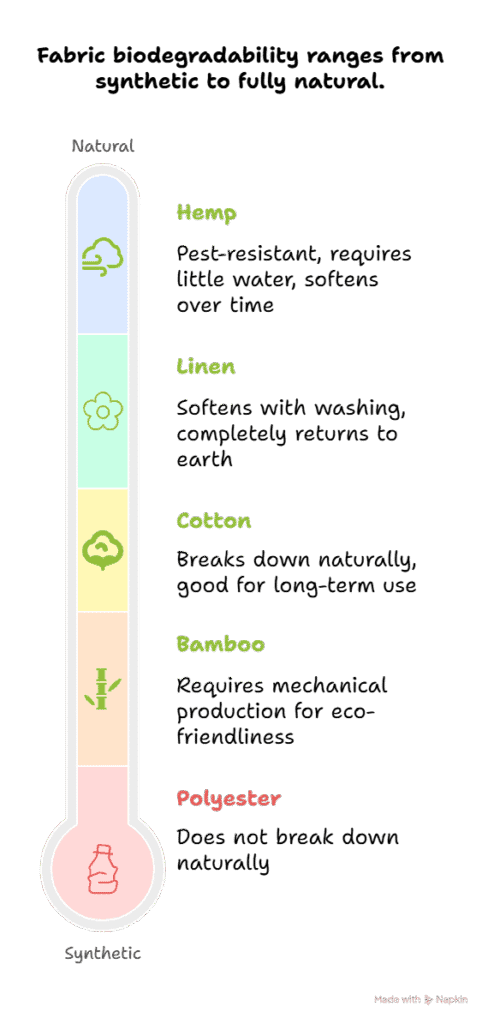
Unique Benefits of Linen Outfit Fabric

Linen and Airflow

The construction of the fabric of linen outfit begins with the unique, hollow fiber that makes fabric extremely airy and light in composition. Because of this, it does not cling on to the skin the way other fabrics do. It also promotes airflow during the day. This core feature makes linen outfits always in style, and is the reason why it the fabric of choice during the season. Efficient Moisture Management

Wearing linen outfit fabric helps in maintaining consistent microclimate conditions which helps di-rectly to provide comfort.Its moisture-wicking ability is higher than cotton. Perspiration and sweat are absorbed and released much faster. Consequently, you feel much drier. This directly contributes to the fabric’s ability to provide comfort in any condition.

Unmatched Durability and Strength

The appearance of the linen outfit fabric as delicate and fragile should be the least of your con-cern. It in fact is one of the most robust natural fibers. A garment will easily last a few decade and will maintain a high level quality if the necessary care is provided. More interestingly, as the fabric is worn and washed, it becomes softer and softer. Therefore, it is safe to say that a linen outfit fabric is a fabric which is economically advantageous and will be paid for multiple times due to it’s quality.

Effortless Versatility and Style

This is the easy part for most. A linen outfit fabric article is a must-have for any wardrobe. It can be worn for many different reasons. Take, for example, the same linen shirt. One can wear it for a casual beach BBQ. It can also work in an upscale restaurant. You may even style it for the office on a summer Friday. The fabric is designed for all-day wear. It feels very light yet maintains high elegance. This makes it appropriate for multiple occasions. These qualities make the fabric remarkably versatile.

Socially Responsible Sustainability and Production

Sustainably and ethically sourcing of linen outfit fabric is a testimonial towards caring for the environment. Linen is naturally sustainable because it is made from the flax plant and requires much less water and pesticides to grow compared to cotton. In the burning of flax stalks, the plant is on the whole biodegradable too. Rather, the plant is fully biodegradable and linen producing entails the burning of stalks whence there is zero waste. In the end, choosing a linen outfit fabric is opting to protect the Earth.

Redefining the look: appreciating the natural wrinkle

The Signature Linen Aesthetic

You will now be talking about the most common topic of conversation: the wrinkles on a linen garment. However, let me tell you the most important secret. This is a new attribute and not a defect. The relaxed crease and the crumple of the fabric in a linen outfit adds to the charm of the fabric. More importantly, it represents ease and unbothered confidence in the person wearing it in. Rather than trying to fight it, the choice is to accept it fully.For sure, if you want to look sharper for an occasion, simply steam the fabric. However, loving the wrinkle is key. It brings out the authentic style of a linen outfit fabric.
How to Build Your Capsule Collection: The Linen Essentials

The Foundational Linen Shirt

You do not need to own a linen closet to enjoy all the advantages it has to offer. Rather, start from a foundation of these functional essentials. First, having The Linen Shirt as one of the cornerstones of your collection is crucial. This can be worn with a pair of tailored trousers for a formal office outfit, with denim short for a casual errand on the weekends, or even for a swimsuit cover-up where the shirt is stylishly tied at the waist.

“Two linen shirts on wooden hangers hanging from a metal clothing rod. The front shirt is light beige with a collar and pocket; the shirt behind is olive green.” Linen Outfit Fabric
“The Foundational Linen Shirt: breathable, timeless linen essentials for everyday wear.”

The Versatile Linen Trousers

Next, Linen Trousers bring a revolutionary touch to the summer wardrobe. You can choose wide-leg, cropped, or straight-cut styles. Pants made from linen outfit fabric provide unmatched comfort, like a pair of sweatpants. At the same time, they deliver the stylish cut of tailored trousers. This design allows you to wear them for both casual and dressy occasions.

A pair of light linen trousers suspended mid-air against a warm orange backdrop, showing a relaxed fit with an elastic waistband and a cargo pocket on the side. Linen Outfit Fabric
The Versatile Linen Trousers: lightweight, breathable comfort with cargo pockets for everyday ease.

The Elegant Linen Dress

In addition, The Linen Dress is the winner in the category of “most effortless one-and-done outfit.”Whether you choose a sophisticated slip dress, a carefree cutshirt dress, or a whimsical maxi dress, one thing is clear. A dress made with linen outfit fabric delivers sophisticated and effortless style. It works perfectly for almost all summer occasions.

A stylish young woman wearing a light beige, off-the-shoulder linen dress with button-down front, a tie belt at the waist, and a ruffled hem. She pairs it with a straw hat, black block-heeled sandals, and a small brown handbag, standing on a park path.
The Elegant Linen Dress: a timeless, sun-ready look in soft beige with delicate ruffles, a belted waist, and breezy long sleeves.

The Statement Linen Jumpsuit

The Linen Jumpsuit is effortless in one’s appearance, yet powerful and bold as well. There is arguably more zen in the combination of effortless style and comfort with a well-fitting, line “outfit fabric” jumpsuit.

A stylish young woman wearing a blue-and-white striped linen jumpsuit, white sneakers, a straw hat, and carrying a white backpack, standing on a sidewalk beside a tree in an urban street setting.
“Effortless summer chic: a striped linen jumpsuit, straw hat, and white backpack complete a breezy street style look.”

The Polishing Linen Blazer

The Linen Blazer is the ideal piece to complete a look. It works beautifully under light to provide a breathable layer in highly air-conditioned spaces, or as a way to elevate a casual jeans and tank outfit.

A young woman with curly hair stands confidently in a light blue blazer, arms crossed, in a bright, modern office.
A professional-looking woman with long, wavy brown hair stands with arms crossed in front of her chest. She wears a light blue blazer over a white top, paired with dark pants. The setting is a clean, contemporary office with a white wall, a desk lamp, a laptop, and minimalist decor in soft tones. The overall mood is confident and polished.

Mastering the Art of Linen Styling

Monochromatic Magic

The versatility of the “outfit fabric” linen is best displayed in and by the fabric. First, consider more neutral tones under the heading of “Monochromatic Magic.” There is something minimalist yet sophisticated in an entire outfit ranging in shades of beige, white, or oatmeal.
Playing with Color and Pattern

Do not be afraid of “Color Play.” Linen “outfit fabric” takes dye with the utmost grace. Choose from the earthy shades of sage green, terracotta, or deep blue for a look that is truly yours yet still stands the test of time.

Mixing Textures for Depth

In addition, Texture Mixing adds great depth to your outfit. For instance, try pairing your linen pieces with rugged denim, sleek leather, or soft silk. A classic linen shirt with jeans is a beloved combination for a very good reason.

The Final Touch: Accessories

Lastly, the power of Accessorize should never be underestimated. For the ‘good to go’ summer look, you can wear a straw hat, a basket bag, and some simple leather sandals. These elements go well with the organic feel of your Linen outfit.

Preservation of Your Assets: Linen Care Guide

Simple Steps For Longevity

The Washing Process – Gentle Cleansing

To begin with, always consult the care label affixed to your clothing for potential instructions directly from the manufacturer. After this, outer and inner layers do not bond. Turn your linen outfit fabric inside out; this simple motion minimuls outer fabric rubbing and protects looser fibers from excessive abrasion. Choose soft natural detergents; harsh soaps, bleach, and fabric softeners weaken linen fibers and can make linen lose shine. For machine settings, Gentle or delicate, cool or lukewarm would work best. For hand washing, make sure to agitate garment to a slight extent in a cool water basin and a bit of soap..

The Drying Technque: Reducing Wrinkles

When removing the wet linen outfit fabric from the tub, as to avoid ring it, this will avoid distorting the shape and creating severe creases. In place, you may also gentle press the garment to let out water, or roll it into a clean, dry towel to absorb the extra moisture. Immediately reshape the garment while damp, and try to smooth out and major creases using your hands and aligning the seams. For the best results, Position the garment flat to a rack or clean towel to dry, avoiding direct sunlight as this may result in fading to the fabric over time.

Achieving a Crisp Finish Using the Ironing Method

Should you wish to obtain a smoother, crisper look, the appropriate step to take is to perform the ironing. Make sure you iron the linen outfit fabric when it is a little bit moist. If the garment is dry, lightly mist it with water using a spray bottle. After this, take a steam iron and set it to a mid-high temperature. Linen can survive high heat, but always check the label to be sure.

The Storage Solution – Avoiding Deep-Creasing

Once your item is entirely dry as well as cool, effective storage is vital. Do not store the linen outfit fabric on a wire hanger or thin plastic hanger for long periods, as this leads to unsightly shoulder bumps and stretching. Sturdy, shaped wooden hangers that are balanced to the garment’s structure are recommended for shirts, dresses, as well as blazers.

"An infographic titled 'Preservation of Your Assets: Linen Care Guide' with four numbered sections illustrated: 1) The Washing Process - Gentle Cleansing showing a person doing laundry; 2) The Drying Technique with a clothesline and a drying rack; 3) Using the Ironing Method featuring an iron on fabric; 4) The Storage Solution depicting a box of rolled and folded textiles."
“Preservation of Your Assets: Linen Care Guide — Practical steps for washing, drying, ironing, and storing linen to maintain its quality and longevity.”

Conclusion

In conclusion, it is wise to ague that linen is much more than a fabric, it is an a fabric lifestyle choice. It is more than a ever lasting investment, it is comfort, luxury, fashion and an investment that will, one day, not become a remnant of out of fashion. With care and prudent use of resources, key linen essentials will transform your closet into one that is not only Haute Coutre but also, a sensible investment mindful of eco-balance. It is important to mention that the closet will last a fair number of years while giving the owner great versatility along with compliments.
Read About Article /// Linen Fabric: A Complete Guide to History, Uses, and Benefits

FAQs

Does linen fabric shrink?

Yes, linen can shrink, especially on its first wash. This is a natural characteristic of the fibers. To minimize shrinkage, always wash in cool water and avoid high heat in the dryer. Most high-quality linen garments are pre-washed and pre-shrunk by manufacturers to mitigate this.

 Is linen only for summer wear?

While linen is a champion of summer fashion due to its breathability, it is not exclusively a warm-weather fabric. Its temperature-regulating properties make it an excellent base layer for cooler months. You can easily layer a linen outfit fabric under sweaters, blazers, and coats for year-round style and comfort.
How do I remove stubborn wrinkles from linen without an iron?

The easiest way is to steam your garment. Hang it in a steamy bathroom during a shower or use a handheld garment steamer. The steam will gently relax the wrinkles from the linen outfit fabric. You can also lightly mist it with water and gently smooth the wrinkles with your hands before letting it air dry.