Home Blog Page 131

The History of Bomber Jackets: From Military Gear to Fashion Icon

0

The history of bomber jackets is more than just a record of clothing. It reflects the evolution of culture, function, and style. In the early 1900s, the bomber jacket served as protective gear for military officers and pilots. Over the decades, it moved beyond its military roots and shaped global fashion. Today, the bomber jacket is not only apparel but also a symbol of strength, versatility, and cool style. To understand its popularity, we must trace the history of bomber jackets from aviation to fashion.

Why Bomber Jackets Continue to be A Style Staple

"A stylish man wearing a green and black bomber jacket over a white sweater, standing outdoors by a railing near a river. He wears sunglasses and smiles, with a historic building in the background." The History of Bomber Jackets
Why Bomber Jackets Continue to Be a Style Staple

Within the fashion world, the bomber jacket’s specialty is its versatility. Most pieces of clothing do not last very long in the fashion world, unlike the timeless bomber jacket. The bomber jacket is a perfect example of the harmonious blend of style and practicality. The bomber jacket shows practicality through its ribbed cuffs, cropped waist, and durable materials. Its sleek design highlights versatility. You can wear a bomber jacket with jeans, a dress, or countless other outfits, and it will always complement the ensemble. This simply explains why the bomber jacket is still relevant, which, in turn, explains why the history of bomber jackets is still relevant in fashion debates today. Read more: Top Bomber jacket

How Bomber Jackets Were First Introduced to the World

In the wake of World War I, when aviation was still in its infancy and very dangerous, bomber jackets made their mark. While pilots flew in open cockpits, filled with the frost at great heights, a jacket lined with fur was of great use. The practicality of bomber jackets is evident the moment a pilot wears one. Over the years, these jackets have come to represent valor and self-discipline. The purpose of origin remains unclear, but many believe designers made bomber jackets to represent a rugged, masculine look often linked to the military.

Early Flight Jackets in World War I
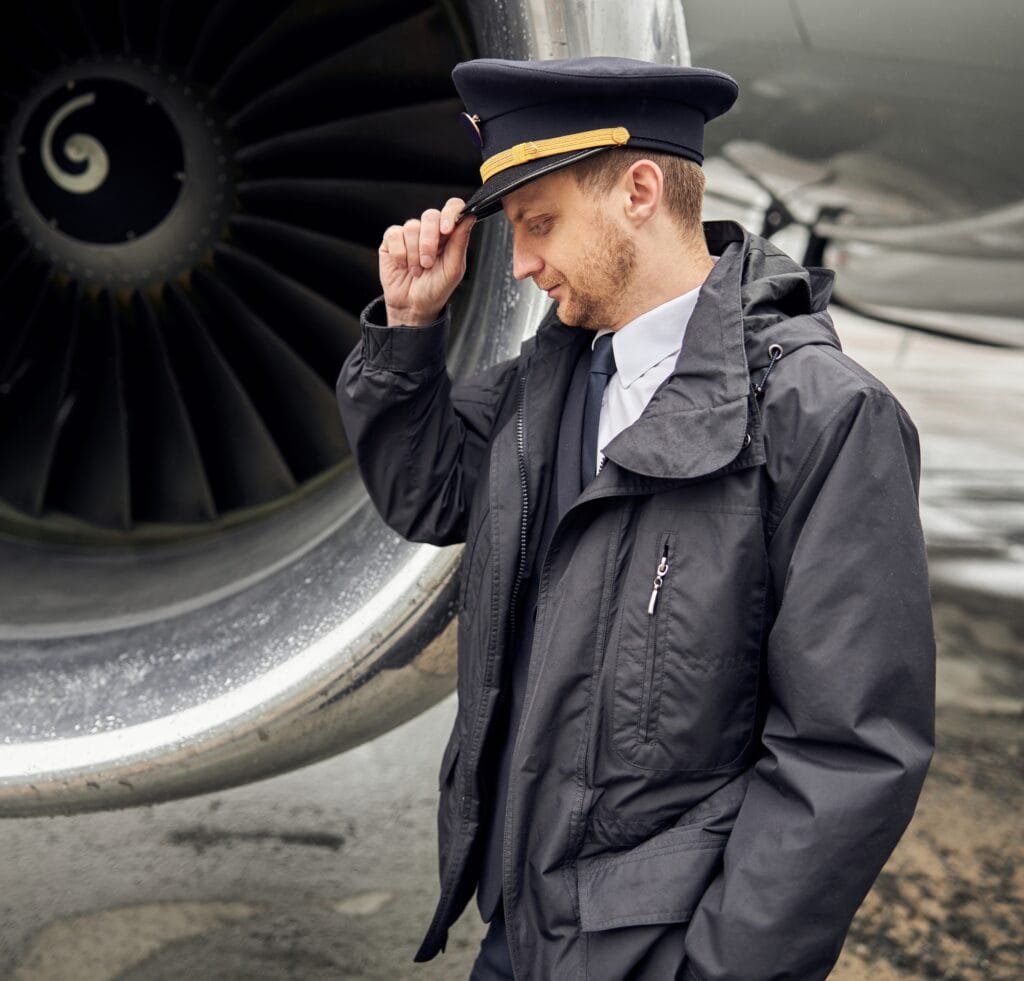
"A man wearing a vintage-style pilot jacket and a peaked cap with a yellow band stands beside a large airplane engine. He adjusts his hat and looks down, conveying a wartime aviation atmosphere."
Early Flight Jackets in World War I: From Function to Fashion

Pilots first wore bomber jackets during World War I to protect themselves and withstand harsh elements during flights. Pilots wore leather jackets, insulated with fur collars. These flight jackets, while practical and bulky, catered to the needs of pilots in unpressurized cockpits. They were not style statements, but rather life-saving attires. Nevertheless, their compelling appearance and robust construction set the groundwork for contemporary jackets of today. In relation to the needs of bomber jackets, life saving amenities is what first drove them into existence.

The Iconic MA-1 and Its Cold War Popularity

With the introduction of the MA-1 bomber jacket in the 1950s, the history of bomber jackets would take another turn. Designers used leather as the main material, but they later substituted it with nylon. This change made the bomber jacket more practical and adaptable to unpredictable temperatures and climates.The downed pilots easily signaled distressed with the bright orange lining, making the jacket even more of a staple. The MA-1, which is one of the most recognizable designs to this day, was military standard during the Cold War and altered the course of bomber jackets entirely. The history of bomber jackets cannot be told without remembering the global expansion of fashion.

Functional Features That Defined Military Bomber Jackets

Designers added various defensive features to the bomber jacket, each unique in its own way. They created ribbed cuffs and waistbands to allow extreme movement while keeping warmth inside. They used leather fabric and later nylon to withstand harsh weather while ensuring comfort. These details soon became the standard for bomber jackets. The history of bomber jackets shows that the most stylish features were originally built for survival.

The Transition from Military Gear to Civilian Fashion

The history of bomber jackets changed drastically when the soldiers returned home after the wars. The soldiers who returned from the wars continued to use their military jackets during their normal day to day activities, creating a unique fashion style. The use of bomber jackets during civilian life was on the rise, most likely from the influence of Hollywood movies and popular culture. The bomber jacket was no longer a jacket meant for soldiers, it was a fashion aside from that as well. The shift in the history of bomber jackets from tactical to iconic is tremendous. The history of bomber jackets is a great example of how people use clothing from an actual conflict in a stylish and unique way.

Hollywood’s Role in Popularizing Bomber Jackets
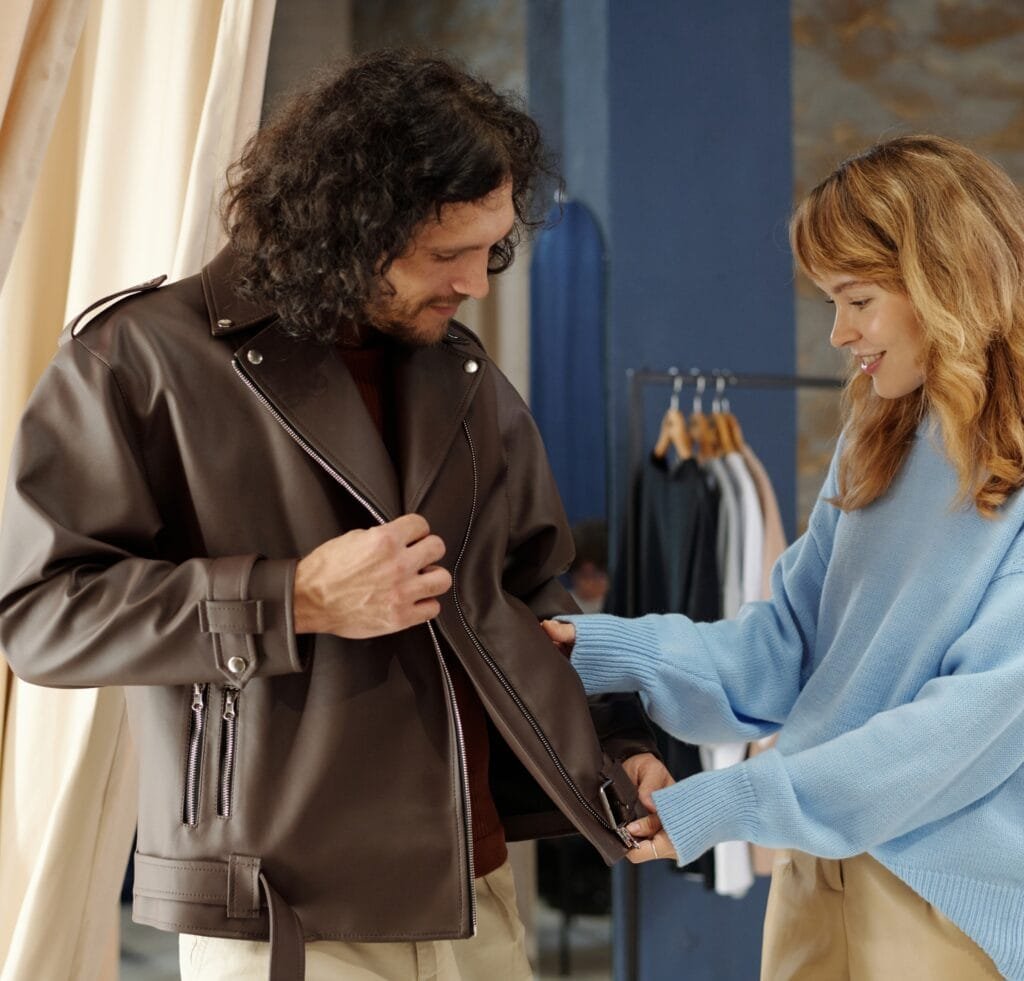
"A man wearing a brown leather biker-style jacket being adjusted by a woman in a light blue sweater inside a clothing store. They stand near a rack of garments, with hangers visible in the background." The History of Bomber Jackets
Hollywood’s Role in Popularizing the Bomber Jacket

Hollywood’s impact on the history of bomber jackets is without question profound. In classic jackets Hollywood movies, rugged male protagonists wore bomber jackets, and this instantly added glamour to the style. Steve McQueen made bomber jackets look effortlessly cool, and Tom Cruise further popularized the style in the “Top Gun” movies. The audience associated bomber jackets with adventure and confidence. The rugged male protagonists of these movies glamorized the bomber jackets wearing the jackets, and this made them highly coveted items outside of the military. Hollywood transformed the practical military uniform into a global style statement. The film industry glamorized bomber jackets and spread their appeal worldwide.

Bomber Jackets in Music and Youth Culture

The history of bomber jackets intersects with the music and youth rebellion of the 70’s and 80’s. Punk rock was the first to capture and embrace the trendy and chic style of bomber jackets and wore them as symbols of defiance. In later years, HipHop also embraced the style and made it a part of the urban culture. Bomber jackets all over the world were used by the youth as a symbol of independence and attitude. Chances are that the youth from all over the globe were able to relate to the culture, and because of this, the bomber jackets retained their relevance. Unlike before, the history of bomber jackets also transcended to music and youth revolutions.

The Impact of Sports & Street Culture on Bomber Jackets

Fans and sports teams wore bomber jackets in custom forms while traveling to and from games. They embraced flashy logos and vivid colors to showcase team spirit. Soon after, sportswear brands seized this gold mine and merged athletic and urban styles. They easily incorporated the bomber jacket into casual, everyday streetwear. The history of bomber jackets shows that they were no longer tied strictly to athletic purposes. Fans and teams began wearing bomber jackets beyond the field. People no longer assumed they belonged only on battlefields. The seamless transitions between varying lifestyles of the owners proves the unmatched versatility of bomber jackets. Wearing bomber jackets became the clothing ideology of street fashion, allowing jackets to adopt neoteric purposes in the fashion world.

Current Fashion Trends Surrounding Bomber Jackets

Bomber jackets from the modern era on have consistently imposed changes on the history of bomber jackets. Remnants of steep price tags from luxury brands have dominantly reflected on the Bomber jacket’s ability to withstand modern day cuts and silhouettes, maintaining the overall shape of the jacket. Streetwear boutiques have yet to fail to keep the items up to date. Contemporary wardrobes have never been more satisfying to modern men, women, and, non-binary individuals, all of who have easy access to the contemporary styled bomber jacket. The history of bomber jackets was never static, and will forever adapt and evolve to whatever modern fashion world requires, serving as a nostalgic head turner as a statement piece, or, a piece waiting to have innovative ideas poured onto it.

High Fashion Designers Reinventing Bomber Jackets
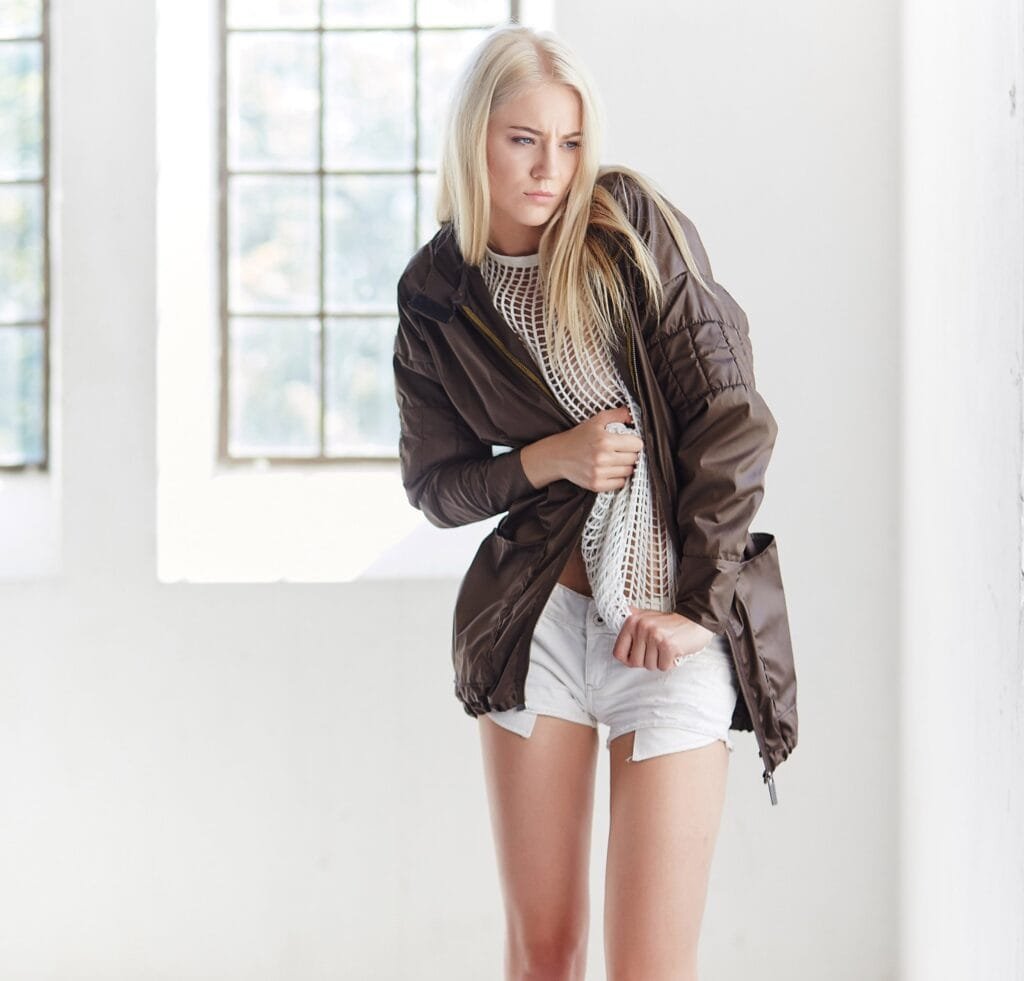
"A stylish woman wears a glossy brown oversized bomber jacket over a white mesh top and white shorts. She stands in a bright, minimalist studio with large windows, posing with a purposeful, fashion-forward attitude." The History of Bomber Jackets
High Fashion Designers Reinvent the Bomber Jacket

As Gucci, Prada, and Louis Vuitton incorporate more silk, embroidery, and high end tailoring to bomber jackets, they help to keep the history of the bomber jacket alive. On runways, bomber jackets are paired with suits and gowns, showing that they can be both sleek and practical. These pieces prove that bomber jackets are more than just a casual, everyday look – they can be a luxurious statement piece. The history of bomber jackets proves how military gear transformed into high fashion with ever-lasting design potential.

Bomber Jackets in Everyday Street Style

Thanks to social media, the bomber jacket is a timeless piece of clothing that few can go without. People of all ages, including influencers, athletes, and students, wear them with sneakers, hoodies, and skinny jeans. The rugged story of bomber jackets is alive in this context as it continues to evolve with the current, younger generations. Oversized, bold, and simplistic looks dominate the streetwear aesthetic. Every decade proves that bomber jackets always stay in style. The rugged story of bomber jackets proves how deeply it has ingrained itself in street style, both approachable and stylish.

Gender-neutral Appeal of the Bomber Jacket

Equally important in the history of bomber jackets is their striking lack of gender. Bomber jackets, unlike countless other pieces of clothing, are quite simple and easy to wear. Designers created the cropped bomber jacket to fit easily across all body types. Men, women, and non-binary individuals love and appreciate bomber jackets without any compromise. This inclusiveness gives the jacket a timeless edge. The history of bomber jackets illustrates that it has always been universal and never constrained to one gender. This quality makes it even more powerful than ever in fashion.

Different Styles of Bomber Jackets Over Time

The history of bomber jackets has countless styles and designs. Each one showcases a legacy and fashion demand of a particular time. The rugged bomber leather jackets, the sleek satin designs, and the satin bomber jackets all show the ability of a bomber to adapt to varying trends while still holding its true identity. Understanding the reason a bomber jacket has been able to survive over the decades is an important one. The history of bomber jackets is not tied to a single look; it is one of evolution, versatility and the ability to remain stylish in every generation while retaining the original essence of military garb.

Leather Bomber Jackets and Their Classic Edge

Unquestionably the most recognizable style of bomber jackets in existence, leather bomber jackets have an air of toughness and sophistication while still being durable and bold. They take pride of place in the military, and in civilian life, and are and will always be a synonym of toughness and cool. With the rise of aviators and biker culture, leather bomber jackets became symbols of rebellion and adventure. Even now, a leather bomber jacket sharpens the attire of the wearer to a whole new level. The history of bomber jackets has leather at the center, and it still remains one of the strongest link to the origins and timeless style power of bombers.

Nylon bomber jackets for that “everyday, casual” chic style.

The shift in bomber jacket history is attributed to the introduction of nylon. Jackets could now be produced easier, were supper light and absolutely water resistant. This material gave birth to the ever so popular MA-1 style. Nylon bomber jackets fully began the “go-to” option for casual fashion. They were ideal for everyday use due to such practicality. The history of bomber jackets proves time and time again that it is reinforced of the nylon fabric that brought them, and on a broader scale, bomber jackets, to a more conventional popularity. Even to this day, one could make the argument that nylon bombers are the most dominant in streetwear due to the comfort they offer.

Bomber Jackets Quilted And Satin In Contemporary Attire
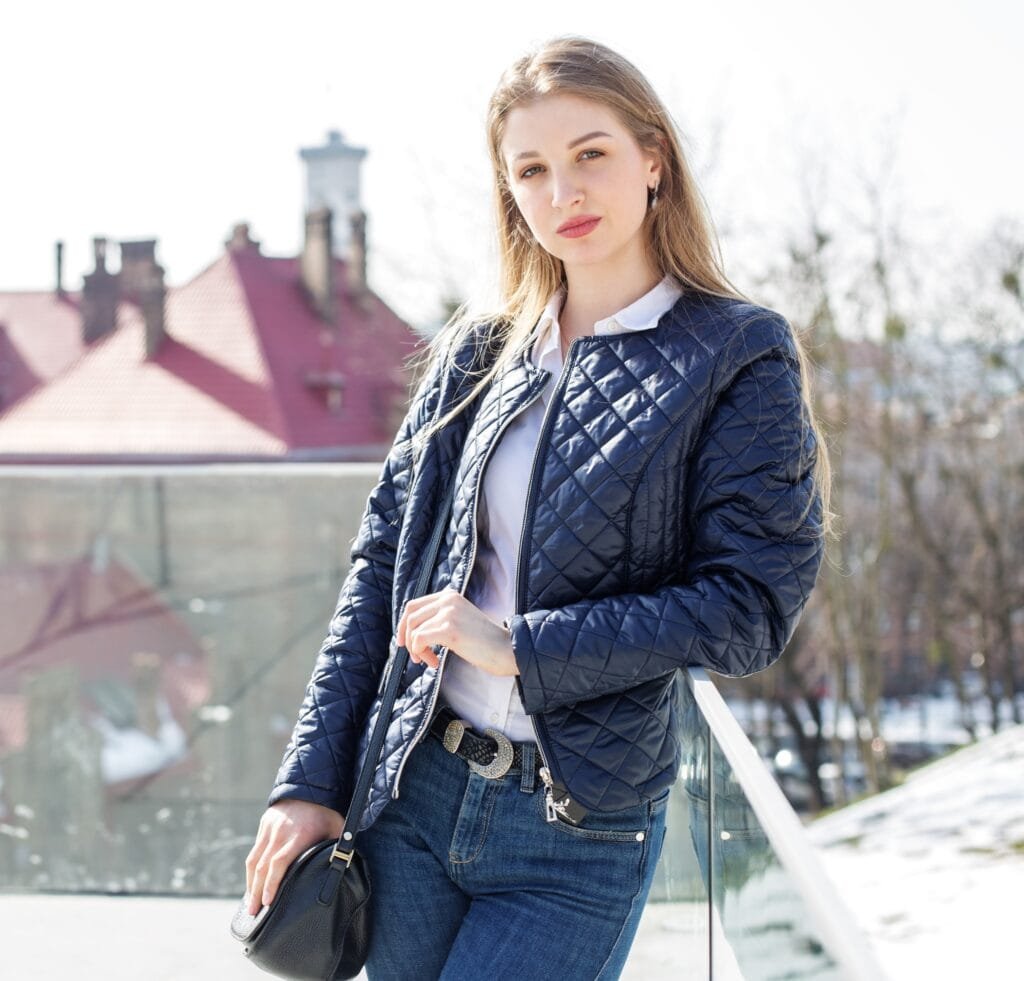
"A stylish young woman wearing a quilted navy bomber jacket over a white blouse and blue jeans. She stands outdoors on a sunny day, holding a small black crossbody bag, with red-tiled rooftops and a glass railing in the background." The History of Bomber Jackets
Contemporary Chic: Quilted Satin Bomber Meets Everyday Style

Alongside other types, experimental styles such as quilted and satin bombers have come to form part of the history of bomber jackets. They quilted bombers are warm and have texture, while satin bombers provide shine and elegance. They are more geared towards fashion than practicality, and in that respect, they demonstrate the bombers versatility. The history of bomber jackets tells the story of constant change and reinvention. With each addition, the legacy is reinforced that bomber jackets will always be relevant both in practicality and as a fashion statement.

The Role Of Bomber Jackets In Culture

There is no denying the fact that every piece of clothing has its history. Bomber jackets are not an exception. Their history shows different types of identity and rebellion style people have portrayed in different generations. They were much more than mere clothes. They became symbols. The history of jackets has showed proudly militaristic people, it has also showed youth rebellious symbols. The way they were able to cross different regions and movements made them universal. The history of bomber jackets is evidence to the fact that some piece of clothing goes beyond just fashion. Bomber jackets tell a story on culture, showing confidence, individuality, and a desire to be different.

Bomber Jackets as a Symbol of Rebellion

In the mid to late 20th century, bomber jackets shifted toward a rebellious and defiant style. Punk culture, anti-establishment groups, and urban youths embraced the bomber jacket as a uniform of defiance. Wearers expressed independence by pairing bomber jackets with ripped jeans, boots, and bold accessories. The jackets carried attitude, and the wearer projected strength instead of passivity. This rebellious edge shaped culture and remains part of the history of bomber jackets. Even today, bomber jackets hold powerful significance.

Global Adoption of Bomber Jackets in Fashion
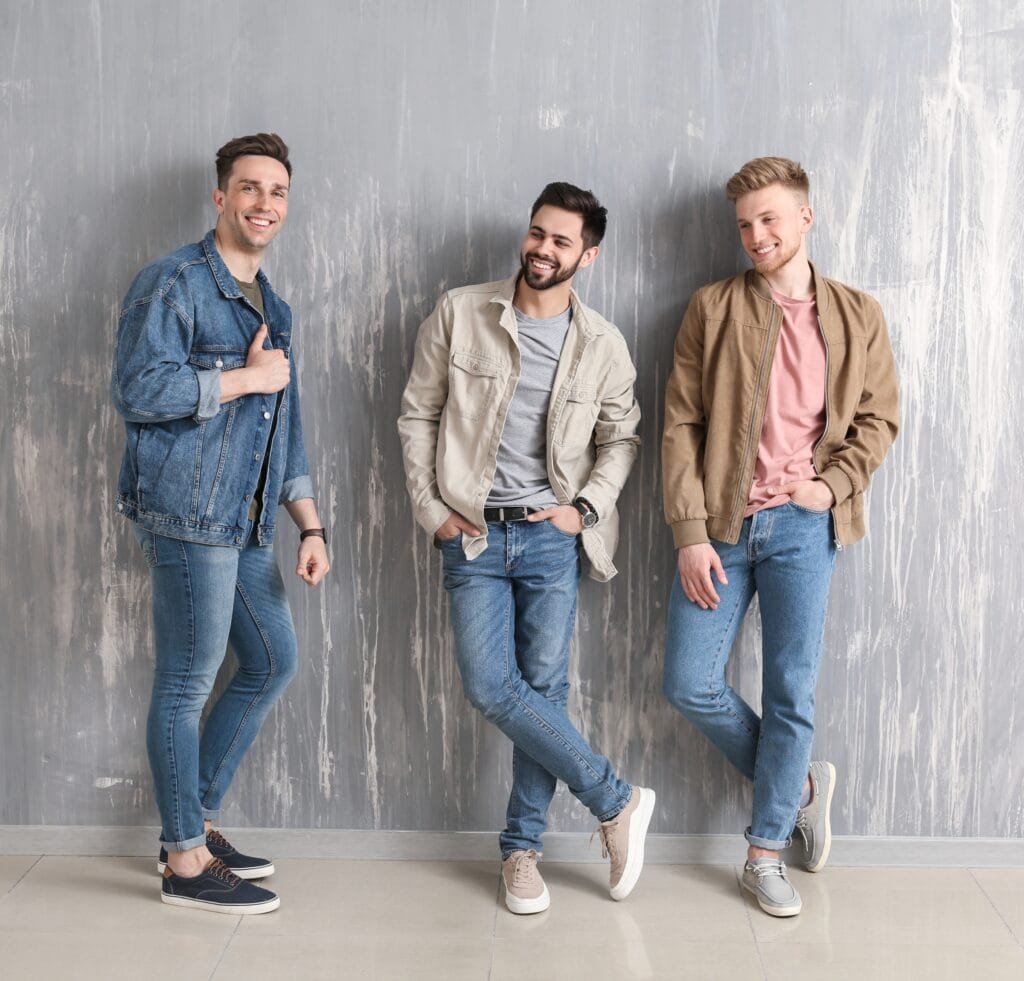
“Three men leaning against a gray textured wall, wearing casual bomber jackets and jeans, smiling at the camera.” The History of Bomber Jackets
“Bomber jackets go global: a casual trio demonstrates how this versatile silhouette has become a staple across cultures and styles.”

The most recent stage depicts the universal adoption of the bomber jacket which started in Europe and America and then spread to the rest of the world including Asia and Africa. Each civilization had its own unique interpretation of the bomber jackets. Japan for instance developed the embroidered satin bomber which was a huge hit, while in the United States the bomber jackets were taken and changed by Hip Hop culture. The personalization of bomber jackets demonstrated the incorporation of local identity which the world alloooot has. This history of bomber jackets is an signage of how a single piece of clothing can bring the world and the various cultures in it together while also allowing the multifaceted diversity that exists. This universal adoption certainly increased its timeless appeal.

Why Bomber Jackets Still Matter Today

Combining heritage and modern style has kept the bomber jacket relevant. It has a place in leisure wear, office attire, and high fashion as well. The fact that the design of bomber jackets is functional and still stands today proves that even through change, some things will have survivability. The bomber jacket is strikingly different from the rest of the fleeting trends as it ties fashion and history and remains relevant today. The history of bomber jackets has practicality, adaptability, and even symbolization, which crafted the military garments that survived generations. That is exactly why bomber jackets are relevant and still one of the most celebrated garments of today.

Styling the Bomber Jacket in Today’s Wardrobe
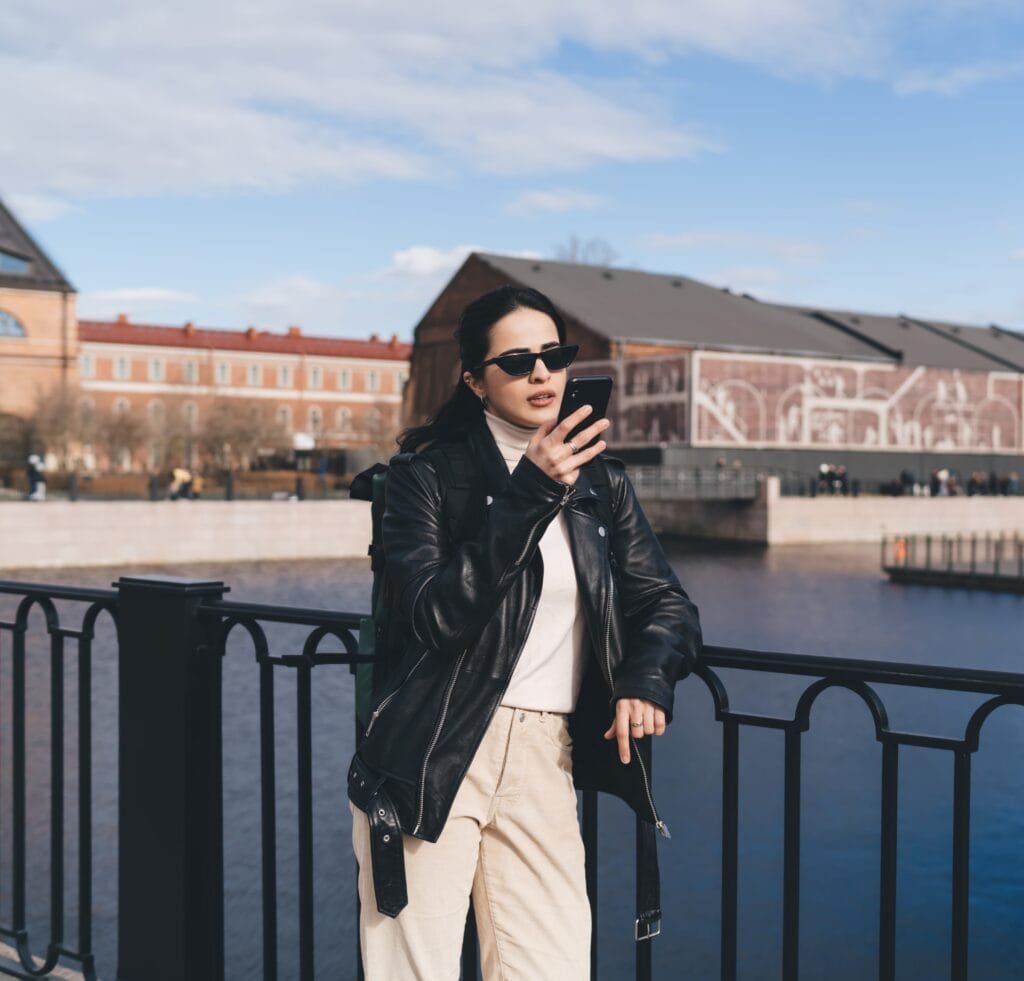
A stylish woman stands by a railing overlooking a river, wearing a black leather bomber jacket, cream turtleneck, beige high-waisted trousers, dark sunglasses, and a backpack, while holding a smartphone.
Styling the bomber: edgy leather meets clean neutrals for a modern, city-ready look.

The history of bomber jackets makes them easy to integrate into modern wardrobes. Their versatility ensures they work across casual and smart casual outfits. Paired with sneakers, boots, or even tailored pants, bomber jackets complete the outfit with a touch of sophistication. They’re also practical choices due to being adaptable to any season. Knowing the history of bomber jackets sheds light on why they have gained so much versatility. Today, styling them means carrying forward a legacy that started in military cockpits, which now belongs to anyone in search of comfort and confidence in fashion.

Outfits with Bomber Jackets
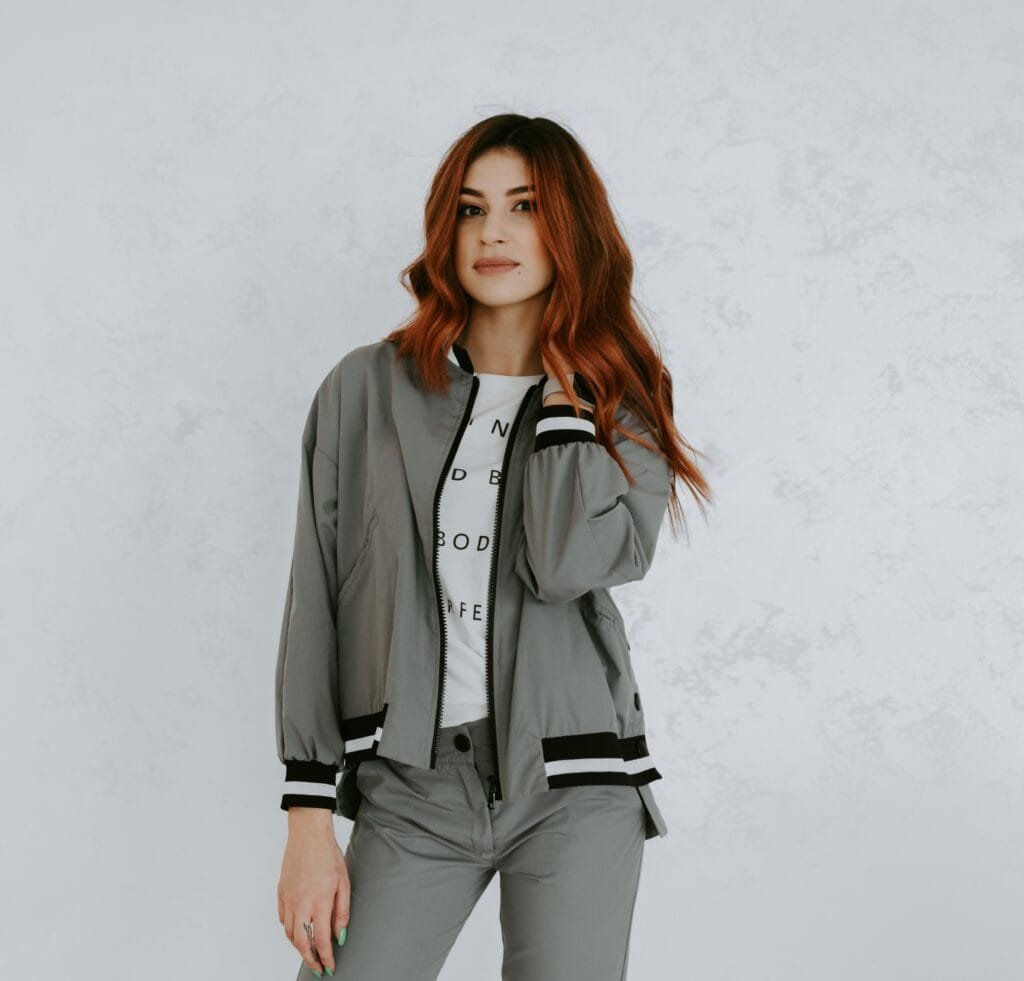
"Woman wearing a light gray bomber jacket over a graphic white T-shirt and gray pants, posing against a light textured wall."
“Effortless street style: cool gray bomber layered over a graphic tee, paired with matching jogger-style pants.”

Bomber jackets complete an outfit with ease. Jeans and sneakers and even a plain t shirt can be worn with them. The history of bomber jackets allows us to understand why they fit so easily in a casual outfit. Their plain design allows them to be paired with anything. This is their most worn style. The history of bomber jackets proves that even soldiers wore-bomber jackets for style and comfort. Civilians adopted this casual styling bomber jackets in history too.

Outfits With Bomber Jackets for Smart-Casual
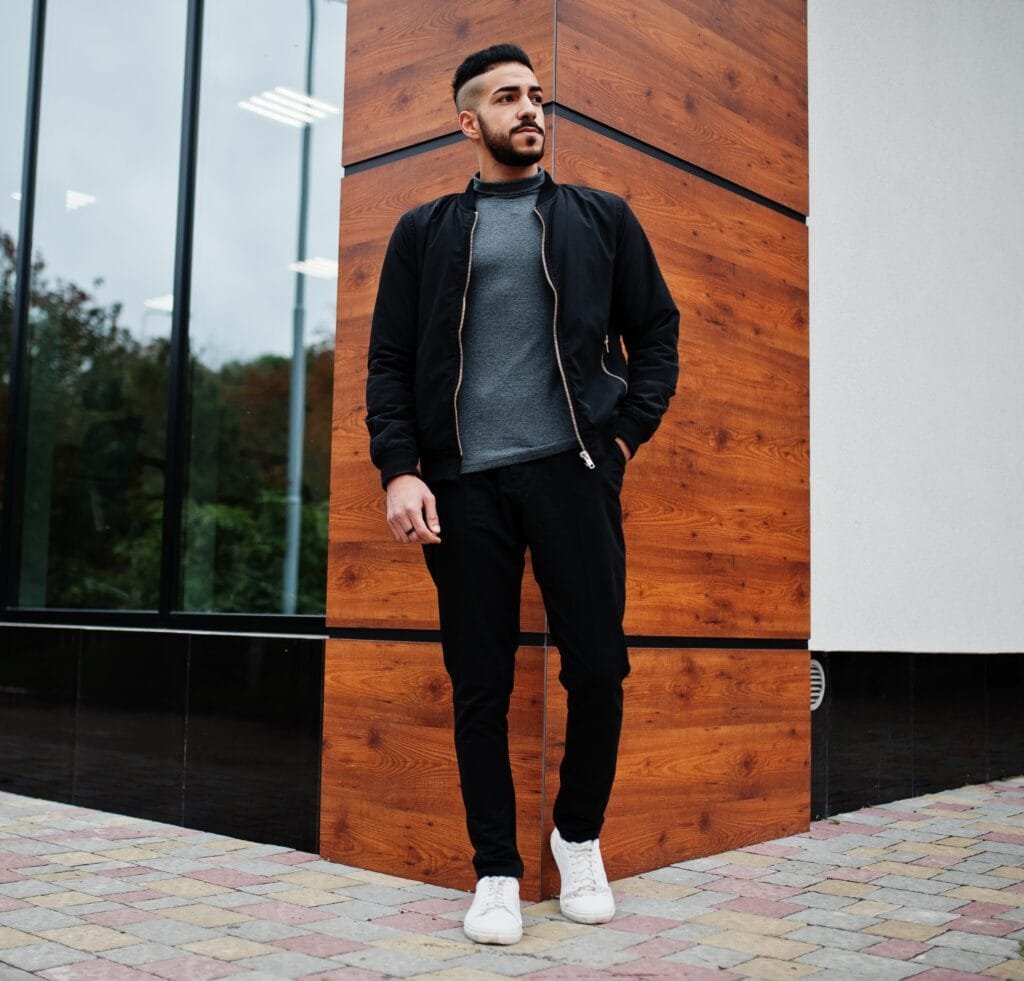
A man stands casually outdoors against a modern wooden panel wall and glass storefront. He wears a black bomber jacket over a gray turtleneck or knit sweater, black slim pants, and white sneakers. The overall vibe is sleek and contemporary, blending casual ease with a polished edge.
Smart-Casual Vibe: Bomber jackets styled with a sleek gray knit, slim black pants, and clean white sneakers.

Bomber jackets do not stop at casual. You can wear bomber jackets with chinos, loafers, and even a dress shirt for a smart-casual look. The history of bomber jackets shows how easily they fit into different style categories. Designers created them for function, but their smooth silhouette allows pairing with modern tailoring. This versatility makes bomber jackets suitable for dinner, a date, or even work. The history of bomber jackets proves that they are versatile, moving from the air-field to the boardroom and retaining the charm that they hold.

Seasonal Styling Tips for Bomber Jackets
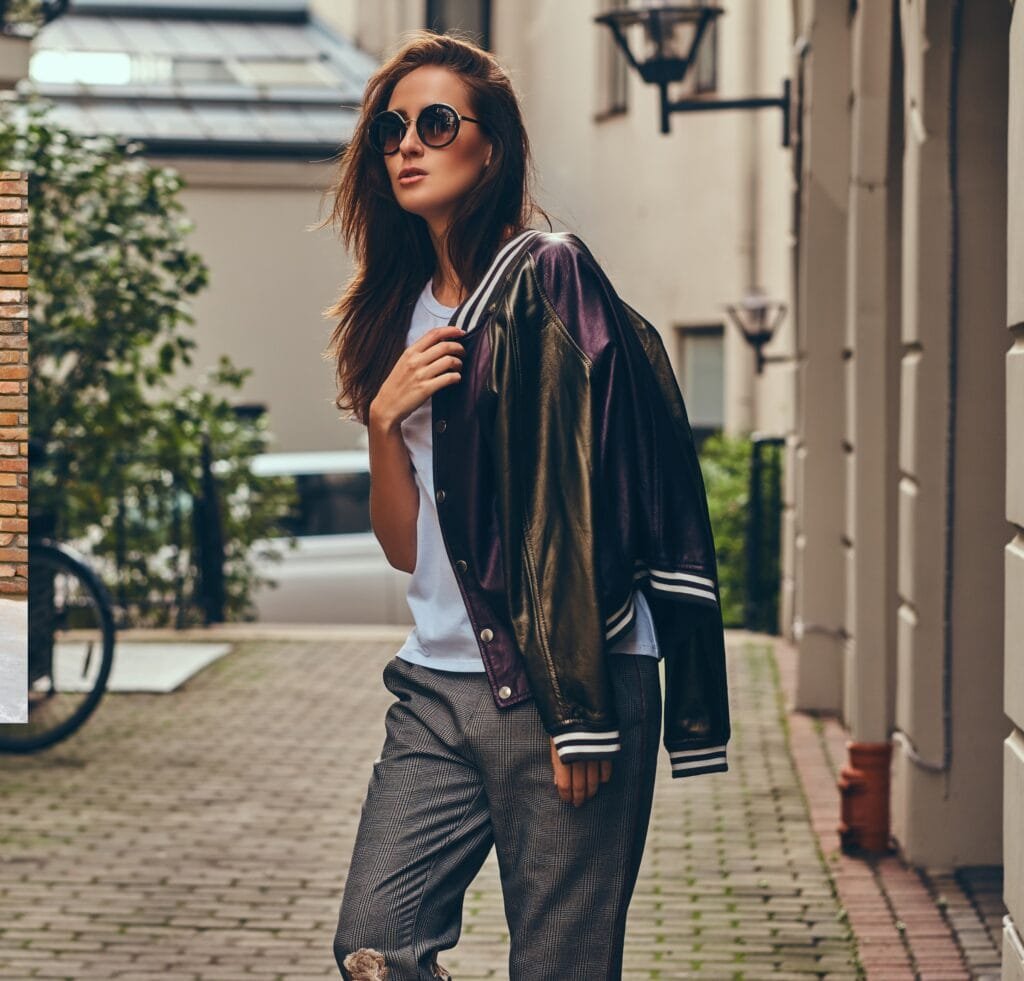
"A stylish woman wearing a black leather bomber jacket over a white tee, plaid trousers, and round sunglasses, walking along a city street with brick and beige buildings in the background."
“Effortless cool: classic bomber jacket vibes for this season.”

A bomber jacket can be worn any time of the year and the design compliments this quite well. The lighter styles made of nylon are great for the cooler spring and summer nights. The thick leather or quilted varieties are great for the colder fall and winter months. The history of bomber jackets shows, even in the early days, they maintained this sort of adaptability. The changing type of fabric and linings would always be in style and useful in any season. This is the reason bomber jackets are great value additions to any closet. The history of bomber jackets shows they were always meant to endure changing environments, style and climate, at the same time.

Conclusion

The history of bomber jackets is one filled with great storytelling. Their use as life saving gear for pilots as well as a fashion statement for both runways and city streets shows the transformation they undergo in line with a changing culture. They managed to break through the wars, movies, music and even global change, all while managing to keep their true essence. This piece of clothing is more than just a stylish piece of clothing – it is a story of resilience and reinvention. The history of bomber jackets inspires a piece of clothing, a timeless fashion piece, always remaining in style. They do not fade away, but instead adapt to the changing world for more confidence. This is the reason, bomber jackets will always be fashion icons.
Read more Article// Types of Bomber Jackets: The Complete Guide to Style & Function

FAQs

hat is the history of bomber jackets?

The history of bomber jackets began during World War I as military flight gear. They later evolved into fashion staples, blending function with style.

Why were bomber jackets originally created?

Bomber jackets were created to keep pilots warm in open cockpits at high altitudes. Their design focused on durability, insulation, and practicality.

When did bomber jackets become popular in fashion?

Bomber jackets became popular in civilian fashion after World War II. Hollywood films, music icons, and streetwear culture fueled their rise.

What styles are part of the history of bomber jackets?

The history of bomber jackets includes leather bombers, MA-1 nylon versions, quilted bombers, and satin designs embraced by modern fashion.
Denim Jacket History: From Workwear to Global Fashion Icon

0

The denim jacket is one of the most recognizable garments in fashion history. What began as durable workwear in the 19th century has transformed into a timeless piece of style. Over the decades, denim jackets have been embraced by workers, rebels, musicians, and fashion lovers across the globe. Their history is a fascinating journey of practicality, culture, and creativity.

Origins of the Denim Jacket

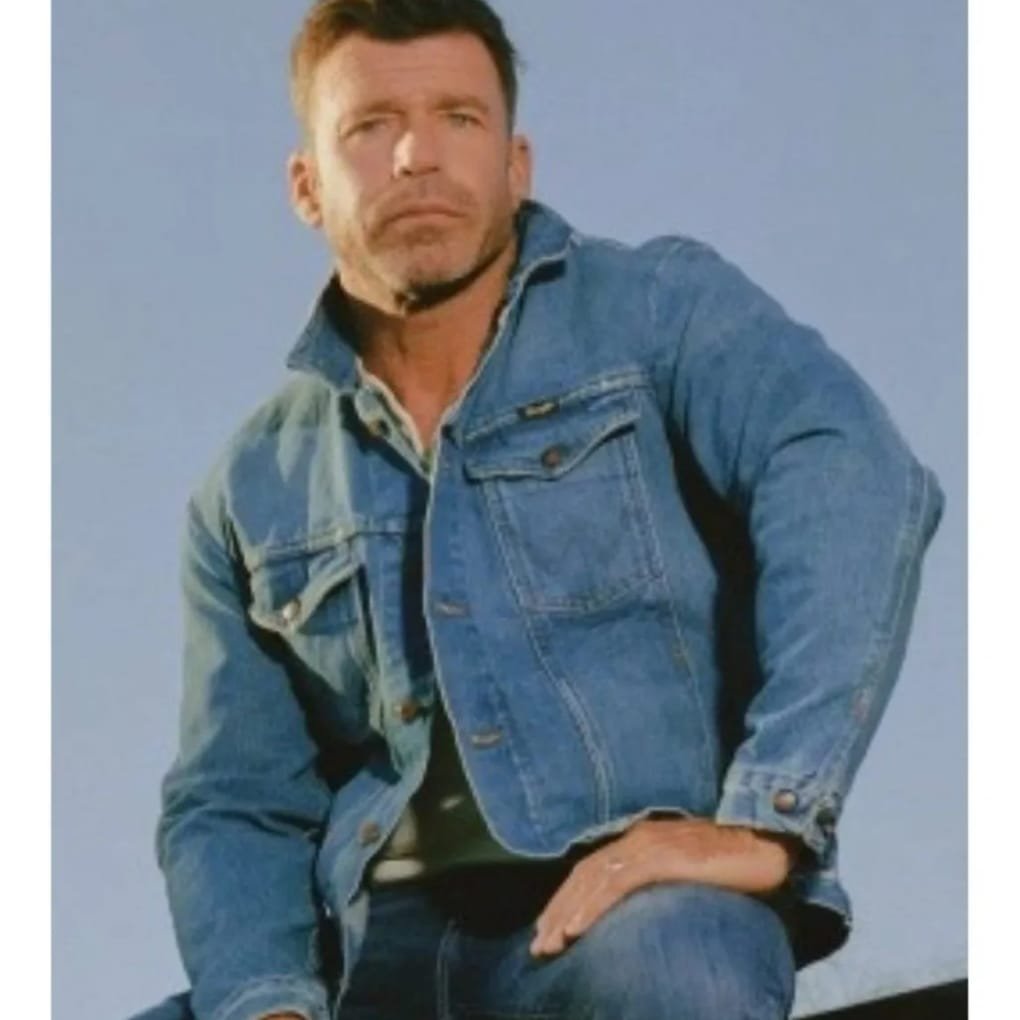
"Man wearing a blue denim jacket, seated outdoors against a clear sky, with a serious expression and short dark hair."
“Timeless ruggedness: a classic denim jacket paired with a relaxed pose.”

The story of the denim jacket begins in the late 1800s in the United States. Levi Strauss, a German immigrant, partnered with tailor Jacob Davis to patent riveted denim trousers in 1873. Soon after, the demand for equally tough outerwear grew. In 1880, Strauss introduced the first denim jacket, known as the “Type I Jacket.” It was designed for miners, railroad workers, and cowboys who needed durable, protective clothing for harsh working conditions.

Early 20th Century Development

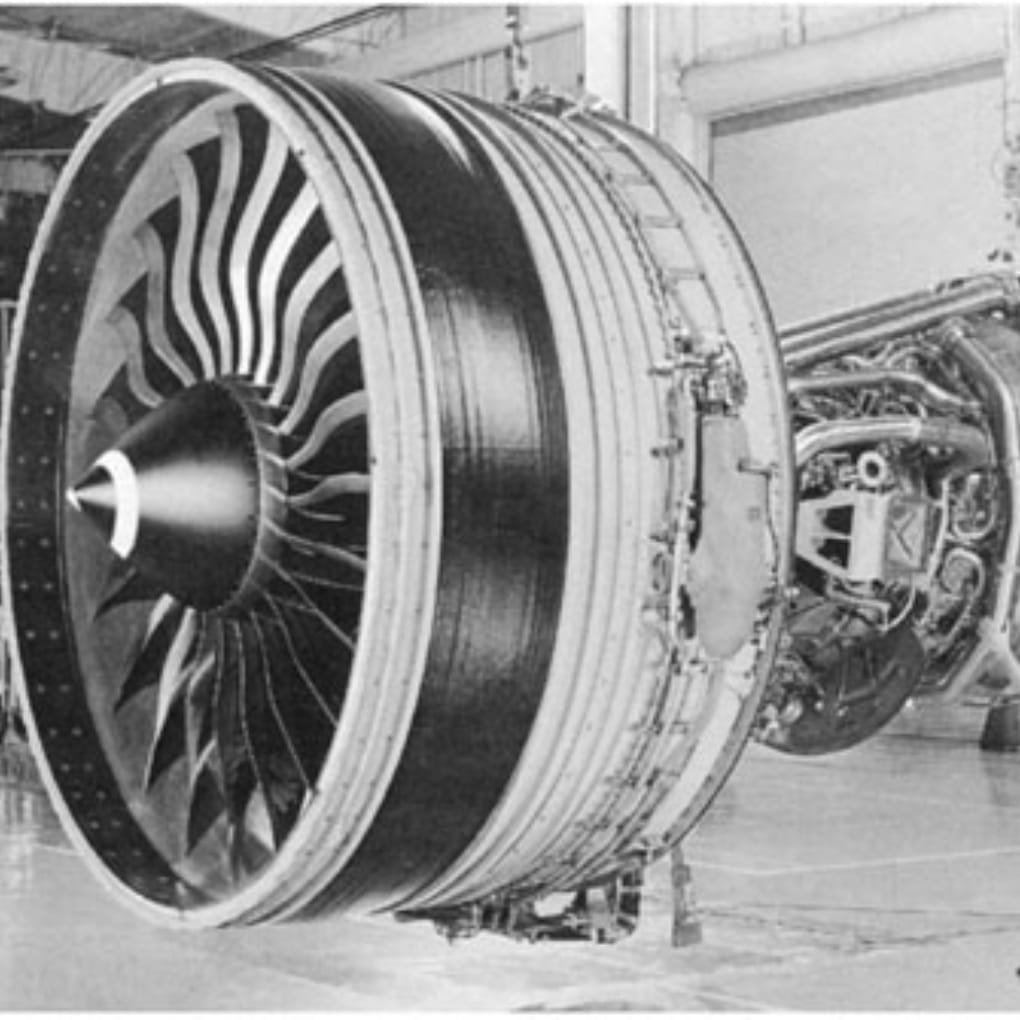
A large jet engine nacelle with a multi-blade turbine and connected mechanical systems in a hangar.
Jet engine turbine and installation hardware in a maintenance hangar.

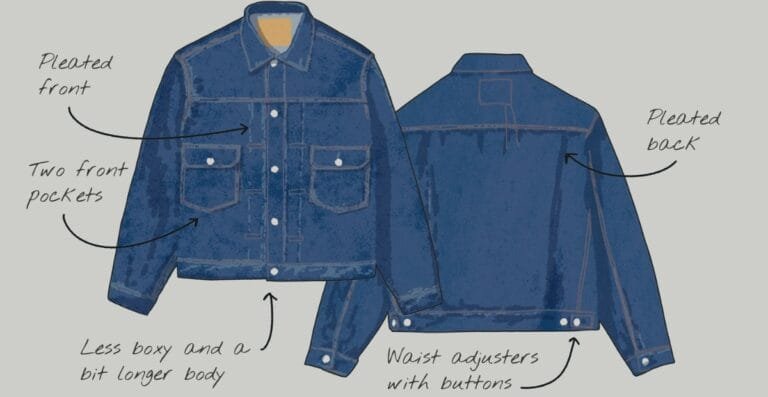
In the early 1900s, the denim jacket evolved into the “Type II Jacket.” Released in 1936, this version featured two chest pockets, a boxier fit, and reinforced stitching. It quickly became popular with laborers across America. During World War II, denim jackets were worn in various industries, proving their reliability and strength. At this stage, they were still seen mainly as workwear.

Post-War Popularity and Hollywood Influence

The 1950s marked a turning point in denim jacket history. Hollywood stars such as James Dean and Marlon Brando wore denim in films, giving it a rebellious image. No longer just practical work clothing, the denim jacket became a symbol of youth culture and independence. Teenagers embraced it as part of their casual, edgy style.

1960s – 1970s: Counterculture and Customization

By the 1960s, the denim jacket was a staple of counterculture movements. Hippies decorated jackets with embroidery, beads, and patches to reflect individuality and social statements. Rock and roll musicians also popularized the denim jacket, connecting it with freedom and self-expression.

In the 1970s, punk and heavy metal fans further transformed the denim jacket into a cultural symbol. Studded, ripped, and patch-covered jackets became associated with underground music and anti-establishment identity.

1980s: Acid Wash and Street Style

The 1980s brought new trends such as acid-wash denim jackets. This style, with its faded and bold look, reflected the vibrant fashion of the decade. Oversized denim jackets became popular in streetwear, hip-hop, and pop culture. Stars like Madonna and Michael Jackson often appeared in denim jackets, further boosting their appeal.

1990s – 2000s: Grunge and Casual Wear

In the 1990s, grunge fashion, led by bands like Nirvana, brought oversized and rugged denim jackets back into style. They were often paired with flannel shirts, ripped jeans, and boots. By the early 2000s, denim jackets remained popular but became more casual and versatile, fitting into everyday streetwear and global fashion.

Denim Jackets Today

Today, denim jackets are available in countless styles: classic trucker, cropped, oversized, sherpa-lined, distressed, and designer versions. They continue to evolve with fashion trends while maintaining their original charm. From runways to thrift stores, denim jackets remain a symbol of versatility and timeless fashion.

Legacy of the Denim Jacket

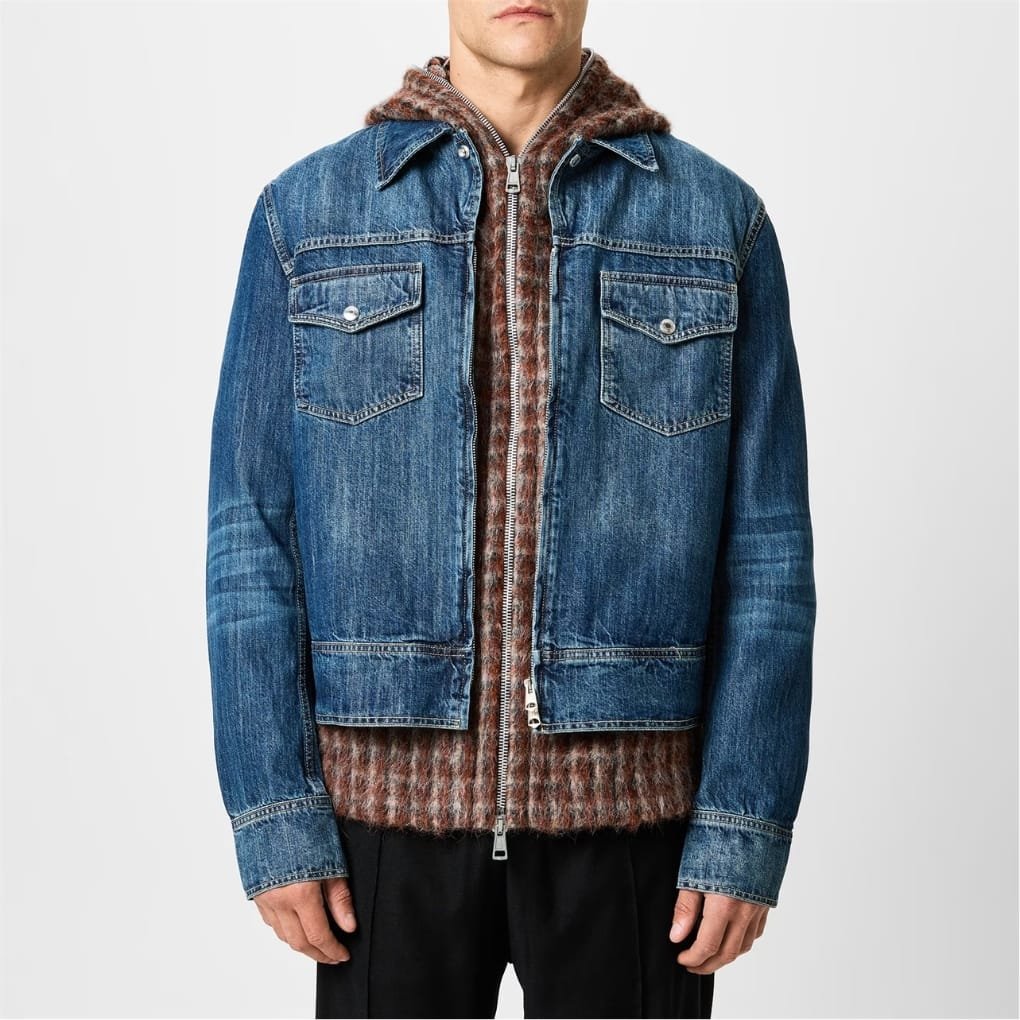
"Man wearing a blue denim jacket layered over a brown and red checkered fuzzy zip-up hoodie; visible zipped zipper, large front pockets, and cuffed sleeves."
“Layered Statement: A rugged denim jacket over a cozy brown plaid fleece hoodie adds texture and warmth.”

The denim jacket’s history shows how one garment can transcend generations and cultures. From 19th-century workwear to a modern fashion statement, it has never lost its appeal. Whether worn for function, rebellion, or style, the denim jacket continues to represent durability, individuality, and timeless cool.

Conclusion

The denim jacket has traveled a long road in fashion history. What began as tough clothing for workers in the 1800s is now a global icon. Its journey reflects cultural shifts, fashion revolutions, and personal expression. With its unique ability to stay relevant across decades, the denim jacket is not just a garment—it is a piece of history.

FAQS

When was the first denim jacket made?

The first denim jacket was introduced by Levi Strauss in 1880. It was designed as durable outerwear for miners, railroad workers, and cowboys.

Why did denim jackets become popular in the 1950s?

Hollywood stars like James Dean and Marlon Brando wore denim jackets in films, making them symbols of youth rebellion and cool style.

How did the 1960s and 70s influence denim jacket history?

During this era, denim jackets became part of counterculture fashion. Hippies, punks, and rock musicians customized jackets with patches, embroidery, and studs.

Types of Bomber Jackets: The Complete Guide to Style & Function

0

From the wide variety of choices available for outerwear, the bomber jacket is often regarded as one of the most versatile pieces available. Associated with militaries in the past, it has transformed into a global fashion statement. Nowadays, the Types of Bomber Jackets available in the market are more diverse than ever, allowing for everything from a rugged military feel to something more sleek and fashion forward. Types of Bomber Jackets are a treasure trove of history, culture, and ”Types of Bomber Jackets” modern reinvention. By understanding the Types of Bomber Jackets, you can then narrow it down to which jacket is aligned with your personal and fashion goals.

Classic Origins of Bomber Jackets

A split-image design featuring bold text on the left that reads “HISTORY of BOMBER JACKETS” and a manikin on the right dressed in a brown bomber jacket, black shirt, and tan trousers against a warm brown backdrop.
Classic Origins of Bomber Jackets — from aviation to everyday style.

There history of all the Types of Bomber Jackets is intertwined with. There construction, which began during the two World Wars, was to keep the pilots at extreme altitudes warm and was also designed to provide flexibility and endurance. Latter, these jackets became associated with symbols of rebellion, sport, and even street culture. As the decade passed, these jackets became associated with the military after designers turned them into fashion icons. One look at the outline of these jackets is enough to see their influence on all modern jackets. There outline and military influence is something which is common.

MA-1 Bomber Jacket

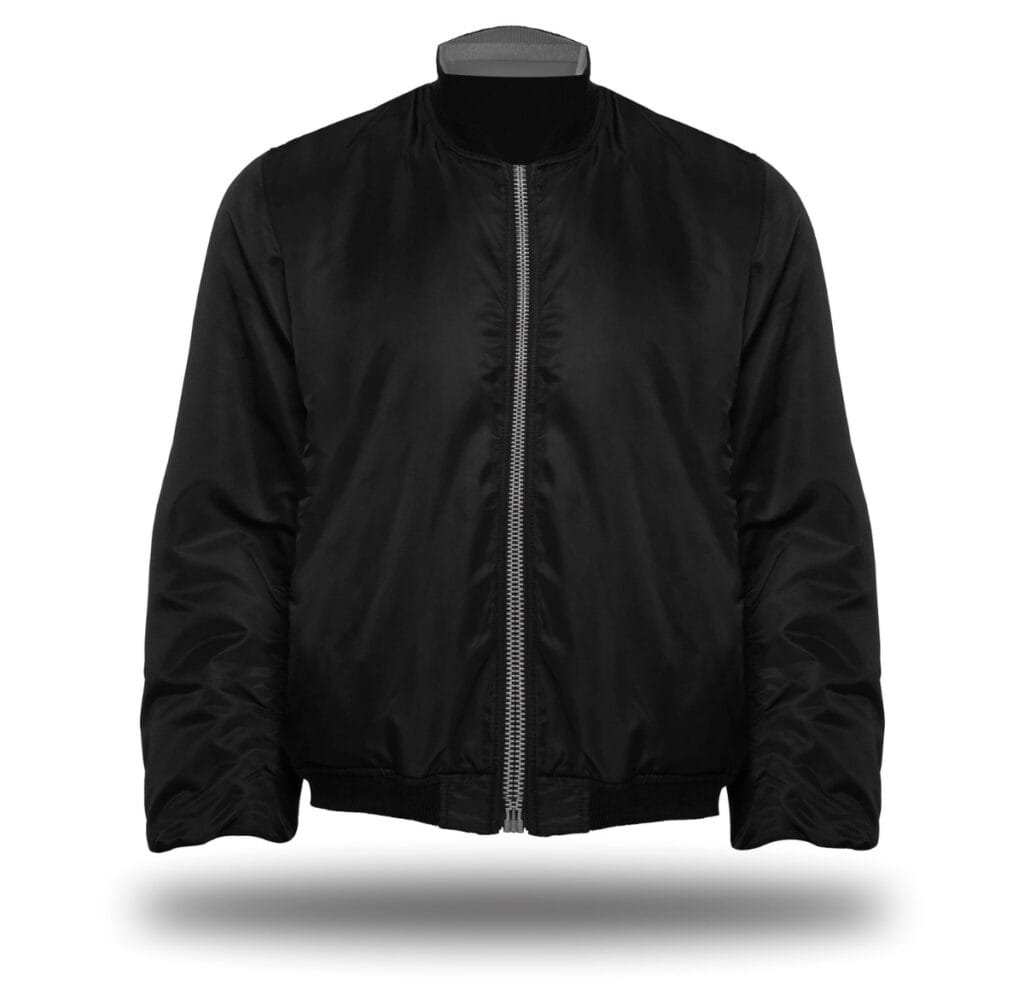
A black MA-1 bomber jacket with a front metal zipper, ribbed cuffs and waistband, and a simple collar, shown against a white background.
Minimalist Black MA-1 Bomber Jacket with a silver zip.

Iconic does not even begin to describe the MA-1. Used in the 50’s for the U.S. Air Force, it mastery of design and function was second to none. The lightweigh construction of the MA-1 bomber jacket allowed pilots to have incredible mobility during. Addtionally, the MA-1’s was and still is the epitome of street style, with its incredible construction and. Not only does the MA-1 retain its popularity, but it also remains one of the most essential Types of Bomber Jackets in luxury collections.

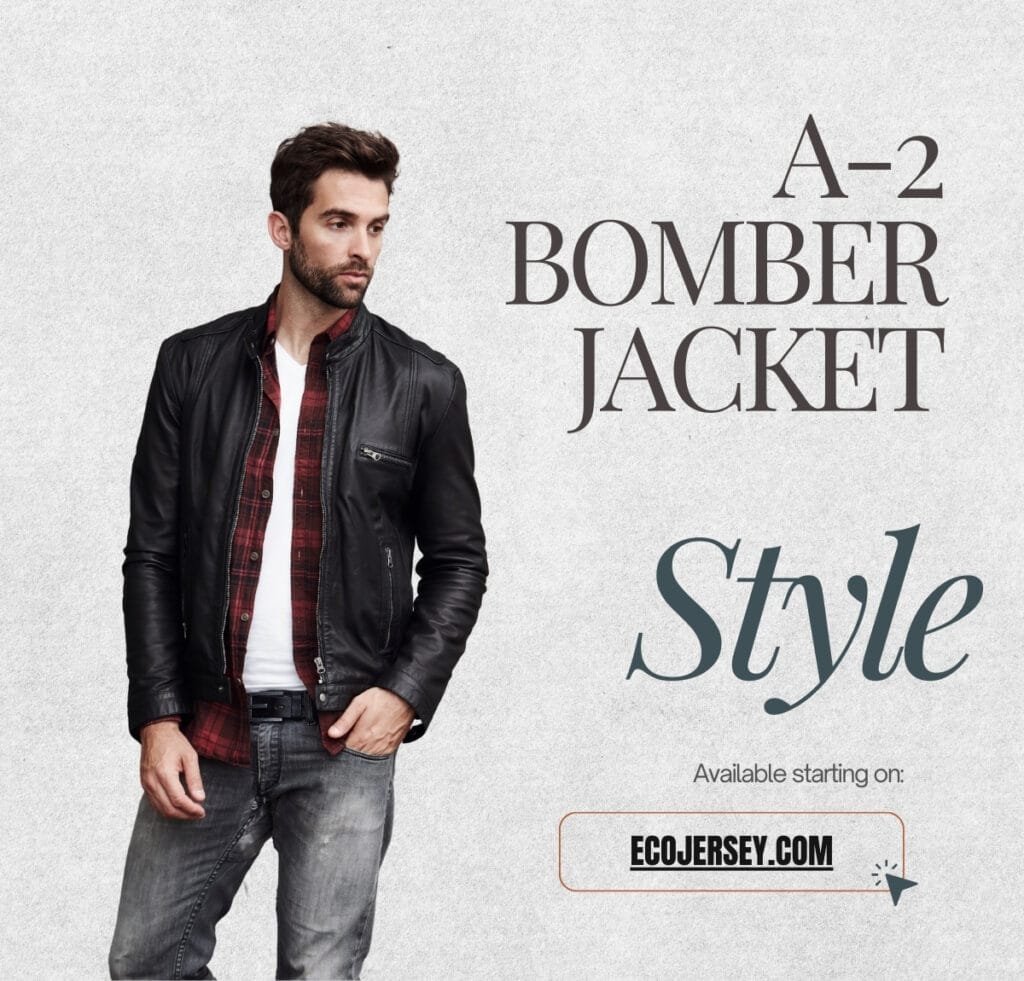
A-2 Bomber Jacket

A man wearing a black leather bomber jacket over a red plaid shirt and white tee, standing against a light gray textured background.
G-1 Bomber Jacket: Style that lasts. Available now at EcoJersey.com.

Witnessing a classic, from the 1930s and manufactured from over horsehide and goatskin, this design has graced the cover of the most highly revered bomber jackets and has made a mark on the history of bomber jackets – the A-2 Bomber Jacket. With its unique collar, cuffs and pockets, it carved out a very unique and practical silhouette. Its homage, worn and made iconic by, various actors of Hollywood, increases its rugged charm and craftsmanship. A-2, without a doubt still manages to be among the most in demand bomber jackets.

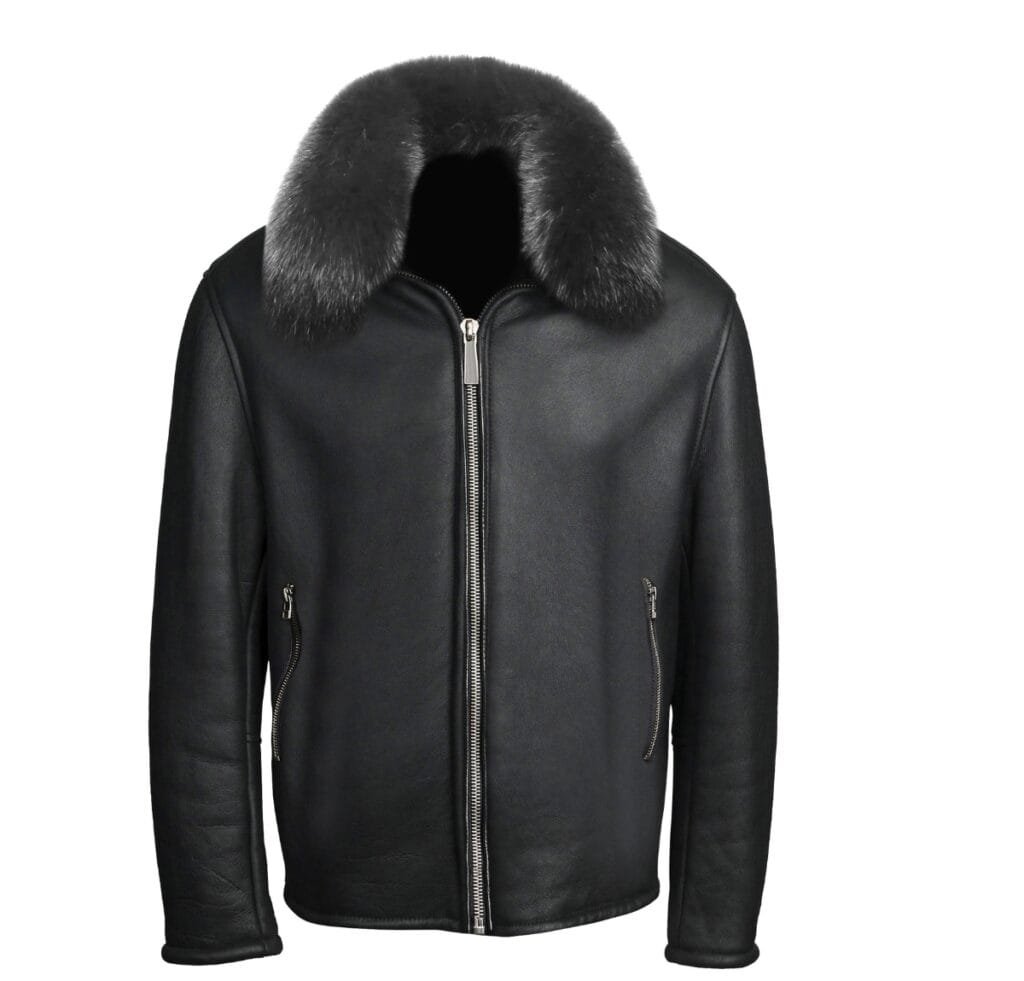
G-1 Bomber Jacket

A black leather bomber jacket with a thick, dark fur collar and a full front zipper, two zippered hand pockets, and ribbed cuffs.
G-1 Bomber Jacket with faux/fur-trimmed collar and front-zip closure.

As far as Types of Bomber Jackets goes, the G-1 oscillates between revered and most recognized. Its worn history by Tom Cruise in the famous Top Gun along with its actual functionality made it a must have for navy pilots and a fashion staple for the masses. Its blend of fitted leather with a bold traditional fur collar, as well as the ribbed waistband, allowed it to flourish in the two very opposite fields of utilitarian design as well as statement fashion. The G-1 bomber has stood the test of time, still preserving its symbol of masculine confidence, showcasing the smooth transition that various bomber jackets have made from the military to the stars.

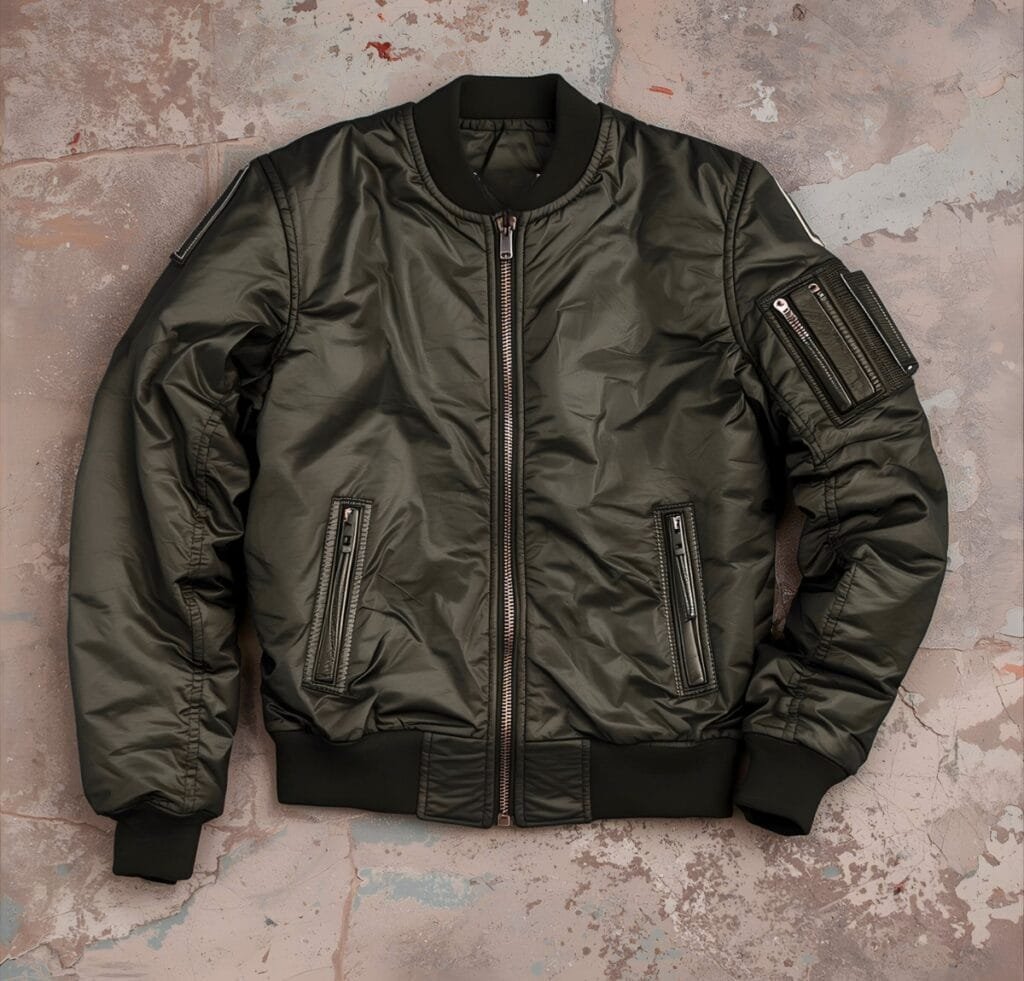
B-3 Bomber Jacket

“Black B-3 bomber jacket with front zipper, ribbed cuffs and hem, multiple zippered pockets, and a rugged matte finish.”
“Classic black B-3 bomber jacket featuring a front zipper, military-inspired pockets, and reinforced cuffs.”

The B-3 is a Bomber Jacket that is designed for extreme cold. The B-3 is designed for pilots as a part of their uniforms because they fly at very cold altitudes. The jacket is warm due to the shear fluffy polar bear skin fur lining coupled with the tough leather outside which makes the jacket at that time one of the warmest jacket made. Many people have a strong opinion that the B-3 Bomber Jacket B3 is heavy but they still consider it a part of fashion. They believe that the B3 Bomber Jacket Bomber Jacket B-3.

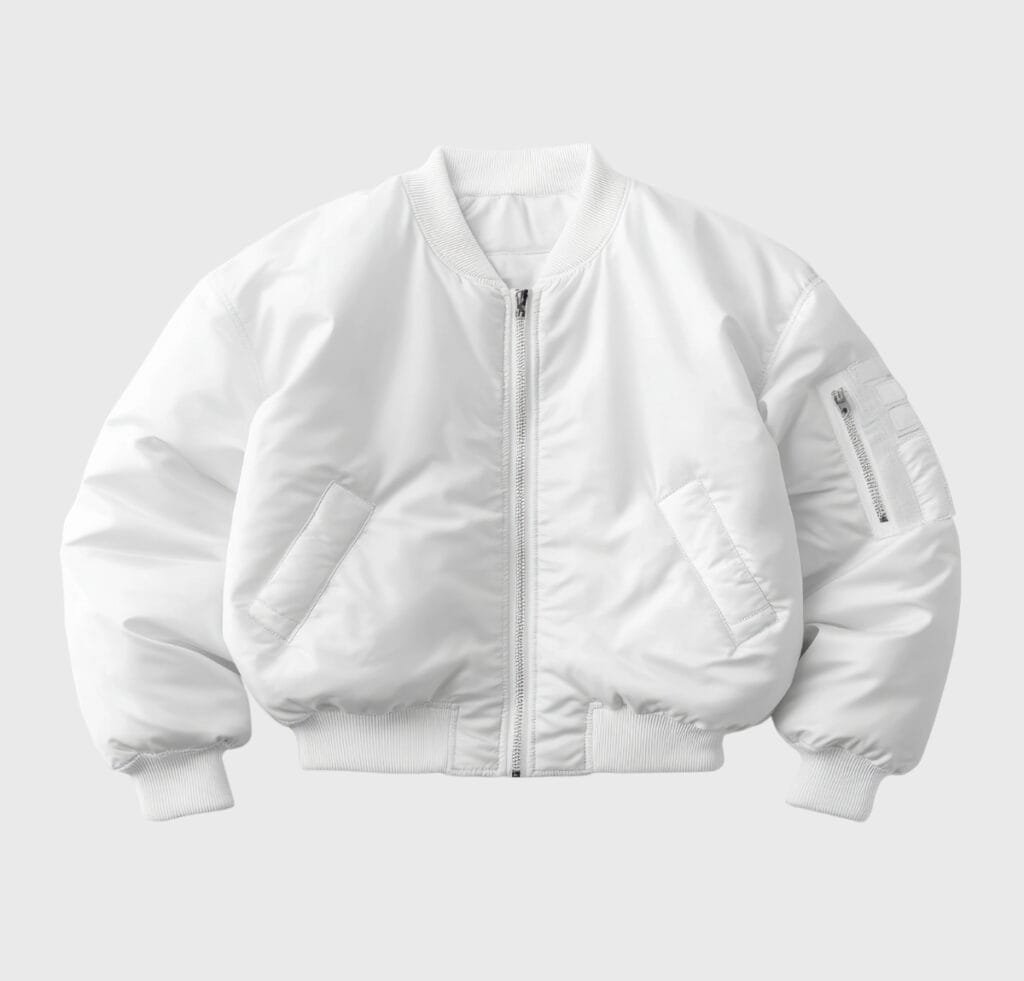
B-15 Bomber Jacket

“White B-15 bomber jacket with front zipper, ribbed cuffs and hem, two angled front pockets, and a zippered sleeve pocket.”
“Classic white B-15 bomber jacket featuring a zip front, ribbed collar and cuffs, and practical pocket details.”

The B-15 Bomber Jacket is an important part when it comes down to the line of Types of Bomber Jackets. The B-15 came before the MA-1. Designers created it with a sturdy nylon covering for the jacket’s body and mouton fur on the collar. Over time, they replaced the fur collar with knitted collars because these proved more practical. With the many Types of Bomber Jackets, the old look of the B-15 still makes it a valuable item for lots of people. It is proof of how designed undergo many changes which often act as a basis of new.

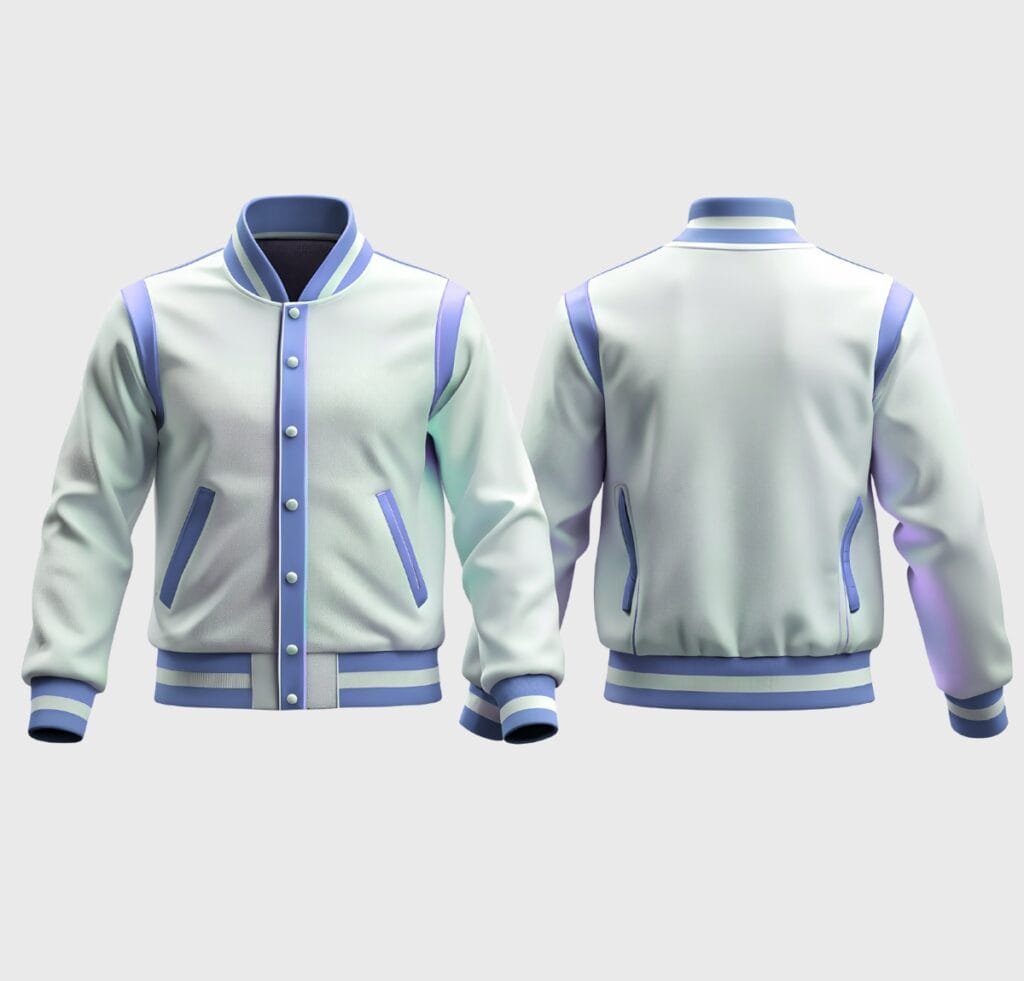
Varsity Bomber Jacket

A front and back view of a light-colored varsity bomber jacket with lavender and blue trim, worn by a model. The jacket features a snap-front closure, striped ribbed cuffs and hem, and angled side pockets.
Varsity bomber jacket in soft pastels with lavender accents and striped cuffs.

One of the most distinctive types of bomber jackets is the varsity. Unlike its military counterparts, the varsity jacket originates from American high school and college sports. It has a wool body, leather sleeves, and is adorned with school patches. Gradually, the jacket became an off-the-field fashion favorite. With a youthful disposition and a tinge of nostalgia, the varsity jacket is a shining testament to the different types of bomber jackets and the culture and identity they carry.

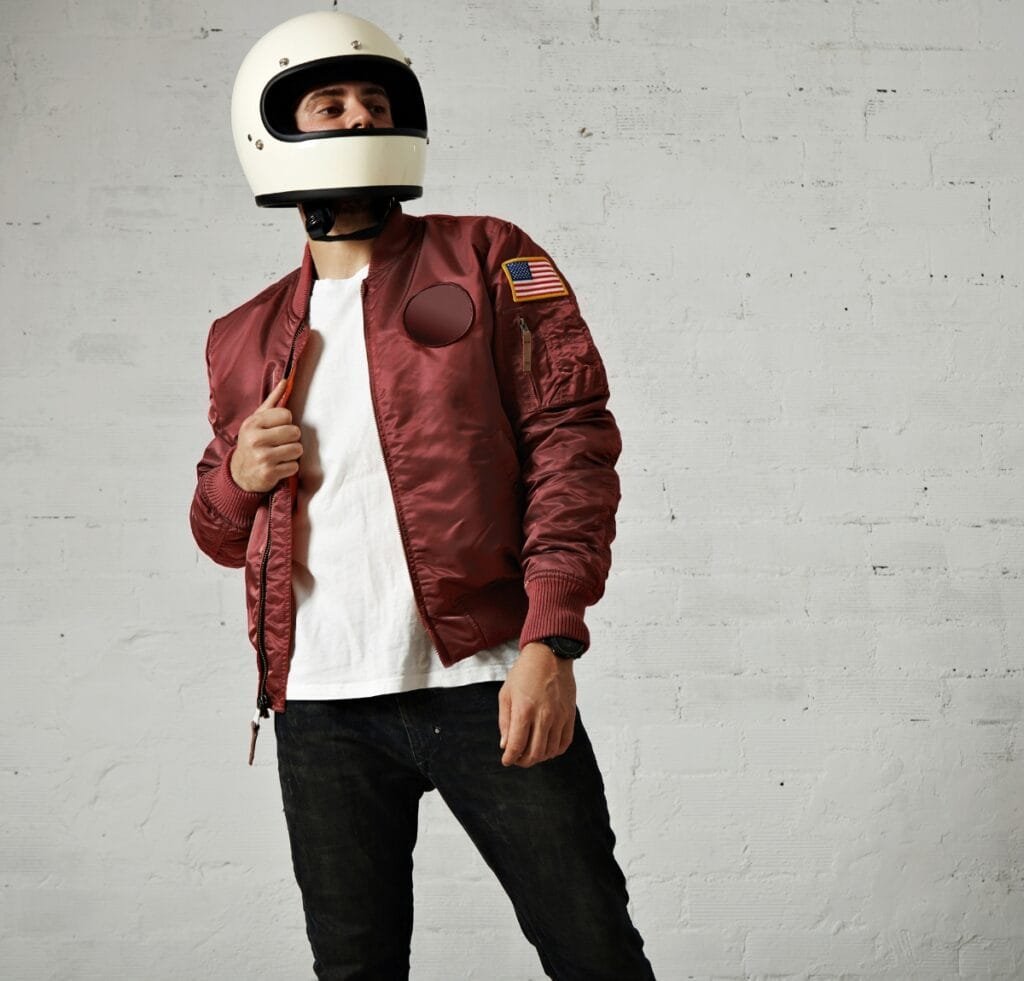
Flight Bomber Jacket

A person wearing a white helmet and a maroon flight bomber jacket, standing against a light gray brick wall. The jacket has an American flag patch on the sleeve, a circular patch on the chest, and a zipper pocket on the sleeve. The person is pulling the jacket slightly open over a white T‑shirt, wearing black jeans and a wristwatch. Types of Bomber Jackets
Urban flight bomber: maroon bomber jacket with patches and a helmeted look.

At the intersection of bold and casual lies the flight jacket, the most quintessential type of bomber jacket with military inspiration. It was designed, first and foremost, to keep a pilot warm and comfortable in a cockpit, so practicality and durability were emphasized. Its simplistic and striking form made it a great casual piece, and from then on it has influenced innumerable modern variations. Many types of bomber jackets retain some connection to the history of aviation, and the flight jacket’s presence is a testament to this, even when worn on the streets.

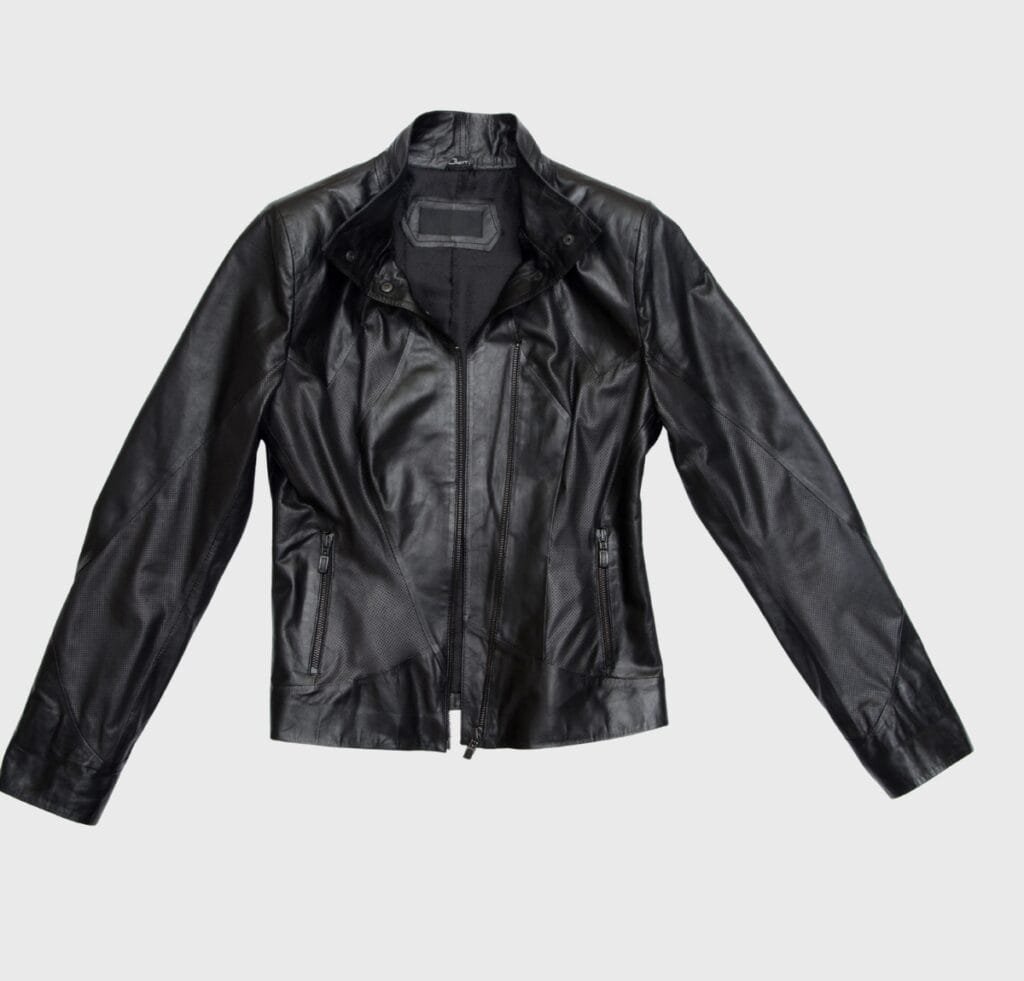
Leather Bomber Jacket

A black leather bomber jacket with a front zip closure, zippered pockets, and ribbed cuffs and hem. Types of Bomber Jackets
Classic Leather Bomber Jacket: sleek black, rugged yet refined.

Of all Types of Bomber Jackets, the leather one is the most timeless. Instantly, a leather bomber jacket conjures an edgy appeal to any outfit. Worn with denim jeans as much as tailored trousers, it all the same makes a bold statement. There’s a touch of sophistication with smooth leather while distressed leather brings in a vintage feel. The leather bomber is one of the most essential Types of Bomber Jackets for men and women alike due to such versatility.

Suede Bomber Jacket

“A man with short dark hair and a beard wearing a light brown suede bomber jacket over a beige shirt, standing against a beige background and looking off to his left.”
“Casual yet stylish: a suede bomber jacket pairs perfectly with a neutral tee for a modern, effortless look.”

Suede is yet another alternative in the Types of Bomber Jackets. With its soft matte finish, it is much more refined than leather. Earthy shades such as brown, tan, or olive make these jackets suitable for semi-formal or evening wear. Rather than being flashy, suede is more low-key while still refined. It is for this reason the suede bombers jacket are sought after by wearers of elegant, yet not over the top, Types of Bomber Jackets.

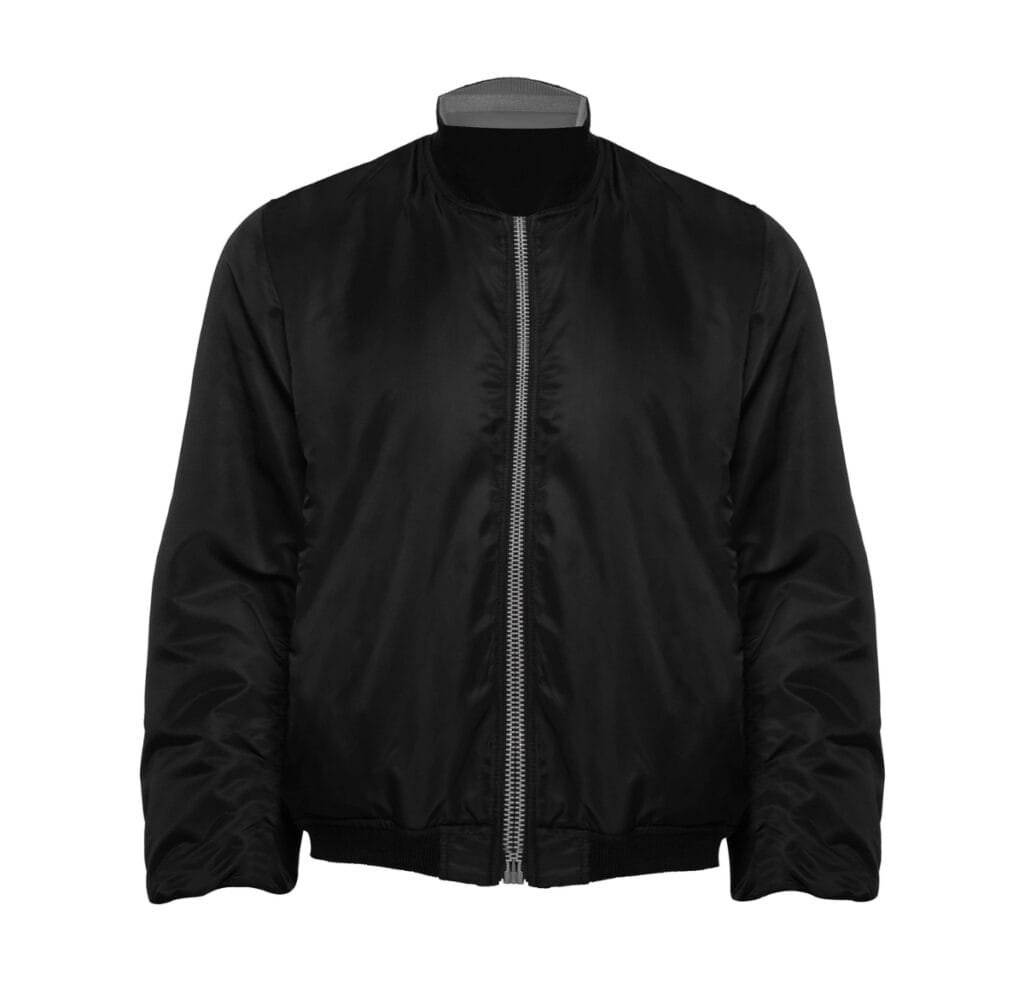
Bomber Jacket in Nylon

A black nylon bomber jacket with a silver front zipper, ribbed cuffs and waistband, and a minimalist collar.
Classic Nylon Bomber Jacket: sleek black, lightweight, and versatile.

For your every day use, the nylon bomber jacket is one of most bombers easiest to wear. A bonus is light weight, ease of use, and being able to wear it undercover. Streetwear culture widely adopts nylon bombers because they blend comfort with style. Their almost infinite colour palette, such as neutral to bright colour ranges, will accommodate any outfit. If you’re unsure, you can’t go of with any bomber done in nylon, as there most likely will be a suitable one available.

Jacket in Satin

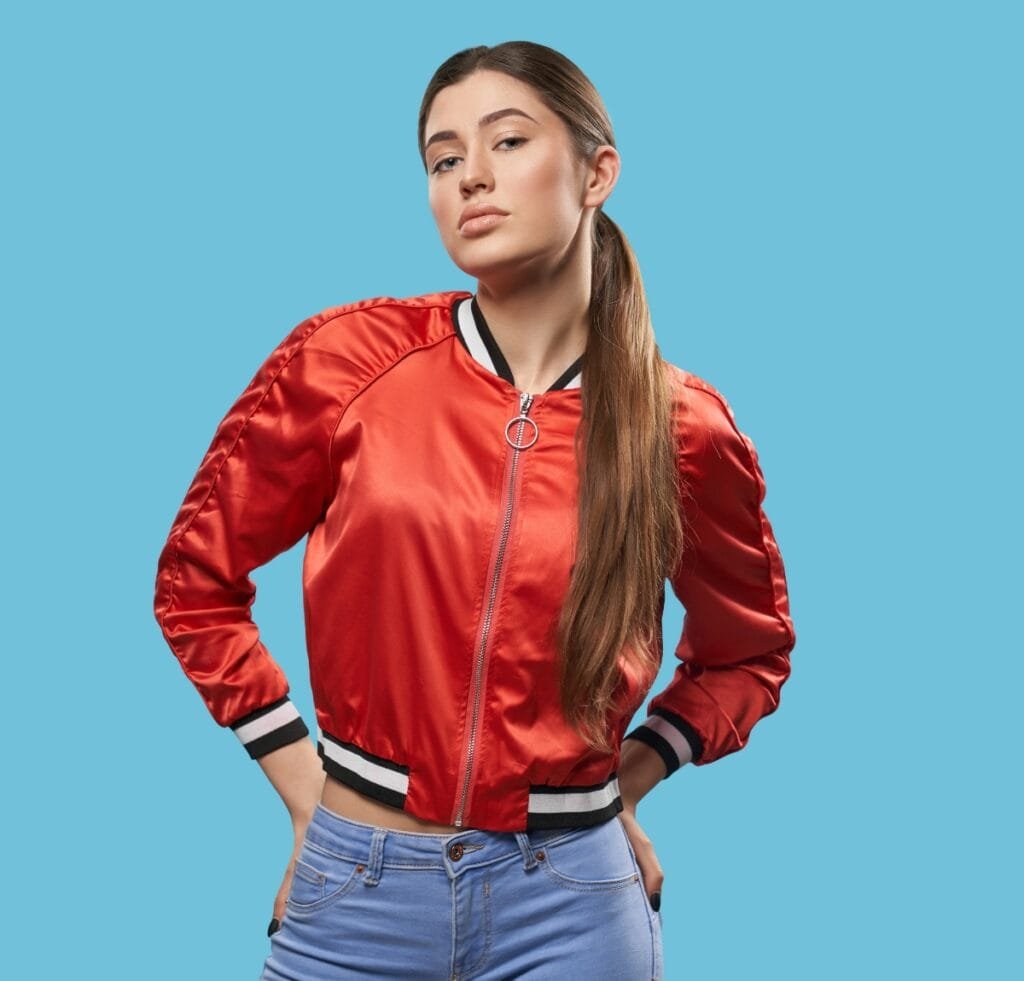
"A young woman wearing a shiny red satin bomber jacket with black and white striped cuffs and hem, standing against a solid blue background. She has long brown hair tied in a low ponytail and poses with hands in her pockets."
“Shine on: Satin bomber jacket in vibrant red with sporty black-and-white trim.”

Satin of bombers is for those who wish to. Its reflective quality and smooth texture make it one of the most eye-catching types. People associate it with elegance. As a result, fashion lovers choose satin bombers as statement pieces for nightlife and streetwear. Designers often embellish satin bombers jacket with patterns and embroidery, so they need no extra elements to stand out. Many social media influencers don satin bombers when the goal is to be easily noticeable and distinct in the street. For the latter reason, satin bombers are a classic and fundamental piece in every collection of bombers.

Quilted Bomber Jacket

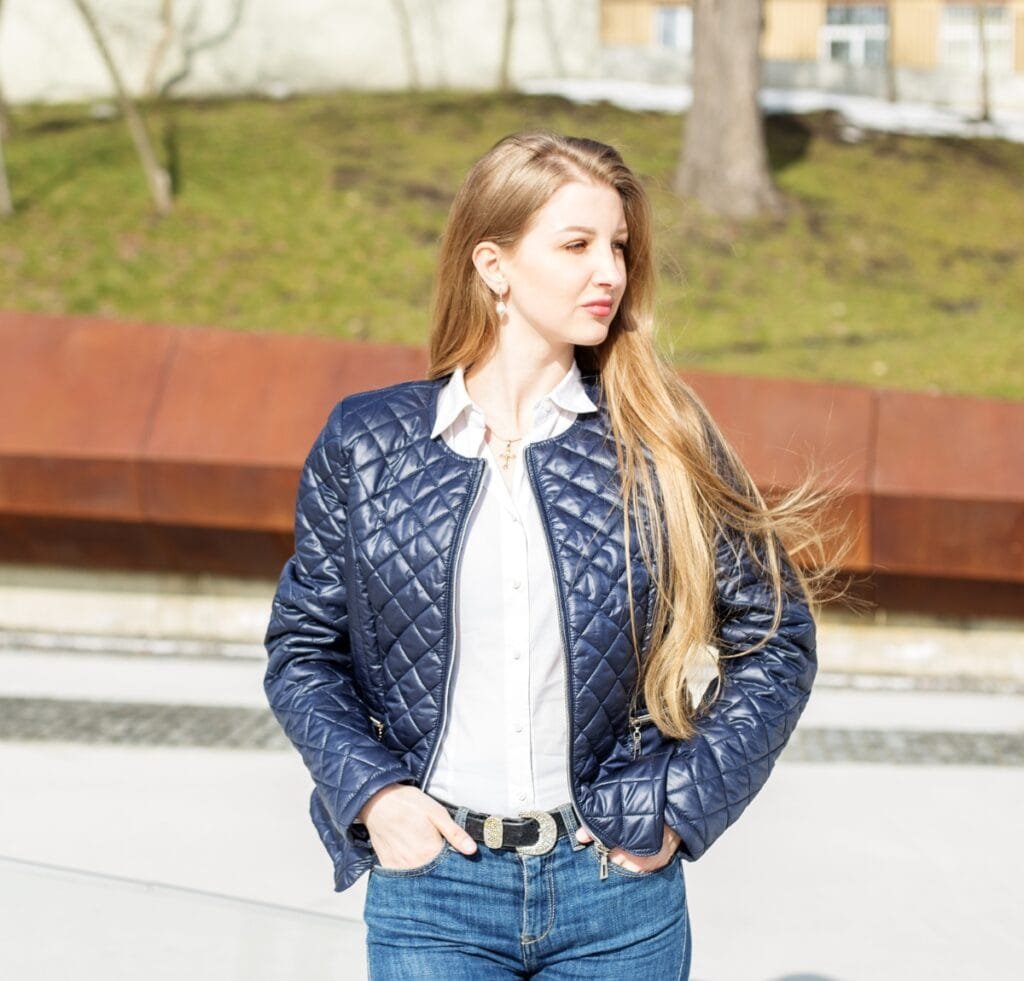
A stylish woman wearing a navy blue quilted bomber jacket over a white button-up shirt, standing outdoors with hands in pockets and long blonde hair blowing slightly in the breeze. Types of Bomber Jackets
“Effortless chic in a navy quilted bomber: casual, polished, and ready for spring.”

With stitched patterns filled with light padding, they provide warmth and remain lightweight and easy to wear. Stitching filled with light padding keeps the wearer warm without the bulk. In the outerwear industry, fashion designers compete to showcase arm or shoulder length quilted bomber jacket every season with new colors, patterns, and fabrics. For this reason, they work well for transitional weather where layering is essential. The added stunning dimension the bomber lends to the quilted outfits helps make it realistic one of the most practical necessities of the outerwear industry.

Camo Bomber Jacket

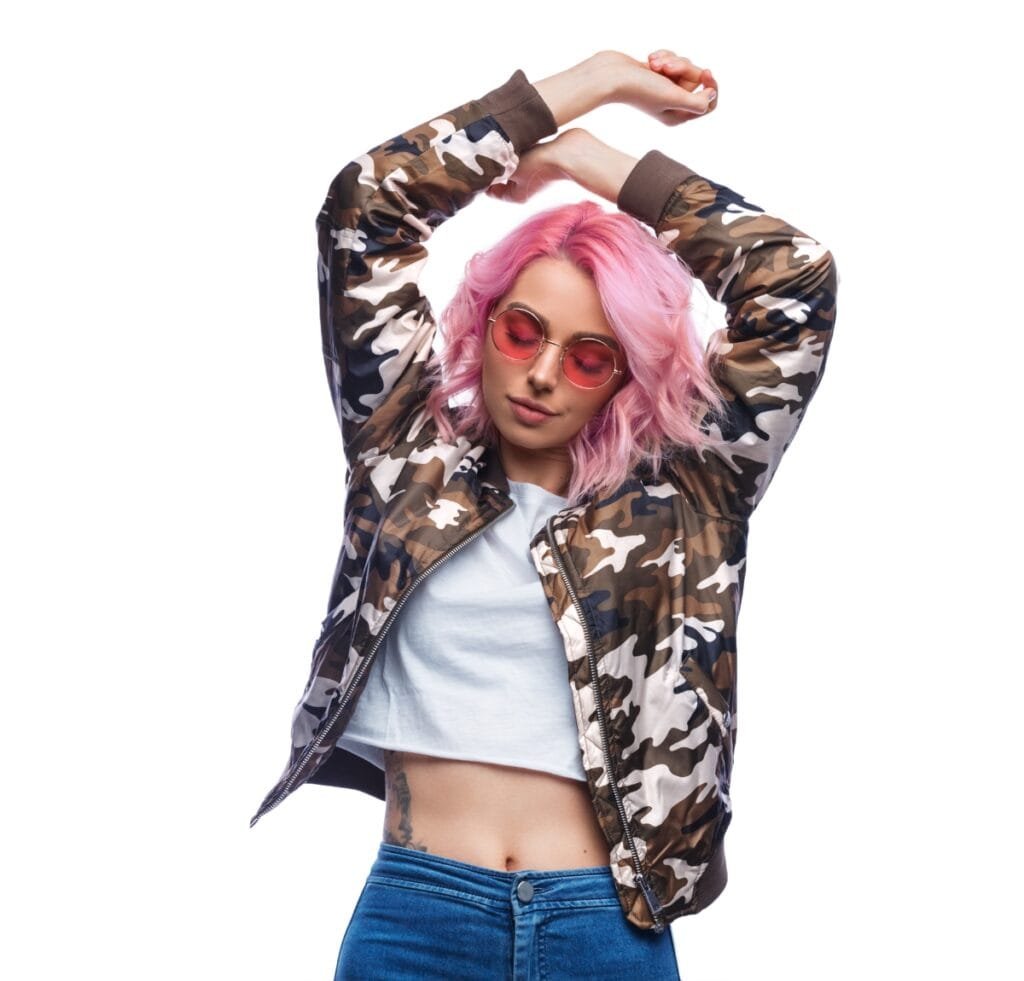
"Person wearing a camouflage bomber jacket with brown, tan, and white patterns, white cropped top, and blue jeans. The individual has pink hair and pink-tinted sunglasses, posed with arms raised over the head against a plain white background."
“Bold in camo: a camo bomber jacket styled with a cropped tee and pink-tinted shades, dead-set on streetwear vibes.”

A Camo Bomber is a Type of Bomber Jacket that brings military bombers more streetwear and bombers seem to become ever leaner in type. The striking and ostentatious approach is realized mostly with the camo print and this helps maintain the military functionality of the piece. Comfortable pants, joggers, or even some bold and striking boots would match and the street-savvy and street-smart balance with the elongated Camo designers have. The Camo Bomber is one type most people would pay to wear since it captures the shift from military or soldier uniforms to fashion and speaks for the world Camo Terms have become. Many of these types, and much of the utility they

display, further speaks for and reiterate the appeal of the bold and modern.

Denim Bomber Jacket

A woman wearing a light-wash denim bomber jacket over a white shirt, standing against a gray brick wall outdoors.
Casual cool: Denim bomber vibes with a relaxed smile.

Denim bomber jacket combine two classics to create one of the most popular Types of Bomber Jackets. The solid material provides strength, while the bomber shape provides lightness. Light denim gives off informalness, while dark washes create structure. Light denim gives off an informal style, while darker washes create structure. These jackets transition seamlessly throughout the seasons. The ageless material guarantees denim bombers will always remain stylish within the many Types of Bomber Jackets.

Shearling Bomber Jacket

A stylish young woman walks down a cobblestone street wearing a tan shearling bomber jacket over a blue denim jumpsuit. She adjusts the jacket’s collar with both hands and wears small rectangular sunglasses. The background shows parked cars and a blurred urban sidewalk.
Effortless chic in a tan shearling bomber jacket on a city stroll.

On the warmer side, the shearling-lined version is undoubtedly one of the coziest Types of Bomber Jackets. The fleece lining optimally insulates the body, making it perfect for harsh winters. This style is often paired with leather or suede, adding an edge while remaining soft. Plenty of high-end designers create shearling bombers as pieces of expression. The combination of heat and style has ensured shearling bomber jacket maintain popularity within premium Types of Bomber Jackets.

Slim-Fit Bomber Jacket

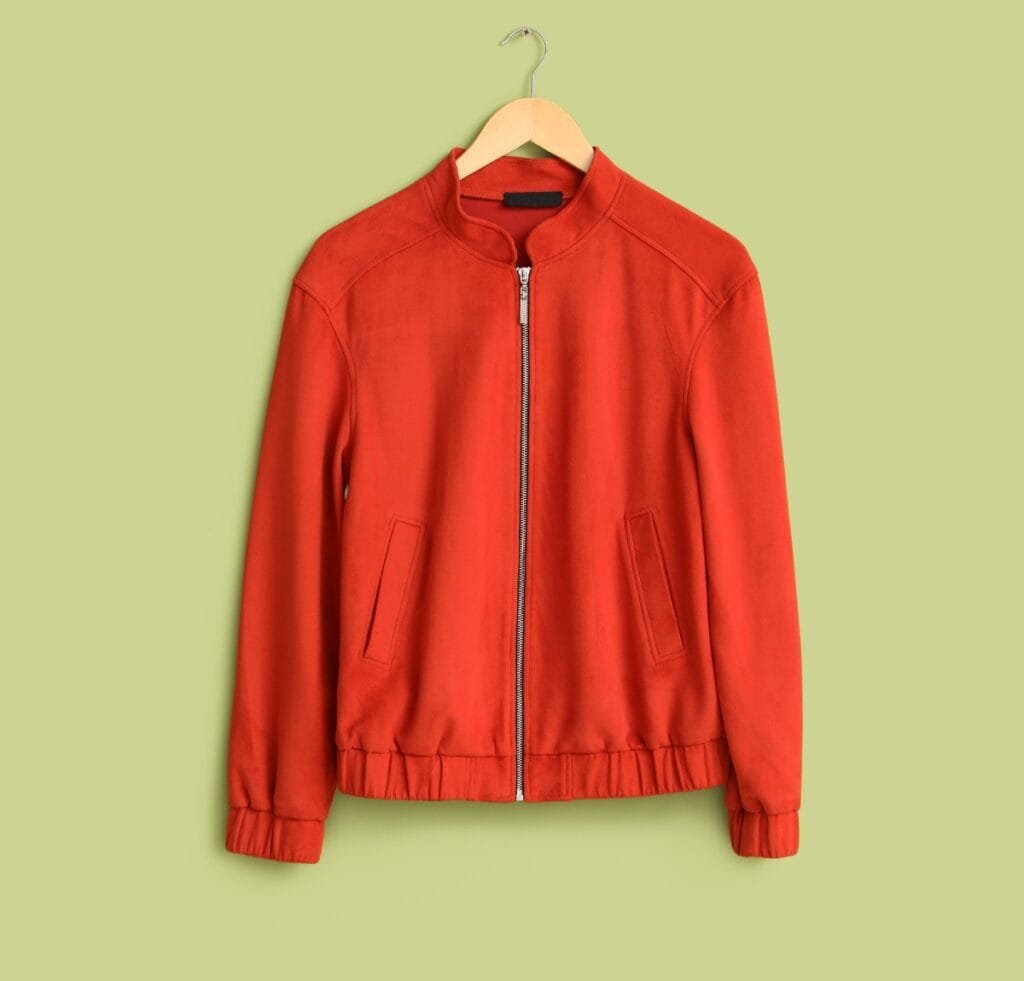
"Red slim-fit bomber jacket hanging on a wooden hanger against a pale olive-green background, full-front view with zipper closure and two side pockets.
“Sleek Red Slim-Fit Bomber Jacket with zip closure and classic pockets.” Types of Bomber Jackets

In the Slim-Fit style, bombers showcase contemporary tailoring, one of the newest additions to the long list of Types of Bomber Jackets. They hug the body closely, creating an overall sleek appearance. This style looks great with urban attire, especially when worn with snug trousers. The slim-fit bomber softens the traditional shape, making it sharper and more polished. As fashion makes a turn towards tailored looks, slim-fit bombers are the perfect example of how Types of Bomber Jackets can change.

Oversized Bomber Jacket

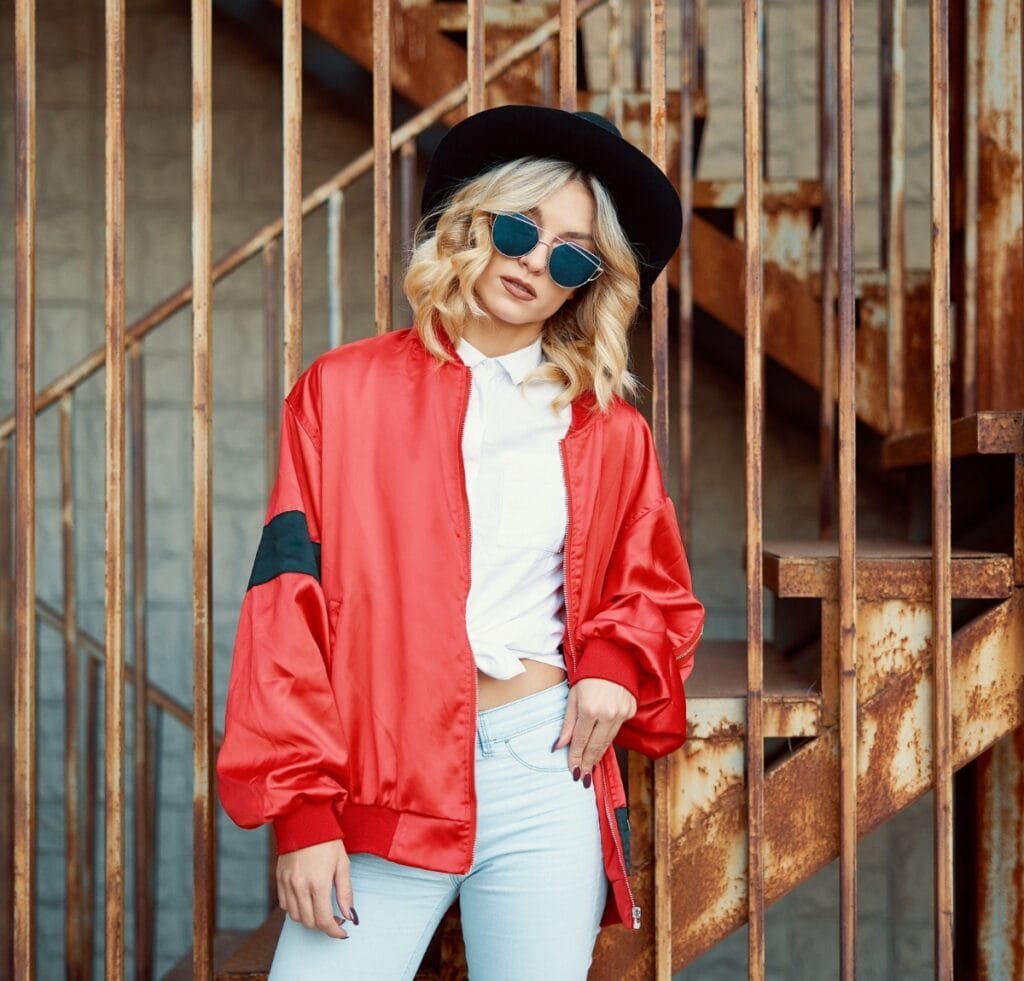
A stylish young woman wearing an oversized red bomber jacket with a black cuff patch, light-washed jeans, a white button-up shirt tied at the waist, a black wide-brim hat, and blue-tinted sunglasses. She stands beside rusted metal railings and stairs in an urban setting. Types of Bomber Jackets
Bold red bomber vibes: an oversized jacket, white tee, and cool accessories.

When it comes to the Types of Bomber Jackets, the oversized bomber must be among the boldest of statements. The silhouette of the oversized bomber is loose fitting. It adds warmth and still allows layering underneath. This jacket is often linked to streetwear because of its relaxed and artistic design. Oversized bombers mainly appeal to the youthful market. Younger wearers are more open to bold and over-the-top fashion choices. This style and its associations clearly illustrate that people often seek oversized design and whimsicality. Many fashion lovers desire this jacket, showing that Types of Bomber Jackets can embody both tradition and artistry equally.

Reversible Bomber Jacket

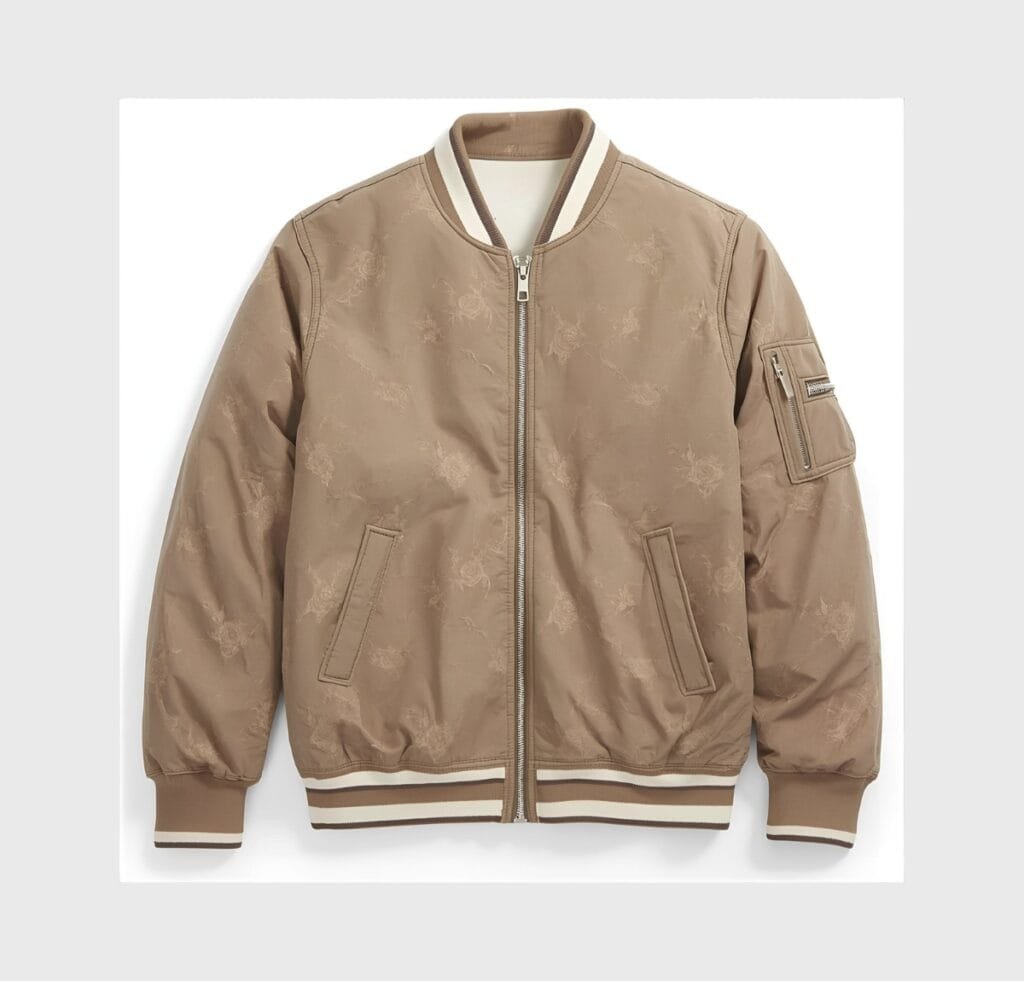
"Tan reversible bomber jacket with a zip front, striped ribbed cuffs and hem, and a zip pocket on the left sleeve. Subtle floral pattern throughout the fabric." Types of Bomber Jackets
“Reversible Bomber Jacket – stylish tan hue with contrast trim and practical zip pockets.”

This jacket is among the most unique in the Types of Bomber Jackets found on the market. It is dual in nature, and therefore is designed to have two looks. One of the two looks more reserved with it being monochrome, while the other dons a more lively and vibrant design. This is a favorite among travelers and style lovers because it instantly adds to their outfit options. The growing style of Types of Bomber Jackets is enriched with the addition of practicality, which is serve the wearer best, combined with the vibrant design.

Hooded Bomber Jacket

“Brown hooded bomber jacket with multiple front pockets, zippers, and a soft inner lining.” Types of Bomber Jackets
“Hooded bomber jacket in warm brown with multiple utility pockets and a plush inner lining.”

The addition of a hood on a bomber jacket is a great addition on the many styles and types of Types of Bomber Jackets. The hood used is a great addition to the bomber jacket as it adds protection from wind and rain. Hooded bombers are a perfect cross over piece for people who wish to combine a ‘street style’ with traditional bomber jackets. They illustrate the point that modern *Types of Bomber Jackets* are able to serve the wearer more and more functions with each new innovation.

Printed Bomber Jacket

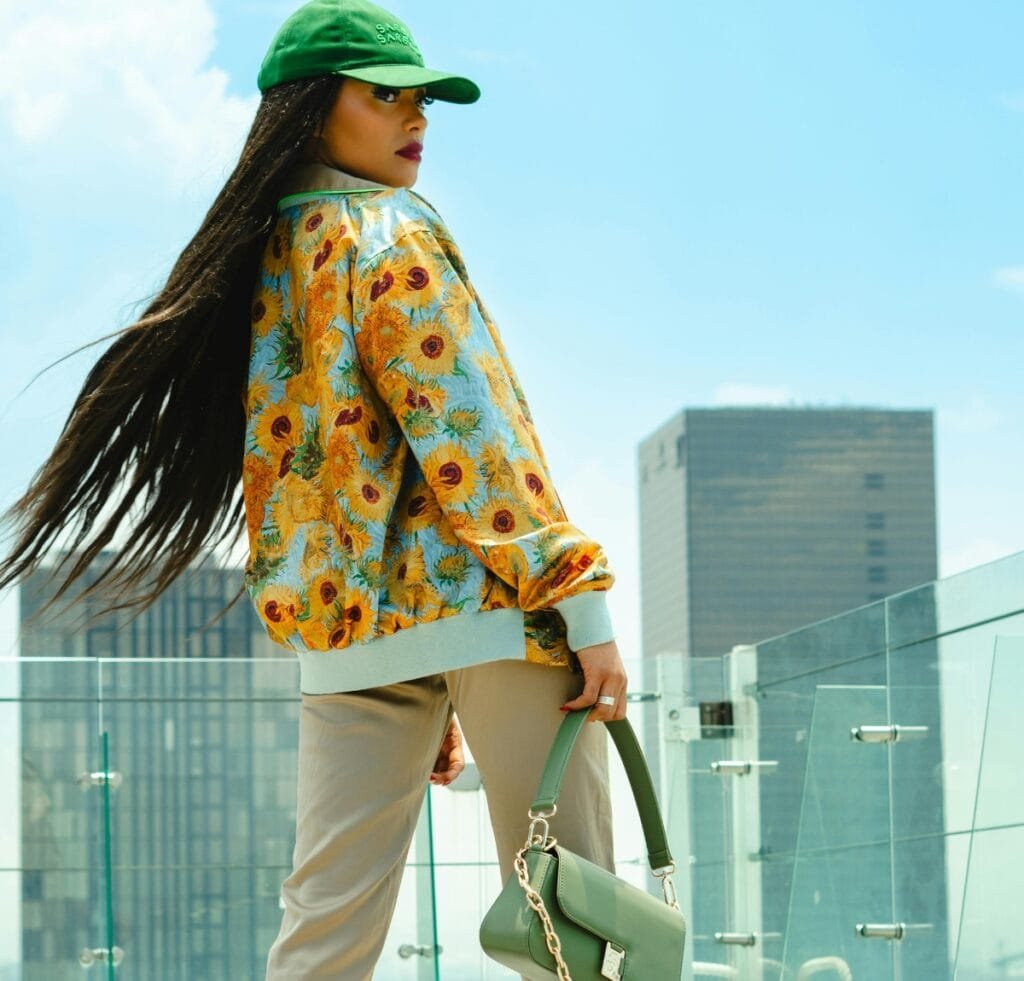
A stylish woman wearing a vibrant printed bomber jacket with sunflowers, beige pants, and a green cap standing on a rooftop with glass railings and a city skyline in the background. Types of Bomber Jackets
Floral sunshine on the go: a sunflower-print bomber jacket that steals the show.

Artistic and audacious, printed bombers hold a unique place within the types of bomber jackets. They feature bold floral, graphic, and abstract patterns. These jackets break tradition while still letting wearers show their personality. Fashion lovers admire printed bombers for moving away from conventional styles. They highlight creativity and prove how imaginative the fashion world can be.

Styling Bomber Jackets Today

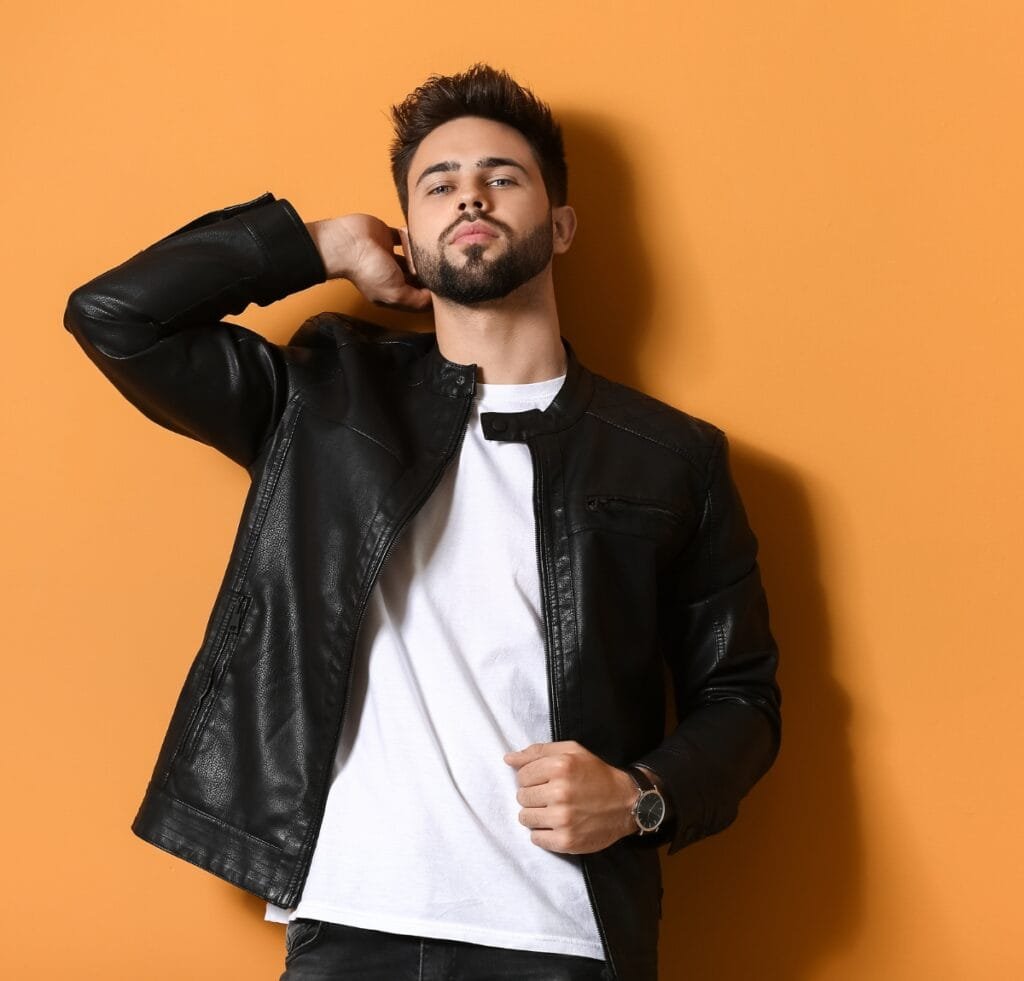
A stylish man with a trimmed beard and short dark hair posing against an orange background. He wears a black leather bomber jacket over a white T-shirt, one hand touching the back of his neck and the other resting on his jacket, with a silver wristwatch visible on his left wrist. Types of Bomber Jackets
Styling Bomber Jackets Today: sleek black leather, minimalist whites, and bold color backgrounds.

The various types of bombers jackets make styling a seamless process. Wear leather bombers for an evening look, and choose nylon to complement casual outfits. Create energetic, bold looks with satin or printed bombers. Pick quilted and shearling types when you want to stay cozy during winter months. With such an array of options, these different types of bomber jackets are perfect for any season, occasion and lifestyle.

Conclusion

Ultimately, the types of bomber jackets to choose from is a question of personal character and daily activity. A leather bomber suggests a certain degree of toughness, while satin indicates boldness. A slim-fit bomber jacket provides a polished modern appearance, while an oversized jacket creates a bold statement or “outfit of the day” worth bragging about to friends. Every type of bomber jacket has its charms. By analyzing the history, function, and style of the types, one is able to wear the bomber jacket of their choice. The multiple types of bomber jackets available means that everyone is bound to find something.
Read more Article// Top Bomber Jacket Styles Blending Comfort, Edge, and Elegance

FAQs

What are the most popular types of bomber jackets?

The most popular types of bomber jackets include the MA-1, A-2, G-1, B-3, B-15, leather, suede, nylon, satin, quilted, camouflage, denim, and varsity bomber jackets.

Which bomber jacket is best for winter?

The B-3 shearling bomber jacket is best for winter because of its thick lining and insulation. Quilted and leather bomber jackets are also good for colder weather.

Are bomber jackets still in style in 2025?

Yes, bomber jackets are still in style in 2025. Modern fashion offers many variations, from classic MA-1 bombers to satin and denim styles, making them timeless wardrobe staples.

What is the difference between MA-1 and A-2 bomber jackets?

The MA-1 bomber jacket is lightweight with a sleek design, often made from nylon. The A-2 bomber jacket is a heavier leather version, originally made for pilots in World War II.

Denim Jacket: History, Types, Making, and Global Impact

The denim jacket is more than just a fashion item. It is a cultural icon that has stood the test of time. From workers in the 19th century to today’s style influencers, this jacket has traveled across generations. Its durability, versatility, and timeless appeal make it a wardrobe essential.


History of Denim Jackets

A man with long blond hair and a denim jacket leans against a white post on a sunny day at a sports field, smiling at the camera.
“Caught in a sunny moment at the field: a man with long wavy hair wearing a denim jacket and gray hoodie smiles warmly beside a white post.

The denim jacket has a rich history. Indeed, it was first created in the late 19th century by Levi Strauss, the founder of Levi’s. Originally designed as durable workwear for miners and cowboys, the jacket quickly became popular among American workers. Consequently, by the mid-20th century, it turned into a symbol of rebellion, often worn by rock stars and youth movements.

During the 1980s and 1990s, denim jackets became a fashion staple worldwide. They were often decorated with patches, pins, and embroidery. Today, they remain a versatile piece that connects workwear, casual wear, and high fashion.

What Is a Denim Jacket?

A young woman with short braided hair wears a blue denim jacket over a light blue striped shirt, posing against a plain light background.
Effortless cool: a model pairs a classic denim jacket with a striped shirt for a timeless, casual look.

A denim jacket is a type of outerwear made from denim fabric, a sturdy cotton twill textile that is most often dyed with indigo. It is also known as a jean jacket or trucker jacket in different parts of the world. Traditionally, denim jackets are waist-length, with a button-up front, pointed collars, breast pockets, and side pockets. Over time, modern versions have evolved with zippers, oversized fits, and unique washes, but the classic style remains iconic.


Where Can We Use Denim Jackets?

Denim jackets are known for their adaptability. You can wear them in multiple settings:

  • Casual Wear: Perfect for everyday style with jeans, chinos, or dresses.
  • Layering: Works well over T-shirts, hoodies, or sweaters.
  • Travel & Outdoor: Durable enough for road trips, festivals, and camping.
  • Workwear: Still used in some industries because of its strong fabric.
  • Fashion Statements: Designers often style denim jackets for runway looks.

This jacket is both functional and stylish; therefore, it never goes out of trend.


Making Process of Denim Jackets

The making process involves several steps:

  1. Fabric Selection: Cotton yarn is woven in a twill pattern to create denim fabric.
  2. Dyeing: Indigo dye is used to give denim its signature blue color.
  3. Cutting: Fabrics are cut into panels according to the jacket design.
  4. Stitching: Strong threads are used to sew the jacket with double or triple seams.
  5. Washing & Finishing: Jackets may be stone-washed, sandblasted, or distressed for a unique look.
  6. Quality Check: Each piece is inspected before shipping to markets.

In fact, a lot of craftsmanship goes into making each denim jacket durable and fashionable.


Biggest Producers of Denim Jackets

Several countries dominate denim production:

  • China: The largest producer of denim fabric and jackets.
  • India: A leading exporter with large-scale denim mills.
  • Bangladesh: Known for affordable denim manufacturing.
  • Turkey: Famous for premium quality denim exports.
  • Pakistan: A growing leader in sustainable denim production.

These nations supply denim jackets to top global fashion brands; additionally, they also produce other types of apparel.


Type of Denim JacketMain Uses
Classic Trucker JacketEveryday wear, casual outfits, smart-casual layering
Oversized Denim JacketStreetwear fashion, layering with hoodies, relaxed style
Cropped Denim JacketPairing with dresses, skirts, and high-waist pants
Fitted / Slim Denim JacketSmart-casual outfits, polished looks, light layering
Distressed Denim JacketEdgy street style, youth fashion, casual outings
Sherpa-Lined Denim JacketWinter wear, outdoor activities, cold-weather layering
Colored Denim JacketFashion statements, seasonal looks, versatile styling
Acid Wash Denim JacketRetro and bold looks, 80s-inspired fashion, streetwear
Patchwork Denim JacketBohemian outfits, artistic streetwear, unique styling
Embellished / Customized Denim JacketPersonal expression, concerts, youth subculture fashion
Longline Denim JacketUrban wear, layering for modern street style
Hooded Denim JacketCasual and sporty looks, all-season layering
Double Denim JacketBold fashion statements, trendy street style
Vintage / Retro Denim JacketClassic looks, heritage styling, collectors’ fashion
Designer Denim JacketLuxury fashion, runway outfits, high-end styling

Types of Denim jacket

Denim jackets come in many styles, each offering a different look, fit, and vibe. While the classic trucker jacket remains timeless, fashion has expanded denim into various cuts, washes, and designs. Below are the most popular types of denim jackets in detail:


1. Classic Trucker Jacket

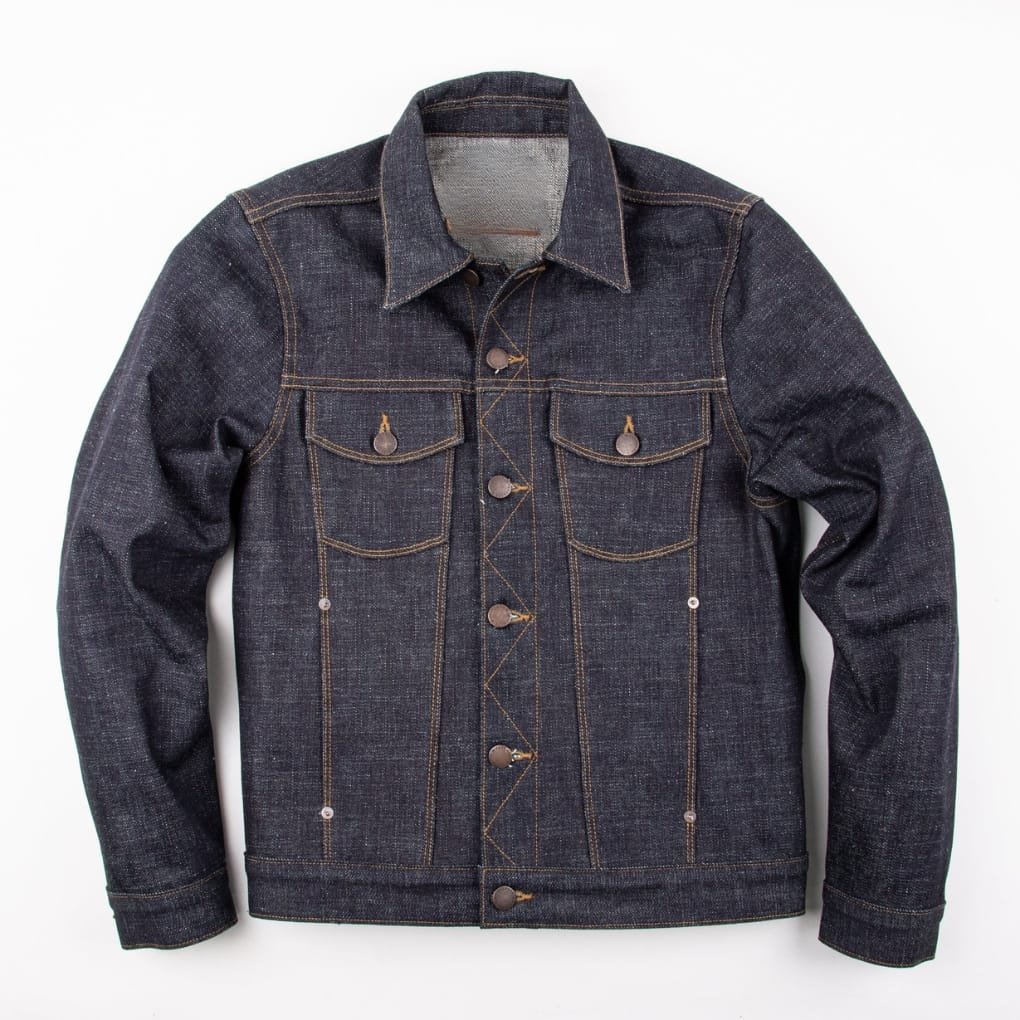
A dark indigo denim jacket with brown contrast stitching, button-front, and two chest pockets, laid flat against a white background.

The most iconic version, often called the Levi’s Type III jacket, designed in the 1960s. It is waist-length, slim-fitting, with button closures and chest flap pockets. This is the denim jacket that never goes out of style and works well for casual and smart-casual outfits.


2. Oversized Denim Jacket

A young woman wearing a light wash denim jacket over a pale pink cropped top and white high-waisted pants, standing with hands in pockets in front of a light curtain backdrop.

Oversized denim jackets have a relaxed fit, giving them a baggy, streetwear-inspired look. They are popular among younger generations and often styled with hoodies, joggers, or cargo pants. This style is both trendy and comfortable.


3. Cropped Denim Jacket

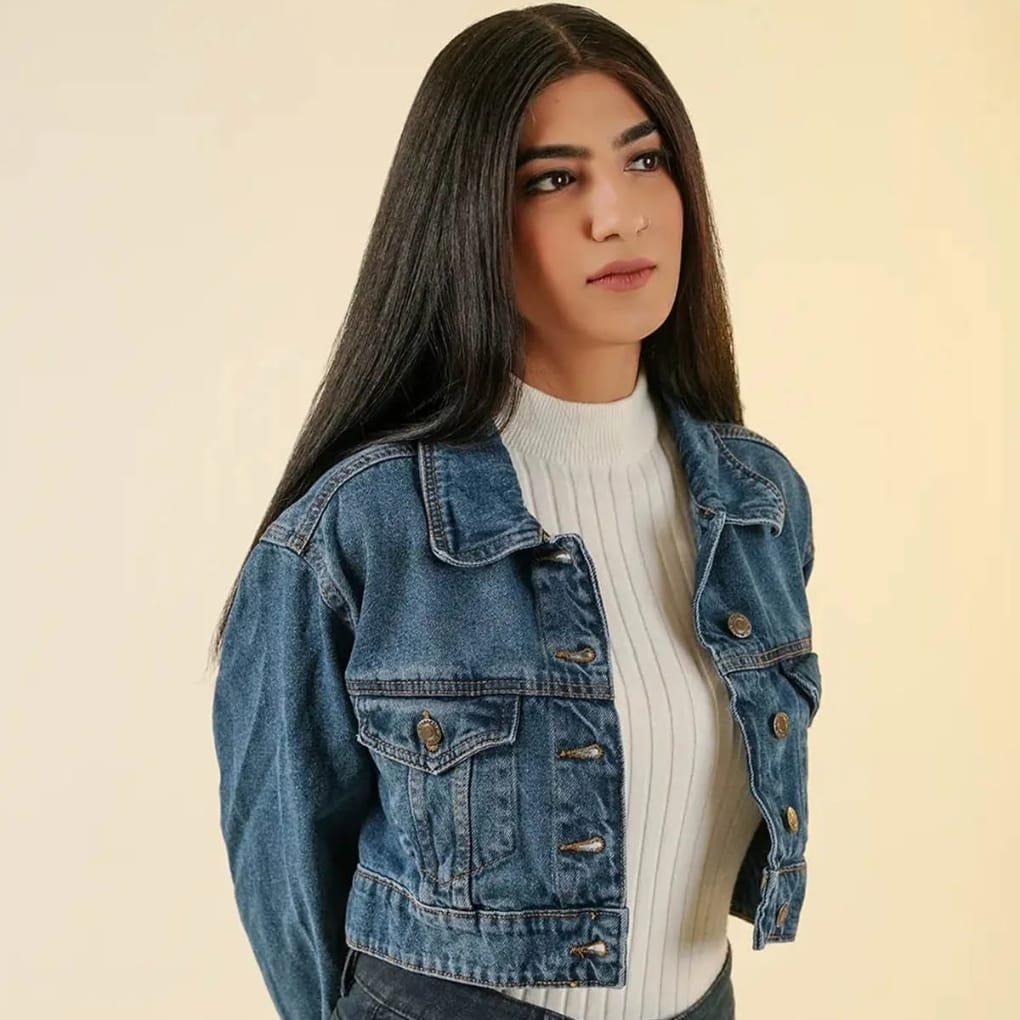
A young woman with long dark hair wearing a light-colored ribbed turtleneck under a blue denim jacket, standing against a pale yellow background.

Cropped versions cut above the waist, often ending at the midriff. They are especially popular in women’s fashion. Cropped denim jackets add a stylish edge to dresses, skirts, and high-waist pants.


4. Fitted / Slim Denim Jacket

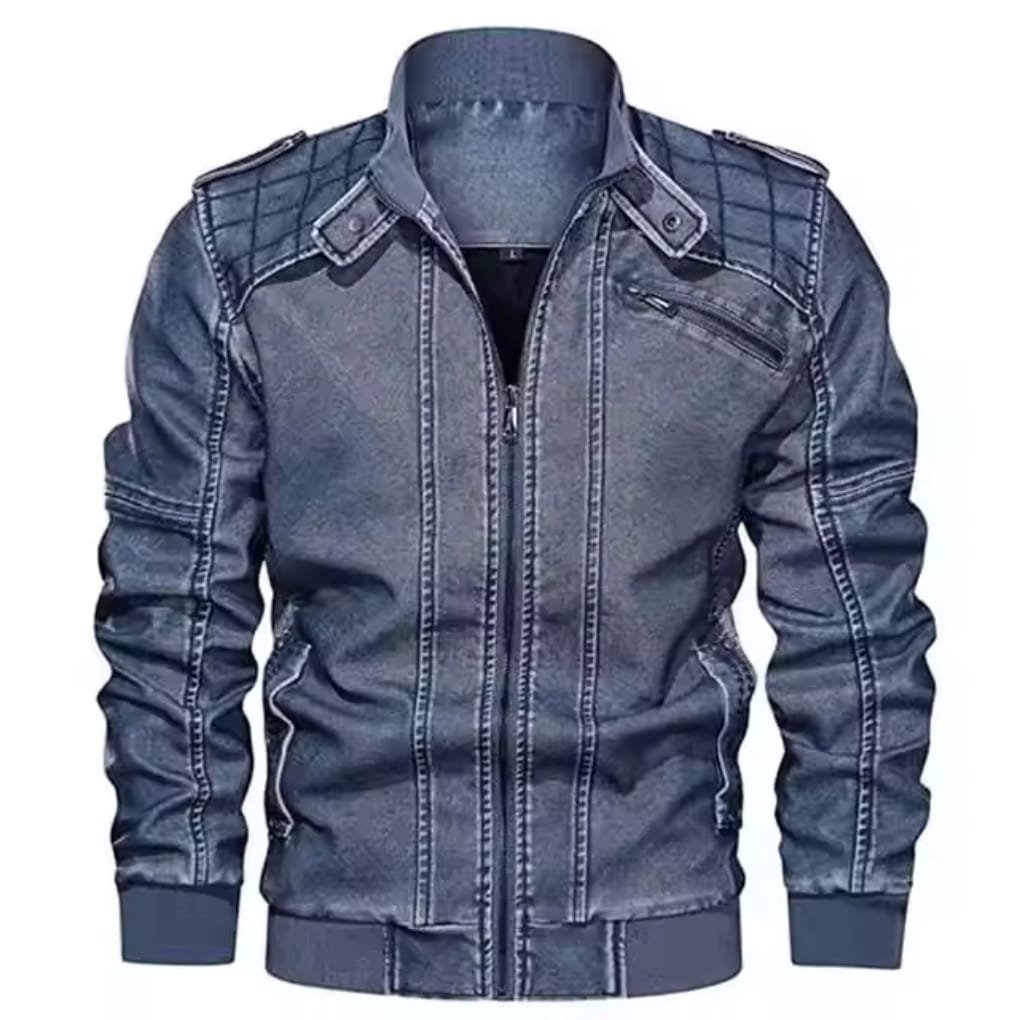
A blue denim bomber jacket with contrast stitching, ribbed cuffs and hem, zip front, and multiple pockets, displayed on a plain white background.

A slim-fit denim jacket hugs the body more closely, giving a modern, polished look. It is suitable for layering over T-shirts or shirts and works in semi-formal, smart-casual outfits.


5. Distressed Denim Jacket

A young woman wearing a cropped black denim jacket over a white top, paired with blue distressed jeans and a black bucket hat, standing against a light background.

Distressed jackets have ripped, frayed, or faded details, making them look rugged and edgy. This style is often linked to youth culture and street fashion. Many distressed jackets also feature bleaching or unique washes for a vintage vibe.


6. Sherpa-Lined Denim Jacket

A blue denim jacket with a tan sherpa collar, button-front closure, two chest pockets with flaps, and vertical seam detailing, shown against a light background.

A winter-friendly version lined with Sherpa (sheepskin-like fleece) or faux fur. It offers extra warmth while maintaining the denim jacket’s rugged style. Sherpa-lined jackets are ideal for cold weather and outdoor wear.


7. Colored Denim Jacket

A beige shearling jacket with a black collar, front zipper closure, and multiple zip pockets, shown against a light background.

While traditional denim jackets are indigo blue, colored denim has gained popularity. Black, white, grey, olive, and pastel shades are common choices. Colored denim jackets are versatile and allow wearers to match different fashion moods.


8. Acid Wash Denim Jacket

A grey-black washed denim jacket with a faded finish, two chest pockets, metal buttons, and a black collarless look, displayed against a white background.

Therefore, a signature style from the 1980s, created by washing denim with pumice stones and bleach, is the acid wash. The result is a high-contrast, cloudy pattern. Acid wash jackets are bold, retro, and eye-catching.


9. Patchwork Denim Jacket

A person wearing a patchwork denim jacket in various blue tones, with a light-colored inner top visible, standing against a neutral background.

Moreover, made from pieces of denim stitched together, sometimes in different colors or textures, patchwork jackets are unique and artistic, often associated with bohemian and street style.


10. Embellished or Customized Denim Jacket

A person wearing a distressed denim jacket with elaborate white embroidery and fringe along the sleeves, a white hat, and an orange dress, standing in a sunlit field.

Furthermore, these jackets are decorated with embroidery, sequins, studs, or patches. Many people personalize denim jackets with DIY designs, making them a form of self-expression. Rock bands and youth subcultures popularized this trend.


11. Longline Denim Jacket

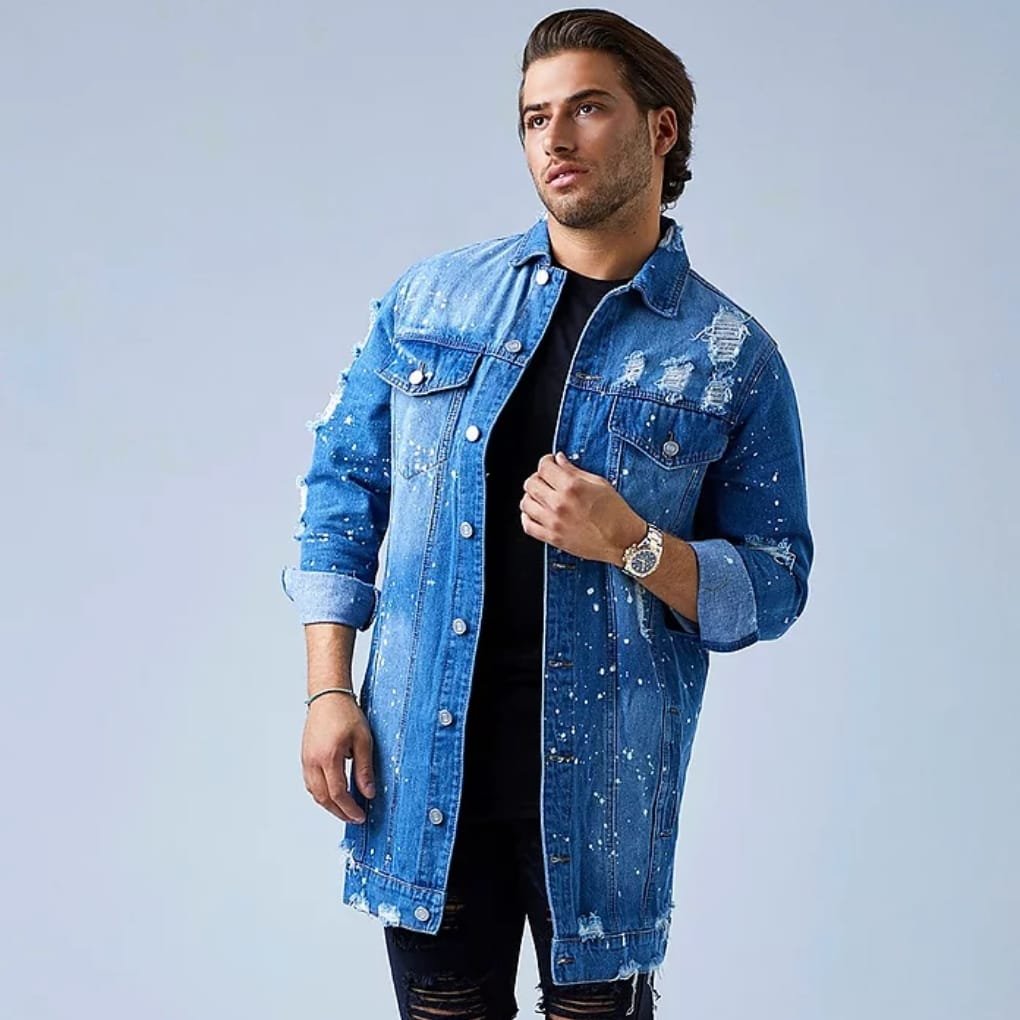
A man wearing a long, distressed blue denim jacket over a black shirt, with the sleeves rolled up and a silver wristwatch, posing against a light blue background.

Unlike traditional waist-length versions, longline denim jackets extend to the thighs or knees. They provide a modern twist on the classic design and work well in urban fashion.


12. Hooded Denim Jacket

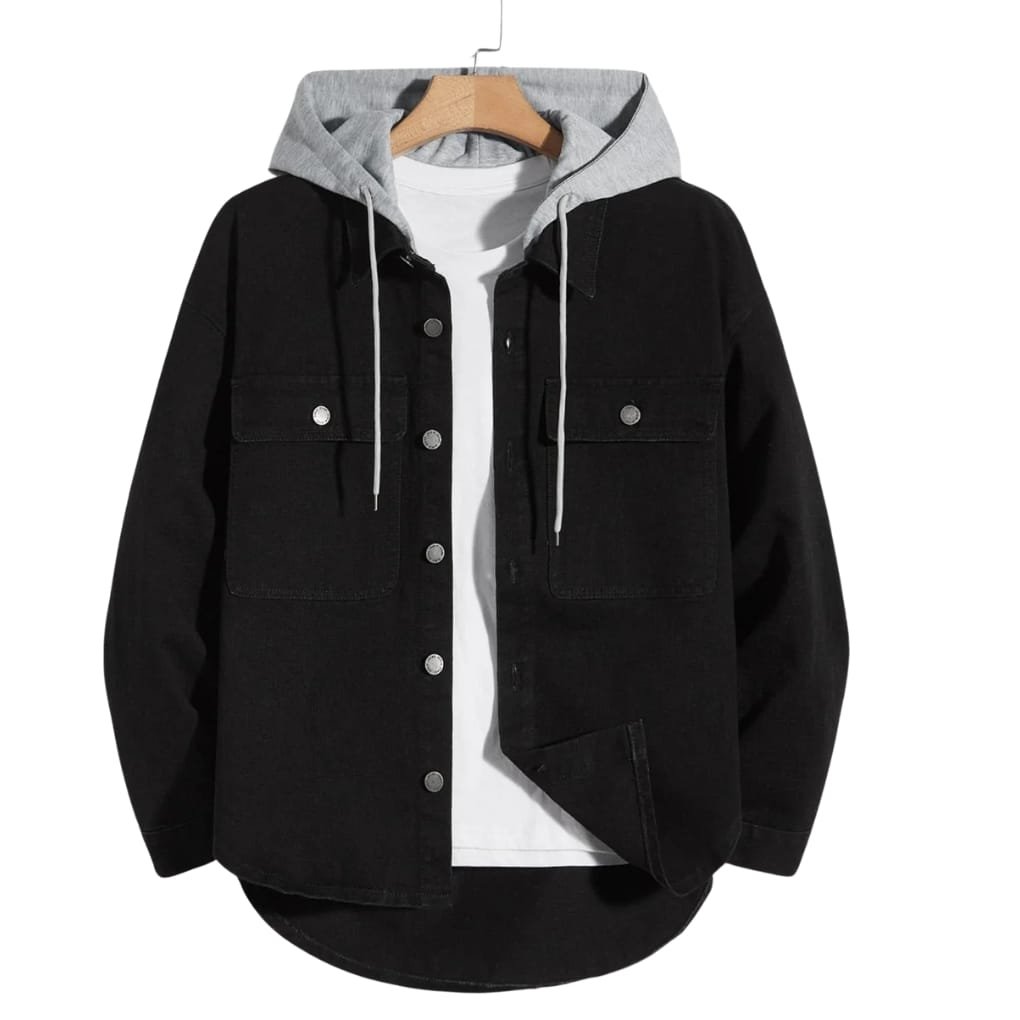
A black denim jacket layered over a light gray hoodie, with metal buttons, two chest pockets, and a curved hem showing a white T-shirt underneath.

This style combines denim with a built-in hood, often made from cotton or fleece. Some are hybrid jackets, blending denim with sweatshirt material for a layered look. Hooded denim jackets are casual and sporty.


13. Double Denim Jacket

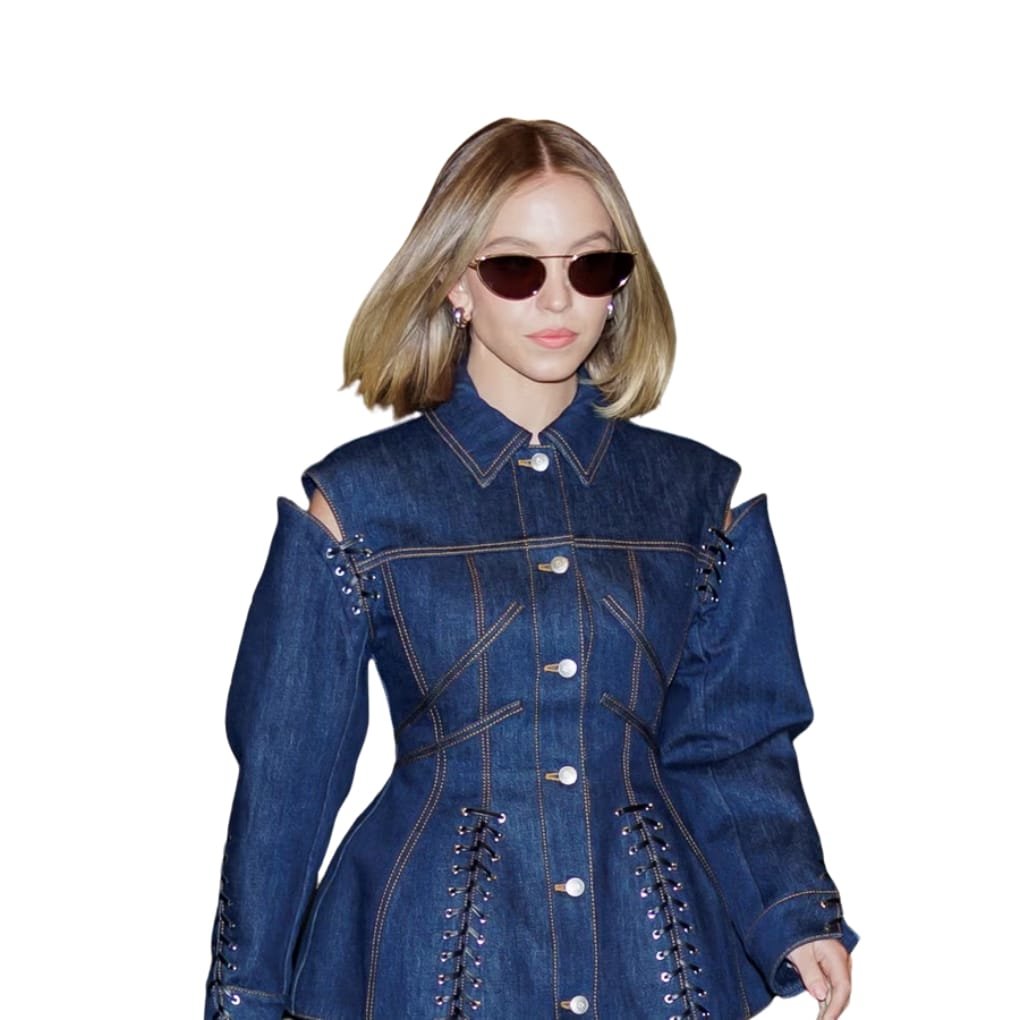
A woman wearing a dark blue denim jacket with corset-inspired lacing along the sides and shoulders, oversized puff sleeves with cut-out shoulders, silver buttons, and dark sunglasses, standing against a white background.

A unique twist where the jacket itself has layered denim panels or uses two different washes of denim in one design. It creates a bold, fashion-forward appearance.


14. Vintage / Retro Denim Jacket

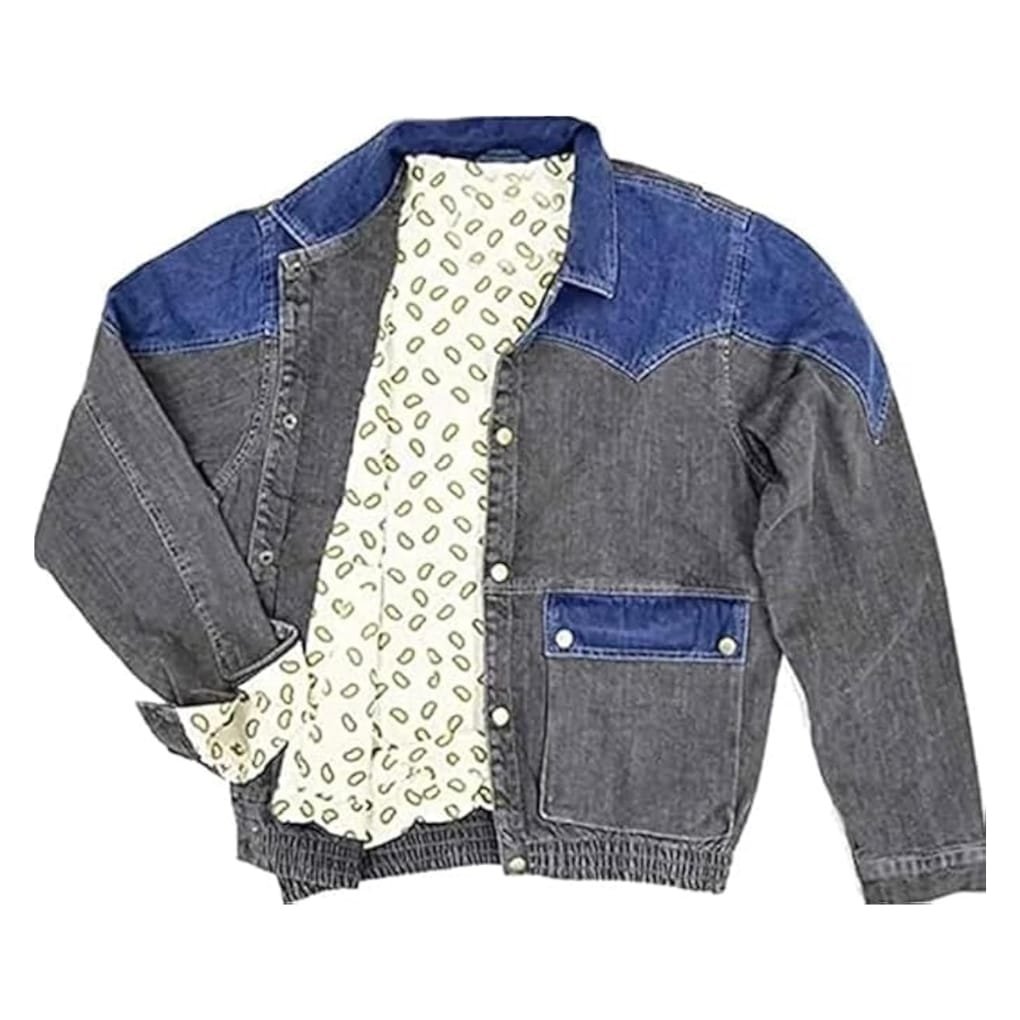
A two-tone denim jacket in dark gray and blue, with a light patterned lining showing from the open front, large front pockets, and ribbed hem. The jacket is displayed on a white background.

These are inspired by designs from past decades—like the Levi’s Type I and Type II jackets from the 1930s–1950s. Vintage denim jackets are thicker, boxier, and carry a nostalgic appeal.


15. Designer Denim Jacket

A blue denim jacket with structured, cropped silhouette and decorative horizontal pleats on the chest, paired with gold-tone buttons down both sides, worn over a white T-shirt.

Luxury brands like Gucci, Balenciaga, and Dior have reinvented denim jackets with high-end fabrics, embroidery, and modern tailoring. These jackets are more about fashion statements than workwear durability.

These variations make denim jackets suitable for different styles and markets.


Certification Types for Denim Jackets

To ensure quality and sustainability, denim jackets may carry certifications such as:

  • OEKO-TEX Standard 100: Guarantees fabric is free from harmful chemicals.
  • GOTS (Global Organic Textile Standard): Certifies organic cotton denim.
  • Fair Trade Certified: Ensures ethical labor practices.
  • BCI (Better Cotton Initiative): Promotes sustainable cotton farming.
  • ISO Certifications: Guarantee manufacturing quality and safety standards.

These certifications help consumers make responsible choices.


Environmental Impact of Denim Jackets

Although denim jackets are durable, their production has environmental costs:

  • Water Usage: Dyeing denim consumes large amounts of water.
  • Chemical Pollution: Indigo dyeing and bleaching release harmful chemicals.
  • Energy Use: Factories require high energy for washing and finishing.
  • Waste: Fast fashion often leads to discarded denim clothing.

However, eco-friendly solutions such as recycled denim, waterless dyeing, and organic cotton are reducing the impact. Many brands now invest in green technology to make denim production more sustainable.


Conclusion

The denim jacket is not just clothing—it is a piece of history, culture, and style. Indeed, from rugged workwear to runway fashion, it has proven its timeless value. Although its production does impact the environment, sustainable practices are helping to shape a greener future. Therefore, owning a denim jacket means carrying a tradition that blends durability, comfort, and timeless fashion.
FAQS

Who invented the denim jacket?

The denim jacket was invented by Levi Strauss in the late 19th century. He designed it as durable workwear for miners, farmers, and cowboys.

Are denim jackets suitable for all seasons?

Yes. Denim jackets are versatile. They can be worn in spring, summer, and autumn. In winter, they work well for layering with sweaters or hoodies.

How do you care for a denim jacket?

Wash your denim jacket in cold water and avoid frequent washing to preserve its color and texture. Air drying is recommended instead of using a dryer.

Egyptian Cotton Sheets: Luxury Comfort for Better Sleep

0

The quest to find the comfiest fabric to aid slumber has gone on for centuries. Of all the options available, the Egyptian cotton sheets are perhaps the most cherished for their delicate beauty and extreme softness. They have a reputation for their extravagant touch, and can also be attested for their durability. These sheets are a unique combination of tradition, comfort, and style that continues to dazzle people all over the world.

The Origins of Egyptian Cotton

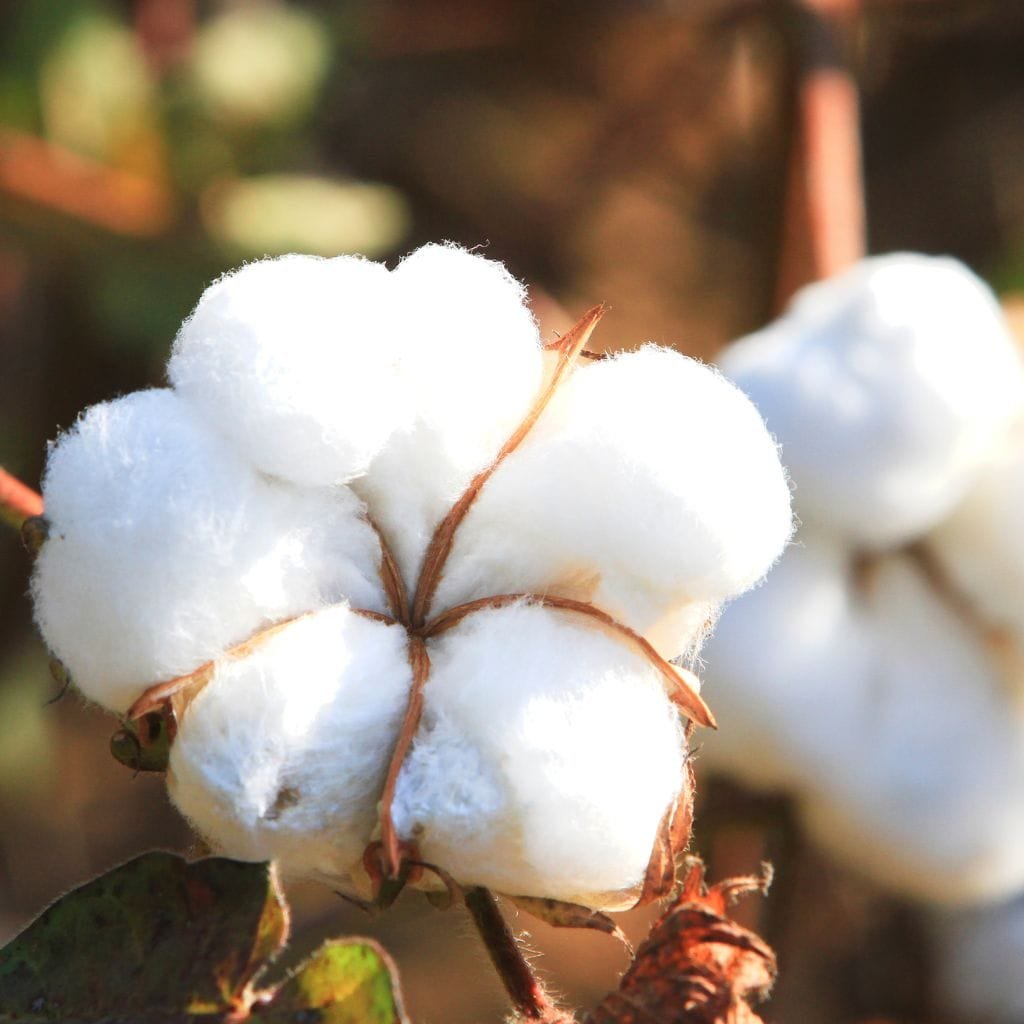
Close-up of a mature cotton boll with fluffy, white fibers bursting from brown dried pods, on a plant stem with blurred background.
The Origins of Egyptian Cotton: from delicate white fibers to the iconic luxury textile.

The Egyptian cotton growing region is well known for the most fertile valley of the Nile River, where agriculture has been practiced for centuries. It’s this land that yields some of the finest cotton fibers on Earth. Farmers utilize protective methods to cultivate and gather cotton in order to preserve its natural strength. The fabric that comes from this process is somewhat of a global marvel, of which egyptian cotton sheets are a part. It is no surprise that they are regarded as a luxury item of comfort and timeless elegance.## Why Egyptian Cotton Is Different

Why Egyptian Cotton Is Different

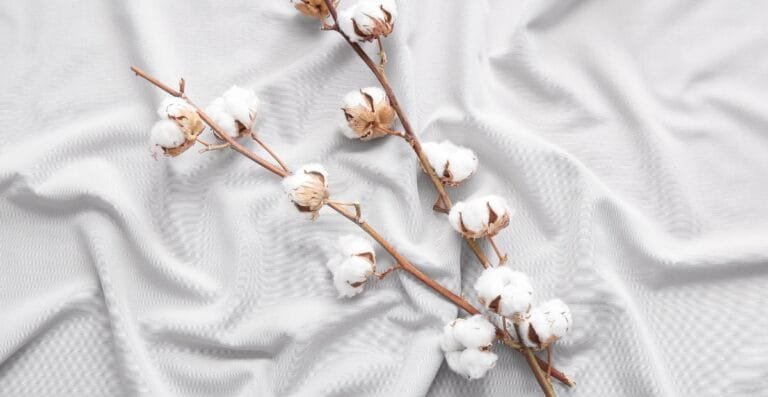
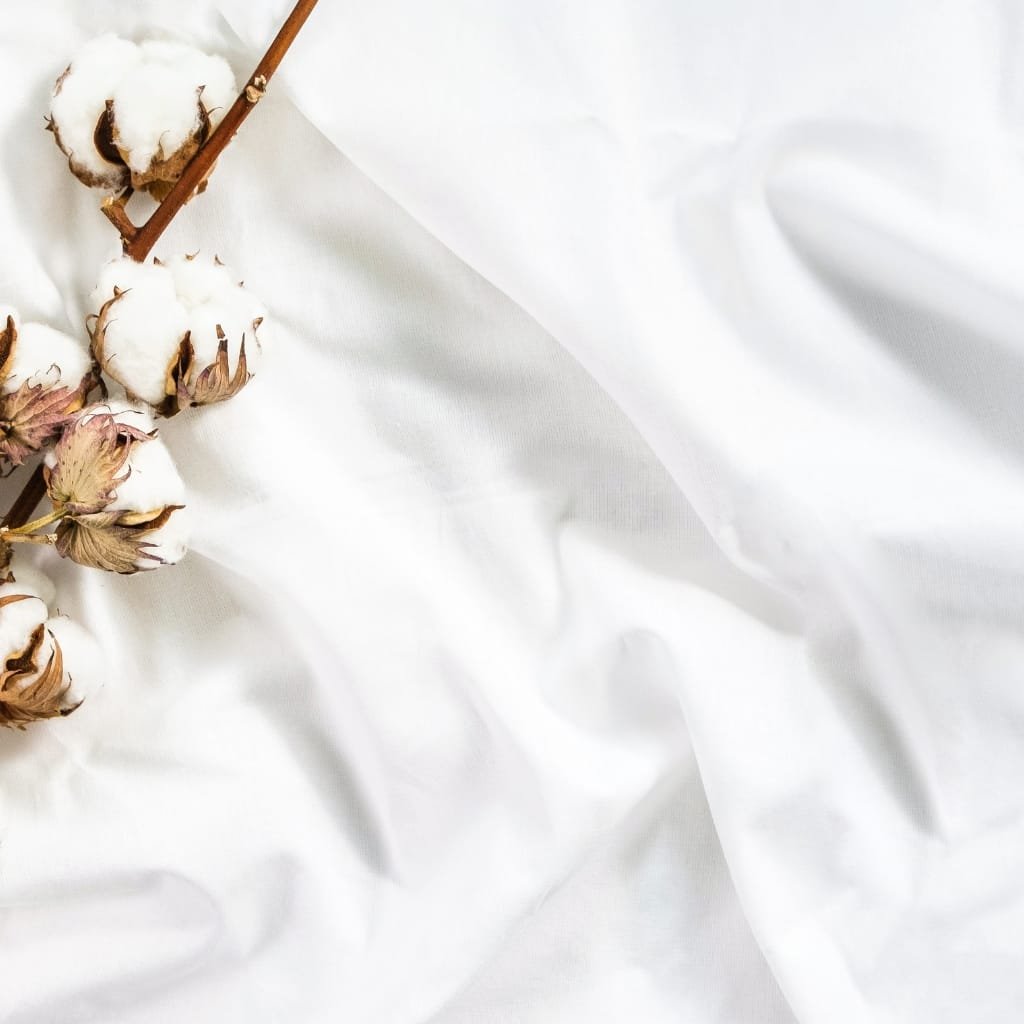
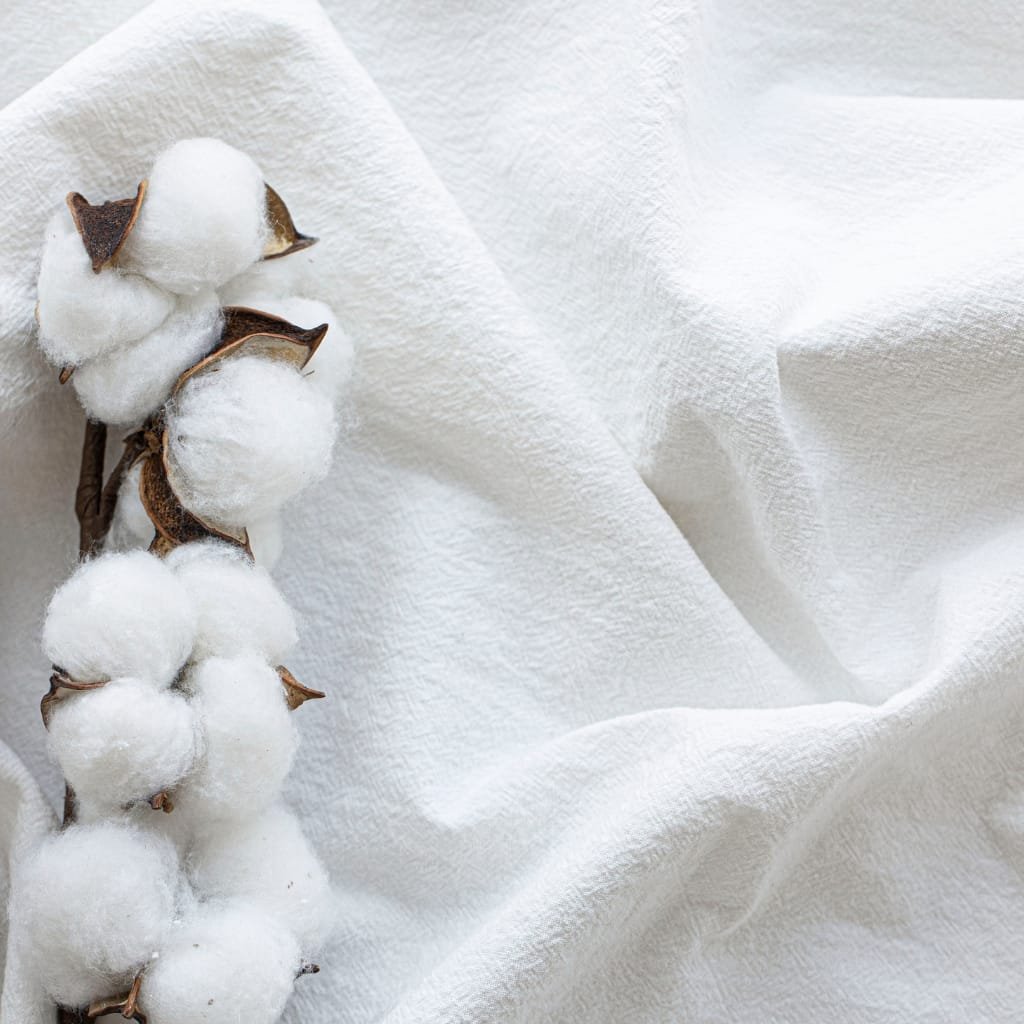
Close-up of a cotton branch with fluffy white cotton bolls on a white fabric background.
Why Egyptian cotton feels so luxurious: longer fibers, finer threads, and a softer, longer-lasting weave.

Cotton that is grown in Egypt is said to possess long, uniquely strong fibers that far exceed the capabilities of normal cotton. These fibers can be spun into nearly gossamer threads that, in turn, makes the resultant fabric incredibly durable. Such threads retains the cotton’s ability to breath, thus creating smooth, strong, cool to the touch fabric. Hence, the cotton sheets and covers retains and surpasses in most attributes, especially durability, making sleeping an always surpassing elegant experience Egyptian Cotton sheets is truly remarkable.

Comfort That Improves Sleep

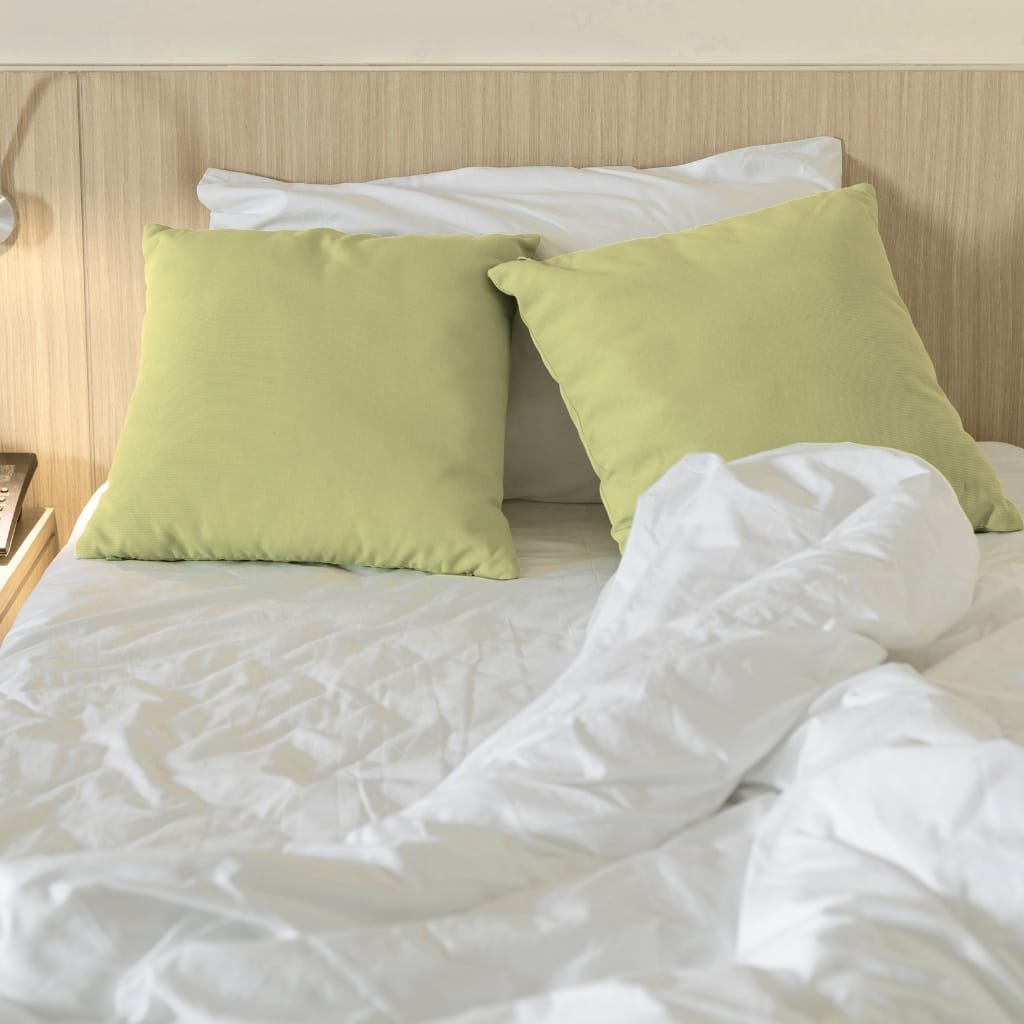
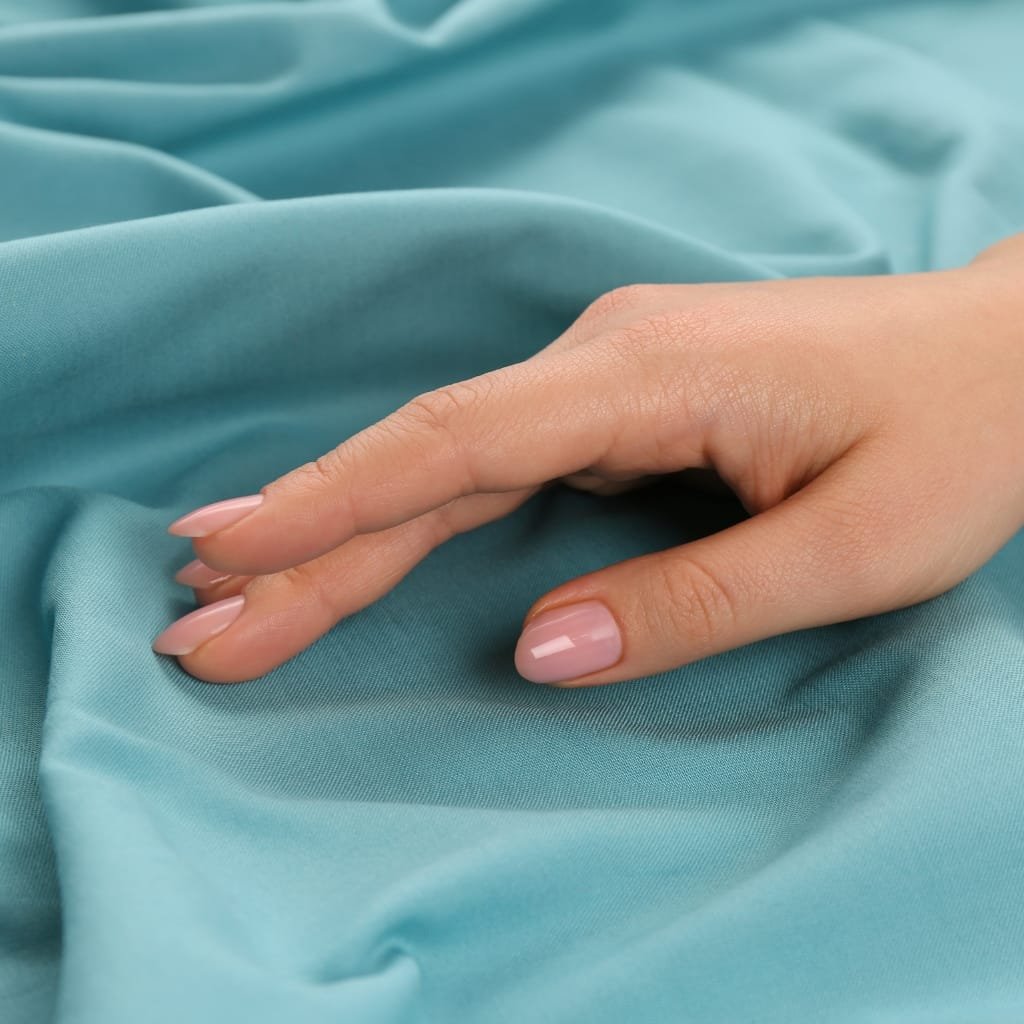
“A neatly made bed with white sheets and two light green pillows, suggesting luxurious Egyptian cotton bedding.
Sleep better with Egyptian cotton sheets—soft, breathable, and feel-good luxury for a restful night.

Without a doubt, a mattress is a significant factor to the quality of sleep. But the cloth, or fabric that the sleeper is covered with is just as significant. Breathable, lightweight fabric pairs well with mattress for deep, restorative slumber. Additionally, the gentle cloth and reduced body friction enhances the cooling effect. Comfort is the operative word, and it explains why many people sleep well with Egyptian Cotton sheets. They turn an average night’s rest into an experience, an experience many people wish for.

Durability That Brings Value

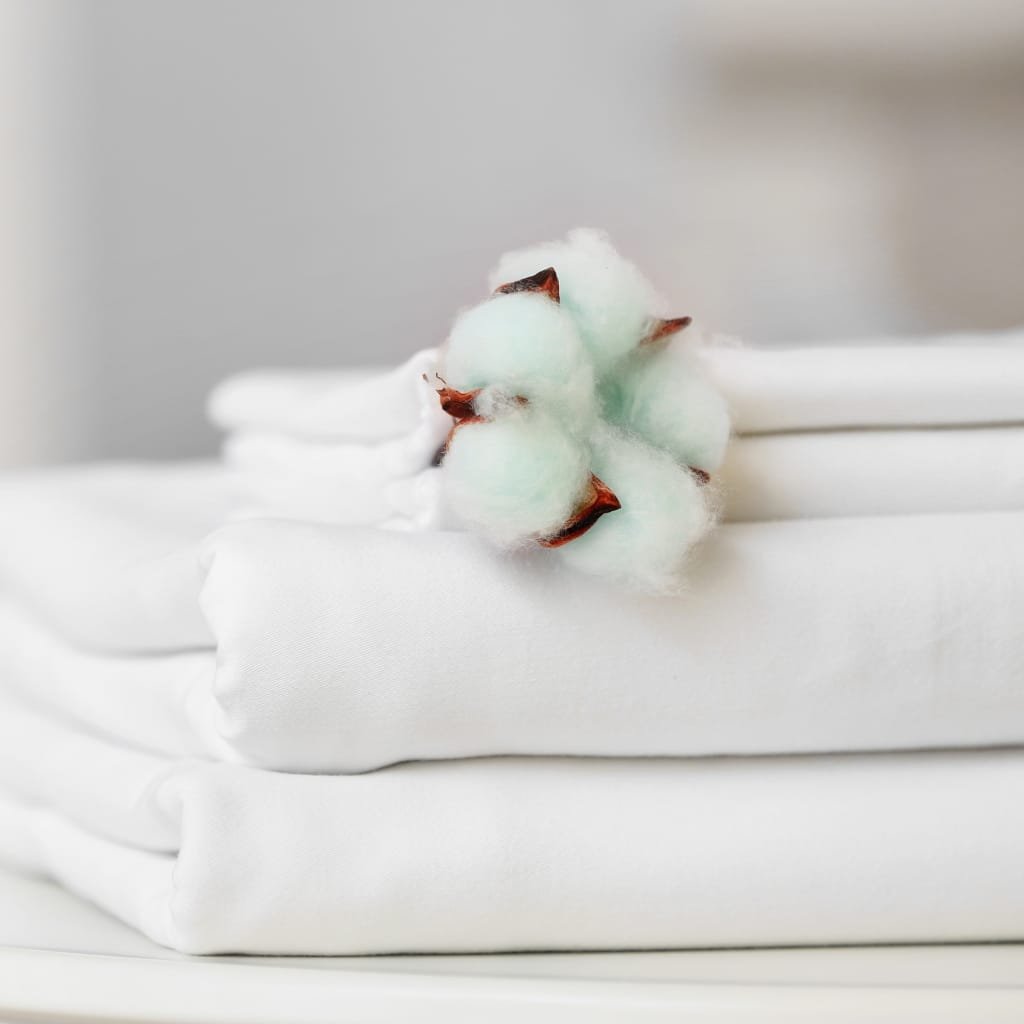
Close-up of crisp white Egyptian cotton sheets folded neatly with a soft cotton boll resting on top, highlighting durability and luxury.
Durability That Brings Value for egyption cotton sheets

Luxury does not only mean softness but also enduring strength. Sheets must serve for a number of years and still not fade. Egyptian cotton fibers do not wear away easily which makes the fabric endure wash after wash. Even after prolonged usage the fabric will still retain its beauty and smoothness. So, purchasing egyptian cotton sheets is a worthwhile investment because the sheets outlast many cheaper alternatives and remain fashionable over time.

The Softness of Fine Fibers

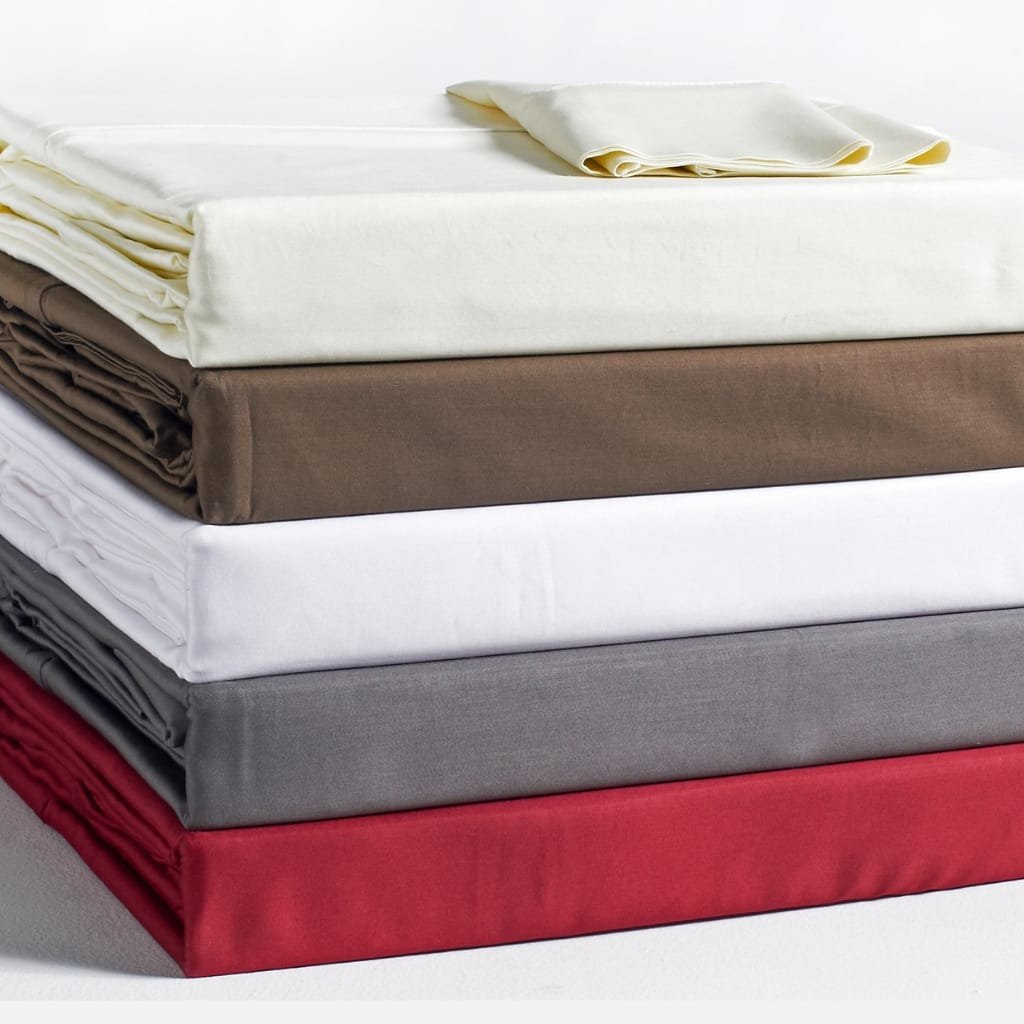
Stack of neatly folded Egyptian cotton sheets in varying colors (cream, brown, white, gray, red) with a soft, smooth texture that conveys exceptional softness.
Softness Redefined: Egyptian Cotton Sheets in a Gradient of Classic Colors

Comfort is a subjective thing. Egyptian cotton has fibers which grow longer and thinner than most cotton plants. This results in a silky finish which feels soft against the skin. Egyptian cotton is also said to get softer and more soothing wash after wash. The softness of the fabric has led many customers to liken it to a cloud and many more to love having it in their bedrooms across the globe.

The Breathable Nature of the Fabric

A close-up image of a cotton plant with fluffy white cotton bolls resting on a soft white fabric. The fabric’s texture is visibly breathable and airy.
The breathable nature of Egyptian cotton fabric showcased in a clean, airy setting.

Quality sleep is balanced by the right warmth and the right freshness. Fabrics which have a certain degree of porosity also have the ability to be Warm and Pretty. This is an Heroic thing that Egyptian cotton has because of its special fiber structure. The fabric also draws out moisture leaving the skin cool and dry during sleep. This explains the comfort that is provided by egyptian cotton sheets which makes it suitable for all seasons and climates.

Exclusive Even Weave

The method of weaving already defines the style and tactile perception of a fabric. A tighter weaving of more elongated fibers results in a smooth and uniform surface. Such weaving technique augments the beauty of the fabric and adds luster to it. Such a weaving style is usually preferred by hotels and deluxe residences for the luxurious appeal it gives. The luminosity signifies the grace to carry, which shows even in the comfort of why the bedsheets are made out of egyptian cotton.

The Importance of Thread Count

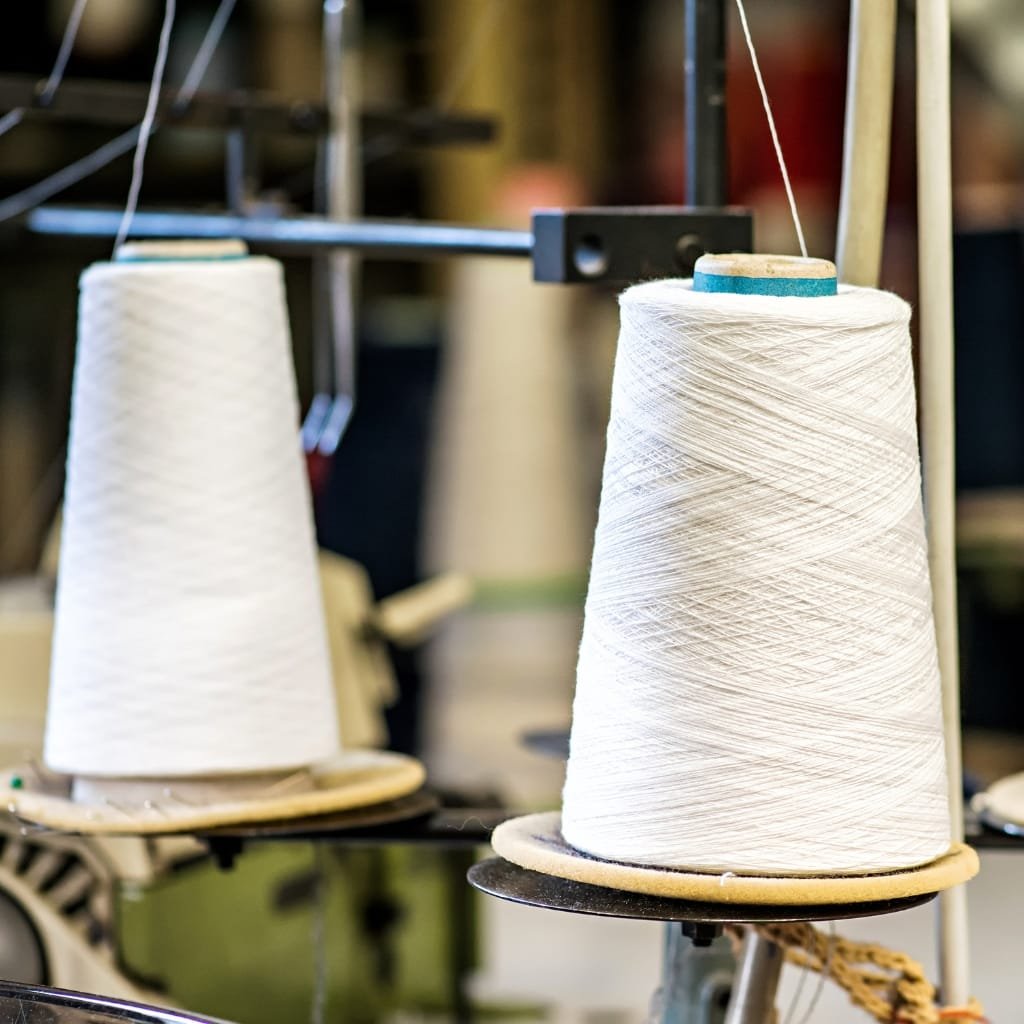
Two large spools of white thread on industrial machines in a textile workshop.
Thread Count in Action: Spools of white yarn sit ready on a textile machine, highlighting how thread density and quality influence fabric texture and durability.

For many, the fabric with the highest number of threads is usually thought to be the better fabric. In as much as it is, the quality of the fibers is more paramount. Long and fine fibers are the trademark of high quality egyptian cotton, and so it is able to achieve high thread counts. Such sheets are exceedingly smooth and soft yet, paradoxically enough, quite breathable as well. This balance is what fosters the comfort for which the sheets made out of egyptian cotton sheets are renowned.

Ease of Use and Maintenance

For most luxurious fabrics, a certain level of care is needed, which is not the case for cotton. A gentle wash with some mild detergent keeps the strength of the fibers while also preserving the softness. Keeping the fabric from caging in contact with damaging chemicals also aids in the brightness retentino. The sheets over the years do in fact soften themselves whilst also retaining the strength. A set of egyptian cotton sheets is a set that, with minimal effort, maintains it beauty. This shows that practicality does not have to be sacrificed.

An Encounter With Everyday Opulence

As opposed to waiting to use luxury for special events, it should be incorporated into everyday life. It is one thing to wake up fresh which can be experienced as going to bed at night on a fabric that is gentle, fresh and soothing. This is something which can be offered by egyptian cotton and still maintain its strength. This is the reason why egyptian cotton sheets are more than a source of comfort, it is a source of everyday luxury.

Smart sheets, Smart Sleep

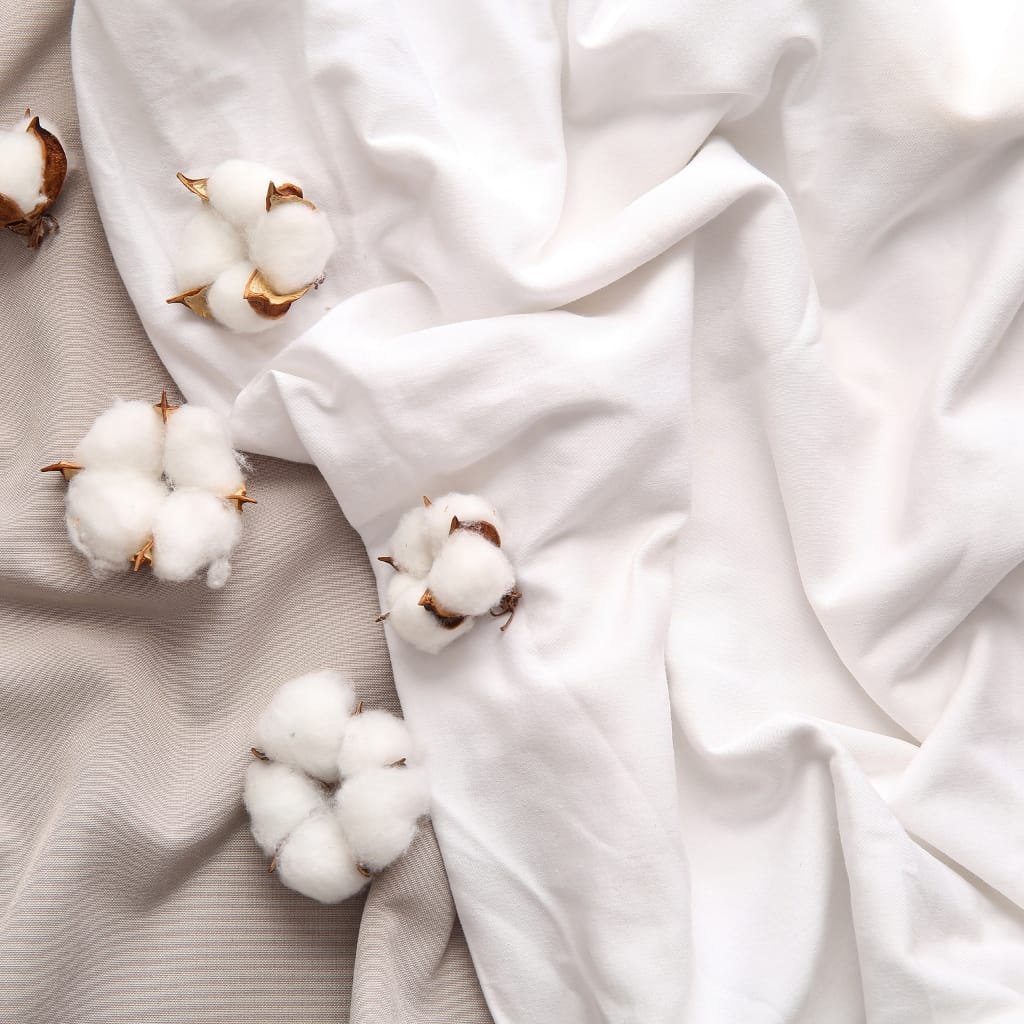
A close-up image of fluffy cotton bolls and soft white Egyptian cotton sheets, artfully arranged to evoke a sense of luxury and comfort for a restful night’s sleep.
A luxurious scene of fluffy cotton bolls resting on pristine Egyptian cotton sheets, perfect for a smart, restful sleep.

Almost one third of our life is spent sleeping and that time should definitely be spent in comfort. Comfort is important which is why soft and highly durable fabric is so essential. Value and quality are things which egyptian cotton sheets are known for as they are extremely soft and have a long lifespan. One is able to enjoy a set of sheets for long periods of time unlike other sheets, which provides several good sleeping nights.

The Shaping Touch of Egyptian Cotton on One’s Lifestyle

Close-up of soft, textured fabric in a neutral ivory color, highlighting the weave and tactile quality of Egyptian cotton.
Touch of Egyptian Cotton Fabric

Lifestyle choices are often influenced by comfort. A person sleeping on top quality fabric is more energized and balanced throughout the day and enjoys sleeping on high quality cotton fabric. With the addition of bed sheets made of egyptian cotton, one can rest assured knowing there is peace and sophistication in the bedroom, since it embodies both luxury and wellness. This is why egyptian cotton sheets improve one’s living standards as well as timeless style.

Egyptian Cotton in Modern Homes

Today her homes strive for beauty with practicality. It is not only beauty, but also comfort with accents they seek. Egyptian cotton sheets can evoke true beauty, even in a bedroom. It’s true, even in a world with many fabrics competing for value, only popularity is gained here. Else, it makes any place, whether modern or classic, timeless. It is easy to see the practicality here.

The Global Popularity of Egyptian Cotton

Egyptian cotton sheets are recognized as the most prestigious of any. It is the embodiment of unmatched value for luxury hotels, resorts, or brands. With growing value appreciation across the globe, consumer trust builds even greater. Among all cotton sheets, none match the prestige, value, and beauty of true Egyptian cotton.

Myths About Egyptian Cotton

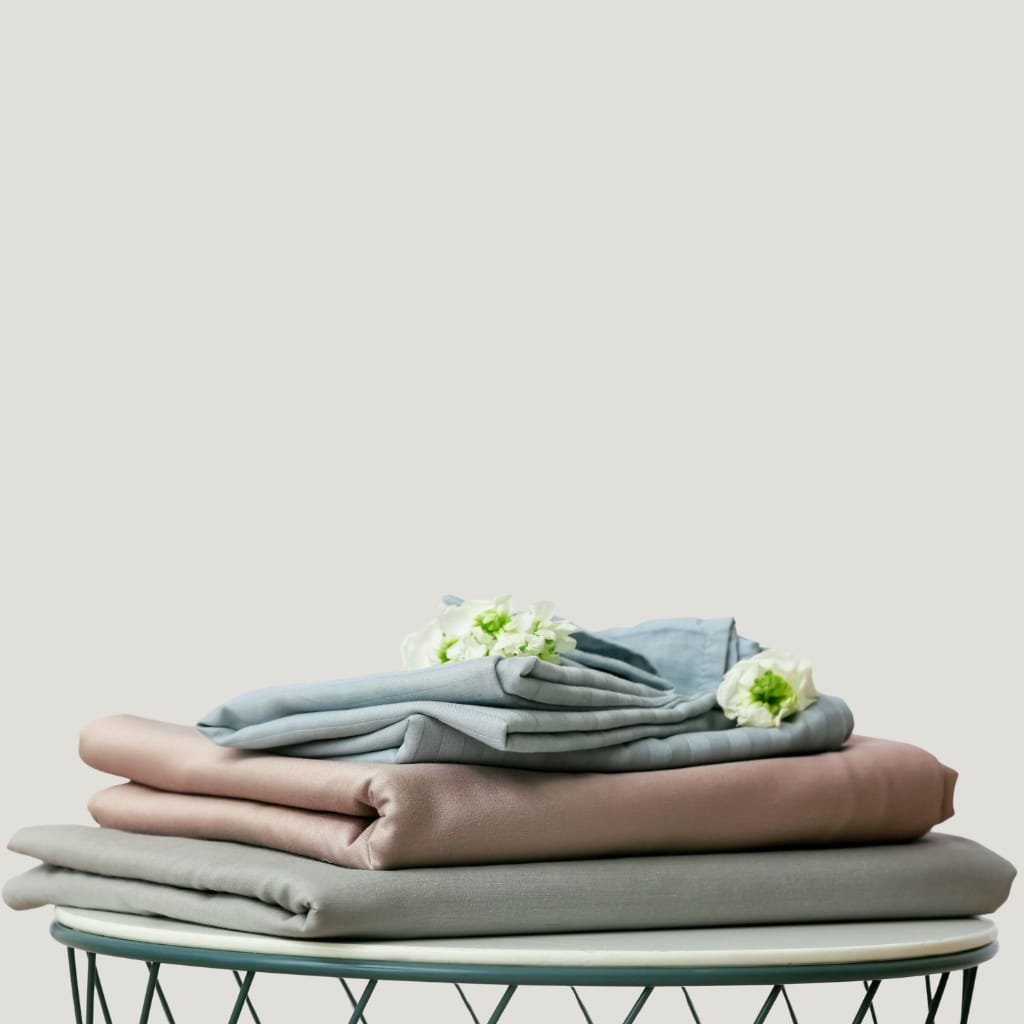
Stack of neatly folded pastel-colored bedsheets in cream, blush, and blue tones on a round table, with soft white flowers resting on top, set against a light gray background.
Luxury Comfort for Better Sleep”

It is interesting to hear the fantasy some create when the words Egyptian cotton sheets are mentioned. Many think all cotton labeled Egyptian is the same, but not all are genuine. The softest, finest quality comes only from Egyptian cotton sheets. This authenticity explains why genuine Egyptian cotton sheets differ from imitations.

The Touch of Genuine Opulence

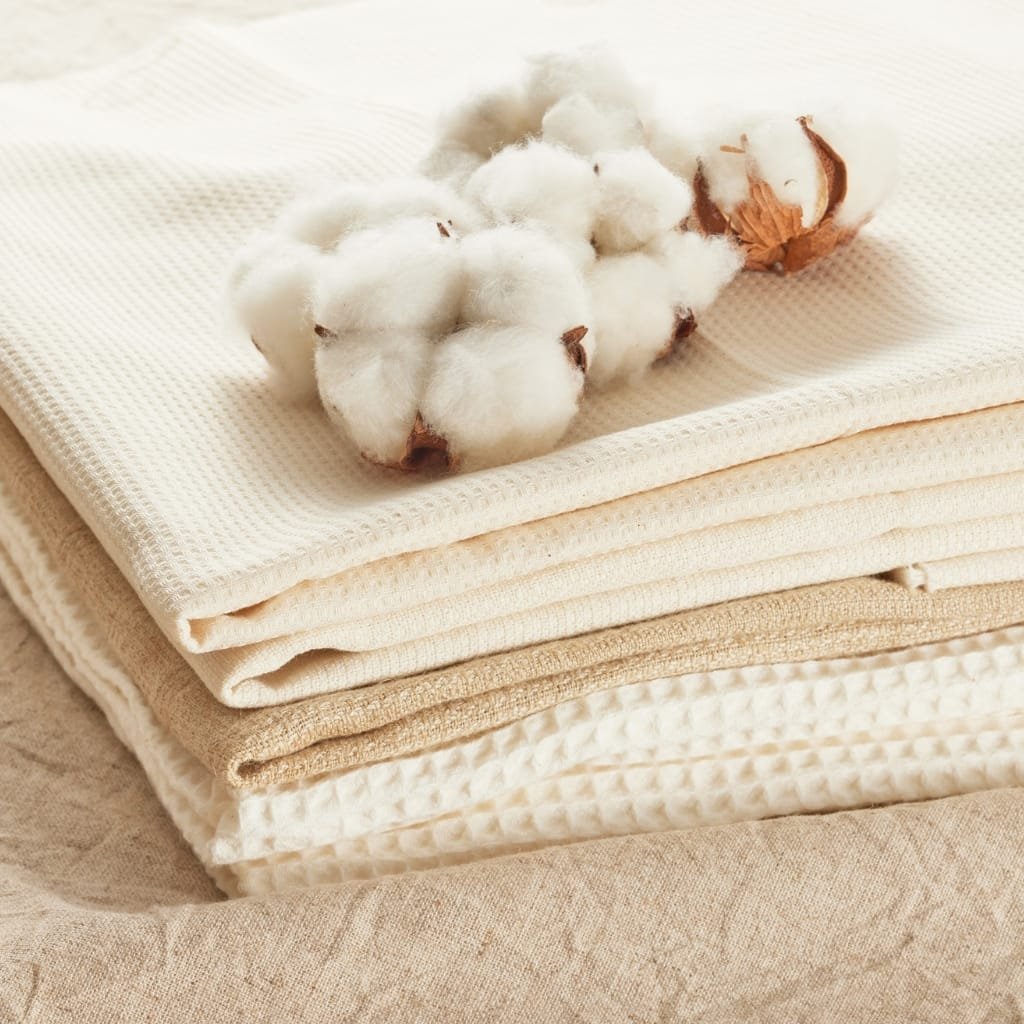
Stack of neatly folded beige and cream cotton fabric with a fluffy cotton boll resting on top, conveying soft, natural texture.
A Touch of Genuine Cotton Opulence

Some things cannot be gauged; one must experience them to appreciate. Rubbing one’s fingers on smooth cotton, one notices its fineness immediately. The sensation is what draws people back to a particular fabric year in and year out. Other sheets may appear to be the same, but the difference is obvious the moment one lies down. The touch of Egyptian cotton sheets creates an almost emotional connection to its users.

Sleep As An Everyday Privilege

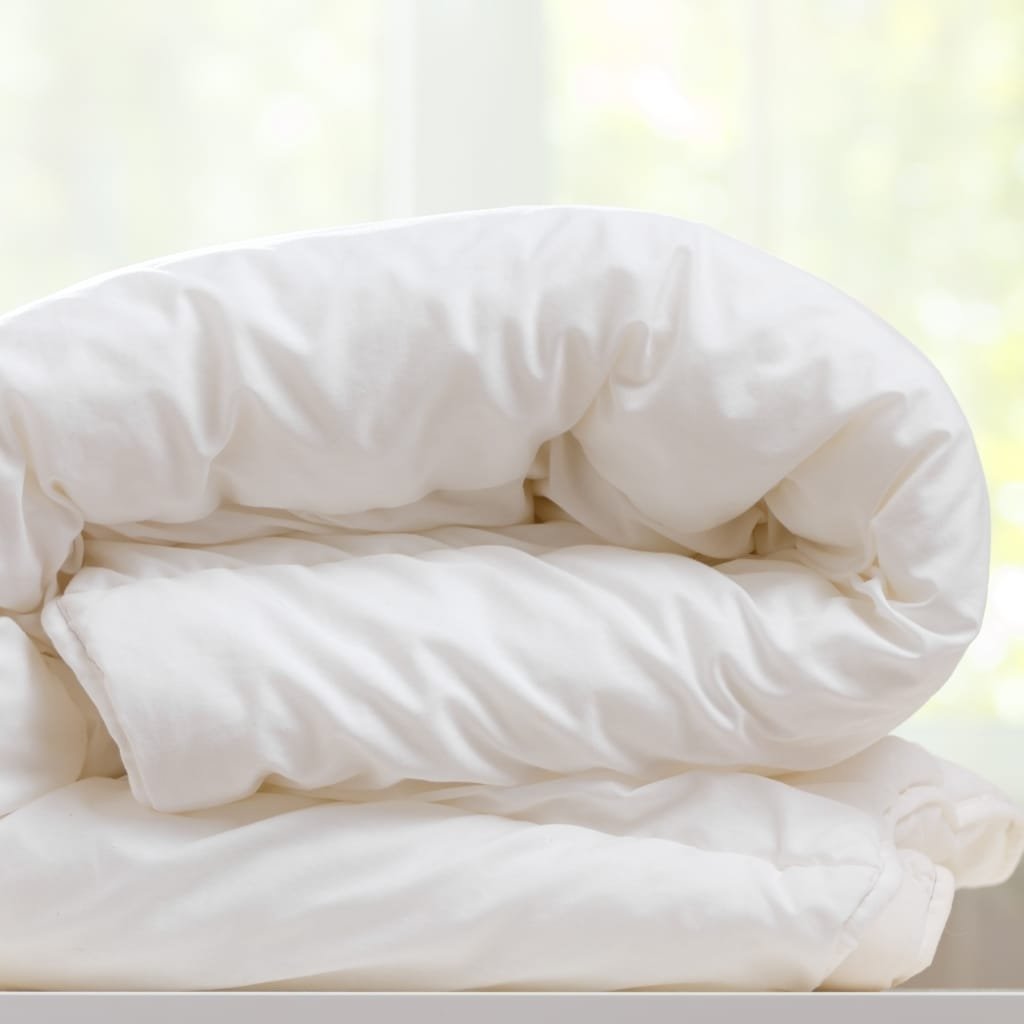
Close-up of a white, fluffy folded duvet or comforter on a light surface, highlighting soft cotton fabric and cozy folds.
Sleep as an Everyday Privilege with Egyptian Cotton

Many people assume that luxury is reserved to special occasions, but in reality, it also happens on a daily basis. Getting a good night’s rest is one of the greatest gifts in existence. Sheets of sufficient quality and comfort, make it almost effortless. When one lies down on Egyptian cotton, the sensation is immeasurable. Egyptian cotton sheets are not only a fabric, but a precious gift of restorative sleep.

The Evolution of Cotton as a Symbol of Luxury

While some traditions may remain revered and strong, the evolution of the textile industry never ceases to exist. Egyptian cotton is the living proof that some things, quality, for instance, will never fade. The increasing concern for personal health and the health of the environment makes more people seek natural fibers. Egyptian cotton excels in comfort and eco friendliness. Thus, it guarantees that for many generations to come, sheets of Egyptian cotton will be an integral part of luxury living.

Final Thoughts about Comfort and Elegance

Your overall health and the quality of your life are profoundly interconnected to sleep, which is why sheets should not merely be an aesthetic decision, but rather a meaningful investment. While bedsheets are often considered merely a decorative piece of bedding, Egyptian cotton sheets are an exception, for they provide a level of elegance and strength unlike any other. There is no other fabric which not only breathes and is soft, but also lasts as long, and that is why those who appreciate better sleep, recognize these Egyptian cotton sheets as the epitome of luxury comfort. Read more Types of Cotton Fabric: A Complete Guide to Styles and Uses

FAQs

Why are egyptian cotton sheets considered the best?

Egyptian cotton has longer fibers, which create stronger and softer fabric. This makes the sheets smooth, durable, and very comfortable.

How long do egyptian cotton sheets usually last?

With proper care, they can last for many years. They stay soft and strong even after frequent washing.

Are egyptian cotton sheets suitable for all seasons?

Yes, the fabric is breathable and absorbs moisture. It feels cool in summer and stays cozy in winter.

Twill Cotton Fabric: The Complete Guide to Durability and Style

0

Do you see any diagonal patterns on your favorite pair of jeans or on your jacket? That unique look is the signature of twill cotton fabric. This fabric is ubiquitous, yet a lot of people don’t know its name. As such, learning about this material explains its popularity. Twill cotton fabric is a traditional textile appreciated for its versatility, strength and its elegant drape. It is a fundamental weave fabric that is both soft and remarkably robust.

What is Twill Cotton Fabric? Understanding the Weave

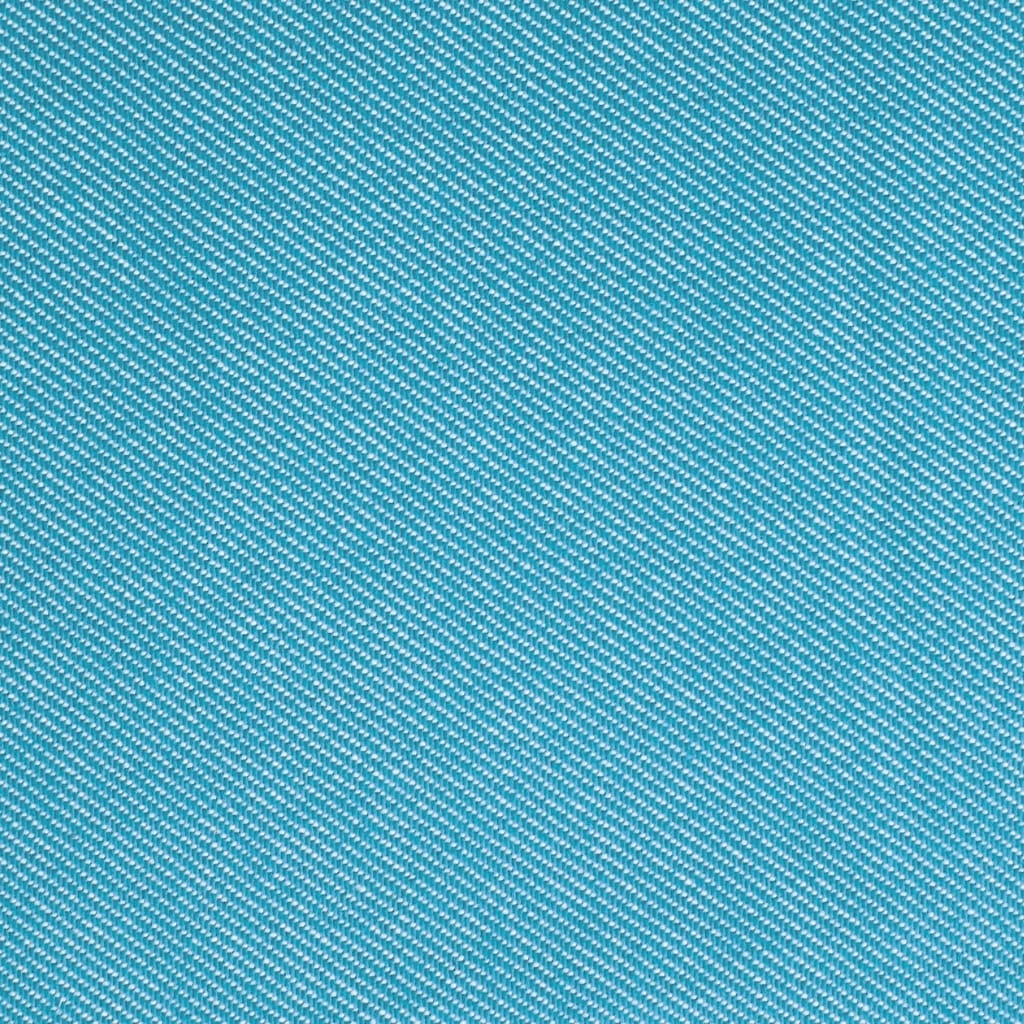
“Close-up texture of blue denim fabric with diagonal twill weave and subtle white threads.
Close-up of blue denim fabric showing a rich twill weave.

As a starting point, it is important to appreciate what “twill” means. In essence, twill refers to a certain type of weaving. It is not a type of cotton fiber. Weavers make twill by literally taking a woven fabric, and passing the weft thread over one or more warp threads. Then, it is passed under two or more of the warp threads. This creates a diagonal rib pattern. It stands to reason that this offset pattern is the most important feature of all twill fabrics. This is a very old technique, yet it is of part.

Twill Weaving ‘s Etymology and Development

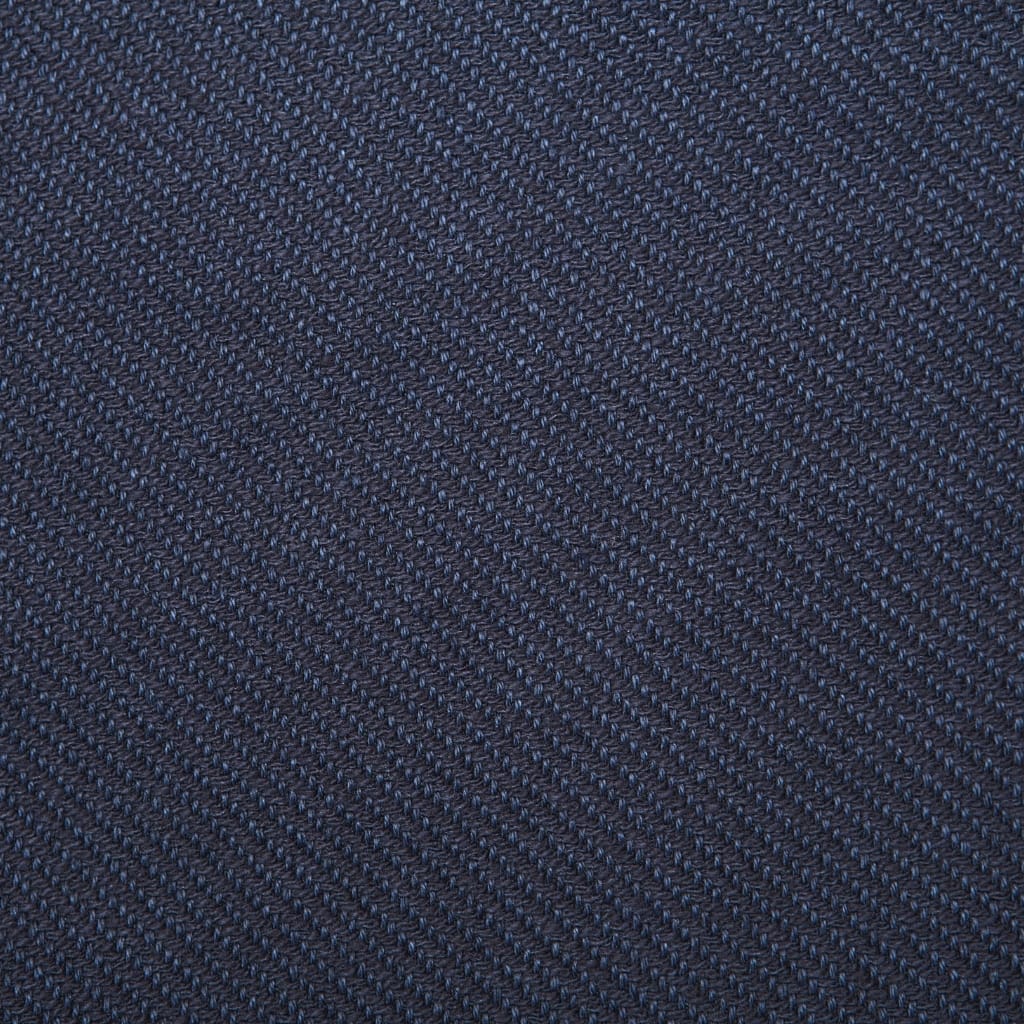
A close-up view of dark blue woven fabric with a tight diagonal twill pattern.
Close-up of textured navy twill fabric.

Twill boasts a long and deep history. Archaeologists have quite remarkably discovered that this weave has existed for thousands of years. Ancient societies quickly and easily understood its usefulness; they used it for strong sails and protective garments. Over time, people extended its use to coarse work wear and soldier uniforms. Subsequently, manufacturers further expanded its role to include casual clothing. To this day, contemporary designers still admire it. We could equally describe the evolution of twill as a story of timeless usefulness.

Twill Weaving ‘s Textiles and Ilustrative Uses

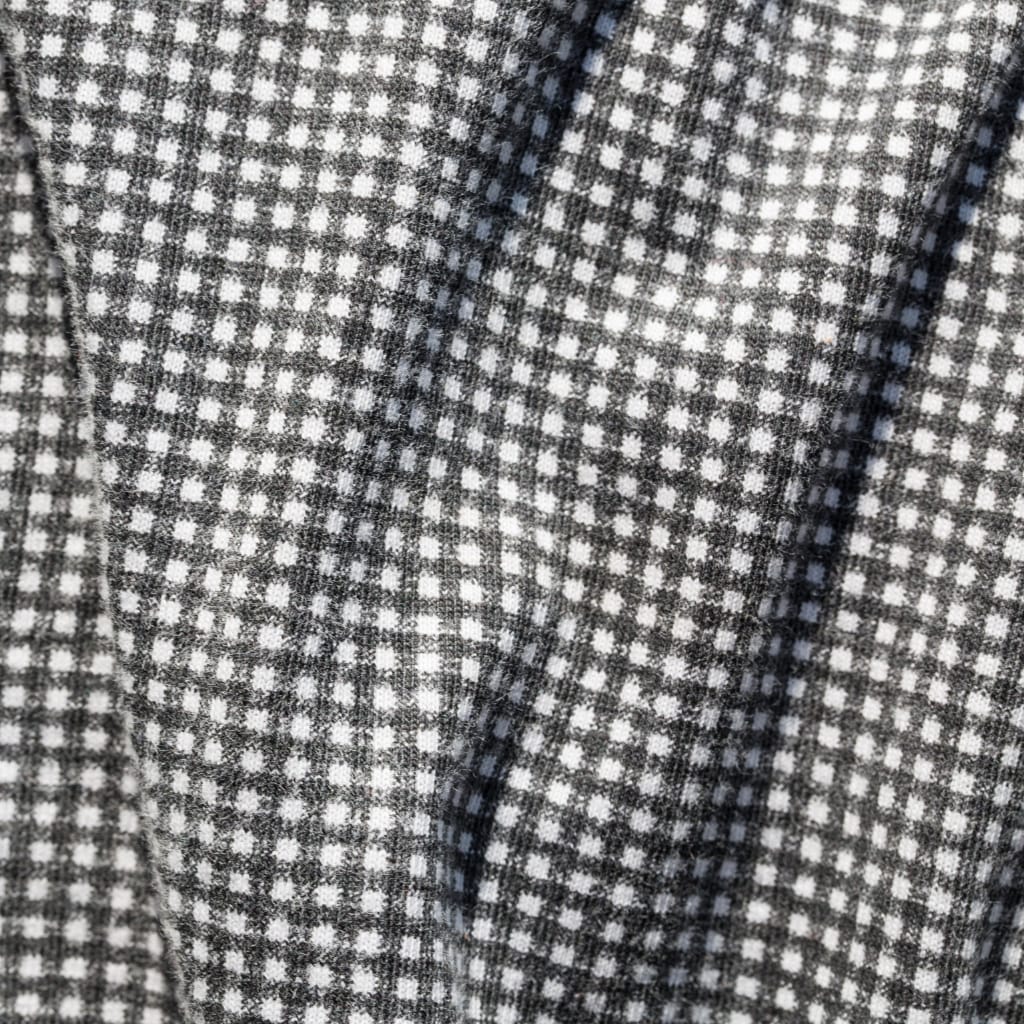
Close-up of a black-and-white checkered fabric with a small square pattern and textured weave.

Twill cotton fabric holds such high reputation for a few reasons such as reasons as its high level of esteem. This fabric offers high strength and possesses many other valuable qualities. Its diagonal, tightly woven structure provides excellent protection and highly resists tearing and abrasion. Furthermore, the material feels soft and flexible. It displays a high level of beauty and hangs gracefully on the body. Adding to these benefits, it absorbs moisture well and is highly breathable. It also resists stains and wrinkles more effectively than plain weaves. Thus, we can see, it is also a known fabric that provides a high level of comfort and freedom. Read more…Types of Cotton Fabric

Common Uses and Applications of Twill Cotton

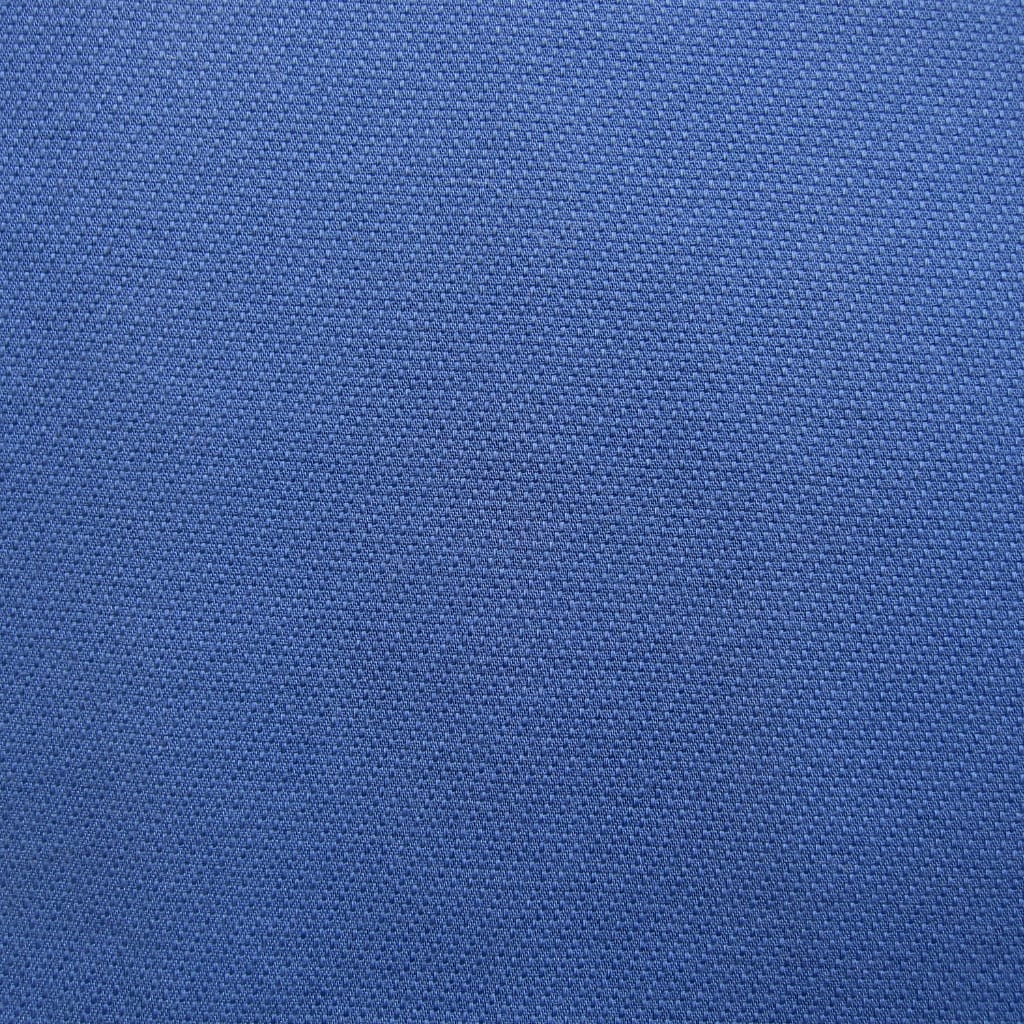
: A close-up view of blue fabric with a fine, repeating textured weave. twill cotton fabric
Close-up texture of deep blue fabric.

The versatility of twill cotton fabric opens its use to a multitude of purposes and applications. It was, for instance, famously used to make tough and durable work clothes and military uniforms. One of the most popular twill products, for instance, is classic denim jeans.Manufacturers also use twill to make chino pants, twill jackets, heavy-duty bags, caps, and home decor items such as upholstery. Therefore, you more than likely come into contact with twill cotton numerous times throughout the day. Read more…..24 types of cotton fabric

Three ribbed baby onesies in white, light teal, and orange arranged on a pale yellow background, with a cotton branch resting on the teal onesie. twill cotton fabric
“Soft ribbed rompers in pastel hues—a white, a mint teal, and a warm orange—arranged with a cotton branch for a fresh, cozy look.

Taking the proper steps to care for your twill cotton fabric items will allow you to use them for a longer period of time. Always begin with the care label that the manufacturer has provided. Most twill cotton garments can be washed in warm or cold water, as a rule. Washing dark clothes inside out, however, helps to preserve the color of the dye. A mild detergent is usually the best choice to use. After that, you can tumble dry on a gentle cycle at a low temperature. Hand drying is a more gentle way to dry and also helps prevent shrinkage. Finally, best results are achieved when the garment is ironed while slightly moist.

Twill vs. Other Common Weaves: how does it compare and differ?

Abstract split collage with purple and blue woven rectangles on left and right, a black ink splash with white 'VS' and blue 'S' in the center. twill cotton fabric
A bold visual clash of patterns and colors in a woven, geometric collage

How does twill differ from all the other weaves? It is especially different from a plain weave like percale cotton. A plain weave is flat and crisp while twill is rugged and textured. It is, however, often compared to satin weaves. Although satin has a smoother and shinier surface, it is generally less strong than twill. Thus, twill occupies a unique middle ground. It has the softness of a basic cotton, but is much more durable. This unique balance is what its so widely liked.

The Different Types of Twill Cotton Fabrics

Not all twill cotton fabric is the same. A number of different, distinct variations, each with their own properties, exist. One type of twill is Denim, a coarse, sturdy type of twill usually dyed with indigo. Gabardine, is on the other hand, a more refined type of twill that is fine with a low luster, and tightly woven. Another strong, medium weight variant is Drill cotton, the type used for khaki pants. Also, cavalry twill possesses a distinct double diagonal line.

Each type is suitable for different uses ranging from fashion to industrial.

Is Twill Cotton Sustainable?

The sustainability of twill cotton is very context-dependent. One of the more obvious issues with cotton farming is the resources it consumes. Twill woven from organic or recycled cotton is a much less problematic situation. Furthermore, twill’s durability is a contributing factor. The garments, by definition, take longer to replace, and therefore are more sustainable. This demonstrates the positive impact purchasing twill items on a wardrobe makes. Read more….Hebei Linen Fabric

Final Thoughts

This makes twill cotton fabric an extraordinary fabric. The designer beautifully executed the marriage of age-old skill and contemporary practicality. The twill’s unmistakable texture and strength comes from the exceptional artistry of its diagonal weave. It is equally at home on a couture platform or in a construction site. It is, therefore, a prudent and dependable option for both buyers and creators. This speaks volumes about the careful balance of design and function in twill cotton, as shown by its uninterrupted demand.

FAQs

What is twill cotton fabric?

Twill cotton is a fabric made with a specific diagonal weaving technique. This method creates a distinctive ribbed pattern that is both soft and highly durable.

Is twill cotton durable?

Yes, it is exceptionally durable. The tight, diagonal weave structure makes it highly resistant to tears, abrasion, and everyday wear and tear.

What is twill cotton commonly used for?

It is used for a wide range of products. Common uses include denim jeans, chino pants, jackets, workwear, uniforms, bags, and home upholstery.

How do you wash twill cotton?

Most twill cotton can be machine washed in cold or warm water. Turn garments inside-out to protect the color. Tumble dry on low heat or line dry for best results.

How Much Does Polyester Shrink? Complete Guide to Fabric Care

0

Introduction

Polyester is considered one of the most widely used fabrics today. Polyester is synthetic fabric made from petroleum and is incredibly durable and low-cost. Its structure makes it resistant to stretching, wrinkles, and most importantly, shrinking. However, the question still remains: how much does polyester fabric quintessentially shrink?

The answer is not definitive as shrinkage is relative to a multitude of factors. Polyester definitely shrinks less in comparison to natural fabrics such as cotton or wool. However, when subjected to high temperatures, it is likely polyester will shrink to a certain extent. Most shrinkage occurs when polyester washes or dried incorrectly.

This guide will attempt to answer how much polyester shrinks, and what factors affect the rate of polyester fabric shrinkage, alongside essential polyester fabric care. By the conclusion, you may understand how to avert destruction to polyester clothes and understand the means to maintain the fabric volume of polyester garments.

How Much Does Polyester Shrink?

How much does polyester shrink is the question. In comparison to natural fabrics, polyester shrinks much less. The average percent shrinkage of polyester during wash and dry cycles is 1 to 2 percent. This percent shrinkage is trivial and does not impact the overall fit of the garment.

Nevertheless, polyester items are not wholly safe from shrinkage. Over time, the fabric tends to lose its integrity, mainly sweating, washing, tumble drying, or hot ironing can wreak havoc on its structure and softness and can cause polyester to shrink even up to 5-6%. Granted cotton can shrink more than 10% in hot washes, which makes polyester feel tough.

Knowing that shrinkage is not absent will better help you rationalize the fact that polyester is one of the better fabrics out there that suffers minimal shrinkage and damage.

Factors That Affect Polyester Shrinkage

Several factors determine how much polyester shrinks in different situations. Knowing these will help you avoid accidental damage.

Heat Exposure

The most important factor which influences the shrinking of polyester is the exposure to high temperatures. Polyester fibers under high temperatures will soften leading to shrinking of the cloth. Washing the garment in very hot water and drying under extremely high temperatures will automate shrinking. Similar effects can be noted with the use of an iron or steam, so long the heat applied is excessive.

Blended Polyester

Blended polyester behaves very differently. For instance, in a 50%Cotton 50%Polyester blend, the fabric is very likely to shrink due to the presence of cotton. Cotton fibers, unlike polyester, will naturally contract under heat. The polyestercotton blend with the higher percentage in polyestercotton blend will always have less shrinkage.

Fabric Quality and Weave

The polyester fabric which is used is a very important factor. The more expensive synthetic fiber with high-quality fabric and finer weaves will have a higher resistance to shrinking. The very light polyester, or with the more loosely woven will have the exposed to a higher risk of heat, is more likely to shrink. The finishing processes will also have a significant impact on the drying and washing cycle the material is exposed to.

Does 100% Polyester Shrink

Many people ask whether 100% polyester undergoes any shrinkage at all. As a matter of fact, 100% polyester shrinks the least. Doesn’t absorb water like cotton or wool. As a synthetic fabric, it lacks absorption.

That said, 100% polyester does shrink, but only when put under extreme external temperatures. Washing your polyester clothes in boiling water or putting them in the dryer on the very high heat settings may cause the fibers to contract to a certain degree. While not considerable, its effects on the shape or drape of the garment may be the major concern. Even foam does, due to its shape, trick the eye and appear overly thick. There’s no foam that can work in a safe and effective manner. This means you should wash and dry with an extreme level of care.

Does Polyester Shrink in the Wash or Dryer?

Both the washing machine and dryer can shrink fabric, but the heat retention is what differentiates the two.

Washing Polyester

Washing with cold and lukewarm water rarely results in shrinkage, dilution or deformation. Problems arise with the introduction of hot water. The extreme washing cycles of high washing temperatures results in negative implications.

Drying Polyester

Use of dryer is the most common cause of shrinkage for polyester materials. The resting heat retained within the dryer can warm the fabric to a level that is counter productive: too high. The temperatures retained may be shrunk down with setting of low or air dry.

Tips to Avoid Shrinkage

To minimize shrinkage, it is best to wash polyester using cold water and dry it using low heat settings. Another option would be to air dry polyester garments as this method is much safer.

Polyester Blends and Shrinkage

Composite fabrics behave in a distinct manner when compared to pure polyester. The interlacing of natural and synthetic fibers modifies the extent of fabric shrinkage.

50/50 Cotton-Polyester Blend

This is the most popular type of blend. A 50/50 cotton-polyester fabric is capable of shrinking more than 100 % polyester fabric, but less than pure cotton. On average, it may shrink 3 to 4 % depending on the wash and dry conditions.

Polyester with Rayon, Spandex, or Wool

Other blends react differently. Polyester-rayon blends may lose some stability and shrink more than others. Polyester-spandex blends may also shrink, but can lose elasticity when excessively warmed. Polyester-wool blends may shrink the most, because, unlike the other fabrics, wool has a natural tendency to contract under both heat and moisture.

Blend Ratios

The more polyester contained in a blend of fabrics the less shrinkage will be encountered. The natural fibers in the blend will require more attentive care in order to reduce any noticeable alterations.

How to Avoid Polyester Shrinkage

To prevent polyester from shrinking, it is advised to practice proper care techniques with the fabric.

Microfiber vs Polyester Key Differences 1 1

Washing Temperature

Polyester fabric should always be washed with cold or lukewarm water to avoid fiber damage or fabric size changes. Washing polyester with hot water is the greatest reason polyester shrinks in the wash.

Air Drying vs. Tumble Drying

For polyester, air drying is the safest method. Hanging or lying garments flat avoids any exposure to the drying machine’s hot air. If using a dryer is a must, chose the low-heat or air-dry option.

Ironing Tips and Steaming

Polyester does not need to be ironed, and if it does, the heat should be on the lowest setting possible. Always put a cloth in between the iron and the polyester to avoid damage. With the steamer, the nozzle should be kept a certain distance from the fabric.

How to Shrink Polyester on Purpose (If Desired)

At times, it may be possible to want the polyester to be shrunk in order to alter the fit. Even though polyester is known to not shrink, it is possible with heat.

Step-by-Step Method

  • Wash the spolyester garment in hot water.
  • Then, put it in the dryer on a high-heat cycle.
  • After every 10 minutes, check the garment until it reaches the size desired.

Risks of Shrinking Polyester

Warning: shrinking polyester can irrevocably damage the fabric’s fibers. Overheating will cause the fabric to distort, melt, and become rough. Attempt this with caution.

Polyester vs Other Fabrics Shrinkage Comparison

The comparison of polyester with other fabrics do tend to show the greater benefits having polyester,

Microfiber vs Polyester Key Differences 9

Polyester vs. Cotton

Cotton shrinks and becomes thicker – especially in hot water and in the dryer. In stark comparison, polyester shrinks even less. A cotton shirt, for example, can shrink by 10 percent, while polyester shrinks by only 1 to 2 percent.

Polyester vs. Nylon

Another synthetic fabric is nylon, however, it shrinks more than polyester when exposed to high temperatures. Nylon can shrink between 5 to 10 percent, making polyester the more stable choice.

Polyester vs. Linen

Another less synthetic fabric, is linen. Because it is a natural fiber, linen is highly prone to shrinkage. With proper care, it can shrink between 5 to 15 percent, making polyester the better option in shape and size retention than linen.

Conclusion

Unlike most fabric types, polyester is one of the most dependable in the aspect of shrinkage, on average approximately 1-2%, which is usually not noticeable. However, in extremes, heat can cause more drastic changes. Polyester garments can be maintained in good condition by proper care steps—washing in cold water, air drying, and ironing on low.

Knowing the percentage of shrinkage helps in fabric care options. If you are trying to deliberately shrink the fabric, the principle of controlled exposure to heat remains. Polyester garments will remain protective, comfortable, and will not lose their shape when take.

FAQs

Does polyester shrink after the first wash?

No, especially when washed in cold water, polyester does not typically shrink after the first wash. Heat is the only way to shrink the fabric.

Can polyester shrink permanently?

Yes, the fabric shrinks permanently. Polyester does not return to its original size and shape.

Does polyester shrink more than cotton?

No, cotton shrinks more than polyester. Cotton can shrink considerably, while polyester has more resistance to shrinkage.

Does dry cleaning shrink polyester?

No, polyester is rarely shrunk by the dry cleaning process. As the process does not use water and heat, and instead uses chemicals, it is less aggressive to polyester.

How to Dry Polyester Clothes Without Ruining Them

0

Introduction

Today, one of the most popular fabrics used in clothes and home textile is polyester. Its popularity is due to the fact that it is weighless, easy to dry, wrinkle free and very durable. Polyester, despite being tough, needs extra care. Drying polyester carelessly can damage the weave, reduce the lifespan and increase the rate of wear and tear.

One of the major issues comes from the use of heat. Increased temperature on heat sensitive polyester can cause the fibers to either melt or harden. Over drying can also cause stiffness and static, while careless hanging can also stretch out the shape of the garment. Most people confuse polyester for cotton and apply the same rules of drying cotton, leading to shrunk, wrinkled or even fabric burned clothes.

This is the reason why it is useful to know how to dry polyester correctly, so that you can avoid common mistakes.

Can You Put Polyester in the Dryer?

As long as care is taken, polyester can go in the dryer. You can safely tumble dry the fabric, as long as it is on low heat. Treat the garment on a delicate, permanent press, or low temperature setting to avoid fabric damage, static and wrinkling.

Using high temperatures is the other highest danger. Since polyester is plastic, too much high temperature will certainly melt or warp the material. This will cause shine, stiffness or fabric blended with other permanently shrunk fabrics. If in doubt, it is best to start at the lowest level of temperature, retaining the damp clothes.

Learning correct settings for the dryer is the first step to learning how to dry polyester without ruining it.

Best Way to Air Dry Polyester

For most people, air drying is the safest technique for polyester garments. Polyester dries much quicker than cotton, so feel free to hang it indoors or outdoors.

While drying indoors, use a drying rack in a room with enough ventilation. Spread clothes and allow for air. Outdoors, hang polyester garments on a clothes line, protected from the strong sun, as it can fade the colors.

Air drying actively reduces the risk of high static charge accumulated, preserves the shape of the fabric and the clothes. Always avoid high tension hangers or clothespins that give a permanent shape to the clothes. If air drying is the most gentle and eco friendly method, it is also an answer to how to dry polyester.

How to Tumble Dry Polyester Safely

It is fine to tumble dry polyester when needed, as long as safe methods are followed. Always pick the lowest temperature possible. Because polyester dries quickly, it doesn’t need long drying cycles. For the majority of lightweight polyester items, 20 to 30 minutes is adequate.

To reduce static buildup, throw in some dryer balls, or better yet, a damp, clean cloth. The steam helps to relax the fibers, thereby preventing the polyester from clinging to itself. Do not dry large loads of polyester items at once, as a result of bunching, polyester may be the cause of unevenly dried items, or excessive wrinkles.

To dry polyester in a dryer safely, the dryer must first be set to a short drying cycle, followed by low temperature, and must be set to un-tumble so the clothes can be taken out promptly. Keeping to this routine is a guarantee that the clothes won’t be over dried, or the materials will be damaged.

How to Dry Polyester Without Shrinking

When it comes to the fabrics that are blended, like poly-cotton or poly-rayon, variations are more susceptible to changing sizes when exposed to oxygen under heat.

Remember to use low and cool settings when drying the materials, or opt to air dry. Keeping polyester exposed to a dryer on high settings is a big no, as this will cause the blended materials to shrink. For more precaution, take the items out of the dryer when they are slightly damp, air dry them, and they will dry to the perfect softness.

Understanding how to dry polyester without shrinking is simple, you just need to control the amount of heat that is used and the garments will last longer.

Tips on How to Dry Polyester Clothes Safely

Microfiber vs Polyester Key Differences 5

Always Check the Care Label First

Each care label with a polyester tend to a garment stipulates the safest drying approach. It should be the last step before deciding to air dry or tumble dry. The label cautions you to prevent possible damage and outlines instructions.

Use Low Heat Settings in the Dryer

When drying a polyester piece of clothing, always put a tumble dryer on low temperature or delicate setting. If the temperature is to high, the nylon can be melted, stiff and cause the garment to be highly damaged. It’s wise to keep the temperature low on the required polyester setting.

Remove Clothes While Slightly Damp

Do not waiting to extract polyester that is bone dry in the tumble dryer. Rather, the approach that should be adopted, is to remove the clothes that are ‘moist’ and allow air to dry them. This method will work well in due to the always dry method that will touch the surface of the garment.

How to Remove Wrinkles from Polyester After Drying

Polyester is known for being wrinkle resistant, however, after drying, some creases may remain. The good news is that removing these creases is simple.

The best way is to steam the fabric, which is safe, effective, and the most gentle method. Steam will relax the fibers of the polyester without the risk of melting. If you decide to iron, always set the iron to the lowest synthetic setting, and place a piece of cotton fabric between the iron and the fabric. The cotton barrier will prevent the shine marks and damage the fabric may receive from the iron.

Another tip to easily remove the creases is the trick of the dryer. Put the wrinkled polyester piece into the dryer along with a damp towel and dry for about 10 minutes. The towel will create steam, helping to smooth the polyester.

Every technique mentioned is important for someone who is a beginner and is trying to learn how to dry polyester.

How Long Does Polyester Take to Dry?

Polyester dries faster than most natural fabrics because it absorbs less moisture. On average, polyester drying times are:

  • 20–30 minutes in a dryer on low heat
  • 1–3 hours indoors on a rack depending on airflow
  • 30–60 minutes outdoors in warm, breezy weather

Daily polyester wear will be more comfortable, as the faster the garment dries, the more convenient it is. Knowing the the average time it takes a polyester fabric to dry can assist you in developing drying plans.

Drying Polyester Blends (Poly-Cotton, Poly-Spandex, etc.)

Not all polyester fabrics are the same. Blends require special care since they combine polyester with other fibers.

  • Poly-Cotton Blends: These may shrink under high heat, so stick to low heat or air drying.
  • Poly-Spandex Blends: Spandex is very heat-sensitive, so always air dry or use the lowest dryer setting.
  • Poly-Wool and Poly-Rayon Blends: These blends are delicate, so air drying is the safest choice.

The key rule to drying polyester blends is to dry them more gently than pure polyester. Always check care tags first, and avoid drying with unnecessary heat.

Common Mistakes to Avoid

Drying polyester may look simple, but small mistakes can cause long-term damage to your clothes. Avoiding these errors is essential if you want your polyester garments to last longer and stay wrinkle-free. Below are the most common mistakes people make when learning how to dry polyester and why you should avoid them.

Microfiber vs Polyester Key Differences 6

Using High Heat in the Dryer

Placing the polyester fabric in the dryer and forgetting it and also setting the dryer on high heat is one of the most common mistakes people make. High temperatures of the dryer can melt polyester and heat sensitive fibers and also burn and shine the apparel it is possible polyester can also be warped or burned. The appliance “Dryer” in low or easy settings fabric or dryer set on delicate settings is the best option so the fabric can be protected.

Over Drying Polyester Clothes

Intermittently leaving the dryer running with polyester clothes in it results in stiffness and additional static. Polyesters also attracts dust and lints the most. Be dry the clothes as soon as they completely dry so long cycles are stubbornly avoided.

Drying in Direct Sunlight for Too Long

Though it takes a short time to dry polyester clothes outside and in the sun, keeping it there for long hours can cause equal fading. Sunrays can weaken the fabric dyes and it is worse for bright colored clothes. Shade drying is best and helps the fabric or polyester to keep vibrance and color.

Leaving Clothes in the Dryer After the Cycle

Deep stubborn and hard to remove wrinkles can be achieved from forgetting the polyester garments before taking them out of the dryer. It is important to keep them in dryer so they don’t get fine creases and also take out the clothes after.

Conclusion

Drying polyester hardly needs to be complicated. The best options are low-heat tumble drying or air drying. Air drying is free, eco-friendly, and does not create static. It is best for the protection of the fibers. Tumble drying is handy, but the lowest settings and short cycles are a must.

If any wrinkles form, damp towels and steam in the dryer can be useful. For blends, treat them more cautiously and avoid high heat. Above all, always consult the care label of the fabric before deciding on a drying method.

If you master drying polyester, you won’t have to worry. Your clothes will feel soft, smooth, and still stylish for years.

FAQs

Can polyester shrink in the dryer?

If on high heat, blends do shrink, but pure polyester rarely does.

Can you dry polyester in the sun?

Yes, but avoid long sun exposure as the UV rays can fade bright colors.

Why does polyester get static after drying?

Static is a result of the fabric being overly dried and generating friction. Use dryer balls or a damp cloth to mitigate it.

Can soccer jackets, pillows, or shoes be dryed?

Indeed, but for safety’s sake, air-drying is best. If machine-drying is unavoidable, only use low heat.

Modern Slim-Fit Leather Coats: Sleek Style for Every Season

0

The artistry involved in making modern slim-fit coats is matched only by their aesthetic appeal. While bulging out in all sides, coats are known for their refined silhouettes, meant to emphasize the natural curves of the body. They are effortless coats that grace the wardrobe with refined ease; be it for a typical day out for work, a party, or a casual lunch with friends, their timeless aesthetic will suit all.

Why Choose a Leather Coat with a Slim-Fit?

There is an unprecedented demand for slim fit leather coats, and that is only because of the ease that these coats offer. They add a level of sophistication to one’s outfit that it deserves, all thanks to the tailormade cut that adds sharpness to the figure. Not to forget, the weather resistance and durability that leather provides. Bulky coats do tend to add some grace and style, however, it totally overshadows what is comfort. Slim fit coats are the perfect definition of style with comfort.

 A man with a trimmed beard wearing a black leather coat, standing outdoors with arms crossed and looking to the right
Modern Slim-Fit Leather Coats: sleek, versatile outerwear for a confident, urban look.

Construction and Modern Slim-Fit Leather Coats

The modern slim-fit leather coat is characterized with high-quality leather. Full-grain leather is the most durable option available, while Top-grain leather is known for its smooth finish. Although, genuine leather is affordable, it isn’t the most durable. Several coats additionally feature inner linings of polyester, cotton, or wool blends, making the coat even more comfortable, while emphasizing long-lasting wear.

Unique Features in Design

There are some design elements that are particular to slim-fit leather coats that are not present in other leather coats. For example, the clean elements of a coat such as the sleek slashes, less volume, and clear stitching all balance each other and give the coat a sharpened appearance. For easy access, coats may come with a variety of different closures, such as button and zipper ones. Contemporary coats have extra design features such as elongated collars, belt-like waist clasps, and sometimes even secret wallets. These bits of flair are additional to style and add more functionality.

How to Wear a Slim-Fit Leather Coat

The modern slim-fit leather coat has the ability to fit into any place, whether casual or formal. For a more relaxed outfit, wear it with a pair of jeans and a crew-neck top. In the office, wear it with formal tailored trousers and a pair of leather shoes. It is more than acceptable to wear the slim-fit with a shirt, pullover, and even a lighter weight hoodie. It is highly recommended to wear colors that are dark such as black, navy, or brown.

How You Can Utilise a Slim-Fit Leather Coat

The slim-fit leather coat is not restricted to a particular season. In the fall, it acts as a more lightweight jacket. During winter, you lose the horse-like bulk, but still retain insulation, which is snug. For the spring, wear it in neutral light colors, and with soft lighter materials. The slim-fit coat is a good item to have for the summer because it goes well with casual outfits and can be worn snugly in the cool evenings. These coats are still useful, and so, can be worn all-year round.

Care Instructions for Slim Fit Leather Coat

The lifespan and well-being of the coat are dependent on how it is stored. Spills should be gently dabbed and should not dry out. For the rest of the coat’s surface, use a damp cloth for spot cleaning. For the entire coat, a good quality profesional leather conditioner should be used. It is essential to avoid long periods of time spent outside. Direct sunlight is a risk for leather as it will fade and dry out the surface. A well taken care of leather coat will always remain in fashion.
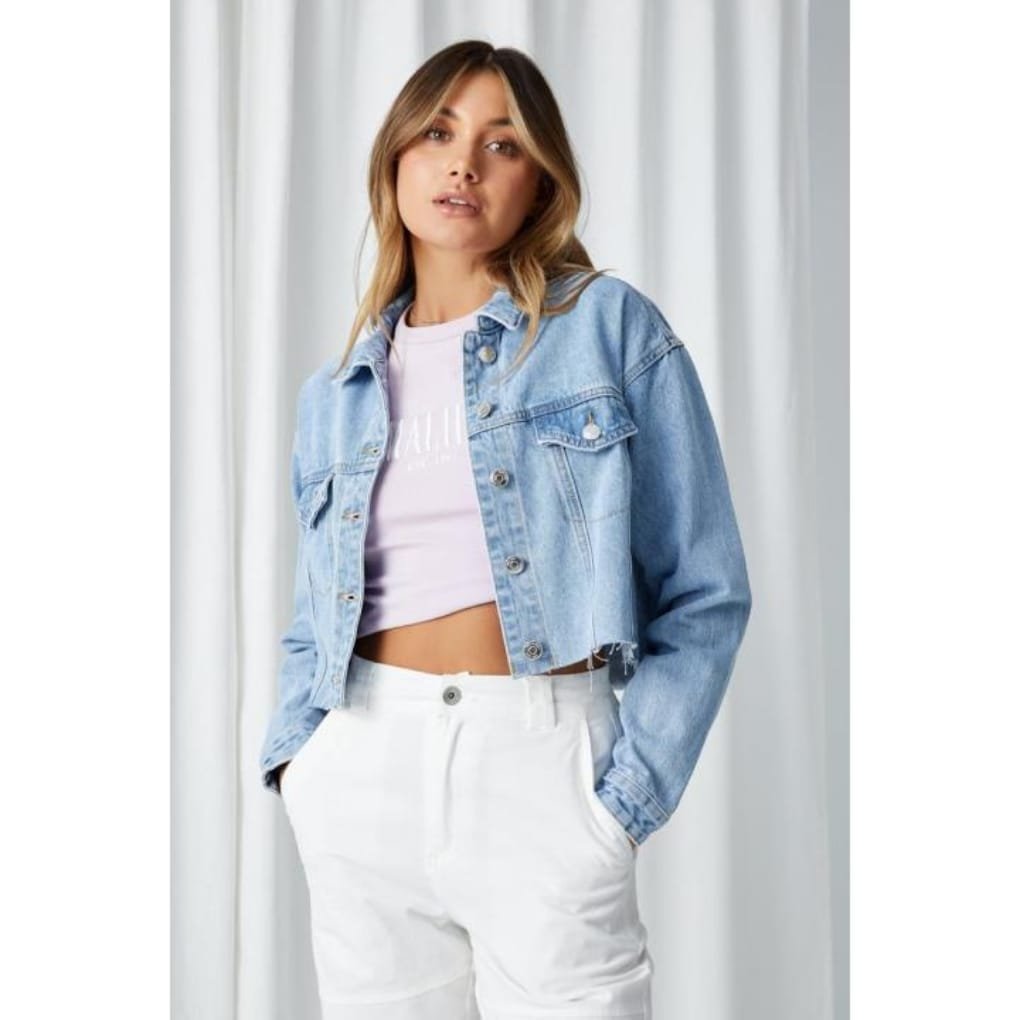
Black is the center of modern civilization, however, leatherlight is also gaining recognition. Chestnut tints and mocha slightly warm the leather. For those who are brave and bold, leather in shades of bordeaux, navy and grey are also acceptable. Current slim leather designs completely abandon excess leather; however, sparse details are also loved. Leather jackets are also available with oblique cuts or combined with other materials.
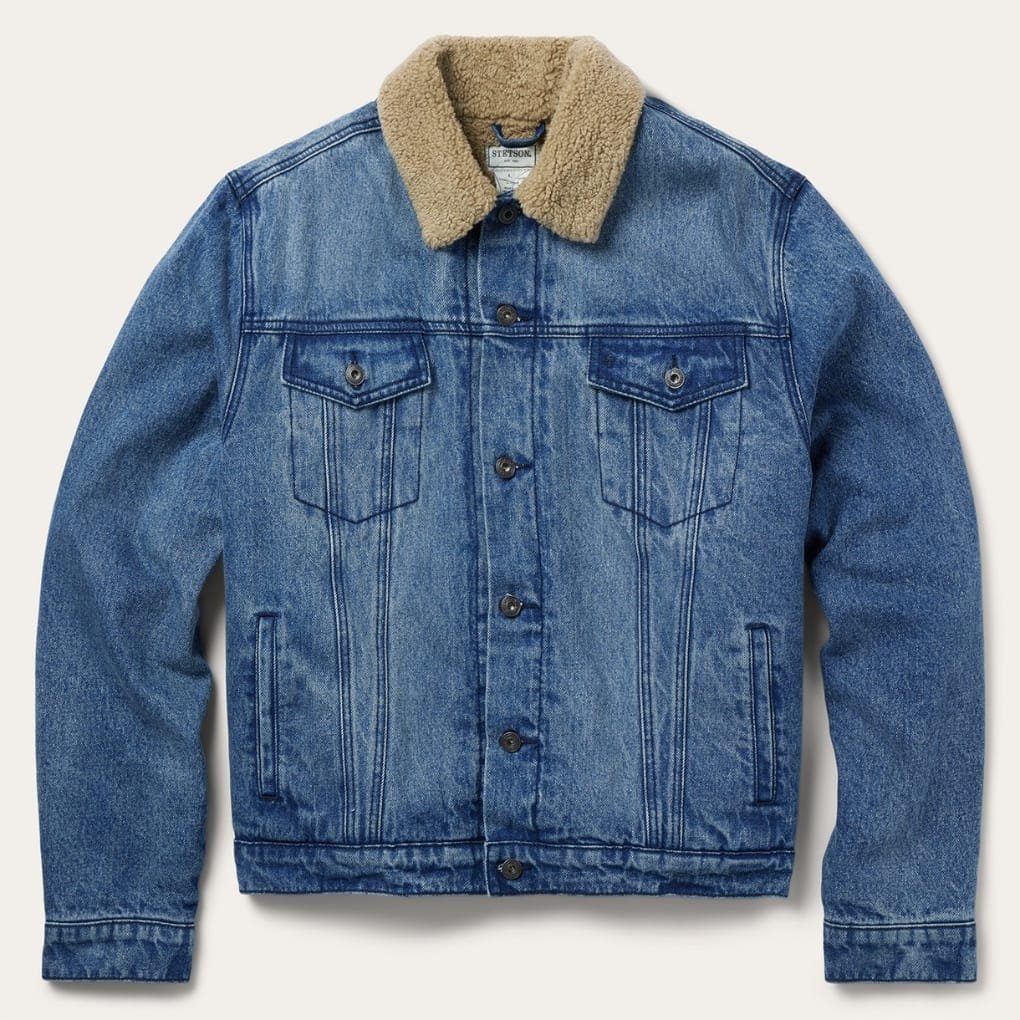
Why Slim Fit Leather Coats Appeal to Modern Men and Women

Both men and women can appreciate the slim fit leather coat. It gives men a bold and sturdy look. At the same time, the coat balances the women along with her figure. The genderless design of the coat makes it one of the most loved pieces of leather outerwear in the world.

Conclusion

For every season, modern slim fit leather coats infused with tailored cuts and extreme leather put together both style and durability while withstanding the test of time. They can be easily transformed from casual to formal with the right props. They are an invaluable asset to any individual with an appreciation for utility and style owing to their practicality. You can be assured of an investment with modern style advovates.

FAQs

Q1. What makes modern slim-fit leather coats different from regular leather coats?

Modern slim-fit leather coats have a tailored cut that enhances body shape. Unlike regular coats, they provide a sleek, streamlined look without bulk.

Q2. Are slim-fit leather coats suitable for all seasons?

Yes. They can be worn year-round. Lightweight designs work in spring and autumn, while insulated options are perfect for winter. Even in summer, they suit cooler evenings.

Q3. What is the best color for a modern slim-fit leather coat?

Classic black remains the most versatile choice. However, shades like brown, navy, grey, and burgundy are popular for modern styling.

Does 50% Cotton 50% Polyester Shrink? Expert Fabric Insights

Introduction

Whenever the cloth and household fabric is bought, the label 50% cotton 50% polyester is common. The range of this fabric blend and its uses is extensive and is among the most common globally. This is because it perfectly combines the vastly differing characteristics of the two fibers. Cotton is a natural fiber, soft, and breathable while polyester is synthetic, strong, and shrink resistant. Together, they create a balanced fabric that is ideal for both daylong comfort and durability.

One of the most common misconceptions is: does 50% cotton 50% polyester shrink? The simplified answer is that this blend shrinks far less than 100% cotton, but it is not completely immune to shrinking. Through proper maintenance, the blend of cotton and polyester shrinks the most, but not greatly, and the fit is preserved for many years to come. To explain this, it is vital to analyze the behaviors of both cotton and polyester separately, and then as a blend.

What Is a 50/50 Cotton-Polyester Fabric?

A fabric that consists of equal parts cotton and polyester is known as 50/50 cotton polyester. The polyester comes from petrochemical sources and the cotton comes from natural plant fibers. 50/50 cotton polyester is much better than 100% polyester fabric as it is much softer while still being more durable than 100% cotton fabric.

50/50 blends are commonly found in t shirts and other forms of sportswear, hoodies, home textiles like sheets and pillowcases as well as in many other uniforms. The equal balance of the two fabric types ensures that it is comfortable as well as easy to wash, dry, and maintain. The blend also tends to retain its shape better than pure cotton as it is less prone to shrinking. Thus, it is quite practical and cost effective for the average consumer.
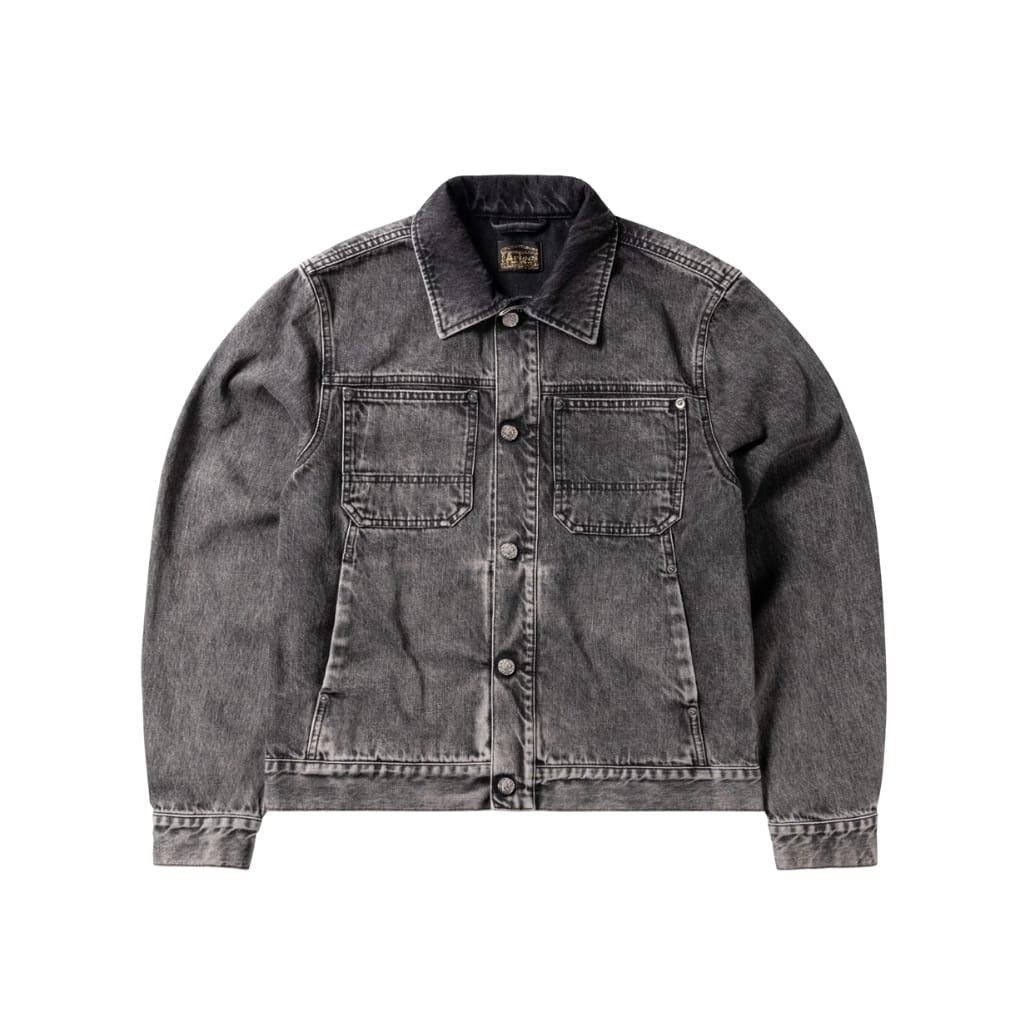
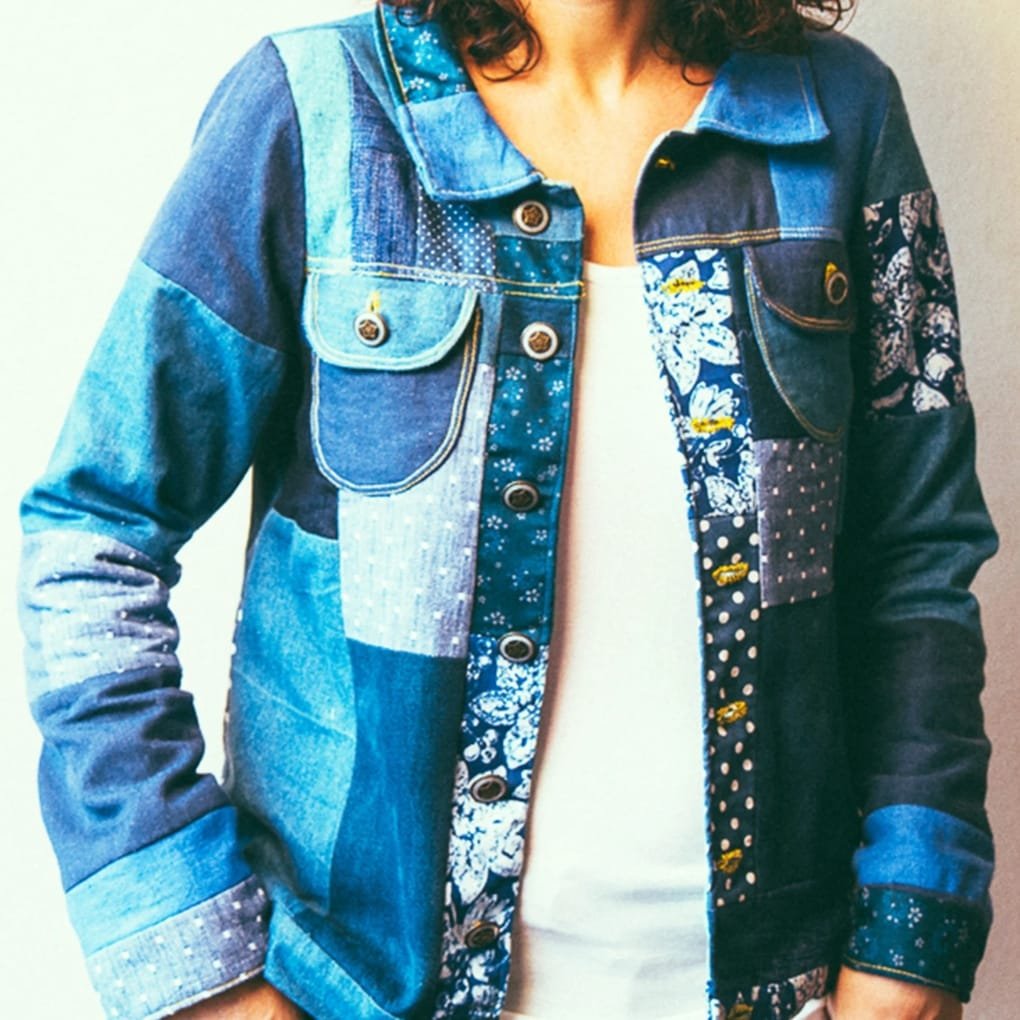
The 50/50 cotton polyester blend is comfortable while still having great performance and that is the reason for its increased popularity. Polyester is much more durable than cotton and also more wrinkle resistant, however, it is not as breathable. Cotton might be much more breathable, however, it is much softer. The blend works great to provide a lightweight, breathable, and durable fabric that does not shrink easily.

These blended fabrics remain durable, soft, and cheap due to specially blended fibers. Customers do not pay a higher price due to the type of cloth used, for example, polyester is cheaper to manufacture and blended fabrics are cheaper to produce than pure cotton. This fit is a wonderful recommendation for companies who need to buy uniforms or bulk clothing, as it is outstanding in every aspect.

Does 50% Cotton 50% Polyester Shrink?

Now, does 50 percent cotton and 50 percent polyester shrink. The answer to the question though is yes, and is less than pure cotton. It is understood that every designer does not want their fabrics to be put in hot water during the washing cycle. The fabric that has polyester in it will shrinks less thanks to the polyester content. The polyester fibers will counter the tendency of the cotton fibers to contract.

For example, the reason a cotton shirt will shrink in hot water is because it tends to absorb more than five percent moisture. The blended polyester cotton shirt believes in the rule of a lesser shrinkage and tends to do the same. Out of the two options of clothing, the blended fabrics are for people who do not like to wear clothing that is body hugging.

Although, on the other hand, controlled hot washing can lead to shrinkage regardless. The polyester content does shrink, it is only slowed down. The chance of the fabric shrinking is highly determined due to the washing and drying used.

How Much Shrinks in Comparison To 100% Cotton?

For purposes of this discussion, focusing on relevant comparisons helps. With heat, most organic fibers, such as cotton, become fragile. These warmers are highly sensitive to elevated temperatures, and will fold, twist, or clasp. These actions will cause the fabric to shrink when submerged in hot water or placed in a hot dryer. On the other hand, polyester fibers are thermoplastic and, therefore, will maintain the fabric’s character when placed under heat; they do not shrink.

Depending on the situation, 100 percent cotton fabric has the potential to shrink between 2 percent and 7 percent. On the other hand, polyester will shrink under 1 percent. A 50/50 blend of polyester to cotton fabric will, on average, shrink between 1 percent and 3 percent. This makes this blend of fabrics a practical compromise where cotton fabrics do not hold shape.

Shrinkage Comparison Chart

Fabric TypeAverage Shrinkage After WashDurabilityHeat Sensitivity
100% Cotton2% – 7%ModerateHigh
100% Polyester<1%HighLow
50% Cotton 50% Polyester1% – 3%HighModerate

This table highlights why many manufacturers and consumers prefer blends. They are more predictable, require less delicate handling, and last longer in everyday use.

Washing and Drying Tips to Prevent Shrinkage

To maintain the condition of your 50/50 cotton polyester clothing, following the proper methods of washing and drying them to ensure their longevity is important.

Microfiber vs Polyester Key Differences 3

Best water temperature

Wash in cold or lukewarm water. Hot water increases the chance of shrinkage and may also weaken cotton fibers.

Drying method

Air-drying is best to avoid shrinkage. If using a dryer, choose a low-heat or tumble-dry setting. Avoid high heat, which can cause the fabric to shrink slightly and reduce its life span.

Ironing tips

Use a medium heat setting. Polyester can melt under very high temperatures, so avoid maximum heat. Place a thin cloth between the iron and the fabric for added protection.

Detergents

Use mild detergents. Harsh chemicals may weaken fibers over time, especially cotton.

Washing cycles

Choose a gentle cycle when possible. This reduces stress on fibers and keeps the blend looking fresh.

By following these care instructions, you will significantly reduce the chances of shrinkage and keep your garments looking new for longer.

Can You Intentionally Shrink a 50/50 Cotton-Polyester Fabric?

Common methods include washing in a machine with very hot water, then drying using a high setting on the dryer, or in extreme cases, boiling the garment first before drying. All these methods do have the capacity to shrink the fabric, but there are risks involved. For instance, subjecting a garment with polyester to these conditions may lead to the weakening or distortion of the fibers, thus leading to uneven shrinkage or a garment that has lost its structural integrity.

In this case, there is more value in the risks. A professional tailor could modify the garment to your exact specifications, thus saving the fabric from any wear while keeping the garment comfortable to wear. However, shrinking at home is an option provided there is an acceptance of a high variability in the final outcome.

Does 50/50 Cotton Polyester Stretch or Lose Shape?

In addition to the questions that the many people have concerning the blended fabric, there are also others that have been inquiring if the fabric stretches. Natural cotton tends to have an elongation potential but does not readily recover from a prolonged period of being stretched, while polyester has a tendency to maintain the shape, and tell after being stretched.

The combination of these two makes the fabric comfortable, while the ease of recovery is not very high. Therefore, 50/50 garments maintain their shape better than cotton fabric, and do not slacken as fast as the unblended stock, thus retaining the shape after multiple washes.

This quality is one reason why uniforms and casual sportswear plus everyday t-shirts often utilize this blend. Once fused, garments look clean and tidy, even after a few months of use.

Other Considerations of Cotton-Polyester Blends

  • Wrinkling: A 50/50 blend will wrinkle less and be less prone to creasing than 100 percent cotton, due to the polyester content and polyesterr and cotton blend.
  • Breathability: This is the case in the 50/50 blend, and even if polyestercotton is the least breathable fabric of the three, it will still offer increased comfort than a 100 percent polyester range in most climates.
  • Pilling: With the polyestercotton blend, the issue of pilling is even less than pure polyester, because the fabric is highly resistant to pilling.
  • Softness: The increased comfort brought about by the balance of the polyestercotton blend is even more astised with the reduction stiffness and increased softness provided by the pure polyester.

Ideal Applications for 50/50 Cotton Polyester Fabric

Due to the balance characteristics that the fabric possesses, the 50/50 blend is found in a number of different items.Because of its balanced properties, the 50/50 blend is used in many different products.

  • Clothing: T-shirts, hoodies, sweatshirts, and uniforms are commonly made from this blend. They are comfortable to wear and easy to maintain.
  • Sportswear: Many athletic teams choose this blend because it combines comfort with long-lasting durability.
  • Home textiles: Bedsheets, pillowcases, and curtains benefit from wrinkle resistance and durability.
  • Workwear: Companies prefer blended fabrics for uniforms because they maintain size, resist shrinkage, and are cost-effective.

The combination of affordability, comfort, and practicality explains why this blend is so common in both fashion and home products.

Common Uses of 50% Cotton 50% Polyester Fabric

Microfiber vs Polyester Key Differences 2

Everyday Clothing

For everyday wear, 50 50 cotton and polyester fabric is most commonly used for making t-shirts, polo shirts, sweat shirts and casual tops, with this specific blend of fabric due to its combination of breathability and strength. The cotton side of the fabric blend cotton and polyester is gentle to the skin and soft, yet does not shrink as drastically as cotton does. This makes the blend reliable for long term use. The easy and simple care of this blend makes it the ultimate choice.

Sportswear and Activewear

Athletic wear has attire that is durable yet comfortable. To achieve this, the ideal blend needed is cotton and polyester. The blend of polyester and cotton makes a perfect blend as polyester helps to wick moisture and retains shape while cotton also enables the fabric to remain breathable. Additional use of this blend is for hoodies, joggers, and even training shirts as the fabric is compatible with numerous washes without losing its shape.

School and Work Uniforms

The fabric used for the creation of uniforms is specially designed to withstand numerous washes without fading and shrinking. This is the reason behind the choice of schools and businesses to use 50 50 cotton and polyester blends. The blend used for uniforms, polo shirts to button downs, provides a long lasting neat and professional appearance. The use of the blend also ensures that uniforms remain neat and professional looking for a long time. The uniform is a popular choice due to its resistance to shrinkage, ensuring the fit is consistent across the whole group as it regulates the fit of the entire group.

Home Textiles

Apart from clothing, this blend is rather ubiquitous in the home in the form of bedsheets, pillowcases and even curtains. These items are subjected to regular laundering and a blend of fabrics that reduces the bulk of time spent on ironing and flimsy, unmanageable fabrics does the trick. The bedsheet is soft and smooth due to the cotton content and the polyester fibre ensures durability and easy care. The blend is also preferred by many hotels due to its durability and low price.

Conclusion

So, does 50% cotton 50% polyester shrink? Yes, shrinkage occurs, but it is minimal compared to 100% cotton fabrics. Stabilized between the cotton fibers, polyester allows the shrinkage to be managed between 1-3%. Most wearers of this fabric can rest easy knowing that, if the proper washing and drying tips are used, very little size changes would occur.

It is this unique blend of fabrics that captures the interest of potential buyers. The blend provides the user with the softness of cotton and the stamina of polyester. The fabric is wrinkle resistant, shape retaining, and low-cost. Thus, for garments, school uniforms, and home textiles, the 50/50 cotton polyester is an ideal fabric. With the appropriate techniques, it will offer the wearer comfort, strength, and elegant design for many years.

FAQs

Does 50/50 cotton polyester shrink in cold water?

Not washing in cold water, avoids noticeable shrinkage, therefore, it is the safest option.

How do you wash a 50/50 cotton polyester?

50/50 cotton polyester is washed in cool to lukewarm water, with a mild detergent, while avoiding hot dryer temperatures. Drying to air is preferable.

Is 50/50 cotton polyester suitable for summer?

Yes it does, but in extreme heat, pure cotton may be a better option.

Does 50/50 cotton polyester shrink more than 60/40?

No. because a 60/40 blend is more cotton, it holds a higher risk of shrinkage.

Does 50/50 cotton polyester last long?

Yes, while it may be highly durable, the polyester fibers prevents excessive wear and shrinkage, making the fabric long-lasting.

Is it true that 50/50 cotton polyester fade over time?

Yes, but it fades less than pure cotton. It is better because the polyester fibers hold dye better, helping colors stay vibrant.

Does 50/50 cotton polyester shrink after each washing?

In the initial washes, yes, it is true most of the shrinkage occurs. However, it will be retained after, provided it is washed appropriately.