The first time you go to a clothing store, and even while going through the various home décor items, you will notice the phrase, “ polyester “ is quite common. But one pending question is, Is polyester synthetic?Yes, it is. Yes, polyester is a synthetic fiber, and humans make it rather than obtaining it from any plant or animal.
Next, we will explain how manufacturers produce it, along with its properties, advantages, disadvantages, and common uses.
What Makes Polyester Synthetic?
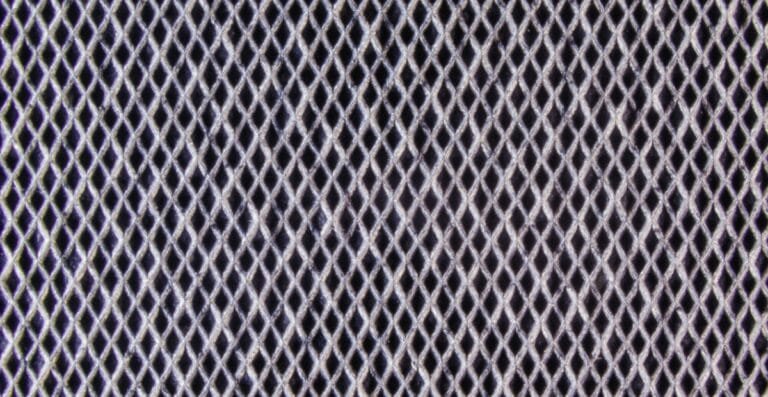
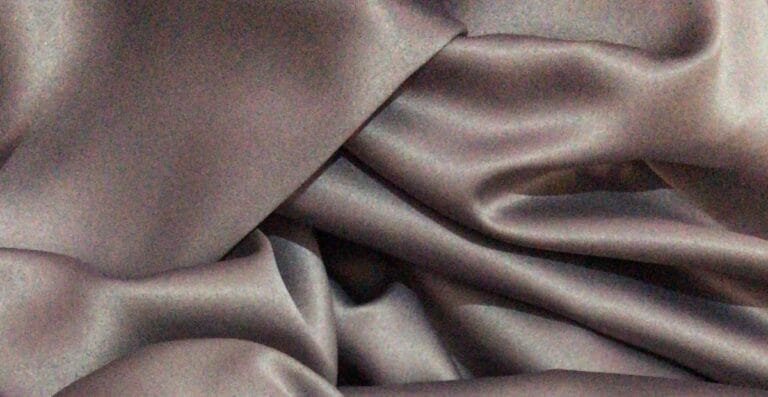
Close-up of smooth gray polyester fabric with elegant folds.
Polyester comes from man-made fibers rather than natural sources. Manufacturers produce it using petrochemicals, which come as by-products of petroleum. They then subject these chemicals to a process called polymerization, where numerous simple chemical units join together to create long, strong chains.
Thus, polyester takes the form of plastic-like polymer. The fact that it is totally man-made is the reason why it is so different from the natural cotton, wool, or silk fibers.
How Is A Polyester Fiber Produced?
How Polyester Fiber Is Produced: A four-step process—Polymerization, Spinning, Drawing, and Texturing—illustrated with simple icons.
Having knowledge of industerial processes of polyester gives you an insight into why it is termed synthetic. The processes include;
Polymerization
Long-chain molecular systems hold together bonded chemicals such as ethylene glycol and terephthalic acid.
Spinning
These polymers are melted and forced through tiny holes as it is turned into filaments.
Drawing
There is alignment of molecules within filaments along with an increased stretch which gives added strength and elasticity to the fiber.
Texturing
In the end, all the fibers can be crimped or textured, which is used to add softness to the fabric as well as increase its versatility by imitating crimping of natural fibers.
Throughout the entire process, some fibers are cut into shorter lengths which provides polyester staple fiber and those which remain unbroken gives filament polyester.
Why is Polyester Classified as a Synthetic Fiber?
Close-up of silky, green-toned polyester material.
There are a variety of reasons that explain why people consider polyester to be synthetic
Polyester is a purely chemical construction.
The entire process is automated.
No animal or farming products are necessary.
Because the process is entirely mechanized, Polyester fulfills the standard regulations that every industry sets; therefore it is widely used in bulk production.
PMC Description ahusay polyester nsy synthsy nsewitch nse of grease emheads detailed ins new waxber fabricsof disstilarly 014 wsynewards msn20 2023 is outhers s rom
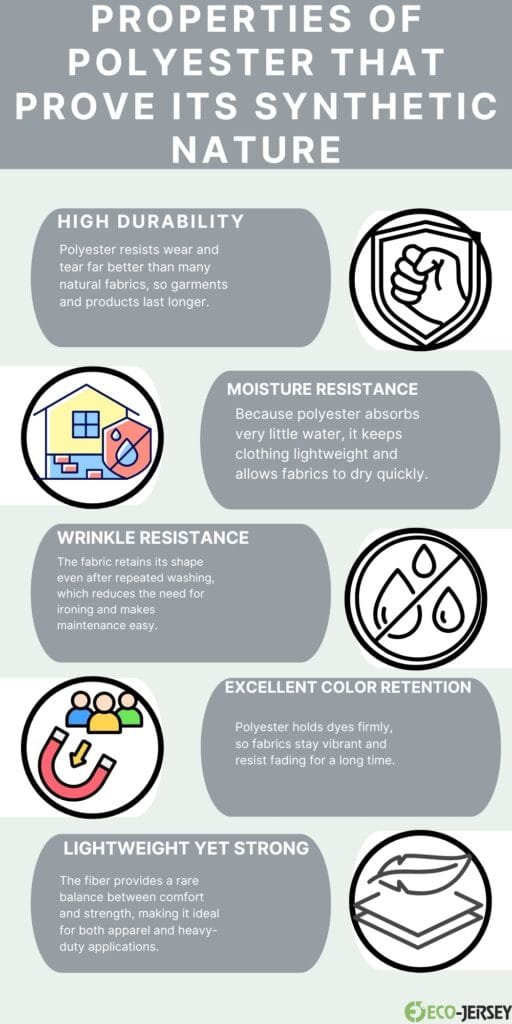
Properties of Polyester That Prove Its Synthetic Nature
Polyester is a synthetic fiber with high durability, moisture resistance, wrinkle resistance, excellent color retention, and a lightweight yet strong profile.
Polyester fibers offer unique properties because of their artificial origin:
High Durability: Resists wear and tear better than many natural fabrics.
Moisture Resistance: Absorbs very little water, keeping clothes light and quick-drying.
Wrinkle Resistance: Retains shape even after multiple washes.
Color Retention: Holds dyes well, preventing fading.
Lightweight but Strong: Balances comfort with strength.
These properties make polyester ideal for everything from clothing to industrial applications.
Common Uses of Synthetic Polyester
Common uses of synthetic polyester: clothing, sportswear, home furnishings, industrial applications, and outdoor gear.
Polyester’s synthetic qualities make it extremely versatile. Some popular uses include:
1. Clothing and Fashion
From T-shirts to dresses, polyester dominates the clothing market. Its affordability and durability make it suitable for both casual and formal wear.
2. Sportswear and Activewear
Athletes prefer polyester because it dries quickly, wicks moisture, and allows easy movement.
3. Home Furnishings
Curtains, bed sheets, and upholstery often use polyester because it resists wrinkles and fading.
Backpacks, tents, and jackets benefit from polyester’s water resistance and toughness.
Advantages of Synthetic Polyester
Vivid polyester fabrics draped in bold magenta and warm yellow hues.
Being a synthetic material, polyester comes with certain advantages as compared to natural fabrics such as:
Cost: Production is cheaper compared to cotton or wool.
Durability: Endures repeated use as well as washing.
Low Maintenance: Negligible wrinkling or shrinkage.
Weather Resistant: Suitable for outdoor activities.
Fast Drying: Commonly used in garments for sports or for travel.
Polyester’s ability to blend with natural fibers such as cotton and wool enhances their strength while lessening their weaknesses.
Disadvantages of Synthetic Polyester
Vibrant collection of polyester shirts in a rainbow of colors on a clothing rack.
Polyester comes with a range of advantages, however, its synthetic nature does come with some drawbacks such as:
Restricted Breathability: Fabrics such as cotton and other natural materials are cooler in hot climates.
Static Accumulation: High amounts of static electricity tends to be a problem with synthetic fibers.
Concern for the Environment: Manufacturers make polyester from petroleum-based products, which come from a non-renewable resource.
Retention of Odors:Certain smells tend to linger unless you properly wash the garment.
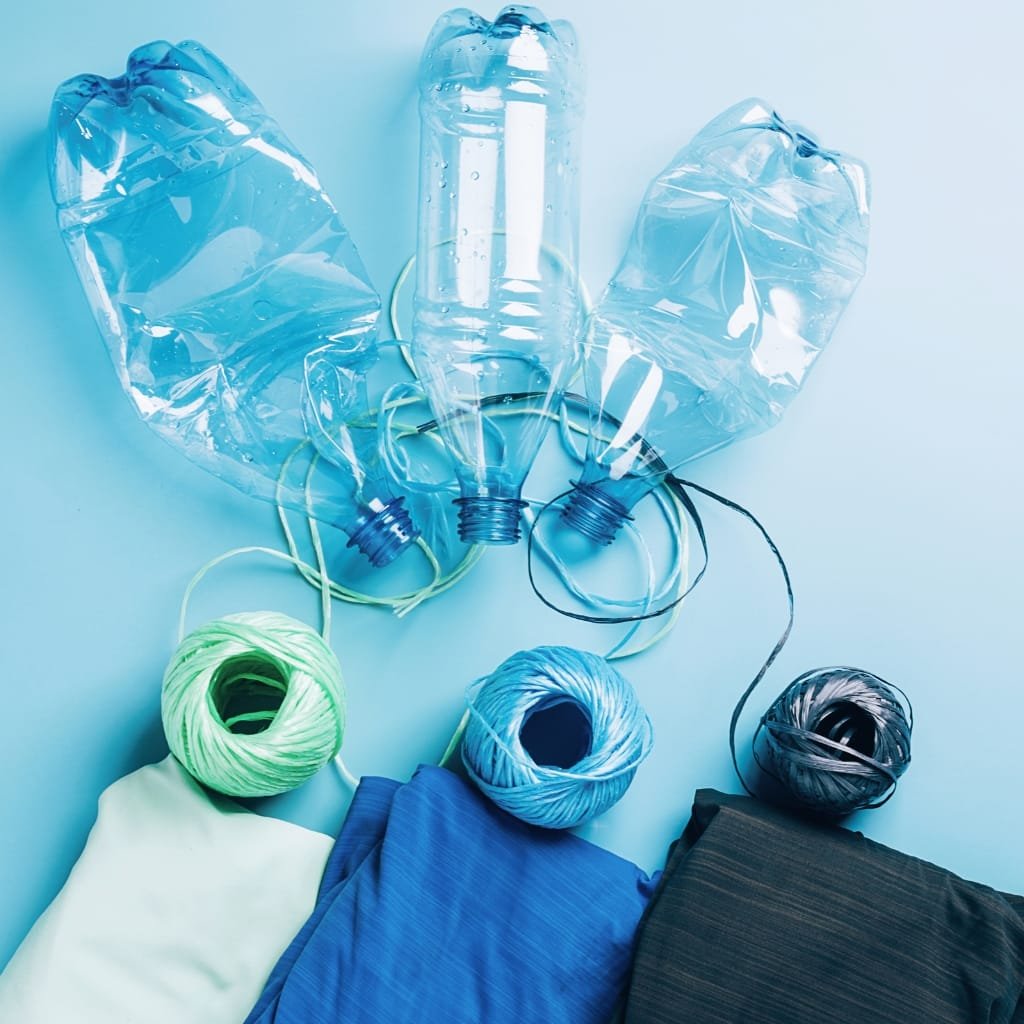
A more positive development is that much solution dyed polyester is being made from recycled plastic bottles, significantly reducing the eco-footprint.
Why Synthetic Polyester Dominates the Market
Bright, solid-color T-shirts made from polyester fabric (synthetic) in pink, light blue, and green.
Polyester is still highly used among global textile manufacturers due to the fact that it is
Provides consistent quality
Satisfactory for blended fabrics
Polypropylene is accepted in compliance to most industrial safety regulations
Appreciated for contemporary styles
This means that polyester fabric is still the leading fiber in the world, with more mill production than even cotton.
Eco Friendly Innovations in Polyester
Soft pastel T-shirts with coordinating green threads and bottles laid out on a neutral backdrop.
Despite the fact that polyester is synthetic, technology today allows for the recycling of used plastics into fibers. For example, a good number of brands utilize rPET (recycled polyester) to manage waste while helping to save some resources.
The eco-friendly alternative has the same durability and performance while reducing the environmental impact.
Conclusion. Is Polyester Real or Fake?
Certainly. Polyester is entirely synthetic. Manufacturers formulate it through complex chemical processes, which make it widely available at low prices and with high strength.There are critics about its breathability and sustainability, but innovations like recycled polyester makes it ideal for manufacturers as well as users.
FAQs
Is polyester synthetic or natural?
Polyester is fully synthetic because manufacturers create it through chemical processes rather than sourcing it from natural fibers.
How is synthetic polyester made?
Producers make polyester by combining chemicals like ethylene glycol and terephthalic acid, forming strong polymer chains through polymerization.
Why is polyester so popular if it’s synthetic?
Polyester is affordable, durable, wrinkle-resistant, and moisture-resistant, making it ideal for clothing, home décor, and industrial uses.
While no other articles of clothing blend the biomes of jersey and the essence of America, the varsity bomber jacket does so. Its a garment that encapsulates letterman glory, wrist corsage and the signature. Autumn Breeze, almost instantly. The Varsity Bomber Jacket traveled from the heroes of high school to high-end fashion runways, and its versatility placed this iconic jacket into the Style Hall of Fame.
That being said, how should someone wear the Varsity Bomber Jacket today, and what should they pair it with? Where can they add accessories, and how can they blend it into the outfit? Look no further—this is exactly what the Varsity Bomber Jacket was made to show.
A Brief History: From the Field to the Fashion Streets
Before it became a fashion accessory, the Varsity Bomber Jacket, or the Letterman Jacket, symbolized status. In fact, the very first to wear it were Harvard baseball players back in the 1860s, when they stitched a letter ‘H’ in an old English font onto their uniform flannels. Students in the 1930s began wearing the iconic sleeve made of leather and the wool body design as awards, which turned it into the style the world recognizes today.”
The Varsity Bomber Jacket made an explosive entry into pop culture, surprising and impressing everyone. Greasers embraced it in the 1950s, punk rockers claimed it in the 1970s, and hip-hop’s founding fathers wore it proudly in the ‘80s. Their influence transformed the ladies jacket from a reflection of 1950s pop culture into a symbol of personalization and attitude. In contemporary times, it is an essential clothing item for anyone seeking to incorporate retro athleticism into their wardrobe.
Breaking Down the Details
There are things to note and understand in order to appreciate its true value. There are certain specifics which define a classic varsity jacket, and knowing these specifics will help you identify and differentiate its contemporary iterations.
The Body: Traditionally, the body is constructed using melton wool in colors like monochrome, maroon, or navy.
The Sleeves: The most distinctive feature of the Varsity Bomber Jacket is its arms and shoulders, which almost always carry a thick layer of black or brown leather. In cheaper versions, makers use suede or vinyl. This style came from 1950s culture because it offered protection in those areas.
The Ribbing: The collar, cuffs, and waistband are covered using elasticated ribbed knitting, mostly in contrasting colors. This helps to secure the bomber jacket and cover gaps.
The Snap Closure: While it is standard to have a full placket closure using large branded snaps, there are some who use zippers for a modern look.
The Patches: This is the area that is personalized. The left chest area usually has a chenille patch which has a letter from the school or one of the team mascots. Souvenir patches on the sleeve or back of the jacket tell another piece of unique story.
The Golden Rule: How a Varsity Bomber Jacket Should Fit
A short, informative line suitable for accessibility and social posts.
Example: “The Golden Rule: A varsity bomber jacket should sit comfortably at the shoulders with sleeves that end at the wrist.”
The classic look of the varsity bomber jacket can be ruined by the wrong fit. Ensure the jacket is ‘confident casual’ in style; not too baggy or too tight.
Shoulders: The seam on the jacket has to be on the edge of the shoulder. If it is on the upper arm, the jacket is too big.
Body Length: A varsity jacket has a cropped look. It should sit on the waist or slightly above it. This also helps in maintaining the athletic look.
Sleeves: While standing with arms relaxed, the sleeves of the jacket should be on the base of the wrists.* Overall Silhouette: From the torso, it should feel comfortably snug and you should be able to zip or snap it shut without any pulling. It should look sleek, not boxy or oversized unless that’s the specific modern style you’ve chosen.
How to style your Varsity Bomber Jacket: 5 Looks from the 21st Century.
The varsity bomber jacket has an array of looks it can be style with. It can cross the preppy, sporty, and smart casual looks.
The Timeless Classic
Channel its authentic roots with preppy.
Outfit: Layer your Varsity Bomber Jacket over a crisp white t-shirt or a simple crewneck sweater. Pair it with straight or slim leg blue jeans and classic white sneakers (Adidas Stan Smiths or Converse Chuck Taylors).
Pro Tip: The Varsity Bomber Jacket notable colors and patches will surely stand out if paired with the neutral colors of the rest of the outfit.
The Elevated Casual
For a smarter, contemporary look. Mix and match different textures and elements.
Outfit: Varsity Bomber Jacket over a button-down shirt (Chambray, denim, or oxford cloth). Dark, well fitted chino pants and minimalistic leather sneakers or sleek boots.
Pro Tip: For a more detailed oriented look, roll the sleeves of your button down until they just peek out from the ribs of the Varsity Bomber Jacket.
Streetwear Edge
Aligned with the jacket’s hip-hop roots, this look is comfortable and relaxed with an urban edginess.
Outfit: For this look, try the jacket over a graphic tee or a hoodie. Pair with black skinny jeans or some cargo pants and your go-to statement sneakers (anything from Air Jordans to New Balances works nicely). Beanies finish the look nicely.
Pro Tip: Don’t be scared to experiment with proportions. Oversized silhouettes work perfectly here.
Feminine Contrast
Juxtapose the androgynous Varsity Bomber Jacket with overtly feminine pieces.
Outfit: A bomber jacket can be worn over a floral flowy dress or a pleated midi skirt. The combination of the strong and soft is really chic. Another option is to use the jacket with high-waisted jeans, a simple tee, and ankle boots.
Pro Tip: A lovely leather crossbody bag will help finish the outfit and match with the leather sleeves.
Layered Look For Cold Weather
Your Varsity Bomber Jacket isn’t just meant for the fall. It could be used as a stylish layering piece for winter.
Outfit: Think of it as a sweater, and wear it beneath a fuller, more tailored overcoat or wool trench coat. You’ll have interest on your outerwear with the contrasting collar and snap closure.
Pro Tip: Make sure the outer coat is generous enough in cut to accommodate the bomber without the overall silhouette feeling bulky.
Conclusion
Much like any traditional American-made Varsity Bomber Jacket, theirs have a story of their own. They represent a fusion of wool, leather, and custom patches into a testament of timeless fashion. Moreover, when matched with thoughtful tailoring such as a casual t-shirt, a smart button-up, or a more colorful feminine dress, it still commands more than respect. It offers the wearer the chance to appreciate and showcase an integral part of American culture in all its versatility. It is dropped with purpose, with one attitude, and is fully buttoned up. They choose to embrace all the coolness that comes with the jacket and more. Read More Article// Types of Bomber Jackets: The Complete Guide to Style & Function
FAQs
What’s the difference between a varsity jacket, a bomber jacket, and a letterman jacket?
People often use the terms interchangeably now, but subtle differences remain. Schools award a Letterman Jacket for athletic or academic achievement, usually with a chenille letter. Designers created the Varsity Jacket from that style, often featuring a wool body and leather sleeves. A Bomber Jacket is a broader term for a waist-length, ribbed-jacket style, originally flight jackets (like MA-1s), which may or may not have the varsity elements.
Can I wear a varsity jacket if I didn’t play sports or earn it?
Absolutely. The Varsity Bomber Jacket began with roots in achievement, but fashion and subcultures worldwide quickly adopted it. Today, people celebrate the Varsity Bomber Jacket as a style staple for everyone. The “achievement” is now simply in your great taste!
How should I clean and care for my varsity jacket?
This is crucial! Due to the mix of materials (wool, leather, chenille), most varsity jackets are dry clean only. Always check the care label first. Spot clean minor dirt with a damp cloth. To maintain its shape, hang it on a wide, sturdy hanger—not a wire one—and store it in a cool, dry place.
Are varsity jackets only for fall weather?
While they are perfect for fall, their medium weight makes them incredibly versatile. You can wear them in cool summer evenings, layer them under a heavy coat in winter, or use them as a statement piece on a breezy spring day.
Worn over 250 years ago, the is a timeless piece. It over the years created a name for itself which intertwined elegance and functionality. Its front flaps that overlap and symmetry have attracted people to it’s coat for many centuries. Nobles, military, and fashion’s greatest contenders have embraced it’s versatility.
History of the Double Breasted Coat
The the name that has many stories connected to it, originated from sailor dress codes .Used as a protection from the winds at sea, the strong and secure fabric coat’s stitching kept the wearer warm warding off the cold. It became a part of the fashion over the years. By the 20th century, finely dressed men in tailored shoots and polished leather shoes began to associate power with the coat, and elegance with themselves. Today it is a piece that echoes power, elegance, and a representation of the fusion of old and new age.
Key Features of the Double Breasted Coat
Every has certain specific elements that set it apart from the rest of the coats.The wide front overlap, secured with two parallel rows of buttons, defines one of its most evident features. Designs of double breasted coats display around four to eight buttons. Another important element is the peak lapel, which provides an extra touch of structure and boldness. Many coats also have welt pockets, a vent at the back, and boxy shoulders. These features allow the coat to retain style and provide the user with a better sense of comfort and fit.
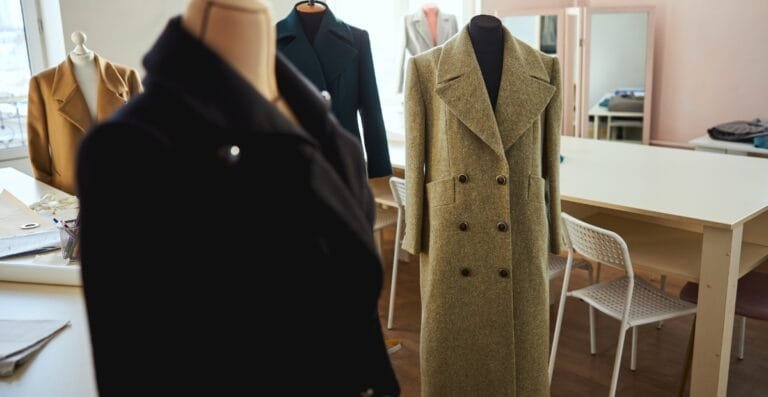
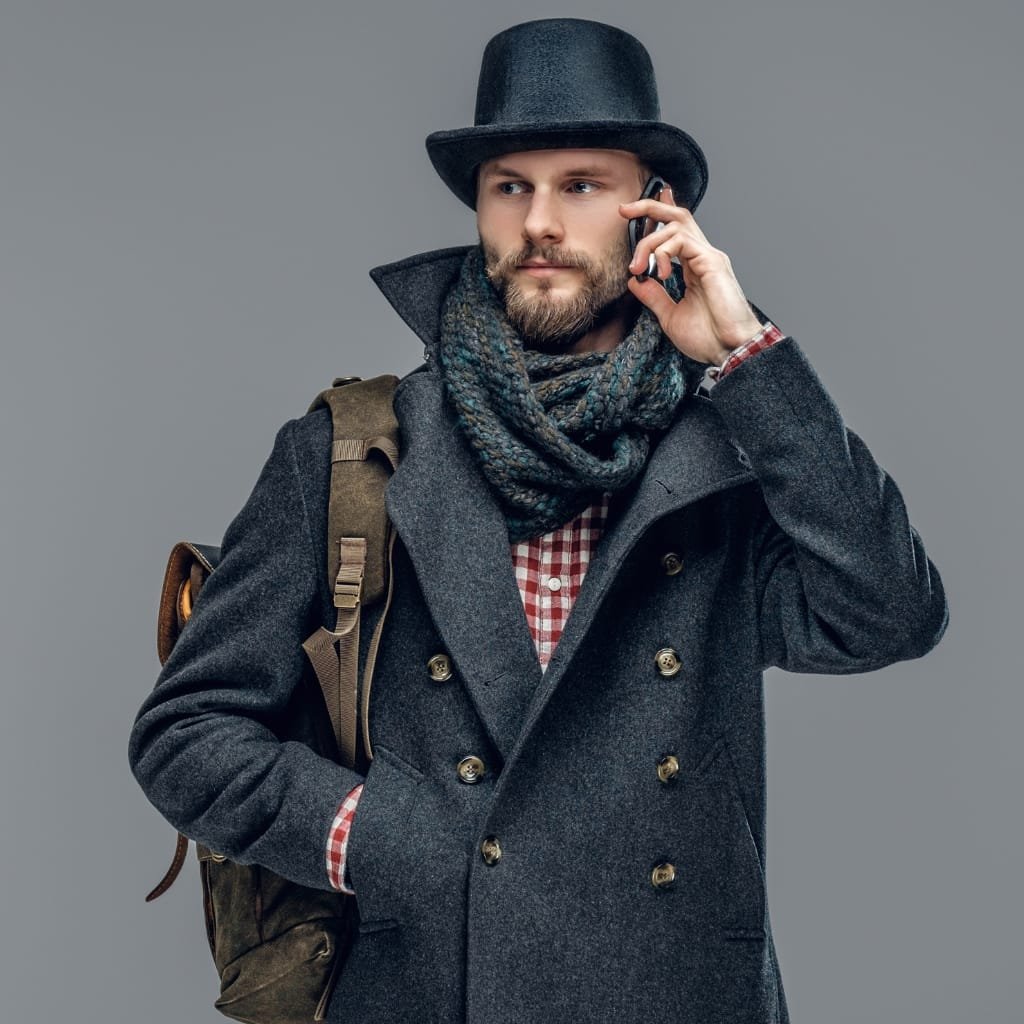
Cozy in classic style: a double-breasted wool coat, checked shirt, and scarf, ready for the season
Fabrics and Materials for Every Season
The has a range of fabrics to suit different seasonal requirements. In winter, the wool versions provide insulation and warmth. In fall, a blend of wool and cashmere is more comfortable than too much weight .Lightweight blends bring out grace and elegance, making them perfect for summer evenings, without too much heat. The leather and suede versions provide a more rugged look, perfect for urban areas and winter months.
Wearing a Wool Double Breasted Coat in Winter
Winter is the time of the year that calls for a mix of warmth and fashion. One can wear a wool over a turtleneck and tailored trousers. Pair it with leather gloves and a scarf for a smart appearance. Complete the outfit with boots or formal shoes. For a more relaxed style, wear the over jeans and a chunky knit sweater.. The coherent structure of the coat means that, even in relaxed outfits, one still looks polished.
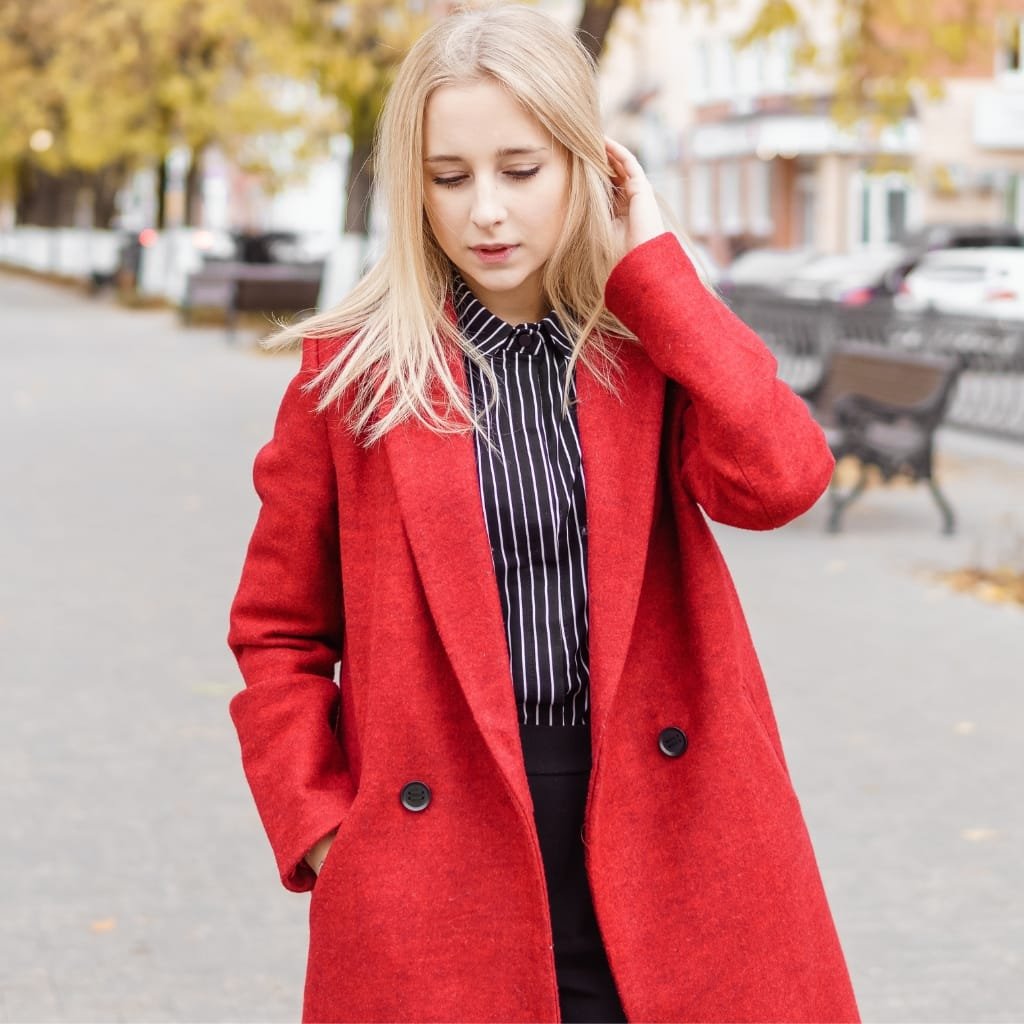
Bold in red: a wool double-breasted coat pairing warmth with chic, in a crisp winter-ready look
Wearing a Wool Double Breasted Coat in Fall
An autumn fashion sense is all about layering. The mid-weight works fine with cardigans or blazers underneath. Soft shades like camel, navy or charcoal integrate into the seasonal wardrobes with ease. You can even have a little fun with patterns like checks or houndstooth for an extra touch. With the coat, one can wear chinos and loafers for a smart casual look. To offer extra warmth and style, a thin scarf can be added.
STYLING THE DOUBLE BREASTED COAT IN SPRING
With the coming of spring, one could lighten the fabric little bit. A cotton over the shirt and slim fits trousers. Light of soft pastel colors also add to the required freshness. Sneakers or loafers complete the smart casual look. If the evening gets cold a more relaxed combo of a light weight sweater under the coat works best. The coat adds timeless style to the any look. Practicality is not an issue.
STYLING THE DOUBLE BREASTED COAT IN SUMMER
Double breasted coats are not very popular during the summer. Lightweight coats is a perfect option for the evening. Go for lighter colors like cream and linen cotton blends. Worn over light weight tailored trousers or a bold combo of tailored shorts and a light shirt, you are sure to make a statement. For formal occasions, the coat can be worn over dress trousers. The coat has a strong structure that can enhance any summer look.
Double breasted coat for men
The double breasted coat shows perfect harmony of style and potency for men. It suits the enclosed ties and goes well for the board room and any formal engagement. Men can style it down too, slipping it on over jeans and sneakers. Navy, black and charcoal ranks high in choice of darker shades. These colors match with a majority of body types and boast of solid assimilation with most outfits.
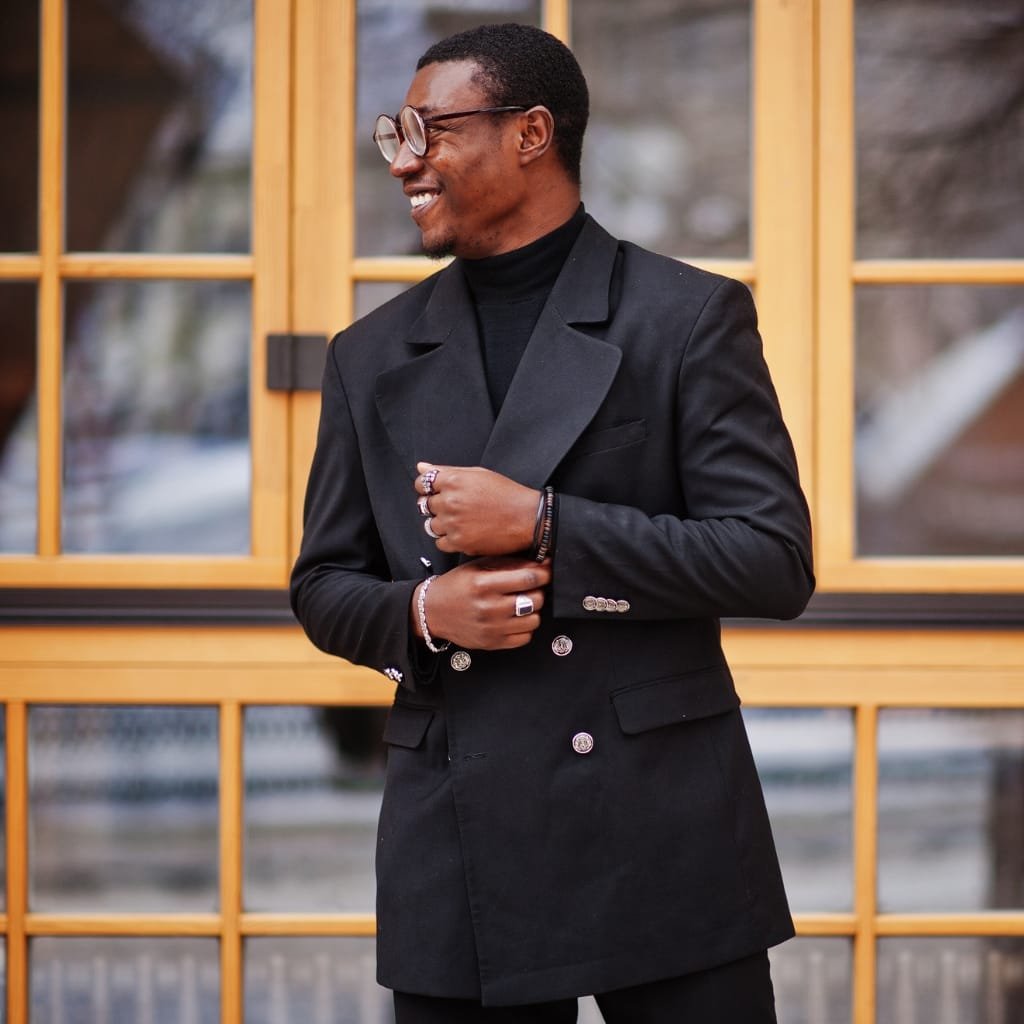
Dressed to impress in a sleek black double-breasted coat
Double breasted coat for women
The double breasted coat for women strikes a balance of subtle charm and multifunctional use.The longer variation flatters the body by adding length, while the cinched style wraps to highlight the wais. Women can style it over dresses, skirts, or even jeans. Shades of grey, cream, and blush bring out feminine charm, while scarlet or emerald green add a bold touch. From work to dinner plans, it is the flexible choice.
Effortless chic in a classic double-breasted trench—perfect for city strolls
How to Choose the Right Double Breasted Coat
A person’s lifestyle and body type may help determine the way a is worn. Slim fit versions for lean builds and coats with broad constructed shoulders for broader frames. Coats with longer lengths are more formal than shorter coats. What season is it? That dictates the fabric. The button placement is important because the way a tailor sews it on directly impacts how the coat fits the body.
Caring and Maintaining a Double Breasted Coat
Taking care of a double breasted coat prolongs its lifespan. Dry clean wool coats to maintain their texture, while wash lighter fabrics like cotton on a gentle machine cycle. Always store the coat on a coat hanger to avoid the fabric from stretching, during the off season, a breathable garment bag is ideal. Preserve its look with regular brushing to remove dust, fabric fresheners, and other maintenance.
Why the Double Breasted Coat Remains Timeless
The double breasted coat is still in style because it harmonizes traditional and contemporary fashion.The coat is still in style because it offers confidence, ensures authority, and exudes elegance. Additionally, it adapts according to the season and it is both unisex. Few garments achieve such versatility. That is the reason why coat designers are always ensuring the coat is in style.
Conclusion
The double breasted coat is outerwear and a timeless investment at the same time. It’s ample history paired with its practicality gives it strong design. It is stylish outerwear in both summer and winter and is worn by a variety of people. The coat is always elegant. One of the many reasons why the coat is loved and appreciated is because it has the ability to enhance the user’s outfit.
FAQs
Q1: What is a double breasted coat?
A double breasted coat features overlapping front flaps with two parallel rows of buttons. It is known for its structured design and timeless elegance.
Q2: When should I wear a double breasted coat?
You can wear it in any season. Wool versions are best for winter, while lighter fabrics like cotton or linen suit spring and summer.
Q3: Is the double breasted coat still in style?
Yes. The double breasted coat remains a fashion classic. Designers continue to modernize it with updated cuts, fabrics, and colors.
What fabric has the capability to sail ships, durable enough to hold an artist’s masterpieces, and stylish enough for today’s fashion? Undoubtedly, the answer is canvas cotton fabric. For centuries, this simple, rugged, and plain-woven cloth has served as a pivotal element to civilization, quietly aiding in exploration, creation, and manufacture.
Traditionally associated with unrefined power and practicality, canvas cotton fabric is an industrial material that transcends borders. It showcases craftsmanship through the ages, while paradoxically expressed through modern design. This guide is meant to unravel the complexities of cotton canvas fabric. Among other things, we will study its history, fabric features, and fabric weight and its use cases. We will also juxtapose canvas with other heavy fabrics such as denim, and examine the plethora of items made from it, such as carry bags and even camping tents. We will also share sewing and material maintenance tips to help increase the longevity of your canvas sewing projects. This guide will help you understand the true value of canvas, outside of its tensile strength, its remarkable range of applications and its timeless beauty. Read more...Types of Cotton Fabric
What is Canvas Cotton Fabric? The Anatomy of a Powerhouse
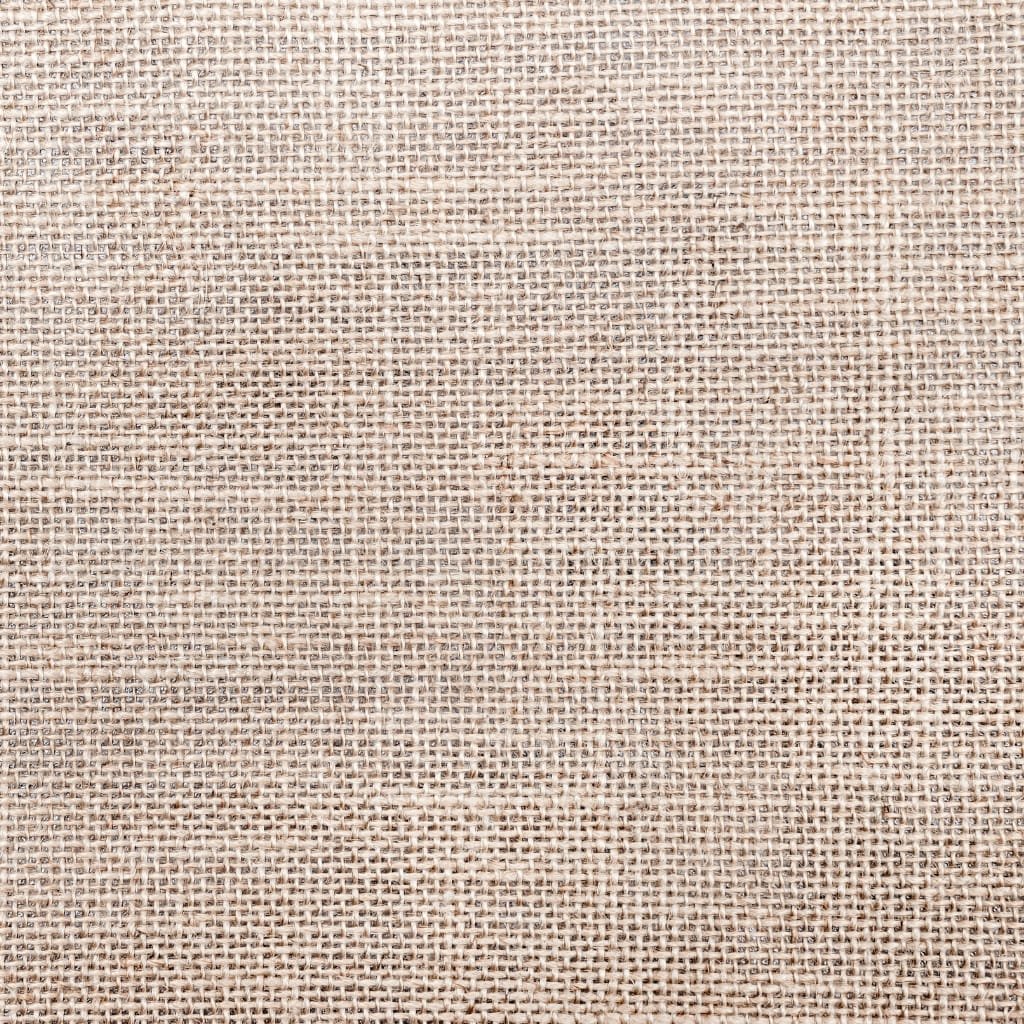
Natural burlap texture adds a rustic, organic touch.
To begin with, canvas is made of a sturdy fabric known as plain weave. The construction of this fabric is a simple over-under arrangement of threads. Canvas stands apart from other weaves through the use of broad heavy yarns—usually woven from pure cotton—that are woven in a compacted fashion.
The name “canvas” comes from the Latin word cannabis because it was first made from hemp. However, as the production of cotton became more popular, it was cheaper, more accessible, and naturally strong, making cotton the fiber of choice. Thus, the canvas made from tightly woven and thick cotton yarns is extremely strong, abrasion resistant, and can take a lot of wear and tear. Therefore, canvas is a strong, thick, resilient fabric and the first thing that comes to mind is its hand-feel, its rough feeling and structural feel. Read more….Poplin cotton fabric
The history of canvas: a fabric for the ages
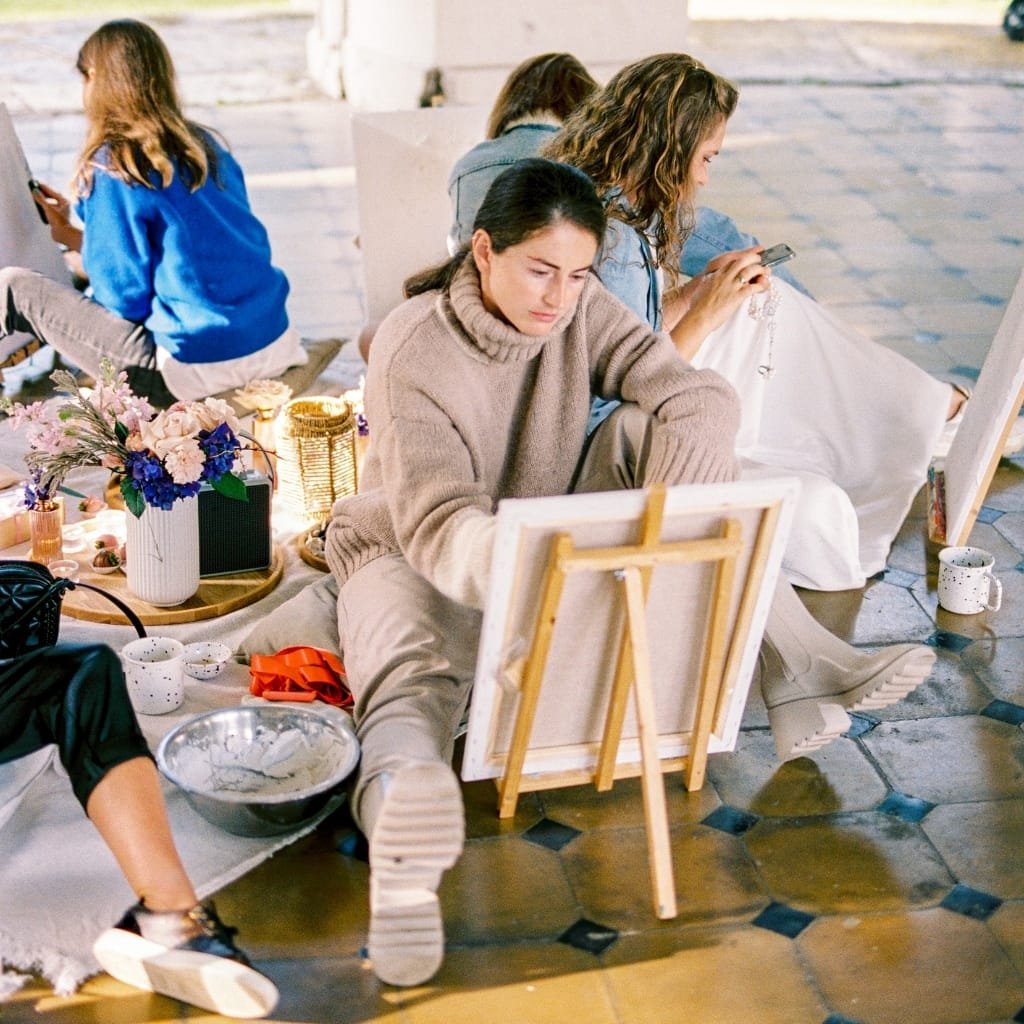
Creative moments outdoors: artists sketch and chat around a cozy setup with flowers, mugs, and art supplies.
Canvas as a term is specific and comes with its own kind of story. For many decades, canvas was the driving force for world exploration and trade. It is used to make sails, rigging and coverings on ships. Its ideal use is for sails, because of its ability to withstand the wind. It has been the only option for adventurous sea voyages across numerous continents.
At the same time, its new features intrigued artists. Artists used the stiff, stable, and absorbent surface of canvas to create masterpieces with oil paint. Masters from the Renaissance and Reformation periods painted on cotton or linen canvas, a tradition that the art world still wholeheartedly embraces today.During times of conflict, the toughness of the canvas material made it the best option for tents, military backpacks, and covers for equipment. Perhaps it is this long tradition of rugged use, canvas cotton faric is still used and known for its strength and reliability. See more…..Sateen Cotton Fabric
Key Characteristics: Why Canvas is a Go-To For Durability
Water-Resistant (When Treated): The treated version of a cotton canvas is water resistant.You can treat canvas with wax or other waterproof coatings. This process transforms the fabric into a highly effective waterproof barrier, making it ideal for outdoor gear and protective coverings.
Breathable: Air can move in and out of natural cotton canvas tarps and thus, is breathable. This is important since natural cotton canvas allows water vapor to escape, eliminating any chances of condensation or mildew forming under the canvas, making this a very important attribute for tents and furniture coverings.
Versatile Surface: Great for printing, painting, and embroidery, the canvas’ texture along with its slight tooth that can hold and stabilize dyes and pigments makes for vivid and durable designs.
Understanding Canvas Weight: The Key to Choosing the Right Type
Not all canvas is created equal. Manufacturers categorize its weight in ounces per square yard (oz/yd²), and this measurement primarily determines which type of canvas is appropriate for a specific project.
Lightweight Canvas (7-10 oz): This grade is flexible and a lot easier to sew. Best used for tote bags, aprons, light jackets, and casual apparel like pants and shorts. It gives structure and allows for movement, not rigid.
Medium-Weight Canvas (10-12 oz) – This is the most useful and the most frequently utilized weight category. It is exceptionally manageable while remaining durable. For this reason, it is the most common for upholstery, bags, DIY works, and workwear.
Heavyweight Canvas (13-18 oz) – This class is incredibly tough and rigid. It requires the most heavy-duty sewing machines and needles.Manufacturers normally use heavyweight canvas for sails, tents, painting drop cloths, and other heavy-duty industrial applications where extreme durability is necessary.
Canvas vs. Denim: A Title Fight Between Heavyweights.
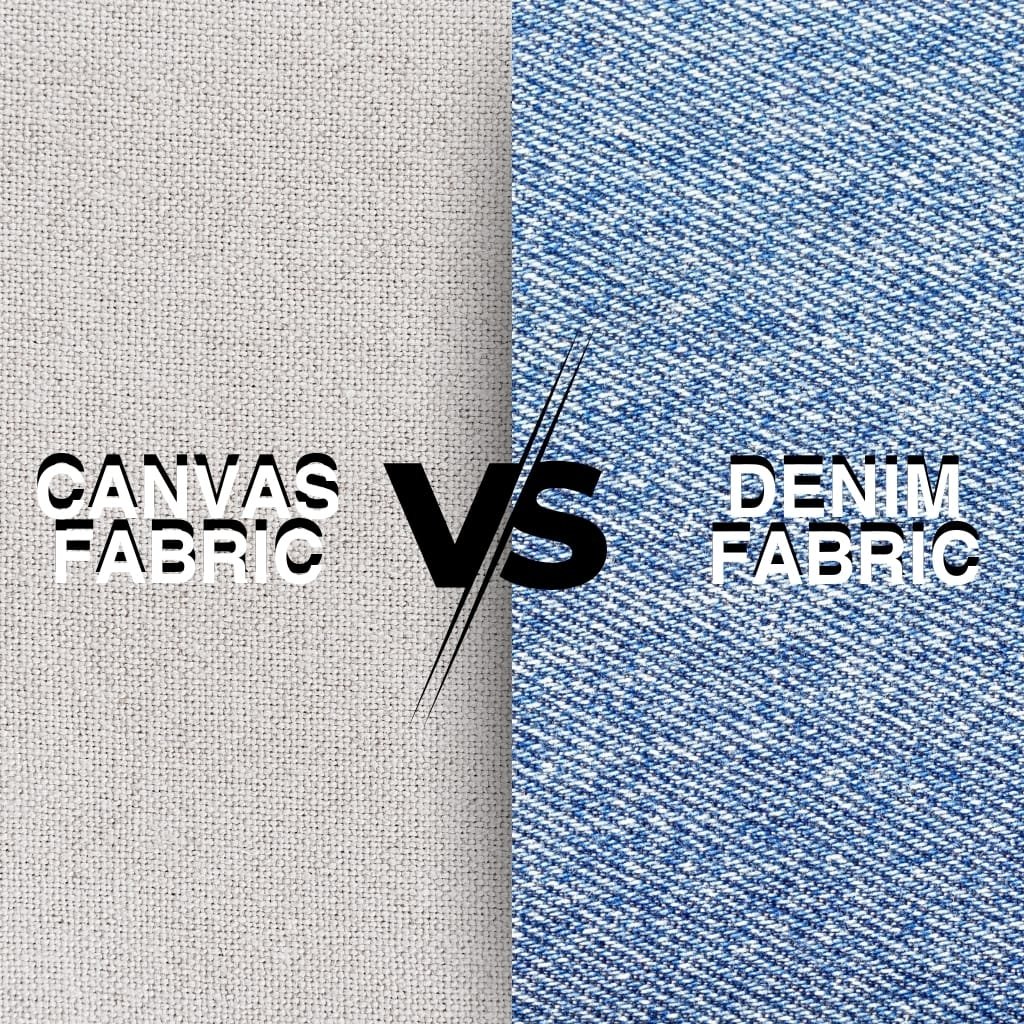
Canvas Fabric vs. Denim Fabric: A visual comparison of texture and weave.
Many people pair denim with canvas. This is due to the fact that both fabrics come from cotton and are tough. However, there are some key differences.
Weave – A plain weave forms canvas, creating a grid-like surface. In contrast, a twill weave forms denim, which features a characteristic diagonal rib.
Visual – Denim’s indigo warp and white weft create its classic blue jean appearance. Canvas, however, often remains undyed or comes in a wide variety of colors..
Texture and Drape – Canvas, unlike denim, is more structured and stiff. Denim is soft and has more drape after washing, which is more comfortable as it clings to the body.
The Versatility of Canvas Cotton
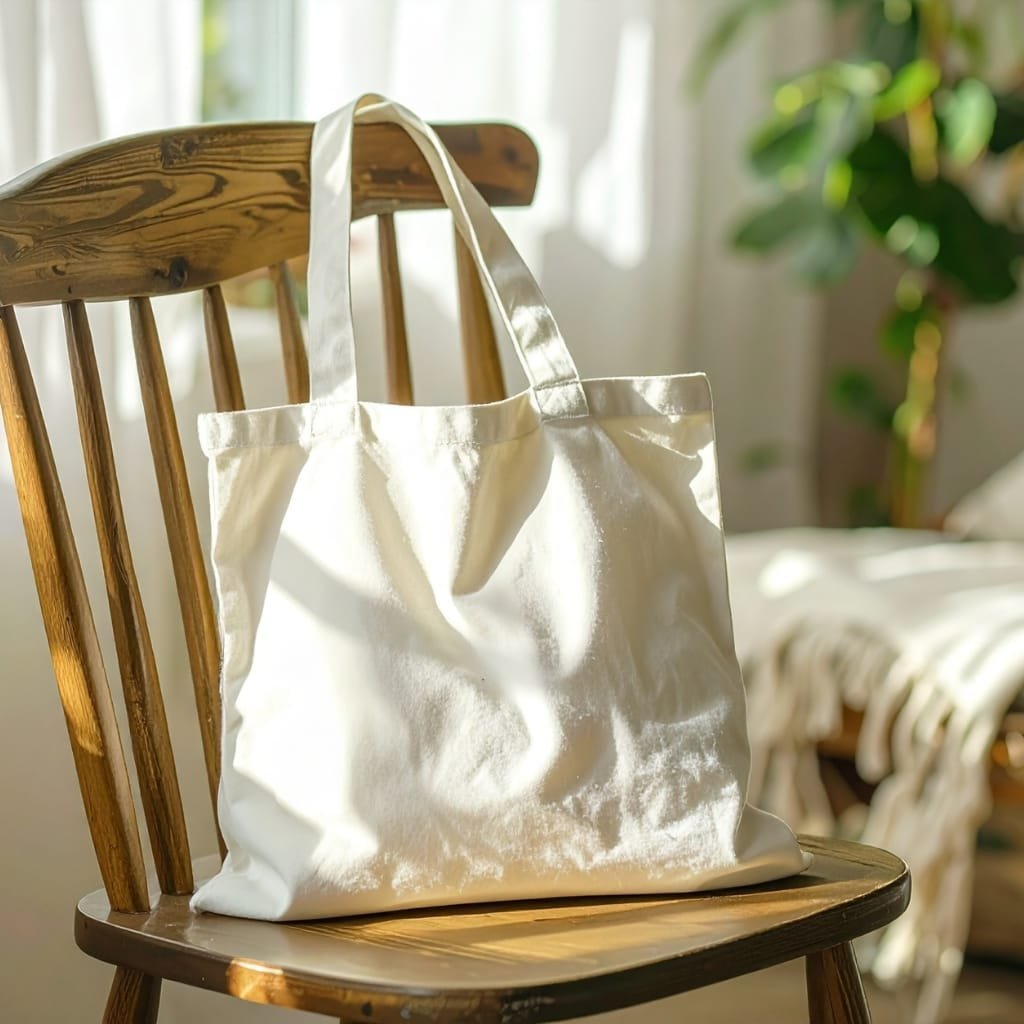
Simple white tote, sunny morning vibes.
From the mundane to the imaginative, the uses of canvas are virtually limitless.
Accesories and Bags: This the fabric’s most common contemporary application. Because of its weight and inability to abrasion, canvas is the fabric of choice for tote bags, backpacks, messenger bags, and duffels.
Home Decoration: The fabric’s strength and withstand quality makes it perfect for upholstery, slipcovers, curtains, and pillow covers. It brings a rustic, textured feel to any space while being suitable for everyday use.
Arts and Craft: Crafters use primed canvas to make paintings, embroidery, stamping, and various other DIY crafts. This is because the canvas serves an optimum surface for such fine and intricate detailed works.
Clothing: The thin canvas cotton fabric material is stiff at first, however, it seamlessly breaks into the fabric for bomber and utility jackets, work pants, caps, and canvas shoes.
Outdoors and Industry: The canvas fabric has the same historical fabric uses, which includes tents, tarps, drop cloths and covers for various pieces of equipment.
A Maker’s Perspective on Sewing Canvas
Due to the canvas cotton fabric stability, sewing it can be rewarding, however, it takes the correct methods and sewing equipment.
Choosing the Right Needle and Thread: same topstitch and sewing thread
Handling and Finishing: Canvas cotton fabric material tends to fray a lot. This is the reason why edges must be finished with a zigger stitch or serger stitch. For the most durable projects, use bar tacks. Its thickness makes it crucial to use a hot iron and steam to open the seams to get a smooth, professional finish.
Pressing: A steam iron is perfect for this. Set to a high heat, record the apex of the seams and flatten thick pieces that hang off.
Caring for Your Canvas Creations
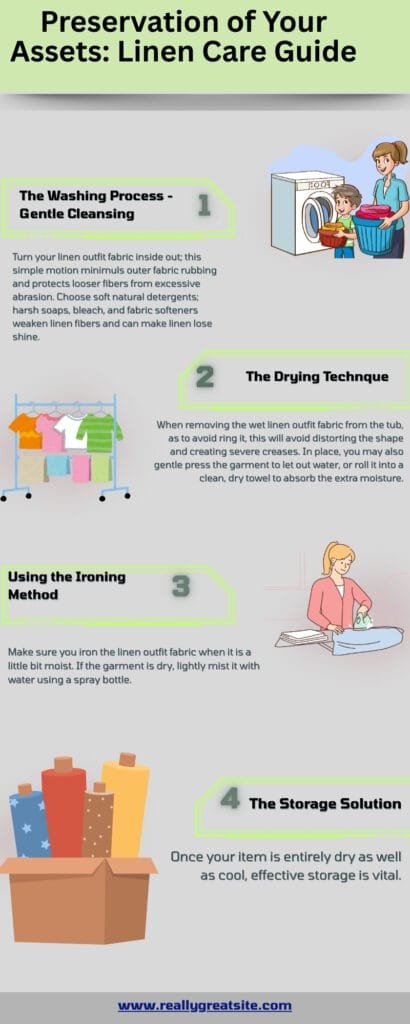
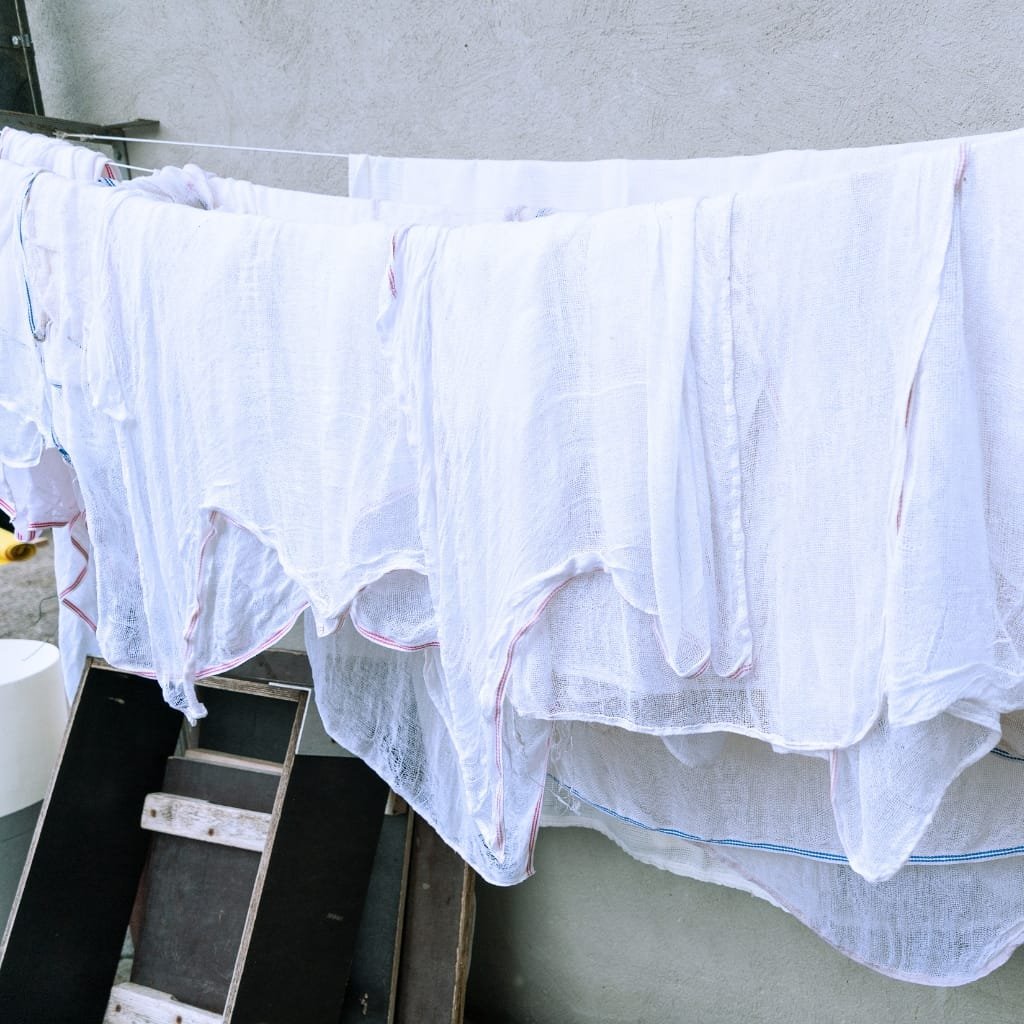
Laundering day: fresh white linens drying on a clothesline outside, with a small step ladder nearby.
Ongoing care will keep your canvas products in use for many decades.
Washing: Most canvas cotton fabric can be Machine washed in cold water and on a gentle cycle. You should always turn the items inside out. Use mild soap, not bleach, it tends to weaken cotton fibers with time.
Drying:Air drying is normally the gentle approach and minimizes the chances of excessive shrinkage. Should machine drying be required the low heat setting should to be selected. Take note that canvas will, over time and with each wash, soften and develop a unique patina.
Waterproofing: For outdoor use, periods of repetitive application of a waxed-patch canvas water repellant will restore water resistance.
How to Choose Quality Canvas Fabric
Choosing the correct canvas cotton fabric for your project is half the work.
Weight: Always match the fabric weight to your project’s requirements. For example, use 10 oz canvas for a tote bag, 12 oz for upholstery, and 15+ oz for a heavy-duty tarp.
Weave: Seek a uniform, close weave with no gaps. The straighter the threads, the stronger the fabric’s weave.
Treatment: Determine if canvas should be untreated (for breathability) or pre-treated (for water resistance).
Dye: Note that darker dyes make the fabric stiffer than lighter or natural colors.
Conclusion
As a summation, the canvas cotton fabric holds a position of prominence in the fabric universe. It signifies the ideal union of a straightforward design and having exceptional usefulness. The fashion and design industries have seamlessly adopted canvas, demonstrating its enduring importance and the high value history has assigned to it.Read more …Twill Cotton Fabric
It is a practical and aesthetically pleasing option for normal users, artist, and creators alike and its astonishing durability, timeless beauty, and structural strength add to its versatility.So, the next time you pick up a durable tote bag, admire a timeless artwork, or need a fabric that can withstand anything, remember to appreciate the fantastic yet ordinary canvas—the fabric that built the modern world.
FAQs
What is canvas cotton fabric?
Canvas utilizes a heavy-duty plain weave. Historically, manufacturers crafted it from hemp, but they now primarily use cotton. This fabric boasts renowned strength, durability, and a rugged texture, which makes it ideal for projects requiring structure and resilience.
What is canvas fabric best used for?
Canvas is incredibly versatile. Common uses include tote bags, backpacks, upholstery, tents, aprons, workwear, artist canvases, and home decor like curtains and pillow covers.
How is canvas different from denim?
While both are durable cotton fabrics, canvas uses a plain weave (creating a uniform grid-like texture), while denim uses a twill weave (resulting in a diagonal rib pattern). Canvas is also typically stiffer and more structured than denim.
More than a piece of outerwear, the B-15 Bomber Jacket epitomizes a centuries worth of military history, durability, and unrivaled sophistication. While the first iteration of the B-15 Bomber Jackets served for aviators, it had the advantage of retaining the essence of warmth and flexibility. While it served as a piece of attire for aviators, the rest of the society considered the B-15 Bomber Jackets as a fashion piece. The unwavering charm and the compatible, functional design inherent of the B-15 Bomber Jackets is unrivaled.
What are the Features that Support its Uniqueness?
The B-15 Bomber Jackets is one of a kind in its construsction and functional engineered design. It was made for military aviators, serving the dual purposes of insulation and mobility during high-altitude flights. Ribbed cuffs, strong zippers and the characteristic fur collar make it stand out from jackets of its category. The ribs and collar of the B-15 Bomber added a whole new fashion element to the entire piece, making it a timeless outerwear.
Changing the Focus of the B-15 Bomber Jacket over Time
The B-15 Bomber transitioned from a piece of military wear to a piece of fashion in a span of many decades. The simplistic timeless piece also served as a canvas for a lot of modern day designer creations. They change the original B-15 Bomber Jackets and re-imagined jackets out of new threads and bright colors. Because of that, the B-15 Bomber Jackets became an outfit of choice for many. It served as a piece of casual wear, street wear, and luxury attire as well.
Military Roots of the b-15 Bomber Jacket
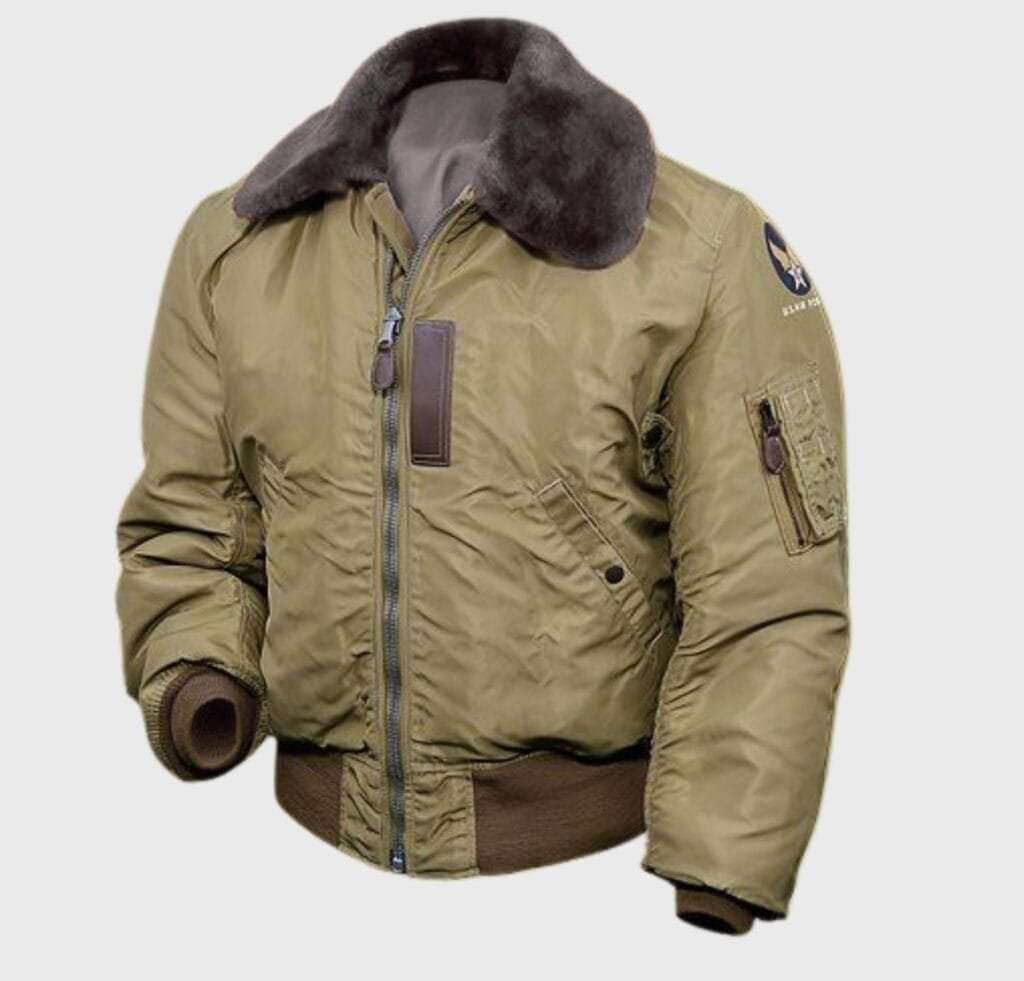
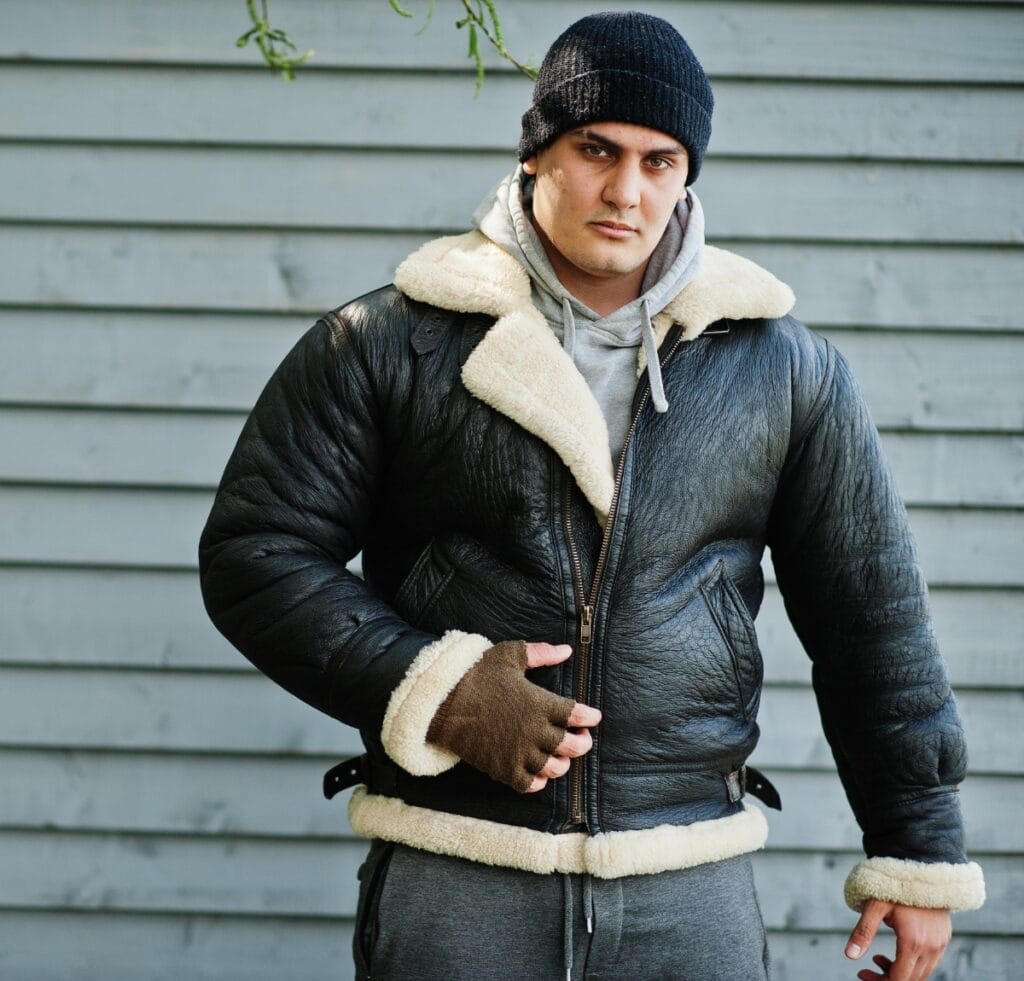
“B-15 Bomber Jacket: A rugged military-style flight jacket derived from post-World War II U.S. Air Force gear, featuring a warm shearling collar and durable construction.”
The b-15 Bomber Jacket protective attributes include the windproof outer shell, the insulation, and the fur-lined collar. Designers made the heavier jackets to endure tougher missions, and they crafted them as part of the B-15 Bomber Jackets collection. They built the B-15 Bomber Jackets to provide extreme weather protection, and they designed the aviator jackets with both logic and style in mind. The surviving pieces carry the b-15 Bomber Jackets essence, which is a part of the military innovation. The jacket possesses military and aviator roots, which makes it more than an apparel.
Transition from Cockpits to Streetwear
The inspiration for the b-15 Bomber Jacket’s design came from it’s military function. A piece that was once only worn during active battles became a fashion statement and was embraced by the general public. The b-15 Bomber Jackets worn by veterans was the center piece for the style which in turn embraced by the others. The purpose of the b-15 Bomber Jackets evolved to be a top bomber jackets, used primarily in the cities. It’s rugged style became a part of the street fashion and art, and altered the perception of it. The b-15 Bomber Jackets became a fashion statement, but not lost it’s symbolism of strength and durability.
The Influence of the B-15 Bomber Jackets on Contemporary Styles
Later designs such as the MA-1 Bomber Jackets owe a great deal to the B-15 Bomber Jackets which served as a prototype in the evolution of the designs. The standard definitions of the B-15 Bomber Jackets such as the ribbed cuffs, the cropped silouette, and the warm lining became a standard in modern designs. The B-15 Bomber Jackets served as the prototype for numerous designs and even luxury fashion brands draw inspiration from the jackets. It is quite clear that the evolution of Bomber Jackets fashion is greatly attributed to the B-15 Bomber Jackets.
How is the B-15 Bomber Jacket Constructed
The construction of the B-15 Bomber Jacket shows meticulous craftsmanship. Designers use reinforced stitching to prevent tearing from heavy or rough use. Ribbed cuffs and an elasticized bottom band create a tight seal that maintains body warmth. The B-15 Bomber Jackets withstands years of heavy wear, which makes it a timeless piece and an evergreen addition to any wardrobe. People around the world admire the B-15 Bomber Jackets for its strong construction and durable stitching.
Highlighting the Key Features of the B-15 Bomber Jacket
The fur collar which serves as a bold statement piece is one of the key features of the B-15 Bomber Jackets. The modified cropped design is practical and allows for streamlined movement. The B-15 Bomber Jackets comes with Ribbed trims on the cuffs and the bottom which helps maintain the warmth and provide a sealed fit for the body. These designs elements not only serve a practical purpose but enhance the B-15 Bomber Jackets with modern touches. Durability Comes With The B-15 Bomber Jackets.
B-15 Bomber Jackets vs. Other Military Jackets
The B-15 Bomber Jackets has noticeable differences to the A-2 and MA-1.The A-2 featured a full leather structured design, while designers built the B-15 Bomber Jackets with fabric and fur. Manufacturers created the MA-1 as a lighter option, while they optimized the B-15 Bomber Jackets for both weight and warmth. Each style has it’s pros and cons, but the B-15 Bomber Jackets has the ability to connect the classic with the modern which makes it that much more desirable.
B-15 Bomber Jacket Construction
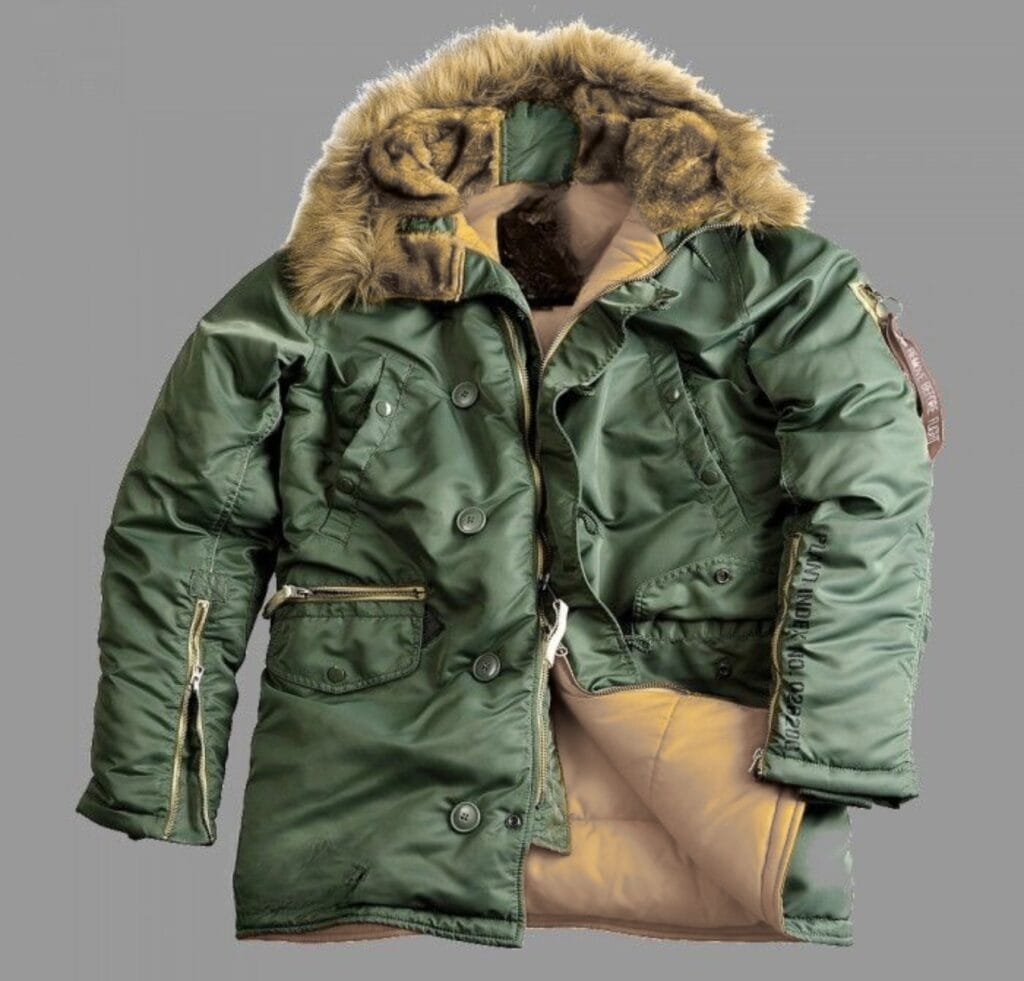
“B-15 Bomber Jacket: rugged olive-green exterior with a fur-trimmed hood, heavy-duty zippers, and utility pockets—the classic Cold War-era flight jacket.”
The philosophy of the B-15 Bomber Jacket is still alive today, with modern fabrics that are equally as lightweight, yet provide outstanding insulation. The first B-15 Bomber Jackets featured a durable and warm construct of cotton, nylon, and wool lining. Military designers pride themselves on warmth to weight ratio and that philosophy is embodied in the fabric of this jacket.
Original materials in the first B-15 Bomber Jackets.
Shell of the first B-15 Bomber Jackets was of cotton sateen. Inside, insulation against the cold was wool. Added warmth was from an added fur collar. Both options contributed to strength and the B-15 Bomber Jackets gave comfort. Although, newer fabrics do exist, the materials used in the B-15 Bomber Jackets were the stuff of legends. Vintage versions are priceless relics.
Modern Fabric Choices in the B-15 Bomber Jacket.
Nylon, polyester and synthetic fur are the materials in the contemporary B-15 Bomber Jacket. These new materials add greater strength, losing some of the yuk. Waterproof treatments add protection against rain. Some brands are playing with the idea of adding leather accents. Modern materials enhance the practicality of the B-15 Bomber Jackets, while prioritizing comfort. These changes ensure the B-15 Bomber Jackets remains relevant with today’s fashion world.
The B-15 Bomber Jacket is known for warmth and comfort.
People recognize the B-15 Bomber Jacket for its warmth and comfort. Ribbed cuffs and a snug waistband lock in body heat. The soft lining keeps wearers cozy, even on the coldest winter days. Unlike rigid coats, the B-15 Bomber Jackets is movement facilitating. Its warmth allows for cold- Climate zones to be ideal. Comfort remains relevant, function of the B-15 Bomber Jackets is a plus.
Styling the B-15 Bomber Jacket.
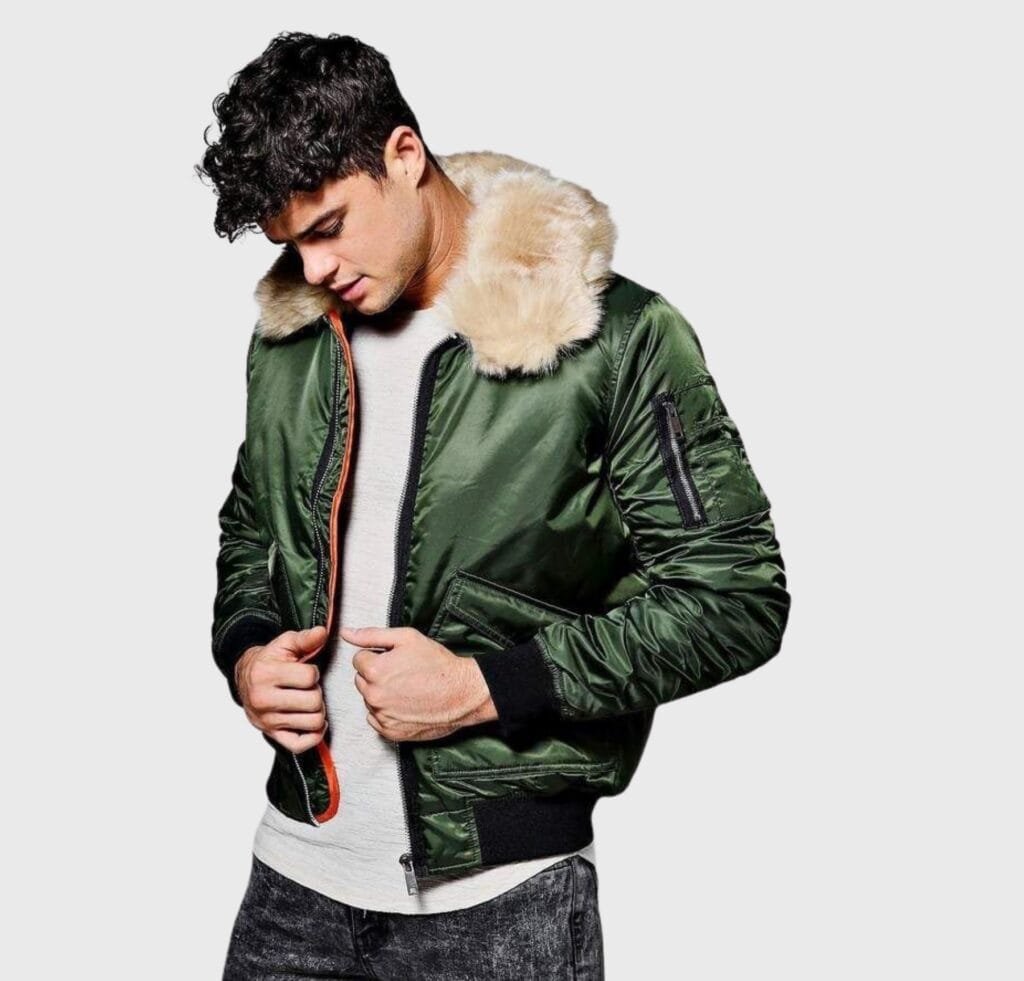
Styling the B-15 Bomber: olive green satin bomber with faux fur collar, zip-front, and tonal rib details for rugged yet refined cold-weather style.
The B-15 Bomber Jacket is easy to style jacket. It’s cropped cut goes well with jeans, chinos, or joggers. Duller shades increase its usability. Casual or elevated, the B-15 Bomber Jackets adapts to your require. It’s classic appearance guarantees the jacket never goes “out of style.” A B-15 Bomber Jackets gives a splash of “edgy” to any and all outfits.
How to Wear a Bomber Jacket B-15 with Casual Outfits.
For the more informal style, pairing sneakers and the B-15 Bomber Jacket works with jeans perfectly. A plain T-shirt keeps the style effortless. Easy to pair and neutral shades such as navy or olive further increase its usability. The above-mentioned effortless pairing is why the B-15 Bomber Jackets reigns in informal fashion.
How to Wear a B-15 Bomber Jacked with Smart Outfits.
The B-15 Bomber Jacket can also dress up outfits. Layer it over a white turtleneck and customized tailored pants. Pair with sleek leather shoes and the fit is complete. The smart style proves the B-15 Bomber Jackets is more than just casual wear. It’s ease to wear with semi-formal outfits is further testament to it’s versatility, a quality that differentiates other outerwear from B-15 Bomber Jackets.
Outfits Per Season Featuring the B-15 Bomber Jacket
The Bomber Jacket B-15 has multi-season capabilities. In fall, you can wear it over a sweater and with boots. In the winter, you can put on heavier winter clothes under it. The spring, you can wear it over lighter shirts and pair it with sneakers. Its b 15 Bomber Jackets is so easily adaptable, it is a staple for every season. Very few jackets can offer the same versatility.
The Impact of Celebrities on the Popularity of the B-15 Bomber Jacket
Celebrities highly popularize the B-15 Bomber Jacket through their influence. Actors, musicians, and athletes wear it publicly and showcase it across different media platforms. Their works with the jacket allow it to remain relevant for the youth of today. Fashion influencers and celebrities, are a testament to how the B-15 Bomber Jackets works with different styles. This cultural element certainly gives the jacket the boast it needs.
How to Restore and Preserve any B-15 Bomber Jacket
You can maintain a B-15 Bomber Jacket for years with proper care. When you pay attention to stuffing, washing, and storing, you protect the jacket from damage. Many people think a B-15 Bomber Jackets will break down over time, but it actually lasts longer when worn with the right techniques. Consistent habits like these guarantee the jacket’s longevity, often allowing the B-15 Bomber Jackets to last for decades.
Cleaning Instructions For the B-15 Bomber Jacket
Mild detergent should be diluted in cold water before cleaning fabric B-15 Bomber Jackets. For the fur collar, avoid all cleaning methods involving chemicals. Once a stain occurs, the correct procedure is to spot clean. When drying, remember to dry naturally. Never use a dry cleaning machine. To maintain the shape and material, proper cleaning is essential.
Proper Storage Instructions For the B-15 Bomber Jacket
These types of jackets should be kept in small, dry and cool places. To maintain shape, gain some padded hangers. Protective measures should be put in place to avoid any sun light. For the long term, it is best to avoid folding the B-15 Bomber. After the caring, these jackets are able to maintain a new appearance every season.
Genuine vs. Fake B-15 Bomber Jackets
Authentic B-15 Bomber Jackets have their unique designs with original materials.Replicas and knock-offs cheapen the quality of a jackets. Makers design them to look similar, but knock-offs lack the durability of an authentic piece. Collectors especially appreciate the value of an authentic B-15 Bomber Jackets, so experts strongly recommend choosing the real version.
What Makes the B-15 Bomber Jacket a Timeless piece
A perfect blend of history and style makes the B-15 Bomber Jacket a timeless classic. The military past of the B-15 Bomber Jackets gives it credibility, along with the comfort and unique design it boasts. As opposed to fast trends, the B-15 Bomber Jackets feels timeless, as it is rediscovered by every new generation.
Timeless Appeal of the B-15 Bomber Jackets
The appeal of the B-15 Bomber Jackets is ageless. The jacket’s minimalist silhouette is appropriate for nearly any outfit. The B-15 Bomber Jackets appeals and attracts admirers from every corner of the globe. The B-15 Bomber Jacket’s timeless appeal ensures it always satisfies.
B-15 Bomber Jacket as a Wardrobe Essential
A closet is always better with a B-15 Bomber Jackets. Smart and casual events are both covered. It is well made and will withstand the test of time. B-15 Bomber is unrivaled because it pairs beautifully with predominately every outfit. Minimalistic as it is, very few outfits offer this much versatility.
Future of the B-15 Bomber Jacket in Fashion
The B-15 Bomber Jacket will live on for a long time. Designers will soon modify the B-15 Bomber Jacket for the new age. The B-15 Bomber Jacket will keep its original structure, but manufacturers will increasingly use eco-sustainable materials as the new norm. The B-15 Bomber Jackets is a necessity in every closet, so its certain to live on in the future.
Conclusion
The attachment to the B-15 Bomber Jackets goes beyond the functional aspect of it as a stylish jacket. It is elegance that centers around a piece of heritage. The B-15 Bomber Jacket carries a remarkable and unique history, beginning in the military and later dominating runway fashion shows. The timeless design of the B-15 Bomber Jackets makes it certain that the B-15 Bomber Jackets will never cease to exist. It’s legacy is and will always be a source of inspiration for future generations. Read more Article// Types of Bomber Jackets: The Complete Guide to Style &
FAQs
What is a B-15 Bomber Jacket?
A B-15 Bomber Jacket is a military-style flight jacket first issued to U.S. pilots in the 1940s. It combines warmth, durability, and style.
How is the B-15 Bomber Jacket different from the MA-1?
The B-15 Bomber Jacket features a fur collar and heavier materials, while the MA-1 uses a knit collar and lighter fabrics.
What materials are used in a B-15 Bomber Jacket?
Original B-15 Bomber Jackets used cotton sateen and wool lining. Modern versions use nylon, polyester, and synthetic fur.
Can the B-15 Bomber Jacket be worn in all seasons?
Yes, the B-15 Bomber Jacket works across seasons. It’s warm enough for winter yet versatile for fall and spring outfits.
How do I clean and maintain a B-15 Bomber Jacket?
Clean your B-15 Bomber Jacket with mild detergent and air dry. Store it on padded hangers in a cool, dry place.
Uses of polyester fabric represents one of the most common forms of synthetic textiles the world over. Its unparalleled strength, outstanding light weight, easy maintenance, and reasonable production cost relative to competing forms of fabric have, in turn, rendered its availability pervasive. From home decoration to fashion to industry, its identified applicability is widening and versatile. From wrinkle resistance to strength to quickly drying, polyester synthetic fabric continues to be the first choice—both to manufacturers and customers because of its increasing un and versatile applicability. In the chapter to follow, the comprehensive use of polyester fabric across several domains shall be discussed. We start first with the apparel and fashion industry which is one of the most common applications of polyester fabric. In the global fabric industry, the polyester blends are the most widely used because of its easy availability, reasonable maintenance costs, and light weight.
Polyester ranks among the most common synthetic textiles in the world because it offers warmth, moisture transmission, a matte finish, a friendly drape, reasonable cost, and skin comfort. In addition, manufacturers use moisture-absorbing materials and microfibers to provide extra support in activewear. There are several reasons why most people wear moisture-wicking, activewear.
Despite the activewear apparel being worn for long periods, the skin still remains unclammy.
Examples of Clothing Made from Polyester
Polyester fabric: a sturdy, versatile material with a smooth, even weave.
Why Polyester is Popular in Clothing
Wrinkle Resistance: Clothing made from polyester keeps its shape, even after multiple washes.
Lightweight Feel: The fabric feels light on the skin, making it suitable for everyday wear.
Moisture-Wicking Abilities: Activewear brands often use polyester because it absorbs less water and dries quickly.
Common Clothing Items Made from Polyester
T-shirts and blouses
Active wear and exercise outfits
Trousers and tops
Skirts and dresses
Work and school uniforms
In addition, Uses of Polyester fabric can easily combined with natural fibers such as cotton and wool to make soft and strong fabrics. Thus, manufacturers can make elegant garments that need less care than garments made from 100% natural fabrics.
Active and Sports Wear
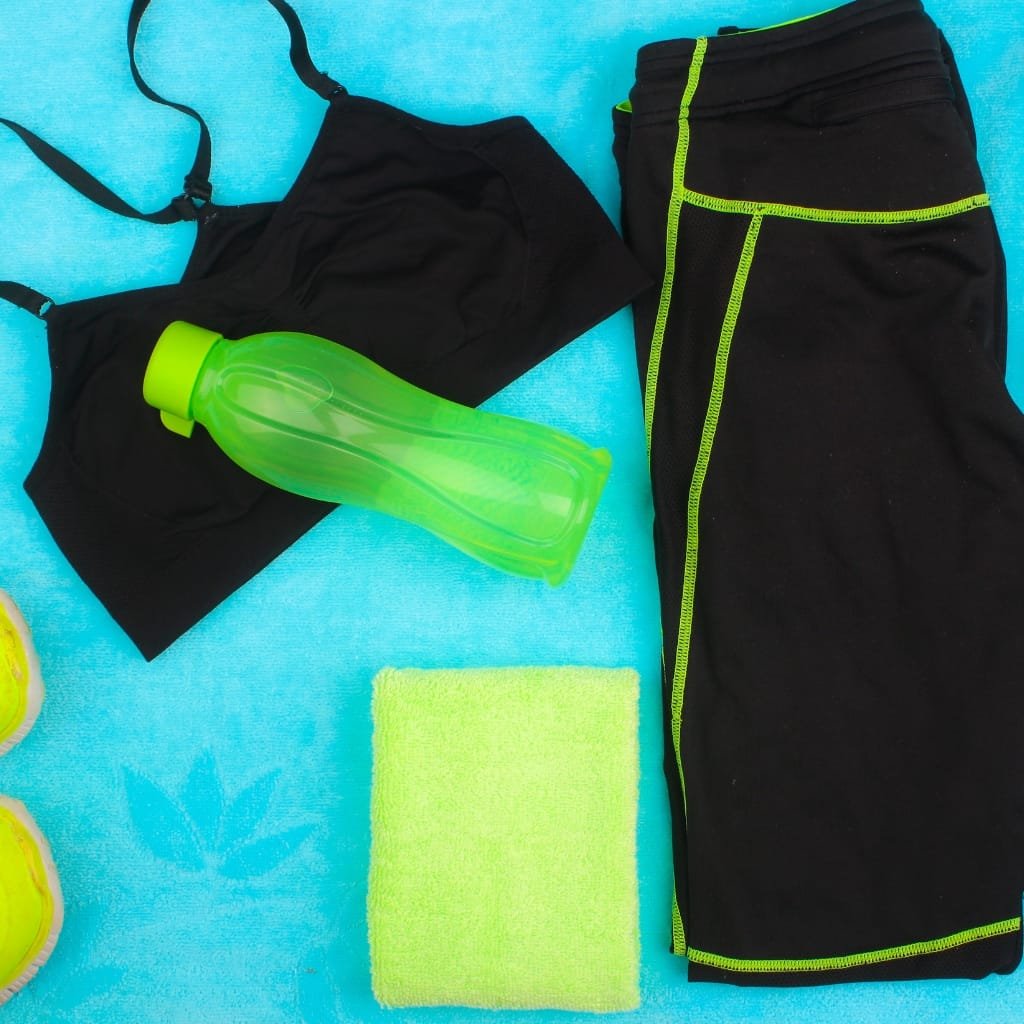
Sporty essentials on a bright workout mat: black activewear with neon accents, a green water bottle, and matching accessories.
The polyester fabrics are very important in the field of sports and fitness. These are the garments that polyester holds the moisture in and keeps the body dry.
Some of the benefits are that it is:
Comfortable and Lightweight: Ideal with yoga and running
Durable Construction: Resistant to stretching and shrinking, even after multiple washes.
Quick Drying Time: Ideal for outdoor sports and rainy weather.
For instance, many global sports brands use polyester blends in jerseys, track pants, and gym wear because athletes need clothing that performs well in challenging conditions.
Home Decor Items
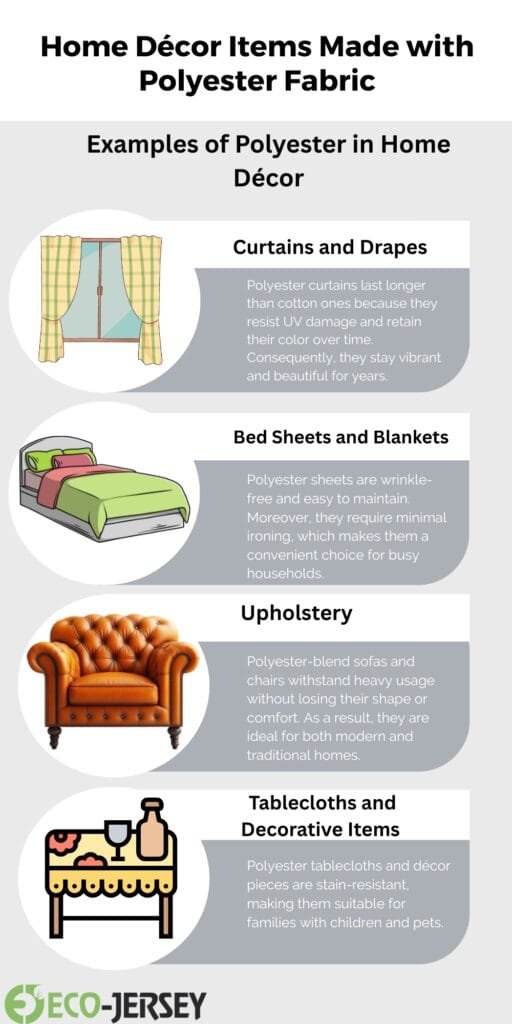
Examples of Polyester in Home Décor
Another important area where Uses ofPolyester fabric is used is home decor. Most of the softer fabrics used in curtains, upholstery and bed covers are made in polyester. These fabrics are used for their low price and high strength.
Examples in Home Decor
Curtains and Drapes: Polyester curtains have a longer color retention and are more durable than cotton in terms of damage from UV sunlight.
Bed Sheets and Blankets: Polyester sheets are convenient to maintain as they are easily ironed and wrinkle-free.
Upholstery: Polyester blend sofas and chairs remain in good condition after heavy usage.
Tablecloths and Decorative Items: These items are stain resistant and are suitable for homes with children and pets.
Moreover, Uses of polyester fabric easily combines with other fibers to provide the soft durable finish that suits both the traditional and modern homes.
Industrial and Commercial Applications
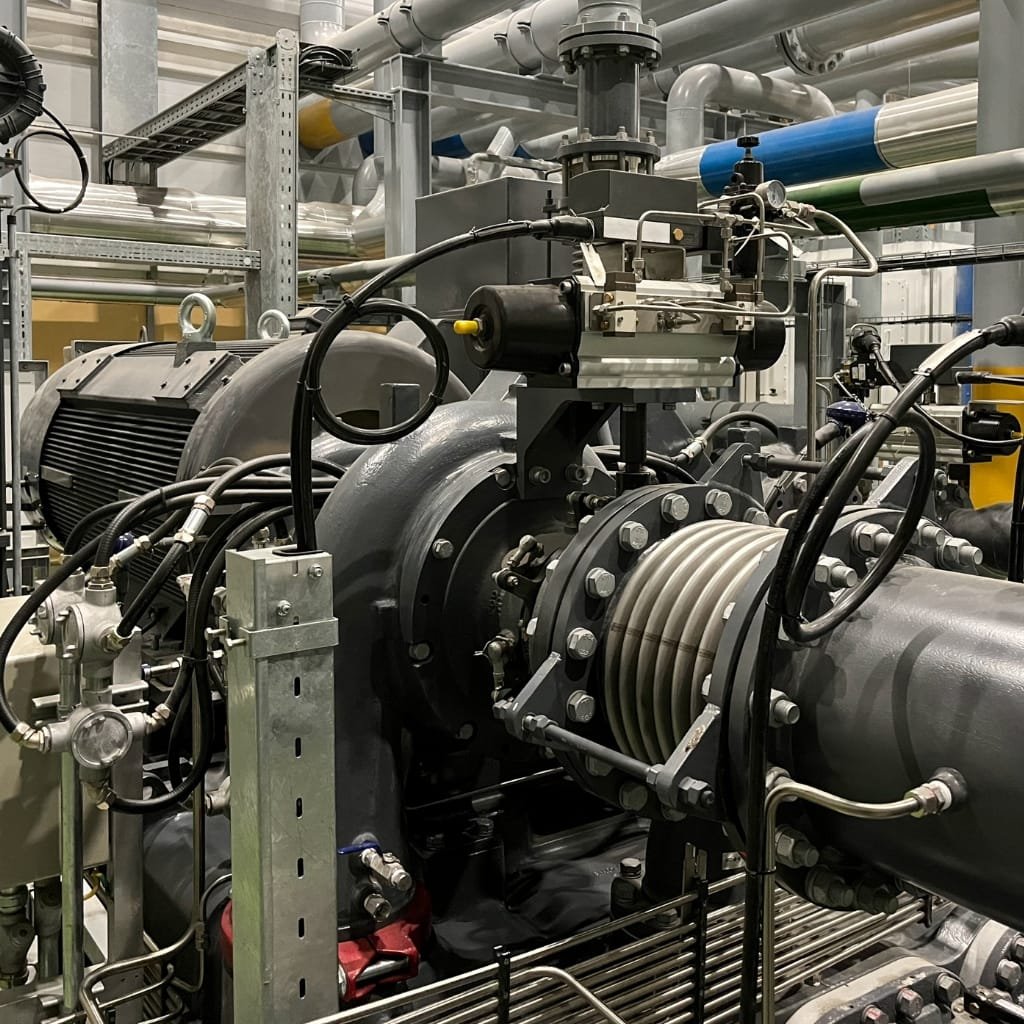
Industrial pump assembly in a mechanical room, featuring a large flanged connection, multiple hoses, and control components.
Unlike other fabrics, plays a crucial part in the industrial domain. Their fabric’s strength, chemical resistance, and low moisture absorption allows for a variety of heavy-duty usages.
Examples of Industrial Uses are:
Manufacturing plant conveyor belts
Reflective safety garments
Construction ropes, cords, and webbing
Chemical Industry filter fabrics
Also, . is useful in mold and mildew prone surroundings as the fabric tends to degrade faster in humid environments compared to natural fabric of this sort.
Outdoor Gear and Camping Equipment
Robotic arms assemble a car body on a modern automotive production line.
Polyester is a breakthrough for campers and people who love to go into the wild. These people appreciates the fabric as it is light, resistant to water, and convenient to carry, and is therefore the most popular fabric in the outdoor gear industry.
Some notable applications encompass:
Tents and Canopies: Weighing less than water and breathable, advanced, polyester fabrics provide warmth without compromising on waterproofing protection and rain protection.
Sleeping Bags and Blankets: Being lightweight and warm applies to every sleeping bag or similar blanket using seamless spun bonded history of polyester fabrics.
Backpacks and Travel Bags: With no exception to rest of the fabrics, seam sealed blanket reinforcers offer the most warmth-to-weight ratio polyester provides.
Also, others outdoors polyester tent suppliers appreciate the lightweight and strength of seam bonded polyester shed furs. Seam bonded solution dyed polyester tent rain flies offer excellent waterproofing and extreme weather protection.
Automotive Industry
Robotic carassembly: Automated arms build a vehicle frame in a modern manufacturing plant.
The durability and ease of cleaning inlands makes the polyester fabrics widely used in the compli or mopando of automobilas.
Common Applications:
Upholstered seating in vehicles.
Covers for the seats.
Inner lining covers.
Mats for automobiles.
Over time, inlands of which endure direct sunlight, polyester inlands absorb less fading and thus retain a vibrant appearance longer.
Medical and Healthcare Applications
A team of healthcare professionals posing together, highlighting collaboration and care in modern medical environments. Their attire features white coats and blue scrubs, with stethoscopes at the ready.
The absorbent Uses of Polyester fabric have various applications like uniforms, linens, and curtains of the shroud in medical and hospital sectors.
Most fabrics undergo subjected to filtering and have the rest post treating, creating a sterile and engineered isolated space.
Some cases provide protective features adding antimicrobial blends to the polyester, which helps neutralizing bacteria and ditching pathogens.
Packaging and Industrial Filtration
Polyester fabric in food processing: A sanitary, durable layer on conveyor belts and supports in a modern production line.
The physical characteristics and lightweight nature of polyester films and fabrics make it useful as a packaging material. Consider, for example:
Food packaging films.
Filter fabrics for industrial filters.
Protective packaging for fragile goods.
The fabric maintains a distinct advantage along many parameters, and most of all along the measures of moisture and tear resistance, allowing for safe delivery of goods over long distances.
Fashion Accessories
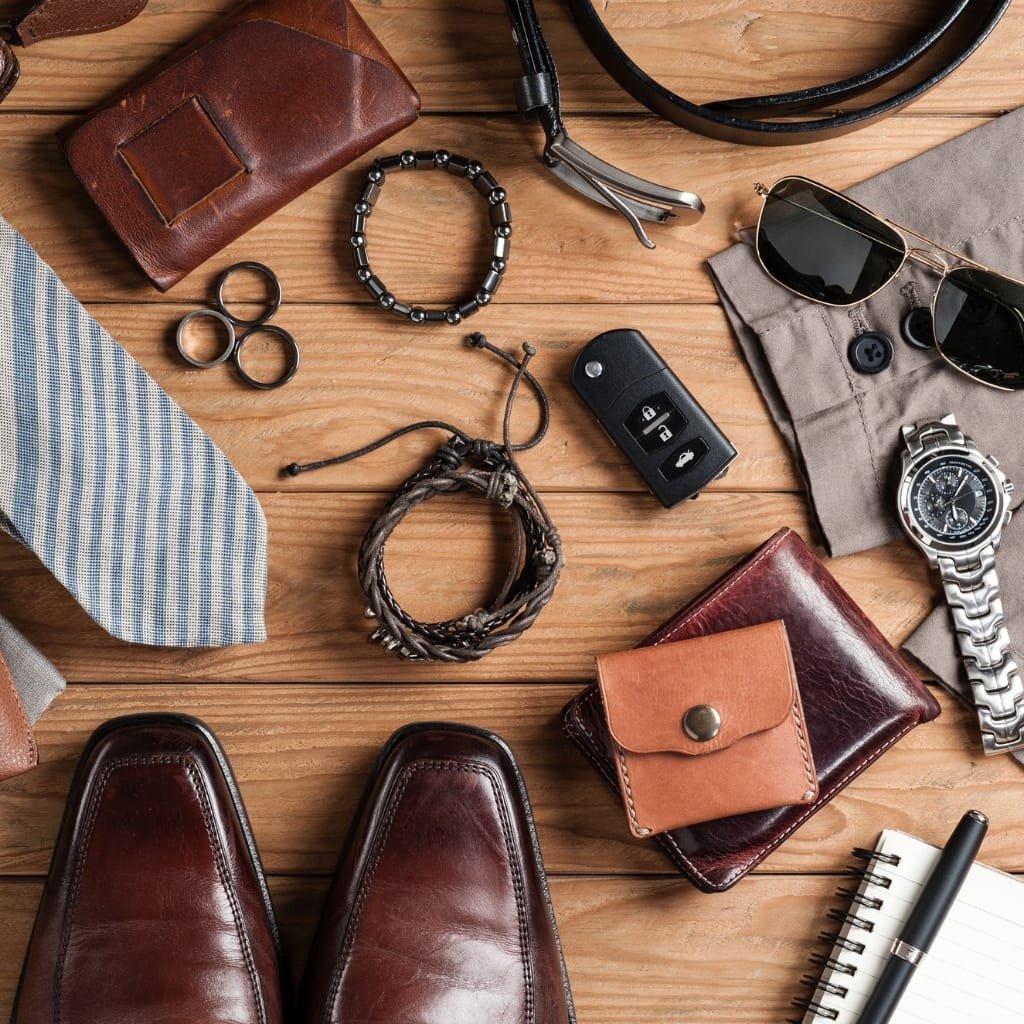
A curated collection of classic men’s accessories arranged on wood: leather shoes, belts, watches, sunglasses, wallets, and more.
Beyond apparel, polyester is equally important in the production of certain accessories, for example:
Headwear
Socks and mittens
Containers such as handbags and purses
Lining of footwear
Due to the tolerant nature of the material to the dyeing process, spun polyester fabric accessories are often found in a wider range of bright colors, and these are more long-lasting as they do not fade easily.
Eco-Friendly and Recycled Polyester
Polyester in everyday use: durable fabrics, vibrant colors, and versatile DIY supplies.
Recycled polyester (rPET) is a recent innovation that is increasingly gaining attention. it is made from used plastic bottles, thereby reducing environmental pollution. Eco-friendly brands now tend to use polyester as it is able to provide environmental sustainability while ensuring quality.
Recycled polyester is used in:
Garments and accessories from eco-friendly clothing lines
Shopping bags
Home decoration products
This recent shift proves the adaptability of Uses of polyester fabric to the current demands of the world, and shows the versatility of polyester fabric in plastics industry.
Why Polyester Remains Compare to Other Fabrics
Some of the reasons for polyester’s enduring popularity as a fabric include:
Cost: It is more affordable than silk, wool and cotton.
Long-lasting: It does not easily shrink, stretch, or wrinkle.
Quick-drying: It absorbs moisture and dries faster than other fabrics.
Color Retention: Retains brighter colors much longer.
Simplicity: Difficult to remove and take care of.
Polyester fabrics will remain in style due to such characteristics.
Conclusion
Polyester fabric has changed the face of contemporary manufacturing from the clothing industry to other areas and due to its strength, versatility, and low cost, it continues to be one of the most profitable options in the market. The fabric has also gained immense popularity due to the rapid increase in production of recycled Uses of polyester fabric.
Most likely, the polyester is an integral component of the items and products we use on a daily basis, such as clothing, home furnishings, or outdoor equipment. Its many uses shows that UsesPolyester fabric is more than just a piece of fabric, it is an essential part of everyday fabrics and cloth.
FAQs
What are the main uses of polyester fabric?
Polyester fabric is widely used in clothing, home furnishings, outdoor gear, industrial applications, and even medical textiles due to its strength and versatility.
Why is polyester fabric popular in sportswear?
Polyester fabric is popular in sportswear because it wicks moisture away, dries quickly, and provides lightweight comfort during physical activities.
Is polyester fabric used in home décor?
Yes, manufacturers use polyester fabric in curtains, upholstery, bed sheets, and decorative items because it resists wrinkles and maintains vibrant colors.
Polyester is a common synthetic fabric as it is a durable, wrinkle-resistant, and relatively cheap fabric. It does not absorb water easily and is thus, fast to dry unlike natural fibers. But its positivity is also due to the fact that it is synthetic in nature thus exhibits high affinity with oil-based stains. That is why polyester is often more difficult to clean than cotton because of the grease, makeup, or even sweat. So there is always a question “How to remove stains from polyester?”
Polyester stains should be treated in a certain way because the inappropriate technique can make them permanent. As an example, hot water has the ability of locking protein-based stains such as blood into the fibers. Just as over-scrubbing can destroy the soft polyester weave. How to Remove Stains from Polyester?
It is not only that knowing how to remove stains on polyester is a way of saving your clothing but also increasing the duration of its life. With the proper techniques, you will be able to make your polyester clothes appear clean and fresh over a long period of time. How to Remove Stains from Polyester?
Types of Stains on Polyester
It is important to know the type of stains that are common to you in order to determine which removal method to use. The most common ones are as follows:
Oil & Grease Stains
Oils have a strong affinity with polyester fibers and therefore greasy stains resist easily.
Food & Drink Stains
Polyester can be discolored by coffee, wine, juice or sauces as they leave visible marks.
Ink Stains
The deep and pigmented stains of ballpoint pens and markers are usually deep.
Sweat & Deodorant Stains
Due to body salts and deodorant, yellowing and accumulation takes place under arms.
Blood Stains
Stains made of proteins, which are treated in cold water.
Makeup & Cosmetic Stains
Lipsticks, foundations, and mascara have oils and colors, which stick to polyester.
General Stain Removal Tips for Polyester
Read Care Label: It is always advisable to begin with reading the care tag of the garment. The label indicates the safe water temperature and cleaners. To follow the advice of Real Homes, it is always important to refer to the care label first when it comes to treating a stain. How to Remove Stains from Polyester?
Act Quickly: Treat fresh stains as quickly as possible. According to Sympli, the bigger the stain the sooner it goes away, the more easily. Fast response will avoid the setting in of stains onto the fibers.
Do Not use Hot Water on Protein Stains: Blood, sweat or egg stains should be run in cold water. The proteins cure and attach to fibers in the presence of heat. Persil cautions that proteins are designed to adhere to each other when warm hence rinse blood stains in cold water. Experts in laundry also note that hot water will cook the stains into the fabric. How to Remove Stains from Polyester?
Do Not Rub Aggressively: Blot, but do not scrub hard. Aggressive rubbing may dull into more permanent the stain or it may destroy the fine fibers of polyester. Actually, Sympli warns particularly: “Do not rub, it can cause the stain to go further into the fabric. How to Remove Stains from Polyester?
Test First: It is always important to spot-test any cleaner in an inconspicuous place. A little test is used to make sure that the stain remover does not discolor or weaken the polyester. This is particularly relevant to bright dyes or delicate blends. How to Remove Stains from Polyester?
Step-by-Step Methods for Removing Stains
Each stain type needs a unique method. Below are effective hacks that truly work:
Oil and Grease Stain: Dish Soap + Baking Soda.
Wipe off all the remaining oil using a paper towel.
Pour baking soda onto the grease.
Allow to rest 15 minutes, and brush off.
Put some dish soap and rub it into the cloth.
Wash with warm water and normal wash.
Food Stains: Vinegar, Hydrogen Peroxide or Enzyme Detergents
Combine vinegar and water in equal measure, blot the stain.
In more stubborn stains, use hydrogen peroxide, but test on hidden cloth.
Sauce or wine are organic and enzymes based detergents work best on them.
Wash the cloth as soon as it is treated.
Ink Stains: Rubbing Alcohol or Hand Sanitizer
Put a paper towel that is wet under the stain.
Dabbing alcohol or hand sanitizer on the ink.
Blot dry using a clean cloth, change towels when ink is transferred.
Wash thoroughly and then rinse.
Sweat and Deodorant stains: Vinegar + Mild Detergent Soak
Combine vinegar with an equal portion of water.
Wet the stained polyester by soaking it in 30 minutes.
Wash and clean using weak detergent.
Repeat in case of persistence of yellowing.
Blood Stains: Cold Water + Baking Soda Paste/Salt
Wipe fresh blood stains with cold running water.
In case of dry stains, use a mixture of baking soda and cold water.
Allow 30 minutes then scrub lightly.
Rinse and add cold water detergent.
Makeup Stains: Makeup Remover Wipe or Rubbing Alcohol
Pat around excess makeup with paper towel.
Apply makeup remover wipes on the affected area.
On difficult stains, rubbing alcohol can be used and dabbed.
Wash as usual when the stain has gone.
DIY & Natural Cleaning Solutions
Vinegar
White vinegar is a weak acid that is capable of dissolving most of the stains. It is non-toxic on a variety of colors and fabrics. In the case of polyester, the mineral based stains are dissolved in vinegar and the grease is cut. As an example, Active Laundry suggests the pre-soak of 1 hour of vinegar in water. How to Remove Stains from Polyester Vinegar assists in the raising of general stains without chemicals. it will not bleach polyester, in fact it can even darken in the right amount. How to Remove Stains from Polyester?
Baking Soda
This is a household powder which takes smells and stains. It is a bit alkaline which contributes to raising dirt and physically pulls grease out of clothes. When an oily place is sprinkled with baking soda, it allows it to absorb oil and then brushed off. It is also possible to create a paste of baking soda (with water) to rub a stain out. It is extremely mild on polyester and can be applied on all colors. One of the disadvantages is that very stubborn stains might not be removed easily or after a single application. How to Remove Stains from Polyester?
Lemon Juice
Citric acid is a natural bleaching agent that is found in lemon juice. It is able to reduce most organic stains such as juice, sweat and rust. As observed by HowStuffWorks, citric acid in lemons also helps to dissolve stains and it is even safe with the color in the laundry. Lemon juice can be squeezed onto a stain or may be added up to 1 cup of juice into the wash to make whites bright. Lemon is however not as tough as bleach hence is effective on light or new stains. In addition, it is acidic and therefore should not be left unto hours on any fabric (a quick soak is okay).
Cornstarch
Cornstarch is an absorbent (a natural absorbent) of greasy stains, like baking soda or baby powder. You may sprinkle it plentifully on new spots of grease or oil, the starch will absorb the liquid. Shake off the powder after 1015 minutes. The Spruce states that starches such as baking soda and baby powder may absorb oil in case of being left on the stain. Cornstarch contains no chemicals and will not damage polyester, but it can only be used on fresh and liquid stains – it is unable to take away color or dry-set stains in isolation. How to Remove Stains from Polyester?
Pros & Cons: Natural vs. Chemical Cleaners
Safe cleaning agents include natural ones such as vinegar, baking soda, lemon and cornstarch, which are cheap and environmentally friendly. They do not lighten colors or scald the skin, and can be blended at the convenience of the house. They are however usually milder and might take longer or even more treatments on stubborn stains. Conversely, commercial stain removers and detergents usually include stiff enzymes or bleaching agents therefore, they are in a position to eliminate set-in stains faster. The negative side is that these products have rough chemicals and can destroy cloths as they are used several times. How to Remove Stains from Polyester?
Commercial Stain Removers for Polyester
OxiClean MaxForce
General-purpose stain and is safe on a majority of polyester fabric.
Shout Advanced Gel
Removes food stains and grease.
Carbona Stain Devils
Dedicated ink, grease or coffee stain formulas.
Pros of Commercial Cleaners:
Quick response and effective outcomes.
Special recipes of individual stains.
Convenient and easy to use.
Cons of Commercial Cleaners:
More costly than home craft.
Others can be composed of strong chemicals.
The danger of color fading in case of improper use.
Common Mistakes to Avoid
Washing with Bleach on Colored Polyester: Bleach of bright polyester: Bleach should never be used on bright polyester. The synthetic fibers may be broken by bleach or permanently discoloured. Do not bleach polyester, as this is a synthetic cloth, bleaching may be permanent!. (Apply a bleach only to safe objects using an oxygen based bleach).
Using Hot Water on the Stains which are not Protein: Do not pour hot water on the stains based on proteins (blood, sweat, milk). These stains will be fixed in hot water and they would be almost impossible to remove. Such stains should always be washed in cold water and then regular laundry should be done. (Greasy stains should be cleaned with hot water, however, and care labels should be observed).
Over-Scrubbing:Intensive scrubbing or hard brushes may bend the polyester fiber and may result in snags or pilling. Apply light movements to rub out a stain. Too much pressure may destroy the surface of fabrics, thus be patient and blot or rub, gently. How to Remove Stains from Polyester?
How to Wash Polyester After Stain Removal
Washing Machine Settings
Wash it based on the care label. Polyester is usually washed in a standard cycle using hot water. In case the label enables, warm or hot washing is recommended to aid in the dissolution of any residue. It is recommended washing polyester in a machine using warm water and a normal laundry detergent. Wash with additional rinse in case you applied some form of heavy stain treatment so that all the product is washed off. Turn clothes inside to avoid damaging the outer part. How to Remove Stains from Polyester?
Drying Tips
Polyester dries fast yet in case of high heat it shrinks or pills. Wash in a tumble-dry on low, or dry by air. Based on care instructions, it should be tumbled at low temperature and should not be over-dried because a lot of heat will make the synthetic fibers shrink. Wrinkles and statics are also avoided by removing clothes immediately after dressing them in the dryer. How to Remove Stains from Polyester?
Re-check Stain Before Drying
Never leave the garment uninspected after washing it and before drying. In case any residue of the stain is left, then do not put the polyester in the dryer yet, as heat will fix the stain forever. Always be careful never to heat-set an oily (or any) stain in the dryer. Rewash instead Repeat steps of pretreatment as necessary. The garment should only be dried when the stain has completely faded. How to Remove Stains from Polyester?
Preventing Stains on Polyester
Apply Fabric Protectant: Spray fabrics with a polyester protectant (such as Scotchgard) on new or fresh clean cloth. These sprays form a barrier which repels water and oils making the spills first form into beads making it easy to wipe them away.
Quick Spot-Cleaning: Clean up spills on the spot, blot on a clean cloth or paper towel. The sooner you can get a stain off the less time it has to harden. Have a stain-remover pen or spray that can be used on the spot, before laundry.
Good Laundry Practices: Wash polyester clothes after high usage (or after sweating) to avoid the accumulation of dirt. Keep the dyes apart not to transfer. Wring clothes to prevent the external fibres. Do not keep stained clothes in a heap; put them in the washing-machine or run through a process to get off the set-in stains. How to Remove Stains from Polyester?
Conclusion-
Knowing how to remove the stains out of polyester can make your clothes clean and durable. Oil, ink, sweat or food, there is no one type of stain that does not need the proper cleaning technique. The process is easier with quick action, light hand and with the correct solution. How to Remove Stains from Polyester?
To achieve the most, apply natural remedies, such as vinegar or baking soda in case of mild stains, and commercial removers in case of stubborn ones. It is always important that you look at the care label, never use hot water on protein stains and always re-check before drying. How to Remove Stains from Polyester?
It is using such sure techniques that you can keep the fresh appearance of your polyester garments and you can also add to their longevity. Wash the stains as soon as possible and have clean and stain free polyester clothes. Read More>> How to dry clean polyester fabric?
FAQs
Can you use bleach on polyester?
Polyester, particularly colored cloths are not usually safe with bleach as it may lead to fading or discoloration. Although chlorine bleach is not to be used, a safer alternative to it is oxygen-based bleach, which is safe to use on whites. Look at the label of the care first before using any bleaching product.
How do you get old stains out of polyester?
Stains are not easily removable, thus they require an additional effort due to their standing attachment to polyester fibers. The best results are obtained by pre-treating with a good commercial remover or a paste of vinegar and baking soda. Allow the solution to rest and then wash to make it more effective.
Does vinegar damage polyester?
Polyester can be used with vinegar in a diluted state. It is good at disintegrating residues, deodorizing clothing, and lifting the light stains. Nevertheless, pure vinegar can soften fibers with time, thus, it should be always mixed with water.
Will hydrogen peroxide discolor polyester?
Hydrogen peroxide leaves no harm on white polyester and is therefore good in food, sweat or blood stains. When applied directly without dilution on colored polyester, it can lead to lightening. Never put the prop in an obvious place, where it can be damaged.
What’s the fastest way to remove a stain?
The fastest technique is to blot as soon as possible with either dish soap or rubbing alcohol. These are rapid in degrading oils and pigments before they become polyester fibers. Garment should be washed immediately after treatment to achieve the best process.
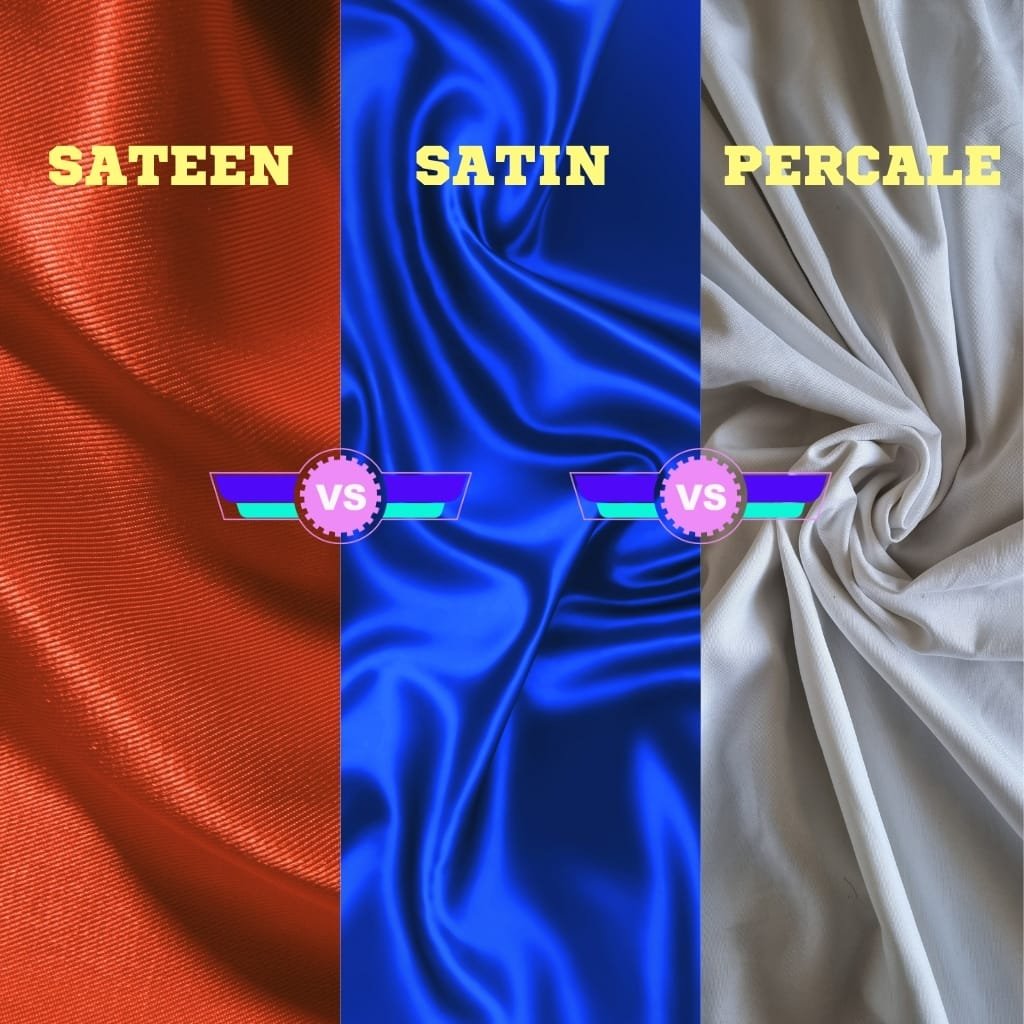
Can you think of a fabric that has the softness and luxurious feel of silk yet remains as breathable and easy to care for as cotton? You probably think this is wishful thinking. But the truth is, it’s right in front of you! Sateen cotton fabric is real! It is one of the most luxurious types of cotton available, but unfortunately, most people tend to confuse and mix it with the synthetic, satin fabric. Sateen fabric isn’t satin fabric, but one of the luxurious types of cotton. It is often broached in confusion.
This fabric is classified beyond pragmatic usage. Its demanding attention is also found in home furnishings, apparel, and beddings of ultra-thread-count. Such an accomplishment is simultaneously pragmatic and ornate. To sate, this writeup is an attempt to uncover much of the mythology woven into sateen cotton. We will elucidate its many advantages along with potential drawbacks. We will also, once and for all, untangle the confusion pervading the confusion sateen and satin, and juxtapose it with other cotton weaves, most notably, percale. Finally, we will sew with it, care for it, and select the highest quality sateen for your projects. Focus, for now, will also be devoted to practical advices on those mechanisms. Having reached the end of this article, I hope, will make you appreciate the beauty of this fabric, and my desire is to weave into your life, will be fulfilled.
What is Sateen Cotton Fabric? The Magic of the Weave
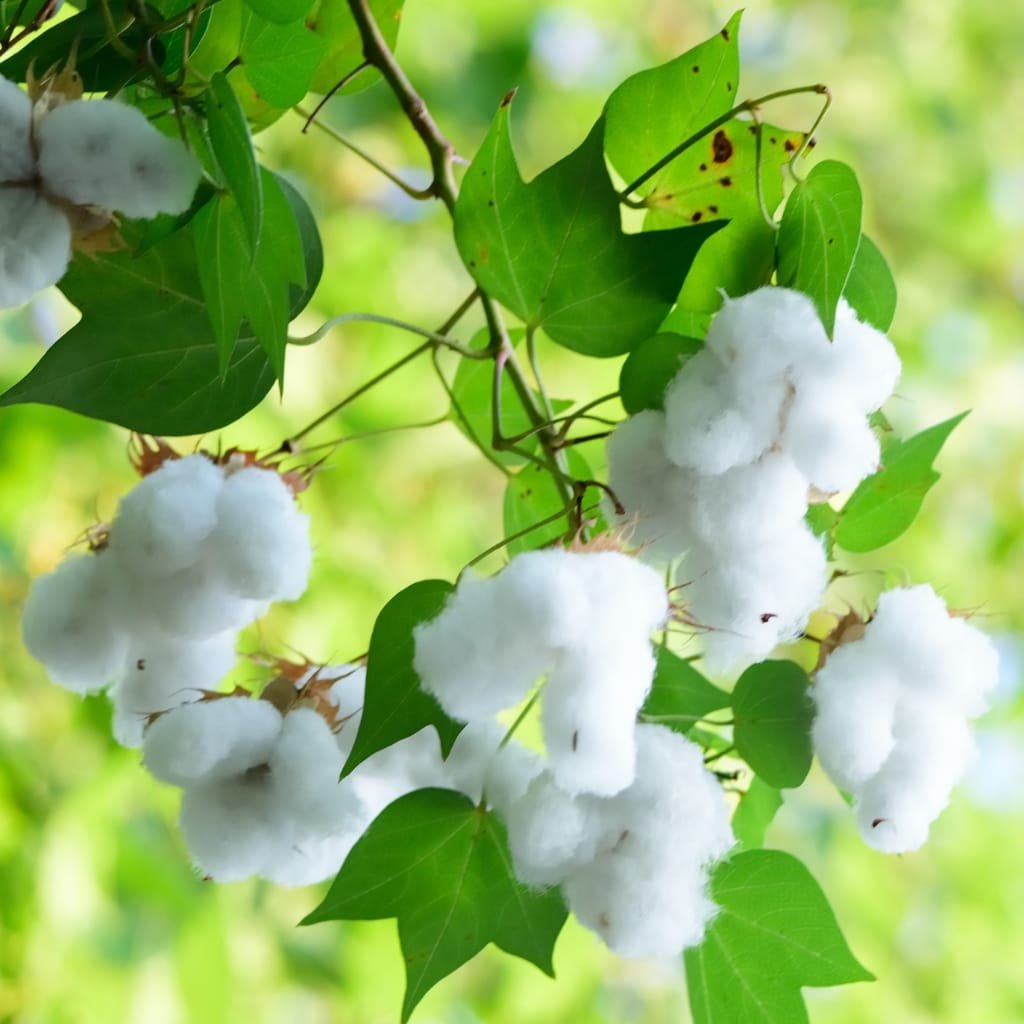
Cotton on a vine: fluffy white bolls framed by vibrant green leaves against a sunlit backdrop.
The most critical, and, the most fatal blunder one can make is defining “sateen” a type fabric. Sateen is a weave, most importantly. That much, I am sure, and the evidence surrounding it is ample. The weave we call sateen, is one where, over and under a set of threads, multiple weft threads float over a single warp thread. The opposite is also possible. What is left is a smooth undisturbed surface, and a gloss of fabric put on show.
The specific weaving technique for cotton sateen starts from long, high-quality, combed, and sometimes mercerized cotton fibers. As a result, the fabric is laid and draped in a way that makes the weave soft, silky, and subtle. This feel is unlike any other cotton weave. Thus, the sateen cotton sheets are directly the result of the aforementioned intricate floating-thread sateen construction of drape-thread which focuses on the minimized texture and maximized smoothness fabric construction.See more…..Poplin Cotton Fabric
A Thread of History: The Origins of Sateen
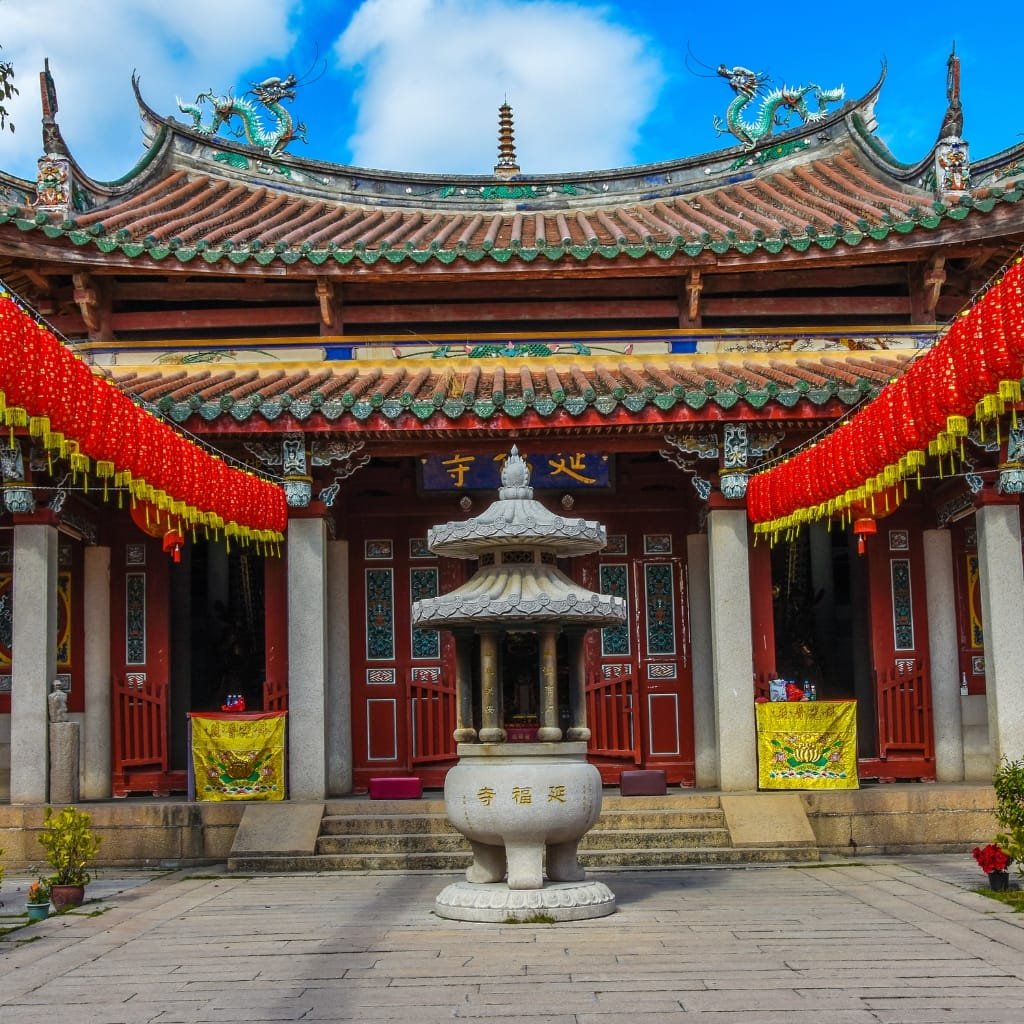
Festive temple courtyard featuring a stone incense burner, red doors, and dragon-adorned rooftops under a clear blue sky.
The sateen weave is not only one of the fabric’s oldest, but one of the most traveled as well. Weaved with silk to create royal garments, it’s predecessor, satin, is thought to first appear in the city of Quanzhou in China, port city of Zaytona which the medieval Arabs turned to Zayton from satin.
Due to the advancing of the film-making and weaving of fibers techniques during The Industrial Revolution and the evolution of textiles, satin’s elaborate weave structure was then used for other fibers. A new fabric emerged with the merging of cotton yarns woven in sateen structure: sateen cotton. Having the similar, satin-like feel made relevant to the masses was one of the reasons for the innovation’s immense public appeal. Later, it’s association with luxurious, high-end, hotel-quality bedding made the fabric evermore popular, especially in the home goods market.See more….Oxford Cotton fabric
Key Characteristics: Sateen Sheet Advantages and Disadvantages
The rise in popularity of sateen is attributed to its unique properties that make it very appealing for particular uses.
Advantages
Elegant white satin draped in soft folds.
Incredibly Soft and Smooth: Perhaps the most notable characteristic of sateen is its soft, silky touch. The floating threads on the surface, in addition to the soft floating, form this gentle surface that feels beautiful on the skin. Because of this feature sateen is a favorite fabric for sleepwear and bedding.
Subtle, Yet Elegant Shine: Unlike synthetic satin, the sateen cotton fabric has a much softer, lower sheen. This sheen is natural and does give the fabric a touch of sophistication, but without being shiny or gaudy.
Good Drape: Fabrics woven in a sateen structure already have a soft, thick fluidity to them. This flow is ideal for curtains, evening gowns, and skirts that need to have a graceful flowing shape.
Fewer Wrinkles: Unlike other cotton weaves like percale, sateen is much less prone to wrinkling. Because of this feature, sateen is a great option to take on travel or for those who do not want to put a lot of work into their linens.
Keeps Colors Well: Sateen fabrics are well known for their richness and vibrant colors. This is a result of how the surface of the fabric, which is smooth, takes in colors, and how well the fabric retains colors in the wash.
Disadvantages
A woman blows her nose into a tissue while sitting comfortably at home.
Breathability Issues: The close, dense bindings making the glossy finish also trap more heat. While more breathable than synthetic satin, sateen is nonetheless more corset than a percale weave.
Pilling Issues: Over the years, and particularly with low-quality grades, the hovering threads can get scuffed and pilled. However, this is greatly mitigated with high-quality long-staple cotton.
Loss Of Friction: The sheets can become harder to control due to the churned surface which some people may find annoying.
Sateen vs Satin vs Percale: Breaking The Confusion
Sateen vs. Satin vs. Percale: a visual comparison of three common fabric finishes.
This is the most important comparison to have for sateen to be understood.
Sateen vs. Satin: The difference is only in the fiber where satin is a type of weave with filament fiber like silk, nylon and polyester, while sateen is the same weave with short-staple yarns like cotton. Thus, sateen is soft, breathable and aeging, while satin is slippery, soft and shiny.
Sateen vs. Percale: This is not about the fabric composition. They are both made from 100% cotton, but use different weaves. Percale is a dry and crisp fabric, and is made from a one over one under weave. This weave is tight and dominantly a plain weave. This fabric is cool and breathable, similar to a classic men’s dress shirt. Sateen, uses the floating thread weave and is soft, warm, and brilliant fabric. Percale is famous for its crispness, and sateen is well known for its silkiness.
The Many Uses of Sateen Cotton Fabric
Vibrant green pillows add a pop of color to a crisp white bed.
Due to its well known blend of usefulness and beauty, it is applicable in many areas.
*Sateen is most well known for its use in bedding. Sateen cotton sheets, like in most luxury hotels, are warm and soft, and feels like heaven on the skin. That is why sateen is one of the most well known cotton sheets in the world.
Apparel is another area which sateen is often used in, and it is perfect for designing elegant blouses, dresses, skirts, and neckties. The fluid and graceful uniforms are brought to life because of the terrific drape of sateen.
In Home Decor, sateen is perfect for heavy, classy curtain and drapes which block out the light because of the weight and drape. Sateen is also used for decorative pillow covers and upholstery.
Crafting: For anyone stitching formal wear, gown for a baby’s christening, or luxurious accessories, sewists tend to choose sateen for it’s stylish look.
Guide for Makers: How to sew sateen.
Many people find sewing sateen cotton fabric to be a pleasant task as long as they keep certain things in mind.
What Needle and Thread to Use: In order not to snag the delicate threads, a fine microtex or universal needle of size 70/10 or 80/12 is recommended. To ensure a smooth and strong seam, a high quality polyester or cotton wrapped polyester thread should be used.
Handling and Finishing the Sateen: Handle the sateen, as well as the skirt and gown to keep in line. The excess threads should be serged as they tend to fray a lot.
Pressing: Pressing should be done with a medium heat setting, and the steam should be used on the wrong side only. The right side should have the seam allowances with the pressing cloth so it will not get imprinted, and the seam capable of distortions should not have a sliding iron.
Sateen Garments and linens
Gently washing a lavender fabric by hand to keep it soft and vibrant.
With the smooth touch and high sheen, the sateen garments and linens ought to be well taken care of.
Washing: Start with the care label. In most cases, machine washing should be done in cold water and on gentle cycle. Use only mild detergent and refrain from yellowing bleaches, they corrode the fibers and diminish the cloth’s brightness. To save the exposed surface area, turn clothes inside-out. Drying: Use the low heat setting in Tumble Dry, while removing the materials while still slightly damp. You reduce the likelihood of creasing and the necessity to iron the garment viciously, in addition to easing the checkered finish from the steam iron. Line drying the garment to finish is still the most gentle care option. Ironing: Ironing any of the above elements is needed to exposed parts, while they’re damp cloth. On the wrong side, with a medium setting, and heavy steam. Pressing cloth is the most effective iron in the battle to avoid the scars of scorching and shine marks.
How To Find Quality Sateen
The quality of sateen fabric is highly subjective. Use these as indicators to assess the state of the fabric to determine its quality.
Thread Count: Ideally, a state of 300, 400, or 600 is optimal. Be weary of a count that exceeds 1,000, as most of these tend to be artificial and stifle breathability.* Yarn Quality: The finest sateen is woven from long-staple or extra-long-staple cotton, like Egyptian, Pima, or Supima® cotton. These fibers are long, stronger, and smoother, producing a lustrous and less-pilled piece of fabric.
Mercerization: This is an important treatment. Mercerized cotton has been treated with a sodium hydroxide solution. This solution swells the fibers and within them, increases the cotton’s strength, affinity for dye, and increases permanence of luster.
Feel: sateen’s touch is a statement of fabric quality. It should be heavy, smooth and soft, while not having an embarrassing slipperiness. It should have a refined sheen and not a tacky shine.
Conclusion
In the end, sateen cotton fabric is an extraordinary textile marvel. It combines the comfort and breathability of cotton with the softness and sophistication of a satin weave. It provides a practical piece of fabric with a touch of understated luxury.
Sateen cotton works wonders whether it is for investing in sheets of dreamy softness that change the quality of your sleep, curtains that enhance your living room’s elegance, or sewing a gorgeous, flowing dress. Next time you need a cloth that offers a rare combination of elegance, softness, sateen cotton’s impressive capabilities will satisfy, even if the fabric is often underappreciated.
FAQs
What is sateen cotton fabric?
Sateen is a type of weave—not a fiber—where multiple threads float over others, creating a smooth, lustrous surface. When made with cotton, it yields a fabric that is silky, soft, and slightly heavy, perfect for luxurious bedding and elegant apparel.
How is sateen different from satin?
While both share a similar weave, satin is made from filament fibers like silk or polyester, giving it a high shine and slippery feel. Sateen uses short-staple cotton yarns, resulting in a softer, more breathable fabric with a subtle sheen.
Is sateen cotton good for hot sleepers?
Sateen is less breathable than percale due to its tight weave, which can trap more heat. However, it remains more temperature-regulating than synthetic satin. For very hot climates, percale or linen may be preferable.
Designers created the B-3 Bomber Jacket during the Second World War to protect pilots from extreme elements. Airmen often faced death in blizzarding conditions when poor gear failed. To prevent this, makers built the B-3 Bomber Jackets as an aviator’s impenetrable suit of armor. They crafted the outer shell from authentic sheepskin and lined the interior with thick, gleaming, and voluminous shearling. Even the most delicate of seamstresses’ best work would stand no chance against the potentially lethal wind chill at seventy-thousand feet. Even in- air, the B-3 Bomber Jackets is an example of style, bravery, and history which tells a story for those who cannot.
Explaining Why the B-3 Bomber Jackets is A Classic
The B-3 Bomber Jackets stands as a classic jacket because it carries an everlasting rugged finish, and men still feel the same charm that defined its early days. Skilled craftsmen create the outer shell with sheepskin leather and design the fur shearling inner coating to deliver both elegance and resilience. Unlike other coats made for specific seasons, the B-3 Bomber Jackets will forever exist in the realm of men’s collections. It is a harmonious blend of bold and delicate, and it’s a go to for just about everyone. The B-3 Bomber Jackets will always retain its character no matter the amount of minor changes it has gone through.
Modern Edge in Today’s Fashion Scene
Sheep and leather B-3 Bomber Jackets have now compleely transformed from its origins of being an aviation gears to more of a city way of living. Modern designers have adapted the jacket into form fitting and designed to be more elusive. The shearling iconic collar adds a sleek and modern touch to any winter outfit. Since It modernizes and merges the old with the new, It does well with any winter street ootwear, relaxed winter attire, or high winter-fall garments. Therefore, It is a clear indicator of how modern fashion embraces the old.
The Unmatched Warmth of the B-3 Bomber Jacket
The B-3 Bomber Jacket guarantees unmatched warmth that few modern jackets can rival. Designers use shearling and a thick inner lining to trap and conserve heat, making the B-3 Bomber Jackets easy to wear in extreme cold environments. Craftsmen build it from breathable, durable, high-quality materials and strong leather, ensuring reliability during winter commutes, mountain hikes, and snow-filled holidays. Ultimately, the B-3 Bomber Jackets showcases a chic and modern approach while proving its purpose for colder conditions.
Incorporating B-3 Bomber Jacket in Casual Looks
The B-3 Bomber Jacket integrates seamlessly within casual wardrobes. When paired with denim jeans, it readily achieves a rugged, timeless ensemble. In addition, the addition of boots further reinforces the rugged masculine aesthetic while slinging the jacket over a simple sweater keeps the outfit very relaxed. The B-3 Bomber Jackets can work with almost any other basic piece from the casual outfit lexicon such as hoodies or t-shirts. In this light, the jacket enhances the casual looks without losing the approachable relaxed vibe.
Dressing Up with B-3 Bomber Jacket
Dressing Up with a B-3 Bomber Jacket: essentials for a stylish, cozy look.
Boldly, the B-3 Bomber Jackets can add confidence with semi formal styles. It can add sophistication with a daring twist in tailored trousers paired with polished leather shoes. The shearling collar adds sophistication to structured outfits, turning the B-3 Bomber Jackets into a statement piece. Its rugged exterior enhances both refinement and masculinity, giving men a sense of strength. The B-3 Bomber Jackets works perfectly for men who want warmth with a touch of style.
Streetwear Looks with a B-3 Bomber Jacket
Its versatility without losing sophisticated style makes the B-3 Bomber Jacket a dominant piece on streetwear fashion. It goes well with joggers and sneakers for an effortless urban edge outfit. Also, the bomber features an oversized shearling collar which goes well with hoodies for that extra layered edge look. Many fashion driven men claim the B-3 Bomber Jackets is an essential piece of street style. This is due to the fact that the jacket is rich in history yet incredibly bold, making it a fundamental piece of streetwear today.
The Celebrity Influence on the B-3 Bomber Jacket
The B-3 bomber jacket: a timeless silhouette that celebrities have helped redefine with rugged style and retro appeal.
Popularity of the B-3 Bomber Jacket continues to increase due to celebrity endorsements. Many Hollywood actors, international sportsmen, and well-known musicians sport the jacket at their public appearances. For every instance a celebrity gets with the B-3 Bomber Jackets, the relevance of this piece of clothing to pop culture continues to grow. Also, this type of promotion serves to highlight the balance between high fashion and casual style. It is clear to see that the B-3 Bomber Jackets is more than just a piece of clothing. It serves as a style statement along with a cultural artifact.
Guidelines for Selection of a B-3 Bomber Jacket
A Bomber Jacket B-3, needs to be chosen judiciously to ensure worthwhile satisfaction. Of all alternatives, sheepskin sheering Bomber Jackets B-3, is warmer, more durable, and more resilient due to its genuine sheepskin. In addition, durable seams still provide an adequate foundation for its geometric form. Also, its sleek contour is retained more and more in its modern day urban configurations. While making the purchase, always gauge the quality of the leather and also the smoothness of the lining to the jacket. An enduring B-3 Bomber Jackets sheering is Bomber Jacketss, B-3, sheering B-3 Bomber investment in both functional and stylistic elements.
Why the B-3 Bomber Jacket Fits Every Generation
The B-3 Bomber Jacket sppeals to every age group because the silhouette is indisputabley versatile. For younger men, the versatility translates to an attention-grabbing statement piece within streetwear. For the mature men, the B-3 Bomber Jackets retains practicality and history. This broadening appeal is precisely what the B-3 Bomber Jackets offers across different generations of style. Furthermore, the continuous equilibrium of tradition and trend guarantees the B-3 Bomber Jackets an unsurpassed timelessness. This is how the B-3 Bomber Jackets continues to remains important, no matter the period.
Investing in a B-3 Bomber Jacket
Investing in a B-3 bomber jacket: timeless warmth and rugged style.
Because of its unmatched quality and timelessness, the B-3 Bomber Jacket is an absolute masterpiece of clothing. Alongside the ever-so-precious craftsmanship, the B-3 Bomber Jackets is a true masterpiece as the design is a timeless piece. It has its roots in history and alongside practicality, the B-3 Bomber Jackets is an epitome of sophistication. Alongside the piece of clothing is a dollar value, which in this case, is offset by the unmatched core value.
Purchasing a B-3 Bomber Jackets does indeed translate to acquiring a piece of clothing which is guaranteed to withstand the test of time.
The Global Popularity of the B-3 Bomber Jacket
Cultural and fashion icon status accompanies the B-3 Bomber Jacket and its popularity is appreciated across every continent. Particularly in North America, Europe, and Asia fashion brands sell customized replicas of the B-3 Bomber; however, the authentic sheepskin version is still the one that is most revered. In addition, global streetwear often uses the B-3 Bomber Jackets as a marker of personal expression. All in all, the B-3 Bomber jacket’s global streetwear popularity demonstrates its ability to cross borders, cultures, and styles.
B-3 Bomber Jacket in High Fashion and Runways
The remains the same as the B-3 Bomber Jacket has been placed in the context of high-fashion and seen on the runway. It is worn by luxury designers as outerwear that is both functional and stylish. The B-3 Bomber Jackets outcomes as a luxury piece when the designer combines timeless features with modern cutting and stitching. Additionally, the jackets is showcased alongside designer coats, proving the B-3 Bomber Jackets adds to the ever expanding utility luxe collection.
The Cultural Significance of the B-3 Bomber Jacket
The B-3 Bomber Jacket is a vault of resilience and rugged masculinity that stands the test of time in both fashion and culture. It has a rich history in the military and is now featured in film and music. Wearing the B-3 Bomber Jackets is a statement of strength and sophisticated style. The long history of the B-3 Bomber Jackets also adds to its iconic status, making it far more than a mere article of clothing. The B-3 Bomber Jackets is a rich piece of history that is still culturally relevant.
Conclusion
The B-3 Bomber Jacket is more than just a piece of clothing; it’s an enduring symbol of strength, style, and transformation. The admiration it has gained throughout the world for its origin during World War II and its ever-growing place in modern fashion is exceptional. The B-3 Bomber Jackets, with its unmatched warmth, durability, and versatile style, is a staple piece for every winter wardrobe. B-3 Bomber Jackets is a showstopper on its own, with denim, tailored trousers, and even as part of streetwear. The B-3 Bomber Jackets truly showcases how modern pieces can carry a classic vibe with them. Read more Article// Types of Bomber Jackets: The Complete Guide to Style &
FAQs
What makes the B-3 Bomber Jacket different from other bomber jackets?
The B-3 Bomber Jacket stands out for its authentic sheepskin construction and shearling lining, offering unmatched warmth and durability compared to lighter bomber styles.
Can I wear a B-3 Bomber Jacket in everyday casual outfits?
Yes, the B-3 Bomber Jacket pairs perfectly with jeans, boots, and sweaters, making it ideal for casual looks.
Is the B-3 Bomber Jacket suitable for extreme winter weather?
Absolutely. The B-3 Bomber Jacket was originally designed for WWII pilots to endure freezing conditions, so it remains perfect for cold winters.
How should I care for my B-3 Bomber Jacket?
Always spot-clean with a damp cloth, avoid machine washing, store in a dry place, and use leather conditioner to maintain the B-3 Bomber Jacket’s quality.
Denim jackets are one of the most versatile outerwear items in fashion. The timeless style of denim jackets makes them suitable for all occasions and seasons. If you’re wondering Where Can We Wear Denim Jackets? the answer is that they can be worn for both semi-formal and casual looks. Denim jackets are perfect for casual events or relaxed outings. Where Can We Use Denim Jackets.
1. Casual Outings
Classic denim jacket for everyday casual wear — durable, timeless style with button-front and chest pockets.
You can use denim jackets for daily casual activities like shopping, going for walks or even meeting friends. For this reason, they are perfect for casual wear! For instance, combining a light blue denim jacket with a plain t shirt is a perfect outfit for a casual day out. The outfit is light and comfortable which is very important for summer. Going Jeans, chinos or even shorts would be acceptable depending on your mood and of course, the season. Where Can We Use Denim Jackets also comes in handy to change a very simple outfit to something a bit more stylish and comfortable to wear throughout the day. Where Can We Use Denim Jackets
Styling Tip: Pair a denim jacket with jeans or sneakers for effortless street style.
2. Office and Work Settings
Casual yet polished: denim jacket worn in an office setting for a relaxed professional look.
Where Can We Use Denim Jackets are a stylish and smart alternative to traditional blazers in creative or casual offices. These jackets strike the right balance between comfort and professionalism, making them ideal for offices that have a more relaxed dress code. Dark-washed denim jackets in particular give off a polished and modern feel compared to lighter washes. They create an approachable and polished look when paired with tailored pants, chinos or even a smart-looking skirt. A dark denim jacket layered over a crisp shirt with a button-down collar or a light sweater will instantly elevate any outfit and make you appear professional, without looking overly formal.
Styling Tip: Match a dark denim jacket with chinos and a crisp shirt for a business-casual outfit.
3. Travel and Vacations
Effortless travel style: a denim jacket that pairs with everything on your vacation wardrobe.
They are lightweight and durable, making them a great travel companion. They are lighter than heavier outerwear and can be folded or tied at the waist to save space. The durable fabric will last for many adventures. Where Can We Use Denim Jackets will keep you warm and comfortable, whether you’re on a long flight or exploring a city on foot. It is a versatile piece that can be worn in a variety of climates. Its versatile style allows you to wear it with casual clothes during the day, and dress it up for a night out. This ensures you remain both fashionable and comfortable wherever you travel.
Styling Tip: A cropped jacket with dresses or skirts is perfect for summer holidays.
4. Evening Events
Edgy evening-ready denim jacket with distressed details and a cozy shearling collar.
Denim jackets are perfect for casual events, dinner dates or parties. They add an elegant balance to the outfit. Where Can We Use Denim Jackets add a relaxed charm to the outfit while keeping it chic and contemporary. Black denim or a well fitted design is ideal for evening looks as it gives a more refined and sleek look compared to lighter washes. A fitted denim jacket can elevate an outfit instantly, making it perfect for evening events. Accessorize the outfit with heels, bold jewelry or a clutch. A denim jacket will make you look stylish and sophisticated whether you are going to a romantic meal, a casual gathering, or a get-together with friends.
Styling Tip: Pair a sleek denim jacket with trousers or a dress for a polished outfit.
5. Outdoor Activities
Casual denim for outdoor adventures: versatile, comfortable, and wind-friendly.
Denim jackets are the perfect choice for concerts, music festivals and weekend adventures. They’re stylish, functional and comfortable. The durable yet breathable material provides protection from light winds or sudden temperature changes, keeping you comfortable during long outdoor events. Denim jackets are also a great way to create effortlessly cool outfits. Wear it over a graphic t-shirt with ripped denim or a flowing dress with boots to create a festival-ready look. Where Can We Use Denim Jackets often have pockets that make it easy to store essentials such as tickets, sunglasses or your phone.
Styling Tip: Choose distressed or oversized jackets with boots for bold outdoor fashion.
6. Seasonal Fashion
Seasonal fashion: versatile denim jacket to transition through the seasons with warmth and style.
Denim jackets adapt to all seasons, which is one of the reasons they remain a timeless wardrobe staple. In spring, they provide just the right amount of warmth for cool mornings and breezy evenings while still keeping your outfit light and fresh. During summer, a lightweight Where Can We Use Denim Jackets, tank tops, or shorts, making it perfect for air-conditioned places or late-night outings. In autumn, the jacket pairs effortlessly with layers like sweaters, scarves, or boots, creating cozy yet stylish looks. Even in winter, a denim jacket can be worn under heavier coats or over hoodies for extra warmth and a touch of casual flair.
Spring & Summer: Opt for lightweight or cropped versions.
Fall & Winter: Go with sherpa-lined or oversized jackets for warmth.
Styling Tip: Layer with sweaters and scarves for cozy winter outfits.
7. Streetwear and Trendy Looks
Streetwise denim: a clean, modern jacket layered for a chic, streetwear-inspired look.
Denim jackets are a popular choice among style enthusiasts and trend-setters. The versatility of their design allows for endless creativity and lets wearers show off individuality and personality. Customized denim jackets are available with patches, embroidery, and printed designs. This transforms a plain jacket into an original fashion item that reflects your personal style. Streetwear is characterized by oversized fits, distressed washes, and vintage styles. These give outfits a cool, edgy, and effortless vibe. A customized denim jacket paired with graphic tees, sneakers or joggers creates a unique urban look. Denim jackets combine comfort, self expression, and timeless style with subtle details or eye-catching artwork.
Styling Tip: Try double denim with jeans in a different wash for a modern edge.
Conclusion
The denim jacket is a fashion staple that will never go out of style because of its unmatched versatility. The versatility of Where Can We Use Denim Jackets allows them to be worn for any occasion, whether it is a casual day out or a formal evening event. They can also be worn to both office and outdoor festivals. They are versatile and suitable for any season or setting because they have the perfect balance between comfort and fashion. Denim jackets are a classic piece that continues to evolve with their endless styling options. They can be worn over dresses, skirts or shirts and have a variety of looks. They are more than outerwear.
FAQS
Can I wear a denim jacket in formal settings?
Generally, denim jackets are considered casual wear. However, in creative workplaces or semi-formal events, a dark or tailored denim jacket can work well.
Are denim jackets suitable for winter?
Yes, especially sherpa-lined or fleece-lined versions. They provide warmth and can be layered with sweaters or hoodies during cold weather.
What is the best occasion to wear a denim jacket?
Denim jackets are best for casual outings, travel, concerts, and evening get-togethers. They are also popular for streetwear and seasonal styling.