Home Blog Page 113

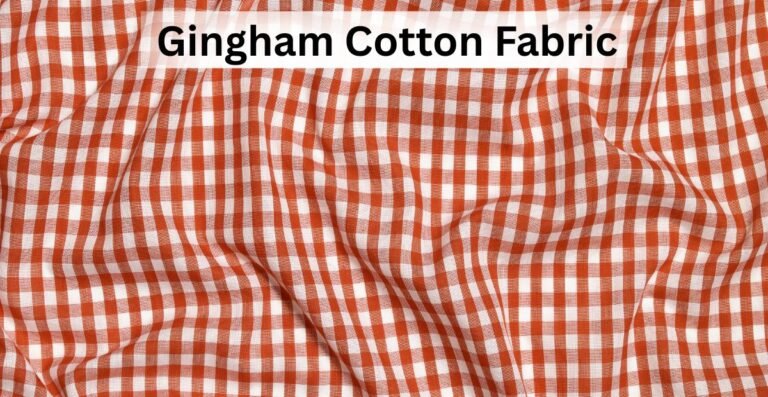
Gingham Cotton Fabric Guide: Features, Uses, and Styling Tips

Gingham cotton fabric is one of the most timeless fabrics. Gingham is a timeless fabric for both home and fashion. Its distinctive checkered pattern, lightweight texture and unique checkered pattern have made it a classic. Gingham is a timeless classic that can be found in many different forms, including summer dresses, picnic blankets, and cozy bedding.

Gingham cotton fabric is known for its versatility, and it’s easy to care for. Its crisp appearance and soft feel make it one the most popular cotton weaves within the textile industry. This guide will teach you everything about gingham, from its texture and origin to its modern applications and maintenance tips.

What is Gingham Cotton Fabric?
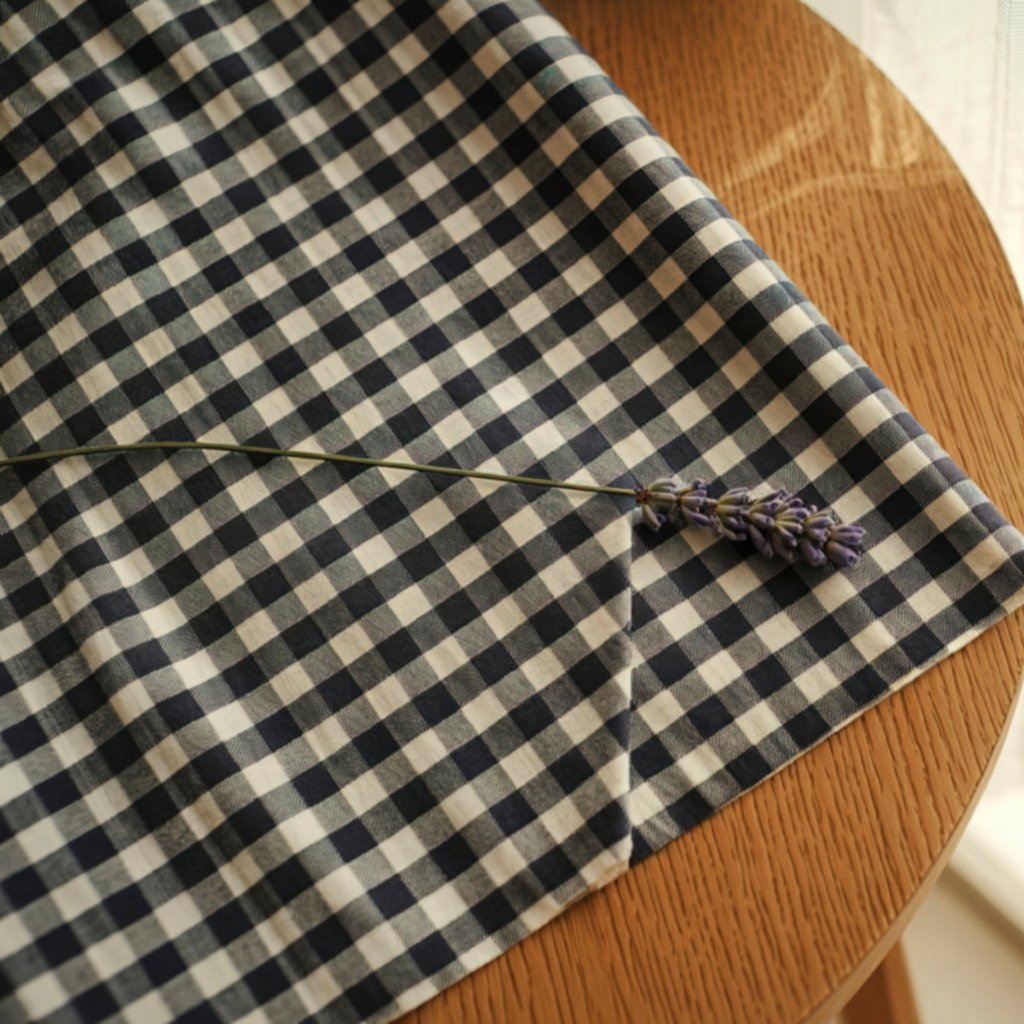
 A single lavender sprig lies diagonally across a navy and white gingham tablecloth, which covers a round wooden table.
Lavender on a gingham tablecloth.

Gingham fabric is a natural cotton fiber woven textile. The fabric has a check pattern of equal size created by weaving together dyed and un-dyed yarns. The pattern is usually white with a color like blue, red or green.

The pattern is woven into fabric and not printed, giving it a distinctive look. Gingham cotton is used widely for clothing, curtains, and table linens because of its lightweight, breathable properties. Read more….Pima Cotton

This fabric is also appreciated for its softness, crispness, ease of washing, and resistance to shrinkage when cared for properly. The natural cotton content makes it eco-friendly, and also comfortable to wear every day.

Gingham fabric: A brief history
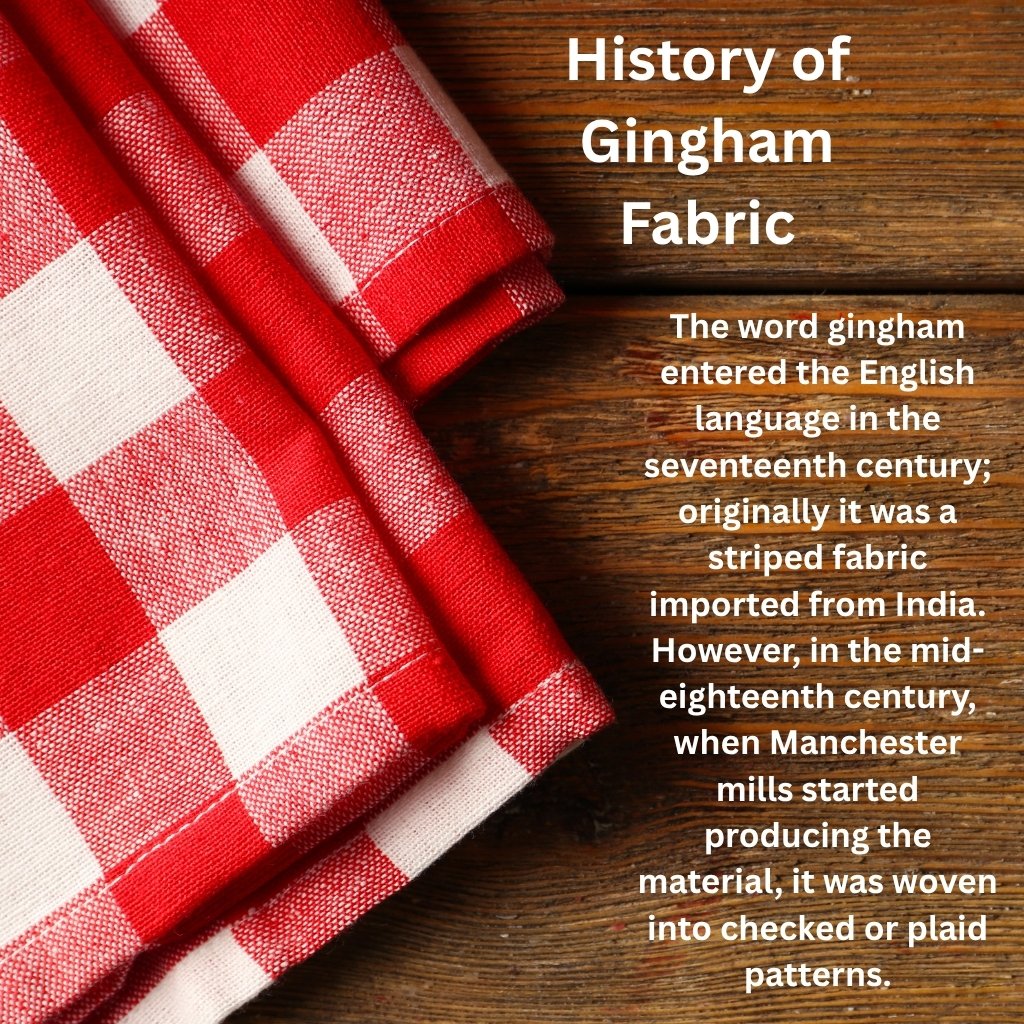
Red and white checkered gingham fabric folded on a wooden surface with a text overlay about the history of gingham fabric.
History of Gingham Fabric

Gingham’s story began long before it was a popular fashion fabric. The word “gingham”, which means “striped” in Malay, comes from the Malay term genggang. Originally gingham fabric was made with stripes and not checks. The first gingham fabric was imported to Europe in the 17th century from Indonesia and India.

European weavers started to experiment with different patterns as textile production developed. The checked gingham eventually became popular in England and France. In the 18th century gingham made its way from England to America where it was used for home linens, dresses, aprons and other household items. See more….Pique Cotton Fabric

Intriguingly, gingham was a popular symbol for retro style in the 1960s. Celebrities and designers showcased the fabric in fashion shows which helped it regain its popularity. Today, gingham is a symbol of simplicity and charm that has been admired by generations.

How Gingham Cotton Fabric is Made

Gingham cotton fabric is made from high-quality cotton fibers. The yarns are spun and dyed before being woven into a balanced pattern. The gingham pattern is not printed, but created on the loom.

Yarn preparation: Cotton fibers will be cleaned, combed and spun into fine threads.

Dyeing Process : Before weaving, the yarns are dyed with selected colors to ensure that the color is carried through the fiber.

Weaving: The yarns are weaved in plain weave to create the signature check pattern.

Finishing: Fabric is washed and pressed. Sometimes, it’s treated to add softness or prevent shrinkage.

The pattern is the same on the reverse side of the fabric because it’s woven, which makes gingham different from printed cotton. Read more…..Chambray Cotton Fabric

Gingham Cotton Fabric Characteristics

A woman stands by an open front-loading washing machine, holding a pile of mixed laundry and a laundry basket on the floor beside her.
Laundry day: loading a washing machine with clothes and towels.

The Gingham Cotton fabric is a popular choice for textiles because of its unique characteristics. Explore its most important characteristics:

Texture: Smooth and crisp to the touch.

Weight: Ideal for hot climates, lightweight and breathable.

Durability: Strong cotton fibers provide long-lasting performance.

Pattern: Checkered pattern reversible, typically even-sized.

Breathability : Excellent airflow allows for comfortable wear.

Easy to care for: Machine washable and easy iron.

The versatility of gingham makes it suitable for both formal and casual wear as well as home furnishings.

Gingham Patterns Types
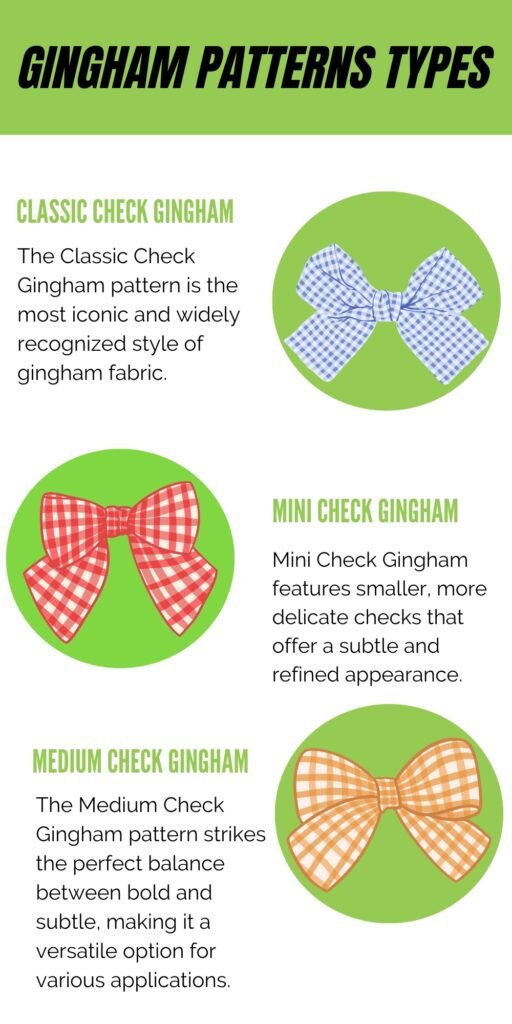
Infographic about Gingham Patterns Types. Features three circular green images with blue, red, and orange gingham bows alongside text blocks describing Classic Check Gingham, Mini Check Gingham, and Medium Check Gingham.
Gingham Patterns Types: Classic, Mini, and Medium checks with bow visuals.

Although gingham appears simple, there are many variations to its pattern that add visual appeal.

Classic Check Gingham: This is the most common checkerboard pattern, with equal-sized squares in both white and colored colors.

Mini Check Gingham: Smaller checks with a refined appearance. Often used on shirts.

Medium check Gingham: Ideal for dresses, skirts and upholstery.

Large check Gingham: Bold, striking and suitable for tablecloths and curtains as well as statement clothing.

Designers can play with color contrast and proportion to create unique patterns.

Gingham Cotton Fabric – Uses and Benefits

You can use gingham cotton fabric for fashion, home decor and crafts. Here are some of its most common uses:
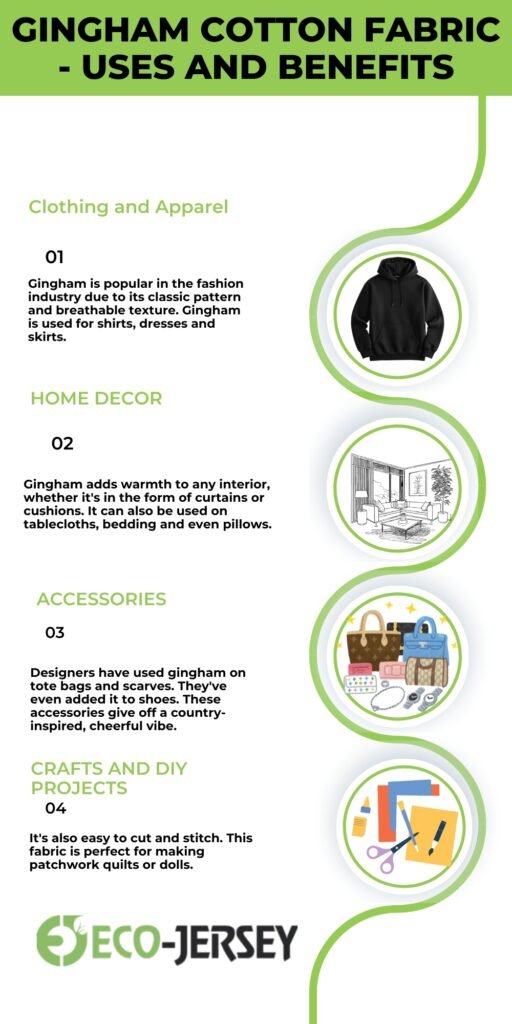
An infographic titled “Gingham Cotton Fabric - Uses and Benefits” with four sections: Clothing and Apparel, Home Decor, Accessories, Crafts and DIY Projects. Each section has a brief description and circular images on the right showing a hoodie, a living room scene, fashion accessories, and crafting tools. The Eco-Jersey logo appears at the bottom.
Gingham Cotton Fabric: versatile, stylish, and perfect for clothing, home decor, accessories, and DIY projects.

1. Clothing and Apparel

Gingham is popular in the fashion industry due to its classic pattern and breathable texture. Gingham is used for shirts, dresses and skirts. It can also be found in children’s clothing. The check pattern adds a polished yet playful look to garments.

2. Home Decor

Gingham adds warmth to any interior, whether it’s in the form of curtains or cushions. It can also be used on tablecloths, bedding and even pillows. Its reversible quality makes it simple to style.

3. Accessories

Designers have used gingham on tote bags and scarves. They’ve even added it to shoes. These accessories give off a country-inspired, cheerful vibe.

4. Crafts and DIY Projects

It’s also easy to cut and stitch. This fabric is perfect for making patchwork quilts or dolls.

The versatility of gingham cotton ensures it will never go out of style in fashion or décor.

Gingham Cotton Fabric: Benefits

The benefits of gingham cotton fabric are both practical and aesthetic.
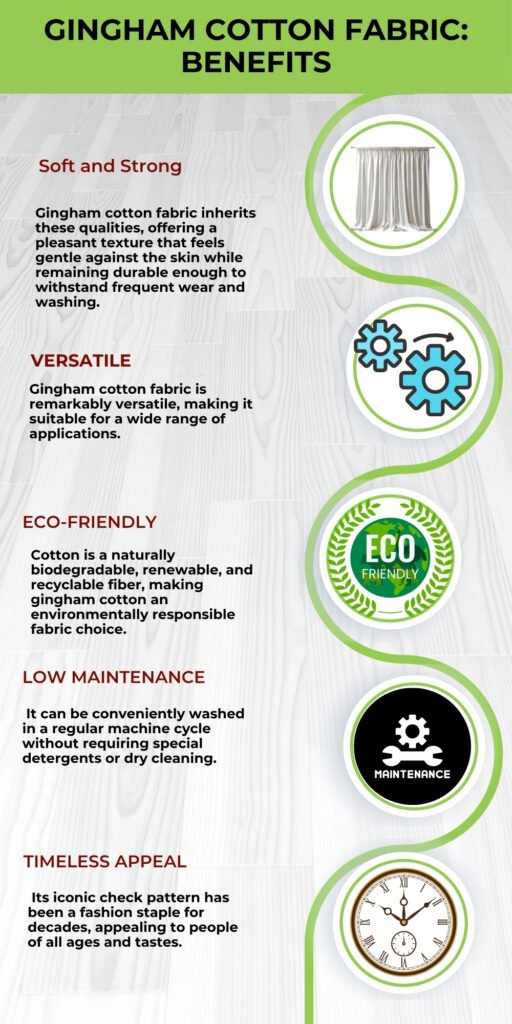
Infographic titled 'Gingham Cotton Fabric: Benefits' with sections highlighting Soft and Strong, Versatile, Eco-Friendly, Low Maintenance, and Timeless Appeal, each accompanied by circular icons and a decorative green timeline on a light wood background.
Gingham cotton fabric benefits: soft and strong, versatile, eco-friendly, low maintenance, and timeless appeal, illustrated with icons along a green circular timeline.

Breathable, lightweight and keeps you comfortable and cool in summer.

Soft and Strong: Natural cotton fibers provide durability while maintaining softness.

Versatile: Can be used for both clothing and textiles.

Eco-Friendly : Cotton is biodegradable, renewable and recyclable.

Low Maintenance: Easy wash, quick dry, and resistant fading.

Timeless appeal: This style is timeless, and suitable for any age or trend.

The check pattern is also more durable than plain weaves. It’s a good choice for daily use.

Gingham Cotton vs. other cotton fabrics

AspectCotton VoileCotton TwillGingham CottonPoplin Cotton
TextureSheer and softSmooth with diagonal ribsDistinctive checkered textureSmooth and plain
WeightLightweight and airyMedium-heavyLightweightMedium weight
DurabilityModerateHigh durabilityModerately strongStrong
AppearanceTransparentMatte finishReversible check patternSoft sheen
Best UseBlouses and curtainsWorkwear, shirts, pants, uniformsShirts, dresses, home décorFormal shirts and dresses
The unique texture of gingham, with its checkered pattern, makes it stand out in both appearance and function.

How to care for Gingham Cotton Fabric

A person hanging neatly organized clothes on a portable clothing rack in a bright, minimalist room.
A tidy, light-filled setup with a person arranging white and blue shirts on a portable clothing rack.

Follow these simple tips to maintain the beauty of your gingham pieces.

Washing: Use lukewarm or cold water and a mild detergent. Bleach can fade the colors.

Drying: Tumble dry or air-dry on low.

Ironing: Use the medium heat setting. For best results, iron while slightly damp.

Fold the product and store it in a dry, cool place to avoid moisture damage.

When properly maintained, gingham cotton fabric will last for many years.

Sustainability and eco-friendliness

Gingham is made primarily from cotton and therefore, it is biodegradable. Cotton farming has a smaller environmental impact than synthetic alternatives when it is managed responsibly.

Many manufacturers use organic cotton to produce gingham today, which reduces the use of chemical and ensures a safer, more environmentally friendly product. Gingham is a great choice for eco-conscious consumers because it combines style, comfort and sustainability. See more….Damask Cotton Fabric

Styling Tips For Gingham Fabric

A row of sleeveless tops and dresses on wooden hangers hanging from a metal rod in a shop or closet.
Diverse tops on hangers ready to shop.

Combining Patterns: Pair small checks with solid colors for a balanced look.

Seasonal Selections: Choose pastel gingham in spring or bold tones in autumn.

Home Styling – Use gingham curtains on plain walls to create an old-fashioned look.

Layering: Gingham shirts are lightweight and can be worn under cardigans or denim jackets to create a classic look.

Gingham is a versatile fabric that can be used to suit both the modern minimalist and retro revival styles.

Conclusion

Cotton gingham fabric is more than just a pattern. It’s a symbol for timeless beauty and comfort. Gingham is a timeless fabric that has a rich history. Its presence in fashion today is a testament to this.

The cotton fabric is made from eco-friendly materials and has a light, breathable, and durable texture. It can be used for many purposes. Gingham adds warmth and style to any project, whether you’re creating a dress or decorating your home.

The gingham fabric’s checked appeal continues to blend tradition with style, one square at atime.

FAQs

Is gingham fabric made only from cotton?

Not always. While traditional gingham is 100% cotton, some modern variations use cotton blends with polyester for added durability.

Does gingham fabric shrink after washing?

It may shrink slightly if washed in hot water. Using cold water and air-drying helps maintain its size.

Can I use gingham cotton for upholstery?

Yes, medium or heavyweight gingham cotton works well for light upholstery like cushions or chair covers.
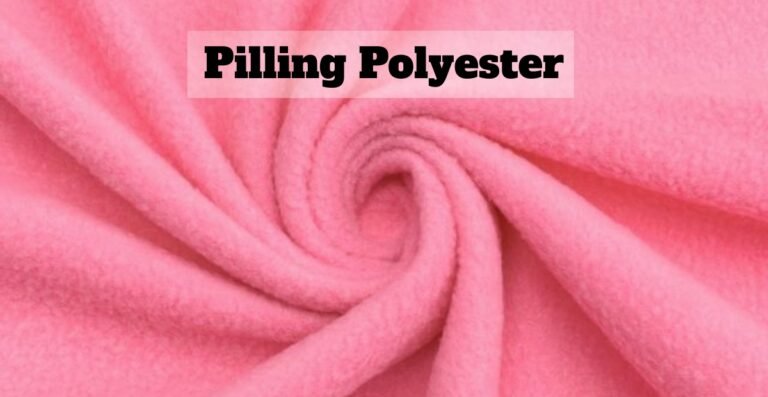
Low Pilling Polyester: A Full Guide to Smooth Durable Fabric

In the world of textiles, durability, and appearance goes hand in hand. No one likes a garment that looks aged after a few washes. This is where low pilling polyester fabric comes to the rescue. Considered to be the most durable fabric with a smooth surface and resistant to any wear, this fabric is innovative as it keeps its polished appearance even after prolonged use.

Learning about low pilling polyester is essential for fabric producers accurately producing activewearhome furnishings, or fashion garments to create smart and enduring fabric decisions. This complete guide describes its compositionbenefitsvalueapplications, and care tips to explain why this fabric is one of the most used modern textiles.

What Is Low Pilling Polyester?

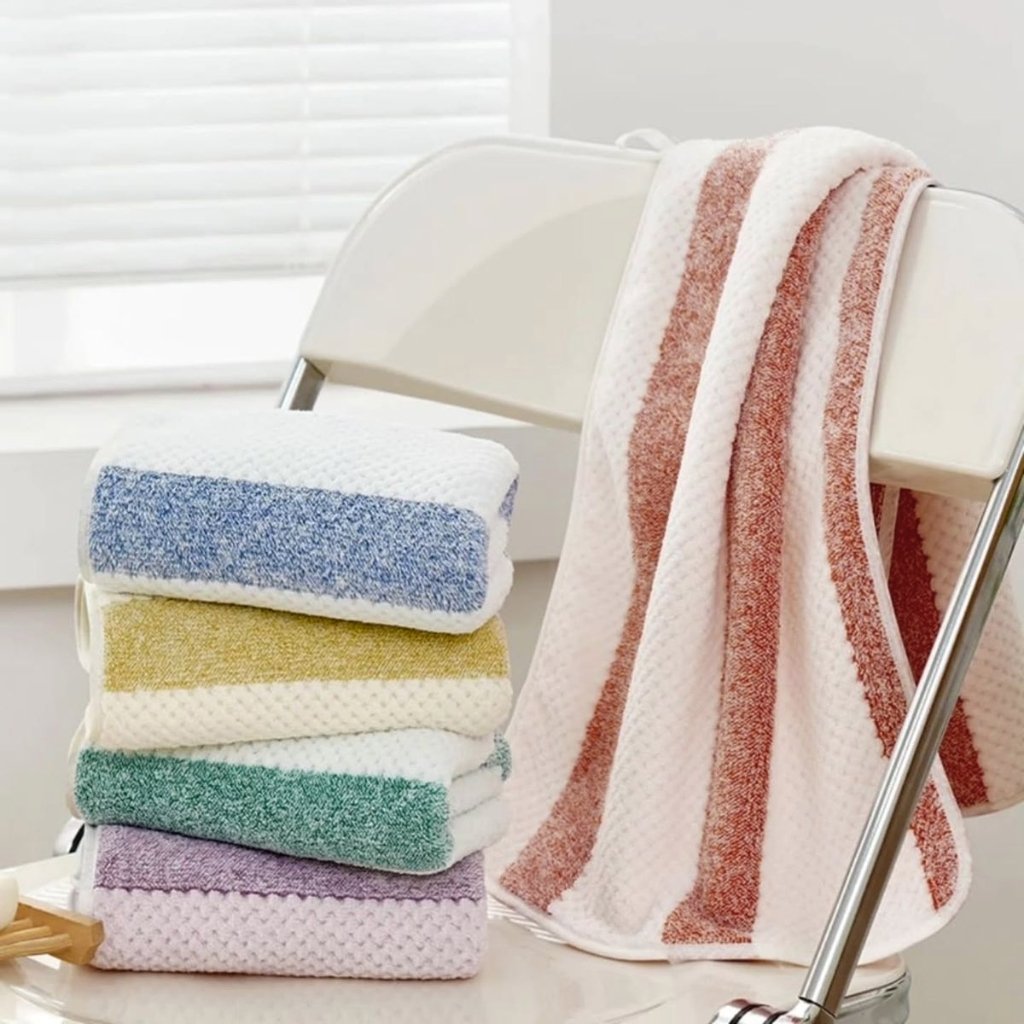
A tidy collection of folded towels in pastel colors (blue, yellow, green, lavender, white) stacked beside a chrome towel rack with a white-and-pink striped towel draped over it in a bright, clean bathroom.
Soft, colorful towels neatly stacked beside a chrome towel rack in a bright bathroom.

Low pilling polyester is an advanced form of polyester fabric that has been engineered to minimize or completely eliminate pilling—a common problem that affects the surface appearance of textiles over time.

Pilling refers to the formation of small, fuzzy balls of tangled fibers (called “pills”) that appear on the surface of fabrics due to continuous rubbing, friction, or washing. These pills make garments and upholstery look old, worn out, and unattractive even when they are relatively new. Because polyester is a synthetic fiber, it’s naturally strong but can be prone to pilling when short or loose fibers break away from the yarn structure.

To solve this problem, textile engineers developed low pilling polyester, a type of polyester specifically designed to resist fiber breakage and tangling. This is achieved through fiber modification, tight spinning, and advanced surface treatments that reinforce the strength and smoothness of the fibers.

When compared to regular polyester, the difference is significant. In standard polyester fabrics, surface friction—caused by daily wear, washing, or contact with rough surfaces—leads to fiber breakage. These loose fibers roll into small balls and stick to the surface of the fabric. On the other hand, low pilling polyester fibers remain intact, smooth, and tightly bound, even after long-term use. As a result, the fabric maintains a clean, fresh, and polished appearance. Read more…Flame Retardant Polyester

Furthermore, the fibers used in low pilling polyester are often longer and more uniform in diameter, which further enhances their resistance to abrasion.

In simple terms, low pilling polyester combines the strength and durability of traditional polyester with an upgraded resistance to surface wear.

Moreover, the fabric’s smooth texture and soft hand feel make it comfortable to wear while retaining the crisp, professional look that consumers expect.

In summary, low pilling polyester is not just another synthetic material—it’s an evolution in fabric engineering designed to provide durability, comfort, and lasting beauty.

Understanding Pilling in Fabrics

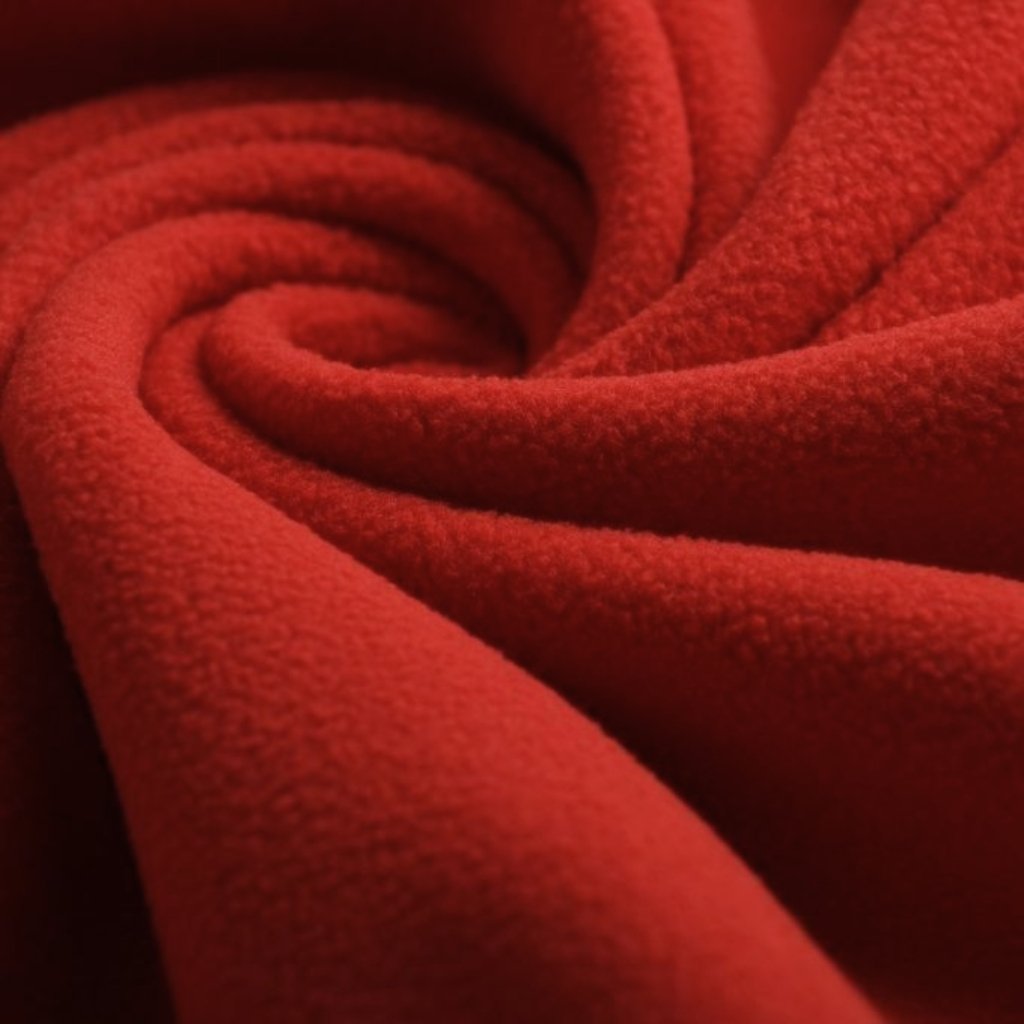
A close-up of plush red fabric, showing soft folds and a textured surface.
Rich red fleece folds create a cozy, velvety texture.

To understand how low pilling polyester works, one must first understand the pilling mechanism.

Pilling occurs when:

  • Short, loose fibers become entangled through friction to create small balls.
  • The balls become tangled in the fabric’s weave.
  • Washing, wearing, or rubbing the fabric.

Pilling is easily visible in high-contact areas like underarms, elbows, or couch cushions.

The low pilling polyester is aimed at minimizing fiber breakage and reducing friction to keep the surface smooth even after prolonged use.

How Low Pilling Polyester Is Made

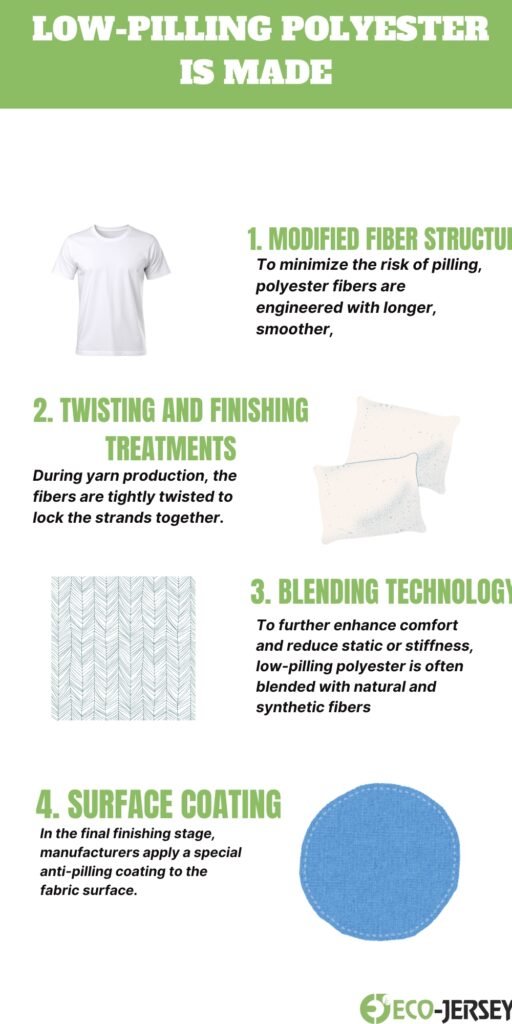
Infographic titled ‘Low-pilling Polyester is Made’ with four steps: 1) Modified fiber structure (white T-shirt image), 2) Twisting and finishing treatments (two pillows), 3) Blending technology (fabric swatch), 4) Surface coating (blue circular coating).
Low-pilling polyester is made through modified fiber structure, twisting and finishing treatments, blending technology, and a surface coating in the final stage.

Manufacturers make polyester resistant to pilling in the following ways:

  1. Modified Fiber Structure: Fibers are designed more in length and smoothness and strength to reduce the possibility of breakage.
  2. Twisting and Finishing Treatments: Fibers are twisted tightly and treatments to remove loose ends that form pills.
  3. Blending Technology: Low pilling polyester is also blended with cottonviscose, and spandex for more softness and ease.
  4. Surface Coating: In the last finishing stage, the application of specially designed anti-pilling finishes aims to improve fabric functionality.

All techniques used result in a high-quality, visually pleasing and smooth fabric that is durable and retaining all its characteristics over a long period of time.

Key Features of Low Pilling Polyester Fabric

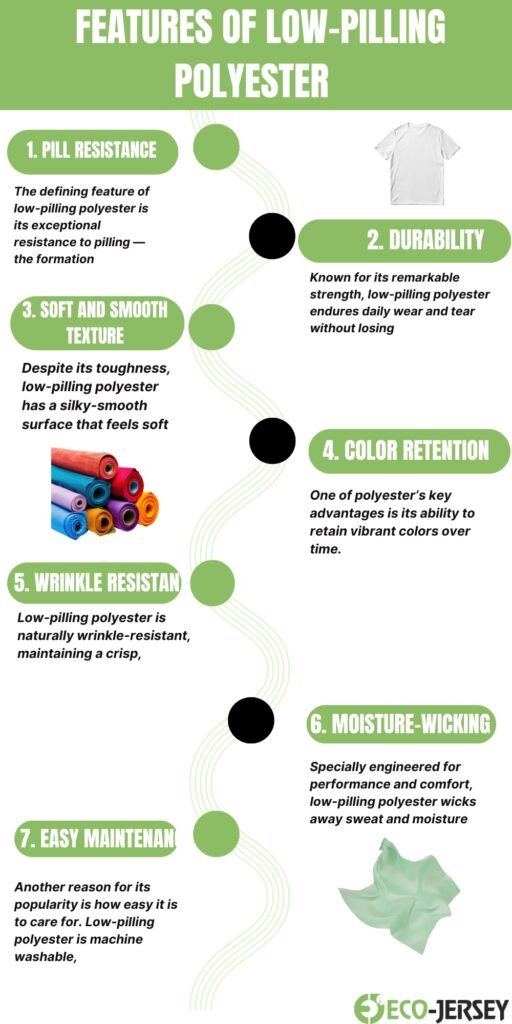
A vertical infographic titled “Features of Low-Pilling Polyester” with seven numbered sections arranged along a winding line. Each section has a green rounded heading and a short description:
Pill Resistance: describes low-pilling polyester’s exceptional resistance to pilling during formation; a t-shirt icon to the right.
Durability: highlights remarkable strength and everyday wear without losing integrity; no image.
Soft and Smooth Texture: notes silky-soft feel despite toughness; small fabric roll icons.
Color Retention: explains ability to retain vibrant colors over time; small color fabric image.
Wrinkle Resistant: mentions natural wrinkle resistance and crisp look.
Moisture-Wicking: describes performance and comfort, wicks away sweat; fabric swatch image.
Easy Maintenance: emphasizes machine-washable nature; no image.
The bottom-right shows the Eco-Jersey logo.
Features of Low-Pilling Polyester: Key benefits like durability, softness, color retention, and easy care.

Low pilling polyester is highly rated in the textile industry for its performance and appearance. Among its most important characteristics are:

1. Pill Resistance

The most important feature is of course its complete resistance to surface pilling. The fabric remains smooth no matter how many times it has been washed or worn for long stretches of time.

2. Durability

It endures daily wear and tear which makes it suitable for activewearuniforms, and furniture upholstery.

3. Soft and Smooth Texture

Low pilling polyester has a silky surface, which provides a soft touch and comfort, which does not compromise strength.

4. Color Retention

Polyester offers the benefit of permanent dye polyester. This assures that the fabric will hold and maintain color for extended periods of time. This offers the benefit of vibrant colors that will last for many years.

5. Wrinkle Resistance

The fabric resists wrinkles naturally and will require less frequent ironing, which is a convenience for low-maintenance apparel.

6. Moisture Wicking

Polyester fabrics made for low pilling and moisture wicking are made for high performance sportswear and outdoor garments.

7. Easy Maintenance

Due to its popularity in both fashion and home textiles, it is easy to maintain. It is machine washable, quick-drying, and doesn’t require special care.

Uses of Low Pilling Polyester

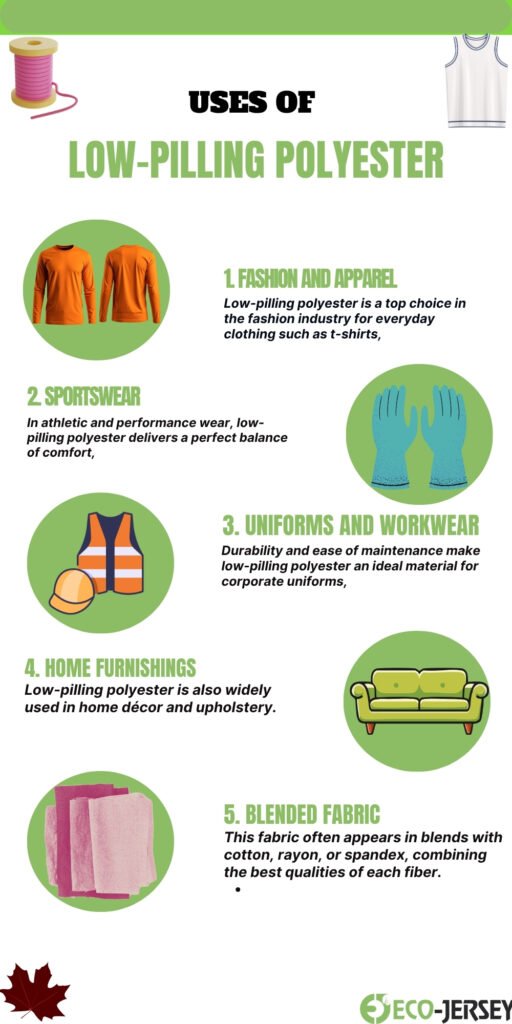
An infographic titled “Uses of Low-Pilling Polyester.” It features five sections with green circular icons: (1) orange T-shirts for fashion/apparel, (2) blue gloves for sportswear, (3) a safety vest and helmet for uniforms/workwear, (4) a green sofa for home furnishings, and (5) folded fabric swatches for blended fabric. Each section has a bold green heading and a short description.
Uses of Low-Pilling Polyester: fashion and apparel, sportswear, uniforms and workwear, home furnishings, and blended fabrics.

Due to its high durability and smooth texture, low pilling polyester is utilized in many areas:

1. Fashion and Apparel

It is the preferred material for t-shirts, trousers, dresses, and activewear. The fabric preserves its sleek appearance even after long-term wear.

2. Sportswear

In athletic clothing, low pilling polyester provides comfort and breathability, and also allows the garments to maintain a polished look, which is necessary for aesthetic purposes, even after frequent washing.

3. Uniforms and Workwear

The fabric provides durability and ease of care as everyday wear in corporate uniformsschool clothing, and medical scrubs.

4. Home Furnishings

Cushion covers, upholstery, and curtains made from low pilling polyester remain elegant and pill-free after years of use.

5. Blended Fabrics

Commonly blended with cotton or rayon, it adds softness while preserving strength, making it best for casual wear and bed linens.

Environmental and Sustainability Aspects

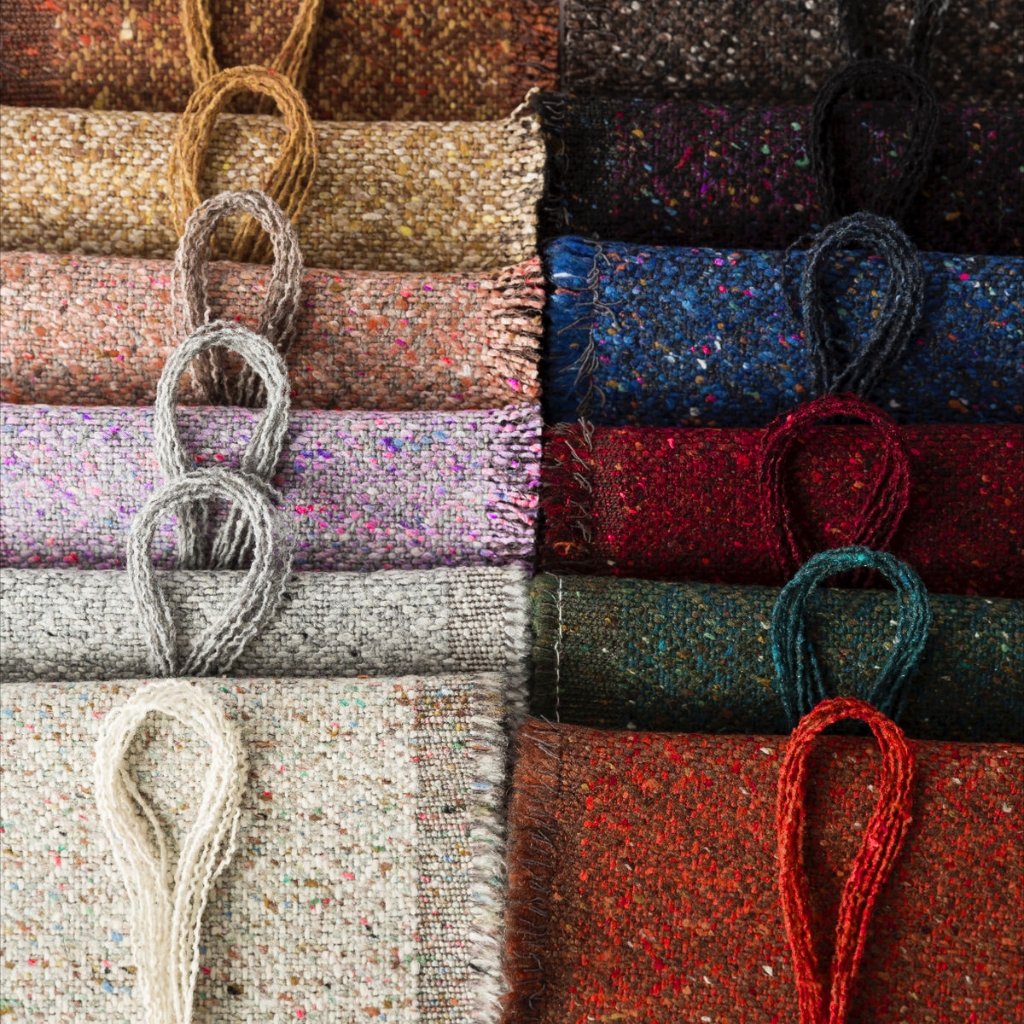
A grid of rolled, textured carpets in a wide range of colors and patterns, with looped cords draped over the edges.
Colorful woven carpets on display, showcasing a spectrum from neutral to vibrant hues.

The advancements in low pilling technology for polyester and its synthetic cousins are further innovations for more sustainable practices.

  • Longer lifespan means less fabric disposal, and in turn, less waste in the textile industry.

Recycled polyester (rPET) is also being used for the development of eco-friendly low pilling fabrics.

By employing non-toxic finishessafe fabrics for both the user and the planet are produced as a result of safe production methods.

Thus, low pilling polyester upholds the positive reputation of sustainable textile industry. Read more…Polyester in Clothing and Fashion

Benefits of Low Pilling Polyester

The following are the most significant advantages of this fabric, which likely explains its popularity and widespread reach in the global textile industry:

  1. Long-Lasting Performance – Does not degrade in quality over time and repeated uses.
  2. Cost-Effective – Due to its durability, replacement and repair costs are significantly lower.
  3. Smooth Finish – Exhibits a polished and pristine look.
  4. Low Maintenance – Care and washing of the fabric are hassle-free.
  5. Lightweight Comfort – Comfortable for everyday use in all seasons.
  6. Versatility – Accommodates a wide variety of uses, from clothing to upholstery, and even in industrial applications.
  7. Eco-Friendly Versions Available – Environmental benefits come from the use of recycled materials and the elimination of halogen finishes.

These reasons explain the value of low pilling polyester for both consumers and manufacturers. Read more…Polyester Organza Fabric

Care and Maintenance Tips

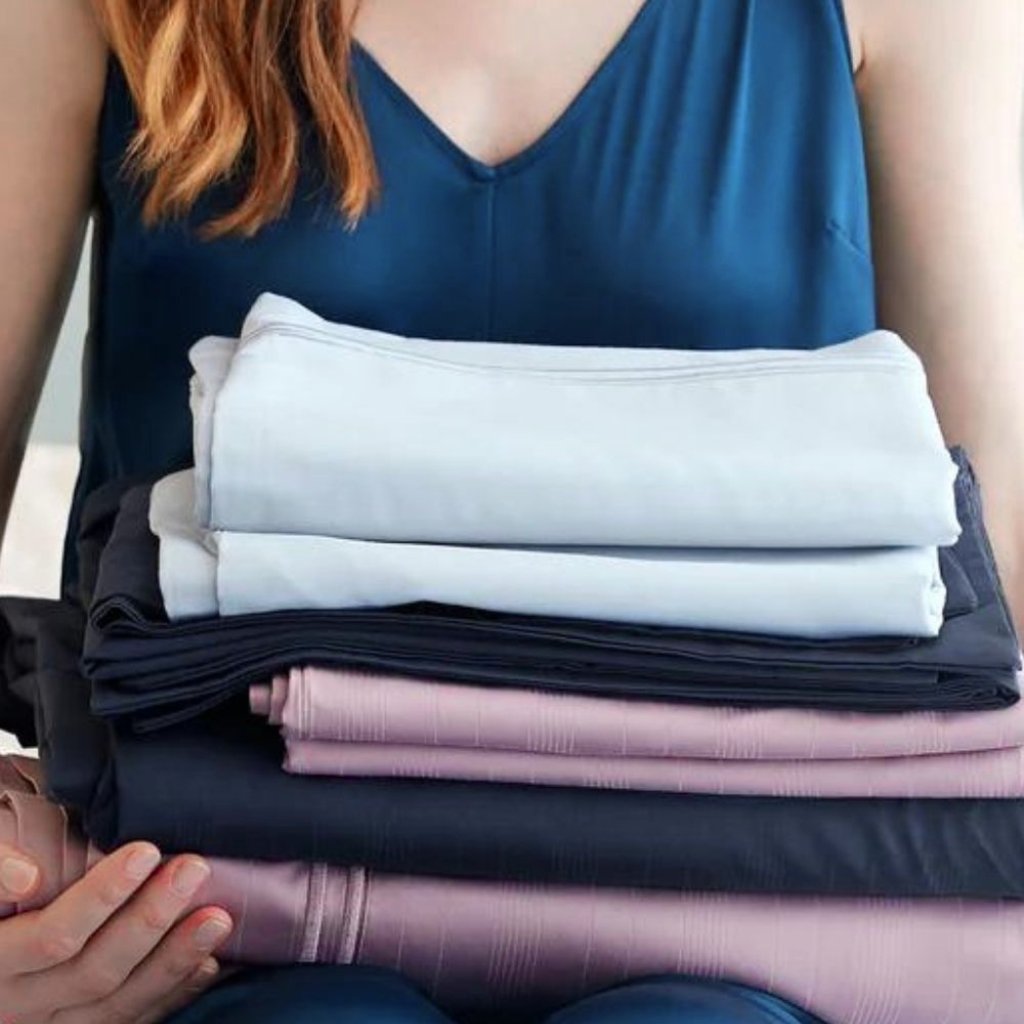
A person wearing a teal top sits while holding a neatly folded stack of clothes in various colors (light blue, navy, pink, and lavender).
A neat stack of folded clothes, ready to be organized or gifted.

Correct care strategy is vital in ensuring that the low pilling polyester fabric lasts for a number of years.

  • Washing: Use a gentle cycle and mild detergent.
  • Avoid Heat: Cold or warm water washes are recommended to prevent high water.
  • Drying: Either air dry or dry using a tumble dryer on low heat.
  • Ironing: Generally not necessary, but if you do, use a low heat setting.
  • Avoid Rough Surfaces: For dryer use, keep your wash separate from other tall cotton or cotton blend fabrics that are likely to cause friction.

Washing fabrics with these recommendations will keep your polyester smooth and free from pilling.

Expert Insight: Why Textile Manufacturers and Designers Prefer Low Pilling Polyester

The use of low pilling polyester by textile manufacturers and fashion designers translates to improved quality of the offerbrand perception, and customer satisfaction.

  • It enables consistently aesthetic appeal on ready-to-wear ensembles.
  • It reduces returns and complaints associated with the loss of the garment.
  • The sustainability of the offer improves.
  • It allows the brand to advertise the offer as “premium, smooth, and long-lasting.”.

With the increased demand for durable fabrics, low pilling polyester is a smart investment for textile producers.

Conclusion

To summarize, low pilling polyester is the next generation of fabric that seamlessly integrates durabilitycomfort, and style for the wearer. It is one of the most reliable fabrics on the market today due to its smooth finish, color retention, and pilling resistance.

From clothing to home decor, low pilling polyester enhances utility while ensuring items retain their new appearance for a longer duration. In addition to these benefits, the emerging eco-friendly polyester blends are providing new opportunities for sustainability to eco-conscious buyers.

FAQs

What is low pilling polyester?

Low pilling polyester is a specially engineered fabric that mitigates the formation of fiber balls, thereby maintaining a smooth, new appearance after repeated laundering.

What causes pilling in fabrics?

Pilling is the result of friction that causes broken fibers to tangle and form tiny balls at the surface of the fabric.

Is low pilling polyester durable?

 Yes, low pilling polyester is very durable, as it retains its texture, color, and structure much longer than regular polyester.

Flame Retardant Polyester The Guide to Fire-Resistant Fabric

In today’s world, safety and durability go hand in hand when choosing fabrics. One material that stands out for its protective and versatile properties is Flame Retardant Polyester. Known for its Fire ResistantStrength, and Longevity, this fabric is widely used in industrial work wear, home furnishings, public space, and transportation sectors.

This guide will look at all the essential aspects of Flame Retardant Polyester Fabric. It focuses on the CompositionPropertiesUsesAdvantages, and Care Instructions. This article is designed for manufacturers, designers, and end-users to enable safer and smarter fabric choices.

🔥 What Is Flame Retardant Polyester?

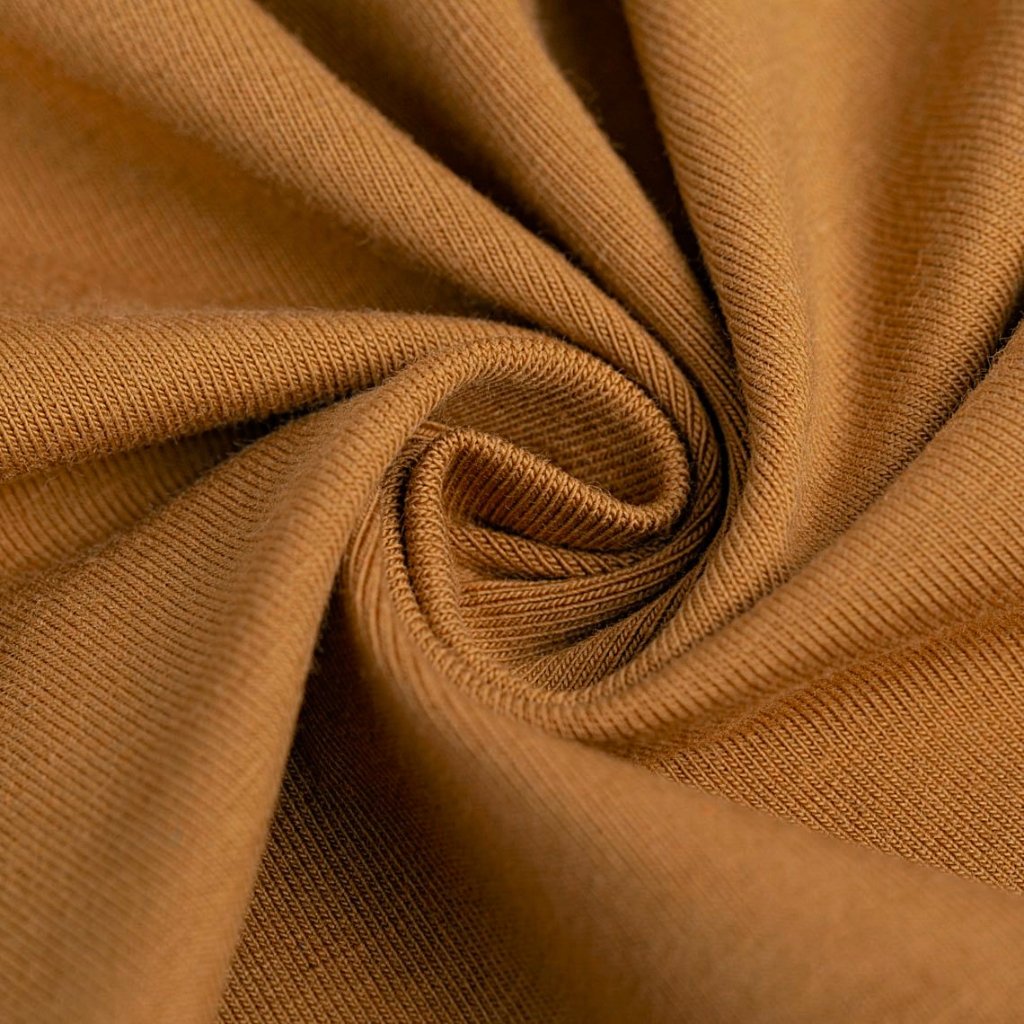
A close-up of soft, brown fabric twisted into a gentle swirl, highlighting smooth knit texture and folds.
Cozy, tan-brown knit fabric swirled into a sculptural fold.

Flame retardant polyester (FR polyester) is designed to be a synthetic fabric that is resistant to burning and slows down fire spread. Unlike ordinary polyester, it is treated or manufactured with flame-resistant chemicals, which enhances its thermal stability.

There are two main ways to create flame retardant polyester:

  1. Inherent Flame Retardant Polyester– The polymerization process includes fire-resistant properties so that protection cannot be washed or worn out.
  2. Treated Flame Retardant Polyester – The fabric is finished with a flame retardant coating after production. It is effective, however, it does fade with washing or sun exposure.

In both cases, polyester is made less flammable, is able to self-extinguish when fire is present and does not melt or drip. Read more…Top Uses of Polyester Fabric

🧵 Composition and Structure

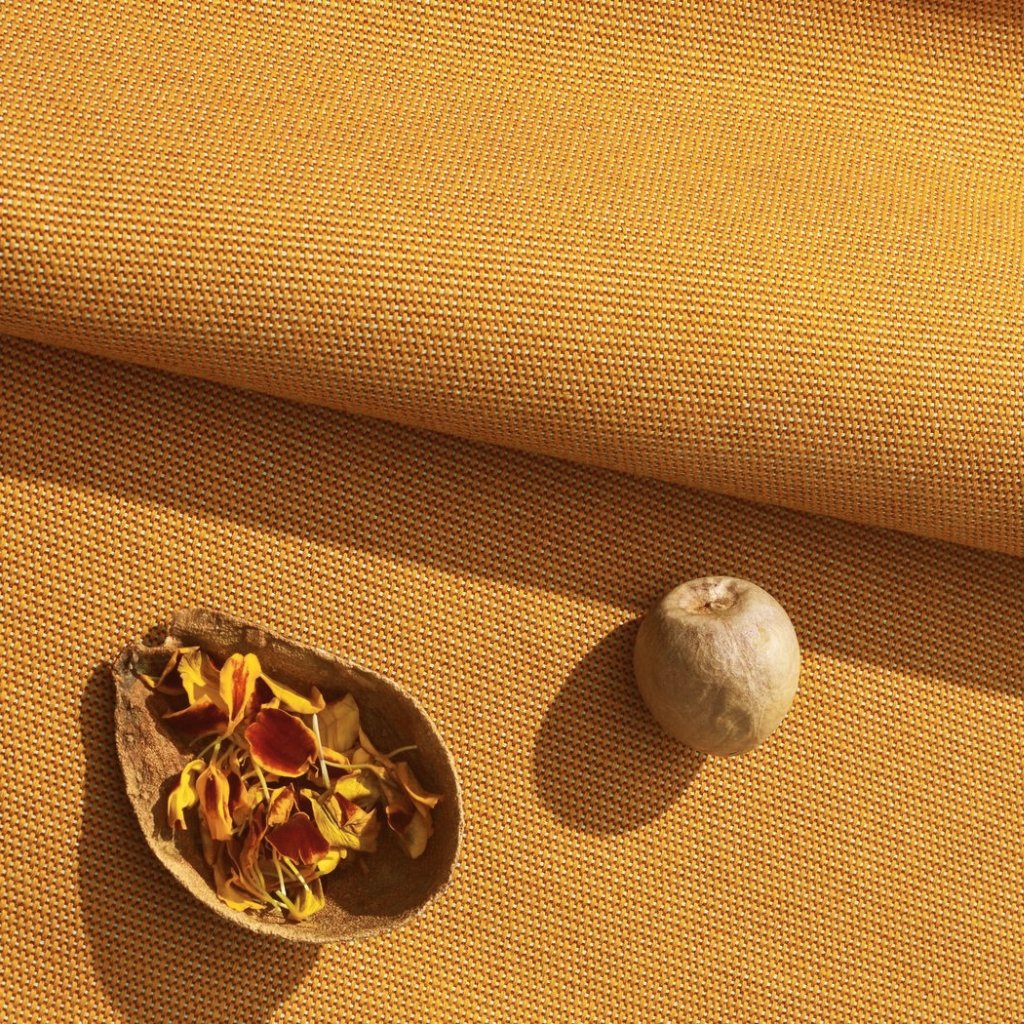
A close-up view of a mustard-yellow woven fabric with a rolled edge, featuring a small cracked shell filled with dried petals and a round beige button or bead resting on the surface.
Mustard textile detail with a dried-petal-filled shell and a round bead.

Flame retardant polyester does retain the core chemical structure of polyester (polyethylene terephthalate or PET) but is enhanced with special additions such as phosphorus-based compoundsantimony oxide, and halogen-free retardants. These compounds increase the limiting oxygen index (LOI) which determines the amount of oxygen that can be sustained to aid in combustion.Considering that normal air is composed of approximately 21% oxygen, materials that have an LOI of 26% and higher can be referred to as flame retardant. Most FR polyester fabrics have an LOI within this applicable range, ensuring cultivable fire resistance.

🌡️ How Flame Retardant Polyester Works

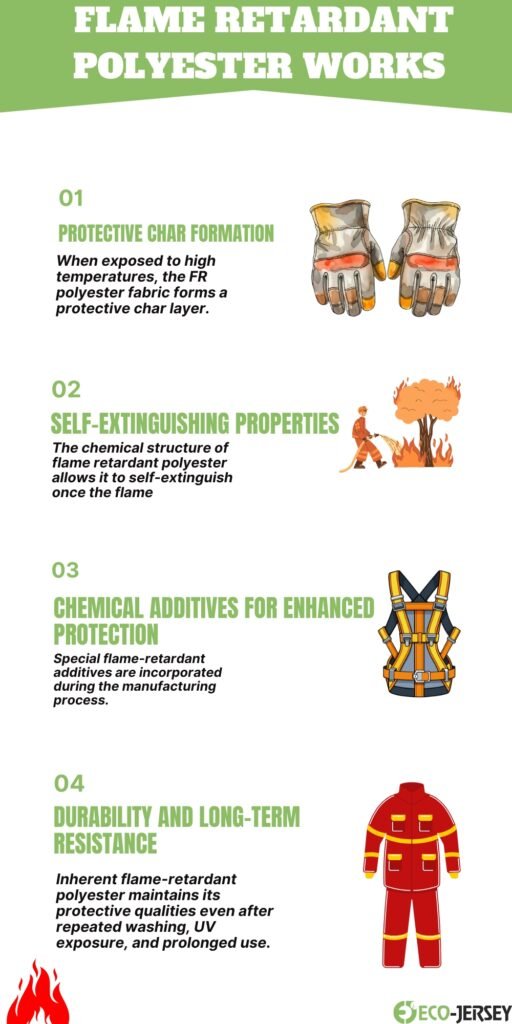
An infographic titled “Flame Retardant Polyester Works” with four sections:
Protective Char Formation: shows damaged gloves and text explaining protective char layer forms when exposed to high temperatures.
Self-Extinguishing Properties: illustration of a person near a small flame and a tree, noting chemical structure enables self-extinguishment.
Chemical Additives for Enhanced Protection: image of a safety harness, indicating additives are incorporated during manufacturing.
Durability and Long-Term Resistance: image of a red insulated suit, describing enduring protective qualities after washing, UV exposure, and prolonged use.
Green header banner and small Eco-Jersey logo at the bottom right.
Flame retardant polyester works: protective char formation, self-extinguishing properties, enhanced protection additives, and durable long-term performance.

The fire-resistant performance of flame retardant polyester fabric highly relies on several factors which influence its response to heat and flame:

  • The FR fabric produces and sustains a protective char, that insulates soft underlying fibers.
  • The self-extinguishing FR fabric produces and sustains protective char layers.
  • The chemical additives that fabricate the self-extinguishing FR fabric, which char and self-extinguish.
  • The inherent FR polyester will maintain its protective levels, even after many washes or prolonged use.

Due to this reaction, flame-retardant polyester is an engineered safety fabric and signifies that flame-retardant polyester can be used in highly dangerous areas. Read more…History of Polyester Fabric

🧯 Key Features of Flame Retardant Polyester Fabric

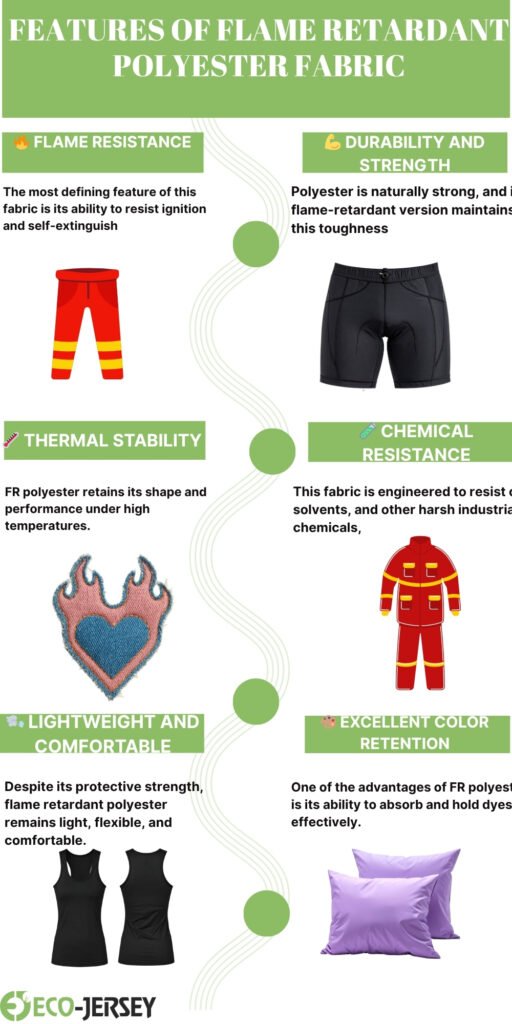
Infographic titled 'Features of Flame Retardant Polyester Fabric' with six labeled sections: Flame Resistance, Durability and Strength, Thermal Stability, Chemical Resistance, Lightweight and Comfortable, and Excellent Color Retention. Each section includes a brief description and a small illustrated graphic such as pants, shorts, jacket, flame icon, heart, and pillow.
Overview of key properties of flame-retardant polyester fabric: flame resistance, durability, thermal stability, chemical resistance, comfort, and color retention.

Flame retardant polyester is valued for its balance of safety, performance, and practicality. Some of its most notable features include:

1. Flame Resistance

This is undoubtedly the most obvious feature. When polyester fabric is ignited, flame is withdrawn, and the polyester fabric will not burn, melt, or self-extinguish.

2. Durability and Strength

Polyester is strong, and flame-retardant polyester retains that strength. It holds up against wear and tear and withstands repeated washing.

3. Thermal Stability

FR polyester stands up to high temperatures, and retains its shape. This makes it useful for jobs that have heat exposure.

4. Chemical Resistance

This material resists burning oils, solvents, and many other industrial chemicals which prolong the life of the fabric and helps it perform consistently.

5. Lightweight and Comfortable

Even with its heavy-duty protection, flame-retardant polyester is light and comfortable enough for everyday wear and upholstery.

6. Color Retention

This fabric takes up and holds colors. Manufacturers can create vibrant, long-lasting colors in fire-resistant polyester materials.

🧰 Applications of Flame Retardant Polyester

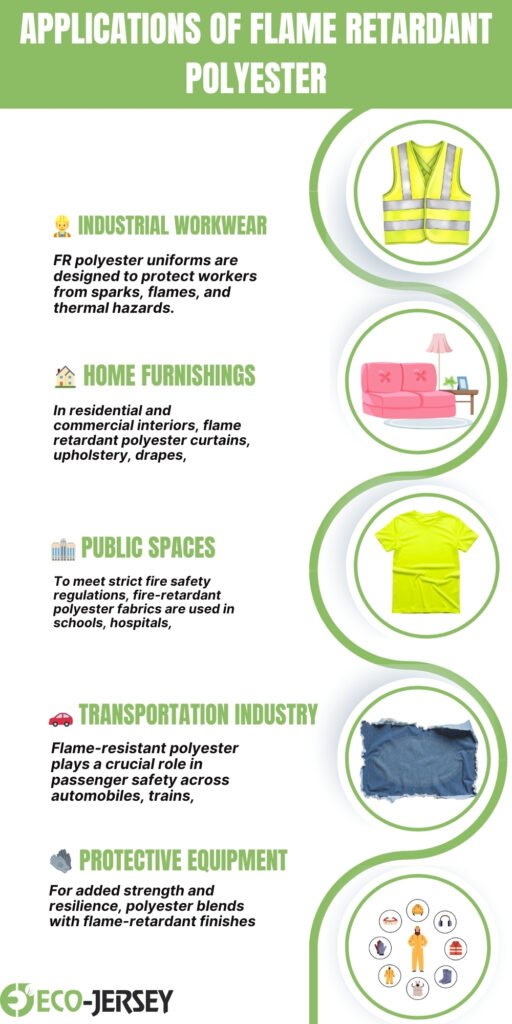
Infographic titled 'Applications of Flame Retardant Polyester' with five circular illustrations showing industrial workwear, home furnishings, public spaces, transportation, and protective equipment, each with green circular borders and icons on the right.
Applications of Flame Retardant Polyester: industrial workwear, home furnishings, public spaces, transportation, and protective equipment.

Numerous industries depend on the versatility of FR polyester. Here are some of its most common uses:

1. Industrial Workwear

Flame-retardant polyester uniforms offer protection against sparks, flames, and heat exposure to workers in the oil, gas, electrical, and chemical industries.

2. Home Furnishings

FR polyester curtains, drapes, upholstery, and bedding help reduce the spread of fire in soft furnishings. This adds fire safety to residential and commercial spaces.

3. Public Spaces

To comply with safety standards, fire-retardant curtains, seat covers, and carpets are used in hospitals, theaters, schools, and hotels.

4. Transportation Industry

Passenger safety during emergencies is ensured with FR polyester used in airplane seats, train interiors, and car upholstery.

5. Protective Equipment

For added durability, polyester blends which are fire resistant are used in safety vests, fire blankets, and gloves.

🧪 Production and Treatment Process

There are several planned phases when making flame retardant polyester.

  1. Polymer Blending: During polymerization, flame retardant additives are incorporated.
  2. Extrusion: The mixture is spun and melted into fibers.
  3. Texturing: Texturing the fibers improves their strength and comfort.
  4. Weaving or Knitting: Fabrics are made by knitting or weaving the yarn.
  5. Finishing: Chemical coatings are added to the treated fabrics during this stage.

In addition, halogen-free finishes are now common due to their safety and adherence to standards such as OEKO-TEX® and REACH.

🌍 Environmental Considerations

A full set of construction safety gear: a worker in a high-visibility orange and blue reflective suit with a tool belt, white hard hats (three shown), safety gloves, protective boots, a blue insulated jacket with reflective stripes, an orange reflective safety vest, a respirator/face shield, a pair of hand-held devices, and additional gear including a headlamp and a compact device on the ground. The items are arranged around the central figure on a light background.
Essential Personal Protective Equipment (PPE) set for construction and site safety.

Although polyester is synthetic, the impact of flame retardant technologies on the environment is less due to eco-friendly polyester.

  • Halogen-free additives powerfully remove toxic emissions.
  • Reusable industrial applications are available for recyclable FR polyester.
  • Manufacturers have prioritized the implementation of sustainable FR treatments that provide the same benefits as conventional treatments but are biodegradable.

Thus, flame retardant polyester is now a more eco-friendly and responsible material that adapts to contemporary requirements.

💡 Advantages of Flame Retardant Polyester

The value of flame retardant polyester fabric goes beyond the mere fact that it is fire resistant. Some additional benefits of flame retardant polyester fabric are:

  1. Enhanced Safety: Provides trustworthy protection in hazardous situations.
  2. Long-Lasting Performance: Does not fade, and retains its strength.
  3. Cost-Effective: Its longevity translates to value over time.
  4. Low Maintenance: Simple to care for and dries quickly.
  5. Versatile Use: Can be used in clothing and in home furnishings.
  6. Compliance with Standards: Safety certification recognized in any region of the world.

The fabric’s preferred choice status in various industries, as well as for home use, is largely due to its ability to withstand various forms of stress and exposure.

🧼 Care and Maintenance of FR Polyester

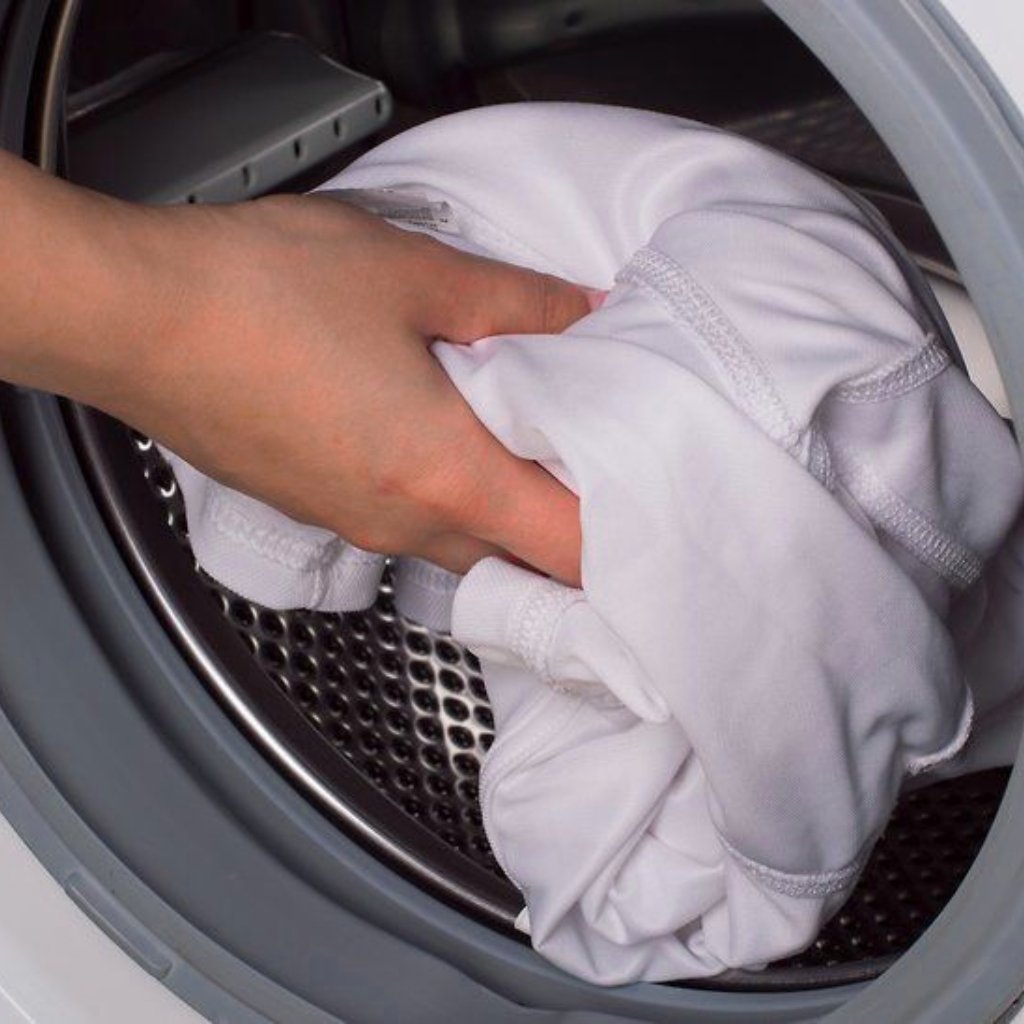
A hand places a white garment into a front-loading washing machine.
A person loads a white shirt into a washing machine drum.

To ensure that flame retardant polyester retains its protective attributes, it must be properly maintained:

1. Washing
Always use a mild detergent when washing flame retardant polyester. Avoid using bleach, harsh chemicals, or strong alkaline detergents, as these can break down the flame-retardant finish and weaken the fabric fibers.
2. Drying
When drying, it’s best to tumble dry on low heat or hang the fabric in a shaded, well-ventilated area.
3. Ironing
If ironing is necessary, use a low to medium heat setting (110–150°C / 230–300°F). Never press the iron directly onto the coated or printed side of the flame retardant fabric.
4. Storage
To maintain the integrity of the material, store flame retardant polyester fabrics in a cool, dry place, away from moisture and direct sunlight.

By adhering to the following care guidelines, you can help flame retardant polyester objects last longer and work better. Read more…How to Cool and Cut Polyester Fabric

📈 The Growing Demand for Flame Retardant Fabri

As the world focuses on workplace safety and sustainability, the need for flame retardant polyester is on the rise. FR textiles help the construction, oil and gas, hospitality, and public transport industries meet international fire safety standards.

Additionally, the demand for fire-safe home decor is growing. As a result, the textile industry has to develop new FR polyester blends that combine safety, comfort, and eco-friendliness.

🧠 Tips for Buyers and Manufacturers

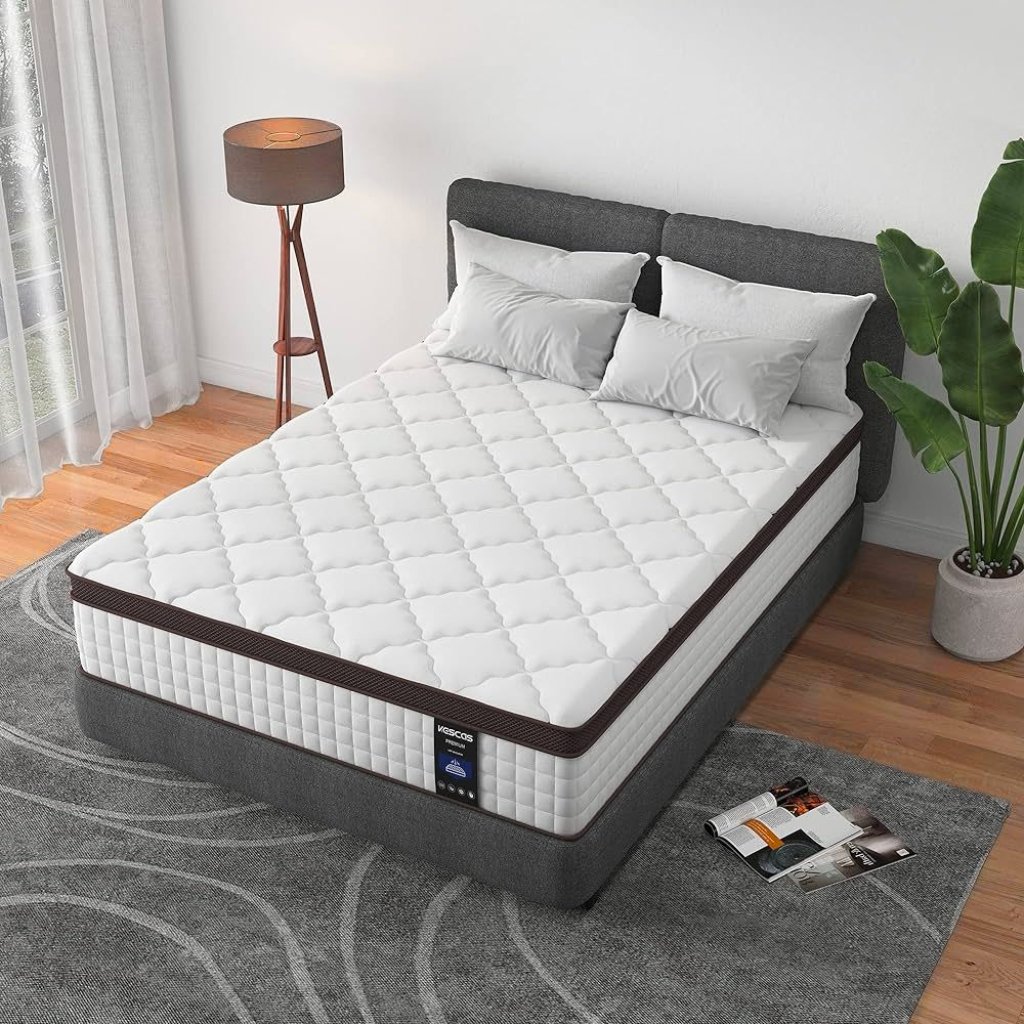
A neatly made bed with a white quilted mattress and dark brown trim sits on a gray upholstered bed frame in a bright, modern bedroom. A wooden floor lamp, sheer white curtains, a potted plant, and a gray area rug complete the space. A magazine lies open on the rug beside the bed.
Modern bedroom setup featuring a plush mattress on a gray bed frame, complemented by minimalist decor.
  • For consistent and long-lasting results, use inherent FR polyester.
  • Check certification standards such as NFPA 701EN ISO 11612, or BS 5867.
  • For eco-safety, choose halogen-free options.
  • Ensure you test for wash durability before purchasing in bulk.
  • The branding could focus on “fire-safe,” “durable,” and “sustainable” attributes since they have good SEO rankings and customer attraction.

🧭 Conclusion

Flame retardant polyester amazed by modern textiles as it combines safety, durability, and comfort. Industries and households prefer it for its affordability, along with its ability to resist flames and survive in extreme conditions.

High-performance flame retardant fabrics are ever more in demand, and awareness of fire safety is rising. FR polyester is proves that safety and innovation can coexist beautifully, whether in uniforms, interiors, or protective gear.

With polyester flame retardant fabrics, you are purchasing more than just fabric – you are acquiring protection, performance, and peace of mind.

FAQs

What is flame retardant polyester?

FLame retardant polyester is a specially engineered fabric that resists ignition, slows fire spread, and offers protection and durability.

How is flame retardant polyester made?

 It’s created by adding flame-resistant chemicals during fiber production or applying special treatments afterwards.

Is flame retardant polyester washable?

Yes, it can be washed with mild detergent. However, treated versions may lose their effectiveness after repeated washes.

Microfleece Magic: Soft, Warm, and Perfect for Every Season

0

There is something wonderful about enfolding one’s body with a soft warm fabric on a cool day. Touching microfleece brings comfort. Many people do not realize how this fabric became a staple in homes and favorite fabric to wear in outdoor adventures. It is the delicate yet warm soft fibers and the light weight coziness that make Microfleece Magic a true wonder. It is warm without weight and soft without bulk. It is perfect for any and all seasons.

The Start of a Soft Revolution

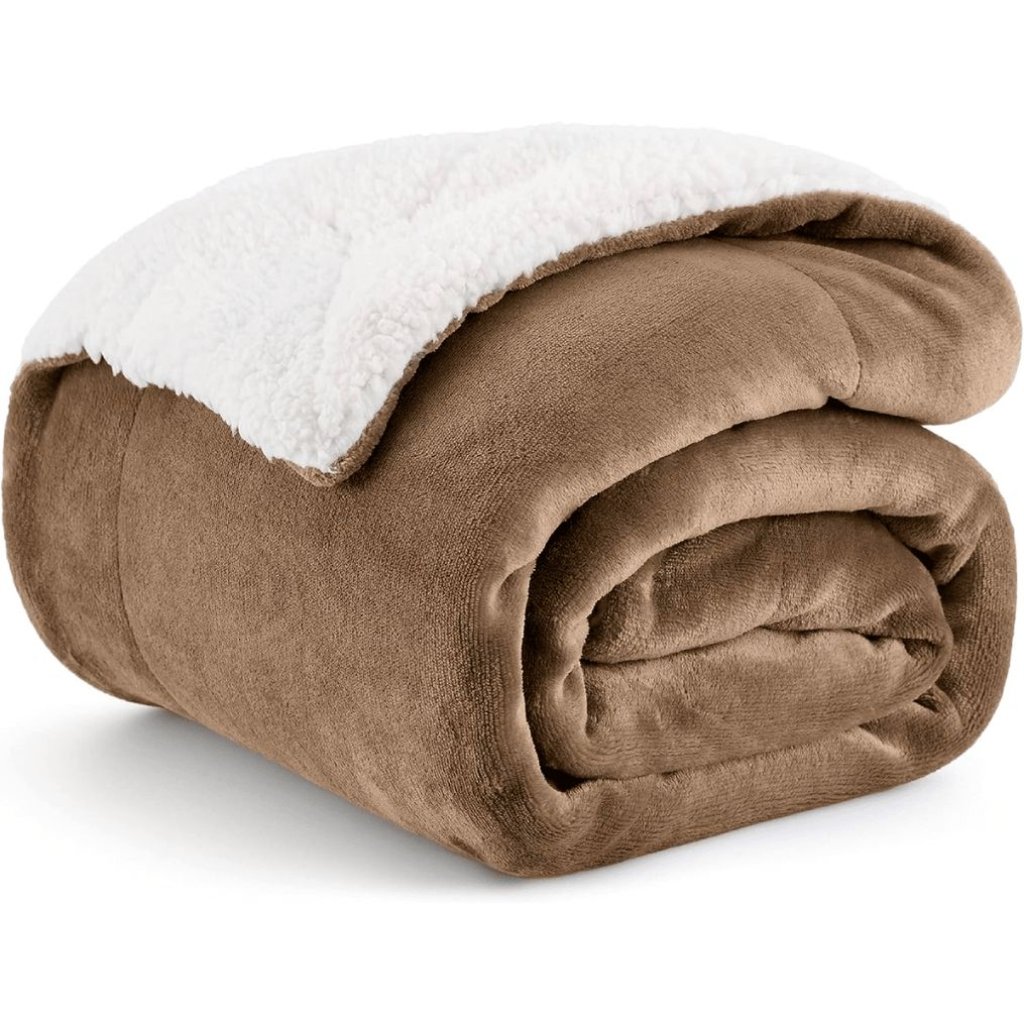
A folded brown plush blanket with a white fluffy underside partially visible. Microfleece Magic
Cozy Brown Plush Blanket with White Fleece

Long before there was microfleece, people kept warm using wool. While wool is warm, it can also be heavy and itchy. During the late 1970s, people who made fabric began looking for wool alternatives. They wanted materials that were easy to care for, light, and soft. This search led to the creation of polyester fleece, the first fluffy textiles made of synthetic fibers. This creation revolutionized the way people dressed to keep warm. This was the beginning of what we now call Microfleece Magic.

Microfleece improved upon fleece. It was made to be even softer, thinner, and smoother. The new goal was to trap warmth next to the body while allowing moisture to escape. It is no wonder it was quickly adopted by those who loved the outdoors and needed the material for comfort. This material has become common in microfleece blankets and clothing. The beauty of Microfleece Magic is in its perfect blend of comfort, innovation, and practicality.The Science Behind Softness

When you feel microfleece for the first time, it seems like touching a cloud. The softness of the microfleece fabric depends on how it is made. Polyester fibers are made of thousands of microfleece bristles. The fibers are then brushed to create a soft fluffy surface. Brushing the fibers traps air which helps hold warmth. The tiny, space fibers allows air to pass through. That feel warm, but never stifling. Gently embraced is the warmth of microfleece. Each thread draped gently spells out warmth.

The science is simple. Polyester is soft, fluffy, light, and quick to dry. When it is tightly woven and brushed, it becomes soft. Water is not absorbed by the fabric. After washing, it dries quick and feels fluffy. This is the wonderful science and softness which microfleece keeps. The fabric is proof softness and technology works beautifully together.

Lightweight Warmth for Every Season  

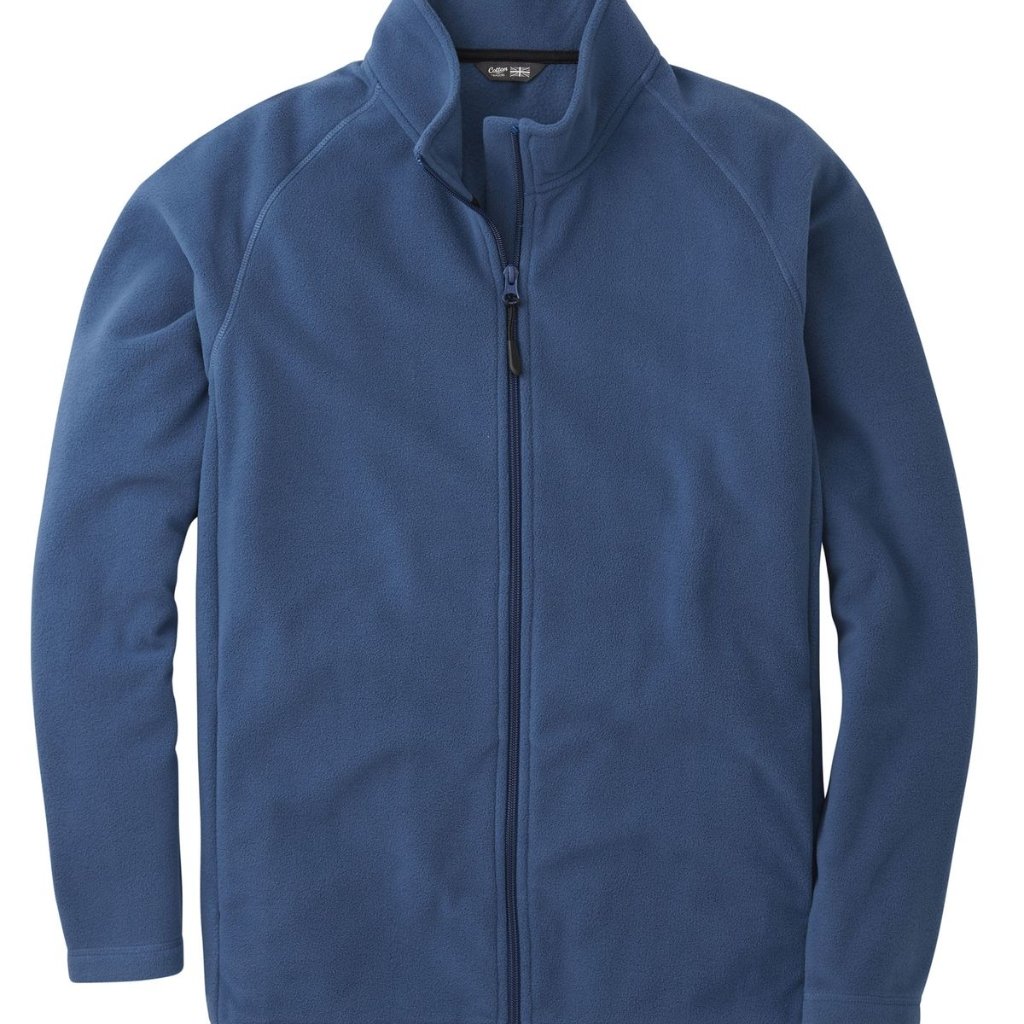
Blue full-zip fleece jacket with stand-up collar and zippered front, front view
Cozy blue fleece jacket with full front zipper and high collar

For Microfleece, the ability to keep you warm during the winter and comfortable during the summer is nothing to be surprised about. The summer heat and cooler winter air are easily adaptable for Microfleece. The breathable fibers allow your skin to remain comfortable and cool while winter cold air is still blocked. This balance makes Microfleece Magic the perfect fabric for every season.  

In the winter, Microfleece makes perfect base layer insulators under jackets. It keeps the heat close to your body while still feeling light and removed the bulkiness. During the warm seasons, the light textiles keeps you cozy during cooler parts of the day with the light pull over while you worn light over the summer. Every thread in Microfleece Magic was to keep your warm while the weight of the textile contributed to the overall balance of your comfort and made the fabric feel light.  

Ideal for Every Day Activities  

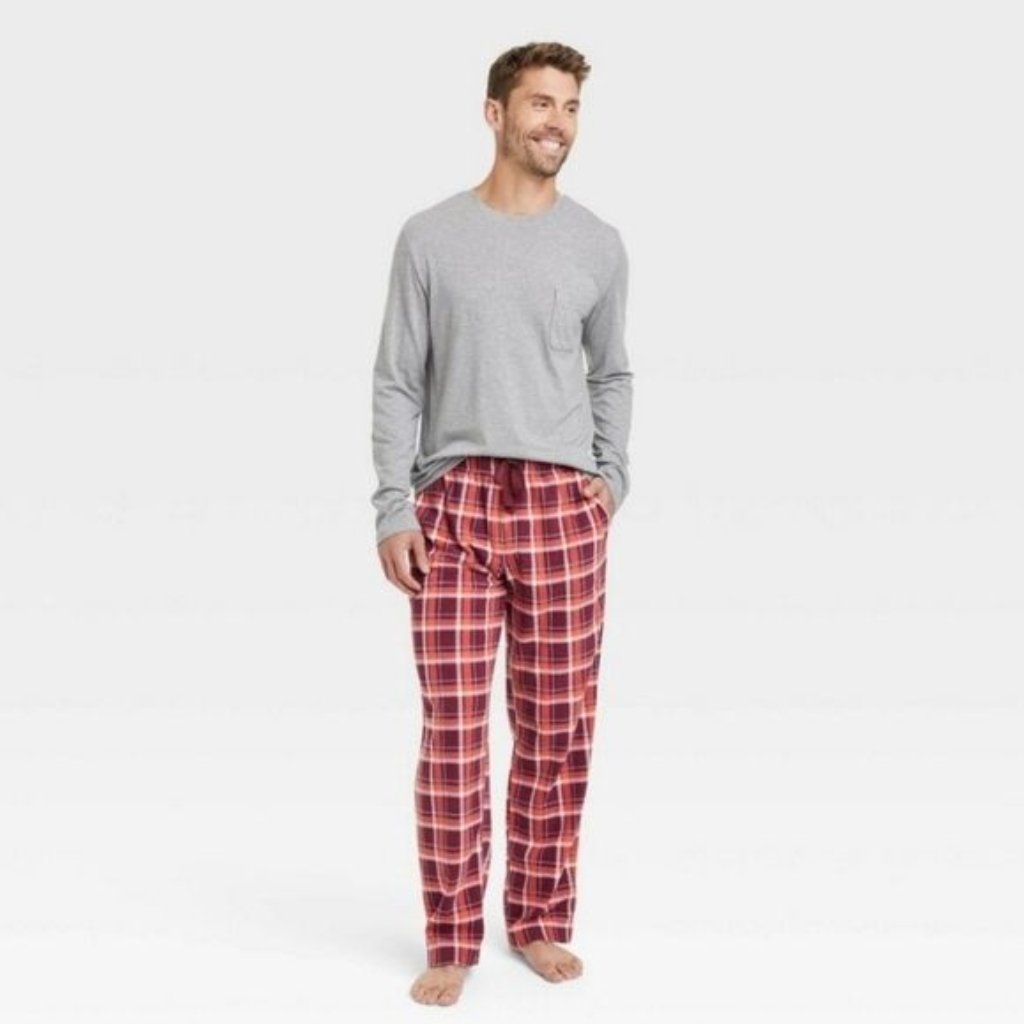
Man wearing a light gray long-sleeve shirt and red plaid pajama pants, standing barefoot with a relaxed smile
Cozy casual: gray top with red plaid lounge pants for a comfy night-in look

Microfleece does not need you to be active at the mountain to enjoy its benefits. It fits well into daily activities smoothly. Whether it is reading on the couch, taking a walk, or even while traveling Microfleece adjusts easily to your activities. This is a reason why many claim Microfleece Magic softens each moment.

Microfleece Magic is friendly to families and children alike, and suitable, soft Microfleece Magic is one of the few fabrics to easily rinse clean. Parents love Microfleece Magic Magic. Stains come out easily, and the fabric dries more quickly than most others. In just a few minutes, you have a clean, soft Microfleece Magic that is ready to be used again. Microfleece Magic is useful for the different daily living items. It provides you with care and warmth, from pajamas to throws.

Durability Meets Softness

Microfleece Magic provides incredible warmth, yet is highly durable. The stretched synthetic Microfleece Magic will not shrink or tear. It will keep its shape, even after extensive washing. No wonder people trust Microfleece Magic for their indoor and warm microfiber Magic for their winterized pajamas.

Microfleece provides durable warmth, especially winter Microfleece Magic which provides a warm Mofleece Magic for cold days. Unlike cotton or wool, winterized Microfleece Magic provides even more warmth and is more hygroscopic, meaning the fleece will draw more moisture from the air. This soft fabric will keep you warm and dry. This adds more value to this incredible Microfleece Magic. It is incredible how weightless this warm Microfleece is!

Easy Care and Maintenance

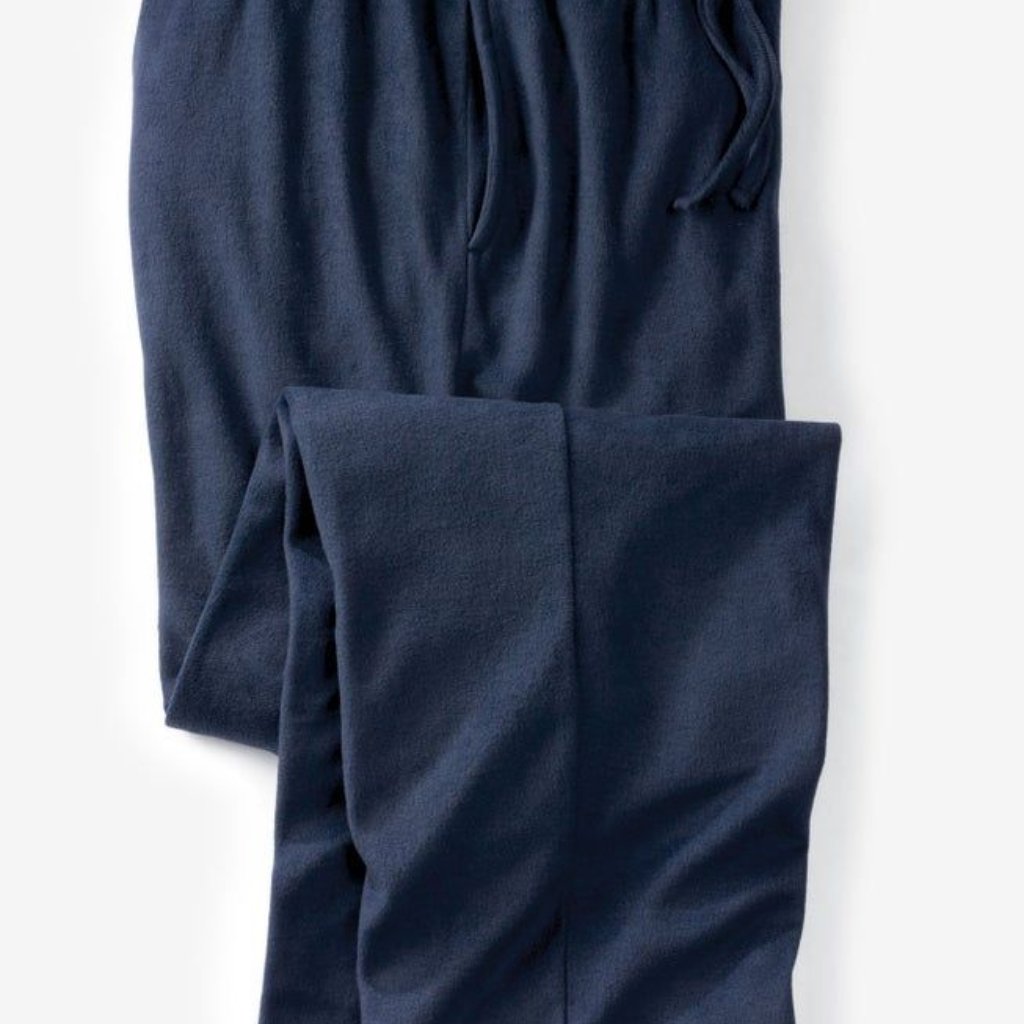
A close-up view of navy blue sweatpants with a folded leg, showing soft fleece material and a drawstring waist
Cozy navy joggers with a relaxed fit and cuffed ankle

Life is easier when fabrics are simple to care for. Microfleece is one such fabric. You can throw it in the washing machine, then dry it on low heat. You don’t have to worry about special care or ironing. That makes Microfleece Magic perfect for busy lifestyles.

It withstands many washes while remaining soft. It does not wrinkle easily and resists odors. Because of the smooth surface, pet hair and lint won’t stick as much. This is one more reason Microfleece Magic is so convenient. It is a fabric that saves time and effort, while giving the user continuous comfort.

The Environmental Edge

People are becoming more concerned about the environmental impact of the fabrics they use. Microfleece is part of that story, too. Many brands now make fleece using recycled plastic bottles. This uses up waste and repurposes it in a positive way. This is part of the appeal of Microfleece Magic, and it’s part of the reason it’s so popular today.

Taking into account the more sustainable way of producing microfleece, the same softness, coziness, and warmth are still retained. When companies use recycled polyester, they minimize the ecological footprint of landfill waste. Keeping comfort and utility high while harm remains low is the ultimate goal. The focus of the care-innovations to the earth- as the eco-friendly versions of microfleece take shape demonstrates the magic of microfleece technology.

Why Microfleece Is the Best

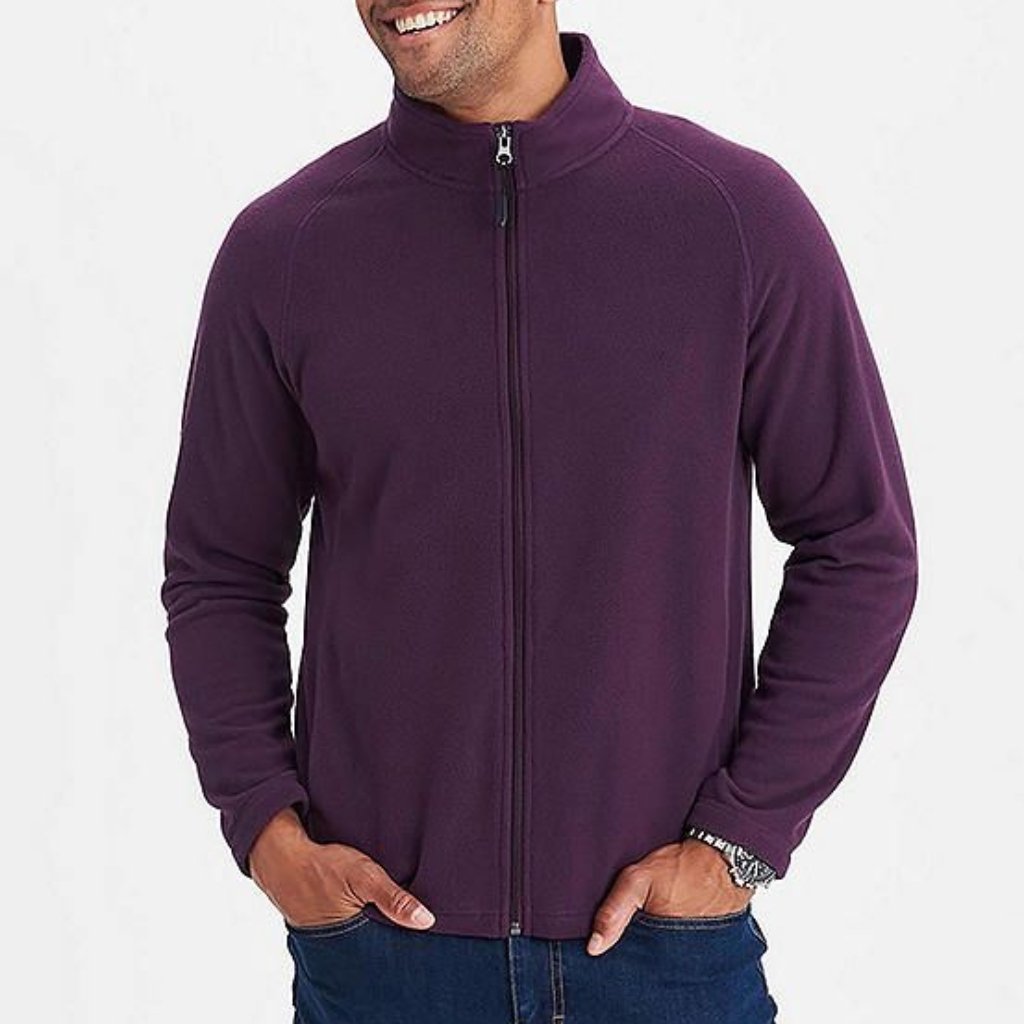
A man wearing a plain, zip-up purple fleece jacket with a high collar. He has his hands in his pockets and is smiling
Men’s purple fleece jacket with a full-zip front and stand-up collar

Microfleece has many qualities that make it better than other fabrics. In comparison to microfleece, cotton is slow to absorb moisture and takes longer to dry. On the other hand, microfleece, absorbs moisture, and remains light. Comfort and ease are highly regarded as microfleece magic on the other hand offers comfort and convenience.

Microfleece does not have the same sweat trapping qualities found in other synthetic fabrics as it allows more air to pass through. The airflow in the fabric helps in even better temperature control. Microfleece magic allows you to maintain a comfortable temperature even while you are moving.

Microfleece in Fashion and Home Design

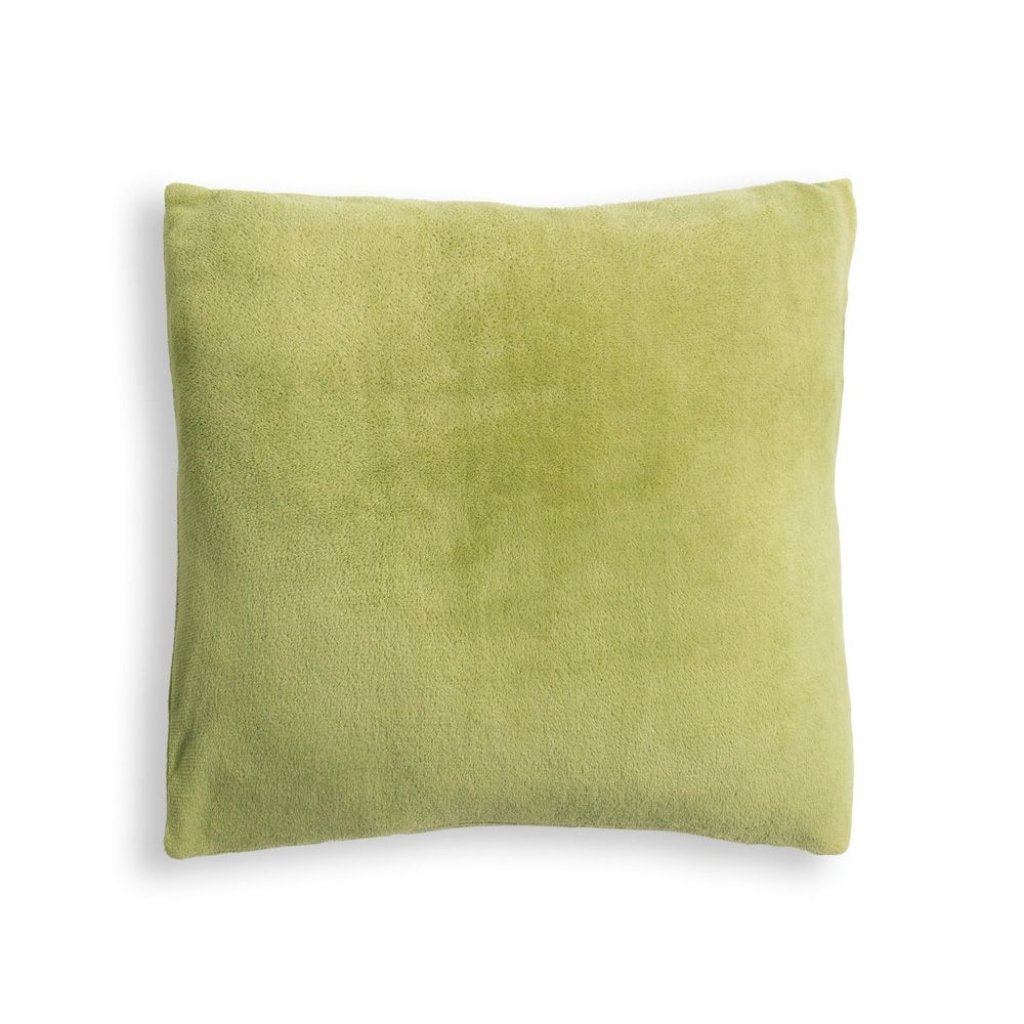
Emerald-green square throw pillow with soft, plush fabric on a white background
Soft, lime-green plush throw pillow

Microfleece is no longer just for outdoor clothing. Designers have expanded its use to fashionable jackets, loungewear, and various accessories. It’s soft enough to feel like a luxury, yet affordable for all. Smooth Microfleece Magic home decor is just an added bonus. Microfleece Magic blankets, cushion covers, and bed sheets add cozy warmth and lovely texture to any room.

Microfleece is a fabric that feels in all the right ways. Its flexible design, playful color combinations, and bright patterns for cozy interiors and casual fashion are notable. Microfleece Magic is a design staple. Its wide range use is enough proof that Microfleece Magic is loved all over the world.

Comfort Beyond Seasons

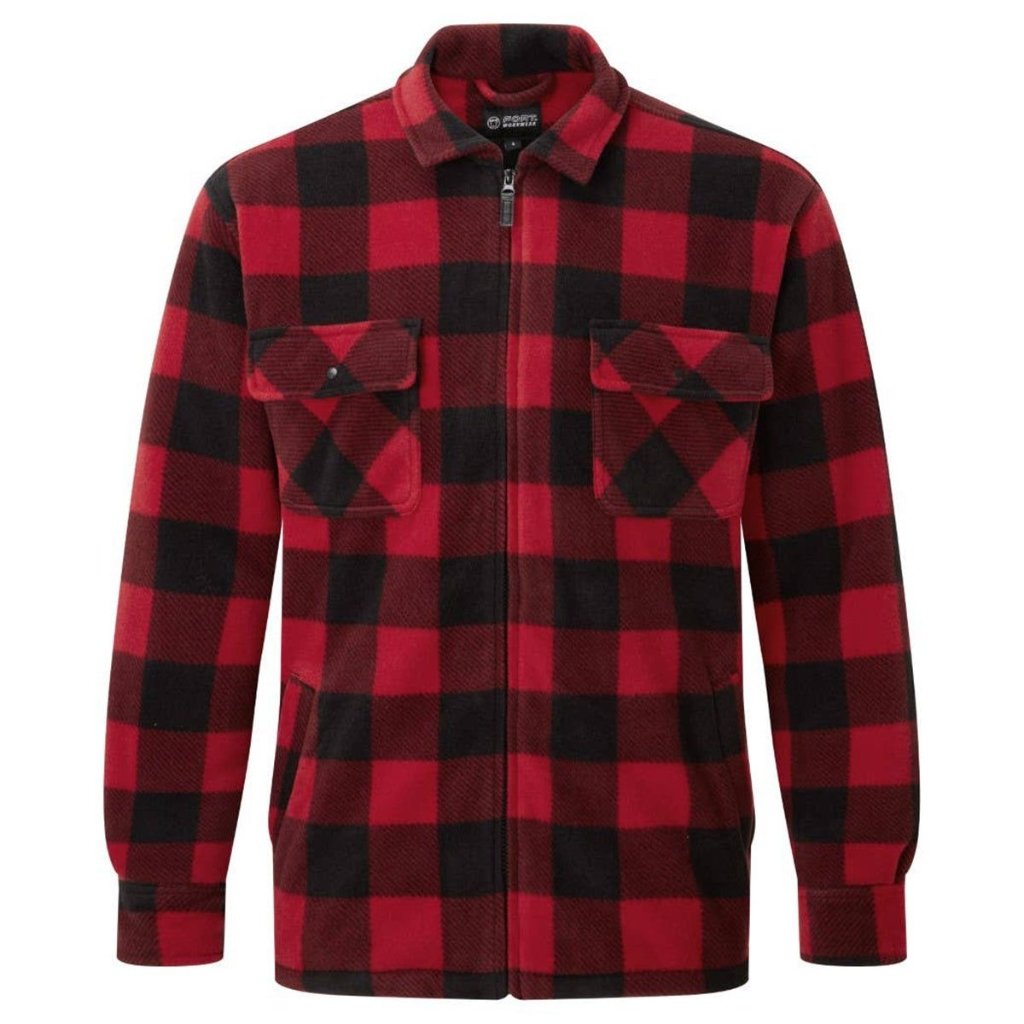
A red and black plaid zip-front flannel jacket with two chest pockets and ribbed cuffs
Red and black buffalo plaid fleece jacket with zipped front and two pockets

Comfort is a constant. Seasons and style may change, but Microfleece is Year Round Magic. Its use during the cool summer nights and the winter is a bonus. Microfleece Magic is your go to fabric for all seasons. Its lite weight and soft feel are always a win.

Microfleece works as a great addition to any outfit during the seasonal transition period. You can wear a thin fleece during the autumn season, and it can be enjoyed during spring as well. The fabric adjusts to the varying temperature. The first few times it works for you, Microfleece Magic will continue to remind you that one design works for each season.

Microfleece and Outdoor Adventures

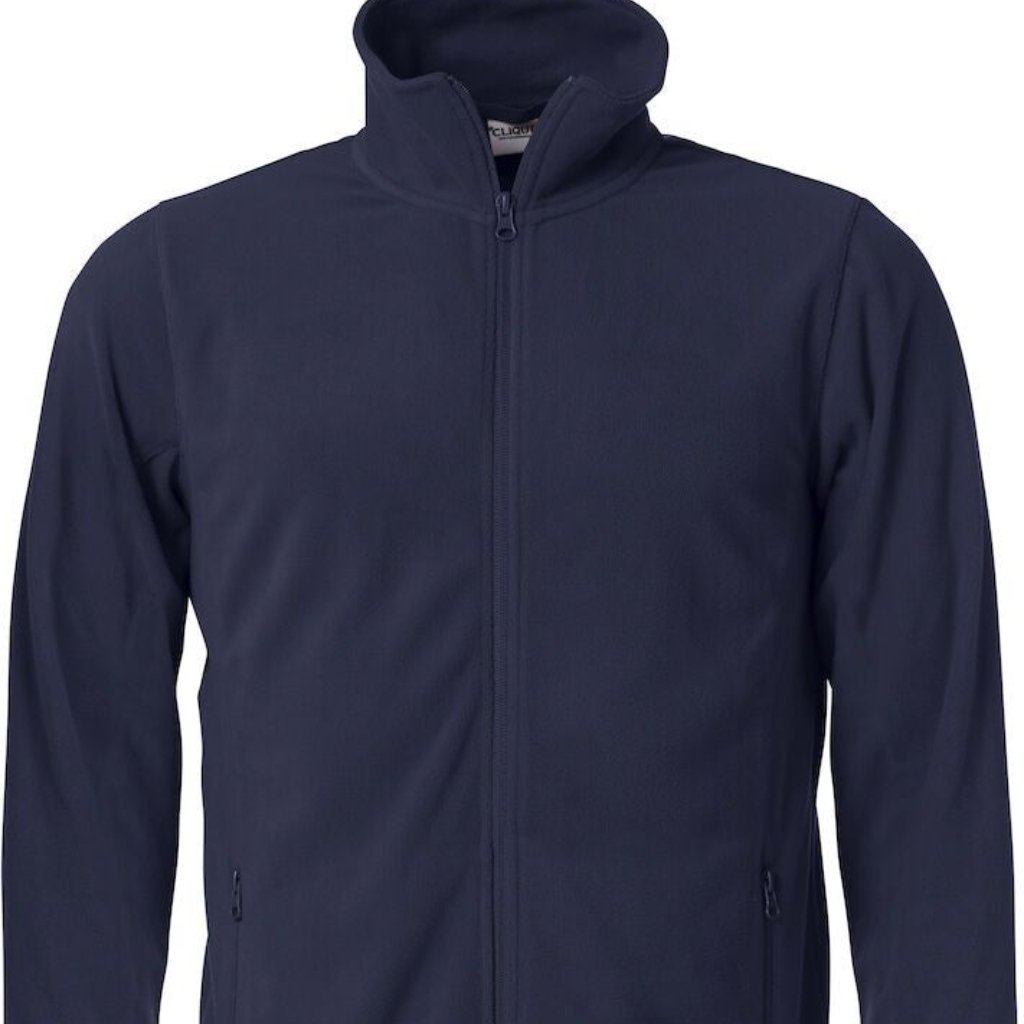
Navy blue zip-up jacket with a stand collar, full front zipper, and side zipper pockets. Lightweight, minimalistic design
Simple navy zip-up jacket with a clean, modern silhouette

For hikers, campers, and travelers, microfleece is a true companion. It packs small, weighs very little, and provides instant warmth. Facing cold, strong winds and damp, cool mornings is a challenge, but microfleece endures. Many outdoor brands rely on Microfleece Magic for their base layer and outer layer jackets and fleece for the dependable comfort.

The material also repels moisture and dries faster than many natural fibers. This means you stay dry, even for the longer, more active periods. It also allows other excessive body heat to escape the body, and you won’t overheat. Microfleece Magic will ensure you the comfort and warmth to help you every step of the way.

Why Everyone Loves Microfleece

Microfleece is loved because it integrates seamlessly into any lifestyle. It is soft, multifaceted, and easily maintained. This is why Microfleece Magic exceeds every expectation.

Microfleece Magic brings together luxury and practical use. It can be used indoors or outside, and there’s no need to worry about its weight or how often you wash it. It can be worn for hours and the feeling will be pleasant the whole time. Microfleece Magic brings to you the brand’s philosophy that softness can be strong and strength can be soft.

Conclusion

Microfleece is well-deservedly a modern classic and it is one of our innovations that is a favorite household item. It is a classic with a charm that spans years, lifestyles, and ages as it offers a cozy feel that is suitable in the warmest of weathers. Microfleece Magic proves that thick layers can be avoided to gain a warm feel and softness is not a sign of weakness.

With every touch, Microfleece embraces you with love, comfort, and warmth in a fabric that weighs almost nothing. Microfleece Magic proves that no matter the function, it can wrap the world in softness while telling a story of comfort. It blends progress with a soft touch of modern magic that is unending.

1. What is Microfleece Magic?

Microfleece Magic is a soft and lightweight fabric made from fine polyester fibers. It keeps you warm while letting your skin breathe easily.

2. Is microfleece good for all seasons?

Yes, Microfleece Magic works well in every season. It keeps you cozy in winter and comfortable during cool summer nights without overheating.

3. Does microfleece make you sweat?

No, Microfleece Magic allows air to pass through its fibers. This airflow prevents sweat from staying on your skin and keeps you fresh.

Damask Cotton Fabric: Uses, and Unique Features Explained

0

The Damask Cotton Fabric is one of the best fabrics when it comes to combining luxury, durability and history. The rich texture, intricate designs, and long-lasting appeal of this fabric have made it popular for home decor as well as fashion. Damask fabric is a sophisticated choice for any project, whether you are designing stylish clothing, elegant drapery or luxurious upholstery. Read more…..Organic Cotton Fabric

This guide will explore all about damask fabric, from its origins to the weaving techniques, its uses and benefits. You’ll see why this fabric is still a favorite in modern textile design.

What is Damask Cotton fabric?

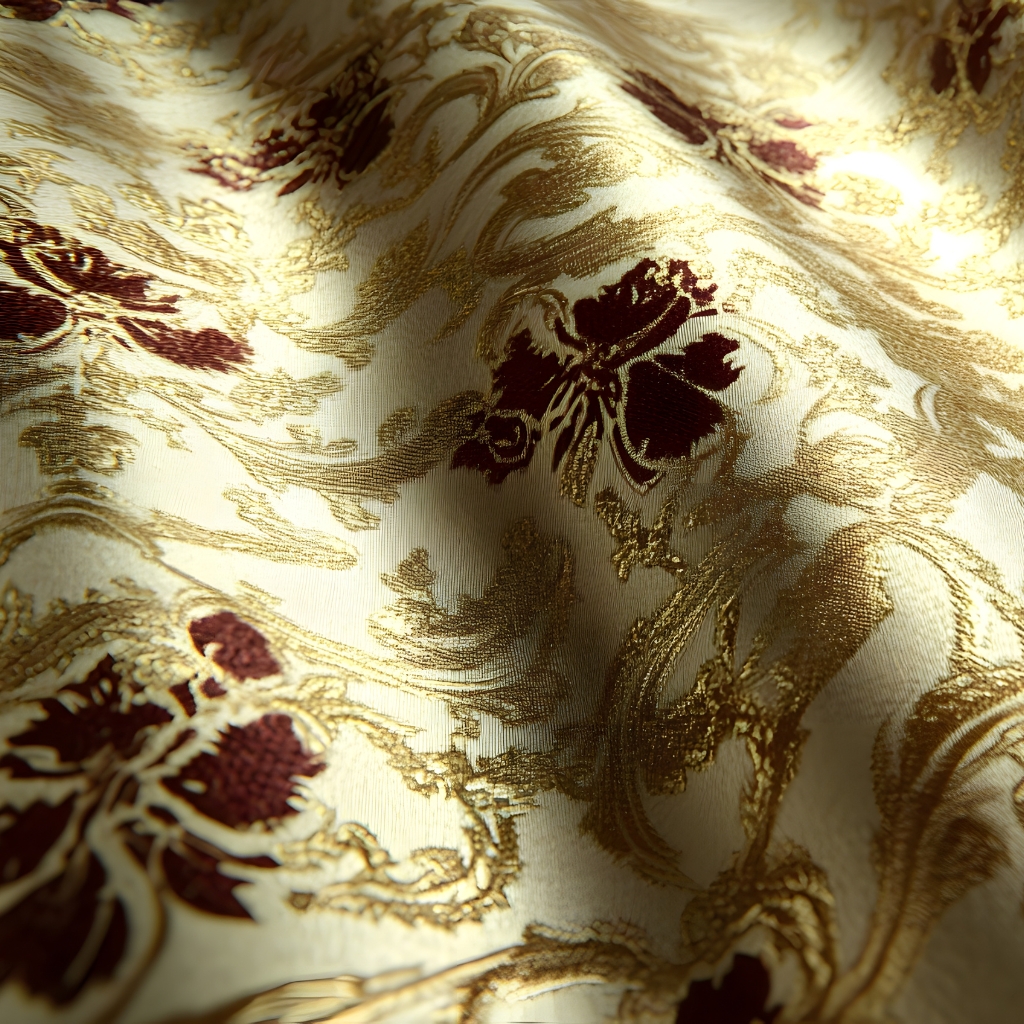
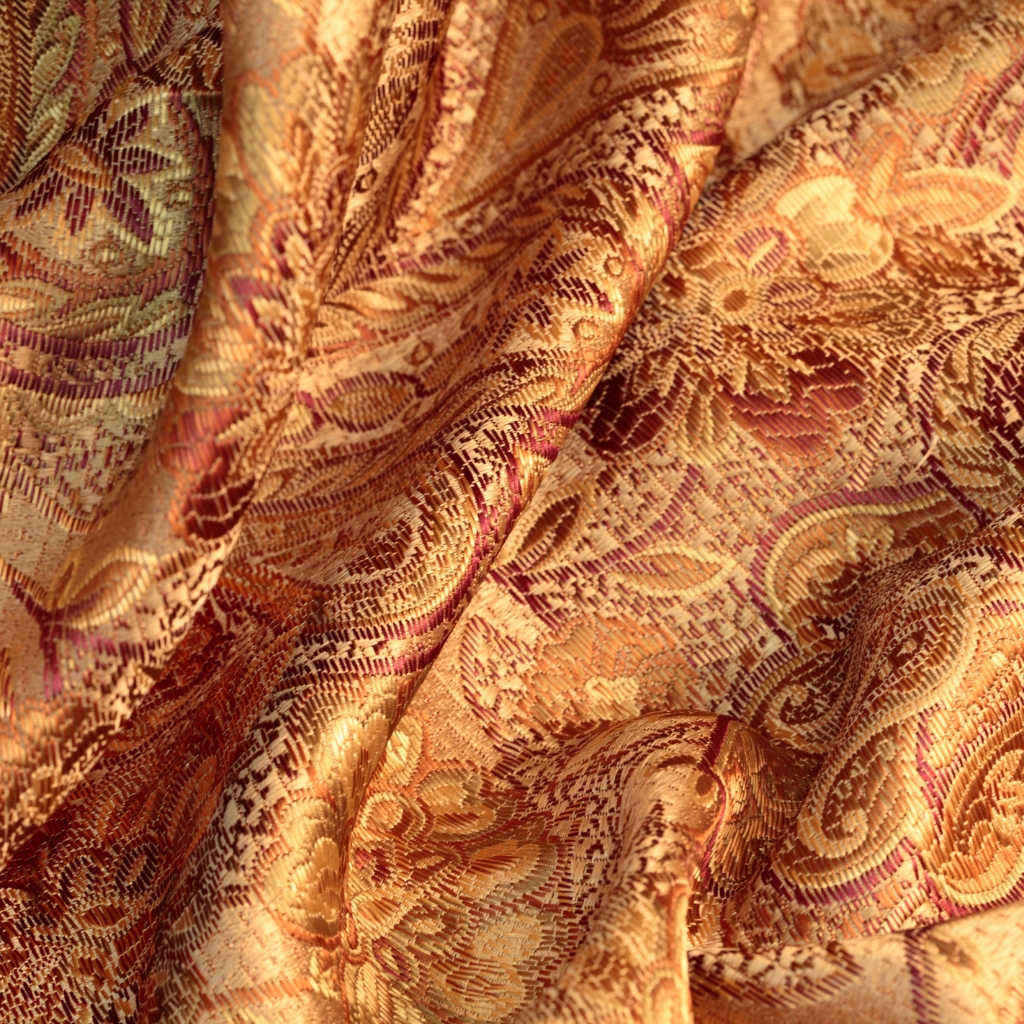
Close-up of luxurious brocade fabric with gold and burgundy floral and scroll patterns, showing a shimmering, textured weave.
Elegant brocade fabric with intricate gold and burgundy motifs.

The Damask Cotton Fabric is known for its intricate designs and reversible fabric. The name “damask”, which is derived from the ancient city Damascus was once a major hub for trading luxurious woven fabric. Damask used to be made of silk but cotton has become a more affordable and elegant alternative.

The weaving technique is what makes damask so distinctive. Damask patterns can be woven into fabric instead of being printed. The result is a beautiful contrast between matte and glossy areas.

Damask Cotton is a perfect blend of softness and structure. It is soft, drapes beautifully, and feels great against the skin.

A Brief Introduction to Damask Fabric

Close-up of luxurious brocade fabric with intricate floral and scroll patterns in warm gold, pink, and bronze tones.
A rich, ornate brocade textile with elaborate floral motifs and scrolling designs.

Damask fabrics date back to the Middle Ages. Around the 12th Century, Damascus became known for its finely woven textiles. These fabrics were transported along the Silk Road by merchants to Europe where they became symbols for wealth and prestige.

During Renaissance times, damask became very popular among European aristocrats. Damask curtains and tapestries were displayed in palaces, cathedrals and mansions as a sign of refinement. With the growth of the cotton industry artisans began weaving damask designs using threads, making the fabric more accessible.

Even today, “damask”, the word itself, evokes an appreciation of craftsmanship and heritage. Modern manufacturing techniques have made the fabric more affordable and consistent, but it still retains its charm. See more…..Calico Cotton Fabric

How Damask Cotton fabric is Made

Understanding how damask is made will help you appreciate it. The weaving process uses one warp and weft to create reversible patterns. This is a breakdown of the weaving process:

  1. Cotton Yarn Selection – High-quality cotton fibers with long staples are selected for their strength and smoothness.
  2. Pattern Design– Complex motifs, such as florals or scrolls or geometrics, are planned by using digital or hand drawn templates.
  3. Jacquard weaving technique– Designs are woven on a Jacquard machine. This machine allows for individual control of each thread. This gives damask a unique look, a combination of matte and sheen.
  4. Finishing process After weaving, fabric is washed, mercerized, and dyed to enhance texture and color.

Damask Cotton Fabric is durable, fade resistant, and elegant.

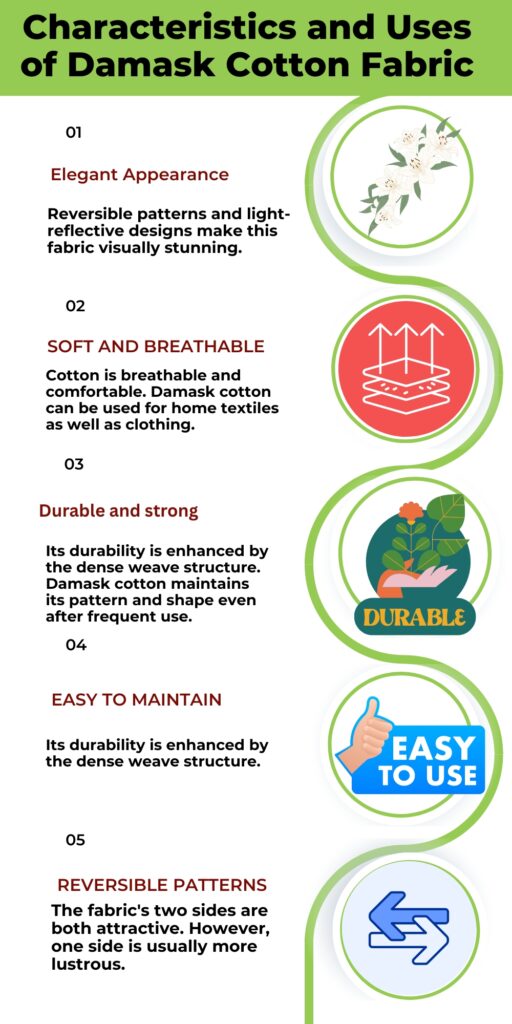
Characteristics and Uses of Damask Cotton Fabric

Infographic titled ‘Characteristics and Uses of Damask Cotton Fabric’ with five sections: 01 Elegant Appearance, 02 Soft and Breathable, 03 Durable and Strong, 04 Easy to Maintain, and 05 Reversible Patterns. Each section is accompanied by circular icons and green decorative curves.
Key characteristics and uses of Damask cotton fabric: elegant appearance, softness and breathability, durability, easy maintenance, and reversible patterns.

It has a number of unique characteristics that make it stand out from other textiles. Explore its main features.

1. Elegant Appearance

Reversible patterns and light-reflective designs make this fabric visually stunning. It can appear subtly different depending on the angle from which it is viewed.

2. Soft and Breathable

Cotton is breathable and comfortable. Damask cotton can be used for home textiles as well as clothing.

3. Durable and strong

Its durability is enhanced by the dense weave structure. Damask cotton maintains its pattern and shape even after frequent use. Read more….Pima Cotton

4. Easy to maintain

Cotton damask can be cleaned and maintained more easily than silk damask. The fabric can be machine-washed and is therefore suitable for daily use.

5. Reversible Patterns

The fabric’s two sides are both attractive. However, one side is usually more lustrous.

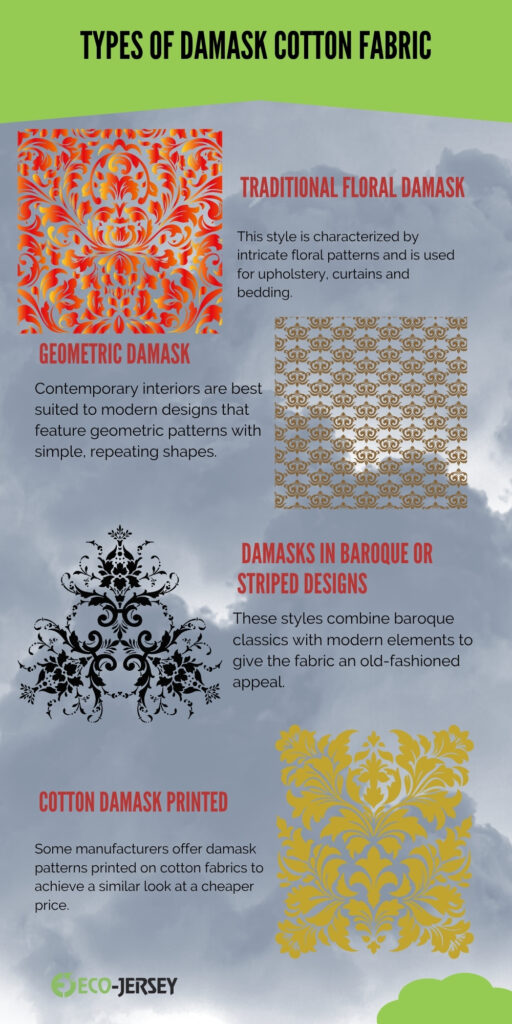
Types of Damask Cotton Fabric

A poster titled “Types of Damask Cotton Fabric” showing five textile patterns: geometric damask (red/orange), traditional floral damask (brown/gold), damasks in baroque or striped designs (black ornate motif), cotton damask printed (red text with small paragraph), and a yellow damask floral print. The Eco-Jersey logo appears at the bottom.
Types of Damask Cotton Fabric: Geometric, Traditional Floral, Baroque/Striped, and Printed Damask patterns showcased.

The weaving technique is the same, but there are variations in weight, pattern, and finish. Popular types include:

1. Traditional Floral Damask

This style is characterized by intricate floral patterns and is used for upholstery, curtains and bedding.

2. Geometric Damask

Contemporary interiors are best suited to modern designs that feature geometric patterns with simple, repeating shapes.

3. Damasks in Baroque or Striped Designs

These styles combine baroque classics with modern elements to give the fabric an old-fashioned appeal.

4. Cotton Damask Printed

Some manufacturers offer damask patterns printed on cotton fabrics to achieve a similar look at a cheaper price.

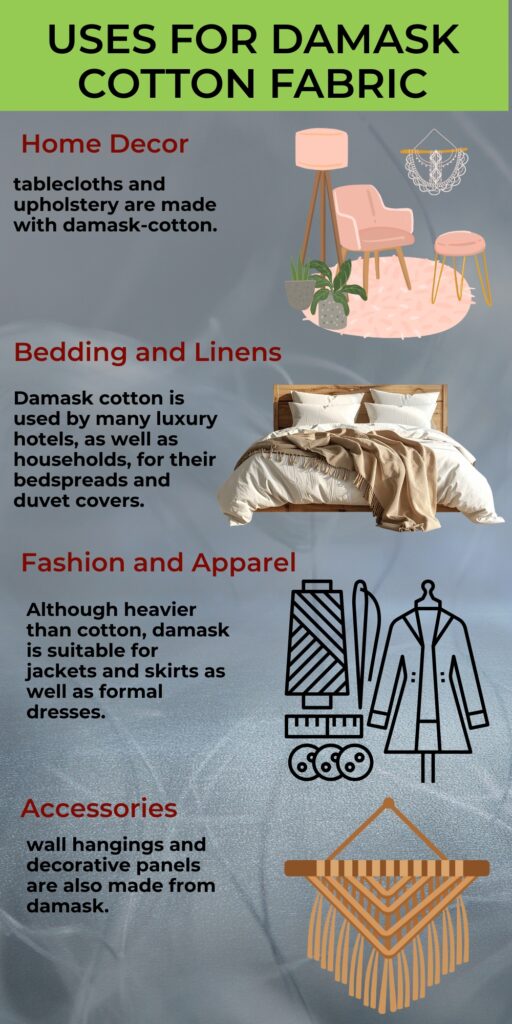
Uses for Damask Cotton Fabric

Infographic titled 'Uses for Damascus Cotton Fabric' showing home decor items (chair, plant, lamp), bedding (pillow and duvet), fashion and apparel icons (dress form, fabric swatch, scissors), and decorative accessories (hammock/throw) with text blocks describing uses such as tablecloths, bedspreads, jackets, and wall hangings.
Ways to use Damascus cotton fabric: home decor, bedding, fashion, and accessories.

Damask is a versatile fabric that can be used for many different purposes. The elegance and durability of this fabric allows it to seamlessly transition from decor into clothing.

1. Home Decor

tablecloths and upholstery are made with damask-cotton. The elegant sheen of this fabric elevates any interior and gives it a sophisticated look. It is strong and durable so it can withstand daily wear without losing its charm.

2. Bedding and Linens

Damask cotton is used by many luxury hotels, as well as households, for their bedspreads and duvet covers. Its soft texture ensures a comfortable sleep.
3. Fashion and Apparel

Although heavier than cotton, damask is suitable for jackets and skirts as well as formal dresses. Designers use it to create garments that have a structured appearance.

4. Accessories

wall hangings and decorative panels are also made from damask. Even small accessories are made of damask because it has an elegant texture.

The Benefits of Damask Cotton Fabric

Infographic titled “The Benefits of Damask Cotton Fabric” with five listed benefits and circular icons along a curved green stem: Timeless Appeal, Long-Lasting Quality, Eco-Friendly, Versatility, Comfort and Texture.
The Benefits of Damask Cotton Fabric: timeless appeal, durability, eco-friendliness, versatility, and soft comfort.

Damask Cotton is a popular choice among designers and home owners for several reasons:

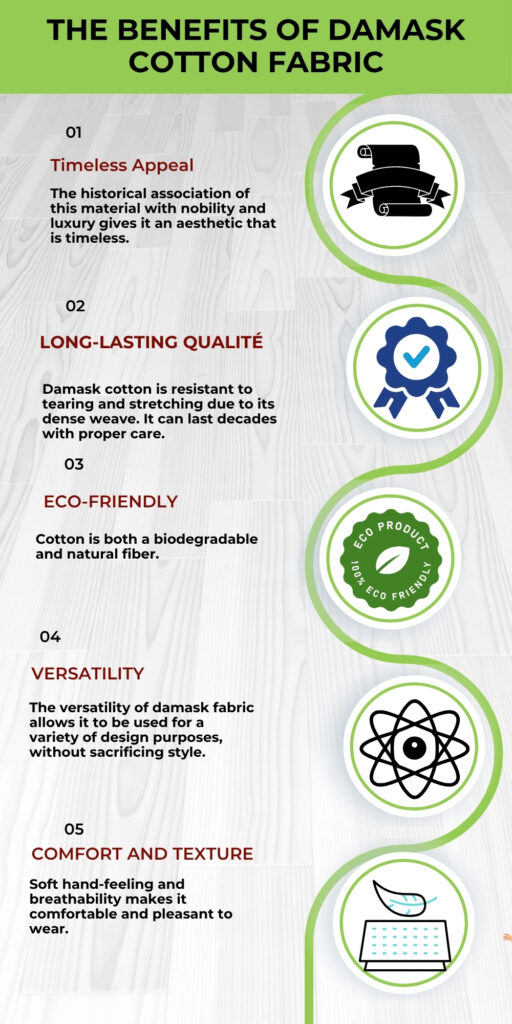
1. Timeless Appeal

The historical association of this material with nobility and luxury gives it an aesthetic that is timeless. It complements both modern and traditional spaces.

2. Long-Lasting Qualité

Damask cotton is resistant to tearing and stretching due to its dense weave. It can last decades with proper care.

3. Eco-Friendly

Cotton is both a biodegradable and natural fiber. By choosing damask over synthetic alternatives, you can support sustainable living.

4. Versatility

The versatility of damask fabric allows it to be used for a variety of design purposes, without sacrificing style.

5. Comfort and Texture

Soft hand-feeling and breathability makes it comfortable and pleasant to wear.

Care for Damask Cotton Fabric

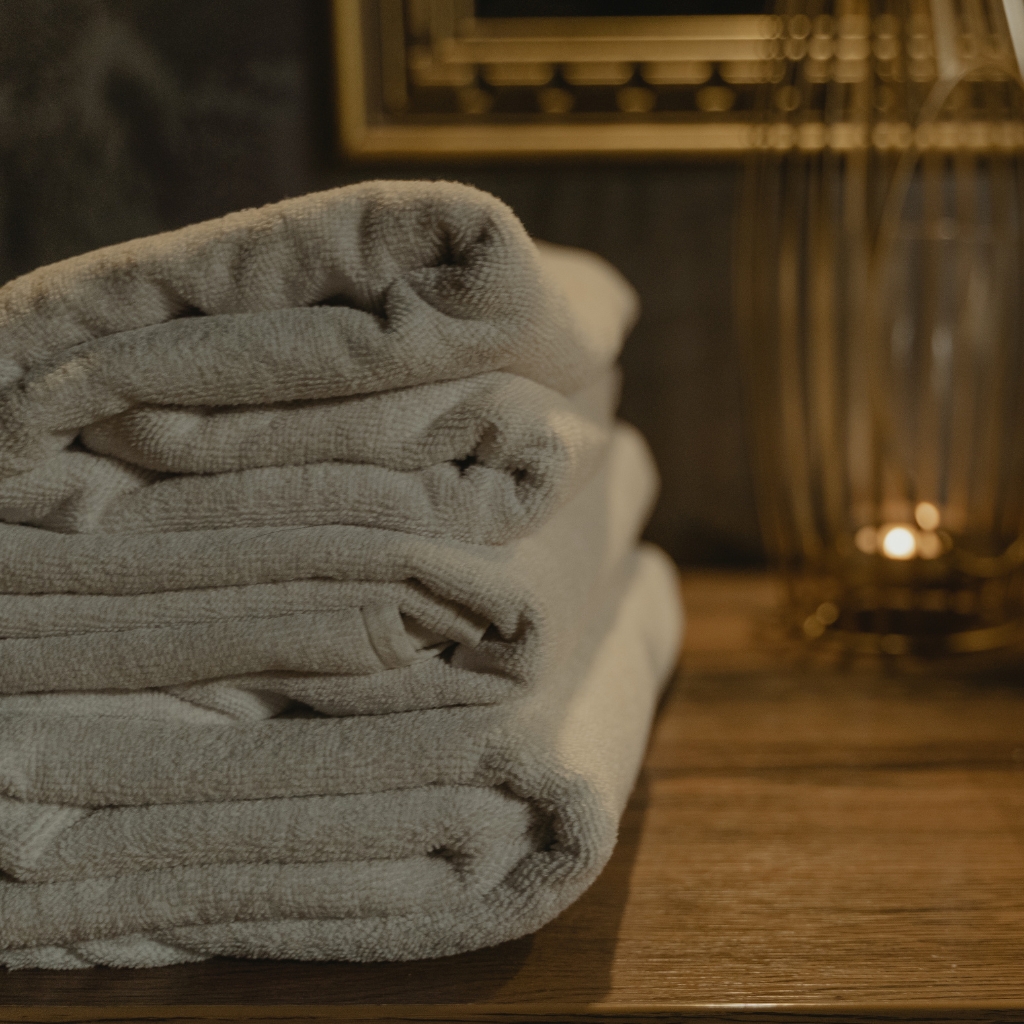
A neatly folded stack of light gray towels on a wooden surface with a warm lamp in the background.
Cozy bathroom setup with folded towels and soft lighting.

To preserve the beauty and durability of damask fabric, it is important to maintain it properly. Here are some care tips.

  • Cleaning: Machine-wash in cold water using a mild detergent. Avoid bleach as it may weaken the fibers.
  • Drying: Tumble dry or air-dry on low heat in order to avoid shrinkage.
  • Ironing : Press with a slightly dampened iron on a medium setting for a crisp, clean finish.
  • Storage: Keep away from direct sunlight and store in a dry, cool place. See more….Pique Cotton Fabric

Follow these steps to ensure that your damask fabric retains its luxurious look for many years.

Damask Cotton and Other Cotton Fabrics

Compare Damask Cotton with other cotton fabrics.

AspectDamask CottonPoplin CottonTwill CottonVoile Cotton
TextureSmooth with raised woven patternSmooth and plainDiagonal ribbed textureSheer and lightweight
DurabilityHighly durableModerateStrongModerate
AppearanceElegant and lustrousMatte finishSoft sheenTransparent
Best UseUpholstery, décor, beddingShirts and dressesPants, workwearBlouses and curtains

This table shows that damask is a more luxurious and decorative fabric when compared with other cotton fabrics.

Why choose Damask Cotton Fabric ?

Choose damask fabric for its elegance, tradition, and functionality. Fabrics like this one are unique because they combine artistic design with functionality. Its woven patterns do not fade as quickly as printed fabrics. It is used in high-end interiors and fashion.

Its natural fibers and breathability make it ideal for any season. Damask cotton is the perfect fabric for creating a sophisticated outfit, an ornate drape, or a tablecloth.

Modern Trends for Damask Cotton

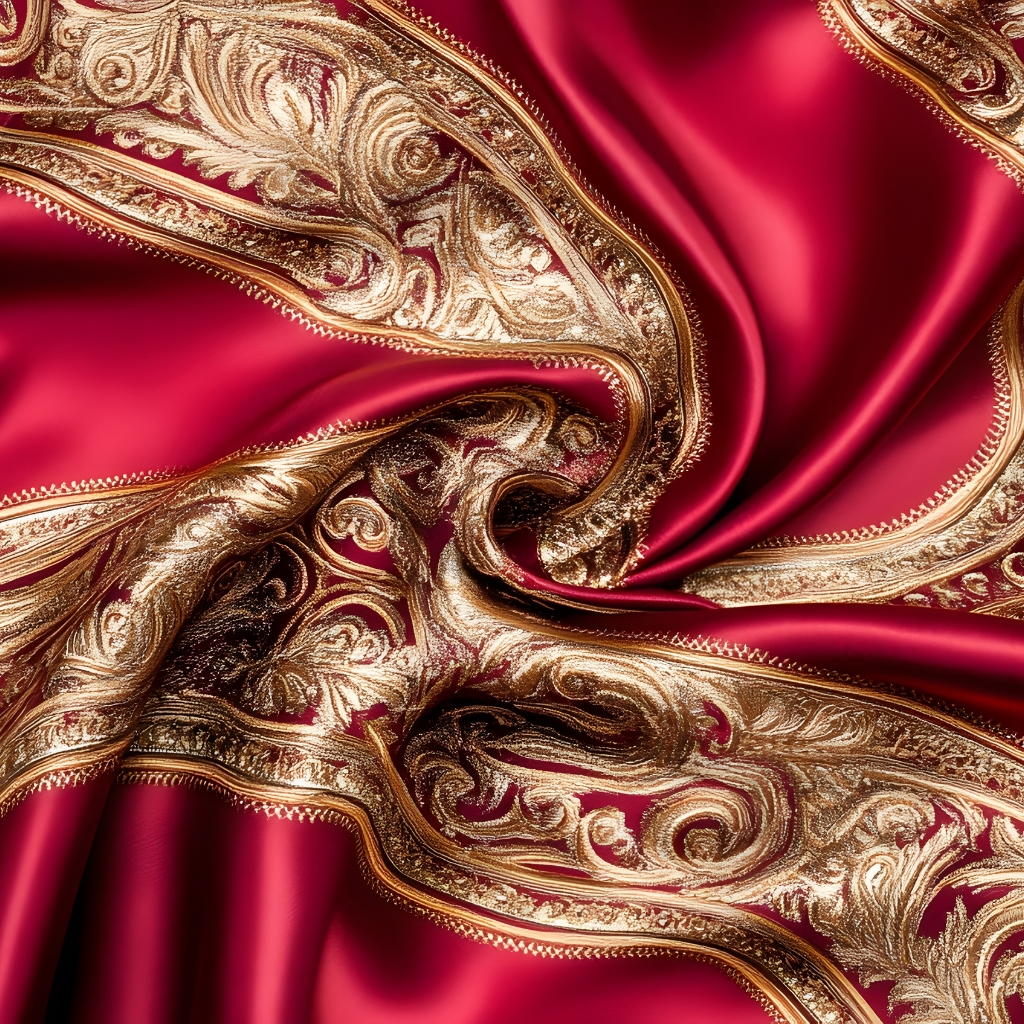
Luxurious red satin fabric with ornate gold embroidery along the edges, draped in elegant folds.
Rich red satin with gilded embroidery creates a regal, opulent look.

Designers continue to explore damask patterns today, blending innovation with tradition. Modern damask fabrics are often minimalist patterns or pastel shades. They can also feature digital weaves. The modern updates make it possible to incorporate damask seamlessly into the homes and wardrobes of today.

Sustainability is also a major focus. Many textile brands produce organic damask which is environmentally friendly and ethically produced. This change is in line with the increasing demand for eco-conscious, luxury products.

How to Buy Damask Cotton Fabric

Consider these factors to ensure the quality of damask fabric:

  1. Check for Weave Quality. A genuine damask weave should have patterns clearly defined on both sides.
  2. Feel The Fabric: High quality cotton damask fabric feels smooth and not stiff.
  3. Check the weight: Use heavier damasks for fabrics and lighter ones for upholstery.
  4. Verify the Fiber Content: Make sure it is 100% cotton to ensure natural comfort.
  5. Check for Colorfastness: Make sure that the dyes will not bleed or fade after washing.

If you keep these factors in consideration, you will be able to choose fabric that will complement your project perfectly.

Conclusion

The Damask Cotton Fabric represents craftsmanship and timeless beauty. It has remained popular for centuries, despite modern design innovations and ancient weaving techniques. The blend of durability and comfort with elegance make it a favorite among decorators, designers and homemakers.

Damask Cotton offers endless options, whether you want to create elegant interiors, table linens or fashion items with classic appeal. The subtle sheen of the fabric and its intricate patterns are a testament to luxury throughout history.

Damask Cotton Fabric will continue to be a beautiful addition to your home for many generations.

FAQs

What is Damask cotton fabric?

Damask cotton fabric is a woven textile made using a Jacquard loom that creates intricate, reversible patterns. It combines the softness of cotton with the elegance of traditional damask designs, making it ideal for both home décor and apparel.

How is Damask cotton fabric different from other cotton fabrics?

Unlike plain-weave cotton fabrics, damask cotton features woven patterns rather than printed ones. Its unique weaving technique gives it a luxurious sheen, reversible design, and superior durability.

What are the main uses of Damask cotton fabric?

Damask cotton is widely used in upholstery, curtains, bedding, and table linens. In fashion, it’s also used for jackets, dresses, and accessories because of its elegant texture.

Polar Fleece Fabric: Lightweight Warmth for Every Season

0

The right fabric can help you stay warm and comfortable. Polar Fleece Fabric is a popular fabric because of its soft texture. This fabric is perfect for all seasons because it offers cozy comfort, without the need to add heavy layers. This fabric is perfect for jackets, scarves or blankets. It combines practicality and style.

The Origin and Evolution of Polar Fleece Fabric

A close-up view of soft, light gray fabric with gentle folds and ripples, creating subtle shadows and texture.
Soft gray blanket fabric draped into folds.

The story of Polar Fleece Fabric began in the late 70s, when textile experts were looking for a lightweight and warm alternative to wool. They wanted something that was easier to wash and dried faster. This new synthetic material soon changed the way people dressed in cold weather. As time went on, manufacturers improved the design of this material, making it stronger, softer and more environmentally friendly. It is still one of the world’s most popular fabrics, and it keeps people warm without causing them to sweat.

A Unique Structure behind Its Softness

Stack of folded fuzzy blankets in neutral and warm tones (white, beige, light brown, tan, chocolate) on a white surface.
Cozy fleece blankets neatly stacked in an array of soft colors.

Polar Fleece fabric has a cleverly designed structure that gives it a cozy feel. The fabric is made of fine polyester fibers which are brushed into a fluffy texture. The brushing traps air in between the fibers and keeps warmth close to the body. It feels like wool against the skin but is lighter. This structure allows it to provide warmth in even thin layers. Many people use it as a jacket, sweatshirt, or even bedding.

Why Polar Fleece Fabric is So Popular

Close-up of layered, textured fleece blankets in blue, olive green, and white draped together.
Cozy fleece blankets in soft blue, olive, and white hues.

There are a lot of reasons why people like Polar Fleece fabric. It is extremely light and comfortable to wear. It offers a warmth comparable to heavy wool, but without itching. It dries quickly, even if it has been washed or rained lightly. It stays new looking for many years because it is resistant to shrinking and fading. This makes it ideal for outdoor adventures as well as cozy indoor wear.

Heat without the weight

A soft pink shearling jacket with a half-zip front, featuring a two-tone texture—fuzzy shearling lining on the left panel and a smooth fabric on the right. It has a stand collar, zippered cuffs, and curved pocket seams.
Cozy pink shearling jacket with a mixed-texture design and zip closure.

Polar Fleece fabric provides warmth without being bulky. This fabric provides warmth without adding weight. The airy structure of the fabric allows for free movement. This is why travelers and hikers love it. This fabric can be used in all types of weather. Even a thin jacket will protect you from the cold.

Comfort that lasts all day

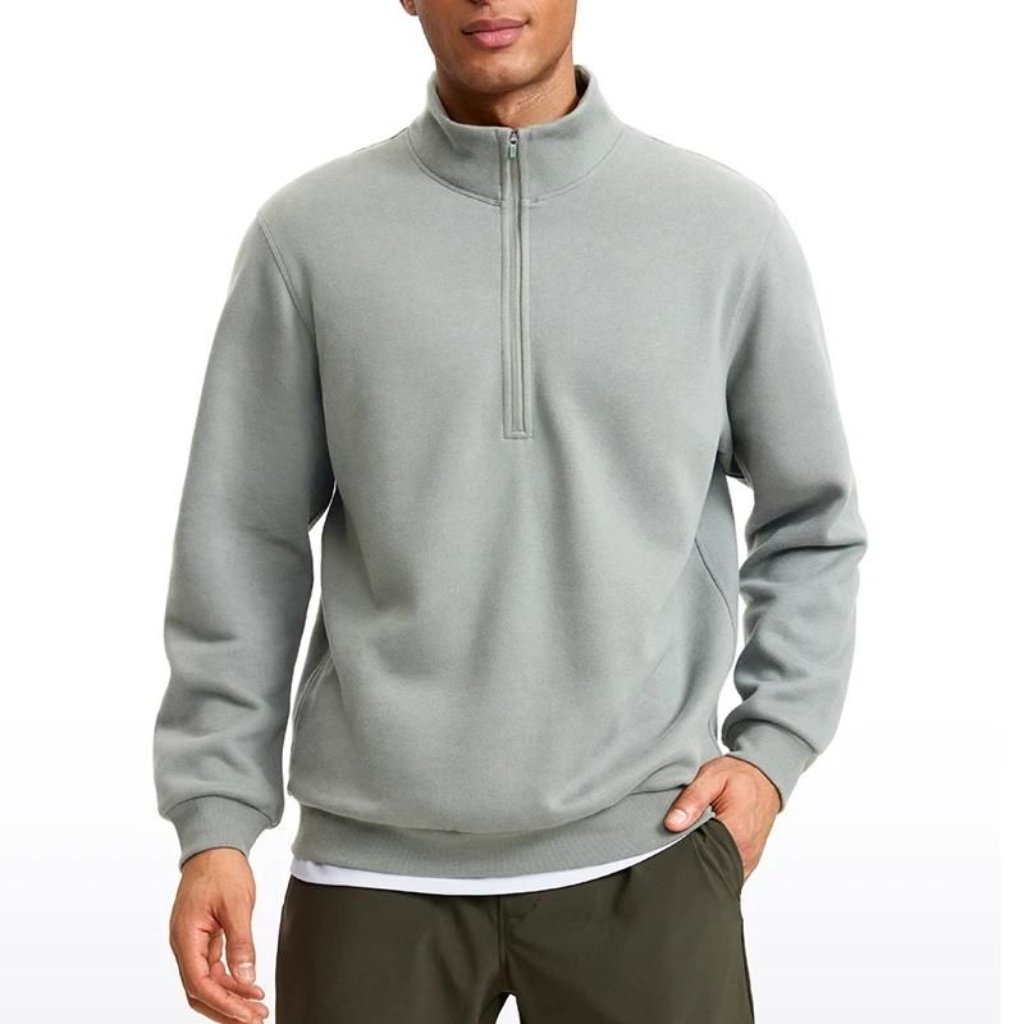
A man wearing a light gray quarter-zip pullover sweatshirt with a high collar, standing with one hand in his pocket. He has a white layer peeking out from under the hem and is wearing olive-green pants.
Casual comfort: light gray pullover with a zip-front collar and a layered hem.

You will feel the comfort of wearing clothes made with Polar Fleece fabric immediately. The fabric feels soft against the skin, and does not feel cold or rough. Even when temperatures drop suddenly, the fabric stays warm. It allows for airflow and keeps the body temperature balanced. It’s not only worn in the winter, but also during cool spring and fall days. The soft texture makes you feel comfortable wherever you are.

Durability that stands the test of time

The durability of Polar Fleece fabric is also a reason why people choose it. Even after repeated washing and use, the material remains strong. This fabric is not like natural fibers, which wear out quickly. It is resistant to tearing and retains its softness over many years. It’s used for camping gear, activewear and home accessories. Its durability makes it an excellent investment for those who want to invest in reliable comfort.

A Seasonal Favorite

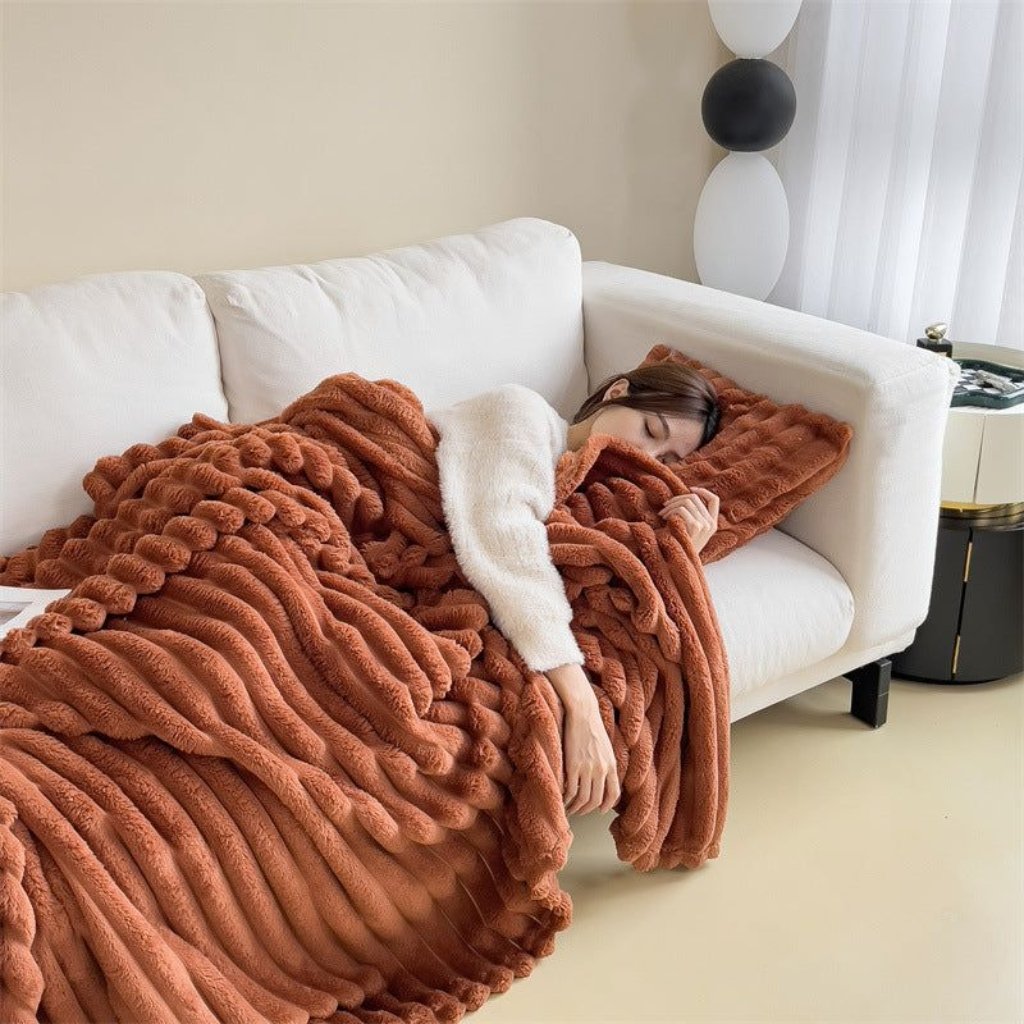
A person is curled up sleeping on a white sofa, covered with a chunky rust-colored blanket. The scene includes a stack of white and black balloons-style lamp in the background and a small side table.
A cozy autumn moment: drifting off to sleep under a plush rust blanket on a white sofa.

Polar Fleece fabric can be worn in any season. It is a great insulator for winter under coats. It is a great outer layer in spring and fall to protect against cold winds. Light fleece blankets can be used for air-conditioned rooms or chilly nights in the summer. Its flexibility makes it a very useful fabric. It is the perfect fabric for any season.

How Polar Fleece Fabric keeps You Dry

It is important to stay dry and warm in cold weather. Polar Fleece fabric can help with both. The fabric wicks away moisture from your skin to keep you fresh and dry. It is perfect for active outdoor lifestyles or sports. It prevents sweat from sticking to your skin, whether you are hiking, skiing or running. The quick-drying fabric allows it to dry quickly even after it has been wet.

A Smart Choice for Outdoor Adventures

A person with a backpack sits on a rocky riverbank next to a green tent in a mountainous campsite.
Quiet riverside camping: a lone adventurer takes a moment outside the green tent, surrounded by rugged mountains and spring greenery.

Polar Fleece fabric is a favorite among outdoor enthusiasts. It is able to adapt to changing weather conditions. It is a favorite of hikers, climbers and travelers because it is warm, lightweight and easy to pack. It provides reliable insulation, even when temperatures fall. Fabric also provides extra protection by resisting light rain or snow. It’s ideal for trips with limited washing facilities because it is easy to clean and dries quickly.

A Soft Style for Everyday Wear

Polar Fleece fabric is also popular with fashion lovers. Not only is it practical, but also stylish. Designers use it to create jackets, pullovers, and vests that are stylish while also comfortable. Rich colors and a smooth surface make this material perfect for casual clothing. Fleece clothing looks great with jeans and leggings. The timeless appeal of fleece clothing has made it an essential fashion item for decades.
How to Care for Polar Fleece Fabric

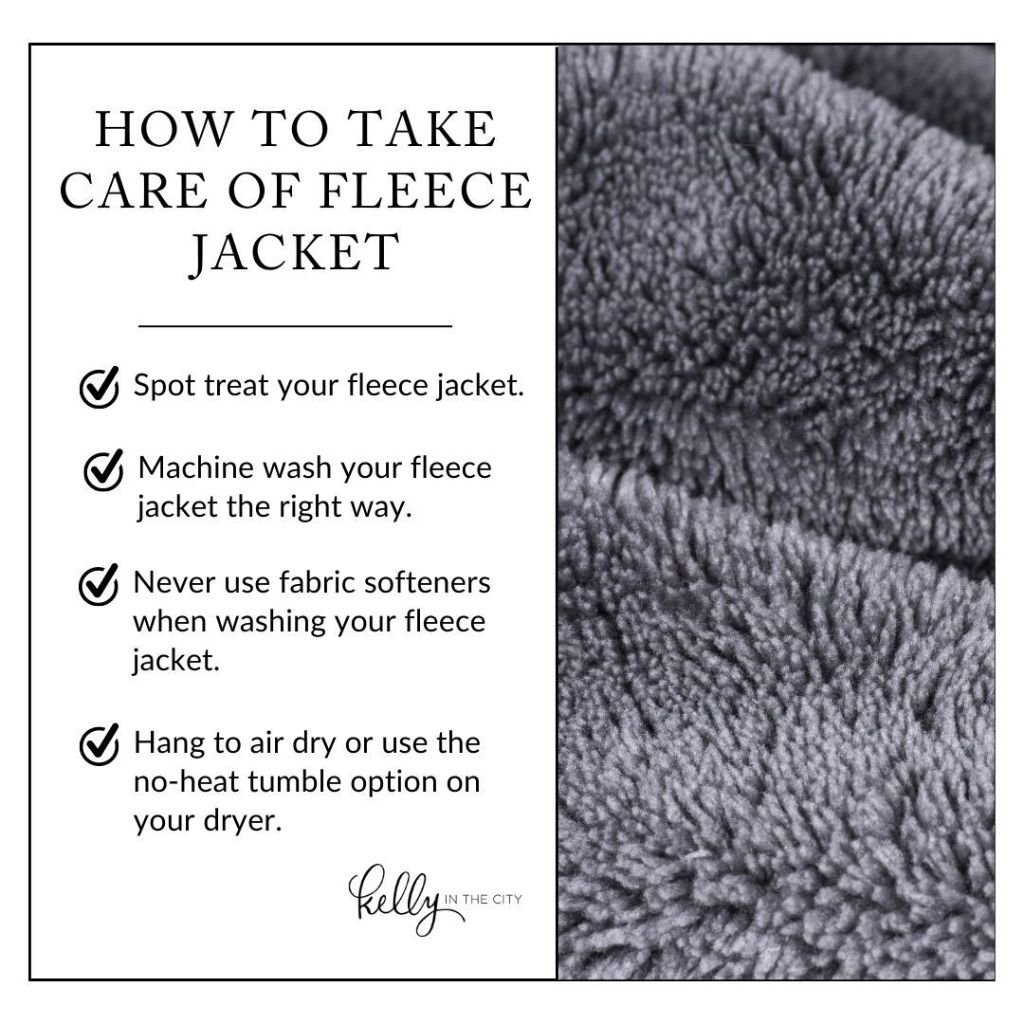
A split infographic with left side containing the title “HOW TO TAKE CARE OF FLEECE JACKET” and a bulleted checklist, and a right side showing a close-up photo of grey fleece fabric.
How to take care of your fleece jacket: spot clean, machine wash the right way, avoid fabric softeners, and air dry or tumble dry on no-heat.

Polar Fleece fabric can be easily cared for. You don’t have to use harsh chemicals or special methods of washing. It can be washed in cold water, and dried on low heat. Ironing is not necessary because the fabric resists wrinkles. Fabric softeners can reduce the softness of fabrics and coat fibers. These small steps will ensure that fleece remains fluffy and warm over many years.

Eco Friendly Versions of Polar Fleece Material

Recently, manufacturers have created eco-friendly versions Polar Fleece fabric. Several are made of recycled plastic bottles. This innovation helps reduce waste by giving discarded materials a new lease of life. It feels as warm and soft as normal fleece, even though it is made from recycled materials. This fabric is eco-friendly and warm, all at the same time. This fabric proves that comfort can be combined with sustainability.

Polar Fleece in Home Decor

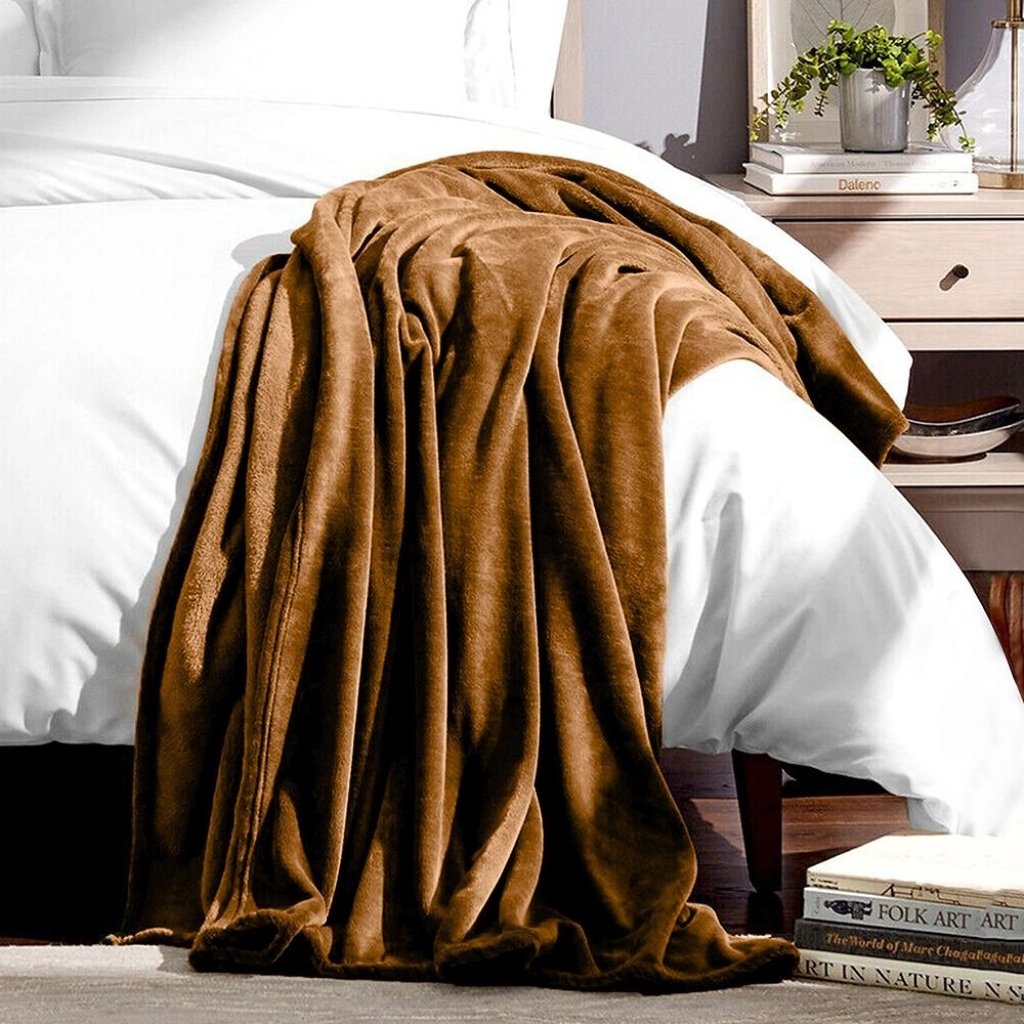
A cozy brown blanket draped over the side of a white bed in a neatly styled bedroom, with a nightstand and stacked books in the background.
A plush brown blanket spills over the edge of a crisp white bed, adding warmth to a serene bedroom scene.

Polar Fleece fabric is also great for home decor. The soft texture of the fabric adds warmth to any room. It can be used to make blankets, cushion covers, and throws. It’s a great choice for families because it is easy to clean. It can be used to decorate a child’s bedroom or a sofa. The soft texture and bright colors can add a touch of warmth to any room.

Polar Fleece in Sportswear

Polar Fleece fabric is a favorite among outdoor enthusiasts and athletes. It helps keep the body warm when doing early morning runs, or exercising in cool weather. It breathes well and prevents overheating. For added comfort, many sports jackets and sweatshirts have fleece lining. This material is popular in winter sports, as it keeps you warm when damp. It’s a great choice for those who lead active lifestyles.

Lightweight Travel Companion

Polar Fleece Material can be a traveler’s dream. The fabric is easy to fold and doesn’t take up much space in your bag. A thin fleece jacket is a great alternative to heavy outerwear when traveling. Travelers love its easy care and ability to dry quickly. Fleece keeps you comfortable and warm whether you’re exploring the mountains or walking through a city. Many travelers will never leave the house without a layer of fleece.

Compare It to Other Fabrics

Polar Fleece fabric has unique advantages when compared to cotton or wool. It is warm like wool, but without the weight and itching. It stays warm when wet, unlike cotton. It also dries quicker and resists wrinkles more effectively. Modern fleece is often synthetic but feels as natural as organic fabric. This makes it a favorite of those who are looking for both comfort and performance.

A fabric that adapts to every need

Polar Fleece Fabric offers unmatched versatility. It is easily adaptable to clothing, accessories, and home decor. The thickness can be adjusted to suit the intended use, from thin fleece for lightweight pullovers up to thick fleece blankets. Adaptability is key to creating both stylish and functional products. Fleece is a versatile material that provides warmth, softness and durability no matter what the application.

Affordable Comfort for Everyone

One of the most attractive features about Polar Fleece fabric, is its affordability. It offers the same warmth of high-priced materials, but at a lower price. It’s affordable for both buyers and makers because it is easy to make. No matter what your budget, everyone can enjoy comfortable comfort. The quality of the product is also long-lasting, ensuring that it offers excellent value for money.

Why designers continue to love it

Designers prefer Polar Fleece Fabric for its creative freedom. You can dye it in vibrant colors or print fun patterns on it. Flexible, it can be cut and styled in many different ways. It fits perfectly in all styles, from sporty jackets and chic vests. Designers trust it because it retains its shape and texture even after sewing.

Polar Fleece for Kids and Babies

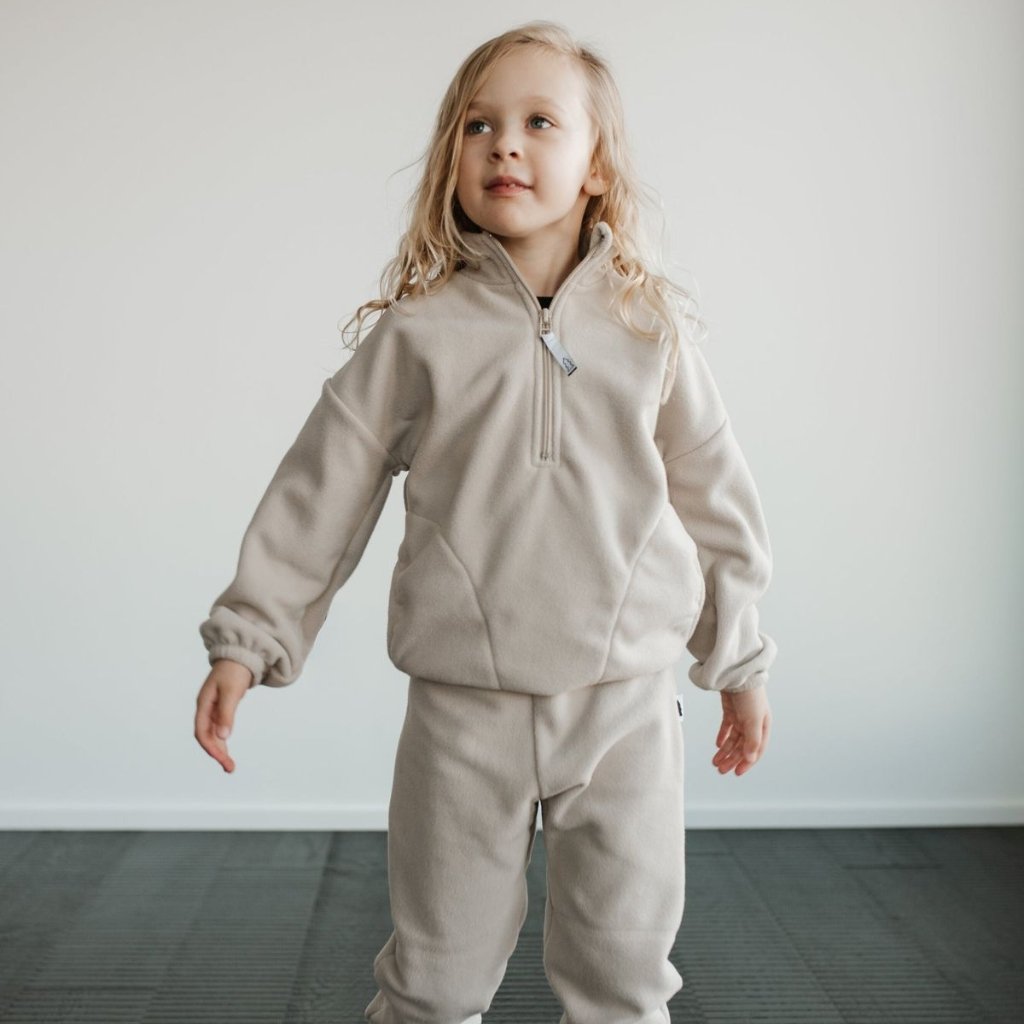
A young girl wearing a light beige fleece tracksuit stands indoors, looking slightly upward with a gentle smile.
Cozy in cream-toned fleece: a little girl enjoys a playful moment in her soft, warm outfit.

Parents choose Polar Fleece fabric to make blankets and clothing for their children. It is soft and gentle for sensitive skin. Its warmth is not bulky, so it’s perfect for kids to play on cold days. The fact that it is easy to clean makes life for parents easier. The warmth and comfort of fleece is perfect for little ones.

How to maintain color and freshness over time

Polar Fleece Fabric also retains its color well. It doesn’t fade even after multiple washings. It’s dyes are deeply absorbed by the fibers, so clothing and blankets will look brand new for many years. The material is also less likely to pill than older materials. You can therefore enjoy the rich colors and clean appearance for a very long time, without having to worry about dullness or coarseness.

The Perfect Fabric to Gift

It is a great idea to give gifts made from Polar Fleece fabric. The warmth and comfort of a fleece scarf or blanket is instant. It is available in a variety of colors and textures to suit any personality. These thoughtful gifts are both practical and stylish. Fleece items are perfect for birthdays or holidays. They make people feel warm and loved.

Future Innovations In Polar Fleece Material

The future for Polar Fleece Fabric is bright. Researchers are constantly looking for ways to improve the fabric’s sustainability and functionality. New types of fabrics are made with natural fibers to increase breathability. Some have water-repellent finishes for outdoor use. With the advancement of technology, fleece will get even softer and eco-friendly. This ensures that the fleece will remain a staple of modern comfort in years to come.

Conclusion

Polar Fleece Fabric is a symbol of comfort, warmth and innovation. It shows that even practical materials can feel luxurious. Its softness, ease of care and durability have earned it a place in wardrobes and homes around the world. Fleece keeps you warm and comfortable, whether you are dressing for an outdoor adventure or staying indoors. It’s the ideal fabric for any season.

1. Is Polar Fleece Fabric warm enough for winter?

Yes, it provides excellent insulation and keeps warmth close to the body, even in cold weather.

2. Can I wash Polar Fleece Fabric at home?

Absolutely! Use cold water and mild detergent for the best results, and avoid fabric softeners.

3. Does Polar Fleece Fabric shrink after washing?

No, it keeps its shape very well and resists shrinking, even after multiple washes.

Felted Merino Fabric: Premium Softness for Cozy Elegance

0

Felted Merino Fabric captures beauty, comfort, serenity, and warmth all into one material. It has an intriguing combination of being smooth, soft and light while still dense, which adds strength. These traits and strength make it an amazing choice for clothing. These items of clothing are meant to last many years. Each and every thread, as well as the stuff that it is made of, is a result of skill and is made with a blend of devotion, natural beauty, and tradition.

In many cases, it is the preferred choice for clothing that embodies comfort and beauty. It is brilliant and protective against the cold and changes temperature and is even warm in the summer. It enhances the beauty of clothes like coats, scarves, and hats with its smooth texture. Felted Merino Fabric enables simple designs to give immense beauty and transforms these designs into classic masterpieces.

The Natural Story Behind Felted Merino Fabric

A woman wearing a dark shirt and plaid shirt tied around her waist stands in a grassy field among a flock of sheep.
A shepherd tends her flock of sheep across a sunlit hillside.

Felted Merino Fabric originates from Merino sheep grazing in open grasslands. With time, their wool grows fine, soft, and naturally elastic; each fiber much thinner than a strand of a human hair. That fine and soft wool bends without breaking. The attributes of the wool make it very comfortable to wear without the rough sensation.

After the wool is shorn, it is put through a careful washing and carding process. The aligned fibres are kept pure and from there the felting stage is done with heat and moisture. The fibres slightly twist, shrink, and lock. This process gives the fabric structure and firmness. The density and smoothness of the fabric makes it ideal for everyday wear.

Rech of the process shows the balance in the workings of nature. The fleece on the sheep renews with each passing year, which prompts sustainable practices. The gentle methods of farming used are respectful to the land and animals. The balance marks each piece and makes it feel natural. Felted Merino Fabric exemplifies the care of the environment.

How Felted Merino Fabric Achieves Its Signature Texture

 A close-up view of several stacked felt sheets in neutral tones (beige, tan, light brown, and brown), showing the soft, fuzzy texture and layered edges.
Stacked felt sheets in natural earthy tones.

Felted Merino Fabric captures the spirit of a fabric that is pleasing to the touch. It employs a fine felted surface and glides gently over the skin. It instantaneously warms the body without the feeling of heaviness. This is due to the way the interlocking of the fibers are done. It entails the closure of empty air spaces while ensuring the fabric is still breathable.

During the bordered felt’s process of fabric construction, the outer layers of the fibers open slightly and then close tightly due to the friction of warmth and moisture. This is the cause of the smooth surfaces we feel forming in the interlocking of the fibers surfaces. The fabric’s balance and density is shaped sure to the construction of the fabric and your body to the fabric’s shaping is sure to the fabric falling naturally.

The fabric’s construction sure adds to the balance and control of warmth. In the cooler months, the air layers trapped in the fabric receive and hold warm. In moderately warm weather, the fabric releases the warm built up. This is sure to provide comfort to the body in warm and cool seasons and in all weather conditions. The fabric carries in its feel all the promise of softness, warmth and care.

Why Warmth is Important in Felted Merino Fabric

A person wearing a fluffy, haute-collar sweater with large fabric buttons all over the front and sleeves, in a gradient light-to-dark gray. The person’s arms are crossed, and the photo is taken indoors against a neutral wall.
Cozy in a statement fuzzy cardigan with oversized felted buttons.

People love that the Felted Merino Fabric keeps one warm. It keeps heat close to the body when the air is cold. It does this without the added weight of bulky materials. This lightness allows easy and free movement. Clothes are warm and comfy, but will never be thick and heavy.

Wool fibers trap warmth and form small chambers of air by felting. They softly regulate the temperature of the body and provide lasting comfort. This can be with any garment, light or heavy. Felted Merino Fabric do this in harmony with the body in any season.

In cold regions, the challenge is to warm up the body without sweating. This is cozy, and moisture absorbing wool does the trick. It keeps the body warm by trapping heat, but also captures moisture. This is why, and because it helps, Felted Merino Fabric is in so many winter clothes, travel wear and warm layers for indoors.

Soft and Comfortable, but Also Strong and Durable

A gray wool coat with a large lapel displayed on a wooden hanger over a white knit turtleneck; the coat has two front pockets and a fluffy lining peeking out from the bottom.
Cozy gray wool coat with an oversized lapel, layered over a white turtleneck

Felted Merino Fabric is soft, however, don’t let your hands be deceived, strength is contained within. The same bonding that forms its softness renders it remarkably tough. The dense surface is resistant to tearing and stretching. After long periods of use and multiple washes, the garments retain their shape. The fibers have a spring structure and will bounce back after folding or pressure is applied.

Wool has a natural and built-in cushion curl. During the curling process, they tighten and join. The linked pattern provides added stamina and strength, but it tightens and stiffens less. The result ends up as flexible and firm material. Felted Merino Fabric is highly used in outerwear due to its ability to handle intricate cuts and seams which is especially important in pieces that outerwear is made to be used frequently.

The material will last many season and it can last many more if you take care of it properly. That is the truth that makes Felted Merino Fabric eco-friendly. It proves that comfort and responsibility can exist in the same garment.

Breathability and Comfort in Every Thread

A close-up view of folded fabric rolls in neutral tones—camel, beige, gray, and black—layered in a soft, textured composition.
Rich fabrics in a graceful cascade of neutral tones.

Comfort in any fabric hinges on its breathability. For all its versatility, Felted Merino Fabric still permits absolutely necessary breathability in any climate. It provides insulation, and when the body heats up, the fibers let the heat escape. But when the air cools down, they keep the heat close again. It all happens in gentle, effortless, and unconscious cycles.

The fabric manages moisture so well that it is pleasant on the skin. There is no stricky cling of synthetic fibers, and it is not clingy in a uncomfortable way. Instead, it is dry and smooth even during long hours of wear. This is also the reason Felted Merino Fabric is appreciated in a wide range of climates.

The best part is that the fabric can also be worn multiple times before it needs to be washed. Airing it out is all that is needed to make it feel fresh again, and even hot, and in need of washing, it will not make the wearer feel it. Merino Garments made from Felted Merino Fabric will provide enduring all day comfort to the wearer, no matter the activity, be it work, travel, relaxation, or any combination of them.

The Elegance of Felted Merino Fabric in Fashion

A textured, weathered sleeveless garment laid flat on a wooden surface. The fabric appears crusty and fossil-like with irregular ruffled edges and raised, bumpy patterns across the chest and sides.
A weathered, crusty garment with sea-foam textures and fossil-like ridges.

Designers appreciate how Felted Merino Fabric works on basic shapes and turns them into clean silhouettes. The smooth felt finish gives every piece of clothing a polished look. The coats drape beautifully and the sweaters hold their shape without getting rubbery. The scarves Stream and hold their shape. The fabric works beautifully on both casual and formal apparel.

Rich colors are a bonus. Dyes penetrate into wool fibers, forming vibrant. The color holds chuck and the fabric has muted shine. Clarity is given in abundance and the fabric has minimalist qualities that are highly sought after.

Beyond color and form, felted merino fabric has an understated elegance. The fabric suggests quality without screaming for it. It instills confidence in the person wearing it. It suits people of simple luxury.Caring for Felted Merino Fabric

Caring for Felted Merino Fabric is easy, but has to be gentle. Because it is wool, rough washing may break the fibers. Most people prefer washing by hand in cool water. This is because washing with soft detergent still keeps the natural oils safe. After rinsing, it’s best to press out water rather than twisting to help the texture is best preserved.

To avoid stretching the fabric should be dried flat. With some patience, the fabric is easily returned to shape. Light steaming is great as it removes the wrinkles without damaging the fabric. These little steps greatly improve the life of the fabric. With proper maintenance, every piece will continue to look new, and feel new for years.

Sustainability is also about waste and maintenance. When clothes waste be discarded less, the process helps with mindful, slower, living. Every piece of well-kept Felted Merino Fabric is a testimony to that gentle living. The gentle discipline of daily care is a soft form of art.

Cozy Elegance That Defines Felted Merino Fabric

The balance between warmth, softness, and sophistication captures attention. It becomes fabulous for both comfort and fashion. This after all is the reason for the popularity of garments made of this material for cool evenings and relaxed weekends. It adds luxury to quiet moments.

The visual appeal of this material is pronounced and just as pleasant as the deep caress of the skin. The effortless and illuminated light gives depth to even the most basic color. The overly thick fabric adds a sense of modern artistry to the simplicity of the material. The elegance is of the most natural and most basic of forms, without the need of heavy decorations.

The fabric is filled with strength and softness. The powerful and gentle texture, along with the way the material drapes, all come together in a harmonious and artistic form. In every sense, this fabric is filled with warmth, grace, and beauty that is everlasting and perfect.

Conclusion

Felted Merino Fabric proves that comfort and style can be paired together. The fabric is made from pure wool and feels like a warm hug. It warm but never overwhelming, lovely, and never goes out of style! It is made carefully and patiently, one stitch at a time, turning wool to a fabric that will be a companion to anyone who appreciates, and values, beauty, function, and elegance.

Every piece of the can tell a story of warmth and care. This fabric goes through every stage of its process, from the field, the workshops, the loom, and into the closet, there are many pairs of skilled hands and it keeps its quality through every promise. This is why the Felted Merino Fabric is still a favorite worldwide.

1. What is Felted Merino Fabric?

Felted Merino Fabric is made by bonding fine Merino wool fibers using heat, moisture, and pressure. The process creates a smooth, dense, and soft fabric that feels warm yet light. It offers natural breathability and stays comfortable through all seasons.

2. Why is Felted Merino Fabric so soft?

This fabric feels soft because Merino wool fibers are very fine and flexible. When felted, they interlock smoothly without rough edges. The result is a gentle surface that feels silky against skin while staying warm and strong.

3. Can Felted Merino Fabric be used in all seasons?

Yes, it works well in every season. It keeps warmth in cold weather and releases heat when it gets warmer. The fabric also absorbs and releases moisture easily, helping the body stay dry and fresh.

Discover Jersey Knit Merino: Lightweight Comfort and Style

0

The soft fabric makes every day feel more relaxed and calm. People love clothes that breathe and move easily. Jersey Knit is a fabric that’s known for its light weight and smooth feel. It is soft and comfortable to wear. Merino wool makes it even better. This blend of fine wool fibers with flexible knitting provides comfort, beauty and long-lasting freshness. This fabric is perfect for every occasion, from morning walks to cozy nights.

The Soft Beginning of Something Special

A close-up collage of folded ribbed knit fabrics in various colors (terracotta, rust, light beige, gray, blue, teal, cream, and black).
A vibrant assortment of ribbed knit fabrics in earthy and cool tones.

People love clothing that feels soft and lightweight on their skin. The first thing that you will notice when you touch a Merino made with a smooth surface is the comfort. Jersey Knit is a fabric that combines softness and stretch. Fabric moves with the body easily and retains its shape even after wearing. The fabric gives each piece of clothing an effortless, relaxed flow. The knitted fabric has air pockets in between the fibers that keep the skin cool during hot days and warm during cold weather.

Merino is the fiber of a particular breed of sheep that are raised in dry, cool climates. The wool is strong, soft, and fine at the same. The result of spinning these fibers to a smooth, single-knit fabric is a fabric that breathes, bends and stretches. It is popular for travel clothing, base layers, and T-shirts because it feels soft but stays fresh for several hours. Jersey Knit is a popular choice among designers because of its lasting freshness.

A fabric born from craft and care

A row of chunky knitted scarves or blankets in pastel and earthy tones hanging on a rack with metal clips in a craft or yarn shop.
Colorful chunky knit textiles on display in a yarn shop.

The lanolin in each Merino thread keeps the fibers flexible and clean. Mills carefully wash the raw fleece during production to preserve its softness. The yarn is spun at a constant tension to ensure that the knit feels smooth and even. This meticulous process is what gives Jersey Knit it’s silky surface. If you look closely you will see small loops on one face and a calm, flat surface on the other. These loops provide stretch without the use of elastic threads.

This material is able to stretch naturally, so clothing made of it fits the body without putting pressure on it. The material does not cling too tightly and retains its shape after washing. The Merino fibres are fine and spring back to their original shape, keeping the fabric neat and strong. This balance allows makers to create both relaxed and fitted styles. Jersey Knit is flexible and friendly. It’s perfect for designing in all seasons.

A lightweight, adaptable warmth that can be used every day

A close-up of soft, chunky knit sweaters in warm beige and cream tones, folded and layered.
Cozy neutrals: chunky knit sweaters pile together in warm beige and cream.

Comfort in changing weather is one reason why people choose this fabric. The fine wool regulates the heat just like a living substance. It warms up when the air temperature is low and cools down when the body begins to sweat. This balance keeps the skin calm and dry. Jersey Knit provides comfort all year round. Wear it in the summer and you won’t feel sticky. You will still be warm on a cold morning.

The surface of the fiber has small scales which pull moisture away from your skin. The moisture slowly escapes from the fabric as it moves through. This system is natural and keeps the clothes fresh, even after many hours of wearing. The knit pattern creates small air pockets, which act as a mild insulation. The fabric is warm, but does not feel heavy. Jersey Knit is a material that has the best balance for everyday use.

Style that moves with you

A split-image showing a man wearing a beige ribbed knit short-sleeve sweater with a silver pendant necklace on the left, and a woman in a black ribbed knit bodycon dress with layered necklaces on the right
Left: casual beige ribbed knit sweater with a silver pendant. Right: sleek black ribbed bodycon dress with layered necklaces

Clothing that is both stylish and comfortable is essential for modern life. The garment shouldn’t restrict your ability to walk, sit, stretch or move. Jersey Knit offers a soft drape with gentle elasticity. Fabric follows your every move, without pulling or tying. Comfort is the same whether you’re traveling, working or relaxing.

Designers use it to create casual shirts, dresses and fine sports layers. The smooth finish is elegant and neat without any pressing or stiffening of the seams. Fabric keeps its fresh appearance through multiple wears. The fabric is wrinkle-resistant and drapes naturally. Jersey Knit is a great choice for those who want both comfort and style.

Natural Strength Hidden in Soft Fibers

A neatly stacked pile of folded fabric in soft pastel and neutral colors (blue, green, pink, cream, beige, brown, and gray) on a light surface.
A tranquil stack of folded fabrics in muted tones.

The fabric is surprisingly strong, despite its light weight. Each Merino fibre can be bent thousands of times before breaking. Clothing lasts for seasons because of this toughness. The yarn is tightly twisted and resists tearing or piling. Jersey Knit remains smooth for many years when handled properly.

The secret lies in the microscopical shape of the fiber. Each fiber is made up of an inner core which stores energy, and an outer shell to protect it. The material can stretch and bounce back repeatedly. This flexibility is supported by the knit structure. The combination of these two fabrics creates a fabric which is durable and gentle. Jersey Knit is a fabric that people use for travel and activewear.

Easy care for busy days

Front-loading washing machine surrounded by laundry items, detergent sprays, folded towels, and a laundry basket overflowing with clothes
A busy laundry day: washing machine loaded with clothes and cleaning supplies ready for action.” “Clean clothes, tidy space: a full load ready to be washed.” “Smart laundry setup—detergent, sprays, towels, and a basket of clothes

Wool was once thought to be difficult to clean. Modern processing has changed this idea. Today, many Merino clothing items are machine washable thanks to a gentle treatment. This means that washing is quick and the garment keeps its shape. The piece will look brand new after drying flat. In most cases, it does not require ironing. These features demonstrate how Jersey Knit is useful for everyday life.

Natural fibers are also resistant to odor. The wool surface traps and prevents bacteria from growing. The fabric remains fresh, even after prolonged use. It can be worn many times without needing to wash it. It saves time and water while maintaining the fabric’s brightness. Jersey Knit is a lifestyle that supports simplicity and ease.

Kind to the earth and gentle on skin

Merino wool is made from renewable resources. Farmers shear the fleece of sheep without harm every year. The cycle is continuous, and it’s a fiber that can be used indefinitely. The cloth can also be biodegradable and returned to the soil. Jersey Knit is a great choice for people who are concerned about a clean environment.

Soft fibers are also kind to the skin. Each strand is easily bent due to its fine diameter, which means it doesn’t itch. It is soothing to many people, especially those with sensitive skin. Wool controls moisture and reduces irritation from sweat. These qualities make Jersey Knit an ally for both nature and the skin.

From the mountains to modern fashion

Three color-blocked rib-knit turtleneck sweaters for kids arranged on a wooden floor. Each sweater features a beige/cream top section, peach/tan middle band, and black lower section; one also has a blue top with white and black bands. Small white labels read 'BE AWESOME TODAY' on the lower front. White sneakers are visible in the corner
Cozy color-block knit turtlenecks for kids with positive ‘Be Awesome Today’ patches

Merino sheep are found in areas where the temperature is constantly changing. Their fleece protects them against heat and cold. This natural design inspired textile designers to create fabrics which serve people the same way. Wool becomes a soft fabric when it is spun into smooth yarn, knitted into single-jersey styles and then woven. This is the Jersey Knit that everyone knows and loves.

The material has evolved from sporting gear to the fashion world. Designers found that its light texture and soft drape worked well in dresses and tops. Now, it is used in both high-end collections as well as everyday basics. In city cafes, the same fabric is used by hikers to cover their backs on trails. Jersey Knit is in high demand around the globe because of its combination of beauty and function.

Why Designers choose this versatile fabric

This fabric is a favorite among textile makers because of its behavior under the needle. The fabric is stretchy enough to conform to patterns, but stays smooth when sewn. This makes production easier and faster. It is flat and does not require much pressing. These benefits can reduce the energy used in factories. Jersey Knit makes a great choice for brands who care about efficiency and quality.

Its look on the body is also appreciated by stylists. Fabric moves with you, not against you. The fabric drapes gently and gives the natural curves an outline of calm. The surface is a soft sheen with a subtle shine that gives depth and dimension without glare. Many creative studios have Jersey Knit on hand to create new designs.

A Perfect Seasonal Fit

These lightweight fabrics allow the air to flow freely when it becomes hot. These fabrics keep you cool and protect your skin from the sun. Thicker versions trap air close to the body when the weather gets cooler. This balance allows one material to be used for all seasons. Jersey Knit is a popular fabric because it eliminates the need to separate wardrobes.

Merino fibres are dye-resistant and can be dyed in any color. It can be dyed in bright colors or pastel shades with equal grace. The color remains vibrant even after washing because the dye is bonded deep within the fiber. The clothes will always look fresh thanks to this lasting beauty. Jersey Knit combines fashion and functionality in harmony.

Enjoy it Every Day

Three ribbed-knit turtleneck sweaters in black, white, and gray stacked together on a flat lay, with a pair of sunglasses and a necklace nearby
Layered ribbed knit turtlenecks in black, white, and gray

Comfort is often the first thing that people consider when choosing clothing. Soft fabrics make people feel more confident and comfortable. This is why so many people choose items made from this material. Jersey Knit is cool on the skin and can be worn at home. A long-sleeved top will keep you warm when outside. The fabric adjusts itself, so you don’t need to change layers.

It is easy to care for these clothes. Avoid harsh bleach and wash them gently. Dry them flat. They are quick to dry and retain their shape. They remain smooth and supple over time. It is easy to maintain, which is why many people choose Jersey Knit garments as work, travel, or leisure wear.

A Friendly Touch Of Innovation

A close-up of hands knitting thick gray and white yarn on wooden knitting needles.
Hands knitting a chunky gray-and-white scarf with metal needles.

The technology has improved the spinning and knitting machines. Fabrics are now stronger and finer. Some versions blend natural wool and small amounts of elastic fibre for added resilience. The Merino wool is still pure, but the blends have more stretch. This small adjustment adds comfort without sacrificing breathability. Jersey Knit is evolving and staying relevant thanks to modern ideas.

The manufacturers also place a high priority on renewable energy and cleaner dyeing methods. Each step is designed to reduce waste and conserve natural resources. This cloth is not only comfortable on the skin, but also makes you feel good. Jersey Knit reminds you that design and responsibility are compatible.

Timeless appeal that never fades

A person seated on a light-colored sofa, wearing a chunky knit beige pullover over a white shirt, holding a large dictionary in one hand and some rings on their fingers. The background shows a bright room with a window.
A cozy knit and a classic dictionary — timeless study vibes.” “Casual chic: knit sweater, neutral tones, and a love for language.” “Reading up in style: warm textures and literary moments.

Trends change and some fabrics are no longer popular. Some fabrics are popular because they satisfy real needs. This knit’s simple structure has made it durable for generations. The combination of softness and strength, as well as its light weight, gives this knit a timeless appeal. Jersey Knit is a popular choice for people who want a knit that performs well and feels good.

You can feel the perfect balance of nature and craftsmanship when you hold this product in your hands. It is the perfect blend of comfort and style, shaped over centuries by centuries-old craftsmanship. It can last for many years with care. Jersey Knit is more than a fabric. It is an expression of comfort, style and thoughtful design.

Conclusion:

Comfort and beauty are often found in simple forms. This smooth knit made from merino wool gives you both comfort and beauty in a single touch. The fabric is light, breathable, and comfortable. Each thread quietly works to make your life easier and softer. Jersey Knit is the perfect choice for those who want to combine style, comfort, and strengt

1. What makes Jersey Knit Merino different from other fabrics?

Jersey Knit Merino feels soft, light, and smooth. The fine Merino wool keeps you warm or cool as needed. It also stretches naturally without losing shape.

2. Is Jersey Knit Merino good for everyday wear?

Yes, it is great for daily use. The fabric stays fresh, resists wrinkles, and feels gentle on the skin all day long.

3. Can I wash Jersey Knit Merino in a machine?

Many Jersey Knit Merino clothes are machine washable. Use cool water and gentle soap, then dry them flat to keep the shape.

Fleece Fabric: Lightweight Warmth for Everyday Comfort

0

Fleece Fabric is one of the coziest materials in the textile world. It feels soft, light, and warm, making it a favorite for many. Over time, it has become a top choice for both casual and outdoor wear. Whether it is a chilly evening or a cold winter morning, this fabric brings comfort and style together. With its versatile nature, it has truly transformed how we think about warmth and softness in clothing.


The Origin and Story of Fleece Fabric

A close-up of brown textured fabric with a soft, woven surface and folds.

The story of Fleece Fabric began with a goal to make warmth lighter. Before it was invented, wool was the main choice for cold weather clothing. However, wool could be heavy and itchy at times. In the late 1970s, textile innovators created a that looked like wool but felt lighter and softer. This was the birth of fleece.

Fleece Fabric became famous when it was used in outdoor jackets and blankets. It quickly gained popularity for its comfort and easy care. Unlike wool, it dried fast and stayed warm even when wet. This made it perfect for travelers and outdoor lovers. The best part was that it was synthetic, often made from polyester, which allowed it to be produced in many forms and colors.
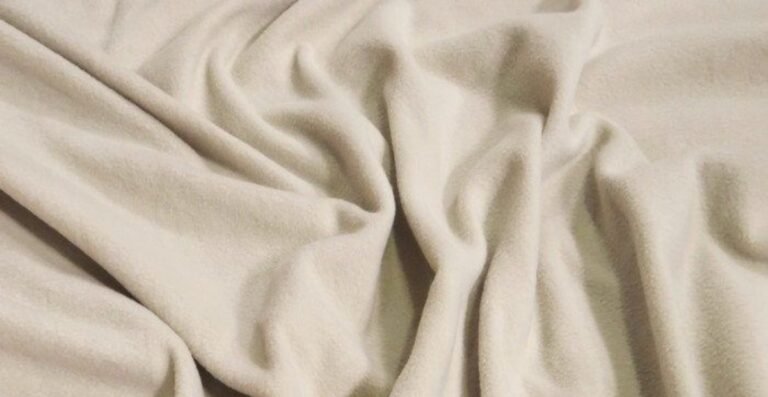

What Makes Fleece Fabric Special

A close-up of a person wearing a cozy, oversized cream-colored sherpa fleece with a high collar and a front half-zip. The textured, fluffy material dominates the frame.
Cozy vibes: cream sherpa and chilly-day comfort. Elevate casual with a plush sherpa half-zip. Soft, warm, and stylish — the perfect cozy sweater for fall. Textured warmth in a chic, relaxed fit.

Fleece Fabric stands out because of its unique texture and warmth. The fabric has a soft, brushed surface that traps air. This trapped air acts as insulation, keeping the body warm. Despite being warm, fleece remains very light. That is why people love wearing it during both mild and cold weather.

Another great quality of Fleece Fabric is how soft it feels against the skin. It never feels rough, which adds to its comfort. It is also very flexible and easy to move in, unlike thicker fabrics. Many people enjoy fleece jackets, hoodies, and blankets because they provide instant coziness without feeling bulky.


How Fleece Fabric Is Made

A close-up of a sewing machine presser foot and needle assembly resting on white fabric, with metallic components and a small black knob visible.
Close-up of a sewing machine foot and needle assembly.

The making of Fleece Fabric involves a smart and careful process. It usually starts with polyester fibers, which are spun into yarns. These yarns are then knitted into a light . After that, the surface is brushed to raise tiny fibers, creating soft, fluffy texture. This brushing process gives fleece its famous warmth and gentle touch.

In some cases, Fleece Fabric is made from recycled plastic bottles. This eco-friendly method helps reduce waste and supports sustainable production. Even with recycled materials, the fabric remains just as soft and durable. Because of these modern techniques, continues to evolve, becoming even better with time.


Different Types of Fleece Fabric

A stack of folded blankets in various colors (beige, red, tan, teal, blue, gray, and white) sits on a wooden surface against a white brick wall; some blankets are rolled at the top and one white fleece is draped on the right.
Cozy assortment of folded blankets in vibrant and neutral tones stacked on a wooden surface.

Over the years, Fleece Fabric has developed into many types for various needs. There is microfleece, which is very thin and perfect for layering. It keeps the warmth in while staying breathable. Then there is polar fleece, a thicker version often used for jackets and blankets. It offers more insulation for colder weather.

There is also sherpa fleece, which has a fluffy, wool-like texture. It gives a cozy and stylish look, often seen in winter coats and linings. Lightweight fleece is best for mild temperatures, while heavy fleece suits extreme cold. Each kind of provides comfort, warmth, and softness in its unique way.


The Comfort of Wearing Fleece Fabric

A stack of three crewneck sweatshirts in different colors (dark charcoal, warm brown, and off-white) arranged in a fan overlap.
Cozy neutrals: charcoal, latte, and ivory crewneck sweatshirts layered together.

Comfort is the first thing people notice when they wear Fleece Fabric. It feels smooth and light from the moment it touches the skin. The softness makes it ideal for all-day wear. Whether at home, in school, or outdoors, fleece keeps the body at a pleasant temperature.

Fleece Fabric also allows good air flow. It keeps you warm but prevents overheating. This makes it great for both indoor and outdoor use. Even after washing, the remains fluffy and cozy. Its ability to retain warmth and softness has made it a beloved material around the world.


A woman wearing a charcoal gray fleece hoodie with a front pocket and matching gray fleece pants. She has her hands in the pocket of the hoodie.
Cozy gray fleece hoodie and jogger set with front pouch pocket.

Fleece Fabric became popular because it offers the perfect mix of warmth, comfort, and lightness. People love that it is easy to wash and dries quickly. It does not shrink or lose shape easily. These features make it perfect for busy lifestyles.

The bright colors and soft feel also attract fashion lovers. Designers use it for jackets, scarves, hats, and even pajamas. Its flexibility and smooth texture make it easy to sew and style. Fleece has become a trusted choice for those who want to look stylish while staying warm.
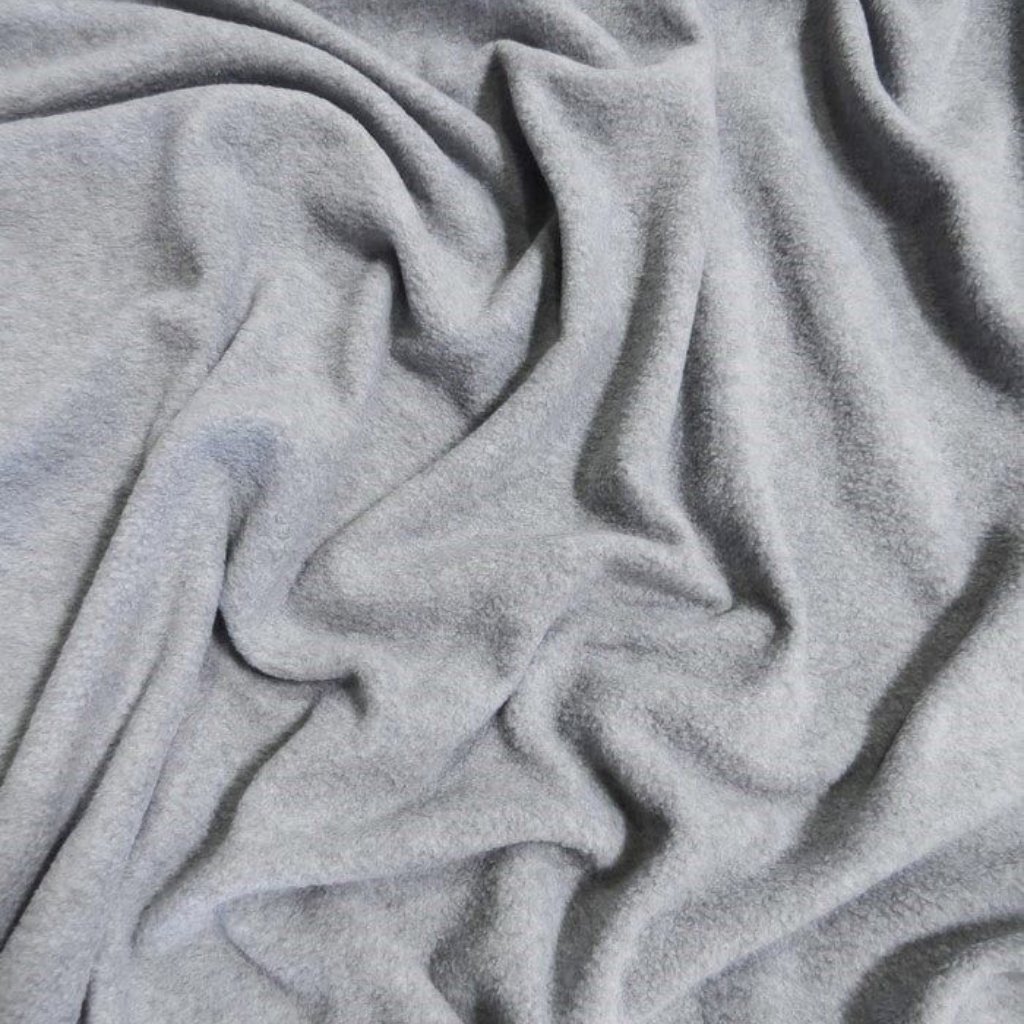

Fleece Fabric in Fashion and Daily Life

A gray plush stuffed animal shaped like a dog or bear lying face down on a beige bed, with a small lamp on a wooden nightstand in the background.
A cozy, plush friend lounging on the bed beside a warm bedside lamp.

Fashion designers have found many creative uses for Fleece Fabric. It is not just for outdoor wear anymore. Modern trends show fleece being used in streetwear, activewear, and even office styles. Its clean and simple look allows endless possibilities for design.

At home, Fleece Fabric appears in blankets, throws, and bed sheets. People also use it for cushion covers and baby clothes because of its soft texture. The material’s durability ensures it lasts for years without losing its charm. Because of these features, fleece continues to be a part of modern life everywhere.


The Role of Fleece Fabric in Outdoor Activities

Close-up of a person wearing a dark green fleece jacket with light green piping at the pocket and hem, over brown pants.
A cozy, outdoor-ready fleece jacket featuring soft textures and contrasting light-green trim.

Fleece Fabric is a favorite among hikers, campers, and athletes. It gives warmth without adding weight. This makes it perfect for layering under jackets during outdoor adventures. The quick-drying feature helps keep the body dry even in changing weather.

Fleece Fabric also resists water to some extent, adding extra comfort. Because it stays warm when slightly damp, it is a safe choice for outdoor sports. Travelers love it because it packs easily without taking much space. Its long-lasting nature also makes it a smart and reliable choice.


Fleece Fabric and Sustainability

With growing care for the planet, manufacturers now make Fleece Fabric in eco-friendly ways. Many brands use recycled polyester to produce new materials. This method reduces plastic waste and energy use. Some companies also experiment with natural fibers mixed with synthetic ones to improve sustainability.

While traditional polyester fleece is not biodegradable, recycled fleece offers a better path forward. It helps reduce the carbon footprint and supports cleaner production. People now choose sustainable fleece products to stay warm and care for the environment at the same time.


How to Take Care of Fleece Fabric

A close-up side view of a light gray hoodie with the hood up.

Caring for Fleece Fabric is very easy. It does not require special cleaning steps like some other materials. It can be machine washed with mild detergent and cold water. Using gentle cycles keeps the fibers soft and intact.

To keep the fabric fluffy, it should be air dried or tumble dried on low heat. High heat can flatten the soft texture. It is also good to avoid using softeners, as they may affect the surface. With these simple steps, stays soft, clean, and comfortable for a long time.


Fleece Fabric for Every Season

Many people think Fleece Fabric is only for winter, but that is not true. The lightweight types can be used in every season. In spring or autumn, a thin fleece jacket is perfect for cool breezes. During winter, thick adds warmth under coats.

Even in summer, light fleece blankets can bring comfort on cooler nights. Because of its wide variety, fleece fits well with all kinds of climates. Its ability to adjust to temperature makes it one of the most practical s in fashion and home use.


The Feel and Style of Fleece Fabric

The smooth and fluffy feel of Fleece Fabric makes it stand out. It gives a touch of comfort that few other materials can match. The rich texture also looks beautiful in different colors. From bright shades to soft tones, fleece adds beauty to any outfit or home décor.
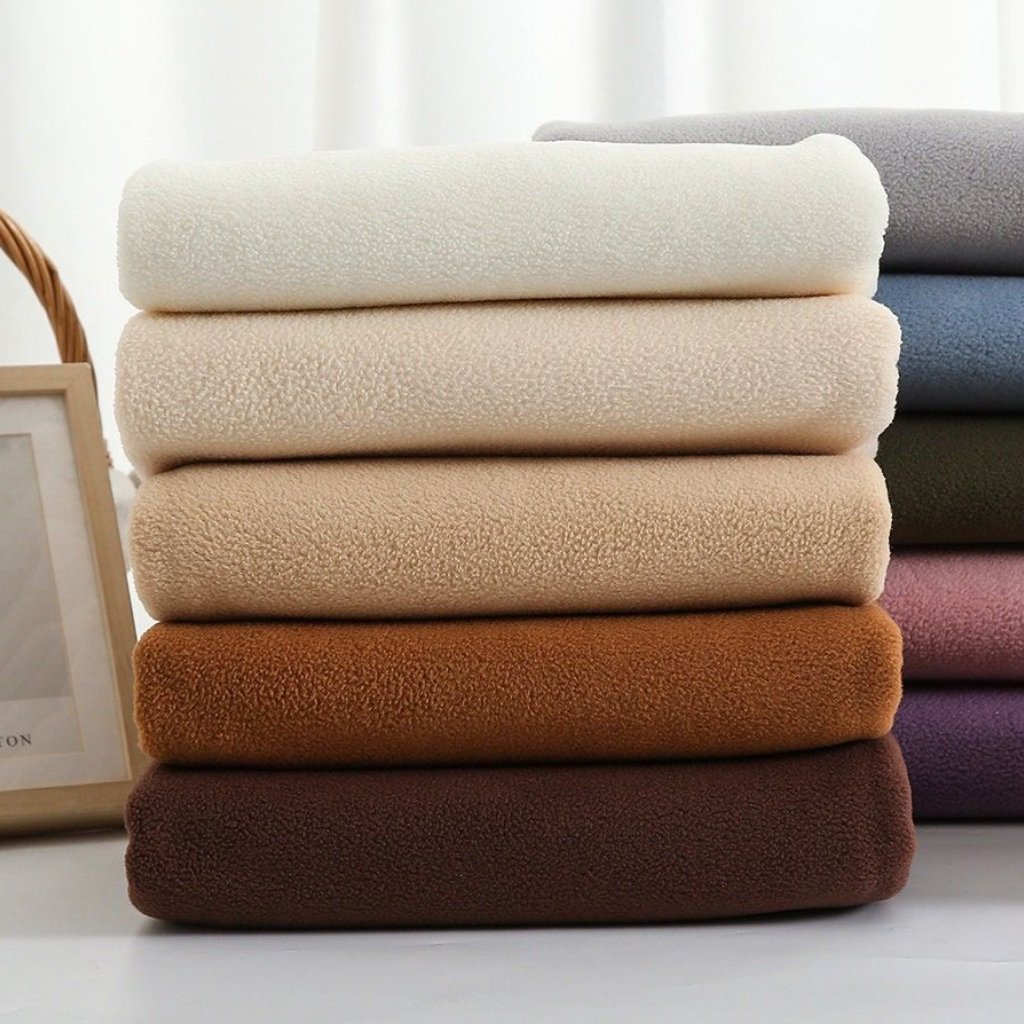
Designers often choose for its clean, modern appeal. It works well in minimal styles as well as bold looks. Because it combines warmth, color, and simplicity, it has become a symbol of cozy elegance in today’s world.
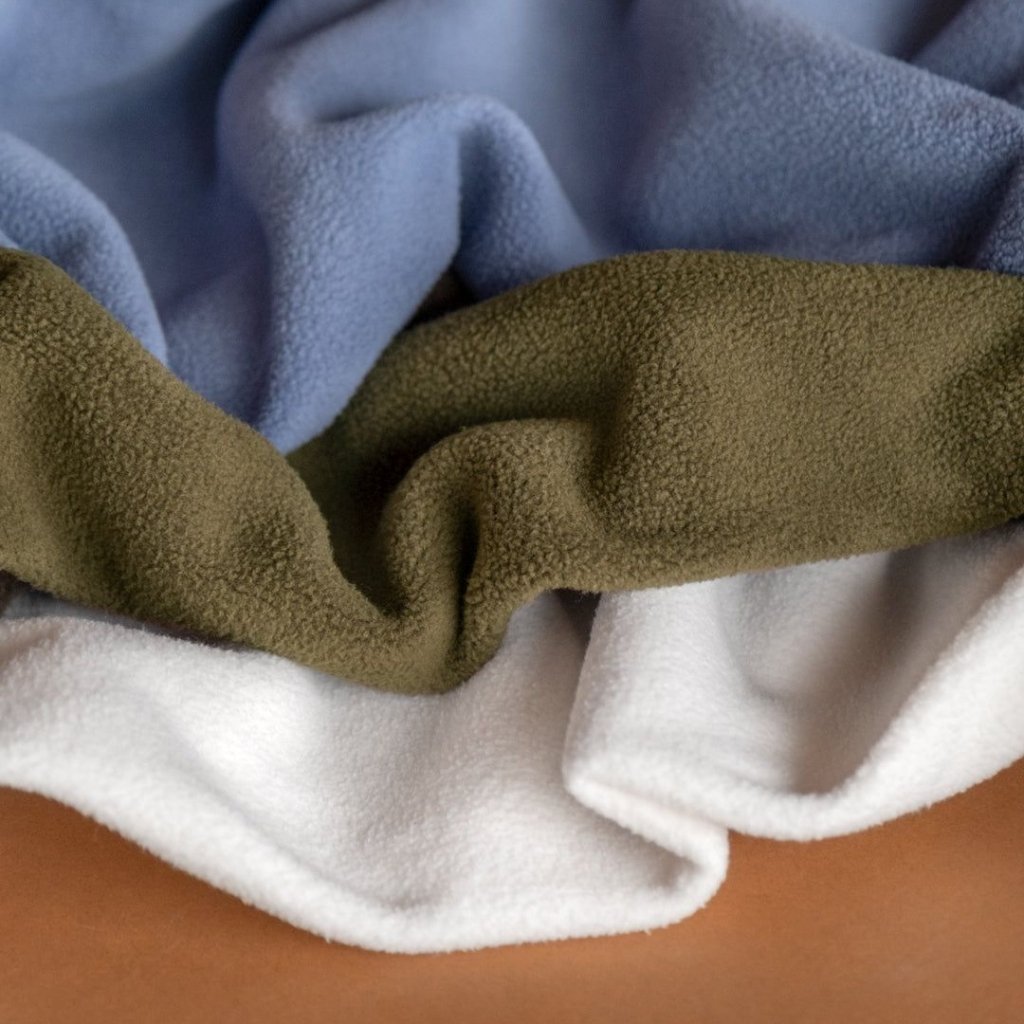
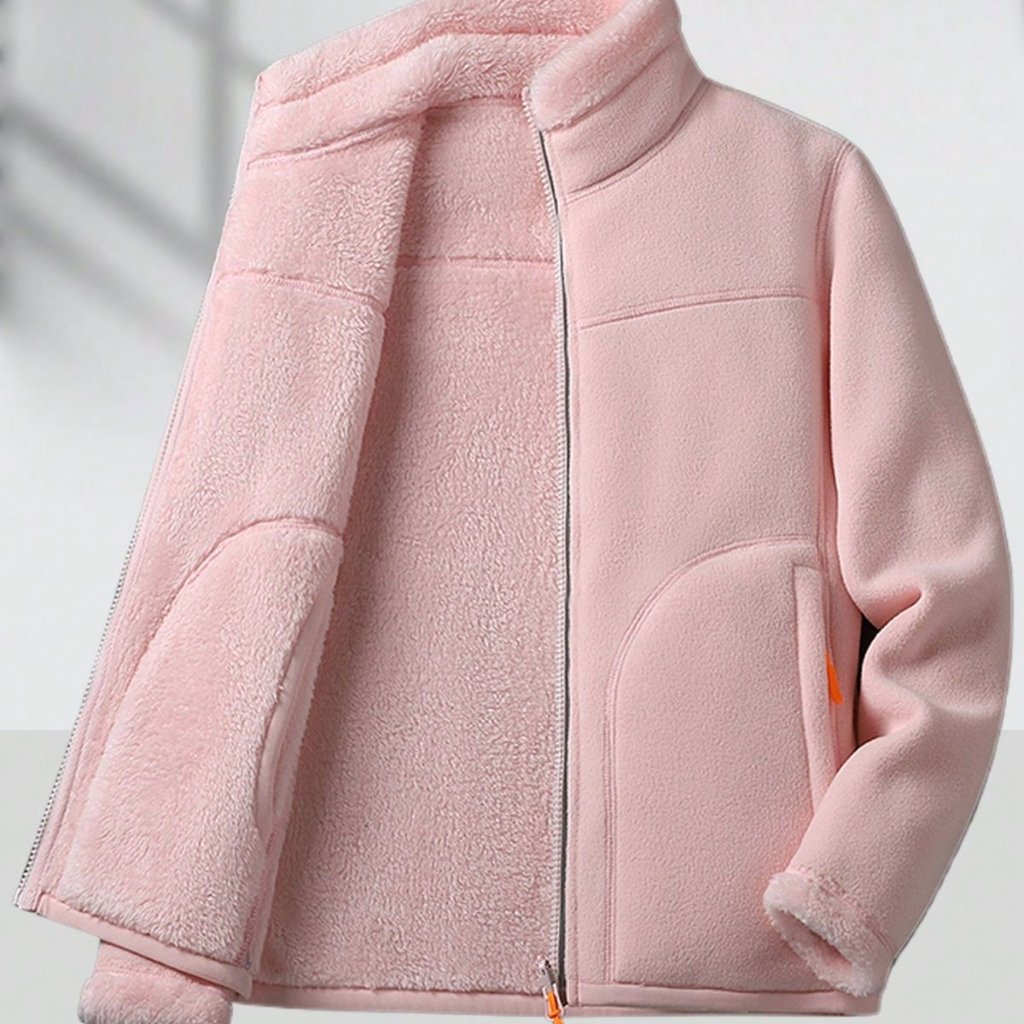

The Future of Fleece Fabric

The future of Fleece Fabric looks bright and creative. With new technology, manufacturers are making it softer, lighter, and more eco-friendly. Research continues to find ways to make it biodegradable without losing quality. This change will make fleece even more popular in the future.

Designers are also exploring new blends of fibers to improve texture and performance. The fabric’s ability to stay warm while being light will always be valuable. As styles change, fleece keep evolving to meet new fashion and comfort needs.


Common Uses of Fleece Fabric Today

Fleece Fabric is now used in so many products we see every day. From cozy sweatshirts to stylish scarves, it appears everywhere. It has become a key material sportswear because of its breathability and flexibility. Even pet accessories like beds and blankets often use fleece because it is gentle and easy clean.

Its use in baby clothes and pajamas also shows its safe and soft qualities. People trust it for warmth, comfort, and durability. Because of its endless uses, Fleece Fabric remains one of the most popular fabrics worldwide.


Why Choose Fleece Fabric Over Other Materials

Stacked colorful fleece fabric pieces in pastel shades (pink, lavender, cream, red, and light blue) with a beige vertical stripe on the right that displays a website URL.
What is fleece?

There are many reasons why Fleece Fabric is better than many other fabrics. It is much lighter than wool but gives the same warmth. It also dries faster than cotton and keeps its shape longer. The softness stays even after many washes.

Another reason is that it is easy to care for. Unlike heavy wool, fleece does not itch or feel uncomfortable. It is simple, affordable, and long-lasting. These features make it a top choice for people who love comfort and style together.


The Emotional Connection with Fleece Fabric

There is something special about how Fleece Fabric makes people feel. It gives a sense of warmth and calm that feels comforting. Many people have memories of wearing fleece jackets or wrapping themselves in fleece blankets during cold nights.

This connection goes beyond fashion. It represents care, warmth, and relaxation. When people choose Fleece Fabric, they choose comfort for both body and mind. That emotional link is one of the reasons fleece remains timeless and loved by all ages.


Conclusion

Fleece Fabric is more than just a piece of cloth. It is a blend of comfort, warmth, and innovation. It offers lightness without losing warmth, softness without losing strength, and style without losing simplicity. Over the years, it has become an everyday essential that brings joy and comfort to people around the world.Fleece is one of the coziest materials the textile world. It feels soft, light, and warm, making it a favorite for many. Over time, it has become a top choice for both casual and outdoor wear. Whether it is a chilly evening or a cold winter morning, this brings comfort and style together. With its versatile nature, it has truly transformed how we think about warmth and softness in clothing.


1. What is Fleece Fabric made from?

Fleece Fabric is usually made from polyester fibers, sometimes recycled from plastic bottles.

2. Is Fleece Fabric good for summer?

Yes, lightweight types of Fleece Fabric can be worn during cool summer nights.

3. How should I wash Fleece Fabric?

Use cold water and a gentle cycle, then dry it on low heat or air dry.

Printed Cotton Fabric: Stylish, Soft, and Versatile Designs

0

Since the beginning of time, printed cotton fabric has always been in fashion for its comfort, versatility and style the meets the need in item of everyday use at a sustainable, breathable and affordable solution everyday use time and time again. From a cotton casual wear to a stylish home decor, there is printed cotton fabric that meets every need. This guide aims to keep you within the benefits and types and uses and care of to explain why its continues to be the worldwide popular choice.

What is Printed Cotton Fabric?

A close-up of light-colored fabric with a small floral print. The white/cream background is scattered with tiny red, blue, and green flowers and leaves, arranged in a delicate, ditsy pattern.
Delicate tiny floral print on light fabric.

Printed cotton fabric is a cotton textile that has been modified to include some design and colored prints. Printed cotton is different than plain cotton because it has some artwork and visual value. However, it still remains some natural cotton which is soft and breathable. Prints enhance style, character, and beauty so there is more value to your cotton.

Cotton is a natural fiber which is obtained from the seed hairs of the cotton plant. It is soft, absorbent, and durable. Not only is the fabric functional, the design prints make it decorative. Printed coton fabric has many varieties like floral, geometric, abstract, and custom designs.

Different Kinds of Printed Cotton Fabric

Infographic titled ‘Kinds of Printed Cotton Fabric’ listing five types: screen printed, digital printed, block printed, rotary screen printed, and sublimation printed cotton fabric, with small circular photos of each fabric on the right.
Exploring five common types of printed cotton fabrics: screen printing, digital printing, block printing, rotary screen printing, and sublimation printing.

You can find different kinds printed coton fabrics, varying from technique of printing and weaving. Listed below are the most common ones.

1. Screen Printed Cotton Fabric

Screen printing is an old technique, where a mesh screen is used to transfer the ink to the fabric. Different screens are made for each color. It is also a common technique used for making bold patterns. It suits fashion clothes, casual wear and also cotton curtains.

2. Digital Printed Cotton Fabric

Digital printing is a technique that is from the new age that directly prints a design on a fabric using an inkjet printing method. It also allows for the use of complex designs, varied colors and even custom designs. Digital printed coton fabric is good for fashion designers and home decorators that desire one of a kind prints.

3. Block Printed Cotton Fabric

Block printing is a hand crafted method which is widespread in countries like India and Pakistan along with other regions known for hand made textiles. It uses eco friendly and breathable cotton which works nicely for ethnic wear.

4. Rotary Screen Printed Cotton Fabric

Using a rotary screen printer creates continuous designs on cotton fabric. This technique is great for mass production so you can produce the same high quality prints on cotton fabric for shirts, bed sheets, and upholstery.

5. Sublimation Printed Cotton Fabric

Sublimation printing is really only effective on cotton fabric blended with polyester. This technique uses heat and pressure to transfer the design onto the fabric which creates bright and durable prints on cotton. While 100% cotton fabric is not great for sublimation printing, it is common to use cotton blends to get close to the desired results. Read more…Dimity Cotton Fabric

Accessories for Printed Cotton Fabric

Poster titled ‘Advantages of Printed Cotton Fabric’ with sections: Breathability and Comfort shows a stack of folded fabrics; Durability with a pile of colorful fabrics; Versatility with a pink folded cloth; Eco-friendly option with rolled white fabrics; Easy maintenance with a red textile and cotton plant icon.
Key advantages of printed cotton fabric: breathable, durable, versatile, eco-friendly, and easy to maintain.

There are various reasons for people to choose printed coton fabric.

1. Breathability and Comfort

As a natural fiber, it is relatively lighter than other printed varieties, which makes it comfortable to wear. Because it absorbs moisture, cotton fabric breathings, keeping the skin cool and dry. This helps in preventing rashes caused by the heat and the humid weather.

2. Durability

Good and high quality printed coton fabric is durable. If the prints do fade away, the fabric will still be used for a long period of time. The prints will remain in their bright and vivid state even after repeated washing.

3. Versatility

You can do a lot with printed coton fabric. It works well for clothing such as dresses, shirts, kurtas, and skirts and for home items like bedspreads, curtains, pillow covers, and table linens.

4. Eco-Friendly Option

Cotton is biodegradable, renewable, and requires fewer chemicals than synthetic fabrics. Printed cotton fabrics used in natural dyes and block printing techniques truly help in sustainable fashion.

5. Easy Maintenance

You can care for printed coton fabric without difficulty. They can be washed in a machine, ironed, and dry-cleaned and still remain unchanged in texture and vividness. Because of the natural cotton fibers, softness is retained.

Popular Patterns in Printed Cotton Fabric

Infographic titled 'Popular Patterns in Printed Cotton Fabric' with five circular image samples and descriptions: Floral Prints, Geometric Prints, Paisley Prints, Abstract Prints, and Stripes and Checks, on a white background with green accents and decorative elements.
Popular Patterns in Printed Cotton Fabric: floral, geometric, paisley, abstract, and striped/check patterns illustrated with sample swatches and brief descriptions.

The beauty of printed coton fabric comes from its many patterns. Some of the most common patterns are:

  • Floral Prints – a classic choice for dresses, curtains, and bedsheets.
  • Geometric Prints – ideal for modern home decor and contemporary fashion.
  • Paisley Prints – classic motifs used in ethnic wear and accessories.
  • Abstract Prints – bold designs for fashion-forward apparel.
  • Stripes and Checks – simple yet stylish patterns for casual wear and formal cotton shirts.

The different colors and weights of fabrics can be customized for any classic collection, and that is what makes printed coton fabrics so unique. Read more…Pointelle Cotton Fabric

Uses of Printed Cotton Fabric

A stack of four folded floral-patterned fabrics in autumn colors (black with small white flowers on top, then peach with red and brown floral prints, burnt orange with pale flowers, and light blue-gray with red flowers) arranged diagonally.
Stacked floral fabrics in fall-inspired hues.

There uses of printed coton fabric range beyond clothing to several other areas.

1. Fashion Apparel

Printed cotton fabrics are used to design summer cotton dresses as well as traditional kurtas and is very comfortable for casual, formal, and ethnic dresses. Besides, printed coton fabrics are very soft andTextured fabrics are very soft and comfortable yet fashionable.

2. Home Decor

You can use and printed cotton fabric for a more stylish and soft home textiles like:

  • Curtains – light, breathable, and stylish.
  • Cushion Covers – add color and design to living spaces.
  • Bed Sheets – soft, breathable, and available in multiple prints.
  • Tablecloths and Napkins – stylish and practical for dining.

3. Accessories

For fashionable and eco-friendly design, printed cotton fabrics are used for scarves, tote bags, handkerchiefs and other small accessories.

4. Craft Projects

Crafters have a lot of different colors and patterns that they can printed cotton fabric and use it for quilting, patchwork, and DIY decor that adds beauty to the home.

Choosing the Best Printed Cotton Fabric

Keep these tips in mind when picking out printed cotton fabric:

  • Fabric Weight: Lightweight cotton is great for summer clothing, while heavier cotton is better for home furnishings.
  • Print Quality: Make sure the print is durable and won’t fade. Lasting prints are usually screen-printed rather than digitally printed.
  • Fabric Finish: Soft finishes add comfort while crisp finishes add structure to garments.
  • Purpose: Choose patterns and fabric type based on whether the fabric is for fashion, home, or crafts. Read more…

Caring for Printed Cotton Fabric

A hand holds a stack of neatly folded towels in soft pastel colors (beige, light blue, blue, white, gray) while another hand offers a bright yellow sunflower against a pale blue background.
Brighten your laundry day: a cheerful sunflower tops a stacked bundle of fluffy towels.

Follow these steps to keep cotton fabric vibrant for a long time:

  • Washing: For colored fabrics, cool, mild detergent and gentle cycle machine washing is usually safe.
  • Drying: To prevent fading, avoid direct sun and air drying is preferred.
  • Ironing: Use low to medium heat and always check to make sure the print is not heat-sensitive.
  • Storage: To avoid moisture damage or mildew, store in cool, dry places.

Why Printed Cotton Fabric is SEO-Friendly in Business

E-commerce or online textile stores have high demand for printed cotton fabric. To get them to the top of the search engines, managers use the following SEO strategies:

  • Main Keywords: Printed cotton fabric, cotton prints, block printed cotton, digital printed cotton, floral cotton fabric, fashion cotton fabric, home decor cotton prints.
  • Content Optimization: descriptions of the fabric should include its benefits, care instructions, and tips on how and where it can be used.
  • Transition Words: improve readability and engagement (ex. “therefore”, “additionally”, “moreover”, “consequently”)
  • Long Form Content: Articles that exceed 2000 words (like this one) perform much better on search engines.

Conclusion

Today, printed cotton fabric is still one of the most versatile and sustainable textile options. The combination of comfort, breathability, style and eco-friendliness makes it a great option for fashion, home decor, and all kinds of creative projects. Knowing the benefits, patterns, types and care of printed cotton fabric will help consumers, designers, and retailers make better decisions.

Selling it online, with the right SEO strategies in place, will increase visibility and sales. Using printed cotton fabric is makes everyday life better, and it is also a practical and stylish sustainable option.

FAQs

What is printed cotton fabric?

Printed cotton fabric is natural cotton enhanced with patterns or designs through techniques like screen printing, digital printing, or block printing. It combines comfort with style for fashion, home decor, and crafts.

What are the common types of printed cotton fabric?

Popular types include screen-printed, digital printed, block-printed, rotary screen printed, and sublimation-printed cotton fabrics. Each method offers unique patterns, durability, and applications.

Is printed cotton fabric comfortable to wear?

Yes, printed cotton is highly breathable, soft, and lightweight. It absorbs moisture well, making it ideal for hot climates and daily wear.