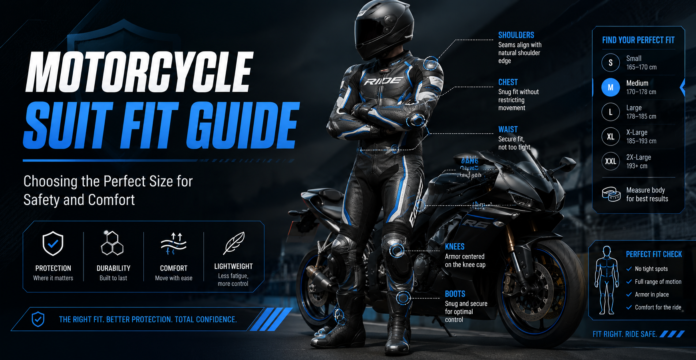
The fit of a motorcycle suit fit guide riding suit directly affects riding safety and comfort. A perfectly fitted riding suit is like a second skin: it can provide protection in the event of a traffic accident, while also ensuring freedom of movement. This guide will equip you with all the essential knowledge you need to choose the ideal size.
Why Proper Fit Matters for Safety
Ill-fitting motorcycle riding gear reduces the protective effect it provides for riders. Overly loose gear can cause protective armor to shift away from joints during a collision. The excess fabric of loose gear also flaps around when riding at high speeds; worse still, it creates dangerous friction when the rider slides across the road surface. On the other hand, riding gear that is too tight restricts the rider’s movement, making it hard to control the motorcycle suit fit guide and pulling focus away from the riding task.
How to Take Your Measurements
Before you start comparing sizes, you need to take accurate body measurements. This motorcycle suit fit guide recommends using a soft tape measure and having a friend help you for the most accurate results .
- Chest: Measure around the fullest part of your chest, keeping the tape under your arms and flat across your back .
- Waist: Measure around your natural waistline, just above your belly button, without holding your stomach in .
- Hips: Measure around the widest part of your hips and buttocks .
- Inseam (Inner Leg): Measure from your crotch to the sole of your foot .
- Height: Measure your total height, standing barefoot .
The Key to Sizing: The Riding Position
One of the most important rules in any motorcycle suit fit guide is to always try on the motorcycle suit fit guide in a riding position. motorcycle suit fit guide, especially one-piece suits, are designed to be comfortable when you are leaning forward on a bike, not when you are standing upright .
- Expect it to feel tight: A new suit may feel snug when you stand, but this is normal. Leather will also stretch and “bed in” with use .
- Check for wrinkles: When you are in your riding crouch, the leather on the motorcycle suit fit guide should have minimal wrinkles. Wrinkles can cause friction in a crash, leading to dangerous tumbling .
- Check armor position: Ensure the armor at your shoulders, elbows, and knees stays in the correct place when you are on the bike .
- Check your gear: Always try the suit on with your riding boots and gloves. This ensures everything integrates properly, giving you full control of the bike .
One-Piece vs. Two-Piece Suits
Choosing between a one-piece and a two-piece cycling suit directly affects how well the garment fits the wearer. The one-piece style is designed specifically for the aggressive, pre-bent riding posture adopted on race tracks, making it the optimal choice to achieve maximum protection. The two-piece style consists of a zip-compatible jacket and cycling pants, which motorcycle suit fit guide the upright riding position of road cycling. It is easy to put on and take off, and is more comfortable and practical for daily use.
Key Features for a Better Fit
Look for these features to improve the fit and comfort of your suit:
- Stretch Panels: These are essential for a good fit. They allow the suit to move with your body, preventing wrinkles and improving comfort in the riding position .
- Adjusters: Features like waist adjusters and ankle straps allow you to fine-tune the fit for your specific body shape .
- Connection Zips: For two-piece suits, ensure the jacket and pants zip together fully (360-degree zipper) for track use to create a continuous protective layer . Many suits, like the mens motorbike suit , feature adjustable waist closures and stretch panels for enhanced freedom of movement.
Special Sizing and Customization
Many brands offer more than just standard sizes to help you get the perfect fit. These are important to consider in any motorcycle suit fit guide:
- Currently, mainstream manufacturers of motorcycle suit fit guide riding gear have launched multiple standardized size options to fit different body
- types: these include formal riding jackets in long and short versions with adjustable proportions, as well as loose-fitting
- styles that reserve sufficient extra space to accommodate the chest, waist, and hip measurements of large-framed riders. If a properly fitting item still cannot be found, the leading brand Eco Jersey also offers full customization services, which cover all jacket designs for racing, regular sports, long-distance travel and other scenarios, and can meet any personalized needs. For women riders, the motorbike suit womens range offers ergonomic designs specifically tailored to a woman’s body shape with adjustable cuffs, forearms, and neck for a custom fit.
Considering Weather and Activities
Your riding conditions and activities also influence your choice. For cold-weather riding, you need to account for the extra bulk of thermal layers or heated gear. A heated motorbike suit provides warmth without adding bulky layers, but always check the fit when wearing it over your base layers. For wet weather, a motorbike rain suit should fit comfortably over your regular riding gear without restricting movement.
Frequently Asked Questions
How should a motorcycle suit fit when standing up?
A new suit will feel snug when standing. This is normal because it is designed to be comfortable in a forward-leaning riding position .
What if I am between sizes?
If you are between sizes, it is generally recommended to go up a size. You can often fine-tune the fit using the suit’s adjusters .
How do I know if a suit is too big?
A suit is too big if the armor shifts when you move, if the leather bunches up in the riding position, or if it has excessive material that could flap at speed .
Is it better to get a suit that is slightly too tight or slightly too loose?
It is better to get a suit that is slightly too tight. Leather will stretch and mold to your body over time. A suit that is too loose will not protect you properly .