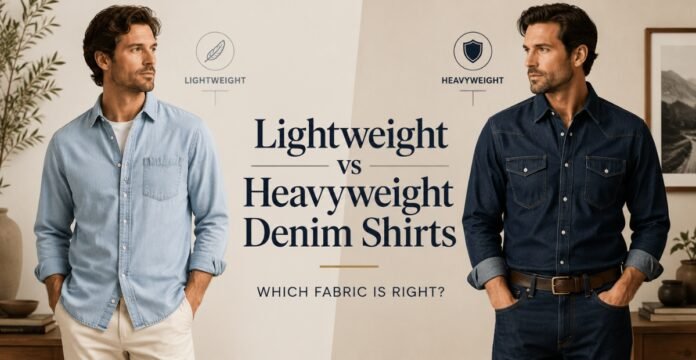
There are quite a few ways to differentiate lightweight vs heavyweight denim shirts, beyond the weight of the fabric and how they feel when worn. The main differences hit on how the fabric is structured, how thick the fabric is, how warm the fabric is, and how it feels on your body. Lightweight denim is typically softer, easier to bend, and more comfortable when the weather is warm. Heavier denim is firmer, warmer, and more protective. Shirts and tops made of denim usually range from 3.5 to 8 ounces per square yard. Trousers and jackets, however, are made from heavier denim.
What Makes a Denim Shirt Lightweight?
A lightweight denim shirt is made from thinner yarns or a lighter woven construction. It normally feels soft, flexible, and less bulky than a heavy shirt. Lightweight vs heavyweight denim shirts can look similar in photos, but the lighter option usually moves more easily with the arms and shoulders. It is a good choice for people who want the appearance of denim without the weight of a jacket. You can explore different washes and designs in the denim shirts collection, which includes several casual shirt styles. Lightweight denim also works well for tucked-in outfits because it creates less bulk around the waist. In simple terms, lightweight vs heavyweight denim shirts offer different levels of ease and structure.
What Makes a Denim Shirt Heavyweight?
Lightweight vs heavyweight denim shirts contain thicker or denser fabric that is more tightly woven. These shirts tend to run more structured, and heavier denim shirts come in close to shirt-jacket territory. When compared to lighter weight denim shirts, heavyweight denim shirts are more structurally and visually strong and provide more warmth. Because heavyweight denim shirts don’t go through a soft garment wash, they can come stiff and they retain that stiffness. With continued wear, the fabric will loosen and become more difficult to move. It becomes more difficult to move denim that is heavier and is used for cooler and more rugged outer layers, but can easily become too hot in the denim for outdoor use.
Comfort in Warm and Cold Weather
You can usually know what denim shirt is best to wear based on the weather. During warmer months or in warmer weather, lightweight vs heavyweight denim shirts feel more comfortable. They can be worn alone, over a shirt, or with the sleeves rolled up. Lightweight shirts are comfortable in most situations. Heavyweight denim is better for fall and winter. It provides more coverage, but doesn’t replace an insulated jacket. Those who live in hotter climates wear lightweight denim year round, while those who live in colder climates wear heavyweight denim year round.
Fit, Drape, and Body Shape
Fabric weight changes how a shirt sits on the body. Lightweight vs heavyweight denim shirts do not create the same shape, even when their measurements are equal. Light denim has more drape, which means it follows the body and creates a softer, relaxed appearance. Heavy denim stands farther away from the body and gives the shoulders, collar, pockets, cuffs, and front placket a stronger shape. A classic denim shirt for men can work as an everyday option when its fabric weight matches the intended fit. Slim or tucked styles often suit lighter denim, while straight, Western, utility, and overshirt fits usually look better in medium or heavier denim.
Layering and Everyday Styling
Layering needs can quickly settle the lightweight vs heavyweight denim shirts decision. A lightweight shirt fits easily under a sweater, coat, work jacket, or padded vest because it does not add much bulk. It can also be worn open over a basic T-shirt during mild weather. A heavyweight shirt is more useful as the outer layer. An oversized denim shirt provides extra room for this type of styling without making the outfit feel tight. Choose enough space across the shoulders and chest, but avoid a fit so large that the sleeves and collar lose their shape. Lightweight vs heavyweight denim shirts should support the layers you normally wear rather than forcing you to change your whole wardrobe.
Durability and Long-Term Wear
The first thing that comes to mind when talking about durability of a fabric is its weight, but that is only one aspect when considering a garment’s lifespan. Lighter vs heavier denim shirts involve the weight of the fabric, but also the quality of the yarn, the evenness of the weave, the strength of the seams, the quality of the stitching and buttons, washing methods, and finishing of the fabric. Because of the amount of fabric in the weave, heavier denim may be better in handling surface wear from rough use. However, a well-constructed lightweight denim shirt can last years with everyday use.
Built-In Points for Choosing the Right Fabric
Use these built-in points when comparing lightweight vs heavyweight denim shirts:
- Choose lightweight denim for warm weather and indoor use.
- Choose heavyweight denim for cold weather and outdoor layering.
- Pick lighter fabric when you want easy movement.
- Pick heavier fabric when you want a firm, structured shape.
- Wear lightweight denim under jackets and sweaters.
- Wear heavyweight denim as an overshirt or top layer.
- Check stitching instead of judging quality by weight alone.
- Choose a relaxed fit when heavy fabric feels restrictive.
- Select soft-washed denim when comfort matters from the first wear.
- Follow the care label to protect the shirt’s color, fit, and shape.
Washing, Shrinkage, and Fabric Care
Over time, lightweight vs heavyweight denim shirts will feel different. With that in mind, lightweight denim shirts are a bit more delicate; they wrinkle more easily and take more time to dry. As a rule of thumb, only wash denim shirts when necessary. When you do wash them, button the entire shirt, and wash lightweight vs heavyweight denim shirts denim shirts inside out on a cool and gentle cycle, and a low tumble dry, if necessary. Air drying is the best option to help protect the denim shirt’s shape and color. Always read the care label, as some shirts will include different fabric finishes which will require more delicate care.
Which Fabric Is Better for Work and Travel?
Lightweight vs heavyweight denim shirts serve different purposes, so the best choice depends on the job and the trip. Travel tends to be easier with lightweight denim as it packs easy and takes up less space in your luggage, not to mention, long car or plane rides are more comfortable. It fits lots of jobs/activities from modeling to retail to studio work, etc. Heavyweight denim is better for workshops, farms, and denser, stronger, shedable layers for outdoor work. Heavyweight denim, however, can be cumbersome and tiring in an active warm space.
Conclusion
Between lightweight vs heavyweight denim shirts, each can be a good option, but each has its own range of applicability. Lightweight is better for travel, hot weather, and indoors. Heavyweight denim is better for the opposite. The best decision for lightweight vs heavyweight denim shirts is based on your climate, your activities, the fit you want, and what is comfortable for you, not just on thickness. A good shirt with a strong, well constructed, and well fitted shirt, is better than a heavier one that is uncomfortable and limits your mobility.
FAQs
Are lightweight denim shirts suitable for summer?
Yes, lightweight denim shirts are usually more suitable for summer because they feel thinner, softer, and less bulky. Choose a loose or regular fit and wear the shirt open over a light T-shirt for better comfort.
Are heavyweight denim shirts warmer?
Heavyweight denim shirts are generally warmer because their fabric is thicker and denser. They work well during cool weather, but they are not a replacement for an insulated winter jacket.
Which denim shirt weight is best for everyday use?
A light-to-medium denim shirt is usually the most useful choice for everyday wear. It provides enough structure to look like denim while remaining comfortable for indoor use, travel, and casual layering.