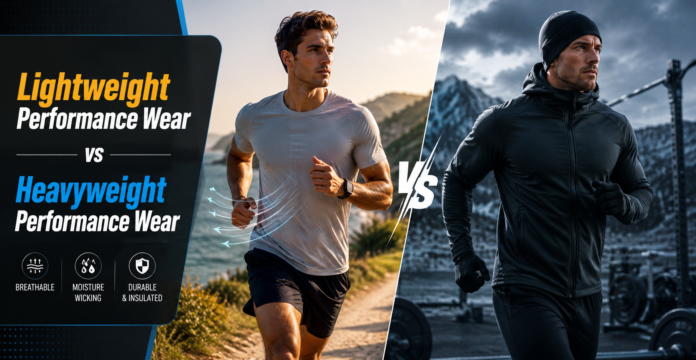
Lightweight performance wear vs heavyweight performance wear is an important choice for anyone who trains, works out, travels, hikes, or wears active clothing in daily life. Both types are useful, but they are made for different needs. Lightweight performance wear is usually thinner, cooler, easier to move in, and better for hot weather or high-sweat activities. Heavyweight performance wear is usually thicker, warmer, stronger, and better for cold weather, outdoor training, or extra coverage. The better choice depends on your activity, weather, body comfort, and how much support or warmth you need. If you choose the wrong weight, your clothes can feel too hot, too cold, too loose, too heavy, or uncomfortable during movement. That is why understanding lightweight performance wear vs heavyweight performance wear helps you buy smarter clothing that actually works for your body.
What Lightweight Performance Wear Means
Lightweight performance wear means active clothing made with thinner fabric that feels soft, breathable, and easy to wear. It is often used for gym workouts, running, yoga, cycling, warm weather walks, and everyday active style. The main goal of lightweight fabric is to keep the body cool while allowing easy movement. Many lightweight pieces use polyester, nylon, spandex, or blended stretch fabrics because these materials dry faster than regular cotton. When people compare lightweight performance wear vs heavyweight performance wear, lightweight clothing usually wins for comfort in heat and speed-based movement. It does not feel bulky, so the body can bend, stretch, and move freely. For people who want flexible clothing for active routines, the performance wear collection can be a natural place to explore different fabric weights and styles. Lightweight performance wear is also good for layering because it can sit under hoodies, jackets, or sweatshirts without feeling too thick.
What Heavyweight Performance Wear Means
Heavyweight performance wear means active clothing made with thicker, denser, or warmer fabric. It is not always stiff, but it usually gives more coverage, more structure, and more warmth than lightweight fabric. Heavyweight pieces are common in cold-weather training, outdoor workouts, travel outfits, warm-up clothing, and winter sportswear. When comparing lightweight performance wear vs heavyweight performance wear, heavyweight clothing is better when your body needs protection from cold air, wind, or rough use. A heavier sweatshirt, base layer, or training top can help the body stay warm before and after activity. It can also feel more premium because the fabric has a stronger hand feel. However, heavyweight performance wear can become too warm during intense exercise, especially indoors. It may also take longer to dry if the fabric is very thick. This is why heavyweight fabric works best when warmth, durability, and coverage matter more than fast cooling.
Lightweight Performance Wear vs Heavyweight Performance Wear for Comfort
Lightweight performance wear vs heavyweight performance wear feels different on the body because fabric weight changes comfort. Lightweight clothing feels airy, smooth, and easy to wear for long hours. It is better for people who sweat quickly or feel hot during exercise. It also works well for slim-fit clothing because it does not add much bulk. Heavyweight performance wear feels more protective and secure. It can make the body feel covered and warm, which is useful in colder weather. Some people also like heavyweight fabric because it feels less see-through and more structured. The comfort choice depends on the user. If someone trains hard in a hot gym, lightweight fabric may feel better. If someone walks outside in winter or needs a warm training layer, heavyweight fabric may feel better. In simple words, lightweight performance wear vs heavyweight performance wear is not about good or bad fabric. It is about comfort in the right situation.
Best Uses for Lightweight Performance Wear
Lightweight performance wear is best for activities where the body creates heat and sweat quickly. These activities include running, gym training, indoor cycling, stretching, walking, warm-weather sports, and daily casual wear. Lightweight fabric helps sweat move away from the skin and can dry faster after exercise. This makes it useful for people who train often and need clothing that feels fresh during movement. When comparing lightweight performance wear vs heavyweight performance wear, lightweight clothing is usually better for fast workouts and summer use. It also packs easily in a gym bag or suitcase, which makes it helpful for travel. A lightweight top, tank, or base piece can be worn alone in warm weather or under another layer in cooler weather. For example, a high-neck tank top can work well when someone wants simple coverage without heavy fabric. Lightweight performance wear is practical when freedom, breathability, and quick drying are the top needs.
Best Uses for Heavyweight Performance Wear
Heavyweight performance wear is best when the weather is cold or when the user needs stronger coverage. It is useful for outdoor training, hiking, winter running warm-ups, skiing layers, travel days, and casual sportswear. Heavyweight fabric can help hold warmth close to the body, especially when used with the right layering system. When people compare lightweight performance wear vs heavyweight performance wear, heavyweight clothing is often the better choice for cold starts, slow walks, mountain trips, and training before sunrise or after sunset. It can also be more durable for rough outdoor use because thicker fabric can handle more stress. A good heavyweight piece should still allow movement, so stretch fabric is important. The best heavy performance clothing does not feel like a blanket; it feels warm, steady, and flexible. For colder activities, a ski base layer is a useful example of performance clothing made to support warmth while staying close to the body.
Key Differences in One Easy List
When comparing lightweight performance wear vs heavyweight performance wear, the main difference is how the fabric handles heat, sweat, movement, and coverage.
- Lightweight performance wear feels cooler and easier to move in.
- Heavyweight performance wear feels warmer and more protective.
- Lightweight fabric is better for high-sweat workouts and hot weather.
- Heavyweight fabric is better for cold weather and outdoor use.
- Lightweight clothing usually dries faster after sweating.
- Heavyweight clothing usually gives more coverage and structure.
- Lightweight pieces are easier to layer under jackets or hoodies.
- Heavyweight pieces can be worn as outer layers in cool weather.
- Lightweight performance wear vs heavyweight performance wear should be chosen by activity, not just style.
- The best option is the one that keeps your body comfortable before, during, and after movement.
Breathability and Sweat Control
Breathability is one of the biggest points in lightweight performance wear vs heavyweight performance wear. Breathability means how easily air can move through the fabric. Lightweight performance wear is usually more breathable because the fabric is thinner and often made for sweat control. This helps the body feel cooler during exercise. Heavyweight performance wear can also be breathable, but it depends on the fabric construction. Some thick fabrics trap too much heat, while better performance fabrics balance warmth and moisture control. Sweat control matters because wet clothing can feel heavy, sticky, and cold after activity. Lightweight fabric often moves sweat away faster, which helps during intense workouts. Heavyweight fabric may hold more warmth, but if it does not manage sweat well, it can feel damp. That is why buyers should look for moisture-wicking materials, stretch blends, and soft inner finishes. In lightweight performance wear vs heavyweight performance wear, breathability is usually the reason lightweight clothing wins for indoor training.
Warmth, Layering, and Weather Protection
Warmth is where heavyweight performance wear becomes stronger. Cold weather can make muscles feel tight and uncomfortable, especially before exercise. Heavyweight fabric helps keep the body warm and can protect against cool air. Lightweight performance wear can still be used in cold weather, but it works better as a base layer under another piece. This makes layering very important. A simple system can include a lightweight base layer, a mid-weight sweatshirt, and a jacket if needed. When comparing lightweight performance wear vs heavyweight performance wear, think about whether you need one piece or a full outfit system. For example, lightweight active tops can sit under hoodies without making the body feel bulky. Heavyweight pieces can work as top layers when the weather is cool. If you want a fitted performance layer under other clothing, compression t-shirts can be a useful option because they support movement without adding too much loose fabric. Good layering makes both fabric weights more useful.
Durability, Shape, and Long-Term Use
Durability also matters in lightweight performance wear vs heavyweight performance wear. Lightweight clothing can last well if the fabric is high quality, but very thin fabric may wear faster if it is washed often or rubbed against rough surfaces. Heavyweight fabric usually feels stronger because it has more density. It can hold shape better and may resist damage during outdoor use. However, heavier fabric is not always better. If the stitching is weak or the material has poor stretch recovery, heavyweight clothing can still lose shape. Lightweight fabric should stretch and return to its original form without becoming loose. Heavyweight fabric should stay smooth and comfortable after repeated washing. To make both types last longer, wash them in cold water, avoid harsh drying, and do not use too much heat. In lightweight performance wear vs heavyweight performance wear, long-term value comes from fabric quality, stitching, fit, and care, not only from fabric thickness.
Conclusion
Lightweight performance wear vs heavyweight performance wear has no single winner because both are made for different needs. Lightweight performance wear is better for hot weather, fast workouts, breathability, easy movement, and quick drying. Heavyweight performance wear is better for cold weather, outdoor use, warmth, coverage, and stronger fabric feel. The smart choice depends on your activity, climate, and comfort. If you train indoors, sweat a lot, or want flexible clothing, lightweight fabric is usually better. If you train outside, travel in cool weather, or need warmth before and after activity, heavyweight fabric is the safer choice. Many people need both because one fabric weight cannot handle every season and every workout. The best way to choose is simple: wear lightweight pieces when your body needs cooling, and wear heavyweight pieces when your body needs warmth and protection. That is the easiest way to understand lightweight performance wear vs heavyweight performance wear.
FAQs
Which is better: lightweight performance wear or heavyweight performance wear?
Lightweight performance wear is better for hot weather, gym workouts, running, and high-sweat activity. Heavyweight performance wear is better for cold weather, outdoor use, warm-ups, and extra coverage. The best choice depends on your activity and climate.
Is lightweight performance wear good for winter?
Yes, lightweight performance wear can be good for winter if it is used as a base layer. It should be worn under a warmer hoodie, sweatshirt, jacket, or outer layer. Alone, it may not provide enough warmth in cold weather.
Does heavyweight performance wear make you sweat more?
Heavyweight performance wear can make you sweat more if it is worn during intense exercise or warm weather. It is better for cool weather, low-temperature workouts, and outdoor activities where the body needs warmth.
Can I use both lightweight and heavyweight performance wear?
Yes, using both is often the best choice. Lightweight pieces work well for training, layering, and warm days. Heavyweight pieces work well for cold weather, travel, warm-ups, and outdoor activities.