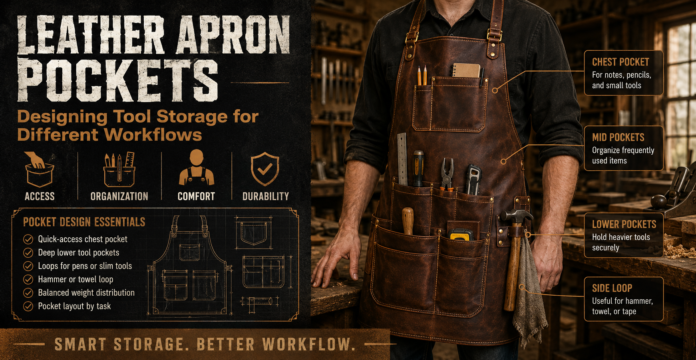
A leather apron is a mobile workstation more than a leather piece of protective clothing. Whether you’re a chef, woodworker, blacksmith, or barber, you’ve got to work efficiently, which is where the pockets on your leather apron come in. This tutorial will discuss the various ways leather pockets for aprons can be configured to fit workflow and increase productivity.
Why Pocket Design Matters in Leather Aprons
Leather apron pockets are designed to affect your productivity. Uncomfortable bulk or tools falling out are possible consequences of poorly designed pockets. Pockets keep the necessary tools within easy reach and neatly organized, and you can concentrate on your craft. In this guide, you’ll learn about the various pocket designs that are available and which one you should use for what
Understanding Different Workflow Requirements
Various professions have various pocket configurations. A chef should have a quick access to thermometers, pens and small utensils. A woodworking worker must have slots to hold pencils, rulers and marking knives. Trousers are required to have large pockets for heavy tools and materials which can handle heat. To select the proper leather apron pockets for your needs, you need to grasp how you work. The brown waist leather apron offers six spacious pockets with a full length design that protects during welding, woodworking, and metalworking tasks.
The Classic Bib Apron Pocket Layout
One of the most popular types of leather apron pockets is the bib apron. The design is usually made with a big front pocket or multiple smaller pockets located on the chest. The bib style makes it convenient to access the tools that are used frequently, but also shields the upper body. This style is a preference for many professionals since it takes the weight of the object across the shoulders (evenly). The bib leather apron from Eco Jersey offers durable full-grain leather construction with multiple pockets for ample storage.
Waist Apron Pockets for Heavy-Duty Work
Waist aprons are perfect to use when carrying heavier tools. Pockets located on a waist apron sit at the hips, a place where weight naturally sits and is stable. It’s a very popular design among blacksmiths, welders and woodworkers who need to carry heavy hammers, files and other metalworking tools. The black leather aprons offer a crossbody bib design with full-grain leather apron pockets construction, providing superior protection and convenience for demanding applications.
Tool Loops and Specialized Holders
In addition to pockets, leather apors come with a variety of tool storage options. Tool loops are ideal for resting hammers, mallets and other long-handled items. D rings can be used to store keys, measuring tapes, or small pouches. Even some aprons have the hammer holders or pencil slots designed into the pocket. Special leather apron pockets for apron to give extra functionality for specific workflows.
Pockets for Culinary Professionals
When it comes to leather apron pockets, there are particular needs that chefs and butchers have. They require pockets to store thermometers, pens, note books and small utensils. Pockets need to be easy-to-clean and stain resistant. A few culinary aprons have divided pockets for organizing various items. The design must also be such that it is easy to access when wearing gloves and/or handling food. For culinary professionals, an excellent apron such as that produced by Eco Jersey offers a lot of storage for them.
Pockets for Woodworkers and Carpenters
Carpenters and woodworkers require some pockets in which to carry pencils, rulers, marking knives and small chisels. The pockets should be deep enough so that the tools do not fall out when moving. Numerous woodworkers opt to have a number of small pockets located at the chest and larger pockets at the waist. Leather apron pockets for woodworking should also be tough enough to resist the contact with rough wood and sharp tools.
Pockets for Blacksmiths and Metalworkers
Pockets are big for blacksmiths and metalworkers. Pockets should be crafted out of fireproof material, stitched tightly enough. They must be able to lift big hammers, tongs and files without breaking them. Leather apron pocket placement matters a lot as they must not impede movement and be hazardous near hot metal.
Adjustable and Customizable Pocket Designs
One advantage for making a tailor-made leather apron is that you can customize your pockets according as you need them. Choose number of pockets, their sizes and locations on the apron. The customization options let you design a custom leather apron pocket that suits your needs best. Some of them provide detachable and adjustable pockets which can be moved around depending upon requirements.
The Role of Pocket Depth and Closure
Pocket depth and closures matter a lot for leather apron pockets. Big wallets offer better protection to tools and are harder to access. ShallowBY pockets are easier to access and may not be able to securely hold your tools. SomeCORSE closures such as flaps, buttons and snaps are found on some pockets for keeping tools safe while moving around. Open pocket is for flexible work styles whereas closed pockets are used by people with rigid schedules and specific equipment needs.
Comfort and Weight Distribution
The proper design of a leather apron pocket should take care of weight distribution for not to be tired easily. Heavy tools must also be carried with you so as not to bear any burden on one side of your body only. BackBY cross-back straps and padded shoulders like those used for Eco Jersey aprons, you can distribute weight more evenly over your shoulders. Pocket placement is important for comfort tools not to penetrate your body and impede movement.
Customization Options for Leather Apron Pockets
Eco Jersey offers extensive customization options for leather apron pockets. You can choose the leather type, apron length, pocket configuration, and strap style. The full grain leather aprons combine full grain leather and durable canvas for long lasting strength and comfort. Customization allows you to create an apron that perfectly suits your workflow and professional needs.
Final Thoughts on Leather Apron Pocket Design
Designing leather apron pockets for various workflows needs to be done with consideration to your particular requirements. No matter if its a chef, carpenter, blacksmith and so on then proper pocket design will help you to work better and feel more comfortable. Purchasing an excellent leather apron that has well-placed pockets is an investment to safeguard yourself and increase efficiency.
Frequently Asked Questions
How many pockets should a leather apron have?
The number of pockets depends on your workflow. Chefs typically need 3-5 pockets, while woodworkers and blacksmiths may need 5-7 pockets for various tools. Consider your daily tool requirements when choosing.
What is the best pocket design for heavy tools?
Deep, reinforced pockets with secure closures are best for heavy tools. Waist-level pockets are ideal as they distribute weight more evenly than chest-level pockets.
Can I customize the pockets on my leather apron?
Yes, most manufacturers offer customization options for pocket layouts. You can choose the number, size, and placement of pockets to match your specific workflow needs.
Are leather apron pockets heat-resistant?
Yes, high-quality leather aprons offer heat and fire resistance. For welding and metalworking, look for aprons with heat-resistant leather and reinforced stitching.