Welding is a dangerous job that exposes people with high temperatures, flying sparks and hot metal splatters every day. Right safety gear isn’t just recommended; it’s mandatory to work safely. One of the most important pieces of personal protective equipment for a welder are leather welding aprons that serve as an effective shield from these hazards. Leather welding aprons are not like regular clothes and they are designed for working with high temperatures while doing a job on metal. This article covers all that is needed to know about this type of safety apron including its material and construction.
Why Leather is the Preferred Material for Welding Protection
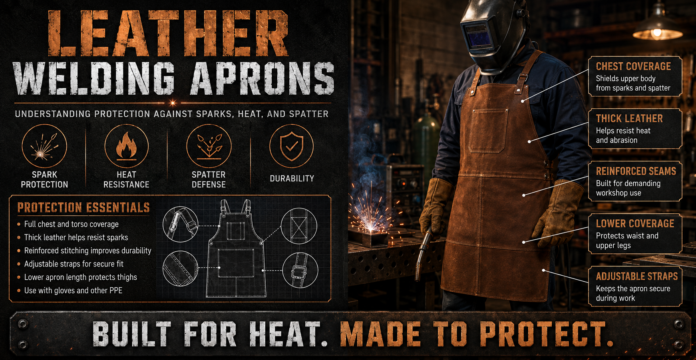
To protect from fire and extreme temperatures leather is a clear winner over other materials used for this purpose. leather welding aprons has a natural resistance to flames so it does not burn easily when exposed to welding spatter unlike synthetics which will melt onto your body. Heavy-duty split cowhide leather, commonly used in professional leather welding aprons, provides a durable, heat-resistant barrier that absorbs the impact of hot metal particles. It’s sturdy enough for good coverage and yet pliable so that it can be moved easily while welding complex pieces of work. That’s precisely what makes leather an industry leader when it comes to welding protection.
Understanding Heat and Flame Resistance Standards
Leather welding aprons have been proven effective due to adherence to certain international safety standards for ensuring reliable protection. One of these standards is EN ISO 11611:2015 that specifies the minimum safety requirements for protective clothing used during welding and allied processes. The standard guarantees that the apron offers sufficient protection from sparks and splashes of molten metal which are typical for welding work. The leather welding aprons should have a certain thickness requirement (at least one mm) to provide adequate protection from heat and molten metal splatter while being flexible enough to do the job properly. Investing your money on an apron with these high standards gives you assurance that it was tested specifically for welding hazards.
Critical Construction Details: Stitching and Reinforcement
Durability of a leather welding apron depends on more than just its material; it also depends upon how well made and assembled. Quality aprons have a double-lock stitching and are usually made out of heat-resistant material such as DuPont™ Kevlar® that can endure high temperatures without breaking down. The strong seams are designed to resist tensioning stresses and heat without unraveling nor burning out while being used. Furthermore, more durable leather welding aprons have rivet reinforcement at stress points like pocket corners and straps to prevent tearing and greatly increase their lifespan.The black leather aprons offer full-grain leather welding aprons construction with crossbody bib design, providing superior protection and convenience for demanding welding applications.
Design Features for Comfort and Functionality
Professional leather welding aprons are designed with the welder’s comfort and productivity in mind, as they need to be practical for actual use. Adjustable straps (sometimes with quick-release buckles) for comfort and flexibility so that it doesn’t limit your range of motion while working. Open-neck sleeveless clothing is also good for keeping cool when working out outdoors where temperatures are high enough that they need to stay cool. The bib leather apron provides durable full-grain leather welding aprons construction with multiple pockets for storage and adjustable straps for a customized fit, making it suitable for various welding tasks.
The Role of Pockets and Tool Storage
Though important to some welding jobs, pockets of a leather welding apron need to be considered for balance between convenience and security. To provide welders with easy access to their tools, strategically located pockets are very useful. Some leather welding aprons have a rivet-reinforced pocket for holding pens and pencils (and other small items) so that they don’t get lost easily. Nevertheless, avoid carrying too much baggage which may cause extra burden and also be prone for snagging while working with tools. It must be designed so as not to compromise on either side of its safety and comfort; for example, a pocket should not interfere with an apron’s coverage while welding.
Choosing the Right Apron Style for Your Work
Various welding jobs might require various types of aprons so knowing them will help you choose what’s best to protect yourself while doing it. The Bib apron is one of the most popular styles that cover your entire body from neck to knees with great protection on your backside and thighs. A waistband is a less bulky alternative to covert work that doesn’t require much body coverage and spatter protection. The full grain leather aprons combine full grain leather welding aprons and durable canvas for long lasting strength and comfort, making them suitable for a wide range of professional welding applications.
Maintenance and Care for Leather Welding Aprons
Maintenance should be done properly so that you can have a long life for your leather welding aprons welding apron. Rather than washing it off with hot water and detergent on your apron, try gently wiping it dry first then let it air dry somewhere else that isn’t near any heaters. Inspection of wear like thinning leather and stitches should be done regularly so that it can continue providing sufficient protection for a long period of time. The brown waist leather apron from Eco Jersey offers heat and fire resistance with double stitching using Kevlar thread for superior strength and reliability in demanding welding conditions.
Avoiding Common Welding Apron Mistakes
Investing on an excellent quality leather welding apron is a good investment, but it needs to be used properly and chosen wisely for it’s effectiveness. One mistake people make when picking out their aprons for welding is going for something that’s too thin, so they aren’t adequately protected from burns while doing this job. Another is using steel hardware on the apron; experienced welders recommend brass hardware as steel can transfer heat from the weld and cause burns to the wearer. However, although some aprons have Velcro straps that allow easy removal; however these tend to hold on to dirt and dust over a period of time so they are not very reliable.
Conclusion: Investing in a Safer Workspace
An excellent leather welding apron is one of your best investments for safety and productivity as it protects you from many dangers associated with welding. TheseBY providing a heat-resistant, flame-proof shield for sparks, splatters and slag these aprons are designed to prevent severe burns so that you can concentrate better while working. Knowing about its characteristics such as type of leather, stitching, and design of straps and pockets helps you select an apron which provides optimum protection for your particular welding requirements and thus a safer, more efficient work place.
Frequently Asked Questions
How thick should a leather welding apron be?
To provide reliable protection against heat and molten metal splatter, a welding apron should be thicker than standard garment leather, with a minimum thickness of one millimetre to ensure optimum protection.
What type of stitching is best for a welding apron?
Double-lock stitching with heat-resistant thread, such as DuPont™ Kevlar®, is the industry standard. This robust stitching prevents seams from burning through or unravelling under intense heat and stress.
Can I wash my leather welding apron in a machine?
No. Machine washing is generally not recommended as it can damage the leather. It is best to hand clean the apron by gently wiping it with warm water and allowing it to air dry.
What safety standard should a welding apron meet?
A welding apron should comply with EN ISO 11611:2015. This standard specifically outlines the safety requirements for PPE used in welding, ensuring it protects against sparks and splashes of molten metal.