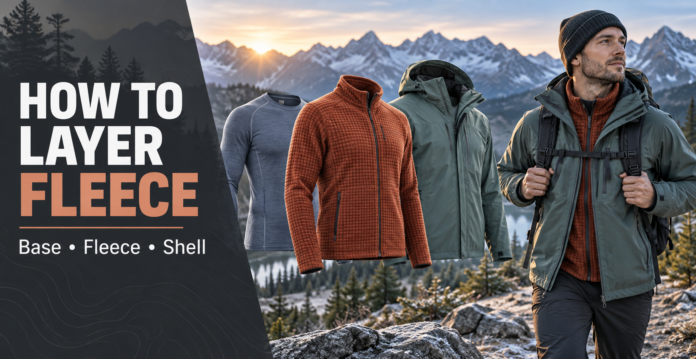
Learning how to layer fleece correctly means placing it between a moisture-managing base layer and a weather-protective outer shell. The base layer moves perspiration away from the skin, fleece traps warm air, and the shell blocks wind, rain, or snow. Each layer performs a separate job, creating a system that can adapt as activity and weather change.
Fleece weight depends on temperature and effort. Lightweight fleece suits fast movement, medium fleece covers varied conditions, and heavyweight fleece supports cold, low-intensity activities. Excessive insulation can cause sweating and leave the wearer colder after stopping.
Start With a Moisture-Wicking Base Layer
The base layer sits directly against the skin and manages perspiration before it reaches the insulating fleece. Synthetic performance fabrics and merino wool are common choices because they move or manage moisture without developing the heavy, cold feeling associated with wet cotton. The layer should fit close without limiting movement.
Avoid thick base garments that create unnecessary bulk beneath fleece. A thin long-sleeve top is often enough because its primary job is moisture control rather than insulation. Eco Jersey’s moisture guide explains how performance fibers keep the skin-contact surface more comfortable during continuous activity.
Add Fleece as the Insulating Mid-Layer
Fleece belongs over the base layer because its raised fibers trap pockets of warm air. It should fit close enough to retain heat but leave room for natural movement. If it hangs too loosely, warm air can escape through the neck, waist, and cuffs. If it is too tight, compression can reduce loft and comfort.
Pullovers offer simple coverage with fewer openings, while full-zip jackets provide better ventilation and easier removal. Quarter-zips sit between the two. Features such as high collars, thumbholes, adjustable hems, and stretch panels can improve warmth or mobility when matched to the intended activity.
Choose the Correct Fleece Weight
Fleece weight changes the balance between warmth, breathability, bulk, and packability:
- Lightweight fleece: Best for running, climbing, fast hiking, and mild conditions.
- Medium fleece: Suitable for general hiking, camping, travel, and everyday outdoor use.
- Heavy fleece: Useful for winter camps, cold rest periods, fishing, and low-output activities.
- Grid fleece: Releases heat efficiently during changing levels of effort.
- High-loft fleece: Provides stronger warmth while maintaining a relatively low material weight.
- Stretch fleece: Supports fitted garments designed for climbing, skiing, and active movement.
Do not select fleece by temperature alone. A hiker climbing uphill generates far more heat than someone sitting beside a tent in the same weather. The hiking guide explains how trail conditions, pace, exposure, and changing elevation influence the clothing needed throughout a route.
Finish With a Protective Outer Shell
Standard fleece breathes well but offers limited defense against strong wind and persistent rain. Moving air can pass through the knit and carry away the warmth trapped near the body. A shell placed over fleece reduces this heat loss and protects the insulating layer from external moisture.
Choose the shell according to conditions. A light windbreaker suits dry, breezy weather, while a waterproof-breathable jacket is more appropriate for rain or wet snow. The shell must provide enough space for fleece without compressing it or restricting the shoulders, elbows, and torso.
Adjust Layers During Activity
Good layering is an active process. Remove a layer or open zippers before heavy sweating begins. When approaching a cold ridge, rest stop, or campsite, add insulation before body temperature falls.
Store removed fleece where it remains dry and accessible. During mixed weather, keep the shell and warm layer near the top of the pack for quick access.
Layering Fleece for Hiking
For cool-weather hiking, begin with a thin wicking top and add lightweight or grid fleece. This combination handles steady movement without excessive heat. Carry a windproof or waterproof shell for exposed terrain and changing weather. On colder routes, keep an additional insulated jacket for long stops.
Lower-body layers also matter. Quick-drying trail trousers normally perform better than heavy cotton bottoms in wet conditions. Hiking pants with stretch and water resistance can help balance mobility and protection while the upper-body system manages perspiration, warmth, and wind.
Avoid Common Fleece Layering Mistakes
Wearing cotton beneath fleece is a frequent mistake during demanding activities because cotton absorbs sweat and dries slowly. Another problem is starting in every available layer, overheating within minutes, and soaking the clothing from inside. Begin slightly cool and allow movement to generate warmth.
Poor fit can also weaken the system. Tight shells compress fleece, while oversized openings release warm air. Brands working with a hiking maker should test complete outfits together so base layers, fleece garments, and shells provide compatible fit, mobility, ventilation, and coverage.
Conclusion
Understanding how to layer fleece starts with three clear roles: a base layer controls perspiration, fleece provides insulation, and a shell manages weather. The most comfortable system uses the lightest insulation that maintains warmth without causing excessive sweating.
Adjust layers before conditions become uncomfortable, and match fleece weight to both temperature and activity. A flexible system performs better than one thick outfit because each piece can be added, opened, or removed as the body and environment change.
FAQs
Should fleece be worn over a base layer?
Yes. A moisture-wicking base layer helps keep perspiration away from the skin while fleece traps warm air above it.
Can two fleece layers be worn together?
Yes, although two light layers may become bulky. Make sure the outer garment does not compress the fleece beneath it.
Should a rain jacket go over fleece?
Yes. A waterproof shell protects fleece from rain and reduces heat loss caused by wind.
Is fleece suitable as a base layer?
Thin microfleece can work close to the skin, but dedicated synthetic or merino base layers usually manage moisture more effectively.