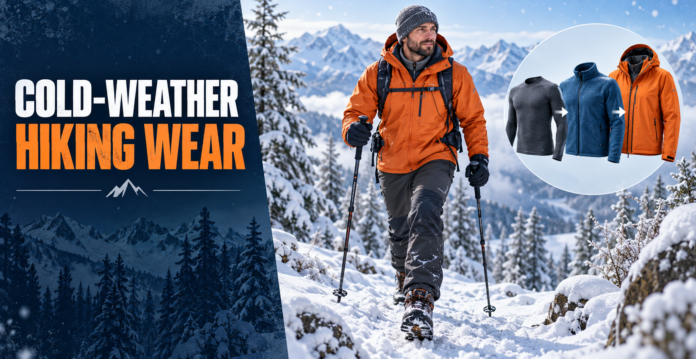
Hiking wear for cold weather should provide warmth without trapping sweat. Use adjustable layers: a moisture-managing base, insulating mid layer, and protective outer shell.
Hikers produce heat while climbing but cool during rests, descents, or exposed sections. One heavy coat cannot adapt easily. A flexible system can be adjusted before the body overheats or chills.
Begin With a Moisture-Managing Base Layer
The base layer sits against the skin and moves perspiration outward. Polyester, polypropylene, and merino wool are common choices. Synthetics dry quickly, while merino regulates temperature and controls odor. Avoid cotton because it absorbs moisture, dries slowly, and feels cold when activity decreases.
Choose a close, comfortable fit without restricted movement. Lightweight fabric suits intense hiking or mild days, while midweight material provides more warmth. Flat seams reduce rubbing beneath a backpack.
Add an Insulating Mid Layer
The mid layer traps warm air while allowing moisture to continue moving outward. Fleece is popular because it breathes well, dries relatively quickly, and remains comfortable during activity. Lightweight fleece suits steady climbing, while thicker fleece provides more insulation during colder or slower trips.
Synthetic insulation provides warmth with little bulk and works when damp. Down offers excellent warmth for its weight but needs moisture protection. The fleece guide explains how weight influences cold-weather performance.
Protect Yourself With an Outer Shell
The outer layer blocks wind and precipitation. A wind shell may be enough for dry, breezy conditions, while a waterproof-breathable shell is better for snow, sleet, or rain. The shell should fit over insulation without compressing it or limiting arm movement.
Useful details include an adjustable hood, sealed seams, protected zippers, and glove-compatible cuffs. A technical hiking jacket can combine weather protection with insulation, but its warmth and ventilation must match the route.
Dress the Lower Body Properly
Winter hiking trousers should block wind, allow movement, and manage light moisture. Stretch-woven softshell pants work well in cold, dry conditions because they balance breathability and protection. Long underwear adds warmth when temperatures fall, while waterproof overtrousers provide coverage during wet snow or heavy rain.
Avoid tight layers around the legs. Compression restricts movement and reduces warm air between garments. Articulated knees and a gusseted crotch support climbing.
Choose Essential Winter Accessories
Small exposed areas can lose heat quickly, so accessories are part of the clothing system rather than optional extras. A practical winter hiking kit includes:
- A warm hat that covers the ears
- Liner gloves with insulated outer gloves
- A neck gaiter or adjustable face covering
- Moisture-managing hiking socks
- Gaiters for snow and wet ground
- Spare gloves and socks kept dry
Layered gloves provide more control than one bulky pair. Liners support small tasks, while insulated shells block wind and snow. A neck gaiter adjusts easily as exposure changes.
Select Socks and Winter Footwear
Merino or synthetic socks manage moisture and provide insulation without remaining wet like cotton. Thickness should match the boot volume because socks that are too bulky can compress the foot and reduce circulation. Carrying a dry spare pair is valuable on longer or wetter routes.
Winter boots need traction, weather protection, and toe space. Insulation helps in severe cold, but excessive warmth causes sweating. Gaiters stop snow and water entering around the ankle.
Adjust Layers Before Conditions Become a Problem
Do not wait until clothing feels soaked or the body starts shivering. Remove a mid layer before a steep climb, open vents as heat builds, and add insulation before a long rest. Starting slightly cool is often better than beginning the hike already overdressed.
Moisture should move through every garment. A breathable base layer cannot work properly beneath a saturated or poorly ventilated shell. This layering guide shows how fleece can provide warmth without blocking moisture when combined with suitable inner and outer layers.
Consider Weather, Route, and Emergency Needs
Temperature alone does not describe winter conditions. Wind, precipitation, elevation, shade, daylight, and planned pace all influence clothing needs. A sheltered forest walk may require fewer layers than an exposed ridge at the same temperature.
Carry extra insulation for delays or unexpected weather. Keep emergency layers in waterproof packaging. Food, hydration, navigation, lighting, and communication equipment remain essential.
Developing Cold-Weather Hiking Apparel
Outdoor brands should match fabric weight, insulation, stretch, breathability, and weather protection to a clear activity level. Seams, fit, zippers, and ventilation can change how a finished garment performs, so testing complete samples matters more than evaluating fabric alone.
A specialist base maker can develop different weights using polyester, merino, or technical blends. Clear care instructions help customers preserve moisture management.
Conclusion
Hiking wear for cold weather works best as an adjustable system. Start with a moisture-managing base layer, add suitable insulation, and use an outer shell that matches the wind and precipitation. Complete the outfit with winter trousers, socks, boots, gloves, headwear, and gaiters.
Adjust clothing before sweating or chilling begins, and carry dry backup layers for emergencies. Matching every garment to the weather, route, pace, and exposure creates a safer and more comfortable winter hiking experience.
FAQs
What should I wear for winter hiking?
Wear a wicking base layer, insulating mid layer, weather-protective shell, winter trousers, warm socks, suitable boots, gloves, and headwear.
Is fleece good for winter hiking?
Yes. Fleece provides breathable insulation and dries relatively quickly, making it a practical mid layer for active winter use.
Should winter hiking clothes fit tightly?
Base layers may fit closely, but insulation and shells need enough space for movement and warm air without excessive bulk.
Why should hikers avoid cotton?
Cotton holds moisture and dries slowly. When activity decreases, wet cotton can increase discomfort and heat loss.