
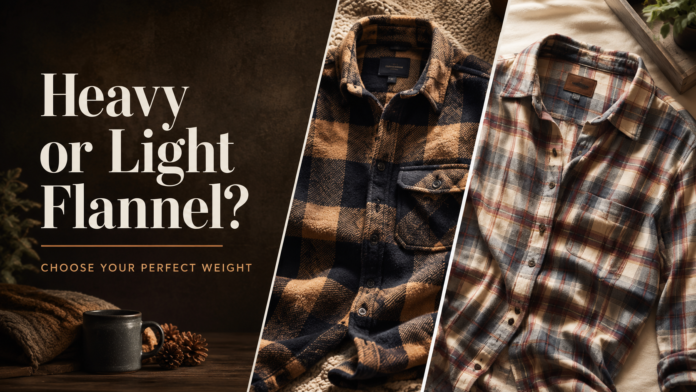
Flannel shirts have earned their place as a wardrobe staple for good reason. They’re comfortable, versatile, and built to last. But not all flannel is the same — and when it comes to heavyweight vs lightweight flannel shirts, the difference matters more than most people realize.
Whether you’re buying for yourself, stocking a retail store, or ordering in bulk for a brand, choosing the right weight affects everything from warmth and durability to style and wearability. Let’s break down exactly what separates the two and help you make the right call.
What Is the Difference Between Heavyweight and Lightweight Flannel Shirts?
The core difference between heavyweight vs lightweight flannel shirts comes down to fabric weight — measured in grams per square meter, or GSM. Lightweight flannel typically falls in the 100–170 GSM range, while heavyweight flannel sits above 200 GSM and can go significantly higher depending on the construction.
This weight difference affects how the shirt feels, how warm it keeps the wearer, how durable it is, and how it fits into different style contexts. Understanding this distinction is the first step toward choosing the right flannel for your specific needs.
Why It Matters — Key Benefits
Choosing between heavyweight and lightweight flannel delivers different advantages depending on your needs. Here’s why the choice matters:
- Right warmth for the right season — Heavyweight flannel excels in cold weather while lightweight flannel works year-round, including transitional seasons.
- Better comfort for the occasion — Lightweight flannel drapes softly for casual layering, while heavyweight flannel provides structured warmth for outdoor wear.
- Longer durability in heavy use — Heavyweight flannel withstands more rugged use and repeated washing without thinning or losing its texture.
- More versatile styling options — Lightweight flannel layers easily over t-shirts or under jackets, while heavyweight flannel often works as a standalone outer layer.
- Smarter retail stocking decisions — Understanding both options helps retailers stock the right weight for their customer base and seasonal demand.
- Better value for bulk buyers — Choosing the correct weight from the start avoids costly reorders caused by selecting the wrong flannel for the intended use.
- Broader appeal across markets — Offering both weights covers a wider customer base, from outdoor enthusiasts to casual fashion buyers.
The Case for Heavyweight Flannel Shirts
Heavyweight flannel shirts are built for warmth, durability, and serious cold weather performance. Their dense, tightly woven construction creates a thick layer of insulation that traps body heat effectively — making them the go-to choice for outdoor workers, hikers, and anyone spending extended time in cold environments.
Beyond warmth, heavyweight flannel develops character over time. The dense weave resists wear and maintains its texture through years of regular use and washing. For buyers looking for a shirt that genuinely ages well and gets better with time, heavyweight flannel delivers that experience. You can explore a wide range of heavyweight options across our full flannel shirts collection to find the right weight for your needs.
The Case for Lightweight Flannel Shirts
Lightweight flannel shirts offer something different — versatility, comfort, and year-round wearability. Their softer, more fluid construction drapes naturally against the body, making them ideal for layering over a base layer or under a heavier jacket without adding bulk or restricting movement.
For warmer climates or transitional seasons, lightweight flannel keeps wearers comfortable without overheating. It also tends to be easier to care for and quicker to dry than its heavyweight counterpart. Lightweight flannel is particularly popular in fashion-forward contexts, where the soft texture and relaxed fit align well with current casual and streetwear aesthetics found across our fashion wear collection.
How Heavyweight vs Lightweight Flannel Shirts Compare for Different Buyers
The heavyweight vs lightweight flannel shirts decision looks different depending on who’s buying. For men seeking a rugged, outdoor-ready shirt that doubles as a light jacket in cold weather, heavyweight flannel is the clear winner. Our flannel shirts for men range offers options across both weights to suit different preferences and climates.
For women who prefer a softer, more tailored flannel that works across seasons and styling contexts, lightweight flannel tends to be the more versatile choice. Our flannel shirts for women collection covers both weights with cuts designed for a flattering, comfortable fit. For younger wearers, lightweight flannel is generally the more practical choice — softer against the skin and easier to move in. Our kids flannel shirt range focuses on comfort and durability for active everyday wear.
Standards of Quality Across Both Flannel Weights
Quality matters equally across heavyweight vs lightweight flannel shirts — just in different ways. In heavyweight flannel, quality is measured by the density and evenness of the weave, the softness of the brushed surface, and the ability to maintain warmth and structure through years of regular use and washing.
In lightweight flannel, quality shows in how well the fabric drapes, how consistently it maintains its color and texture after washing, and how comfortable it feels against the skin over long periods of wear. Across both weights, stitching quality, button construction, and collar finishing are equally important markers of a well-made shirt that delivers genuine value to the wearer.
Who Should Choose Heavyweight Flannel?
Heavyweight flannel is the right choice for buyers who need serious warmth and durability from their shirt. Outdoor workers, hikers, campers, and anyone living in genuinely cold climates will get the most value from a dense, well-constructed heavyweight flannel. It’s also the preferred choice for buyers who want a shirt with longevity — one that develops a worn-in, characterful look over years of use rather than deteriorating quickly.
Retailers serving outdoor, workwear, or rugged lifestyle markets should prioritize stocking heavyweight flannel to meet the demands of their core customer base. Brands targeting the outdoor and adventure market will find heavyweight flannel a natural fit for their product line.
Who Should Choose Lightweight Flannel?
Lightweight flannel suits buyers who value versatility and year-round wearability above maximum warmth. If the shirt needs to work across multiple seasons, layer easily under other pieces, or suit a more fashion-conscious aesthetic, lightweight flannel is the smarter choice.
Retailers serving casual lifestyle, streetwear, or fashion-forward markets will find lightweight flannel resonates strongly with their customers. It’s also the more practical choice for warmer regions where heavy flannel would be uncomfortable for most of the year. Whether you’re shopping for yourself or sourcing for a brand, our full flannel shirts collection covers both weights across a wide range of colors, patterns, and styles.
Conclusion
The heavyweight vs lightweight flannel shirts debate doesn’t have a single right answer — it depends entirely on the wearer’s needs, climate, and intended use. Heavyweight flannel wins on warmth and durability. Lightweight flannel wins on versatility and year-round comfort.
At Eco Jersey, we manufacture both weights to the highest standards — giving individuals, retailers, and brands the flexibility to choose exactly what their customers need. Ready to explore your options? Browse our full flannel shirts collection and get in touch with our team today.
FAQs
What GSM is considered heavyweight flannel?
Heavyweight flannel generally starts at around 200 GSM and above. Shirts in this range offer significantly more warmth and durability than lightweight options, making them suitable for cold weather and outdoor use.
Can lightweight flannel shirts be worn in winter?
Yes, but with appropriate layering. Lightweight flannel works well in winter when worn over a thermal base layer and under a heavier jacket or coat. On its own, it’s better suited to mild or transitional weather conditions.
Which flannel weight is better for children?
Lightweight flannel is generally the better choice for children. It’s softer against the skin, easier to move in, and more comfortable for active everyday wear. Our kids flannel shirt range focuses on lightweight, durable construction for exactly this reason.
Does heavyweight flannel shrink more than lightweight flannel after washing?
Both weights can shrink if washed incorrectly. Following care label instructions — typically washing in cold water and avoiding high heat drying — minimizes shrinkage across both heavyweight and lightweight flannel shirts.


