
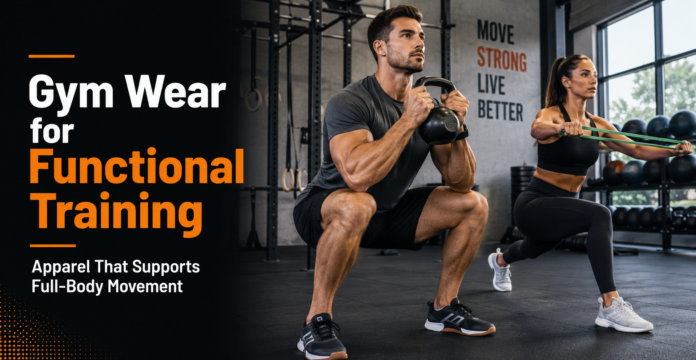
Functional training is not only about lifting weights or doing hard exercises. It is about moving your whole body in a strong, natural, and controlled way. You may squat, jump, push, pull, bend, twist, lunge, climb, or run in one workout. That is why your clothing matters more than many people think. The right gym wear for functional training should help your body move freely without pulling, slipping, overheating, or feeling heavy. It should support movement from your shoulders to your legs. It should also feel comfortable when your workout changes quickly from strength training to cardio. Good gym clothing does not make the workout easier, but it removes small problems that can distract you. If your shirt sticks, your shorts ride up, or your waistband folds during squats, your focus breaks. The best gym wear for functional training keeps you comfortable, covered, and ready for full-body movement.
Why Functional Training Needs Better Clothing
Functional training is different from simple machine workouts because your body moves in many directions. On a machine, your movement is usually fixed. In functional training, you may move forward, backward, sideways, and even rotate your body in one session. This means your clothes must stretch, recover, and stay in place. Loose clothing can get in the way during burpees or kettlebell swings. Very tight clothing can limit your range of motion. Heavy cotton can hold sweat and feel uncomfortable after a few minutes. That is why gym wear for functional training should balance comfort, stretch, breathability, and support. It should not feel like fashion-only clothing. It should be made for real exercise. A good outfit lets your knees bend deeply, your arms reach fully, and your core move naturally. When clothing works with the body instead of against it, training feels smoother and safer.
Gym Wear for Functional Training: The Core Difference
Gym wear for functional training is designed for movement first. It is not just about looking sporty. It is about helping the body perform during mixed exercises. A normal T-shirt may feel fine for walking, but it may become heavy when you sweat. Basic shorts may work for casual wear, but they may not support lunges or box jumps. Functional training apparel often uses stretch fabric, moisture control, strong seams, and better fit zones. These features help during repeated bending, lifting, jumping, and reaching. For example, a good training top should allow shoulder movement without pulling at the chest or back. A good bottom should allow squats without becoming tight at the thighs. This is why many athletes look for purpose-built activewear collections when choosing clothes for workouts that include both strength and conditioning. Gym wear for functional training gives your body freedom while still keeping your outfit secure.
Choosing the Right Training Tops
The top you wear during functional training should feel light, breathable, and easy to move in. Since many full-body workouts include push-ups, rows, presses, planks, and overhead movements, the shoulders and upper back need freedom. A top that is too stiff can pull when your arms go overhead. A top that is too loose may fall forward during mountain climbers or push-ups. Gym wear for functional training should use fabric that moves with the body and dries faster than regular cotton. Tank tops are useful when you want extra airflow and better arm movement, especially for high-sweat sessions. A well-made gym tank can help you stay cooler during circuits, lifting, and bodyweight training. For example, gym tank tops are a practical choice when your workout includes upper-body movement and fast transitions. The goal is simple: your top should stay comfortable from warm-up to finish.
Choosing Bottoms for Squats, Lunges, and Jumps
Bottoms are one of the most important parts of gym wear for functional training because your legs do a lot of work. Squats, lunges, step-ups, running drills, deadlifts, and jumps all need strong lower-body movement. If your joggers are too tight, your knees and hips cannot move freely. If your shorts are too loose, they may shift during floor exercises. If the waistband is weak, you may keep adjusting it during the workout. The best training bottoms should have stretch, a secure waistband, and enough room at the hips and thighs. They should also return to shape after movement. Tapered joggers can be useful for cooler gyms or training days when you want coverage without extra fabric around the ankles. For men, tapered joggers can support training when the fit allows movement without looking baggy. Good bottoms should let you squat deep, jump safely, and move with confidence.
When Compression Clothing Helps
Compression clothing can be useful in functional training, but it should not feel painful or too tight. Compression shirts and leggings are made to fit close to the body. They can help reduce fabric movement, support muscles lightly, and make layering easier. Some people like compression because it feels secure during high-speed workouts. Others prefer looser stretch clothing because it feels more relaxed. Both choices can work depending on the workout and personal comfort. Gym wear for functional training may include compression items when the session has running, jumping, sled pushes, battle ropes, or fast circuits. A compression top can also work under a hoodie or training shirt when you want support without extra bulk. For example, a compression shirt for women may be useful for workouts that need a close fit and upper-body support. The key is to choose compression that supports movement instead of limiting breathing or flexibility.
Fabric Matters More Than Style
The fabric of your workout clothes decides how they feel during training. A stylish outfit is not enough if it traps heat, holds sweat, or becomes heavy. Gym wear for functional training should use fabrics that are breathable, flexible, and durable. Polyester blends are common because they dry faster than cotton. Spandex or elastane is often added because it gives stretch. Nylon can feel smooth and strong, especially in compression wear. Cotton may feel soft at first, but it can absorb sweat and stay wet longer. During full-body workouts, wet clothing can cause rubbing and discomfort. Fabric should also be strong enough to handle repeated washing because gym clothes are used often. Another important point is recovery. A fabric may stretch during squats, but it should return to shape after the movement. If it becomes loose quickly, it will not support training well. Good fabric helps gym wear for functional training last longer and feel better.
Fit Should Support Movement, Not Fight It
Fit is the difference between clothing that helps you train and clothing that distracts you. Gym wear for functional training should not be too tight or too loose. If it is too tight, it can limit shoulder, hip, and knee movement. If it is too loose, it can move around too much during jumps, planks, or burpees. A good fit gives room where your body bends and support where clothing must stay in place. The shoulder area should allow reaching and pressing. The chest should not feel squeezed. The waistband should feel secure but not painful. Shorts should not ride up during lunges. Leggings should not become see-through during squats. Joggers should not bunch around the ankle. A seven-class student can understand it like this: your clothes should move when you move and stop when you stop. That simple rule makes gym wear for functional training more comfortable and useful.
Key Features to Look For
When buying gym wear for functional training, check these simple features before you choose:
- Stretch fabric that allows squats, lunges, jumps, and overhead movement.
- Breathable material that helps heat escape during hard workouts.
- Moisture-wicking fabric that moves sweat away from the skin.
- Strong seams that do not rub, tear, or feel rough during movement.
- Secure waistbands that stay in place during bending and jumping.
- Lightweight construction that does not feel heavy after sweating.
- Good coverage so you can move confidently during floor exercises.
- Shape recovery so the clothing does not become loose after stretching.
- Comfortable compression if you want a closer and more supportive fit.
- Easy-care fabric that can handle regular washing after gym sessions.
Common Mistakes When Choosing Gym Wear
One common mistake is buying gym clothes only because they look good. Style is nice, but performance matters more during functional training. Another mistake is choosing cotton for every workout. Cotton can be comfortable for light activity, but it may not be best for sweaty circuits. Some people also buy clothing that is too tight because they think tighter means better support. In reality, clothing that limits breathing or movement can reduce comfort. Another mistake is ignoring seams. Rough seams can cause rubbing during repeated exercises. People also forget to test movement before buying. You should bend, squat, raise your arms, and move around to see if the outfit stays comfortable. Gym wear for functional training should be tested like workout gear, not just checked in a mirror. If your clothes feel uncomfortable before training starts, they will usually feel worse after sweat and movement.
Stretch Apparel vs Compression Apparel
Stretch apparel and compression apparel are not the same, but both can be useful. Stretch apparel focuses on freedom of movement. It expands when your body moves and feels more relaxed. Compression apparel fits closer and gives a supported feeling. Stretch clothing may be better for people who want comfort, airflow, and easier movement. Compression clothing may be better for people who want a secure fit during fast workouts. Gym wear for functional training often uses both ideas together. A training shirt may stretch without being compression. Leggings may be compression but still flexible. Shorts may have stretch fabric and a compression liner inside. The better choice depends on your workout. For yoga-style mobility, stretch wear may feel better. For sprint drills or high-intensity circuits, compression may feel more secure. The best gym wear for functional training does not force one choice. It gives you the right balance for your body and training style.
Conclusion
Gym wear for functional training should help your body move naturally during full-body workouts. It should support squats, lunges, jumps, lifting, pushing, pulling, and floor exercises without causing discomfort. The best clothing is breathable, flexible, secure, lightweight, and strong enough for regular use. Stretch apparel is great for freedom, while compression apparel is useful when you want a closer and more supported feel. You do not need the most expensive outfit, but you do need clothing that works with your movement. Choose tops that allow shoulder motion, bottoms that support deep bends, and fabrics that manage sweat well. When your clothes fit properly, you can focus more on your workout and less on adjusting your outfit. In the end, good gym wear for functional training makes training feel cleaner, smoother, and more comfortable from the first rep to the last.
FAQs
What is the best gym wear for functional training?
The best gym wear for functional training is clothing that allows full-body movement. It should be stretchy, breathable, lightweight, and secure. A good outfit should let you squat, jump, lift, bend, and stretch without pulling or slipping. Training tops, joggers, shorts, leggings, and compression shirts can all work if they fit well and support movement.
Is compression wear better than regular gym wear?
Compression wear is not always better. It depends on your workout and comfort. Compression clothing gives a close and secure fit, which some people like during fast movements. Regular stretch gym wear may feel more relaxed and breathable. For functional training, both can work well when the fabric is flexible and comfortable.
Should gym wear for functional training be tight or loose?
Gym wear for functional training should be fitted but not restrictive. It should stay in place while still allowing free movement. Clothing that is too tight can limit your range of motion. Clothing that is too loose can shift during jumps, planks, and floor exercises. A balanced fit is usually best.
What fabric is best for functional training clothes?
The best fabrics for functional training are usually polyester, nylon, spandex, or blends of these materials. These fabrics can offer stretch, breathability, and faster drying. Cotton may feel soft, but it can hold sweat and become heavy. For hard workouts, moisture-wicking stretch fabrics are usually more comfortable.


