Not all leather gloves are cut from the same part of the hide, and the Grain vs Split Leather Gloves distinction is one of the most important, if often overlooked, factors in how a glove actually performs. These two grades come from different layers of the same hide, and that difference has a direct impact on durability, feel, and price, regardless of how similar two gloves might look on a shelf.
Understanding what separates grain from split leather makes it much easier to judge whether a glove is built for serious daily use or a lighter, more budget-conscious purpose. In this guide, we’ll break down how these two leather grades differ, and help you choose the right one for your needs and expectations.
What Is Grain Leather?
Grain leather comes from the top layer of the hide, retaining the natural, outermost surface complete with its original fiber density and texture. Full-grain leather is left essentially unaltered, preserving the tightest, strongest fiber structure the hide has to offer, while top-grain leather is lightly sanded for a smoother, more uniform finish that still retains most of that underlying strength.
Because this top layer contains the hide’s densest, most tightly packed fibers, grain leather gloves offer superior strength, flexibility, and resistance to tearing compared to leather taken from lower layers. This is why grain leather is generally considered the higher-quality, more durable option in glove construction, particularly for gloves expected to last years rather than months.
What Is Split Leather?
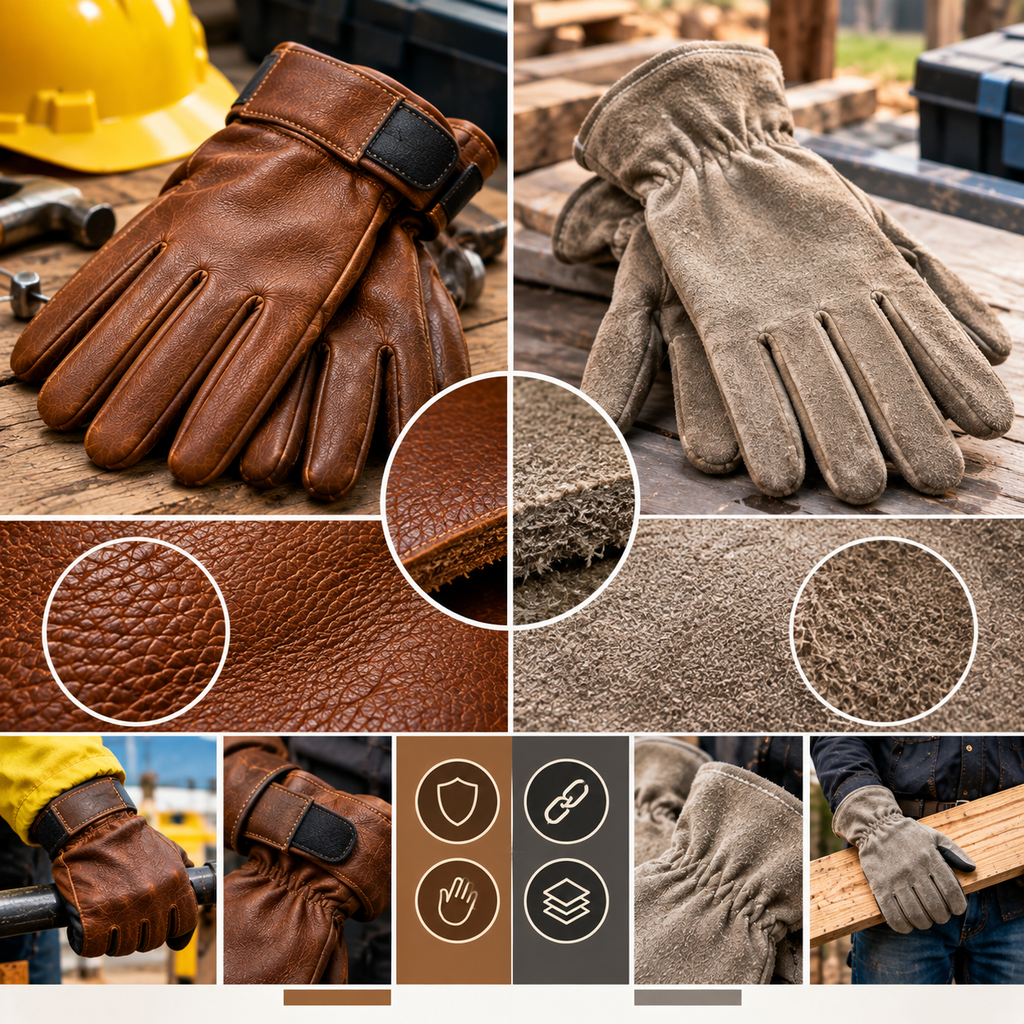
Split leather comes from the lower layers of the hide, created after the top grain has been separated away during processing. Because these layers lack the tight, natural surface fibers found in grain leather, split leather is inherently more porous, less durable, and more prone to stretching and absorbing moisture over time.
To compensate for this, split leather is frequently finished with an artificial grain pattern embossed onto a polyurethane coating, giving it a similar appearance to grain leather at a significantly lower cost. Suede is also a common finish for split leather, since the exposed fibrous underside naturally creates a soft, napped texture that some buyers specifically prefer for its look and feel.
Grain vs Split Leather Gloves: Durability Compared
Durability is where the Grain vs Split Leather Gloves comparison becomes most significant for buyers. Grain leather’s dense fiber structure gives it substantially better resistance to tearing, abrasion, and general wear, making it the preferred choice for gloves expected to hold up to years of regular use in demanding conditions.
Split leather, while more affordable, generally wears out faster under the same conditions, since its looser fiber structure and any applied coating are more vulnerable to cracking and peeling over time, particularly at stress points like the palm and fingers. For occasional or lower-demand use, this shorter lifespan may be an acceptable trade-off for the lower price point, especially for gloves that won’t see frequent, heavy handling.
Cost Differences and What Drives Them
Split leather is significantly cheaper to produce than grain leather, largely because it’s a byproduct of the grain-splitting process rather than requiring a separate, higher-quality hide. This cost advantage is passed on to buyers, making split leather gloves an accessible option for budget-conscious purchases or high-volume orders where cost matters more than long-term durability, such as disposable or seasonal work programs.
Grain leather’s higher price reflects both the quality of the hide itself and the more labor-intensive process of preparing it without compromising the natural fiber structure. For gloves that will see frequent, demanding use, the higher upfront cost of grain leather is often justified by a significantly longer usable lifespan, which can actually reduce total cost over time despite the higher initial price.
Feel and Flexibility
Grain leather generally offers a more natural, supple feel that improves with wear as the hide softens and molds to the hand. This quality is part of why grain leather gloves are often preferred for tasks requiring both durability and a comfortable, broken-in fit over time, since the material continues to improve rather than degrade with regular use.
Split leather’s feel depends heavily on its finish. A PU-coated split leather can feel stiff and less breathable due to the synthetic coating, while a suede-finished split offers a soft, textured feel but with reduced resistance to moisture and everyday wear compared to true grain leather, which is worth keeping in mind for anyone prioritizing comfort alongside cost.
How to Tell Grain and Split Leather Apart
Identifying which grade a glove uses isn’t always obvious from a listing alone, but a few checks help. Grain leather typically shows subtle natural variation, small imperfections, and a texture that feels slightly irregular rather than perfectly uniform, since it hasn’t been artificially patterned. Split leather with an embossed finish often has a suspiciously consistent, repeating grain pattern once examined closely.
Checking product descriptions for terms like “full-grain,” “top-grain,” “genuine split,” or “bonded leather” also helps clarify what’s actually being sold, since manufacturers are generally required to disclose this information even when marketing language doesn’t emphasize it.
Grain vs Split Leather Gloves at a Glance
Here’s a quick summary of how these two leather grades compare on the qualities that matter most:
- DurabilityGrain leather resists tearing and abrasion significantly better
- Cost:Split leather is considerably more affordable to produce and purchase
- Feel:Grain leather offers a natural, supple feel that improves with wear
- Finish:Split leather is often coated or embossed to mimic grain leather’s appearance
- Best for:Grain suits demanding daily use; split suits budget or occasional use
Choosing the Right Grade for Your Needs
For gloves expected to see regular, demanding use, grain leather options like black leather gloves offer the durability and refined feel that come from higher-quality hide processing, making them a sound investment for anyone who wears gloves daily. For lower-cost or higher-volume needs where budget takes priority over long-term durability, split leather remains a practical, accessible alternative worth considering.
For a broader look at how different hide types and grades perform across various glove categories, our guide on the best leather for gloves covers additional factors worth considering alongside grain versus split, including how animal source interacts with grade. Browsing our full leather gloves range can also help you compare specific constructions before making a final decision.
The Role of Custom Manufacturing in Leather Gloves

As demand grows for gloves matched to specific budgets and durability requirements, more businesses are turning to custom manufacturers who understand how grain and split leather perform differently, rather than relying on generic sourcing that doesn’t specify which grade is actually being used in the finished product.
At ECO-JERSEY, we manufacture and supply custom apparel including leather gloves and accessories to businesses around the world. Whether a company needs the long-term durability of grain leather or a more budget-conscious split leather alternative, our team works directly with clients to produce gloves that match their exact specifications, down to the exact grade and finish.
Conclusion
Understanding the Grain vs Split Leather Gloves distinction makes it much easier to judge whether a glove is actually built for long-term durability or simply designed to look the part at a lower price. Grain leather offers superior strength, feel, and lifespan, while split leather provides a more affordable alternative suited to lighter or occasional use. Knowing which grade you’re actually buying is the key to setting realistic expectations for how long a pair of gloves will last.
For businesses looking to source reliable leather gloves whether for demanding daily use or cost-conscious programs working with an experienced manufacturer like ECO-JERSEY ensures every pair is built with the right grade for the job.
FAQs
What is the difference between grain and split leather gloves?
Grain leather comes from the top layer of the hide and retains its natural, dense fiber structure, while split leather comes from lower layers and is generally less durable and more porous.
Which is more durable, grain or split leather?
Grain leather is significantly more durable than split leather, thanks to its tighter, more natural fiber structure, which resists tearing and abrasion far better.
Why is split leather cheaper than grain leather?
Split leather is cheaper because it’s a byproduct of the grain-splitting process rather than a separately sourced, higher-quality hide, making it less costly to produce.
Can split leather look like grain leather?
Yes, split leather is often finished with an embossed polyurethane coating designed to mimic grain leather’s appearance, though it doesn’t match its underlying durability.