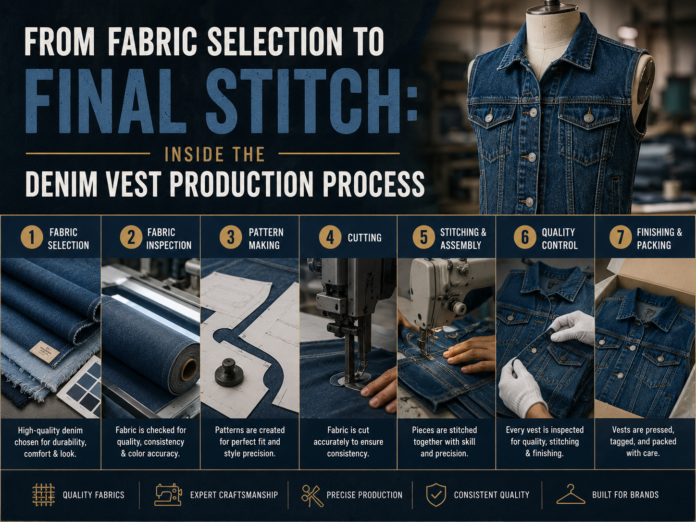
Every great denim vest starts long before a single stitch is placed. Behind every finished product sits a carefully managed denim vest production process — one that determines how the vest looks, feels, performs, and holds up over years of wear. For brands serious about building quality denim collections, understanding what happens inside production gives you the knowledge to ask the right questions, catch potential problems early, and make confident manufacturing decisions.
Fabric Selection
Everything begins with fabric. Denim comes in a wide range of weights, compositions, and constructions — and the choice made here shapes every decision that follows.
For denim vests, fabric weight matters significantly. Lightweight denim — 6 to 8 oz — produces a softer, more relaxed vest suited to casual and layering styles. Mid-weight denim — 10 to 12 oz — delivers the structure most vest styles require. Heavyweight denim — 12 to 14 oz and above — suits workwear-inspired and heavily constructed styles that need serious durability.
Fabric composition matters equally. Pure cotton denim offers authentic feel and excellent wash response. Cotton-elastane blends add stretch for improved comfort. Recycled denim blends serve brands with sustainability commitments — a growing priority across the denim apparel industry right now.
Pattern Making and Grading
Once fabric is confirmed, pattern makers develop the technical blueprint for the vest. Every panel, seam, pocket placement, and armhole curve gets mapped precisely at this stage. Accuracy here determines how the finished vest fits across all size ranges.
Pattern grading then scales the base pattern up and down across your full size run — ensuring proportions remain correct and consistent whether the vest is an XS or a 3XL. Poor grading at this stage creates fit problems across sizes that are expensive and time-consuming to fix in bulk production.
Sampling
Before bulk production begins, manufacturers produce samples for brand approval. The first sample — called a proto sample — tests the basic construction, fit, and proportions. It rarely looks exactly like the finished product but confirms the fundamental design direction.
A fit sample follows — refined based on brand feedback and worn to test real-world movement and comfort. Finally, a pre-production sample matches bulk production materials exactly. This is the sample that signs off the entire production run.
A professional denim vest manufacturer manages this sampling process transparently — communicating clearly at each stage and incorporating brand feedback accurately before moving forward.
Cutting
Approved samples move production into cutting. Fabric is spread across long cutting tables in multiple layers — maximizing efficiency while minimizing fabric waste. Computerized cutting systems ensure precise panel shapes across every layer simultaneously.
Accurate cutting is critical for denim specifically. Denim has a natural grain direction that affects how panels behave through washing and wearing. Cutting off-grain creates twisting seams and distorted fits that no amount of finishing can correct after the fact.
Construction and Stitching
Cut panels move to the sewing floor where specialized machines assemble the vest. Denim construction requires heavy-duty chain stitch and lock stitch machines capable of handling multiple fabric layers without skipping or breaking.
Key construction details that define vest quality include:
- Double-needle stitching on stress points — armholes, side seams, shoulder seams
- Bartack reinforcement at pocket corners and button placements
- Clean internal seam finishing that prevents fraying over time
- Accurate pocket placement and consistent topstitching throughout
Brands building streetwear denim collections often specify custom stitch colors, contrast thread, and decorative stitching details at this stage — turning construction details into deliberate brand signatures.
Washing and Finishing
Washing transforms raw constructed denim into the finished aesthetic your brand intends. This stage dramatically changes how the vest looks and feels — and it’s where denim manufacturing truly becomes an art form.
Common washing techniques include:
- Stone washing: creates soft texture and natural fading through tumbling with pumice stones
- Acid washing: produces high-contrast, bleached surface patterns
- Enzyme washing: softens the fabric surface while retaining color depth
- Raw or dry finish: preserves the original dark indigo for a clean, structured look
Distressing — manual or laser-guided — adds rips, abrasion, and worn edges after washing. The placement and intensity of distressing defines the vest’s character and market positioning. Private label denim brands often develop signature distressing maps that become recognizable brand identifiers across their entire collection.
Hardware Application
Buttons, rivets, snaps, and any decorative metal hardware get applied after washing — protecting the hardware finish from chemical and mechanical damage during the wash process. Hardware quality matters enormously at this stage. Cheap rivets corrode. Weak buttons snap under pressure. Quality hardware holds firmly and ages gracefully alongside the denim itself.
Brands expanding their collections into denim jackets and denim jeans benefit from maintaining consistent hardware finishes across all products — creating a cohesive brand identity that customers recognize across every piece in the range.
Quality Control and Final Inspection
Every finished vest passes through quality control before packaging. Inspectors check measurement accuracy against approved specifications, stitching consistency, wash uniformity, hardware security, and overall presentation.
Any vest falling outside approved tolerances gets flagged for correction or rejection. Professional manufacturers maintain inspection records and share quality reports with brands — providing full visibility into what leaves their facility.
Labeling, Packaging, and Dispatch
Approved vests receive brand labels, hang tags, size stickers, and packaging according to brand specifications. For brands selling across multiple retail channels, proper labeling and packaging compliance at this stage prevents costly rejections from retail buyers and e-commerce fulfillment centers.
Finished products then move to dispatch — either shipped directly to the brand’s warehouse or fulfilled according to agreed logistics terms.
Conclusion
The denim vest production process is more detailed and demanding than most brands initially realize. From fabric selection through pattern making, sampling, cutting, construction, washing, hardware, quality control, and final packaging — every stage requires expertise, precision, and clear communication between brand and manufacturer. Understanding this process makes you a smarter buyer, a better creative director, and ultimately helps you build denim vest products that your customers genuinely love wearing.
FAQs
How many sample rounds should I expect before bulk production?
Most brands go through two to three sample rounds — proto, fit, and pre-production samples — before approving bulk production with confidence.
Does washing affect the final measurements of denim vests?
Yes. Denim shrinks during washing — typically 3% to 8% depending on fabric composition. Professional manufacturers account for shrinkage in pattern measurements before cutting.
Can I specify custom distressing placement for my denim vest collection?
Absolutely. Private label brands regularly develop custom distressing maps that manufacturers follow precisely across every piece in the bulk production run.