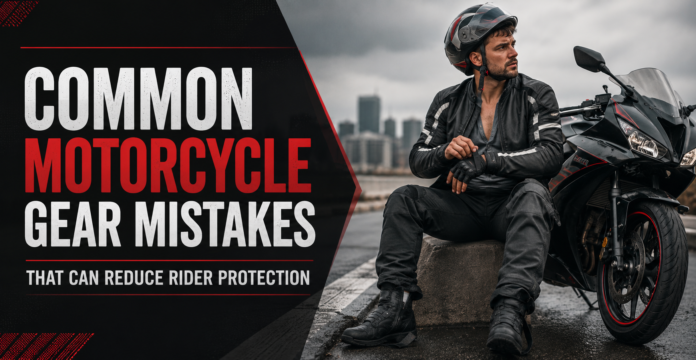
Motorcycle gear is designed to create a protective layer between a rider and the road, weather, flying debris, and other hazards. However, simply owning a helmet, jacket, gloves, pants, and boots does not always mean a rider is fully protected. Many riders make small gear choices that can reduce the protection their equipment is meant to provide. Some wear clothing that is too loose, some choose fashion items instead of real riding gear, and others keep using damaged equipment for too long. These common motorcycle gear mistakes may not look serious during a normal ride, but they can become important during a fall or unexpected road situation.
Good motorcycle gear should fit correctly, stay in place, allow comfortable movement, and provide protection in the areas most likely to contact the road. Riders also need to think about weather, riding style, distance, and road conditions. Avoiding common motorcycle gear mistakes is not about buying the most expensive equipment. It is about understanding how each piece of gear works and using it properly every time you ride.
Common Motorcycle Gear Mistakes Riders Often Make
One of the biggest problems is believing that any motorcycle-looking clothing provides proper riding protection. A normal leather jacket, fashion glove, pair of jeans, or work boot may look suitable on a motorcycle, but appearance alone does not prove that the item was designed for riding. Protective motorcycle equipment is normally made with stronger materials, better seam construction, impact protection, secure closures, and designs that help the gear stay in place. Another one of the common motorcycle gear mistakes is wearing only selected protective items. For example, a rider may wear a good helmet and jacket but use ordinary shoes and thin gloves.
Protection works better as a complete system because different parts of the body face different risks. Hands may touch the road during a fall, ankles can be exposed to twisting forces, and knees or elbows may receive direct impacts. Riders should therefore think about their full riding setup instead of depending on one or two strong pieces of equipment.
Wearing Motorcycle Gear That Does Not Fit Properly
Poor fit is one of the most common motorcycle gear mistakes because protective equipment cannot work as intended when it moves too much on the body. A jacket that is extremely loose may allow elbow or shoulder protectors to shift away from the areas they are meant to cover. Pants that are too large may let knee protection move down or sideways. Gear that is too tight creates a different problem. It can limit movement, make riding uncomfortable, reduce airflow, and make it harder to control the motorcycle naturally. Riders should look for equipment that feels secure without stopping normal movement.
Sleeves should remain in the correct position when the arms are stretched toward the handlebars, and riding pants should stay comfortable when the knees are bent. Gloves should fit the fingers without leaving a large empty space at the tips. Correct fit also becomes more important on longer rides because small pressure points can become uncomfortable after several hours. Avoiding this mistake helps protective panels remain closer to their intended positions while also improving riding comfort.
Choosing Style Instead of Real Protective Equipment
Motorcycle clothing comes in many styles, but visual appearance should not be the first factor when protection is the main goal. One of the most serious common motorcycle gear mistakes is choosing equipment mainly because it matches a motorcycle or looks fashionable. A useful way to compare options is to first understand the different types of motorcycle gear available for the head, upper body, lower body, hands, and feet before focusing on colors or design. Real riding equipment may use abrasion-resistant fabrics, reinforced areas, protective inserts, secure zippers, wrist closures, ankle support, or stronger stitching.
These features may not always be easy to see from a product photo, which is why riders should pay attention to construction and intended use. Style still matters because riders are more likely to wear equipment they actually like, but it should come after fit, protection, and comfort. The best-looking riding jacket is not very useful if the protection moves out of position or the material cannot handle the demands of regular motorcycle use.
Using the Wrong Gloves for the Type of Riding
Hands are often overlooked even though they are one of the first body parts many people naturally place forward during a fall. Wearing thin casual gloves, loose gloves, or gloves made for another activity can become one of the common motorcycle gear mistakes that reduces hand protection. Motorcycle gloves should allow the rider to operate the throttle, brake, clutch, switches, and other controls without losing feeling. At the same time, they should fit securely enough to stay on the hands. Different riding conditions may require different designs. For example, off-road riders often need flexibility, grip, and ventilation, while riders comparing dirt bike gloves may also look for reinforced palms and protection around areas that frequently contact branches, stones, dirt, or controls.
Street riders may prefer additional knuckle protection and stronger abrasion resistance. A glove should also close securely around the wrist because a poorly secured glove may move during a fall. Riders should choose gloves according to their actual riding environment rather than using one pair for every condition without considering its limitations.
Ignoring Cold Weather When Choosing Riding Gear
Cold weather can affect more than comfort. It can make fingers stiff, reduce concentration, and make normal control movements feel slower or more difficult. One of the common motorcycle gear mistakes during winter is simply adding ordinary clothing underneath summer gear without thinking about wind protection, moisture, flexibility, and hand warmth. Several thin layers may sometimes work better than one extremely thick layer because riders still need to move their arms, legs, hands, and upper body comfortably. Hands require special attention because cold fingers can make operating the brake, clutch, and switches more difficult. Riders who regularly travel in low temperatures may consider weather-specific equipment such as insulated gloves or heated gloves for motorbike riding when suitable for their riding conditions.
Continuing to Use Worn, Damaged, or Poorly Maintained Gear
Motorcycle gear does not remain in perfect condition forever. Another of the common motorcycle gear mistakes is keeping equipment in service after important parts become damaged. Riders should regularly look at seams, fasteners, zippers, hook-and-loop closures, straps, armor pockets, glove palms, boot soles, and other areas that receive regular stress. A small cosmetic mark may not affect performance, but torn seams, broken closures, loose armor pockets, badly worn material, or damaged protective parts deserve attention. Equipment involved in a crash may also need closer inspection because some damage is not immediately obvious.
Riders should follow the manufacturer’s guidance for inspection, care, and replacement when it is available. Cleaning is important as well because dirt, sweat, moisture, and improper storage may shorten the useful life of some materials. Gear should normally be allowed to dry properly before storage, especially after rain or a long ride. Looking after motorcycle equipment does not guarantee that it will prevent every injury, but it helps riders avoid using gear that can no longer perform as intended.
Wearing the Same Gear in Every Weather Condition
Using exactly the same equipment in hot sun, heavy rain, cold wind, and mild weather can create unnecessary problems. Weather-related common motorcycle gear mistakes often happen because riders focus only on protection from falling and forget that comfort can influence concentration and control. In very hot weather, extremely heavy or poorly ventilated gear may cause excessive discomfort and tiredness. Riders may then feel tempted to open closures or remove protective clothing. In rain, clothing that quickly becomes soaked can become heavy, cold, and distracting.
Cold wind can also pass through highly ventilated summer gear and lower body temperature during longer rides. A more practical approach is to choose riding equipment that matches the expected conditions while maintaining appropriate protective features. Ventilation panels, removable liners, waterproof layers, insulated sections, breathable materials, and adjustable openings can make motorcycle clothing more useful in different seasons. Riders should also check the forecast before longer trips. Planning for changing weather reduces the need to make poor clothing decisions once the ride has already started.
Quick Mistakes Riders Should Check Before Every Ride
Some common motorcycle gear mistakes can be noticed in less than a minute before leaving, so a simple check can prevent avoidable problems:
- Helmet strap is loose or not secured correctly.
- Jacket zipper or main closure is partly open.
- Elbow, shoulder, hip, or knee protection has moved out of position.
- Gloves are not secured around the wrists.
- Pants are too loose around protective areas.
- Boot laces, straps, or closures are loose.
- Clothing blocks comfortable movement on the motorcycle.
- Rain or cold-weather layers were forgotten despite changing conditions.
- Damaged seams or broken zippers are being ignored.
- Pockets contain hard or sharp objects that may become uncomfortable during a fall.
- Protective equipment has been removed because the ride is short.
- Gear is being worn in a way the manufacturer did not intend.
This short routine does not require special tools. It simply helps riders notice common motorcycle gear mistakes before they become part of the ride.
Removing Protective Gear Because the Trip Is Short
A short ride can make people feel safer than they really are. One of the easiest common motorcycle gear mistakes to make is deciding that full riding equipment is unnecessary because the destination is only a few streets away. Road hazards do not depend on the planned length of the trip. A vehicle can change lanes unexpectedly, gravel can reduce grip, a wet surface can become slippery, or another road user may fail to notice a motorcycle. Riders therefore should not judge the need for protective gear only by distance.
The type of road, speed, traffic, visibility, and surrounding environment also matter. Putting on proper riding equipment may take a few extra minutes, but using it consistently creates a useful habit. Consistency also prevents riders from having to decide before every short journey which pieces of protection they are willing to remove. A practical riding routine makes suitable motorcycle gear part of getting on the bike, just like checking mirrors, fastening the helmet, or making sure the motorcycle is ready to move.
Failing to Match Gear With Riding Style and Road Conditions
Not every motorcycle ride places the same demands on clothing and protective equipment. Touring, commuting, off-road riding, sport riding, and casual city travel can involve different speeds, temperatures, riding positions, weather exposure, and levels of physical movement. One of the common motorcycle gear mistakes is buying equipment without thinking about where and how it will normally be used. A touring rider may care about weather protection, storage, comfort, and long-duration wear. An off-road rider may place more importance on ventilation, flexibility, impact protection, and freedom of movement.
Daily commuters often need equipment that is easy to wear regularly and can handle changing weather. Riders should also think about how different items work together. Jacket sleeves and gloves should overlap properly, pants and boots should not leave important areas exposed, and armor should stay correctly positioned in a normal riding posture. Matching equipment with the actual type of riding helps riders build a more practical protective system instead of collecting separate items that do not work well together.
Conclusion
Avoiding common motorcycle gear mistakes starts with simple habits rather than complicated rules. Riders should choose equipment designed for motorcycle use, make sure every item fits correctly, wear protection consistently, and select gear that matches the weather and riding environment. Gloves, jackets, pants, boots, helmets, and protective inserts should also be checked regularly so damaged or poorly positioned equipment does not become part of the normal riding routine. Comfort matters because gear that is painfully tight, extremely hot, too loose, or difficult to move in may distract a rider or encourage them to stop wearing it.
FAQs
What are the most common motorcycle gear mistakes?
The most common motorcycle gear mistakes include wearing poorly fitted equipment, choosing fashion clothing instead of protective gear, using damaged items, wearing weak gloves, and skipping protection on short rides. Riders may also use the wrong gear for weather or riding conditions.
Can loose motorcycle gear reduce protection?
Yes. Loose motorcycle gear may allow protective inserts around the elbows, shoulders, knees, or hips to move away from their intended positions. Gear should fit securely while still allowing the rider to move comfortably and control the motorcycle.
Should motorcycle gear be worn on short rides?
Protective motorcycle gear should be considered even for short rides because road hazards can appear at any distance. Traffic, slippery surfaces, gravel, poor visibility, and unexpected vehicle movements can occur close to home as well as on long journeys.
How often should motorcycle gear be checked?
Riders should visually check important gear before regular use and inspect it more carefully when they notice wear, damage, loose seams, broken closures, or changes in fit. Equipment involved in a crash should also be examined according to the manufacturer’s guidance.