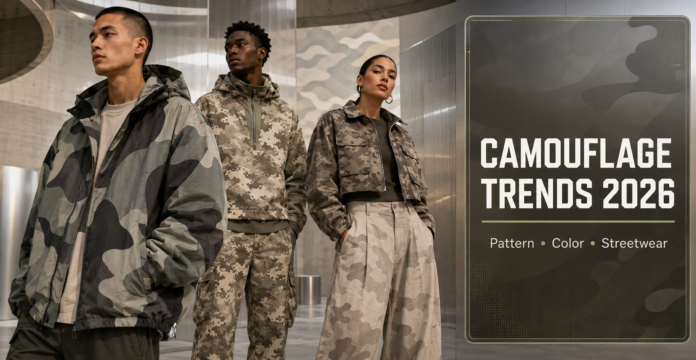
Camouflage is changing in 2026. Woodland print remains, but updated colors, scale, fabric, and fit make it easier to wear. Camo now moves comfortably between outdoor clothing and streetwear without looking like a complete field uniform.
The strongest camouflage clothing trends 2026 focus on versatility, softer colors, practical construction, and individual styling. Some pieces retain military roots, while others use camo as a graphic idea.
Earthy Colors Become Easier to Wear
Classic green, brown, olive, and tan remain central to camouflage, yet the 2026 approach feels quieter. Lower-contrast palettes allow the pattern to work almost like a neutral. Dusty olive, faded khaki, clay brown, stone, and charcoal can be combined with black, cream, denim, and other everyday colors without making an outfit feel too busy.
Washed and weathered effects are also shaping the look. Instead of sharp, freshly printed colors, some fashion-led garments use softened edges and slightly uneven tones that give camo a broken-in character. Monochrome gray and black versions remain useful for urban styling, while pale sand and muted sage offer lighter alternatives for spring and summer collections.
Pattern Scale Moves in Two Directions
Both oversized and highly detailed camouflage are gaining attention. Large abstract shapes make a confident fashion statement and remain readable on loose jackets or wide trousers. Micro patterns create texture from a distance and suit smaller panels, accessories, or more fitted garments. The garment’s size should guide the print because a pattern can lose its effect when scaled poorly.
Digital and pixel-inspired designs are still relevant, but they are no longer limited to strict military-style colorways. Designers are applying geometric camo in tonal palettes and mixing it with softer organic shapes. Eco Jersey’s pattern guide explains how woodland, desert, digital, tiger stripe, and other designs create different visual effects.
Utility Styling Stays at the Center
Camo feels most convincing when the garment has some functional character. In 2026, utility details remain important, but they are becoming cleaner and more wearable:
- Cargo pockets: Flatter shapes and better placement provide storage without excessive bulk.
- Adjustable hems: Drawcords and tabs let wearers change the trouser or jacket silhouette.
- Layering fits: Relaxed cuts leave room for hoodies, fleece, or lightweight base layers.
- Mixed panels: Solid fabric sections reduce print overload and highlight garment construction.
- Technical trims: Durable zippers, quiet closures, and reinforced areas add practical value.
These details give camouflage a reason to exist beyond decoration. A pair of camo pants can combine a recognizable print with stretch, large pockets, and a modern tapered shape. The result connects outdoor utility with everyday comfort instead of feeling like a costume.
Relaxed Silhouettes Lead Streetwear
Streetwear is continuing to favor comfortable proportions. Wide cargo trousers, boxy overshirts, cropped jackets, and roomy hoodies provide enough surface for camo to stand out. These shapes also make layering easier, which supports the wider movement toward clothing that can shift between travel, casual use, and light outdoor activity.
Head-to-toe camouflage is possible, but most everyday outfits use one strong camo piece with plain layers. A loose camo trouser paired with a simple sweatshirt feels current without trying too hard. Likewise, a printed overshirt can sit over a neutral T-shirt and dark jeans. The trend is less about matching a military uniform and more about creating an easy balance between pattern and solid color.
Outdoor and City Clothing Continue to Merge
One of the clearest directions for 2026 is the overlap between outdoor performance and city clothing. People increasingly expect jackets and trousers to handle light rain, movement, storage, and changing temperatures while still looking natural in daily life. That demand favors camouflage because it already carries strong associations with durability and practical design.
The wider outdoor trends toward versatile layering, performance fabrics, and sustainable materials support this crossover. Camo softshells, ripstop trousers, fleece layers, and packable pieces can serve real functions without becoming highly specialized. The strongest designs keep technical features useful and visually restrained.
Custom Camo Creates Brand Identity
As common military patterns remain widely available, more brands are exploring exclusive color combinations and artwork. Custom camouflage can include local landscape references, hidden logos, unusual shape systems, or a signature palette. The goal is not always concealment. For a streetwear label, the pattern may work as a recognizable brand code across trousers, jackets, bags, and accessories.
Working with a specialist cargo maker allows brands to coordinate pattern scale with fabric, fit, pockets, trims, and labeling. Sampling remains important because screen colors may look different when printed on cloth. Testing also reveals whether the pattern repeats naturally across seams and maintains its appearance after washing.
Conclusion
Camouflage clothing trends 2026 balance familiarity with quieter, more flexible design. Earth tones are becoming softer, pattern scales are growing more varied, and relaxed utility silhouettes continue to shape streetwear. At the same time, technical fabrics and practical details are making camo useful beyond appearance.
The direction is clear: camouflage no longer belongs to one setting. It can feel rugged, minimal, technical, or expressive depending on how it is designed. Brands that connect print, fabric, fit, and function will create pieces that remain relevant after a short seasonal trend has passed.
FAQs
Is camouflage fashionable in 2026?
Yes. Camouflage remains relevant through relaxed cargo clothing, muted palettes, technical fabrics, and outdoor-inspired streetwear.
What camo colors are trending?
Dusty olive, faded khaki, clay brown, sand, charcoal, and low-contrast monochrome palettes are especially wearable.
Are camo cargo pants still popular?
Yes. Relaxed and tapered cargo styles remain popular because they combine practical storage with recognizable streetwear design.
How should camo be styled?
Use one main camouflage piece with solid neutral clothing. Black, cream, gray, denim, olive, and brown are easy pairings.