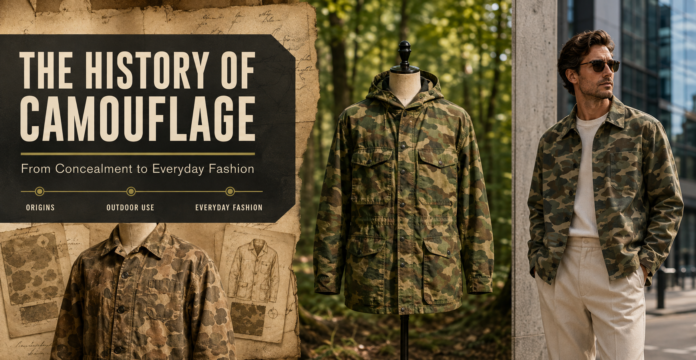
The history of camouflage clothing is a story of function becoming fashion. Camouflage was developed to reduce visibility in dangerous environments, but its colors and disruptive shapes eventually moved far beyond the battlefield. Today, camo appears in military uniforms, hunting apparel, outdoor equipment, workwear, streetwear, and luxury collections.
This evolution did not happen at once. Changes in warfare, printing technology, fabric performance, youth culture, and design all influenced how camouflage was produced and understood. Although modern fashion often treats camo as a bold visual statement, its original purpose remains important: matching the wearer to an environment and breaking up the recognizable human outline.
Before Printed Camouflage Uniforms
For centuries, many armies wore bright uniforms that made units easier to identify and command. Red, blue, white, and other strong colors were practical when battles involved organized formations, smoke, and limited weapon accuracy. However, improved rifles and long-range observation made visible soldiers easier targets. Military clothing gradually shifted toward less noticeable shades such as khaki, field grey, olive, and brown.
Hunters, scouts, and irregular fighters had already understood the value of natural concealment. They used earth-colored garments, local vegetation, and simple coverings to blend into their surroundings. These methods established the basic principles later used in printed camouflage: reduce contrast, imitate environmental colors, and prevent the eye from quickly recognizing a complete human shape.
Camouflage Becomes a Military System
During the twentieth century, camouflage developed from a general idea into a planned military system. Artists, scientists, and military specialists studied color, light, distance, terrain, and visual perception. Printed smocks, helmet covers, shelter materials, and uniforms began using irregular patches that resembled shadows, leaves, soil, or broken ground. Different countries created distinctive designs for their landscapes and operational needs.
The world wars accelerated this development, while later conflicts encouraged more specialized woodland, desert, jungle, and snow patterns. Camouflage was no longer limited to color. Pattern scale, contrast, garment shape, and equipment placement also mattered. Modern outdoor manufacturing continues this complete approach by matching fabrics, construction, features, and prints to the conditions in which clothing will be worn.
Major Stages in Camouflage Development
Several changes helped turn early concealment clothing into the wide range of camo available today:
- Solid colors: Khaki, olive, grey, and brown replaced highly visible military uniforms.
- Printed patterns: Irregular multicolor shapes improved concealment in specific landscapes.
- Terrain designs: Woodland, desert, snow, and jungle patterns served different environments.
- Digital patterns: Small geometric blocks disrupted outlines across several viewing distances.
- Commercial camo: Hunting and fashion brands created patterns for performance and identity.
These stages overlap rather than replace one another. Traditional organic shapes remain useful, while newer pixelated and multi-terrain designs offer different visual effects. Eco Jersey’s digital guide explains how computer-supported pattern development introduced precise blocks, controlled color distribution, and multiple scales into modern camouflage design.
Hunting Gives Camouflage a Civilian Purpose
Hunting was one of the clearest civilian uses for functional camouflage. Hunters needed clothing that matched forests, grasslands, marshes, mountains, and seasonal vegetation. Commercial patterns began reproducing leaves, branches, bark, reeds, and shadows with increasing realism. Unlike standardized military uniforms, hunting camo could be highly specific to one region, animal, distance, or time of year.
The garment itself also evolved. Quiet fabrics reduced sound during movement, while insulation, water resistance, breathability, and practical pockets improved field performance. Pattern and material had to work together. This functional heritage remains visible even in casual pieces such as camo pants, where a recognizable print is combined with stretch, storage, mobility, and durable construction.
From Military Surplus to Street Fashion
Camouflage entered everyday wardrobes partly through military-surplus clothing. Jackets, trousers, and field shirts were affordable, durable, and different from conventional fashion. They became popular among outdoor users and later appeared in music, protest movements, skate culture, hip-hop, and streetwear. In these settings, camo could suggest toughness, independence, rebellion, utility, or connection with military history.
Designers then separated camouflage from literal concealment. They changed the colors, enlarged the shapes, mixed patterns, and printed camo on garments never intended for field use. Blue, pink, neon, black-and-white, and abstract versions turned a hiding system into an attention-grabbing graphic. The growth of urban camo shows how grey palettes and city-inspired patterns now connect tactical influence with modern lifestyle clothing.
Conclusion
The history of camouflage clothing reflects changes in warfare, outdoor activity, manufacturing, and popular culture. What began with muted military colors developed into specialized printed systems for forests, deserts, snow, and mixed terrain. Hunters adapted those principles for wildlife concealment, while civilians and designers transformed camo into an enduring fashion language.
Camouflage now sits between technology and culture. Its effectiveness still depends on environment, scale, color, fabric, and construction, yet its appearance can also communicate identity. That combination of practical history and creative flexibility explains why camo continues to evolve instead of disappearing as a temporary trend.
FAQs
Why was camouflage clothing invented?
It was developed to make military personnel less visible by matching environmental colors and disrupting the recognizable shape of the body.
When did camouflage become fashionable?
Military-surplus garments entered civilian wardrobes after major twentieth-century conflicts, while designers and youth cultures expanded camo fashion during later decades.
Is digital camouflage newer than woodland camo?
Not always. Fashion camo may use unrealistic colors or scales. Effective concealment requires a pattern, fabric finish, and garment design suited to the actual environment.
Is digital camouflage newer than woodland camo?
Yes. Woodland-style organic patterns came earlier, while pixelated digital systems became prominent through late twentieth-century development and twenty-first-century adoption.