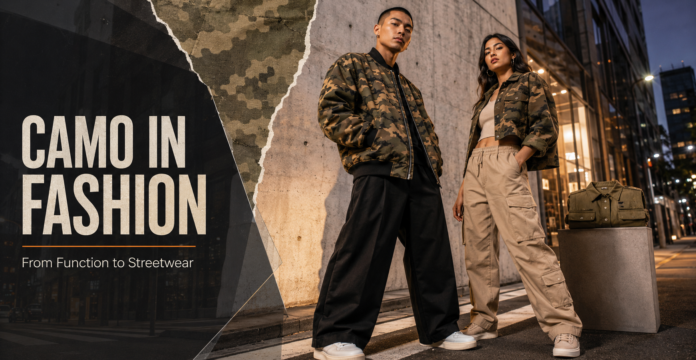
Camouflage was created to help people disappear. Fashion did the opposite and made the pattern impossible to ignore. Military concealment eventually reached cargo trousers, jackets, hoodies, trainers, bags, and designer runways. Today, camouflage print fashion belongs to both outdoor clothing and city style.
Camo gathered new meanings whenever a group adopted it. Soldiers wore it for protection, hunters used it outdoors, and generations made it a sign of toughness, rebellion, confidence, or individuality.
Camouflage Started with a Practical Job
Military camouflage was designed around the environment. Greens and browns suited wooded areas, tan worked across dry terrain, and pale colors helped in snow. The irregular shapes were not decoration. They divided the outline of the body, making it harder for the eye to recognize a person against leaves, soil, rocks, or shadows.
Fabric and garment design mattered too. Uniforms needed to survive hard wear, allow movement, and carry equipment. These practical qualities later became part of camo’s fashion appeal. People were drawn not only to the print but also to roomy pockets, strong materials, relaxed cuts, and the honest utility of military clothing.
Surplus Clothing Brought Camo to Civilians
Military-surplus stores gave ordinary people access to field jackets, combat trousers, parkas, and shirts after major twentieth-century conflicts. These garments were usually durable and affordable, which made them useful for work and outdoor activities. They also looked different from polished mainstream fashion, giving wearers a rougher and more independent image.
Musicians, artists, protesters, skaters, and youth groups began wearing surplus pieces in their own way. In those settings, camouflage no longer meant only military service. Depending on the wearer, it could express resistance, irony, solidarity, or simply an appreciation for practical clothing. That flexibility helped camo survive long after many other uniform-inspired trends disappeared.
Streetwear Made Camouflage Its Own
Streetwear embraced camo because it already carried attitude. Loose combat trousers worked naturally with trainers and graphic T-shirts, while field jackets layered easily over sweatshirts. Hip-hop and skate culture brought these combinations into music videos, magazines, and everyday city life. The pattern felt bold without needing a large logo, and every variation offered a slightly different mood.
Brands soon moved beyond original military prints. They enlarged shapes, softened edges, changed color palettes, and mixed camo with branded graphics. Gray, blue, red, purple, and monochrome versions were made to stand out rather than hide. Eco Jersey’s urban camo guide shows how city-inspired palettes now connect tactical influences with contemporary outdoor and streetwear design.
Why Camo Works So Well in Fashion
Camouflage remains popular because it can play several roles in one wardrobe:
- Statement print: It adds visual energy to a simple outfit without requiring bright colors.
- Neutral pattern: Traditional olive, tan, and brown camo can coordinate with black, white, denim, and earth tones.
- Utility signal: It naturally complements cargo pockets, durable fabrics, oversized fits, and workwear details.
- Cultural symbol: It can suggest strength, rebellion, outdoor life, music culture, or military heritage.
Few patterns move between quiet and bold so easily. A small camo accessory can add texture, while a full jacket or trouser makes the pattern central to the outfit. The broader streetwear guide explains how cargo pieces, hoodies, graphic tees, and outerwear combine to create this practical but expressive style.
Cargo Pants Became a Camo Essential
Cargo trousers provide one of the clearest links between military function and street fashion. Their large pockets and roomy construction were originally practical, but streetwear turned those details into a recognizable silhouette. Modern versions may use tapered legs, stretch fabric, adjustable hems, or oversized fits, making them easier to style in different ways.
A pair of camo pants can anchor an outfit when worn with a plain T-shirt, hoodie, denim jacket, or simple trainers. The key is balance. Because the print already carries movement and contrast, solid surrounding pieces usually let it breathe. Matching every item in different camouflage patterns can easily make the outfit feel busy rather than intentional.
Developing Camo for a Modern Brand
Modern camouflage collections need more than an attractive print. Pattern scale should suit the garment, colors should remain consistent across production, and pocket placement must not interrupt important design areas. Fabric choice also changes the final appearance. Cotton can feel casual and natural, while ripstop suggests field utility and smoother technical materials create a cleaner finish.
Brands working with a cargo maker can customize the print, fit, fabric, pockets, trims, labels, and packaging around a clear customer. A fashion-led product does not need genuine field concealment, but it should still feel deliberate. The strongest collections understand camo’s history while giving it a fresh reason to exist.
Conclusion
Camouflage print fashion grew by moving through different communities and collecting new meanings. Military function gave it credibility, surplus clothing made it accessible, and streetwear turned it into personal expression. High fashion then proved that camo could work far beyond rugged uniforms and casual cargo pieces.
Its lasting appeal comes from this mix of history, utility, and attitude. Camo can blend into an outfit or take control of it. As long as designers continue to rethink its colors, scale, fabric, and silhouette, camouflage will remain more than a passing streetwear trend.
FAQs
When did camouflage enter fashion?
It gradually entered civilian wardrobes through military-surplus clothing before gaining wider popularity through music, youth culture, and streetwear.
Is camouflage still fashionable?
Yes. Its popularity changes between seasons, but camo continues to appear in streetwear, outdoor clothing, collaborations, and designer collections.
What colors work with camouflage?
Black, white, beige, olive, brown, gray, and denim usually pair easily with traditional camouflage prints.
Can camo be worn casually?
Yes. One camouflage piece combined with simple solid clothing creates an easy casual outfit without making the overall look feel overloaded.