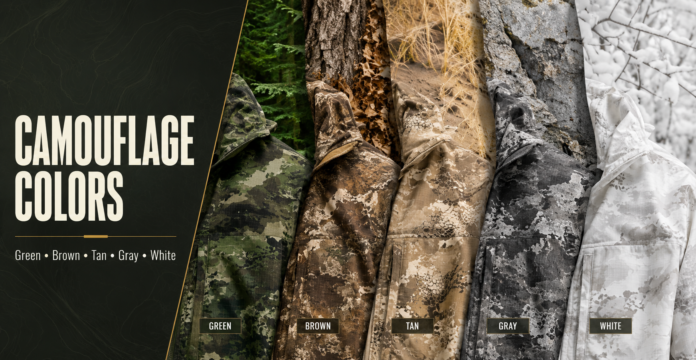
Camouflage clothing colors reduce the visual difference between a wearer and the surrounding environment. Green, brown, tan, gray, and white represent vegetation, soil, rock, buildings, or snow. Effective camouflage combines several tones to copy background colors, create false shadows, and break up the human outline.
The best palette depends on terrain, season, weather, light, and distance. Forest camouflage needs a different balance from desert or winter camo. Fabric finish also matters because shiny surfaces can reflect light despite having suitable printed colors.
Green for Vegetation and Forest Cover
Green is strongly associated with camouflage because it appears across leaves, grass, moss, and dense plant growth. Woodland patterns often mix olive, forest green, and muted yellow-green rather than using one bright shade. These variations help the garment blend with vegetation under both sunlight and shadow. Darker green can support deep forest concealment, while lighter olive may suit open woodland or dry grass.
Too much green can reduce effectiveness outside healthy vegetation. During autumn, drought, or early spring, a strongly green garment may contrast with brown ground and bare branches. Designers therefore balance green with brown, black, tan, or gray. Eco Jersey’s terrain guide explains how woodland and desert palettes change according to vegetation density, soil, light, and landscape.
Brown for Soil, Bark, and Natural Shadows
Brown connects camouflage clothing to tree bark, fallen leaves, exposed soil, dry plants, and forest debris. It is especially useful in late-season woodland, scrub, rocky ground, and mixed terrain where green is present but not dominant. Dark brown can imitate deep shadow, while medium and light browns create transitions between green, tan, and gray areas.
Brown prevents woodland patterns from becoming flat green surfaces at a distance. In irregular shapes, it divides a garment into smaller visual areas and weakens the recognizable body shape.
Tan for Desert and Dry Terrain
Tan is common in deserts, dry grasslands, sandy ground, dusty roads, and sun-bleached environments. Desert camouflage often combines light tan with sand, beige, pale brown, and small amounts of muted green or gray. A lighter base reflects the high brightness of open terrain, while darker details copy stones, dry plants, and ground shadows.
A tan-dominant design can work where green vegetation is sparse, but pale tan may appear too bright on damp soil or dark rock. Products such as camo pants can use customized palettes suited to an outdoor or casual market.
Gray for Rock, Shadow, and Urban Settings
Gray appears in stone, tree trunks, overcast landscapes, mountain terrain, and built environments. It works as a neutral bridge between darker and lighter colors without creating the warmth of brown or tan. Medium gray can imitate weathered rock, while charcoal produces shadow and pale gray supports concrete, snow, or washed-out winter backgrounds.
Urban camouflage commonly combines gray with black, white, or muted blue-gray. Such patterns may suit certain industrial or city settings, although many commercial versions are designed more for tactical styling than true concealment. The urban guide explores how gray-based patterns moved between operational concepts, outdoor clothing, and modern streetwear.
White for Snow and Winter Landscapes
White is the main color used in snow camouflage, but solid white is not always the best solution. Snow-covered environments still contain branches, rocks, footprints, shadows, and exposed vegetation. Effective winter patterns often combine an off-white or pale-gray base with scattered gray, brown, or muted green elements that reproduce these interruptions.
Light conditions also change snow color. Clear skies can create blue-gray shadows, while cloudy weather produces softer contrast. Dirty or melting snow reveals darker ground, making pure white clothing increasingly visible. Reversible garments and removable overwhites can help users adjust when snow coverage changes across the landscape.
What Each Camouflage Color Does
Every major color has a different role within the complete pattern:
- Green: Matches living vegetation, grass, moss, and leafy cover.
- Brown: Represents soil, bark, dead leaves, wood, and deep natural shadows.
- Tan: Blends with sand, dust, dry grass, and sunlit open terrain.
- Gray: Suits rocks, overcast scenery, shadows, concrete, and urban surfaces.
- White: Matches snow, ice, pale winter light, and high-altitude landscapes.
These colors work best when their proportions reflect the environment. Pattern scale and contrast must also prevent the shades from merging into one obvious block from a distance. A specialist camo manufacturer can coordinate custom colors, print methods, fabric types, finishes, and garment features for a consistent private-label collection.
Conclusion
Camouflage clothing colors work by copying the dominant shades and contrasts of a target environment. Green supports vegetation, brown matches soil and bark, tan suits dry terrain, gray connects with rock or urban surfaces, and white provides a base for snowy landscapes. No color is universally effective because outdoor backgrounds continually change.
The strongest camouflage uses the right colors in the right proportions, supported by suitable pattern scale, contrast, fabric, and construction. Selecting clothing by actual terrain and season produces better results than choosing a pattern only because it looks familiar or visually attractive.
FAQs
What is the most common camouflage color?
Green is strongly associated with camouflage, but brown, tan, gray, and white can be more effective when they better match the terrain.
Why does camouflage use several colors?
Multiple colors reproduce background variation, create false shadows, and divide the human outline into less recognizable visual areas.
Is gray camouflage only for cities?
No. Gray can also match rocks, mountain environments, tree bark, shadows, and overcast winter landscapes.
Does white camouflage work in all snow?
No. Broken, melting, or shadowed snow often requires gray, brown, or green details rather than a completely white garment.