A well-made leather skirt can last for decades, but only with the right care, which is exactly what this Leather Skirt Care Guide is built to walk through. Leather is a durable, resilient material, but it still needs regular attention to stay supple, resist cracking, and keep its color and finish looking fresh over years of wear and repeated handling.
The good news is that leather care isn’t complicated once you understand a few core principles around cleaning, conditioning, and storage. In this guide, we’ll break down exactly how to maintain a leather skirt properly, including what to avoid, so it continues to look and perform its best for as long as possible, regardless of how often it’s worn.
Everyday Cleaning: Keeping Dirt and Dust at Bay
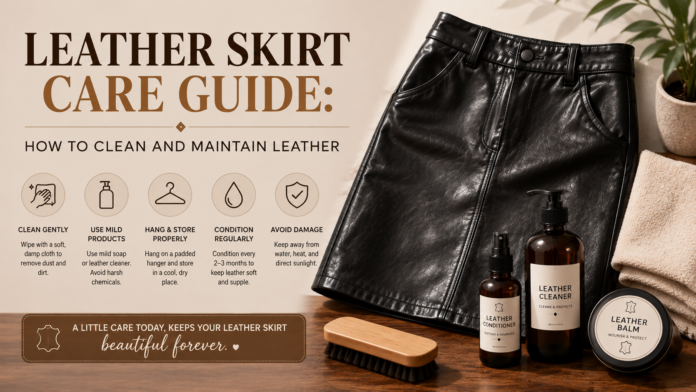
Routine care is the foundation of any Leather Skirt Care Guide, and most of it comes down to simple habits rather than deep cleaning. Wiping down a leather skirt with a soft, dry cloth after each wear removes surface dust and light debris before it has a chance to settle into the grain and build up over time.
For light dirt or marks, a slightly damp cloth with plain water is usually enough. Harsher household cleaners, alcohol-based wipes, and anything containing ammonia should be avoided entirely, since these can strip the leather’s natural oils and dry out the surface, leading to cracking over time that’s difficult to reverse once it starts.
Removing Stains Without Damaging the Leather
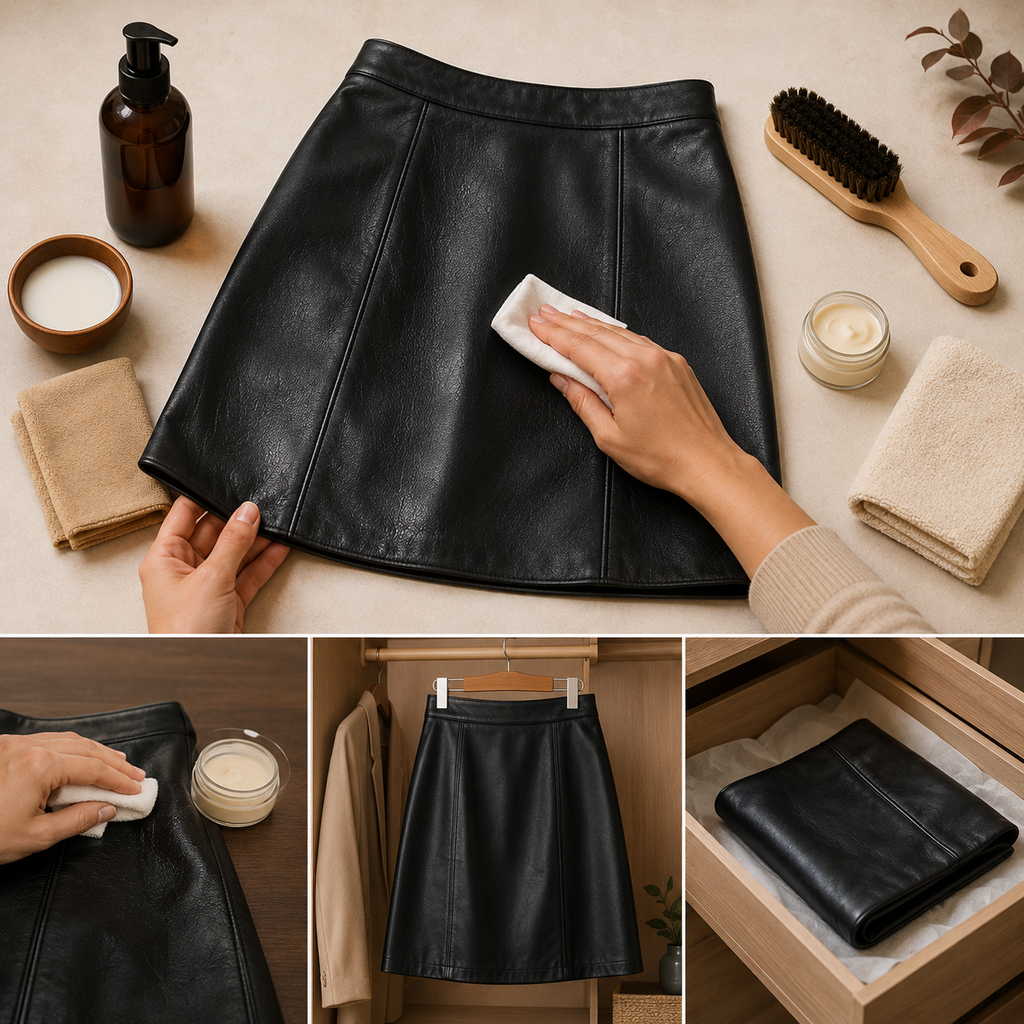
Stains happen, and treating them quickly makes a real difference in how well leather recovers. For oil-based stains, like makeup or food grease, lightly dusting the area with cornstarch or talcum powder and letting it sit overnight helps absorb the oil before it sets into the material, followed by gently brushing the powder away once it has done its work.
For water-based stains, blotting immediately with a dry cloth, rather than rubbing, prevents the mark from spreading further into the leather. Rubbing a fresh stain often pushes it deeper into the grain rather than lifting it out, so a light blotting motion is almost always the safer first response, even if it feels less immediately satisfying than scrubbing.
Conditioning: The Step Most People Skip
Conditioning is arguably the most important and most overlooked step in any leather care routine. Leather naturally loses moisture and oils over time, particularly with regular wear, and conditioning replaces what’s lost to keep the material flexible and prevent it from becoming brittle or prone to cracking, especially at high-stress points like the waistband.
A quality leather conditioner applied every three to six months, depending on how often the skirt is worn, helps maintain suppleness and can even out minor surface scuffs in the process. It’s worth spot-testing any new conditioner on an inconspicuous area first, since some formulas can slightly darken lighter leather tones, which is difficult to reverse once applied broadly.
Protecting Leather From Sun, Heat, and Moisture
Environmental exposure affects leather more than most people expect. Direct sunlight and prolonged heat exposure, whether from a radiator, car interior, or extended outdoor wear, can dry out leather and cause premature fading or cracking over time. Storing and wearing leather away from intense, sustained heat sources helps preserve both color and flexibility for years longer than neglecting this simple precaution.
Moisture requires a different kind of care. If a leather skirt gets caught in rain, it should be allowed to air dry naturally at room temperature, away from direct heat, which can cause the leather to stiffen or warp as it dries too quickly. Stuffing the skirt loosely with a soft towel while it dries can also help it retain its shape during the process.
Caring for Faux Leather Differently
Faux leather requires a noticeably different care approach than genuine leather, since it’s built from a fabric backing coated with polyurethane or PVC rather than natural hide. Faux leather generally cleans well with a mild soap and water solution and doesn’t require oil-based conditioning the way genuine leather does.
Applying a genuine leather conditioner to faux leather can actually damage the synthetic coating rather than help it, so it’s worth confirming which material a skirt is made from before applying any conditioning product. When in doubt, a gentle wipe-down with a damp cloth is the safer default for synthetic materials.
Storing a Leather Skirt Properly
How a leather skirt is stored between wears matters almost as much as how it’s cleaned. Hanging leather skirts on padded or wide hangers helps them hold their shape, while wire hangers can create pressure points and permanent creasing over time that’s difficult to smooth back out later. A breathable fabric garment bag protects against dust without trapping moisture the way plastic covers tend to do.
Leather also needs some airflow to stay healthy, so storing it in a completely sealed environment for extended periods can encourage mildew, particularly in humid climates. A small silica gel packet in the storage area helps manage excess moisture in more humid conditions, especially during seasonal storage when a piece won’t be worn for months at a time.
Leather Skirt Care Guide at a Glance
Here’s a quick summary of the core maintenance habits covered in this guide:
- Daily care:Wipe with a soft, dry cloth after wear
- Stains:Blot water-based stains; use cornstarch or talcum for oil-based marks
- Conditioning:Apply a quality conditioner every 3 to 6 months
- Environment:Avoid direct sun, heat sources, and rapid drying after moisture exposure
- Storage:Use padded hangers and breathable garment bags, not plastic
- Faux leather:Clean with mild soap and water; skip oil-based conditioners
Choosing Well-Constructed Leather From the Start
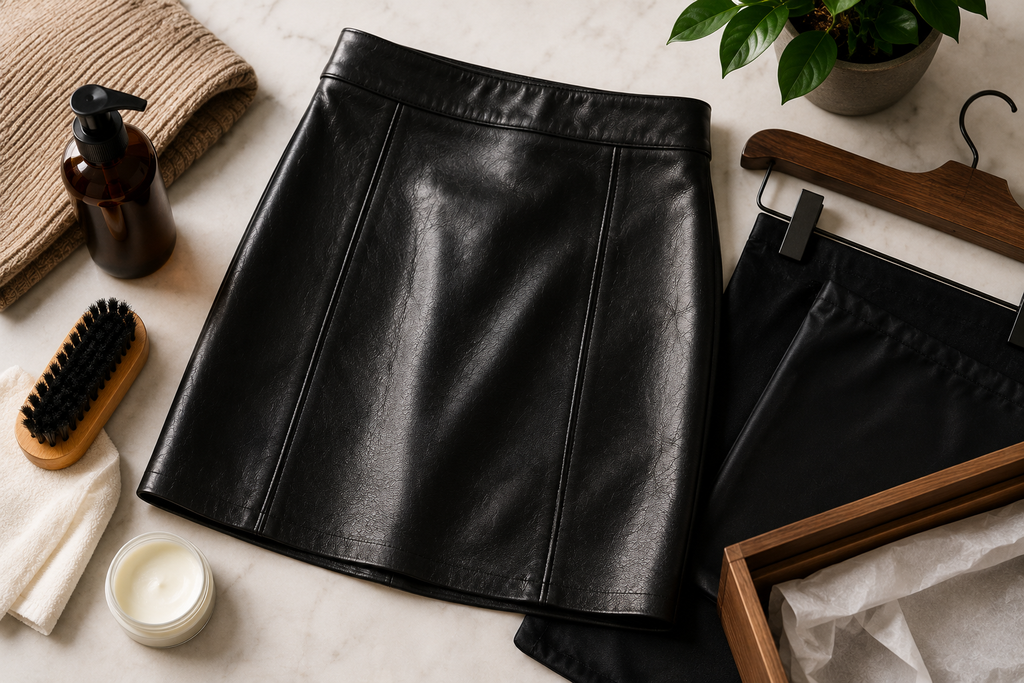
Good care matters most when it’s paired with a well-constructed piece from the start, since quality stitching and finishing hold up better to regular maintenance over time. Browsing our full leather skirts range makes it easier to compare construction quality across different styles before committing to a piece that will need years of proper care.
For genuine leather pieces specifically, the chic leather pleated skirt is a good example of a construction that benefits from the conditioning routine covered above, since its pleated structure holds its shape best when the leather itself stays supple and well maintained. For anyone weighing genuine leather’s care requirements against a lower-maintenance alternative, our guide on wearing leather skirts in summer also touches on how heat and sun exposure affect leather care across seasons.
The Role of Custom Manufacturing in Leather Apparel
As demand grows for leather apparel that’s built to last with proper care, more businesses are turning to custom manufacturers who understand how construction quality affects long-term maintenance, rather than relying on generic sourcing that doesn’t prioritize durability.
At ECO-JERSEY, we manufacture and supply custom apparel including leather-based skirts and accessories to businesses around the world. Whether a company needs genuine leather pieces built to hold up to years of proper care or lower-maintenance faux leather alternatives, our team works directly with clients to produce apparel that matches their exact specifications.
Conclusion
Following this Leather Skirt Care Guide consistently is what actually determines whether a leather skirt lasts for years or starts showing wear within months. Regular cleaning, periodic conditioning, and proper storage are simple habits that make a significant difference over the life of the garment, whether it’s made from genuine or faux leather.
For businesses looking to source reliable leather apparel whether for fashion lines or branded professional wear working with an experienced manufacturer like ECO-JERSEY ensures every piece is built to perform and hold up well to regular care.
FAQs
How often should you condition a leather skirt?
A leather skirt should generally be conditioned every three to six months, depending on how frequently it’s worn, to keep the material supple and prevent cracking.
Can you clean a leather skirt with water?
Yes, a slightly damp cloth with plain water works well for light dirt, though harsher cleaners, alcohol-based products, and anything containing ammonia should be avoided.
How do you remove an oil stain from a leather skirt?
Dusting the stain with cornstarch or talcum powder and letting it sit overnight helps absorb the oil before it sets into the leather, followed by gently brushing the powder away.
Can faux leather skirts be conditioned the same way as real leather?
No, faux leather should not be treated with genuine leather conditioner, since it can damage the synthetic coating; mild soap and water is generally the safer cleaning method.