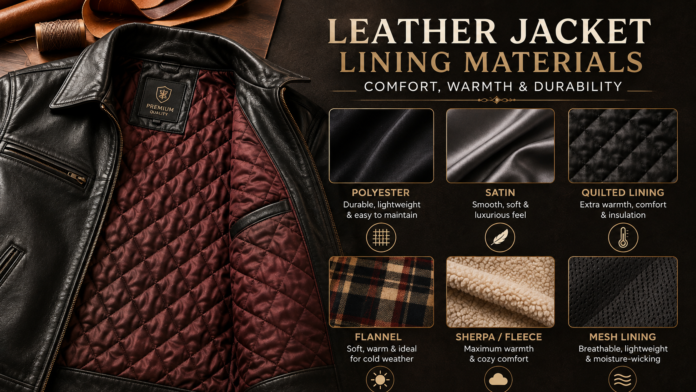
The outer shell might be what catches the eye, but Leather Jacket Lining Materials are what actually determine how a jacket feels to wear, how warm it keeps you, and how long it holds up on the inside. A poorly chosen lining can make an otherwise excellent leather jacket uncomfortable, while the right lining can transform a stiff, rigid hide into something that feels effortless to put on and wear all day.
Since different linings serve very different purposes, from breathability to serious cold-weather insulation, choosing the right one comes down to understanding what each material actually offers. In this guide, we’ll break down the most common Leather Jacket Lining Materials used in apparel today, and help you figure out which one fits your climate, use case, and comfort priorities.
Why Lining Matters in a Leather Jacket
Lining serves several practical roles beyond simply looking polished on the inside. It prevents stiff leather from clinging directly to skin or clothing, adds a layer of insulation for warmth, and helps the jacket hold its shape and structure as it’s worn and moved in over time. It can also add pockets, reinforce high-stress areas, and make a jacket noticeably easier to slip on and off.
A quality lining also protects the inside surface of the leather itself, absorbing sweat and friction that would otherwise wear directly against the hide. This is part of why a well-lined jacket often lasts noticeably longer than an unlined one subjected to the same daily use, and it’s one of the details experienced buyers check first when evaluating overall garment quality.
Viscose Lining: Smooth and Elegant
Viscose is a semi-synthetic fiber made from regenerated cellulose, typically sourced from wood pulp. It has a soft, smooth feel and drapes naturally against the body, which is why it’s one of the more popular Leather Jacket Lining Materials used in higher-end jackets where comfort and a refined finish both matter.
Viscose is also relatively breathable and absorbent compared to fully synthetic options, making it a solid choice for jackets meant to be worn across a range of temperatures rather than in extreme cold. Its main downside is that it’s less durable than polyester and can wear thinner over years of heavy use, so it tends to suit jackets worn occasionally rather than daily, rugged apparel.
Polyester Lining: The Practical Standard
Polyester is one of the most common Leather Jacket Lining Materials, valued for being lightweight, wrinkle-resistant, and highly durable. It provides a smooth inner surface that makes jackets easy to slip on and off, and it holds up well to repeated wear and cleaning without breaking down.
Quilted polyester takes this a step further by adding a layer of padding stitched in a diamond or box pattern, which noticeably increases warmth for cold-weather jackets. Because of its affordability and resilience, polyester remains the default lining choice across a wide range of leather apparel, from fashion jackets to everyday outerwear, and it’s often the first material specified when a manufacturer needs a dependable, low-maintenance option.
Sherpa and Faux Fur: Built for Warmth
Sherpa is a soft, dense synthetic fabric, typically made from polyester and cotton blends, designed to mimic the look and feel of natural shearling without the higher cost or maintenance. Its thick, fluffy texture makes it one of the warmest lining options available, which is why it’s such a common choice for winter and cold-climate leather jackets, and it can typically be washed at home rather than requiring specialty cleaning.
Faux fur offers similar warmth and a plush feel, along with strong insulating properties, though it tends to be less breathable than other lining materials. Both options add noticeable bulk and weight to a jacket, which is worth factoring in for anyone who wants a lighter, more packable garment rather than maximum warmth.
Cotton and Silk: Lightweight, Breathable Options
Cotton lining is prized for its breathability and soft, natural feel, making it a strong choice for jackets meant to be worn in milder weather where heavy insulation isn’t needed. Its main drawback is that it wrinkles more easily and can shrink if it gets wet, which is worth considering for jackets that will see frequent wear or exposure to the elements.
Silk offers a similarly lightweight, breathable feel but with a noticeably more luxurious finish, which is why it tends to show up in premium or dress-oriented leather jackets rather than everyday, rugged apparel. Both materials require more careful handling than synthetic alternatives, so they’re generally better suited to lower-wear situations than daily industrial use.
Comparing Leather Jacket Lining Materials at a Glance
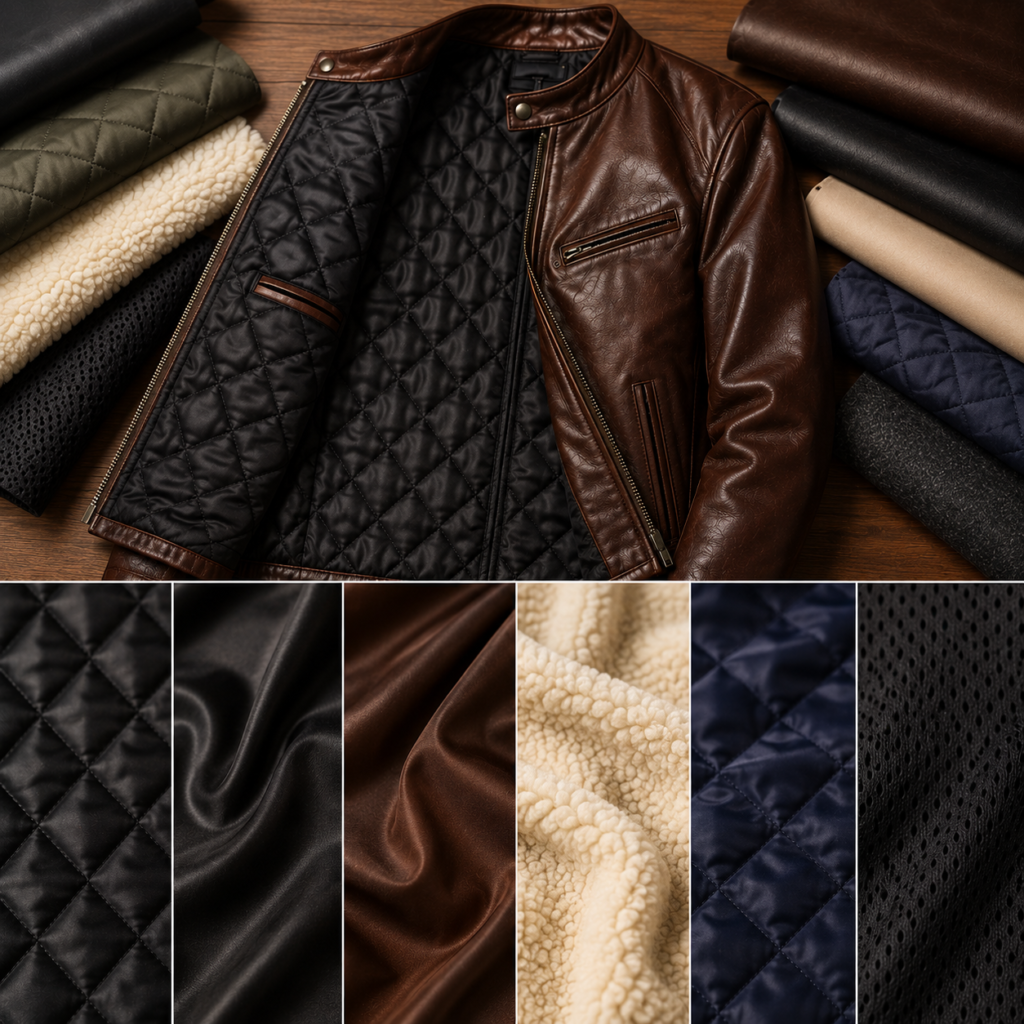
Here’s a quick summary of how the most common lining materials compare on the qualities that matter most:
- Viscose:Smooth, breathable, and elegant; best for moderate climates and premium jackets
- Polyester:Durable, affordable, and wrinkle-resistant; the practical everyday standard
- Quilted polyester:Adds insulation through padded stitching; ideal for cold-weather wear
- Sherpa/Faux fur:Thick and plush; the warmest options but adds bulk and less breathability
- Cotton:Breathable and soft; best for mild weather, prone to wrinkling and shrinking
- Silk:Lightweight and luxurious feel; best suited to premium, dress-oriented jackets
Lining Considerations for Industrial and Protective Apparel
In industrial settings, lining choice affects comfort during long shifts just as much as it does in fashion apparel. Durable polyester or quilted linings are common across general workwear collections, since they hold up to repeated wear and washing far better than delicate natural fibers, and they’re less likely to snag or tear during physical work.
In cold or physically demanding environments like oil and gas, insulated quilted linings help workers stay comfortable through long shifts, which is why they’re frequently used within oil and gas workwear setups. For outdoor roles facing wet conditions, moisture-resistant linings are often paired with the shell treatments found in waterproof workwear collections to keep workers dry from the inside out as well as the outside in.
Lining Considerations for Corporate and Branded Apparel
For corporate and client-facing apparel, smoother linings like viscose or polyester tend to work best, offering a polished feel that suits corporate uniforms worn throughout a full workday without adding unnecessary bulk. A slippery, well-finished lining also makes jackets easier to put on and take off repeatedly, which matters for employees moving in and out of client meetings.
Because different roles call for very different comfort and climate needs, many businesses work with industry-specific work wear suppliers who can match the right lining to the specific demands of a trade or brand.
The Role of Custom Manufacturing in Leather Apparel
As demand grows for well-made leather apparel, more businesses are turning to custom manufacturers who understand how different lining materials affect comfort, warmth, and durability, rather than relying on generic off-the-shelf options that may not suit the intended climate or use case.
At ECO-JERSEY, we manufacture and supply custom apparel including leather-based workwear and accessories to businesses around the world. Whether a company needs insulated, durable linings for industrial protective gear or refined, breathable linings for corporate uniforms, our team works directly with clients to produce apparel that matches their exact specifications, down to the lining material itself.
Conclusion
Choosing the right Leather Jacket Lining Materials makes a meaningful difference in how a garment actually performs day to day, well beyond how it looks on the outside. Viscose and silk offer a refined, breathable feel for milder conditions, polyester provides durable everyday practicality, and sherpa or quilted options deliver serious warmth for cold climates. The right lining ultimately depends on the climate, use case, and comfort priorities of whoever will be wearing it, and getting this choice right often matters as much as the leather grade itself.
For businesses looking to source reliable leather apparel whether for protective workwear or branded uniforms working with an experienced manufacturer like ECO-JERSEY ensures every garment is built with the right lining for the job.
FAQs
What is the most common lining material for leather jackets?
Polyester is the most common lining material for leather jackets because it’s durable, affordable, wrinkle-resistant, and holds up well to repeated wear.
Which lining is warmest for a leather jacket?
Sherpa and quilted polyester linings are generally the warmest options, since their thick, dense structure or padded stitching provides strong insulation for cold-weather wear.
Is viscose or polyester better for a leather jacket lining?
It depends on the priority: viscose offers a smoother, more elegant feel often used in premium jackets, while polyester offers greater durability and is more practical for everyday wear.
Can leather jacket linings be removed or replaced?
Yes, many leather jackets have removable or replaceable linings, which allows the same jacket to be adapted for different seasons or refreshed once the original lining wears out.