Unlike other means of transportation, motorcycle riders are directly exposed to various natural environments. To ride comfortably and safely in all weather conditions, one must learn to dress in layers. This guide will help you build a flexible motorcycle gear layering system that adapts to temperature changes, rainfall, and strong winds.
Why the Three-Layer System is Essential for Riders
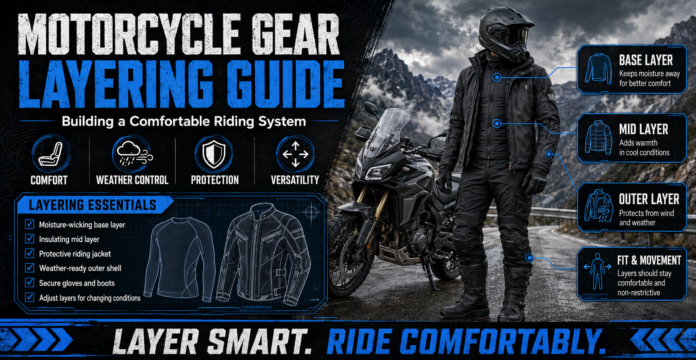
The three-layer layering system for motorcycle riding gear is the core of layering riding equipment: the base layer wicks away moisture, the midlayer retains heat, and the outer layer blocks wind and rain. This system can be flexibly adjusted to suit the environment, but mismatched layers will easily bring risks including overheating, exposure to cold, or wet clothing.
The Base Layer: Moisture Management and Comfort
The base layer of motorcycle gear layering is the first line of defense that sits directly against the skin, and it is also the most important component of the full set of gear. Its core functions are to wick away sweat produced during riding and prevent hypothermia caused by damp clothing. For this layer, fabrics with moisture-wicking properties such as merino wool, polypropylene, or polyester are suitable choices.
Choosing the Right Base Layer Material
When choosing the base layer for motorcycle gear layering, merino wool is the top choice. It naturally wicks moisture, regulates temperature, and resists odors, making it suitable for multi-day long-distance rides. As an alternative, synthetic fibers are durable, quick-drying, and more affordable. Cotton must never be chosen, as it traps moisture and causes discomfort from damp, cold conditions. All these recommendations align with the layered clothing requirements for motorcycle riding.
The Mid-Layer (Insulation Layer): Trapping Warmth
The middle layer of motorcycle gear layering has the core function of trapping body heat to retain warmth, and it serves as the core of the entire layered gear set for riding in low temperatures. Optional items for this layer include fleece jackets, lightweight down vests, and wool sweaters. The thickness of this layer must match the ambient temperature: thin fleece is suitable for cool early mornings, while thick down vests are appropriate for freezing weather.
Outer Layer (Shell Layer): Protection from the Elements
The outermost layer of motorcycle gear layering is the protective layer that directly comes into contact with the riding environment. Its core function is to block wind and rain and resist abrasion in the event of a crash. Common optional gear includes riding jackets with waterproof and breathable membranes, and separate raincoats can also be used during rainy weather. When purchasing gear, priority should first be given to balancing durability and protective performance, rather than focusing only on warmth.
The Importance of Breathability in Layering
Many novice cyclists sacrifice the breathability of their riding gear to stay warm. This traps sweat and soaks their clothing, which actually makes them feel colder and colder over time. It is recommended to choose gear equipped with a Gore-Tex breathable membrane or ventilation zippers, to ensure the layered clothing set can regulate body temperature on its own.
Gloves and Hand Protection: A Critical Layer for All Seasons
Don’t forget about your hands in your motorcycle gear layering strategy. For cold weather, a heated glove can be a game-changer. The heated gloves for motorbike feature 3-level smart heating from 104°F to 140°F, with waterproof and windproof polyester construction to keep your hands warm and dry in the harshest winter conditions, making them an essential layer for cold-weather rides.
Adapting the System for Different Conditions
The core advantage of the layered clothing system for motorcycle gear layering lies in its adaptability: in warm weather, riders can omit the mid-layer and only wear a summer riding suit equipped with ventilation designs; when encountering weather fluctuations during long-distance rides, they can add or remove individual layers as needed instead of replacing the entire set. The key to this system is to have all matching layered components ready.
Tips for Effective Layering on a Long Ride
Before setting out on a motorcycle gear layering, you should make your body feel slightly cool. Heat will naturally generate in your body during the ride. Your clothing must be easy to adjust, and you need to prepare an outer layer to deal with sudden weather changes. The core principle is to make full preparations and stay flexible. In addition, you should prepare extra clothes to cope with unexpected temperature drops.
Additional Gear: Neck Gaiters and Base Layers
Don’t overlook accessories as part of your motorcycle gear layering system. A neck gaiter can seal the gap between your helmet and jacket, preventing drafts. Base layer bottoms are essential for keeping your legs warm under your riding pants. These small additions make a big difference. For off-road adventures, specialized gear like dirt bike gloves with TPR knuckle guards offer essential hand protection.
Why Choose Quality Gear from Eco Jersey
When building your layering system, quality matters. Eco Jersey offers a full range of custom motorcycle gear layering, allowing you to find the right pieces for your system. From durable gloves to heated gear, they provide options for all seasons. For riders seeking durable and stylish options, the mens motorbike gloves and womens motorbike gloves from Eco Jersey offer professional knuckle and palm pads with silicone gel grips for excellent control and protection.
Final Thoughts on Mastering Motorcycle Layering
Mastering the layered clothing method for motorcycle gear layering can greatly improve the comfort and safety of every ride. By understanding the functions of each layer and their coordination logic, riders can adapt to various weather conditions. This complete system is an effective investment in both riding experience and safety, helping riders stay focused on the road ahead.
Frequently Asked Questions
What is the best base layer material for motorcycle riding?
Merino wool is excellent for its moisture-wicking and temperature-regulating properties. Synthetic materials like polyester are also good, but avoid cotton as it holds moisture.
How do I know which layers to wear?
Adjust your layers based on the weather. For warm weather, you may only need a base layer and a ventilated jacket. For colder temperatures, add a mid-layer and ensure your outer layer is windproof and waterproof.
Can I wear a heated jacket as a mid-layer?
Yes, a heated jacket or vest is an excellent mid-layer for very cold weather. Just ensure your outer shell has room to accommodate it without restricting movement.
Why is layering better than one heavy jacket?
Layering offers superior versatility, allowing you to adjust to changing temperatures and conditions without taking off your entire jacket. It also manages moisture better, keeping you drier and more comfortable.