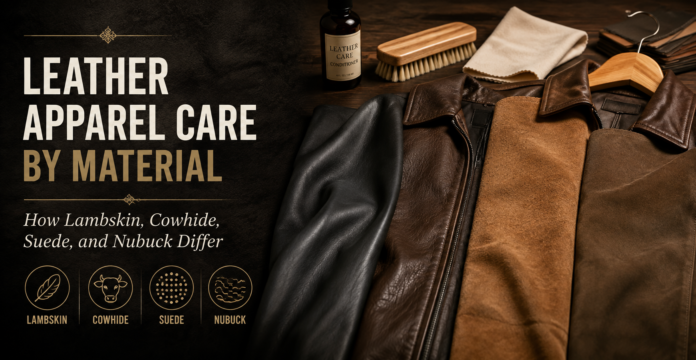
Leather clothing can last for many years, but only when it receives the right type of care. One cleaning method does not work for every leather because lambskin, cowhide, suede, and nubuck have different surfaces, thicknesses, and levels of sensitivity. A cleaner that works well on a strong cowhide jacket may leave marks on soft lambskin or damage the texture of suede. This is why understanding leather apparel care by material is important before using water, soap, conditioner, brushes, or stain removers.
Good leather care does not need to be complicated. Most problems happen because people use too much water, strong household cleaners, direct heat, or the wrong conditioner. Once you understand how each leather behaves, it becomes much easier to clean jackets, pants, skirts, gloves, coats, and other leather clothing safely. The goal is simple: remove dirt while protecting the leather’s natural feel, color, shape, and finish.
Understanding Leather Apparel Care by Material
The first rule of leather apparel care by material is to identify what type of leather you own before cleaning it. Leather may look similar from a distance, but its surface can be completely different. Smooth lambskin normally feels soft and fine. Cowhide usually feels thicker and stronger. Suede has a soft, fuzzy surface, while nubuck has a shorter, velvet-like texture created by sanding the outer surface of the hide. These differences change how the material reacts to moisture and cleaning products.
When caring for different pieces of leather apparel, always check the care label first. Manufacturers may use protective finishes, dyes, waxes, or special treatments that affect the safest cleaning method. Even two garments made from the same animal hide may need slightly different care. If the label recommends professional leather cleaning, following that advice is safer than experimenting with strong products at home.
Lambskin Leather Needs Gentle Handling
Lambskin is valued because it is soft, smooth, lightweight, and comfortable. It is commonly used for fashion jackets, coats, skirts, pants, and gloves. However, this softness also makes lambskin more sensitive to scratches, stains, stretching, and harsh chemicals. Proper leather apparel care by material is especially important with lambskin because aggressive rubbing can change its smooth surface quickly.
For regular care, wipe lambskin gently with a clean, soft, dry cloth after wearing it. If you need to remove a small mark, use a slightly damp cloth rather than soaking the leather. Never scrub the area. Allow the garment to dry naturally at room temperature. Lambskin should also be stored on a wide, padded hanger so that the shoulders keep their shape. Avoid narrow wire hangers because they may leave pressure marks or stretch delicate areas.
Cowhide Leather Can Handle More Wear
Cowhide is generally thicker, tougher, and more resistant to everyday wear than lambskin. That is why it is often used for motorcycle clothing, workwear, heavy jackets, pants, belts, and other products that need greater strength. Although cowhide is durable, it still contains natural oils that can slowly disappear. Without proper care, the surface may become dry, stiff, or cracked.
Many leather jackets use cowhide because it provides a good balance of durability and appearance. For this type of leather apparel care by material, remove surface dust with a soft cloth before applying any cleaner. Use a leather cleaner designed for smooth finished leather, and apply only a small amount. After cleaning, allow the jacket to dry naturally before adding a suitable conditioner. Conditioning occasionally can help maintain flexibility, but over-conditioning may make leather heavy, greasy, or darker than expected.
Suede Requires Dry and Careful Cleaning
Suede is very different from smooth leather. It is made from the inner side of the hide and has a soft, raised nap. This fuzzy texture gives suede its attractive appearance, but it can collect dust and absorb liquids faster than many smooth leathers. Water can also create visible marks, especially when it dries unevenly. Therefore, suede needs a much more careful approach than ordinary smooth leather.
For suede leather apparel care by material, a suede brush is usually one of the most useful tools. Brush the surface gently when the garment is completely dry. Move the brush in the direction of the nap first, then use light movements to lift flattened areas. Small dry marks may sometimes be reduced with a suede eraser made for this purpose. Avoid ordinary leather creams and oily conditioners because they can flatten the nap, darken the surface, and permanently change suede’s soft appearance.
Nubuck Needs Protection From Moisture and Oil
Nubuck is often confused with suede because both have a soft texture. However, nubuck is normally made by sanding or buffing the outer surface of the hide. It tends to have a finer and shorter nap than suede. Nubuck can look rich and luxurious, but it also shows water spots, oil, dirt, and rubbing marks easily. Correct leather apparel care by material helps protect this special surface.
Use a nubuck brush or a brush approved for both nubuck and suede. Brush gently after the material is dry to remove dust and restore its texture. For small stains, use a nubuck-specific cleaning block or cleaner rather than household soap. A protective spray designed specifically for nubuck can add some resistance against light moisture and dirt, although it will not make the garment completely waterproof. Always test the spray on a hidden area because some products may slightly change the color.
Leather Gloves, Pants, Skirts, and Coats Need Different Attention
The type of garment also matters when planning leather apparel care by material. Leather gloves experience repeated contact with skin oils, sweat, handles, and outdoor surfaces. Leather pants experience movement, friction, and pressure around the knees and seat. Skirts may develop creases from sitting, while long leather coats can lose shape if they are stored incorrectly. The material and the garment’s daily use should both guide your care routine.
For example, leather gloves should be allowed to air naturally after use, especially if the inside becomes damp. Do not place wet gloves on a heater or use a hair dryer because fast drying can make the leather hard. Jackets, pants, skirts, and coats should also be given enough space in the wardrobe. Crowding leather clothing between other garments can create deep folds and prevent air from moving around the surface.
Simple Leather Care Rules to Remember
A simple leather apparel care by material routine can prevent many common problems. You do not need dozens of products. You mainly need to know what should and should not touch the surface. The following basic rules are useful for most leather garments, although suede and nubuck may require specialized products.
- Lambskin: Use gentle wiping and very little moisture.
- Cowhide: Clean lightly and condition when the leather starts feeling dry.
- Suede: Use a suede brush and avoid normal leather creams.
- Nubuck: Brush carefully and use nubuck-specific protection products.
- Wet leather: Let it dry naturally away from direct heat.
- Storage: Use wide hangers and keep leather in a cool, ventilated area.
- Cleaning: Test every new cleaner on a hidden section first.
- Stains: Treat them early instead of rubbing them aggressively.
- Conditioning: Use only products made for the exact leather finish.
- Professional care: Get expert help for large, oily, deep, or unknown stains.
These simple habits are more useful than frequent deep cleaning. Leather generally benefits from gentle maintenance instead of constant treatment. Cleaning or conditioning too often can sometimes cause just as much trouble as ignoring the garment completely.
How to Handle Water and Wet Leather
Water is one of the biggest concerns in leather apparel care by material, but a few drops of rain do not automatically destroy a leather garment. The main danger comes from soaking the leather or drying it too quickly afterward. When smooth leather gets wet, gently blot the moisture with an absorbent cloth. Do not rub the surface because wet leather is easier to stretch and mark.
Place the garment in a well-ventilated room and allow it to dry naturally. Keep it away from radiators, fireplaces, direct sunlight, tumble dryers, and hair dryers. Heat pulls moisture from leather too rapidly and may leave it stiff or cracked. Once smooth leather is completely dry, a suitable conditioner may help restore flexibility if the surface feels unusually dry. Suede and nubuck should usually be brushed only after they have dried fully so that their nap can be restored without damaging wet fibers.
Choosing the Right Leather Cleaner and Conditioner
Buying a product with the word “leather” on the bottle does not mean it is suitable for every type of leather. One of the most important lessons in leather apparel care by material is that smooth leather, suede, nubuck, coated leather, and highly finished leather can react differently to the same formula. Always read the product label and check which leather finishes it is designed to clean.
Before treating an obvious area, test a very small amount somewhere hidden, such as inside a hem or behind a seam. Let the test area dry fully before deciding whether the product is safe. Look for unexpected darkening, color transfer, stiffness, stickiness, or surface changes. Avoid bleach, strong detergent, alcohol-based cleaners, furniture polish, cooking oil, and other household products unless the garment manufacturer clearly recommends them. A specialist leather product is normally a safer choice.
How Often Should Leather Apparel Be Cleaned?
There is no fixed cleaning schedule that works for every person. The correct frequency depends on how often the garment is worn, where it is worn, the weather, the type of leather, and how dirty it becomes. This is another reason leather apparel care by material works better than following a single care calendar. A cowhide motorcycle jacket used every week may need more surface cleaning than a lambskin fashion jacket worn only a few times each season.
Instead of cleaning leather automatically every week, inspect it regularly. Remove loose dust when needed and deal with fresh stains before they settle deeply. Smooth leather may need occasional conditioning when it starts to feel dry rather than according to a strict monthly schedule. Suede and nubuck often need brushing more frequently than chemical cleaning. Gentle, preventive care normally keeps leather looking better than repeated heavy cleaning.
Proper Leather Storage Prevents Long-Term Damage
Storage is an important part of leather apparel care by material because leather can lose its shape even when it is not being worn. Jackets and coats should usually hang on strong, wide hangers that support the shoulders. Heavy leather should not hang from weak hooks because this can stretch the neck or collar. Pants and skirts should be stored in a way that avoids sharp folds and strong clips that leave pressure marks.
Never seal leather clothing in airtight plastic bags for long periods. Leather benefits from airflow, so a breathable garment cover is usually a better choice for long-term storage. Keep the garment away from damp walls, direct sunlight, and very hot rooms. Excess moisture can encourage mildew, while strong sunlight can fade dyes and dry the surface. Before storing leather for a season, make sure it is clean and completely dry.
Common Mistakes That Can Ruin Leather
Many leather problems are caused by well-meaning owners using the wrong cleaning method. Washing leather under running water, placing it in a washing machine, using strong soap, or scrubbing stains can permanently change the surface. Direct heat is another common mistake because people often try to dry wet leather quickly. In leather apparel care by material, slow and gentle treatment is usually safer.
Another mistake is applying large amounts of conditioner. Leather does need oils to remain flexible, but more conditioner is not always better. Too much product can darken the leather, attract dirt, soften it excessively, or create an oily finish. Suede and nubuck are even more sensitive because standard smooth-leather conditioner can destroy their raised texture. When you are unsure about an expensive garment, professional cleaning is often safer than testing several home remedies.
Conclusion
Understanding leather apparel care by material helps you protect lambskin, cowhide, suede, and nubuck without damaging their natural character. Lambskin needs very gentle handling, cowhide can tolerate more wear, suede needs dry brushing, and nubuck needs special protection from moisture and oils. Keep leather away from strong cleaners and direct heat, clean stains early, store garments properly, and always use products designed for the exact leather type. With simple and consistent care, good leather apparel can stay attractive, flexible, and useful for many years.
FAQs
What is the best way to clean lambskin leather?
Use a soft dry cloth for regular cleaning and only a slightly damp cloth when necessary. Avoid heavy scrubbing, soaking, strong soap, and direct heat because lambskin is soft and easily marked.
Can I use normal leather conditioner on suede or nubuck?
Usually no. Standard smooth-leather conditioners may darken suede or nubuck and flatten their raised texture. Use products specifically labeled for suede or nubuck instead.
What should I do if a leather jacket gets wet?
Blot away extra moisture gently and hang the jacket in a ventilated room. Let it dry naturally and keep it away from radiators, hair dryers, fireplaces, and direct sunlight.
How often should leather clothing be conditioned?
There is no fixed schedule. Condition smooth leather when it begins to feel dry or less flexible. Frequently worn leather may need attention sooner, while suede and nubuck normally require brushing rather than traditional conditioning.