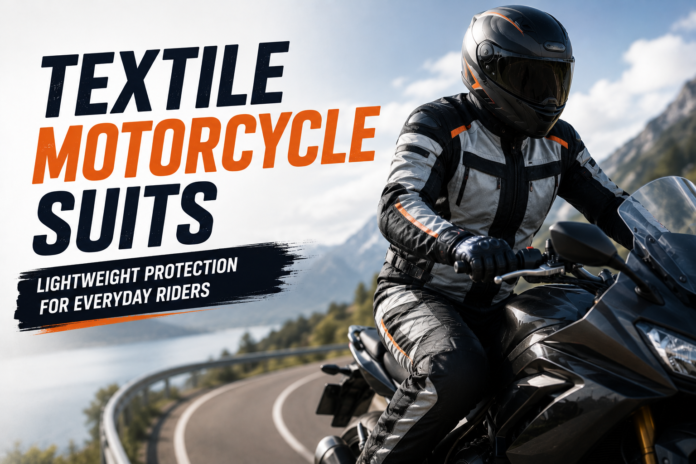
Textile motorcycle suits offer a good option for riders looking to protect themselves without the rigidity and weight of traditional leather gear. Modern textile materials combine weather-resistant features, impact protection, abrasion resistance, and ventilation in one riding system.
These suits are especially useful for people who commute, tour, or ride in changing conditions. The collection allows riders to compare suit styles and riding purposes.
What are textile motorcycle suits?
Textile motorcycle suits are riding apparels that are made of synthetic or woven performance fabrics, rather than leather. Construction methods can include nylon, polyester reinforced, high-strength fabrics, mesh, waterproof membranes and abrasion resistant panels.
A textile suit can be offered in a single-piece design or as a jacket and trousers system. The protective versions may include armor on the shoulders, elbows and back. They can also have knees, hips or hips.
Why textile suits are popular
The versatility of textile suits is ideal for riders who have to adapt to different weather and temperature conditions. Many textile suits can be customized to meet different conditions.
Textile gear is especially useful for riders who use their motorcycles for daily commuting and errands as well as weekend trips, longer journeys, or even for longer journeys.
Lightweight Protection
Textile construction offers the possibility to reduce weight and maintain useful protective features. Modern technical fabrics are engineered to be strong without the need for as much material as some heavy leather garments.
Textile motorcycle suits offer a good balance between protection, comfort, and mobility. Lightweight does not necessarily mean protective. Riders should therefore always check the suit’s protective components and construction.
Abrasion Resistance
Abrasion resistance is essential, regardless of outer material. In a crash, a rider can slide on asphalt and cause significant friction with the clothing.
The suit should be reinforced in the areas that are likely to come into contact with roads. The quality of the stitching is equally important, as fabric strength cannot compensate for a weak seam.
Impact Protection
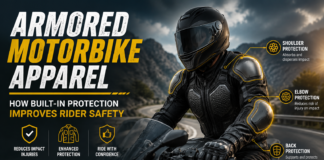
The textile construction should be combined appropriately with impact protection. Armor can be placed at the shoulders or elbows. It may also cover the back, hips and knees.
While the rider is sitting and moving, the armor must remain in its correct position. The armor can shift if the suit is too loose, and a suit that’s too tight may limit movement.
Men’s textile motorcycle suits
When selecting a suit, men riders should take into account the fit of their chest, shoulders, waist, sleeves, thighs, and legs. The garment should be flexible and comfortable while still maintaining all the protective elements in their designated locations.
A motorbike suit for men will help riders to compare suit designs. It is important to test the suit in a riding position, rather than only standing.
Women’s textile motorcycle suits
A suit for women riders should follow their body shape, without compromising on protection or movement. A poor fit can cause pressure to the chest, waist and hips. It can also create problems with shoulders or knees.
A motorbike suit for women is a good way to compare designs. The armor should be positioned correctly when the rider is leaning, turning and operating their motorcycle.
Comfortable Commuting Everyday
Comfort is important for commuters who may use riding gear often. If a suit is too hot, heavy or restrictive, it may discourage frequent use.
Textile suits may include practical features like adjustable cuffs, waist closings, breathable linings, ventilation openings and multiple pockets. This can make it easier to transport protective gear.
Ride in the Hot Weather with Ventilation
In hot weather, any protective suit can become uncomfortable if the heat is trapped. Textile suits may include mesh panels, zippered ventilations, breathable fabric, and airflow zone to manage heat.
In hot climates, riders need to look for areas that can be ventilated, such as the back, chest, arms and other places where airflow will improve comfort. Ventilation zones shouldn’t compromise vital protective areas.
Waterproofing and Rain Protection
Textile riding gear has the advantage of being weather resistant. Some suits use waterproof membranes or outer materials coated with storm flaps. They may also have sealed or protected seams.
A motorcycle rain suit is a great way to add an extra layer of protection for riders who are regularly exposed to heavy rain. Depending on the climate and riding habits of riders, they should decide whether they want a permanent waterproofing layer or a removable one.
Removeable Liners
Textile suits can be used in multiple seasons with removable thermal or waterproof liners. Riders can remove the warm lining when the temperature rises and then add it back on during colder rides.
It can be useful to reduce the number of sets of riding equipment. This is especially useful for commuters that ride at different times and in temperatures that change significantly.
Cold-Weather Riding
When combined with base layers and insulation, textile suits can be tailored to colder weather conditions. Certain designs are designed to offer additional protection from wind and cold temperatures.
A heated motorcycle suit is a great option for riders who travel regularly in cold weather. The protective suit should fit properly without the armor moving away from the body.
One-Piece vs Two-Piece Textile Suits
One-piece textile suits provide continuous coverage, which is convenient for riders who want to ensure comprehensive protection. This suit is ideal for riders who are touring or in demanding riding environments.
Two-piece systems provide greater everyday flexibility. Riders may prefer this format for general use, commuting and touring.
Travel Suits Made of Textile
The gear must be comfortable to wear for long periods. The suit should be able to protect the rider while controlling temperature, wind and rain.
Touring features that are useful include waterproof pockets and adjustable ventilation. They can also be removable liners or liners with multiple storage compartments. The suit should be compatible with riding boots, gloves and other equipment.
Textile Suits to Change the Weather
Textile gear is particularly useful in changing weather conditions. The rider might start a journey in cool weather, then encounter rain in the afternoon and end the trip in warmer conditions.
Textile motorcycle suits that include removable liners, adjustable vents and waterproof layers as well as secure closures can adapt to these changes. These suits are useful for riders who cover long distances.
Visibility Features
Visibility is important for early morning, evening, rainy, and foggy rides. To make riders more visible, textile suits can include reflective strips, piping or contrast panels.
Reflective elements can be particularly useful when illuminated with vehicle headlights. Visibility should be considered when selecting gear for riders who commute regularly in low-light conditions.
Pockets for Everyday Use
The average rider needs to carry a phone, wallet, cards, documents and other small items. To make it easier to carry these items, textile suits can have multiple pockets on the outside and inside.
In rainy weather, pockets that are waterproof or water-resistant can be very useful. The pocket placement should be both practical and not interfere with riding posture or armor.
Fit and Freedom of Movement
The protective suit must be secure, but not restrict normal motorcycle movements. The rider should be able reach the handlebars and bend their knees. They should also be able rotate their shoulders and change their body position.
It is best to assess the fit while sitting on your motorcycle. Do not rely on the way the suit feels when standing. Instead, check sleeve and knee length, comfort at waist, and alignment of armor.
Leather vs Textile Motorcycle Suits
The close-fitting design and high abrasion resistance of leather make it a popular choice for performance riding. Textile suits are more versatile for everyday wear, especially when weather protection and ventilation is important.
The choice of material depends on the riding environment, climate, distance, expected weather and comfort requirements. The right choice will depend on the riding environment, climate and distance, weather conditions, comfort needs, and level of protection.
Textile Suit Maintenance
The manufacturer’s instructions should be followed when cleaning textile riding suits. Dirt, sweat and road grime can accumulate and cause discomfort over time.
When instructed to do so, protective armor should be removed prior to washing. Regularly inspecting seams, zippers and closures as well as waterproof layers, protective inserts and waterproof layers is also recommended.
Checklist for Buying Textile Motorcycle Suits
Check the following before choosing a riding suit made of textile:
- Abrasion resistant outer materials
- Shoulder protection
- Elbow protection
- Back protection
- Hip protection
- Knee protection
- Strong Stitching
- Proper riding-position fit
- Ventilation
- Waterproof or water resistant construction
- Removable Liners
- Reflective details
- Secure Closures
- Compatibility of boots and gloves
Common Purchase Mistakes
A common mistake is to choose a suit solely based on its weight. Even though a lightweight garment might be comfortable, it still needs to be evaluated for abrasion resistance and other factors such as armor, seams and overall construction.
A suit should be chosen without taking into account the climate of the rider. In hot weather, a suit that is heavily insulated may feel uncomfortable. A suit with a high ventilation level may not be suitable for wet or cold conditions.
Conclusion
Textile motorcycle suits are a great option for riders who need a mix of comfort, protection, flexibility in the weather, and practical features. The synthetic material allows for ventilation, waterproofing, removable liners and reflective elements.
The suit that is best for you will depend on your climate, riding style and daily needs. Check the suit’s abrasion resistance and armor coverage before purchasing. Also, consider its fit, ventilation, weather protection and construction. The right textile suit will provide protection and comfort for motorcycle riding.
FAQs
What are the best textile motorcycle suits for everyday riding?
Yes. These can be very useful for commuters and tourists because they combine ventilation with weather resistance and flexible construction.
Can textile suits offer the same protection as leather suits
The protection depends on the garment, material, armor, construction and safety standards. Textile gear of high quality can offer substantial protection. However, not all textile clothing is designed to be worn at the same level.
Can textile motorcycle suits be waterproof?
Some are waterproof, or have waterproof liners. Others are water-resistant. It is important to check the specifications of the suit’s manufacturer before assuming that it is waterproof.