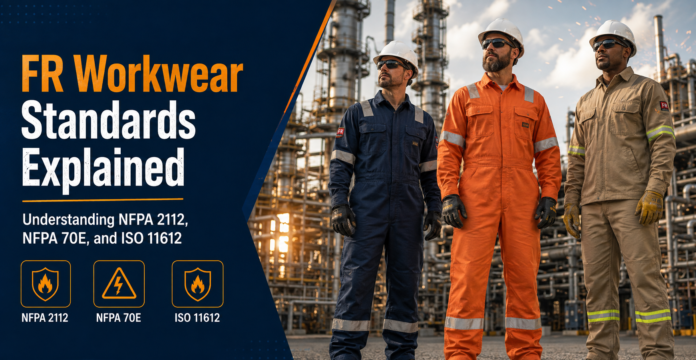
FR clothing is not normal workwear with a safety label. It is protective clothing made for real job risks like flame, heat, flash fire, and electric arc exposure. This is why FR workwear standards matter so much. They help buyers, safety teams, and workers understand what a garment is made to protect against. Without standards, two shirts may look the same, but one may be tested for real hazards while the other may only look strong. A worker does not need confusing technical words during a dangerous moment. He needs clothing that has been selected correctly before the work starts. FR workwear standards also help companies avoid guesswork. They make it easier to ask the right questions: Is this garment flame-resistant? Is it arc-rated? Is it made for flash fire, electrical work, or general heat exposure? The right standard helps match the clothing to the job instead of choosing only by price, color, or fabric weight.
FR Workwear Standards: What They Really Mean
FR workwear standards are rules used to test and describe protective clothing. They do not all mean the same thing. Some standards focus on flash fire. Some focus on electrical arc flash. Some focus on heat and flame in industrial work. This is why NFPA 2112, NFPA 70E, and ISO 11612 should not be mixed together as one simple label. NFPA 2112 is mainly linked with flash fire protection in industries such as oil, gas, fuel, and chemical work. NFPA 70E is mainly linked with electrical safety and arc flash risk. ISO 11612 is mainly linked with clothing that protects against heat and flame hazards. When a buyer understands these differences, FR workwear standards become easier to use. The standard tells you the purpose of the garment. The job hazard tells you which standard is needed. A good garment choice starts when these two things match.
NFPA 2112: For Flash Fire Risk
NFPA 2112 is one of the most common FR workwear standards for industrial flame-resistant clothing. It is used where workers may face short fire exposure, especially flash fire risk. A flash fire is sudden, fast, and dangerous. It can happen around flammable gas, vapors, dust, or fuel-related work. NFPA 2112 helps show that a garment has been tested for this type of hazard. It is not just about fabric; the whole garment design matters. For teams building a safer clothing range, Eco Jersey’s FR workwear category can be used as a starting point while planning product types for industrial crews. Still, buyers should always check the required rating and certification details before placing bulk orders. FR workwear standards like NFPA 2112 are useful because they make safety claims easier to verify. They help separate tested protective garments from ordinary uniforms that only look heavy or durable.
NFPA 70E: For Electrical Arc Flash Protection
NFPA 70E is different from NFPA 2112 because it is connected to electrical safety at work. It helps guide protection against shock, electrocution, arc flash, and arc blast. This makes it important for electricians, utility crews, maintenance teams, panel workers, and people working near energized equipment. In simple words, NFPA 70E helps decide what arc-rated clothing and PPE may be needed for a task. This is why FR workwear standards must be chosen by hazard type. A garment that is flame-resistant is not always enough for electrical arc flash. For electrical work, the clothing often needs an arc rating shown in calories per square centimeter. The rating should match the expected incident energy of the task. FR workwear standards are helpful here because they remind buyers not to use casual FR clothing for electrical jobs without checking the arc rating. Electrical protection should always be based on a proper risk assessment.
ISO 11612: For Heat and Flame Protection
ISO 11612 is another important name in FR workwear standards. It is used for clothing that protects the body against heat and flame exposure. It may apply to jobs where workers face limited flame spread, radiant heat, convective heat, contact heat, or molten metal splash, depending on the garment’s tested performance. This standard is useful in many industrial settings, but it does not replace arc flash assessment for electrical work. A buyer should treat ISO 11612 as a heat-and-flame standard, not as a full answer for every hazard. For example, teams choosing full-body clothing can review products such as flame-resistant coveralls when they need more body coverage for rough work areas. However, the product still needs to match the correct job standard and risk level. FR workwear standards are not decoration on a label. They are practical tools that help decide whether the clothing is suitable for the actual work site.
Main Difference Between NFPA 2112, NFPA 70E, and ISO 11612
The easiest way to remember these FR workwear standards is to connect each one with a job risk. NFPA 2112 is for flash fire risk. NFPA 70E is for electrical safety and arc flash risk. ISO 11612 is for heat and flame risk. These three areas can overlap in some workplaces, but they should not be treated as the same thing. A refinery worker may need NFPA 2112 because flash fire is the main concern. An electrical utility worker may need arc-rated clothing under an NFPA 70E-based safety program. A metal, heat, or flame-exposed worker may need clothing tested under ISO 11612. FR workwear standards help buyers avoid a common mistake: asking only, “Is this FR?” A better question is, “Which hazard is this garment tested for?” That simple question can prevent wrong buying decisions. The best garment is the one that matches the worker’s real exposure, not the one with the most technical words on the product page.
Garment Types Covered in FR Workwear
FR clothing can include shirts, pants, jackets, coveralls, hoodies, rainwear, and layered garments. The right type depends on how much body coverage the job needs. A shirt and pants system may work for many daily tasks. Coveralls may be better when a team wants one-piece coverage. Jackets are useful in cold weather or outdoor work. Pants must allow bending, climbing, and kneeling without becoming tight. Shirts must cover the arms properly and stay tucked or covered during movement. When planning outer layers, a product such as a flame-resistant jacket can support colder work conditions while still keeping protection in mind. But garment type alone is not enough. FR workwear standards should always guide the final choice. A jacket may look safe, but the label, rating, fabric, stitching, closures, and care instructions must also support the job risk. Good FR clothing protects without making work harder than it needs to be.
One-Paragraph Buyer Checklist
Before ordering clothing under FR workwear standards, check these points carefully:
- Identify the main hazard before choosing the garment.
- Use NFPA 2112 when flash fire risk is the main concern.
- Use NFPA 70E guidance when arc flash risk is involved.
- Use ISO 11612 when heat and flame exposure is the main concern.
- Check whether the garment is FR, arc-rated, or both.
- Ask for clear labels, ratings, and testing information.
- Choose the right garment type for body coverage.
- Avoid unsafe synthetic layers under protective clothing.
- Make sure workers can move, bend, and climb easily.
- Test samples before placing a large order.
- Follow washing and care instructions strictly.
- Replace damaged, torn, contaminated, or unreadable garments.
Fit, Fabric, and Layering Still Matter
Even when clothing follows FR workwear standards, fit and comfort still matter. A safe garment should not be so tight that it limits movement. It should not be so loose that it catches on tools, machines, or equipment. Sleeves should cover the wrist during reaching. Pants should cover the ankle during bending. Jackets should close properly over inner layers. Fabric choice also matters because workers need protection and comfort at the same time. Hot, heavy, or stiff clothing may cause workers to roll sleeves, open zippers, or remove layers. That can reduce protection. Layering also needs care. A non-FR synthetic T-shirt under FR clothing can create risk because some synthetic fabrics may melt under heat. FR workwear standards help guide the outer garment, but the full clothing system must be safe. The best workwear setup protects the worker while still feeling practical during a long shift.
Common Mistakes Buyers Should Avoid
Many buying mistakes happen because people treat all FR labels as equal. One common mistake is buying flame-resistant clothing for electrical work without checking the arc rating. Another mistake is buying arc-rated clothing and assuming it is automatically right for flash fire risk. Some buyers also choose the lowest price and ignore garment life, worker comfort, and washing needs. FR workwear standards are designed to reduce this kind of confusion. They help buyers ask better questions before ordering. Is the garment tested for the hazard? Is the rating visible? Does the product match the company safety policy? Will the workers actually wear it correctly? Another mistake is forgetting care instructions. Bleach, harsh washing, heavy contamination, torn fabric, and wrong repairs can damage performance. FR workwear standards are important, but they are not magic. The clothing must be selected, worn, washed, inspected, and replaced correctly to keep doing its job.
Conclusion
The best way to buy protective clothing is to choose the hazard first and the style second. NFPA 2112, NFPA 70E, and ISO 11612 each answer a different safety question. NFPA 2112 helps with flash fire protection. NFPA 70E helps with electrical safety and arc flash protection planning. ISO 11612 helps with heat and flame protection. This is why FR workwear standards should guide every serious FR clothing decision. A good buyer should not ask only for a shirt, jacket, or coverall. He should ask what risk the worker faces, what rating is needed, and what standard applies. FR workwear standards make the buying process clearer, safer, and easier to explain. When the standard, garment, fit, fabric, and care instructions all match the job, workers get clothing that is not only compliant on paper but useful in real work.
FAQs
What are FR workwear standards?
FR workwear standards are testing and safety rules used for flame-resistant and protective clothing. They help show whether a garment is made for flash fire, arc flash, heat, or flame exposure.
Is NFPA 2112 the same as NFPA 70E?
No. NFPA 2112 is mainly for flash fire protection, while NFPA 70E is linked with electrical workplace safety and arc flash protection. They are used for different hazards.
Is ISO 11612 enough for electrical arc flash work?
ISO 11612 is mainly for heat and flame protection. Electrical arc flash work usually needs arc-rated clothing selected through an electrical safety assessment, often guided by NFPA 70E.
Can one garment meet more than one FR standard?
Yes, some garments may meet more than one standard, but buyers should never assume this. Always check the product label, test data, certification details, and safety requirements.