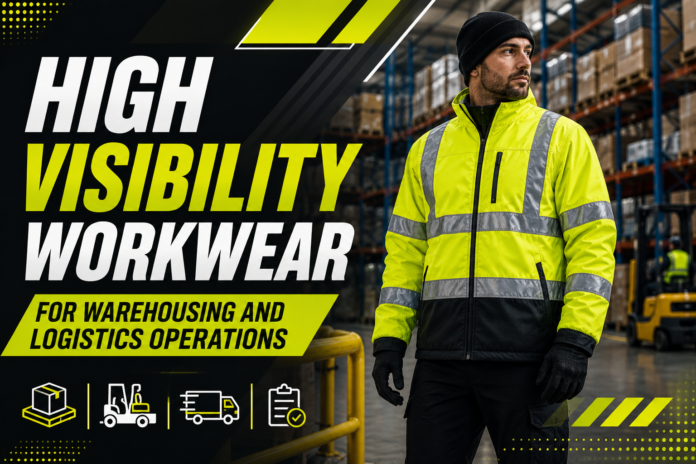
High visibility workwear for warehousing clothing is necessary for warehouses, as they are busy sites with constant activity, including vehicles, loading zones and stacked items, and fast-paced activities by teams. Worker may be moving between packing areas, storage aisles and forklifts. They could also be loading goods outside.
It does much more than just make workers visible. The uniform also helps with safety, comfort and role recognition. It can protect against the weather, as well as help to organize a professional site. Browse the collection for clothing that is suitable for teams in warehouses, logistics, transport and industries.
What is High Visibility Workwear in Warehousing?
High Visibility Workwear in Warehousing is bright, reflective clothing worn by warehouse workers and other logistics personnel. This includes reflective rainwear and safety jackets as well as safety vests.
It is important to increase worker visibility to ensure that forklift drivers, vehicle drivers, supervisors and other team members can see them. Visibility can reduce confusion in busy operations and promote safer movement around active areas.
Why visibility is important in warehouses
Many warehouses include moving forklifts, pallet trucks, loading docks and delivery vehicles. There are many sites that include pallet trucks, moving forklifts and other equipment. Low visibility in these conditions can pose serious safety hazards.
High visibility workwear is designed to help employees stand out from shelves, boxes and machines. Bright colors and reflective detailing help workers remain visible during normal work hours and in low-light conditions.
Visibility in Logistics Operations
Logistics teams often work across indoor and outdoor areas. Workers may move from one packing station to another, or to the loading dock and then onto a truck bay area. It is therefore important to maintain a constant level of visibility.
The hi-vis clothing is useful for drivers and operators of machines to identify people more quickly. This is particularly useful for loading, unloading and pallet movements, as well as night shifts, early dawns, rainy or wet days, busy dispatch periods, and during the day.
Safety Vests for Warehouse Workers
They are easy to wear and can be easily layered over work clothes. Pickers, packers and supervisors can all benefit from them, as well as visitors, delivery teams, temporary staff, and delivery teams.
Custom safety vests also help with branding and role identification. Different vest colors or labels can be used to separate workers, such as supervisors, visitors and forklift operators.
Hi-Vis Jackets in Cold or Outdoor Areas
Some warehouse workers require more than just a vest. This is especially true if they are working near loading bays or outdoor yards. Hi-vis jackets provide visibility and warmth while covering the body.
The high-visibility jacket can be useful for teams who move between indoors and outdoors. The jacket helps workers remain visible and protects them from wind, cooler weather, and some light exposure outdoors.
Rainwear for Delivery and Loading Work
The logistics work doesn’t stop just because the weather changes. During rain, workers may still be required to load trucks, transport goods, inspect deliveries, or manage outdoor storage. Normal clothing can become uncomfortable and unsafe in these circumstances.
Rainwear can be useful for teams working in warehouses and transport companies that are exposed to wet weather. Rainwear that is effective should keep workers dry and visible while also allowing them to move freely.
Safety Jackets for Harder Work Conditions
In some environments, a vest is not enough. Safety jackets offer better protection, stronger fabrics, and practical features like secure pockets, reinforced paneling, and weather resistant construction.
Safety Jackets are useful in warehouses, logistics hubs and transport depots. These jackets help workers remain visible and are durable in harsher working conditions.
Workwear Jackets to Layer Uniforms
In warehouses, layering is essential because temperatures can vary between offices, storage spaces, cold zones and loading docks. A worker might need to wear a garment which is durable, comfortable, and allows for repeated movements.
jackets are ideal for layering uniforms, especially when teams require warmth, storage and a professional look. Combining it with hi-vis items can create a complete uniform system that is safety-focused.
Safety Gloves to Handle Goods
Hand protection is also important in the warehouse. Workers lift cartons and pallets. They also handle metal parts, operate equipment, open packages, and move metal pieces. Poor grip can increase the risk of accidents and slow down work.
Safety Gloves help workers to handle goods more effectively and protect their hands. Gloves must fit properly and allow for easy movement, so that employees can safely work without losing control.
What High Visibility Workwear Can Do for Safer Movements
High Visibility Workwear For Warehousing helps to promote safer movement in warehouses by making it easier for workers to be noticed. The site is easier to manage when a forklift operator, truck driver, or team leader are able to see clearly the workers.
It does not replace traffic rules, signs or safe walking routes. Hi-vis clothing can add an extra layer of safety to daily operations by making people more visible.
Reflective tape in Bright Colors
These garments are usually brightly colored, such as lime, yellow, or orange. These colors make workers more visible against warehouse backdrops such as racks, vehicles, concrete floors and machines.
It is important to use reflective tape, particularly in areas with low light or near vehicles. The placement of tape around the chest and shoulders, arms and back will help workers to be visible from all angles.
Comfortable Shifts
For long periods of time, warehouse workers must stand, walk and bend to scan, pack and move goods. Workers may not wear hi-vis clothing correctly if it is too hot, stiff or heavy.
Fabric weight, breathability and flexibility are all factors that affect comfort. A good garment must allow for easy movement, while remaining secure on the body. Comfortable clothing encourages employees to follow safety regulations more consistently.
Role Identification & Team Organization
Hi-vis clothing is also useful for team organization. Different colors and designs can be used to separate departments, roles or access levels. As an example, supervisors might wear one color and visitors another. Forklift operators may also wear a different color.
It helps everyone understand what each person is responsible for. Clear role visibility in large warehouses can improve communication and reduce confusion between departments.
Durability and Daily Wear
Warehouse workwear is designed to withstand repeated washings, movements, lifting, rubbing and contact with shelving, pallets, box and machinery. Weak garments can tear, fade or lose their shape very quickly.
All of these factors are important: durable stitching, sturdy seams, high-quality zippers, reliable closures and reflective tape that is stable. A durable garment that is visible and in good condition for a longer period of time will be more valuable than a cheap item that requires frequent replacement.
Plan your seasonal Hi-Vis Plans
A single garment cannot be worn in all seasons. The summer may require lightweight vests, breathable shirts or even a lightweight shirt. Winter can require jackets, safety vests, or layers of outerwear. In rainy weather, you may need hi-visible or waterproof rainwear.
Plan according to the season so that workers can stay comfortable and visible without losing their visibility. The warehouse uniform system you choose should be flexible enough to accommodate indoor and outdoor work, as well as wet weather or cold conditions.
Checklist for High Visibility Workwear in Warehousing
Check this list before selecting hi-vis clothing for warehouses:
- Bright colors are best.
- Reflective tape can be added to areas that are low-lit.
- Use vests for lightweight indoor visibility.
- Use jackets for cold or outdoor zones.
- Rainwear is recommended for areas that are wet.
- Select gloves with grips for handling goods.
- Choose the right garment for your role.
- Before ordering in bulk, please check the fit.
- Select durable stitching, and secure closures.
- Maintain uniforms to ensure visibility.
Common mistakes to avoid
A common mistake is to choose hi-vis clothing solely based on color. Fit, comfort, reflective tape, durability, role suitability, and bright color are also important. Safety is not enhanced by a garment that employees dislike.
A second mistake is wearing the same clothes for all jobs. Pickers in the warehouse might need a vest that is lightweight, while dock workers may require a raincoat or jacket. Uniforms must be matched to the actual work environment.
Conclusion
The use of hi-vis clothing in warehouses can improve safety, visibility and team organization. This clothing is ideal for all workers, including pickers, packers and forklift drivers, as well as delivery teams, supervisors and visitors.
If needed, the best uniform system will include vests and jackets as well as gloves, rainwear and other options. Clothing that is comfortable, durable and appropriate for the job will support safer and more professional warehouse operation.
FAQs
Why do warehouse workers wear hi-vis clothing in the first place?
They need it to make themselves more visible to forklift operators, vehicle operators and supervisors.
Are safety vests sufficient for warehouse work?
Indoors, safety vests can be useful, but in cold or wet areas, you may also need rainwear or jackets.
What color would you recommend for hi-vis clothing in warehouses?
Choose bright colors like lime or orange to make your workplace stand out.
Should logistics teams use reflective tape to improve visibility?
Reflective tape can help workers be more visible at night, in low-light conditions, or near moving vehicles.