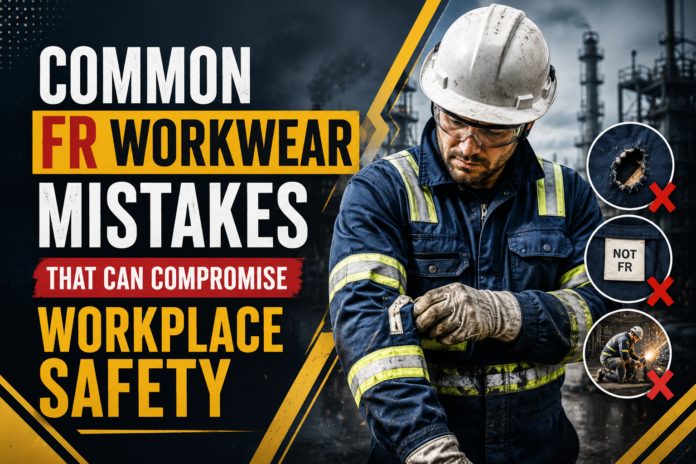
Common FR mistakes can reduce worker safety in areas where there are flame, spark, heat, electric arc, or flash fire hazards. FR is a term that refers to clothing that resists flames and helps reduce the risk of burning. Clothing only functions properly if it is chosen, worn, cleaned and maintained correctly.
Workwear that is flame retardant (FR) is more than just a uniform. It is a part of the workplace safety system. The garment must be suitable for the work hazard and allow the user to move freely. It should also remain in good condition while being used. To compare the different protective clothing options available for different industrial teams, companies can browse through the collection.
What are common FR workwear mistakes?
Common FR workwear errors are mistakes that occur when workers or companies choose, wear or care for flame resistant clothing in the wrong way. These small mistakes can have a big impact on workplace safety, comfort, durability and protection.
It is not advisable to choose FR clothing based on color, style, price or other factors. The actual hazard should be considered, as well as the garment rating, type of fabric, fit, coverage and care instructions. Poor choices can leave workers less protected than expected.
Choose FR Clothing without Checking the Hazard
Buying FR clothing without considering the workplace hazards is a common mistake. Depending on the job, there may be sparks, electric arcs, heat, welding, or combustible particles. Different hazards may require different protective measures.
Start with the workplace. Buyers should inquire about the work environment, including what workers are exposed to, what exposure occurs, what body parts need protection, what standard or rating is needed, etc. The product names are not sufficient.
Fireproof and FR are not the same thing
Fire-resistant does not mean that the clothing is fireproof. Flame-resistant clothing reduces ignition and continues burning but does not provide complete protection from fire. This is a crucial difference, as overconfidence can lead to dangerous decisions.
Worker safety and protection is not compromised by the use of PPE. The clothing itself is not enough to protect you. This should not replace good working practices or a proper risk assessment.
Buy Low-Quality FR Clothing
Although low-quality FR clothing might look good at first glance, it will fail sooner when used in real work. Poor stitching, cheap fabric, loose buttons and poor fit can decrease garment life.
Flame-resistant Coveralls should provide full body coverage. Check fabric strength, sew quality, closure security and body coverage. Coveralls should provide protection without causing the worker to feel restricted or trapped.
The FR labels and ratings are not to be ignored
One of the most common FR workwear errors is to ignore product information, ratings, and garment labels. The label of a garment should explain the type of protection, how to wash it, and when it can be used.
Before placing bulk orders, buyers should inquire about technical details if the label is unclear. Safety clothing shouldn’t be based on guesswork. Rating, fabric information and care instructions must be easily understood.
The wrong size and poor fit
The clothing must be fitted correctly. The garment can be too tight and restrict movement, as well as expose certain body parts when the worker bends or reaches. It may be too loose and catch on the equipment or make it feel unsafe when working.
Flame resistant pants must fit correctly around the waist, seat and knees. A good fit allows workers to move more safely and keeps the lower body covered for long shifts.
Wearing non-FR layers under FR clothing
The wrong layering under FR garments may pose a risk. Certain non-FR fabrics can melt or act badly when exposed heat or flame. The outer protective garment’s value can be reduced.
Workplace PPE regulations for base layers, shirts and undergarments should be followed by workers. The entire clothing system, and not just the outer garment, should be checked if FR protection is needed. A weak spot can be created by a single incorrect layer.
Leave shirts unbuttoned or untucked
Clothing made of FR should be worn correctly to ensure adequate coverage. Unfastened collars, open buttons, untucked shirts or sleeves, loose cuffs and untucked sleeves can reduce the protection provided by FR clothing.
Flame resistant shirts must cover the chest, arms and torso. Closing the garment properly is important. Avoid styling habits which reduce safety while working.
Use damaged FR clothing
It is important to not ignore damaged FR clothing. Hole, tears, thin fabrics, broken closures and buttons, heavy stains and chemical contamination can all reduce the durability and protection of FR garments.
Regular inspections of garments by companies are recommended. Workers must know when they should report a damaged garment and when it is time to stop wearing the garment. In some cases, repairs may be possible. However, the repair method should not compromise the protective function of a garment.
Wrongly Washing FR Clothes
The wrong washing of FR workwear can reduce the life span of garments. The use of harsh chemicals, incorrect detergents, heat, bleach or improper drying can damage the fabric, trims or treated finishes.
Always follow the instructions on the label. If employees are cleaning their own clothing, companies should train their staff in the proper washing techniques. Care for garments properly will help them last longer, remain comfortable and look good.
Avoiding outer layers and jackets
When workers are working in conditions that require protection, such as cold or outdoors, outer layers can be crucial. Wearing a non FR jacket over FR clothing creates a weak point, as the outer garment can ignite or melt before.
When protective outerwear such as a jacket is needed, flame resistant jacket can be worn. The jacket should have adequate sleeve protection, durable cuffs and secure closures.
Choose the same FR garment for every worker
Not all workers need the same FR clothes. Some workers require coveralls while others need shirts, pants and jackets. One-size-fits-all clothing can create problems with comfort or safety.
Comparing different garments is possible by comparing the FR Workwear Category. To improve FR programs, clothing should be matched to the role, hazard and movement needs of each worker, as well as weather conditions.
Avoiding Comfort and Heat Stress
Wearable FR clothing is important, as it must provide protection but also comfort. Workers may not wear the garments correctly if they are uncomfortable or too hot. It can result in open buttons, rolled sleeve or skipped layers.
Fabric weight, breathability and garment pattern are all factors that affect comfort. A practical FR clothing should be able to support the worker throughout the entire shift without causing unnecessary discomfort.
Tests not performed before bulk orders
Bulk orders without testing can cause costly problems. It is possible for a garment to look great online, but be uncomfortable when worn. Test the fit, sleeve motion, fabric feel and pocket placement.
Companies should test the samples on real users before ordering a team. The feedback of workers can reveal issues that are not apparent in size charts or product photos.
Checklist of Common Workwear FR Mistakes
Check this list before you choose or use FR clothing
- Choose FR clothing only after checking the hazards.
- Don’t assume that FR stands for fireproof.
- Check the labels of your garments for ratings and instructions on care.
- Select the appropriate garment for each role.
- Check that shirts, pants and jackets are the right size.
- When FR protection is needed, avoid non-FR synthetic fabrics.
- Check for worn seams, holes, stains and tears.
- Follow the instructions on the label when washing FR clothing.
- When protective jackets are needed, use FR outer layers.
- Test the comfort and movement of bulk orders before ordering.
What to avoid when buying FR workwear
To avoid making common FR mistakes, it is best to create a FR clothing system. Begin with a hazard analysis, select the right garment type, review labels and ratings, and test samples. Then, train your workers to use it properly.
Also, companies should create rules for inspection and replacement. Workers need to know when to report damaged clothing, how they should wash FR clothes, which layers to avoid and how to wear them. Safety is easier to maintain with a good system.
Conclusion
When garments are incorrectly selected, worn, cleaned, or maintained, they can compromise workplace safety. FR clothing must always be matched to the actual hazard. It should never be used as ordinary workwear.
The best FR program involves proper garment selection, the correct sizing and layering of clothing, clear instructions on care, regular inspections, and training for workers. When companies take care of these details, FR clothing becomes more comfortable, reliable and effective for industrial safety.
FAQs
Is FR workwear fireproof?
No, it is not. The clothing reduces the risk, but it does not protect workers from all fire hazards.
Can incorrect washing cause damage to FR clothing?
The wrong washing of garments can affect their comfort, appearance or treated finishes.
Why is it important to have the right fit in FR workwear?
The correct fit protects body areas, supports movements, and reduces loose fabric catching equipment.